
Alex Cox, Merritt Crocker, Amanda Gostomski, Danny Beard, Alicia Ramirez, Jordan Thompson & Raziel Scher | 90 mins | download | 16:9 | USA / English
 Alex Cox was once the director of noticed movies like Repo Man and Sid and Nancy, tipped for Hollywood success. That wasn’t really his style, though, and he wound up heading into ultra-indie territory, ultimately to “microfeatures” — films made so cheaply they fall below the Screen Actors Guild cut-off of $200,000. I confess that the only previous film of his I’ve seen is one of these: Repo Chick, a non-sequel to Repo Man that most people hate but I kinda loved. So when it turned out he was crowdfunding a new film, and a satirical science-fiction comedy at that, I jumped on it (readers with long memories may remember I mentioned it at the time). The finished result finally came out back in December, and… well…
To start at the beginning, Bill the Galactic Hero is an SF comedy novel by Harry Harrison. It’s a spoof of right-wing militaristic sci-fi, specifically Robert Heinlein’s Starship Troopers (which was also lampooned in its own film adaptation (apparently — I’ve still not seen it)). The story sees a lad from a backwater planet, Bill (James Miller), being tricked into joining the intergalactic military, who are locked in a never-ending war with reptilian aliens called Chingers. We follow him through his training, his dispatch aboard a war(space)ship, and adventures beyond. The novel is very good — not packed with gags and perhaps not often laugh-out-loud funny, but consistently wry in its outlook. You can see it would be a tough sell as an adaptation, mind, so an alternative director like Cox is probably the perfect fit.
 The way he’s gone about filming it is as, essentially, a giant student film. Cox currently teaches film at the University of Colorado at Boulder, and it was along with his students (plus some professional colleagues from previous films) that this movie was produced — that’s partly why there’s the lengthy list of directors (Cox actually directed “most of the first act and all the third”, as discussed in this interview with Quiet Earth). For various legal reasons, it’s a not-for-profit venture; indeed, any venue in the world can acquire a good-enough-to-screen quality copy from Cox for free, so long as it’s being shown in aid of charity. (That, and other interesting points, are discussed in this interview with Boulder Weekly.) The film is also available online, for free, here. This combination of factors (student film; shown only for charity; etc) makes it a little hard to be judgemental about it — witness, for instance, this ‘review’ from Boulder Weekly. But judge we must, and, sadly, in many ways it’s just not very good.
Things start badly with a colourful animated opening. I can see why this was judged to be the most cost-effective way to relate that part of the tale, as it’s set on an alien planet and filled with background extras and future-technology, but considering the amount of cardboard-and-Sellotape set dressing later in the film, surely they could have rustled something up? I also simply don’t like the style of the animation. Its painfully-bright colourfulness provides a contrast to what follows that is nearly appropriate,  but there’s no transition from it into the black-and-white live-action main film, just an abrupt cut (a good place to have put the title credits, at the very least!) Worst of all, no effort whatsoever is made to establish that the cartoon guy we saw being enlisted at the start is now a live-action guy with a teddybear strapped to his spacesuit. It took me a minute to get it, and I’ve read the book.
The cast are kept in full spacesuit gear the whole time. This sounded like a bad idea, and it is. It’s hard to relate to their facelessness, harder still to tell the supporting characters apart. That’s also a flaw of the screenplay and direction, neither of which allow enough time to establish anyone. A lot of the supporting cast are fleeting anyway — as I said, we follow Bill across multiple situations, each with a new group of people around him — but the potential impact of certain scenes involving characters like Eager Beager and Deathwish Drang is lost thanks to the lack of early investment. Even central Bill is lacking in personality or identifiability, particularly so considering he’s the main character. This is in some ways a problem inherited from the novel, where Bill is a blank canvas floating through his various adventures. I don’t know if that was intentional on Harrison’s part, but it didn’t work for me in the book and it doesn’t here either.
 After a hurried start, the film does settle down to slightly longer scenes with more of a point, like Bill’s encounter with the Laundry Officer-cum-Chaplain, and some of these work pretty well. Sadly, too much of the time it’s a race through the novel’s story, feeling like a filmed recap for those who’ve read the book. Goodness knows what someone who hasn’t would make of it all. Goodness knows if they’d even be able to follow it at all, to be frank.
Not all of the adaptation’s ideas are poor, though. The novel was written in 1965, bang in the middle of the Vietnam War. For the film, Cox has substituted the final act’s Vietnam-inspired jungle planet for an era-appropriate Middle East-inspired dustbowl. An ingenious idea, though there’s little (or no) commentary on the past couple of decades of Western military intervention once you get past that obvious observation. Ah well.
The live-action parts (i.e. most of the film) are shot on black-and-white film stock, though I’m not convinced they should have bothered — video would’ve been cheaper, and probably looked much the same in the end. That said, there’s an oppressively dark feel to much of the cinematography, with numerous deep blacks crowding in, which is surely the result of using real film. It’s quite appropriate to the story’s tone, a very dry satire of a controlling future dystopia. Conversely, the special effects look great. They’re the kind of lo-fi models-and-basic-CGI style that I had been expecting, and they nail the intended tone in a way other elements are too amateurish to quite reach.

Unfortunately, the audio quality is quite poor. The spacesuit decision reveals itself to be a bad idea once again when it muffles all the dialogue. Halfway through one character is subtitled, and I’m not sure why — she’s just as clear as everyone else. That is to say, not very; but no one else has subtitles so why does she? Possibly this could all be to do with the film being mixed for 5.1 by people inexperienced in doing so (Cox admitted as much himself) and then poorly downmixed to stereo for the online version that I watched. Perhaps the 5.1 version on the DVD comes over better? (I do have a copy, but haven’t brought myself to watch it to find out.) The end credits scroll under a new song by Iggy Pop, which I actually rather liked.
The sad thing is, I think the film could have been so much better. And I don’t mean by making it ‘properly’, either. Cox has shown he can make microfeatures work, and I don’t believe student films (which this essentially is) are fundamentally meritless. Even the production values, low-rent as they are, are fine if that’s what you’re expecting (and, given the film’s background, you should be). No, the problem lies in the storytelling: a pace that rushes through the novel at such speed that only someone familiar with it could keep up; a lack of time spent establishing characters and situations; rough editing and sound design that obscure elements and, without any breathing room elsewhere, leave you no space to work out the gaps and catch up.
 Bill the Galactic Hero might be best described as a noble failure. It’s been created with the best of intentions, both in terms of adapting a quality novel that Hollywood had no interest in, and in training up a new generation of filmmakers in an independent and proactive way. It’s a shame the end result isn’t wholly as enjoyable as it might’ve been.

Bill the Galactic Hero is now available to stream or download, for free, on Vimeo.
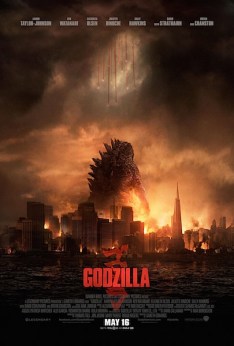 The second attempt at a US re-imagining of Godzilla received mixed reviews last summer, though there can be little doubt that it’s much more successful than the first,
  He’s denying us shots of it not to punish the viewer or to trick us, but literally to tease us, to build excitement and suspense and desire for the final battle. Too many people aren’t used to this — modern blockbusters have trained them for non-stop show-us-all-you’ve-got action from start to finish — and that’s a shame, and their loss, because Edwards’ method is superior to, and ultimately more entertaining than, 95% of other similar blockbusters.
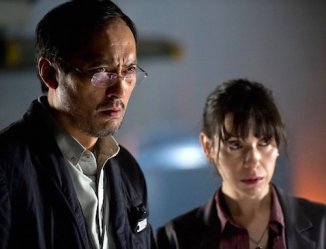 that simply aren’t present in the functional dialogue they have to work with, simply in the way they stand, the way they look at things… It’s not the focus of the film, it’ll pass many people by (indeed, it has), but I think there are some fine performances here. Not awards-winning ones, obviously, but in the hands of lesser actors, they would’ve been so much poorer.
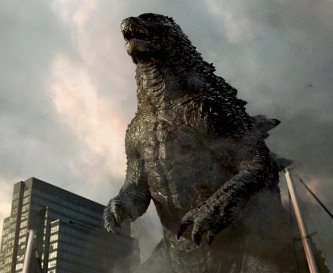 later, he slips quietly into the bay). Maybe, maybe not, but they always look big — more importantly, they feel big. There are various reasons for this, including Edwards’ shot choices: we often see them from a human perspective on the ground; when we do see wider shots, they’re from suitably far away, or high up, like a helicopter shot (if it were real…) Too many directors shoot their giant monsters with angles and perspectives as if they’re human-sized, which makes them come across as human-sized even when there’s a building next to them, never mind when they’re in places without reference points (coughatsea,PacifcRimcough). Edwards never does this, and it pays off. More than once I regretted that I can never be bothered to go to the cinema any more, because I bet this looked stunning on the big screen (I know I’m certainly
  most present big-budget summer tentpoles. That it got a little lost and under-appreciated in a summer of mega-hits is a real shame — it may not quite match summer 2014’s high points of
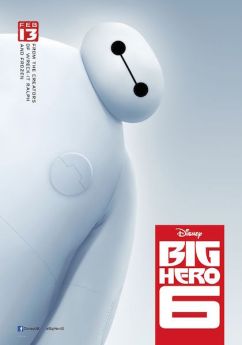 This year’s Best Animated Film Oscar winner is not this year’s best animated film. Not by a long stroke. What it is is one great character, one great emotional plot/subplot, and a lot of stuff that feels like every other big-budget action-orientated CGI animation of the past few years. Most succinctly, this is little more than (as
  The element that is an unequivocal success is Baymax. A soft robot — made of inflated vinyl so as to be genuinely huggable — he’s sweet, funny, and always entertaining. Memorable moments abound, in particular a sequence where his batteries run low, and his interpretation of a fist-bump (a recording booth improvisation by Adsit that was worked into the film). The movie truly comes alive whenever he’s on screen, but conversely loses some magic whenever he’s pushed into the background.
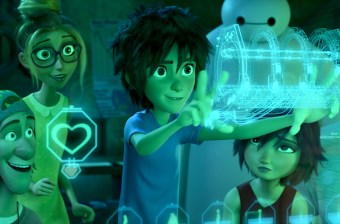 Big Hero 6 is by no means a bad film. It will certainly entertain its target age group, especially if they haven’t seen the other CG spectacles it nabs from. That aside, the entire thing is worth a look purely for Baymax and a few stand out moments — all of them involving the aforementioned vinyl robot, of course. Otherwise, it’s pretty by-the-book. The five-star-level praise it’s attracted in some quarters is completely unwarranted.
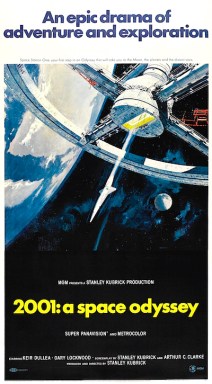 As
As 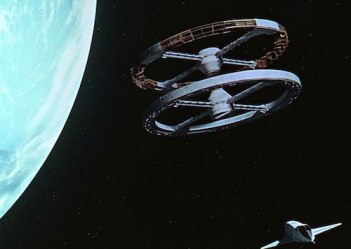 with this kind of pace and uncertainty would be unthinkable, but I guess audiences were a little more mature in the Good Old Days. Even then, Kubrick cut 19 minutes after the film’s premiere in order to “speed up the pacing”. Maybe he succeeded, but no one’s going to be calling this a fast-paced thrillride any time soon.
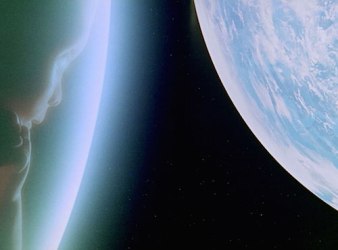 Technically, then, 2001 is undeniably stunning. Thematically, though… what’s it all about? What does it mean? Author Arthur C. Clarke once said that “if you understand 2001 completely, we failed. We wanted to raise far more questions than we answered.” Some find such goals unsatisfying, especially when it comes to storytelling, but the very spirit of space exploration, of science, is to keep asking questions that don’t necessarily have answers. Of course, the ending is actually very easy to explain: the evil alien monolith kidnaps Dave, ages him to death, then mutates him into a giant Space Foetus, which it sends back to Earth. Why they didn’t make 2002: Invasion of the Giant Space Baby, I don’t know. Who doesn’t want to see that movie?
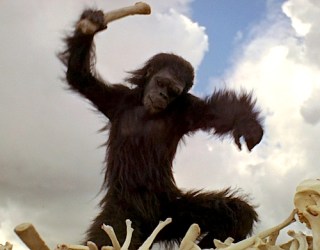 and almost immediately use them to kill, first a beast for food, then another ape for territory. Then, in a literal split second, we jump forward millennia, as that simple tool turns into a nuclear weapon drifting in orbit — the entirety of human technological innovation summed up in a single cut.
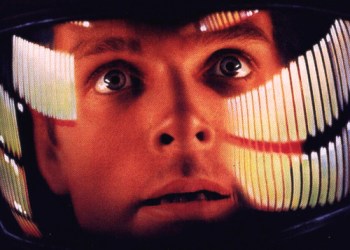 In the end, I think 2001 is a film that’s very easy to admire, for all sorts of reasons, but to enjoy in the traditional sense of “enjoyment”? Surely it’s far too removed, too obtuse, too joyless, for that? Some people will like those qualities, of course, and all power to them. For me, 2001 is a film to be impressed, even awed, by; but not one to love.
 The first manned mission to Mars is reaching the end of its six-month tour. As they count down the final hours, battling a dust storm and its attendant power outages and communications blackouts, one of the team secretly discovers bacterial life on the surface. Attempting to recover further samples, a sink hole opens beneath him. When the rest of the crew try to recover his body, it’s not there. Then he arrives back at base… only, he’s not quite himself anymore…
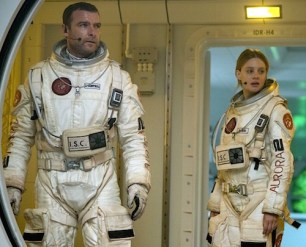 These faults persist despite the best efforts of a quality cast, particularly Romola Garai as (in functional terms) the capable sidekick, and Olivia Williams as the bitch whose heartless practicality becomes an asset when the going gets tough. First-time feature director Ruairí Robinson assembled his cast on the principle of “people who aren’t normally in sci-fi movies”, and that does feed in to the sense of realism. It also looks great, the production, costume and effects designs gelling to create a believable Mars mission, all in spite of a tiny budget (funded by the BFI and the Irish Film Board, it had about a tenth of Gravity’s budget, for example). Credit, too, to cinematographer Robbie Ryan for lensing the Martian surface convincingly (it’s actually the Jordanian desert). The editing may descend into fast-cut blurriness during action scenes — only emphasised by Max Richter’s predictably derivative horror movie score — but during calmer moments the film looks very good.
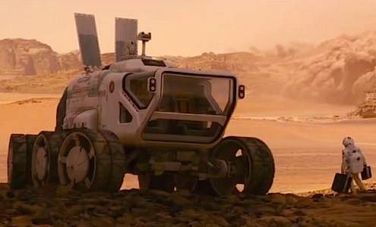 and was more sure of its tone. There may be elements to commend The Last Days of Mars in this comparison (the much bigger budget pays off in the scope of the visuals, of course), but as a story and viewing experience, The Waters of Mars wins hands down.
 Christopher Nolan’s regular director of photography (he’s lensed seven Nolan films, from
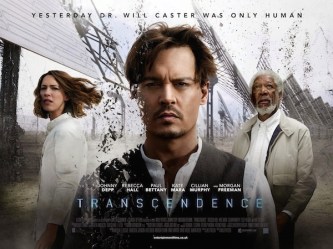
 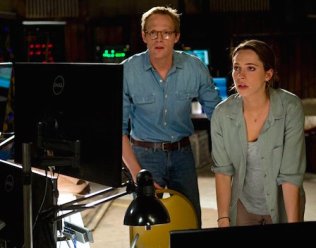 Another element that’s probably too challenging for some is where our allegiances are meant to lie. (Some spoilers follow in this paragraph.) At the start, it’s clear Depp & friends are the heroes and the murderous anti-tech terrorists are the villains. As events unfurl, however, artificial-Will perhaps goes too far, Bettany teams up with the terrorists, and eventually so do the government and Will’s other friends. There is no comeuppance for some characters who are initially begging for it; a good one self-sacrifices somewhat heroically. This doesn’t fit the usual Hollywood mould at all (well, the last bit does, sometimes), no doubt to some’s annoyance. The number of people who clamour for any sliver of originality or texture to their blockbusters, but then are unhappy when they actually get it…
 robbing the entire film of tension and nullifying any sense of surprise, and the movie doesn’t compensate with, say, a feeling of crushing inevitability. The climax in particular becomes a drawn-out exercise in connect the dots: we’ve been shown how this all ends up, now we’re just seeing the minutiae of how it got there. There’s no twist or reveal to speak of, just a wait for it to marry up with what we already know.
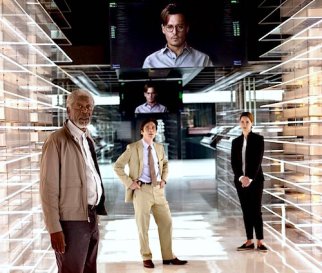 I guess that’s probably the explanation for Transcendence’s poor reception, in the end: it’s too blockbuster-y for viewers who’d like a dramatic exploration of its central moral and scientific issues, but too lacking in action sequences for those who misguidedly expected an SF-action-thriller. I maintain it’s not slow-paced, especially if you think it’s going to be, but nor does it generate doses of adrenaline on a committee-approved schedule. It’s not all it could have been, but if all you’ve heard is the mainstream drubbing, it’s probably better than you expect.
 25 years before Jennifer Lawrence had to
 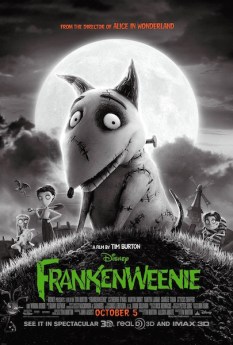 Inspired by two of Burton’s early-’80s shorts (which are most commonly found on
  Some say it doesn’t have enough of an edge. Well, maybe; but I thought it was surprisingly dark in places. Not so considering it’s a Tim Burton film based on resurrecting the dead, but for a Disney-branded animation, yes. Those edgier bits are here and there rather than consistent, but still, I’m not sure what those critics were expecting from a PG-rated Disney animation. I guess there’s an argument that Burton should have pushed it further and aimed for an adult audience, but can you imagine an American studio agreeing to finance an animation primarily targeted at anyone who’s entered their teens? Because I can’t.
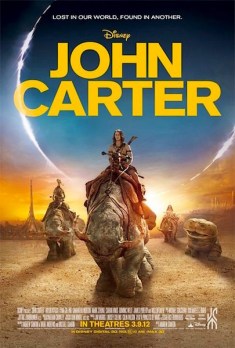 A box office flop (it made a once-astonishing $284 million worldwide, but that was off a $250 million production budget and a ginormous bungled marketing campaign), John Carter has gained something of a following among those who did enjoy it or caught it later — see
  not because it’s so famous (among Normal People, I don’t think it is), but because its influence means its imagery and concepts have already been plundered (
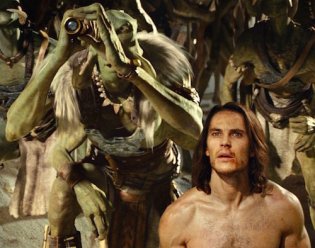 It doesn’t help that the film is structurally muddled at the offset. It begins on Mars, a voiceover detailing the conflict — an instant bombardment of names and concepts. I don’t mind things that challenge you to keep up, but it still feels a bit much. Then we jump to New York in the 1880s, where Carter is running away from someone in the streets. Then to his house, where his nephew has just turned up to be told he’s dead. You what? We just saw him in the telegraph office! And then we jump back to the 1860s, where he’s searching for gold and getting arrested (or something) by Bryan Cranston in a wig as some form of army officer. Then it gets a bit more straightforward. If being transported to Mars and meeting four-armed CG aliens who speak in subtitles is what you call “straightforward”, anyway.
 It feels a bit facile to criticise the quality of CGI these days, but that doesn’t stop John Carter from being over-ambitious in this regard. In fact, it’s not really the sometimes-half-assed green screen or occasional plastic-ness that’s the problem, but the design: those four-armed aliens are just a little too cartoony. Perhaps it’s a hangover from Stanton’s Pixar days, perhaps something just went a little awry during the process, but their design doesn’t look quite ‘real’ enough; a little like someone’s taken a real-life creature and then lightly caricatured it. I think it’s the eyes, which are perhaps a little too big and round and ‘cute’, but there’s something else indefinable there, or not there. These aliens aren’t just set dressing but proper motion-captured characters, played by the likes of Samantha Morton, Willem Dafoe, Thomas Haden Church and Polly Walker, so the lack of connection is regrettable.
 I was expecting, or perhaps hoping, to like it; to find a misunderstood old-style adventure full of entertainment value. It may be an old-style adventure, but that’s beside the point, because whatever it is, I just felt it wasn’t particularly well made: poorly constructed, weakly performed, lazily (and wrongly) assumptive of the audience’s familiarity with the material. Disappointing.
 Marvel Studios takes its boldest step yet, moving away from the present-day superhero milieu of its previous movies to a galaxy far, far away for a space opera epic. Its success, both critically and commercially, has cemented the Marvel Cinematic Universe as an infallible force in the current movie world. But, really, how good is it?
 The worst offender is the pod chase through Knowhere, a several-minutes-long sequence that registers as little more than a blur. There’s a shocking lack of clarity to its images, even by today’s standards. Maybe it’s better in 3D, when I guess the backgrounds would sink into the distance and important elements would be foregrounded; but in 2D, you can’t see what’s meant to be going on for all the fast-moving colour and split-second cuts. Almost as bad, though for different reasons, is the climax. It takes up an overlong chunk of the movie and at times feels repetitive of too many other Marvel climaxes — oh look, a giant spaceship crashing into a city! If anything, the film gets ‘worse’ as it goes on. Perhaps not in a very literal sense, but as the blustering action climax takes over, it moves further away from the stuff that makes it unique and interesting.
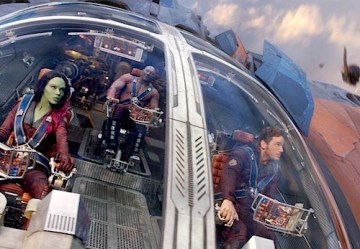 It isn’t even called Nova City, but I don’t have the foggiest what it is called because the film didn’t make me feel I should be learning it. Some more effort making sure we knew why that place mattered, even if it was just a clearer depiction of all the planning for its defence, might have sold the entire climax better.
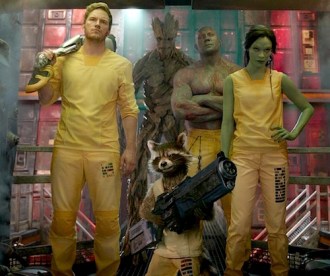 especially the overlong climax. Joss Whedon commented of his own Avengers film (as I quoted in
  100Films.co.uk