Unbreakable (2000)

100 Films’ 100 Favourites #95

Are you ready for the truth?

Country: USA
Language: English
Runtime: 107 minutes
BBFC: 12
MPAA: PG-13

Original Release: 22nd November 2000 (USA)
UK Release: 29th December 2000
First Seen: DVD, 2001

Stars
Bruce Willis (Armageddon, Looper)
Samuel L. Jackson (Pulp Fiction, Avengers Assemble)
Robin Wright Penn (The Princess Bride, The Conspirator)

Director
M. Night Shyamalan (The Sixth Sense, The Village)

Screenwriter
M. Night Shyamalan (Stuart Little, The Visit)

The Story
When security guard David Dunn is the only survivor of a train crash, and without a scratch on him, he encounters comic book fan Elijah Price, who has an unusual theory: that David is indestructible, a real-life superhero.

Our Hero
David Dunn is just an ordinary guy, with a low-key job and a wife and kid, but after his near-impossible feat of survival he begins to test himself. Could he be more remarkable than he ever imagined?

Our Villain
Spoilers! Which, considering this is an M. Night Shyamalan movie, is basically a red flag saying “here’s where the twist is”. All I’ll say is, keep an eye on David’s kid, Joseph. I mean, pointing a gun at your parent is never innocent, is it?

Best Supporting Character
Comic book art dealer Elijah Price was born with Type I osteogenesis imperfecta, a rare disease that makes his bones extremely fragile and prone to fracture. Losing himself in the world of comic book superheroes throughout his childhood, he develops a theory: that if he represents an extreme of human weakness, there must be someone at the opposite extreme…

Memorable Quote
Elijah: “Why is it, do you think, that of all the professions in the world you chose protection?”
David: “You are a very strange man.”
Elijah: “You could have been a tax accountant. You could have owned your own gym. You could have opened a chain of restaurants. You could’ve done of ten thousand things, but in the end, you chose to protect people. You made that decision, and I find that very, very interesting.”

Memorable Scene
As well as his indestructibility, David comes to believe he may have a form of ESP, that allows him to glimpse people’s criminal acts when he touches them. Encouraged by Elijah, he goes to a bustling train station, stands in the middle of the crowd, and holds out his arms…

Next time…
Reportedly the plot of Unbreakable was merely Act One of Shyamalan’s original concept, until it wound up expanding into an entire movie. Talk of a sequel and/or trilogy used to occur regularly, but Shyamalan made a bunch of crap no one liked instead. 16 years on, I guess hopes of a continuation are long dead.

Awards
1 Saturn nomination (Action/Adventure/Thriller Film)

What the Critics Said
The Sixth Sense was no fluke. Unbreakable, writer-director M. Night Shyamalan’s dazzling reunion with Bruce Willis confirms he’s one of the most brilliant filmmakers working today. […] The deliberately paced Unbreakable, make no mistake about it, is a vehicle form-fitted to Bruce Willis’ burgeoning gifts as an uncommonly subtle and affecting actor. Willis should get the Oscar nomination he deserved for The Sixth Sense, and Jackson’s enigmatic Elijah – who has devoted his life to searching for the sole survivor of a disaster, for reasons that won’t be explained here – is equally commanding in a difficult if somewhat underwritten role.” — Lou Lumenick, New York Post

Score: 68%

What Quentin Tarantino Says
“The final film, alphabetically, on my top twenty list is M. Night Shamalamadingdong’s Unbreakable, which I actually think, 1) not only has Bruce Willis’ best performance on film that he’s ever given. I think he’s absolutely magnificent in the film. It also is a brilliant retelling of the Superman mythology. In fact, so much so that, to me, the film was very obscure when it came out as far as what it was about. I actually think they did themselves a disservice, because you can actually break down what the film is about by basically one sentence, that I should think would’ve proved far more intriguing than their ad campaign, which is basically, “what if Superman was here on Earth and didn’t know he was Superman?”, which is what the film is about. Course, you don’t know that until actually you see the movie. Anyway, Unbreakable is, I actually think, one of the masterpieces of our time.” — Quentin Tarantino’s Favourite Movies from 1992 to 2009

What the Public Say
“The story is unique… I mean we see stories about superheroes everywhere… everywhere, and despite things here and there changed, they are still the same stories we have heard a thousand times before. This film had an original story that was both compelling and intense. The use of the camera angles is so well done it is a shock that Unbreakable is not at the top of everyone’s favorite Shyamalan film. It is masked under the presumption that it is moving slowly, because in reality… a lot is going on.” — Dave, Dave Examines Movies

Verdict

Some people view Unbreakable as the start of M. Night Shyamalan’s inexorable quality slide after the debut peak of The Sixth Sense (not that it was his debut). Those people are wrong. Partly because that degeneration doesn’t really start until the final act of The Village; partly because Unbreakable is Shyamalan’s best film. We’ve now had countless big-screen takes on superhero mythology, but none are quite like this. Man of Steel may have attempted to ask “what would happen if Superman were real?”, but it’s Unbreakable that better answers that question. With subtle performances, including arguably a career-best turn from Bruce Willis, and a plausible handling of its fantastical material, which nonetheless develops into a satisfying climax, Unbreakable is still one of the most original and best superhero movies ever made.

#96 will be… gunpowder, treason, and plot.
The Past Fortnight on TV #11

As discussed yesterday, I’m out of the country for a fair chunk of December, including when my regular monthly TV review is due. So to placate the ravenous need for my opinions about television that you will surely feel if such thirst goes unquenched for six-to-eight-weeks, here’s what I watched in the fortnight since my last TV post.

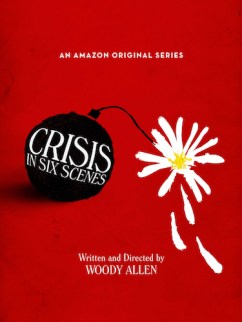
Crisis in Six Scenes
Crisis in Six ScenesWhen Amazon started making a serious effort to challenge Netflix in the field of streaming original series, one of their early moves was the headline-grabbing signing of Woody Allen to create his first TV series. As has since become clear, Allen didn’t know what he was letting himself in for. To summarise his comments from various interviews (and read between the lines a little), it seems he had a view of TV that’s about 20 years out of date, and thought he’d be able to dash off something suitable between two of his annual movies. At some point he obviously realised how much more sophisticated TV has become, and coopted a movie idea he’d had on the back-burner to expand into a short TV season. Allen’s been vocal about how miserable he found this process, but I’m not sure if he’s aware that he made a rod for his own back: he essentially made three movies in two years instead of his usual two. It probably would’ve been wise to swap out one of the films for the TV series, but you get the sense that, despite having been shown TV’s burgeoned respectability, Allen’s still something of a film snob. Rather than the potential of TV coming as a revelation to him, he’s declared he won’t be making any more.

On the evidence of the single six-episode season we did get out of him, that’s neither here nor there: Crisis in Six Scenes is just a slightly-longer-than-average Woody Allen film split into instalments. The first episode is the worst offender in this regard — it doesn’t reach a climax of any description, it just stops. The rest of the episodes aren’t as blatant (episode five’s ending even feels like it’s genuinely meant to be the end of an episode!), but none of them are particularly satisfying as a discrete segment. I’m not really one for binge-watching — I get fidgety and want a change; or if a show’s too good, I want to savour it rather than race on — but I watched all of Crisis in one sitting, because at heart it’s just a chopped-up movie. Some characters or events are confined to a single episode, but you get the impression that’s almost incidental rather than a deliberate attempt to make six finite units. The main storylines flow between episodes like the boundaries are artificially imposed — which, in a medium without the constraints of broadcast time slots and where all the episodes are released at the same time, they are.

A scene of CrisisBut enough of the form — what of the content? This is not prime Allen, that’s for sure. At times it makes for uncomfortable viewing, when it’s hard to tell if it’s half improvised or if half the cast are just a bit doddery (and I suspect it’s the latter). Other bits do work, though, and while it isn’t massively rewarding it is amusing at times. Even less assured are some broadly political points that it seems like Allen is trying to tap into, or maybe it’s just incidental. He appears to be using the series’ 1960s setting as a mirror of the present: the plot concerns a twenty-something anti-government protestor, and there’s lots of talk about unnecessary wars, campus demonstrations, young people staging protests, rights for women and black people, etc, etc. At first blush these parallels are all well and good, but I’m not sure they develop into much more than wry observations. The best I can take from it is a result of the particularly farcical last episode, where it may be that he’s trying to say people in general should be more aware and active, like the young are — to walk the walk of political change rather than just talking the talk.
If he was trying to spread such a message, it’s a bit buried. Maybe he was just picking on some low hanging fruit. Considering Allen’s half-arsed attitude to the whole endeavour, I guess that’s more likely. Oh well.

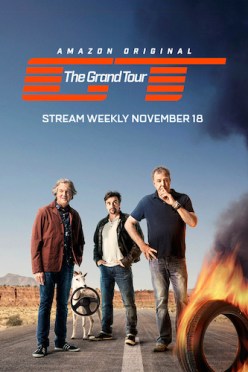
The Grand Tour (Season 1 Episodes 1-2)
The Grand TourAnother big gun in Amazon’s streaming mission, their £160 million “Not Top Gear, Honest” original series kicked off last month to widespread positive reviews and, apparently, big ratings (relatively speaking). I’m not really a ‘car person’, but like millions of others I wound up watching Top Gear during the height of the Clarkson / Hammond / May era for all the other hijinks. I thought it was going off the boil a bit even before their semi-enforced departure — I didn’t even get round to watching their last series. They come to Amazon after a short break (a long break for us, but it takes time to film these things, so, short break), and I think reinvigorated — possibly by the rest, possibly by the change of management, possibly by the huge budget.

There’s no denying that this is their Top Gear with just a few tweaks… unless you’re an Amazon lawyer, in which case it’s a completely different show. But the freedom from being a motoring programme on a public service broadcaster means they’re not quite so constrained by that remit. Episode 2, for instance, is half given over to them attacking a military training course in Jordan, a riff on Edge of Tomorrow in which they get to play at being action movie stars, and which features cars because action movies feature car chases, not because they’re actually reviewing how the motor performs while in a high-speed chase. There are still genuine car reviews, and they’re as dull / interesting (delete as applicable) as they always were. At least they’re excitingly shot and scored (still using cues from film music, as they always have).

Some bits are improved: the famous Star in a Reasonably Priced Car segment was always one of the weakest parts of the show (the track times were fun, but Clarkson is no interviewer), but here the need for celebrity guests is neatly pilloried. Conversely, a couple of things are weaker: their blatant attempt at a Stig replacement, The American, doesn’t really work. It’s also one of the bits that most feels “changed just enough to avoid a legal challenge”. I imagine there are only so many different ways to do a car show, so of course there are going to be similarities, but you could imagine them having done this as their next run of Genuine Top Gear (well, aside from the expense) without people thinking, “wow, they’ve completely changed the show!”

Still, it is what it is, and if you liked it before I can’t imagine you wouldn’t like it now, maybe even a little more.

Class (Series 1 Episodes 6-7)
ClassThe Doctor Who spin-off that no one’s watching continues with two of its strongest episodes. A two-parter that isn’t, the first is a “bottle episode”, with most of the cast stuck in detention and forced to confess their secret feelings by an alien rock. Cue arguments. Not Class’ strongest instalment — it’s a good idea, but the characters haven’t amassed quite enough secrets over just five episodes to make it feel as cathartic as it should — but it’s considerably better than the weaker ones. Even better is the next episode, which shows what Quill was up to while the kids were bickering. A world-hopping quest (presumably paid for by saving so much money on episode 6), it has several good ideas that it burns through like they’re going out of fashion. It feels most like Doctor Who, too, which provokes no complaints from me.

Next time: the Shadow Kin are back, again. Ah well.

Also watched…
  • Castle Season 7 Episodes 16-21 — by sheer bloody coincidence, the night before flying from London to the US I watched the episode where Castle flies from the US to London and has to deal with a murderer and possible terrorist on his flight. Super timing.
  • The Flash Season 3 Episodes 3-5 / Arrow Season 5 Episodes 3-5 — the much-anticipated four-way crossover between The CW’s superhero shows finished last night in the US, which means it’s at least a few weeks away over here. I’ll say something about it next time, then. Or the time after.
  • Junior Bake Off Series 4 — the main thing I take from this is that all kids are incredibly clumsy and slapdash.
  • The Moonstone — the recent BBC adaptation of Wilkie Collins’ novel, which is generally regarded as the first full-length English-language detective novel. This decent miniseries version was produced for daytime, and was the kind of series certain viewers proclaimed was good enough for prime time. It wasn’t.

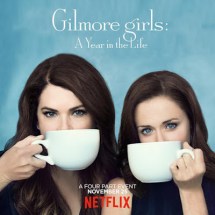
    Gilmore GirlsThings to Catch Up On
    This fortnight, I have mostly been missing Netflix’s Gilmore Girls revival, subtitled A Year in the Life. Rather than race through the four feature-length instalments between their release last Friday and our departure yesterday, we decided to save them for when we’re back, like a Christmas treat. Maybe we’ll just watch them in four days then instead, but at least we’ll feel like we have a choice.

    Next time… a festive special, looking at what seasonal delights the tellybox has provided us with this year. As far as December 29th or so, anyway.

  • The Past Month on TV #10

    If there’s something strange in your neighbourhood, who ya gonna call? Three middle-schoolers on their bicycles, apparently…

    Stranger Things (Season 1)
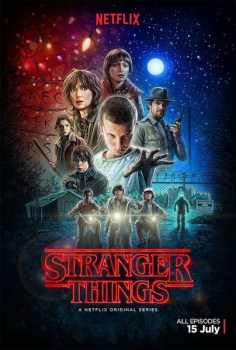
    Stranger ThingsHype — it’s a funny old business. It’s hard to have avoided hearing something about Stranger Things, Netflix’s summer hit that went down like gangbusters, its ’80s nostalgia perfectly calibrated to target the kind of people who run entertainment news websites these days — just to be cynical about it. Or truthful. Then there came the backlash, which attested there was nothing more to the show than those callbacks and tributes; a hollow experience of copying and “hey, remember this? That was good, wasn’t it?”
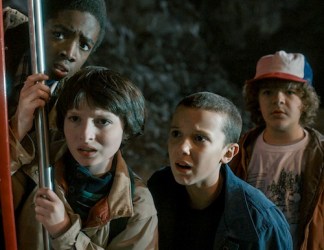
    So, I confess, I approached the first chapter with the thought in mind that I might be about to watch the most overrated thing since sliced bread. The opening instalment did little to sway me either way — as with many a ‘pilot’ episode (it’s not a pilot if it goes straight to series, but anyway), it’s got a lot of establishing to do: teaching us the normality of this world, introducing us to the players, setting up a mystery, teasing where that might be going… Stranger Things does all this well, but not exceptionally. It’s good, it makes you want to stick with it, it has promise, but it’s not one of those first episodes where you come away thinking, “Holy moly, this is gonna be great!” (First example of that that comes to mind: Game of Thrones. Another: Firefly. I’m sure you have your own.)

    Like so many streaming series, produced with an awareness that they’ll be released all at once like a really long movie, it’s a little slow-going at times, but it’s kept ticking over with some exceptional elements. Yes, it’s bedded in the style and tone of many beloved ’80s genre classics — primarily Stephen King tales and films produced (not just directed) by Steven Spielberg — but that’s just the execution. In storytelling terms, it has its own mythology, and it feels like there’s a rich vein of originality there. Or possibly it’s just references and riffs I’m not familiar with, who knows. Even better than that are the performances. Winona Ryder is incredible as the mother of a missing boy, her raw feelings and frantic actions forming a core of plausible emotional reaction in the centre of fantastic events. Millie Bobby Brown is also excellent as the mysterious Eleven, conveying so much personality and internal conflict with very little dialogue.

    Stranger haircutsWithout wanting to get into spoiler territory (despite what the media would have you believe, not everyone has Netflix all the time and not everyone watches every new zeitgeisty series immediately. Apologies if you write for an entertainment site and I’ve just given you palpitations), everything comes together nicely for a barnstorming pair of climactic episodes. For my money, the penultimate chapter is the best one: with a bunch of revelations out of the way (some of them easily guessed but finally confirmed), the series kicks off a run of long-awaited fan-pleasing events (as in many a drama, it takes this long for everyone to finally start talking to each other; also, the bit with the van!) The finale is less accomplished, with some characters wandering around for a bit in a way that feels designed to pad the running time. Still, it’s a satisfying conclusion… to season one, anyway.
    As an outsider for most of the summer, the endless and ever-increasing handwringing over whether there would be a second season was actually kind of amusing — and the punchline came when it was revealed Netflix had actually commissioned season two before season one was even released, they’d just decided to keep it secret for a bit. Here’s the thing: Netflix has never not recommissioned one of its original series. Even Marco Polo, which apparently no one watched or talked about, got at least a second run. And here you have a show which everyone’s talking about, and presumably most of them are actually watching too, and you think Netflix aren’t going to bring it back? I mean, it wraps itself up quite well, but there’s a whole pile of blatant teases for future storylines. C’mon, people!

    Anyway, I’m happy to report that Stranger Things by and large lives up to the hype, especially by the time it reaches its climax. Bring on season two! Between that and all the Marvel series, maybe I’m going to end up with a year-round Netflix sub after all… You win, Netflix. You win.

    Class (Series 1 Episodes 1-5)
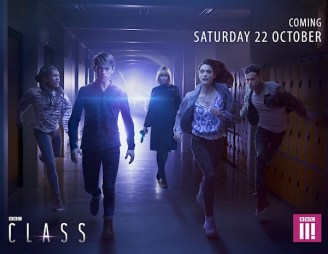
    ClassTen years to the very day since the launch of the original dark, sexy BBC Three Doctor Who spin-off, Torchwood, we got this dark, sexy BBC Three Doctor Who spin-off. Playing as much like the other 21st century Who spin-off, CBBC’s The Sarah Jane Adventures, it concerns a bunch of Sixth Formers battling alien threats coming through cracks in time and space that occur around their school. And also having sex with each other at the drop of a hat, because that’s totally what life is like for all teenagers. So yes, Torchwood + Sarah Jane x Skins = Buffy, pretty much. I really liked the first episode (as pilot-type episodes go, it’s a strong’un), and the third, Nightvisiting, was also a great concept well executed; but the other three instalments were run-of-the-mill and/or awash with niggles. Plus the two-parter in episodes four and five suffered from having too little story to fill two whole episodes. So it’s a mixed bag, but Torchwood was the same at the start and eventually produced one of the best miniseries ever made (Children of Earth), so you never know.

    The Flash (Season 3 Episodes 1-2)
    Arrow (Season 5 Episodes 1-2)
    The Flash season 3The CW’s raft of superhero shows restarted on UK TV this month. I’ve given up on Legends of Tomorrow and am still not joining Supergirl (though I got hold of the opening episodes, co-starring Superman, to maybe make time for at some point); but, five seasons in, Arrow has me suckered for the long-haul, and The Flash tempted me back with the intrigue of adapting Flashpoint. I’ve never got on the bandwagon with Flash, which attracted a lot of praise during its first season that I simply didn’t agree with, leading it to outshine Arrow in ratings and people’s affections. Arrow has long been off the boil, and season five certainly hasn’t got it back up to temperature so far, but The Flash had plenty of issues of its own. It’s not problem free now, but I actually really liked the first couple of episodes of the new season. It’s still a long way from the top tier of TV superheroes (Netflix have that sewn up), but it’s likeable.
    Also watched…
  • Castle Season 7 Episodes 2-15 — it feels like the quality takes a nosedive with this season, and, sure enough, as I suspected, it turns out this is when they changed showrunner. Halfway through it’s beginning to pick back up a bit, at least.
  • The Crystal Maze Stand Up To Cancer Celebrity Special — I used to love this as a kid. As an adult… eh. I’m sure it’s a lot of fun to actually do, though.
  • The Great British Bake Off Series 7 Final — bye bye, Proper Bake Off. Whatever Channel 4 do in 2018, it won’t be the same.
  • The Musketeers Series 2 Episodes 8-10 — in which everything is wrapped up… and then left open-ended. Good thing there’s a third series.
  • The National Lottery: Who Dares Wins Series 9 Episodes 1-4 — I don’t waste much time on gameshows, but naming as many things as you can think of from semi-obscure lists? Right up my street. An impossible show to watch live, though — you need to fastforward the filler and pause the answers.
  • The Rocky Horror Picture Show: Let’s Do the Time Warp Again — full review here.

    Things to Catch Up On
    The CrownThis month, I have mostly been missing the most expensive TV show ever made*, Netflix’s much-discussed The Crown. I don’t know if they’ve been pushing it as much in the rest of the world as they did in the UK, but it certainly felt like it was everywhere… for about a week, as is usually the way with Netflix series. Also missed: the equally-discussed Netflix-exclusive new run of Black Mirror. Both of these are because I don’t keep up a permanent Netflix subscription, but between them, the forthcoming Gilmore Girls revival, and the Series of Unfortunate Events remake in January, I will be signing up again late in December (using the free month voucher they had in the Radio Times, hurrah!)
    * Apparently it isn’t, actually.

    Next month… I’ll be out of the country when the next update is due, so it may be a little later than normal — perhaps a ‘Christmas special’.

  • The Survivalist (2015)

    2016 #150
    Stephen Fingleton | 99 mins | streaming (HD) | 2.35:1 | UK / English | 18

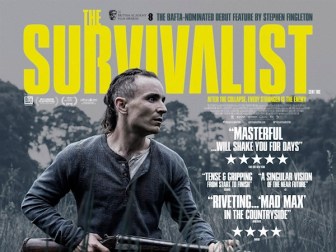
    The Survivalist’70s self-sufficiency sitcom The Good Life meets bleak post-apocalypse drama The Road* in this technically-science-fiction dramatic thriller, the BAFTA-nominated debut of writer-director Stephen Fingleton.

    A man (Martin McCann) lives in a woodland cabin, farming just enough for himself and fending off raiders. When a woman (Olwen Fouéré) and her daughter (Mia Goth) turn up, they build an uneasy alliance in spite of mutual suspicion.

    With a Malickian eye for both nature and pace, it has a grim plausibility about the end of the world and, more than that, the fundamentals of human nature. Depressing but truthful — and, post-Trump, possibly prescient!

    4 out of 5

    * I’ve still not actually seen The Road so this comparison may be faulty, but it was the first super-grim (so I’ve heard) post-apocalyptic drama that came to mind. ^

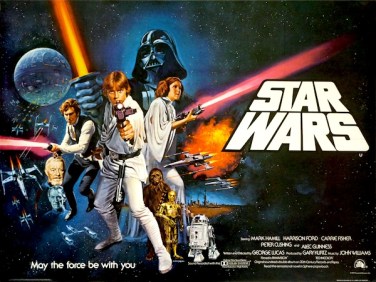
    Star Wars (1977)

    100 Films’ 100 Favourites #88

    A long time ago
    in a galaxy far, far away…

    Also Known As: Star Wars: Episode IV – A New Hope

    Country: USA
    Language: English
    Runtime: 121 minutes | 125 minutes (special edition)
    BBFC: U
    MPAA: PG

    Original Release: 25th May 1977 (USA)
    UK Release: 27th December 1977
    First Seen: VHS, c.1990

    Stars
    Mark Hamill (Batman: Mask of the Phantasm, Star Wars: Episode VIII)
    Harrison Ford (American Graffiti, The Fugitive)
    Carrie Fisher (When Harry Met Sally…, Star Wars: The Force Awakens)
    Alec Guinness (Kind Hearts and Coronets, The Bridge on the River Kwai)
    James Earl Jones (Field of Dreams, The Lion King)

    Director
    George Lucas (THX 1138, Star Wars: Episode I – The Phantom Menace)

    Screenwriter
    George Lucas (American Graffiti, Star Wars: Episode II – Attack of the Clones)

    The Story
    When he discovers a distress call from a beautiful princess, a young farmhand joins forces with an old warrior, a roguish pilot, his bear-like first mate, and a pair of bickering robots to rescue her — which involves taking on the evil galactic Empire, and in particular their chief enforcer: Darth Vader.

    Our Heroes
    Farm boy Luke Skywalker just wants to go off and join the rebellion, but little does he realise how much that path leads to his destiny. Helping him get there is smuggler Han Solo, who may come from a wretched hive of scum and villainy and is happy to shoot first at the same time as his opponent, but has a heart of gold really. The object of their mission, and both their affections, is the strong-willed Princess Leia.

    Our Villains
    A man in a black suit with breathing problems might not sound like one of the most effective screen villains of all time, but that’s what you get when you come up with pithy descriptions like that. In fact, Darth Vader is so badass, he’s not above choking members of his own side, the evil Empire — and they’re evil.

    Best Supporting Character
    R2-D2 is the best supporting character in every Star Wars film, but in this one we are also introduced to Obi-Wan Kenobi. A mysterious old man who inducts Luke into the ways of the Force, Obi-Wan is played by veteran character actor Alec Guinness, meaning he is bestowed with instant awesomeness. Not as handy with a lightsaber as he used to be, mind.

    Memorable Quote
    Darth Vader: “Your powers are weak, old man.”
    Obi-Wan Kenobi: “You can’t win, Darth. If you strike me down, I shall become more powerful than you could possibly imagine.”

    Quote Most Likely To Be Used in Everyday Conversation
    “I have a very bad feeling about this.” — Luke Skywalker

    Memorable Scene
    It’s fair to say Star Wars is loaded with memorable scenes, but for pure effectiveness you’d have to go a long way to beat the opening sequence: giant spaceships flying overhead, blasting laser beams at each other; walking, talking robots bickering; a gunfight between men and armoured soldiers; and then Darth Vader, stalking into the movie like a sci-fi vision of Death himself.

    Memorable Music
    George Lucas wanted a score reminiscent of classic Hollywood movies to help inform audiences about what they were watching — that although it was set on alien worlds with giant spaceships and laser swords, it was a familiar kind of heroic adventure tale. Composer John Williams delivered exactly that, drawing on influences including classical composers, like Stravinsky and Holst, and film composers, like Erich Wolfgang Korngold (King’s Row) and Alfred Newman (How the West Was Won). He produced not only a great soundtrack all round, but arguably the most famous movie theme of all time.

    Truly Special Effect
    Star Wars did so much to break new ground in special effects, it’s difficult to know where to start. Some of it’s a little skwiffy (the lightsaber effects are notoriously problematic, their colours varying even in recent remastered versions), but the model work — the spaceships and their battles — is fantastic.

    Letting the Side Down
    Han shot first! *ahem* Yes, A New Hope is definitely the movie where Lucas’ unpopular Special Edition fiddling is it at its least liked, primarily for that bit where Han no longer shoots Greedo in cold blood. What do you have to do to get a merciless good guy these days, eh? Other changes have varying degrees of effectiveness: having extra X-Wings in the Death Star battle looks pretty neat, but the CGI Jabba the Hutt — complete with Han stepping jerkily over his tail — is terrible.

    Making of
    George Lucas screened an early cut of the film for a group of his director friends, most of whom agreed with him: it was going to be a flop. Brian De Palma even called it “the worst movie ever”. There was one dissenting voice: Steven Spielberg, who predicted it would be a huge hit. As if that man’s entire career wasn’t proof enough that he knows what he’s talking about…

    Previously on…
    Star Wars’ influences can be clearly traced back to the sci-fi cinema serials of the ’30s and ’40s, like Flash Gordon. In-universe, the saga begins with the Prequel Trilogy, and there’s shedloads of other spin-off media. Most pertinently, this December’s first live-action non-saga Star Wars film, Rogue One, should lead more-or-less directly into the start of A New Hope.

    Next time…
    Star Wars essentially inspired the next 39 years (and counting) of effects-driven summer blockbusters. It also started a mini-industry all of its own — well, quite a large industry, actually: films, TV series, novels, comic books, computer games, board games, role playing games, toys, clothes, lunch boxes… anything you can imagine, I’d wager. Primarily, the story is directly continued in The Empire Strikes Back and Return of the Jedi, and resumed in The Force Awakens, with more to come in 2017 and 2019.

    Awards
    7 Oscars (Editing, Score, Sound, Art Direction-Set Decoration, Costume Design, Visual Effects, Special Achievement Award for Sound Effects)
    4 Oscar nominations (Picture, Supporting Actor, Director, Original Screenplay)
    2 BAFTAs (Music, Sound)
    4 BAFTA nominations (Film, Editing, Costume Design, Production Design/Art Direction)
    13 Saturn Awards (Science Fiction Film, Supporting Actor (Alec Guinness), Director (tied with Spielberg for Close Encounters), Writing, Music (John Williams tied with himself for Close Encounters), Costumes, Make-Up, Special Effects, Editing, Sound, Art Direction, Set Decoration, Special Award for Outstanding Cinematographer)
    4 Saturn nominations (Actor (both Harrison Ford and Mark Hamill), Actress (Carrie Fisher), Supporting Actor (Peter Cushing))
    Won the Hugo for Best Dramatic Presentation.

    What the Critics Said
    “The battles, the duels, the special effects — and what special effects! Swords made of light, blasters shooting laser beams, exploding planets — it goes on and on. All the aging acid-heads who tripped out to Stanley Kubrick’s overrated 2001: A Space Odyssey, will go bananas over Star Wars. Not to mention comic-book freaks, science fiction and fantasy fans, lovers of old westerns, romances, mysteries and movies about the Crusades. In addition to being a slickly produced and highly entertaining adventure suitable for the whole family, Star Wars is richly evocative of a whole range of old film forms and I predict that entire books will be written on the sources, the religious symbolism, the mythological and historical allusions, and so on and so forth that Lucas has incorporated” — Robert Martin, The Globe and Mail (This review from the original release, before it was called Episode IV, also notes that it “opens like Episode 6 of a serial”. Good call, sir.)

    Score: 93%

    What the Public Say
    “To this day, A New Hope is used as a primary example of storytelling. It perfectly establishes a world and introduces audiences to a protagonist that goes on his hero’s journey. There’s a reason that so much pop culture parodies and pays tribute to this film and it’s because of how near perfect it is. You have the Princess in peril still holding her own against what will always be one of the greatest movie villains of all time in Darth Vader. That is also one thing the prequels do that take away from this movie and the two that come after: They soften Vader. Vader is cold, ruthless, robotic, and menacing. Not someone who cries about his girlfriend. […] A New Hope just does everything the right way. When it wants you to be excited, you are. When it wants you to be sad, you are. John Williams contributed to this a great deal with his score; and Lucas’ use of practical effects to tell his story make it a masterpiece.” — Reed, We’re Not Sorry

    Elsewhere on 100 Films
    I’ve written about the original Star Wars trilogy twice before, both times back in 2007. Of A New Hope’s modified DVD version, I said that “there are a few extremely minor changes from the ’97 version… sadly, though, not to the CGI: Jabba still looks dire, not even as good as the Episode I version — CGI that was five years old by the time of this release.” Then, treating the film as the fourth part of the saga, I wrote that “the biggest change [from the prequel trilogy] is in tone: I to III present an epic fantasy story, full of wizard-like Jedi, intricate galactic politics, and ancient prophecies; by contrast, A New Hope is straight-up action/adventure, far more concerned with gunfights, tricky situations, exciting dogfights, and amusing banter than with whether the President has been granted too much executive power.”

    Verdict

    In my post on The Empire Strikes Back, I said it wasn’t actually my favourite Star Wars film. For all the popularity the series has as a whole, there’s only really one other possible contender for that crown: the first one. By which I mean this one, not Phantom Menace. Here, Lucas almost instantly conjures up a universe that feels wholly-imagined and genuinely lived-in (which is part of the reason people ended up so disappointed by the made-up-as-they-went-along, fill-in-the-blanks prequel trilogy). Throw in an array of likeable and entertaining characters, plus groundbreaking special effects, and you’re on to a winner. The plot may just be a classical hero narrative, but it’s in space and has laser swords — that counts for a lot.

    Next: #89 ! Fuck yeah!

    Fantastic Four (2015)

    2016 #110
    Josh Trank | 96 mins | streaming (HD) | 2.35:1 | USA / English | 12 / PG-13

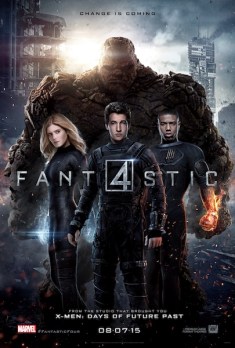
    Fantastic FourSometimes you just have to see what all the fuss is about, even if that fuss is overwhelmingly negative. Obviously that’s the case with the most recent attempt to bring Marvel’s popular “first family” to the big screen. The behind-the-scenes stories are already the stuff of movieland legend, so I won’t repeat them here, but what of the film itself? Or the version that ended up available for public consumption, anyway.

    Reimagining the group’s origins, the film sees young genius scientist Reed Richards (Miles Teller) recruited to a research institute where he works with Sue Storm (Kate Mara), her adoptive brother Johnny (Michael B. Jordan), and the precocious and rebellious Victor Von Doom (Toby Kebbell) to develop a teleport to another world, Planet Zero. When the device is proven to work, the institute’s supervisor rules astronauts will get to take the maiden voyage. Annoyed, the scientists rope in Reed’s childhood friend Ben (Jamie Bell) to help them use it first. But things go horrendously awry, leaving the gang with new abilities…

    That chunk of the story takes most of the first hour. Other than being a little slow getting to the point, considering most viewers know where it’s all going, and perhaps not building the characters’ relationships as thoroughly as it could have, I thought it was shaping up as a pretty decent film. It’s not a mind-blowing masterpiece, and it’s certainly not faithful to the original comic, but as a sci-fi movie? It’s good. Not incredible, but good. Well, aside from one truly terrible reshoot wig.

    Then the story suddenly jumps forward a whole year, and things go to pot. From that point the film’s ideas aren’t bad, but it feels like the movie was ripped apart and put back together awkwardly, with parts missing, some out of order, and other bits added to cover gaps Awkwardly assembledand serve as new pieces — like a shattered mug that’s been reassembled with lashings of superglue and using a handle from another vessel, which has inexplicably wound up a slightly different size and shape to how it used to be. Considering the studio got cold feet and insisted on massive reshoots, this is quite possibly exactly what happened.

    It climaxes with a rushed action sequence on Planet Zero, which was clearly constructed entirely during reshoots (the constant presence of Reshoot Wig gives that away, if nothing else). The speed with which it’s dispatched makes it feel anticlimactic, despite the alleged world-destroying scale, and mainly leaves you wondering how the film originally ended. When it’s done, the heroes return to Earth and triumphant music swells… as they survey a scene of total devastation. It’s clear this hasn’t been thought through. There are still more signs of a rushed production: the CGI used to realise the Thing is pretty good for most of the film, but an unbearably cheesy final scene looks like a poorly-composited unfinished draft. Allowing such a rushed, underfunded, and heavily reshot final act to be released feels amateurish on Fox’s part.

    While the studio are obviously keen to blame director Josh Trank for all the film’s problems, and possibly sink his career in the process, I can’t help but think it’s their own fault. It was they who chose to commission a “dark and serious” take on the Four, at odds with their usual depiction, but then wimp out and not follow through on the directorial vision they’d chosen. Despite what some fans would say, it’s this lack of commitment that’s the actual problem. Even in the face of the success of the lighter-toned Marvel Studios movie universe, Too cool for superhero schoolFox like to keep their superhero movies Serious and Dark — and why not? Before this, it had worked pretty well for them across seven X-Men movies, while their colourful-and-cheery earlier attempts at bringing Marvel’s first family to the big screen met with unwavering derision and diminishing box office. It was not an illogical choice to try something different tonally.
    In the end, however, this version crashed and burned even harder than those earlier films, both with fans and at the box office. Meanwhile, the latest X-Men movie was similarly ripped asunder by critics and has only performed acceptably; and concurrently, superhero comedy Deadpool took the world by storm. Perhaps this will create a sea-change in the way Fox approach their superhero properties? Only time will tell — though with Deadpool 2 set to offer more of the same and a Wolverine threequel following in its R-rated footsteps, while another X-Men movie is surely in development but not officially announced and the planned Fantastic Four sequels have been quietly cancelled, perhaps it already is.

    Fantastic Four’s real problems are twofold: deviating so heavily from the original comic book, which meant from the outset that an awful lot of fanboys were always going to hate it; and then not having the confidence to see that vision through, titting about with things in post. The latter results in a mess of a second half where the whole thing unravels. It’s not perfect before that, but it’s a decent sci-fi movie. I’d love to see Trank’s original cut — I’m not sure it would be a great film, and I’m damn sure it still wouldn’t properly resemble the Fantastic Four of Marvel’s comics, but I bet it would be a lot more consistent than this, and consequently better.

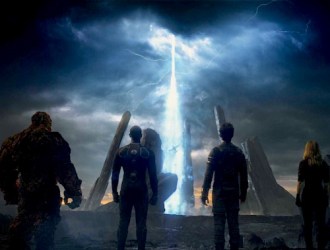
    Beam of blue light shooting into the sky? Never seen that before...What could have been a comfortable 3-star movie, maybe even 4 if it followed through well enough, is dragged down to 2 by studio meddling. Will they never learn? Nonetheless, I actually enjoyed enough of Fantastic Four that, while it won’t be going on the long-list of contenders for the best movies I’ve seen this year, I won’t be putting it on the list for the worst either.

    2 out of 5

    Spider-Man 2 (2004)

    100 Films’ 100 Favourites #86

    A man will face his destiny.
    A hero will be revealed.

    Country: USA
    Language: English
    Runtime: 127 minutes | 135 minutes (2.1 extended cut)
    BBFC: PG (cut, 2004) | 12A (2004) | PG (uncut, 2009)
    MPAA: PG-13

    Original Release: 25th June 2004 (Lithuania)
    US Release: 30th June 2004
    UK Release: 16th July 2004
    First Seen: cinema, July 2004

    Stars
    Tobey Maguire (Pleasantville, The Great Gatsby)
    Kirsten Dunst (Interview with the Vampire, Melancholia)
    James Franco (City by the Sea, 127 Hours)
    Alfred Molina (Frida, An Education)

    Director
    Sam Raimi (The Evil Dead, Drag Me to Hell)

    Screenwriter
    Alvin Sargent (Gambit, Ordinary People)

    Story by
    Alfred Gough (Lethal Weapon 4, The Mummy: Tomb of the Dragon Emperor)
    Miles Millar (Shanghai Noon, Herbie Fully Loaded)
    Michael Chabon (John Carter)

    Based on
    Spider-Man, a comic book superhero created by Stan Lee and Steve Ditko; in particular the story Spider-Man No More! by Stan Lee and John Romita, Sr.

    The Story
    Peter Parker battles problems in his personal life while his superhero alter ego Spider-Man battles the machinations of evil scientist Dr Otto Octavius.

    Our Hero
    Spider-Man! Spider-Man does whatever a spider can — spins a web any size, catches thieves just like flies. Is he strong? Listen bud, he’s got genetically-modified blood. Wealth and fame he’s ignored, action is his reward… though he’s having doubts about if it’s worth it. With great power comes great responsibility, and neither sit well with a kid who wants a normal life.

    Our Villain
    Doc Ock! Guy named Otto Octavius winds up with eight limbs, four mechanical arms welded right onto his body — what are the odds?

    Best Supporting Character
    Before he won an Oscar for Whiplash, or posted photos of his insanely ripped body on social media, J.K. Simmons brought himself to everyone’s attention as the hilariously irascible editor of The Daily Bugle newspaper, J. Jonah Jameson. He was so good, they haven’t even bothered to recast the character for any of the three live-action Spidey films that have come since the first reboot.

    Memorable Quote
    “So here I am, standing in your doorway. I have always been standing in your doorway.” — Mary Jane

    Quote Most Likely To Be Used in Everyday Conversation
    “With great power comes great responsibility.” — Uncle Ben may be dead, but they manage to have him say it in this one too.

    Memorable Scene
    The elevated train fight between Spidey and Doc Ock. It was the first major sequence filmed, before the screenplay was completed, but Raimi had dreamt it up personally. It was shot in Chicago because New York no longer has an elevated railway, but Raimi was seeking to create an idealised version of the city.

    Technical Wizardry
    The sound effects for Doc Ock’s tentacles were created using motorcycle chains and piano wires, while the sound of him ripping open the bank vault was a hubcap scraping along the floor. The designers consciously didn’t include the noise of servomotors, to enhance the idea that the tentacles have become a part of Ock’s body.

    Truly Special Effect
    Doc Ock’s tentacles were built practically. Each one was 13ft long, made up of 76 pieces, fully articulated, and controlled by four people. Obviously some of their appearances are CGI, especially when Ock’s using them to move around, but every scene was first filmed using the real props to see if CGI was truly necessary

    Making of
    Tobey Maguire injured his back before filming began, to the extent that Jake Gyllenhaal (at the time only really known for Donnie Darko) was tapped to replace him, and even began preparing for the shoot. Ultimately Maguire recovered enough to participate (obviously). A couple of years later Gyllenhaal was one of the final contenders for Batman in Batman Begins, but didn’t get to do that either. I’m sure Marvel will find a superhero for him eventually — they do for most people.

    Previously on…
    Ignoring the many and various animated series and failed attempts to bring Spidey to the screen, there was the first Sam Raimi-directed Spider-Man, which was the first film to gross over $100 million on its opening weekend. Also, MTV animated series Spider-Man: The New Animated Series is technically set after Spider-Man and therefore before Spider-Man 2, but I don’t think anyone remembers it…

    Next time…
    Spider-Man 3 concluded the trilogy with a whimper thanks to behind-the-scenes clashes, which also scuppered plans for Spider-Man 4. The series was rebooted with the unpopular The Amazing Spider-Man, which was followed by the even-more-unpopular The Amazing Spider-Man 2, leading to the character being rebooted again and integrated into the Marvel Cinematic Universe. The latest version debuted in Captain America: Civil War before starring in a solo movie, Spider-Man: Homecoming, next summer.

    Awards
    1 Oscar (Visual Effects)
    2 Oscar nominations (Sound Mixing, Sound Editing)
    2 BAFTA nominations (Sound, Visual Effects)
    5 Saturn Awards (Fantasy Film, Actor (Tobey Maguire), Director, Writer, Special Effects)
    3 Saturn nominations (Supporting Actor (Alfred Molina), Music, DVD Special Edition Release)
    Nominated for the Hugo for Best Dramatic Presentation Long Form
    1 World Stunt Award (Best Overall Stunt by a Stunt Man (Peter Parker falling into clothes lines))
    2 World Stunt Awards nominations (Best Work with a Vehicle, Best Speciality Stunt (Doc Ock waking up))

    What the Critics Said Then
    “a sequel that not only outstrips its predecessor but has a perversity and quick-wittedness that hardly seem to belong in a comic-book movie. […] It’s unusual and gratifying to find a multimillion dollar movie that’s been put together with some thoughtfulness, that doesn’t neglect subtlety in between delivering the smash-bang-wallop. […] It’s the interest in human fallibility that sets this movie apart. The superhero who bridles at his own responsibility may not sound an especially gripping prospect, but his dilemma is explored with a conviction that, within the fantasy genre, feels almost groundbreaking.” — Anthony Quinn, The Independent

    Score: 93%

    What the Critics Say Now
    On placing the film in his top ten for BBC Culture’s 100 Greatest Films of the 21st Century: “First of all, the 21st century is the century of superheroes. To approach the history of this era without acknowledging that is to miss the story. Many of my peers opted to make The Dark Knight the film that represented superheroes for them, but while I like that movie it’s a crime film in superhero drag. Spider-Man 2 is an unabashedly comic book superhero movie, a film that is pulsing with the vibrant four color life of the best comic book panels and that is soaked in the sudsy soap opera of the best comic book word balloons. It’s a movie that is a perfect fusion between filmmaker and material, and it is, without a doubt, the best example of superhero filmmaking ever attempted.” — Devin Faraci, Birth. Movies. Death.

    What the Public Say
    “The most interesting relationship that gets explored in Spider-Man 2, however, is with Spider-Man himself. In the first Spider-Man, Peter basically became Spider-Man the instant he decided to live his life by Uncle Ben’s last few words and donned on the Spidey suit, and that was that. Here, Peter Parker basically breaks up with Spider-Man and with Uncle Ben, as he says he is “Spider-Man, no more,” and has to start over and re-bond with the hero inside of him. [The] movie makes use of this psychological relationship to refine its definition of a hero as established in the first film. It isn’t just about responsibility. It argues that the hero is inherently sacrificial. They give up even their dreams to salvage yours. This definition is much more mature and sophisticated […] It goes to show that a big budget doesn’t have to translate into senselessness. Spider-Man 2 is the intellectual experience I was looking for in a Spider-Man film with all the action that I always imagined was possible.” — Kevin Tae, Taestful Reviews

    Elsewhere on 100 Films
    Just before Spider-Man 3 came out they released an extended cut of the first sequel on DVD, dubbed Spider-Man 2.1 (remember when they briefly called extended cuts things like that?) At the time I concluded “it’s still a 5-star film because it doesn’t ruin the original — but it’s not at all essential”, though I later added a postscript to note that “I probably should have rated this lower. It may still be a good film, but the fact is the original cut’s better — even if just for the superior version of The Lift Scene. I rather doubt I’ll ever watch it again.”

    Verdict

    In a simpler time before every superhero movie was connected to every other superhero movie, filmmakers were free to only have to tell one story and develop the ongoing life of their lead characters (rather than juggle everyone else’s lead characters for cameos, too). Spider-Man 2 is a pinnacle of this. It takes the seeds sown by the first movie and nurtures them into more interesting and complex emotional dilemmas, without losing sight of the fact it’s a movie based on a comic book about a man who swings around the city in a red-and-blue onesie fighting crime. Nonetheless, it’s as memorable for Peter and MJ’s up-and-down relationship as it is for the stunning action sequences, which become icing on the cake rather than the raison d’être.

    #87 is… no kid’s game.

    The Rocky Horror Picture Show: Let’s Do the Time Warp Again (2016)

    2016 #165
    Kenny Ortega | 88 mins | download (HD) | 16:9 | USA / English

    The Rocky Horror Picture Show: Let's Do the Time Warp AgainWhen this TV movie kicks off with Ivy Levan sashaying her way around a cinema while she mimes to a pre-recorded and over-produced backing track of Science Fiction/Double Feature, full of licks and runs and finding four notes to hit where there used to be one, like a desperate X Factor wannabe who has no concept of the meaning of the lyrics she’s warbling but is ever so desperate to show she can saaang (that’s like singing but with added Cool), you get a pretty fair idea of the terrible experience about to be unleashed upon you by the not-so-catchily titled The Rocky Horror Picture Show: Let’s Do the Time Warp Again. That’s to say it’s been modernised, Americanised, and sanitised.

    If you know the original then you know the plot, and if you don’t know the original then you have no business watching this so-called tribute version, which premiered on Fox in the US last week and makes its way to the UK on Sky Cinema from today. “Tribute” is the latest word someone has co-opted to avoid saying “remake”, a marketing strategy that was presumably settled upon after they realised they’d produced a witless, regressive clone of material that, though over 40 years old, is still more subversive and boundary-pushing than this plastic Disneyfied tosh.

    Sweet transgender womanThe interpretation of the songs is appalling. The recordings are all overworked, full of needless warbles and added “oohs”. They’ve been modernised in such a way that, when current popular fads for over-singing things (“licks” or “runs” or whatever else they call them) have passed — as they surely will — these new versions will sound even more dated than the already-40-year-old originals, which have a certain timelessness. The lyrics are sung with the same amount of attention to what they mean as you get from a computer’s text-to-speech function, including or echoing parts of the original without understanding why they’re there or what function they perform; or if it does know the function, it doesn’t know how to replicate it.
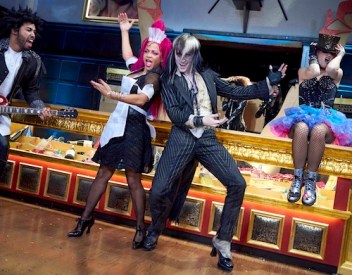
    To say its performances are like a bad am-dram production would be an insult to am-drammers everywhere. Almost everyone is miscast. It was, perhaps, a nice touch to include Tim Curry, but his limited scenes are uncomfortable to watch because it’s painfully obvious that the poor man is still labouring under the aftereffects of his stroke. As Brad, Ryan McCartan overacts as if he thinks that’s the whole point. Reeve Carney makes Riff Raff a leering creep, and his needless affected British accent is awful. As Magenta, Christina Miian’s is worse. As Frank, Laverne Cox’s imitative mid-Atlantic twang is even worse again. Why did they do it?! Presumably because, as I said, it’s all a thoughtless copy of the original.

    The casting of a transgender woman as a transvestite is its own kettle of worms — either she’s a woman doing radical things like fancying men and being jealous of another woman stealing her guy, or you’re saying she’s not actually a woman but still a man and… well, like I say, it’s a mess. A commenter on the A.V. Club’s review summed up the cumulative effect quite succinctly: “Fox was actually able to pull off a pretty conservative casting choice while appearing uber progressive… By casting Cox, who identifies as female, in the role of Frank-N-Furter the seduction scenes actually became far less risqué”.

    Well, it's certainly been warpedEverything is blunted further by Kenny Ortega’s ineffective direction. The camerawork is flat and uninteresting, the shot choices unimaginative. Some of the choreography looks interesting — it’s certainly more elaborate than in the original film — but the camerawork seems to be actively trying to obscure it. The editor must have struggled, unable to generate any additional excitement due to a shortage of options. At times it looks as if it was filmed live, under which circumstances its weaknesses might be understandable, if not excusable… but it wasn’t.

    Occasionally there are cutaways to a cinema audience — not a real one, but a gaggle of extras, sat in a theatre watching what we’re watching. These moments are pathetic and pointless. I get that it’s meant to be a nod to the interactive midnight showings that have made Rocky Horror the phenomenon it is, but they demonstrate none of the wit or verve that make those screenings so popular. Plus the original film is good entertainment even without such intrusions; this isn’t. You might think that makes the asides necessary to liven it up, but there are so few of them, and they’re so lacking in imagination, or any discernible content whatsoever, that they just feel like they’re dragging the experience out even further.

    Believe it or not, it’s not all bad. There’s one new gag in the dinner scene that’s actually pretty funny. It’s delivered by Faye Marsay lookalike Annaleigh Ashford, who makes a good fist of Columbia. Rounding out the leads, Victoria Justice has all the necessary charms to make a pretty fair Janet. Victoria Justice's omnipresent cleavage. May also be omnipotent.I refer partly to her omnipresent cleavage, but also her acting. It’s not great by any means, but she’s suitably sweet and twee at the start, then manages to sell Janet’s near-instantaneous transformation from uptight goody-two-shoes to sex-mad strumpet using just a handful of expressions and line deliveries in the slight gap her character has between Over at the Frankenstein Place and Touch-a Touch-a Touch Me. The latter is one of the film’s rare highlights, for various reasons. One of those is actually Staz Nair as Rocky — undoubtedly the least challenging role in the piece, but at least he gets it right, and his musclebound chest counterbalances Justice’s for those of the other persuasion. The only downside are his tattoos: he was supposedly just grown in a tank, how does he have tattoos?!

    More than the ’75 film, Let’s Do the Time Warp Again brings to mind the 2010 episode of Glee that essayed the same musical. If you suffered through The Rocky Horror Glee Show, as I did, you’ll know it was a travesty. Is this even worse? Well, that’s a bit like someone forcing you to eat a dog shit and a cat shit before asking you which tasted nicer. That’s a little unfair: the Glee version was meritless; this one has a couple of minor plus points — so maybe it’s like someone making you eat a very small shit while occasionally showing you a picture of a sexy half-naked person. But unless someone forces you to choose between only this and Glee, there’s no earthly reason to do this particular Time Warp again.

    1 out of 5

    The Rocky Horror Picture Show: Let’s Do the Time Warp Again is available on Sky Cinema from today, screening on Premiere at 12:25pm and 8pm.

    It featured on my list of The Five Worst Films I Saw in 2016, which can be read in full here.

    The Past Month on TV #9

    There’s so much TV right now! And that’s before you consider all the old stuff to catch up on (and by “old” I mean “anything aired before the past month”).

    Still, here’s a selection of what’s been gracing my eyeballs in the last 35 days…

    Luke Cage (Season 1)
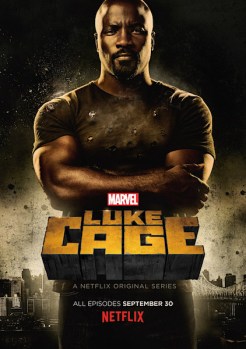
    Luke CageThe third series in the Marvel/Netflix stable wins points for boldness, much as Jessica Jones did this time last year. Where Daredevil is a well-done but ‘standard’ superhero show, leading to it being somewhat demeaned by the Cool Kids of the critical world (but much higher-rated by us plebs on the likes of IMDb), Jessica pushed into dark psychological territory, and now Luke Cage brings black culture and life into the fold.

    In truth, I still think Daredevil is the best produced of the three. Maybe that’s because it’s operating in more familiar territory, but it seems to know how to construct its storylines to fit the time given, and pace them to really kick off that “just one more episode” feeling that Netflix binge-watching is so famed for. Conversely, Jessica didn’t have enough story for 13 episodes, spinning its wheels and going in circles in the second half. Luke Cage doesn’t suffer from that exact problem, but it spends a lot of time finding excuses to keep its near-invulnerable hero out of the action.

    But, for its plot-related flaws, it’s not a bad show. It has three strong villains — it’s just a shame it’s the fourth who becomes the focus for the back half of the season. Its use of music is unusual and brilliantly executed, though as it’s employing genres and styles, indeed a whole culture, that I’m not exactly au fait with, it’s like watching as a fascinated outside observer rather than someone fully embedded or engaged. That’s not necessarily a negative, just a different way of relating to it. And even with those storytelling faults I mentioned, there’s at least one huge and unexpected twist, which really livens up the show… for a bit. It also gives Rosario Dawson the biggest role she’s yet had in one of these Marvel series, and that’s no bad thing either.

    Indeed, the best thing about Luke Cage is its characters. Mike Colter is an appealing leading man — when the character is allowed to do something, anyway — and the supporting characters on both sides are fantastic (with that one unfortunate exception I already mentioned). This bodes well for when they join up with everyone else in The Defenders next year, and also leaves season two with plenty of potential…

    …if Netflix commission it, of course. Surely they can’t be intending to have 6+ Marvel shows on the go?!

    Ripper Street (Season 5)
    Ripper StreetIt feels like only yesterday I was writing here about season four (it was, in fact, February and March). I think it was assumed this final season would be coming next year, but then Amazon announced it almost out of the blue just before the BBC’s run of season four ended, and made the unusual-for-them decision to dump the whole season at once, Netflix-style. It benefits this particular group of episodes because it really is one long story — when the show moved to Amazon for its third season it got more heavily serialised, but often with “case of the week” plots alongside that; the end of season four and all of season five throw that almost entirely aside for one long, developing storyline.

    Nonetheless, they’ve done a good job of making a TV show rather than a really long movie in six parts. The third episode, in particular, sets our heroes aside almost entirely to spend an hour with a villain who’s barely done more than grunt so far, digging into his psyche and his hopes (if any) of redemption. It almost felt more like an arty drama film than an episode of a period police procedural and proves that, even after five years, a quality programme can still push at and explore its form.

    The final episode, however, is a certified oddity. After wrapping up the season’s primary plots with relative haste, it moves on to an odd, somewhat lethargic non-story. It is, in its way, bold for what started as a police procedural to end with an episode that focuses on the drama of its characters’ lives, but it does so with an almost perverse fixation on setting up certain expectations only to dash them. It is tough to call the episode either satisfying or unsatisfying as a conclusion, though I imagine some will come to the latter opinion purely because it is so uncommon. It’s titled Occurrence Reports, and that seems apt, for it seems to merely report a series of occurrences; but they do at least, in their way, bring all of the series’ parts to their respective ends.

    Leaving aside the finale’s forays into structural experimentation, this is a good final season, that has moments to count among the programme’s very best. I still reckon season three is the best individual run, however.

    Black Mirror (Series 2)
    Black MirrorWell, it’s only taken me 3½ years to get round to this (seriously, where does time go?!) This bunch really represents the series’ highs and lows. On the one hand, Be Right Back — in which Hayley Atwell signs up for a company who create a virtual version of her deceased partner using his contributions to social media — is an exploration of broadly-plausible near-future-tech with a focus on its potential emotional effect. That’s what Black Mirror does best, I’d argue: look at stuff that may, perhaps, be in the pipeline, and how that would actually play out for us. On the other, there’s The Waldo Moment, which is also sickeningly plausible — as Charlie Brooker himself has said, it’s more or less come true, though with the likes of Boris Johnson and Donald Trump instead of a blue cartoon bear — but as an episode it doesn’t quite seem to know where to go with its concept or what it might ultimately signify. The episode just stops rather than ends, until a flash-forward coda that’s a bit silly in its extremity. Even Brooker, while doing press for the third season (released tomorrow), has said he’d go back and re-do that episode if he could. Still, full marks for effort.

    Red Dwarf XI (Episodes 1-5)
    Red Dwarf XIThis latest series of Red Dwarf (which airs its fifth episode tonight, with the sixth available on demand from tomorrow) seems to have gone down rather well, with some reviews even hailing it as a “return to form” — that form being “the good old days” of Red Dwarf VI (or thereabouts), over 20 years ago. Personally, I didn’t dislike Red Dwarf VII or Back to Earth, and I even have a soft spot for Red Dwarf VIII, so what do I know? Nonetheless, I would concur that this Dwarf represents a fine vintage, hitting the series’ unique mix of accessible mainstream-ish comedy and proper science-fiction concepts. Red Dwarf XII is already in the can for 2017, and I wouldn’t be surprised to see Dave commission more episodes beyond that.
    Star Trek The City on the Edge of Forever
    Star Trek: The Animated Series Yesteryear
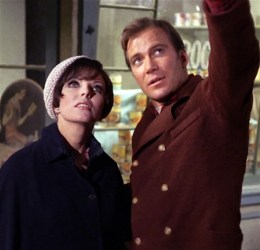
    Star Trek - The City on the Edge of ForeverThe entirety of TV Star Trek is available on Netflix, so I took the chance to watch the most acclaimed episodes of both The Original Series and The Animated Series — which happen to be connected, something I didn’t realise until afterwards. Er, I mean, which I totally planned. Both are pretty fine uses of science-fiction to explore relatable issues. Well, not many of us have to deal with disruptions to reality caused by time travel, or knowledge of the future creating dilemmas about what we do next, but they work the relatable stuff in around the surface plots. And they both still seem pretty bold for network TV episodes even today, almost half a century later, as (spoilers!) Kirk lets a good woman die to retain the correct timeline, and a kids’ cartoon deals with the subject of euthanasia.
    Also watched…
  • Castle Season 6 Episode 8-Season 7 Episode 1 — almost always a nice, light, entertaining show, but the season 6 finale is a mess. Well, the bulk of it’s fine, but the premise is illogical and the cliffhanger is weightless and unneeded.
  • The Great British Bake Off Series 7 Episodes 5-9 — this series has seen Bake Off’s charms firing on all cylinders, I think, which just reminds you what we’re about to lose.
  • Line of Duty Series 1 — as this is on Netflix I thought I’d finally see what all the fuss is about. I think it’s the second run where it really took off, but this has its moments.
  • The Musketeers Series 2 Episodes 6-7 — quite a few grim crime shows in this month’s viewing, so a bit of quality swashbuckling is a welcome change of pace.
  • Scott & Bailey Series 5 — not the strongest run (the “darknet serial killers” case was a little too outlandish for a show that has often thrived on its more-plausible-than-your-average depiction of murder investigation), but still a quality police drama. Shame there won’t be more.

    Things to Catch Up On
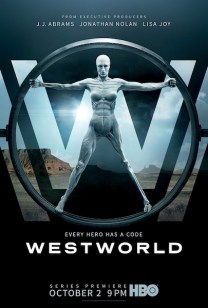
    WestworldThis month, I have mostly been missing loads of stuff. Probably the most talked about is HBO’s adaptation of Westworld, which has apparently pulled in even bigger ratings than Game of Thrones. Over here there’s the second series of The Missing, which if it’s half as good as the first will be a real must-see. Then there’s Woody Allen’s first (and last) TV series for Amazon, Crisis in Six Scenes. Reviews have been mixed to poor but I still intend to get round to it. And finally Hooten & the Lady, which may be the worst title for anything in the history of ever, but a globetrotting adventure series inspired by the likes of Indiana Jones and Romancing the Stone sounds right up my alley.

    Next month… the latest Doctor Who spin-off comes to iPlayer; brand-new Black Mirror comes to Netflix; and I’ll finally watch Stranger Things, I promise.

  • Serenity (2005)

    100 Films’ 100 Favourites #82

    They aim to misbehave.

    Country: USA
    Language: English
    Runtime: 119 minutes
    BBFC: 15
    MPAA: PG-13

    Original Release: 29th September 2005 (Australia)
    US Release: 30th September 2005
    UK Release: 7th October 2005
    First Seen: cinema, 7th October 2005

    Stars
    Nathan Fillion (Waitress, Super)
    Summer Glau (The Initiation of Sarah, Knights of Badassdom)
    Chiwetel Ejiofor (Dirty Pretty Things, 12 Years a Slave)

    Director
    Joss Whedon (Avengers Assemble, Much Ado About Nothing)

    Screenwriter
    Joss Whedon (Buffy the Vampire Slayer, Toy Story)

    Based on
    Firefly, a TV series created by Joss Whedon.

    The Story
    In the far future, a crew of renegades harbour a fugitive who knows a terrible secret about the totalitarian rulers. When a ruthless assassin comes for them, their only hope becomes to seek out the truth behind one of the regime’s darkest acts…

    Our Heroes
    The crew of the Firefly-class spaceship Serenity. Led by Captain Mal Reynolds, they’re a gang of rogues and thieves, but are also honourable sorts (well, mostly) forced into that life by a harsh universe. They’ve recently taken onboard Dr Simon Tam and his mysterious sister, River, who has certain skills…

    Our Villains
    The Operative, an efficient and moral assassin sent by the Alliance, the universe’s ruling body, to retrieve River — at any cost. But if he’s the rock then there’s also a hard place: Reavers, bloodthirsty perverted cannibals who stalk the uncharted regions our heroes will need to venture into.

    Best Supporting Character
    Shepherd Book, a preacher and former member of Serenity’s crew, now living on the appropriately-named planet of Haven. Has some very insightful words of advice for Mal.

    Memorable Quote
    “I don’t care what you believe in, just believe in it.” — Shepherd Book

    Quote Most Likely To Be Used in Everyday Conversation
    “Shiny” — as a synonym of “great”.

    Quote Most Likely To Be Found on a T-Shirt
    “I am a leaf on the wind, watch how I soar.” — Wash

    Memorable Scene
    After the history-lesson-within-a-dream-within-a-hologram-within-a-scene pre-titles, Whedon introduces us to the crew and their titular ship with a four-and-a-half-minute unbroken tracking shot. I do love a long single take, and this one excels by introducing us to all the main heroes, their personalities, their situations, their relationships — all at the same time — while also establishing the geography of the ship; and, by extension, the incredible set, which featured the entire interior of the ship built across just two sections (there’s an invisible cut in the middle of the shot to transition between sets).

    Technical Wizardry
    I created this category to highlight any elements of production that were especially striking — things like cinematography, editing, design, costumes… No offence to any of them (and considering the film was produced for a slight-for-a-sci-fi-blockbuster $40 million, they all do a super job), but the real star is Whedon’s screenplay. Packed to the gills with the literate, witty dialogue he’s famed for, it also manages to be emotionally affecting, make points about governments and their power, engage with themes of belief and the importance of freedom, and weave in a subtext that reflects the real-life story of Firefly’s death and rebirth — though Whedon claims that last one was an accident.

    Letting the Side Down
    The public. It didn’t gross enough; there weren’t any sequels. Damn you, mankind!

    Making of
    Talking of the impressive Serenity set (see: Memorable Scene), it was built in the same way for Firefly, but the blueprints were lost between Fox destroying the series’ sets and production on the movie beginning. When Nathan Fillion learnt this at a production meeting, he was able to supply the blueprints himself — he’d been so excited to be on the show, he’d taken photos of all the pre-production material he’d seen, including the set blueprints.

    Previously on…
    Serenity continues and, to an extent, concludes Joss Whedon’s criminally short-lived TV series Firefly. Mismarketed by US network Fox, the series wasn’t a success on original broadcast, leading to cancellation after just 11 episodes had aired. Thanks to word-of-mouth and availability on DVD, it has developed a massive following since.

    Next time…
    Despite the distinct and disappointing dearth of sequels, the Firefly/Serenity franchise has continued on, mostly in the form of various comic books, which have plugged gaps in continuity, revealed long-awaited character histories, and even continued the story after the movie.

    Awards
    1 Saturn Award (Supporting Actress (Summer Glau))
    1 Saturn nomination (Science Fiction Film)
    Won the Hugo for Best Dramatic Presentation Long Form

    What the Critics Said
    “With its Hawksian attention to group dynamics and its skilful definition of character through action, this supremely entertaining hybrid-movie plays like Rio Bravo in space. The textured narrative is peopled by precisely delineated characters who employ a salty retro-future-speak, in which twenty-fifth century slang is morphed with frontier Western archaisms (‘take umbrage’, ‘confound these bungers’). The settings and tone are hyper-real, yet the human behaviour is grounded and credible, the moral conflicts complex and involving. Shiny, intelligent fun.” — Nick Funnell, Time Out London

    Score: 82%

    What the Public Say
    “We get a decent story, providing lots of action, a huge amount of wit and plenty of suspense. It’s extremely entertaining. It’s well written too, with information smartly hidden beneath breezy dialogue, and looks very cinematic. (The camerawork is often expressive and classy.) Maybe what’s most impressive is the economy. Many scenes are doing double-duty, servicing plot and character, action and exposition, drama and comedy… There’s just a sharpness to everything, which means the film rattles along and is never boring.” — Ian Farrington

    Verdict

    Regular readers may have picked up that I don’t re-watch films much (I can’t identify at all with people who claim to have seen the same film dozens or hundreds of times). Despite that, I saw Serenity in the cinema four times, two of them back-to-back. Such is the genius of writer-director Joss Whedon, and the quality of the Firefly universe — it’s a situation where every element just clicked to make a perfect result. (Well, every element except the original TV network, anyway.) No doubt Serenity is best viewed as a capper to the fourteen-hour TV series — that extra investment in the characters and universe makes the film’s best bits sing — but it’s accessible to newcomers also, being so cleverly structured and packed with all the information you’d need.

    It was named “Film of the Year” by the BBC’s Film programme; it topped an SFX poll for the best science-fiction film of all time; and its DVD is a permanent resident on the International Space Station to entertain the crews. Cào nǐ, Fox.

    #83 will… get busy living or get busy dying.