Titanic (1997)

2010 #35
James Cameron | 187 mins | TV (HD) | 12 / PG-13
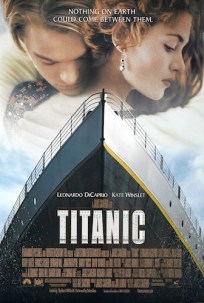
Before Avatar came along and ruined everything — um, I mean, dominated both the box office and James Cameron’s career — the director seemed to have become best-known for his previous record-breaking box-office-topper, Titanic. And because he was so well known for it, it’s easy to forget that it stands out like a sore thumb in his filmography: previously he’d only been responsible for action and/or sci-fi films: The Terminator, T2, Aliens, The Abyss and True Lies. And, lest we forget, Piranha 2. And, in the years since his ship-based behemoth, his only fiction film is Avatar, which you may remember — it was a little film about some blue aliens on a moon.

So, despite Titanic’s slightly-ironic runaway success (considering the fate of the titular vessel), one still has every reason to question if Cameron can handle a straight-up drama. After all, dialogue and character are hardly his strong points, and box office success and Oscar victory are hardly reasons to suppose a film is any good.

The first thing one can note about Titanic is that it’s over-reaching itself size-wise. This is true of both vessel and film, one being too big to dodge an iceberg, the other simply too long. I can’t be certain, but it feels like the entire film following the iceberg’s arrival is in real-time, which would make the length an excusable narrative trick — I do like real-time — were it not for Cameron padding it out with endless contrivances to have Jack and Rose running around the ship. All of these sequences are suitably exciting in themselves, but there’s so many of them that they become dully repetitive.

But before the good bit — giant boat sinking! Yay! — there’s the Jack-Rose romance, clearly the main draw for many fans. I can’t help feeling they need to be shown some better films. It’s not quite as weak as George Lucas’ efforts in Attack of the Clones, but it’s not far off. The scene the day after Jack saves Rose — where they have a natter on deck and she looks at his art for the first time; aka the primary scene for their falling for each other — is particularly weakly written. “Oh Jack, the plot requires me to look at your drawings now, so please hand them over.” The dialogue’s not actually that bad, but it’s bloody close.

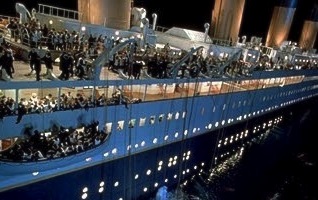
The film really takes off with the iceberg. While my criticism still stands that it goes on too long from this point (just as it does before it, mind), the post-impact scenes are by far the most exciting and engaging sequences in the film. The predictable romantic plot may keep Leo’s fans flocking back, but the horrendous spectacle of the sinking ship — both visually in an array of epic wide shots, and emotionally in the various and changing ways the passengers and crew react — is the film’s real triumph, a reason for the rest of us to even consider revisiting it.

Even if spectacle is the real star, there are some actors too. Kate Winslet does fine work with a character who could just be (and occasionally is) a cliché. As the same character 85 years later, Gloria Stuart gives an even better, emotionally resonant performance. Billy Zane and David Warner are perfectly dastardly villains, Bernard Hill practices the stoic leader he would later perfect in The Lord of the Rings, and Kathy Bates provides some intermittent comic relief.
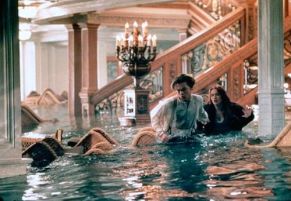
And Leo is pretty-boy Leo. I’m not saying he’s not a talented actor — that was something he’d shown before Titanic and has certainly proven since, though everyone seemed to forget it in the late ’90s — but Jack Dawson is hardly a tricky task for him. Clearly he looks beautiful, has the loveable rogue thing down, and that’s job done.

Russell Carpenter’s cinematography is always up to the task with a nice degree of diversity, from Michael Bay-style tech-fetish crispness in the present-day bookends to a warm glow for the past of Rose’s memory, with an icy collision of the two as disaster strikes. On a similar note, the CGI has aged surprisingly well… provided you don’t look too closely, at least. And I do mean “surprisingly” in the most literal sense, because I expected it to look awful. I swear it did last time I saw a clip. Anyway…

None of this can be said for James Horner’s irritating score. While not as bad as the batter-you-round-the-head signposting of his work on Avatar, it has a similar sense of obviousness. His frequent use of motifs from Celine Dion’s irritating My Heart Will Go On is always unwelcome, and (for me) always drags French and Saunders into the equation — “my heart will go ooooooooon” and all that.
Indeed, Titanic’s literally phenomenal success, and the subsequent abundance of spoofs and homages across all media in the decade-and-a-bit since, is an obstacle for any new viewer. One can’t watch Jack declare “I’m the king of the world!” without thinking of Cameron’s much-derided Oscar speech; can’t watch Jack and Rose ‘flying’ without thinking of any number of piss-takes; and French and Saunders spring to mind quite all over the place.

And yet, despite all this criticism, I found myself quite liking Titanic. I didn’t expect to, which is why I’ve avoided it for so long. I could take or leave the romance — could take it better if they’d gotten someone in to polish the script — and while they were at it they could’ve trimmed the second half’s repetition — but, all things considered, there’s enough spectacle to keep one engrossed.

Over-long and based on spectacle over content? Reminds me of this little film about some blue aliens on a moon…

4 out of 5

Titanic is on Channel 4 tonight, Sunday 13th July 2014, at 7pm.
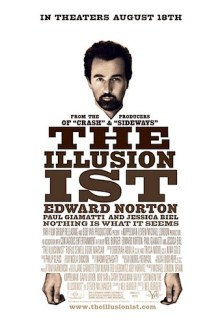
The Illusionist (2006)

2010 #32
Neil Burger | 104 mins | DVD | PG / PG-13

A Blu-ray release of The Illusionist has just been announced. Which is fair enough, of course. But if you were considering a blind buy, probably based on hearing it’s “a bit like The Prestige”, then please allow me to stick the knife in a little first.
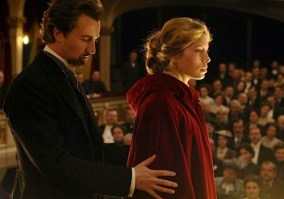
Let’s begin with a pet hate of mine: this being a mid-’00s film, it of course begins near the end and finds an excuse to jump back to the start before eventually catching up with itself. As we move into the ’10s, I hope we’re seeing the back of this cheap and irritating screenwriting trick — which, having done my share of creative writing modules at university, I know is the kind of thing new writers are taught as a Good Thing because it allows you to jump right into the action. Maybe this helps you sell your script; personally, I’ve just found it a grating trend that needs bucking. What’s wrong with starting where the story starts?

At the other end — past the bit where we joined — sits a last-minute ‘twist’ explanation for all we’ve seen. But it’s a bit half-arsed, just repeating shots we’ve seen in a new order (with a few additions, to be fair), leaving the viewer to fill in the blanks… which is largely no chore (personally, I’d suspected that all along anyway), but it leaves significant important chunks unexplained, hoping to gloss over them by bamboozling us with a lot of other information. It doesn’t succeed.

The story itself — you remember those? It’s the bit between the attention-grabbing opening and preposterous-twist finale — is mediocre with or without the finale. It’s a something-and-nothing account of a Poor Boy who loves a Rich Girl he can’t have and… oh, I can’t even be bothered to explain it.
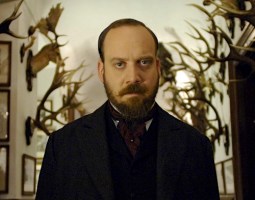
Writer/director Neil Burger has some nice effects going to help conjure up the period, using lighting, grading and the occasional wipe to evoke silent movies and the like during some segments, particularly — and pertinently, if predictably — the flashbacks. Other effects are less welcome, however: the magic is all obviously fake. This rather takes away any mystery, leaving the entire film as just a fantasy — very different from The Prestige in this regard.

Performance wise, everyone struggles with their accents. That this is the most notable aspect of the cast is, obviously, not a good thing. Ed Norton, looking rather like Derren Brown, is suitably enigmatic as the titular magician, while Paul Giamatti delivers the best performance as a conflicted detective, torn between his intrigue at the illusionist, duty to the Prince, and respect for the law. He’s by far the best thing about the film.

As comparisons with The Prestige are inevitable, particularly as both films were ultimately released around the same time, I’ll briefly put them head-to-head. Both concern stage magic in a similar-enough period setting, debate about whether the tricks are just that or actually supernatural powers, a love story that goes awry, which involves a fatal rivalry… But they’re actually very different films. The Prestige jumps about in time in a more complex way than The Illusionist, but this also has a point. The former’s story is more original, more engaging, its use of magic — real or not — more captivating. I fear I could go on, but it’s succinctly summed up thus: in this comparison, The Illusionist comes up short.
On the bright side, I avoided a pun there. You know, like, “The Illusionist just doesn’t have The Prestige’s magic.”

Oops.

3 out of 5

Juno (2007)

2010 #25
Jason Reitman | 92 mins | DVD | 12 / PG-13

This review contains minor spoilers.

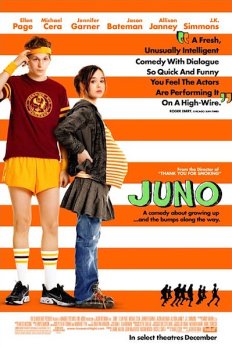
Juno followed in the footsteps of films like Sideways and Little Miss Sunshine to be the token Little Indie That Could among 2008’s Best Picture nominees. It was also the highest-grossing film on the list, no doubt thanks to America’s abundant Christians thinking it was all about an anti-abortion message. I’m sure these conflicting facts (the indie-ness and top-grosser, not the Christian thing) say more about the Oscars’ nominating form in the past decade than they do about Juno.
Fortunately, there’s enough to Juno to allow it stand up for itself. The most discussed aspect is Diablo Cody’s screenplay, with its idiosyncratic slang-laden dialogue and accusations that every character speaks the same. The first is true, the latter is rubbish, and one has to wonder if whoever thinks it watched beyond the first ten minutes. Most of the film’s teenage characters speak similarly… in that they use the same bits of slang, have similar speech patterns, employ a similar sense of humour — you know, like groups of teenagers tend to. Their related adults speak broadly similarly, but also differently; the higher-class couple Juno chooses to adopt her baby to speak differently again — but none are pathetically “I am trying to sound different”-different like you can find in weak writing. It’s just natural. I struggle to see how anyone can honestly say that all the characters “speak the same” in a way that isn’t true to life. Perhaps Cody has generously made Juno and her fellow teens wittier and quicker than the real-life majority, but this is a scripted drama and that’s what happens to your hero characters.

Cody’s dialogue, and what the cast do with it, are the film’s standout aspects. It’s quite a wordy screenplay, so it’s good that it’s a joy to listen to. The realistic overuse of slang by some characters occasionally greats, but the plentiful laugh-out-loud beats more than make up for it. The “I wish I’d say that” quality in some of Juno’s responses to familiar situations quickly make her an identifiable, memorable and loveable character, expertly played by Ellen Page — lead roles like this and Hard Candy show she’s one to watch, and add another mark against X-Men 3 for wasting her talents on such an insignificant (in the film) part.

Every supporting part is equally pitch-perfect: J.K. Simmons’ endlessly supportive father; Allison Janney’s stepmom, granted a gift of a rant at an ultrasound operator; Jennifer Garner’s earnest, desperate wannabe-mother; Olivia Thirlby’s teacher-loving best friend. Jason Bateman redeems himself in my eyes from his not-Marc-Warren turn in State of Play, while my pre-judgement of Michael Cera (Superbad? Year One? They sound dreadful) is half erased by being good as an appropriate-but-still-niggling character (Mr MacGuff and Leah summarise it best: “I didn’t think he had it in him.” “I know, right?”)

The film’s success in America is slightly baffling, which is why I merrily attribute it to Juno considering an abortion and then turning away. There’s underage sex, swearing, numerous displays of teen independence, divorce, love of rock music and horror films… All that’s missing from a Middle American Mom’s worst nightmare is drugs (there’s no violence either, but we know them there yankees love a bit of that). The whole thing worries the boundaries of its 12 certificate, I’m sure (being a recent film, the BBFC explain/justify), not that such things affect its quality as a film.

The backlash against Cody’s screenplay had me all prepared to find Juno a samey, wannabe-cool and lacking experience, but it isn’t. It’s consistently funny, occasionally moving, and only infrequently irritating (usually when it comes across as stereotypically indie). As the comedy-indie entry in the Academy’s 2008 choices, its worthy of its predecessors, and I consider that praise indeed.

4 out of 5

The Man Who Sued God (2001)

2010 #3
Mark Joffe | 97 mins | TV | 15

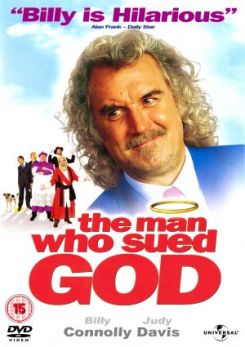
The Man Who Sued GodI always assumed this was British, probably because it stars Billy Connolly and has a suitably quirky premise — one can see it fitting in with the school of British comedy that’s brought us The Full Monty, Saving Grace, Kinky Boots and the like. But no: it’s actually very much Australian, which, considering its suitably quirky premise and that it stars Billy Connolly, isn’t that surprising either. And director Mark Joffe’s best-known/most-seen other work must be the first 10 episodes (ever) of Neighbours, which just cements the Anglo-Antipodean relation.

Country-of-origin is immaterial though, and what’s important is that The Man Who Sued God is funny, and righteous, and silly, and fantastical — in an “oh, if only it were true!” way — because in reality any such case would likely be laughed out of court and the insurance companies allowed to continue with their sorry and disreputable business. And some of these things which meant I loved it — the “only in a film” moral victories, the sillification of the church(es), and so on — will mean others hate it, or at least view it as a mediocre effort.

There’s a place for realist films — those that remind us of the constant victory of big nasty corporations, or obey the likelihood of the unjust justice system, and so on — but there’s also a place for the more life-affirming, the stories where the impossible happens and the ‘little man’ with a good point to make happens to encounter a like-minded system that means he can ultimately win through.

And putting the church in a position where their only sensible defence is to prove God doesn’t exist is always going to make for a good story.

4 out of 5

His Girl Friday (1940)

2010 #2
Howard Hawks | 88 mins | TV | U

His Girl Friday is an acknowledged classic — 19th on the AFI’s 100 Years… 100 Laughs, 58th on Empire’s 500 Greatest, 106th on They Shoot Pictures’ 1,000 Greatest, 245th on IMDb’s Top 250, preserved by the US’s National Film Registry, and countless other such accolades — so you probably don’t need me to tell you why it’s so good. But it really, really is.

The dialogue flies at phenomenal speed, dragging an ever-changing plot along with it, the funny lines at times literally on top of each other as they tumble to get out. No modern comedy would dare move so fast. It’s clever and witty, the characters apparently in on the joke too, and despite some black plot points it’s always hilarious and, somehow, never disrespectful.

If you ever meet anyone who claims all old black & white films are slow, simple and boring, show them this. And if you ever meet anyone who hasn’t seen this, show them it; and if you haven’t seen it, watch it; because it’s brilliant, and, despite being on so many lists, one wonders if some rate it too lowly.

5 out of 5

His Girl Friday placed 7th on my list of The Ten Best Films I Saw For the First Time in 2010, which can be read in full here.

Die Bergkatze (1921)

aka The Mountain-Lion / The Wildcat

2010 #9
Ernst Lubitsch | 82 mins | DVD | PG

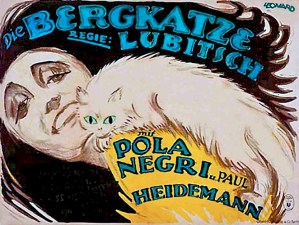
Die BergkatzeDie Bergkatze apparently rounds off Masters of Cinema’s Lubitsch in Berlin box set with appropriate heft: as the blurb asserts, this was “Lubitsch’s personal favourite work of all his German films, [it] represents a peak in both Lubitsch’s silent oeuvre and the silent cinema as a whole.” I wasn’t quite so enamoured with it.

Which, again, isn’t to say it’s bad. The setup takes some time to build up speed, but when it does the gags begin to flow more readily, even if it degenerates to a more stop-start pattern later on. But scenes like the Lieutenant leaving town to an army of toddlers crying “Adios, daddy!” are on the one hand simple but on the other inspired; the first battle sequence is full of marvellously surreal touches, like the robber-leader making coffee to be drunk mid-shoot-out; and the satire on the military (always welcome) is pleasantly thorough, taking pot-shots at numerous elements rather than picking one trait and exhausting it.

Lubitsch once again flips the roles of the sexes: the Lieutenant preens and prunes, spending ages tweaking his hair and clothes in the mirror, and one of the gang of robbers lies on a bed literally crying a river over his lost love; the titular robber’s daughter, however, leads a gang of men in thieving and fighting, living wild, free, and rather dirty, among them. A desired-by-all woman (Pola Negri, successfully branching out into comedy) and at least one mass of man-desiring women help round out a succession of familiar Lubitsch elements. Familiarity may be said to breed contempt, but Lubitsch’s reworking of similar sequences is more a recognisable touchstone than irritating repetition.

Location filming in snow-covered Alps adds a scale and breadth to the film’s imagined-kingdom setting that would be inimitable in a studio. Perhaps art director Ernst Stern was right that the realism of using genuine locations doesn’t quite sit with the highly stylised fort; on the other hand, a studio set simply wouldn’t have the same effect: this isn’t the card-and-wood world of Die Puppe, where clearly-fake trees and horses were all part of the illusion. Instead of seeming fake, then, the contrast of a hyper-real fort and genuine-but-exotic locations creates the sense of a proper fantastical realm rather than some fictional stage set. Stern’s design for the fort is beautiful, from the overall look to specific features in each room. It’s scale is quite astonishing, particularly considering it was built on location in the Alps.

Lubitsch’s love of camera mattes, seen with increasing frequency throughout Die Puppe, Die Austernprinzessin and, particularly, Anna Boleyn, is finally allowed free reign here, with shots that conform to the standard 4:3 frame seeming to be the irregularity amongst an unimaginable array of shapes and angles. At times it’s distracting, particularly at the start, but that’s more because it’s a technique we’re now almost entirely unused to rather than any flaw in Lubitsch’s application of it. That said, though he often uses the mattes to enhance or emphasise composition, or suggest something about a character or location, it’s not always clear why he’s choosing to vary the frame so much — other than the sheer fun of it, which, particularly in a comedy, may be reason enough.

Die Bergkatze was a flop on its release in Germany and consequently never distributed elsewhere. Maybe it was, as Lubitsch thought, an unwillingness on the part of German people to have the military satirised; maybe it was the extreme use of unusual framing techniques that left them cold; maybe they just didn’t like it. Though it’s far from my favourite film in the set, it didn’t and doesn’t deserve to be dismissed.

4 out of 5

Read more reviews from Lubitsch in Berlin here.

Anna Boleyn (1920)

aka Deception

2010 #8
Ernst Lubitsch | 118 mins | DVD | PG

Anna BoleynIn an age where Henry VIII is young, slim and sometimes irritatingly called “Henry 8”, not to mention more interested in shagging every young girl he can find than in, well, anything else, it’s somewhat refreshing to return to a time when he was always older, fatter and more interested in polishing off a huge slab of meat than seeing his wife. OK, so they call him “Heinrich VIII”, but at least that’s because this production team spoke a different language.

The Tudors may be more interested in political intrigue and sex than slavish historical accuracy, but, in fairness, Anna Boleyn isn’t actually much different. The sex isn’t even explicit in dialogue, never mind explicitly shown, but it’s still the cause of Anne’s downfall; and the political intrigue may handle in 10 seconds what The Tudors spent 10 hours (or more) dragging its way through; but it’s this speediness, not to mention Henry’s girth, that are the very things that also leave historical accuracy by the wayside. But, again like The Tudors, that’s not really the point. Some things never change.

Anna Boleyn is, once again for Lubitsch, a romance; though rather than a “happily ever after” ending it has more of a message. Sweet little Anne Boleyn believes King Henry’s eyes are wandering from his wife because he genuinely loves Anne, so she (eventually) goes along with it. He gets a divorce — if proof were needed that historical accuracy is immaterial, it takes about as long as it would today, skipping over a hugely significant part of British history in a heartbeat — and they get married. Anne fails to provide him with a son, and suddenly his lustful eye is roaming again. All it takes is the (false) accusation of a dalliance in the woods with her ex love and it’s off with her head. Poor Anne.

It’s odd to see Anne Boleyn depicted as such an innocent; a tragic figure caught up in the machinations of Henry — and, indeed, History — rather than the plotting, ultimately deserving temptress we’re used to from British (co-)productions. She’s every inch the victim, falling foul of Henry’s appetites — both when he captures her and when he goes after other women in exactly the same we he went for her — and, at the climax, there’s no question she’s being framed. The historical veracity of such a portrayal is, again, suspect. Whether Anne was truly as scheming as she’s commonly depicted, or whether this is the legacy of the nation’s love for Catherine and acceptance of the charges later levelled (or fabricated) against her, I don’t know — my historiography isn’t quite good enough for that I’m afraid — but one suspects she can’t have been as entrapped as suggested here.

On the other hand, Emil Jannings’ Henry is every inch the stereotype, a fat old man gorging himself on food and women, liable to explode with anger at any second. Just because it’s a stereotype doesn’t mean it’s wrong, of course, and Jannings’ performance is a strong one. Henry rages from joyous to furious in a heartbeat, swings from entertained to bored, loving to lustful, and every which way in between. Some of this is conveyed with grand theatrical gestures, but Jannings also pulls much of it off with just his eyes.

Among the rest of the cast, Aud Egede Nissen’s Jane Seymour takes on the typical Anne role as a seductive power-hungry mistress, which is an especially striking comparison to the near-saint recently seen in The Tudors. Ferdinand von Alten’s duplicitous Smeaton, meanwhile, looks and behaves like his surname should be Blackadder.

It’s been asserted that silent films should aspire to use as few intertitles as possible, with none therefore being the ultimate goal. This is clearly a theory Lubitsch never subscribed too. Normally that’s perfectly fine — his intertitles are mostly witty, loaded and never omnipresent. Here, however, there’s an abundance of wordy messages, and while I’m sure they could be worse, they rarely convey anything but plot. Indeed, bar the very occasional instance, the film is devoid of humour.

Lubitsch seems to feel the need to keep himself entertained in other ways, constantly playing with aspect ratio and framing, using dozens of shapes to encircle characters in close up, or isolate a group within a crowd, or just vary his composition with widescreen, tilted widescreen, or a kind of vertical widescreen. And he still knows how to stage a big sequence — the wedding and accompanying riots, packed with hundreds of extras, are quite spectacular. The following dinner scene recalls Die Austernprinzessin with its plethora of guests, waiters and dishes, although it makes for an unfortunate comparison as nothing in Anna Boleyn feels even half as inspired.

Sumurun took a more serious approach than any film thus far in this set, but still had plenty of touches that let you know Lubitsch was behind the camera (not least that he was also in front of it). Aside from some of the choice visual framing devices, or one or two familiar set-ups (the large banquet, four servants helping Henry get dressed), there’s no significant evidence here of Lubitsch’s touch. It’s not a bad film, it’s just not a particularly distinctive one.

3 out of 5

Read more reviews from Lubitsch in Berlin here.

Sumurun (1920)

aka One Arabian Night

2010 #7
Ernst Lubitsch | 104 mins | DVD | PG

SumurunSumurun seems completely different to any film yet seen in the Berlin box set, yet this is more in line with the style of film that would ultimately lead Lubitsch to Hollywood.
As the alternate title would suggest, this is primarily an Arabian Nights-style drama… but, while on the surface this looks entirely at odds with Lubitsch’s previous comedy work, it actually concerns itself with the same topic: romance, and the various entanglements and complications that lead to it. What’s different here is that instead of being wholly comic it’s often deadly serious (literally, as it turns out), and instead of one simple girl-meets-boy trajectory (as in the preceding three films) there’s two girls and four boys between them, in various combinations. It’s a many-stranded, relatively complex narrative: there’s a group of travelling minstrels, an old sheikh, a young sheikh, a cloth merchant, a bevy of harem girls — all of whom are connected and interact in varying ways with varying objectives, though most are related to love — or lust.

The change in style is no bad thing. Lubitsch was clearly versatile, turning his hand well to this type of storytelling. His comedies are all based around romance, one way or another, and so treating the subject with a little more seriousness seems no great leap. He keeps control of the plot, despite the numerous strands and complexities, and his comedy background allows the tropes of farce to be employed in furthering the story. His previous use of fantastical realms, like the dolls’ world of Die Puppe, aids a succinct establishment of Lubitsch’s version of Arabia and its specific rules. Indeed, with its fantastical setting and shortage of character names (only Sumurun, Nur al Din and his two slaves — Muffti and Puffti — are known by more than their title, job description or physical impairment), Sumurun may be as much of a parable as some of the comedies.

And still, comedy creeps in round the edges. Lubitsch is arguably showing restraint by not letting every sequence descend into it, but there is a fair amount of wit and humour lurking throughout. It’s mostly applied wisely though, furthering character, story or both: the ugly hunchback who smiles at a child only to make him cry; the harem girls giving their eunuch guardians the runaround (multiple times); the two wannabe-thieves accidentally stealing a pretend-dead body and desperately trying to hide or dispose of it — the last a subplot which ultimately plays a key part in the climax.

What’s a little unclear is why it should be called Sumurun. Perhaps it’s no more than a vestige from the source, because while the titular harem girl is quite significant, she’s no more so than several other characters. Pola Negri’s namless dancer in particular seems more central to the narrative — indeed, she connects most of the disparate groups and plot strands; certainly more of them (and more significantly) than anyone else. But then, Sumurun survives to the end, and — along with her man, Nur al Din the cloth merchant — is the purest, most righteous, most deserving of all the main characters. Conversely, all the ‘bad’ (and, as noted, nameless) characters meet their end: the sheikhs are both fickle, and the old sheikh clearly a nasty piece of work; the dancer is flirty and adulterous; the hunchback, however, is devoted to her, and his tragedy effectively balances the “and they all lived happily ever after” of the freed harem girls and Sumurun and Nur al Din finally getting each other. If this is a parable, there’s quite a clear message about fidelity.

Sumurun may lack the straightforward fun of Lubitsch’s comedies, but by creating a complex and engrossing Arabian epic he entertainingly demonstrates that there was more to him than just the talented comedian.

4 out of 5

Read more reviews from Lubitsch in Berlin here.

Die Puppe (1919)

aka The Doll

2010 #5
Ernst Lubitsch | 64 mins | DVD | PG

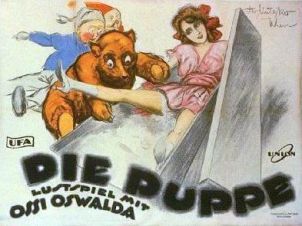
Die PuppeFrom the very start, Die Puppe sets out its stall (literally) as being something a bit special. The first sequence sees director Ernst Lubitsch himself unpack and assemble a doll’s house set and two dolls, which then become life-size and the dolls — now humans — the first characters we meet. It’s a neat framing device, a joke in itself, and some kind of early commentary on the role of a director.

From this point on, Die Puppe is a riot. Yes, some of it is distinctly old fashioned — an early chase scene, for example, sees Lancelot pursued by 40 desperate women, his mother, his uncle and the latter’s servant, back and forth and round in circles in a cartoonish fashion — and yet, even leaving aside allowances for it being 91 years old, there’s something wholly amiable about even these now-familiar proceedings.

And that’s just some of it, because Lubitsch doesn’t pass up any chance for a gag. Take the scene where Hilarius, the doll’s inventor, returns to his workshop to fetch the doll, who at that moment is actually his daughter in disguise. The point of the scene is conveyed — Hilarius accepts the deception. Except he also decides she needs more paint on her lips, which he dutifully applies. Or the pantomime horses that pull a carriage… but rather than ignore them, Lubitsch has the driver have to re-apply one’s tail. And so on. This constant expression of humour, working at every level from intellectual wit down to slapstick tomfoolery, means that even if one element has been done to death in the past near-century, there’ll be several other moments or scenes to compensate.

Even more so than in Ich möchte kein Mann sein, one could easily fill a whole review listing the great bits. Like when Lancelot is initially presented with an array of dolls, like a bizarre early-20th-century brothel with Autons for whores. Or the vulturous relatives, dividing up items while the Baron lies on his deathbed, and having the gall to accuse him of bad planning when they can’t decide who should have a vase that’s promptly broken. Or the broadly satirical monks with their ‘meagre’ meals, unwillingness to share, and incessant greed. And, in the vein of things-you-might-not-expect-from-this-era, there’s a great gag about an instruction manual. It’s a constant array of delights, and, also as in Ich möchte…, nothing outstays its welcome — every sequence is mined for its full comic potential, but Lubitsch wisely moves on before it can become repetitive or stale.

Lubitsch’s playfulness extends to the medium itself. He uses camera masks and wipes to focus on specific areas, breaking free of the 4:3 box to create different compositions, revealing parts of the frame on a delay, illustrating dream sequences, and more. There are ‘special effects’ that one could only achieve with a camera, like Hilarius’ hair changing colour, the balloon-flying sequence, a ghostly dream, and so on. And the irrepressibly cheeky young apprentice, played brilliantly by Gerhard Ritterband, routinely breaks the fourth wall to air his grievances to the audience.

And I haven’t even mentioned Ossi Oswalda, who gives another good comic turn as both the titular doll and her real-life inspiration. In his essay accompanying the Masters of Cinema edition, Ignatiy Vishnevetsky summarises her appeal (some of it, at any rate) so well that I may as well just quote from it: “Her comedy isn’t just funny to watch — it’s inviting, like a friend who cracks a joke and then asks you to tell one too. She begs a like-minded idiocy from the audience.” It is, I think, a point that’s even more applicable to Ich möchte kein Mann sein, but it stands well enough here.

Talking of this specific edition, I understand that Bernard Wrigley’s new score has come under fire from some sources (namely, Sight & Sound, though I’ve yet to read that review myself). Maybe their reviewer has a genuine complaint, but I thought that Wrigley’s score was for the most part perfectly lovely. It’s only flaw is that it often falls silent for a few uncomfortable seconds, reminding the viewer that ‘silent films’ should be anything but. Still, this is as minor a complaint as it sounds.

The Lubitsch in Berlin box set was a complete blind buy for me (as this series of reviews will attest), but these first two films alone easily justify it. Die Puppe, in particular, is simply outstanding.

5 out of 5

Read more reviews from Lubitsch in Berlin here.

Ich möchte kein Mann sein (1918)

aka I Wouldn’t Like to Be a Man

2010 #4
Ernst Lubitsch | 45 mins | DVD | PG

Die PuppeIch möchte kein Mann sein is the kind of silent film that might surprise some among a wider film-viewing audience, both in terms of the attitudes prevalent in what is occasionally assumed to be a highly prim era, and, even accepting that it really wasn’t, the things people were prepared to put on film then — the latter due to, I think, the perception of older films as wilfully innocent (a view no doubt influenced by the effect the Hays Code would later have on American movies).

But it’s anything but innocent: young ladies drinking, gambling and smoking, thinly veiled sex references, and multiple passionate — albeit drunken — kisses between two chaps. OK, so one of them’s a women in disguise, but when the truth is revealed at the end and the boy and girl (or, rather, man and girl) get together, one wonders if it’s such a perfect match after all… That it’s all played for laughs may be the key to making it permissible, and it is relentlessly comic. In a brisk 45-minute running time, Lubitsch allows nothing to outstay its welcome. Each little sketch within the narrative moves by as fast as it might today — in all likelihood faster, as the modern penchant seems to be to drag sketches out as long as possible, or at least until it’s stopped being funny. Twice over. This brevity may also be surprising to the uninitiated, refuting the assumption that overacting and labouring the point for an audience less accustomed to the shorthand of film were the order of the day.

Many memorable moments are produced throughout: the hypocritical early criticisms by Ossi’s uncle and governess; the men outside her window, rubbing their stomachs with ‘hunger’ in a shot framed from the waist down, not to mention the way they wave their canes around; similarly, the tailors stretching their tape measures as long as possible to impress our heroine; being squished on the train; the marauding horde of single women; the ‘gay’ kisses… Rarer is the sequence that doesn’t impress or linger in the memory.

Much of this is thanks to the film’s star, Ossi Oswalda. She’s obviously a skilled comedic actress, convincing as both a petulant tomboy and a boyish gent, capable of both drunken stumbling and coy giggling, by turns delightfully rebellious, sweetly put-upon and succinctly joyous. She’s even believable as a man (albeit a boyish one). It’s the kind of performance that’s infectious and makes you want to seek out more of her films (luckily, Lubitsch in Berlin contains two further examples). The rest of the cast fare well around her, particularly Margarete Kupfer as Ossi’s alternately stern and swooning governess.

Unfortunately, I can’t even attempt to put this in the context of the rest of Lubitsch’s work — shamefully, I’d barely heard of him prior to Masters of Cinema’s new set, never mind seen any of his films. MoC’s brand-new essays prove invaluable for me in this respect — immediately, this film’s, provided by Criterion’s Anna Thorngate, provides context of what the perception of Lubitsch’s Berlin work (vs his Hollywood work) is, and how Ich möchte kein Mann sein (amongst others) show this perception to be false — there is, in fact, a direct stylistic line between this and his better-known American films. Maybe when I see them I’ll spot it.

But, really, such knowledge and comparisons are entirely ancillary to one’s enjoyment of Ich möchte kein Mann sein. It’s all round a lot of fun, as well as no doubt offering some points of satire/debate about the differences between the sexes for those interested. Perhaps more pertinently, I can also see it serving as a good introduction to silent film: short, fast and funny, it has the potential to create converts.

4 out of 5

Read more reviews from Lubitsch in Berlin here.