
Paul Haggis | 133 mins | Blu-ray | 2.35:1 | USA & France / English | 12 / PG-13
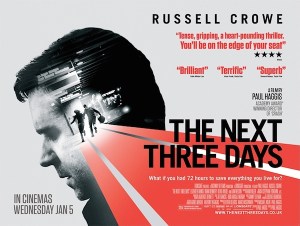 If someone you loved was locked up for decades for a crime you were sure they didn’t commit, how far would you go to get them out? That’s the premise of this methodical thriller from writer-director Paul Haggis (of Crash, of course), based on the French film Pour Elle.
Those with even a very basic grasp of French (like me) may spot that translates literally as “For Her” (though the English releases call it Anything for Her), which is why Russell Crowe does what he does: his middle-class idyll is shattered one day when police storm into his house and violently arrest his wife (Elizabeth Banks), in front of their small child, for the murder of the boss she argued with the night before. (This, incidentally, is the least plausible part of the entire movie — there’s no need for the police to storm the house like that, and in real life they wouldn’t. Well, American police might, I suppose. But I still don’t believe it.) The evidence is stacked against her, and her explanations for it sound a little far-fetched. She’s convicted, sent down… and when all legal means of appeal are exhausted, Crowe sets about planning a prison break.
This setup is, in my opinion, a really good one — though I feel kind of biased as the basics have crossed my mind as a good basis for a plot long before this or Pour Elle existed. Thing is, it’s inherently quite a daft concept: prisons are (rightfully) incredibly secure places — no ordinary Joe is breaking anyone out of there in a couple of weeks. By rights, a film of this ilk should probably be a Taken-esque slightly-OTT action-thriller, 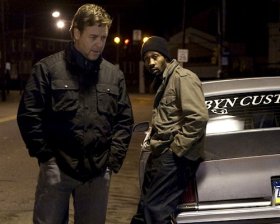 with a protagonist who either already has a “particular set of skills” or implausibly learns them (maybe over a longer period of time) before putting in motion their crazy scheme.
Haggis’ film is a mix of that, in its final act, and an attempt at depicting a serious, plausible, realistic version of what might happen if a regular, intelligent guy set his mind to such a task. Except it’s not really plausible that he’d get very far. Nonetheless, the film takes its time going through the motions of how Crowe might learn and practice the skills required, fund the enterprise, formulate his plan… Some have described this as dull, but I think it actually works. It’s a different kind of film to a pacey prison-break actioner, but if you were crazy enough to try this in the real world, of course you’d start by looking up “how to” articles online, by finding the authors of “how I escaped” books, by trying to buy a gun on the black market and messing it up, and so on.
According to Haggis, the French film is actually quite American-styled, a fast-paced thriller, which he chose to expand out. I’ve not seen the original so can’t say how he’s done that, but the implication is that the detail of the planning, and of the characters’ regular lives, has received more attention. A subplot with Olivia Wilde is a pointless aside that only explains itself once it throws a spanner in the works during the climax, but the scenes with Crowe’s parents pay off thanks to an excellent near-wordless supporting turn from Brian Dennehy. Best thing in the film, easily.
 Running him a close second is the all-action final half hour or so, when Crowe (spoilers! but not really!) finally stages the actual escape. It’s a long time coming, but we’re paid off with a pretty fantastic long-form action sequence. There’s genuine tension about whether they’ll pull it off or not, and along the way we’re treated to a few nice flourishes in his plan. There’s a fair degree of silliness still, though, so at least that’s in-keeping with the rest of the movie.
Thing is, for all my love for the idea, it’s ultimately quite a silly concept. As much as we might dream of rescuing our innocent loved one from a life of torment behind bars, if it came to pass in reality, the vast majority of people would immediately realise it was an impossible dream. By trying to treat it plausibly, The Next Three Days is on a hiding to nothing — for all the realism of how Crowe begins his research and planning, there’s the downside that this slow-paced plausibility turns some viewers off; and when we do get the eventual escape, it’s an “in movie’s only” adrenaline-provoker that said viewers wanted all along. The film pretty much can’t win.
 Finally, there’s an attempt to keep uncertain the truth about Banks’ culpability. Haggis never wanted that question to be answered — Crowe believes she’s innocent, even when she confesses to his face, and that’s what matters. I don’t think Haggis is a filmmaker who can resist answers, however, and for all his assertions that her innocence/guilt is left ambiguous, by the end I think you can be pretty darned certain which it is… which kinda makes all the previous attempts to leave it open feel hollow, especially the ones that side with the untrue.
The Next Three Days ends up as a solid thriller, with a methodical pace that will kill some viewers’ interest, but which conversely provides a depiction of detail that will hold the attention of anyone who’s ever pondered what they’d do in such a situation. The finale is largely worth the wait, at least, even if everyone will wish Haggis had skipped over a few longueurs while getting there.

The Next Three Days is on Channel 5 tonight at 10pm.
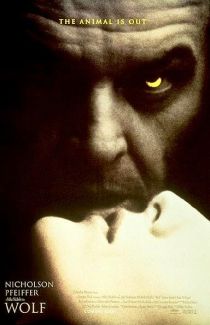 Without meaning to spoil anything, Wolf is rated R for “language and werewolf attacks”! I love the ludicrous specificity the MPAA indulge in sometimes. I know the BBFC’s famous “mild peril” is pretty useless, but at least they draw from an academic- and objective-sounding pool of phrases in their summaries, rather than throwing in ‘advice’ that is meaningless (there are perfectly PG werewolf attacks in other movies).
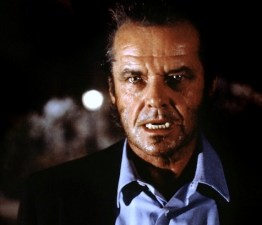 It’s those early sections where the film is at its best, when it tries to stay grounded in some form of realism. Any time it gets too Fantasy, it begins to get a tad silly. The climax in particular seems to come from a different film: Wolf abruptly moves from being an office politics drama with a fantasy edge, to a full-on manwolf-vs-manwolf brawl. As a straight dramatic director, Mike Nichols doesn’t seem to quite have the chops to pull off this fantasy/horror stuff without it beginning to look daft. That might not be entirely his fault, however, as reportedly the film was delayed by months to re-shoot the entire third act. Perhaps originally it had something more in-keeping? That said, he did want Michelle Pfeiffer to wear a red-hood sweatshirt during the finale! She refused, fearing it would harm the film’s credibility. She was right — it’s quite silly enough as it is.
 I can only presume there were hefty paydays for Nicholson and Pfeiffer, both megastars at the time, and possibly Christopher Plummer’s supporting role, maybe Nichols, and on scoring duties (obviously), Ennio Morricone. And maybe those re-shoots were really extensive. Or perhaps they spent it all on the nighttime aerial photography of Manhattan, which is gorgeous — that would’ve been worth it.
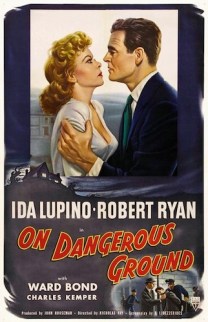 Helmed by acclaimed director Nicholas Ray (
 On the plus side, Bernard Herrmann’s score is unequivocally excellent, particularly the pulsating opening theme and the insistent action climax.
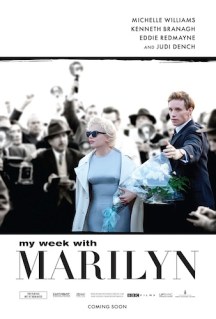 1956: global superstar Marilyn Monroe (Michelle Williams) comes to England to star opposite Laurence Olivier (Kenneth Branagh) in his latest directorial effort,
 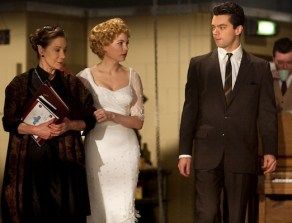 The supporting cast is a veritable who’s who of recognisable British faces, stars of screens both big and small. Barely a speaking part goes by without an actor you’re certain to recognise. I’d list them but, honestly, there are far, far too many. Despite Marilyn coming with a hefty entourage, Williams is the only American in the cast, meaning American accents are lumbered (to varying degrees of success) upon Zoe Wanamaker, Toby Jones, Dougray Scott, and Dominic Cooper. Hey, of course Dominic Cooper’s in it — is it even legal to make a mid-budget British movie without him now?
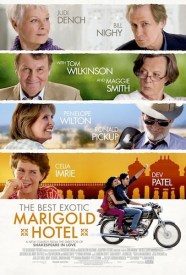 “Old fogies go to India” is the setup of this frothy comedy-drama that clearly courts the so-called ‘grey pound’ — i.e. older viewers still prepared to pay to go to the cinema. But when said fogies are played by Judi Dench, Maggie Smith, Tom Wilkinson, Bill Nighy, Ronald Pickup, Celia Imrie and Penelope Wilton, it will surprise no one to learn there’s something here for us all.
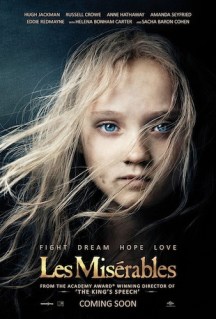 27 years after its West End debut, the long-running smash-hit musical finally makes the leap to the big screen. Such a beloved work paired with a recently Oscar-winning director and an all-star cast was pretty much a dead cert for big-name awards nominations, and so it was to be; but critical reaction was more mixed: I’ve seen people who love the film unreservedly, and others who despise it with a passion.
 Despite its running time, Les Mis is quite brisk for much of that plot (which, sorry if you’ve never seen it, I have described a fair old chunk of). There’s no interval in the film, but on stage it doesn’t come until well into the Paris section of the tale. Such a break must help the pacing, because while I remember enjoying it all on stage (where, I might add, it’s even longer), on screen I felt the middle portion began to drag. So yes, an epic running time for an epic, but it actually moves quickly through the parts that make it an epic before slowing for a bit of a forced romance and that kind of palaver.
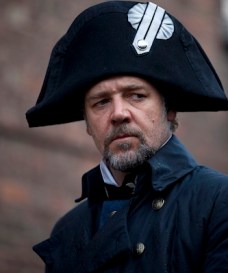 Much talk around Les Mis focused on the performances, with three in particular attracting discussion. As honourable wronged-man Valjean, Jackman is the star of the show, and brings his musical theatre background to bear on a clearly-sung but emotive performance. He was unlucky to be in the same awards year as Daniel Day-Lewis’ all-conquering turn in
 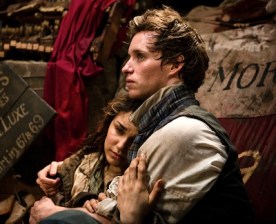 The rest of the cast is an assortment from the can-sing (Eddie Redmayne, Amanda Seyfried) to the comedic-so-it-doesn’t-matter (Sacha Baron Cohen, Helena Bonham Carter). The best voice of the lot belongs to Samantha Barks as Eponine. No surprise, really, as she was poached from the West End… where she’d found herself via one of Andrew Lloyd Webber’s BBC talent shows, so I imagine he feels thoroughly vindicated now (as if he didn’t before).
 Hooper does an above-average job on the whole, but the lack of awards nods shouldn’t be so surprising.
 Film and theatre director Julie Taymor (infamous now for Spider-Man: Turn Off the Dark) here brings us a radical-seeming interpretation of Shakespeare’s final play. The main character’s changed gender! There’s CGI being tossed about everywhere! It’s got Russell Brand in it! If that sounds superficial, it is. Taymor’s film is still set in the Elizabethan period, in Elizabethan dress (broadly speaking), with a cast of mostly classical actors, enacted on an island that is admittedly a stunning setting but is nonetheless where the original play is set. If it’s a “modern retelling of William Shakespeare” (per the blurb), it perhaps missed what Baz Luhrmann
  It goes on in the middle, a mess of scenes of characters traipsing about the island for no apparent reason. (This reminded me of
 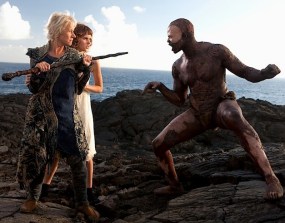 Another key role sees Djimon Hounsou as the slave Caliban, immediately suggesting a colonialist reading that isn’t exactly a huge reach anyway. And Russell Brand makes Shakespeare sound like Russell Brand talking, which at some points I’m not convinced he isn’t (I’ve no idea if Taymor allowed him to stray from the text or not). Love interest is provided by Reeve Carney. I’ve never heard of him, but he’s young and quite pretty and has a music video on the Blu-ray, so I guess he’s from that kind of arena. He speaks with an English accent, but so does everyone else (bar Caliban and the boatswain), so he may still be sourced from the other side of the pond’s teenybopper scene.
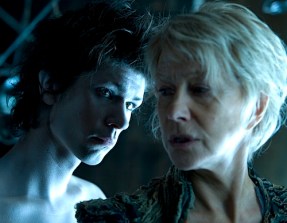 Ariel as a truly spiritual spirit, half invisible and jetting off into the sky on a regular basis. I found his realisation a mixed bag: it’s nice to take advantage of the medium to render the spirit in a way that’s impossible on stage, but sometimes it goes a bit far and looks a bit cheap. They’ve also tried to make him androgynous, but done it a bit weirdly: he’s always naked, occasionally making it clear he has no penis, sometimes has small breasts, but always has a moderately deep, clearly manly voice. Show it to a class of teenagers studying the play and you may illicit some confused feelings… That aside, the make-up effects are brilliant. Caliban’s patchwork skin is the best piece of work, but Ariel’s rendering as a giant crow is a fearsome sight as well. For all I know the latter may count as costume design, which is what earnt the film an Oscar nomination. But, hey, the clothes are nice too.
 It would be nice to say the magic and fantasy could convert new fans to Shakespeare, much as Leo DiCaprio and swishy editing did for teens nearly two decades ago, but there’s nothing beyond that trailer-friendly neat-looking stuff to convince them it was worth their time. Meanwhile, Shakespeare traditionalists may find it all a bit much. If that leaves it stranded on an ill-located isle of terrible beauty, then at least it’s an apt fate.
 The first film I watched as part of my new-this-year
  Much of the film’s emotional impact comes courtesy of Cherrill, who gives a suitably pretty and sweet performance. Chaplin wasn’t impressed with her as an actress and attempted re-casting (the film has a
 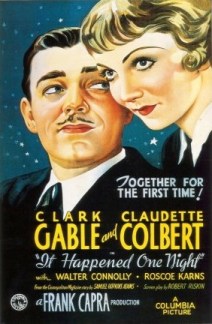 It Happened One Night was the first film to win the Oscar “grand slam” (Best Picture, Actor, Actress, Director, Screenplay), and is still one of the few to have won everything it was nominated for (alongside
 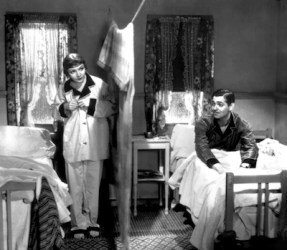 The Walls of Jericho running motif is also nicely executed, leading to perhaps the sauciest final scene not to feature a single shot of human beings that I can think of.
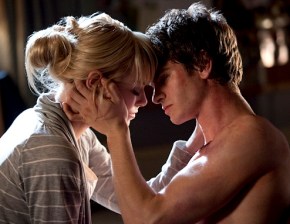
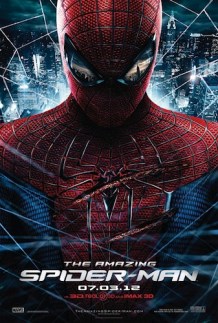 Andrew Garfield dons the webbed onesie for an unwarranted reboot of the only-one-decade-old Spider-Man film franchise, retelling his origins… but with a twist! Cos, y’know, the last version was only out about 10 minutes ago.
 some of the action sequences are alright. Mercifully, the much-trailed first-person segments are cut down to a minimum; kind of a “we made this so we ought to use it, but we’ve realised everyone was going to hate it”.
 Not that it pays off — instead it just feels like the action scenes were bunged together because, hey, some of the fans want that stuff, right?
 100Films.co.uk