Rob Thomas | 108 mins | download (HD) | 2.35:1 | USA / English | 12 / PG-13
 If you hadn’t heard of Veronica Mars before 13th March 2013, you almost certainly did soon after. That’s the date Rob Thomas, creator of the six-years-dead TV series of the same name, launched a Kickstarter crowdfunding campaign to pay for the long-mooted continuation movie. Aiming for a whopping $2 million, it raised that in just 11 hours, going on to bag $5.7 million by the end of its 30-day campaign. In the process it became the fastest Kickstarter project to reach $1 million (and $2 million), the highest-funded film project ever on the site, with the most number of backers for any campaign, and inspired countless think-pieces on how it was ruining/saving the movie industry, or at least completely changing it forever. In reality, very few (if any) big-name Kickstarter movies have come along since, and those that have haven’t inspired the same fervour as Veronica did three years ago.
The film itself picks up nine years after the end of the TV series. A quick opening montage reminds/informs us that Veronica (Kristen Bell) moonlighted as a private investigator while she was in high school, making plenty of enemies in the process and enduring more than a few tragedies, but she eventually managed to drag herself out of that life and start afresh. Just as she’s about to begin a career as a high-flying lawyer in New York, she sees on the news that her one-time on-off love interest Logan Echolls (Jason Dohring) has been arrested for murder. Then he phones asking for her help. Just when she thought she was out, etc. So Miss Mars heads back to little old Neptune, California, just in time for her ten-year high school reunion and a murder investigation involving all (well, most of) the familiar faces from the TV show.
 There’s no denying that this is primarily a film for fans of the TV series — well, they did fund it, after all. The best way to get the most out of the film is to have watched all 64 episodes of the show first; preferably soon before, in fact, so you can remember who all the minor characters are. However, creator-cowriter-director Rob Thomas is no fool: you don’t produce a successful movie that continues a little-watched TV show by making it a requirement that you’ve watched 64 hours of TV first. (I mean, Joss Whedon knew that with Serenity, and there’s only 14 hours of Firefly.) So Veronica Mars: The Movie is accessible to neophyte viewers. You might sense there’s references and whatnot that are passing you by, but everything that’s relevant is explained.
The long gap between series and continuation actually works to the film’s advantage, too, because this plays as the story of someone revisiting an old life, in a place that’s in some ways different and in others exactly, depressingly the same. The hook here is of Veronica as a kind of addict, but instead of being addicted to booze or drugs, it’s private investigating — she may be nine years ‘sober’, but now she’s being tempted to indulge. Again, this makes even more sense if you’ve watched the TV show, where a subplot deals with Veronica’s mother’s alcoholism, but the general conceit works standalone.
Plus, this is a crime drama — there’s a case to be solved, and that’s self-contained within the film. Okay, most of the players are characters from the series, but everything is introduced and explained within the film. Heck, there are even characters Veronica knew in 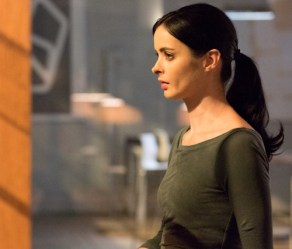 school who weren’t actually in the TV series, which might give you a flavour of how it works both for fans and newcomers. The case itself isn’t a bad mystery, but at the same time it’s a little subservient to the other goings-on. I suppose you could argue this is really a comedy-drama about a woman reconnecting with her past life and past friends, and she just happens to have a murder to investigate at the same time.
For fans (who will have watched this years ago, hence why I’m focusing on the newbie experience), the film is immensely rewarding. Obviously, because it finally gives some closure to the cancelled series’ dangling elements; but also, it feels like Veronica Mars, not like something from older people that’s only claiming to be what it once was. There’s the sparky characters, the funny repartee, the raft of neo-noir allusions. As cheesy as “teenage private eye” sounds, one of the reasons Veronica worked was because it really used those noir elements, just grafted on to the high school experience. The town of Neptune is practically a throwback in this regard, with rich kids and businessmen who can buy their way out of trouble thanks to a thoroughly corrupt police department, while the poor schmucks at the bottom of the pile get by as best they can, which often is not well. It didn’t even cave to the usual youthification of adding happy endings; in fact, more often than not, things didn’t end well. The movie isn’t quite as bleak as the TV series often was — there’s clearly an awareness this might be a one-time deal, so Thomas wants to leave things suitably wrapped up — but not everything comes up roses. (Where’s the sequel at?!) And to pay things off fully, there’s a tonne of fun references, not just to the show but also to real life (not least the Kickstarter campaign).
 To bring up Firefly/Serenity again, I think there’s a reasonable parallel between how those relate to each other, and how they can work for newbies, and how Veronica Mars the TV series and Veronica Mars the movie relate. To wit: in an ideal world, you’d watch all of the series and then the film; but TV series can be long commitments, and for a spot of ‘dipping your toe in the water’, you can also start with the movie and go back to the series for the full picture. Sure, some things are going to be spoiled doing it that way round — but hey, not everyone who’s in the series but not the film ends up dead, I promise.
When I first watched the movie, it was at the end of a first-time binge through the TV series, where it sat very happily. To finally write this review, I watched the film again in isolation. I have a memory, so obviously I’m not coming at it from a totally fresh perspective, but it was as entertaining in isolation as it had been as “one more episode”. Fans will get the biggest kick out of seeing old characters resurface, out of learning what’s happened to them in the past decade, out of seeing big-name cameos alongside familiar faces, out of all the callbacks and nods, out of certain things finally being resolved. But that doesn’t mean newcomers can’t get joy from meeting these characters for the first time, from the self-contained mystery and storylines, from the fresh gags — indeed, from all the things that make the TV show entertaining if you started there. And then, if they like it, there’s the joy of there being 64 more instalments to discover.
 More than just a nostalgia trip for people who were there first time round, the movie is a strong addition to the Veronica Mars canon — as someone who didn’t discover the series until the Kickstarter campaign, I thought the film was a heck of a lot of fun, and a wonderful capstone to a mostly-great series. That said, there’s plenty of room for further cases… someday… hopefully…

Veronica Mars is available on Amazon Prime Instant Video in the UK from tomorrow.
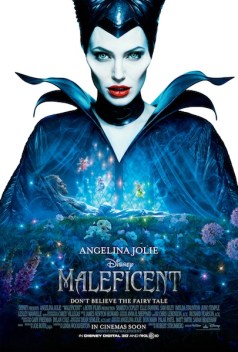 Disney seem to be embarking on a project to remake all of their most beloved animated movies in live action,
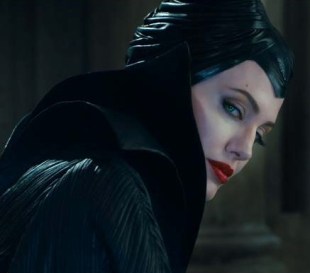 However, this is a Disney movie — you don’t get to turn a villain into the central character and have her be evil throughout. This is where the film gets really revisionist, because Maleficent keeps an eye on cursed Princess Aurora (Elle Fanning) as she grows, doing more to keep her alive than the trio of fairies she’s supposedly in the care of, and her heart is gradually warmed to the girl. Unfortunately, Maleficent was too good at the cursing malarkey: unable to lift her own spell, it plays out regardless, and the film serves us new renditions of the impassable thorns, giant dragon, and true love’s first kiss. It’s in the last where Maleficent is thematically revisionist rather than just a massive rewrite. Your mileage may vary on whether this version is obvious and cheesy, or actually more meaningful and (for the primary audience of little kiddies) more thought-provoking than the original’s — I’d go with the latter.
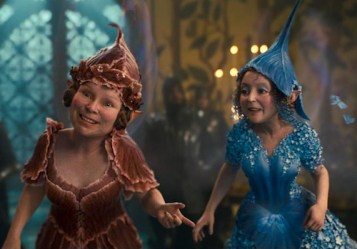 Parts of the film test-screened poorly — mainly the first act, with audiences wondering why it took so long for Jolie to turn up. Consequently, the whole thing was thrown out and reshot; in the process, Peter Capaldi and Miranda Richardson were deleted (and after they’d had to endure hours of transformative prosthetics for their roles, too), and Maleficent was given a new backstory. How far this extended into the rest of the movie, I’m not sure, but at times it feels like stuff has been cut or rearranged. Certainly the story flies past — if it wasn’t trimmed down in the edit, it needed expanding back at the screenplay stage.
 and even

 Score:



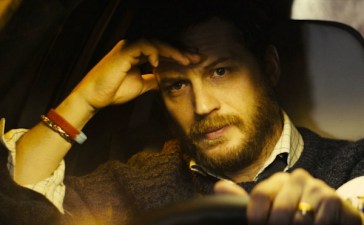
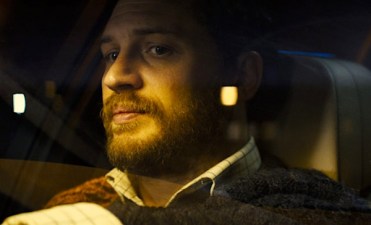
 “Tom Hardy goes for a drive and makes some phone calls” is the plot of this film, which is often mislabelled as a thriller. That’s not to degrade its thrillingness, but rather to say that if you’re expecting a single-location single-character phone-based thrill-ride like
  and in the process turning his life upside down. Another part was to tell a story about an ordinary guy dealing with events that aren’t going to change the world, aren’t even going to make the papers, but are a big deal in his life. Something like this could happen to any of us, and how would we deal with it?
 The rest of the cast appear as voices only on the other end of the phone, and in their own way are quite starry — faces that you may recognise, mainly from British TV, in even some of the smaller roles. Not that you see their faces, so, you know, you might have to look them up, or watch the making-of. Some of the performances err a little towards radio acting for me, which is kind of understandable seeing as how that’s basically how they were recorded, but there are particularly good turns from Andrew “Moriarty in
 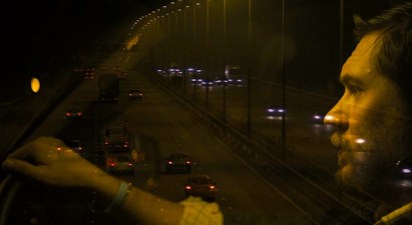 this is about what’s happening on Hardy’s face, not with his whole body. And in either form you’d lose all the photography of nighttime motorways, which have their own kind of hazy beauty. For a movie about someone making phone calls, it is intensely cinematic.
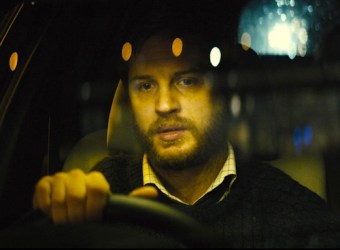 the supporting cast are so much more than “voices on the phone” (listen out, too, for Tom “
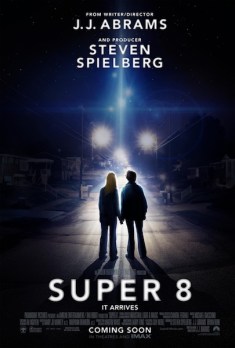 Before he started star warring and between bouts of star trekking, director J.J. Abrams teamed up with producer Steven Spielberg for this homage to the kind of movies Spielberg produced in the ’80s. Those films have endured down the decades; I’m not sure Super 8 endured as far as Abrams’ next
 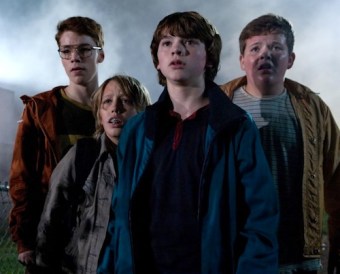 Unfortunately, the longer the film goes on the more it runs away with itself, as characters dash back and forth all over the place, sometimes in credibility-stretching fashion (we never do see how a group of kids manage to escape a heavily-guarded military base and drive back to an evacuated and blockaded town). The adults stumble through the story to little dramatic effect; Joe’s dad even has to be secretly locked up for a good chunk of the film (with no other characters noticing his disappearance) so that his storyline can be paused until he’s wheeled out for his part in the climax. The grown-ups do serve a role — giving us a perspective on events that the kids lack, and being tied to the emotional arcs of the leads — but it wouldn’t have harmed anything to limit them to those functions, rather than trying to half-heartedly give them stories of their own.
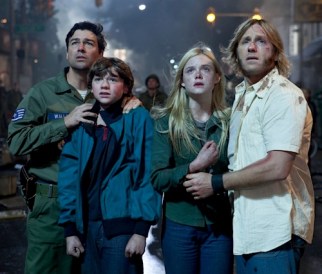 In some respects, the kids’ short film (which plays during the end credits) encapsulates the whole movie: a semi-thought-through SF/F plot, a tacked on emotional arc, the apexes of both tied together in the climax, and a couple of sometimes-shoehorned effects set pieces along the way. Yet for all that, it does enough right that I’d quite like to see Abrams attempt more work along these lines.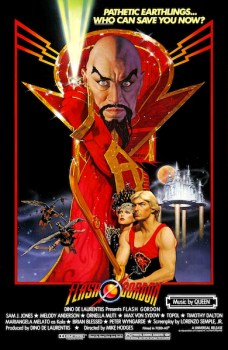

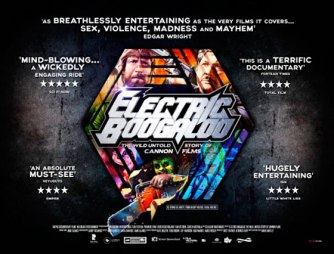 The director of
 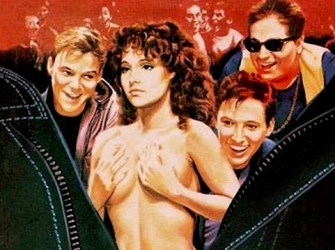 (unless you’re a Cannon aficionado, perhaps), but they were there, they lived it, and they have first-rate insights into the craziness. Craziness like the story of the competing Lambada movies, which ended up being released on the exact same day. I mean, you’d think one Lambada movie would be more than enough, but two, competing… If you wrote it in a fiction, the audience would laugh at the ridiculous contrivance of it, but it happened. Elsewhere, there’s a chunk where they just slag off Michael Winner for a bit (awesome), and director Franco Zeffirelli describes them as the best producers he ever worked with and the only ones he ever liked. Like I say, you couldn’t make it up.
 (and if it’s told effectively, rather than the issue of if its telling is effective) is all that really matters.
 When a warrior family are betrayed and killed, the surviving siblings seek vengeance.
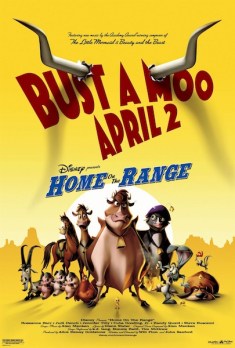 I have many goals within my film viewing, quite apart from trying to watch 100 films every year. Some I’ve completed (the Rathbone Holmes series), others are almost done (every Spielberg film), others not so much (every Hitchcock film), and others I’ve barely begun (the Zatoichi series). One of these goals is to watch every Disney Animated Classic, their canon of feature animations that currently sits at 55 titles (with another scheduled for later this year, in the US at least). I did a pretty good job on the real classics while growing up, and have since filled the gaps of the modern classics, so I’m left ploughing through their lesser periods: the content they pumped out in the war-affected ’40s, and the post-Renaissance pre-Lasseter clusterfrack that was their ’00s produce. My best hope is to uncover a hidden gem while I mop up this dross.
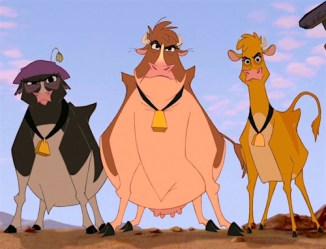 but only because it has a moderately amusing reveal in the middle of it. The animation is unremarkable, besides some terrible CG intrusions. It seems to be under the impression that “hog” is a word for “cow”, based on the number of puns. A couple of gags do land — I even laughed out loud once, though I’ve forgotten why — but the majority is resolutely uninspired.