
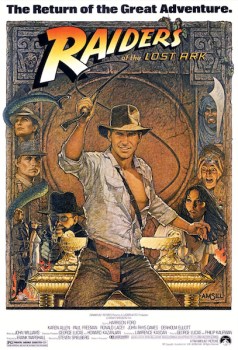
Also Known As: Indiana Jones and the Raiders of the Lost Ark

Country: USA
Language: English (and German, Hebrew, Spanish, Arabic & Nepali)
Runtime: 115 minutes
BBFC: A (1981) | PG (1987)
MPAA: PG
Original Release: 12th June 1981
UK Release: 30th July 1981
First Seen: VHS, c.1991
Stars
Harrison Ford (Star Wars, Witness)
Karen Allen (Animal House, Starman)
Paul Freeman (The Long Good Friday, Mighty Morphin Power Rangers: The Movie)
Ronald Lacey (Take a Girl Like You, Red Sonja)
John Rhys-Davies (The Naked Civil Servant, The Lord of the Rings)
Director
Steven Spielberg (E.T. the Extra-Terrestrial, The Adventures of Tintin: The Secret of the Unicorn)
Screenwriter
Lawrence Kasdan (The Empire Strikes Back, The Bodyguard)
Story by
George Lucas (THX 1138, Return of the Jedi)
Philip Kaufman (The Outlaw Josey Wales, The Right Stuff)
The Story
1936: adventurer Indiana Jones is hired by the US Army to retrieve the mythical Ark of the Covenant, which they believe is on the verge of being uncovered in Egypt, before the Nazis can get their grubby mitts on it.
Our Hero
Professor of archeology, expert on the occult, and obtainer of rare antiquities, Indiana Jones. Good with a whip; not good with snakes.
Our Villains
Dr. René Belloq, essentially the evil Indy: a fellow archeologist with fewer scruples, who often takes credit for Indy’s hard work and is now in bed with the Nazis. They’re most memorably represented by creepy Gestapo agent Toht, played by Ronald Lacey, who was cast because he reminded Spielberg of Peter Lorre.
Best Supporting Character
The daughter of Indy’s mentor, and his one-time love, Marion Ravenwood, who’s roped in because she happens to possess an artefact with a clue to the Ark’s location. Feisty and capable of holding her own (some of the time, anyway), it’s a shame she didn’t appear in the initial sequels — at Lucas’ insistence, apparently (he also kept her out of the spin-off novels). She eventually returns in Kingdom of the Crystal Skull, the only character from the first three films to be brought back for that adventure (besides Indy, obv.)
Memorable Quote
Sallah: “Indy, why does the floor move?”
Indiana: “Give me your torch… Snakes. Why’d it have to be snakes?”
Memorable Scene
Goodness, where do we start? Well, how about the start! Having made his way safely through a boobytrapped cave, Indy switches a bag of sand for the idol he’s come to retrieve. Unfortunately the trap is not fooled, and Indy has to run out as the place collapses around him and all the traps are triggered — including, most famously, a giant rolling boulder.
Write the Theme Tune…
It’s only one of the greatest movie main themes of all time. Composed by John Williams (of course) it’s technically called The Raiders March, and is a combination of two ideas Williams wrote for Jones’ theme that Spielberg suggested be put together to make one piece.
Technical Wizardry
The film is naturally packed with stunts, one of the most memorable being when Indy is dragged under and out behind a moving truck. To achieve it safely, more clearance was created under the truck by constructing one that was higher than normal and digging out the centre of the road. The shot was filmed at 20fps, lower than the standard 24, so that when played back the truck appeared to be moving faster. The feat was performed by stuntman Terry Leonard, but Harrison Ford was actually dragged behind the truck for some shots. When asked if he was worried, Ford replied, “No. If it really was dangerous, they would have filmed more of the movie first.”
Truly Special Effect
The climax, when the Ark is opened, was a field day for ILM. Techniques used include “animation, a woman to portray a beautiful spirit’s face, rod puppet spirits moved through water to convey a sense of floating, a matte painting of the island, and cloud tank effects to portray clouds.” Plus the villains’ heads melt (a gelatine and plaster model exposed to a heat lamp), collapse (a hollow model with the air sucked out), and explode (which nearly landed the film with an R rating).
Making of
Have you heard the one about the scheduled sword fight and everyone being ill? You have? Oh, okay then.
Next time…
The film was a massive success, so has spawned tonnes of media. Primarily, three direct sequel films, with a fifth set for 2019. Then there’s the three-season TV series The Young Indiana Jones Chronicles, 13 adult novels, 33 Young Indiana Jones novels, 11 “choose your own adventure”-style books, eight German novels (which have never been translated into English), numerous comic books, and 19 computer games, including nine with original storylines and two Lego Indiana Jones games. Also, a stunt show at Walt Disney World in Florida based on Raiders that has been running for 27 years. Whew!
Awards
5 Oscars (Editing, Art Direction-Set Decoration, Sound, Visual Effects, Special Achievement in Sound Effects Editing)
4 Oscar nominations (Picture, Director, Cinematography, Score)
1 BAFTA (Production Design/Art Direction)
6 BAFTA nominations (Film, Supporting Artist (Denholm Elliott), Cinematography, Editing, Music, Sound)
7 Saturn Awards (Fantasy Film, Actor (Harrison Ford), Actress (Karen Allen), Director, Writing, Music, Special Effects)
2 Saturn nominations (Supporting Actor (Paul Freeman), Costumes)
Won the Hugo for Best Dramatic Presentation
What the Critics Said
“Yes, it’s as entertaining as you have heard. Maybe more so. Raiders of the Lost Ark is, in fact, about as entertaining as a commercial movie can be. What is it? An adventure film that plays like an old-time 12-part serial that you see all at once, instead of Saturday-to-Saturday. It’s a modern Thief of Baghdad. It’s the kind of movie that first got you excited about movies when you were a kid. (Translation for today’s children: It’s better than anything on TV.)” — Gene Siskel, Chicago Tribune
 Score:
 94%
94%What the Public Say
“Spielberg and George Lucas had, in the same year, rewritten the rules of the science fiction genre; Lucas with Star Wars and Spielberg with Close Encounters of the Third Kind, but what could they do together? Greatness, it turns out. Their contribution: Raiders of the Lost Ark, one of the best, most exciting, most brilliantly written action movies of all time. It’s fun, it has a great sense of wonder and adventure. It’s scary, it’s bloody, it’s violent but you never come away feeling unclean. It has a hero, Indiana Jones, who is fallible but not a wimp. […] I can talk all day about Raiders of the Lost Ark, but I must simply conclude that the movie is just plain fun” — Jerry, armchaircinema

George Lucas and Steven Spielberg teamed up for the first time here, recycled elements from movies beloved in their youth, and produced something new and exciting that is still a reference point for blockbusters 35 years later. (We’re getting homages to homages now, aren’t we? Weird.) It’s pretty much a perfect adventure movie: relentlessly paced, packed with action, lightened with humour, full of likeable heroes, who are brave and competent but also a little bit flawed, and hissable villains, with scene after scene of imaginative situations and fabulously staged derring-do. It’s perfectly distilled pulp adventure, and pure cinematic entertainment.

Many Bothans… died to bring us #73.
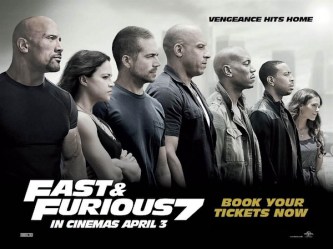 The franchise that can never make up its mind about what each instalment’s called continues with its most outrageously ludicrous entry yet.
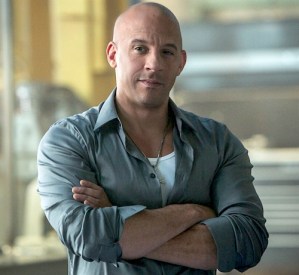 Despite that, the series is beginning to feel increasingly “fans only”. That’s the way of all things these days, I suppose. Long gone are the days when movie series aimed at accessibility, each entry fundamentally a standalone adventure for a popular hero. Serialisation is the new discreteness, and it pays dividends for Marvel and, indeed, for Fast & Furious: in the same year as
  while we’ve seen computers being used to generate a performance for a deceased actor for over 15 years now (I believe
  But hey, what does it matter? The point is the big dumb fun of the action sequences, be they well-choreographed and -shot fisticuffs, excellent stunt driving, or computer-generated ridiculousness. Is it okay to just give a movie’s plot a free pass like that? Sometimes, I think it is. Furious 7 is an action movie, in a fairly pure sense of the term, and action it delivers.
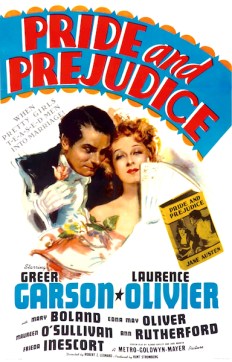 The first adaptation of Jane Austen’s ever-popular novel, MGM’s film is a compromised endeavour: by executives softening dialogue and rewriting characters; by changing its setting to permit grander costumes; by

 The third English-language screen adaptation of Agatha Christie’s famed mystery, one of the best-selling novels of all time, relocates the action to the middle of a desert but is otherwise a word-for-word remake of
 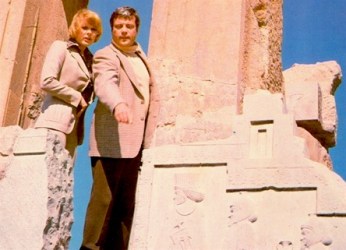 As a précis of the storyline, with some nicely photographed locations (the Iranian hotel they filmed in looks fairly stunning), this isn’t half bad. However, there are at least two better screen adaptations of the novel, and if what I’ve heard of
 Written by Aaron Sorkin and directed by Danny Boyle, with a name cast and plenty of awards buzz, this biopic of the eponymous tech genius was an inexplicable box office flop on its release last year — proof if proof were needed that box office does not equal quality, because I thought it was thoroughly excellent.
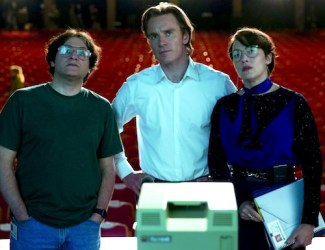 Boyle’s decision to use different film formats for each section — 16mm, then 35mm, then digital HD — helps delineate the eras and, in a way, reflect the products being launched (though I’ll instantly concede that last point may be a bit of a stretch). I imagine it’s too technical a concern to be noticed by your average filmgoer, but I’m sure it must have a subtle effect; and for those of us who are so minded to spot the change, it’s kinda fun and effective. Shot by Alwin H. Küchler, each section has its own charm, from the warm fuzziness of 16mm, to the gloss of 35mm, to the precision of digital. This is a mighty fine looking film, and while modern tech meant the 1080p Amazon Video stream I was watching looked darn near Blu-ray quality, I’m still miffed I didn’t just go straight for the disc, because now I’m going to have to pay for it again at some point.
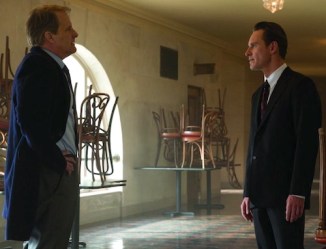 The dialogue they’re delivering is so Sorkin. Rearrange character names and you could drop this into
 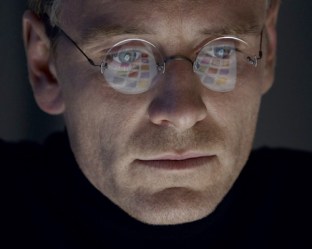 In a similar vein, I suspect it would make a great companion piece to
 In this lesser sequel to

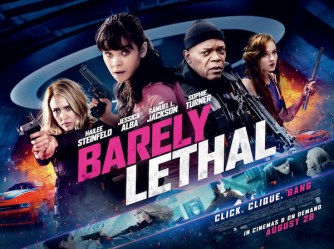 Hailee Steinfeld stars as a teenage girl raised from childhood by a top-secret government organisation to be an expert agent, but who has always longed for a more normal experience. When the organisation thinks she’s died on a mission, she uses it as a chance to have that normal life. Researching the high school experience from teen movies, she heads off to a typical US high school… and finds life isn’t quite like the movies. Though it is a bit, but it’s allowed to be so long as you keep referencing the movies you’re riffing off… right? Oh, and of course her old life keeps intruding, in the form of people wanting to kill her ‘n’ all that.
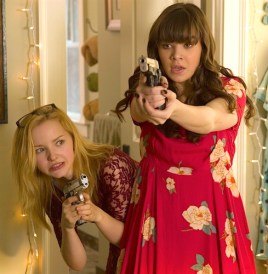 then I think there’s a fair chance you’d find it to be a frequently amusing, occasionally very funny, and sometimes quite sweet high school comedy — with added doses of action comedy for good measure. There’s even one great scene (which is more than many a “very good” film can claim); the kind of scene that, when it happens, is so right it feels like kind of an obvious idea, but I’ve never seen it done before (it kinda requires a premise like this to even work) and is pretty faultlessly executed.
 1960 Academy Awards
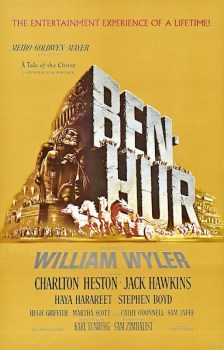 So claims Ben-Hur’s 1961 trailer. They were cocky back then, weren’t they?
 but was so invested that I stuck with it regardless. There are things that have aged poorly, be that the model effects in the sea battle or using a white actor in heavy make-up to portray an Arab, but I think you have to take these things with a certain element of the spirit of the era — I’m sure no offence was intended (see also:
 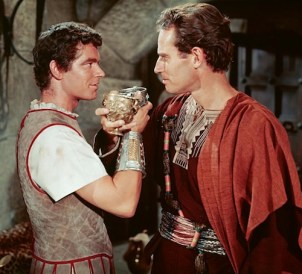 This Christian aspect contrasts sharply with the other subtext I alluded to earlier: the possibility that Judah and Messala were once lovers. The claim originates with screenwriter Gore Vidal, who may or may not have written some or all of the screenplay that was used for shooting. According to Vidal, he and Stephen Boyd discussed the idea before shooting began, and then Boyd played the scenes with it in mind. However, it was kept hidden from Charlton Heston because he’d never agree to it, and when the notion was put to him later he naturally denied there was any homosexual subtext. Whether this tale is true in the literal sense of that subtext being written into the screenplay and Boyd choosing to incorporate it into his performance, I don’t know, but the content of the film makes it easy to believe — the scenes between Messala and Judah, especially when they’re first reunited, absolutely play like there’s a romantic history between them. Bear that in mind and it seems to reoccur later, too: when the story returns to Jerusalem after several years, Messala seems particularly close to his deputy; and there are a couple of shots of Judah being chummy towards a random stableboy (I mean, they’re not much, but if you watch it with the assumption that Judah is gay or bi…) What does this signify? Perhaps not a great deal. I’m sure you can choose to completely ignore it. I imagine some would passionately deny even the possibility it’s there. Personally, I think it adds something to the characters’ relationship.
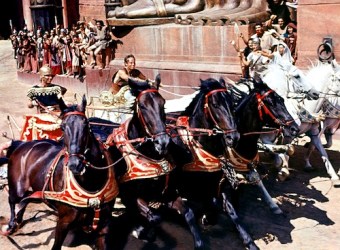 the technical awards the film scooped up are certainly merited. The cinematography is fantastic, with the landscape shots making particularly excellent use of the extra-wide frame. As for the chariot race, it stands up as an incredible action sequence even today, driven by thrilling camerawork and editing, and showcasing some daring stunt work.
