
Alex Garland | 115 mins | streaming (UHD) | 2.39:1 | UK & USA / English | 15 / R
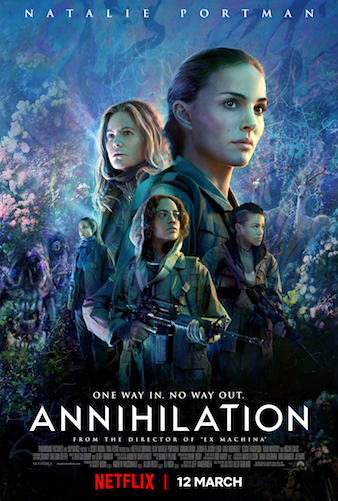
Many column inches (and even more tweets) have been penned about Paramount’s decision to relegate director Alex Garland’s second third film straight to Netflix outside the US, Canada, and China, so I presume the pros and cons of that move have been thoroughly discussed elsewhere. Personally, I’m on the fence: it’s disappointing not to see intelligent sci-fi being given a shot at the box office, but I’m one of those people who’s 50/50 on whether I go to see it or just wait for disc/streaming/etc. (I’ve not even seen The Shape of Water, for example, although that’s partly due to a dearth of convenient screenings during its brief theatrical appearance. Conversely, I did go to Arrival.) Anyway, it is what it is at this point, so let’s move on to the film itself.
Loosely based on the acclaimed novel by Jeff VanderMeer (reportedly Garland read the book once then wrote the screenplay from memory), it follows biologist, academic, and former member of the Army, Lena (Natalie Portman), whose soldier husband Kane (Oscar Isaac) went missing a year ago during a secretive mission. After he suddenly reappears, apparently with no memory of his time away but with some severe medical problems, the couple are scooped up by a military organisation investigating Area X, a top-secret quarantined zone affected by an unexplained phenomenon known as the Shimmer. Various teams have been sent inside the Shimmer, but Kane is the only person to ever return. As his health deteriorates, Lena, desperate for answers, joins the latest squad to venture inside. That’s where stuff gets crazy…
The first thing Annihilation made me think of was Denis Villeneuve’s Arrival. The connection was initially triggered by the score: the ambient soundtrack by Geoff Barrow and Ben Salisbury reminded me so much of Arrival’s that I had to check this wasn’t a last work by Jóhann Jóhannsson. Once I spotted that, the other similarities in the story leapt out: they’re both thoughtful sci-fi parables about a female university lecturer being co-opted into a military operation to investigate a strange extraterrestrial presence on Earth, while also remembering her family life in flashbacks.
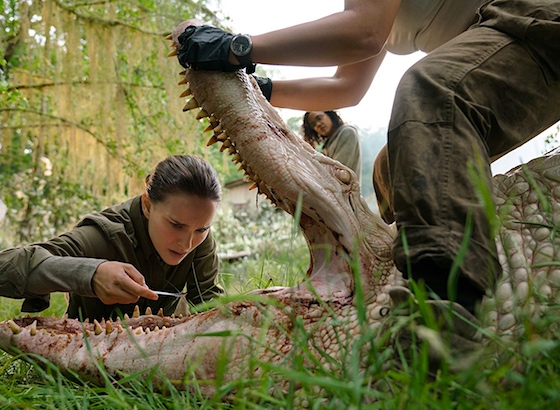
Despite Paramount’s insistence that the film was too intelligent for non-US audiences (you can take a moment to laugh at that notion if you like), Annihilation is perhaps more accessible than Arrival, at least initially. Whereas Villeneuve’s film played like a character drama, Garland’s has a strong adventure-movie vein, also laced with elements of the horror genre. It’s still not a mile-a-minute thrill-ride, but, if you wanted, you could engage with it on the level of a quest through an alien event, encountering strange phenomena and creatures, with events of life-threatening jeopardy. However, for all the original sci-fi ideas, it does also touch on weightier, more human psychological issues — as the Empire review summarised it, “depression, grief and the human propensity for self-destruction.”
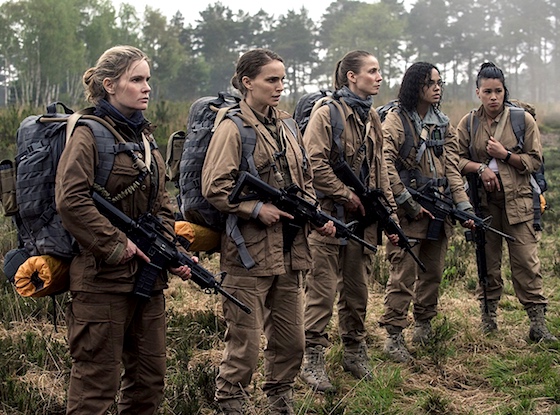
Naturally this material is carried by the cast. Portman makes for an interesting lead. Clearly damaged by grief, she’s quite a cold figure, which may distance her from some viewers in the way it does from some of her team mates. But there’s more to it than that, and Portman delivers subtle nuances that hint at more beneath the surface. The rest of her all-female squad — played by Jennifer Jason Leigh, Tessa Thompson, Tuva Novotny, and Gina Rodriguez — all have distinct personalities, all get brief subplots and moments, and they’re mostly managed with an equal level of understatement. Perhaps the best is Thompson, whose calm, gently heartfelt performance is quietly superb, and even more striking as it marks a huge contrast to her star-making turn in Thor: Ragnarok just a few months ago. As a pair of films to be a calling-card for her skills, one could barely ask for more.
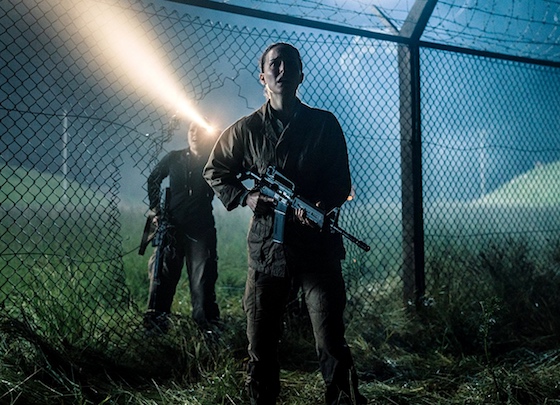
A lot of disappointment about the lack of a theatrical release stems to not being able to see these visuals on a cinema screen; not being able to experience the audio with a cinema sound system. Well, that partly depends on your own setup at home, of course. Setting that aside, though, while there are certainly some very striking visuals, it wasn’t as consistently stunning as some reviews made it sound. I’m not saying it wouldn’t benefit from the big screen, especially if you’re particularly fond of that experience, but I didn’t feel I was missing much scale by watching at home. I felt similarly about the sound design, though I do say that as someone with a 7.1 system. For spectacle, the intricate and colourful end credits are the most striking bit — I’m certain they benefitted from my viewing the film in 4K HDR.
However you get to see it, writer-director Alex Garland has crafted another sci-fi mystery/thriller that engages on multiple levels. For me it was somewhat damaged by the hype, perhaps a result of US reviewers frantically urging people to get out and see it to prove that Paramount’s lack of faith was a mistake. While I didn’t instantly love it in the same way as, say, Arrival, or Garland’s debut, Ex Machina, it’s undoubtedly a fascinating, thought-provoking slice of science-fiction — and a much-needed critical success for the “Netflix Original” brand after a couple of recent duds. I’d also say it places Garland ahead of genre contemporaries like Neill Blomkamp and Duncan Jones as a filmmaker to keep an eye on. Okay, he’s not quite Denis Villeneuve, but he’s a lot closer than the others.

Annihilation is available on Netflix in most of the world now.




 2017 Academy Awards








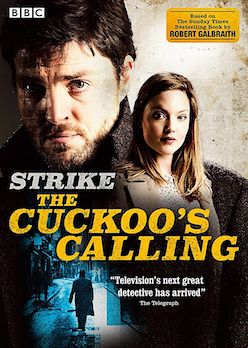 Adapted from the series of novels by Robert Galbraith — the mystery-writing pseudonym of one J.K. Rowling — you might’ve assumed this would’ve followed in the footsteps of the author’s other literary series and have Hollywood come a-knocking. Maybe they did, but TV is a more natural home for the material: it’s a decent low-key murder mystery with appealing lead characters, which is the sort of stuff that can generate TV ratings but doesn’t spell box office nowadays (well, unless it’s Murder on the Orient Express, with its $350 million worldwide gross, but that’s a different kettle of fish). While the general shape of the drama is familiar from, well, every other TV detective show, Rowling’s well-known interest in social issues regularly comes through — not least in its two main characters, one of whom is a war veteran living with the realities of an amputation, the other a talented woman finding equality in the workplace. I suppose that’s all very timely.
 Having blown the doors off its own enjoyable premise with a clever twist at the end of
 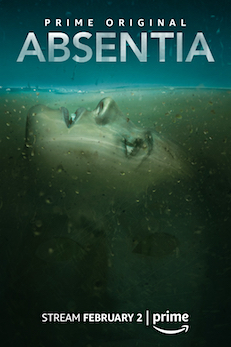 Stana “Beckett from Castle” Katic stars in this mystery-thriller, an Amazon exclusive in the US and UK (and everywhere else there’s Amazon Video, I presume). She plays FBI agent Emily Byrne, who was declared dead in absentia after she disappeared while on the hunt for a serial killer. Six years later, she turns up alive, apparently having been held captive all that time — even though the main suspect was convicted of her murder and has been in prison. Events quickly take a turn where her former colleagues wonder if Emily was in on it too, meaning she has to go on the run to prove her innocence. Of course, none of those people ever stop to wonder what she’s actually been up to for six years (it’s not like the killings continued), or why she’d decide to fake her comeback now, or… all sorts of other things. A subplot with her kid — who was too young to remember her, and now has a new real mom because his dad remarried — has emotional potential, but goes a bit too swimmingly at first and then is soon abandoned in favour of shoot outs, and unearthed skeletons (both figuratively and literally), and all that mystery-thriller stuff. So this isn’t one to think about too much, in any respect, but it’s passably entertaining as a pulp thriller. I’m going to stick with it until the end, at least, but I kinda hope it doesn’t try to end on a cliffhanger — I’m not sure I want a whole other season (or two, or three, or more).
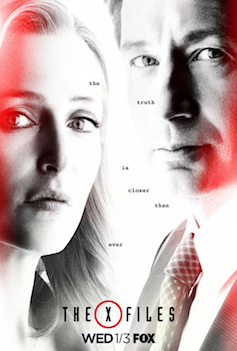 The second season of The X Files since its revival only recently started airing in the UK, but we’ve caught up as far as episode three now. Well, the broadcasts have — I’ve only watched the first episode, and it was so goddamn terrible I’ve not had the heart to continue. (I will, I’ve just not mustered the motivation yet.) Said opener was My Struggle III, continuing the series’ never-ending mythology arc plot, which last season (two years ago now!) was covered in My Struggle I and My Struggle II. Well, at least the mythology episodes are clearly marked these days — there’s a My Struggle IV later in the season, for our sins.
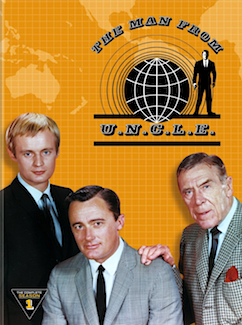 I’ve had this knocking around waiting to be watched for yonks after I picked up the complete series DVD set on offer. (“For yonks” being “since 2015” in this case.) I remember seeing some episodes as a child and enjoying them, though I don’t remember any specifics. I guess they were from the show’s later, crazier, full-colour years, because these early black-and-white adventures don’t quite chime with that vague sense-memory of what the show should be. That said, although they start out almost serious (as ’60s spy-fi goes, anyway), by just a couple of episodes in there’s already a kookier side on display. Anyhow, I expect the best is yet to come.
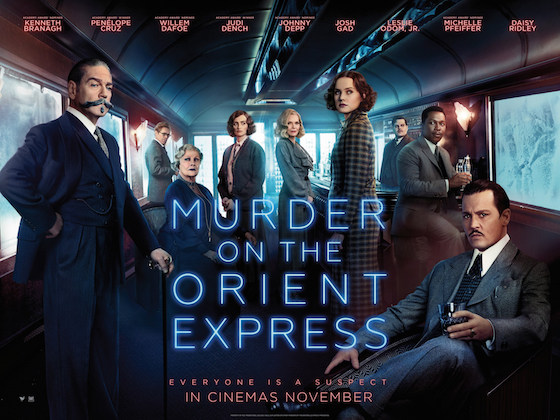
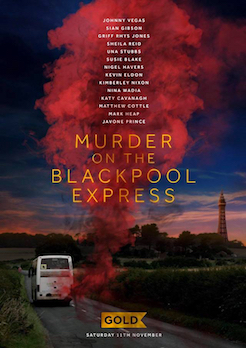 This one-off feature-length comedy aired at the end of last year, presumably timed to tie-in with the theatrical release of Kenneth Branagh’s Murder on the Orient Express — as the spoofing poster highlights, of course. (Who thought I’d wind up referencing that film twice in a TV column nearly four months after it came out? I really ought to get on with reviewing it…) Truthfully, that poster is probably the best thing about this. There’s a large cast, all recognisable from a host of British sitcoms, but half of them go underused. Those that do have a part to play get material that’s fairly amusing, amid a plot that’s somewhere between predictable and too mad to be guessable. It was funny enough on balance, but it didn’t live up to its full potential.
 This month, I have mostly been missing Altered Carbon, Netflix’s cyberpunk murder mystery. Reviews looked to be mixed, so I haven’t actually decided whether to bother with it or not. Two series I will definitely (intend to) get round to, but I’m saving up to binge once they’re done, are: BBC Two’s starry political thriller Collateral (led by Carey Mulligan, John Simm, Billie Piper, and no doubt some actors who haven’t had significant roles in Doctor Who. FYI, it’s coming to other counties as a Netflix “Original” next month); and the latest run of Scottish detective drama Shetland (the last series of which was

 100Films.co.uk