
Kevin Rodney Sullivan | 101 mins | TV | 12 / PG-13
 Readers may remember that I opened my Guess Who’s Coming to Dinner review with a joke about how the film might be ruined if its premise was being made today. Cue reactions along the lines of ho ho ho, wouldn’t it be dreadful, thank God that’s not happened, etc.
Except, as was helpfully pointed out to me on Twitter, it has.
Here, the situation is reversed: nice black girl brings home white guy to meet parents. White guy isn’t Ben Stiller or Adam Sandler, as I suggested, but Ashton Kutcher, who more or less falls into the same category. The family being visited is still rich, albeit black, but rather than Sidney Poitier’s Surprisingly Respectable black man, Kutcher is a recently-jobless white man. I’m sure there’s some further table-turning to be read into this, but, look, it’s a film starring Bernie Mac and Ashton Kutcher — it’s not going to be a race relations paean, is it?
Indeed, Guess Who is pretty much what you’d expect it to be. The plot isn’t a direct copy of Guess Who’s Coming to Dinner, preferring to take the gist of the concept and a few of the story beats and surround them with a bunch of Funny Situations. I won’t bother you with details; suffice to say, the film does manage the odd laugh or smile, increasingly so as it goes on (though this may be because I was getting increasingly inebriated, it’s a tough call). The ending is suitably lovey-dovey, sentimental, and, I think many would add, hogwash. Should you be a sucker for a (modern-style) rom-com it may well be up your street; most viewers need not apply.
 Mac and Kutcher play the roles they always play— No, actually, in fairness, I can’t say that: I think I’ve only seen Mac in the three Ocean’s films and I can’t think of anything I’ve seen Kutcher in (was he in The Butterfly Effect, or was that someone else equally interchangeable?) So, they play the roles I’ve always assumed they play, which is at least as bad. Zoe Saldana, on the other hand, seems to have a magic ability to raise the quality of almost every scene she’s in — even Mac and, to a higher level, Kutcher benefit from her skills to inject some genuine emotion into a film otherwise dependent on familiar or predictable gags.
The race debate is cursory. Maybe that’s a good thing — one could argue it shouldn’t be allowed to be relevant today, even if it still is — but occasionally there’s the sense that the filmmakers are actually trying to do more with the issue. Suffice to say, they don’t succeed. The gap is filled with additional comic interludes and mishandled subplots — in the latter camp, Kutcher’s hunt for a new job, and issues with the father who abandoned him — but they do little to make up for it. They’re certainly not a direct replacement, but nor do they offer an adequate alternative, particularly as they go begging for any kind of relevant point.
One scene, in which Mac goads Kutcher into telling racist black jokes at the dinner table, comes close to tackling the awkwardness of the issue. It’s ceaselessly predictable, naturally, but it also makes overtures at the issue of whether these jokes are funny, racist, or both. Most of the rest, however, is “father doesn’t approve of daughter’s boyfriend” schtick that has nothing to do with race. 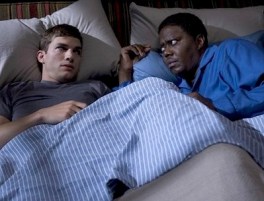 It’s as recognisable from TV sitcoms — Friends did it with Bruce Willis, for just the first example that comes to mind — as it is from movies. Again, maybe ignoring the race factor here is a good thing; but if you’re going to foreground it in your concept and promotion, you ought to be dealing with it, not using it as a way in to familiar sequences.
Though it takes a while to settle in, Guess Who does seem to improve as it goes on. Even though it more or less abandons the race issue, and many of the setups are familiar, it has its moments. Still, it never hits comedic heights, and doesn’t even attempt serious dramatic ones, and it’s not even close to being a patch on the original. The pros aren’t enough to make the film worth your time, but at least they stop it being a total disaster.

Guess Who is on Film4 tomorrow, Friday 9th, at 6:55pm.
The inspiration for this, Guess Who’s Coming to Dinner, is on BBC Two tomorrow (Sunday 3rd August 2014) at 2:40pm.
 It’s generally taken as a rule that an original film is better than the remake, particularly so if that original is in a language other than English and the remake is American. But there’ll always be something to buck the trend, and in my view that’s Insomnia.
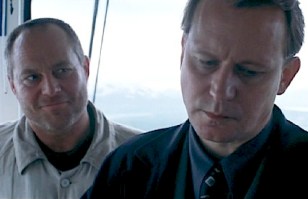 surprised how little his lack of sleep had to do with anything. Here, there are several scenes of Skarsgard struggling to sleep, he’s visibly rougher as the film progresses, and it seems to impact his judgement and sense of what’s going on more than in Nolan’s film. If the other character elements are apparently less developed, this is something the original does better.
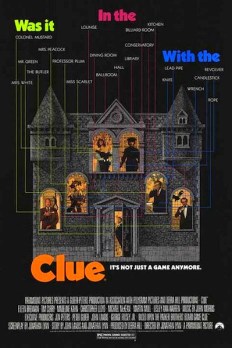 Although Disney have recently treated (I use the word loosely) us to a glut of films based on theme park attractions, movies adapted from good old board games seem a lot rarer. This is probably for good reason — even more so than Disney rides, the majority have no kind of useable narrative. Cluedo (aka Clue in the US) is one of the few that does, and consequently is one of the few (only?) board games that has reached the silver screen. So far, anyway.
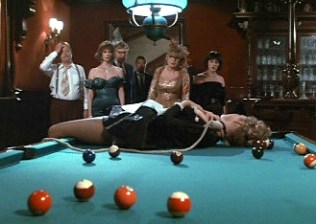 Other than the board game connection, Clue is best known for its three different endings, all of which were released, with each screening having just one attached. On TV the film shows with all three consecutively, and they perhaps work best this way — there’s a rising scale of ridiculousness, and the varied repetition of a couple of gags underlines rather than steals their amusement value. My personal favourite variant was the first, incidentally.
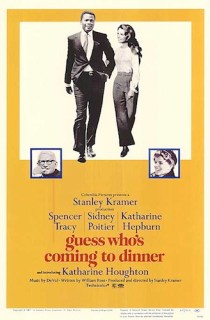 In Guess Who’s Coming to Dinner, a white girl falls in love with a black man and brings him home to meet the parents. You can almost imagine this premise still being launched today, as one of those dreadful ‘comedies’ Hollywood pumps out every year, in which the parents are outrageous racists — played by some ageing stars who should really know better — and one of the young couple is a bit accident-prone and played by someone like Ben Stiller or Adam Sandler.
 It could easily have been a simplistic message movie — these people are liberal, these people are racist, etc — but instead there’s complexity at every turn. There’s the liberal white parents who never expected to find themselves in this situation, and suddenly are struggling with their own ideologies; or the black characters, who you might think would be eager to move ‘up in the world’ but actually react even worse to the idea; or the Catholic priest being one of the few characters unwaveringly in favour of the union. And even then, these characters could just become ciphers for the arguments and debates; but they’re not, they’re characters, having believable reactions, and from this comes the debate.
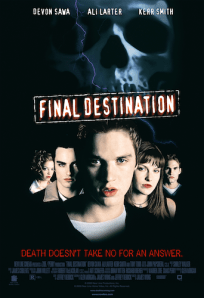 Final Destination is a full decade old this year, which somehow seems too long — it can’t be so old, surely? On the other hand, it fits quite comfortably into that run of teen-centric horror films from the the mid- to late-’90s, like
  The most important part, all things considered, are the ways Death settles the score. No mysterious “natural causes” demises here — Final Destination is all about inventive executions. Even after a decade, in which some of the Great Big Shocks have been revealed in various Top 10s and “OMG do you remember the bit where…” conversations, some bits remain impressive and/or amusing. And it certainly has fun with a few of them, teasing the viewer with various means of dispatching the victim before they ultimately succumb to one. Or, alternatively, just surprising us with a sudden whack. Both are good. Only one bit — a fidgety-armed corpse — is a thoroughly gratuitous jump-scare.
 but that one solitary shot confirms it must be some kind of entity with a very specific motive. And that’s a shame, because it’s not developed further — i.e. no Big Reveal of the nasty Death-thing — and would’ve been more interesting to play with that ambiguity — is Alex right that it’s all planned, or is it just a series of nasty coincidences?
 Ah, Rambo. Rambo Rambo Rambo. The only Rambo film I’ve seen is
  Stallone is perfect for the character: suitably calm and ‘everyman’ at the beginning; muscular and mostly silent as the trained assassin; and even an actor capable of pulling off the final breakdown, when the horrors of war spill over. It’s difficult to imagine most muscle-men action stars pulling off Rambo’s closing speech. Throughout, Rambo’s PTSD is made obvious without being overdone: brief flashbacks suggest all the horror we need to know, topped by his final outburst. Rambo isn’t the beast, the men who made him that way are, along with those he did it for who fail to appreciate what he’s been through.
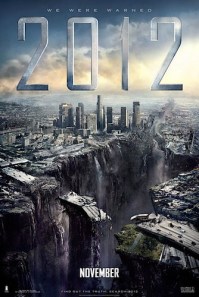 It’s the end of the world, and Roland Emmerich feels fine. The “master of disaster (movies)”, as I’m sure someone (probably himself) has labelled him, here attempts the biggest disaster of them all — as I said, it’s the end of the world.
 as the US President, but a couple of the cast members hold the screen well enough.
 On the other hand, you do get more or less what you’d expect from the film. No one’s going into this thinking they’re getting a deep character piece — it’s great big spectacle all the way, and while it’s not the greatest big spectacle ever, it delivers something close enough to prevent it being the ultimate disaster of a movie — but it’s not the ultimate disaster movie either.
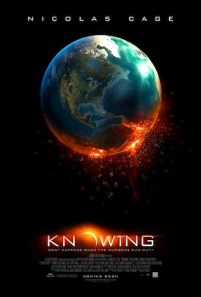 Not many people seem to like Knowing. Quit the opposite, in fact. I must confess, I’m not really sure why. I can read their reasons, of course, but I still thought it was a decent film. Solidly entertaining even, I’d say.
 those numbers down, and other such technical queries, but that seems like needless nitpicking.
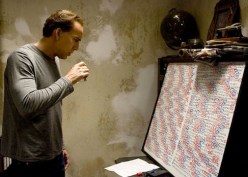 I will accept, however, that the very last shot is arguably a step too far and a little cheesy.
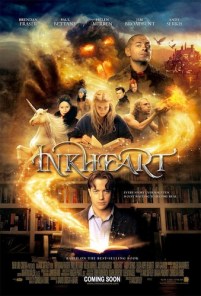 Shot in late 2006, originally scheduled for release in December 2007, ultimately pushed back twice and finally hit cinemas December 2008… what’s wrong with Inkheart?
 A side effect of not establishing the central concept’s rules is that the film doesn’t play with it enough. What, if anything, happens if you just change the words while reading? How is it determined what comes out of the book, what goes in, and can these be influenced? What happens if two Silvertongues read the same text at once? There are other things it would be interesting to see, but those require a more detailed description of some of the few rules that can be discerned so I won’t trouble you with them now.
 While everyone else is straightforward, predictable and/or pantomime, Dustfinger is torn back and forth between helping the heroes, his inherent selfishness, his fear of returning home, and his desire to see his family again. Brendan Fraser, the ostensible lead, is as adequate as ever but outshone by almost everyone else, not least Eliza Hope Bennett. She’s a minor find as Meggie (who I rather suspect is the main character in the book, but here is trumped by ‘star’ power), displaying more believability than most young teenage leads manage in films like this.
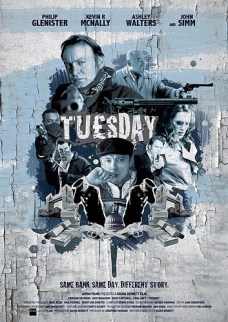 Tu£sday is a low-budget crime thriller, in which several groups of people all try to rob the same bank on the same day — hence the clever title. Unfortunately, the concept is much more interesting than the film writer/director Sacha Bennett has forced it into.
 As the film barely scrapes up to a theatrical running time, there’s a suspicion that the final re-run genuinely was left untouched to keep the length up.
 Unfortunately, it doesn’t go as all-out for the decade as
  100Films.co.uk