
Henry Joost & Ariel Schulman | 84 mins | TV | 12 / PG-13
 Catfish is a documentary (probably — we’ll come to that) in which 20-something Nev falls in love with a girl somewhere else in America over the internet. He and his friends become suspicious that she’s not who she claims and set off to find out The Truth.
Some have said that Catfish reflects our current relationship with social networking technology more than the highly-acclaimed-for-reflecting-our-current-relationship-with-social-networking-technology The Social Network did. They’re right. That’s no criticism of Fincher and Sorkin’s work, though, because I’ve never really held with the notion that their film was a generation-defining tale — it’s about the birth of the largest social networking tool yet seen, but it’s only about that in part; it’s more about relationships between people in business. Catfish, however, is about how said tool (and others) are and can be used, and what effects this can have on human relations.
It’s hard to meaningfully discuss Catfish without looking at what happens towards the end of it, which is obviously spoiler territory, a no-no for any half-decent review aimed at viewers who’ve not viewed the viewing in question. The film’s ‘big reveals’, which everyone talks about coming at the end, actually begin to stack up from about halfway through; there’s no last-minute twist here — the answers are a huge part of the whole film. And so they should be, I think; but it also means if you don’t want to reveal them you have to not discuss a good chunk of the film — the most important chunk, to my mind, because it is after the reveals that Catfish finds its greatest weight and importance.
 Before I get spoilersome, then, let me say this: you will probably guess where it’s going. Even if you’ve not had it in some way revealed (however little of it) before you watch, early scenes will lead to the obvious conclusion: why am I being shown this if it doesn’t go somewhere? And what’s the obvious place it’s going to go? I think most viewers must guess. But I think many — probably even most — will not guess precisely where it ends up; the exact nature of the truth it finds. So this is not as much of a Thriller as it’s been sold in some quarters. It has suspense, certainly, and it has mysteries that have answers… but there’s not some dark secret at the heart of it all; instead, there’s a painful emotional situation. Already I’m saying too much.
And now I shall go on to discuss things that might get spoilery, including the much-debated topic of whether the film is real or a hoax. If you’ve not seen it, I encourage you to skip to my final two paragraphs.
All documentary is constructed in some way — it is, at best, an edited account of real filmed events. As a society/culture we’ve been taught to assume it’s edited in such a way as to present a true-to-life-(but-abbreviated) account of what Really Happened, but that’s not necessarily the case. When you throw in an authorial voice — an onscreen presence or a voice over — it becomes if anything less truthful, especially if the filmmaker has a particular message they want to convey. Sadly, despite the masses of “don’t trust what you read”/”don’t trust what you see” comments that come from more responsible sources and/or satire, I still think most people fundamentally believe what they see in a documentary (or they read in a newspaper) to be the truth.
So whatever the reality behind it, Catfish is unquestionably a construct — it has been edited (like all documentaries), so it automatically is; it can’t be anything else. The filmmakers have chosen what they want us to see, whether that be real or staged. The questions of veracity, then, are: did these events really happen, and/or did they happen as the film depicts them?
Some have noted the makers got lucky to be filming when all the major points of the story happened. Rubbish. Poppycock. Stronger words with swearing in them. If they were making a documentary, surely they’d be filming a lot? Especially whenever they knew Nev would be having a phone call with Angela/Megan/etc. There’s nothing in the film to suggest they didn’t shoot dozens or hundreds of hours of footage of Nev reading out Facebook messages and text messages, or dozens of phone calls, then trimmed them right back to the most interesting or relevant (in their eyes, naturally). If they were committed to making a documentary, the likelihood is they would have shot almost all the time, recorded him reading out every message (or as much as they could), then selected the most relevant or revealing bits in the edit. That’s how documentary filmmaking works. And when it gets to the point, surprisingly early on, where they suspect something’s amiss, of course they’re filming all the time: they’re on an investigation and they’re filming that investigation!  The allegation that it can’t be real because they happened to film everything that happened is nonsense.
That said, there is a theory that some of the earlier scenes were shot later; that they realised they were on to something around the time it started to go awry, then went back and staged earlier events for the sake of storytelling. That explanation I can buy.
In some respects, I find the reaction of viewers more interesting than whether the film is wholly truthful or not. Some people seem to hate and despise Angela for what she did. Really? How heartless a human being are you? What she did was wrong, to a degree (it’s hardly robbery, or murder, or worse, is it?), but she is clearly a woman stuck in a life she’s not happy with and looking for a means of escape; but she’s a fundamentally good person, who won’t abandon the people she cares for and cares about. How people can reach the end of Catfish and still be condemning her I don’t know. She earns our sympathy. If anything, the filmmakers look bad — at times, it looks very much as if they’re about to exploit her or use the film to attack her. They don’t, because they see the truth and they sympathise too. If anything, they use it to try to help her.
If you have any interest in the internet and the way so many people now live their lives through it, with all the social networking it offers, and how that impacts back on their ‘real’ lives, then Catfish demands to be seen. I don’t want to suggest you’ll definitely like or even appreciate it, but I do think you need to see it for yourself. As much as I loved The Social Network  (it’s still on track as the best film I’ve seen in 2011), Catfish probably has more to say about the actual impact of Facebook on our lives than Fincher/Sorkin’s biopic does.
And for those wondering about the unusual title, it’s eventually explained in the film itself. The anecdote that inspired it is interesting, memorable, and quite possibly fictional — how appropriate.

Catfish is on More4 tomorrow, Tuesday 26th July, at 10pm, and again at 1am.
 There doesn’t seem to be much love in the world for Easy Virtue, a witty adaptation of Noel Coward’s play (previously filmed
 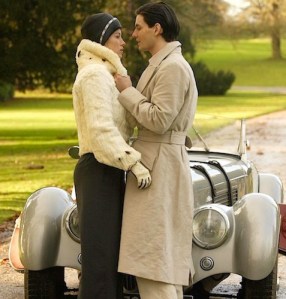 possibly in the soundtrack CD’s liner notes — that the following was Elliott’s idea.) Standards from the era are present and correct, but Cole Porter-styled reinterpretations of modern songs like Car Wash and Sex Bomb raise a smile whenever they turn up unexpectedly. It’s fabulously cheeky.
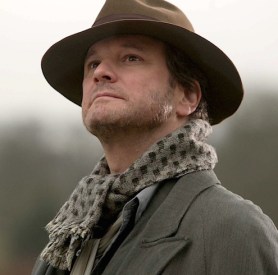 It’s still not a big part, nor a showy one, but those little closing tweaks left him standing out for me.
 Law Abiding Citizen is a revenge movie with a (slight) difference: wronged man Gerard Butler isn’t just going after the two criminals who invaded his home and murdered his wife and daughter — he’s going after the legal system that let one of the men walk free.
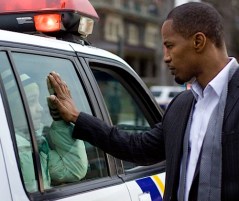 He attends the execution of the aforementioned criminal, but something goes wrong — instead of going to sleep with a lethal injection, the attacker suffers an agonising and horrific death. Someone must have swapped the chemicals. The prosecutors’ thoughts leap to the other criminal, but I’m sure we’ve all guessed who’s really behind this. And so Butler’s sprawling revenge mission begins…
 On the issue of who the film thinks is good and who it thinks is bad,
  It is a little far-fetched, granted, but it’s not so outside the rules the film sets up for itself that I find it unacceptable.
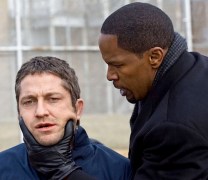 As an action-thriller that actually has something to think about wrapped up in it, I considered being a bit lenient in my score (much as I was to
 That this is the first Western directed by perennial Western star Clint Eastwood is enough to make it worthy of note. To be honest, I’m far from immersed enough in the history of Westerns to know if anything else makes it worthy of note either; but I did like it.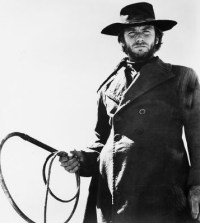
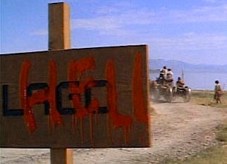 Eastwood’s first Western in the director’s chair is obviously influenced by those he’s worked with when on the other side of the camera, but by making sure the mix is a bit dark, somewhat ambiguous, but also gratifying in turns, he crafted a supernaturally-tinged revenge tale that packs a few satisfying punches.
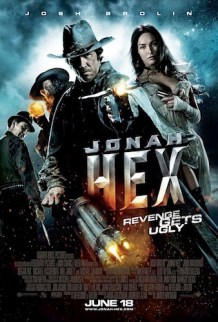 Jonah Hex is not a good film. Let’s just establish that, before I start being nice about it.
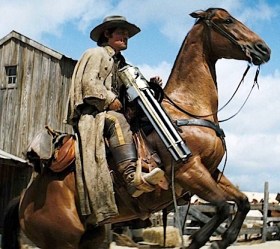 Much of the film rattles on in this way. And rattle it does: 73 minutes before credits. As blockbuster running times spiral out of control, such brevity is almost welcome. It doesn’t feel exceptionally short, mind, except for when the plot occasionally jumps forward.
 — usually improbably — or generally be a female. By “female” I mean “cleavage delivery device”. Considering her acting ability, her lack of presence is no real shame.
 Michael Caine killing hoodies. How great does that sound? As a film premise, that’s awesome. If it doesn’t get you excited about seeing this movie, then what kind of film fan are you, eh?
 Which in some ways is quite a chilling way to feel. I’ll be buying the Daily Mail and watching Sky News next.
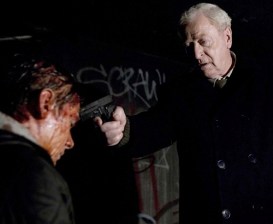 Whatever you may think of the revenge thriller it turns into, I think it’s hard to deny these early scenes have a realism and power. It is, of course, to the credit of Caine that he performs all this flawlessly. Oh yes, he’s (to quote another review) “the king of cool” when blowing away the scum that surround him, but before that he’s an affecting old gent, abandoned by the world.
 The counter to that would be that a murder spree may be viscerally satisfying but isn’t a real-world solution, so this is just as useless at relevancy as Death Wish.
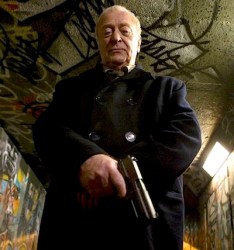 Some will think it tackles these, others that it’s just a facile revenge movie; some will think it’s cool, others despicable; some will think it plausible, others anything but. Or maybe, rather like me, you’ll think it’s all of those things, however mutually exclusive they may seem.
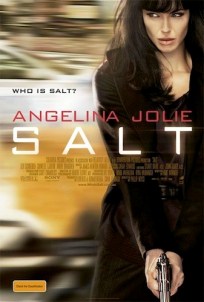 Angelina Jolie takes on a role originally earmarked for Tom Cruise in this Bourne-ish spy thriller from screenwriter Kurt Wimmer (
 This is Salt’s mystery, and this is one of its strong points. The plot developments are well-paced throughout, developing and shifting our expectations rather than stretching it all for a glut of final act reveals. In this regard it goes places you might not expect from a mainstream Hollywood thriller. For starters, you expect the funeral-set assassination to eventually be the film’s climax, no doubt revealing our heroine isn’t a Russian spy as she unmasks the real killer. But that occurs at the halfway point, spinning the film off in new directions. To say more would spoil one of the film’s strongest elements: that, as I said, it has twists and follows storylines you wouldn’t expect in a Hollywood summer blockbuster.
 The three cuts, then, are: Theatrical (100 minutes — this was trimmed for the UK to make 12A, but is apparently uncut on disc); Director’s Cut (the one I viewed, this is 4 minutes 5 seconds longer); and an Extended Cut (1 minute 5 seconds longer than the Theatrical). The latter is based on the Director’s Cut and I’ll come to it in a minute. The differences between the Theatrical and Director’s cuts are numerous, but mainly amount to some extra character beats (including more flashbacks to Salt’s childhood) and violence — more blood; seeing people get hit rather than just seeing Salt firing; the President is killed rather than just knocked out; plus a very different death for Salt’s husband (again, more on this in a moment). Plus there’s a voiceover ending too, which in my opinion sets up the sequel even more than the Theatrical version does, with a blatant cliffhanger and suggested plot direction. My regular comparison site
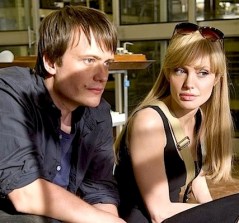 She has to control her emotions so as not to give herself away. In the other versions, however, she’s presented with him in a chamber and given a choice to save him — except trying to save him would give her away, so she’s forced to watch, blank-faced, as he slowly drowns. Salt sacrifices him for the greater good; he dies seeing her cold emotionless face. Ouch. By comparison, the theatrical cut’s blunt gunshot is much softer.
 if the filmmakers considered another option, now we can see it, and in cases like this choose our preference. Though it seems clear, by its inclusion in both the theatrical and director’s cuts, that Noyce preferred the instant-revenge option.
 is a decently dramatic way of drawing out and considering these issues. In my opinion, it works; at least, works well enough.
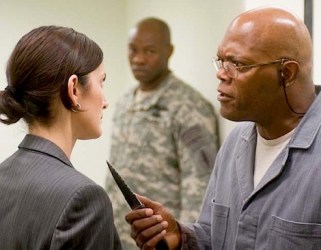 which I don’t think Unthinkable is — I think it argues both for and against torture. Perhaps if the viewer is firmly entrenched in one viewpoint then the film will seem to support it to a polemical level; or perhaps they’d read it the other way, and see it as a polemic against their viewpoint. I don’t know which, though, because I don’t think it comes down hard on either side.
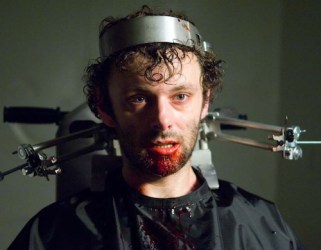 but Unthinkable is not a torture porn film. Yes, it contains torture, and some of it is shown in some degree of detail, but it does not depict it as brutally as it could, and it does not revel in it. This isn’t torture for the audience’s enjoyment, this is torture as a point for debate — “is it allowable to do this to another human being to get results?”, etc. Which brings us to:
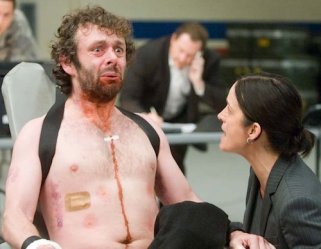 It’s much more important than simply answering a lingering question — it unequivocally presents the ultimate outcome of the characters’ actions. Like the rest of the film, it doesn’t seek to tell you whether this is right or wrong, but shows you where such decisions lead. Moralising is left up to the viewer. (Apologies if this is vague, but I don’t want to spoil it.)
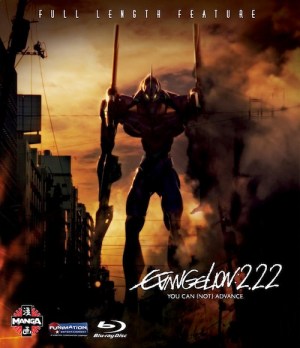 Just over a year since the
  For my money, the first 40 minutes or so of the film are (by and large) the best bits. It opens with a barnstorming action sequence, a great scene for newbies and fans alike as we’re introduced to Eva pilot Mari, who didn’t appear in the TV series. That she then disappears for most of the film, only to make a thoroughly mysterious return later, is one of those explanation-lacking flaws. I’m sure it won’t look so bad once the next two films provide us with answers. Well, I hope not.
 Then the gang take a trip to a scientific installation which is trying to preserve the oceans and their wildlife. It feels like animation shouldn’t be as effective for such a sequence as, say, the footage in a David Attenborough documentary, but nonetheless it feels extraordinary, in its own way. It also marks itself out with the interaction of the characters on a fun day out rather than their usual high-pressure monster-fighting world. And then it’s back to that world for another impressive three-on-one Angel attack.
 But it’s all building somewhere. For one, there’s another of the film’s best sequences — certainly, its most shocking, which readily earns the 15 certificate. I don’t want to spoil it for anyone yet to see the film, because it’s one of the plot points that differs from the TV series, but it involves the death of a main character in a brutal, deranged way. I say “death” — they pop up in the third film trailer that runs after the end credits, so there’s more to this yet…
 And then, after the end credits, there’s a brief scene that throws another spanner in the works! Double-cliffhanger-tastic… one might say…
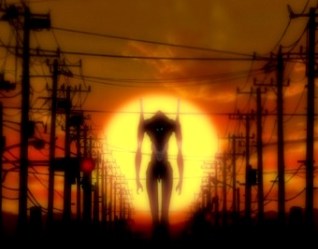 In short, if you’ve always liked Evangelion then you won’t be waiting for me to tell you this is a must-see reimagining; if
  100Films.co.uk