My Cousin Rachel (2017)

2018 #33
Roger Michell | 106 mins | streaming (HD) | 2.35:1 | UK & USA / English | 12 / PG-13

My Cousin Rachel

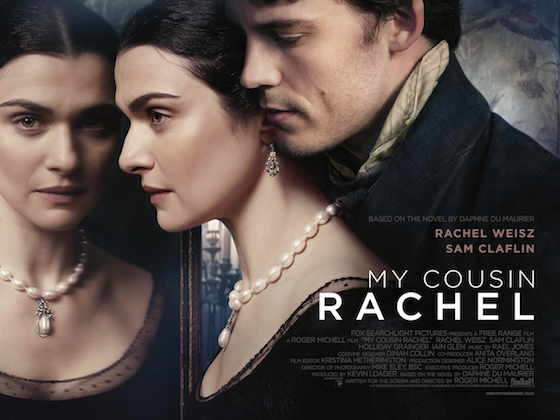
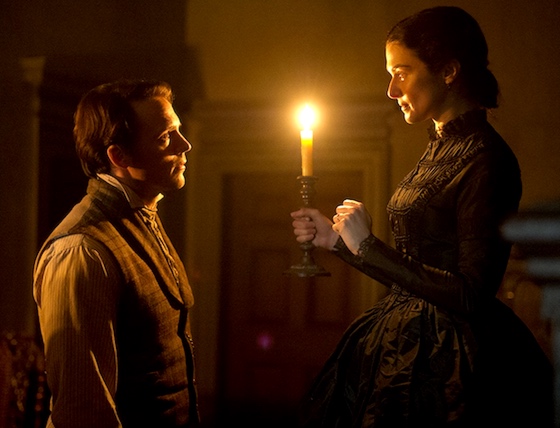
Adapted from a lesser-known Daphne Du Maurier novel (previously filmed in 1952 with Olivia de Havilland, and here relocated from Cornwall to Devon to avoid comparisons to Poldark (really)), My Cousin Rachel is the story of an orphaned young man, Philip (Sam Claflin), who’s raised by his older cousin Ambrose until the latter’s health forces him to leave for Florence. There Ambrose falls in love with their cousin Rachel (Rachel Weisz) and marries her, but shortly after dies. His final letter to Philip implies Rachel may’ve had a part in his demise. When she arrives at their estate in England, Philip is determined to confront her, but soon finds himself entranced by her, as does everyone. Is she a scheming murderess intent on using her wiles to acquire the family’s estate, or did Philip’s imagination get the better of him?

That mystery is really the heart of My Cousin Rachel, which unfurls as a classy, lightly Gothic melodrama. It’s a puzzle that’s not so much investigated as gradually hinted at, leaving the audience to make up their own mind. It certainly was successful in having me change my opinion on where it was headed multiple times. The pace is fairly leisurely, which some reviewers have found to be trying; but while it’s certainly a slow burner, for me that was part of why it worked. The passage of time and the opportunity it grants for overthinking sways Philip’s mind hither and thither, and so the film gives the viewer similar space to think, for their opinion to shift, back and forth. It makes you a part of his paranoia.

Who's playing who?

Rachel Weisz is typically excellent, delivering a finely balanced performance that is at once charming and suspicious — is Rachel simply quietly enigmatic, or she hiding a scheming and deadly nature? Sam Claflin is very effective as the hot-headed, easily-led young man at the centre of the story, exhibiting these characteristics which sell Philip’s flip-flopping opinions, which could otherwise have come across as inconsistent. You can believe their passion of each other — or, certainly, his for her — which leads to some earthy bits that might surprise anyone expecting a quaint Heritage melodrama. Thrusting among the flowers aside, the overall style does evoke those Sunday evening costume dramas (you can see why they were wary of a Poldark comparison), as does the pretty photography by DP Mike Eley — it’s not the most outright gorgeous film you’ve ever seen, but it’s a bit of a looker.

My Cousin Rachel’s unhurried storytelling may put off some viewers, but if you settle into its rhythm then it’s a paranoia-fuelled guessing game that will keep you rethinking the truth up until its closing moments.

4 out of 5

My Cousin Rachel is available on Sky Cinema from today.

Annihilation (2018)

2018 #45
Alex Garland | 115 mins | streaming (UHD) | 2.39:1 | UK & USA / English | 15 / R

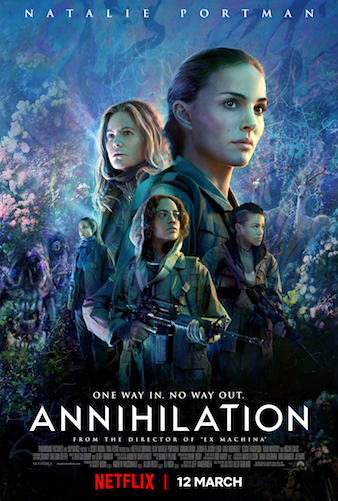
Annihilation

Many column inches (and even more tweets) have been penned about Paramount’s decision to relegate director Alex Garland’s second third film straight to Netflix outside the US, Canada, and China, so I presume the pros and cons of that move have been thoroughly discussed elsewhere. Personally, I’m on the fence: it’s disappointing not to see intelligent sci-fi being given a shot at the box office, but I’m one of those people who’s 50/50 on whether I go to see it or just wait for disc/streaming/etc. (I’ve not even seen The Shape of Water, for example, although that’s partly due to a dearth of convenient screenings during its brief theatrical appearance. Conversely, I did go to Arrival.) Anyway, it is what it is at this point, so let’s move on to the film itself.

Loosely based on the acclaimed novel by Jeff VanderMeer (reportedly Garland read the book once then wrote the screenplay from memory), it follows biologist, academic, and former member of the Army, Lena (Natalie Portman), whose soldier husband Kane (Oscar Isaac) went missing a year ago during a secretive mission. After he suddenly reappears, apparently with no memory of his time away but with some severe medical problems, the couple are scooped up by a military organisation investigating Area X, a top-secret quarantined zone affected by an unexplained phenomenon known as the Shimmer. Various teams have been sent inside the Shimmer, but Kane is the only person to ever return. As his health deteriorates, Lena, desperate for answers, joins the latest squad to venture inside. That’s where stuff gets crazy…

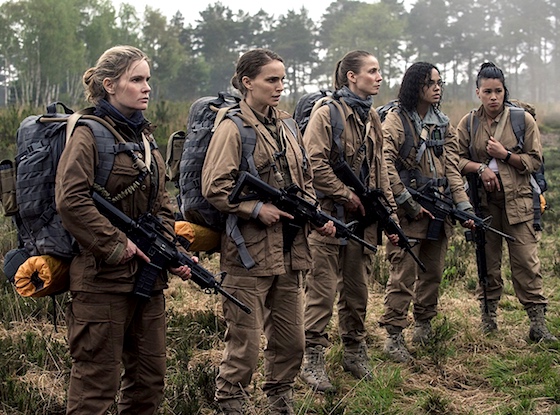
Squad goals

The first thing Annihilation made me think of was Denis Villeneuve’s Arrival. The connection was initially triggered by the score: the ambient soundtrack by Geoff Barrow and Ben Salisbury reminded me so much of Arrival’s that I had to check this wasn’t a last work by Jóhann Jóhannsson. Once I spotted that, the other similarities in the story leapt out: they’re both thoughtful sci-fi parables about a female university lecturer being co-opted into a military operation to investigate a strange extraterrestrial presence on Earth, while also remembering her family life in flashbacks.

Despite Paramount’s insistence that the film was too intelligent for non-US audiences (you can take a moment to laugh at that notion if you like), Annihilation is perhaps more accessible than Arrival, at least initially. Whereas Villeneuve’s film played like a character drama, Garland’s has a strong adventure-movie vein, also laced with elements of the horror genre. It’s still not a mile-a-minute thrill-ride, but, if you wanted, you could engage with it on the level of a quest through an alien event, encountering strange phenomena and creatures, with events of life-threatening jeopardy. However, for all the original sci-fi ideas, it does also touch on weightier, more human psychological issues — as the Empire review summarised it, “depression, grief and the human propensity for self-destruction.”

All the better to eat you with

Naturally this material is carried by the cast. Portman makes for an interesting lead. Clearly damaged by grief, she’s quite a cold figure, which may distance her from some viewers in the way it does from some of her team mates. But there’s more to it than that, and Portman delivers subtle nuances that hint at more beneath the surface. The rest of her all-female squad — played by Jennifer Jason Leigh, Tessa Thompson, Tuva Novotny, and Gina Rodriguez — all have distinct personalities, all get brief subplots and moments, and they’re mostly managed with an equal level of understatement. Perhaps the best is Thompson, whose calm, gently heartfelt performance is quietly superb, and even more striking as it marks a huge contrast to her star-making turn in Thor: Ragnarok just a few months ago. As a pair of films to be a calling-card for her skills, one could barely ask for more.

A lot of disappointment about the lack of a theatrical release stems to not being able to see these visuals on a cinema screen; not being able to experience the audio with a cinema sound system. Well, that partly depends on your own setup at home, of course. Setting that aside, though, while there are certainly some very striking visuals, it wasn’t as consistently stunning as some reviews made it sound. I’m not saying it wouldn’t benefit from the big screen, especially if you’re particularly fond of that experience, but I didn’t feel I was missing much scale by watching at home. I felt similarly about the sound design, though I do say that as someone with a 7.1 system. For spectacle, the intricate and colourful end credits are the most striking bit — I’m certain they benefitted from my viewing the film in 4K HDR.

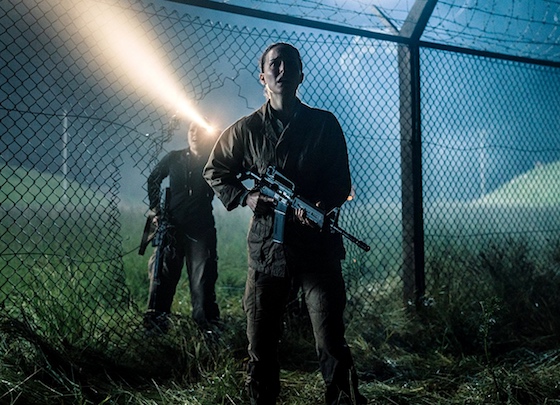
Scared of the dark?

However you get to see it, writer-director Alex Garland has crafted another sci-fi mystery/thriller that engages on multiple levels. For me it was somewhat damaged by the hype, perhaps a result of US reviewers frantically urging people to get out and see it to prove that Paramount’s lack of faith was a mistake. While I didn’t instantly love it in the same way as, say, Arrival, or Garland’s debut, Ex Machina, it’s undoubtedly a fascinating, thought-provoking slice of science-fiction — and a much-needed critical success for the “Netflix Original” brand after a couple of recent duds. I’d also say it places Garland ahead of genre contemporaries like Neill Blomkamp and Duncan Jones as a filmmaker to keep an eye on. Okay, he’s not quite Denis Villeneuve, but he’s a lot closer than the others.

4 out of 5

Annihilation is available on Netflix in most of the world now.

Murder on the Orient Express (2017)

2017 #164
Kenneth Branagh | 114 mins | cinema | 2.39:1 | USA, UK, Malta, France, Canada & New Zealand / English, French & German | 12A / PG-13

Murder on the Orient Express

Did we need another version of Murder on the Orient Express? That seems to be the question that preoccupies many a review of the film, primarily with reference to the Oscar-winning 1974 version directed by Sidney Lumet and starring Albert Finney as Agatha Christie’s Belgian detective, Hercule Poirot, alongside an all-star supporting cast. That’s not the only other adaptation of arguably detective fiction’s most famous novel, though there were fewer than I thought: a modernised TV movie starring Alfred Molina was made in 2001, and it was of course filmed as part of the David Suchet Poirot TV series in 2010, but that’s your lot (in English — the Germans and Japanese have both done it on TV). So, on the one hand, maybe we should be all set for screen versions; on the other, it’s not like it’s the only remake.

So, if you’ve not seen a version before, you’re spoilt for choice. If you want to know which I think you should pick… Well, I’ve not seen it, but I imagine we can discount that 2001 TV movie. Suchet is still the definitive screen interpretation of Poirot, but that particular episode is not the series’ finest hour, as I recall. And while I enjoyed the ’74 version a good deal, I wasn’t bowled over by it. Which brings us to this new one.

The star of the film: Branagh's moustache

Personally, I thought it was very good indeed. It’s a film of its genre and heritage — by which I mean it functions the way Christie-style murder mysteries always do, and it’s staged and shot mostly with a classical dignity — so if you have a dislike for that then this isn’t revisionist in a way that will win you over. But within those ‘constraints’ it’s very well done. The photography, in particular, is magnificent. Shot on 65mm, but without showing off about it in the way some other directors have recently, it has a richness, a grandeur, and an elegance that is most befitting.

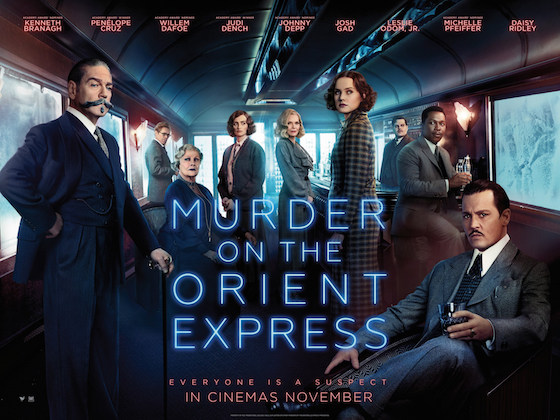
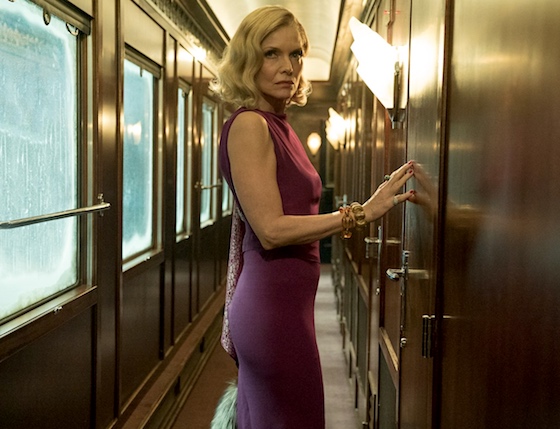
Having mentioned the all-star cast of the previous film, it must be said that this version doesn’t skimp in that department either. The key roles are filled with a veritable who’s-who of acting talent, including big names (Johnny Depp, Michelle Pfeiffer, Penélope Cruz), quality thesps (Olivia Colman, Willem Dafoe), people who’ve worked with Branagh before (many of the small roles), people who tick multiple of those boxes (Dame Judi Dench, Sir Derek Jacobi), and freshly-minted stars too (Star Wars‘ Daisy Ridley, Sing Street‘s Lucy Boynton; depending on your point of view, Beauty and the Beast‘s Josh Gad and Hamilton‘s Leslie Odom Jr as well). The size of the cast and style of the story means that even the most-featured only get a couple of scenes of their own (plus scattered lines in ensemble moments), but the talent involved imbues the roles with inherent character.

A dangerous liaison?

And then there’s Branagh himself as Monsieur Poirot. Most discussion of his performance has focused on the moustache, understandably. It’s certainly a magnificent feat. But Branagh is a very fine actor, of course, and he manages to make Poirot his own — an impressive job when there’s the spectre of David Suchet’s definitive performance looming. I wouldn’t say he’s surpassed Suchet in any way, but his take on the character is different enough to dodge too many direct comparisons, while not being so different that it no longer feels like Poirot, at least to me.

Frankly, I feel like an important element to enjoying the film is to approach it with an openness to it being its own thing — a courtesy I don’t believe it was afforded by some critics and viewers. Many reviews I’ve read had a tendency to compare it to the 1974 film, either in a specific “what I thought of each” sense or a broad “your opinions of that film may colour your view of this one”. I guess that’s a useful metric to some people, but it’s better to judge the film on its own merits, I feel. That said, I’ve also seen some call it too slow, others call it too fast; some say it’s too dull, others say it’s too full of action… No wonder it ended up with middling average scores: never mind not being able to please everyone, it seems like you can’t please anyone. Personally, I thought it largely hit the mark in all those respects.

Classical elegance

And it seems like the wider audience agreed: it ended up grossing $350 million worldwide, which places it in the top 30 releases of 2017. For a film of this type in the current box office climate, that’s an excellent achievement. For comparison, it’s just below the likes of Fifty Shades 2, Cars 3, and The Mummy Mk.III, and it also out-grossed films such as The LEGO Batman Movie, Blade Runner 2049, Split, Baby Driver, and even Get Out. I guess it appealed to a different audience than the one that routinely discusses movies online. It also means we’re getting a sequel, with Death on the Nile set for a 2019 release. Do we need another version of that too? Well, why not?

4 out of 5

Murder on the Orient Express was released on DVD, Blu-ray, and all the rest, in the UK this week.

Mute (2018)

2018 #31
Duncan Jones | 126 mins | streaming (UHD) | 2.00:1 | UK & Germany / English & German | 15

Mute

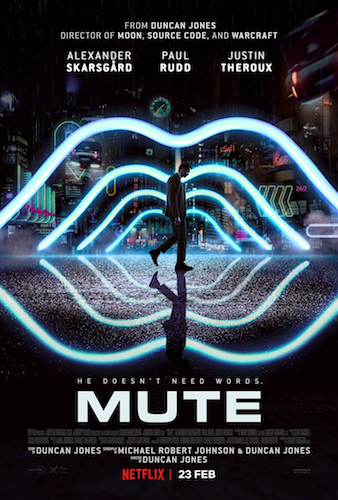
For those in the know, Mute was probably one of the most anticipated movies of 2018. The new film from writer-director Duncan Jones, who made waves with his excellent debut, the low-key sci-fi mystery/drama Moon, and backed it up with the strong sci-fi thriller Source Code, this was his return to that genre after an ultimately futile aside into studio blockbuster-making with Warcraft. More than that, it’s a passion project that’s been gestating for 16 years, rejected by everyone else and now only made possible by Netflix. Greatness was expected. Unfortunately, instead it’s been met with critical derision (11% on Rotten Tomatoes) and audience apathy (5.4 out of 10 and dropping on IMDb; 2.2 out of 5 on Letterboxd and heading in the same direction). Empire’s review perhaps summed it up best: “a crushing disappointment… sadly, almost tragically, not worth the wait.”

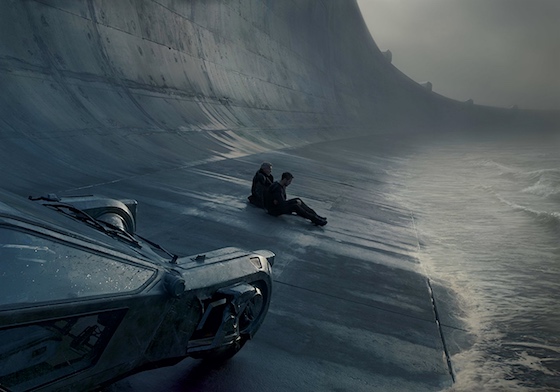
Set in near-future Berlin, the setting is probably the best part of the film. It’s extrapolated from the present to give a very convincing world, where technology has advanced in ways that already feel just around the corner. The production design also owes a huge debt to Blade Runner, though clearly on a lower budget. That doesn’t mean it isn’t effective, just familiar. It’s not quite as nihilistic as Blade Runner, though — again, this is our world a few years hence, and there are still malls and diners and libraries and other such mundanities.

Leo's looking

The protagonist is Leo (Alexander Skarsgård), a bartender getting by in a world not built for him: he’s Amish, meaning he avoids using most technology, and he’s mute, thanks to a childhood accident. As the story unfurls he has to engage with a bunch of tech for the first time, and when he comes up against devices that are only voice-controlled then he’s got a problem. I’m not sure if this is designed as a social commentary on how some people struggle now and it’ll be even worse in the world to come, or if it’s just a convenient way to put more obstacles in Leo’s path. I’m tempted towards the latter, but that’s okay. It seems his muteness is a barrier to some viewers, with critics describing him as a blank canvas, either unknowable or personality-free. I think that’s a bit harsh, but Leo does fall into the familiar bracket of the “strong, silent type”. He can’t express himself vocally, obviously, but rather than that leading to him letting his emotion out in other ways he seems to have repressed it. I got the impression that he was now having to deal with certain feelings, and how they’re expressed, for the very first time.

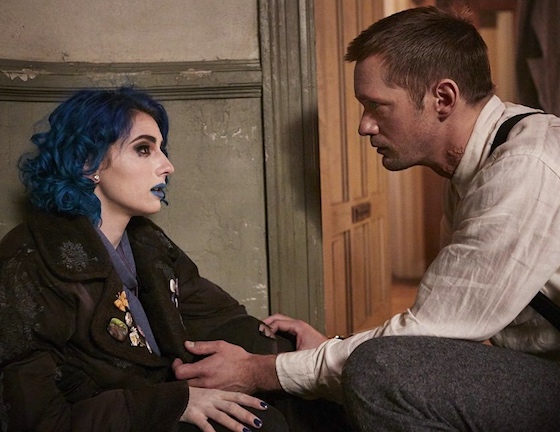
That’d be because Leo is now in love, with Naadirah (Seyneb Saleh), a blue-haired waitress at the club he works in. Naadirah clearly has secrets, both from Leo and from us, and when she goes missing Leo has to venture into the seedy underworld of future-Berlin as he tries to track her down. If the overt Blade Runner stylings hadn’t already clued you in, this is very much a noir detective movie, full to the brim with dark people and dark deeds. It gets grim indeed at times, more thematically than visually (though there are a couple of scenes of surgery, if that’s your particular bête noire), and this is where one begins to wonder if Jones has full control over his film’s tone.

Gone girl

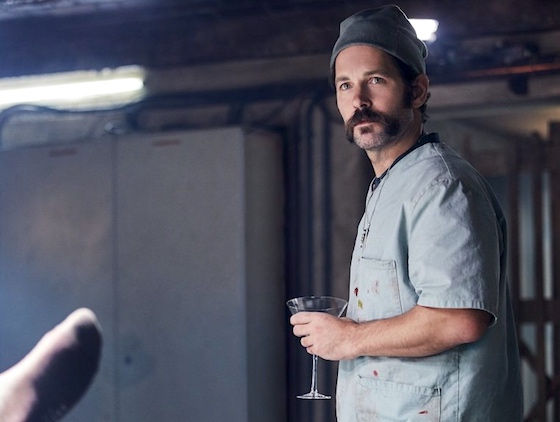
That’s not much of a problem in Leo’s storyline — I’d wager you could recut Mute to focus on him entirely and create a more straightforward future-noir tale — but rather in the concurrently-told B-plot. This side of the film focuses on Cactus Bill (Paul Rudd), an army surgeon who deserted and now plies his trade for gangsters, hoping to afford passage back to the US for himself and his daughter. Bill works alongside his best mate Duck (Justin Theroux), and much of their half of the film plays more like a hang-out movie, just spending time with the characters as they go about their business. As they mooch around sharing comical buddy banter, it’s a definite tonal counterpoint to Leo’s story. That’s not necessarily a problem unless you want a straight-up serious noir, but later Bill and Duck’s thread diverges into some heavy territory; stuff that some viewers would find distasteful no matter what, but which is made more so as their chirpy-funsters act is allowed to roll through it.

For this reason I thought Mute was more effective in its first hour-or-so than in its second. Others disagree, calling it either slow or disjointed, because the links between Leo’s and Cactus Bill’s storylines are not immediately evident. I didn’t think the pace was a problem: it’s gradually drawing you into this world, setting out the mystery and then peeling back more layers as Leo begins his hunt. It’s not as dreamily atmospheric as Blade Runner 2049 in this regard, but it’s closer to that than to an action-thriller, which makes me tempted to say pace issues are a viewer problem rather than a film one. In the first half, at least, because by the second it does seem to go on a bit. As for the disconnect between the storylines, it didn’t bother me at all. Links are actually established early on, and you know these two halves are going to come together eventually — that’s how narrative structure works.

After surgery drinks

The idea some reviews are peddling that “maybe everyone else rejected the Mute screenplay for a reason” is disingenuous. If a decent exec wanted to make this kind of movie (i.e. a mid-budget sci-fi noir) then they definitely could have seen its potential. But few studios are interested in that kind of work anymore, for reasons that barely make sense, and so the film ended up passed to Netflix. One wonders if their hands-off approach is part of the problem. People complain about studio interference, and clearly that can scupper projects, especially ones with unique voices, but execs who are good at their jobs do improve movies. Jones has said that, after Netflix bought the project, they just gave him the money and let him make whatever; and they gave him final cut too, so when the finished film came in and they weren’t sure about it, they just went ahead and released it as-was. Maybe if someone had helped him develop the project better, had helped him even out the tone, or tighten up the pacing, we’d be looking at a great movie right now.

Instead, I don’t think the Mute we’ve got is anything like as unremittingly terrible as some reviews would have you believe, but it is a tonally strange film. I’m not sure it works as a whole, but bits really do. I wouldn’t dismiss the idea of it becoming a cult classic, and maybe in a couple of years we’ll all be reevaluating it. Before its release Jones did say it would be a Marmite film — that some people would love it and others would absolutely hate it. Broad reception is undoubtedly hewing to the latter end of the spectrum; and while I’d love to be the former instead, there are too many inconsistent oddities for me to embrace it. I think it may someday be worth a revisit though, which is not something you can say about a genuinely bad film.

3 out of 5

Mute is available exclusively on Netflix now and forever.

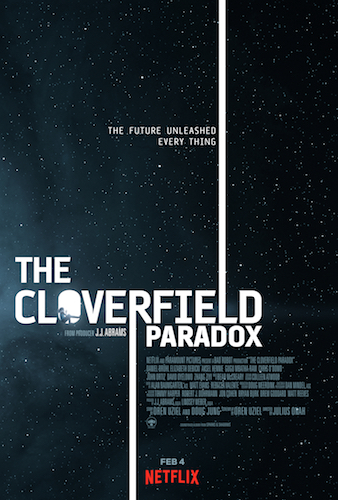
The Cloverfield Paradox (2018)

2018 #18
Julius Onah | 102 mins | streaming (HD) | 2.39:1 | USA / English & Chinese

The Cloverfield Paradox

“Logic doesn’t apply to any of this.”

So says Tam, played by Zhang Ziyi, about halfway through this third movie in the Cloverfield sort-of-series. She’s talking about the crazy circumstances they’ve found themselves mixed up in, but she may as well be talking about the movie itself.

Set in the near future, the energy crisis has reached a point where it threatens the continued existence of mankind as we know it. Our last hope is an experimental particle accelerator that could provide all the energy we need, but it’s so potentially dangerous that it’s being tested in space. After almost two years of failed attempts the accelerator finally works… until it fails spectacularly, crippling the station. When the systems come back online, the crew realise they’ve lost something: the Earth. And that’s just the start of the crazy shit that’s gonna go down.

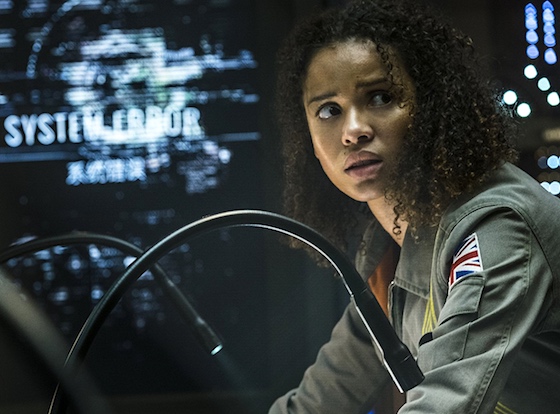
One worried astronaut

The Cloverfield Paradox started life as a spec script titled God Particle, which was at some point Cloverfieldised by J.J. Abrams’ production company, Bad Robot. The writer who originated the project, Oren Uziel, has said that “sometimes [sci-fi] movies tend to be more concerned with whatever the obstacle is, and I’m more concerned with the characters’ relationships to each other and that obstacle I guess. So to me, when you say it’s a contained astronaut movie, I’m just curious what those astronauts are going through and what they’re experiencing and what the character story is, and what specifically the threat is is often less of a concern to me.” Oh boy, is that apparent in the finished film. Whatever else Abrams & co changed to make this a Cloverfield film (and I’ll get to that later), I guess it’s Uziel’s original work that’s responsible for the half-arsed, inconsistent, and poorly-explained threats that the astronauts must face. No spoilers, but the explanation for what’s going on (which is so obvious that I don’t think even the film itself tried to play it as a twist in the end) doesn’t even vaguely begin to explain some of the random shit that happens. Uziel just throws sci-fi or horror ideas at the screen one after the other, with no care for if it hangs together consistently. Consequently, it doesn’t.

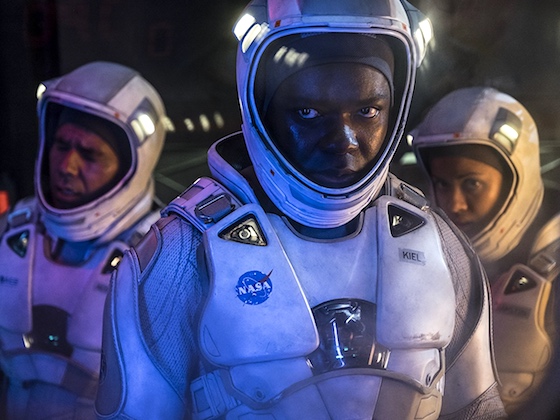
Unfortunately, his alleged interest in character hasn’t resulted in anything worthwhile either. At best they’re broadly defined archetypes — the Funny One; the Noble Captain; the One With A Tragedy In Her Past That We’ll Eventually Learn And It Will Affect Her Decisions; etc. At worst they’re utterly blank, with little or no time devoted to establishing or developing them. There’s a strong cast of good actors — people like Gugu Mbatha-Raw (who gets the best of a poor lot), David Oyelowo, Daniel Brühl, Elizabeth Debicki, Chris O’Dowd (who at least gets to be funny) — but they’re left to battle bravely against the mediocrity, and often terrible dialogue that comes with it, as they attempt to instil any kind of personality into their roles. They’re fighting a losing battle.

Two worried astronauts

Suffering most of all is Roger Davies as Michael, who’s the star of his own subplot back on Earth. Davies is probably aware this is his big break (his previous roles are mainly in things like Sky’s football soap Dream Team and Channel 5’s attempt at a soap, Family Affairs), but he’s lumbered with some of the clunkiest material of all. He struggles gamely to make Michael seem like a plausible human being while delivering first-draft-level dialogue, but I don’t think even Daniel Day-Lewis could make this material work. An item of trivia on IMDb (source uncited, as usual) claims that all the Michael stuff was added later (in reshoots, I presume) to strengthen the film’s Cloverfield connection. It feels like that too: his stuff is completely divorced from the main thrust of the story aboard the space station, and it looks like it’s been achieved on as few sets with as few additional characters as possible.

Indeed, almost everything that’s explicitly Cloverfield-y smacks of reshoots. There’s a newscast about the eponymous “Cloverfield Paradox” that’s all inserts, i.e. it’s on a screen with none of the main cast also in shot. The main characters do refer to the paradox later on, but I’m pretty sure they only ever called it “the paradox”. (Also, side note, I’m not sure anyone involved in the making of this film knows what a paradox actually is.) The space station is actually called “Cloverfield”, but that’s mainly (only?) seen on CG exterior shots and green-screened monitors. Perhaps I’m forgetting something — perhaps there was a Cloverfield reference or two in the main body of the movie — but the vast majority of them could just have been shoved in during post-production. And if they weren’t, they feel like they were.

Three worried astronauts

I enjoyed the original Cloverfield and I liked the idea of them creating a franchise that was Twilight Zone-esque — movies connected by theme and style rather than plot. It seemed like a good way of getting original sci-fi movies made at a time when Hollywood only wants franchises. But we’re two sequels in now, and they were both marred by the Cloverfield elements forced upon them. And whereas 10 Cloverfield Lane was a very good movie before its tacked-on finale, The Cloverfield Paradox is pretty terrible throughout. We’re on a downward curve.

What was once set to be the expensive big-screen older brother to Black Mirror is now cast in its shadow: they’re both debuting on Netflix, but while Charlie Brooker’s TV series benefits from months of enormous anticipation and glowing reviews, Cloverfield was dumped just a couple of hours after its first trailer premiered, presumably in the hope you’d watch it before the reviews rolled in. When you combine that with the fact it was meant to be a theatrical release but Paramount ended up flogging it to Netflix as one of their “originals”, you have to think that even the studios knew it was a dud.

2 out of 5

The Cloverfield Paradox featured on my list of The Five Worst Films I Saw For the First Time in 2018.

Blade Runner 2049 3D (2017)

Rewatchathon 2018 #5
Denis Villeneuve | 163 mins | Blu-ray | 2.40:1 | USA, UK, Hungary & Canada / English, Finnish, Japanese, Hungarian, Russian, Somali & Spanish | 15 / R

Blade Runner 2049

With its home media release comes my second viewing of Blade Runner 2049 (my review from the first is here); and, I must confess, it kinda makes me wish I’d gone back to see it on the big screen again…

First things first, though, what the title of this post promises: the 3D. Blade Runner 2049 was shot in 2D, but that’s commonplace for 3D releases nowadays — post-conversion has reached the point where its quality and, I presume, cost effectiveness means that it’s seen as the preferable option by studios (who’d’ve predicted that in the format’s early days? Some people still blame the bad post-conversion jobs on films like Clash of the Titans for damaging 3D’s prospects as a popular format). In the case of this film, however, I presume it was an artistic decision as much as a practical one: cinematographer Roger Deakins is, I believe, no fan of 3D. Indeed, he’s publicly expressed that his preferred version of Blade Runner 2049 is the 2D one — and the regular 2D version at that, not the one specially formatted for IMAX. Nonetheless, he also personally supervised the film’s conversion to 3D. I guess that’s some kind of dedication.

Distance

It shouldn’t be a huge surprise, then, that this is not a film designed to show off in 3D — but that’s not to say it’s bad. Rather, what it most often offers is a subtle, believable delineation of space. Confined rooms and the distance between objects within them all feels very real, very plausible. In some respects that just ties into the film’s overall style: it’s a beautifully shot movie, no doubt (give Deakins the bloody Oscar!), but only occasionally does it do that in a heightened way. Think of the scenes in K’s apartment, for instance, or his boss’ office, or several other locations along those lines. They look very naturalistic, which is surely part of the point.

Now, there are other times when the added emphasis of depth highlights things — Wallace’s little drone whatsits make their presence more known, for example; how see-through Joi is at times becomes more apparent (the fact the background is ‘peeking through’ her is understandably clearer when you’re able to sense how far away that background is). At other times, wide-open scenery stretches far into the distance. One of the most visually standout locations was the old furnace that K’s memories lead him to — the size of the space, plus all the levels of pipes and gantries, makes for a lot of depth markers.

Another was the office / seclusion chamber of the memory-maker — another large space, albeit empty this time, but I thought its isolating size felt clearer in 3D. That’s the kind of thing that can make quantifying the effect of 3D hard, especially for laypeople: sometimes it’s creating an effect that you don’t immediately notice (because it’s not poking you in the face or whatever), but if you directly compared it to a 2D version you’d see what it’s adding. I’m not going to argue Blade Runner 2049 is a demonstration piece for that particular quality, but one wonders how often it’s a factor.

K's journey

Setting the 3D aside, this was (as I said at the start) the second time I’d watched the film, and I found it to be almost a weird experience. Blade Runner 2049 is not a film that’s just about the answers to its own mysteries; but, nonetheless, knowing those answers, and knowing where the story was going and how long it was going to take to get there, made the second viewing a very different experience to the first. For one thing, it doesn’t feel like such a long film at all — it’s in no hurry, but the pace is measured, everything happens for a reason, unfurls with the space it needs. (I’d still be fascinated to see the reported four-hour cut though, or at least the deleted scenes from it.) Knowing the answers also refocuses your attention. K’s often-silent reactions to what he uncovers are a big part of the film, and that feels different when you know how things will pan out versus when you’re discovering them alongside him.

Finally, swinging back round to the purely visual again, watching this particular movie at home came as a reminder of why the big screen can still matter. Deakins’ magnificent photography still looks incredible, of course, but those horizon-stretched vistas, or the tall city streets with their looming holographic advertisements, don’t have quite the same impact when they’re not being shown at more-or-less life size. I bet the IMAX version was a wonder…

5 out of 5

Blade Runner 2049 is released on DVD, Blu-ray, limited edition Blu-ray, 3D Blu-ray, limited edition 3D Blu-ray Steelbook, 4K Ultra HD Blu-ray, HMV-exclusive 3D & 4K Ultra HD Blu-ray Steelbook, and 4K Ultra HD Blu-ray gift set (not to mention being available from all good digital retailers) in the UK today.

Get Out (2017)

2017 #104
Jordan Peele | 104 mins | streaming (HD) | 2.35:1 | USA / English | 15 / R

Get Out

Writer-director Jordan Peele’s timely horror (or, according to some people, horror-comedy — I’ll come to that) has topped various “best of year” critics polls, including those in Sight & Sound and Empire magazines, and is now part of the awards season conversation, having been nominated for Best Musical or Comedy at the Golden Globes and is many people’s pick for an Oscar nod too. It’s a good film… but is it that good?

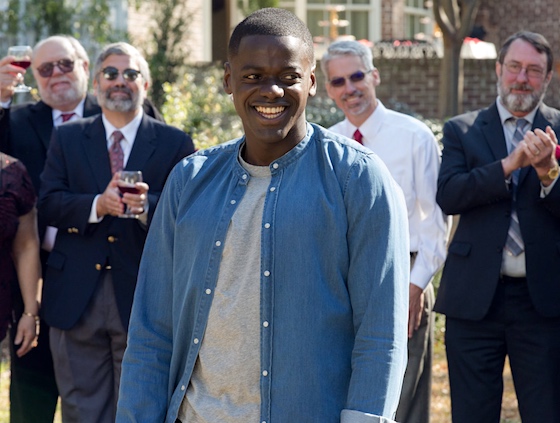
It’s the story of a guy, Chris (Daniel Kaluuya), going to meet his girlfriend’s parents for the first time. The only complication is that Chris is black and his girlfriend, Rose (Allison Williams), is white. But it’s okay, her parents (Bradley Whitford and Catherine Keener) are very liberal and keen to be welcoming to their daughter’s fella, even though they’ve accidentally arrived the same weekend as a large gathering of the family’s friends. And there’s something strange going on with their black housemaid and gardener too…

Get Out unfurls with a slow-burn tension, where you can’t be sure that Chris isn’t just being paranoid. Well, we can be sure, because we know we’re watching a horror movie. In terms of that genre, it’s effectively creepy without indulging in many outright scares — it foregrounds an encroaching sense of unease rather than pure terror. It’s as much about the mystery of what’s going on, and in that regard it’s neatly littered with clues that either you can piece together or, with hindsight (or a second viewing), marvel at all the little blatant hints you missed.

Everybody loves Chris

The aspect that’s attracted so much praise beyond the usual genre constraints is its commentary on contemporary race-related issues. What it has to say is clear without being batter-you-round-the-head obvious. It satirises the casual racism of white, liberal, “woke” (as I believe the kids are saying nowadays) people, with a particular view on something akin to cultural appropriation — the point where white acceptance or praise of black people and their culture runs into being racism, just not of the ‘traditional’ sort. It’s more nuanced and current than your old-fashioned KKK-ing.

It’s also where we run into the “comedy-horror” point. We usually think that satire = comedy, but Get Out demonstrates it doesn’t have to; or, at least, not in an overt, laugh-a-minute kind of way. I don’t think the comedy-horror label is accurate because, while it’s undoubtedly satirical, it’s not outright comedic. There’s a funny character/subplot about the antics of Chris’ friend Rod (Lil Rel Howery), but as he’s not actually very funny I don’t think that lends much credence to the idea this is a comedy. There’s the odd other laugh here and there, but no more than you’d expect from any movie that wasn’t concerned with being po-faced for every single second. In other words, this isn’t Shaun of the Dead.

Everything's FINE

As a film it’s mostly well made, with good performances in particular from Kaluuya, Whitford, and Betty Gabriel as the family’s maid. The most effective moment comes at the end, an aspect that was changed after the rise of the Black Lives Matter movement, which now effectively plays on the audience’s expectations for what’s about to happen. That said, while there’s the odd moment like that to praise Peele’s direction, I didn’t think it was especially striking on the whole. The film’s certainly not without glaring faults, like the grating ‘comedy’ character I already mentioned, or a deluge of exposition at the start of act three that’s disappointingly clunky.

This is why I’m not convinced by Get Out’s presence in those best-of-year conversations. Personally, I think it’s merely the timeliness of what it has to say that has put it in that position — perhaps, if we’re being cynical, even just white critics/voters being keen to signal their approval of its message. Or maybe the way it encapsulates and comments on things that are very pertinent in society right now is merit enough? Whether it’s the year’s best film or not, it deserves to be seen, not only for its commentary on contemporary issues, but simply as an entertaining horror-mystery.

4 out of 5

Get Out is available on Sky Cinema from today.

Blindspot Sci-fi Roundup

With my 2018 Blindspot and “What Do You Mean You Haven’t Seen” selections now chosen, it’s about time I got on with reviewing those from the class of 2017 that are still in my “to do” pile. Here, then, are four more reviews of my 2017 must-sees, connected (as you may’ve guessed from the title) by all being works of science fiction.

In today’s roundup:

  • District 9 (2009)
  • Moon (2009)
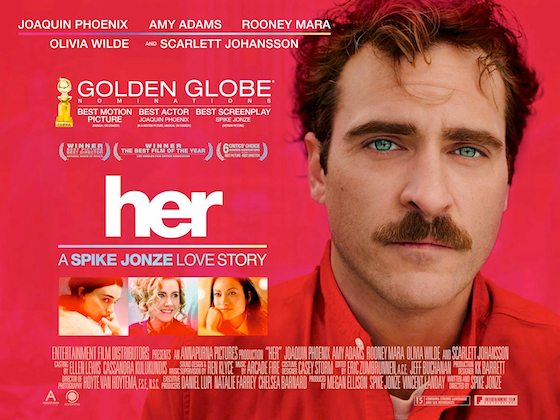
  • Her (2013)
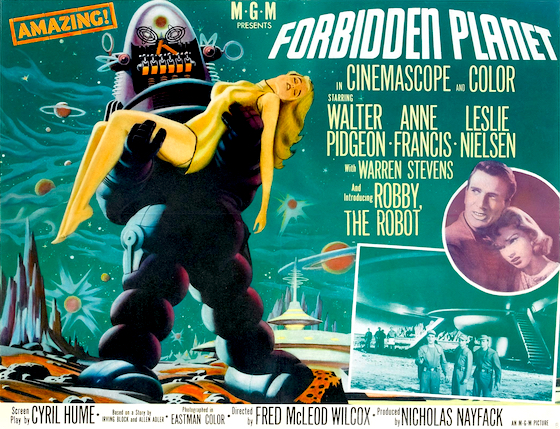
  • Forbidden Planet (1956)


    District 9
    (2009)

    2017 #88
    Neill Blomkamp | 112 mins | Blu-ray | 1.85:1 | South Africa, USA, New Zealand & Canada / English | 15 / R

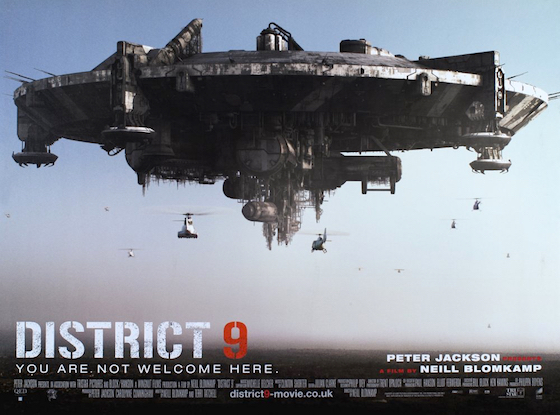
    District 9

    We begin this roundup with two 2009 sci-fi thrillers that made the names of their respective directors. District 9 got the wider attention, being backed by Peter Jackson and receiving a Best Picture Oscar nomination (alongside three other nods), but I’d argue it’s ultimately the lesser of the two films.

    Although District 9 remains highly praised, co-writer/director Neill Blomkamp’s next two movies — Elysium and Chappie — haven’t gone down so well. Having seen both of those first, I feel like there are a lot of structural and tonal similarities between all three films, so it’s interesting to me how poorly the next two were received. Basically, they all start with some kind of societal sci-fi issue, explore that for a bit as the world of the story is established, then transition into being a shoot-em-up actioner.

    In District 9’s case, it starts out as a documentary about (effectively) alien refugees who live in a segregated community in South Africa. The obvious real-world parallels are, well, obvious. Then events transpire which make the idea of having to identify with those who are Other than us — of becoming affected by their culture — very literal. Then it turns into an achieve-the-MacGuffin shoot-em-up runaround. It’s done well for what it is, with some strikingly gruesome weaponry to give the well-staged shootouts a different edge, but that’s still what it is. Presumably it was all the rather-obvious allegory stuff that helped land the film a Best Picture nomination, and the fact the second half is a not-that-original humans-vs-aliens shooter was overlooked.

    Not so different. Okay, pretty different.

    For me, the clunkiest bit is the storytelling style it adopts. It’s a mockumentary… until it decides it doesn’t want to be so that it can tell its story more effectively… but then it sometimes slips back into mockumentary later on, most notably at the end. I found that distracting and formally inconsistent. I’d rather it had kept up the mockumentary act throughout or not used it at all; or, if you’re going to do both documentary and ‘reality’, have a point to it — show differing versions of the truth, that kind of thing, don’t just mix it together willy-nilly.

    All told, I found District 9 to be a mixed bag. The first half is excitingly original and interestingly ideas-driven, with allegory that is powerful if perhaps a little heavy-handed (I suppose that’s kind of unavoidable when you make a movie about segregation and set it in South Africa). The second half is just a shoot-em-up.

    4 out of 5

    Moon
    (2009)

    2017 #145
    Duncan Jones | 97 mins | Blu-ray | 2.40:1 | UK / English | 15 / R

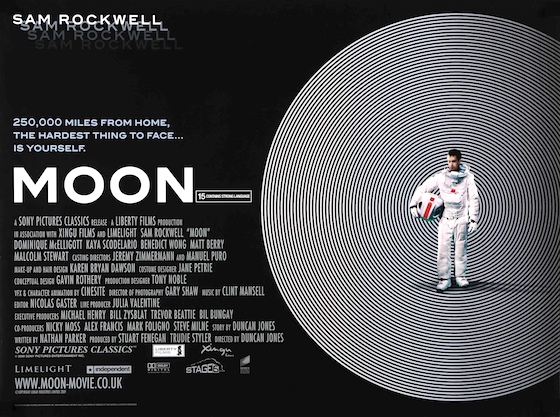
    Moon

    The other 2009 sci-fi debut feature was that of director Duncan Jones. Although it received no Oscar love it did get a BAFTA, but seems to remain less seen: it has almost half as many user ratings on IMDb as District 9. Personally, I thought it was the superior film.

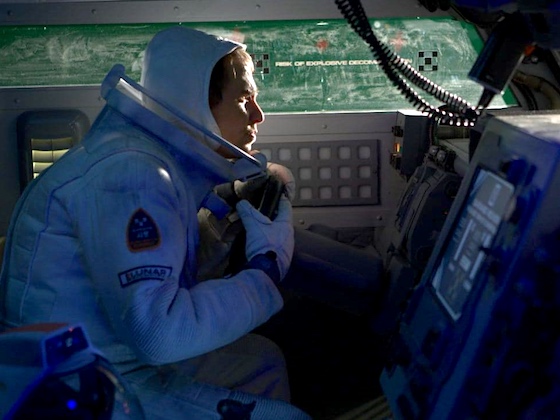
    It stars Sam Rockwell as the sole inhabitant of a mining facility on the Moon. As the end of his tour of duty approaches, his investigation in a malfunction unearths a startling secret. To say any more would spoil things, though Moon gets to its reveal pretty speedily. Also, you may’ve guessed it from the trailers (I more or less did). Also, it’s nine years old now and you’ve probably seen it — though, as those IMDb numbers show, maybe not.

    If you haven’t, it’s definitely worth seeking out. Like so much good sci-fi, it uses its imagined situation as impetus to explore the effect on its characters (or, in this case, character) and what the human reaction would be in such a situation. Maybe this is becoming a cliché already, but it’s quite like an episode of Black Mirror in that regard. (Isn’t all sci-fi that puts a high concept through the ringer of human experience “like Black Mirror”? Such stuff existed before that series. That said, maybe there wasn’t as much of it.)

    It's like looking in a mirror. A black mirror.

    Jones marked himself out as a director to watch with his attentiveness to character in the midst of his SF setting, but also by helming an excellently realised production on a tight budget — the moonbase set looks great and the model effects are perfect. A major reason I reckon it’s clearly better than District 9 is this consistency of style and tone. It’s a film that better knows what it wants to be and how to achieve its intended effect.

    As for Jones, he went on to make Source Code, a solid follow-up, but then seemed to throw a lot of talent away on the risible Warcraft. Hopefully his forthcoming Netflix Original, Mute, will restore the balance.

    5 out of 5

    Her
    (2013)

    2017 #165
    Spike Jonze | 126 mins | Blu-ray | 1.85:1 | USA / English | 15 / R

    Her

    If Moon is “a bit like an episode of Black Mirror”, Spike Jonze’s Her virtually is one. Set in a highly plausible near future — which has clearly been developed from our current obsession with our phones, iPads, digital assistants, etc — it stars Joaquin Phoenix as Theodore, a lonely chap who gets a new operating system based around a genuine AI, Samantha (voiced by Scarlett Johansson). As Samantha develops, she and Theodore soon become friends, and then more.

    People often refer to the template of Black Mirror as “what if technology but MORE”, and Her definitely fulfils that brief: “what if Siri was genuinely intelligent and someone fell in love with her?” Also like an episode of Black Mirror, it’s as much about what this reveals about humanity as it is about the crazy sci-fi concept. It’s primarily a romance about a lonely guy who was hurt in the past finding a new connection, with the fact he’s falling in love with a piece of technology almost secondary. Even within the world of the film, he’s not some kind of outcast: we hear about other people who’ve fallen for their AI, and his friends unquestioningly accept his relationship as genuine.

    Such acceptance doesn’t translate into our current world, it seems. Although Her is generally very well liked, some people struggle to engage with it at all, and from what I can tell that mostly stems from them not being able to relate to Theodore and his situation, i.e. the very concept of falling in love with an AI is too impossible for them to even imagine. I can’t help but feel that says more about those viewers (for good or ill) than it does the film, which executes the storyline with a great deal of believability and heart.

    5 out of 5

    Forbidden Planet
    (1956)

    2017 #172
    Fred McLeod Wilcox | 98 mins | Blu-ray | 2.40:1 | USA / English | U / G

    Forbidden Planet

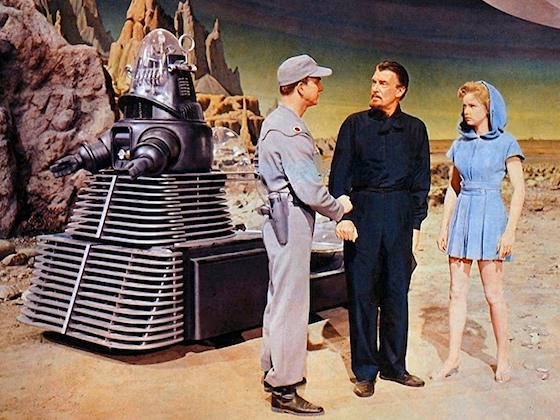
    This classic sci-fi adventure sees a spaceship crewed by blokes (led by Leslie Nielsen) land on the planet Altair IV to investigate what happened to a previous mission there. They find it inhabited only by Dr Morbius (Walter Pidgeon), his robot servant Robby, and his beautiful daughter Altaira (Anne Francis), who perpetually wears short skirts and has a fondness for skinny-dipping. Turns out the crew are a right bunch of horndogs (they spend most of their time lusting after Altaira, tricking her into kissing them and stuff like that), but there are bigger problems afoot when the planet starts trying to kill them.

    Once it gets past everyone’s lustfulness (it feels uncomfortably like watching the filmmakers play out some personal fantasies), there are proper big sci-fi ideas driving Forbidden Planet. There are also some gloriously pulpy action sequences, like a fight against an invisible monster. It’s backed up by great special effects. Obviously they’ve all dated in one way or another, but much of it still looks fantastic for its time — the set extensions, in particular, are magnificent.

    Nothing's forbidden on this planet, wink wink

    Something I wasn’t expecting (but I’m certainly not the first to note) is how blatantly the film was an influence on Star Trek. You can even map the similarities between characters pretty precisely. Switch out the spaceship models and original-flavour Star Trek is all but Forbidden Planet: The Series.

    Although its gender politics have aged even less well than its special effects, and its story occasionally gets bogged down by stretches of explanatory dialogue (it sometimes feels like you’re watching the writer invent and explain his ideas in real-time), Forbidden Planet remains a mostly enjoyable SF classic.

    4 out of 5

    District 9 and Forbidden Planet were viewed as part of my Blindspot 2017 project, which you can read more about here.

    Moon and Her were viewed as part of my What Do You Mean You Haven’t Seen…? 2017 project, which you can read more about here.

  • Blindspot Review Roundup

    Spoilers for my next monthly update: I’ve completed watching all 22 films on my 2017 Blindspot and “What Do You Mean You Haven’t Seen…?” lists. Hurrah!

    What I haven’t done is reviewed them all. Indeed, 17 still languish in my review backlog — that’s 77%. (In fact, I’ve only actually reviewed one Blindspot film — The Exorcist — with the other four being from WDYMYHS.)

    So, with the end of the year fast approaching — and, with the new year, a new batch of films to watch — I thought it high time I cracked on with those reviews. Here’s a quick roundup of a few, linked by all being adapted from novels, which may be the first of several such omnibus editions.

    In today’s roundup:

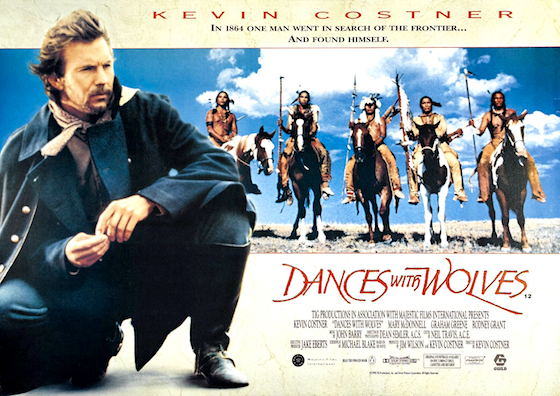
  • Dances with Wolves: Special Edition (1990/1991)
  • Jackie Brown (1997)
  • Silver Linings Playbook (2012)
  • The 39 Steps (1935)


    Dances with Wolves
    Special Edition

    (1990/1991)

    2017 #26
    Kevin Costner | 227 mins | DVD | 2.35:1 | USA & UK / English, Lakota & Pawnee | 15 / PG-13

    Dances with Wolves

    Oscar statue1991 Academy Awards
    12 nominations — 7 wins

    Winner: Best Picture, Best Director, Best Adapted Screenplay, Best Cinematography, Best Sound, Best Film Editing, Best Original Score.
    Nominated: Best Actor (Kevin Costner), Best Supporting Actor (Graham Greene), Best Supporting Actress (Mary McDonnell), Best Art Direction-Set Decoration, Best Costume Design.


    The behind-the-scenes story of Dances with Wolves is almost as grand as the movie itself. An actor turned director whose inexperience led to production delays and budget overruns, leading to rumours the film was a pending disaster like Heaven’s Gate a decade before it (some nicknamed it “Kevin’s Gate”), and the studio who wanted a 140-minute cut having to settle for the 180-minute one that director delivered. The resulting film never even reached #1 at the box office… but still went on to be the highest grossing Western of all time, and became the first Western to win the Best Picture Oscar in almost 60 years. It was so popular that a 53-minute-longer extended cut was released a year later, which Costner later denied being involved with.

    Having not seen the theatrical cut I can’t offer an opinion on which is better, but the near-four-hour extended one certainly feels its length. That’s not necessarily a bad thing — this is an epic in the truest sense of the word, with a large story to tell on a grand canvass; although it’s concurrently a drama about just a couple of people from different cultures coming to interact. It’s almost too big to digest in a single go — I’m even not quite sure what I made of it. You can see why I’ve spent 10 months not writing about it.

    Anyway, I admired its scope and ambition. I wouldn’t say I loved it, but it merits revisiting someday.

    4 out of 5

    Jackie Brown
    (1997)

    2017 #49
    Quentin Tarantino | 154 mins | Blu-ray | 1.85:1 | USA / English | 15 / R

    Jackie Brown

    Oscar statue1998 Academy Awards
    1 nomination

    Nominated: Best Supporting Actor (Robert Forster).


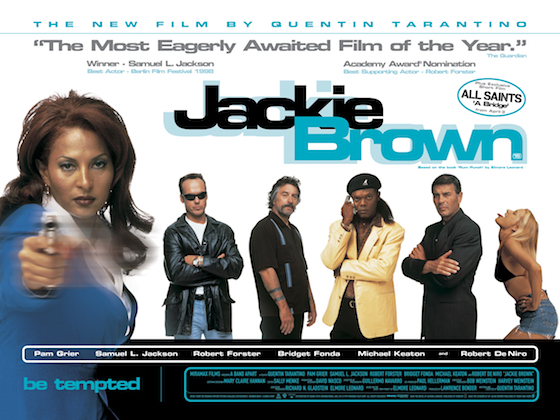
    Jackie Brown has long been my Tarantino blindspot. I caught up with Reservoir Dogs and Pulp Fiction after he was already established and they were regarded as modern classics, then was old enough to see the Kill Bills at the cinema and have followed his career from there. But, for some reason, his third feature has always eluded my attention. My tenth anniversary “heinous oversights” list seemed a good time to rectify that.

    Some people argue that Jackie Brown is secretly Tarantino’s best movie. I add “secretly” there because it gets a lot less attention than the aforementioned movies that came either side of it. That’s not a bandwagon I’m prepared to jump on. To me, it feels a little like QT was trying to emulate what worked about Pulp Fiction without just making a rip-off of his own movie, and therefore it’s a bit of an inferior copy. That’s not to say it’s a bad movie by any means. The eponymous character is particularly interesting, as you’re never quite sure what Jackie’s up to; what her plan is. She seems to be telling everybody everything, but she has to be screwing some — or all — of them, right?

    Possibly I was just approaching the film in the wrong way. Tarantino has called it “a hangout movie”, which he explained thus: “Jackie Brown is better the second time. And I think it’s even better the third. And the fourth time… Maybe even the first time we see it we go, ‘Why are we doing all this hanging out? Why can’t we get to more of the plot?’ But, now the second time you see it, and the third time you see it, you’re not thinking about the plot anymore. You’re waiting for the hangout scenes… It’s about hanging out with the characters.” Personally, I’m not in any desperate rush to hang out with these characters again. But who knows, maybe I’ll get it the second time. Or the third. Or the fourth…

    4 out of 5

    Silver Linings Playbook
    (2012)

    2017 #61
    David O. Russell | 115 mins | TV | 2.35:1 | USA / English | 15 / R

    Silver Linings Playbook

    Oscar statue2013 Academy Awards
    8 nominations — 1 win

    Winner: Best Actress (Jennifer Lawrence).
    Nominated: Best Picture, Best Director, Best Actor (Bradley Cooper), Best Supporting Actor (Robert De Niro), Best Supporting Actress (Jacki Weaver), Best Adapted Screenplay, Best Film Editing.


    Bradley Cooper’s performance — 3.5/5
    JLaw’s performance — 4/5
    JLaw’s dancing — 6/5
    Direction — 2/5
    Screenplay (first two acts) — 3/5
    Screenplay (bit where it suddenly gets plot-heavy and all exposition-y to set up the third act) — 1/5
    Screenplay (third act that seems to be from a completely different, much more conventional movie) — 2/5

    Average =

    3 out of 5

    The 39 Steps
    (1935)

    2017 #60
    Alfred Hitchcock | 83 mins | download (HD) | 4:3 | UK / English | U

    The 39 Steps

    This adaptation of John Buchan’s adventure novel is one of the best-known among director Alfred Hitchcock’s early works, and for good reason.

    Galloping briskly along with a running time under 90 minutes, it’s a film where mood, tone, and the wonderful execution of individual sequences are all allowed to trump plot, which is somewhere on the spectrum from unexplained to nonsensical. We follow the likeable wrong-man hero Richard Hannay (Robert Donat) as he runs away from a gang of villains who barely feature. That they have a nefarious plan is outlined early on to kickstart the action; what they were up to is explained in the final scene to give the story some resolution; and in between they’re pretty much just a force chasing our hero. It’s almost like the villains are the film’s MacGuffin: it doesn’t matter what or who they are, just that they want to catch Hannay and so he must escape them. It’s how he escapes and what happens during his escapades that matters to us; that provides our entertainment.

    It almost plays like a spoof in that regard — the plot is such stock spy-thriller fare that it doesn’t need to make sense in and of itself, we just get what it’s driving at. Of course, considering the age of the film, it’s more proto-spy-thriller than neo-spy-thriller. Whatever you class it as, over 80 years since its release it remains rollicking entertainment.

    5 out of 5

    Dances with Wolves, Jackie Brown, and The 39 Steps were viewed as part of my Blindspot 2017 project, which you can read more about here.

    Silver Linings Playbook was viewed as part of my What Do You Mean You Haven’t Seen…? 2017 project, which you can read more about here. Other WDYMYHS reviews already published include Hail, Caesar!, Into the Wild, Nightcrawler, and Room.
  • Twin Peaks: The Return (2017)

    Twin Peaks : The Return

    ICYMI, Film Twitter has been getting itself in a bit of a tizzy over the past couple of days about David Lynch’s return to TV… film… TVfilm!TV!!FIL— you get the idea.

    So, respected British film magazine Sight & Sound went and named Twin Peaks: The Return as the second best film of 2017. Except it’s a little more complicated than that, in the sense that their list is voted for (i.e. no one person or team specifically decided to place Peaks at #2) and that voters were expressly told they could include TV series, or indeed any other form of visual art (although Peaks was the only non-film to make the top ten, Sight & Sound have since tweeted a list of music videos, computer games, and other such things, that also received votes).

    Some people seemed to find the very notion of counting Twin Peaks’ third season as a film to be personally offensive. It must’ve been like rubbing salt in the wound when respected French film magazine Cahiers du Cinéma went and ranked it 1st on their list.

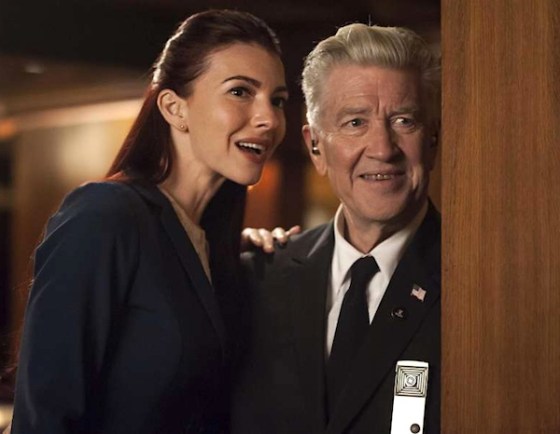
    Happy times in Twin Peaks

    Many digital column inches have been spun out of this, naturally. Two of the more interesting / accurate ones I’ve read are Matt Zoller Seitz’s 25-tweet thread/rant and Vadim Rizov’s kinda rebuttal at Filmmaker Magazine. For my part, it’s nine years almost to the day (just one day short!) since I wrote this piece on the TV vs. film shebang, albeit from a slightly different tack (TV movies vs. ‘real’ movies). My main point was that it’s a kinda arbitrary distinction nowadays. That’s only become more the case in the almost-decade since.

    Similarly, I think most of the handwringing over Peaks’ inclusion in these lists has been stupid. As I said, Sight & Sound specifically okayed the inclusion of TV — The Return wasn’t singled out as “yeah, it’s TV, but it’s so good we’ll count it as a film”, a notion that’s been projected on this news by some commentators (mainly TV critics) so they can then take great offence at it. But if Sight & Sound’s voters had considered any other season of 2017 TV to be worthy of inclusion, it had just as much chance of making it in. I don’t know what Cahiers’ rules were, but I’m going to assume they were similar — and they’ve included TV before (of all things, the first season of 24 made their top ten back in 2002).

    Personally, I’m not really sure where I come down on the issue of Twin Peaks: The Return in particular. I mean, it’s definitely a TV series, isn’t it? But it’s also virtually an 18-hour movie, isn’t it? Can it be both? Why can’t it be both? As I said, I kind of err towards the broad position of “why differentiate?” As someone put it in a comment I saw somewhere else, it’s all linear non-interactive visual media. Still, I probably won’t be including it in my own year-end best-of list, but is that because I don’t think it should be on a movie best-of list or because I wasn’t wholly convinced/entertained by it as a work?

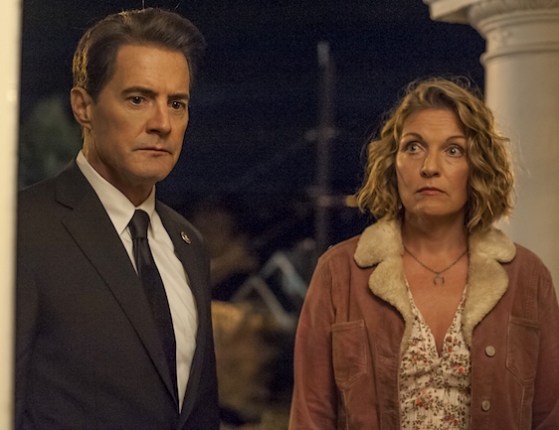
    Uncertainty

    And if you were wondering what I did think of it in more detail, here are all the posts I reviewed it in while it was airing: