2012 #83
Ridley Scott | 124 mins | Blu-ray | 2.40:1 | UK & USA / English | 15 / R
With all the furore this week over the (supposed) behind-the-scenes problems with attempts to launch Prometheus 2, it’s about time I posted my review of last year’s intended franchise-starter…
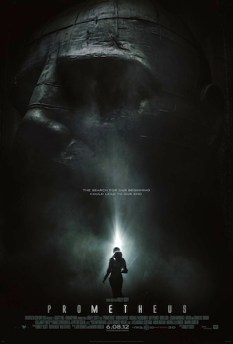 Ridley Scott’s not-an-Alien-prequel-honest Alien prequel is nothing if not divisive, with critics and fans alike declaring it to be a revelatory masterpiece, irredeemable faux-profound slop, and every point on the spectrum in between. I did my best to remain spoiler-free throughout the four months between its theatrical release and disc debut (crikey things reach DVD quickly these days!), though I did read a leaked plot description in advance that was reportedly decried as rubbish. I wish I could remember where I found it because I’d love to know if it matches up. Sadly I can’t remember the details, but obviously something stuck — and therefore it was right — because I was singularly unsurprised by the majority of Prometheus’ story. But that doesn’t necessarily matter if the film is any good, and Prometheus… well…
The first half is quite good, in a slow, meaningful kind of way. Even at that point there’s doubts: some of what occurs is just unnecessary detail; shots and scenes that seem consciously designed to give it a slow pace rather than stuff we actually need to see.
The second half is batshit crazy. It abandons the thoughtful Serious Science Fiction trappings for schlocky body/creature horror, and in the process abandons the semblance of making sense. Plot holes glare at you. Characters make unfounded leaps of logic. It feels like whole scenes or sequences are missing. Indeed, quickly scanning through the disc’s description of some of the deleted scenes, it looks like they might explain some of the film’s gaps. I presume there’s a good reason they were cut though… right…?
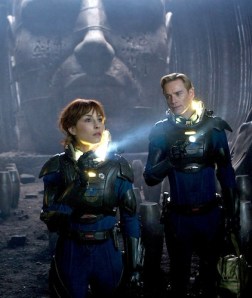 And then, to top it off, it doesn’t have a real ending! They may as well slap “to be continued” on screen, such is the obvious lack of conclusion. It’s immensely frustrating, only to be topped off with a “in case we don’t get the sequel” bit of connective tissue to the Alien series. Mysteries and unanswered questions aren’t a problem in and of themselves — there are plenty in Prometheus’ franchise forbears, the first in particular — but they’re not the kind that require answers: their stories work as a discrete unit; who the Space Jockey is, or how the aliens came to be, and so on, are set dressing. Conversely, the gaps in Prometheus are in the primary narrative. There would be an argument for it being a thematic point — a Bergman-esque ‘silence from the Gods’ — but the starkness of that ending, as clear a cliffhanger as either of the first two Lord of the Ringses, undermines that. It fairly screams, “there’s more to come! See the next film for the answers!” And that isn’t on, because that isn’t what we were promised — this isn’t Prometheus: The Fellowship of the Prometheus, with Prometheus: The Two Planets already shot and scheduled for next year, and the trilogy-forming conclusion Prometheus: The Return of the Alien for the year after that; it’s just Prometheus, full stop, the sole definitive article. But it isn’t.
The sense that everything’s been cobbled together in the current blockbuster fashion of “keep writing even while shooting” extends right down to things like character development; even to individual scenes. Take Holloway (Logan Marshall-Green), for instance. He’s a dick. I’ve no sympathy when it all goes wrong for him because he’s not at all likeable. What’s somewhat ironic is that the deleted scenes note at least one sequence was re-shot to try to make him more sympathetic. And, funnily enough, I remember during that scene in the film thinking it was about the only time he seemed even vaguely appealing (even then, only relatively). Just one of many such apparently-bungled elements in the film.
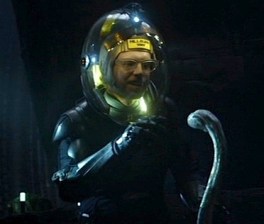 No character is fully developed. Some barely register, suggesting too big a cast, while others suffer from being plain stupid, or doing inexplicably stupid things, or just piss-poor acting. There’s some thing made about Shaw (Noomi Rapace) being religious or a true believer or something, but it’s not properly explained and doesn’t go anywhere. David (Michael Fassbender) and the way he’s treated by the other characters are both very interesting areas, and clearly of huge thematic resonance, but he acts inconsistently for no obvious reason, and despite the horrendous things he does to Shaw at one point, she just gets on with him again in the next scene, and… well, that’s far from being the film’s only plot hole or inconsistency.
At one point a character escapes a situation only to be killed off in a different one. If that sounds like a reasonable thing to do, that’s because I’m trying to avoid spoiling parts of the climax. It’s not a particularly reasonable thing to do, though; it plays as “here’s a cool death”. I’ve not read multiple versions of the script or read interviews with the writers or listened to their commentary (yet), but one does wonder if Damon Lindelof was brought in to pull back on some of the Science Fiction (with a capital SF) and build up the blockbuster-y elements, because that’s what said cool death feels like: a film constructed from “what would look cool? What haven’t we seen?” rather than “what are we trying to say?” I have no problem with the former in its rightful place (Tomorrow Never Dies has the awesome bike chase because it was the antithesis of GoldenEye’s tank chase, for one ready example), but a film that sets out its stall around Concepts is not the right place.
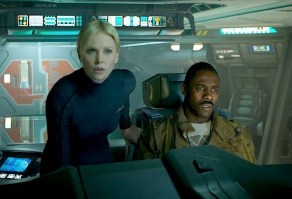 The daft thing is, I think a lot of people would’ve been happy if it had chosen to just go all-out as a schlocky alien horror movie. That’s what Alien is: an exceptionally well-made haunted house movie in space. There’s no shame in that (well, maybe in cinéaste circles, but pish.) But that’s not where Prometheus pitches itself. There’s too much other stuff for it to be just that; stuff that’s apparently aiming to be Profound. So when the horror does turn up, it doesn’t belong.
It does all look bloody gorgeous, from the real landscapes to the CGI. It was shot by Dariusz Wolski, whose previous credits include all four Pirateses and not much else that would suggest a remarkable skill. But sod a pixel-generated tiger, these vistas surely deserved recognition. (But then I’ve not seen the tiger movie, so…) I didn’t see it in 3D, obviously, but it certainly looks like it was shot for the format. Not because there’s stuff poking out at you, thank goodness, but look how light it all is, especially compared to the original Alien. I’m sure the scenery had lovely depth.
A side effect of such format-hopping is a debate on the correct aspect ratio: it was reportedly shown at 1.66:1 on IMAX, 2.00:1 on IMAX Digital, and 2.35:1 otherwise (the Blu-ray remains at 2.4:1 throughout). I have no idea whether the IMAX was opened out or cropped, though I’d imagine the former, which does make you ponder why they didn’t just use that everywhere, especially on home formats. I guess 2.4:1 must be Scott’s preferred ratio… but is that OK? Should we lament the missing top and bottom? I dunno. More interested parties than I have debated this at length, if you fancy scouring the web for it.
 Prometheus is a funny old beast, then. There’s lots of good stuff in there, but also lots of baffling decisions and confusing shifts of tone, emphasis, style… Considering it was made by an experienced master-filmmaker, who was presumably granted all the time, freedom and money he wanted to craft the film he desired, it’s baffling how it ended up feeling like such a hodge-podge. Many fans have blamed Lindelof, brought in late on to re-write the screenplay; but considering Scott ruined Robin Hood by ditching an innovative, exciting screenplay for a stock this-is-real-history re-telling of the legend, perhaps the blame lies at his door. He’s reached a point where he can order anyone to change anything and it will be done (writers have no power in Hollywood, after all). Perhaps, at 75 now, he’s lost the ability to spot a good script; or perhaps he just tinkers because he feels he must, because he’s the director and he’s in charge.
Whatever. Here he’s turned in a scrappy, confusing, but not meritless movie; one that will probably endure thanks to its franchise connections, its moments of clarity, and its intense controversy. It’s not a good film, but it’s kind of a fascinating one.

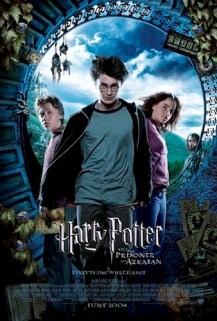 Prisoner of Azkaban marks a significant turning point for the Harry Potter film series. Viewed now, it’s easy to see it as just Episode 3 of 8; a saga still getting underway. At the time, coming off the back of two incredibly successful films, it felt like a grand shake-up of an established formula.
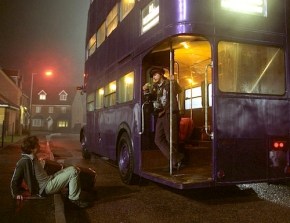 Cuarón and screenwriter Steve Kloves (who would pen every Potter film bar the fifth) focus in on the novel’s plot, ditching its copious world-building and backstory asides. This has both pros and cons. In the former camp, it leaves room for Cuarón to make something more exciting and filmic than Columbus — you can’t imagine the craziness of the Knight Bus in either of the previous films. It also keeps things moving forward, at quite a pace too, rather than meandering off here and there. Even the Quidditch match serves a purpose.
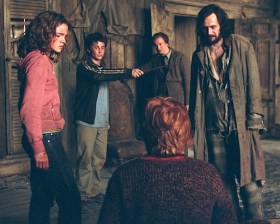 The film series doesn’t treat either of them particularly well compared to the books, but then supporting characters and subplots are the first things to go (quite rightly).

 John Cusack stars as literary giant (figuratively) Edgar Allan Poe in this wannabe-Victorian-
 That they didn’t tone it all down just a smidge to match, and so go for the box office-friendly PG-13, is a surprise in these days.
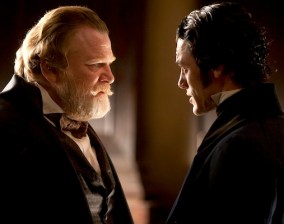 The rest of the cast are from Hollywood’s usual go-to for period tales: Brits; if not entirely then mostly so. (The film was shot in Hungary and Serbia, so I suppose our thesps have the additional advantage of being geographically favourable to Americans.) You know you’re getting a level of quality there, then, though for me Kevin R. McNally lets the side down (again). He’s only a supporting character and is fine most of the time, but there’s one bit when he’s talking to the lead detective and just rattles off his line… It’s not the world’s greatest speech, but you can hear there was meant to be more nuance and quiet in there.
 Se7en is probably my favourite film ever made, but criticisms that it’s quite a standard detective mystery are not invalid. It’s enlivened by Andrew Kevin Walker’s writing (great dialogue, engrossing structure, etc), some top-drawer performances (Freeman, Pitt, a loopy-calm Spacey), and, probably most of all, David Fincher’s inestimable touch. In making such a comparison it’s easy to see that The Raven lacks any of these, which renders it a solid period mystery, but no more.
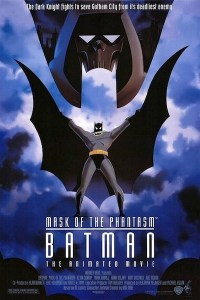 Batman movies have a habit of provoking strong reactions.
 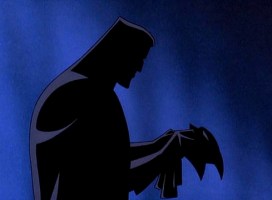 One of the main reasons the film succeeds is that look back at Bruce Wayne’s early days as a crime fighter. Batman’s origin is oft told — too oft, truth be told — but they thankfully don’t rehash it here. Instead, early in Batman’s career Bruce falls in love and finds happiness, causing him to question whether to continue down the path he’s already dedicated his life to. The scene where he talks to his parents’ grave, expressing his guilt at potentially finding happiness after so much mourning, is one of the most powerful, emotional moments in all of Batman’s many iterations.
 But instead of falling in some nasty halfway-house, Phantasm turns up trumps on all fronts.
 Shortly after I watched Tinker Tailor, it was announced that they (“they” in this instance being Working Title, I think) are planning a new film adaptation of Daphne du Maurier’s perennially popular novel Rebecca. This news was greeted (at least on the websites where I read it) with cries in the comments along the lines of, “you can’t remake Hitchcock!” Such is the power of
 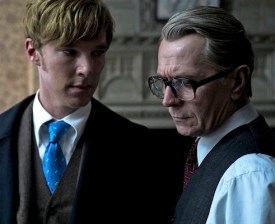 Yet, for all that, the film is excellent. It may not match the TV series in places, in my subjective opinion, but in its own right it shines. Gary Oldman does the impossible and offers a Smiley that is neither an imitation of Guinness’ nor a deliberate counterpoint, but stands apart as an equally proficient rendering of the character. The rest of the cast are equally up to task, with the exception of Kathy Burke, who stands out like a sore thumb in my opinion.
 Another noteworthy advantage of the film is that it’s gorgeously shot. The TV series actually has its own appeal in this area, with a realism that is quite pleasing. The film occasionally goes grander (look at the depiction of meeting rooms in The Circus for a major example — while the TV series goes for any old room in Whitehall, the film offers stonking soundproof ‘pods’), but it works in its own way.
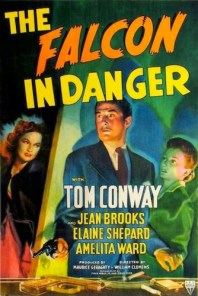 We’ve had the Saint in New York, in London, and in Palm Springs; soon we’ll have the Falcon in Mexico, in Hollywood, and in San Francisco; but here, he’s just in danger. He’s also in perhaps the best film either series has offered to date.
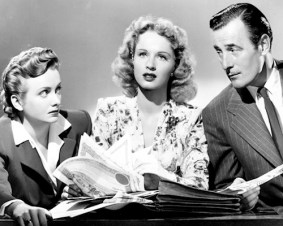 Though the Falcon clearly agrees with everyone else’s assessment and shrugs her off as often as he can, to our benefit.
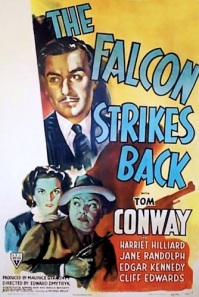 Directed by Edward Dmytryk (who, a couple of years later, would helm
 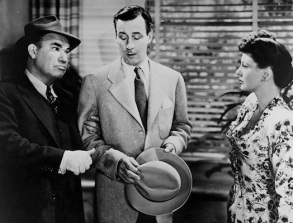 His eye for the ladies remains the same, although Conway feels a bit slicker and less whipped. Neither carry the same charisma as Sanders’ Saint.
 The Falcon may’ve done it in the third entry in RKO’s Saint-a-like film series, but now it was time for Tom Conway to
  Aside from housekeeping, the film offers one of the series’ better plots, a proper detective mystery that doesn’t lead where you’d expect it to for once. That said, I didn’t like the ending so much, especially the way it abruptly dispatches our former hero followed by the gang carrying on with barely a care. The Mysterious Threatening Voice On The Phone is interesting though — will we be seeing a recurring enemy; a Moriarty or Blofeld for the new Falcon? Time shall tell…
 in spite of all the other factors (changing sources of adaptation; changing leads) that should make them feel wildly varied. And the Falcon’s butler, Jerry, is Asian again, after being caucasian in the last two films. Played this time by Keye Luke, rather than being some nasty stereotype he has a nice bit using stereotypes to the characters’ advantage. It’s one of the series’ better comic inventions.
 Controversial supernatural mystery drama. Nicole Kidman’s rationalist husband dies suddenly; years later, as she gets engaged to another man, a boy arrives claiming to be her husband reincarnated. More realistic art house drama about grief and insecurity than thrill-giving occult mystery, it nonetheless keeps you guessing as Kidman is slowly convinced by the boy’s tale, while family relationships collapse around her. Full of quiet understated performances, Kidman is particularly captivating and, as the boy, Cameron Bright is mesmerisingly unreadable. Poorly received, with some
  I had heard Scre4m (Scream 4, if you prefer) was dreadful; a misguided, belated attempt to revive a once-popular franchise. Personally, I thought it was fun.
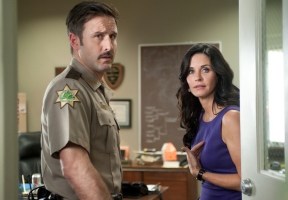 It also leads to quite a good extended bit where some characters reel off a list of recent remakes, which rather highlights just how far it’s gone now. There’s lots of examples of this fun ‘meta’ stuff for film fans; for real-world-stuff too, including references to Courtney Cox and David Arquette’s marriage, Emma Roberts being in the shadow of Julia Roberts, and so on.
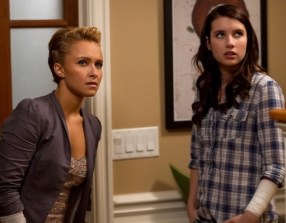 But, ultimately, all the discussion of horror movies and their rules is just window dressing: if there aren’t rules any more (which there don’t seem to be), it’s impossible for the characters to use them to survive, or for it to lend much self-reflexive weight to how the killer behaves. The only moment when it might be of use is when they predict the climax will occur at a party, and it turns out they’re having a party that very night! But then they go ahead with anyway. So much for that then.
 Though as the main development has been torture porn, and it criticises that explicitly from the very first scene, perhaps that’s still OK. In fact, they’re one step ahead again, with a nod to the most most-recent development (the
  100Films.co.uk