Blackhat (2015)

2016 #46
Michael Mann | 127 mins | streaming (HD) | 2.35:1 | USA / English, Mandarin & Spanish | 15 / R

BlackhatHow the mighty have fallen. The great Michael Mann, who once helmed genre-defining crime movies with expertly-directed sequences, here delivers a movie that looks like an amateur cheapie by a film student who’s watched too many Paul Greengrass movies without learning anything meaningful from them.

It plays like a Hong Kong action-thriller, but let down by flabby storytelling, including obvious restructuring in post. Praised for depicting hacking more accurately than normal, that’s undercut by the rest being so clichéd. And its horrible romance includes a scene where the girl’s lover and her brother discuss what’s best for her!

Oh, Mann.

2 out of 5

Sicario (2015)

2016 #126
Denis Villeneuve | 121 mins | Blu-ray | 2.40:1 | USA / English & Spanish | 15 / R

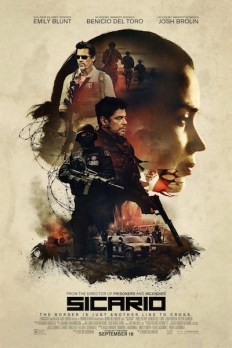
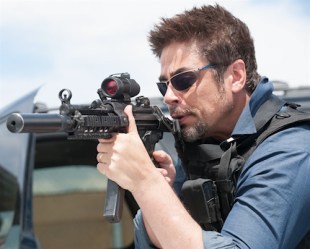
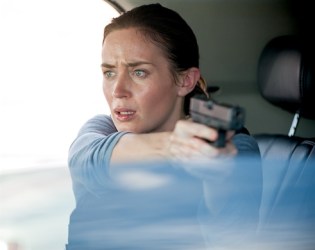
SicarioFighting a losing war against Mexican drug cartels in Arizona, FBI agent Kate Macer (Emily Blunt) is keen to be enlisted to an interagency task force run by Department of Defense consultant Matt Graver (Josh Brolin). Taken along for the ride but kept in the dark, Macer becomes increasingly concerned that all is not as it seems — especially when it comes to Alejandro (Benicio Del Toro), a mysterious task force member whose motives seem to be a big secret…

Much like his previous film, Prisoners, director Denis Villeneuve here takes a storyline that could fuel a run-of-the-mill genre picture (a war-on-drugs action-thriller) and instead turns it into something altogether classier. In this regard, I’m tempted to invoke the work of directors like Hitchcock and Fincher. Sicario isn’t necessarily a film I could picture either of them making (maybe Fincher), but the way it takes a “genre movie” and elevates it artistically has a certain similarity. That said, like those directors at their best, Villeneuve here works primarily with tension and suspense — words I’m about to thoroughly overuse in this review, but they encapsulate the feeling of watching Sicario so well.

Any viewers seeking simple action thrills will not be satisfied with the sequences offered here, but the way the scenes rely on suspense rather than bullet choreography makes for a supremely tense movie; one that can grip you like a vice and only occasionally let up, letting you catch your breath before it doubles down. As viewers, we’re positioned alongside Macer, kept out of the loop and so unsure who to trust and what exactly is going on for much of the movie. In that respect the plot demands a certain level of attention, because it isn’t always spelled out in nice bitesize chunks of exposition.

Arguably, the film loses its way a little when it does reach that point. Answers are forthcoming eventually, and the third act occasionally abandons the conflicted and complex world that came before it for more straightforward and satisfying turns of events. Fortunately, the film survives such wobbles thanks to the strengths it’s already established, and with an even deeper dive into moral greyness even while it seems to be offering a simplistically fulfilling climax.

Blunt is excellent as Macer, an outwardly tough-as-nails tactical specialist who is hiding a less assured core. If that sounds almost trite then it doesn’t play that way, afforded greater subtlety by Blunt and screenwriter Taylor Sheridan. Macer is a capable agent, but is she capable of operating in Graver’s world? The only other character and performance that really stands beside Blunt is Del Toro’s Alejandro. Around 90% of Alejandro’s dialogue was cut by Del Toro and Villeneuve before shooting began, and it works to everyone’s favour. He’s an unreadable presence in his silence, seeming both brooding and almost bored, like he’s fed up waiting for the task force’s duties to get him where he wants to be. His silence is threatening, even after his demonstrated skill-set is (to Macer, anyway) a kind of comfort. It’s only fitting that the final scene — the real climax of the movie, hitting hard on its emotional arcs even after the plot is done — is a two-hander between Blunt and Del Toro, loaded with as much tension and suspense as any other part of the movie.

Brolin may be a headline lead alongside those two, but his character is given little to work with beyond being a son-of-a-bitch who keeps Macer onside with (deceitful) charm. He’s fine but unremarkable in that role. Perhaps the sequel will give him more to work with. More memorable is Daniel Kaluuya as Macer’s FBI partner, Reggie Wayne. More time spent with Macer and Wayne working together wouldn’t go amiss. Jon ‘the Punisher’ Bernthal also pops up in a small part, imbuing what could’ve been a sketchy plot-driver with more believability.

The film’s other real stars are behind-the-scenes. First, the Oscar-nominated cinematography by Roger Deakins. I must admit I was a little underwhelmed at first, as the film starts in the flatly-lit daytime world of the Southern US / Mexico region. Not that it’s poorly shot, just that very little of it struck me as particularly remarkable. As the film transitions to more nighttime settings, however, Deakins’ work comes vibrantly to life, starting with some majestic golden-hour shots of ominous cloud-darkened skies, which seem to visually overwhelm Macer as she begins to realise she’s out of her depth. Later, the task force descend into tunnels, and the film presents a mixture of ‘regular’ photography — so dark that only certain things can be glimpsed in the patches of light — and both thermal- and night-vision shots. I guess it’s a cliche to say the use of headcam-type footage puts the viewer there with the characters, but here it really does. Most extraordinary are the thermal shots: captured for real with a thermal vision camera, rather than a post-production special effect, they look like some heightened-reality video game, their eeriness only adding to the tension.

Tension is definitely the name of the game when it comes Jóhann Jóhannsson’s score, which was also Oscar nominated. Dominated by elongated, heavy strings and pacey, heartbeat-emulating percussion, it makes the threats lurking in every corner feel tangible; makes the sense that everything is doomed and liable to go south at any moment palpable. It’s a major contributor to the film’s mood.

It may have familiar genre building-blocks at heart, but between Sheridan’s focus on character, Blunt and Del Toro’s nuanced performances, Deakins’ fantastic imagery, Jóhannsson’s intense music, and Villeneuve’s skilful orchestration of every aspect, Sicario emerges as a film that exceeds the artistic and emotional effect you’d typically expect from a “genre movie” without sacrificing the thrills that should be inherent.

5 out of 5

Sicario is available on Netflix UK as of yesterday.

It placed 1st on my list of The 20 Best Films I Saw For the First Time in 2016, which can be read in full here.

Crimson Peak (2015)

2016 #33
Guillermo del Toro | 119 mins | Blu-ray | 1.85:1 | USA & Canada / English | 15 / R

Mia Wasikowska stars opposite a British thesp best known for playing a comic book villain and a red-headed repeat-Oscar-nominee, in a Gothic drama-thriller from an acclaimed non-Anglo director? That’s a description of Stoker, Park “Oldboy” Chan-wook’s modern-Gothic chiller that co-starred Matthew “Watchmen” Goode and Nicole “The Hours” Kidman, which I awarded a five-star review and a place in my top ten last year. It’s also a description of Crimson Peak, Guillermo “Pan’s Labyrinth” Del Toro’s classic-Gothic chiller that co-stars Tom “Thor” Hiddleston and Jessica “Zero Dark Thirty” Chastain, which struggled to find an audience in cinemas last year. That last fact has often been attributed to its marketing, which I presume was as a horror movie (I never watched any of the trailers). It’s understandable the studio went for that, though: they know how to sell horror, but Crimson Peak is actually something more uncommon.

If you’ve not at least heard of The Castle of Otranto then there’s a chance your expectations of Crimson Peak may be misaligned. Which is not to say you won’t like it, especially if you’re of an open-minded disposition, but if having heard it’s “Gothic” and a “horror movie” has conjured up something Hammer-esque in your mind, then you are indeed off base. I think most people hear “Gothic” and automatically extrapolate “Gothic horror”, at least as far as movies are concerned. Crimson Peak isn’t a Gothic horror, though — at least, not in the Hammer sense — but rather a Gothic Romance, which is as distinct from “horror” as it is from “romance”. Perhaps “Gothic melodrama” would be a term better suited to today’s audiences. OK, maybe not — frankly, it’s difficult to imagine any scenario in which a movie of this kind generates big bucks at the box office unless you somehow made one that features a comic book character beating the crap out of the cast every 20 minutes.

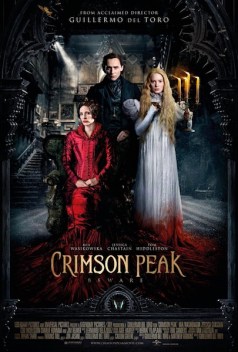
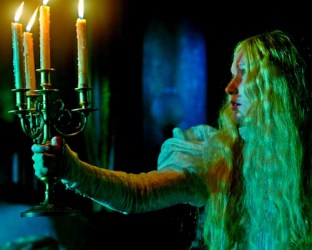
The story actually concerns Edith Cushing (Wasikowska), a well-to-do businessman’s daughter in upstate New York who is occasionally haunted by ghosts. She falls for visiting English gent Sir Thomas Sharpe (Hiddleston) and, long story short, moves with him and his haughty sister Lucille (Chastain) back to their crumbling — literally — pile in the English countryside. The house hides many secrets, and ghosts, too. Having said it’s not a horror movie, it would be unfair to class Crimson Peak as simply a tame drama — as you’d expect from writer-director Guillermo del Toro, those ghosts can be bleedin’ scary, and there are certainly a smattering of good old fashioned jumps to boot.

If you start reading online (the ones I read, at any rate), you tend to find people either: a) thought there weren’t enough ghosts, or b) thought there were too many ghosts. And there’s an element of truth in this: the horror bits are a little bit too horror-genre for a Gothic romance/melodrama, but they’re undoubtedly not in it enough to transform it into a full Horror movie. Someone with the predilection to enjoy both is required to stomach the film, which I must say I am, and I dare say Del Toro would fit that bill also. It seems clear that he’s made exactly the film he wanted to make; it’s just unfortunate that turned out to be a tricky sell, and consistently misunderstood by a mainstream audience. (I say “mainstream audience” because you can find an abundance of comments on film-fan websites noting how it was incorrectly marketed, etc.) That said (minor spoiler here), it’s stated in the film itself that the ghosts are a metaphor. OK, it’s stated by Edith about the story she’s writing, but you don’t need a degree in Film Studies to realise this is meant as a meta-comment on the film as well. Or maybe you do.

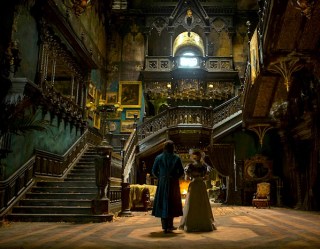
Whatever one’s thoughts on the story and tone of the film, it can’t be denied that its technical merits are extraordinary. Every inch of the design work is gloriously imagined, and the cinematography — the lighting in particular — is spectacular. And that gigantic house set…! And the climactic ‘limbo’ set, too — incredible work. (That’s not a spoiler, incidentally: it was the set’s nickname, not its literal location.) The ghost effects are excellent too — original, creepy, and executed in a way that blurs the lines between make-up, animatronics, and CGI. It’s a shame the film as a whole wasn’t better received, because I imagine that’s all that held it back from numerous awards-season nods.

Crimson Peak is exactly the kind of film that, on reflection, I may wind up liking even more than I do now. Perhaps others will feel the same and it will also gain better standing in assessments of the director’s filmography — even as it is, it’s definitely one of my favourite Del Toro films (though I really need to give Pan’s Labyrinth another go, to see if I can see what all the fuss is about this time). The film’s tagline was simply “Beware”, but perhaps the viewer needs to be warned instead to “be prepared” — if you know what you’re getting in to, I think Crimson Peak has a lot to recommend it.

4 out of 5

Crimson Peak premieres on Sky Cinema (including via Now TV) tomorrow, Sunday 17th July.

Grand Piano (2013)

2016 #34
Eugenio Mira | 87 mins | streaming (HD) | 2.35:1 | Spain & USA / English | 15 / R

Written by Damien “Whiplash” Chazelle, Grand Piano is “Phone Booth with a piano”. Elijah Wood plays a nerve-ridden musical wunderkind about to make his comeback when he receives a phone call ordering him to play an impossible piece of music perfectly or else his loved ones get it. Is he up to the challenge? Can he uncover and defeat his telephonic terroriser whilst also giving a piano performance to a packed house?

Running under 80 minutes before the credits roll, Grand Piano is a brisk thriller that barely has time to be anything less than engrossing. It relies on keeping you entertained with its series of quick reveals, twists, and sequences of tension, rather than meaningful themes or considered characters (though look out for some perhaps-familiar faces in supporting roles nonetheless). Director Eugenio Mira keeps things relatively classy, rather than descending into meaningless shaky-cam antics — this is a movie set at a classical music recital, after all.

The storyline is utterly preposterous, of course, though it amuses me that some people criticise it for that. I mean, it’s a genre picture — no genre picture is not preposterous. The veneer of truth they present varies, but rare is the genre movie that crafts a genuinely plausible version of real life. Die Hard would never, ever happen, but it’s still a great action movie. I’m not claiming Grand Piano is of Die Hard quality, but criticising its plot for being preposterous? It’s not so preposterous that it breaks the ‘rules’ of the thriller genre. Either you’re on board with that, or maybe you shouldn’t watch this kind of movie.

Really, there’s not much more to Grand Piano than its well-made creation of tension and thrills, and so I don’t find myself with much more to say about it. I enjoyed it very much, though.

4 out of 5

Kiss Kiss Bang Bang (2005)

100 Films’ 100 Favourites #49

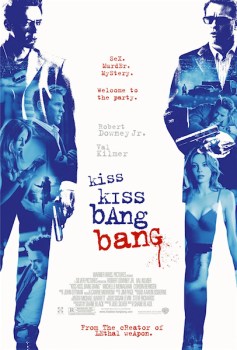
Sex. Murder. Mystery.
Welcome to the party.

Country: USA
Language: English
Runtime: 103 minutes
BBFC: 15
MPAA: R

Original Release: 14th September 2005 (France)
US Release: 21st October 2005
UK Release: 11th November 2005
First Seen: cinema, 2005

Stars
Robert Downey Jr. (Chaplin, Zodiac)
Val Kilmer (Top Gun, Batman Forever)
Michelle Monaghan (Mission: Impossible III, Source Code)

Director
Shane Black (Iron Man 3, The Nice Guys)

Screenwriter
Shane Black (Lethal Weapon, The Last Boy Scout)

Based on
Bodies Are Where You Find Them, a novel by Brett Halliday.

The Story
After accidentally getting cast in a movie, fugitive crook Harry Lockhart is given on-the-job experience with private eye ‘Gay’ Perry van Shrike. When the pair become witnesses to a murder that it looks like they committed, they become embroiled in a conspiracy that they’ll have to untangle to save themselves.

Our Heroes
Harry Lockhart is our narrator: a crappy thief who stumbles into an acting audition while on the run from the cops, and ends up whisked off to Hollywood to play the lead in a mystery movie. To help him prepare for the role he shadows Gay Perry, a top L.A. P.I., who’s consistently, hilariously sarcastic. Also, homosexual.

Our Villains
It’s a murder mystery, so, that’s kind of a spoiler. Also: almost not the point.

Best Supporting Character
Harry happens to run into his childhood crush Harmony Lane, now working as a waitress in L.A. Soon she’s asking him to investigate her sister’s recent suicide, which she thinks was actually a murder. That subplot isn’t at all related to the main case. Nope.

Memorable Quote
Perry: “Go. Sleep badly. Any questions, hesitate to call.”
Harry: “Bad.”
Perry: “Excuse me?”
Harry: “Sleep bad. Otherwise it makes it seem like the mechanism that allows you to sleep—”
Perry: “What, fuckhead? Who taught you grammar? Badly’s an adverb. Get out. Vanish.”

Memorable Scene
Arriving back at his hotel room after they’ve witnessed the murder, Harry goes into the bathroom to take a leak. As he’s doing that, he glances round… and sees the girl’s body in the shower. He turns to look at it in shock… and pisses all over it. Cue hilarious exchange when he phones Perry for help.

Awards
5 Saturn nominations (Action/Adventure/Thriller Film, Actor (Robert Downey Jr.), Supporting Actor (Val Kilmer), Supporting Actress (Michelle Monaghan), Music)
1 Phoenix Film Critics Society Award (Overlooked Film of the Year)

What the Critics Said
“the plot of the film is almost willfully convoluted. But it’s also largely beside the point, an excuse for quite a few good scenes, most of them equal parts homage and subversion. The familiar ingredients of the hard-boiled school (and the noir cinema it spawned) are all here: the half-glittering, half-seedy L.A. setting; the protagonist’s expository voiceover; the jaded but ultimately decent private eye; the dead body that mysteriously turns up exactly where it’s not wanted. But Black gives each element a satiric twist: the tough shamus is gay; the corpse is discovered in a bathroom and accidentally peed on; the first-person narrator is not so much unreliable as simply incompetent.” — Christopher Orr, The Atlantic

Score: 85%

What the Public Say
“What’s unexpected about the movie is just how funny it is despite all the graphic murder, incest, torture, suicide, and dismemberment that occurs. […] Black effortlessly moves between legitimately realistic, unsettling violence (a murder witnessed by Harry midway through the film is a prime example of this) to wacky, slapstick violence (a late-in-the-movie Russian Roulette-style interrogation that does not, shall we say, go particularly well, for instance) without ever losing his balance. The real joy of the movie, though, is watching Val Kilmer and Robert Downey Jr. bounce off one another.” — Jake Farley, 10 Years Ago: Films in Retrospective

Verdict

One-time “highest paid screenwriter in Hollywood” Shane Black made his directorial debut with this satirical neo-noir, which can be credited with reviving Robert Downey Jr’s career for the third or fourth time (it led directly to him being cast in Iron Man). The film’s best quality is probably its humorous dialogue — choosing just one memorable quote was hard, though many come in lengthy exchanges. Downey Jr is hilarious, of course, but even he’s outmatched by Val Kilmer as sarky investigator Gay Perry. Even more impressively, love interest Michelle Monaghan holds her own against them both. The plot may be so confusing it’s easily forgotten, but the whodunnit reveal is beside the point when the journey there is so entertaining.

#50 will… retrace each and every one of the Baudelaire children’s woeful steps.

Calvary (2014)

2016 #91
John Michael McDonagh | 101 mins | Blu-ray | 2.35:1 | Ireland & UK / English | 15 / R

From the director of In Bruges’ older brother (who, in fairness, made a name for himself with 2011 comedy The Guard, which I’ve still not got round to) comes this dark (very dark) comedy drama — with emphasis on the latter, I suppose, but it is very funny along the way.

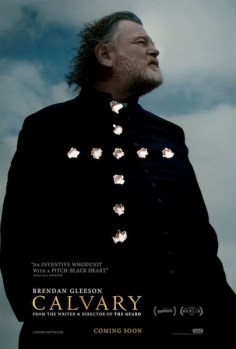
Brendan Gleeson (In Bruges, The Guard) stars as Father James, a priest in a small Irish town. One day at confession he’s told he is going to be murdered. Not for anything he did wrong, but precisely the opposite — because he is a good priest. The mysterious threatener gives him a week to get his affairs in order. Over the next seven days, we follow James as he interacts with his characterful parishioners, and are led to ponder which of them might be the would-be assassin, especially as so many seem cynical and nasty. All the while, James struggles internally with what is the right thing to do.

That’s the story of Calvary, at any rate, but it’s fairly clear that it’s about something more. What exactly that is, however, is a matter of debate. Could it be an apologia for the church and the wrongs it has inflicted in living memory? It certainly leans into those issues: without spoiling anything, the inciting incident is related to historic abuse, but the film is showing that priests aren’t all like that — that some people in the church are actually good, or at least as good as any of the rest of us — which I should imagine is true. That doesn’t make the film an apology, nor an excuse, but does raise a point: should the innocent be blamed for the wrongdoings of the guilty just because they share a belief? I think most rational people would agree they should not. Nonetheless, I’ve read at least one commenter, who I’m presuming was a hardened atheist, castigate the film for daring to feature a good priest, as if the very concept of one existing was a heinous and offensive suggestion. Conversely, in the special features Chris O’Dowd speaks of his initial wariness that this was going to be another “bad priest” movie, and how that doesn’t align with his personal experience of the clergy.

So could it, instead, merely be a snapshot of Irish society, in particular its current relationship with the church? Surely that’s part of what’s in play, with the cynical, dismissive, teasing, sometimes hateful attitudes of the parishioners surely no coincidence. Some viewers have certainly taken this as the film’s primary talking point, and some have been less than impressed that it doesn’t align with their view of modern Ireland. (I’m in no position to comment.) Neither of these feel like they’re getting at the totality of what it’s saying, though.

Nonetheless, the way the film presents itself is not at fault. The acting is strong across the board, none more so than Gleeson. He brings all kinds of facets to a man who could’ve been a blank page on which to project the other colourful characters, and he truthfully conveys major character moments and changes of direction without the need for dialogue. O’Dowd surprises in a rare non-comedic role, while further able support comes from recognisable faces like Kelly Reilly (as James’ troubled daughter), Dylan Moran (as a nouveau riche dick) , Marie-Josée Croze (as a bereaved holidaymaker), M. Emmet Walsh (as an ageing author), and — for just one scene, but a good one — Domhnall Gleeson (you can discover what he is when you watch it). And no offence to Aidan Gillen, but his smarmy atheist doctor feels like the kind of part he always plays.

That’s not to exclude the less familiar names, some of whom deliver many of the biggest laughs, like Killian Scott (as a slightly worrying simpleton), David Wilmot (as James’ naïve fellow clergyman), and Owen Sharpe (as a Brooklyn-accented promiscuous gay) — though if you watch Ripper Street, you may have seen a couple of them in quite different guises. And though it may be a cliché, McDonagh has successfully made the location a character, too: the towering mountain, an accidental discovery once on location, adds the looming presence the director hoped it would.

Calvary may in fact be a great film, if only I could put my finger on what I think it’s really trying to get at, which remains frustratingly out of my reach, at least for now. However, I will say it’s a very good one, and anyone who likes a character-driven drama scattered with dark but hilarious humour would do well to seek it out.

4 out of 5

Calvary is available on Amazon Prime Instant Video UK as of yesterday.

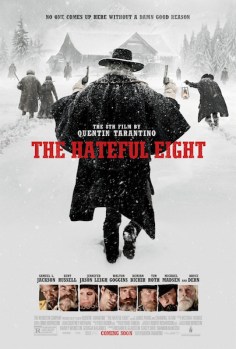
The Hateful Eight (2015)

2016 #89
Quentin Tarantino | 168 mins | Blu-ray | 2.76:1 | USA / English & Spanish | 18 / R

Quentin Tarantino hadn’t made a film in the same genre as his preceding movie for almost 20 years when The Hateful Eight came out — his second go-round with the Western genre, after the Spaghetti-ish thrills of Django Unchained three years earlier. Aside from the setting and its accoutrements, however, The Hateful Eight has more in common with Tarantino’s debut feature, Reservoir Dogs.

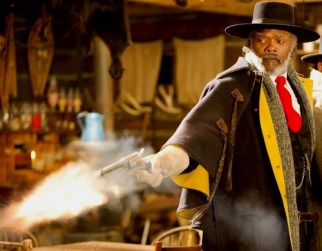
Wyoming, sometime after the Civil War: bounty hunter Major Marquis Warren (Samuel L. Jackson) flags down a stagecoach driven by O.B. (James Parks), looking for transport to Red Rock. Inside is fellow bounty hunter John Ruth (Kurt Russell) with his latest catch, Daisy Domergue (Jennifer Jason Leigh), who’s worth $10,000 — naturally, Ruth is suspicious of Warren’s motives. Later, they pick up Chris Mannix (Walter Goggins), who claims he’s to be sworn in as the new sheriff of Red Rock — also of great suspicion to Ruth. As a blizzard chases them, the quintet seek shelter at Minnie’s Haberdashery, a rest spot Major Warren has clearly visited many times before. However, Minnie isn’t home, and care of her establishment has been left in the hands of Bob (Demián Bichir). Inside, they find fellow travellers Oswaldo Mobray (Tim Roth), Joe Gage (Michael Madsen), and General Sandy Smithers (Bruce Dern). Ruth doesn’t trust a’one of them — and as they settle down to ride out the blizzard, it turns out he’s right about someone…

I’m not the first to observe that The Hateful Eight actually functions like a murder mystery, Agatha Christie style. It might be easy to miss because the film doesn’t begin with a murder or feature a detective, but then neither do all of Christie’s stories. Instead, there’s a long period setting up all the players and suggesting their motivations, and then eventually the proverbial does hit the metaphorical fan, after which deductions must be made. And it’s all in a remote, isolated location which has been cut off by weather, and every character is hiding some nefarious past — so far, so And Then There Were None. All of this comes dressed in QT’s famed dialogue, unfurled at the somewhat languorous pace he’s gradually been cultivating for a few movies now, and topped off with a few doses of the old ultra-violence.

One reason the “whodunnit” label doesn’t really stick is that Tarantino doesn’t sit it out until the end. Without spoilers: there’s certainly mystery about who is and isn’t involved, but you can’t invest in that too much because the answer is a little bit Murder on the Orient Express. Not completely Orient Express (I said no spoilers!), but a bit. One factor he does handle well is that (again like And Then There Were None) you can never be quite sure whose side you should be on; who might turn out to be a villain. Even at the end, when all has been revealed, the heroes are hardly heroic.

More talked about than the film’s content has been the way it was made. Despite the confined setting, Tarantino chose to shoot it on 65mm film, using the Ultra Panavision 70 process (only the 11th film to do so) and lenses that hadn’t seen light in nearly five decades, all of which have produced incredible images. QT’s regular DP since Kill Bill (excepting Death Proof), Robert Richardson, has once again done sterling work, with beautiful shots of scenery near the start and a fantastic definition of space once we’re locked up in Minnie’s.

Ultra Panavision 70 produces an ultra-wide 2.76:1 frame (for those not in the know, your widescreen TV is only 1.78:1), which for such an intimate story has struck people as odd ever since it was announced. In fact, it pays off in (at least) two ways: firstly, all the scene-setting scenery looks magnificent; secondly, for a lot of the film there’s stuff going on in the background or at the edge of frame — it’s not just a series of close-ups or two-shots where the ancillary detail is either non-existent or doesn’t matter, but one where that ‘background’ detail is sometimes very instructive to what is going on. Tarantino also uses the full width a lot of the time, placing two figures at either edge of the image — this really isn’t a film you could crop (thank goodness it doesn’t exist in the pan & scan era!)

Richardson’s work was Oscar nominated but lost to The Revenant (which I’m now a little biased against, after it beat this, Fury Road, and handed Roger Deakins his 13th loss, but I’ll see what I think when it finally hits British home ent formats next month), but the film did triumph for Ennio Morricone’s score — and quite rightly so, too, because it’s incredibly atmospheric and effective. Tarantino has commented that it isn’t really a Western score (which you’d expect from Morricone, what with his famous ones), but more of a horror movie score, and that that’s appropriate for the film. And, y’know, that’s not pretentious director-speak — he’s right. Well, that the movie is a horror movie is debatable, but he is right that Morricone’s work sounds more like a horror score, and that that score is appropriate to this movie. It even recycles some of Morricone’s material from The Thing, as if to bring the point home (and that’s far from the only thing about The Hateful Eight that’s indebted to The Thing, but I’ll leave that for someone else to dig into another time). Even though this is the first time he’s had a full score composed for one of his films, Tarantino still sources a couple of well-selected songs from elsewhere, including a very apt credits track by Roy Orbison.

The Hateful Eight may have a deceptively simple story, with straightforward characters and — once they’re finally all revealed — straightforward motivations; and despite that running time, it’s not as grand or as epic as either Inglourious Basterds or Django Unchained; but I say “deceptively simple” because I feel that it’s the kind of film that might reward repeat viewings, to reveal depths of character as well as hints toward the ultimate reveals. Or maybe I’m being generous — maybe it is just a long-winded, verbose way of telling a slight tale. But if it is, it’s still a mighty entertaining one.

4 out of 5

The Hateful Eight is released on DVD and Blu-ray in the UK today.

The Game (1997)

100 Films’ 100 Favourites #34

Players Wanted

Country: USA
Language: English
Runtime: 128 minutes
BBFC: 15
MPAA: R

Original Release: 12th September 1997 (USA)
UK Release: 10th October 1997
First Seen: TV, c.2000

Stars
Michael Douglas (Wall Street, Basic Instinct)
Sean Penn (Dead Man Walking, Milk)
Deborah Kara Unger (Crash, Stander)

Director
David Fincher (Panic Room, Gone Girl)

Screenwriters
John Brancato (The Net, Terminator 3: Rise of the Machines)
Michael Ferris (Terminator Salvation, Surrogates)

The Story
What do you buy the man who has everything? After high-flying businessman Nicholas Van Orton is enrolled in a mysterious alternate reality game by his estranged brother, it’s no surprise that unusual things start to happen. But as those happenings begin to take on a sinister edge, it may be Nicholas has been targeted by something more serious, and potentially life-threatening.

Our Hero
Nicholas Van Orton is an immensely successful financier, but so low on friends that he even spends his birthday completely alone. He could do with fun in his life, or so believes his brother… or does he?

Our Villains
The game is run by a company called Consumer Recreation Services, or CRS. But they just run games… or do they?

Best Supporting Character
Early on in his experience, Nicholas runs into waitress Christine, who has also been affected by the game… or is she actually a part of it? Just who can he trust?!

Memorable Quote
“You know, I envy you. I wish I could go back and do it for the first time, all over again. Here’s to new experiences.” — Ted

Memorable Scene
On the run and tired, Nicholas hops in a cab. He doesn’t notice the doors lock, until the maniacal cab driver begins to speed down the hill. As Nicholas desperately tries to escape, the driver leaps out — and the cab soars into the river, with Nicholas trapped inside…

Awards
1 Saturn nomination (Action/Adventure/Thriller Film)

What the Critics Said
“Crafted with a commanding, aloof precision by David Fincher in his first outing since hitting the jackpot with Seven, this unusual dive into the ambiguous world of an undefined pastime without apparent rules generates a chilly intellectual intrigue that will arouse buffs, trendies and techies more than it will mainstream [audiences. It] projects the same sense of suffocating enclosure and mounting despair in a style that will inevitably be compared to that of Stanley Kubrick in its steely technical mastery and remote, disenchanted worldview, all in the service of a story that resembles a highbrow puzzle as much as it does an involving narrative.” — Todd McCarthy, Variety

Score: 72%

What the Public Say
“just when we’ve finally come to a part of the story we can accept and trust, it turns out that we’ve once again been led astray. In this cinematic game, Fincher’s directorial ability wins out; his ability to pace his films; to completely draw the audience’s attention in whichever direction he requires, as well as keeping them emotionally attached to the protagonists is a balancing act which Fincher has mastered time and again over his career, and The Game is no exception.” — jyapp8715, Through the 4th Wall

Elsewhere on 100 Films
I reviewed The Game as part of a retrospective on Fincher’s films back in 2011, saying it “is by far at its best on your first viewing, when you don’t know how it will end and it’s stuffed with mysteries and twists. That’s not to say it doesn’t bear repeat viewings — as with most twist-ending-ed films, there’s naturally some interest in seeing it again knowing what’s going on — but a lot of the film’s enjoyment comes from being played with, the back-and-forth of what the truth is.”

Verdict

In fairness, The Game probably comes near the bottom of my top 100, because I remain a little dubious about its re-watch value — not because it’s poorly made (far from it), but because the twists and reveals are such a big part of its appeal, and once you know them, you know them. Also, arguments continue between its fans and its haters about whether the plot makes sense or not, and how much that actually matters — personally, I think it makes enough sense (maybe for some parts you have to switch on your “it’s a movie” filter, however). The reason it makes my list nonetheless is the quality of a first viewing, especially if you do buy into its conceit and just go with it. Few other films have kept me guessing from the start up to the very closing moments, and consequently on the edge of my seat throughout. That experience may be unrepeatable, but as one-time deals go, it was immeasurably memorable and effective.

#35 will be… the hands that built America.

The Limey (1999)

2016 #72
Steven Soderbergh | 89 mins | streaming (HD) | 16:9 | USA / English | 18 / R

There’s an argument to be made that, from a cinematic perspective, mainstream US cinema these days is boring. Look at the kind of films American auteurs were producing in and around the studio system in the ’90s and early ’00s: Pulp Fiction, Fight Club, Memento, Requiem for a Dream; films that experimented with how they told their stories, the shots they used, how they were edited. Does anyone do that now? Or does anyone do it successfully?

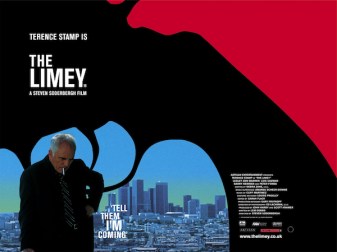
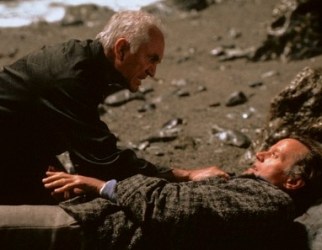
Personally, I’ll be adding Steven Soderbergh’s The Limey to that list. At its most basic it’s a straightforward thriller, in which a British crook played by Terence Stamp is released from prison and travels to L.A. to find out the truth behind the death of his daughter (played in flashbacks by Melissa George, which is kinda weird because she has little to do and no dialogue), and probably take revenge on those responsible. By all accounts, the screenplay by Lem Dobbs was indeed that run-of-the-mill. In the hands of Soderbergh, however, it becomes an arthouse-ish experience, mainly thanks to the editing.

It’s the kind of cutting that’s hard to accurately describe on the page without overdoing it. The movie jumps back and forth in time — not from scene to scene, but from shot to shot. For instance, Stamp’s arrival at the home of his daughter’s friend, and the conversation that follows, is jumbled up with shots of him on the plane, driving in the city, the people his daughter was associating with, and even within the conversation itself, sometimes speech continues on the soundtrack while we watch the characters not talking, or doing something else. This isn’t a conceit Soderbergh uses for one scene, or wheels out now and then, but an overall approach. Some sequences are more thick with it than others, but it’s always right around the corner. It creates a unique sensation. Not disconcerting, exactly, but mysterious and querying. It has you constantly question what you’re watching — is it a memory? A plan? A fantasy? A delusion? It draws connections back and forth across the timeline of the story, bringing out thematic angles. At its most key, it helps explain what happens at the end (too bluntly for some reviewers, I should add). This collage-like style — which unlike, say, Memento’s back-to-front narrative has no obvious in-story point — will certainly not be to everyone’s taste, but it presents an interesting challenge to our usual ideas of how a film should be constructed.

This led to a somewhat infamous commentary track on the film’s DVD release. The A.V. Club even included it in their New Cult Canon series — not The Limey, that is, but The Limey’s commentary track. In it, Soderbergh and Dobbs discuss the filmmaking process, understandably focusing on how screenplays get transformed, and how screenwriters get screwed over. The Limey that ended up on screen is very different to Dobbs’ screenplay, having been aggressively filtered by Soderbergh. This isn’t hard to believe — the film on screen is a very film-y film; how would you go about conveying the crazy editing style on the page, even if you wanted to? By the sounds of things the whole track is basically a friendly argument, and makes me wish someone somewhere would get round to releasing this on Blu-ray so I could hear it (the film looks great in HD, so I don’t much fancy settling for a DVD, thanks).

Despite the visual trickery, The Limey still works pretty well as a straightforward thriller. You have to be prepared to accept the slippery editing, because there’s no avoiding it, but the throughline of Stamp tracking down bad men and how he deals with them is still here. Personally, I’ve never much rated Stamp as an actor, but somehow he fits here. He’s a fish out of water, a man out of place — way out of place — and possibly out of time, too, seeming like a ’60s or ’70s British gangster transported to turn-of-the-millennium L.A. It’s no discredit to the supporting cast that they mainly exist to bob around in his wake.

At a guess, I’d say some would criticise The Limey for being a basic revenge thriller with a veneer of artistry applied in the form of its editing, while others would be turned away from its basic revenge thrills thanks to that editorial veneer. I’m always up for mashing together arthouse and mainstream, though, and here Soderbergh does just that, and in a way I found consistently thought-provoking, too. It’s discoveries like this that are the reward for digging into less-heralded corners of interesting filmmakers’ back catalogues.

5 out of 5

This review is part of 1999 Week.

The Limey placed 7th on my list of The 20 Best Films I Saw For the First Time in 2016, which can be read in full here.

Fight Club (1999)

100 Films’ 100 Favourites #29
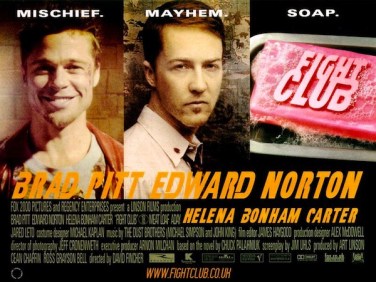
Mischief. Mayhem. Soap.

Country: USA & Germany
Language: English
Runtime: 139 minutes
BBFC: 18 (cut, 1999) | 18 (uncut, 2005)
MPAA: R

Original Release: 15th October 1999 (USA)
UK Release: 12th November 1999
First Seen: TV, c.2001

Stars
Edward Norton (American History X, 25th Hour)
Brad Pitt (Interview with the Vampire, World War Z)
Helena Bonham Carter (Room with a View, The King’s Speech)
Meat Loaf (The Rocky Horror Picture Show, Tenacious D in The Pick of Destiny)

Director
David Fincher (Se7en, The Social Network)

Screenwriter
Jim Urls (Sweet Talk, Jumper)

Based on
Fight Club, a novel by Chuck Palahniuk.

The Story
The film’s nameless narrator is growing increasingly disillusioned with his mundane consumerist lifestyle, when he bumps into Tyler Durden. A free-spirited soap salesman, the pair have a fight for the heck of it. Finally experiencing some kind of genuine feeling, they set up an underground club for fighting, but it gradually becomes clear that Tyler may have bigger ideas…

Our Heroes
I am Jack’s nameless narrator. I am also Jack’s friend, Tyler Durden. Yes, just his friend…

Our Villains
The establishment! Capitalism! What’ve you got?

Best Supporting Character
Helena Bonham Carter hasn’t been fucked like that since grade school.

Memorable Quote
“The first rule of Fight Club is: you do not talk about Fight Club. The second rule of Fight Club is: you do not talk about Fight Club! ” — Tyler Durden

Quote Most Likely To Be Used in Everyday Conversation
“You are not special. You are not a beautiful or unique snowflake. You’re the same decaying organic matter as everything else.” — Tyler Durden

Memorable Scene
Called into his manager’s office to discuss his bad behaviour, the Narrator decides the best method of getting his own way is by enacting physical violence… on himself.

Technical Wizardry / Truly Special Effect
For what’s essentially a drama, Fight Club is overloaded with special effects and visual trickery. I don’t know if any are particularly groundbreaking in and of themselves, but several are particularly striking. A personal favourite, thanks to the perfect execution of the idea, is the shot where the Narrator’s condo is transformed into a living IKEA catalogue.

Making of
Marla’s original post-coital line was, “I want to have your abortion.” The studio objected to such an offensive line, so Fincher agreed to change it on the condition that the new line had to be used. The studio agreed, apparently unaware that such an agreement was never going to end well. Fincher wrote the replacement line, “I haven’t been fucked like that since grade school.” The studio asked for the original line back; Fincher refused. (It must say something about American values that abortion is considered more shocking than underage sex.)

Next time…
Nothing from the film, but Chuck Palahniuk has continued his novel in 10-issue comic book series Fight Club 2. A second comic series, Fight Club 3, is planned.

Awards
1 Oscar nomination (Sound Effects Editing)
1 MTV Movie Awards nominations (Best Fight for Edward Norton fighting himself)
1 BRIT Award nomination (Best Soundtrack — it lost to Notting Hill)

What the Critics Said
“Three factors elevate Fincher’s apocalyptic stew to something approaching art. First is Norton’s performance, as sneaky and shocking as that in his film debut Primal Fear. Second is Palahniuk’s story, which dances on a razor’s edge between life and death, expression and repression, ecstasy and agony. Third is Fincher’s dedication to making a film that looks and sound likes no other, one that powerfully illustrates what dementia looks like from inside and out.” — Carrie Rickey, Philadelphia Inquirer

Score: 79%

What the Public Say
“it’s hard to believe Fight Club is now 15 years old. As I was watching the film last night I found it hard to review because it is so ingrained in pop culture now it would be almost sacrilegious to say something bad about it. […] The first time I saw Fight Club I did not see the twist of [REDACTED] coming. I remember being surprised, but also very confused. I didn’t really understand how it worked then. On the second viewing it is easy to see a million clues pointing to this from the very beginning. Director David Fincher is very clever in how he orchestrates the film by giving you all these hints. He’s very good at walking that tight rope of not giving away too much. The twist is definitely one of the highlights of the film and why it is so memorable. It doesn’t feel cheap to me as some of these things normally do.” — Sherise, The Girl that Loved to Review

Elsewhere on 100 Films
I reviewed Fight Club as part of a retrospective on Fincher’s films back in 2011, saying “Fincher’s films often look great, but Fight Club is surely the most visually inventive. A list of exciting spectacles could be endless […] To top it off, the ‘regular’ cinematography is grounded in Fincher’s trademark darkness, as if every shot was conceived as just black and he added only what light was necessary.”

Verdict

A controversial film to this day, Fight Club is a violent, explicit exploration of the turn-of-the-millennium Western male psyche, which hasn’t necessarily lost its relevance in the ensuing decade-and-a-half. Criticised by some for endorsing the anarchic lifestyle it depicts, praised by others for satirising that mode of thinking, and criticised by other others for not satirising it well enough, the film can certainly provoke a spread of views. There’s little doubt that David Fincher’s direction is memorably slick and inspired, however, and it has one of the most talked-about twists in movie history.

#33 will… boldly go where no comedy has gone before.