Scream (1996)

The 100 Films Guide to…
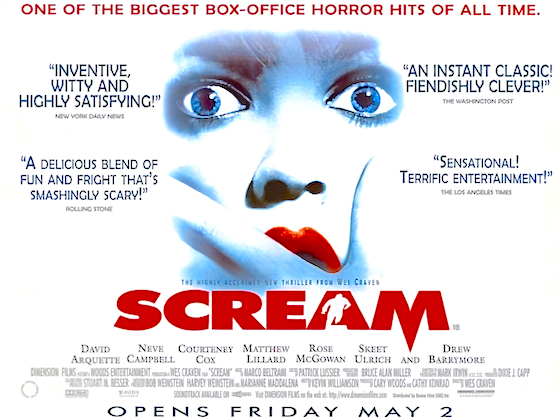
Scream

Someone has taken their love of
scary movies one step too far.

Country: USA
Language: English
Runtime: 111 minutes
BBFC: 18
MPAA: R

Original Release: 20th December 1996 (USA)
UK Release: 2nd May 1997
Budget: $14 million
Worldwide Gross: $173 million

Stars
Neve Campbell (The Craft, Wild Things)
David Arquette (Buffy the Vampire Slayer, Never Been Kissed)
Courtney Cox (Ace Ventura: Pet Detective, 3000 Miles to Graceland)
Drew Barrymore (Firestarter, 50 First Dates)

Director
Wes Craven (A Nightmare on Elm Street, Red Eye)

Screenwriter
Kevin Williamson (I Know What You Did Last Summer, The Faculty)

The Story
In the quiet town of Woodsboro, a mysterious man in a mask starts murdering teenagers, first taunting them with horror movie trivia questions.

Our Hero
Sidney Prescott is an ordinary high school girl… apart from the fact her mother was murdered a year ago, and it was her eyewitness testimony that saw a man sentenced to death. Now, a serial killer seems to be targeting her — could the events be connected?

Our Villain
A slasher movie has to have a distinctive-looking, nicknamed serial killer at its centre, and here it’s Ghostface — although he’s actually only called that once in the film itself. His costume is a generic Halloween outfit bought from any old store, and is technically called Father Death. Why didn’t that name stick instead? Probably because it’s a bit shit.

Best Supporting Character
The film has severable memorable supporting turns, but perhaps the key one is nerd and video store employee Randy (Jamie Kennedy). He knows all the rules of horror films, and when it turns out his friends don’t, he helpfully gives them an explainer — which also works for any audience members who maybe aren’t so au fait with the genre either.

Memorable Quote
“No, please don’t kill me, Mr. Ghostface, I wanna be in the sequel!” — Tatum

Memorable Scene
The opening scene: everyday teenage girl Casey (played by Movie Star™ Drew Barrymore) is preparing to watch a movie when she gets a phone call. It seems like a wrong number, but the man keeps calling back. At first their chat is a bit flirty, but then it begins to get a bit weird, and soon… well, if you haven’t seen it, I wouldn’t want to spoil it for you.

Making of
The movie’s climax takes place at a house party the kids are having to take their mind off the killings, or something. But you wouldn’t guess it was the climax to start with, because it begins a little over halfway through the film — the ‘scene’ altogether lasts 42 minutes. It was shot across a gruelling 21 days of night shoots. After it was finally done, the crew had T-shirts made saying “I Survived Scene 118”.

Next time…
Two direct sequels followed in 1997 and 2000. More recently, the franchise has been subjected to the usual rounds of revivals: it took on parodying the ‘legacy sequel’ with a continuation in 2011, then did the same again with another one in 2022. A sequel to that is on the way next year. In between, there was a spin-off TV series that lasted three seasons. Season 1 and 2 were a reboot, unconnected to the movies; then it rebooted itself for season 3, still with no connection to the movies.

Awards
1 MTV Movie Award (Movie)
1 MTV Movie Award nomination (Female Performance (Neve Campbell))
4 Fangoria Chainsaw Awards (Wide-Release Film, Actress (Neve Campbell), Supporting Actress (Drew Barrymore), Screenplay)
1 Fangoria Chainsaw Award nomination (Supporting Actor (Skeet Ulrich))
3 Saturn Awards (Horror Film, Actress (Neve Campbell), Writer)
3 Saturn nominations (Director, Supporting Actor (Skeet Ulrich), Supporting Actress (Drew Barrymore))

Verdict

By the mid-’90s the once-popular horror genre was languishing in a mire of endless sequels to the same old titles — but then Scream came along and gave it a much-needed kick up the rear end. Originally titled Scary Movie (in some ways, a more apt title), Scream is a horror movie that knows it’s a horror movie — a kind of self-awareness, often (arguably mistakenly) referred to as post-modernism, that was ever so popular in the ’90s. But it worked for a reason: it treated the audience with respect. It said, “you know the rules, so let’s not pretend.” And that facilitates two things: by acknowledging the rules, it can play with them to make you laugh; and it can break them to surprise you. Thus Scream is simultaneously a spoof of the slasher genre and a genuine entry in it. It’s potentially a tricky tightrope to walk (several major directors were rejected because they thought the film was just a comedy), but Wes Craven nails the tone so perfectly that he makes it look easy. So what might have been a last-hurrah commentary on what had already been instead turned out to be the beginning of a new wave; one which has helped fuel the genre for over 25 years since.

Prey (2022)

Dan Trachtenberg | 99 mins | digital (UHD) | 2.39:1 | USA / English | NR* / R

Prey

In the seemingly-endless cycle of “trying to reboot popular ’70s/’80s sci-fi franchises”, it is once again the turn of Predator, following in the wake of 2018’s disappointingly messy The Predator and 2010’s apparently-disliked Predators (I enjoyed it, but everyone seems to write it off nowadays). Where both of those tried to go bigger — either with more or larger versions of the eponymous aliens — Prey strips things back to basics, as per the one entry in the series everyone can agree is good, the first.

Set around 300 years ago, when indigenous people still lived freely on the plains of North America, the film introduces us to a member of the Comanche tribe, Naru (Amber Midthunder, who genre fans might recognise from X-Men-adjacent TV series Legion), a young woman who wants to prove herself as a hunter like the tribe’s menfolk, including her exalted brother (Dakota Beavers). Long story short, she’s about to get her chance when an alien Predator rocks up.

Plot-wise, Prey is pretty straightforward. And therein lies a big part of its success, because what more do we want from a Predator movie than “a hero has to fight a technologically-superior Predator”? If you do want more than that, I think you’ve come to the wrong franchise. Of course, simply rehashing what’s gone before is just another path to failure, and so what Prey does is take those basic bones and dress them up with fresh settings, ideas, and perspectives. In this case, that’s the period setting and Native American heroes. How do you defeat a Predator using weapons no more technologically advanced than bows and arrows? With intelligence, of course, and the film does a nice job of showing Naru gather information and formulate plans without ever needing to spell them out for us.

The prey becomes the predator

That it can pull that off is also to the credit of star Amber Midthunder, who conveys so much of Naru’s thought processes through only looks and expressions. All round she makes for an appealing heroine: she’s capable and brave, but not foolishly so, sometimes hanging back to assess the situation, or even running away when the odds aren’t in her favour, rather than diving in mindlessly. As action heroes go, I think that counts as nuance. I saw one critic tweet that she’s so good she needs to be given a Marvel superhero role ASAP, which is more a depressing indication of the state of cinema (appealing action lead? The highest honour would be a Marvel role!) than an indication of Midthunder’s ability (please, Hollywood, don’t just waste her on Marvel filler).

This may be a straight-up humans vs aliens action movie, but it still treats its audience with a degree of respect. It knows we’re capable of joining dots ourselves, especially when we can see characters doing the same. Naturally, Prey has some developments and moments derived from previous Predator movies — it wouldn’t really be part of the same franchise if it wiped the slate wholly clean — but they feel recontextualised or come into play naturally, rather than the filmmakers over-eagerly forcing them on us as a plea to nostalgia.

Quite aside from the plot and action, this is a beautifully made film. The first half-hour almost evokes the work of Terence Malick, with its relatively slow pace and photography that showcases nature and gorgeous scenery. This would’ve been a stunner on the big screen. Most big-budget theatrically-released films don’t look this much like A Movie nowadays, never mind streaming churn. I say it only “almost evokes Malick” because it’s not actually Malick-speed slow, but what it’s doing is quite deliberate: establishing the characters, the environment they live in, the things they know and the tools they have access to, and so on — as well as building up the looming threat of the alien hunter — so that we understand the world and the stakes when things kick off later.

They're going on a bear hunt (no, really, at this point they think it's a bear)

One thing I sort of want to pull the filmmakers up on is the language(s) used for dialogue. During promotion, they’ve talked about how some of the film is actually in the Comanche language, a selling point because of diversity and inclusion. Well, not much of the dialogue is Comanche — the primary language is unquestionably English — and it’s not subtitled, which means the vast majority of viewers can’t understand it, so they could be saying anything. I don’t think a film is ‘in’ a language if you can’t understand it (it’s why I’ve not listed Comanche as a language at the top of this review, nor the European languages spoken by the settlers who come into the plot, which also aren’t subtitled). That said, there is the option to watch the entire film dubbed in Comanche — a first, apparently. That would be more historically authentic, but it’s also a dub, i.e. not how the film was ‘intended’. Nonetheless, I’ve already seen some argue it’s a better version, so it may well be worth a look.

That minor point aside (it’s not something I’m holding against the film, just the filmmakers’ boastfulness), Prey is a resounding success at what it sets out to be: an action movie in which humans and Predators have a fight. It’s the Predator film fans have long been waiting for. And it hopefully indicates to the studio bigwigs what the future of this franchise should be: pick a different era, with different technology and/or attitudes to combat, drop a Predator into it, and see how the humans get on against it. Honestly, with the right creatives, you could milk that simple premise for another half-dozen or more enjoyable movies, I reckon.

4 out of 5

Prey was the 49th film in my 100 Films in a Year Challenge 2022. It placed 10th on my list of The Best Films I Saw in 2022.

* There was no certificate listed on the BBFC website at time of review; Disney+ continuing to take advantage of the fact there’s no legal requirement for streaming content to be certified. Some press ads listed the film as 18+, but they’ve gone with 16+ on the service itself. So, it’s either a 15 or an 18. I guess we’ll never know (unless it gets a disc release). ^

2022 | Weeks 18–20

These three weeks take us most of the way through May. When I first started writing this batch of reviews, I thought that would bring me almost up-to-date… but then I realised we were already over halfway through June, and, as I finish it, June is almost over. Time flies!

It’s partly because I haven’t been watching as many films over the past couple of months (so it doesn’t feel like I watched these as long ago as I actually did), instead spending a lot of my leisure time on finally watching Apple TV+ series For All Mankind (I’ve just finished season one, which was really good, and I hear only gets better) and replaying all the Monkey Island games (I’m on the fifth and, to date, final one now).

But I digress. Because I already posted Shang-Chi and Frances Ha separately, the remaining reviews from this period are…

  • The Monolith Monsters (1957)
  • Hannah and Her Sisters (1986)
  • Chip ’n Dale: Rescue Rangers (2022)


    The Monolith Monsters

    (1957)

    John Sherwood | 77 mins | Blu-ray | 2:1 | USA / English | PG

    The Monolith Monsters

    I watched this film in Eureka’s box set of ’50s B-movies, Three Monster Tales of Sci-Fi Terror. As you can tell from its inclusion there — and, indeed, its title — this is one of a wave of “monster movies” from that era. Except it isn’t, really. In fact, it’s a sci-fi disaster movie jerry-rigged into what I guess was the prevailing B-movie trend of the day: the eponymous ‘Monolith Monsters’ aren’t monsters at all, but an alien rock that expands relentlessly.

    Whatever you want to call it, the film offers a mix of B-movie daftness and real-sounding science that’s quite appealing. For example: our heroes discover this crazy, hitherto unknown multiplying rock; then realise they have maybe two days to stop it before it destroys their town; and rather than, say, alert the government, or call in expert help, they decide to… figure it out for themselves. But it does make you wonder: is this poor B-movie logic, or just 1950s Americanness? I love the thought that some crazy extraterrestrial incident may have occurred in some backwater town in the middle of nowhere, and no one ever knew about it because the locals just dealt with it themselves. “Oh yeah, aliens invaded back in ’57, but we didn’t see the need to bother nobody else with it, just shut ’em down ourselves.”

    Yet for all that silliness, there’s some scientific logic in play too. Whether it’s real science or “close enough”, I don’t know (let’s be honest, it’s probably the latter), but they manage to make it sound convincing. It helps contribute to an exciting climax, in which a plan to stop the monoliths can only be executed at the last moment before the town is overrun. Rocks don’t normally move fast enough to create race-against-time tension, but hey, these are alien rocks.

    The more I reflect on The Monolith Monsters, the more I like it. For a pulpy B-movie, it has an appealing seriousness. Sure, there’s some schlockiness that I wager is inevitable thanks to its era and budget range, but it feels like it’s trying to be more than trashy entertainment, aiming instead to be a more grounded, almost realistic sci-fi thriller. In reaching for that end it becomes a little slow going at times, but overall it’s quite fun.

    3 out of 5

    The Monolith Monsters is the 31st film in my 100 Films in a Year Challenge 2022.


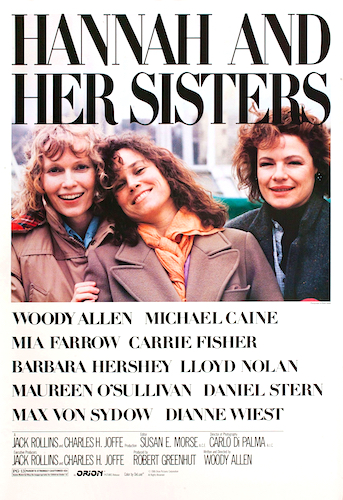
    Hannah and Her Sisters

    (1986)

    Woody Allen | 107 mins | digital (HD) | 1.85:1 | USA / English | 15 / PG-13

    Hannah and Her Sisters

    Hannah and Her Sisters is one of writer-director Woody Allen’s more popular and successful films. For example, it was nominated for seven Oscars, winning three; and nowadays, it’s his third highest-rated film on Letterboxd, above the likes of Manhattan and later-career highlight Midnight in Paris. All of which I mention because, personally, it’s the kind of film I’d describe as “something and nothing”, because I liked it well enough, but also didn’t really get what it was going for overall.

    It’s the story of… well, Hannah (Mia Farrow) and her sisters. They’re three middle-aged women who all live in New York City (of course) and, over the course of a couple of years, we follow their lives and relationships, with a focus on the latter. Actually, if anything, I might argue the biggest focus is on Elliot, played to Oscar-winning effect by Michael Caine, who is married to Hannah but finds himself pining for her sister, Lee (Barbara Hershey).

    I say “might argue” because Hannah and Her Sisters is one of those films that feels like a collection of subplots. All of the storylines play out, then they stop, with happy endings almost across the board, and that’s your film. I expect it’s based around a theme of some kind, but all I really got it from it was the old “the grass is always greener” adage. Apparently Allen particularly wanted to make something about the relationship between sisters, because he thought that was more complex than between brothers. Fair enough, but I’m not sure it really comes across in the finished film. There are only about two or three scenes in which the sisters actually interact. They’re mostly off on their own subplots; and while those subplots do effect each other, I don’t think they truly speak to the sisters’ relationships; not in any revelatory depth, anyway.

    I’ve enjoyed quite a few of Allen’s films that I’ve seen, but Hannah and Her Sisters won’t be cracking my personal favourites of his work. It was fine to watch — not exceptionally funny or dramatic or insightful or original, but fine — and then it ends, and we go on with our lives. It’s not bad, but it also wasn’t anything much. Not to me, anyway.

    3 out of 5

    Hannah and Her Sisters is the 32nd film in my 100 Films in a Year Challenge 2022. It was viewed as part of “What Do You Mean You Haven’t Seen…?” 2022.


    Chip ’n Dale: Rescue Rangers

    (2022)

    Akiva Schaffer | 97 mins | digital (UHD) | 2.39:1 | USA / English | NR* / PG

    Chip ’n Dale: Rescue Rangers

    On the surface, there’s nothing here for me — a live-action remake/reboot of a late-’80s/early-’90s cartoon that I don’t remember ever watching — but something persuaded me to watch the trailer, and that convinced me to watch the film the moment I could. If you’ve missed said trailer, or any of the attendant hype or reviews, what sold me is that this isn’t just an update of a children’s cartoon with modern tech, but a Who Framed Roger Rabbit-style riff on cartoon celebrity.

    Like Roger Rabbit, it’s set in a version of our world where cartoons are ‘real’ and living alongside us, and they act in the TV shows and movies we know them from. Decades on from the Rescue Rangers TV show, Chip (voiced by John Mulaney) and Dale (Andy Samberg) no longer get along, but when an old friend goes missing, they’re thrust into investigating his disappearance together.

    Frankly, the plot and character arcs feel like stuff you’ve seen before — probably because we have. Although Roger Rabbit is the obvious reference, the film’s storyline feels very similar to the Melissa McCarthy-starring Muppet version of the concept from a couple of years ago, The Happytime Murders. It works better here, though, because it’s not leaning on crudeness as a comedic crutch. If you didn’t see that film, it might be to Chip ’n Dale’s advantage in terms of feeling fresh.

    Instead, the best bit of the film is that it’s full to bursting with fun nods and references to pretty much every facet of (Western) animation. These are often tucked away in the background or on the periphery for the eagle-eyed to enjoy, with the film rarely (if ever) stopping to show them off. To its credit, that means the abundant Easter eggs aren’t allowed to overshadow the story, and so the film avoids using them in the same way Happytime Murders used its vulgarity. It’s just a shame that said story is a little well-worn.

    Ultimately, Chip ’n Dale gave me the same kind of entertainment as its trailer, but for 95 minutes. Which, in a way, is fair enough — no one can accuse the trailer of being misrepresentative. On the other hand, it would be nice if there’d been something more to substantive to discover. It’s no contender for Roger Rabbit’s throne, but nor is it another Happytime mess. My score rounds up, because I did have fun.

    4 out of 5

    Chip ’n Dale: Rescue Rangers is the 33rd film in my 100 Films in a Year Challenge 2022.

    * There was no certificate listed on the BBFC website at time of review. As you may or may not know, there’s actually no legal requirement for streamers to have their content certified, and so it seems Disney haven’t bothered. For what it’s worth, Disney+ lists the film as “9+”, which I guess equates to PG. ^


  • Ghostbusters: Afterlife (2021)

    Jason Reitman | 124 mins | Blu-ray (UHD) | 2.40:1 | USA & Canada / English | 12 / PG-13

    Ghostbusters: Afterlife

    Among the many, many discussions provoked by the last Ghostbusters movie was the notion of the 1984 original as “a comedy”. In short, people who consider themselves Very Clever were keen to point out that the ’84 film is, in fact, “a comedy”, and not whatever they thought some of its fans thought it was — a serious fantasy-horror film, I guess. But, as I see it, it’s the people insisting the original is “a comedy” who are actually the ones missing the point. It may star a bunch of SNL alumni, and it’s got a few gags, and if definitely doesn’t take itself seriously, but it’s not just a comedy — it’s a fantasy-adventure-horror-comedy. Those other three genres are just as important to the film’s style and tone — and to people’s love for the film — as the funny bits.

    I bring all this up because I think it has coloured reactions to Afterlife, a film which isn’t just the franchise’s fourth movie, but is very much a direct sequel to its first. Said reaction has been mixed, with some criticising it as a soulless exercise in nostalgia; a reaction and over-correction to the outright-comedy of the 2016 reboot, which was unpopular in some corners for daring to star women. That’s a dumbass criticism which, in the eyes of some, tars anyone who dislikes that movie — which is unfortunate, because a lot of perfectly rational people didn’t like it simply because it wasn’t very good (personally, I thought it was middling). On the flip side, a lot of people have found Afterlife very enjoyable — and I’m one of them. One of the reasons I’ve laid out that opening argument is because I don’t think Afterlife has been created as a reaction against the 2016 film — it’s tone hasn’t been set in opposition to the previous film, but rather is taking its cue from the 1984 original. In other words: it’s not just a comedy, it’s a fantasy-adventure-horror-comedy.

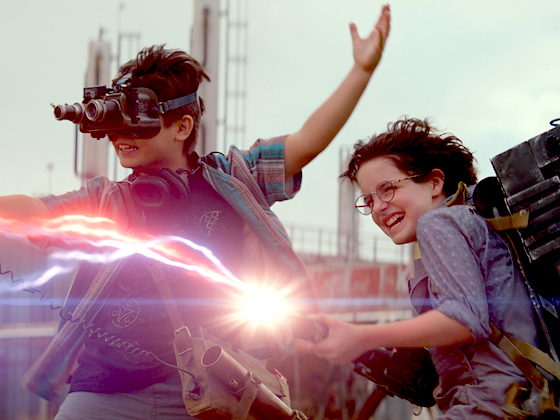
    Bustin' makes me feel good

    Set in the present day, it sees a family — mother Callie (Carrie Coon), son Trevor (Finn Wolfhard), and daughter Phoebe (Mckenna Grace) — inherit the remote farmhouse of the kids’ grandfather; the father their mother never even met. Turns out he was a Ghostbuster back in the day, and — surprise surprise — he ended up living in a back-of-beyond small town for a reason. With Callie uninterested in the father who was never interested in her, and Trevor off falling for a local waitress (Celeste O’Connor), it falls to curious Phoebe to investigate her grandfather’s life and, along with her new friend Podcast (Logan Kim) and summer science teacher Gary (Paul Rudd), discover what ghostly secret he was keeping.

    Really, Afterlife is a tribute to the original Ghostbusters. It’s full of nods and Easter eggs — some obvious; some subtle; some witty — and so will undoubtedly play best for a viewer who loves the original as much as the filmmakers seem to. That’s me, so I’m pretty much okay with the balance the film strikes. In other words, there’s enough new stuff to hang the old stuff on that I was able to just enjoy it. It would seem the film doesn’t play as well to viewers without that connection to the original, although I really think it depends how critical you’re being. This is a fun film — there are plenty of gags, plus a couple of suitably exciting action sequences — that I think anyone with reasonable expectations should still find it entertaining. As Phoebe, Mckenna Grace is particularly great — a really likeable lead to centre the narrative around.

    I’ve avoided stating which of the original Ghostbusters the new characters are related to because the film does the same, but — skip this paragraph and the next if you really want to avoid spoilers! — I don’t think it’s a particular secret, really. I mean, Phoebe’s been given a look that’s clearly reminiscent of her grandfather; and with the whole “he’s dead” plot point, well, that best applies to one of the actors, doesn’t it? So here’s another thing: Afterlife isn’t just a tribute to Ghostbusters ’84, but also to its co-writer and co-star, Harold Ramis. The characterisation of Callie and Phoebe was inspired by the autobiography of Ramis’s real-life daughter, Violet Ramis-Stiel, to the extent the actors were asked to read it as part of their preparation. Ramis-Stiel also signed off on her dad’s posthumous appearance in the film.

    Ghost in the machine

    Yes, thanks to CGI, the dead walk. This has been a controversial thing recently, mainly thanks to how the Star Wars films and TV series used it. Just last week there was a particularly big hoo-hah about Luke Skywalker being revived in The Book of Boba Fett. Generally, I agree that it’s distasteful. Using computers to ‘resurrect’ dead actors just so their pop-culture-favourite characters can live on? It’s kind of ghoulish. But I think the situation with Afterlife is a little different. Rather than a mega-corporation wanting to keep their space opera franchise stuck in the fan-pleasing past, this has been made by the actor’s friends and family as a tribute to him. If you bear that in mind, coupled with how exactly he’s used in the film, I actually think it’s rather sweet, and liable to bring a tear to the eye (though not to mine, because I am still a hard-hearted cynic in my core).

    I don’t know if Afterlife’s detractors will come round to it with time. Frankly, I don’t really care — if they didn’t enjoy it, that’s their business. At worst, it’s their loss, because this is an appropriately fun and affectionate addition to the franchise.

    4 out of 5

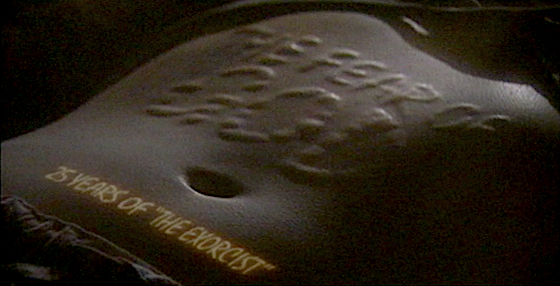
    The Fear of God: 25 Years of “The Exorcist” (1998)

    2019 #134
    Nick Freand Jones | 81 mins | digital (SD) | 16:9 | UK / English | 15

    The Fear of God: 25 Years of The Exorcist

    There have been some great made-for-TV documentaries down the years, but that status as “TV programmes” means it’s kind potluck if they’re still readily available to us years later. Mark Cousins’s The Story of Film: An Odyssey? So acclaimed it got a DVD release and, recently, a Blu-ray upgrade. Mark Gatiss’s horror series? Too full of clips to be licensable. The Complete Citizen Kane? I don’t think this was available anywhere besides bootlegs, but will soon be included on Criterion’s 4K release of the film.

    I could go on, but let’s stick to the one at hand. This feature-length Mark Kermode-fronted doc was screened at festivals in 1998 before being shown on the BBC in an edited form. Down the years it’s been available on some of the film’s DVD and Blu-ray releases, but only in that shortened version. Finally, 20 years after its first release, the unedited original cut popped onto the BBC iPlayer for Halloween 2019, and tonight it will be broadcast for the first time ever, on BBC Four at 11:55pm.

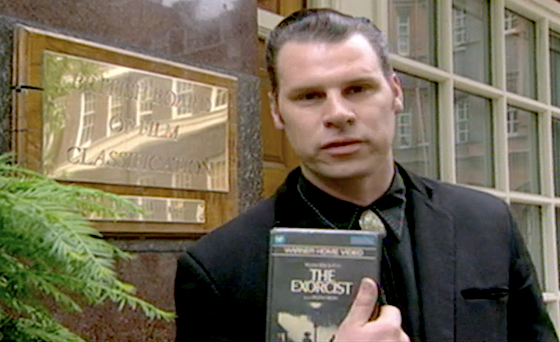
    For those unfamiliar with him, Kermode is sort of the UK’s answer to Roger Ebert: a long-standing, widely-respected film critic across print, TV, and radio. The Exorcist is his favourite film, and (as he explains in a recently-shot introduction to this documentary) he’d written a book on it that its makers had liked, which led to him making The Fear of God.

    Mark Kermode and The Exorcist

    As with almost any documentary about a specific film, your interest in it is likely to depend on your interest in the original film. So, assuming you care to know the behind-the-scenes story of The Exorcist, this is definitely a good film. I get the impression it’s the original source for a lot of interviews and stories that have been repeated around the place; ones that I’ve personally picked up through osmosis down the years. Despite that, I still learnt new stuff, and there are some nice moments to witness, like when novelist and screenwriter William Peter Blatty suddenly realises, on camera, how he should’ve written a scene all along.

    If you’ve seen The Fear of God before (say, on one of The Exorcist’s physical media releases), how much this so-called “festival cut” is worth your time is a matter for your personal level of interest. Some DVD releases cut as much as 25 minutes out of the documentary, so if you’ve only seen that version then obviously there’s a lot of new material here. If you’re watching this version, you can be assured you’re seeing everything Kermode wanted to include as well as everything producer Nick Freand Jones wanted in. For example, there’s an interview with the woman who voiced the demon, who insisted her contribution was only in the BBC broadcast. Well, I guess this still conforms to that wish.

    4 out of 5

    The Fear of God: 25 Years of “The Exorcist” is on BBC Four tonight at 11:55pm, or on iPlayer now.

    Psycho Goreman (2020)

    2021 #26
    Steven Kostanski | 95 mins | digital (HD) | 2.40:1 | Canada / English | *

    Psycho Goreman

    In the recent episode of his Secrets of Cinema devoted to cult movies (which I covered here), Mark Kermode asserted that filmmakers can’t choose to make a cult movie — it’s up to the audience whether a film becomes a cult favourite or not. While this may be true in a sense, it’s also the case that, after several decades of the phenomenon being observed, any filmmaker who is interested in making a cult movie can consciously include the kinds of ingredients that provoke such devotion, thus giving themselves a head start. Psycho Goreman is one of the most recent films that seems custom-made to be a cult hit, and while only time will tell if it’s truly a “cult classic” or just a passing flavour of the month, it’s already attracted plenty of word-of-mouth attention — indeed, that’s precisely what led me to seek it out back in January, long before it had a confirmed UK release date (which, FYI, is today).

    While digging up their back garden for a game, a pair of siblings — obnoxious Mimi (Nita-Josee Hanna) and her pushover older brother Luke (Owen Myre) — unearth a strange gem, which turns out to be a key imprisoning an intergalactic alien mass murderer. The monster now freed, he sets off to dominate and destroy Earth… except whoever possesses the gem can control him, and that’s Mimi. She christens her new pet/toy Psycho Goreman — PG for short — and the cruel, twisted, depraved mastermind sets about using the alien criminal for her own playful ends.

    There’s a distinctly ’80s vibe to this whole setup and how it’s presented on screen, both in storytelling terms and in the use of practical suits, models, gore, and special effects. Once he’s free, PG’s old friends and enemies are all out to find him, which puts a wide array of fantastical creatures on screen. None of them are a slouch. The fact such extensive effects work must’ve been achieved on a tight budget, but by clearly enthusiastic and talented craftspeople, only furthers the throwback feel. Indeed, the creature outfits are so impressively designed and realised that, although I haven’t bought an action figure in many years, it made me really want ones of PG and, in particular, his robotic-ish police-lady nemesis, Pandora. (Funnily enough, they’re making some; but they’re retro-style, which I know is a popular thing nowadays, but I don’t think is as cool as a properly-detailed figure. Of course, those kind tend to be rather pricey; but the ones they’re making are far from cheap, especially with international postage. Oh well.)

    Mimi and friends

    Everything about the filmmaking here has been leveraged to tickle the nostalgia glands of genre fans who grew up with trashy but ambitious sci-fi, fantasy, and horror fare on video, probably when they were officially too young to be watching it. Added to the mix is overt and knowing comedy, because now we’re all in on the joke. I found this aspect a bit hit or miss. When writer-director Steven Kostanski’s work is really on form, it’s frigging hilarious — although do note it can be quite dark comedy at times (which works for me) — but the film doesn’t nail the schtick as consistently as I hoped it would. For every few gags that land or subplots that pay off, there’s something that misses an opportunity or seems to get forgotten. On the other hand, this roughness round the edges is part of the genuine cult movie charm. With geek culture having become mainstream, the high-value neatly-polished version of what used to be direct-to-video schlock is more-or-less what Hollywood serves up at the multiplex every couple of weeks (under normal circumstances). Arguably, a true cult movie has faults that its fans either overlook or embrace because of how much they love the overall result. Psycho Goreman certainly does enough right to inspire that kind of affection.

    One complaint I’ve read fairly often, even from those who fall within the film’s target audience, is that Mimi is an annoying brat. Well, it’s pretty clear that’s intentional (as opposed to, say, the result of poor casting). I wouldn’t say the film celebrates her for it, but it doesn’t really punish or develop her either, so perhaps there’s some kind of tacit acceptance there. But then, she’s a preteen girl, so I don’t know how harsh you’d expect it to be on her. Anyway, your mileage will vary as to whether she’s annoying but still amusing, or just plain irritating. I err towards the former.

    Gory man

    Having outlined the film’s supposed intended audience earlier, I must say it doesn’t technically include me. I was much too mainstream in my childhood viewing, so it’s only in later years that I’ve come to appreciate more of the bizarre deviances in cinematic history. Those who grew up on that stuff may get the biggest kick out of the film, but that doesn’t mean the rest of us can’t delight in its gonzo joys. I won’t be surprised if Psycho Goreman has a bright future ahead as a new cult staple.

    4 out of 5

    Psycho Goreman is available on Shudder from today.

    * To the best of my knowledge, it hasn’t been rated by either the BBFC or the MPAA, the two classifications I normally cite. If you’re interested, for reference, classifications in the rest of the world are all in the 15–18 range. It is very gory, but it’s obviously fake and often comical. ^

    Resident Evil: Apocalypse (2004)

    2019 #68
    Alexander Witt | 94 mins | Blu-ray | 2.40:1 | Canada, UK, Germany, France & USA / English | 15 / R

    Resident Evil: Apocalypse

    2002’s film adaptation of popular horror video game series Resident Evil may not have been particularly game-accurate (from what I can gather — I’ve never played them), but it was sufficiently entertaining as an action/horror movie in its own right, and consequently it spawned a sequel (and, eventually, four more). Picking up where the first movie left off — with the zombie outbreak, er, breaking out, expanding from one facility into a whole city — Resident Evil: Apocalypse widens the scope of the movie series’ action. It also begins to introduce more characters and plot points drawn from the games, presumably in a deliberate attempt to court fans who were disappointed first time round. Unfortunately, it’s all in aid of a film that just isn’t very good.

    Where the first film was a riff on something like Assault on Precinct 13, Apocalypse turns its attention to another John Carpenter classic, clearly trying to be a version of Escape from New York. Set in a semi-abandoned, zombie-overrun city where it’s perpetually nighttime, Alice (Milla Jovovich) and the ragtag group of survivors she encounters must make it out before a nuclear bomb is dropped on it.

    It’s a perfectly serviceable storyline, and I have no problem with movies broadly borrowing storylines and whatnot in homage to other flicks. The problem is, Apocalypse is an awfully written and produced film. The first film’s writer-director, Paul W.S. Anderson, sits out the latter role this time, but returns as sole screenwriter. His dialogue is bad, devoid of realism or logic. One example: they’re trapped in a walled-off city, remember, and when one character informs the others that tomorrow morning it’s going to be hit with a tactical nuke, the first response is: “what yield?” Like it fucking matters! They’re dropping a nuke designed to wipe out the city you’re in — doesn’t matter what precise yield it is, you’re all dead. Unsurprisingly, his characterisation isn’t any better, and the cast don’t have the chops to save it, even though there are some decent-to-excellent supporting players here, like Oded Fehr, Thomas Kretschmann, and Jared Harris.

    Make my day, zombie

    His narrative structure isn’t great, either. Take the ending. The closing moments of the first film could be interpreted as a cliffhanger or sequel tease, I guess, but the final shot also work in its own right as a fatalistic reveal: that despite the efforts and sacrifices of our heroes to contain the virus, it got out and the world has gone full zombie apocalypse. Here, though, the last ten minutes or so of the film are an almost total sidestep from the story we’ve had thus far, their only purpose being to suggest some onward direction for the next movie. I suppose that’s par for the course nowadays, in the era of cinematic universes, but I still don’t think it’s good form. There are ways to have hints and teases for the future without turning a significant chunk of your current movie into an extended trailer for the next one.

    The paucity of quality in the screenplay could perhaps be allowed to slide if Apocalypse delivered on its main goals. It’s an action/adventure/horror flick, after all — the boxes it’s looking to tick are not “character drama” and “narrative coherence”, necessarily. Sadly, it doesn’t tick the other boxes either, more scribbles vaguely around them. The action is terribly directed, a blur of meaningless visual noise. Taking Anderson’s place in the director’s chair is Alexander Witt, who had previously been a second unit director on some very good movies, like The Hunt for Red October, Gladiator, The Bourne Identity, and Pirates of the Caribbean. I can only presume his unit wasn’t responsible for any of the action sequences in those films. Apocalypse remains his only primary directing credit: he’s gone back to second unit, working on some more very good movies, like Casino Royale, X-Men: First Class, Skyfall, and Avengers: Infinity War. For whatever reason, I guess that’s a better fit for him.

    One of the advantages to coming to a film series years after the fact is you can benefit from the perspective of others. To wit, I’ve seen people say this is the worst of the series. I pray they’re right, because I’ve kinda committed to watching them all now and I’m not sure I can take another four films this poor or, God forbid, worse. I had it down as a 2 for my 2019 stats, but I can’t recall a single redeeming feature now, so:

    1 out of 5

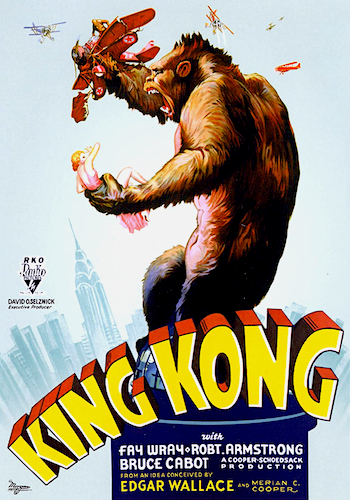
    King Kong (1933)

    The 100 Films Guide to…

    King Kong

    A Monster of Creation’s Dawn
    Breaks Loose in Our World Today!

    Country: USA
    Language: English
    Runtime: 100 minutes
    BBFC: A (1933) | PG (1985)

    Original Release: 2nd March 1933 (New York City, USA)
    UK Release: 17th April 1933 (London)
    Budget: $672,254.75
    Worldwide Gross: $5.3 million

    Stars
    Fay Wray (Doctor X, Mystery of the Wax Museum)
    Robert Armstrong (The Most Dangerous Game, Mighty Joe Young)
    Bruce Cabot (Fallen Angel, Diamonds Are Forever)

    Directors
    Merian C. Cooper (The Four Feathers, The Last Days of Pompeii)
    Ernest B. Schoedsack (The Most Dangerous Game, Mighty Joe Young)

    Screenwriters
    James Creelman (The Most Dangerous Game, The Last Days of Pompeii)
    Ruth Rose (She, Mighty Joe Young)

    From an idea by
    Merian C. Cooper (Roar of the Dragon, Mighty Joe Young)
    Edgar Wallace (The Squeaker, The Hound of the Baskervilles)

    The Story
    Adventurous filmmaker Carl Denham and crew travel to an uncharted tropical island in search of the subject for his next picture. There, they encounter a gigantic ape — Kong — who takes a shine to the movie’s pretty young star…

    Our Hero
    Ann Darrow is a down-on-her-luck gal in New York City, when successful movie producer Carl Denham plucks her to star in his next movie — which involves going on a long boat voyage to a mysterious uncharted island, where she’ll make a big new friend…

    Our Villain
    People might point to Kong — he is a giant monster who kidnaps the heroine and kills a bunch of people, after all — but I think we all know the real villain is Carl Denham, the risk-taking heath-and-safety-averse movie producer turned theatrical impresario, whose exploitative whims ultimately lead to death and destruction.

    Best Supporting Character
    He may be a stop-motion puppet made of metal and rubber and fur, but animator Willis O’Brien injects so much life and personality into Kong that he is, unquestionably, the real star of the show.

    Memorable Quote
    “It wasn’t the airplanes. It was beauty killed the beast.” — Carl Denham

    Memorable Scene
    King Kong is full of great moments, but the most famous has to be the climax: having wreaked havoc across New York City, Kong scales the Empire State Building with Ann in hand, deposits her at the top, and fights for his life as a fleet of biplanes swarm around. It’s not going to end well…

    Truly Special Effect
    I’ve already mentioned Willis O’Brien’s animation of Kong, but his skill goes far beyond that: there are all manner of beasties on Kong’s island, brought thrillingly to life by O’Brien and his team. These stop-motion effects are obviously of their time, but the way they’re integrated with the live action is frequently impressive, and any technical limitations certainly didn’t lead them to skimp on the action — you might think Kong would only appear sparingly, but the big guy gets tonnes of screen time.

    Making of
    King Kong was made before the enforcement of the Production Code, but its 1938 re-release was after. To comply, multiple scenes were removed (perhaps most famously, one where Kong peels off Ann’s clothes). They weren’t restored until the ’70s. But one scene was deleted even earlier: the so-called “spider pit” sequence, in which the sailors Kong tips off a log are attacked and killed by a bunch of creatures. When included in a preview screening, audience members were so disturbed that they either left or were so focused on what they’d just seen it disrupted the rest of the film. Consequently, the sequence was removed before the film’s general release, and is probably lost forever. But it remains a kind of Holy Grail of deleted scenes, and so during production of the 2005 remake, Peter Jackson and Weta set about recreating the original spider pit scene, just as a fun side project. The end result (included on subsequent Blu-ray releases of the ’33 film) is nice ‘n’ all, but what’s really incredible is the half-hour making-of devoted to its creation. The amount of time, effort, and skill that Jackson & co put into creating such a short sequence — something they themselves describe as “just a bit of fun” — is phenomenal.

    Next time…
    King Kong was such a hit that a sequel was raced out the same year. Produced on a vastly reduced budget and in just six months to get it into theatres for Christmas, The Son of Kong was not a success. But the iconicity of Kong has ensured he’s survived long-term. In the ’60s, he was licensed to Japanese studio Toho so they could pit him against their own giant monster in King Kong vs. Godzilla, and in 1967 they produced a Kong-only followup, King Kong Escapes. In 1976, a big Hollywood remake of the original updated events to a contemporary setting. Although it wasn’t a success, sequel King Kong Lives eventually followed ten years later. There was another remake in 1998: a direct-to-video animated musical titled The Mighty Kong (no, really). Also in the late ’90s, a small-time horror director from New Zealand nearly produced another remake, but the project didn’t come together. One billion-dollar-grossing, Oscar-winning, genre-defining, medium-revolutionising fantasy trilogy later, Peter Jackson was finally allowed to realise his dream, helming an epic reimagining that this time retained the original film’s 1930s setting. Various other animated films, TV series, comic books, games, theme park rides, and the like have featured Kong down the decades. Most recently, he’s once again been inducted into a shared universe with Godzilla, getting a wholly rebooted origin in Kong: Skull Island before facing off against the giant lizard in Godzilla vs. Kong. Given the latter’s current box office success, more films will surely follow.

    Verdict

    Beauty and the Beast is reimagined as a monster movie in this iconic classic. Obviously some of it has aged (not just the effects, but some broadly racist attitudes around Pacific islanders and the ship’s Chinese cook), although its pre-Code roots allow it some unexpected liberties (from gruesome deaths to an unmistakable sexuality around Fay Wray — all within PG levels, but still). Take all that in your stride, and King Kong absolutely holds up as an adrenaline-fuelled spectacle.

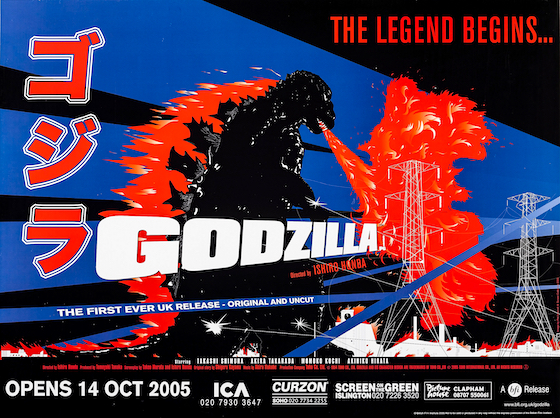
    Godzilla (1954)

    aka Gojira

    2019 #71
    Ishirô Honda | 96 mins | Blu-ray | 1.37:1 | Japan / Japanese | PG

    Godzilla

    Before its current re-fashioning as a major US-produced blockbuster franchise, the rep of the Godzilla movies was more-or-less cheesy B-movie SF with cheap-n-cheerful “man in a suit” special effects. (I expect die-hard fans would disagree, but to outsiders looking in, I feel that’s fairly accurate.) But that certainly wasn’t how things started with the first movie. Indeed, this first movie was nominated for Best Picture at Japan’s answer to the Oscars, only losing to Seven Samurai. There’s no shame for any film in losing to Seven Samurai. It was also a pricey affair: the most expensive Japanese film ever made up to that point, costing almost a million dollars — ten times the average budget for a Japanese feature at the time.

    But, more than just the blockbuster entertainment of its day, Godzilla is a serious-minded work. A giant monster stomping on cities — or, if you prefer, a man in a rubber suit stomping on models — may have soon become fodder for the kind of movie fans who enjoy pulp entertainment, but, in its original incarnation, it’s an analogy for the terror of the nuclear bomb. Released just nine years after the bombings of Hiroshima and Nagasaki, it’s one of the first films to deal with that scar on the Japanese national psyche. And lest you think this is something pretentious critics have projected onto the film after the fact, the movie itself draws the connection, with one character — a young woman, no less, as if to remind us of the recency of those events — commenting that she only narrowly escaped the bombings. A big part of why Godzilla still works as a film today, almost 70 years later, is because everyone involved is playing it straight, and the clear messages about the folly of mankind interfering with nature, and the futility of weapons, are powerful.

    That’s not to say it’s perfect. Subplots get in the way, like a love triangle that manages to waste screen time while not really having any significant impact on the viewer. (Reportedly, a flashback scene that would have helped explain the connection between two of the participants was deleted because it slowed down the film. The romance is slow enough as it is, but you never know, maybe that extra clarity would have helped.) Conversely, some of the moral conundrums raised by the story are barely touched on. One of the main characters is a scientist who thinks mankind should study Godzilla rather than try to kill it, but other than him stating that fact and consistently looking miserable, the film doesn’t really do anything more to engage with his argument.

    Good God

    As for the stomping monster action, viewed with a modern eye the effects are of course a mixed bag (the miniature vehicles look like something you’d find in a toy shop, for example), but make some allowances and they’re still pretty darn effective. An underwater sequence that mixes footage of real divers with “dry for wet” shots of Godzilla and lead characters remains mostly convincing. Godzilla may have lost Best Picture to Seven Samurai, but it did win the award for special effects, and that’s one thing it does have over Kurosawa’s film, at least. I don’t know if those same awards had one for music, but if so I guess Akira Ifukube’s score wasn’t even nominated. It would’ve deserved it for the main theme alone, though, which has since become iconic for good reason.

    The Godzilla franchise has come a long way and changed a good deal across the seven decades since this film’s release. It’s not a series, nor a genre, that’s to everyone’s taste (just look at the wide spread of reactions to the recent US movies, including the fact even people who broadly like them can’t vaguely agree on which order to rank them in). But this original, at least, stands tall as an example of how a movie that some might seek to dismiss as facile genre fare can actually be about a whole lot more.

    4 out of 5


    For 50 years, you couldn’t actually see Godzilla in the West — not exactly. Instead, you’d watch…

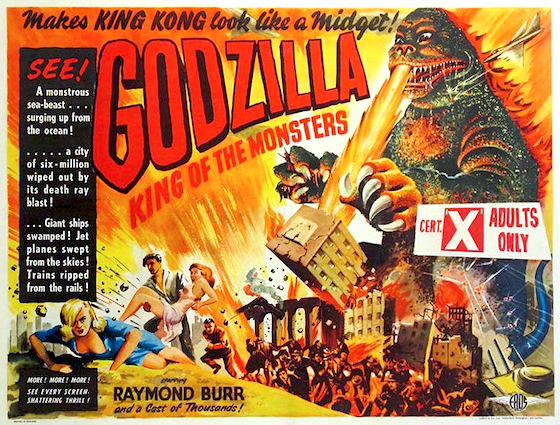
    Godzilla, King of the Monsters!
    (1956)

    2019 #82
    Terry Morse & Ishiro Honda | 81 mins | Blu-ray | 1.37:1 | Japan & USA / English | PG

    Godzilla, King of the Monsters!

    In an era where the original cut is king (to the extent that, say, a major studio might hand a director $70 million to complete his cut of a not-particularly-successful movie just so they can release it on a streaming service), it seems wild to remember that, until 2004 — a full five decades after Godzilla‘s premiere release — this re-edited, bastardised version was the only one available to Western audiences.

    With a runtime 15 minutes shorter than the Japanese cut, you might think King of the Monsters was just an abridgement. But they went at it more thoroughly than that back in the ’50s; in fact, almost 40 minutes of footage was cut, and the disparity is covered by newly-filmed scenes starring Raymond Burr as Steve, an American journalist. These new scenes don’t just place Burr’s character around the existing action, but work to make him the (human) star of the movie.

    The end result is actually fairly close to the original story-wise, just now there’s an American journalist hanging around the fringes. At first he’s often to be found at the back of a crowd or the edge of a room, observing events, but they get bolder as the film goes on, integrating him with some of the main characters, either by repurposing and rearranging original footage or shooting Burr with doubles whose faces we never see. It’s not a perfect match, but for a quickly-produced low-budget effort in the 1950s, it’s surprisingly well achieved. This is partly thanks to the choice of director for the new scenes. Terry Morse had 30 years of experience as an editor and director of low-budget films, and it was felt someone with that kind of background would be well-placed to maintain the continuity needed to make it seem like Burr was part of the original production.

    Raymond Burr, sir

    Morse also makes some interesting decisions about how to adapt the existing footage. Although all of the ‘Japanese’ characters speak perfect English with American accents in the new bits, a lot of the Japanese dialogue in Ishiro Honda’s scenes is left undubbed, and it’s never subtitled either. Instead, the film trusts us to infer what’s happening, or informs us via someone translating for Steve, or his voiceover narration. It feels like quite a mature way to handle a multi-lingual production. Unfortunately, any such maturity doesn’t extend across the board: when abridging the original, they removed or neutered much of its commentary about mankind’s destructive nature, thereby turning a powerful allegory into a simple monster movie.

    To my surprise, Godzilla, King of the Monsters is not a complete disaster. There’s a fair bit of the original movie left, and the American inserts aren’t unremittingly terrible, which they certainly could have been. If this was the only version of the film available, I’d probably give it a solid 3 stars. But it isn’t the only version anymore, so the question becomes: why watch it nowadays? It neuters some of what was great about the Japanese cut, and it’s inherently a bastardisation — so, other than curiosity value (or, for older fans, nostalgia), there’s no reason to bother with this. Stick to the real one.

    2 out of 5

    The Purge: Anarchy (2014)

    2019 #57
    James DeMonaco | 104 mins | digital (HD) | 2.39:1 | USA & France / English | 15 / R

    The Purge: Anarchy

    For those unfamiliar with the Purge franchise, they’re set in a near-future America where the law is suspended for one night a year — Purge Night — allowing the citizens to ‘purge’ their criminal impulses by committing any crime they like. Because this is America, said crimes invariably involve violence and murder. As a premise, it used to seem a little ridiculous and implausible — the kind of thing you might dream up only to think through and realise it would never work — but we live in a world where Donald Trump can be elected president, get nothing done while constantly and obviously lying about things, escape charges for crimes he blatantly committed, and still be worshipped by his followers as the only thing that can make America “great” again. So, yeah, maybe the Purge could come to pass nowadays, why the fuck not?

    The first film was a contained horror/thriller about one well-to-do family whose home comes under assault from a gang of Purge participants on the night in question. This first sequel ditches most of the Horror genre trappings to instead emulate ’70s B-actioners, in the vein of stuff like Assault on Precinct 13 or The Warriors, and it’s all the better for it.

    This time, the narrative opens up to a wider world. We’re introduced to a trio of storylines, spread around a city, which quite quickly stumble into each other and result in their protagonists teaming up, fighting their way across a hostile city (like The Warriors), trying to survive the night (like Precinct 13 — see, my comparisons aren’t just random). It reminded me a little of the early episodes of a season of 24, when it cuts around multiple disconnected characters who inevitably come into contact. (It strikes me that the best way to do a Purge TV show would be to nick 24’s real-time conceit to cover the entirety of Purge Night. I’ve no idea if the actual Purge TV show attempted anything like that.)

    Gonna get purged

    It can’t be understated how good it is that Anarchy does something different with the franchise’s basic premise. Sure, it has the same problem with the underlying concept as the first film (all crime is legal, but for some reason the only crime anyone commits is murder), but the story it tells, the environs it’s in, are completely different. Even the satirical, allegorical, political stuff (hardly the films’ forte) is more potent this time. It’s still only tangentially touched upon, but more effectively and meaningfully handled than in the first film.

    There’s also the sense that they’re trying to build a franchise now. In the first film, the whole Purge backstory was really just a backdrop/excuse for the low-budget home invasion action of the plot, but here there are more hints at what’s going on in the wider world politically. That includes the introduction of an anti-Purge movement, although it’s factored in as barely even a subplot, to the extent you feel it had to be intended as setup for future movies. In this respect it reminds me of what the Saw films used to do: tell a standalone story, but always provide a little piece of the puzzle to an ongoing narrative that was designed to run and run. When it works, as it does in Anarchy, you leave the film satisfied that you’ve had a whole story, but also ready for the next jigsaw piece (Saw-related pun very much intended). It’s quite a TV-esque way of building an ongoing narrative, the way they used to do it before everything became “an eight-hour movie”, but, hey, the media boundaries are thoroughly blurred in both directions now; and it’s better than a blatant cliffhanger that leaves the story unresolved if a sequel never happens.

    In this instance, a sequel did happen; several of them, in fact, with a final instalment due later this year. I quite liked the original Purge (not to be confused with The First Purge, which is the fourth film), but I enjoyed Anarchy a lot, so they’ve got me on the hook now, even if (based on what I’ve seen online) the quality of future sequels tails off.

    4 out of 5

    The series’ third film, The Purge: Election Year, is on Channel 4 tonight at 12:10am.