100 Films’ 100 Favourites #2

In space, no one can hear you scream.

Country: USA & UK
Language: English
Runtime: 117 minutes | 116 minutes (director’s cut)
BBFC: X (1979) | 18 (1987) | 15 (director’s cut, 2003)
MPAA: R
Original Release: 25th May 1979 (USA)
UK Release: September 1979
First Seen: TV, c.2002
Stars
Tom Skerritt (Top Gun, Poison Ivy)
Sigourney Weaver (Ghostbusters, Galaxy Quest)
John Hurt (The Elephant Man, Nineteen Eighty-Four)
Ian Holm (Greystoke: The Legend of Tarzan, Lord of the Apes, The Lord of the Rings: The Fellowship of the Ring)
Director
Ridley Scott (Blade Runner, Prometheus)
Screenwriter
Dan O’Bannon (Dark Star, Total Recall)
Story by
Dan O’Bannon (see above)
Ronald Shusett (King Kong Lives, Total Recall)
The Story
The crew of the deep-space towing vessel Nostromo receive a distress call from an unexplored planet. Contractually obliged to respond, they find a derelict alien spaceship and a field of strange eggs. With one of the crew taken ill they return to their ship, but it soon becomes apparent something else has come with them…
Our Hero
Sigourney Weaver is second-billed as second-in-command Ellen Ripley, but it’s she who’s the voice of reason and, when ignored, the most capable to stand up to the alien threat.
Our Villain
The Alien, aka the Xenomorph, an ugly, dripping, phallic nightmare, that lurks in the shadows, strikes without warning, has the perfect defence system, and is nigh-on unbeatable.
Best Supporting Character
Ian Holm’s Ash is not all he appears to be… Holm made sacrifices for his art: he hates milk, but had to sit dribbling it from his mouth for take after take.
Memorable Quote
“I admire its purity. A survivor… unclouded by conscience, remorse, or delusions of morality.” — Ash
Memorable Scene
Dinner table. John Hurt not feeling well. You know the rest. And if you don’t, you don’t want me spoiling it for you.
Technical Wizardry
The Nostromo’s industrial-style production design is a world away from the slick, shiny spaceships of contemporary sci-fi like Star Trek. A lived-in sci-fi world wasn’t something new (Star Wars and the Millennium Falcon were two years earlier, for instance), but the notion of a spaceship that looks like a factory or an oil-rig or somesuch, and that is populated by the kind of people who would work in such an environment, continues to influence the genre today.
Truly Special Effect
The Alien, designed by H.R. Giger, built by Giger and Carlo Rambaldi, performed by Bolaji Badejo, is one of the most genuinely alien creatures the movies have ever generated. It’s terrifying, too, even after the initial disgust has been neutered by decades of over-exposure in increasingly-poor sequels and tie-ins.
Making of
The name of Weyland-Yutani, “the company” the crew work for, is actually “Weylan-Yutani”, as seen on monitors and Dallas’ beer can. It was changed to “Weyland-Yutani” for Aliens (and all subsequent films and media) because James Cameron thought it looked better with the D. It’s the little things, eh.
Next time…
Three direct sequels, two “vs Predator” spin-offs, a prequel (and a prequel-sequel), and a massive array of novels, comics, video games, and the rest. A new sequel is also in development.
Awards
1 Oscar (Visual Effects)
1 Oscar nomination (Art Direction-Set Decoration)
2 BAFTAs (Production Design, Sound Track)
5 BAFTA nominations (Supporting Actor (John Hurt), Film Music, Costume Design, Editing, Most Promising Newcomer to Leading Film Roles (Sigourney Weaver))
3 Saturn Awards (Science Fiction Film, Director, Supporting Actress (Veronica Cartwright))
4 Saturn nominations (Actress (Sigourney Weaver), Writing, Make-Up, Special Effects)
Won the Hugo for Best Dramatic Presentation.
What the Critics Said
“It’s tempting to describe the brilliantly staged scenes of horror and surprise but it would be a shame not to allow the film to reveal its own secrets. Enough to say that the tension is savage and you are held in suspense right up to the end frames.” — Ted Whitehead, The Spectator
What the Public Say
“in some ways it doesn’t betray its age, and it does indeed largely still hold up, but in other ways its utterly unlike contemporary films. Its middle-aged cast, its slow, deliberate pace, the ‘real’ sets grounded in reality, how it leaves so many things unexplained — in these respects it’s obviously an older movie, and better for it.” — the ghost of 82
Elsewhere on 100 Films…
I reviewed Ridley Scott’s 2003 Director’s Cut back in 2009, summarising that “to fans intimately familiar with the film, the number of trims (there are rather a lot apparently) and new scenes (just four) make a huge difference, but for a more casual viewer they don’t significantly change how it feels. That said… I’d call the original as the superior cut.”
Verdict
Ridley Scott’s “haunted house movie in space” is one of those works that an awful lot of what follows in the genre owes a debt to, from the production design to one of cinema’s most iconic heroines. “Iconic” is a good word for the film as a whole, be it the realisation of the creature or scenes like the chestburster. Quite beyond that, however, it’s a terrifying horror movie in its own right, where slowly-built tension gives way to proper scares. Being a great of one genre is an achievement, but to be great in two at the same time (horror and sci-fi, of course) is something else.
#3 is not about Vietnam… it is Vietnam.

 A woman wakes up on a beach in the middle of the night. Stumbling away, she comes across a beach house with three strangers inside. They establish that the last thing they remember was being in a nightclub when there was some kind of accident, and then they woke up here. Fortunately, they’re not stupid and quickly twig this place is some kind of afterlife, then begin to work out how to get out — not that they’re helped by the lighthouse beam which causes immense pain, or that if they run away from the house they end up back at the house, or the vicious smoke-monster that’s flying around…
 AfterDeath is billed in part as a horror, emphasised by the skull imagery used on the poster. It’s not particularly scary though, so if you’re after that kind of thrill then it’s one to miss. As single-location mysteries go, it’s not remarkably original or exceptionally engaging, but the story and its revelations are solidly executed and the whole is decently performed, providing you don’t strain your eyes trying to see what’s happening.
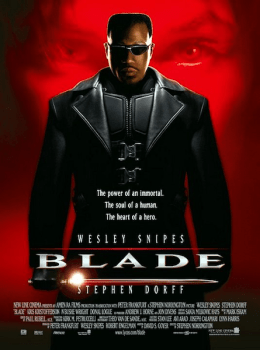
 Score:



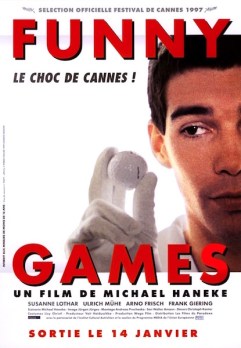 Arthouse favourite Michael Haneke criticises audience’s enjoyment of screen violence. It certainly achieves its aim of being a grim, brutal depiction of violence in real-life, creating a situation that feels inescapable not only for the characters but the audience too. Some cinematic trickery is also deployed to striking, if divisive, effect.
 The word “prequel” was first coined in the ’50s, arguably entered the mainstream in the ’70s, and was firmly established as a term everyone knew and used in the ’90s by the Star Wars prequel trilogy. Works that can be defined as prequels predate their naming, however, and surely one of the earliest examples in the movies must be this silent German horror.
 Regarded as one of the first horror films, The Golem is more of a moderately-dark fantasy, or a fairytale-type myth. There are clear similarities to Frankenstein, though I don’t know if either influenced the other. However, it does feature what I presume is one of first instances of that most daft of horror tropes: running upstairs to escape the monster. It goes as well here as it ever does, i.e. not very. Said monster looks a bit comical by today’s standards. Built by the rabbi to defend the Jewish people, he immediately uses the hulking chap to chop wood and run errands — he doesn’t want a defender, he wants a servant! A terrifying beast nonetheless, it’s ultimately defeated because it picks up a little girl for a cuddle and she casually removes its magic life-giving amulet.


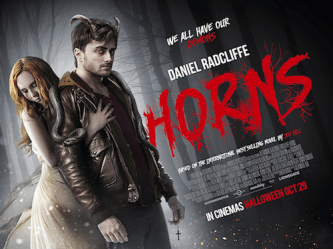 Did Daniel Radcliffe murder his girlfriend? Sprouting devilish horns doesn’t help his case…
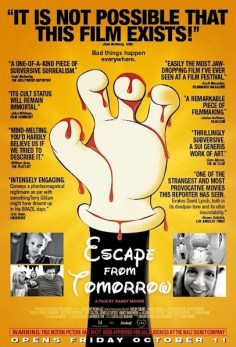 Disney meets David Lynch in this arthouse-y psychological thriller, best known for being shot on the QT (i.e. illegally) in DisneyWorld.
 Essie Davis is best known for playing the sassy title role in
 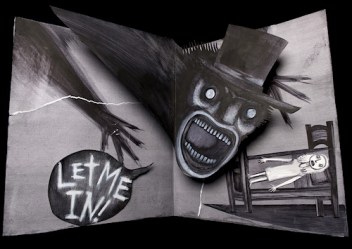 a horror film for people who think about what they’re watching, rather than just waiting for something to be thrown at the screen to make them jump. The slow burn tension will bore those content with the latter, who I suspect don’t tend to think a great deal (for one thing, they’d spot most of the jumps coming if they did).
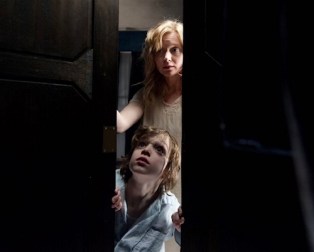 There is little in The Babadook that will make you jump, and even less that will make your stomach turn in disgust, but that’s absolutely fine. What it will do is chill your blood, make your hair stand on end, make you worry about every little creak or thump you hear elsewhere in the house after dark, and make you want to sleep with the lights on. Not just the bedroom lights, all the lights. Because once you’ve seen it, you can’t get rid of the Babadook.
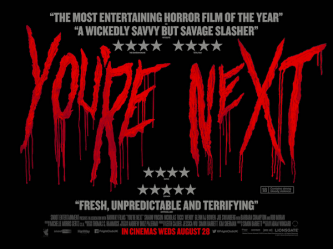 From the makers of
 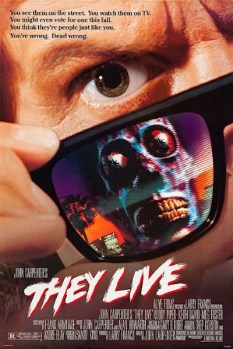 Sci-fi parable about aliens controlling us via subliminal advertising.
 100Films.co.uk