
Stanley Kubrick | 185 mins | Blu-ray | 1.78:1 | UK, USA & Ireland / English, German & French | PG / PG
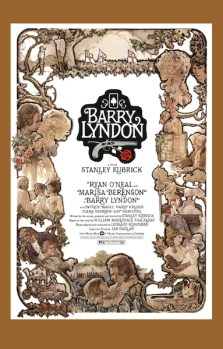 Stanley Kubrick made a good many exceptionally well-regarded films — indeed, with possibly the exception of his first semi-amateur feature, Fear and Desire, every one of his works can lay claim to being someone’s favourite. Nonetheless, although you wouldn’t guess it from its barebones also-ran type treatment on DVD and Blu-ray, three-hour period drama Barry Lyndon places among his top works in terms of consensus audience favourites, in that it’s on the IMDb Top 250. That said, it’s at #230, while the other six films on there are in the top 100, and he only made 13 features anyway — so it sits at the precise halfway point of his oeuvre, at least on IMDb.
Adapted from a novel by William Makepeace Thackeray, commonly called The Luck of Barry Lyndon but whose full original title is going in a footnote because it’s so long,* Kubrick’s film narrates the life of the eponymous Irish rogue (Ryan O’Neal) as he falls in love, runs away from home, joins the army, becomes a spy, becomes a con artist, marries a wealthy heiress (Marisa Berenson), runs an estate, and is a man of dubious virtue and questionable likeability throughout the whole affair.
Apparently the novel is considered to be the first English-language ‘novel without a hero’, aka antihero, and Lyndon certainly fits that bill. He serves his own interests throughout the tale, which is rarely seen as a desirable characteristic but can certainly be an understandable one, though at times you may despair at how his stubborn dedication to certain causes actually works against his interests. On the other hand, he has a great propensity for blagging his way through a war, and the ensuing complications, so I guess he learns from his mistakes… some of them, at any rate. It would be tough to say that Barry is a character you empathise with, but that doesn’t stop him from being a fascinating one to follow for a couple of hours. Some of this dislike may stem from the film’s voiceover narrator, 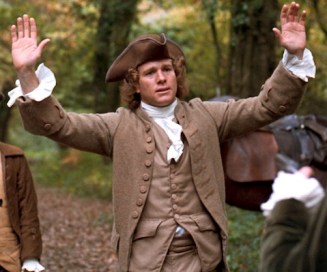 who often tells us less-than-favourable things about the lead character. Apparently this is an example of an unreliable narrator, and I suppose some of the things we’re told aren’t directly evidenced on screen, but I’m afraid I’m going to have to leave that seam to be mined by other writers, because (on a first viewing at least) I didn’t see where or to what effect the narrator was lying to the viewer.
As played by O’Neal, Barry’s accent places him as coming from the same part of Westeros as Littlefinger. Although I wouldn’t say he did a bad job, there seems little doubt he was miscast. The story of how he came to be in the film is more interesting than his performance, really: Warner Bros would only finance the film if Kubrick cast a top-ten box office star, based on the annual Quigley Poll of Top Money-Making Stars. O’Neal was second on the 1974 poll, just behind Clint Eastwood and ahead of people like Steve McQueen, Robert Redford, Paul Newman, John Wayne, and Marlon Brando. Barbra Streisand was the only woman on the list, so you’d think Kubrick had nine options, but apparently they were all considered “too old or inappropriate for the role” with the exception of O’Neal and Redford. O’Neal was the bigger star thanks to also securing a Best Actor Oscar nomination in the past, but Kubrick was smart enough to offer it to Redford first, but he turned it down so O’Neal it was. Ironically, 1973 was the only year O’Neal appeared in that top ten, while Redford placed first in 1974, 1975, and 1976.
Whether it was the intention or not, O’Neal often gets by thanks to the style of the narrative, in which a series of variously-plausible events keep happening to Barry as much as he is proactive in making them occur. This is not a simple, narrow-focused, cause-and-effect kind of story,  but a fictional biopic, that ranges across Europe and across time to… what effect? It’s a Kubrick film, so the ultimate goal of the tale, the message(s) it may be trying to impart, are debatable. You could see a story of the pitfalls of hubris. You could see an exploration of how a certain class lived in this time period. You could just see a man who led an adventurous life.
Whatever the merits of the tale, its telling is a frequent wonder. Its length and pace are surely barriers to entry for some — this is not a thrill-a-minute rollercoaster ride; it’s more analogous to a BBC miniseries, perhaps, albeit one where you’re watching all three episodes at once. Well, binge viewing is the TV watching style du jour, so that shouldn’t be a problem for anyone nowadays. Much has been made of the film’s candle-lit photography, using special lenses adapted from NASA, and rightly so; though perhaps it’s beginning to look less remarkable as we move into an era where digital cameras can produce exceptional range and quality. That’s not to say the potential commonality of such lighting decisions dulls the excellence of John Alcott’s photography, but, without knowledge of the production challenges, a modern viewer might not be so readily wowed.
Maybe I’m one of them, because for me the best shots are to be found elsewhere. The film is littered with recreations of art from the era — not obvious “ooh, I know that painting” recreations, but photographic imitations of the painters’ style, subjects, and composition. The opening shot, for instance, really looks like a painting. It’s incredible. I’d even go so far as to say it’s the best shot in the film; which is not to say the ensuing three hours are a visual disappointment, 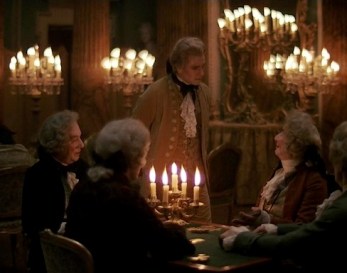 just that it remains the best among greats. (That said, having looked up images online for this review, it seems slightly less striking to me now. That may be the quality of the screengrabs; it may be that the painterly quality is so remarkable at first appearance (before becoming more familiar when the whole movie has that quality) that its memorableness is heightened.)
With its measured pace, obfuscated meaning, and sporadically likeable characters, Barry Lyndon is not the most readily accessible movie ever made. Well, it’s Kubrick, isn’t it? There’s so much to commend it though, especially if you consider visual style a reason to watch a movie (not everyone is satiated by that, but, for a visually-driven medium, I think it’s a perfectly acceptable element to be particularly engaged by). It’s an imperfect film (for Ryan O’Neal if nothing else), but perhaps a brilliant one. Certainly I’d put it in the high-middle of my Kubrick viewing so far — and as his only films that I’ve seen are all on the IMDb Top 250, that’s an upgrade from me, at least.

The restored 40th anniversary re-release of Barry Lyndon is in UK cinemas from today.
Barry Lyndon was viewed as part of my What Do You Mean You Haven’t Seen…? 2016 project, which you can read more about here.
* The Memoirs of Barry Lyndon, Esq. Of The Kingdom Of Ireland Containing An Account of His Extraordinary Adventures; Misfortunes; His Sufferings In The Service Of His Late Prussian Majesty; His Visits To Many Courts of Europe; His Marriage and Splendid Establishments in England And Ireland; And The Many Cruel Persecutions, Conspiracies And Slanders Of Which He Has Been A Victim. ^

 Score:




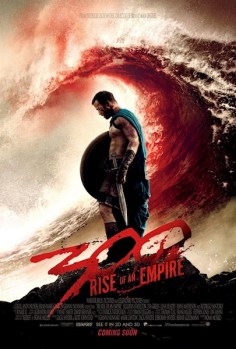 Taking place before, during, and after the events of Zack Snyder’s surprise-hit graphic novel adaptation
 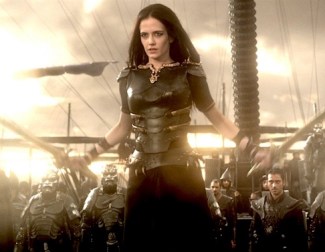 It’s also terribly obvious that it was shot for 3D. I’m not normally one to criticise a film for that — I think when some critics know a film is being released in 3D they see that in its shot choices, even if they’re perfectly valid choices for 2D. But Rise of an Empire screams that it was made for 3D from the start, with all manner of things thrust towards the camera, usually in slow motion, and the constant explosions of blood (to call them squirts or sprays implies a more liquid-like quality than they actually possess) which go nowhere else but camerawards. Presumably the only reason it’s not an 18 for violence is because it’s all so bloody silly.



 2013 Academy Awards
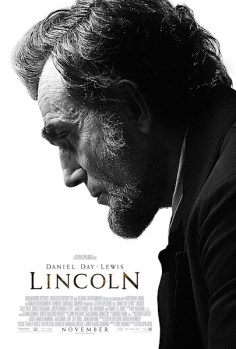 Daniel Day-Lewis allegedly stars in this account of the final months of President Abraham Lincoln’s life, which might more pertinently be called The 13th Amendment due to where its focus lies. I say “allegedly” because I’m not convinced they didn’t find a way to resurrect Lincoln to appear as himself, then just pretended it was Day-Lewis acting.
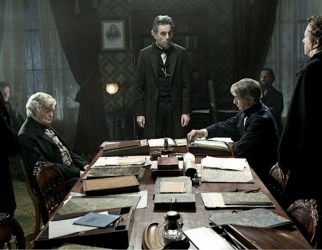 who might be persuaded to vote which way, and how they might be persuaded, and what they will want in return, and what deals need to be struck, and so on and so forth — sounds like it might make for an engrossing movie, then there’s a fair chance Lincoln will be your cup of tea. A not-insignificant proportion of viewers protest that it is boring, however, and while I in no way agree with them, your mileage may vary.
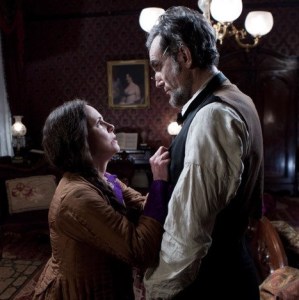 Not to do anyone else in the film — or, indeed, any other performance in any film ever — a disservice, but Day-Lewis embodies the President in a way few other actors have ever embodied a role. It’s quite remarkable.
 For me, there are few black marks (unfortunate choice of phrase…) to be held against Lincoln. Does it give in to Spielberg’s sentimentality? Yeah, a little — but it’s a long, long way from the worst case of that, and I think you’d be nitpicky (or have a different opinion on history, which, you know, is a matter of opinion) to criticise the film too harshly for that. As to whether it’s boring, that’s entirely a matter of preference. If you think The West Wing is boring, people who write lists of “the greatest TV shows ever” will disagree with you, and you also likely won’t like Lincoln. I like The West Wing, though.
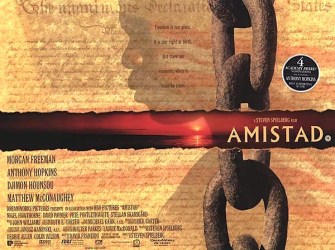 Feeling in need of more intellectual fare after helming
  Though Spielberg is certainly not immune to the Africans’ plight — the depiction of life on a slave ship is appropriately harrowing — it’s clear from early on which side he expects us to identify with, in terms of cultural background if not shared morality: as survivors of the mutiny talk the next day, the slavers’ Spanish dialogue is subtitled but the slaves’ African dialect is not. It’s a simple but effective technique to align us with one side — as I say, not morally (in no regard is Spielberg trying to apologise for the slavers), but socially. Unfortunately, it’s not sustainable: later, when we need to understand the Africans to follow a scene’s point, their dialogue is suddenly subtitled, and from then it’s sporadically translated as needed. I can see why that choice was made, but it makes the unsubtitled bits feel like a cheat.
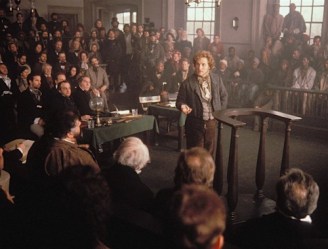 This can be said of Spielberg’s approach to the drama, too. Some of the courtroom stuff is suitably mired in legal technicalities and argument, but by film’s end it gets a little bit too… what’s the word? Not “preachy”. Not “sentimental”, exactly, though it’s born of that old criticism of Spielberg. “Melodramatic” may be on the money, though. It doesn’t help that everything reaches a climax — not only narratively, but also in the way it’s written, shot, acted, and scored — only for it to be revealed that it’s just the end of act two. Okay, that’s the truth of what happened (or near enough, for the purposes of this dramatisation), and by adapting it in that way it emulates the emotions the characters experienced; but from the audience’s perspective, you feel like you’ve reached the end… only to be served up another half-hour of movie. And it’s a long film too, so you feel that. It gets by because it’s fundamentally a good film, with strong performances and technical merits, but it’s a little bumpy for a bit.
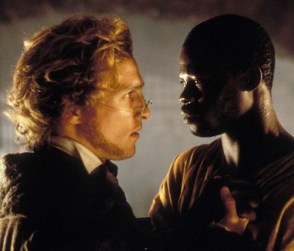 It’s easy to criticise Amistad, because Spielberg makes the production of very good movies look effortless, so the missteps stand out all the more. The story of La Amistad and its ‘cargo’ is a powerful one, and Spielberg has — naturally — turned it into a good film; but by remixing history to over-egg the message, it loses a little something. A valiant effort, but a film like
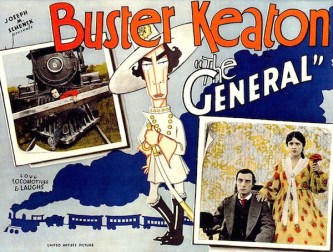 Poorly reviewed and a box office flop on its release, Buster Keaton’s The General has undergone a stark re-evaluation since: the United States National Film Registry deemed it so “culturally, historically, or aesthetically significant” that it was added to the registry in its first year, alongside the likes of
 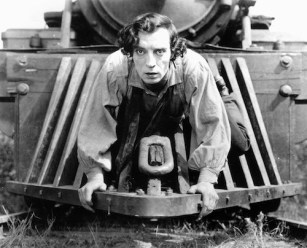 It was reportedly a very expensive film, and it looks it: there are tonnes of extras, not to mention elaborate choreography… of trains! Who knew old steam trains were so agile? There’s impressive physicality on display from Keaton, but the well-timed movements of those big old locomotives are quite extraordinary, especially for the era (I mean, for the past couple of decades you’ve been able to do pretty much anything thanks to a spot of computer-controlled what-have-you. Not much of that going on in the 1920s.)
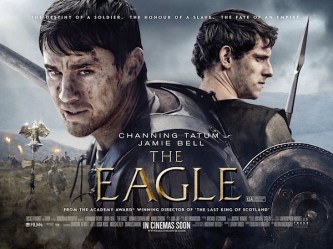 Channing Tatum is a brave Roman general whose father lost his company’s standard, the titular eagle, north of Hadrian’s Wall (a real historic event, coincidentally depicted in
 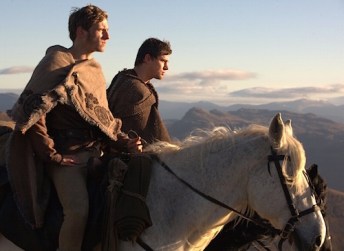 quality to the setting, characters, and imagery that’s quite striking.
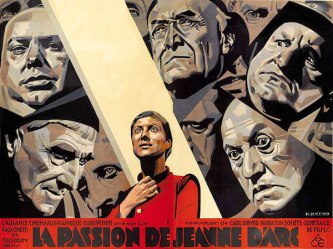 Widely regarded as one of the greatest movies of all time (look at
 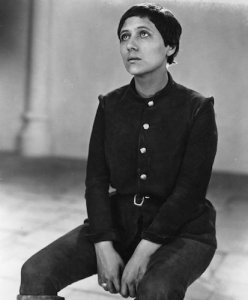 Dreyer based his telling on the written records of Joan’s trial. Although that’s grand for claims of historical accuracy, it’s hard to deny that silent cinema is ill-suited to thoroughly portraying something dialogue-heavy. There are many things silent film can — and, in this case, does — do very well indeed, but representing extensive verbal debate isn’t one of them. Bits where the judges argue amongst themselves — in silence, as far as the viewer is concerned — leave you longing to know what it is they’re so het up about. Sometimes it becomes clear from how events transpire; other times, not so much.
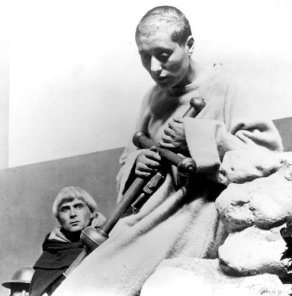
 neutral costumes on sparsely-decorated sets, and are almost entirely shot in close-ups — all elements that avoid the usual grandiosity of historical movies, both in the silent era and since. What we perceive as being ‘grand’ changes over time (things that were once “epic” can become small scale in the face of increasing budgets, for instance); pure simplicity, however, does not age much.
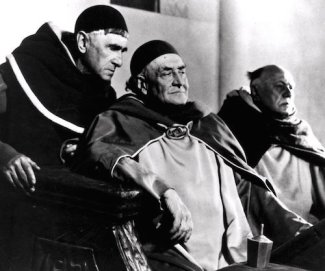 The actors playing the judges may be less individually memorable than Joan, but it’s their conflict — the personal battle between Joan and these men, as Dreyer saw it — that drives the film. Dreyer believed the judges felt genuine sympathy for Joan; that they did what they did not because of politics (they represented England, and she had led several successful campaigns against the Brits) but because of their devout belief in religious dogma. Dreyer says he tried to show this in the film, though it strikes me the judges still aren’t portrayed too kindly: they regularly seem contemptuous of Joan, and are outright duplicitous at times. Maybe that’s just religion for you.
 however, so I have no opinion. Instead, they offer two alternatives. On the correct-speed 20fps version, there’s a piano score by silent film composer Mie Yanashita. Apparently this is the only existing score set to 20fps, and Masters of Cinema spent so much restoring the picture that there was no money left to commission an original score. Personally, I don’t think they needed to. Yanashita’s is classically styled, which works best for the style of the film, and it heightens the mood of some sequences without being overly intrusive, by and large. Compared to Dreyer’s preferred viewing method, of course it affects the viewing experience — how could it not, when it marks out scenes (with pauses or a change of tone) and emphasises the feel of sequences (with changes in tempo, for instance). That’s what film music is for, really, so obviously that’s what it does. Would the film be purer in silence? Maybe. Better? That’s a matter of taste. This particular score is very good, though.
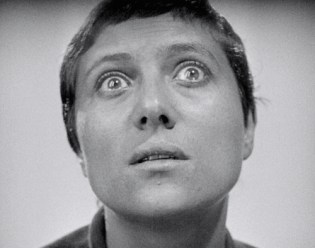 Some viewers describe how they’ve found The Passion of Joan of Arc to be moving, affecting, or life-changing on a par with a religious experience. I wouldn’t go that far, but then I’m not religious so perhaps not so easily swayed. As a dramatic, emotional, film-viewing experience, however, it is highly effective. As Dreyer wrote in 1950, “my film on Joan of Arc has incorrectly been called an avant-garde film, and it absolutely is not. It is not a film just for theoreticians of film, but a film of general interest for everyone and with a message for every open-minded human being.” A feat of visual storytelling unique to cinema, it struck me as an incredible movie, surprisingly accessible, and, nearly 90 years after it was made, timeless.
 100Films.co.uk