
Joss Whedon | 143 mins | Blu-ray | 1.78:1 | USA / English | 12 / PG-13

I don’t think it’s a perfect movie. I don’t even think it’s a great movie. I think it’s a great time.
So says Joss Whedon, writer/director/creator of the generation-defining Buffy the Vampire Slayer, its spin-off Angel, the inimitable Firefly, its incredible movie send-off Serenity, the ground-breaking Dr. Horrible’s Sing-Along Blog, and, y’know, Dollhouse (which I’ve not seen). In short, I love the work of Mr Whedon. And, more relevantly, he’s also the writer/director of the film that represented the culmination of Marvel’s uber-successful Phase One cinematic experiment: the disappointing Avengers Assemble.
Yeah, I said “disappointing”.
Let’s tackle the big looming issue head-on: hype. Something can only be disappointing if you’re expecting something of it, and the big screen adaptation of Marvel’s long-running superhero team-up comic The Avengers certainly had more than its fair share of that. Built with subtle (and not so subtle) snippets of information through five preceding Marvel Studios films, this crossover had been teased for years, and it was a radically new method of franchise-building to boot. Mix in that most of these films and characters were very popular, and the fan-pleasing appointment of Mr Whedon, and you had a recipe for hype. In spite of this potentially damaging level of expectation, critics largely loved it, and audiences too (though there were dissenting voices — genre magazine SFX only awarded it 3.5 stars), and it outpaced everyone’s expectations to become the third highest grossing film of all time (it took more than Iron Man, Thor and Captain America combined).
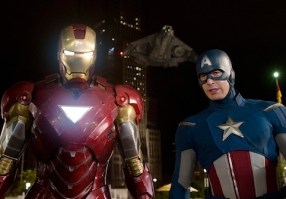 Coming to it for the first time on Blu-ray, then, there’s an even bigger level of expectation attached. Iron Man had much the same problem five years ago, and I felt that had been overrated too. I don’t think either are bad films — I very much enjoyed Iron Man, and I enjoyed The Avengers, albeit more intermittently — but I don’t think either are as good as mass opinion holds.
The problem here is bringing together so many different characters from so many different films. If anyone can do it it’s Whedon, master of the ensemble cast in just about every one of his previous projects, but even he produces a leaden first act in which we’re re-introduced to everyone and they’re gradually brought together. This is the film’s worst segment — it’s a slow 20 to 30 minutes during which pieces are shuffled into place for what follows.
Even when it picks up, the plot’s scaffolding is on show: bits feel engineered merely to set up certain one-on-one face offs (Whedon makes sure nearly every hero has such a scene with Loki, for instance), or even to keep certain characters out of the way until the plot requires them again. People talk of the fantastic dialogue, but I found the odd good line in a sea of functional chatter. Maybe it plays better in a packed cinema. The action sequences are a similar affair, though they manage to have their cake and eat it with hero-on-hero duels at first meeting before united-heroes-vs-baddies later on. However, there are some bits that played well in the trailers which, in the film, feel like they were parachuted in to play well in the trailers. As the (excellent) Honest Trailer points out, however, one key mid-film sequence is all about the exciting event of… Iron Man repairing a ship. Woo.
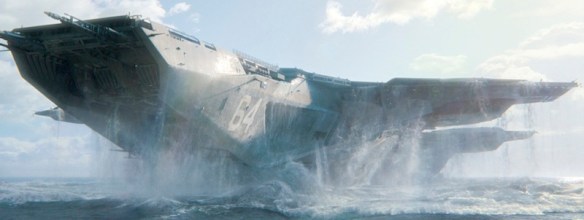
Despite the relatively moderate success of the non-Iron Man previous Marvel films, this largely draws its story from their sources. Boring old Captain America is the de facto lead, though of course Tony Stark steals the scene from him on numerous occasions — those worried the film would be seen as Iron Man and His Super-Friends weren’t wholly wrong (indeed, that’s virtually how the Radio Times describe it in their 22-word summary).
But, even more so, Whedon’s chosen villain and plot make this pretty much Thor 2. The evil so bad it has to bring all the heroes together is Loki, last seen falling to his doom at the end of Thor (well, if you watch the post-credits scenes he was doing something else, but as far as Thor’s concerned, he’s gone). His motivation, only passingly mentioned (so much so that some missed it and claim he’s destroying Earth “just because”), is born out of the events of Thor; as is world-shattering MacGuffin the Tesseract (again, it was first mentioned in Thor’s post-credits scenelet); plus numerous events from that film are mentioned and discussed, I’d say more so than any of the other four preceding films (scenes that would have more specifically related to the events of Captain America were cut for time and pace — yes, believe it or not, some stuff was left out).
I don’t know how the film plays for total newbies — there must have been some in the audience, considering how much more the film made than its predecessors — but I think that in many respects you need to have seen all the previous films. You certainly need to know who Iron Man is and who Tony Stark is; the allusions to Steve Rogers’ past, and so why his character is the way he is, are all there; and, as discussed, Thor has the most bearing on the plot. Perhaps you could follow it without having seen any of them, but I’m willing to bet you’d be very aware you were missing backstory.
Looking ahead for a moment to Marvel’s forthcoming Phase Two (a series of sequels and one new film leading up to The Avengers 2), they’ve talked about keeping the individual characters’ movies standalone, so that each works as its own series. I can see how Iron Man 3 will be just fine (though even that will be building off his psychological reaction to the events of Avengers’ climax), as would a (second) Hulk reboot (besides, it doesn’t need to continue at all if it’s a reboot). Heck, even Cap might get away with it — having deleted the “coping with the modern world” stuff here, why not use it in Cap 2? And we can tell from the title that the main plot will derive from events in Cap 1. But The Avengers completely blusters on from the end of Thor, 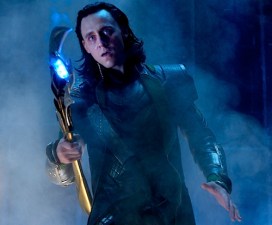 meaning Thor 2 is going to have to begin somewhere after what happened here, with very specific ramifications for its characters. Maybe they’ve got some damnably clever way around that. I doubt they think it matters any more anyway — who hasn’t seen The Avengers? And in the future, well, it’s up to the viewer to piece together which order all the disparate sequels and spin-offs go in.
And on matters of “screw later viewers!”… Technically I should probably subtitle this The Blu-ray Cut or something, for two reasons. 1) The Shwarma Scene, a short post-credits scenelette that was included on Marvel’s The Avengers but wasn’t ready in time for Marvel Avengers Assemble’s week-earlier theatrical release. It’s back now. 2) The Spear Tip, which there’s every chance you’ve heard about: fans complaining it’s gone missing on the DVD/BD; the BBFC investigating if Disney breached the Video Recordings Act; then discovering it was (sort of) their own fault for (sort of) not spotting the change; Disney saying it was never even there in cinemas (which the BBFC disagree with)… Sadly, the end result was Disney had done nothing illegal. It might’ve been nice if they’d been forced to do a recall and repress, because then they’d have had no excuse to not include the director’s commentary (missing from the UK release because it was recorded late and some idiot thought hitting an earlier date was preferable to including all the special features), but I don’t imagine that was ever really likely to happen.
 And the glaringly obvious thing I haven’t discussed is the title. Firstly, as you can see from all my akas at the top, no one can quite agree on what it’s meant to be. Secondly, there’s the highly contentious UK renaming. Did it need it? Patronised-feeling film and comic fans say “no”; but those aware of general public perception say that, either anecdotally or through research, normal Brits did report confusion with the classic ’60s spy series (and, presumably, the lamentable ’90s movie). Funnily enough, I think the new title actually works better in context. “What do we do now?” calls Agent Coulson. “Avengers Assemble,” comes the title card’s response. Well, it kinda works. And even then, what does it matter, really? Those people who went as far as importing a foreign DVD or Blu-ray just for the original title card need to get some perspective in their life. (If you did it for Whedon’s commentary, however, I completely understand. I saved money and pirated it (the commentary, not the whole film), which feels morally pleasing.)
I realise I’ve spent much of this review discussing the pre-release hype, what this means for the future of the franchise, and how they ballsed up the home entertainment release. That those are the elements most concerning me perhaps says something about my reaction to the film. And I haven’t even mentioned the distracting way the heroes all talk to each other without earpieces during the final battle, or Jeremy Renner’s comments about his disappointment at the treatment of Hawkeye (he has every right to be peeved), or the predictable inevitably over who gets killed off (of course someone gets killed off, that’s one of Whedon’s trademarks), or the resultant outcry from some parts of fandom, or even bits that were quite good.
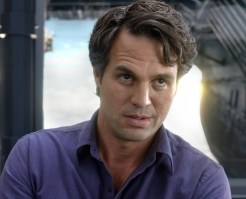 Amusingly, one of the few bits even those in implacable love with the film sometimes criticise is Banner’s “I’m always angry” moment, which I thought was an awesome perspective on the character. It’s not just convenience either — it was put it in for a specific reason. I’ve lost the quote, but it’s something to do with how Whedon always feels somewhat angry at various things. I could identify.
Avengers Assemble left me with a bitter taste in my mouth. After all the hype and excitement, I just didn’t enjoy it that much. I tried, but it seemed slow to get anywhere, the dialogue didn’t zing as promised, some of the story seemed perfunctory and lacking requisite grandeur, there were little niggles like the earpieces… Perhaps it will fare better on repeat viewings, because there’s certainly entertainment contained within, and I’ll be divorced from such insurmountably high levels of expectation. But until then… disappointing.

Avengers Assemble premieres on Sky Movies today at 4pm and 8pm, continuing for the next fortnight.
It merited an honourable mention on my list of The Best Films I Saw For the First Time in 2012, which can be read in full here.
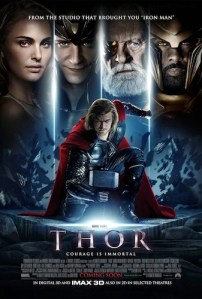 Director Kenneth Branagh brings all his Shakespearean know-how to one of the most innately successful of Marvel’s recent superhero movies. Perhaps lacking the mass appeal of
 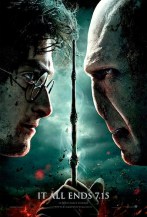 After a decade on screen, the fantasy series comes to an action-packed conclusion. Adapting the final novel’s second half, it’s mostly finale, to both
 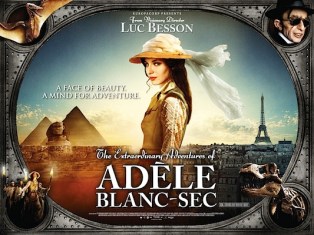 Based on the long-running bande dessinée (aka “comics”) by Jacques Tardi, The Extraordinary Adventures of Adèle Blanc-Sec is occasionally sold to English audiences with a handy quote
  And if that doesn’t put you off, the introduction-heavy opening minutes might, dense with introductions for disconnected characters and locations. Stick with it, it sorts itself out.
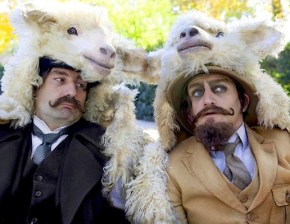 Director Luc Besson managed to build up something of a following with a regular output of films through the ’80s and ’90s, perhaps culminating artistically with the exceptional
  I suppose Adèle Blanc-Sec won’t be to everyone’s tastes. Comparisons to
 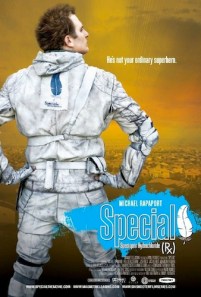 A lot of praise was slung
 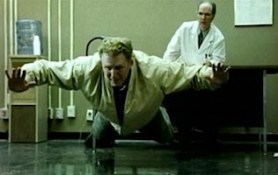 Those after a more genre-aware “real world superhero” movie would do better to stick with Kick-Ass or Super, but those who might embrace something a little different — especially something with an indie sensibility — would do well to take a look. Indeed, being a comic fan is certainly not a prerequisite for enjoyment here.
 From the makers of the successful Christmas TV shorts
 Conan was created by Robert E. Howard in 1932, but is probably best known to most thanks to
 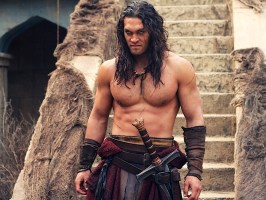 or the filmmakers ignored his work in favour of familiar bits and bobs from other sources. Visually it’s just as non-inventive, which is what you get when you hire the director of
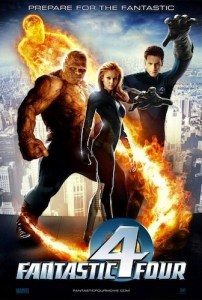 In the wake of highly successful franchise launches for
  which
which 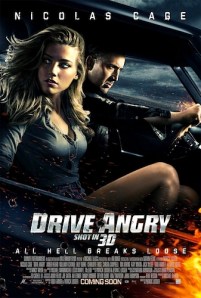 Nic Cage does the
  Only in that stuff flies at the camera and whatnot. You can indeed tell it was made for 3D, but that doesn’t mean it needs it. Indeed, the poke-the-audience stuff aside, none of it suggests it would look great in 3D — for all the pointlessness of cinema’s new money-spinning format, it can add something to the vistas in a film like
  As noted, director Lussier does not have an inspiring CV: he started with numerous straight-to-video sequels, then a big screen sequel-no-one-wanted (even with Nathan Fillion in it) in
 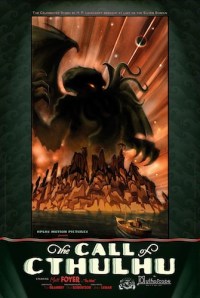 I must admit to not being at all familiar with the work of H.P. Lovecraft. I know the name, of course, and the titles of some of his stories, not to mention being aware of the array of well-known fans. Aside from that, I’ve only encountered his work through its influence — there’s some stuff in the
 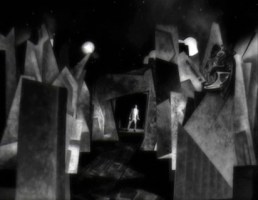 The marriage of low-budget and silent film style is one made in heaven, particularly when you add in the dedication of the makers. They built impressive props, ingenious sets, and employed model work in various inventive ways, all to execute a story that includes a cultist swamp orgy, a mysterious island, a sea battle, and a skyscraper-sized monster. Some online reviews have criticised the effects, but those people are quite frankly idiots. This isn’t meant to be slick CGI — it’s re-creating lo-fi early film techniques, and (aside from one or two rough-round-the-edges spots of greenscreen) it all looks fabulous.
 I have no idea how closely it hews to Lovecraft’s original, but there’s a layered stories-within-stories approach (I think it gets four deep at one point) that is difficult to pull off with clarity, but never falters here. Christopher Nolan would be proud. It also effectively builds a sense of uncanny mystery; not outright scares, but a kind of disquieting unease. It’s my impression that was absolutely Lovecraft’s aim too, so another job well done.
 100Films.co.uk