Another Blindspot Review Roundup

Following on from the roundup of four of my Blindspot and “What Do You Mean You Haven’t Seen…?” reviews the other day, here’s another quartet.

In today’s roundup:

  • Gran Torino (2008)
  • Planet of the Apes (1968)
  • Nashville (1975)
  • A Matter of Life and Death (1946)


    Gran Torino
    (2008)

    2017 #78
    Clint Eastwood | 116 mins | download (HD) | 2.40:1 | USA & Germany / English & Hmong | 15 / R

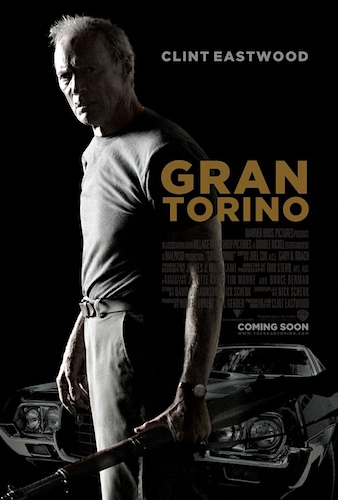
    Gran Torino

    Clint Eastwood’s modern Western (thematically speaking), about a grumpy old loner who overcomes his inherent racism to bond with the immigrants who now dominate his neighbourhood and eventually come to their defence, is a well-liked film, generally regarded as a late career highlight for the director-star. I imagine it would play very nicely as a companion piece and/or counterpoint to his earlier Oscar-winner, Unforgiven — both are stories about old men in one final fight, essentially. Here, that comes with a subtext about the price that’s paid for standing up for yourself. It may be the right thing to do, and maybe it ends up with the right result, but the good guys really suffer to get to that point.

    While that aspect of the film is ultimately powerful, I was less won over by the actual filmmaking. It feels like it’s been jiggered around in the edit, with some odd bits where it just jumps into a new scene. Even before that, Nick Schenk’s screenplay occasionally features very heavy-handed dialogue, of the “explain what the character is feeling right now” variety. It’s especially bad when Eastwood just talks to himself in order to vocalise these points for the sake of the audience.

    Still, if you’re immune to such niggles then it remains a potent — and timely — tale of doing what’s right for the defenceless. Such themes never die, I suppose.

    4 out of 5

    Planet of the Apes
    (1968)

    2017 #96
    Franklin J. Schaffner | 112 mins | Blu-ray | 2.35:1 | USA / English | PG / G

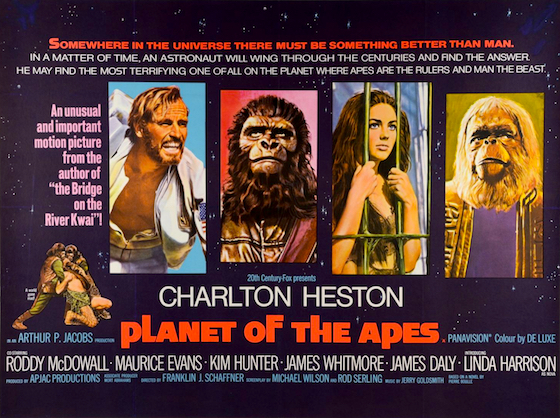
    Planet of the Apes

    The original instalment in the long-running franchise (it’s up to nine films across three go-rounds now, plus a couple of TV series) sees astronaut Charlton Heston land on a mysterious planet where apes have evolved to have human-like intelligence, while men are mute wild creatures dominated by their simian betters. And eventually there’s a twist that everyone knows, which is a shame because I bet it was pretty darn surprising before that.

    Coming to Planet of the Apes for the first time almost 50 years after its release, there’s an unavoidable quaintness to some of it, mainly the monkey makeup. It was for a long time iconic, but it’s been abandoned in favour of hyper-realistic CGI in the new movies and therefore shows its age. That said, while the apes may not be as plausible as those produced by modern technology, the performances underlying them are still strong. It contributes to what is really a parable about dominance and oppression; colonialism inverted onto a white man, that kind of thing. All wrapped up in a sci-fi adventure narrative, of course.

    Honestly, it’s not just the effects that have improved — as a piece of speculative fiction, I think it’s now been outclassed by the recent trilogy. It’s still a cracking adventure, but a bit “of its time”.

    4 out of 5

    Nashville
    (1975)

    2017 #111
    Robert Altman | 160 mins | Blu-ray | 2.35:1 | USA / English | 15 / R

    Nashville

    Robert Altman’s low-key epic about 24 characters and how their stories interact, overlap, and collide across five days in the city of Nashville, Tennessee.

    The sheer scope of that makes it a tricky film to interpret. There’s a lot going on, much of it in snatched conversations and moments that leave it up to the audience to piece together what matters and why. Collision must be a theme: within the first hour there are three car crashes or near misses, and the climax is certainly a collision in its own way. I’ll be honest, this isn’t a fully-developed thought, so I’m not sure what the point of it might be. It’s a small element of the film, really — something like all the music being performed is much more obvious and therefore maybe more relevant.

    I guess I’m searching for meaning because the film in general is just casually observational of a bunch of characters meandering through a few days. Maybe there doesn’t need to be meaning — maybe that is the meaning. It’s certainly one way to interpret the finale. So, I kind of liked it — or, rather, admired it, perhaps — even if I didn’t necessarily ‘get it’.

    4 out of 5

    A Matter of Life and Death
    (1946)

    2017 #74
    Michael Powell & Emeric Pressburger | 100 mins | DVD | 4:3 | UK / English | U / PG

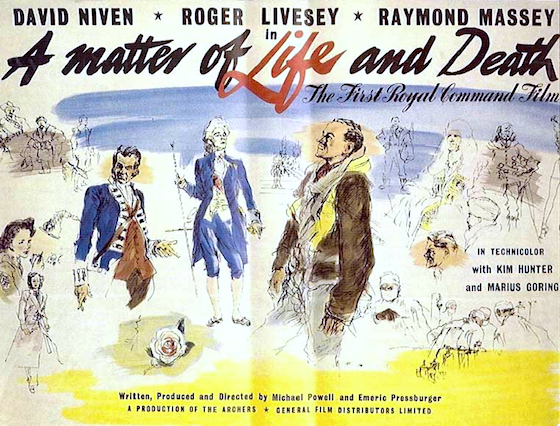
    A Matter of Life and Death

    I finally get round to watching this on a ropey old DVD, and then they announce a new 4K restoration (which was released in UK cinemas earlier this month). Hopefully a Blu-ray will follow. It will be very welcome, because I imagine this film will look magnificent in properly restored HD.

    It begins with an incredible opening scene, in which an entire relationship is founded and ended over the radio in about five minutes. From there it’s the story of a World War Two pilot (David Niven) who avoids death by a fluke, then properly falls in love with the voice from the other end of that radio call (Kim Hunter) before the afterlife comes a-callin’ to take him where he was meant to be. Or maybe that’s all just a vision induced by the injury he sustained. Either way, he must argue his case to remain on Earth.

    It’s a grandly romantic film — it is all about the triumph of love over everything else, after all — but with a particular fantastical bent that I think remains unique. It has the wit to present a mildly irreverent stance on the afterlife, not taking the whole “life and death” thing too seriously. While the final result of the airman’s trial is never in doubt, the delight is in the journey there.

    5 out of 5

    Planet of the Apes, Nashville, and A Matter of Life and Death were viewed as part of my Blindspot 2017 project, which you can read more about here.

    Gran Torino was viewed as part of my What Do You Mean You Haven’t Seen…? 2017 project, which you can read more about here.

  • Star Wars: The Last Jedi (2017)

    aka Star Wars: Episode VIII – The Last Jedi

    2017 #169
    Rian Johnson | 152 mins | cinema | 2.39:1 | USA / English | 12A / PG-13

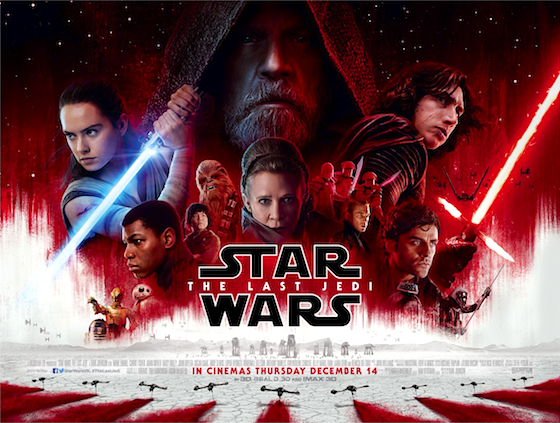
    Star Wars: The Last Jedi

    I’ve felt a great disturbance in the Force, as if a small but vocal group of fanboys suddenly cried out in terror and were unfortunately not silenced because on the internet such complaining goes on forever.

    Yes, something terrible has happened: a new Star Wars movie has come out and, rather than go the Force Awakens route of appealing to nostalgia and familiarity, it’s attempted to boldly go where no Star Wars movie has gone before. Well, it’s maybe not quite that innovative, but writer and director Rian Johnson has given us an Episode VIII that eschews rehashing former glories for an attempt to push the franchise forward in interesting new ways. It’s not an unmitigated success, but it is considerably more than just “a good effort”.

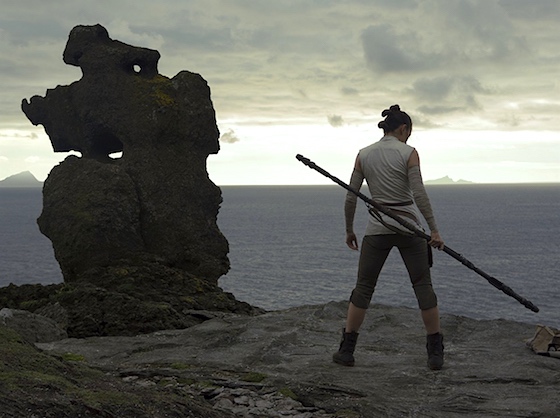
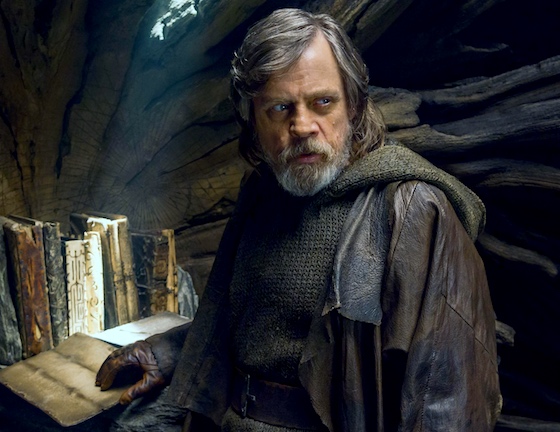
    Picking up exactly where Episode VII left off, The Last Jedi opens with the Resistance fleeing as the First Order strike back. With those villains in pursuit, intent on wiping out the Resistance once and for all, hot-headed pilot Poe Dameron (Oscar Isaac) and former Stormtrooper Finn (John Boyega) hatch a plot to cripple the First Order’s flagship. Meanwhile, on the other side of the galaxy, Force-adept orphan Rey (Daisy Ridley) tries to persuade hermit Luke Skywalker (Mark Hamill), the only remaining Jedi Master, to rejoin the fight.

    The last Jedi?

    Two years ago, The Force Awakens set a new trilogy in motion by not only introducing us to a selection of new characters and their conflicts, but also by posing a bunch of questions and establishing a pile of mysteries. The Last Jedi has the task of either perpetuating these — essentially, putting them on hold to be answered in 2019’s finale, Episode IX — or actually (gasp!) resolving some of them. No spoilers (I imagine if you care then you’ve seen the film by now, but just in case…), but Johnson has indeed decided to furnish us with some answers, and it’s generally this that has riled up certain parts of the internet.

    Frankly, it’s not a debate I want to wade into, in part because I generally think the complaints are misplaced — many of them stem from fans having expected certain things, then not got those things. They say that’s not it; that Johnson’s writing of characters and ability to tell a story is fundamentally flawed… but they’re wrong. Johnson’s answers are fine — in fact, in many cases they’re exactly the kind of thing I’d hoped for (yep, some of us did get what we wanted!) — they’re just not the kind of answers some people expected. And I think that’s a good thing. This way is more surprising. But also, it’s not surprising for surprise’s sake — it fits the story being told. Minor spoilers here for the film’s themes, which are failure and what it takes to be a hero. (That’s two of them, anyway. I’m sure there are more.) The former, as we are told, is important — you learn more from failure than from success, as they say. The latter is, at least in part, explored in terms of who gets to be a hero, and why. Both of these lead to answers that have made some people deeply unhappy, usually for the wrong reasons — as I say, an awful lot of people are blaming Johnson’s abilities as a filmmaker, when really they just don’t like the perfectly-well-built story they’ve been given.

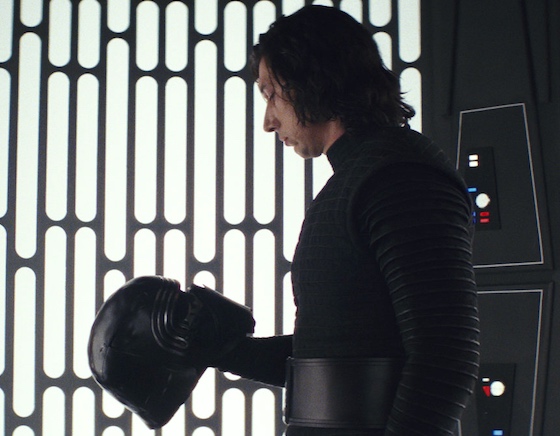
    The end of Kylo Ren?

    Anyway, that’s enough harping on about other people’s issues. I do think the film had some flaws, primarily in the pacing department. I think where it goes wrong is how it emphasises the events on Ahch-To (Luke’s island) and Canto Bight (the casino planet). I get the impression the latter has been built up to give us somewhere to cut away to during the former, but it means what is a subplot aside gets too much screen time. We expect a three-act structure, and it makes that whole section feel like Act Two of Three, but it isn’t. I can imagine this plays better on a rewatch, so I’m reserving judgement slightly.

    That aside, though, The Last Jedi has much to please. Every major player is granted a noteworthy arc, developing as people throughout the movie. The pay-offs to all that are particularly satisfying. Obviously I can’t talk about that without spoiling it, but everything that occurs in the throne room after it becomes clear this isn’t your typical Star Wars throne room scene is among my favourite stuff in the whole saga. And you’d have to go some way to beat the long-awaited reunion between a couple of characters, in a perfectly-written and emotionally loaded scene. This definitely contains some of the best acting in any Star Wars movie — Carrie Fisher gives one of the best performances of her career; Mark Hamill makes you wonder why his never took off like, say, Harrison Ford’s did; and the young guns get their moments too, particularly Daisy Ridley and Adam Driver, with a shoutout for the always wonderful Domhnall Gleeson.

    Also John Boyega and Kelly Marie Tran

    Away from the dramatic conflicts, it also satisfies as an action movie, with some of the saga’s most incredible sequences. At times it feels like we’re watching an actual war, rather than the odd skirmish that pops up in previous films. The smaller level combat is impressive too. This is certainly not a film just about its action set pieces, but they don’t disappoint. All around this may well be the best-directed Star Wars movie, with its shot choices, editing, and some bold and original ways of staging things that give us examples of pure filmmaking never before seen in this series. Part of that is the beautiful cinematography by Johnson’s regular DP, Steve Yedlin. There’s been striking photography in previous Star Wars movies, but none so consistently as this. One bit in the second half provoked actual gasps and “wow”s from my audience — and we’re British, we don’t make noise during films.

    Except laughter. People laughed, too. This is a funny film. Too funny, in some people’s estimations. Maybe they forget that Star Wars has always been amusing (on IMDb the highest-rated quote from A New Hope is Han’s chat over the intercom when they’re breaking Leia out, which is basically a comedy skit). I had mixed feelings about one extended bit at the beginning (it’s funny, but does it fit in Star Wars?), but mostly I thought the level of humour was about right. That reminds me of the most ridiculous single criticism I’ve read of the film, though: some people have claimed the film has a “vegan agenda” due to one comedy bit. I kid you not. Elsewhere, the humour is used to succinctly undercut some of the series’ pomposity, which ties back round to Johnson’s pleasantly irreverent aims that I was alluding to earlier.

    Or is Luke the last Jedi?

    One of the key lines from The Last Jedi’s trailer (and it’s also very important in the film, of course) comes from Luke: “This is not going to go the way you think.” That’s quite clearly the case between the film and its audience, too. Some of us have revelled in that; others despised it. Others still find themselves in between, stuck being drawn back and forth to two complex and opposing emotional states. Being uncertain of your feelings between the Light and the Dark — seems only appropriate for this franchise, doesn’t it?

    The Last Jedi doesn’t play to the populist cheap seats in the way The Force Awakens did, which makes it a less congenial movie, but perhaps a better one. It doesn’t effortlessly entertain with nostalgic Star Wars-ness as Episode VII does, but instead takes all that familiar iconography and prods at it to push it in new directions. Like another big sci-fi sequel this year, Blade Runner 2049, it’s a film whose true appreciation may only occur over time. I didn’t like everything about it, but the stuff I liked, I loved.

    4 out of 5

    Star Wars: The Last Jedi is in cinemas everywhere now. I imagine you’ve already seen it.

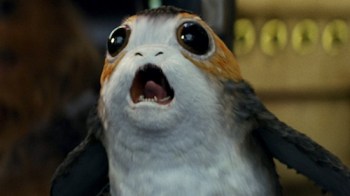
    P.S. I loved the Porgs.

    The last Porg?

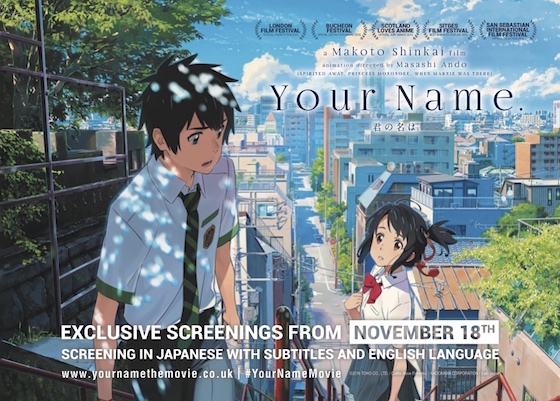
    Your Name. (2016)

    aka Kimi no na wa.

    2017 #168
    Makoto Shinkai | 107 mins | Blu-ray | 1.78:1 | Japan / Japanese | 12 / PG

    Your Name

    If you’ve not heard about Your Name then… well, where have you been for the past year? It was a colossal hit in its native Japan during the back end of 2016, spending 12 weeks at #1 to become the fourth highest-grossing film of all time there (behind only Spirited Away, Titanic, and Frozen). It’s also the only anime not made by Studio Ghibli to gross over ¥10 billion at the Japanese box office. Critical acclaim has followed as it’s been released around the rest of the world too, hailing writer-director Makoto Shinkai as the new Miyazaki. It’s hard to imagine higher praise for an animator. The film reached UK cinemas last November, but then took a whole year to hit DVD and Blu-ray (I guess thanks to Japanese studios’ usual restrictive licensing agreements), and as of this week is available to stream for Amazon Prime members. So when I finally sat down to watch it this week it had a bit of weight on its shoulders — at this point it runs the risk of being a victim of its own hype.

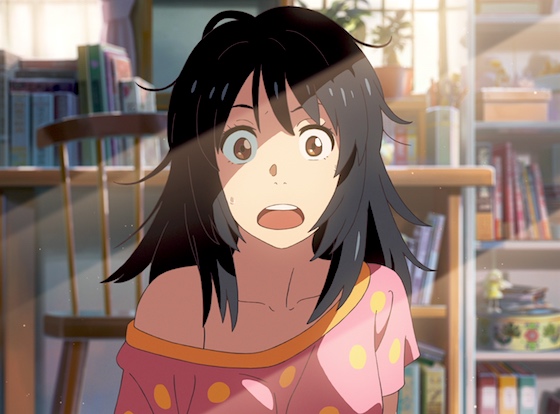
    The film introduces us to Mitsuha, a teenage girl in a sleepy country town — more a village, really (it doesn’t even have a cafe!) — who wishes for a more exciting life in the big city. Her friends tell her she was acting weird the day before, but she can’t remember any of it. Then she wakes up in the body of Taki, a teenage boy living in Tokyo. Assuming it’s a dream — a very long, very realistic dream — she stumbles through his life for a day. To cut to the obvious, Mitsuha and Taki soon realise they’re actually swapping bodies, apparently at random but for a whole day each time. (The literal translation of the film’s Japanese title is What is your name, which kinda makes more sense.) They find ways to deal with it, but a big explanation for why it’s happening is looming…

    That feeling when you wake up and realise a boy's been inside you... er, as it were

    That comes in the form of a hefty twist about halfway through the movie. I’ve read some very different reactions to that development and what follows it — criticism of it for shifting the film into something generic after a more original first half; praise for it elevating the film into something more original after the generic first half. I guess your mileage will vary. For me, it kind of glossed over some of the body-swap stuff to get to a place where there was still time to deal with what happens next. Conversely, there are plenty of intersex body-swap movies — how much do we need to go over that again? But there are generic elements to the second half too.

    That said, the way it uses Japanese folklore to bring all the threads together is a bit different, at least for us Westerners. I don’t know if it’s based on genuine beliefs or if it’s a mythology imagined for the film, but it conveys some effective and affecting ideas. It builds to an emotional climax and, ultimately, a perfectly satisfying ending. Well, unless… At times you feel there were perhaps other, more unusual directions the film could have explored. Fair enough, that clearly wasn’t the story Shinkai wanted to tell; but some viewers may think those less well-trodden paths would’ve made for a better movie. Of course, that would’ve neutered its appeal to others; but then Mark Kermode compared it to Romeo and Juliet in terms of how it might appeal to teenagers, and that certainly doesn’t have a happy ending…

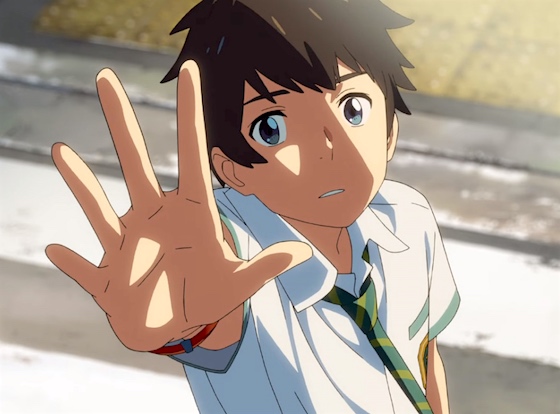
    Taki reaching for Mitsuha's boobs, probably. He loves feeling her boobs.

    I’m not just talking about the finale, though. For example: while in Taki’s body, Mitsuha displays his “feminine side”, which leads to a date with a girl he’s had a crush on for ages. On the day of the date, Taki is in his own body, which leaves Mitsuha upset because she’d wanted to go on the date. Surely you can see how this is possibly building in a direction where Mitsuha realises something about herself; something she might not have noticed living in a very traditional little town. But that’s not where Your Name is going — and, as I said, fair enough — but it’s not a bad idea for a movie (is it?)

    Nonetheless, at times the story is quite complicated, with overlapping dialogue, or a density of information conveyed in images, on-screen text, and dialogue simultaneously. I mention this because watching the English dub might make for a more manageable experience, at least on first viewing. (That said, there’s one gag which only works in Japanese, and the subtitles work at a rate of knots to explain the joke while it’s happening. I watched the English dubbed version of the scene afterwards and it kind of fudges the gag away, because there’s no way to translate it into English.) That said, other bits of the story are just straight up jumbly, but trust that there’s a reason for that — you may get confused about who’s in whose body when, but the film makes enough sense in the end.

    Pretty pictures

    One thing I have no problem praising unequivocally is the imagery. The film is visually ravishing; the animation thoroughly gorgeous. Its use of colour and light is beautiful; the detail in the art and its movement is almost photo-real, without the uncanny valley effect you often get from rotoscoping. Shinkai also seems to have a live-action-esque feel for shots and editing, particularly in his use of montage, which lends a very filmic feel. At other times it benefits from animation’s freedom to be less literal, particularly in one sequence apparently created with pencils and chalk.

    I do think the hype around Your Name ended up as a problem for me. I was expecting to be blown away by its amazingness, the expectation of which got in the way of just appreciating the film for what it is. That said, I definitely liked it a lot. Despite using some building blocks familiar from other movies, it mixes them together with some fresh perspectives to create a film that is thoroughly romantic, in multiple senses of the word.

    4 out of 5

    As I mentioned, Your Name is now available on Amazon Prime Video in the UK, in both subtitled and dubbed versions.

    Justice League (2017)

    2017 #157
    Zack Snyder | 120 mins | cinema | 1.85:1 | USA / English, Russian & Icelandic | 12A / PG-13

    Justice League

    This review contains spoilers, but only for stuff everybody knows.

    DC’s answer to Avengers Assemble begins with a doom-laden cover of Leonard Cohen’s Everybody Knows (a Zack Snyder music choice if ever there was one), and there’s a lot that “everybody knows” about the troubled production of this long-awaited superhero team-up. Everybody knows that the so-called DCEU was deemed to be in need of a course-correction after Batman v Superman. Everybody knows that this was to take the form of making this film tonally lighter, something Snyder and co said was always the plan. Everybody knows Snyder eventually had to leave the project for personal reasons. Everybody knows Joss Whedon was brought in as his replacement. Everybody knows that meant reshoots and an attempt to lighten the tone further. Everybody knows that was a recipe for a conflicted movie…

    For those who are thinking “I didn’t know any of that” and aren’t so familiar with superhero things on the whole anyhow, Justice League is set in the aftermath of Superman’s self-sacrifice at the end of Batman v Superman, which has given Bruce Wayne aka Batman (Ben Affleck) a change of heart: he wants to make the world a better place. When he discovers than an alien invasion is imminent, he teams up with Diana Prince aka Wonder Woman (Gal Gadot) to put together a team of metahumans (read: people with superpowers) to fight it. That team includes Barry Allen aka the Flash (Ezra Miller), Arthur Curry aka Aquaman (Jason Momoa), and Victor Stone aka Cyborg (Ray Fisher) — and, following an opportunity to revive his cold dead corpse, Clark Kent aka Superman (Henry Cavill).

    The new trinity?

    Justice League has certainly provoked a mixed reaction from critics and opening weekend audiences. It was always going to: Batman v Superman has been very divisive, with critics largely hating it but a dedicated fanbase to be found without too much digging. Justice League compounds that issue by trying to appease critics, risking alienating fans in the process. The end result inevitably falls somewhere between the two stools, which means there’s no predicting what any one person will make of it — following social media the past couple of days, I’ve seen every possible combination of people who loved, liked, hated, or were indifferent to previous DCEU films and now love, like, hate, or are indifferent to Justice League.

    So, my personal reaction is that I enjoyed it. On the whole it’s not as thought-provoking as BvS, but is instead a fun time with some good character bits thrown in. From early reviews I feared the whole story would be choppily edited, and the opening act is indeed a bit disjointed and jumpy, but the closer it gets to the team being assembled the more it settles down. Once they’re together, it’s a fairly straightforward action-adventure movie, with the heroes in pursuit of the villain to stop his world-ending plan. Unlike BvS it’s not full of portentous (or, depending on your predilections, pretentious) themes to ponder, but it’s still a reasonably entertaining action movie.

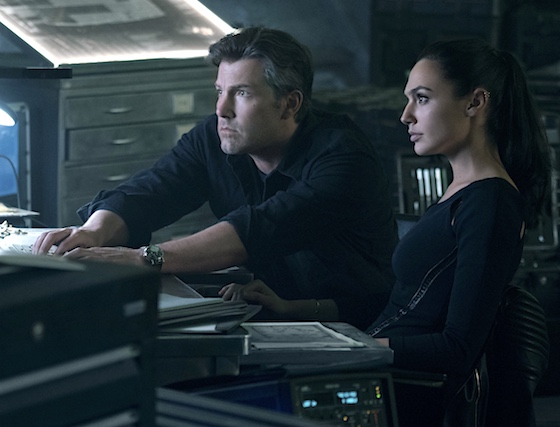
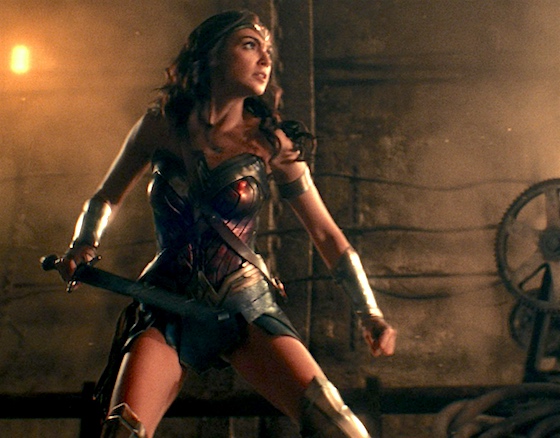
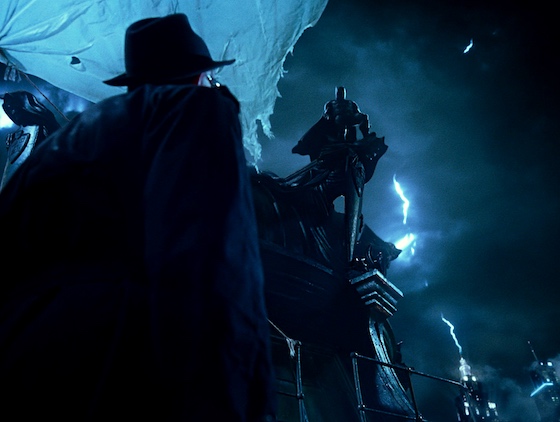
    Bruce and Diana

    As for those character bits, it completes arcs for Bruce and Diana that have played out over their past couple of movies, both of them opening up to the world and their place in it. Moments that emphasise Bruce being old and tired and Diana stepping into the role of leader seem to have been added during reshoots, no doubt indicating the future direction the DCEU is now reported to go in — Affleck stepping away in the not-too-distant future; the popular Wonder Woman becoming central to the universe. (As a Batman fan, I hope this doesn’t kill off the raft of Bat-family films they’ve been planning. We’ll see.)

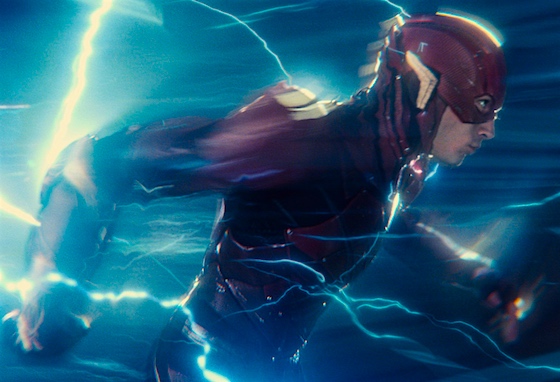
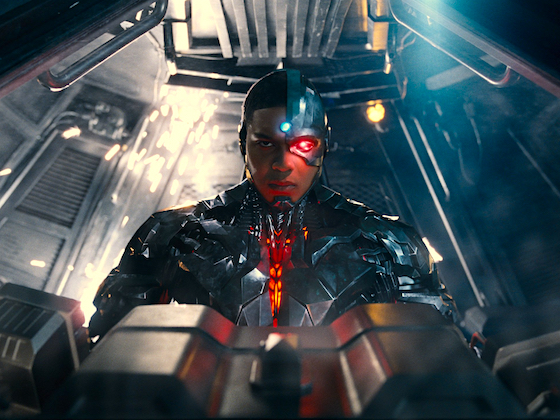
    For the new team members, it does a solid job of introducing the Flash and making him likeable — he’s under-confident but good-hearted and funny. Fans of the currently-running TV show may find he’s “not their Flash”, and his costume is one of the worst ever designed, but I’ve never been that big a fan of the series and I can live with the costume. Cyborg gets a mini-arc that works well enough, considering he’s mainly there to be a walking talking plot resolution. Aquaman’s also OK, but a good chunk of his part feels like a tease for his solo film — which, by total coincidence, is the next DCEU movie. This all might’ve been more effective if DC had gone the Marvel route of introducing everyone in solo films first, but the film makes a fair fist of the hand it was dealt.

    Flash! Ah-ah!

    And as for Superman… well, that’s a whole kettle of fish. Firstly, it’s the worst-kept open secret in the history of movies. The final shot of BvS was a clear hint he’d return, so there’s that for starters. Then early promotional materials included him; behind-the-scenes photos referenced him; when reshoots rolled around, the fact they’d have to deal with Henry Cavill’s Mission: Impossible 6 moustache was big news. Despite all that, they left him off all the posters and out of every trailer. Would it have made a difference if they’d publicly acknowledged he was back? Who knows. Let’s judge what we were given.

    In short, he’s not in it enough. The story of his resurrection is a decent idea, but the film has to rush and condense the arc of his return, presumably because Warner were pushing for a lighter tone and brisk running time. How his return affects him does complete the overall story that started in Man of Steel and continued through BvS — the story of how an ordinary young man with extraordinary abilities develops into the paragon of virtue that Superman is to many people. Honestly, I believe this was (more or less) Snyder and co’s plan all along, and those haters of Man of Steel and BvS who now say that “Justice League finally got Superman right” have perhaps misunderstood how something like character development works. (Should that entire character arc have been contained in the first movie? I think that’s a different argument — in our current franchise- and shared-universe-driven blockbuster era, character arcs are routinely designed to play out across a trilogy.)
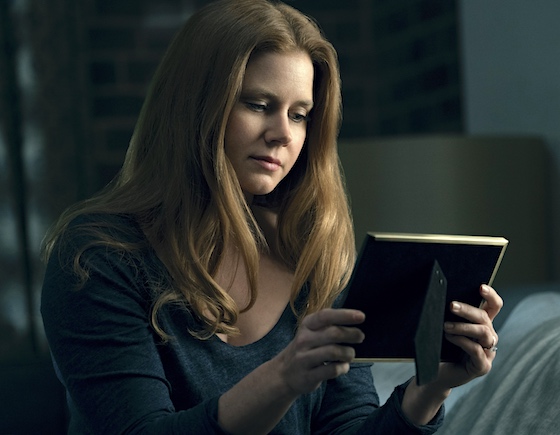
    There are no official photos of Superman from this movie, so here's a photo of Lois Lane looking at a photo of Superman
    There are no official photos of Superman from this movie,
    so here’s a photo of Lois Lane looking at a photo of Superman.

    Much attention has also been focussed on the ridiculousness of the moustache removal — both how funny it always was, and how poor the end result is. Honestly, I don’t think it’s as bad as you may’ve heard. I’d wager most people won’t even notice, especially if they’re not looking for it. It’s the kind of thing film buffs see because they’re looking and, yeah, sometimes it’s not great. Personally, I didn’t even think it was the worst computer-generated effect in the movie. Main villain Steppenwolf looks like a character from a mid-range video game, and has about as much personality as one too. There’s terribly obvious green screen all over the place, which is undoubtedly the result of reshoots — sometimes it crops up mid-scene for no obvious reason, other than because they’ve dropped in a new line. Other effects — stuff they’ve probably been working on since principal photography — look fine.

    Naturally the effects drive all of the action, for good or ill. Some have said these sequences are entirely forgettable, which I think is unfair. There’s nothing truly exceptional, but how many movies do manage that nowadays? I’d say what Snyder offers up is at least as memorable as your typical MCU movie, which is presumably what critics are negatively comparing this to. The everyone-on-Superman punch-up is probably the high-point, with an effective callback to “do you bleed?” and a striking moment when Superman looks at the Flash (that sounds completely underwhelming out of context…) I also thought the desperate escape with the Mother Box on Secret Lady Island was a strong sequence. The big tunnel fight has its moments, but needed more room to breathe and a clearer sense of geography. The climax is a great big CGI tumult, which clearly aims for epic but is mostly just noise — again, with one or two flourishes.

    AQUAman

    Another late-in-the-day replacement was Danny Elfman on music duties. It’s proven controversial — turns out there are a lot of fans of Hans Zimmer and Junkie XL’s work on the previous Snyder DCEU films. Personally, I think Elfman’s score largely works — its numerous callbacks to classic themes are better than Zimmer’s musicless thrumming. There’s a massive thrill in hearing Elfman’s iconic Batman theme again, and John Williams’ even-more-iconic Superman theme. In his work on Man of Steel and BvS, Zimmer never produced anything even close to that memorable. Elfman’s style works other places too: an early scene where a bunch of criminals take a museum hostage immediately brought to mind the feel of Tim Burton’s Batman for me, mainly thanks to Elfman’s score. That’s no bad thing in my book.

    The biggest point of discussion swirling around the film this weekend, in many circles at least, has been “which bits were Snyder and which were Whedon?” According to one of the producers, the final movie is 80-85% what Snyder shot during principal photography, making 15-20% what Whedon added during reshoots. Not a huge amount, but also not inconsiderable. Personally, while I felt some Whedon additions were glaringly obvious, it also felt to me like a shot or line here and there rather than whole chunks of the movie. I think they’ve done a better job of integrating it than some have given them credit for. I put this down to some people thinking any humourous line must be a Whedon addition, but we know that isn’t the case — they were showing off lighter stuff during press set visits and in the initial footage previewed at conventions, both of which were long before Whedon became involved in re-writes, never mind reshoots. The lighter tone was intended from the off, Whedon just added even more of it.

    Born 'borg

    For those interested, someone who worked on the film has posted a very long list of changes, attributing various bits to Snyder and others to Whedon. There’s also this tweet, which says Snyder’s original cut went down badly with WB execs (hence why Whedon was sought out) and that the vast majority of Superman’s role was reshot to change it entirely — supposedly all that remains of Snyder’s Superman are his action beats (though Whedon added some more), the final scene with Bruce (“I bought the bank”), and maybe one or two other individual shots. This, then, would be Whedon’s biggest contribution to the film. Some love him for it, others not so much. There seems little doubt this is a lighter, more fun Superman. I liked him, though it can’t hurt that I have a bit of a soft spot for Henry Cavill.

    Generally speaking I’m a fan of Whedon — I grew up with Buffy; I’m certainly a Browncoat — but I think his additions (assuming those accounts are accurate) are a mixed blessing. Most vital is all the character stuff he’s slotted in, some of which really adds to the movie — Batman’s pep talk to the Flash about “save just one person” was a highlight, I think. The jokey dialogue sometimes lands, sometimes feels forced — the obvious insert of Batman complaining “something’s definitely bleeding” feels incongruous. I’ve seen some complain that he added too many pervy shots of Diana’s ass in that short skirt or those tight trousers, but then whenever I noticed such shots they were in footage that’s been attributed to Snyder, so who knows.

    Well if you wear a skirt that short what do you expect to happen?

    Everything to do with the Russian family was certainly Whedon, which I’d rather suspected. I mean, there are civilians there to add stakes to the final battle, so that it’s not just the villain being villainous in the middle of nowhere, but why is it that just one family lives there? Because they were added during reshoots and there was probably neither time nor money for crowds of people, that’s why. Their subplot could’ve been integrated better (it felt like they kept just popping up for no reason), but I liked the eventual pay-off with the Flash and Superman saving them — the Flash saving one carload while Supes flies past with an entire building is the kind of humour I think works in this film.

    Justice League is a different movie for Whedon’s involvement, that seems unquestionable. Is it better or worse? That’s partly a matter of personal taste. As my taste stretches to include both directors’ works, I can see positives and negatives every which way. My ideal cut of the movie would likely keep some of Whedon’s additions but lose others, as well as reinsert some Snyder stuff they cut. There’s no pleasing everyone, eh? (If you want to see some of what was definitely cut, there are various shots in the trailers, and someone’s leaked eight short clips from Snyder’s version — mostly of unfinished CGI, but one reveals what Iris West’s role was. (If those clips are even still there by the time you read this, of course…))

    The Batman

    Finally, the post credits scenes. It’s obvious that the first is a Whedon addition (confirmed by the above breakdown) — it’s just a little coda that doesn’t add anything other than some fun. The second scene, however, is an odd one, because it feels like it’s teasing a movie that’s been uncertain for a long time. If it’s setting up The Batman (because Deathstroke was meant to be that film’s villain), well, we know director Matt Reeves is massively reshaping whatever Affleck had planned, quite possibly ditching Deathstroke altogether. If it’s setting up Justice League 2 (because Lex Luthor’s back with a team-building plan of his own), well, who knows if that’s even happening anymore? It was originally planned this movie would be Justice League Part 1 and be closely followed by Justice League Part 2 — presumably that’s why Steppenwolf is the villain, because he was meant to lead into Darkseid (it’s long been reported that a cliffhanger ending to set up just that was cut by Whedon) — but I believe Part 2 has gone MIA from the schedule, and with Affleck now making definitive noises about wanting out of the franchise… Well, who knows what’ll happen.

    Back in the present day, Justice League is set to underperform at the box office this weekend: predictions have been revised ever downwards over the past few days, to the point where it’s now at under $100 million — which is kinda funny because it feels like everyone’s talking about it. I guess that’s the difference between “film Twitter” and movie blogs compared to regular folks. Movie Nerds v Regular People: Box Office of Justice, or something. Funny thing is, for all the hatred these DC movies have attracted, they don’t half get people talking. As I saw someone point out on Twitter the other day, you may not’ve liked Batman v Superman, but it’s more than 18 months later and you’re still talking about it. I can’t even remember which Marvel movie was out 18 months ago without looking it up. This is no doubt a simplification — not everyone’s still arguing about BvS, and one of the reasons Marvel movies don’t stick so long is that they produce so darn many of them — but I do think Marvel films give you fun for a couple of hours, and you can call them to mind again if prompted, while DC films stick around, turning over in your mind, love it or hate it. At least for some of us, anyway.

    All in

    With Justice League, there’s the added complications of its multiple directors and fraught production. Should we judge a film for what it could have been or for what it is? The latter, surely. The former is definitely an intriguing proposition, but not what’s in front of us (and, as the likes of Blade Runner, Alien³, and Superman II have shown, maybe one day we’ll get a chance to judge that movie anyway). Nonetheless, how much should we take into account the behind-the-scenes issues? Should we just pretend they don’t exist? I guess for a lot of regular moviegoers this isn’t even an issue, but for many of us film-fan types it’s hard to put aside the knowledge that this movie was the product of two directors with very different styles and very different production timeframes.

    I don’t have any easy answers, I’m afraid. All I know is that Justice League is far from perfect, but I enjoyed it nonetheless.

    4 out of 5

    Justice League is in cinemas everywhere now.

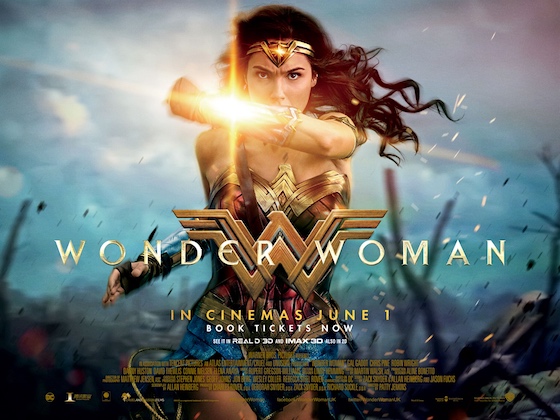
    Wonder Woman (2017)

    2017 #81
    Patty Jenkins | 141 mins | cinema | 2.35:1 | USA, China & Hong Kong / English | 12A / PG-13

    Wonder Woman

    Following Wonder Woman’s introduction in Batman v Superman: Dawn of Justice (her central role in that film’s final act surely being the inspiration for its terrible subtitle), here we flash back in time to learn her origin — of her childhood on a hidden island of warrior women; of the events that brought her into our world; and of what made her keep quietly to the sidelines for almost a century.

    The fourth film in DC’s shared cinematic universe, commonly dubbed the DCEU, is by far its best reviewed to date. It’s also the first superhero movie of the modern era (i.e. post Iron Man) to be based around a female character. I can’t help but think one has a lot to do with the other, because, in my estimation, Wonder Woman is not massively better than or different to the action-adventure blockbusters we get several of every year — the only exception being, of course, that it stars a woman. While that is undoubtedly important, and its meaningfulness can apparently not be understated, it doesn’t automatically elevate the quality of the rest of the movie. Or maybe it does for some people — maybe “the same, but with a woman” is enough to make it a genre classic.

    The film’s strongest feature (gender politics aside) is its cast. Gal Gadot is fantastic — it’s no wonder this role seems to have made her an instant star. Chris Pine also gives a likeable performance, while Lucy Davis nails the comedic support. Also of note are the strong Amazonian ladies who shape Diana’s childhood, Connie Nielsen and Robin Wright. On the other side of the fence, Danny Huston is pretty much wasted, while David Thewlis ultimately feels a little miscast.

    If anyone can take a sword to a gun fight...

    The action is very much from the Zack Snyder school — an inexplicable mix of slow-mo and almost-sped-up (or speed-ramped, as it is either known or people have become fond of calling it). Fortunately it doesn’t degenerate into this all the time — while it was a neat effect when it was new, now it feels derivative and overdone. The rest of the action is of mixed quality: some of it is exciting and well-staged, but at other times succumbs to the modern foibles of shooting it too close and cutting it too fast. The climax is a disappointingly bland CGI-athon, which goes on and on as if someone is stalling for time while they try to think how to end it.

    The third act as a whole is probably the film’s biggest problem. The opening stuff on Secret Lady Island is all great; the middle stuff in London is often fun; and there’s some dramatic stuff when Diana & co first arrive on the front lines. It does drag a little in places, mainly when we get the umpteenth go-round of Diana and Steve debating their relative morals; but it’s as the film tries to bring itself towards a conclusion that it really begins to flounder, forcibly manoeuvring our heroes into a position to actually face the villains (who we’ve been seeing on-and-off in scenes where the only purpose is to remind us those characters exist). For instance, there’s a party scene which serves very little purpose. It’s not a bad idea for a sequence (even if it is a well-worn one), but it doesn’t contribute much to justify its existence. You could cut it entirely and nothing would be lost.

    Undercover woman

    Even after the climactic battle, some things just aren’t rounded off. Like, how Secret Lady Island sort of just disappears from the story (does Diana want to get back there? Does she try? What’s happened to it now Ares is dead?) There’s no closure given to the supporting cast either; and, as the inevitable sequel is reportedly to be set in the present day, I doubt there ever will be. They may not be the greatest or deepest characters, but Davis at least feels like she needs a final moment (there’s one included on the Blu-ray, at least, though it feels like it was intended as a post-credits tease that someone thought better of).

    I don’t want to try to ‘mansplain’ (*shudder*) away the significance of either Wonder Woman as a character or this Wonder Woman movie to female audiences both young and old. It’s fantastic that there’s a strong, capable, independent, successful role model being presented in the blockbuster arena. It’s brilliant that it was also directed by a woman, something all too rare in movies as a whole, never mind big-budget ones (though note that none of the three credited screenwriters are female). It’s marvellous that it’s been such a big box office success, proving that these issues are important, and that Hollywood’s received wisdom that “female superhero movies don’t sell” is exactly as bullshit as it always has been. And, actually, all of that is good for men and boys too — to be exposed to such high-profile representations of women that are more than just objects of desire or support for their own endeavours. That’s part of how you begin to change thinking and status in the wider world.

    Climbing the ladder of progess, or something

    But, if you set societal significance aside, I don’t think this particular film is any better, nor any worse, than your averagely good male-led blockbuster. And that’s okay. I like those films. It’s important to have female leads in movies at the same level as their male counterparts. But I think some people have got carried away, hailing a film that’s averagely-good as being incredibly-great just because it has a female protagonist. In some respects, maybe they’re right, just to make the point (I won’t be surprised if the same thing happens next year with Black Panther and heroes of colour). But there’s been talk of Wonder Woman launching a Best Picture campaign, and I feel that’s just a little bit daft.

    Still, let’s not end on a down note. I enjoyed Wonder Woman a lot, even as it exhibited many of the flaws — and, equally, many of the successes — found in most blockbusters nowadays. It’s a good blockbuster, and its significance in terms of little girls (and boys) seeing a strong, capable female hero is immense.

    4 out of 5

    The latest DCEU movie, Justice League, is in cinemas now.

    The Past Month on TV #26

    The strangest thing is the Duffer brothers’ apparent obsession with giving starring roles to only-available-in-North-America sweet things.

    FYI, rest of the world: I have discovered a 3 Musketeers is in fact a Milky Way.

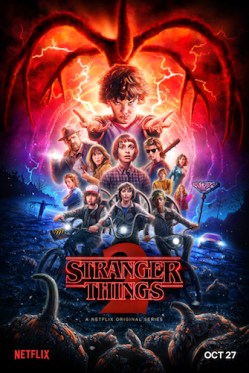
    Stranger Things 2
    Stranger Things 2Netflix’s most talked about show (well, unless you count House of Cards for all the wrong reasons) returns wth a second season that isn’t just a continuation, it’s a sequel — note how it’s officially called Stranger Things 2 (which briefly sent IMDb skwiffy), and how the episode titles aren’t Chapters Nine to Seventeen of Stranger Things but Chapters One to Nine of Stranger Things 2. Set almost a whole year after the first season, and telling a self contained story (though one that obviously builds out of the first season) which takes place over just a couple of days (in fact, more or less half the season takes place on a single day and night), it feels more like watching a follow-up movie than the next set of instalments in a series that is reported to run another two years yet.
    The idea is emphasised further by the fact its form seems largely inspired by The Empire Strikes Back — well, it’s Stranger Things: of course it borrows heavily from an ’80s movie. (If you want to see a whole array of its visual homages/rip-offs in a succinct two-minute video, check out this.) It doesn’t map one-for-one onto Empire’s structure, but it takes the same broad shape: splitting our heroes up into different smaller groups off having their own adventures; throwing new characters into the mix; expanding the universe and the mythos. If anything, Eleven is Luke — by herself, learning about her past, developing her telekinetic abilities. And Dustin and Lucas are kind of Han and Leia — supporting characters now given their own important arc, including both romance and the introduction of a major new character. And so Mike is… I dunno, Obi-Wan? A former main character who’s now barely present. As for Joyce, and Hopper, and Nancy and Jonathan, and Steve, and Will… yeah, Star Wars doesn’t have this many lead characters. Well, I did say it wasn’t exactly like-for-like.

    Perhaps another side effect of the movie-esque style is that it feels… short. Like, just as things seem to be getting going, it’s the finale. It’s a problem many binge-focussed series have these days, but this struck me as a particularly pronounced example. It could just be my own fault for watching it all in double-bills, but then I do that quite routinely with Netflix shows and I’ve not felt it so keenly before. Nonetheless, it has enough moving parts that the two-part finale (it’s not officially billed as that, but it is that) remains highly satisfying. As with season one, it’s when everyone finally comes together to fight the threat that the season is at its most satisfying, those two episodes feeling like an adrenaline-fuelled mini-movie (well, movie-length movie) of their own.

    Blood ElNow, you can’t discuss Stranger Things 2 without mentioning the infamous Chapter Seven. If you’ve missed the internet’s collective exclamation of disappointment and/or annoyance, IMDb has it in a nutshell: on there, the user ratings of all the other episodes (from both seasons) range from 8.5 to 9.5, a spread of 1.0 (obviously), but Chapter Seven has 6.2, a full 2.3 marks below the next lowest score. Ouch. It’s not great, but I didn’t think it was that bad. It’s a total aside from the main action, and placed where it is seems designed just to delay the pay-off to Chapter Six’s cliffhanger for another 45 minutes (in a regular programme it’d be two weeks, but this is Netflix). I don’t really hold with that being an actual problem, though — that’s just taste. No, the real problem is that it rushes through a character arc for Eleven that would’ve been better presented over multiple episodes. Considering before that she’s spent several episodes just sat around watching TV, there were surely better ways to structure her role this season.
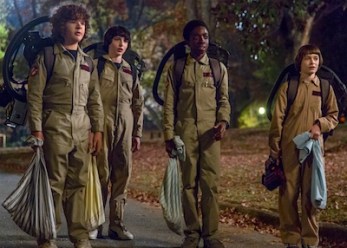
    That’s no slight on Millie Bobby Brown’s performance, mind — she’s great again, displaying so much character and emotion even through Eleven’s limited understanding of being a normal person. Also worthy of note is Noah Schnapp as Will. Considering he had so little to do in season one, they either lucked out with his casting or knew where they were going enough to cast it well — a lot is asked of him here, and he’s up to it. I could keep going, but if we begin to single people out we’ll be here all day: almost every lead cast member gets either a stand-out scene or a decent arc. They even made Steve likeable. Finn Wolfhard draws the short straw — Mike spends most of the season just being grumpy about Eleven — but as he was the centre of attention last time it’s okay to let the others shine.

    Something stranger in their neighbourhoodEven though it has all the big action stuff you’d expect, Chapter Nine still devotes a serious chunk of time to a character-focussed epilogue; reminding you that, as with most loved shows, the heart of it is the characters and their relationships. Indeed, although the season as a whole didn’t have the same effectiveness as the first, I thought the finale was a better climax. In fact, it would be a perfectly valid place to leave the entire series… but there are (at least) two more seasons to go. It might be nice if season three opened up the timeline a bit, because so far Hawkins seems to be a place where Crazy Terrible Shit happens over a couple of days and then everything’s fine for a whole year.

    Red Dwarf XII  Episodes 4-6
    Red Dwarf XIII had nice things to say about the first half of Red Dwarf XII in my last TV column, which kindly glossed over the fact that episode three, Timewave, was a bit of a disaster. I think it’s safe to say the second half of the series is stronger — it represents everything I said last time, but better. The final two episodes, M-Corp and Skipper, even throw in some fan-pleasing callbacks — real deep-dives too, aimed squarely at the long-term fanbase. (No spoilers here — the last episode has been available on demand for a week but doesn’t officially air until tonight.) The episodes don’t need such devotee delights just to curry favour — their concept-driven comedy is satisfying enough to stand on its own — but there’s no denying the added pleasure to be found in the references and cameos. You can certainly hear the glee of the live studio audience as they recognise what’s going on each time (it even messes up the pacing of one bit for us regular viewers, but I guess that’s the trade-off). So, even more than last time, this set of episodes demonstrate there’s definitely life in the old Dwarf yet. Bring on series XIII.
    Peaky Blinders  Series 3
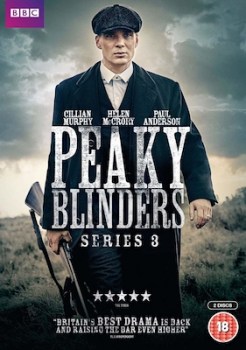
    Peaky Blinders series 3Beginning with a significant time-jump and monumental change in circumstance worthy of a Mad Men season premiere, the third series of Peaky Blinders soon sees everyone’s favourite Brummie gangsters embroiled in espionage and counter-espionage as they’re enlisted to help exiled Russian aristocracy launch a bid to reclaim their country. There’s so much more going on than that, but I won’t get into it here because we’ll be here all day — Peaky Blinders is a complexly plotted series; right up the final episode, which contains revelations that turn the previous six hours on their head. Even with all that narrative to get through, it still finds plenty of time to give most of its large-ish ensemble cast some strong character arcs. There are a few streaming series that could learn a thing or two from that…
    Rick and Morty  Season 1 Episode 2
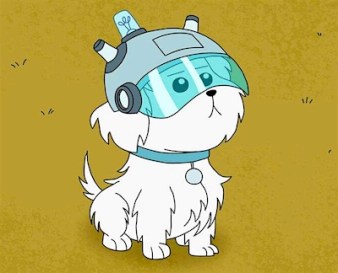
    Neither Rick nor MortyI confess: I started watching Rick and Morty fully expecting to hate it. I’d always thought it looked and sounded annoying, so I paid it no heed… but then it seemed to keep coming up — people referring to it in excited tones, and it ranking 7th on IMDb’s top TV list. So I decided to see what all the fuss was about, still expecting my initial impressions to be proved correct but endeavouring to have an open mind. The pilot (which I covered back in August) did little to sway my mind: it wasn’t terrible, but it had many of the irritations I’d perceived and only a few redeeming qualities. But I read that it was an unrepresentative and below par episode, so I pressed on. Things immediately pick up: the second episode, Lawnmower Dog, mixes together Inception, Nightmare on Elm Street, and super-intelligent canines into an entertaining and clever half-hour. It’s bought my attention for a couple more episodes, at any rate.
    Also watched…
  • Arrow Season 6 Episodes 1-2 / The Flash Season 4 Episodes 1-2 — Here we go again… At least The Flash seems to have perked up again this year, which I used to find a little irritating but is actually quite welcome after the dour last two seasons.
  • Bounty Hunters Series 1 Episodes 1-2 — Belatedly started this Jack Whitehall comedy-thriller, which tonally is a bit like The Wrong Mans, which I loved. More thoughts when I’ve finished the series.
  • Castle Season 8 Episodes 4-9 — The arc plot this season is really rather irritating. This is when I’m thankful for binge-watching: it makes that crap go by faster.
  • Detectorists Series 3 Episode 1 — Promptly started the new series of this Mackenzie Crook comedy, which I previously named one of my ten favourite series of the last decade. More thoughts next month.
  • The Good Place Season 1 Episodes 1-2 — Belatedly started this Kristen Bell comedy-fantasy (which only arrived in the UK with the start of season two anyway, so not that belatedly). It’s kind of brilliant so far. More thoughts when I’ve finished the season.
  • Upstart Crow Series 2 Episodes 5-6 — See last month.

    Things to Catch Up On
    MindhunterThis month, I have mostly been missing Mindhunter, David Fincher’s new Netflix series about the early days of criminal psychology and criminal profiling at the FBI. It was actually released before my last TV post, but I didn’t have Netflix at the time so I didn’t bother to mention it. I would watch it next, but The Punisher is out tomorrow. Maybe after that…
    Next month… Netflix gets punishered.

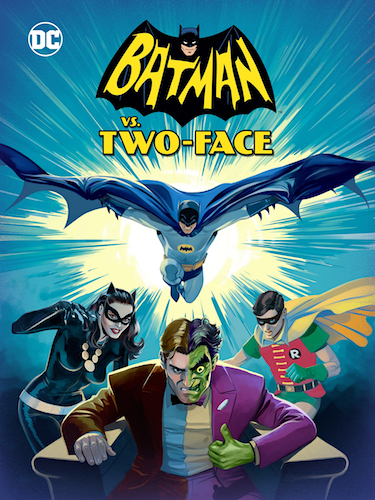
  • Batman vs. Two-Face (2017)

    2017 #153
    Rick Morales | 72 mins | Blu-ray | 1.78:1 | USA / English | PG / PG

    Batman vs. Two-Face

    Last year the spirit of 1966 was revived when Adam West and Burt Ward returned to the roles of Batman and Robin (or their voices did, anyway) in Return of the Caped Crusaders, a fun comedy-adventure animation that paid tribute to the enduringly popular ’60s incarnation of the (not-so-)Dark Knight. Given the film’s success, it was no surprise a sequel was instantly in development. West completed work on it before his death earlier this year, meaning it now acts as a tribute. It’s unfortunate, then, that it’s not very good.

    As the title makes clear, it sees West’s Batman come up against Two-Face — perhaps the most major member of Batman’s extensive Rogues Gallery to never appear in the TV show. Famed sci-fi author Harlan Ellison did actually write a treatment for a Two-Face episode, but the series was cancelled before it could be produced. It was adapted into a comic in 2015, and there was speculation it would form the basis for this animation too, but that isn’t the case. Maybe it should’ve been.

    Things are weird from the off. The film begins by depicting a version of Two-Face’s origin — one that involves Harleen Quinzel, aka Harley Quinn, a character who wasn’t created until 25 years after the series this is based on. Anyway, it still sees DA Harvey Dent getting half his body fried and subsequently turning into a supervillain whose every decision is ruled by the flip of a coin. With this established in the pre-titles, there’s then a title sequence that shows plenty of Batman vs. Two-Face adventures. Is this a preview of what’s to come? No, because post-titles the story resumes with Harvey being cured. What a weird idea for a ‘first’ Two-Face story.

    Why you two-faced...

    Then Batman has to take on a variety of other foes, and you begin to wonder why the hell this is called Batman vs. Two-Face if he’s fighting everyone but Two-Face. Perhaps unsurprisingly, it does come back around to the eponymous enemy, though Batman refuses to believe his involvement — Harvey has been cured, so is someone impersonating Two-Face? The Boy Wonder isn’t convinced, but Batman is determined to believe his old chum. Oh yes, that’s right — this guy who’s just turned up in the series is apparently Bruce Wayne’s oldest bestest buddy. No wonder Dick’s nose is out of joint.

    At the core of this, once what’s going on is eventually unravelled, is a not-half-bad Two-Face story. Unfortunately, that’s not really a strong marriage for this version of Batman — we don’t want a serious Bat-adventure, we want something light, daft, and above all fun. Batman vs. Two-Face isn’t exactly a sombre affair, but it isn’t funny enough either, lacking the gadabout charm of Return of the Caped Crusaders. The tone is just wrong. The makers admit they were trying to mix “camp with noir”, but — as I think any of us could’ve told them — that’s an unnatural combination that just doesn’t work. None of this is helped by the fact the animation looks cheap, even by the standards of DC’s other direct-to-video movies.

    Best buds, supposedly

    Clint Eastwood was being lined up to take on the role of Two-Face back in the ’60s, but he’s a bit above this kind of fare nowadays. Instead, the villain is voiced by another megastar of ’60s genre TV: William Shatner. Known for his mannered, scenery-chewing acting and ability to send himself up, Shatner seems the perfect foil for West’s Batman. Sadly, the material doesn’t allow Shatner to ham it up like you expect him to. Two-Face’s side of the story is played pretty straight, allowing none of the excess you’d expect from Shatner in comedy mode. Instead, the erstwhile starship captain delivers a genuinely decent acting performance. His voice work creates a clear delineation between the characters of Harvey Dent and Two-Face, and he delivers a fine interpretation of a man held hostage by his own alter ego. But, again, such a straight portrayal is not what’s desired from a Batman ’66 movie.

    I was surprised to discover that Batman vs. Two-Face comes from the exact same writers and director as Return of the Caped Crusaders. The previous film nailed what it needed to be so perfectly, yet this seems to miss the mark almost entirely. My score errs on the side of harshness — there is fun to be had here — but it reflects my feeling immediately after the credits rolled that, overall, this was a massive disappointment.

    2 out of 5

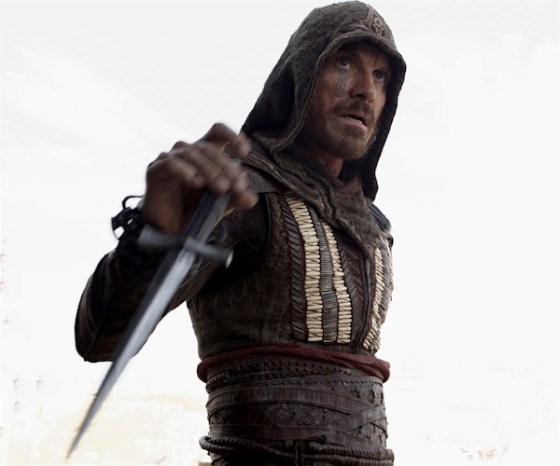
    Assassin’s Creed (2016)

    2017 #135
    Justin Kurzel | 115 mins | download (HD+3D) | 2.35:1 | USA, France, UK, Hong Kong, Taiwan & Malta / English, Spanish & Arabic | 12 / PG-13

    Assassin's Creed

    There seemed to be great hope when the Assassin’s Creed movie was announced. Partly because it’s a popular video game series, so of course its fans were excited; but also because it attracted star Michael Fassbender, an actor doing Oscar-calibre work, who then hand-picked director Justin Kurzel, whose previous movies suggested loftier ambitions than just trashy blockbusters. Feelings seemed strong that this could be the first great video game adaptation. But it was not to be.

    Fassbender plays Cal, a criminal who is ostensibly executed but then wakes up in a strange facility where a doctor (Marion Cotillard) informs him that they’re going to strap him into a machine called the Animus, which uses Cal’s DNA to kind of send him back in time to relive the memories of his ancestor, who was an Assassin (with a capital A, because they’re like a guild or something). Her organisation, the Templars (who are the bad guys, presumably), want to use this totally plausible science to access the aforementioned memories so that they can locate the world-changing MacGuffin, hidden away by Cal’s ancestor (who was a good guy, I think). Something like that, anyway.

    Academy Award Nominee Michael Fassbender

    To be honest, a “something like that” feeling pervades the film. It’s a very strange viewing experience, in that you can follow what’s going on while at the same time feeling like it makes no sense whatsoever. Until the last act, anyway, when it goes thoroughly WTF. In part that’s because all the nonsensical bits and bobs that you let slide earlier finally come into play. Like, what’s going on with the other inmates? Are they actual Assassins? Did using the Animus make them Assassins? That seems to be what happens to Cal. So, how does that work exactly? And then the actual ending… what the hell was it all about? I’m not sure I could even summarise my confusion — like I said before: it’s both completely followable and completely nonsensical. Of course, it’s very much trying to leave things open for a sequel. I guess that won’t be happening…

    For a video game adaptation marketed as an historical actioner, there’s altogether too much plot (whether it’s followable or not, the story is dull and unengaging) and too little action. What’s there is mostly well realised — apparently a lot of it was done for real, and although there’s obviously a lot of CGI background extension (with a nice painterly look), there’s a definite physicality to the parkour and fisticuffs that you don’t get with CGI body doubles. I mean, there are only three or four action sequences total, and only one and a half of them are really worth it, but at least there’s something to like in them. Unfortunately, the action carries no weight: our hero can’t change the past, just witness it as he helps the bad guys watch to see where the MacGuffin ended up. So we are literally watching someone watch someone else do all the action — like, y’know, watching someone else play a video game. It’s almost a meta commentary on video game movies, except I don’t think that was the intention.

    Running and jumping

    So what is it trying to comment on? I mean, it’s an action blockbuster, so “nothing” would be a perfectly adequate answer. Nonetheless, some reviews claim it’s trying to consider philosophical, religious, and/or genetics-related concepts. I suppose it does technically mention such things, but it fails to actively engage with them to such a degree that I think it’s doing it a kindness to even claim it’s attempting to be a thoughtful movie. In a similar shot at intelligence, apparently we were meant to feel neither the Templars nor Assassins are good or bad, but both morally grey. However, rather than creating ambiguity in who to root for, it just comes across as a smudge of indifference.

    Nothing else impresses either. It’s a very visually gloomy film. I can’t discount the possibility that’s because I watched it in 3D, with the notorious darkening effect of the glasses, but my setup usually compensates for that (I don’t recall noting any undue darkness on other 3D viewing). Actually, the 3D itself was fine — good, even, at times — but it’s battling the largely unappealing visuals.

    Come up to the lab and see what's on the slab

    I’ve never played an Assassin’s Creed game, but I’d wager they don’t primarily consist of people nattering in a lab interspersed with the occasional period action scene. Maybe a greater adherence to such thrills, and less needlessly convoluted plotting, would’ve made for a more likeable movie. My rating’s possibly a tad harsh, but Assassin’s Creed could and should have been better.

    2 out of 5

    Assassin’s Creed is available on Sky Cinema from today.

    What We Do in the Shadows (2014)

    2017 #138
    Jemaine Clement & Taika Waititi | 86 mins | Blu-ray | 1.78:1 | New Zealand & USA / English & German | 15 / R

    What We Do in the Shadows

    There’s no two ways about it: I’m late to the party with What We Do in the Shadows. After rave reviews at film festivals and when it was released in some countries (including the UK) in 2014, its acclaim as a cult comedy seemed to reach a focal point in early 2015 when a Kickstarter campaign to give it a wider US release attracted over 7,000 backers and the best part of half-a-million dollars. I recall preordering the Blu-ray in the wake of the slow-burning fuss I kept hearing about it. That came out in April 2015, and swiftly ended up on one of my many unwatched piles… until now!

    For the sake of those who are even later to it than me, it’s a mockumentary about a group of housemates in Wellington, New Zealand, who are vampires. With each of them being hundreds of years old, they’re thoroughly out of touch with the modern world — until they make some new, younger friends…

    This juxtaposition allows the film two rich strands of humour. Firstly, it riffs off vampire movie clichés and references — there are bits about sleeping in coffins, turning into a bat, and so on. In a similar vein, each of the housemates is a version of a classic movie vampire: there’s a silent Nosferatu-ish one; a violent womanising Dracula-ish one; an effeminate dandyish one; and so on. There are also various scenes that play on vampires’ familiar abilities by featuring a neat and often surprising use of special effects — the film’s so low-budget and so naturalistically staged, you’re not expecting any outright fantastical stuff. That element of unexpectedness makes such moments all the more effective.

    Night life

    In the second strand, it embraces mundanity — putting these supernatural creatures in the same dull suburban lifestyles that we all know, like struggling to get into the good nightclubs, or a supposedly grand ball taking place in a rundown community centre. Perhaps best of all are bits which straddle the two stools — the practicalities of being a vampire; like how do you get dressed up to go out if you can’t see your reflection, or having to clean up the mess after drinking someone’s blood. The film plays these various comic facets with a great deal of wit and cleverness, but it’s also suitably silly, which allows the humour to function at various levels. What’s even more surprising is that, as it goes on and we build up a connection to these characters, it becomes actually quite touching at times.

    Apparently writer-directors Jemaine Clement and Taika Waititi wrote more than 150 pages of screenplay for the film, then didn’t actually show it to any of the cast so they would improvise scenes and be surprised by plot developments. That resulted in over 125 hours of footage, which took almost a year to edit down to just an hour and a half. (No wonder the Blu-ray includes piles of deleted, extended, and additional footage.) On the one hand, perhaps that helps explain why the film is so funny — they were able to really cherrypick the best bits. On the other other, it makes the final result all the more impressive — that they were able to hone storylines and character arcs from that immense supply of material. And it still clocks in at just 86 minutes! Hollywood moviemakers who let their part-improvised comedies sprawl to baggy two-hours-plus running times might learn a thing or two here.

    Drinking blood

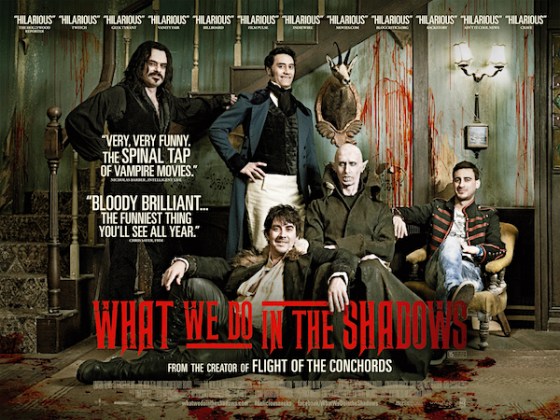
    Perhaps the more familiar you are with vampire fiction the more you’ll get out of What We Do in the Shadows’ humour, but I don’t think that’s a prerequisite to enjoying it — I should think knowing the basics of vampire mythology is enough to get laughs from the majority of the movie without feeling like you’re missing anything. And in the end, the most important thing is that it’s incredibly funny. Or, as the poster accurately puts it, “hilarious, hilarious, hilarious, hilarious, hilarious, hilarious, hilarious, hilarious, hilarious, hilarious, hilarious, hilarious.”

    5 out of 5

    What We Do in the Shadows is available on iPlayer until 28th November.

    It placed 12th on my list of The 17 Best Films I Saw For the First Time in 2017, which can be read in full here.

    The UK TV premiere of Taika Waititi’s previous film, Boy, is on Film4 tonight at 10:50pm.
    His new film,
    Thor: Ragnarok, is out everywhere now and is reviewed here.

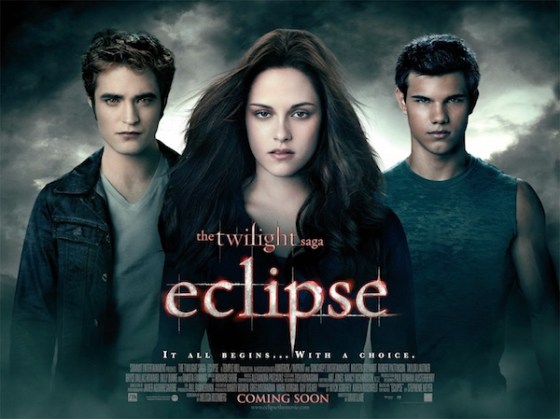
    The Twilight Saga: Eclipse (2010)

    2017 #142
    David Slade | 119 mins | streaming (HD) | 2.35:1 | USA / English | 12 / PG-13

    The Twilight Saga: Eclipse

    For the third Halloween in a row, I’ve subjected myself to true cinematic horror: a Twilight film. I suppose this one’s theoretically the turning point of the franchise: it’s the middle movie in the film series, while in the books it’s the penultimate instalment — surely in every regard placed to set up the final conflict. Well, you wouldn’t know it, because this is another Twilight film where very little happens.

    The plot, such as it is, sees Bella (Kristen Stewart) trying to juggle her romantic relationship with vampire Edward (Robert Pattinson) and her just-about-platonic friendship with werewolf Jacob (Taylor Lautner), which is tricky because the pair don’t get on owing to an ancient feud between their species. Just your regular high school problems, then. Meanwhile, a series of mysterious murders in Seattle have caught the attention of Edward’s de facto vamp family, because they reckon it’s probably not your bog standard serial killer, but rather something in their neck of the woods. (Their neck of the woods. Geddit? Neck of the woods. Nothing? Okay then.) What do they plan to do about it? Watch it… on the news… and… er… wait and see… if it comes near them… maybe?

    So, that, but for two hours.

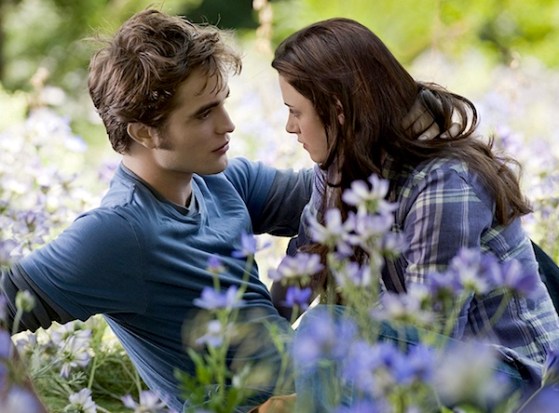
    I know how to settle this... a stare off!

    So yes, nothing happens — and yet, somehow, nothing happens less boringly than last time. I mean, it’s not great, but it’s not as bad. It actually has some passably good scenes and conflicts, for example. That said, it spends the whole movie getting to basically where the last one ended. The dialogue’s still shit as well. Especially the supposedly passionate stuff, which is like some 11-year-old-who’s-watched-too-many-movies’ idea of what would be romantic. Most of the scenes go on far longer than needed. Plots go round in circles (as I said, nothing happens). And there’s nothing as brilliantly awful as Face Punch, though Edward and Jacob do get one passingly amusing one-liner each. And I have absolutely no idea whatsoever why it’s called Eclipse. I suppose Twilight and New Moon didn’t mean a great deal either, but I still think they meant more than Eclipse.

    This may sound a strange thing to say, but this one’s very much a romance movie. The first two must’ve been as well, because that’s what Twilight is, so I’m not sure why I felt it more this time. I suppose the first one had a lot on its plate establishing all the supernatural stuff, and New Moon had a lot of palaver building out the world further, mixing in werewolves and the vampire high council (or whatever). Eclipse does have the Seattle stuff, but that just pops up now and then in between Bella umming and ahhing over her relationships.

    Team Abs

    As to that, the story tries so. hard. to make you believe it’s possible Bella could change her mind and switch affections from Edward to Jacob — but did anyone ever really believe that was an actual possibility? The story just isn’t built that way. Before I watched the films, I could never understand why anyone would be Team Jacob. It seemed so obvious she’d end up with Edward, why waste your energy? But now, even still thinking it’s inevitable, if I had to pick a team it’d definitely be Team Jacob. The reason is Taylor Lautner. No, not because of his phwoarsome abs. I remember everyone being very surprised when Lautner joined BBC Three sitcom Cuckoo, but actually watching these films you can see he has at least some ability with comic timing. His character is also more down-to-earth and levelheaded than his vampiric rival. Put together, these traits make Jacob much more likeable than bloody Edward.

    The rest of the cast are as much nonentities as ever. It’s no wonder it’s taken Kristen Stewart years to re-establish the positive career path she was on before Twilight. Original Victoria actress Rachelle Lefevre was fired because her schedule for another film overlapped, and her replacement is Bryce Dallas Howard. Although Victoria has been an antagonist throughout the series, and her storyline ostensibly comes to a head in this instalment, she’s barely present. Quite why they cast a relatively well-known actress in such a minor role, or why she agreed to do it, is a mystery. At least it doesn’t seem to have harmed her career.

    Team Sparkles

    Others have been less fortunate. I mean, Robert Pattinson still works, but in what lately? I thought the same about director David Slade, whose work here is perfectly serviceable while at no point being memorable. Previously he’d helmed well-received horror/thrillers Hard Candy and 30 Days of Night, a promising start to his career. However, since taking the Twilight dollar (he’d previously slagged off the series, comments he tried to pass off as a joke when he signed on for Eclipse) he’s shifted to TV, starting off poorly with a raft of pilot episodes like This American Housewife (not picked up), Awake (ditched after a half season), Crossbones (cancelled after nine episodes), and Powers (only available on PlayStation). But more recently he’s been an executive producer and director on Hannibal and American Gods, and has a Black Mirror coming up. I guess the era of prestige TV is working out for him.

    Anyway, back to Eclipse. For a movie in which so little happens, I found it surprisingly unobjectionable. It’s not good, but I’d say it’s the least-bad Twilight so far. Of course, it wouldn’t make any sense to watch it without sitting through the previous two first, so my assessment is even more damning with faint praise than it sounds.

    2 out of 5

    See you this time next year for Breaking Dawn Part 1… and maybe Part 2, just to get this thing over with.