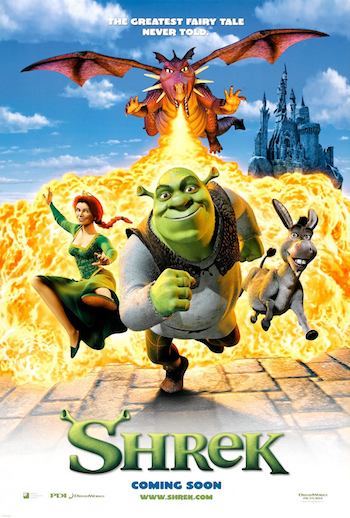
Shrek (2001)

The 100 Films Guide to…

Shrek

The greatest fairy tale never told.

Country: USA
Language: English
Runtime: 90 minutes
BBFC: U
MPAA: PG

Original Release: 16th May 2001 (USA)
UK Release: 29th June 2001
Budget: $60 million
Worldwide Gross: $484.4 million

Stars
Mike Myers (Austin Powers: International Man of Mystery, The Cat in the Hat)
Eddie Murphy (Coming to America, Dreamgirls)
Cameron Diaz (There’s Something About Mary, Gangs of New York)
John Lithgow (Cliffhanger, Rise of the Planet of the Apes)

Directors
Andrew Adamson (The Chronicles of Narnia: The Lion, the Witch and the Wardrobe , Cirque du Soleil: Worlds Away)
Vicky Jenson (Shark Tale, Post Grad)

Screenwriters
Ted Elliott (Aladdin, Pirates of the Caribbean: The Curse of the Black Pearl)
Terry Rossio (The Mask of Zorro, Pirates of the Caribbean: Dead Man’s Chest)
Joe Stillman (Beavis and Butt-Head Do America, Gulliver’s Travels)
Roger S.H. Schulman (Balto, Mulan II)

Based on
Shrek!, a picture book by William Steig.


The Story
When his swamp is overrun with fairytale creatures, ogre Shrek sets off to confront the man responsible, Lord Farquaad. To get his land back, Shrek must rescue the Princess Fiona from her dragon-guarded castle, so that Farquaad can marry her. But all is not as it appears…

Our Hero
Shrek is a grumpy Scottish-accented ogre who just wants to be left alone in his swamp, but events conspire to get in his way. Of course, as things transpire, he really has a heart of gold.

Our Villain
Men of his stature are in short supply, though there are those who think little of him — it’s Lord Farquaad, who wants Fiona to be his bride primarily so he can become king.

Best Supporting Character
Shrek’s new best friend (whether he likes it or not), wise-cracking ass Donkey, gets many of the best lines.

Memorable Quote
Gingerbread Man: “Do you know… the Muffin Man?”
Lord Farquaad: “The Muffin Man?”
Gingerbread Man: “The Muffin Man.”
Lord Farquaad: “Yes, I know the Muffin Man. Who lives on Drury Lane?”
Gingerbread Man: “Well, she’s married to the Muffin Man…”
Lord Farquaad: “The Muffin Man?”
Gingerbread Man: “The Muffin Man!
Lord Farquaad: “She’s married to the Muffin Man…”

Memorable Scene
As Shrek, Fiona, and Donkey travel back to Lord Farquaad, they’re jumped upon by Robin Hood (who, for no apparent reason, has a French accent) and his Merry Men, attempting to rescue Fiona by, in part, singing a merry song. But she doesn’t want rescuing and so goes all Matrix on their merry arses.

Memorable Music
As part of its generally irreverent take on myths and fairytales, Shrek is laden with contemporary popular music. It was all very modern at the time, but, 17 years on, it’s obviously dated itself, sounding distinctly early-millennium-y now.

Technical Wizardry
The overall animation quality may be looking a bit dated now, but Shrek hails from the era when every major new computer-animated movie was breaking ground in the field, in one way or another. In Shrek‘s case, it was the ability to realistically animate hair and grass.

Next time…
To date there have been three sequel movies, a spin-off movie (which then has its own world of attendant spin-offs, including a six-season TV series), a 4D theme park attraction (which was included in 3D on some DVD releases of the film), plus numerous TV specials and the like, as well as a stage musical version. There are constant rumours of the franchise getting a big-screen continuation, too.

Awards
1 Oscar (Animated Feature)
1 Oscar nomination (Adapted Screenplay)
1 BAFTA (Adapted Screenplay)
5 BAFTA nominations (Film, Supporting Actor (Eddie Murphy), Music, Sound, Special Visual Effects)
1 BAFTA Children’s Award (Film)
1 Saturn Award (DVD Special Edition)
4 Saturn Award nominations (Fantasy Film, Supporting Actor (Eddie Murphy), Writing, Music)
8 Annie Awards (Animated Theatrical Feature, Individual Achievement for Directing in an Animated Feature, Individual Achievement for Writing in an Animated Feature, Voice Acting by a Male Performer in an Animated Feature (Eddie Murphy), Individual Achievement for Effects Animation, Individual Achievement for Music Score an Animated Feature, Individual Achievement for Production Design in an Animated Feature, Individual Achievement for Storyboarding in an Animated Feature)
4 Annie Award nominations (Individual Achievement for Character Animation (x3), Individual Achievement for Production Design in an Animated Feature)
Nominated for the Hugo for Best Dramatic Presentation
Nominated for the Palme d’Or (seriously)

Verdict

DreamWorks’ irreverent riff on fairytale animations was a breath of fresh air back in 2001, allowing them to net the first Best Animated Feature Oscar ahead of Disney or Pixar. A decade and a half of imitators have taken the shine off that somewhat, as have advances in technology (old CGI ages worse than old cel animation), but it remains an amusing and quotable film, with a surprisingly strong moral message at its heart.

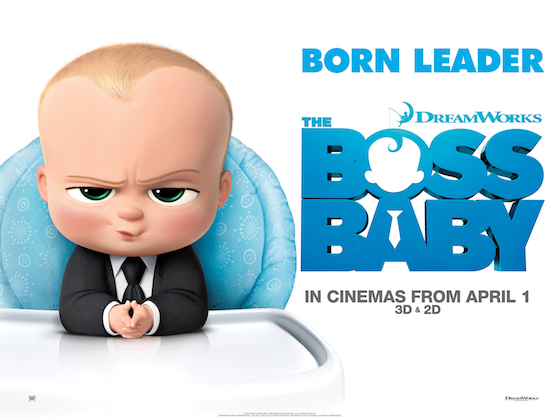
The Boss Baby (2017)

2018 #12
Tom McGrath | 97 mins | download (HD+3D) | 2.39:1 | USA / English | U / PG

The Boss Baby

The Boss Baby was one of the top 20 highest grossing films of 2017, which earnt it a place on my ’50 Unseen’ list, thereby ensuring it would remain in my consciousness for as long as I referred to said list (i.e. for the rest of time). Then it went and got nominated for an Oscar too, displacing the likes of The LEGO Batman Movie and Ghibli heir Mary and the Witch’s Flower in the process. With those factors combined, I felt I had to witness it for myself. I chose to do so in 3D, to hopefully ameliorate at least some of the anticipated discomfort of watching the film itself. I needn’t have worried: despite what many people will tell you, I thought The Boss Baby was actually pretty good. Well, most of it.

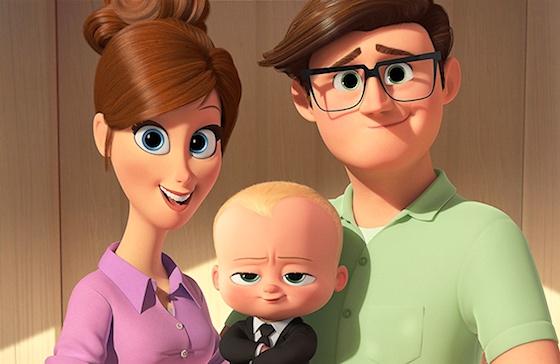
It’s the story of Tim (voiced by Miles Bakshi and in narration by Tobey Maguire), a seven-year-old only child with a hyperactive imagination and two doting parents. But then a new baby arrives… As Tim’s parents’ affection shifts to their attention-demanding bundle of joy, he’s the only one who can see the truth: that the baby wears a suit, carries a briefcase, and is clearly a businessmanbaby on some kind of undercover mission. Obviously no one will listen to Tim, so he sets about exposing the truth.

Sibling rivalry

For all its daft humour, the reason The Boss Baby is so successful (for an adult viewer) is that it’s actually a really neat way of tackling the whole “sibling displaced by new baby” thing, from the kid’s point of view. That’s the thematic and subtextual meat that makes it more than just “wouldn’t it be funny if a baby was a businessman!” As part of this, it has a nice line in juxtaposing how an imaginative seven-year-old sees the world versus how it really is — showing us both Tim’s fantasies and the actual events they’ve launched off from. It allows the film to have exciting and kooky stuff (like talking business-babies and elaborate action scenes) while also remaining grounded. Watching in 3D heightens this further, incidentally: as with most computer-animated films, the 3D effect is generally pretty nice, but it really comes alive during the fantasy and action sequences.

If that all sounds oddly serious, it isn’t. Arguably best known nowadays for his Trump impersonations, Alec Baldwin is an obvious choice to voice an infantile businessman. This one’s actually competent, though, so Baldwin plays it straight and thus is dryly witty. There are also plenty of amusing visual gags, one-liners, and so on to fulfil the expected comedy remit. Okay, some don’t land or are a bit juvenile, but it is a kids’ movie after all.

Parents are so gullible

Unfortunately, what works in the early sections begins to go awry later on. By the third act it’s lost the connection to plausible reality that made Tim’s imagined versions such fun — it’s impossible to translate the OTT action we’re witnessing into what might be really happening. I know it sounds daft to talk about plausibility in a film about a baby who’s a businessman, but it’s the relationship between Tim’s fantasies (i.e. the business-baby stuff) and real-life (i.e. really he’s just a new baby) that makes the earlier parts work.

Arguably worst of all is the epilogue, which takes a very serious emotional issue (the loss of a baby) and tosses it aside to expedite the resolution the filmmakers want to reach. Maybe it’s a bit much to expect a kids’ movie to attempt to tackle the realities of losing a child, especially when it only introduces that element in its closing minutes, but then surely the solution is to not even go there; to find a better way to wrap up the story?

It’s this increasing lack of attentiveness that ultimately led me to give the film a 3 instead of a 4. If it had kept up the early quality through to the end, I likely would have looked more generously on it. Nonetheless, thanks to the bits that worked really well, I generally found the film to be a pleasant surprise.

3 out of 5

Spin-off TV series The Boss Baby: Back in Business is available on Netflix from today.

Beetlejuice (1988)

The 100 Films Guide to…

Beetlejuice

The Name In Laughter
From The Hereafter

Country: USA
Language: English
Runtime: 92 minutes
BBFC: 15
MPAA: PG

Original Release: 30th March 1988 (USA)
UK Release: 19th August 1988
Budget: $15 million
US Gross: $73.7 million

Stars
Michael Keaton (Batman, Birdman)
Alec Baldwin (The Hunt for Red October, Glengarry Glen Ross)
Geena Davis (The Fly, Thelma & Louise)
Winona Ryder (Heathers, Edward Scissorhands)

Director
Tim Burton (Pee-wee’s Big Adventure, Edward Scissorhands)

Screenwriters
Michael McDowell (The Nightmare Before Christmas, Thinner)
Warren Skaaren (Beverly Hills Cop II, Batman)

Story by
Michael McDowell (see above)
Larry Wilson (The Addams Family, The Little Vampire)


The Story
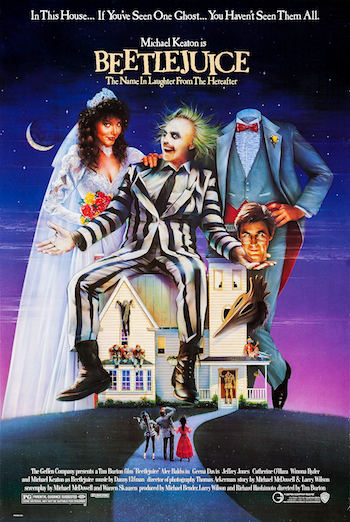
Adam and Barbara Maitland are living an idyllic life in their lovely small-town house… until they die. What’s worse is that they’re condemned to haunt their old home while a family of city-slickers move in and destroy everything they loved about it. To get them out, Adam and Barbara may be forced to call on disgraced ‘bio-exorcist’ Betelgeuse…

Our Heroes
Adam and Barbara Maitland are a sweet couple living a quite life in a quaint little town, until they’re killed in an accident (swerving their car to avoid a very cute dog, to be fair) and have to cope not only with haunting their old home, but also with the afterlife’s bizarre bureaucracy.

Our Villains
Betelgeuse, Betelgeuse, Betelgeuse! He may be offering to help the Maitlands, but in the end he’s their biggest problem. Before that, though, there’s Charles and Delia Deetz, the new occupants who seem determined to ruin the Maitlands’ beloved home.

Best Supporting Character
The Deetz’s daughter, little goth Lydia. She’s the only human who can see the Maitlands, and quickly finds she gets on with them better than her own parents.

Memorable Quote
Juno: “What’s wrong?”
Barbara: “We’re very unhappy.”
Juno: “What did you expect? You’re dead!”

Memorable Scene
When the Deetzes hold a dinner party for some of their city friends, Adam and Barbara attempt to frighten them away by puppeteering them into a bizarre rendition of Day-O (The Banana Boat Song). As well as the supporting cast gamely engaging in a dance routine (er, kind of), they really sell it by simultaneously looking confused and troubled about what’s going on with their bodies. Unfortunately for Adam and Barbara, however, the stunt backfires…

Memorable Music
The famed collaboration between Tim Burton and Danny Elfman dates right back to the director’s first film, making this their second together. But that recognisable Elfman style — so familiar from, er, every other Tim Burton movie (as well as others, of course) — is already very much in evidence. The main theme almost sounds like a greatest hits package for the composer, which does make you wonder how much it’s style and how much he’s been ripping himself off ever since…

Truly Special Effect
According to IMDb, the visual effects budget was just $1 million, leading Burton to decide to make the effects look “as tacky and B-movie as possible” — which is interesting because a lot of them are pretty good, bearing in mind that the film hails from the late ’80s. Obviously they’ve aged now, therefore, but it’s so packed with creative and varied visual trickery that I assume it once played as a kind of effects showcase. It’s only that in an historical sense now, but there’s still a lot of striking and memorable stuff here.

Letting the Side Down
Betelgeuse, Betelgeuse, Betelgeuse! Ironically, I’d like the whole film a lot more if the title character wasn’t in it. Okay, I know not everyone’s going to feel this way — I imagine some people love him — but, for me, he’s by far the worst thing about the film. He starts off with just a couple of small appearances that are only a little irritating, but when he enters the story properly… ugh.

Making of
Believe it or not, the original script was a straight horror film. Betelgeuse was a winged demon, only transforming into a man to interact with humans, whose goal was to rape and kill the Deetzes rather than just scare them off. Lydia was a minor character, with a younger sister who could see the Maitlands. I don’t know how exactly it went from that to a comedy, but maybe it was for the best.

Next time…
An animated TV series, which reconfigured Betelgeuse as the hero and teamed him up with Lydia, ran for 94 episodes between 1989 and 1991. Apparently it was a big hit, and aired on both ABC and Fox simultaneously, becoming “one of the few shows in American television history to be aired concurrently on two different broadcast networks.” Aside from that, a sequel movie has long been mooted, and continues to be an on-again-off-again prospect to this day.

Awards
1 Oscar (Makeup)
2 BAFTA nominations (Make Up Artist, Special Effects)
3 Saturn Awards (Horror Film, Supporting Actress (Sylvia Sidney), Make-Up)
5 Saturn Award nominations (Supporting Actor (Michael Keaton), Director, Writing, Music, Special Effects)
Nominated for the Hugo for Best Dramatic Presentation

Verdict

I knew that I’d seen Beetlejuice many years ago, but I could barely remember anything about it, other than a general sense that I didn’t like it much. So watching it again now was almost like a first viewing, and was almost a revelation too: it’s a very enjoyable film. Pretty much my only problem with it is Betelgeuse himself (as discussed above); but, in fact, he only makes up a relatively small proportion of the movie: he’s in just 17½ minutes, less than 20% of the film. The good qualities in the remainder keep it up at a 4-star level.

The Jungle Book (2016)

2018 #40
Jon Favreau | 106 mins | Blu-ray (3D) | 1.78:1 | USA & UK / English | PG / PG

The Jungle Book

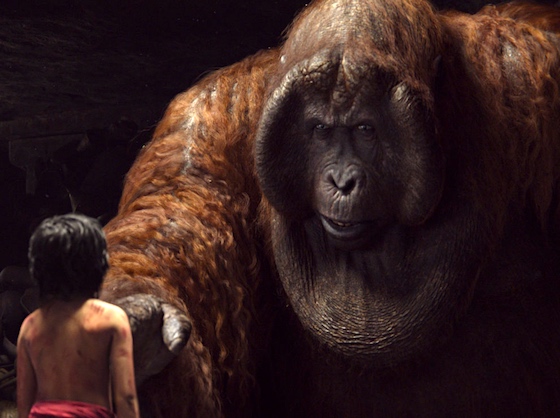
One of the successes that has convinced Disney to remake basically their entire animated back catalogue in live-action, Jon Favreau’s take on Disney’s adaptation of Rudyard Kipling’s stories barely counts as “live-action” really: the vast majority of it is animated — often the only real bits are Mowgli and some (but by no means all) of the props and scenery he interacts with — but it’s done to be photo-real and so we pretend that’s live-action.

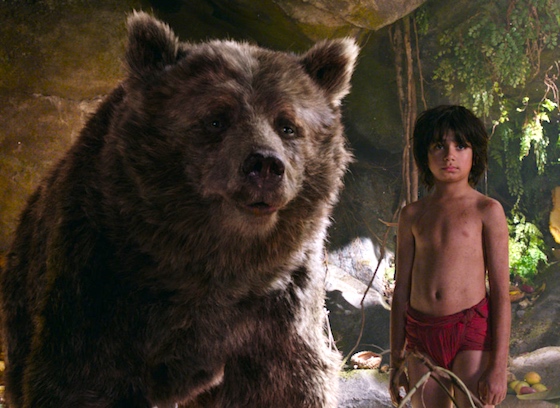
Whatever you want to call it, the visuals are stunning. It’s incredible stuff by the animators, though also by Favreau and DP Bill Pope to make all that hard work look great as a film too — they put special effort into making sure the CGI was properly lit, etc. And I reckon it’s even better in 3D. Presented in a screen-filling 1.78:1 ratio, unconstrained by the black bars of your nowadays-standard 2.35:1, it honestly feels like a window into another world. You sometimes see reviews of good 3D that say “you feel like you could reach out and touch it”, which I’ve always taken as A Thing People Say rather than an actual inclination, but at one point I did feel like I wanted to reach out and stroke Baloo’s fur, he looked so soft. The end credit sequence (a kind of pop-up book routine) looks particularly great in 3D, which helps to sell the miniaturised dimensions.

Bear necessities

Anyway, the film itself. Disney’s Jungle Book is such a well-known childhood classic that I don’t imagine you need me to recap its plot, though this version doesn’t ape it one-for-one. When Favreau was first brought on board the story treatment Disney had in development was much closer to Kipling’s work, including none of the changes Disney made when they adapted it before (i.e. adding songs and the character of King Louie), as well as being more violent, aimed at a PG-13 rating. So it was Favreau who decided it should be closer to the Disney classic, aiming to find the sweet spot between the two styles. I think he’s nailed that, mixing in enough that’s familiar from the animation with a bit more seriousness derived from Kipling.

That said, I wasn’t wholly convinced by the use of the songs. The rendition of Bare Necessities is disappointingly truncated, though at least fits in context. Conversely, King Louie’s song, I Wan’na Be Like You, is so out of place that I found the sequence kind of uncomfortable. Weirdly, its reprise at the start of the end credits is great. There it’s followed by Trust In Me, which isn’t included in the film proper but might actually have worked there.

I wanna be like you-oo-oo

Still, the film as a whole functions well; surprisingly well, one might even say. You may remember the Rotten Tomatoes score for it went crazy when it came out, hiding the high 90s — it ended up at 95%. And it’s the perfect example of why Rotten Tomatoes doesn’t score a film’s quality, but does score the chance that you’ll enjoy a film. I’m not sure many people would think this is a “9.5 out of 10” kind of film, but one there’s a 95% chance you’ll think is good? Yeah.

4 out of 5

The Jungle Book is available on Netflix UK from today.

Warcraft: The Beginning (2016)

aka Warcraft

2017 #38
Duncan Jones | 118 mins | streaming (HD) | 2.35:1 | USA, China, Canada & Japan / English | 12 / PG-13

Warcraft: The Beginning

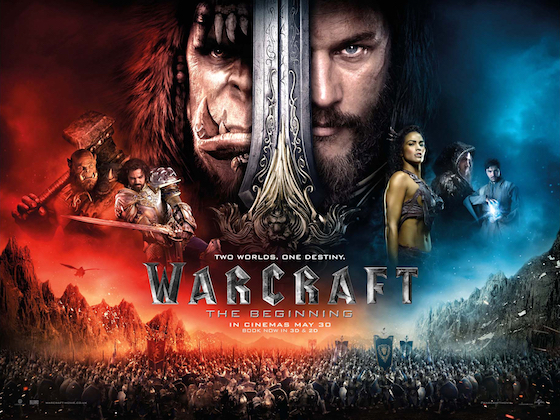
Produced by Legendary — one of the companies behind the Dark Knight trilogy, Jurassic World, Godzilla, and many other massive hits — the only thing that’s “legendary” about the Warcraft movie is how terrible it is.

Based on the long-running video game franchise, Warcraft (optimistically retitled Warcraft: The Beginning in many territories) is, based on what I’ve read, less an adaptation of the game (which has many different incarnations anyhow) and more an expansion of its universe. Rather than take the game itself and try to mush it into the shape of a movie, as most video game adaptations are forced to do, Warcraft depicts some of the game-world’s backstory, taking care to keep events canonical. I’m sure this is brilliant for fans and players, but I wonder if it’s part of why the film feels muddled and tacky to those of us who are uninitiated. Of course, at its best such efforts can make newcomers want to learn more; but at its worst it leaves you feeling confused and shut out. Warcraft is definitely a case of the latter.

It plays like a $160 million fan film. It doesn’t bother with world-building, just throwing the viewer in at the deep end. That can work, but it needs to be carefully managed. Warcraft just ploughs ahead, going deeper and deeper. It’s been made for people who know this world, its places, its people, its concepts, its rules. The film is a prequel to something that doesn’t exist — or, rather, something that doesn’t exist as a movie. And yet, for all co-writer/director Duncan Jones’ efforts to remain faithful, apparently it’s not faithful enough for some of the hardcore. It seems the movie has wound up in a place where it’s not stuck to the backstory enough to please initiated fans, but not opened itself up enough to be accessible to newcomers either.

This could get orcward

Unfortunately, the problems don’t stop there. Characters’ personalities change from one scene to the next, with no sense of development or connection. Many of the performances are stilted or clumsy, with a good deal of the actors feeling miscast. Scenes exist in isolation, with little sense they should follow what was before or precede what comes after. It feels like it was heavily messed around in post — not just stuff chopped out (reportedly Jones’ director’s cut was 40 minutes longer), but things moved around within the story — but then something will happen that suggests those scenes were always meant to be where they are. Whatever the cause, it makes it even harder to follow a story that already feels like it’s shutting out newcomers.

The biggest shame is that you can see glimmers of potential — mainly in the world itself, which is clearly quite thoroughly realised (presumably thanks to having been developed over many, many years of the games’ existence). But then, the story that takes place within that world isn’t an especially original or interesting one. Or, rather, I don’t think it is. I mean, it’s hard to tell what precisely is going on half the time.

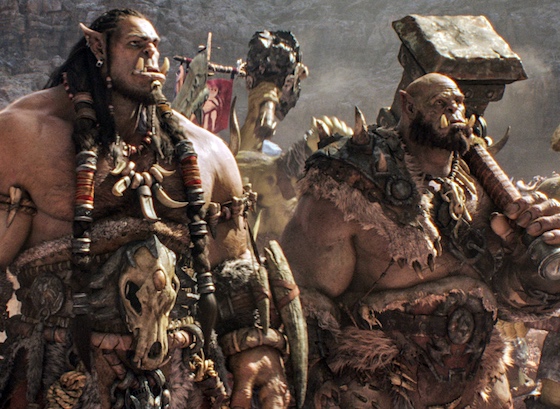
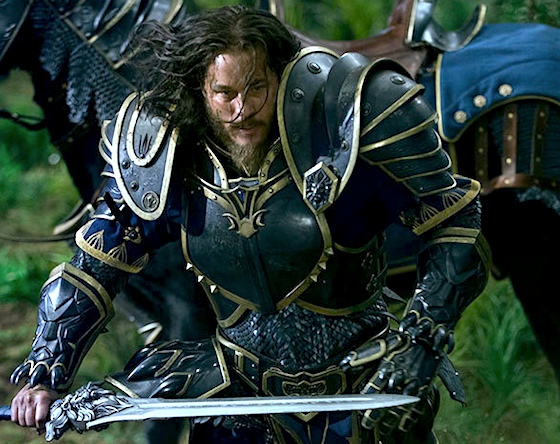
A lot of the technical merits are strong, too. Almost every shot is loaded with CGI, but the vast majority of it looks pretty incredible. It’s no wonder some bits come up short, however, because the sheer volume of different locations, creatures, and spell effects is mind-boggling. Obviously some parts are going to suffer when you bite off more than you can chew. If there’s a problem here it might be that the design work is quite “high fantasy” — it’s all exaggerated and almost cartoony, as opposed to the more realistic take of something like Peter Jackson’s Lord of the Rings. That’s not to everyone’s taste; indeed, it might be part of why such fantasy tales used to be (and, often, still are) such a niche market.

Totally realistic costumes

Talking of the market, reports say Warcraft needed to gross $450m just to break even. In the US, it took $47.4m. No, I didn’t put the decimal in the wrong place. And that’s not opening weekend, that’s in total. It was a big hit in China, but that wasn’t enough: worldwide it managed just shy of $434m (which, fact fans, makes it one of only two American movies to gross over $400m without making $100m in the US (the other was Terminator Genisys)). Jones had plans for sequels (he’s shared them on Twitter, which naturally got turned into news articles, if you’re interested), but, yeah, they’re not happening. Thank goodness the Chinese didn’t give it another few million, because this project already feels like a waste of five years of the director’s promising career. You could see Jones as currently being on a similar path to that previously trodden by the likes of M. Night Shyamalan and Neill Blomkamp: a hugely successful debut followed by increasingly poor, eventually terrible films. Hopefully his next movie, Mute (available exclusively on Netflix from today), will rectify that.

2 out of 5

Warcraft: The Beginning featured on my list of The Five Worst Films I Saw For the First Time in 2017, which can be read in full here.

Comedy Review Roundup

In today’s roundup:

  • This is the End (2013)
  • The Heat (2013)
  • In the Loop (2009)


    This is the End
    (2013)

    2017 #109
    Evan Goldberg & Seth Rogen | 105 mins | TV | 16:9 | USA / English | 15 / R

    This is the End

    Seth Rogen, James Franco, Jonah Hill, Jay Baruchel, Craig Robinson, and Danny McBride star as Seth Rogen, James Franco, Jonah Hill, Jay Baruchel, Craig Robinson, and Danny McBride (respectively) in a movie about the apocalypse written and directed by Seth Rogen and Evan Goldberg.

    And it’s pretty much exactly what you’d expect a movie about the apocalypse starring Seth Rogen, James Franco, Jonah Hill, Jay Baruchel, Craig Robinson, and Danny McBride, and written and directed by Seth Rogen and Evan Goldberg, would be like — for good or ill. Personally, I laughed and enjoyed myself more than I expected to, even if it is resolutely silly and frequently crude just for the sake of it.

    4 out of 5

    The Heat
    (2013)

    2017 #144
    Paul Feig | 112 mins | TV | 2.35:1 | USA / English | 15 / R

    The Heat

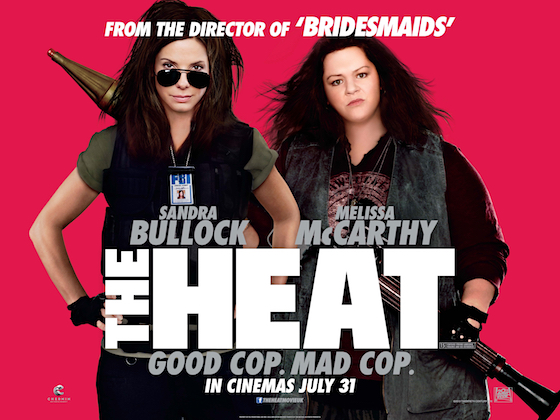
    Having been surprisingly entertained by Bridesmaids, Spy, and the new Ghostbusters, I thought I might as well tick off the last film-directed-by-Paul-Feig-since-anyone-noticed-he-made-films (he also helmed a couple of movies in the ’00s that no one mentions).

    It’s a female-led (obviously) version of the familiar buddy movie template, starring Melissa McCarthy (obviously) as an uncouth cop who must team up with a strait-laced FBI agent (Sandra Bullock) to bring down a drug lord.

    As I suspected, it’s the least likeable of those four Feig/McCarthy collaborations, although it manages to tick along at a level of passable amusement with occasional outbursts of good lines or routines. I wouldn’t recommend it to anyone who hadn’t first seen and enjoyed at least a couple of their other movies, but there are worse ways to spend a couple of hours.

    3 out of 5

    In the Loop
    (2009)

    2017 #147
    Armando Iannucci | 102 mins | streaming (HD) | 1.85:1 | UK / English | 15

    In the Loop

    Acclaimed political sitcom The Thick of It steps onto the global stage in this comedy, which sets its satirical sights on UK-US relations and the countries’ intervention in the Middle East.

    Despite the change in format and (intended) screen size, In the Loop manages to be as hilarious as the show it’s spun off from — not always a given when TV successes make the leap to the big screen. In part that’s the advantage of a 237-page script and 4½-hour first cut being honed to little more than an hour-and-a-half, but it’s also thanks to the skilled cast. The star of the show is, as ever, Peter Capaldi as sweary spin doctor Malcolm Tucker. Most of the rest of the UK cast carry over from The Thick of It (albeit in new roles) so are well versed in writer-director Armando Iannucci’s style of satire, but proving equally up to the task are a compliment of US additions headlined by James Gandolfini.

    It’s not perfect — there were a couple of subplots I could’ve done without (I’m not a big fan of Steve Coogan so wouldn’t’ve missed his near-extraneous storyline) — but they’re minor inconveniences among the barrage of hilarity.

    5 out of 5

  • King Arthur: Legend of the Sword (2017)

    2018 #15
    Guy Ritchie | 126 mins | download (HD+3D) | 2.35:1 | USA / English | 12 / PG-13

    King Arthur: Legend of the Sword

    After years of making fundamentally similar movies, director Guy Ritchie found renewed success reinventing Sherlock Holmes for Warner Bros. I presume that’s directly responsible for the studio tapping him to kickstart this long-gestating project: a series of films inspired by the legends of King Arthur. Unfortunately for them, plans for a six-film series were scuppered when this initial entry went down like a lead balloon with critics and consequently was a box office flop. Nonetheless, some people who I think are worth listening to reckoned it was actually pretty good. Turns out… eh…

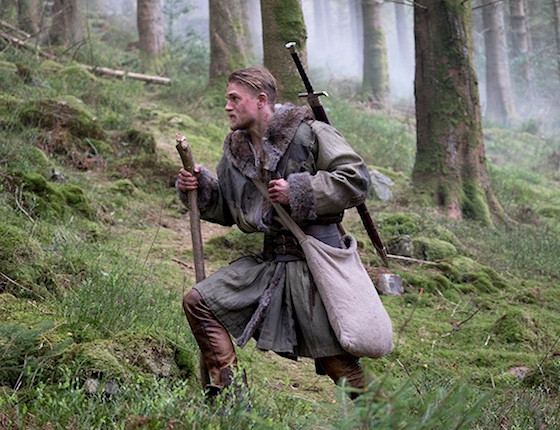
    Set in a vaguely-defined historical Britain (the capital is called Londinium, but the king resides at Camelot, which is… somewhere else…?), Legend of the Sword begins with King Uther (Eric Bana) being deposed by his scheming brother Vortigern (Jude Law), with only his young son Arthur escaping. Arthur grows up in a brothel and on the streets, going from a weedy kid to… some kind of, like, gang boss type figure, I guess? Basically, we’re in familiar Guy Ritchie territory: lads up to criminal hijinks with a London accent, only now in medieval costumes. Anyway, long story short, Excalibur — the eponymous sword — reveals itself stuck in a stone, every young man is forced to try to pull it out, which obviously Arthur succeeds at, marking him out for death by Vortigern but also as the true king to those who remain loyal to Uther, who now have a Robin Hood-esque underground army — and so they begin a Robin Hood-esque campaign against Vortigern. Seriously, it wouldn’t take too many tweaks to make this as passable a Robin Hood film as it is a King Arthur one.

    King Arthur and his merry men

    So, to no one’s great surprise, if you’re looking for a broadly faithful adaptation of Arthurian legend then you’re out of luck here. There are obviously famous bits of the legend thrown in — the aforementioned Excalibur and its stone; the Lady of the Lake pops up too; and… um… other than that it’s pretty much just people’s names, really. I don’t know how much critics were hoping to see a more recognisably Arthurian tale, but I have to wonder if this massive deviance from the well-known stories of the eponymous hero is at least partly responsible for the film’s poor reception.

    Part of why I wonder this is that, if you approach Legend of the Sword less as a King Arthur film and more as a Guy Ritchie-flavoured fantasy movie, there are bits of it I think are really, really good. Some of it’s great, even, like an efficient and exciting montage that shows Arthur growing from child to adult. Or any other time there’s a montage, really — that’s the best one, but others are equally as effective. Second best, for instance, is one where Arthur has to go on a quest in some alternate dark dimension or something, battling giant bats and other such nasties. That’d be the whole of act two in other films, or at least a significant action sequence, but its basic content is all so rote — so Ritchie instead burns through it in a montage, which feels like a nod and a wink to the audience: “you know how this goes”. Editor James Herbert certainly gives his skills a workout making these sequences fast, clear, and cinematically thrilling.

    He's gonna need a montage

    Of course, if you really dislike Ritchie’s trademark style then him slapping it on the fantasy genre isn’t necessarily going to enrapture you. Reportedly the project was pitched to the studio and cast as “Lord of the Rings meets Snatch” and they’ve pretty much delivered on that promise, transposing Ritchie’s modern London laddish schtick onto medieval Londinium plebs. Personally, although I’ve somewhat tired of his recognisable approach in a contemporary setting, the temporal disjunct was a fresh enough variation for me, breathing new life into both Ritchie’s MO and fantasy tropes.

    Unfortunately, for all the verve of his own style that Ritchie injects, there are also bits that typify CGI-blockbuster blandness — the final fight is a nothingy blur. The speedy, montage-driven style also allows for only so much character development. What time there is gets focused on Arthur and Vortigern, which I suppose is appropriate enough, with a large supporting cast fighting over the scraps. It seems obvious to me that a mysterious female character known only as “The Mage” was meant to be revealed as Guinevere (a conceit broadly nicked from the Jerry Bruckheimer King Arthur, I think), and indeed that was apparently nixed in post-production. I guess they thought they could bump it to one of the five sequels… which now aren’t happening.

    Come and 'ave a go if you think yer 'ard enough

    My final three-star rating is maybe a bit harsh, but then maybe I’ve been too generous with my fours lately (or always). If Legend of the Sword had been able to carry through on the impetus of its best bits then it may even have been looking at a full five stars, they’re that good, but it doesn’t come together as a whole. It’s not the failure mass opinion painted it as, but it’s not quite a success either — it’s an interesting “good try”.

    3 out of 5

    King Arthur: Legend of the Sword is available on Sky Cinema from today.

    Saludos Amigos (1942)

    2017 #161
    Wilfred Jackson, Jack Kinney, Ham Luske & Bill Roberts | 40 mins | download | 4:3 | USA / Portuguese & English | U / PG

    Saludos Amigos

    The sixth film in Disney’s official animated canon was the first in a run of cheap “package films” that span the gap from 1942’s Bambi to 1950’s Cinderella. Frankly, if Disney hadn’t decided to make it part of their animated canon whenever that list was first settled upon, I very much doubt it would be remembered today.

    It’s called a “package film” because it bundled together a handful of animated shorts, linked by live-action footage of Disney’s team on location researching the films, to form a feature-length movie (though in the case of Saludos Amigos it barely qualifies as feature-length). This particular set depict various aspects of South America, apparently in an attempt by Disney to improve US relations with its neighbouring continent during World War II. According to this item of trivia on IMDb, it worked — but thanks to the linking documentaries, not the animation: by “featuring footage of modern Latin American cities with skyscrapers and fashionably dressed residents [it] went against the then-current perception of the American audience that Latin America was a culturally backwards area, predominately rural, and mostly inhabited by poorly-dressed peasants. The film is credited with helping change the American perception of Latin America and its inhabitants.”

    No stereotypes here

    Viewed today, it’s largely fine — one or two parts are likeable, even — but there’s not a great deal to it. The live-action linking segments are meant to show what inspired the short animations, but sometimes that goes a little too far and they seem to convey the same Educational info twice over. And unless you’re looking into, say, North American perceptions of South America in the 1940s, there’s not a great deal of value left in it as a factual piece.

    So my score errs on the harsh side, because it’s not a bad film per se, but I think it has very little to offer the modern viewer, either in terms of entertainment or education.

    2 out of 5

    The Mummy (2017)

    2017 #82
    Alex Kurtzman | 110 mins | cinema | 2.39:1 | USA, Japan & China / English & Ancient Egyptian | 15 / PG-13

    The Mummy

    As studios scramble to emulate Marvel’s shared universe success, there are some very odd ideas being thrown around. One of the least odd, really, was Universal’s Dark Universe, which intended to mix together their various famous horror properties. At first blush that sounds as forced as most of these ideas are, but back in the day they made tonnes of “Dracula Meets Frankenstein” type movies, so why not do it again today? All of these movies were to be reboots, obviously, and they arguably played it safe by beginning with a reboot of one they rebooted before — a re-reboot, if you will. The Mummy 2017-style bears no resemblance to its popular ’90s forebear, but I doubt that was anything like the ’30s version anyway, so all’s fair in love and blockbuster moviemaking.

    You’ll notice the repeated use of the past tense in my opening paragraph. That’s because The Mummy flopped, both critically and commercially, and the Dark Universe plans have been thrown into doubt. (Some say it’s been definitely cancelled, but I don’t think that’s been officially confirmed.) While I wouldn’t go so far as to call that a shame, I didn’t necessarily think The Mummy was that bad. On the other hand, it’s not great either…

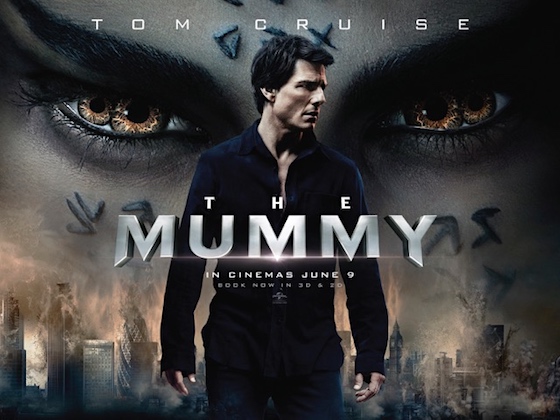
    Tom Cruise realises he's made a terrible mistake...

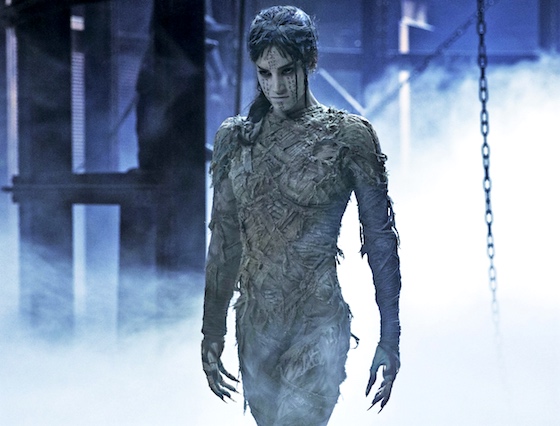
    This iteration of the concept sets its scene in the present day war-torn Middle East, where Nick Morton (Tom Cruise) is a mercenary who stumbles upon a hidden tomb, inside which is the well-protected coffin of an Egyptian princess (Sofia Boutella). To cut to the chase, the dead lass wakes up, and brings all her supernatural powers to bear on destroying the world… or something. At the same time, Nick seems to have developed some kind of connection to her.

    However, what sticks in your mind about The Mummy is not its eponymous villain, but all the time it spends trying to establish the aforementioned shared universe. Nick eventually comes into contact with a secretive organisation headed by Dr. Henry Jekyll — a name we all know, of course, so you begin to see the connections developing. You can’t help but feel more effort has been put into setting up this element than the movie that surrounds it, which therefore feels like little more than a delivery system for Dark Universe: Part 1.

    But let’s try to judge it anyway. Primarily, it’s a tonal mishmash. It’s not exciting enough to satisfy as an action movie, but not scary enough to qualify as a horror. There’s humour, but it’s poorly integrated, feeling at odds with the dark tone. This is a PG-13 movie that kinda wants to be an R, but not so much that it’ll really commit to sitting on that PG-13/R line. Whole sequences and imagery seems to have been included just to look good in the trailer. For example, a bunch of business with a sandstorm in London — in the trailer it looked like it would be some sort of end-of-the-world climax, but it’s actually just a bit of a chase scene to get characters from one location to another.

    “I’m here to talk to you about the Avenger Initiative.”

    Cruise isn’t given room to display his usual charm, instead wandering through the plot being told stuff and always threatening to tip over into being the villain. This movie always seemed like an odd choice for him — getting stuck into a franchise-within-a-franchise at this stage in his career — and, yeah, it remains an odd choice. Russell Crowe phones in his Nick Fury turn as Jekyll, while sidekicks Annabelle Wallis and Jake Johnson fight against the material as they struggle to make their mark. Boutella’s part makes feints at complexity, but is ultimately no deeper than you’d expect the Mummy’s role to be in a Mummy movie.

    And after all that it doesn’t even end properly. It’s not even that it’s blatantly set up for a sequel (it’s not, really), but it’s clearly aware that it’s part of a shared universe and they might want some of these characters back. Well, that’s what this is all about, don’t forget — Dark Universe: Part 1.

    Despite all that, there are hints of a decent movie here: the first act is fairly good, and while the humorous moments may sit oddly with the pervading tone, they’re mostly fine in themselves. But it’s too concerned with establishing a universe when it should worry about being a good yarn in its own right, meaning it fails to do either adequately.

    Mummy mia, here they go again

    When I started this review I was going to end up giving it a generous 3 (that’s what it’s down as in my 2017 stats therefore), but my memories of whatever I liked enough to nudge it upwards have begun to fade. The Mummy — and the Dark Universe it was meant to kick off — could’ve been something, if not great, then at least worthwhile. Shame.

    2 out of 5

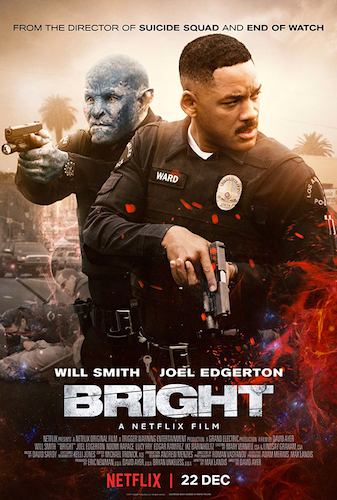
    Bright (2017)

    2018 #1
    David Ayer | 117 mins | streaming (UHD) | 2.35:1 | USA / English & Spanish | 15

    Bright

    The director of L.A.-set crime thrillers Harsh Times, Street Kings, and End of Watch returns with another L.A.-set crime thriller, only this time with orcs. Yes, orcs. Also fairies and elves and dragons and all that.

    But you knew that because you surely can’t’ve missed hearing about Bright these past few weeks. It’s Netflix’s first attempt at making a big-budget summer-tentpole-style blockbuster and they’ve been pushing it hard, but it was savaged by critics, only to then have proven immensely popular with viewers (it’s Netflix’s most-watched original production ever) and had a sequel speedily commissioned.

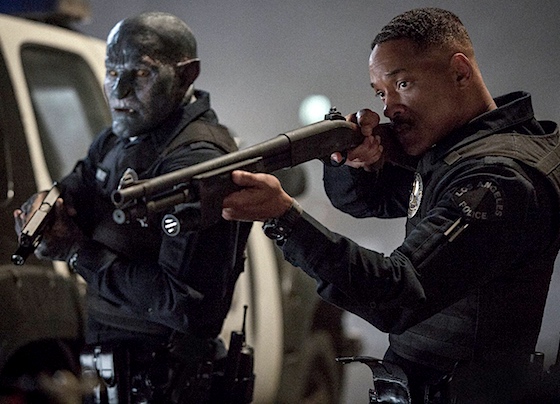
    It’s set in an alternate present day where magic and the aforementioned fantastical creatures all exist. In L.A., humans are your regular run-of-the-mill people, elves are the well-off upper class living in a segregated oasis, and orcs are the poor underclass — a couple of thousand years ago there was a Lord of the Rings-style war to vanquish the Dark Lord, in which orcs picked the wrong side and still pay the price. Nonetheless, the LAPD has recently inducted the first orc cop (Joel Edgerton). When he and his partner (Will Smith) happen across a magic wand, a rare and immensely powerful device, they find themselves hunted by an evil elf (Noomi Rapace) who intends to resurrect the Dark Lord.

    Orc of Watch

    Bright is, straightforwardly, a mash-up of crime thriller and fantasy blockbuster. Visually and tonally it could be a sequel to End of Watch, were it not for the fantastical creatures. With them in the mix, the plot, creatures, terminology, etc, feels broadly familiar from other fantasy adventures. The unique point, obviously, is in combining these two disparate genres into a homogenous whole. In this regard, Max Landis’ screenplay is a mixed bag: I like the basic concept, and a lot of the ideas within it are decent too, but the execution leaves something to be desired.

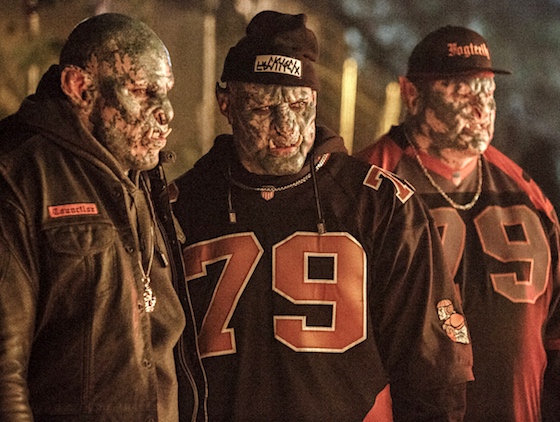
    For example, the alternate present-day L.A. is imagined just by switching out one real-life race for a fantasy one. So black people become orcs in a simple one-for-one switch. These race analogies are thuddingly heavy-handed, to the point where you wish they hadn’t bothered because then at least they might’ve done it by accident and it would’ve been subtle. Exposition is equally as on the nose, with characters spelling out world history and terminology to each other purely for the viewer’s benefit. It’s a challenge to convey this kind of information to the audience in a fantasy movie, but that’s not an excuse for doing it badly.

    OWA - Orcz Wit Attitudes

    Ayer seems an apt choice for director — of course he is, because he made End of Watch and Bright really is very similar to that movie. He doesn’t seem to have a complete handle on the material, though. The pace feels all wrong — not terrible, just slower than it should be, like scenes need tightening up, maybe a few more deletions here and there. It feels like it’s been mis-paced in the same way as many a Netflix original series, which makes you wonder if this is a problem with someone who oversees stuff at Netflix rather than individual film/programme-makers. Conversely, it could be because most regular people just won’t notice it — these productions aren’t slow in the way an arthouse movie is slow, they’re just not moving through situations and dialogue at the rate they should; killing time by letting scenes roll on that bit longer than they have any purpose to, that kind of thing.

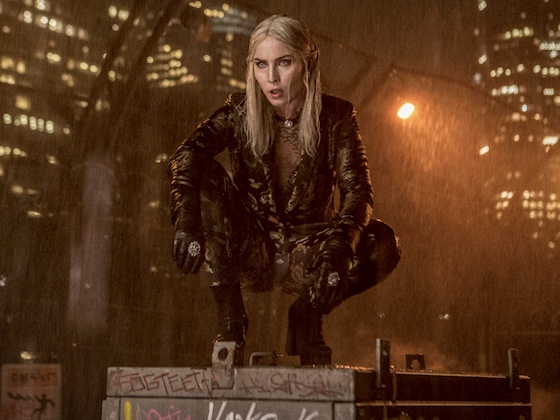
    As the film goes on, it trades this early wheel-spinning for other problems: choppy editing; disjointed storytelling; ill-defined characters and motives. Noomi Rapace is severely underused as the villain — she has so little to do that the role could’ve been played by anyone. Edgar Ramirez isn’t quite so poorly served as an FBI-type elf also on the trail of the wand, but one wonders if someone was already thinking about sequels when shaping these supporting roles. At least Smith and Edgerton make for decent leads, even as they battle against the script’s character inconsistencies and dead-end subplots (for instance, a chunk of time spent on Smith’s home life at the start has barely any baring on later events).

    Urban elf

    Bright is hampered not by its potential-filled genre mash-up premise, but instead by the filmmakers chosen to execute that idea. They fitfully realise that potential, but it’s diluted by a rash of clichéd or plain undercooked filmmaking. The final result is a long way from perfect, but it’s also pretty far from being the disaster of epic proportions that critical and social media reaction seems suspiciously keen to paint it as (the Cannes-like “Netflix make TV not movies” sentiment is strong in some quarters). It’s a middle-of-the-road blockbuster movie, with some very solid plus points that are let down by some irritating negatives.

    3 out of 5

    Bright is available on Netflix now and forever.

    P.S. Random pointless thing of the week: there are British and American variations of the Bright poster. Spot the difference.