Cecil M. Hepworth shorts

I know I’m generally quite poor about posting reviews nowadays (“nowadays” being “for the past five years”, considering that’s roughly how long ago my backlog stretches), but I do have the Archive 5 to dig into that, and sometimes post reviews of newer watches too. What really suffers, however, are short films. I have no consistent plan to correct that, but here at least are reviews of three shorts I’ve watched this year with a simple connection: they were all directed by early British filmmaker Cecil M. Hepworth.

  • Alice in Wonderland (1903)
  • Explosion of a Motor Car (1900)
  • The Indian Chief and the Seidlitz Powder (1901)


    Alice in Wonderland

    (1903)

    Cecil M. Hepworth & Percy Stow | 9 mins | digital HD | 4:3 | UK / silent

    The first screen adaptation of Lewis Carroll’s beloved novel is a whistle-stop tour of some of its best-known moments. What it loses in not being able to retain any of Carroll’s memorable prose or dialogue, it makes up for by being a neat showcase for some early-cinema special effects — Alice shrinks and grows; a baby turns into a pig; and so on. There’s little doubt that this isn’t the best filmed version of the tale (unless you have a fondness for early cinema over anything made later), but it’s a valuable glimpse into the ambition and skill of the form’s pioneers.

    The only surviving print is in terrible shape and missing several minutes of footage (it was originally 12 minutes long), but at least we have some way of seeing this important bit of film history. Talking of which, you can watch it on the BFI’s official YouTube channel, although they only provide it in standard definition. Fortunately, there’s a full HD version here.

    3 out of 5


    Explosion of a Motor Car

    (1900)

    Cecil M. Hepworth | 2 mins | digital SD | 4:3 | UK / silent

    Cars randomly exploding for almost no reason is a hallmark of action cinema, but it begins even earlier than the codification of that genre, as this short from 1900 shows.

    We watch as a car full of people merrily trundles along a suburban street… then, suddenly, there’s a puff of smoke and the vehicle is reduced to a pile of parts. A policeman comes over to inspect, at which point body parts rain from the sky. It would be gruesome if it weren’t so obviously comical… especially when the policeman begins to casually pile them up. And that’s the end.

    Basically, it’s a comedy sketch à la 1900. I guess it was probably inspired by fears of this modern new invention, the motor car, but at least it plays those for laughs. There are worse ways to spend 90-or-so seconds (depending on the playback speed of the version you watch — the BFI version is here).

    3 out of 5


    The Indian Chief and
    the Seidlitz Powder

    (1901)

    Cecil M. Hepworth | 2 mins | digital SD | 4:3 | UK / silent

    So, I bought the 88 Films Blu-ray of ’70s British-produced Western Hannie Caulder (mentioned in my May failures), had a little look at the booklet and, for whatever reason, the opening paragraph of the essay by Lee Broughton caught my eye. To quote: “The British have been making Westerns since the early days of silent cinema (see The Indian Chief and the Seidlitz Powder [Cecil M. Hepworth, 1901]) and they continue to make Westerns today (see The English [Hugo Blick, 2022]).” This, first off, reminded me that I’d meant to watch The English (I find Blick’s work to be both fascinating and somehow off-putting, so I always feel I should watch them but, when there’s such a plethora of choice nowadays, it’s easier to go for something, well, easier). More relevantly, it sent me off to Google this short, having recognised the director’s name (partly from watching the above-reviewed shorts a couple of months earlier) and, more importantly, being interested in the early days of cinema — especially as shorts such as these can usually be found online, if they survive. You often end up with low-quality DVD rips on YouTube, but, thankfully, this one is available on the BFI for free.

    All of that said, it’s… not all that. It’s a Western in technicality only: the sole character is a Native American chief; though you’d only infer that from the title, because his costume is terrible. There are no other signifiers that this is a Western — the basic set could be a store or storeroom anywhere, and presumably Seidlitz Powder was a product sold in British shops. I presume that because the short is a one-gag comedy based around the effects of that product, and so British audiences must’ve known about it. As far as I’m aware, it’s not a product still in existence today, so thank goodness for the BFI’s explanatory notes (also at the link above) to illuminate the context of the joke.

    Other than that, the film is noteworthy for containing a sequence in slow motion. It’s an inherently cinematic effect, so it’s always interesting to see it deployed so early in the form’s history. Indeed, it stands at odds with how the other ‘effects’ in the film are achieved: the chief’s belly swells by the performer (Hepworth himself, possibly? I don’t know, but I believe he often appeared in his own films; equally, someone is operating the camera) fiddling around inside his costume and shaking it about until it inflates. Then he “bounce[s] around like a balloon”, says the BFI — rather overselling it, as he just kind of leaps about a bit. There is one more cinematic technique: a jump cut to allow for a puff of smoke when his stomach bursts… followed by the performer awkwardly folding up his now over-large costume before darting out the door.

    So, two minutes filled with casual racism, 120-year-old topical humour, and some weak theatrical ‘special’ effects. But hey, at least we can experience British cinema’s early forays into uniquely cinematic technique and a key genre.

    2 out of 5


  • Archive 5, Vol.10

    I have a backlog of 520 unreviewed feature films from my 2018 to 2023 viewing. This is where I give those films their day, five at a time, selected by a random number generator.

    Today, we’ve got quite the variety, from Oscar nominees to straightforward action entertainment; from super-timely recent documentaries to pioneering animation from almost a century ago. But they’re all connected by… the fact I wrote some notes after I watched them. Thank goodness, otherwise reviewing some of them years later would be bloomin’ impossible. (That’s not much of a connection, I know, but it was on my mind after In the Mood for Love last time.)

    This week’s Archive 5 are…

  • A Star Is Born (2018)
  • Boss Level (2021)
  • Coded Bias (2020)
  • Shadow of a Doubt (1943)
  • The Adventures of Prince Achmed (1926)


    A Star Is Born

    (2018)

    Bradley Cooper | 130 mins | digital HD | 2.39:1 | USA / English | 15 / R

    A Star Is Born

    This is the fourth version of A Star is Born, for whatever reason, but I’ve not seen any of the others so I won’t be making comparisons. I’m sure the story has been modernised (the last version was made in the ’70s, with the previous two in the ’50s and ’30s) without losing its fundamental essence: successful musician (here, Bradley Cooper) uncovers a new talent (Lady Gaga) who comes to outshine him. I guess it’s a timeless tale in the age of celebrity.

    Singers-turned-actors have a mixed history, though casting one in a story such as this is fitting, given how you need to believe they’re a top-drawer musical artist. Fortunately, Gaga actually can act as well as sing, so she’s an unqualified success here. The headline song, Shallow — a duet between the two leads, which attracted even more attention for how they performed it at the Oscars — is… perfectly fine. People went a little too crazy for it at the time, I feel. But it’s given weight by how well it’s used in the film, so I guess that could sway you.

    Also pulling double duty (well, triple if you count the singing) is Cooper, directing for the first time. (With all the talk this past awards season about how desperate Cooper is for an Oscar, it’s easy to forget that Maestro was only his second time behind the camera.) I seem to remember there being some complaints when he wasn’t nominated for direction for this one, but I think that was a fair omission. It’s not bad, but his directorial choices are a little too wavering. Like, in the early scenes, when the camerawork is all a bit documentary-ish, is effective — it undercuts the “glamorous story”, the almost-inherent fakeness of Musical as a genre, by making it feel Real. But later he gives in to glossy stylings too often; and too many of the song performances are captured with a lazily floating camera, lacking focus or decisiveness. It’s how they often shoot musical performances on TV: just kind of nothingy, moving the camera back and forth and side to side for the sake of making it ‘dynamic’. But, when you remember this is his first film, that’s fine — there’s a lot more good than bad about his work behind the camera.

    4 out of 5

    A Star Is Born was #18 in my 100 Films in a Year Challenge 2020.


    Boss Level

    (2021)

    Joe Carnahan | 101 mins | digital HD | 2.39:1 | USA / English | 15

    Boss Level

    For a long time, there was Groundhog Day. And then someone had the bright idea, “what if Groundhog Day but mixed with another genre?” So now we’ve had the sci-fi version (Edge of Tomorrow), and the horror version (Happy Death Day), and the YA version (The Map of Tiny Perfect Things), and the “what if there were two people” version (Palm Springs), and the TV series version (Russian Doll)… Here, we get the action movie version. And it’s pretty much exactly what you’d expect and hope “Groundhog Day as an action movie” would be. That’s praise, not criticism.

    Interestingly, considering the context I’ve chosen to place this in, the film itself acknowledges — you might even say relies on — the fact we’ve all seen time loop movies before. Rather than begin at the obvious beginning (i.e. the hero’s first loop), the story starts dozens of loops in, then fills in the backstory with flashbacks later on. It’s somewhere between a sensible choice (who hasn’t seen Groundhog Day?) and a bold move (what about people who haven’t seen Groundhog Day?) That said, I imagine people in the latter group can still follow it, it just might be what’s going on is mysterious for longer (most of us will instantly get “he’s in a day-long time loop”, they’ll just have to wait for that information to become clear).

    In fact, it’s a pretty economical movie across the board, hitting the ground running and rarely letting up. There’s very little repetition of “the same stuff every day”, instead taking our hero off in different directions. It does lean on voiceover quite a lot to get through some of the exposition, which won’t be to everyone’s taste, but it means it can hurry through the technicalities and get to what we came for — action and gags — so I can let it slide. On the basis of the kind of entertainment it’s designed to deliver, Boss Level succeeds admirably.

    4 out of 5

    Boss Level was #160 in my 100 Films in a Year Challenge 2021.


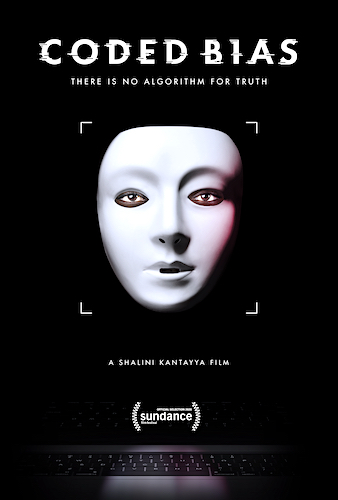
    Coded Bias

    (2020)

    Shalini Kantayya | 86 mins | digital HD | 16:9 | USA, China & UK / English & Chinese | 12

    Coded Bias

    Given the precipitous rise of AI in the past couple of years, I don’t know how relevant this documentary from 2020 still is. Back then, it was ultra-timely, but tech evolves so fast, I have to wonder if it’s already dated. Well, if you want to find out for yourself, it’s on Netflix.

    Not that it’s just about AI. It touches on a lot of interesting tech-related topics, like how facial recognition struggles with non-white people, or how algorithms were increasingly being allowed to control… pretty much everything. It makes a lot of broadly scary declarations about these things, but often lacks the detail to back them up. Not that it’s necessarily wrong, but it doesn’t prove its point; doesn’t clarify what’s scary beyond the gut reaction that this all sounds scary. This is partly because there’s so much to cover — it keeps jumping around between topics in short vignettes — which at least makes clear what a big field this is. There are also signs of hope, with the film offering some solutions (primarily: regulation in law) and highlighting fantastic people (almost all women, incidentally) doing great work to combat these things.

    Ultimately, the areas the film explores are interesting and it’s sometimes informative about them, but it’s also unfocused and disorganised in its structure, which is a shame.

    3 out of 5

    Coded Bias was #243 in my 100 Films in a Year Challenge 2020.


    Shadow of a Doubt

    (1943)

    Alfred Hitchcock | 108 mins | UHD Blu-ray | 1.33:1 | USA / English | PG

    Shadow of a Doubt

    I feel like Shadow of a Doubt sits in a certain tier of Hitchcock film; one where it’s not one of his very best known (Psycho, Vertigo, The Birds, etc), but regarded well enough that it definitely has its fans, for some of whom it probably is Hitchcock’s best film. Hitch himself repeatedly said it was his favourite of his own work, chiefly because he enjoyed how it brought menace into the surface-level perfection of small-town America. One critic has even described it as Hitchcock’s “first indisputable masterpiece”, which I would certainly dispute considering its predated by the likes of The 39 Steps, The Lady Vanishes, and Rebecca. Well, taste is relative.

    Personally, while Shadow of a Doubt definitely has a neat premise and strong moments, overall I felt it lacked any of the truly exceptional elements that mark out Hitch’s real classics. Sure, if most other filmmakers had made it, it’d probably be one of their best; but you’re competing with an incredibly strong body of work if you’re a Hitchcock film and, for me, this one is definitely second-tier. Of course, as I just intimated, being a second-tier Hitchcock film is still some achievement. It’s a shame the relative hype for this one is leading me to focus on the negative. Heck, maybe I’ll like it even more when I rewatch it someday. Until then, I feel it missed the mark of my expectations in places. I even thought it was the kind of movie someone could remake and possibly get something really great out of. (Blasphemy!)

    4 out of 5

    Shadow of a Doubt was #90 in my 100 Films in a Year Challenge 2023. It was viewed as part of “What Do You Mean You Haven’t Seen…?” 2023.


    The Adventures of Prince Achmed

    (1926)

    aka Die Abenteuer des Prinzen Achmed

    Lotte Reiniger | 66 mins | Blu-ray | 1.33:1 | Germany / silent | PG

    The Adventures of Prince Achmed

    The earliest (surviving) animated feature film is an ‘Arabian Nights’ fairytale about… well, the short version is in the title.

    But story schmory, because the real star here is the medium itself: Lotte Reiniger’s animation. There are so many wonderful little bits of work, it’s impossible to list. Consistent throughout, it’s remarkable how much character and personality Reiniger manages to convey through her ‘simple’ cutout silhouette puppets. Then there’s little naturalistic details, like boats bobbing on the water. Some of it even feels surprisingly modern. Not massively so, perhaps, but it doesn’t have that staid, stilted formality you might expect from a hundred-year-old rendition of a fairytale. And that’s not to mention the homosexual subplot. Plus, there’s so much more to the style than just silhouettes on plain backgrounds. There are shades and effects, to add depth or style: the wavy lines of a river; a mountain range fading into the distance; and subtler and clever things, too. It’s a visual feast.

    The restoration could be better, mind. There are a lot of dirt and scratches, which I can live with (there are so many of these, it would have to be manually patched up frame by frame, which would cost a fortune), but more egregious are stability and alignment issues. For example, during one scene, the top part of the next frame keeps appearing at the bottom. Surely that could’ve been fixed?

    Better is the soundtrack. The BFI Blu-ray offers a choice: the original 1926 score by Wolfgang Zeller (recorded in 1999) or an English narration (with effects), based on Reiniger’s own translation of her German text (recorded in 2013). Having watched the film with both, I’d say the narration adds nothing of value to the experience, especially as it sounds like narration from a preschool storybook. Just stick to the original music.

    But however you watch it, minor technical issues can’t distract from the artistry on display. This is truly the work of a master of her craft. Magnificent.

    5 out of 5

    The Adventures of Prince Achmed was #35 in my 100 Films in a Year Challenge 2021.


  • Dune: Part One (2021)

    aka Dune

    Denis Villeneuve | 155 mins | cinema | 2.39:1 | USA & Canada / English | 12A / PG-13

    Dune: Part One

    Trying to write about a film like Dune in a critical context over two years after it was released feels a bit… pointless. I mean, the film was a hit (albeit by mid-pandemic standards); and if you did miss it first time round, the hype around the sequel has surely already piqued your interest and/or left you cold, in which case what I say isn’t likely to be a deciding factor. Of course, yay/nay recommendations are not the only reason for critical writing — far from it — but, if you’re looking to do more than that, you better have something to say. So I confess here and now, for the sake of any readers looking for that kind of article, that I don’t think I have a unique or revelatory or even particularly insightful take on Dune — or Dune: Part One, as I’ve insisted on calling it ever since the wonderful surprise of seeing its opening title card (and sites like IMDb have finally got on board with too). All I can offer is how the film struck me personally, from my particular perspective; which is not nothing, but is what it is.

    So what is my perspective? Well, I’m far from a newbie to the world of Arrakis, though I can’t now remember in what order I first encountered the various texts related to it that I’ve experienced. So, going chronologically, I have read Frank Herbert’s original novel. Famously, it’s a doorstop of a tome, so I must have been relatively young because, for whatever reason, I’ve struggled to get through long books for the past couple of decades (I’ve tried Lord of the Rings two or three times and never got much further than Tom Bombadil; I started Shogun over four years ago and my bookmark still sits about halfway through it — and I did enjoy both of those! I just don’t have the staying power to get to the end). But I can’t have been that young, given the book’s subject matter and style, and the fact I enjoyed it. Indeed, I’d go so far as to say it’s one of my favourite novels. I’ve never read the sequels. I’ve long intended to (see: previous comments about lack of staying power when reading).

    I’ve also seen the 1984 David Lynch film, naturally — an interesting but fundamentally flawed endeavour — and the 2000 miniseries (and its 2003 sequel), which I remember being widely acclaimed — and I would have agreed with that sentiment — but it does look rather dated now, and so I’m somewhat wary of rewatching it (though I recently bought an expensive Blu-ray edition imported from Australia, so I certainly intend to at some point). The point of listing all that is this: I do not approach Dune free of expectation. Quite the opposite. And yet, I also didn’t have a specific vision in mind. And when you’ve got a director like Denis Villeneuve in charge — a director with a very definite and particular style — you know you’re going to get his interpretation of the material, so the more open-minded and receptive you are to that, the better. I mean, unless you’re on his exact wavelength, your imaginings are not likely to be the same as his, especially if you’ve allowed them to be shaped by one of the previous films, or even the concepts from unmade versions, like the one so interestingly documented in Jodorowsky’s Dune.

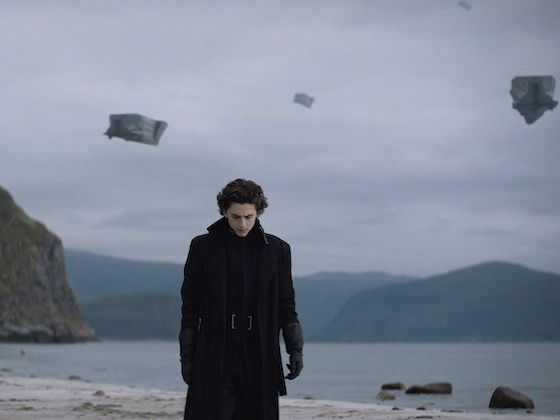
    Moody Messiah

    All of this a very long-winded and self-centred way of arriving at my point that, on first viewing, Villeneuve’s Dune took some adjusting to, because it wasn’t quite… right. Having said I went in with no expectations, clearly I had some, buried somewhere in my mind. And yet, the film also felt like exactly what one should have expected from Villeneuve if you’d seen his previous work, not least the sci-fi film he made immediately before this, Blade Runner 2049. The worlds of Blade Runner and Dune are very different, but, as filtered through the mind of Denis Villeneuve, there are distinct aesthetic similarities, most apparent in the brutalist influence in much of the world design. That starkness is quite at odds with the fanciful, sometimes even downright weird, takes on the material that came from the minds of creatives like David Lynch and Alejandro Jodorowsky; or even the miniseries, which, while I little more staid and constrained by a TV budget, is seemingly as influenced by fantasy TV of the period as by its science-fiction stablemates. With most previous visualisations of Dune leaning into such fantastical choices, Villeneuve’s (for want of a better word) realist take was, initially, a shock to the system.

    That’s a slightly disorientating feeling to be dealing with when watching a film for the first time. Thanks to the story and characters and scenes being so familiar, the mind is freed up to focus more on the surrounding decisions. Even when trying to be open-minded about them, there’s then some kind of disjunct between things that are very recognisable being presented in a very unrecognisable way. There’s also a kind of tug-of-war going on between the feeling that Villeneuve has been allowed to interpret the text exactly as he sees fit, and that’s a good thing because we’re getting his vision across the project, and the sense that it’s something of a shame to miss out on the craziness present in previous interpretations. After all, Dune is set 20,000 years in the future (you may recall it’s set in the year 10,191, but that’s not AD, it’s numbered from an in-universe event — look, let’s not get into the backstory here; but when you see articles mindlessly parrot “Dune is set 20,000 years in the future in the year 10,191”, know that the article writer is mindless because they haven’t bothered to query the maths, not because they’ve done the maths dramatically wrong) — think how different technology has made our world from three or four thousand years ago, so how much wilder and weirder could things get if you multiply that by a factor of five or six? None of which is to say Villeneuve’s choices are wrong, or even that I don’t like them, but they took some getting used to. On my recent second viewing, with the benefit of awareness of what I was about to see, I was able to enjoy the overall experience much more; it settled the qualms I had from my initial viewing and made it easier for me to appreciate the magnificence of the achievement.

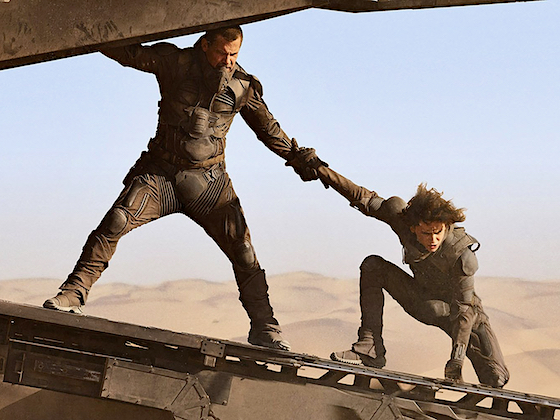
    Desert power

    Another point of contention (if we can go as far as calling it that) was where the film broke off. I’ve read some retrospective reviews recently that expressed their disappointment when the film suddenly ended mid-story, which I guess goes to show how not all marketing and information reaches all people — I thought it was well-known that this was to be Part One, and that a followup conclusion was dependent on its box office success (hence my pleasant surprise when the film so brazenly declared it was just Part One on its opening title card, not even saving that fact for a ‘surprise’ reveal on a closing title card, a la It), but there were definitely people who went in not knowing that and found it frustrating. Should it have been made even clearer? Should the film have formally been titled Part One in its marketing? Well, the reaction to various “Part Ones” released this year (like Mission: Impossible – Dead Reckoning, Fast X, and Across the Spider-Verse) suggests that audiences don’t really like only getting “Part One” ever; but, conversely, their acceptance of it depends on how it’s handled — how satisfying the movie leading up to the break is, and how the moment it stops is handled. But this is a whole side debate that I’ve stumbled into without adequate preparation (I’ve not even seen two of the three films I just mentioned), so I’m going to swiftly redirect us to Dune.

    Where Dune: Part One ends is, frankly, where I always thought it would. Other fans were more surprised by its choice, so perhaps it’s just too long since I’ve read the novel or watched another version and I just couldn’t remember a better break-point at approximately the halfway mark. The screenwriters could, though, because apparently the film originally carried on a little further in the story, before the endpoint was moved in the edit. It’s not the most dramatic place to pause the story or end a film — it doesn’t come after some big action sequence or major plot twist, nor on a cliffhanger of any kind — but I think it largely works. It reminded me of The Fellowship of the Ring, possibly the greatest “Part One” film of all time, in that in no way whatsoever does it feel like the end of the story — we’re definitely only in the middle somewhere, and there’s clearly a whole lot more to come — but it feels like a solid place to pause; like we’ve experienced the whole of a part, if that makes sense.

    There was some minor brouhaha the other day during the press for Part Two when someone asked Villeneuve about telling the story over two films — I didn’t pay it too much heed and it didn’t really blow up, so I forget the precise question and answer — but, as many pointed out, adapting Dune in a single film has been attempted before and famously didn’t work out, so doing it in two on this re-attempt shouldn’t really come as a surprise. Certainly, as a fan, I’d rather a two-part adaptation that gives the story the necessary screen time, even if that means a somewhat limp end to Part One, rather than have the whole book in a rushed three-hour single shot. And if early reviews of Part Two are to be believed, it’s paid off overall.

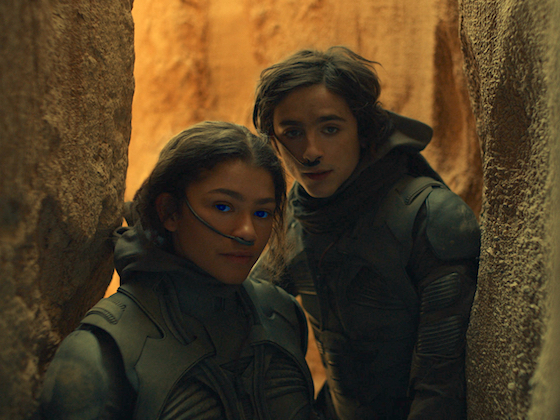
    Visions of the future

    But more on that ‘next time’, when I see Part Two myself and offer my verdict — hopefully in a more timely fashion than this, rather than waiting several years until the hoped-for Dune: Part Three, aka Dune Messiah (I’m not sure which title I’d rather they go with if/when it happens…)

    5 out of 5

    Dune: Part One was #176 in my 100 Films in a Year Challenge 2021. It placed 5th on my list of The Best Films I Saw in 2021.

    Dune: Part Two is in cinemas worldwide from tomorrow and will be reviewed in due course.

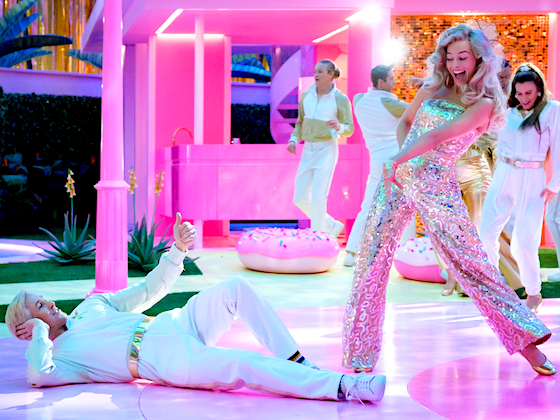
    Barbie (2023)

    Greta Gerwig | 114 mins | Blu-ray (UHD) | 2.00:1 | USA & UK / English | 12 / PG-13

    Barbie

    Once upon a time, a movie based on a children’s toy would’ve been IP slop; or, at best, surprisingly entertaining IP slop. Heck, there are dozens of direct-to-video animated Barbie movies that prove exactly that: they look cheap; they’re there to generate money from little girls (primarily) demanding to see the video of the toy they like; but some of them aren’t actually all that bad.

    But that was a couple of decades ago. Now, the majority of our mainstream movie culture is based around originally-for-kids IP that people who have reached adult ages still apparently obsess over. And when it comes to “movies based on toys” specifically, we can look back to The LEGO Movie (released a whole decade ago this month) for a work that transcended what it “should have been” (an expensive 90-minute toy commercial) to become something genuinely entertaining; that used its IP in creative and fun and, yes, even meaningful ways. It’s those footsteps that the Barbie movie seeks to walk in.

    And, thanks to some savvy behind-the-scenes choices, it succeeds! Heck, it almost succeeds too well. This is definitely a movie primarily aimed at adults, with enough silliness and bright colours on the side to not alienate kids too much. Though by “kids” I mean “teenagers”. Sure, the 12A and PG-13 ratings are permissive enough to take your six-your-old who actually plays with Barbies, but they’re going to be left floundering — or, worse, bored — as the film debates feminism, the patriarchy, and gender roles in general. This is a film about where Barbie, the toy, sits in our culture; what it represents, and what it should represent, and how successful or not it is at doing that. It’s not an essay film — those themes are smartly addressed along the way as part of a storyline about Barbie-the-toy crossing over into our real world, for various reasons — but nor is it a bright-and-colourful bit of fluff to entertain small kids. Maybe it could have been — that’s what Pixar used to excel at — but it’s not the route the filmmakers chose to go down.

    Pretty as a picture

    As for the meat of what the film has to say and how it says it… oy, I’m not sure I want to get into that discourse. It’s just asking to have annoying people jump up in your replies. Nonetheless, it’s quite bold for an IP title like this to criticise the patriarchy by inverting it and making a matriarchy the oppressive state; but without feeding into right-wing numpties by saying “see, women would be just as bad!”. People say the film is about feminism, which is true, but it’s specifically about what I’d consider the true meaning of feminism — which is really about genuine equality — rather than what reactionaries imagine it is, i.e. “women are best and should be in control”. It could also have hit that note in a shallow, almost accidental way; for example, if it had been a parade of “aren’t men stupid and annoying?” jokes. Put another way, the film cares as much about the Kens and their right to be individuals as it does the Barbies and their right to be powerful. (I said I didn’t want to write anything particularly ‘risky’ and look what I’ve gone and done…)

    Also, thanks to my personal predilections, I particularly enjoyed how the film deconstructed itself; or, rather, the fact it was aware that it’s content based on product and engaged with that to some extent. It sits alongside other recent works like The Matrix Resurrections and Return to Monkey Island as works of art that have an awareness of where they sit in culture and why they exist, and are prepared to engage with that, to deconstruct it and analyse it, in quite an overt and meta fashion within the works themselves. Personally, that’s something I’ve wanted and dreamt of seeing, but never expected to get from studio IP — such self-awareness is kinda frowned upon when it’s saying “I exist for no artistic reason, purely to make more money for the studio”, as The Matrix 4 did most explicitly. What’s great about all three of these works is that they go beyond that obvious point, too.

    In something of an about turn, others have criticised the film for not being subtle in the way it handles these issues. My friends, you’re watching a movie based on a toy, aimed at as wide an audience as possible. This isn’t an abstruse Palme d’Or contender — it’s a film that can hit your everyman round the face with a bright-pink hammer three times over and they still might miss the point. Sometimes, it’s the right choice to be, if not “on the nose”, then certainly overt. It’s ok for a story to have a point, and for that point to be clear.

    Tarantino's favourite scene

    The other point of discourse the film has fired up came after the Oscar nominations, when co-writer/director Greta Gerwig and star/producer Margot Robbie were… nominated, actually, but not in the categories some people felt they should be nominated in. Although, if they’d swapped the nominations around, I expect they’d be annoyed the other way too. So, Gerwig gets a screenplay nod (which she might win, I guess?) but not a directing one (which she wouldn’t have, let’s face it), and Robbie is nominated for producing the film (a definite achievement — she’s spoken a lot in interviews about the efforts that went into making the film they wanted to make, and convincing the studio and toy manufacturers to go along with it) but not for acting (which she probably wouldn’t have won anyway). I don’t mean neither would have been deserving of the other nomination, but the directing gong seems almost sewn up for Christopher Nolan (for various reasons), and actress is a two-horse race between others. Besides, the real achievement is that the film exists as it is, with the content that it has — that’s a feat of writing and producing, not acting or, truly, directing (sure, in many other movies the director is king queen, but you get the distinct impression Barbie was significantly powered by Robbie; and when one person is both (co-)writer and director, surely a lot of their conceptual energy is injected at the writing stage).

    Competitors aside, the quality of work can always be argued on its own merits. Gerwig’s direction is pacey and bright and fun, but is it as good as what she did in Lady Bird or Little Women? Which is to say, it fits the material well enough, but is it really special enough for an awards win? And also, who the fuck cares? Awards are kinda arbitrary. She did a good job. When it comes to Robbie’s performance, complaints have focused on the fact Ryan Gosling is nominated. Well, he’s in a different category — the fact he gave one of the five best supporting actor performances in 2023 has no bearing whatsoever on whether Robbie gave one of the five best, er, actressing performances of 2023. But yeah, Gosling does almost steal the film out from under Robbie, because he’s consistently hilarious with just enough introspection to add some character. That’s certainly the initial impression, I think. But Robbie is the film’s emotional core (yes, the movie about the plastic doll has emotions), which ultimately allows her to hang on to her own movie. That’s not something to underestimate: a lesser performer could have been overshadowed. Instead, they’re both excellent, particularly when they’re sharing a scene.

    Barbie and Ken

    By rights, a Barbie movie should’ve been something inoffensively plasticky for little girls, possibly with some trite “you can do anything you want” message in between all the different outfits designed to sell more toys. Instead, Gerwig and Robbie have gone deeper and further in every respect — taking that “you can do anything”-type aphorism and dissecting it to find how true it is, or isn’t, and why. But they’ve wrapped that up in a movie that doesn’t forget to celebrate the thing it’s about, both by acknowledging Barbie’s good intentions and with piles of references to its history (what we’d call fan service if this was a a boys’ IP with tonnes of Lore or whatever). And, perhaps most importantly for a movie that, remember, is based on a toy — a thing that’s supposed to bring joy and fun and entertainment — they’ve made something full of fun and joy and entertainment.

    4 out of 5

    Barbie is the 4th film in my 100 Films in a Year Challenge 2024. It placed 9th on my list of The Best Films I Saw in 2024.

    The Return of Archive 5

    Hey, look what else is back! Almost a whole year on from the last instalment in the series, I’ve finally managed to rustle up a new Archive 5. Although, that previous post was also a comeback after a long time off, so I probably shouldn’t celebrate until I mange two in a row.

    Being another year on, the pool of possible reviews has increased — quite significantly, as I’ve so far covered hardly anything from my 2023 viewing. But today’s five were chosen (but not written up, otherwise I’d’ve posted it) back when Vol.6 was published, so they were selected (at random) from the backlog of then-443 unreviewed feature films from my 2018 to 2022 viewing.

    This week’s hideously delayed Archive 5 are…

  • The Mummy (1932)
  • So Dark the Night (1946)
  • The Adventures of Ichabod and Mr. Toad (1949)
  • A Brief History of Time Travel (2018)
  • Misery (1990)


    The Mummy

    (1932)

    Karl Freund | 73 mins | Blu-ray | 1.33:1 | United States / English | PG

    The Mummy

    The third classic Universal Monster film, following Dracula and Frankenstein, The Mummy ditches literary adaptation for a horror based in then-contemporary fears. Nowadays, the notion of digging up of mummies is an Old Thing, but in 1932 they were just a decade on from the discovery of Tutankhamen’s tomb, and it was only in that year that it was finally fully excavated, so that kind of thing — and, of course, the attached curses — were still fresh in the public imagination.

    In the wake of Frankenstein, The Old Dark House, and The Mask of Fu Manchu, Boris Karloff was now the horror star in Hollywood, and so The Mummy was conceived as a starring role for him. Perhaps that explains why, plot wise, it’s a remix of Universal’s take on Dracula: the villain is after the girl, using supernatural tricks to lure her; the dashing young man is in love with her; there’s even a Van Helsing-esque figure with the knowledge to stop the monster. But originality is not the be-all-and-end-all — overall, I much preferred this to Dracula. Karloff is superb as the antagonist; Zita Johann (and her array of skimpy outfits) makes for an appealing (and, perhaps in spite of said clothing, competent) female lead; and there’s some intensely atmospheric direction from Karl Freund. His name may not seem as familiar as Dracula’s Tod Browning or Frankenstein’s James Whale, but he was already an acclaimed cinematographer, who’d shot the likes of Metropolis and, er, Dracula.

    The Mummy presented considerably less bandaged-wrapped foot-dragging living-corpse action than I expected. I guess those clichés come from the sequels (reportedly, their stories are entirely unconnected to this one) or another studio’s efforts (Hammer, perhaps). Instead, it’s quite simply one of my absolute favourites from the initial wave of Universal’s classic monster movies.

    4 out of 5

    The Mummy was #122 in my 100 Films in a Year Challenge 2021.


    So Dark the Night

    (1946)

    Joseph H. Lewis | 70 mins | Blu-ray | 1.37:1 | USA / English | PG

    So Dark the Night

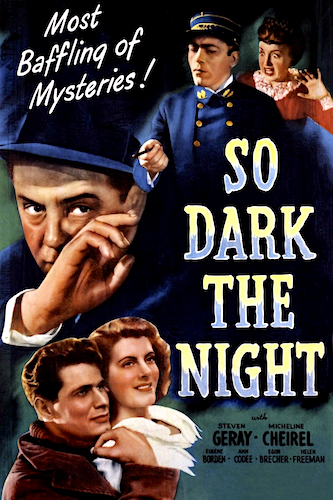
    How many serial killer mysteries have you seen that spend their first half being bucolic romances? I can’t think of any others than So Dark the Night. The title and setup don’t prepare you for it, but the first half-hour is more of a genteel country romcom, with only the slightest hint there might be darker turns to come. Half-an-hour isn’t long generally, but it’s almost halfway through a film this short — and that’s when things take an abrupt turn for the murderous.

    The short running time probably works against the film, on the whole. For example, it makes it easy to miss that there are several interesting supporting characters or facets to main characters. Love interest Nanette is sort of depicted as an innocent ingénue, but we first meet her ogling the expensiveness of Henri’s car, and then she and her mother conspire for her to meet Henri and try to elicit a romantic connection, even though she’s already got a long-standing engagement. That’s not exactly upstanding and sweet behaviour, is it? Then there’s the widowed maid, who’s so lonely and desperate to escape that even after she suspects the killer, she pleads to be taken with him.

    Along with a few other factors that are rather spoilersome, this is a film that takes the usual shape of the whodunnit and subverts it to disquieting effect. It’s a film that, on the surface, looks nothing like a noir — it’s set in a pretty French village (created with surprising authenticity on Columbia’s backlot) — but exposes that the darkness and violence of the human condition can exist anywhere. I say “on the surface” because the film’s photography is great, with many interesting shot and lightning choices peppered about, without overwhelming proceedings with unnecessary flourishes.

    4 out of 5

    So Dark the Night was #57 in my 100 Films in a Year Challenge 2020.


    The Adventures of
    Ichabod and Mr. Toad

    (1949)

    James Algar, Clyde Geronimi & Jack Kinney | 69 mins | digital (HD) | 4:3 | USA / English | U / G

    The Adventures of Ichabod and Mr. Toad

    Disney’s canon of animated films goes through a weird blip between Bambi in 1942 and Cinderella in 1950. That’s when the six so-called “package films” were released, bundling together short films into themed features. They’re almost a footnote in the Disney animated canon — I mean, before them you’ve got Snow White, Pinocchio, Fantasia, Dumbo, and Bambi, and after you’ve got Cinderella, Alice in Wonderland, Peter Pan, Lady and the Tramp, Sleeping Beauty, and so on… and on… But it’s not a period of hidden gems: these are films mostly only worth bothering with if you’re a completist. This final one is, perhaps, the exception. At any rate, it’s easily the best of the package films.

    Whereas the others contained multiple short features, here there are just two: adaptations of The Wind in the Willows and The Legend of Sleepy Hollow. There’s barely any faffing about with linking segments, either: a quick intro from Basil Rathbone (who narrates Willows), and an equally speedy transition from Bing Crosby (who narrates Sleepy Hollow), and that’s it. And that’s all it needs, instead spending time and resources on the stories themselves.

    I’ve never been a huge fan of The Wind in the Willows, but this is a fast-paced and fun version, with a particularly entertaining ‘action sequence’ in Toad Hall as the good guys and weasels run around trying to keep hold of the property deed. Then, The Legend of Sleepy Hollow recasts the famous horror story as… a small-town romantic farce. No, seriously. It’s fine if a little dull, but picks up considerably when it reaches Halloween and we get a song about the headless horseman, a highly atmospheric sequence in spooky woods, and an exciting/comical chase between Ichabod and the horseman. It takes a while to get there, but it’s worth it.

    3 out of 5

    The Adventures of Ichabod and Mr. Toad was #176 in my 100 Films in a Year Challenge 2020.


    A Brief History of Time Travel

    (2018)

    Gisella Bustillos | 69 mins | digital (HD) | 16:9 | USA / English

    A Brief History of Time Travel

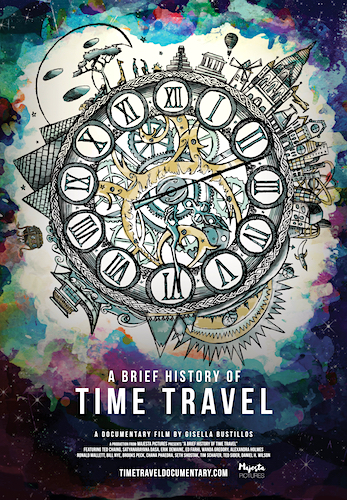
    It’s a decade this year since I backed this documentary on Kickstarter — how’s that for time travel for you? I mean, technically, “normal and linear”, but also: time flies. It doesn’t feel like Kickstarter’s even been around that long. What the hell is going on with our perception of time (for example, the increasingly widespread observation on social media that everyone’s perception of how long ago things were is stuck somewhere in the early- to mid-2000s) would be an interesting topic for a documentary.

    But anyway, that’s not what this is. This is a wide-ranging overview of the concept of time travel, taking in fiction, science (both real and theoretical), and religion, as well as how those things interrelate and influence each other. It’s probably most interested in the science side, using other angles to illustrate rather than be examined in their own right. For example, it details the significance of H.G. Wells’s The Time Machine (the first story to involve time travel into the future, and one of the first where the travel was achieved via a man-made machine rather than some form of magic), but that’s about the last fictional story it describes. There are clips from Doctor Who and Back to the Future, but no discussion of their influence, nor of the kinds of time travel they present.

    At its best, the film draws interesting links and parallels between the different spheres it’s encompassing. This is at its most poignant when we meet a physicist who got into the field because his father died when he was young and time travel stories offered the idea that he might be able to revisit his dad, which developed into him learning the real science and becoming a physicist. Now, he believes he has a workable theory for how information could be sent into the past. I have no idea if that stands up to scrutiny, mind — the film doesn’t vet it with other interviewees’ opinions.

    Considering it only runs a little over an hour, it’s unsurprising that there’s not room to cover everything in depth. Nonetheless, it’s so blatantly leaving significant amounts of material untouched that you can’t help but feel disappointed. To be kind, it’s a reasonable primer for the uninitiated, with interesting bits of info dropped here and there, but almost every topic covered would merit a deeper, dedicated examination.

    3 out of 5

    A Brief History of Time Travel was #123 in my 100 Films in a Year Challenge 2021.


    Misery

    (1990)

    Rob Reiner | 107 mins | digital (HD) | 1.85:1 | USA / English | 15 / R

    Misery

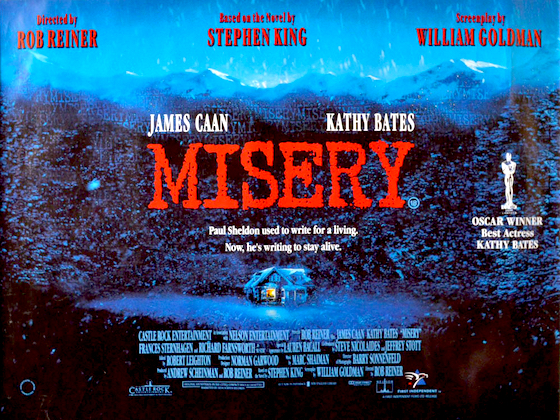
    I feel like Misery is one of those movies that was once very well known in general pop culture, but has since slipped back, if not into obscurity then certainly into a lesser-known status, remembered only when mentioned by people who were there or as one in a list of Stephen King adaptations, that sort of thing. And that also feels fair enough, because it’s very much a movie that’s pretty good but not exceptional. The author whose work it’s taken from, the filmmaker who’s adapted it, and the main players on screen have all been responsible for or involved in even better and more enduring works of cinema, so of course this has become an “and also” note in their careers.

    Perhaps transcending that — and, certainly, by far the most famous thing about Misery — is the ankle-bashing scene, which unfortunately means you spend most of the film waiting for it to turn up, and when it does it’s rather unaffecting. That’s time and infamy for you. The former: it’s not as gruesome as it would be if shot today. The latter: I’d already seen the clip a dozen times. I can see how it was striking on the film’s original release, but familiarity has really blunted it.

    Fortunately, there’s more to the film than one shocking act of violence. Kathy Bates is excellent as Annie Wilkes, making her wild mood swings terrifyingly plausible. Her Oscar was well earned. Then there’s the subplot with the local sheriff and his unceasing investigation, which also introduces a welcome note of comedy via his interactions with his deputy (who’s his wife) and some of the other townsfolk. He’s brought to life with immense likability by Richard Farnsworth, and I’d’ve happily watched a whole movie based around him. On the whole, the film has a somewhat underwhelming “TV movie” feel to its visual (lack of) style, but there are some nicely done bits: the scene where Annie’s coming home while Paul tries to cover up that he’s been out and about; the final fight, which is just the right mix of tense, scrappy, and believably comical.

    4 out of 5

    Misery was #230 in my 100 Films in a Year Challenge 2020.


  • 2023 | Weeks 3–4

    “Wait, did I miss Weeks 1 and 2?”, you may have asked yourself upon seeing this post pop up wherever you see my posts. And the answer is: no, I missed them, because I failed to watch a single film in either Week 1 or Week 2 of 2023. Most extraordinary.

    Anyway, I wrote about that in January’s monthly review, so let’s get on with reviewing. I will note that I’ve skipped a couple of films from these weeks. Normally I only do that when I’ve already written their review and it’s long enough I feel it should be posted solo. I haven’t formally started writing about either The Girl Who Knew Too Much or Black Girl yet, but I have an inkling they’re both going to be quite long (the latter, definitely), so I’ve set them aside for the time being. Which leaves us with…

  • The Magician (1926)
  • Glass Onion (2022)
  • My Year of Dicks (2022)
  • Shotgun Wedding (2022)
  • The Banshees of Inisherin (2022)


    The Magician

    (1926)

    Rex Ingram | 80 mins | Blu-ray | 1.33:1 | USA / silent

    The Magician

    Based on W. Somerset Maugham’s novel, itself inspired by the antics of real-life occultist Aleister Crowley, The Magician concerns a mad scientist, Oliver Haddo (Paul Wegener), trying to complete an alchemical spell to create life by kidnapping a pretty virginal sculptor, Margaret (Alice Terry), so he can cut out her heart and use her blood. But why just kidnap a young woman when you can hypnotise her into marrying you? And why just kill her when you can use your hypnotic control to, er, take her gambling in Monte Carlo and make lots of money?

    Wait, what?

    Yeah, The Magician is kind of an odd film. Whether that’s due to Maugham’s original work and his desire to write a takedown of Crawley, or if it was the impetus of director Rex Ingram fancying a jolly around Europe with his wife, who he’d cast in the lead female role, I don’t know. Either way, the varied asides (before the eponymous Haddo even turns up, Margaret is paralysed in a sculpting accident and goes for experimental surgery to get it fixed) slow the pace, possibly to pad out what is really quite a slight story. On the other hand, there are some atmospheric sequences scatted throughout, like a demonstration of Haddo’s powers at a snake charming show, or a devilish orgy (yes, you read that right; no, it’s not at all shocking by modern standards). Plus, as if to balance out all the stuff with dark magic, Ingram finds room for dashes of humour, giving a bit of texture and stopping the film from becoming too self-serious.

    However, The Magician remains most noteworthy today as a stylistic precursor to Universal’s initial run of horror movies in the early ’30s — James Whale’s Frankenstein, in particular, seems to have taken some cues from this film’s climax. It’s a fairly entertaining melodramatic fantasy-horror in its own right, but is primarily worth a look for those interested in the early development of the horror genre in Hollywood, or for silent movie fans who’d like something with a supernatural edge. General audiences are probably fine sticking to the established classics it influenced.

    3 out of 5

    The Magician is the 1st film in my 100 Films in a Year Challenge 2023.


    Glass Onion

    (2022)

    aka Glass Onion: A Knives Out Mystery

    Rian Johnson | 139 mins | digital (UHD) | 1.85:1 | USA / English | 12 / PG-13

    Glass Onion

    In some respects, Glass Onion delivered a movie closer to what I’d been expecting from the first Benoit Blanc mystery, Knives Out; that is to say, a proper murder mystery that is also unabashedly a comedy. Don’t get me wrong, I found Knives Out amusing — even more so with subsequent rewatches — but it has a kind of dry humour, with a wit more likely to raise a wry smile of acknowledgement than a guffaw. Glass Onion surely has such moments too, but it also has big, broad laughs that stand out more on a first viewing.

    The mystery at its core remains a true Christie-style puzzler, with enough about-turn twists to keep you off balance — you can try and guess what’s going on if you want, but it’s just as much fun to be swept along for the ride — but the surrounding material is satirical almost to the point of parody. Kate Hudson’s airhead influencer is more caricature than character, for example, while there’s no doubt that Edward Norton’s billionaire is a merciless pisstake of Elon Musk. That’s annoyed certain right-wing commentators. The rest of us can just enjoy the accurate pillorying.

    This overall shift in tone will, I think, dictate which of the two movies viewers prefer — i.e. whichever one hews closer to your personal taste. On the other hand, maybe you’ll be like me, and enjoy them both for their own particular quirks. I’ve already watched Knives Out three times, so I’ll have to watch Glass Onion a couple more to make any kind of fair comparison. Fortunately, I intend to.

    5 out of 5

    Glass Onion placed 1st on my list of The Best Films I Saw in 2023.


    My Year of Dicks

    (2022)

    Sara Gunnarsdóttir | 26 mins | digital (HD) | 1.78:1 | USA & Iceland / English

    My Year of Dicks

    One of the standout moments of this year’s Oscars nominations announcement was when Riz Ahmed read out the Best Short Animation nominees, thus having to proclaim “My Year of Dicks” to the world — especially as it was immediately followed by “An Ostrich Told Me the World Is Fake and I Think I Believe It”. Only one of those is currently available to watch online, so I did.

    The autobiographical story of screenwriter Pamela Ribon trying to lose her virginity in early-’90s Texas, My Year of Dicks unfolds across five vignettes, each telling a different (but connected) story of sexual misadventure. The chaptered structure gives away that this is kinda five short films strung together; but they’re also a series, with a definite through-narrative (if you’ve ever watched any narrative film before, you’ll easily spot the early supporting character who’s destined to have greater significance). So, while it doesn’t fully work as a single ‘film’ (it feels like binge-watching a series of short episodes), there is at least a reason to lump them all together as a unit.

    The parts are further differentiated by employing a variety of animation styles to depict Pam’s fantasies and inner feelings. It’s an effective use of the medium to help overcome the fact that the actual stories are relatively rote “coming of age” tales. The most successful of all is the excruciating “sex talk” with Pam’s dad, in which a bombardment of animated self destruction reflects the desire for escape we’re all feeling at that point.

    As a story based around female sexuality, My Year of Dicks has an air of timeliness about it. Equally, it feels like such barriers have been continually been being broken down for the past 20 or 30 years now; in which case, one does wonder if its success has as much to do with the amusement value in seeing that title on the Oscar short list as it does the film itself.

    3 out of 5

    You can watch My Year of Dicks for free on Vimeo.


    Shotgun Wedding

    (2022)

    Jason Moore | 101 mins | digital (UHD) | 2.39:1 | USA / English | 15 / R

    Shotgun Wedding

    Jennifer Lopez and Josh Duhamel are about to get married in front of their family and friends at a remote tropical resort when pirates turn up demanding a ransom. Action and hilarity ensue. How exciting the action and how hilarious the hilarity is where opinions may differ.

    For my money, the end result is a perfectly serviceable star-driven action-comedy. It’s the kind of middle-of-the-road, made-for-date-night fare that people keep bemoaning we’re losing thanks to Marvel’s box office dominance, even though Hollywood actually seems to keep making them (for another example from just last year, see The Lost City), and they get fairly widely slated every time one actually comes out.

    Okay, the vast majority of the film’s funniest ideas and moments were in the trailer (heck, the way the first promo was edited to make the film look like a rom-com, only to about-turn into an action movie, is probably the best gag associated with the entire project), but the film itself has held back a couple of laugh-worthy moments, and even a few plot twists. No wheels are reinvented, but it’s fine as bit of non-demanding, Friday-night, never-going-to-watch-it-again, easy viewing.

    3 out of 5

    Shotgun Wedding is the 5th film in my 100 Films in a Year Challenge 2023.


    The Banshees of Inisherin

    (2022)

    Martin McDonagh | 114 mins | digital (UHD) | 2.39:1 | Ireland, UK & USA / English | 15 / R

    The Banshees of Inisherin

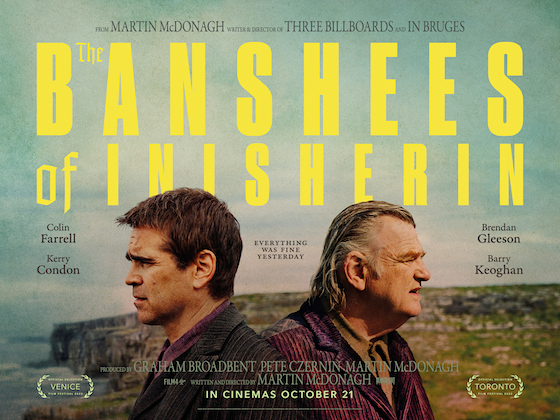
    The new film from the writer-director of Three Billboards reunites the star pairing from his first movie, In Bruges, for an altogether different — but equally as hilarious — tale of two Irishmen. Here, Colin Farrell and Brendan Gleeson play lifelong friends on a small island off the coast of Ireland in the 1920s; that is until one day Gleeson decides he just doesn’t like Farrell anymore. Cue a serious of escalating encounters as Gleeson tries to get his former mate to just leave him be.

    After the quite heavy, discourse-provoking narrative of Three Billboards, Banshees feels somewhat like McDonagh heading for smaller-scale, less contentious waters. Not that I think he’s running in fear — he doesn’t seem like one to avoid confrontation or provocation around his art — but I think that Banshees feels more of a piece with Bruges, in that it’s focused on just a handful of characters and their fairly everyday lives. That said, things do get a bit… outrageous; and the Irish civil war is ticking away on the mainland, suggesting at least one thematic interpretation of the friends’ fallout. That’s not to mention the subplots involving Farrell’s sister outgrowing her place on the island, or the woes of the local village idiot (played superbly by Barry Keoghan) and his abusive father, who happens to be the island’s policeman.

    All of which might begin to sound a bit serious. But then, juggling life-and-death issues and hilarity is almost McDonagh’s trademark. Indeed, the film’s biggest laugh is related to the story of a woman’s death; meanwhile, its saddest moment involves not the abuse or self-mutilation of any of the human characters, but rather the fate of a beloved animal (that might read as a spoiler, but I consider it fair warning for animal lovers). In viewing, it’s consistently very funny, but creeps up on you with Stuff To Think About, too. I enjoyed it a lot; maybe not as much has In Bruges or Glass Onion (no relatable comparison there other than I watched them both this month), but enough that my score rounds up.

    5 out of 5

    The Banshees of Inisherin is the 6th film in my 100 Films in a Year Challenge 2023.


  • 2022 | Week 34

    Skipping week 33 (when I didn’t watch anything), here are all the films I watched in week 34 — which, if anyone’s interested, was back in August. Somehow, I don’t think I’m going to get caught up on my 2022 reviews before the end of the year…

  • The Winter Guest (1997)
  • Repeat Performance (1947)
  • Carousel (1956)


    The Winter Guest

    (1997)

    Alan Rickman | 105 mins | digital (SD) | 16:9 | UK & USA / English | 15 / R

    The Winter Guest

    The writing and directing debut of actor Alan Rickman, The Winter Guest follows four loosely-connected pairs of characters through a day in their lives, all confined to a small Scottish seaside town where the stark winter has turned the sea to ice. It’s the kind of film where nothing happens: the characters hang out with each other and talk, basically, with their issues ranging from bereavement to stereotypical teenage sex obsession (one boy played by a young Sean Biggerstaff wants… a bigger staff, wink wink. Sorry, the pun was too tempting to avoid).

    The confined setting and characters means the end result feels theatrical in both style and content — it’s basically just a series of two-handers, with quite mannered dialogue. And yet its staging isn’t so limited, because Rickman and cinematographer Seamus McGarvey do an excellent of of evoking the chilly surroundings (most of the film is set outside), giving the scenery a painterly feel. That’s probably in part due to using digital matte paintings to convey the frozen ocean, but it extends to the beaches and town buildings, too. Or it could just be an unintended side effect of the smoothing conferred by watching in digitally compressed SD; but as it’s just about my favourite aspect of the film, let’s assume it was intentional and skilfully done.

    3 out of 5


    Repeat Performance

    (1947)

    Alfred Werker | 93 mins | Blu-ray | 1.37:1 | USA / English

    Repeat Performance

    On the eve of 1947, actress Sheila Page (Joan Leslie) shoots dead her husband (original Saint Louis Hayward). She flees, ending up at the home of her producer (second Falcon Tom Conway) in the early hours of New Year’s Day… 1946. Given the chance to re-live the past year, can she make things right?

    Repeat Performance gets classified as film noir, but I feel like it’s one of those films that sits on the periphery of what qualifies for the genre. The opening — in which a woman shoots dead her husband, in New York City at night — yes, very noir. But what unfurls over the next 90 minutes is more of a backstage romantic melodrama by way of Twilight Zone-style fantasy. But that’s the thing with noir: as a movement that wasn’t recognised and codified as a genre until after it was over, what ‘counts’ can be a very broad church.

    Here, the odd combination of styles makes for an unusual and mostly entertaining film. My only real gripe is that we’re given very little idea what went on in the ‘original’ 1946, so it’s hard to tell how much effort Sheila is actually making to change it, or to follow how successful she’s being. This kind of perspective is perhaps the benefit of a further 75 years of development and refinement in the field of fantastical storytelling — Repeat Performance isn’t a Fantasy film in the true genre sense, more a Thriller with a neat inciting twist, a la Sliding Doors (my go-to example of a Fantasy film that doesn’t care it’s a Fantasy film!)

    The plot is bolstered by strong or likeable performances across the board. Some of the lead cast may be better known for starring in B-movie schedule-fillers, but this is proof if proof were needed that to interpret that as a sign of limited skill on their part would be an incorrect conclusion. Which is a rather torturous way of saying “Hayward and Conway were quite good actors, actually”. Hayward is particularly good here, getting to show off his range from loving husband to psychopathic abuser, plus a few other stages in between. Conway is more at the likeable end of the spectrum as Sheila’s kindly producer, while Richard Basehart’s performance (in his movie debut) as queer-coded poet William Williams (in the original novel, the character is a transvestite) was so impressive that the producers gave him more scenes with Leslie and bumped up his billing.

    4 out of 5

    Repeat Performance is the 52nd film in my 100 Films in a Year Challenge 2022.


    Carousel

    (1956)

    Henry King | 123 mins | digital (HD) | 2.55:1 | USA / English | U

    Carousel

    Carousel is a spectacularly odd entry in the Rodgers & Hammerstein canon of musicals. Based on a play called Liliom (which was previously filmed by Frank Borzage in 1930 and Fritz Lang in 1934), it tells the story of a carnival barker (Gordon MacRae) who’s been dead 15 years, but in flashback we learn of how he fell in love and married, and how he died, and why he now gets a chance to go back for a day to make amends. That almost makes the film sound focused. As it plays out, the storyline has a weirdly aimless quality, not helped by songs that are mostly mediocre or bizarre. That’s before we get to the horrendously outdated views on domestic violence, or the fact that it’s not actually got very much to do with the titular fairground attraction.

    The darker material and themes could work in the right setting, but here they clash with the sunny seaside photography and stereotypically cheerful musical numbers. I mean, this is a story about a physically abusive husband and wannabe small-time crook, who can’t even change his ways when the afterlife gives him a second chance, and we have songs about the beauty of summer and the joys of a clambake (the latter may haunt your memories…)

    A strange film, and not in the good way. At least it’s made me curious to see the Borzage and Lang versions — perhaps as a straight drama it will be more obvious why this has merited adaptation so many times.

    2 out of 5


  • Shang-Chi and the Legend of the Ten Rings (2021)

    Destin Daniel Cretton | 132 mins | digital (HD+3D) | 2.39:1 | USA / English & Mandarin | 12 / PG-13

    Shang-Chi and the Legend of the Ten Rings

    Unless you’re a dyed-in-the-wool fan, keeping up with the MCU is beginning to feel more like a chore than entertainment. There’s just so much of it! No wonder it can feel like its fans never watch anything else, because getting through the myriad TV series and movies could conceivably fill most of your free time. That said, it’s obviously not doing the movies any harm (yet) based on the spectacular box office performances of No Way Home ($1.89 billion, the 6th highest grossing film of all time) and Doctor Strange 2 ($935.3 million and counting). And getting round to everything does have its benefits, because occasionally you find a diamond, and it’s not always one the critics or other viewers have flagged up. I mean, most of what I heard about the first Doctor Strange was that it was just the standard superhero origin story over again, but it’s one of my favourite films from the studio’s output, primarily thanks to the stunning visuals and a few other clever developments. Being another iteration of something isn’t always bad, especially if you’ve iterated closer to perfection.

    Shang-Chi is the latest Marvel movie to fall into that camp for me. It is, again, a superhero origin story; but, again, one that’s been refined to a place where the hints of familiarity don’t really matter. It’s about Shaun (Simu Liu), an ordinary guy working as a valet in San Francisco… who it turns out isn’t such an ordinary guy, but is really Shang-Chi, the son of the magically-powered leader of a global crime syndicate known as the Ten Rings. Of course, events conspire to bring Shang back into contact with his estranged family, where he must choose whether to stand against his father’s evil plans.

    The MCU publicity claim that any given film is “not just a superhero movie, it’s a [1970s conspiracy thriller / John Hughes comedy / whatever]” has, rightly, become a bit of a laughing stock. But I think Shang-Chi might be the first time it’s actually true. Yeah, it’s undeniably set in the MCU and, as such, plays by some of those rules (there are Blip references from early on, with the requisite cameos and mid-credit teaser scenes to follow), but the bulk of the movie itself is not really a superhero film as we normally think of them. Rather, it’s a martial arts fantasy-actioner. Now, maybe those are in the same ballpark — people with impossible abilities fighting each other — but I’d argue the style of it in Shang-Chi feels closer to something like Detective Dee or 47 Ronin (except good) than Iron Man or Captain America, or even the other fantasy/magic-based MCU sub-series like Thor or Doctor Strange.

    A sticky situation

    And for that, I loved it. Unfortunately, where it’s most like the MCU is in an ‘epic’ battle finale that, a few show-off moments aside, is mostly realised through CGI that looks like swirling mud. If it weren’t for that disappointment (and, to be clear, it’s not a disaster, just a bit of a let down), I might have given the film an even higher score.

    I was also glad I bothered to track down the 3D version (only released on disc in Japan, I believe. I also believe Japanese imports are expensive. I wouldn’t know from experience, I’ve never bought one). I’m aware that 3D is an ever-dwindling format and that’s why major labels aren’t bothering with disc releases anymore (though it must be worth it at theatrical level, because they’re still shelling out for these post-conversions that cost millions of dollars a pop), but it’s a shame for those of us who enjoy it and still have the kit, because it’s as enjoyable as it ever was when done well. Shang-Chi may not be the height of the format, but lots of it looked nice with the extra dimension. Sadly, unlike many previous Marvel 3D releases, it didn’t have the bonus benefit of a shifting IMAX ratio. There is an “IMAX Enhanced” version of the film (it’s on Disney+), but, like the last two Avengers movies, it presents the entire film in IMAX’s 1.9:1 ratio, so no luck for us 3D fans there (or anyone bar Disney+ viewers, because it’s not included on the film’s 2K or 4K Blu-ray releases either).

    4 out of 5

    Encanto (2021)

    Jared Bush & Byron Howard | 102 mins | digital (UHD) | 1.85:1 | USA / English & Spanish | PG / PG

    Encanto

    The 60th film in Disney’s animated canon was, despite that status, sent straight to streaming in the midst of the pandemic. Possibly because of that, it seemed to catch on quite quickly as their latest major success. Case in point: one of the songs — We Don’t Talk About Bruno — ended up having greater chart success than Frozen’s notorious Let It Go.

    (I’ve got to take the time to say that I find this quite baffling. I don’t love Let It Go (I’m a 36-year-old man, not a six-year-old girl in 2013), but it’s clearly a catchy tune with lyrics that transcend its place in the film — you can understand how it became such a huge hit. But for the life of me I can’t work out why We Don’t Talk About Bruno has surpassed its success. It’s a likeable song that plays well in the movie — and I think hearing it in place is important, because the first time I heard it was on the radio and I couldn’t even work out what they were singing about. So, there’s nothing going on lyrically that makes it applicable in any other context, and I don’t think the underlying tune is so earwormy as to warrant play merely for that reason. Or maybe it is if you’re the right age, because clearly something made it a massive hit.)

    Anyway, the film itself is about a family, the Madrigals, who live in a magical house in an isolated part of Colombia and all have magical powers — except Mirabel (Stephanie Beatriz), for reasons no one understands. But when the family begin to lose their abilities, finding out what’s going on and fixing it falls to Mirabel. Because of course it does.

    Someone's gotta do the donkey work

    Encanto doesn’t look like your typical Disney Princess movie, but it’s not functionally different to them. The Madrigal family’s powers mean they effectively rule over their small town, albeit in a benevolent way, which makes Mirabel a de facto Princess; and she has the usual Disney Princess hangups about feeling under-appreciated and needing to find her self-worth. But hey, at least she doesn’t also need to find a husband! Nonetheless, it’s welcome that the film is less traditional is its setting — present-day South America, rather than the typical fairytale land of historical Europe — and the pace is also up-to-date. In fact, it’s quite frantic. Like, okay, calm down a bit; take your time occasionally; let stuff stay on screen long enough for us to appreciate how good it looks. And the animation does look great, with detailed designs, fluid movement and dynamic camerawork, and an incredibly colourful palette, especially when fired up by HDR/WCG.

    The songs are by Hamilton’s Lin-Manuel Miranda, unmistakably so. It’s something about the phrasing, the rhythm, the rhyme patterns… I’m no musicologist so I can’t adequately explain it, but they’re distinctively his work. But that’s what you want when you hire someone, right — their own voice. If you don’t like this style from his other work, chances are the music here won’t appeal to you either. If you do like it, there’s much to enjoy, from the opening number, The Family Madrigal, which introduces us to the large cast of characters at whipcrack pace, to my personal favourite, Surface Pressure, about one family member’s struggle with all the weight on her shoulders. And yet they put Dos Oruguitas up for the Original Song Oscar, apparently trying to emulate the success of Coco’s Remember Me. Oops. (Obviously they should’ve gone with breakout hit Bruno, but I reckon either of the other songs I’ve mentioned would’ve stood a better chance.)

    One of Encanto’s directors is Byron Howard, whose previous work for Disney has encompassed Bolt, Tangled, and Zootropolis — three films I’d class as among the very best of Disney’s current purple patch. It’s a helluva record. Happily, Encanto continues it. I might rank it a little behind the other three when all is totted up, but being next in line to such strong movies is nothing to be ashamed of.

    4 out of 5

    Encanto is the 28th film in my 100 Films in a Year Challenge 2022. It placed 4th on my list of The Best Films I Saw in 2022.

    2022 | Weeks 9–11

    Right, let’s try (again) to get things back on track.

    These compilations were/are meant to keep my reviewing roughly up-to-date with my viewing, but I don’t think stuffing them with too many films at once is the right way to go. I don’t know about anyone else, but I feel like five or six per post is about right (with some leeway, of course — I’m sure four or seven would be fine too). However, dividing like that means getting out of sync with Real Life, so I suppose I should clarify when “weeks 9–11” were: Monday February 28th to Sunday 20th March, to be precise. And back then, I watched…

  • Tintin and the Temple of the Sun (1969), aka Tintin et le temple du soleil
  • Los Olvidados (1950), aka The Young and the Damned
  • The Very Excellent Mr. Dundee (2020)
  • The King’s Man (2021)
  • Dirty Rotten Scoundrels (1988)
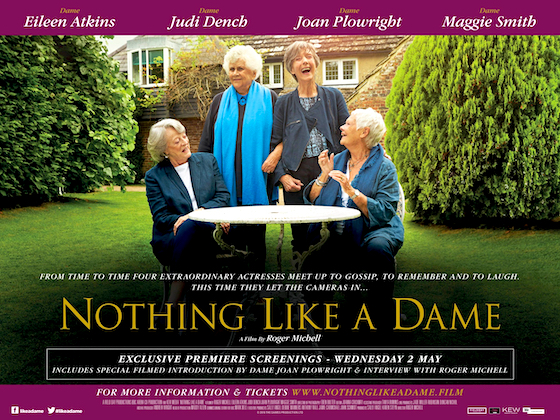
  • Nothing Like a Dame (2018)


    Tintin and the Temple of the Sun

    (1969)

    aka Tintin et le temple du soleil / The Adventures of Tintin: The Prisoners of the Sun

    Eddie Lateste* | 75 mins | DVD | 4:3 | Belgium & France / English | U

    Tintin and the Temple of the Sun

    This fourth big-screen outing for the Belgian reporter also continues the popular TV series, Hergé’s Adventures of Tintin, made by Belgian studio Belvision from 1957 to 1962. Having adapted ten of Hergé’s volumes for TV, here they tackled two more: two-parter The Seven Crystal Balls and Prisoners of the Sun. The story sees Tintin and chums head to Peru on the trail of their kidnapped friend, Professor Calculus, and to investigate an Incan curse that has befallen a previous party of archaeologists.

    Trekking up mountains and through jungles, with nefarious agents in pursuit, plus all the to-do with ancient curses and whatnot, this is chock-a-block with good old “Boy’s Own Adventure” stuff. As with so many of those, the joy lies in being swept along with the adventure rather than thinking about it too hard (our heroes are saved at the end because the Captain happens to have a scrap of newspaper that Snowy happens to steal that Tintin happens to fancy having a look at that happens to mention a handy forthcoming event). By the same token, there’s also the unavoidable effects of time: some of it feels a teensy bit racist nowadays; Tintin makes his way through the jungle merrily murdering animals left, right and centre. The animation itself is fine, with designs and an overall visual style that emulate Hergé well, but it does have a certain TV-ness.

    It’s also not available in the greatest of copies, at least to English-language viewers. Reportedly the original version contains two songs, both of which were cut from the UK video release, but only one of which has been restored for the DVD (and, I presume, the version currently available to stream from Apple, etc). Although most of the film is dubbed, the song is in the original French, unsubtitled; and has clearly been edited, because there are digital freeze frames around it. At the start of the film, the title card has been replaced in a similarly awkward fashion. Then there’s the 5.1 remix, which seems to be missing some effects and music cues. You can still enjoy the majority of the film despite these distractions, but it’s disappointing that we still have to put up with such palaver nowadays.

    3 out of 5

    Tintin and the Temple of the Sun is the 19th film in my 100 Films in a Year Challenge 2022.

    * Many (but not all) online sources list Lateste as the director, including IMDb, but the film itself doesn’t actually credit him — the only director-like credit is for “Belvision”. Lateste is credited as one of the screenwriters, at least. ^


    Los Olvidados

    (1950)

    aka The Young and the Damned

    Luis Buñuel | 81 mins | digital (HD) | 1.37:1 | Mexico / Spanish | 12

    Los Olvidados

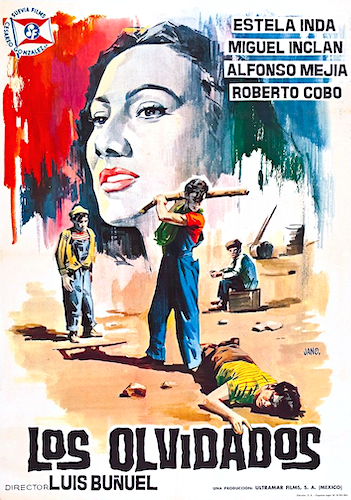
    Combine the literal translation of the film’s title — The Forgotten Ones — with the US retitling — The Young and the Damned — and you build a sense of what Los Olvidados (as it’s been released in the UK) is about. To be clearly, it’s a socially-realist depiction of life for children in the slums of Mexico City. Although initially condemned (according to IMDb, it only played for three days in Mexico before the “enraged reactions” of the press, government, and upper- and middle-class audiences caused it to be pulled), it’s since been reevaluated as one of the greats of Latin American cinema. Certainly, watching it after films like The 400 Blows (made almost a decade later), City of God (over 50 years later), and Capernaum (almost 70 years later), its influence is felt.

    The downside to that is the film feels somewhat less fresh and more worthy than the later efforts. It’s got an overt anti-poverty message that is admirable but sometimes heavy-handed (a school principal character feels like he’s been inserted just to state the film’s thesis out loud) or naïvely optimistic (the opening voiceover asserts that child poverty will ultimately be solved by progress. Over 70 years later, I don’t think progress is doing a great job…) While much of the movie works at its intended goal, when aspects like these intrude it stops feeling like a realistic depiction of poverty and more like a straightforward polemic about how it should be fixed. On the bright side, it avoids the lure of a pat happy ending — although one was actually discovered in 2002, apparently shot to appease Mexican censors. Clearly they managed to get the film released without having to cave on that point, and it’s better for it.

    4 out of 5

    Los Olvidados is the 20th film in my 100 Films in a Year Challenge 2022. It was viewed as part of Blindspot 2022.


    The Very Excellent Mr. Dundee

    (2020)

    Dean Murphy | 88 mins | digital (HD) | 2.35:1 | Australia & USA / English | 12 / PG-13

    The Very Excellent Mr. Dundee

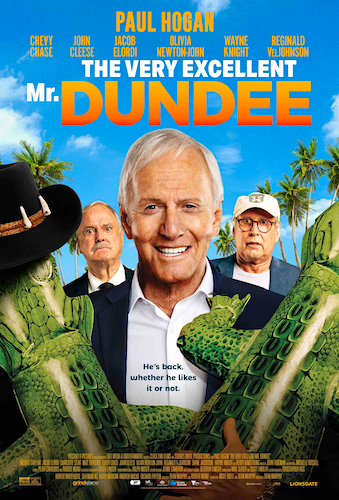
    Not a fourth Crocodile Dundee film, but rather a depiction of the accidentally-chaotic life of that series’ leading man, Paul Hogan, the archetypal Aussie now living in LA and, reaching his 80s, somewhat bemused by the modern world.

    Even from that quick summary, you can tell it’s not a terribly original premise. Couple that with a clearly small budget and you have a recipe for many dismissing the film out of hand. Personally, I found it to be surprisingly enjoyable, in a laidback, undemanding way. None of it is properly hilarious (though a bizarre musical sequence comes close), but it’s kinda amiable, and almost heartwarming at the end. Discerning viewers should perhaps not apply, but if you have any affection for the second or third Crocodile Dundee films (again, widely maligned instalments that I found passably entertaining), this is worth a punt.

    3 out of 5


    The King’s Man

    (2021)

    Matthew Vaughn | 131 mins | Blu-ray (UHD) | 2.39:1 | UK & USA / English | 15 / R

    The King's Man

    Co-writer/director Matthew Vaughn expands the Kingsman universe with this World War I-era prequel that delves into the backstory of how the eponymous organisation was founded. Unlike so many prequels, this does feel like a story worth telling — we don’t necessarily need it, but it’s not merely an exercise in visualising events we’ve already been told, or coming up with over-elaborate reasons for people’s names or whatever (why couldn’t Han Solo’s birth name have just been Han Solo, hm?)

    The story begins with Europe on the brink of war, and our heroes — led by the Duke of Oxford (Ralph Fiennes) — attempting to stop it. History tells us they fail, and so the narrative unfurls across WWI as they try to bring it to a close. That will see them come up against the manipulations of Rasputin (Rhys Ifans), who’s part of a secret organisation plotting to bring down the great empires.

    Let’s cut to the chase: the Kingsman films have a rep for elaborate fight scenes set to pop music. One of the major villains is Rasputin. You only need a passing familiarity with the disco hits of the ’70s to know what I was looking forward to here. Well, it doesn’t happen. Indeed, that stylistic calling card is more or less entirely abandoned (the fight does happen, of course, but it’s set to Tchaikovsky’s 1812 Overture — kind of like era-appropriate ‘pop’ music, I guess?) Apparently Vaughn did originally intend the sequence to be set to an orchestral version of the song in question, but ultimately felt it didn’t work.

    This, perhaps, speaks to another concern I had going in, which was that Kingsman’s highly irreverent, almost satirical tone might clash with the all-too-real WWI setting. Such an historical tragedy doesn’t feel right to be made light of in that way, even over a century later. So, as if to compensate, Vaughn and co have toned down the humour, making The King’s Man fairly serious… but without fully sacrificing the near-whimsy at other times, because, well, it’s part of the franchise. The result is a little awkward, tonally, swinging back and forth between historical seriousness and franchise-establishing fun. Put another way, it’s hamstrung by being an entry in a series known for its irreverence that feels the need to show due reverence to WWI. That’s a clash of values it struggles with, some might say admirably, but can’t quite reconcile. In short, it’s too serious to be a Kingsman film, but too Kingsman-y to be a standalone WWI-set action-adventure.

    I wouldn’t say it’s a disaster, by any means — but then, I enjoyed The Golden Circle when many lambasted it, so make of that what you will. Nonetheless, I’m looking forward to the next film getting back to Eggsy & co in the present day.

    3 out of 5


    Dirty Rotten Scoundrels

    (1988)

    Frank Oz | 110 mins | digital (HD) | 1.85:1 | USA / English | PG / PG

    Dirty Rotten Scoundrels

    Michael Caine and Steve Martin star as a couple of chalk-and-cheese con men, pilfering the fortunes of wealthy single ladies on the French Riviera, in this fun con caper with a neat sting in its tail.

    Caine hits just the right note as a charming con artist, his manner inspired by David Niven, who played the role in the original, 1964’s Bedtime Story. I was unaware the film was a remake until after watching it, though I did know it was itself subject to a gender-bent do-over in 2019, The Hustle. I don’t know how similar Bedtime Story and Dirty Rotten Scoundrels are, but, based on its trailer, The Hustle seems to be a direct lift from this, albeit peppered with the kind of pratfalling that’s de rigueur in modern big screen comedy.

    Marlon Brando was Niven’s co-lead, whereas here Caine gets Steve Martin as the very embodiment of a brash American — a little too brash, if anything, though reportedly there were bits he actually reined in. The running time could have done with a similar consideration, because it’s a little long for its breezy premise and tone (running 110 minutes, it would be better nearer 90), but that’s a minor complaint — it rarely feels too slow or draggy, just a little long overall.

    4 out of 5

    Dirty Rotten Scoundrels is the 21st film in my 100 Films in a Year Challenge 2022.


    Nothing Like a Dame

    (2018)

    aka Tea with the Dames

    Roger Michell | 77 mins | digital (HD) | 16:9 | UK / English | 12

    Nothing Like a Dame

    Four thespian friends, Dames all — Eileen Atkins, Judi Dench, Joan Plowright, and Maggie Smith — gather for a natter about their careers and lives. That’s it, that’s the film.

    Given the setup, plus the style of advertising and US retitle, you’d be forgiven for expecting a gentle bit of fluff; eavesdropping on a pleasant chinwag with four venerable British actresses. The film is that, in places, but it also has a surprising undercurrent of sadness running throughout, as these ageing ladies reflect on the ups and downs of their careers and personal lives now that they’re (shall we say) closer to the end than the beginning. It rarely bubbles to the surface, but it always feels like it’s there, somehow inescapable.

    If that gives proceedings more texture than you might’ve expected, then the film’s biggest flaw lies elsewhere. For me, it’s that it wasn’t long enough. The conversations are often delightful and occasionally insightful, but you feel like there’s so much more to be gleaned from these women. The film chops about between topics and pairings, always feeling like we’re getting snippets of the full conversation, never the true depth; like we’re watching a highlights reel of what should be a three-hour series, or something like that. I know it’s an old theatrical adage to “leave ’em wanting more”, but I really did want some more.

    4 out of 5