
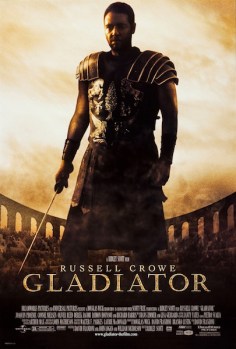
The slave who became a gladiator.
The gladiator who defied an empire.
Country: USA & UK
Language: English
Runtime: 155 minutes | 171 minutes (extended edition)
BBFC: 15
MPAA: R

Original Release: 4th May 2000 (Australia)
US Release: 5th May 2000
UK Release: 12th May 2000
First Seen: DVD, c.2001
Stars
Russell Crowe (L.A. Confidential, A Beautiful Mind)
Joaquin Phoenix (Walk the Line, Her)
Connie Nielsen (The Devil’s Advocate, One Hour Photo)
Oliver Reed (Women in Love, The Three Musketeers)
Richard Harris (This Sporting Life, Unforgiven)
Director
Ridley Scott (Kingdom of Heaven, Exodus: Gods and Kings)
Screenwriters
David Franzoni (Amistad, King Arthur)
John Logan (The Aviator, Skyfall)
William Nicolson (Shadowlands, Mandela: Long Walk to Freedom)
Story by
David Franzoni (Jumpin’ Jack Flash, Citizen Cohn)
The Story
Roman Emperor Marcus Aurelius believes his son and heir, Commodus, is unfit to rule, so plans to appoint victorious General Maximus Decimus Meridius as regent. Before he can, Commodus murders Marcus and orders Maximus’ execution. Maximus escapes, but returns home to find Commodus has had his wife and son murdered. Captured by slavers, Maximus becomes a gladiator, and when Commodus announces gladiatorial games to commemorate his father, he spots a chance for revenge…
Our Hero
Maximus Decimus Meridius, commander of the Armies of the North, General of the Felix Legions and loyal servant to the old emperor, Marcus Aurelius. Father to a murdered son, husband to a murdered wife, becomes a gladiator, will have his vengeance against the new emperor, in this life or the next.
Our Villain
Said new emperor, Commodus. Murders his father because Marcus favours Maximus. Fancies his sister. That kinda guy.
Best Supporting Character
Even if his performance is partially computer generated (more on that later), Oliver Reed still stands out as Proximo, the slave owner who buys Maximus and turns him into a gladiator. For a fella who does that kind of thing, he turns out to be very honourable.
Memorable Quote
“My name is Maximus Decimus Meridius, commander of the Armies of the North, General of the Felix Legions and loyal servant to the true emperor, Marcus Aurelius. Father to a murdered son, husband to a murdered wife. And I will have my vengeance, in this life or the next.” — Maximus Decimus Meridius, commander of the Armies of the North, General of the Felix Legions, loyal servant to the true emperor Marcus Aurelius; father to a murdered son, husband to a murdered wife.
Quote Most Likely To Be Used in Everyday Conversation
“Are you not entertained? Are you not entertained?” — Maximus Decimus Meridius, commander of the Armies of the— yeah, you know the rest.
Memorable Scene
After Maximus secures a surprise victory in the Colosseum, Commodus enters the arena to congratulate the victor. Maximus reveals himself (cue famous speech), but holds back on his plan to murder the Emperor. As the Praetorian Guard prepare to execute Maximus, the crowd chant: “live!” Not prepared to risk unpopularity, Commodus spares him… for now.
Truly Special Effect
Oliver Reed died halfway through filming, with his key supporting role only partially complete. Famously, his performance was completed with computers, one of the first times such a thing had been done. Effects company The Mill created the additional footage by filming a body double and then mapping on a computer-generated mask of Reed’s face. The work totalled two minutes of screentime, at an estimated cost of $3.2 million.
Making of
When the HBO/BBC TV series Rome started, I read an interview with the programme’s historical advisor, who’d performed the same role for Gladiator. Asked to compare the experience of working on a major Hollywood movie versus a BBC-produced TV series, she cited the way the makers asked for information about something they wanted to include: on TV they’d ask, “did this exist?”; on Gladiator they’d say, “find us proof this existed.”
Next time…
A prequel or sequel was discussed ever since the film was a hit. The best/worst idea came from a re-write by Nick Cave (yes, that one) in which Maximus was “reincarnated by the Roman gods and returned to Rome to defend Christians against persecution; then transported to other important periods in history, including World War II, the Vietnam War, and finally being a general in the modern-day Pentagon.” As awesome as that sounds, it was rejected for “being too far-fetched, and not in keeping with the spirit and theme of the original”. Spoilsports.
Awards
5 Oscars (Picture, Actor (Russell Crowe), Costume Design, Sound, Visual Effects)
7 Oscar nominations (Supporting Actor (Joaquin Phoenix), Director, Original Screenplay, Cinematography, Editing, Score, Art Direction-Set Decoration)
5 BAFTAs (Film, Cinematography, Production Design, Editing, Audience Award)
10 BAFTA nominations (Actor (Russell Crowe), Supporting Actor (both Joaquin Phoenix and Oliver Reed), Director, Original Screenplay, Music, Costume Design, Sound, Visual Effects, Make Up/Hair)
2 World Stunt Awards (Best Fight, Best Work with an Animal)
1 MTV Movie Award (Best Movie)
5 MTV Movie Awards nominations (including Best Line from a Movie for “It vexes me, I am terribly vexed!”)
What the Critics Said
“There isn’t much difference between the crowds cheering Maximus and fans of modern mayhem entertainment. Money is the root of all violent exploitation then and now. One of Maximus’ endearing qualities is the way he resents the attention. It’s insane to view these fights as fun. We like him enough to agree, then realize we’re gawkers, too. Scott plays cagey with this paradox, as if to say: If you want to be a ghoul, do it right. Mano a mano, with much more than profit in the balance. Viewers shouldn’t feel guilty watching Gladiator, but its impatience with trash-sports showmanship is unmistakable.” — Steve Persall, St. Petersburg Times
 Score:
 76%
76%What the Public Say
“As far as elements of technical filmmaking go, Gladiator is nothing short of a marvel. Production design team does a magnificent job in putting up set pieces that are grand, imposing & meticulously refined with the real standout being the Colosseum itself which is undeniably a sight to behold. The culture, politics & life within the Roman Empire is illustrated in splendid detail. Costumes, artefacts & other props are in sync with the timeline its story is set in but it also incorporates a slightly urban touch to it that brings a flavour of its own into the picture and enhances the look & feel of the whole imagery.” — CinemaClown @ Letterboxd

Gladiator’s influence is plain to see: it was hailed at the time for reviving the classic swords-and-sandals epic — and indeed it did, because in its wake we’ve had so many that my original plan to list them here became untenable. The ‘original’ is still the best, though, thanks to director Ridley Scott’s feel for the epic, Russell Crowe’s strong hero, Joaquin Phoenix’s slimily unstable villain, and a mix of a straight revenge tale with familial/political plotting and the importance of public relations, thumping action sequences, and groundbreaking special effects.

#39 will make you… an offer you can’t refuse.
 From the director of
  So could it, instead, merely be a snapshot of Irish society, in particular its current relationship with the church? Surely that’s part of what’s in play, with the cynical, dismissive, teasing, sometimes hateful attitudes of the parishioners surely no coincidence. Some viewers have certainly taken this as the film’s primary talking point, and some have been less than impressed that it doesn’t align with their view of modern Ireland. (I’m in no position to comment.) Neither of these feel like they’re getting at the totality of what it’s saying, though.
 and Owen Sharpe (as a Brooklyn-accented promiscuous gay) — though if you watch



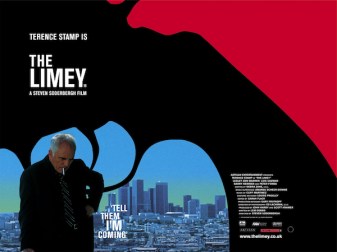 There’s an argument to be made that, from a cinematic perspective, mainstream US cinema these days is boring. Look at the kind of films American auteurs were producing in and around the studio system in the ’90s and early ’00s:
  This isn’t a conceit Soderbergh uses for one scene, or wheels out now and then, but an overall approach. Some sequences are more thick with it than others, but it’s always right around the corner. It creates a unique sensation. Not disconcerting, exactly, but mysterious and querying. It has you constantly question what you’re watching — is it a memory? A plan? A fantasy? A delusion? It draws connections back and forth across the timeline of the story, bringing out thematic angles. At its most key, it helps explain what happens at the end (too bluntly for some reviewers, I should add). This collage-like style — which unlike, say, Memento’s back-to-front narrative has no obvious in-story point — will certainly not be to everyone’s taste, but it presents an interesting challenge to our usual ideas of how a film should be constructed.
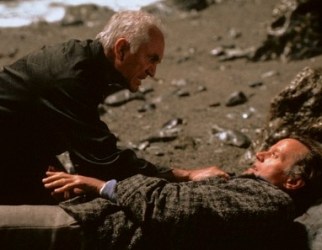 Despite the visual trickery, The Limey still works pretty well as a straightforward thriller. You have to be prepared to accept the slippery editing, because there’s no avoiding it, but the throughline of Stamp tracking down bad men and how he deals with them is still here. Personally, I’ve never much rated Stamp as an actor, but somehow he fits here. He’s a fish out of water, a man out of place — way out of place — and possibly out of time, too, seeming like a ’60s or ’70s British gangster transported to turn-of-the-millennium L.A. It’s no discredit to the supporting cast that they mainly exist to bob around in his wake.
 The third feature (but first you’re likely to have heard of) by writer-director Alexander Payne (

 “Tom Hardy goes for a drive and makes some phone calls” is the plot of this film, which is often mislabelled as a thriller. That’s not to degrade its thrillingness, but rather to say that if you’re expecting a single-location single-character phone-based thrill-ride like
 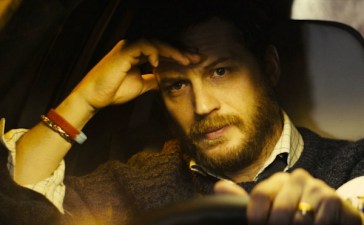 and in the process turning his life upside down. Another part was to tell a story about an ordinary guy dealing with events that aren’t going to change the world, aren’t even going to make the papers, but are a big deal in his life. Something like this could happen to any of us, and how would we deal with it?
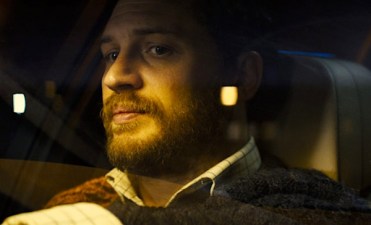 The rest of the cast appear as voices only on the other end of the phone, and in their own way are quite starry — faces that you may recognise, mainly from British TV, in even some of the smaller roles. Not that you see their faces, so, you know, you might have to look them up, or watch the making-of. Some of the performances err a little towards radio acting for me, which is kind of understandable seeing as how that’s basically how they were recorded, but there are particularly good turns from Andrew “Moriarty in
 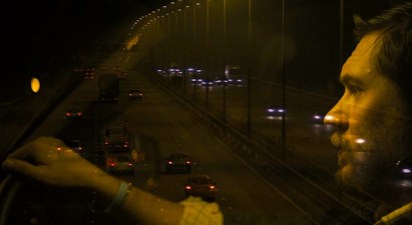 this is about what’s happening on Hardy’s face, not with his whole body. And in either form you’d lose all the photography of nighttime motorways, which have their own kind of hazy beauty. For a movie about someone making phone calls, it is intensely cinematic.
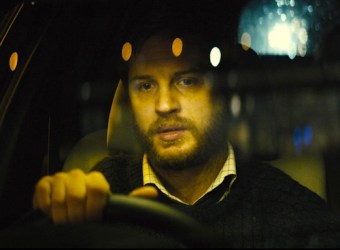 the supporting cast are so much more than “voices on the phone” (listen out, too, for Tom “
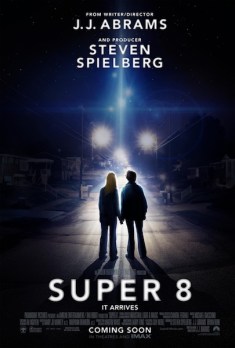 Before he started star warring and between bouts of star trekking, director J.J. Abrams teamed up with producer Steven Spielberg for this homage to the kind of movies Spielberg produced in the ’80s. Those films have endured down the decades; I’m not sure Super 8 endured as far as Abrams’ next
 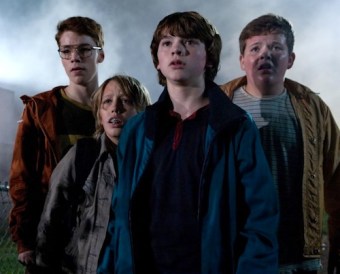 Unfortunately, the longer the film goes on the more it runs away with itself, as characters dash back and forth all over the place, sometimes in credibility-stretching fashion (we never do see how a group of kids manage to escape a heavily-guarded military base and drive back to an evacuated and blockaded town). The adults stumble through the story to little dramatic effect; Joe’s dad even has to be secretly locked up for a good chunk of the film (with no other characters noticing his disappearance) so that his storyline can be paused until he’s wheeled out for his part in the climax. The grown-ups do serve a role — giving us a perspective on events that the kids lack, and being tied to the emotional arcs of the leads — but it wouldn’t have harmed anything to limit them to those functions, rather than trying to half-heartedly give them stories of their own.
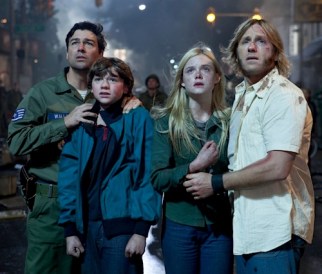 In some respects, the kids’ short film (which plays during the end credits) encapsulates the whole movie: a semi-thought-through SF/F plot, a tacked on emotional arc, the apexes of both tied together in the climax, and a couple of sometimes-shoehorned effects set pieces along the way. Yet for all that, it does enough right that I’d quite like to see Abrams attempt more work along these lines.
 These days, Steven Spielberg is as well-known for his Oscar-worthy historical prestige pictures as he is for his action-adventure genre movies, so it’s kinda strange (at least for me) to imagine the time in his career at which this film came about. I mean, it’s an adaptation of a controversial literary novel about the miserable lives of black women in the American South during the early decades of the 20th Century, directed by the white guy known for
  it never quite feels like we’re getting the full force of the story’s brutality. That’s a mixed blessing: as a viewer, we’re spared all the horrors you can infer from what actually happens; at the same time, how much should a story about such horrors be sparing us from them? Though as it was at one point advertised with the tagline, “
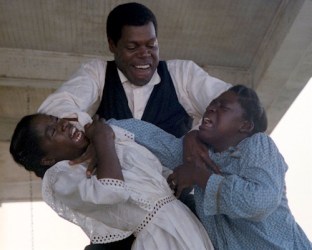 Spielberg’s first foray into Serious filmmaking is a long way from being an unqualified success, but it’s not a bad movie either, and at least it was the gateway to him making some superior dramas. Bonus points, too, for a mainstream big name director tackling a story about the historical lives of black women — depressingly, that still feels like it would be a noteworthy move 30 years later.
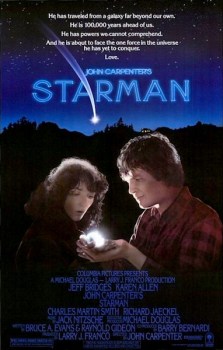 In this sci-fi romance, an alien intercepts the invitation included on the Voyager 2 space probe and tries to visit Earth, but is shot down. Taking the form of Karen Allen’s recently deceased husband, Jeff Bridges, he forces her to drive him to Arizona, where his people will rescue him in three days — if they can escape the attention of the government agents chasing them, anyway.
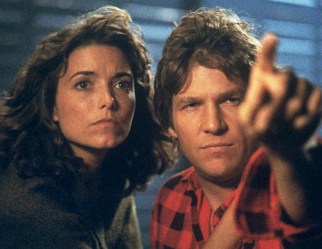 there are stalking POV shots as the alien arrives at Allen’s house, and then it grows a human body, a sequence in which the ugliest (prosthetic) baby you’ve ever seen stretches and creaks as it grows into an adult in mere minutes. It’s pretty freaky. Indeed, as per the BBFC, Starman “contains mild language, sex, violence and sci-fi horror”, but is rated PG. Ah, the good old days!
 100Films.co.uk