Zatoichi on the Road (1963)

aka Zatôichi kenka-tabi / Zatoichi’s Fighting Journey

2018 #11
Kimiyoshi Yasuda | 88 mins | Blu-ray | 2.35:1 | Japan / Japanese

Zatoichi on the Road

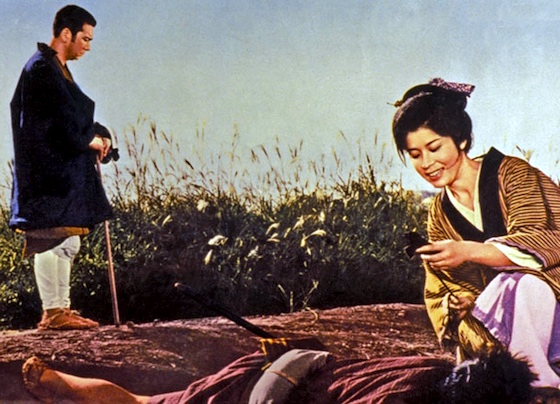
In his notes that accompany Criterion’s Blu-ray release of the Zatoichi series, Chris D. comments that, “despite the specificity of the English title, it should be stressed that Zatoichi is always on the road.” Indeed, titling this fifth movie Zatoichi on the Road is pretty much the equivalent of calling it Just Another Zatoichi Movie. At least the literal translation, Zatoichi’s Fighting Journey, is a little more dramatic.

So is On the Road “just another Zatoichi movie”? Critics disagree with each other. The Digital Bits’ comprehensive overview of the series describes it as “easily the best entry in the series to this point”, and Weird Wild Realm’s review goes even further, calling it “one of the strongest feature film episodes about the hero of a thousand slayings”. Conversely, the Images journal considers that it “doesn’t sustain the previous entry’s brilliant mood or pacing”, and, in direct opposition to The Digital Bits, Letterboxd users rank it clearly the lowest of the first five films. Where DVD Talk reckons it has “a fantastic, layered plot”, even Chris D. says “it has a somewhat overdeveloped, convoluted story line”.

I’m definitely in the latter camp. “Easily one of the best entries in the series”? Nope. The “action starts red hot and keeps getting hotter”? Don’t be silly. That was The Digital Bits again, and they go on to describe the climax as “one of the greatest climactic battle scenes depicted on screen since Kurosawa’s Seven Samurai,” which is just laughable. As Images counters, “when the action does rear its battle-weary head it’s good. It’s just not great. And after the sword-dizzy hysterics of the last film, greatness is what we hunger for.”

Zatoichi fights

As for the plot… Overdeveloped? Yes. Convoluted? Undoubtedly. And needlessly so — previous entry Zatoichi the Fugitive was hard to follow, but it felt worth it in the end. On the Road, I’m not so sure. The plot never really came together for me, leaving oh so many questions. Like, who was the old man who died at the start? Why did he care about Omitsu so much? Who was the lord who was after her? How did she end up with him and so far from her (apparently very rich and important) father? Why do that lord’s minions just disappear from the plot? Why was there that scene where one of them seems to regret their mission, only for Zatoichi to murder him in a split second right afterwards?

The whole thing winds up a lot of back-and-forthing for little reason, too often driven by coincidence (how come villainous Ohisa and Jingoro keep ending up in the same inns / eateries / etc as Zatoichi and Omitsu?) And I think it was meaning to imply that Ichi and Omitsu had a strong connection, almost like she wanted to marry him (as women have done in previous films — Ichi’s understanding of and/or attraction for women is certainly a recurrent theme). And he seems to care for her as much too (as seen in the ending where he caresses her trinket that he’s kept, for instance). But where was such deep a bond supposed to come from? It’s barely developed or explained.

Zatoichi on a road, literally

The film isn’t a total write-off, mind, with some exceptionally good individual scenes — when Ichi confronts transportation boss Tomegoro in order to rescue Omitsu; when Ichi and Omitsu connect while eating rice balls; Ichi’s cunning manipulations of two opposing gangs at the climax. The key link there is Ichi, of course, which is thanks to another strong performance by leading man Shintaro Katsu.

On the whole On the Road is enjoyable enough as a middle-of-the-road Zatoichi adventure, with the less thrilling aspects counterbalanced by the really good bits I just mentioned. I’ve mostly focused on the negative here because I bridled at the idea, espoused by some I’ve quoted, that this is definitively a great instalment in the series. It’s not.

3 out of 5

Eddie the Eagle (2016)

2017 #116
Dexter Fletcher | 106 mins | streaming (HD) | 2.35:1 | UK, Germany & USA / English, German & Norwegian | PG / PG-13

Eddie the Eagle

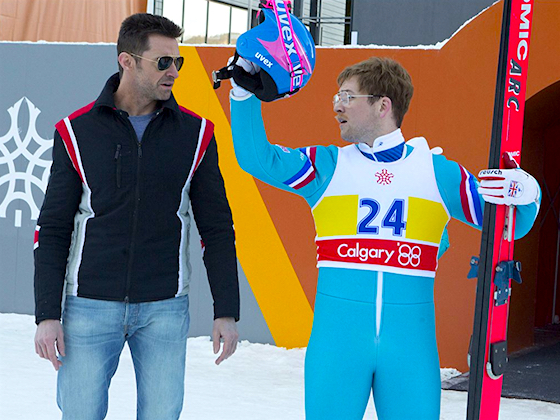
The unlikely hero of the 1988 Winter Olympics — ski jumper Eddie “the Eagle” Edwards — gets the Cool Runnings treatment in this comedy-drama. I make the Cool Runnings connection because, firstly, they’re both about unlikely competitors in the Winter Olympics (from the same year, in fact — what was in the water in ’88?!); and, secondly, because in their transition to the big screen they were both heavily fictionalised.

The story, at least as it goes in the film, sees young Eddie (played as an adult by Kingsman’s Taron Egerton) keen to participate in any Olympic sport, eventually settling on ski jumping because no Brit has participated in it for six decades. Disavowed by the British officials, he heads off to Germany to train himself. Trials and tribulations ensue that are by turns hilarious and heartwarming, but which eventually see him qualify for the 1988 Olympics — that’s not a spoiler, it’s why he’s famous!

Helping Eddie along his way is Bronson Peary (Hugh Jackman), a washed-up former US ski jumper who begrudgingly becomes Eddie’s coach, transforming the Brit from a no-hoper to someone who’s… not entirely bad. This is probably the film’s biggest whopper, because Peary didn’t even exist. It’s kind of brazen to make your co-lead and major subplot 100% fictional in a ‘true story’ film, isn’t it?

The Eagle has landed

But, hey, this isn’t a documentary — it’s a feel-good underdog story, about having a can-do attitude and dedication to your dreams in the face of adversity. It’s also about how it’s not the winning but the taking part that counts, in a very literal sense. That probably makes the film sound more twee than it is, but it’s not a grittily realistic take either — it’s a colourful, light, entertainment-minded film. It’s a good pick for Egerton too, getting to stretch different performance muscles than in Kingsman as our naïvely optimistic hero. Jackman makes for an easygoing co-star, getting to mix his Wolverine loner gruffness with a dash of his chat-show charm.

Eddie the Eagle is a thoroughly charming little film. Even if its tone and overall narrative may be familiar, it navigates them with a light touch and consistent good humour that — much like the eponymous Olympian — wins you over, even if it’s in spite of yourself.

4 out of 5

The 2018 Winter Olympics officially commence tomorrow, though some events have already started — including, appropriately enough, ski jumping.

Public Access (1993)

2017 #130
Bryan Singer | 86 mins | DVD | 16:9 | USA / English | 18 / R

Public Access

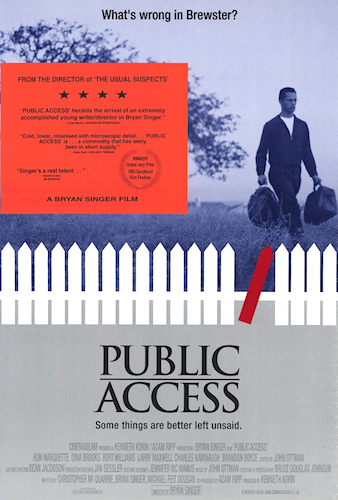
This is the feature debut of director Bryan Singer, screenwriter Christopher McQuarrie, and Singer’s regular editor/composer John Ottman, who would go on to make their names two years later when they created The Usual Suspects (for which McQuarrie even won an Oscar). Despite that — and their careers since — Public Access seems to be little-seen, with less than 800 votes on IMDb (for comparison, Singer’s next lowest is Apt Pupil with over 30,000 votes, and all his other films are in six figures).

The story sees a mysterious stranger, Whiley (Ron Marquette), arrive in the small town of Brewster and book a slot on the local public access TV station, during which he invites viewers to call in to anonymously air their grievances about Brewster and its inhabitants. Soon all the townsfolk are talking about is Whiley’s catchphrase: “What’s wrong with Brewster?”

It’s an intriguing setup for a movie. What secrets lurk beneath the surface of this pretty little town? Who is this stranger and what are his motives? How will the community react to the previously-secret complaints and possible revelations? Unfortunately, Public Access does very little to explore any of those possibilities. It actually toddles along quite nicely for a while — it’s kind of understated; slow in a good way; things appears to be building up to something; there’s some kind of mystery — and then, just over halfway through, Whiley has an incredibly cheesy dream/flashback/premonition, and then the film awkwardly swerves into serial killer thriller territory. I guess that could work, maybe, but it rushes through events, not explaining anything. Then it ends.

What's wrong with Brewster?

What shines through the poor storytelling (and the crappy almost-VHS-level transfer on the DVD) is some obvious proficiency at filmmaking from all involved. There are many bits of nice direction from Singer, a few fairly well written and performed scenes, good editing, an effective use of music, and some gorgeous autumnal orange photography… though a lot of the interiors and stuff look rather orangey too, so I’m not entirely sure if this was intentional or just that shitty transfer. Well, whether by accident or design, it looked like it was good.

Public Access was made for just $250,000, according to IMDb, so perhaps they just ran out of money to shoot everything they needed. Perhaps they were just going for a level of ambiguity that doesn’t come over properly. I was going to say “perhaps I didn’t get it”, but I’m far from alone: Variety said it was “vague about important matters as key story points, motivation and overriding theme”; Newsweek reckoned that “after an intriguing buildup […] the story self-destructs”; and the Hollywood Reporter called it “a virtuosically stylish independent feature that is as full of flourishes as it is devoid of meaning”.

There’s talent on display here, and fortunately Singer and co were given the opportunity to spin that out into the successful careers they’ve enjoyed since (well, mostly… but let’s not get into the Singer stuff right now). Public Access isn’t an undiscovered early gem on anyone’s CV, but it was interesting to see nonetheless.

3 out of 5

The Straight Story (1999)

2017 #133
David Lynch | 108 mins | TV (HD) | 2.35:1 | France, UK & USA / English | U / G

The Straight Story

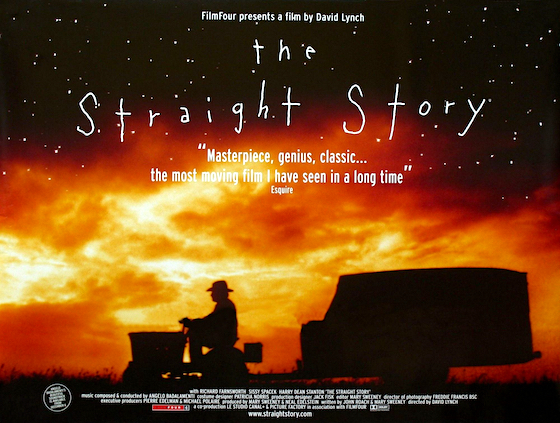
“What would a G-rated Disney movie directed by David Lynch be like?” It sounds like a sketch show pitch, but in 1999, between Lost Highway and Mulholland Drive, it happened for real.*

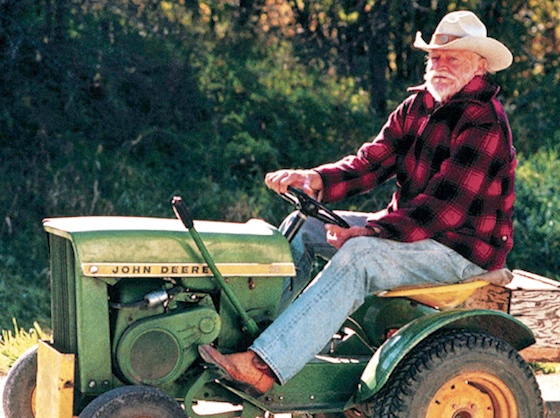
And, talking of “happening for real”, this is a true story about an old fella, Alvin (Richard Farnsworth), who decides to visit his estranged brother after he suffers a stroke. Unable to get a driving licence, he sets off on his 30-year-old ride-on lawnmower, with a maximum speed of 5mph, to make the 240-mile trip. Yes, I said it’s a true story. Of course, it’s not just 100 minutes of Alvin riding a lawnmower along county roads — through the people he meets and the stories he tells, we learn he’s certainly lived a whole life.

Such a simple, straightforward, grounded (well, relatively grounded) narrative seems so very un-Lynch-like at first, but its tale of quirky Americana, peopled by a ragtag selection of endearing oddballs, isn’t so far outside his wheelhouse. There’s a definite Lynch touch detectable in how its made — the shot choices, editing patterns, and so on. There’s even a shot of a grain silo with a background hum that feels straight out of Twin Peaks. Then there are pretty scenery shots which are less obviously him.

Lawnmower man

Lynch has called The Straight Story his “most experimental movie”, which, considering the rest of his oeuvre, probably says more about what he considers experimental than it does about the film itself. What it does demonstrate is that the director, normally known for producing movies that befuddle the mind and chill the blood, is capable of producing something understatedly human and kind of heartwarming.

4 out of 5

* In the US, anyway — other distributors released it elsewhere, including Film4 here in the UK. ^

Black Swan (2010)

2017 #128
Darren Aronofsky | 108 mins | Blu-ray | 2.40:1 | USA / English | 15 / R

Black Swan

Oscar statue2011 Academy Awards
5 nominations — 1 win

Winner: Best Actress (Natalie Portman).
Nominated: Best Picture, Best Director, Best Cinematography, Best Film Editing.


Described by director Darren Aronofsky as “a psychological thriller horror film”, Black Swan straddles the divide between classy Cinema and genre Movies as artfully as, say, a Hitchcock thriller. It’s the story of ballet dancer Nina (Natalie Portman) who’s desperate to be the lead in her company’s production of Swan Lake. She’s suited to the White Swan but struggles as its black counterpart, a role newly-arrived rival Lily (Mila Kunis) seems perfect for. As Nina pursues perfection with a monomaniacal focus, she’s pressured by the lascivious director (Vincent Cassel) and her overbearing mother (Barbara Hershey), to the point where her sanity is beginning to crack…

Shot handheld on a mix of 16mm and video-capable HD DSLRs, Black Swan has a documentary look, often emphasised by its editing — at times it could almost pass for a fly-on-the-wall look behind the scenes of a ballet company. That’s not to say the visuals lack artistry, however. In particular, the constant presence and use of mirrors is fantastic — both thematically relevant and visually rich. Nonetheless, the documentary-ish look serves to make the film’s unsettling parts all the more effective, especially as they take a while to emerge and continue to sidle up on you as the film goes on. The final act is where everything really kicks off — the point of the rest is to build up to that; to establish and put in place and explain everything we need for a shocking, thrilling, somewhat unguessable climax. If that sounds like a criticism, it’s not, because the movie leading up to that point certainly has worth.

Reflections

I’m not particularly familiar with Swan Lake, but it would seem Black Swan’s story echoes it — to the point, even, that all the cast are credited with both their character in the film and their equivalent in the ballet (and I don’t just mean the dancers who also play that role in the ballet-within-the-film — Hershey, for example, is billed as Erica Sayers / The Queen”). This extends outwards in other ways, like how the music of Tchaikovsky is repurposed by the film to its own magnificent effect. That’s as well as featuring a typically striking score from Clint Mansell.

Natalie Portman is brilliant as the conflicted Nina. She’s introverted and sheltered but has chosen (or been railroaded into) a career that requires she perform publicly; she’s fragile and under-confident but in a profession that invites criticism from all sides; she’s been left repressed, uptight, and virginal, which clashes with her perfectionism when trying to embody a role that is none of those things. It’s a complex role with many subtle facets that Portman negotiates skilfully. It feels like a departure from who she is — proper acting, if you like — which makes the performance all the more striking. Conversely, Mila Kunis feels more in her comfort zone as Lily, the free-spirited, lively but imperfect, almost a bit of a bitch, company dancer that Nina is inexplicably drawn to. She holds her own against Portman when required, but it’s not exactly a role of equatable complexity.

Titular terror

Depending how you want to see it, Aronofsky’s film is an arty movie about ballet and the psychological effects of perfectionism, or a slow-burn horror-thriller with almost as many jump scares as instances of introspection. Best of all, it can be both those things.

5 out of 5

Black Swan was viewed as part of my What Do You Mean You Haven’t Seen…? 2017 project, which you can read more about here.

Darren Aronofsky’s latest dark mind-bender, mother!, is released on UK DVD and Blu-ray tomorrow.

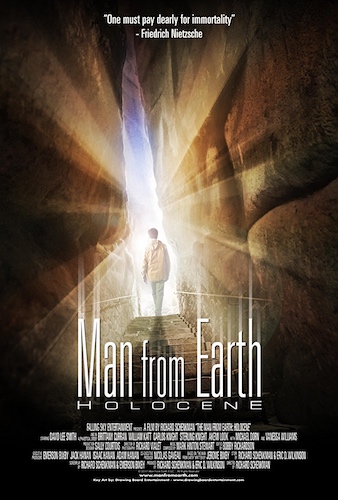
The Man from Earth: Holocene (2017)

2018 #9
Richard Schenkman | 99 mins | download (HD) | 16:9 | USA / English

The Man from Earth: Holocene

Back in 2007, a low-budget sci-fi movie about a gang of college professors sat around having a chat kinda went viral: a screener copy was uploaded to piracy websites, from where people who would probably never have even heard of it otherwise were able to download and watch it. Interest in the film on IMDb jumped by 11,000%, and high user ratings earnt it a place on their list of the top 50 sci-fi films. The film in question was Jerome Bixby’s The Man from Earth.

Ten years later, here’s a sequel from the same crew (though not written by Bixby — his original screenplay was produced posthumously), and this time the makers have engaged with file sharing head on: rather than wait for someone to pirate the film, as would inevitably happen, they’ve uploaded it themselves. They’re banking on the honour system, asking people to donate if they liked the movie. If torrenting isn’t your thing, it’s also available to stream on MovieSaints, and on Vimeo next week, with a DVD and Blu-ray release coming soon. Personally, I first encountered the project 3½ years ago, when it was known as The Man from Earth: The Series and they were crowdfunding to produce a pilot episode. I backed it then, though ironically have ended up torrenting it now because the reward copy provided was through MovieSaints and I can’t watch that on my TV. But anyway.

Ageing hurts

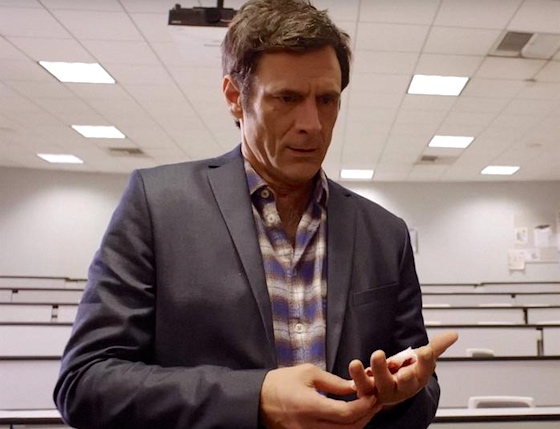
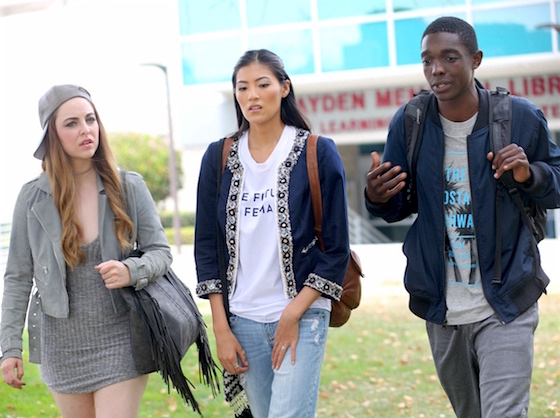
The story picks up ten years on from the events of the first film, with the 14,000-year-old title character now going by the name John Young (David Lee Smith) and lecturing at a community college in California. When a gang of his adoring students stumble upon a book about the events of that fateful night a decade ago, they begin their own investigation into whether John’s seemingly impossible story is actually true. Meanwhile, for the first time in about 13,965 years, John has begun to show signs of ageing…

Holocene has some very good ideas that could’ve made for a worthy continuation of the original film. Chief among them is the mystery of John’s relatively sudden ageing. Is he dying? Is he just entering a new phase of his existence? Either way: why? The film asks these questions, makes nods towards possible explanations, but otherwise doesn’t seek to explore it too much. It’s more concerned with meandering through a story that doesn’t quite rehash the first film but is distinctly reminiscent of it: a group of college-related people, with diverse religious beliefs and levels of scepticism, investigate the incredible notion that a professor may be 14,000 years old and, during that time, once have been the person we know as Jesus Christ. Watching a bunch of students going through the motions of uncovering a story we already know isn’t the most thrilling narrative, quite frankly.

On the bright side, it eventually leads to a long scene in a basement which is loaded with tension and possibilities. It features an ‘evil Christian’ type, which is a dead giveaway for the authors’ atheist beliefs — fine by me, but it may not work for some people. This scene works particularly well as a sequel to the original film in itself, because although it too is a kind of re-run of the first film, it comes at it from a very different angle. It’s a little bit ironic that, for a film which is trying to open out the world of its story to be more than just a near-real-time fireside chat, the best bit is still an extended scene where two people just talk in a room.

The wannabe Scooby Gang

But Holocene’s biggest problem comes right at the end, when it abruptly finishes with various plot threads unresolved. As I mentioned, this project started life as a pilot for a TV series, later evolving into a standalone film (presumably as a way to secure funding — having something you can actually release is a safer bet than a pilot that requires a series pickup). Unfortunately, the makers still have hopes of either a sequel or that series, and so the story stops at a point which feels just a scene or two away from a resolution. To rub salt in the wound, there’s a bizarre mid-credits scene that throws a totally new, very different storyline into the mix. I think there were better ways to leave things set up for possible further instalments, and more interesting directions to suggest they might go in too. Or maybe they have a really good grand plan for this storyline? Perhaps we’ll get to find out.

One of the most accidentally striking elements of the original Man from Earth was that it was shot on SD digital video. They’ve upgraded to HD this time, meaning it doesn’t look quite as cheap-and-cheerful, but it does still have a lo-fi semi-pro feel. (As one commenter on Letterboxd put it, “still has that softcore porn vibe”. I think that says more about his viewing habits than the film itself, but you get his point.) On the acting front, David Lee Smith is still the clear standout. He imbues John with a quiet authority — you can believe this is a guy who’s lived for centuries; his very presence elevated by a lifetime of learning but weighed down by a lifetime of regrets. The rest of the cast are decent.

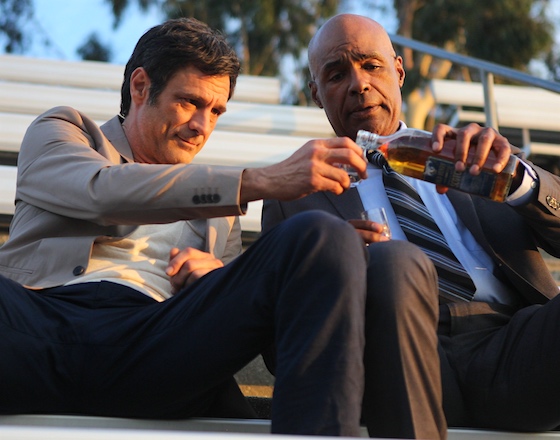
Pour yourself a drink, you might need it

The writing is a little up and down. Some bits almost sing with an understated focus on character. Other bits clunk, like a terribly forced encounter to kick off the third act. Most often it feels like scenes needed a trim to keep everything a little tighter. It’s not that it’s a slow-paced movie and I’m claiming that’s a problem, it’s that at times it seems to be drifting aimlessly. The first film is ‘slow’ in some people’s eyes, but it’s actually a very tightly constructed movie; it’s just that that tightness is driven by the dialogue and story construction rather than, say, fast cutting. Holocene lacks a similarly taut screenplay. Chopping out ten minutes, both of little bits here and there but also a few scenes that I guess are meant to build up the students’ characters but I kind of feel are ultimately unnecessary, might work wonders. Well, maybe not wonders, but it’d be better.

Holocene fritters away goodwill on a reheated teen remix of the first film’s story, has the audacity to not conclude that properly, and then does little to promise a bright future with a DOA mid-credits twist. Even still, I don’t think the film is the total disaster some reviews are painting it as, not least because I believe there’s potential left in a continuation of The Man from Earth — there are interesting developments of the series’ central concept here. Unfortunately they remain little more than teases as the film instead wastes time reinvestigating what we already know. It winds up disappointing.

3 out of 5

The Man from Earth: Holocene is available to stream and download in various ways now. For more details, visit ManFromEarth.com.

Blindspot Sci-fi Roundup

With my 2018 Blindspot and “What Do You Mean You Haven’t Seen” selections now chosen, it’s about time I got on with reviewing those from the class of 2017 that are still in my “to do” pile. Here, then, are four more reviews of my 2017 must-sees, connected (as you may’ve guessed from the title) by all being works of science fiction.

In today’s roundup:

  • District 9 (2009)
  • Moon (2009)
  • Her (2013)
  • Forbidden Planet (1956)


    District 9
    (2009)

    2017 #88
    Neill Blomkamp | 112 mins | Blu-ray | 1.85:1 | South Africa, USA, New Zealand & Canada / English | 15 / R

    District 9

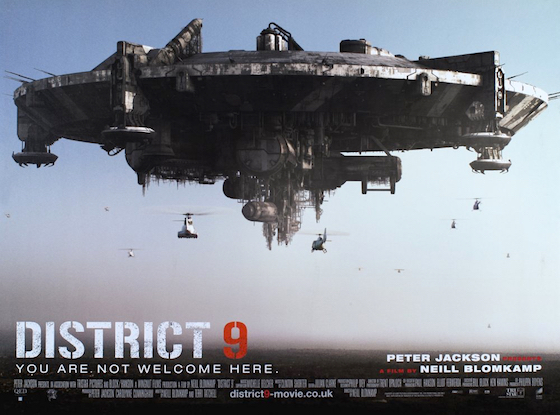
    We begin this roundup with two 2009 sci-fi thrillers that made the names of their respective directors. District 9 got the wider attention, being backed by Peter Jackson and receiving a Best Picture Oscar nomination (alongside three other nods), but I’d argue it’s ultimately the lesser of the two films.

    Although District 9 remains highly praised, co-writer/director Neill Blomkamp’s next two movies — Elysium and Chappie — haven’t gone down so well. Having seen both of those first, I feel like there are a lot of structural and tonal similarities between all three films, so it’s interesting to me how poorly the next two were received. Basically, they all start with some kind of societal sci-fi issue, explore that for a bit as the world of the story is established, then transition into being a shoot-em-up actioner.

    In District 9’s case, it starts out as a documentary about (effectively) alien refugees who live in a segregated community in South Africa. The obvious real-world parallels are, well, obvious. Then events transpire which make the idea of having to identify with those who are Other than us — of becoming affected by their culture — very literal. Then it turns into an achieve-the-MacGuffin shoot-em-up runaround. It’s done well for what it is, with some strikingly gruesome weaponry to give the well-staged shootouts a different edge, but that’s still what it is. Presumably it was all the rather-obvious allegory stuff that helped land the film a Best Picture nomination, and the fact the second half is a not-that-original humans-vs-aliens shooter was overlooked.

    Not so different. Okay, pretty different.

    For me, the clunkiest bit is the storytelling style it adopts. It’s a mockumentary… until it decides it doesn’t want to be so that it can tell its story more effectively… but then it sometimes slips back into mockumentary later on, most notably at the end. I found that distracting and formally inconsistent. I’d rather it had kept up the mockumentary act throughout or not used it at all; or, if you’re going to do both documentary and ‘reality’, have a point to it — show differing versions of the truth, that kind of thing, don’t just mix it together willy-nilly.

    All told, I found District 9 to be a mixed bag. The first half is excitingly original and interestingly ideas-driven, with allegory that is powerful if perhaps a little heavy-handed (I suppose that’s kind of unavoidable when you make a movie about segregation and set it in South Africa). The second half is just a shoot-em-up.

    4 out of 5

    Moon
    (2009)

    2017 #145
    Duncan Jones | 97 mins | Blu-ray | 2.40:1 | UK / English | 15 / R

    Moon

    The other 2009 sci-fi debut feature was that of director Duncan Jones. Although it received no Oscar love it did get a BAFTA, but seems to remain less seen: it has almost half as many user ratings on IMDb as District 9. Personally, I thought it was the superior film.

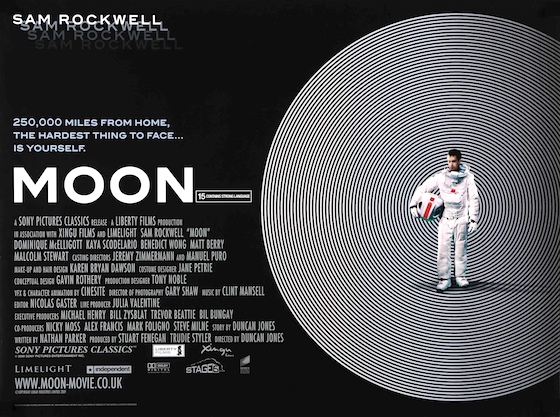
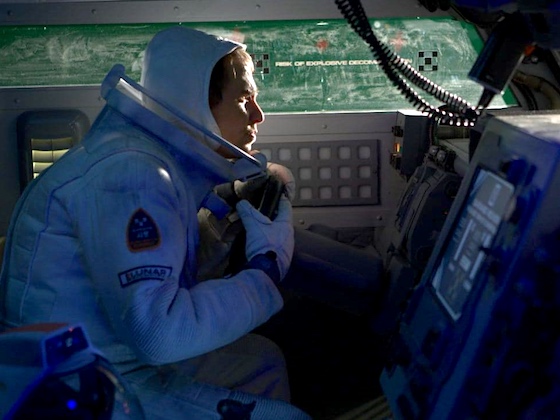
    It stars Sam Rockwell as the sole inhabitant of a mining facility on the Moon. As the end of his tour of duty approaches, his investigation in a malfunction unearths a startling secret. To say any more would spoil things, though Moon gets to its reveal pretty speedily. Also, you may’ve guessed it from the trailers (I more or less did). Also, it’s nine years old now and you’ve probably seen it — though, as those IMDb numbers show, maybe not.

    If you haven’t, it’s definitely worth seeking out. Like so much good sci-fi, it uses its imagined situation as impetus to explore the effect on its characters (or, in this case, character) and what the human reaction would be in such a situation. Maybe this is becoming a cliché already, but it’s quite like an episode of Black Mirror in that regard. (Isn’t all sci-fi that puts a high concept through the ringer of human experience “like Black Mirror”? Such stuff existed before that series. That said, maybe there wasn’t as much of it.)

    It's like looking in a mirror. A black mirror.

    Jones marked himself out as a director to watch with his attentiveness to character in the midst of his SF setting, but also by helming an excellently realised production on a tight budget — the moonbase set looks great and the model effects are perfect. A major reason I reckon it’s clearly better than District 9 is this consistency of style and tone. It’s a film that better knows what it wants to be and how to achieve its intended effect.

    As for Jones, he went on to make Source Code, a solid follow-up, but then seemed to throw a lot of talent away on the risible Warcraft. Hopefully his forthcoming Netflix Original, Mute, will restore the balance.

    5 out of 5

    Her
    (2013)

    2017 #165
    Spike Jonze | 126 mins | Blu-ray | 1.85:1 | USA / English | 15 / R

    Her

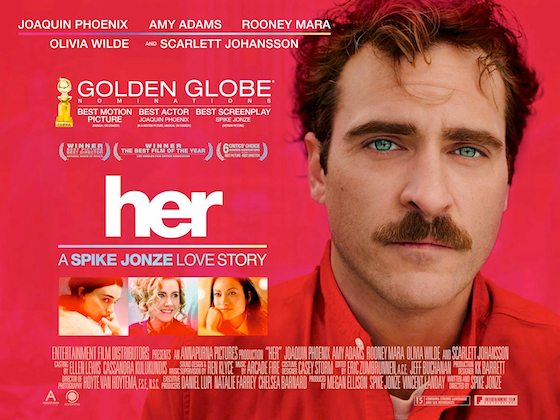
    If Moon is “a bit like an episode of Black Mirror”, Spike Jonze’s Her virtually is one. Set in a highly plausible near future — which has clearly been developed from our current obsession with our phones, iPads, digital assistants, etc — it stars Joaquin Phoenix as Theodore, a lonely chap who gets a new operating system based around a genuine AI, Samantha (voiced by Scarlett Johansson). As Samantha develops, she and Theodore soon become friends, and then more.

    People often refer to the template of Black Mirror as “what if technology but MORE”, and Her definitely fulfils that brief: “what if Siri was genuinely intelligent and someone fell in love with her?” Also like an episode of Black Mirror, it’s as much about what this reveals about humanity as it is about the crazy sci-fi concept. It’s primarily a romance about a lonely guy who was hurt in the past finding a new connection, with the fact he’s falling in love with a piece of technology almost secondary. Even within the world of the film, he’s not some kind of outcast: we hear about other people who’ve fallen for their AI, and his friends unquestioningly accept his relationship as genuine.

    Such acceptance doesn’t translate into our current world, it seems. Although Her is generally very well liked, some people struggle to engage with it at all, and from what I can tell that mostly stems from them not being able to relate to Theodore and his situation, i.e. the very concept of falling in love with an AI is too impossible for them to even imagine. I can’t help but feel that says more about those viewers (for good or ill) than it does the film, which executes the storyline with a great deal of believability and heart.

    5 out of 5

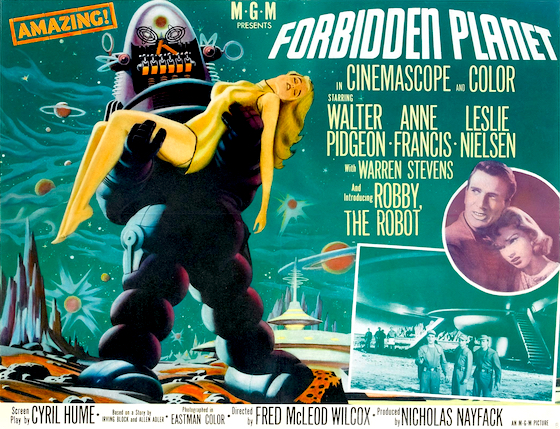
    Forbidden Planet
    (1956)

    2017 #172
    Fred McLeod Wilcox | 98 mins | Blu-ray | 2.40:1 | USA / English | U / G

    Forbidden Planet

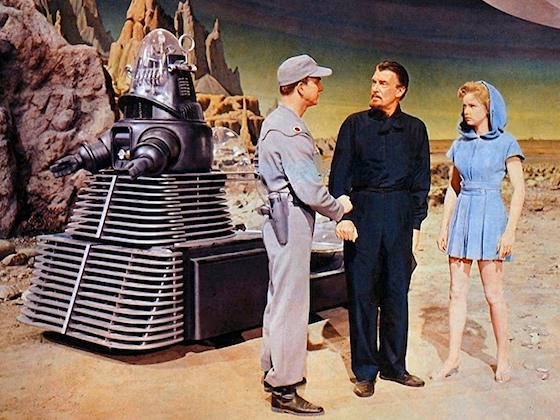
    This classic sci-fi adventure sees a spaceship crewed by blokes (led by Leslie Nielsen) land on the planet Altair IV to investigate what happened to a previous mission there. They find it inhabited only by Dr Morbius (Walter Pidgeon), his robot servant Robby, and his beautiful daughter Altaira (Anne Francis), who perpetually wears short skirts and has a fondness for skinny-dipping. Turns out the crew are a right bunch of horndogs (they spend most of their time lusting after Altaira, tricking her into kissing them and stuff like that), but there are bigger problems afoot when the planet starts trying to kill them.

    Once it gets past everyone’s lustfulness (it feels uncomfortably like watching the filmmakers play out some personal fantasies), there are proper big sci-fi ideas driving Forbidden Planet. There are also some gloriously pulpy action sequences, like a fight against an invisible monster. It’s backed up by great special effects. Obviously they’ve all dated in one way or another, but much of it still looks fantastic for its time — the set extensions, in particular, are magnificent.

    Nothing's forbidden on this planet, wink wink

    Something I wasn’t expecting (but I’m certainly not the first to note) is how blatantly the film was an influence on Star Trek. You can even map the similarities between characters pretty precisely. Switch out the spaceship models and original-flavour Star Trek is all but Forbidden Planet: The Series.

    Although its gender politics have aged even less well than its special effects, and its story occasionally gets bogged down by stretches of explanatory dialogue (it sometimes feels like you’re watching the writer invent and explain his ideas in real-time), Forbidden Planet remains a mostly enjoyable SF classic.

    4 out of 5

    District 9 and Forbidden Planet were viewed as part of my Blindspot 2017 project, which you can read more about here.

    Moon and Her were viewed as part of my What Do You Mean You Haven’t Seen…? 2017 project, which you can read more about here.

  • Another Blindspot Review Roundup

    Following on from the roundup of four of my Blindspot and “What Do You Mean You Haven’t Seen…?” reviews the other day, here’s another quartet.

    In today’s roundup:

  • Gran Torino (2008)
  • Planet of the Apes (1968)
  • Nashville (1975)
  • A Matter of Life and Death (1946)


    Gran Torino
    (2008)

    2017 #78
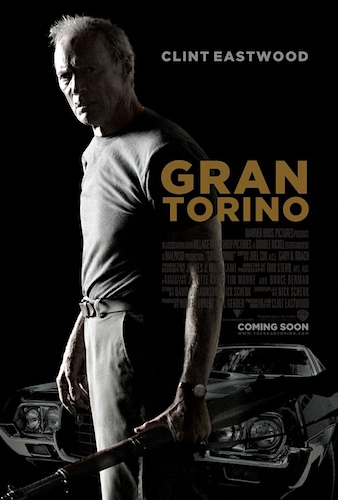
    Clint Eastwood | 116 mins | download (HD) | 2.40:1 | USA & Germany / English & Hmong | 15 / R

    Gran Torino

    Clint Eastwood’s modern Western (thematically speaking), about a grumpy old loner who overcomes his inherent racism to bond with the immigrants who now dominate his neighbourhood and eventually come to their defence, is a well-liked film, generally regarded as a late career highlight for the director-star. I imagine it would play very nicely as a companion piece and/or counterpoint to his earlier Oscar-winner, Unforgiven — both are stories about old men in one final fight, essentially. Here, that comes with a subtext about the price that’s paid for standing up for yourself. It may be the right thing to do, and maybe it ends up with the right result, but the good guys really suffer to get to that point.

    While that aspect of the film is ultimately powerful, I was less won over by the actual filmmaking. It feels like it’s been jiggered around in the edit, with some odd bits where it just jumps into a new scene. Even before that, Nick Schenk’s screenplay occasionally features very heavy-handed dialogue, of the “explain what the character is feeling right now” variety. It’s especially bad when Eastwood just talks to himself in order to vocalise these points for the sake of the audience.

    Still, if you’re immune to such niggles then it remains a potent — and timely — tale of doing what’s right for the defenceless. Such themes never die, I suppose.

    4 out of 5

    Planet of the Apes
    (1968)

    2017 #96
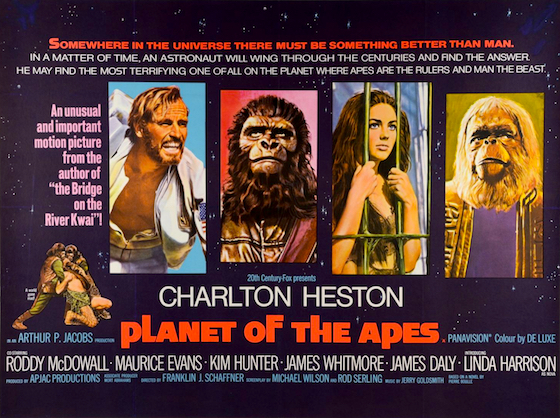
    Franklin J. Schaffner | 112 mins | Blu-ray | 2.35:1 | USA / English | PG / G

    Planet of the Apes

    The original instalment in the long-running franchise (it’s up to nine films across three go-rounds now, plus a couple of TV series) sees astronaut Charlton Heston land on a mysterious planet where apes have evolved to have human-like intelligence, while men are mute wild creatures dominated by their simian betters. And eventually there’s a twist that everyone knows, which is a shame because I bet it was pretty darn surprising before that.

    Coming to Planet of the Apes for the first time almost 50 years after its release, there’s an unavoidable quaintness to some of it, mainly the monkey makeup. It was for a long time iconic, but it’s been abandoned in favour of hyper-realistic CGI in the new movies and therefore shows its age. That said, while the apes may not be as plausible as those produced by modern technology, the performances underlying them are still strong. It contributes to what is really a parable about dominance and oppression; colonialism inverted onto a white man, that kind of thing. All wrapped up in a sci-fi adventure narrative, of course.

    Honestly, it’s not just the effects that have improved — as a piece of speculative fiction, I think it’s now been outclassed by the recent trilogy. It’s still a cracking adventure, but a bit “of its time”.

    4 out of 5

    Nashville
    (1975)

    2017 #111
    Robert Altman | 160 mins | Blu-ray | 2.35:1 | USA / English | 15 / R

    Nashville

    Robert Altman’s low-key epic about 24 characters and how their stories interact, overlap, and collide across five days in the city of Nashville, Tennessee.

    The sheer scope of that makes it a tricky film to interpret. There’s a lot going on, much of it in snatched conversations and moments that leave it up to the audience to piece together what matters and why. Collision must be a theme: within the first hour there are three car crashes or near misses, and the climax is certainly a collision in its own way. I’ll be honest, this isn’t a fully-developed thought, so I’m not sure what the point of it might be. It’s a small element of the film, really — something like all the music being performed is much more obvious and therefore maybe more relevant.

    I guess I’m searching for meaning because the film in general is just casually observational of a bunch of characters meandering through a few days. Maybe there doesn’t need to be meaning — maybe that is the meaning. It’s certainly one way to interpret the finale. So, I kind of liked it — or, rather, admired it, perhaps — even if I didn’t necessarily ‘get it’.

    4 out of 5

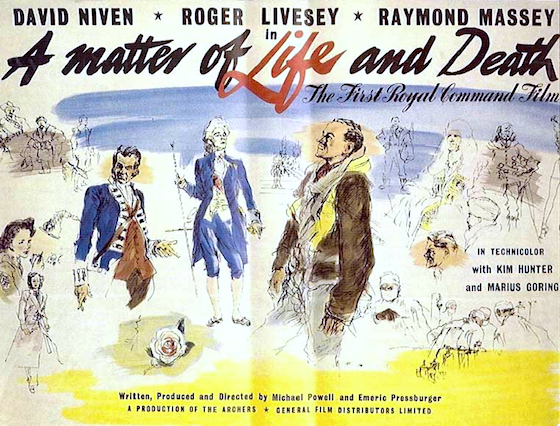
    A Matter of Life and Death
    (1946)

    2017 #74
    Michael Powell & Emeric Pressburger | 100 mins | DVD | 4:3 | UK / English | U / PG

    A Matter of Life and Death

    I finally get round to watching this on a ropey old DVD, and then they announce a new 4K restoration (which was released in UK cinemas earlier this month). Hopefully a Blu-ray will follow. It will be very welcome, because I imagine this film will look magnificent in properly restored HD.

    It begins with an incredible opening scene, in which an entire relationship is founded and ended over the radio in about five minutes. From there it’s the story of a World War Two pilot (David Niven) who avoids death by a fluke, then properly falls in love with the voice from the other end of that radio call (Kim Hunter) before the afterlife comes a-callin’ to take him where he was meant to be. Or maybe that’s all just a vision induced by the injury he sustained. Either way, he must argue his case to remain on Earth.

    It’s a grandly romantic film — it is all about the triumph of love over everything else, after all — but with a particular fantastical bent that I think remains unique. It has the wit to present a mildly irreverent stance on the afterlife, not taking the whole “life and death” thing too seriously. While the final result of the airman’s trial is never in doubt, the delight is in the journey there.

    5 out of 5

    Planet of the Apes, Nashville, and A Matter of Life and Death were viewed as part of my Blindspot 2017 project, which you can read more about here.

    Gran Torino was viewed as part of my What Do You Mean You Haven’t Seen…? 2017 project, which you can read more about here.

  • Blindspot Review Roundup

    Spoilers for my next monthly update: I’ve completed watching all 22 films on my 2017 Blindspot and “What Do You Mean You Haven’t Seen…?” lists. Hurrah!

    What I haven’t done is reviewed them all. Indeed, 17 still languish in my review backlog — that’s 77%. (In fact, I’ve only actually reviewed one Blindspot film — The Exorcist — with the other four being from WDYMYHS.)

    So, with the end of the year fast approaching — and, with the new year, a new batch of films to watch — I thought it high time I cracked on with those reviews. Here’s a quick roundup of a few, linked by all being adapted from novels, which may be the first of several such omnibus editions.

    In today’s roundup:

  • Dances with Wolves: Special Edition (1990/1991)
  • Jackie Brown (1997)
  • Silver Linings Playbook (2012)
  • The 39 Steps (1935)


    Dances with Wolves
    Special Edition

    (1990/1991)

    2017 #26
    Kevin Costner | 227 mins | DVD | 2.35:1 | USA & UK / English, Lakota & Pawnee | 15 / PG-13

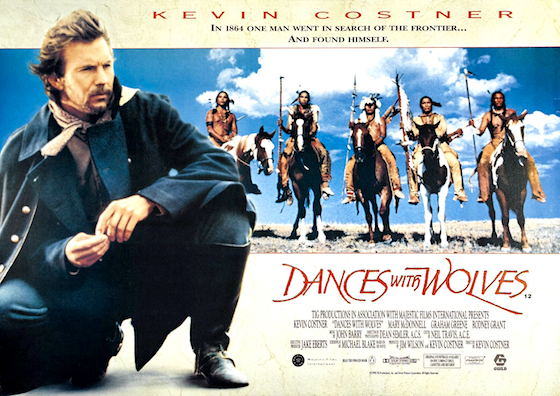
    Dances with Wolves

    Oscar statue1991 Academy Awards
    12 nominations — 7 wins

    Winner: Best Picture, Best Director, Best Adapted Screenplay, Best Cinematography, Best Sound, Best Film Editing, Best Original Score.
    Nominated: Best Actor (Kevin Costner), Best Supporting Actor (Graham Greene), Best Supporting Actress (Mary McDonnell), Best Art Direction-Set Decoration, Best Costume Design.


    The behind-the-scenes story of Dances with Wolves is almost as grand as the movie itself. An actor turned director whose inexperience led to production delays and budget overruns, leading to rumours the film was a pending disaster like Heaven’s Gate a decade before it (some nicknamed it “Kevin’s Gate”), and the studio who wanted a 140-minute cut having to settle for the 180-minute one that director delivered. The resulting film never even reached #1 at the box office… but still went on to be the highest grossing Western of all time, and became the first Western to win the Best Picture Oscar in almost 60 years. It was so popular that a 53-minute-longer extended cut was released a year later, which Costner later denied being involved with.

    Having not seen the theatrical cut I can’t offer an opinion on which is better, but the near-four-hour extended one certainly feels its length. That’s not necessarily a bad thing — this is an epic in the truest sense of the word, with a large story to tell on a grand canvass; although it’s concurrently a drama about just a couple of people from different cultures coming to interact. It’s almost too big to digest in a single go — I’m even not quite sure what I made of it. You can see why I’ve spent 10 months not writing about it.

    Anyway, I admired its scope and ambition. I wouldn’t say I loved it, but it merits revisiting someday.

    4 out of 5

    Jackie Brown
    (1997)

    2017 #49
    Quentin Tarantino | 154 mins | Blu-ray | 1.85:1 | USA / English | 15 / R

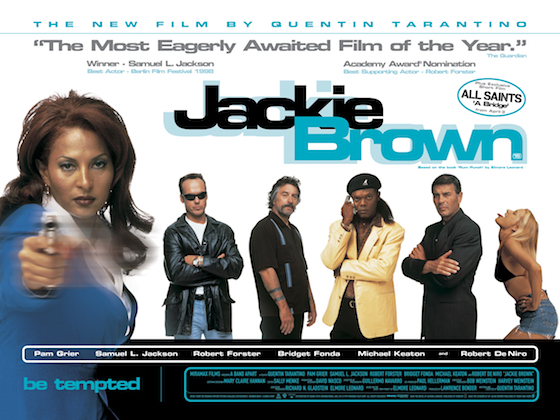
    Jackie Brown

    Oscar statue1998 Academy Awards
    1 nomination

    Nominated: Best Supporting Actor (Robert Forster).


    Jackie Brown has long been my Tarantino blindspot. I caught up with Reservoir Dogs and Pulp Fiction after he was already established and they were regarded as modern classics, then was old enough to see the Kill Bills at the cinema and have followed his career from there. But, for some reason, his third feature has always eluded my attention. My tenth anniversary “heinous oversights” list seemed a good time to rectify that.

    Some people argue that Jackie Brown is secretly Tarantino’s best movie. I add “secretly” there because it gets a lot less attention than the aforementioned movies that came either side of it. That’s not a bandwagon I’m prepared to jump on. To me, it feels a little like QT was trying to emulate what worked about Pulp Fiction without just making a rip-off of his own movie, and therefore it’s a bit of an inferior copy. That’s not to say it’s a bad movie by any means. The eponymous character is particularly interesting, as you’re never quite sure what Jackie’s up to; what her plan is. She seems to be telling everybody everything, but she has to be screwing some — or all — of them, right?

    Possibly I was just approaching the film in the wrong way. Tarantino has called it “a hangout movie”, which he explained thus: “Jackie Brown is better the second time. And I think it’s even better the third. And the fourth time… Maybe even the first time we see it we go, ‘Why are we doing all this hanging out? Why can’t we get to more of the plot?’ But, now the second time you see it, and the third time you see it, you’re not thinking about the plot anymore. You’re waiting for the hangout scenes… It’s about hanging out with the characters.” Personally, I’m not in any desperate rush to hang out with these characters again. But who knows, maybe I’ll get it the second time. Or the third. Or the fourth…

    4 out of 5

    Silver Linings Playbook
    (2012)

    2017 #61
    David O. Russell | 115 mins | TV | 2.35:1 | USA / English | 15 / R

    Silver Linings Playbook

    Oscar statue2013 Academy Awards
    8 nominations — 1 win

    Winner: Best Actress (Jennifer Lawrence).
    Nominated: Best Picture, Best Director, Best Actor (Bradley Cooper), Best Supporting Actor (Robert De Niro), Best Supporting Actress (Jacki Weaver), Best Adapted Screenplay, Best Film Editing.


    Bradley Cooper’s performance — 3.5/5
    JLaw’s performance — 4/5
    JLaw’s dancing — 6/5
    Direction — 2/5
    Screenplay (first two acts) — 3/5
    Screenplay (bit where it suddenly gets plot-heavy and all exposition-y to set up the third act) — 1/5
    Screenplay (third act that seems to be from a completely different, much more conventional movie) — 2/5

    Average =

    3 out of 5

    The 39 Steps
    (1935)

    2017 #60
    Alfred Hitchcock | 83 mins | download (HD) | 4:3 | UK / English | U

    The 39 Steps

    This adaptation of John Buchan’s adventure novel is one of the best-known among director Alfred Hitchcock’s early works, and for good reason.

    Galloping briskly along with a running time under 90 minutes, it’s a film where mood, tone, and the wonderful execution of individual sequences are all allowed to trump plot, which is somewhere on the spectrum from unexplained to nonsensical. We follow the likeable wrong-man hero Richard Hannay (Robert Donat) as he runs away from a gang of villains who barely feature. That they have a nefarious plan is outlined early on to kickstart the action; what they were up to is explained in the final scene to give the story some resolution; and in between they’re pretty much just a force chasing our hero. It’s almost like the villains are the film’s MacGuffin: it doesn’t matter what or who they are, just that they want to catch Hannay and so he must escape them. It’s how he escapes and what happens during his escapades that matters to us; that provides our entertainment.

    It almost plays like a spoof in that regard — the plot is such stock spy-thriller fare that it doesn’t need to make sense in and of itself, we just get what it’s driving at. Of course, considering the age of the film, it’s more proto-spy-thriller than neo-spy-thriller. Whatever you class it as, over 80 years since its release it remains rollicking entertainment.

    5 out of 5

    Dances with Wolves, Jackie Brown, and The 39 Steps were viewed as part of my Blindspot 2017 project, which you can read more about here.

    Silver Linings Playbook was viewed as part of my What Do You Mean You Haven’t Seen…? 2017 project, which you can read more about here. Other WDYMYHS reviews already published include Hail, Caesar!, Into the Wild, Nightcrawler, and Room.
  • Hidden Figures (2016)

    2017 #170
    Theodore Melfi | 127 mins | download (HD) | 2.39:1 | USA / English | PG / PG

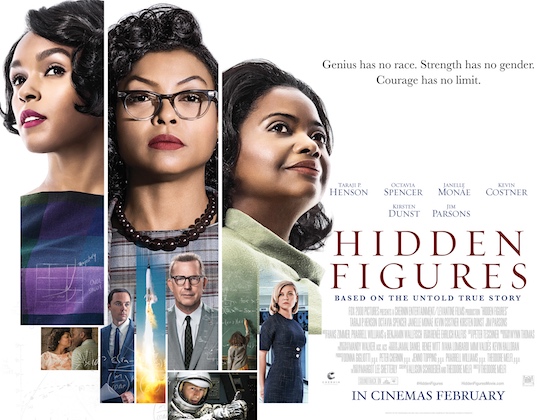
    Hidden Figures

    Based on a true story, Hidden Figures is about three black women working at NASA in the early ’60s, a time when segregation was still in force in the US.

    It’s a double whammy of timely issues, then: they struggle to prove they’re clever and have scientific know-how because they’re women, and they struggle to prove they’re worth treating with respect because they’re black. How depressing that these things are still relevant over 50 years later. That said, any right-minded person watching it will still be suitably appalled that this kind of thing went on at all — even when you know about it, seeing it played out is something else.

    Of course, it comes with a positive message attached: these people overcome their societally-imposed disadvantages to be awesome nonetheless, fighting everyday sexism and racism left, right and centre to eventually prove their worth. Hurrah! It’s a strong message, even more powerful thanks to it being a true story, and no doubt goes a long way to explaining the film’s success. As a movie in its own right, it’s nothing particularly special. There are good performances from a high-calibre cast, but everything else is pretty standard for a biopic — well done, but there’s a reason the film’s Oscar nominations were for acting and screenwriting.

    4 out of 5

    Hidden Figures is available on Sky Cinema from today.