Archive 5, Vol.6

Hey, wouldja look what it is! After getting off to a fairly strong start back at the beginning of 2022, I allowed my Archive 5 strand to fall by the wayside while I made a concerted attempt to stay up-to-date reviewing my new viewing (with mixed success). But now it’s back, hopefully on a more permanent basis. And I guess going forward it should include what’s left of 2022, because otherwise I’m stuck trying to catch up on those reviews before I can even begin 2023. But not just yet, because I selected today’s five films back when Vol.6 should originally have been posted (last February, gasp!)

For those who’ve forgotten, I have a backlog of 421 unreviewed feature films from my 2018 to 2021 viewing (448 if we add in 2022 too). This column is where I give those films their day, five at a time, selected by a random number generator.

Today, some films sizzle with heat or tension, while others fizzle into disappointment. This week’s Archive 5 are…

  • Paris When It Sizzles (1964)
  • 7500 (2019)
  • The Rhythm Section (2020)
  • Carefree (1938)
  • The Lie (2018)


    Paris When It Sizzles

    (1964)

    Richard Quine | 110 mins | digital (HD) | 16:9 | USA / English | U

    Paris When It Sizzles

    William Holden and Audrey Hepburn are clearly having a whale of a time in this marvellously cine-literate romp about a struggling screenwriter (Holden) and the secretary (Hepburn) hired to type up the script he hasn’t actually started. With the deadline just two days away, the pair rush to put a script together, which plays out as a film-within-a-film, also starring Holden and Hepburn, and allowing them even more fun as they get to overact extraordinarily. The “inside baseball” feel of the thing is furthered by a handful of surprise cameos.

    Perhaps it’s me just misjudging the era, but the whole thing feels somewhat ahead of its time. In the way its such an insider’s riff on the movie industry, it feels like something you wouldn’t expect to have emerged until maybe the ’90s (The Player being an obvious point of reference). How well that worked for audiences at the time, I don’t know — maybe it did come across as too esoteric — but, viewed today by anyone with an idea of the history and inner workings of the Hollywood machine — it’s a lot of madcap fun.

    5 out of 5

    Paris When It Sizzles was #129 in my 100 Films in a Year Challenge 2020. It placed 20th on my list of The Best Films I Saw in 2020.


    7500

    (2019)

    Patrick Vollrath | 93 mins | digital (UHD) | 2.39:1 | Germany, Austria & USA / English, German & Turkish | 15 / R
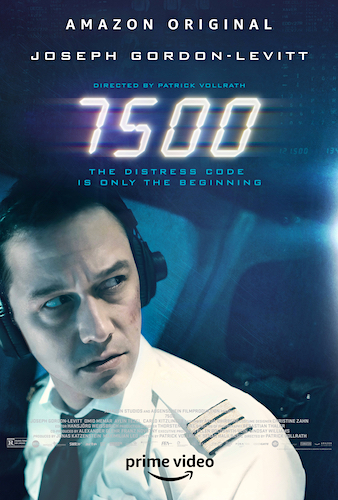
    7500

    After a title sequence that uses security camera footage to follow some shifty-looking blokes around Berlin airport, the film fades up in a passenger airplane cockpit as the crew arrive and begin their regular pre-flight routines. It’s a location we won’t leave for the next 80 minutes, as the unremarkable flight to Paris takes a turn when the aforementioned shifty-looking blokes attempt to invade the cockpit mid-flight, leaving it up to copilot Joseph Gordon-Levitt to try to rescue the situation.

    A tense thriller set entirely in one confined location and told in (near-as-dammit-)real-time? This film could have been made just for me. Suffice to say, I was suitably pleased. This kind of style and pace clearly won’t be to everyone’s taste (I mean, the first 15 or so minutes are almost entirely about watching the pilots just doing their everyday job), but there’s something about the format that does it for me. I think it’s something to do with the inescapability of real-time — that what’s happening and what will happen is going to last as long as it lasts, no shortcuts — that serves to underscore the tension of a thriller storyline. That said, in this case the final act does lose some of the momentum and tension, as much as it tries to maintain it, meaning it feels like it limps to the end, with the really suspenseful stuff having expired a little after the hour mark. It’s not that this final act is bad, just that it feels like a comedown from what’s gone before.

    Still, Gordon-Levitt is great throughout, carrying a large chunk of the film singlehanded, and there’s ultimately a more nuanced treatment of the terrorists than you might expect. I saw someone criticise it for trying to humanise one of them, as if that was problematic. Sure, terrorists are bad guys, but they’re still human beings underneath, and they’ve been plenty demonised enough in plenty of less thoughtful media — I’m not sure it should be considered controversial or a step too far to suggest that one of them (out of four) might be a misguided teenager rather than Evil Personified. On the flip side, I read another review that trashed the film for “featuring brown terrorists again”. I imagine those two reviewers would have a lot to disagree about…

    4 out of 5

    7500 was #144 in my 100 Films in a Year Challenge 2020.


    The Rhythm Section

    (2020)

    Reed Morano | 110 mins | digital (HD) | 2.39:1 | UK & USA / English & French | 15 / R

    The Rhythm Section

    I don’t know about you, but sometimes I watch movies with a bad rep in case I see something in them that everyone else* missed — because that does happen. In that vein, The Rhythm Section isn’t some overlooked masterpiece, but I don’t really get why everyone hated it so much.

    Blake Lively uglies up and forces an English accent to star as Stephanie Patrick, a drug-addicted prozzie who used to be a pretty Oxford student until her family died in a plane crash three years earlier, which a journalist now tells her was a terrorist attack that MI6 have covered up. Events lead her to a disgraced agent (Jude Law) who agrees to train her to hunt down the people responsible.

    Hardly the most plausible storyline ever, but it’s no more ludicrous than many a thriller. So, as a genre piece, well, it’s certainly not the greatest action-thriller ever made, but it’s decent overall with a couple of neat twists on the usual formula. The primary one is that our heroine isn’t actually very good at being an action hero and keeps fucking up. Normally these films are about highly competent super agents (Jason Bourne, John Wick, etc), or newbies who take to it like a duck to water. Stephanie’s borderline incompetence is not only a mite more realistic, it makes a refreshing change, and at times is even successfully used to heighten the tension.

    Unfortunately, other aspects were stale on arrival. For no reason, it begins halfway through and then does the “8 Months Earlier” thing. This is a personal bugbear of mine, because it’s a trick that’s been used to death at this point, routinely trotted out to no real purpose. Usually it’s used as a cheap way to deliver some action upfront because otherwise there won’t be any until somewhere in Act Two, which is just an insult to the audience’s attention span. In other cases, the film just got unlucky. I imagine when they conceived of a single-shot car chase it seemed like an original idea — as it probably did to all the other filmmakers who attempted the same thing around the same time; not least Netflix’s Extraction, which did it bigger and therefore better. Oh well.

    Ultimately, I suppose The Rhythm Section is fundamentally derivative, with only fleeting moments of originality. But I still thing everyone else was overly negative — it’s not bad, just not strikingly fresh. I think if you enjoy Bourne-esque action-thrillers, you should enjoy this.

    3 out of 5

    * It’s never everyone else, but you know what I mean. ^

    The Rhythm Section was #138 in my 100 Films in a Year Challenge 2020.


    Carefree

    (1938)

    Mark Sandrich | 83 mins | digital (SD) | 4:3 | USA / English | U
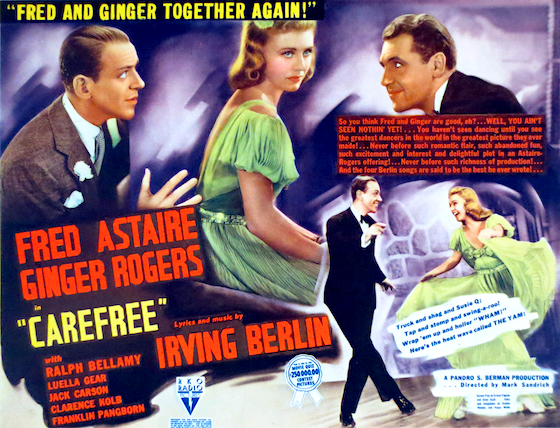
    Carefree

    Fred Astaire is a psychiatrist prone to misogynistic views and unethical practices who mimes playing the harmonica and performs dance routines with golf balls, and Ginger Rogers does a song & dance about yams (because Astaire thought it was so silly, he refused to sing it. He was right). Yeah, I think it’s fair to say this isn’t the couple’s finest hour. The public agreed: this was the first Astaire-Rogers film to lose money on its initial release.

    That said, it’s not without the occasional charm. Rogers still shines — the sequence where she goes around playing naughty pranks with a cheeky grin while under the influence of anaesthetic is a delight — and there’s a slow-motion dream-sequence dance that is rather lovely. But these are fleeting pleasures amongst the distasteful storyline (see: my description of Astaire’s character) and less refined moments (there’s a song about yams).

    2 out of 5

    Carefree was #97 in my 100 Films in a Year Challenge 2021.


    The Lie

    (2018)

    Veena Sud | 95 mins | digital (UHD) | 2.39:1 | USA / English | 15 / R
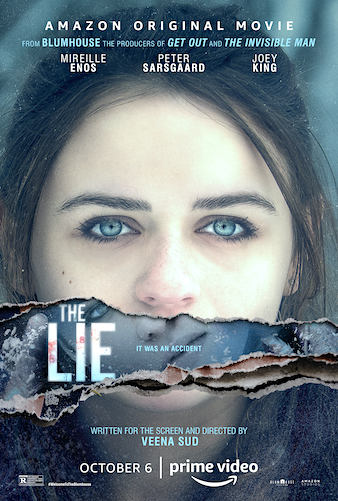
    The Lie

    Although it debuted to most of the world as one in a series of eight Blumhouse original movies that premiered together on Amazon Prime in 2020, The Lie is listed as a 2018 film because that’s when it premiered at TIFF under a different title (Between Earth and Sky). The fact it went from being a standalone production to one of a series released en masse provides a clue as to how well it went down.

    The film has a solid premise that starts out well enough: a father (Peter Sarsgaard) and daughter (Joey King) are driving to a ballet retreat when they spot her best friend waiting by the side of the road, so they offer her a lift. Later, they stop in the middle of nowhere so the friend can go to the bathroom, but she falls off a bridge into an icy river. Or possibly the daughter pushed her. Either way, presumably she couldn’t survive the fall, and her body has washed away. Fearing how all that would look, they set about covering it up… which is where things go awry, both for the characters and us viewers. The longer the story goes on, the further it departs from actions and consequences that feel plausible. It’s not ludicrously far-fetched, it just doesn’t feel right; like people wouldn’t make those decisions, or those decisions wouldn’t have those consequences. The lead cast give it their best shot, but they’re battling against material that’s below their skills.

    Then there’s an inevitable last-minute twist that just hurls the whole thing off a bridge. Kate Erbland for IndieWire wrote that it “should rank among the all-time great fake-outs,” and she’s sort of right: it could have been a reveal for the ages, but rather than eliciting a pleasant “OMG I don’t believe it!”, it plays as “ugh, I don’t believe it.”

    2 out of 5

    The Lie was #245 in my 100 Films in a Year Challenge 2020.


  • 2022 | Week 35

    When I revived 2007’s weekly(-ish) review compilation format at the start of 2022, the main objective was to write shorter reviews (not necessarily as short as the couple-of-sentences-per-film I wrote back in 2007, but not worrying about trying to do full write-ups for everything), which would help enable me to stay more up-to-date. Well, the former has only been partially successful, and that means the latter has slipped, too: here we are, rapidly heading towards the end of December, and I’m only just posting reviews of films I watched at the end of August / start of September. I’m certainly not going to have 2022 finished before 2023 begins.

    Hey-ho, there’s nothing to be done about it — other than remind myself I was intending to be more concise and more on top of things, and continue to try to push myself in that direction. In the meantime, on we go, with…

  • Mona Lisa (1986)
  • Mirror (1975), aka Zerkalo
  • Clerks (1995)
  • Persuasion (2022)
  • He Walked by Night (1948)


    Mona Lisa

    (1986)

    Neil Jordan | 104 mins | Blu-ray | 1.85:1 | UK / English | 15 / R

    Mona Lisa

    Neo-noir filtered through a British sensibility — which means you get a character study merely garnished with genre thrills, especially when the character in question is played by Bob Hoskins, adding depth and complexity to your could-be-straightforward protagonist.

    Said protagonist is George, a recently-released minor gangster looking for work. He’s an interesting mix of a character: streetwise but also kinda naïve; racist and judgemental, but without really meaning it. It’s like he’s just reciting stuff he’s heard from everyone else, rather than it being stuff he really believes. Well, isn’t that true of so many with horrendous opinions? These days they just get them from YouTube. George’s prejudices are somewhat challenged when he’s assigned to drive around a high-class call girl, Simone, who happens to be black. Although Hoskins took most of the plaudits (including an Oscar nomination and BAFTA win), as Simone, Cathy Tyson breathes an equal amount of life into a character that, similarly, in lesser hands could’ve just been a plot-driving mystery. (She was also nominated for a BAFTA, incidentally.)

    The film’s style is an interesting mishmash, in that it has an element of British grit and groundedness — especially being shot on grainy film, all on location in London, in a world of everyday gangsters and prostitutes — but with fantastical and/or genre flourishes — George’s friend Thomas creates weird art stuff and engages in literary discussions; nighttime London is shot to look like a vision of Hell; and then there’s all the noir stuff in the construction of the story. There’s a version of this film that fully gives in to that genre, but the comedy and ‘fantasy’ dilutes the neo-noir aspects, making the film more unique, and distinctly British.

    The fact Arrow initially released Mona Lisa as the de facto lesser half of a double-bill with earlier Hoskins-starring gangster flick The Long Good Friday does it something of a disservice (though it’s also is the primary reason I had it in my collection to prompt me to watch it, so swings and roundabouts). This is a film more than worthy of standing on its own; and one that, while not poorly regarded or completely forgotten, merits a wider rediscovery.

    4 out of 5

    Mona Lisa is the 53rd film in my 100 Films in a Year Challenge 2022. It was viewed as part of “What Do You Mean You Haven’t Seen…?” 2022. It placed 11th on my list of The Best Films I Saw in 2022.


    Mirror

    (1975)

    aka Zerkalo

    Andrei Tarkovsky | 107 mins | digital (HD) | 1.37:1 | Soviet Union / Russian | U

    Mirror

    Andrei Tarkovsky’s poetic evocation of memory and mid-20th-century Soviet history. If that sounds a bit Arty, just wait ’til you hear Criterion’s blurb, which says it’s “as much a poem composed in images, or a hypnagogic hallucination, as it is a work of cinema.” Oh dear, sounds like Hard Work, right? Well, it is.

    Calling it “visual poetry” might sound like pretentiousness, but it really isn’t — Mirror definitely plays more like that than a traditional narrative film. And, just like most poetry, I didn’t really get it. I must confess that I was tuning out by the end; partly due to tiredness, which is my own fault; but partly that the film gave me nothing to really latch on to; no (clear) narrative or character or anything for me to focus on to keep my wavering attention in the right place. On the bright side, it avoided being a total disaster in my eyes by having some nice-looking bits, and individual scenes or sequences that kinda work. But I absolutely do not “get it” as a whole cohesive piece of art.

    Clearly, this kind of thing works for some people — Sight & Sound’s most recent poll ranked it 31st, and the director’s poll (which I would normally argue errs slightly more mainstream) went even better and placed it 8th. Each to their own. Based on his work that I’ve seen so far, I just don’t think Tarkovsky’s for me.

    2 out of 5

    Mirror is the 54th film in my 100 Films in a Year Challenge 2022. It was viewed as part of Blindspot 2022.


    Clerks

    (1994)

    Kevin Smith | 88 mins | DVD | 1.85:1 | USA / English | 15 / R

    Clerks

    There’s no escaping the fact that Clerks is very much a product of its time, both in itself as a work of art, and in how it became a breakout success. (Can you imagine a film like this launching a career like Kevin Smith had (for a bit) if it was made today? Best you could hope for now is being seen by half-a-dozen festival-goers before the director gets tapped to be Kevin Feige’s puppet on some Marvel content.) That said, for all its ’90s-time-capsule-ness, it holds up pretty well as a piece of entertainment. By which I mean, I laughed multiple times and was never bored.

    The story, such as it is, concerns a pair of convenience store workers hanging out for a day, and the various little dramas and incidents that occur to and around them. Serving as both writer and director, Smith quite cleverly turns bugs into features. No budget? Make that the whole aesthetic, with grainy 16mm photography and an everyday setting in which ‘nothing’ happens. Non-pro actors? Have everyone deliver all their lines mile-a-minute, thus making the whole thing feel kinda heightened and stylised, to the point where you can’t be sure if most of the cast can’t act or it was all a deliberate choice. This is further fed by Smith often letting scenes play out in long takes with no cuts — if these guys can remember all their lines to do a whole scene in a oner, they must be pretty professional, right?

    Impressively for a first-timer behind the camera, Smith doesn’t go overboard with directorial flourishes. There’s the occasional shot or sequence with some extra pizzazz to keep up the visual interest, but he seems to know that less is more; that this is the kind of film that plays best in medium shots. This might sound like basic stuff, but evidence shows that first-time filmmakers with something to prove are regularly tempted to go all-out and make something that feels Directed. That might be nice for a showreel, but for an actual film, restraint goes a long way.

    Technique aside, the content just works. These characters are likeable enough to hang out with for 90 minutes, because that’s effectively all we’re doing. But there’s enough variety in their conversations and situations, and enough genuinely funny lines and moments, that it works and is enjoyable, rather than being a dull or directionless slice-of-life piece.

    4 out of 5

    Clerks is the 55th film in my 100 Films in a Year Challenge 2022.


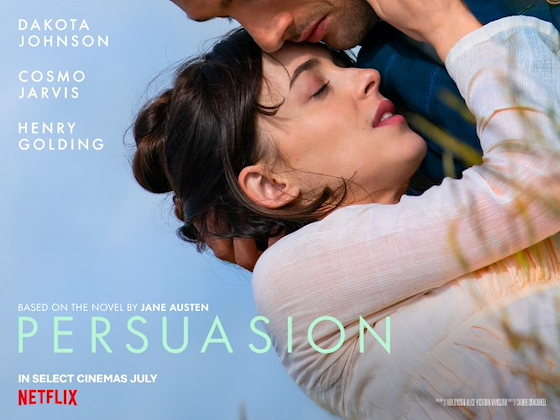
    Persuasion

    (2022)

    Carrie Cracknell | 108 mins | digital (UHD) | 2.00:1 | USA / English | PG / PG

    Persuasion

    Jane Austen adaptations appear to be perennially popular, so it was probably only a matter of time before Netflix attempted one. Here, they’ve retained the original setting but given proceedings a modern-ish wash, apparently influenced by their hit series Bridgerton style (I’ve never seen Bridgerton, so this is based on the trailers and that others have made the same comparison). The result? A trailer that met with a great deal of displeasure from Austen fans, not keen on the apparent irreverence to the source material. I’ve never read Austen, either, so I’ll leave exact comparisons to the more knowledgeable.

    That said, I can’t say the trailer fully won me over, but I thought I’d allow the film its chance. And it’s not terrible — there are lots of nice scenes and moments to be found. Unfortunately, they’re undercut by the bits everyone talked about from the trailer: the clearly-Fleabag-inspired gurns to camera; the banal and misplaced modern-style dialogue. The really sad thing is that there aren’t actually very many of those bits — the ones that were widely cited as “examples” are nearly all of them, in fact — and so there is nearly a very nice film here.

    Dedicated fans of Austen’s original work, and those who prefer their period dramas played straight and faithful, will likely still find those moments off-putting. If you’re prepared to overlook the missteps, this Persuasion is largely likeable.

    3 out of 5

    Persuasion is the 56th film in my 100 Films in a Year Challenge 2022.


    He Walked by Night

    (1948)

    Alfred Werker | 79 mins | digital (HD) | 4:3 | USA / English | PG

    He Walked by Night

    “A film that started as a humble low-budget offering from a second-tier studio, but wound up being one of the most influential films of its era” is how ‘Czar of Noir’ Eddie Muller describes He Walked by Night in his introduction for TCM’s Noir Alley strand. That’s partly because it inspired the radio series Dragnet, which was immensely significant in the development of police procedural series, a genre that remains a bread-and-butter staple of TV entertainment to this day. But also because it was shot by cinematographer John Alton — “the greatest noir stylist of all time”, says Muller, and here he produced “one of the most dramatically photographed film noirs ever”. There’s debate over whether the film was actually helmed by its credited director, Alfred Werker, or if Anthony Mann actually did most of the work. “It doesn’t really matter,” says Muller, “because the picture’s held together by the stunning visual style of its singular cinematographer”.

    Well, I can’t disagree. This is a gorgeously shot film, and a concise exemplar of all we know of film noir style — primarily, abundant shadows. But it’s not just the imagery that makes it work. There are multiple tense suspense sequences, often making great use of silence — this is a film not afraid to be quiet when it’s effective — climaxing with an incredibly atmospheric chase and shootout in the LA storm drain system. We spend a lot of time with the villain, Roy Martin — the film is definitely a howcatchem; no whodunit mystery here — who’s superbly played by Richard Basehart. Coming back to the point about silence, Martin is a loner, so he doesn’t get much dialogue a lot of the time, but Basehart still effectively conveys how smart and cunning he is. Also worthy of note is Whit Bissell as an electronics dealer who unwittingly sold on ‘inventions’ that Martin had in fact stolen. The poor guy is clearly innocent and been duped, but he ends up between a rock and a hard place when the police aren’t sure they believe that.

    The overall style of He Walked by Night is intensely procedural and serious about it, but it still finds room for glimpses of character, both from the cops and the criminals; and there’s humour, too. That helps give it a bit of light and shade, and also genuine reality — you’ll find humorousness everywhere in real life, however serious events may be.

    4 out of 5

    He Walked by Night is the 57th film in my 100 Films in a Year Challenge 2022.


  • 2022 | Week 34

    Skipping week 33 (when I didn’t watch anything), here are all the films I watched in week 34 — which, if anyone’s interested, was back in August. Somehow, I don’t think I’m going to get caught up on my 2022 reviews before the end of the year…

  • The Winter Guest (1997)
  • Repeat Performance (1947)
  • Carousel (1956)


    The Winter Guest

    (1997)

    Alan Rickman | 105 mins | digital (SD) | 16:9 | UK & USA / English | 15 / R

    The Winter Guest

    The writing and directing debut of actor Alan Rickman, The Winter Guest follows four loosely-connected pairs of characters through a day in their lives, all confined to a small Scottish seaside town where the stark winter has turned the sea to ice. It’s the kind of film where nothing happens: the characters hang out with each other and talk, basically, with their issues ranging from bereavement to stereotypical teenage sex obsession (one boy played by a young Sean Biggerstaff wants… a bigger staff, wink wink. Sorry, the pun was too tempting to avoid).

    The confined setting and characters means the end result feels theatrical in both style and content — it’s basically just a series of two-handers, with quite mannered dialogue. And yet its staging isn’t so limited, because Rickman and cinematographer Seamus McGarvey do an excellent of of evoking the chilly surroundings (most of the film is set outside), giving the scenery a painterly feel. That’s probably in part due to using digital matte paintings to convey the frozen ocean, but it extends to the beaches and town buildings, too. Or it could just be an unintended side effect of the smoothing conferred by watching in digitally compressed SD; but as it’s just about my favourite aspect of the film, let’s assume it was intentional and skilfully done.

    3 out of 5


    Repeat Performance

    (1947)

    Alfred Werker | 93 mins | Blu-ray | 1.37:1 | USA / English

    Repeat Performance

    On the eve of 1947, actress Sheila Page (Joan Leslie) shoots dead her husband (original Saint Louis Hayward). She flees, ending up at the home of her producer (second Falcon Tom Conway) in the early hours of New Year’s Day… 1946. Given the chance to re-live the past year, can she make things right?

    Repeat Performance gets classified as film noir, but I feel like it’s one of those films that sits on the periphery of what qualifies for the genre. The opening — in which a woman shoots dead her husband, in New York City at night — yes, very noir. But what unfurls over the next 90 minutes is more of a backstage romantic melodrama by way of Twilight Zone-style fantasy. But that’s the thing with noir: as a movement that wasn’t recognised and codified as a genre until after it was over, what ‘counts’ can be a very broad church.

    Here, the odd combination of styles makes for an unusual and mostly entertaining film. My only real gripe is that we’re given very little idea what went on in the ‘original’ 1946, so it’s hard to tell how much effort Sheila is actually making to change it, or to follow how successful she’s being. This kind of perspective is perhaps the benefit of a further 75 years of development and refinement in the field of fantastical storytelling — Repeat Performance isn’t a Fantasy film in the true genre sense, more a Thriller with a neat inciting twist, a la Sliding Doors (my go-to example of a Fantasy film that doesn’t care it’s a Fantasy film!)

    The plot is bolstered by strong or likeable performances across the board. Some of the lead cast may be better known for starring in B-movie schedule-fillers, but this is proof if proof were needed that to interpret that as a sign of limited skill on their part would be an incorrect conclusion. Which is a rather torturous way of saying “Hayward and Conway were quite good actors, actually”. Hayward is particularly good here, getting to show off his range from loving husband to psychopathic abuser, plus a few other stages in between. Conway is more at the likeable end of the spectrum as Sheila’s kindly producer, while Richard Basehart’s performance (in his movie debut) as queer-coded poet William Williams (in the original novel, the character is a transvestite) was so impressive that the producers gave him more scenes with Leslie and bumped up his billing.

    4 out of 5

    Repeat Performance is the 52nd film in my 100 Films in a Year Challenge 2022.


    Carousel

    (1956)

    Henry King | 123 mins | digital (HD) | 2.55:1 | USA / English | U

    Carousel

    Carousel is a spectacularly odd entry in the Rodgers & Hammerstein canon of musicals. Based on a play called Liliom (which was previously filmed by Frank Borzage in 1930 and Fritz Lang in 1934), it tells the story of a carnival barker (Gordon MacRae) who’s been dead 15 years, but in flashback we learn of how he fell in love and married, and how he died, and why he now gets a chance to go back for a day to make amends. That almost makes the film sound focused. As it plays out, the storyline has a weirdly aimless quality, not helped by songs that are mostly mediocre or bizarre. That’s before we get to the horrendously outdated views on domestic violence, or the fact that it’s not actually got very much to do with the titular fairground attraction.

    The darker material and themes could work in the right setting, but here they clash with the sunny seaside photography and stereotypically cheerful musical numbers. I mean, this is a story about a physically abusive husband and wannabe small-time crook, who can’t even change his ways when the afterlife gives him a second chance, and we have songs about the beauty of summer and the joys of a clambake (the latter may haunt your memories…)

    A strange film, and not in the good way. At least it’s made me curious to see the Borzage and Lang versions — perhaps as a straight drama it will be more obvious why this has merited adaptation so many times.

    2 out of 5


  • 2022 | Weeks 29–32

    2022 may be rushing headlong towards its final stretch (only one month ’til Christmas, people!), but my reviews are lagging behind somewhat: this update takes us all the way back to July and August.

    That said, there’s quite a long spread covered here, because I only watched one film in each of these weeks: 45 Years in week 29, The Bucket List in week 30, previously-reviewed Prey in week 31, and Tintin and the Lake of Sharks in week 32. That’s definitely not the right way to go about watching 100 films in a year, but there we go.

  • 45 Years (2015)
  • The Bucket List (2007)
  • Tintin and the Lake of Sharks (1972), aka Tintin et le lac aux requins


    45 Years

    (2015)

    Andrew Haigh | 95 mins | digital (HD) | 1.85:1 | UK / English | 15 / R

    45 Years

    Charlotte Rampling and Tom Courtenay star as a couple preparing for their 45th wedding anniversary party, when their comfy relationship is rocked by news that brings to the surface events from his past.

    What could have been a histrionic drama about the nature of trust in a relationship instead takes its cue from the characters’ advanced age, and so is a more understated consideration of the same. The length and passage of time is relevant, too: if something happened a long time ago but you only just learnt about it, does that change how you react to the news? Should it? And is the real revelation not the news itself, but the realisation that, even if you’ve lived closely with another person for decades, you can never be truly sure you know them. Another person’s true self is fundamentally unknowable, for any one of us.

    All of which might sound a bit highfalutin, but 45 Years is the kind of film that revels in ambiguity, with characters who never let on their true feelings — in that sense, it feels like a deliberate Acting Showcase for Rampling — and a vague ending, all of which invites you to draw your own conclusions. The final moment feels pointed, but the openness of what went before means it’s up to you what it means. There’s something truthful about that, but also something frustrating.

    4 out of 5


    The Bucket List

    (2007)

    Rob Reiner | 97 mins | digital (HD) | 16:9 | USA / English | 12 / PG-13

    The Bucket List

    I may have written before (but not recently, so let’s do it again) about how Rob Reiner’s directorial career baffles me. He had an incredible run in the ’80s and ’90s — almost back to back he helmed This Is Spinal Tap, Stand By Me, The Princess Bride, When Harry Met Sally, Misery, and A Few Good Men — but then his career suddenly nosedives into a bunch of stuff you’ve mostly never even heard of. What happened? Is there some “John Landis on Twilight Zone“-style ‘secret’ I’m unaware of?

    One of the very few exceptions in his later career (which certainly didn’t lead to that being revived) was this, a breakout hit 15 years ago (yes, it’s 15 years old) of the kind they don’t make so much anymore: a mainstream comedy-drama aimed at adults. It’s about two old men (pure star power in Jack Nicholson and Morgan Freeman) with only months left to live, who decide to spend their final days going on a tour of… green screen studios and kinda-low-res stock footage, apparently. I guess you didn’t get location filming on the kind of budget a film like this was made for even back in 2007.

    Cheap production values aside, it has an insistent sentimentality — undercut with just a big enough dose of snark to stop it becoming too saccharine — that, unsurprisingly, played well with general audiences but, equally unsurprisingly, doesn’t seem to be to the taste of many cinephiles (just look at the middling-to-low scores on Letterboxd, especially of the most-liked reviews, and contrast with its sturdy 7.4 score on IMDb). While I wouldn’t go quite as harsh as many of my fellow Letterboxd users, I do think it’s not that good — it’s broadly likeable, a generally pleasant way to pass 90 minutes, rather than in any way exceptional.

    3 out of 5


    Tintin and the Lake of Sharks

    (1972)

    aka Tintin et le lac aux requins / The Adventures of Tintin: The Mystery of Shark Lake

    Raymond Leblanc | 74 mins | DVD | 4:3 | Belgium & France / English | U

    Tintin and the Lake of Sharks

    Having adapted several of Hergé’s Tintin books for TV and film, Belgian animation outfit Belvision for some reason opted to create an original story for their second big-screen outing with the character (it was later retrofitted into book form, using frames from the film as the illustrations). Written not by Hergé but his friend, fellow Belgian comics creator Greg (aka Michel Regnier), Lake of Sharks feels like exactly what it is: an imitation of a Tintin adventure rather than the real deal.

    Events start out in a typically Tintin fashion, with some crooks after an invention of Professor Calculus’s; but later things take a turn for the Bondian, including an elaborate underwater lair that owes a debt to the imagination of Ken Adam. Eventually it all gets a bit silly, with stuff like an ever-expanding bouncy 3D photocopier, or the villain’s elaborate “you will die in one hour” execution method for Tintin. That kind of adventure serial writing has been so widely mocked at this point (the Austin Powers movies took aim at it 25 years ago; others may have done so before then) that it’s hard to remember there was ever a time when it was still played with a straight face.

    The animation is mostly of a slightly higher quality than Belvision’s previous efforts, but the quality of the designs is variable. The regular cast feel faithfully copied from Hergé, and most other characters are in the right style; but there are a couple of major child characters who look out of place, along with their pet dog. It’s a bit like when you were a kid and mixed action figures from different ranges into the same game: yeah, they’re all still plastic figurines (or, in the case of the film, hand-drawn 2D characters), but stylistically they don’t line up.

    The English dub is an American effort, and far from ideal. None of the voices are great, but most suffice once you get used to them. The exception is Captain Haddock, who is egregiously bad throughout. That said, we’re also subjected to the kids singing a song about a donkey that is unspeakably awful. Couldn’t they have cast actors who could sing? At least that would’ve taken the edge off it.

    3 out of 5

    Tintin and the Lake of Sharks is the 50th film in my 100 Films in a Year Challenge 2022.


  • 2022 | Weeks 27–28

    Hello! Yes, it’s me — I am still here. I’ve just been finding my time filled up with other stuff: working on the 2022 iterations of both WOFFF and FilmBath Festival (in addition to the ol’ day job); dogsitting for the in-laws; throwing up from eating bad garlic…

    Anyway, here are some reviews of films I watched all the way back in July. (Oh dear, I am behind. Well, let’s see if I can catch up…)

  • Johnny Gunman (1957)
  • A Better Tomorrow (1986), aka Ying hung boon sik
  • Mifune: The Last Samurai (2015)
  • The Lost Daughter (2021)


    Johnny Gunman

    (1957)

    Art Ford | 67 mins | digital (HD) | 4:3 | USA / English

    Johnny Gunman

    The history of cinema is littered with fascinating asides and dead ends, and this is one of them: an independent film from before independent films were really a thing; from the time when the studio system was beginning to falter, but the film school auteurs hadn’t yet arrived (Spielberg, Scorsese, Coppola, et al were still in their teens when this was made).

    As with the films that would later break similar new ground after the digital video revolution in the ’90s, there are cracks — it’s amateurish and undeniably low-budget in places — but also artistry — every once in a while it’ll whip out an exceptionally well-lit scene or interesting visual. Story-wise, it’s an odd mix: there’s the noir-ish gangster plot line, which is derivative and clichéd; but it takes over the film from what you feel like it almost wants to be, which is a Before Sunrise-style slice of life. Maybe, in a freer world, that’s what the filmmakers would’ve produced; but when you’re one of the first people trying to break in from the outside, hitting the familiar beats of a genre is no bad idea.

    Some of the highlights of the film come at the start, with documentary-like shots of New York street life when our heroine visits the Greenwich Festival. It’s a brief little window into the real 1950s NYC, before the rote gangster plot comes to dominate. Indeed, being shot on location, and with an inexperienced cast, lends the whole production a certain veracity that you don’t always get from soundstage-bound studio pictures of the era. On the other hand, that’s also what gives it the rough edges that will make it unpalatable to some viewers.

    However you cut it, this is hardly a forgotten gem, but it’s an interesting detour of movie history that I’m glad I stumbled across.

    3 out of 5

    Johnny Gunman is the 45th film in my 100 Films in a Year Challenge 2022.


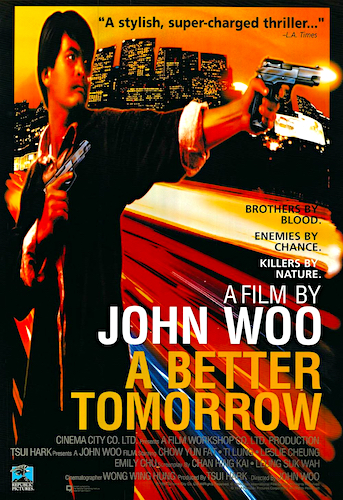
    A Better Tomorrow

    (1986)

    aka Ying hung boon sik

    John Woo | 96 mins | digital (HD) | 1.85:1 | Hong Kong / Cantonese, Mandarin & English | 18

    A Better Tomorrow

    A Better Tomorrow was the first in a run of modern-day gangster action movies that would make director John Woo’s name. Its original Chinese title translates as True Colours of a Hero, which is just as apt: it’s about a pair of mid-level crooks, one of whose brother is a cop, and the ways and whys in which they try and fail to escape the criminal life.

    Woo’s style was cutting edge back in the day, but that day is now pushing 40 years ago. Of course, his flamboyant style has never been to some people’s taste (witness the dismissive stance some still take towards M:i-2). Viewed now, this is cheesier and less stylistically polished than his later career-defining HK films like The Killer or Hard Boiled, but, on the couple of occasions it does explode into action, it’s suitably grandiose, and it has an engaging storyline and character dynamics.

    In regards to the latter, you can definitely see why Chow Yun-Fat was the breakout star. He’s actually got a supporting role, but his charisma shines off the screen, and there’s a plausibility to the way he handles the action. (Ironically, although it made Chow an action icon, he was cast because Woo didn’t think he looked like an action star.)

    Not Woo’s strongest film, then, but a definite sign of someone headed in the right direction — and, clearly, his later work paid off that promise.

    4 out of 5

    A Better Tomorrow is the 46th film in my 100 Films in a Year Challenge 2022. It was viewed as part of “What Do You Mean You Haven’t Seen…?” 2022.


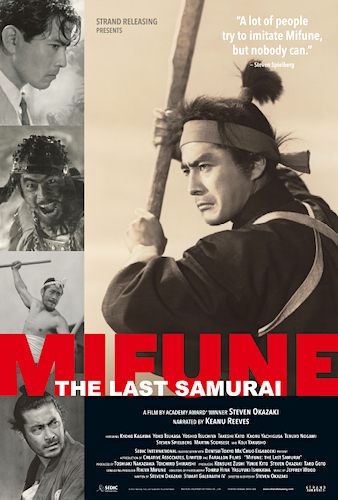
    Mifune: The Last Samurai

    (2015)

    Steven Okazaki | 77 mins | DVD | 16:9 | USA & Japan / English & Japanese | 12

    Mifune: The Last Samurai

    At just an hour and a quarter, this biography of the actor Toshiro Mifune feels more like a primer on his work and life (complete with newcomer-friendly contextual asides into the history of Japanese cinema, the career of Akira Kurosawa, etc) rather than the deep-dive exploration of the man and his legacy that some reviewers hoped for. I certainly learnt stuff, but such criticism has validity. For that reason, the less you know about Mifune (and Kurosawa), the more you’ll get out of the film. That said, it might pay to have already seen some of their films — it’s not that director Steven Okazaki doesn’t introduce and summarise them adequately; more that, if you’ve seen them, you know the full context.

    Nonetheless, a good range of interviewees ensure the documentary is not without insight, managing to explore both what made Mifune the man tick and what made him such a phenomenal screen presence. Plus, the fact that Okazaki is happy to explain contextual topics (like a history of chanbara films; or matters of social history, like what losing World War 2 was like for the Japanese people) is both education and useful, because I imagine most non-Japanese viewers don’t have much baseline knowledge about this stuff. The film is definitely a biography of Mifune (not, say, a history of 20th century Japan using the actor as a gateway), but there’s much to be gleaned here for the interested viewer.

    4 out of 5

    Mifune: The Last Samurai is the 47th film in my 100 Films in a Year Challenge 2022.


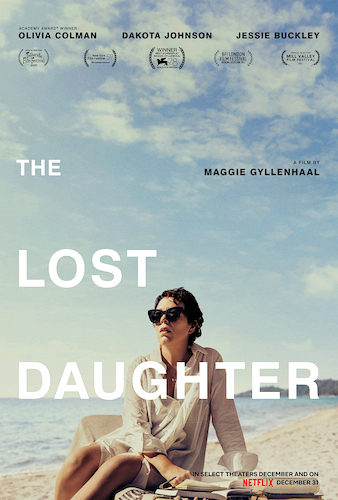
    The Lost Daughter

    (2021)

    Maggie Gyllenhaal | 122 mins | digital (HD) | 1.66:1 | USA, UK, Israel & Greece / English & Italian | 15 / R

    The Lost Daughter

    Maggie Gyllenhaal’s directorial debut, based on a novel by Elena Ferrante, stars Olivia Colman as Leda, a woman on holiday alone in Greece, where she encounters a young mother (Dakota Johnson) whose daughter briefly goes missing, reminding Leda of her own younger days, when she was played by Jessie Buckley and had a husband and two daughters herself.

    It’s perhaps initially difficult to pin down exactly what The Lost Daughter is driving at — I suspect it’s the kind of film in which some people would say nothing happens. But it’s really a kind of mystery, where the mystery is the lead character’s psychology: why is she like this? There’s also the more obvious mystery of what exactly happened in her past, but that isn’t solved so much as gradually doled out in flashbacks. Obviously that kind of story relies a lot on its performances, and Colman is as strong as ever. So much of the importance of the film, which lies in her character and emotion, is conveyed without dialogue. That’s not do down the able support from Buckley and Johnson, mind.

    Gyllenhaal’s direction is interesting and effective, using lots of fairly extreme close-ups to give a kind of tactile sensation to the film. On the other hand, I would say it feels a little longer than necessary (especially after the ‘reveal’ scene, where the final piece of the puzzle clicks), and I’m not convinced it knows how to end (or perhaps it’s my fault for not really ‘getting’ the finale).

    Overall, though, it’s an impressive debut from Gyllanhaal, and a great alternative perspective on motherhood.

    4 out of 5


  • 2022 | Week 26

    I’m taking you back over two months here, to the end of June / start of July, for another eclectic batch of films I happened to watch in close proximity to each other…

  • The Flying Deuces (1939)
  • Apollo 10½: A Space Age Childhood (2022)
  • My Name Is Julia Ross (1945)
  • Ambulance (2022)
  • Easy A (2010)


    The Flying Deuces

    (1939)

    A. Edward Sutherland | 68 mins | DVD | 4:3 | USA / English | U

    The Flying Deuces

    I feel like I’m aware of Laurel & Hardy in a way I would say “everyone” is, but I guess that’s probably not true anymore (the kind of stuff I picked up or learnt about by osmosis in my ’80s/’90s childhood is surely very different to what kids got growing up in the ’00s/’10s). But I don’t think I’ve ever actively seen any of their work; certainly none of their feature-length films. The Flying Deuces is “probably their most famous film”, at least according to the blurb on my copy. Certainly, it’s the one you see bandied about the most; but then it’s in the public domain (one of only two Laurel & Hardy films where that’s the case), so it’s inevitably subject to endless cheapo releases. Leaving the quality of the print aside (it was poor; but at least it wasn’t cut, which apparently many are), I can’t say I was too impressed by the quality of the content, either.

    Here’s the rub: it’s a comedy, but it barely made me laugh. The humour operates at a basic level, with gags that are either well-worn or repetitious. “How anyone could be so stupid as to stand there and continually bump their head is beyond me,” one of them says at one point. And yet the other does exactly that, because that’s the level most of the film’s humour operates at. Some might say this is the downside of the duo being popular and their work being old — i.e. it’s been imitated and copied for decades, and we’ve moved on. But I don’t find that to be the case with silent comedians —who were equally, if not even more, popular, and whose work is even older — nor with things like the Road to films — which are far from the height of sophisticated comedy, but tickle my fancy more often.

    Well, there’s your answer, I guess: it’s all a matter of taste. And it seems Laurel and Hardy aren’t to mine.

    2 out of 5

    The Flying Deuces is the 41st film in my 100 Films in a Year Challenge 2022.


    Apollo 10½:
    A Space Age Childhood

    (2022)

    Richard Linklater | 97 mins | digital (HD) | 16:9 | USA / English | 12 / PG-13

    Apollo 10½: A Space Age Childhood

    I guess one of the advantages of being a filmmaker with some degree of clout is you can take your regular-ass childhood and turn it into a movie as if it was somehow special. That’s what the Before trilogy and Boyhood mastermind Richard Linklater has done here, fictionalising his autobiography as the story of ten-year-old Stanley, who lives in Huston, Texas, in the era of the first moon landing. Except, in this version, Stanley is secretly recruited by NASA to secretly train to be a secret astronaut to secretly be the first person on the Moon, in secret. If that sounds like an unusual spin on a traditional nostalgia-driven biopic, don’t get excited: that subplot is moved away from as quickly as it’s introduced, and only pops back up two or three more times, each brief. The film is much more concerned with real memories than imagined ones, and is much less fun for it.

    Often, at Christmas or other such get-togethers, members of my family will end up reminiscing about various childhood recollections. I’m sure many other families do a similar thing. What’s shared on these occasions are the kind of mundane memories that mean the world to us but, if you stopped to think about it, you know no outsider would find of much value. Well, seems Richard Linklater hasn’t stopped to think about it. And I really do mean “mundane”: there’s a sequence about which sibling did which chores and how they made their school lunches. As a commenter on iCM put it, Linklater “name checks every TV show and movie he saw, every game he played, everything in his diary […] for long stretches, it just feels like an itemized list of childhood memories.”

    One part that’s actually rather good is Jack Black’s voiceover narration as the adult Stanley. There’s probably too much of it (again underlining the fact these are nostalgic anecdotes rather than a true narrative), but the actual quality he brings is very nice. It feels calm and understated, neither giving in to Black’s usual mania nor substituting it for the hardcore tweeness you might expect from such a rose-tinted autobiography.

    Maybe Apollo 10½ will be more interesting to young people or future generations, whose technology- and safety-obsessed childhood experiences will be so far removed from what we see here. To them, it’s an historical documentary. I can’t say my childhood was much like this one (especially as it occurred almost 30 years later), but I guess I’ve picked up enough of this kind of nostalgia from other American films and TV series down the years that what Linklater has to share doesn’t feel remarkable enough to be worth sharing.

    3 out of 5

    Apollo 10½: A Space Age Childhood is the 42nd film in my 100 Films in a Year Challenge 2022.


    My Name Is Julia Ross

    (1945)

    Joseph H. Lewis | 65 mins | Blu-ray | 1.37:1 | USA / English | PG

    My Name Is Julia Ross

    Here we have one of those films that commonly gets called a film noir, but isn’t really (or, at least, doesn’t fit well with the standard conception of what noir entails). The blurb for Arrow’s Blu-ray release describes it as a “Gothic-tinged Hitchcockian breakout hit” (apparently it was produced as a B-movie but became so popular they promoted it to “A-feature status”), which struck me as accurate — it’s less standard noir, more a Rebecca-influenced psychological thriller. While it’s clearly no Hitchcock, it’s a very entertaining substitute.

    Nina Foch stars as the eponymous Julia Ross, who takes a job as a live-in secretary for a wealthy widow. But the job is a front: Julia is kidnapped, waking up a prisoner in a Cornish mansion, where the widow (Dame May Whitty) and her son (George Macready) try to convince her she’s actually Marion Hughes, the son’s wife, and she’s having a bit of an episode.

    From the way Arrow described the film, I assumed it was going to play to some degree with the idea that maybe she is actually mad. It would be a neat twist, right? That she is Marion Hughes, and the stuff we saw at the start was part of her delusion. But no, the film doesn’t even vaguely gesture at that route: right after Julia meets her prospective employer, we see that she’s plotting something nefarious — and the film isn’t even seven minutes in. Then, even before we really know that something’s up, Julia’s fancy-man is looking into her disappearance. It’s like the film’s playing all the right notes but in the wrong order.

    But it doesn’t really matter, because the whole thing is suitably entertaining. Rather than relying on the mystery of what’s happening, it’s more about how Julia can get out of the situation. Will she be able to escape her confinement? Can she somehow get out a message for help? Or will the villains succeed in their scheme? Plus, at just 65 minutes, it moves at a whipcrack pace, so you can sit back and enjoy the absurd plot rather than worrying about, well, how absurd it is.

    4 out of 5

    My Name Is Julia Ross is the 43rd film in my 100 Films in a Year Challenge 2022.


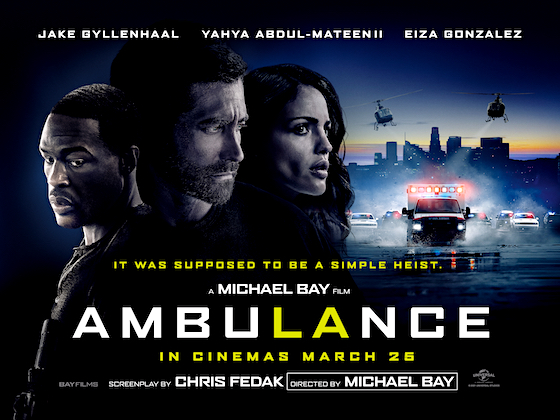
    Ambulance

    (2022)

    Michael Bay | 136 mins | Blu-ray (UHD) | 2.35:1 | USA & Japan / English | 15 / R

    Ambulance

    When their bank heist goes sideways, two brothers (Jake Gyllenhaal and Yahya Abdul-Mateen II) make their getaway in a stolen ambulance — with a policeman they shot and the paramedic working on him (Eiza González) in the back. With the cops immediately on their tail, thus begins an epic car ambulance chase around the streets of LA.

    The setup feels like it should signal the low-/mid-budget debut of a new director showcasing their talents with a 90-minute stripped-back thrill-ride that’s mostly contained to the eponymous setting. But it’s not directed by some newbie — it’s Michael frickin’ Bay, back on the form that gave us action classics like The Rock. And so the 90-minute character-focused thriller is in there (honest it is), but augmented with 40 minutes of big-budget Bayhem.

    Compared to Bay’s other work in the past 15 or so years, Ambulance feels restrained. Compared to almost any other filmmaker, it’s anything but. When I say “restrained”, part of what I mean is the editing. Not that it takes a leisurely approach by any means, but it doesn’t have that “impressionistic jumble of B-roll” style Bay has tended towards on and off ever since Armageddon, and that became his only mode during a couple of the Transformers sequels. Also, I didn’t notice this until I read it on IMDb, but the film contains a literal Chekhov’s gun — that is, a gun that is a “Chekhov’s gun”. That’s so Michael Bay.

    Giving this film 5 stars would be a bit silly… but it was really good. It’s the kind of movie you’d never rate higher than 4, but you love for what it is: magnificent Bayhem.

    4 out of 5

    Ambulance is the 44th film in my 100 Films in a Year Challenge 2022. It placed 9th on my list of The Best Films I Saw in 2022.


    Easy A

    (2010)

    Will Gluck | 92 mins | digital (HD) | 16:9 | USA / English | 15 / PG-13

    Easy A

    When an overheard white lie about losing her virginity makes barely-noticed Olive (Emma Stone) the centre of her high school rumour mill, she decides to manipulate her newfound notoriety for her own amusement.

    As “raunchy teen comedy” plots go, it hits a sweet spot of being neither too prudish nor too lecherous. The dialogue elevates it further in a sharp and witty script by Bert V. Royal (who, it seems, has since only worked on TV shows I’ve never heard of. Shame). In her first lead role, Emma Stone gives a perfectly-pitched, surprisingly nuanced performance. The story really allows her to show off her versatility, believable as both the ‘quiet girl’ and ‘confident slut’. Obviously there’s lots of comedy, but she sells the moments of sincerity too. It’s no wonder she quickly got snapped up for more awards-type work. Plus, there’s Stanley Tucci being what I imagine Stanley Tucci is actually like as a dad, which is perfection.

    The only major downside (and it’s a bit of a spoiler, but also so predictable that it barely counts as a spoiler) is that it would’ve been nice if the guy she eventually ends up with wasn’t so stereotypically hot. We’re meant to buy him as a kinda-goofy sports mascot rather than someone who’d actually be playing The Sport? Yeah right.

    I’m not always a fan of high school movies or teen comedies, but there are definite exceptions, and this is the latest addition to that rarefied list.

    4 out of 5


  • 2022 | Weeks 24–25

    Similar to Week 21 last time, Week 23 only included rewatches, so gets skipped in the title. As for the other two, that brings us fundamentally to the end of June (the 26th, to be precise), and so almost to the halfway point of the year. But I’ll leave such discussion to my monthly reviews.

    Instead, here are the remaining four reviews of films I watched that fortnight…

  • The Ghost Writer (2010)
  • Escape in the Fog (1945)
  • Pretty in Pink (1986)
  • House of Gucci (2021)


    The Ghost Writer

    (2010)

    aka The Ghost

    Roman Polanski | 128 mins | digital (HD) | 2.35:1 | France, Germany & UK / English | 15 / PG-13

    The Ghost

    Originally released as The Ghost in the UK (the same title as the Robert Harris novel on which it’s based), but now on Netflix under its US title, The Ghost Writer, whatever you call this film, it’s an effective thriller about a subject that might not sound thrilling: writing an autobiography. The key is that the person being biographied is a former British Prime Minister (Pierce Brosnan) who was involved in some shady business during his time in office, which is beginning to resurface in the news; plus the fact that his first ghost writer was recently found dead, washed up on a beach on the island the ex-PM is currently calling home. It’s into this maelstrom that our hero, the new ghost writer (Ewan McGregor), is dropped, and soon finds himself more involved than he’d like.

    So, despite the unique setup, it’s a fairly straight-up thriller plot of political intrigue and buried secrets. That’s not a criticism — this is very much my kind of thing. What elevates it is the film’s style and atmosphere. There’s something odd about it all, which makes the viewer feel as unsettled and out-of-place as McGregor’s character quickly becomes. Some contributing factors to this sensation are likely unintentional — the result of things like half the cast having to labour under different accents, or the excessive green screen used to fill in the views of Cape Cod (the film wasn’t shot in the US, but in Germany and Denmark, for “the director’s a criminal wanted in the US” reasons) — but neither of these elements felt glaringly bad to me, just… off.

    As I say, I think such an atmosphere is actually very fitting for a political thriller full of questions about who can be trusted, life-or-death mysteries, and a couple of solid twists. Yes, very much my kind of thing.

    4 out of 5

    The Ghost Writer placed 8th on my list of The Best Films I Saw in 2022.


    Escape in the Fog

    (1945)

    Oscar Boetticher Jr. | 63 mins | Blu-ray | 1.37:1 | USA / English | PG

    Escape in the Fog

    With the fifth (and, it would seem, final) of Indicator’s Columbia Noir box sets then-imminent, and a new series of Universal Noir soon to begin, I thought it was about time I actually started watching them. So here’s the first, both for me and the series (i.e. it’s the oldest film in box set #1). It’s a quickie from director Budd Boetticher (before he started being credited under that name) about a San Fransisco nurse who has an ultra-specific dream about a murder, then meets the victim-to-be in real life. It turns out he’s a spy about to be sent on a top-secret mission, but his only hope of making it alive is her using the details from her dream to prevent his death.

    It’s unfortunate that this 30-film ‘series’ (they’re only connected by the studio that made them and Indicator happening to bundle them together, of course) begins with such a travesty of a film. For starters, it’s barely even a noir, more a melodramatic mildly-fantastical spy thriller. Well, I can enjoy that kind of thing too — goodness knows the number of spy movies I’ve given high scores to, and there’s something to be said for a spot of ridiculous hokum — and Escape in the Fog might have been another such fun example, except it’s been made with a total absence of passion. It’s about as thrilling as a lukewarm cup of milky tea at a cafe that only has outside seating on a drizzly winter afternoon. It’s only redeeming quality is that it’s so daft (though only in places, because it ends up forgetting its own ridiculous conceits) that you can’t help but have a bit of a laugh at it.

    Filler in every sense of the word.

    2 out of 5

    Escape in the Fog is the 38th film in my 100 Films in a Year Challenge 2022.


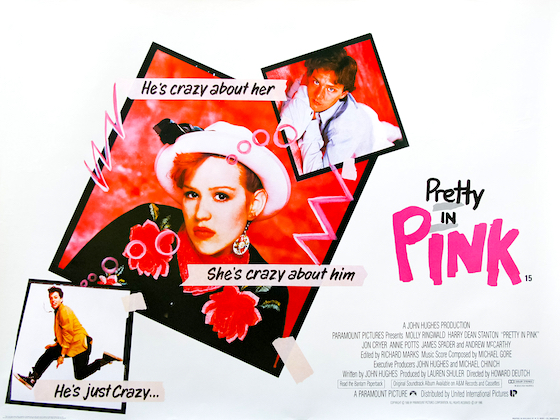
    Pretty in Pink

    (1986)

    Howard Deutch | 97 mins | digital (HD) | 16:9 | USA / English | 15 / PG-13

    Pretty in Pink

    Another John Hughes-penned ’80s teen movie that had passed me by (it’s only in the past few years that I’ve watched The Breakfast Club and Ferris Bueller’s Day Off, and I’ve still not seen Sixteen Candles or Weird Science). This one stars Molly Ringwald as Andie, a non-popular high school girl caught between the affections of her childhood friend (Jon Cryer) and a rich kid who’s suddenly showing an interest in her (Andrew McCarthy).

    No bones about it, plot-wise it’s a pretty standard love triangle romcom; but the devil is in the details, and Pretty in Pink has a lot of likeable ones. For starters, it’s so ’80s. Like, aggressively. Like, if you made a movie set in the ’80s, you wouldn’t make it this much ’80s because people would criticise you for overdoing it. Then there’s the supporting performances. Harry Dean Stanton makes a great ‘movie dad’ — you know, the kind of comforting, supportive father figure you kinda wish were your own. I don’t think I’ve ever seen him in a role like this before. The relationship between him and Ringwald comes across as really sweet and effective without tipping over into saccharine or implausible. Then there’s Annie Potts as Andie’s older best friend, proving she should be known for more than just being screechy and kooky in Ghostbusters. Plus, James Spader makes for a superb villain. It’s only a small role in the grand scheme of the film, but he does smarmy glibness so well.

    Poor Molly Ringwald — she’s fine in the lead, but everyone else is so good they kinda overshadow her in her own movie. Or maybe that’s unfair: Andie is a pretty likeable lead, with a commendable amount of independence and self-worth. Okay, she lets that slip a bit for A Boy, but what teenager hasn’t let such heady new emotions get the better of them? She comes out for the best in the end.

    The only major downside is the rushed third act, which makes the ending feel unearned — a feat that’s almost impressive when the ending is so predictable. It’s actually due to a post-test-screening rewrite and reshoot: in the original version (spoilers!) Andie ends up with Duckie, not Blane. Personally, I don’t think either is right: she should’ve chosen neither of them. As I see it, the film doesn’t really set up her getting back with Blane (presumably because it was a last-minute change), so I don’t buy that; but nor does it do enough to suggest she’d suddenly find Duckie a romantic proposition. They should have settled for being BFFs, and Blane should’ve fucked off. But I guess a romcom where the girl ends up single wasn’t done back then. You’d probably still find it a hard sell today, to be honest.

    4 out of 5

    Pretty in Pink is the 39th film in my 100 Films in a Year Challenge 2022. It was viewed as part of “What Do You Mean You Haven’t Seen…?” 2022.


    House of Gucci

    (2021)

    Ridley Scott | 158 mins | digital (HD) | 2.39:1 | USA & Canada / English, Italian & Arabic | 15 / R

    House of Gucci

    Director Ridley Scott tells the true (ish) story of the behind-the-scenes dramas at Italian fashion house Gucci in the mid 20th century. If you think that sounds like some kind of dull boardroom drama, oh boy, is it not. With the amount of scheming and backstabbing that goes on, it’s more like a variation on The Godfather than a staid piece about people arguing in suits in offices. Oh, those crazy Italians, eh?

    Of course, none of the main cast are Italian. But they are all doing Italian accents. Or what passes for Italian accents in the mind of us anglophones — they sound about as authentic as a Dolmio advert. Or a Mario game. “It’s a-me, Lady Gaga!” Although, once you get over the humour value of that, Gaga is genuinely very good in her Lady Macbeth-esque role as a woman who marries into the family and goads her husband into dominating the business. And then there’s Jared Leto, buried under prosthetics as well as the dodgy accent. Does he know he’s getting laughs with almost every line, or does he think he’s giving a serious dramatic performance? Who knows. Who cares. No one in the rest of the cast is as memorable — even when we’re talking about actors of the calibre of Adam Driver, Salma Hayek, Jeremy Irons, and Al Pacino — but then, I’m not sure there’d be room for that many Big performances. Scott brings his usual pizzazz too, with the well-shot gorgeous locales looking beautiful and elegant. Parts of Italy are just fundamentally beautiful, and you think it would probably be hard to mess up filming them.

    There are plenty of criticisms of the film to be found in pro reviews and viewer comments across the usual sources. Reading them, I don’t necessarily disagree on any particular point. For one thing, it’s definitely too long, and still leaves a load of information to be dumped in the inevitable “what happens next” text at the end. It could also be clearer about what’s going on at times, especially legal stuff, like when they’re suddenly being investigated for financial crimes. That said, it has an energy that often keeps it barrelling along. It’s probably an advantage to not know the real-life events, because it allows the story to unfold without preconceptions about where it’s going, so you’re not waiting for it to get to the bits you know.

    Flaws and all, I had a ball watching it. It may really be a 3-star film in some senses, but I got a 4-star level of enjoyment out of it.

    4 out of 5


  • Paris, Texas (1984)

    Wim Wenders | 146 mins | digital (HD) | 1.66:1 | Germany & France / English | 12 / R

    Paris, Texas

    This was my first experience of a Wim Wenders film, so I wasn’t quite sure what to expect, other than knowing it’s an acclaimed classic that features on many “great movies” lists (albeit usually a bit further down than many of the most famous “great movies” on such lists).

    It starts out almost Lynchian, with a man, Travis (Harry Dean Stanton), wandering out of the desert. Where’s he been? How long’s he been there? No one knows. He ends up in the care of a quirky doctor in the back of beyond — it’s not even your typical American “small town”, but a trailer and a shack in the middle of nowhere. Then his brother (Dean Stockwell) comes to get him, and it becomes a bit Rain Man (a film released four years later, so certainly not an influence) as two estranged and mismatched adult brothers embark on a cross-America road trip because one of them objects to flying. Then they get home, and it becomes a domestic comedy-drama about an absent father trying to reengage with his preteen son, Hunter (Hunter Carson). And then they go off in search of the boy’s mother, Jane (Nastassja Kinski), and it becomes something else again… It almost circles back round to Lynchian, in fact, with a couple of extended sequences in a surreal, almost otherworldly place of work.

    But to keep calling it “Lynchian” is to do Wenders’ work a disservice, because it’s not a copy — indeed, in 1984 Lynch was releasing his Dune, and had yet to embark on most of the films that define “Lynchian” for us. An alternate comparison might be the Coen brothers, at least for the opening section: it’s of a piece with their heightened worlds (the weirdo doctor living in the middle of nowhere) and semi-outlandish stories (Travis reappearing from nowhere). But this was released the same year as the Coens’ debut, Blood Simple, so, again, it’s not exactly a fair comparison. Or if it is fair, it’s backwards: if anyone influenced anyone, it would be Lynch and the Coens drawing on Wenders.

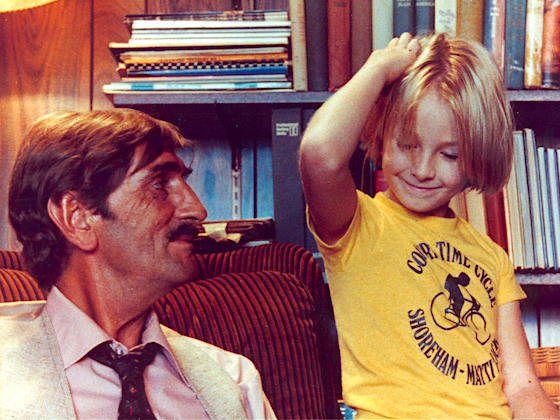
    Father and son

    Setting simple (and kinda inaccurate) comparisons aside, in parts this is a magnificent film. The scene where Travis and Hunter walk home after school ‘together’ borders on magical; a truly superb sequence of father-son bonding. The bit where we first enter Jane’s place of work feels like descending into some previously-unknown alternate world that exists adjacent to our own (as I say: Lynchian). Then the ‘conversations’ with Jane through the oneway glass, especially the first one, are subtly powerful in how they’re shot and performed. When it works, this is a striking, memory-searing movie.

    But then, overall, I found it kinda… not slow, exactly — and I couldn’t necessarily point at which bits I’d cut — but I did wonder if it might benefit from being tighter. Especially the first hour or so, which is mainly about Travis and his brother in a way that doesn’t ultimately feel too relevant to what the film really wants to dig into, which is Travis’s relationships with his son and ex-wife. Of course, his relationship to his brother is adjacent to that, but it’s not as vital. That portion of the film does serve to build up mystery and delay certain revelations, but I wonder if the film wouldn’t be just as effective if that section were pared back somewhat. Apparently filming started without a completed screenplay, the intention being to film in story order and write the ending when screenwriter Sam Shepard had an understanding of how the actors were portraying the characters. That methodology might explain why the narrative shifts and changes so much, I think.

    Through all of this, the film really rests on the shoulders of Harry Dean Stanton. Even when he’s initially taciturn, it’s clear he’s the man to watch; the enigma we must solve. And when we finally learn his history — which is completely at odds to the calm, composed, quiet man we’ve followed throughout the film — it’s… well, I’m not sure what it is. Not necessarily what I was expecting; and yet, what was I expecting? Part of the point of the whole thing, surely, is how much he’s changed, and how that facilitates his final choices. But then, his choices seem based in the man he was, not the man he’s become, so is he right? Maybe; maybe not. I suppose there’s stuff to debate and talk about here, which is often a signifier of a Great Movie.

    An adjacent world?

    As to that, I won’t be adding it to my personal favourites pile right now. But it’s a fascinating, at times incredible, film. I can understand its appeals to a certain kind of cinephile.

    4 out of 5

    Paris, Texas was re-released in UK cinemas at the end of July by Curzon, with the UK debut of a 4K restoration (which is the version I watched. It looks good). There are still some screenings going on, and it’s available to stream on Curzon Home Cinema for £3.99. If you prefer your films free, it’s also on All 4 until the middle of September, but I don’t know if that’s the new restoration or not.

    I do know it was the 40th film in my 100 Films in a Year Challenge 2022, and was viewed as part of Blindspot 2022.

    2022 | Week 22

    Maybe I should’ve called this post “Weeks 21–22”, to ensure that the titles of these roundups had a complete run of weeks throughout the year. But I didn’t actually watch anything new in Week 21 (my only film that week was the Challenge-qualifying rewatch of On the Town), so it seemed inaccurate to include it.

    Week 22, on the other hand, was moderately busy, with this lot…

  • This Means War (2012)
  • To Be or Not to Be (1942)
  • An Unsuitable Job for a Woman (1982)
  • The Pajama Game (1957)
  • The Contender (2000)


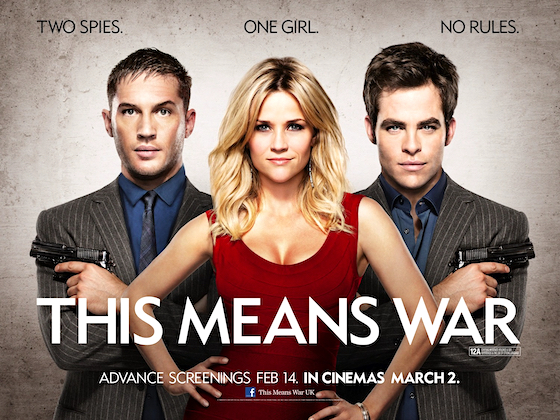
    This Means War

    (2012)

    McG | 98 mins | digital (HD) | 2.35:1 | United States / English | 12 / PG-13

    This Means War

    I bet whoever came up with this thought they were a genius: “spyfi action-adventure + rom-com? It’s the perfect date movie!” Of course, what you actually end up with is a film that struggles to do either part well.

    It stars the unlikely combo of Chris Pratt and Tom Hardy (you definitely can’t imagine Hardy doing a movie like this today) as BFF CIA agents who independently fall for the same woman, played by Reese Witherspoon. Uh-oh. Hilarity ensues as the guys deploy their CIA tricks and tech to influence the relationships. Yeah, it’s the kind of concept that once upon a time sounded like a fun and quirky rom-com, but nowadays seems at best morally dubious, at worst downright creepy. And, indeed, that’s how it plays out, with situation after situation that’s played for laughs but feels a little uncomfortable.

    Of course, the big question is “who ends up with who?” This is one of those films so committed to its storyline, so structured to lead to one correct answer, that… they shot multiple endings so they could decide in post. The one they went with doesn’t feel quite right, but, if you imagine the alternatives, most of them don’t either. Well, I say that: I don’t think it’s really a spoiler to tell you that Witherspoon ends up with one of the guys, when the correct choice would’ve been “neither of them. Run from the stalker-ish CIA agents! Find a normal man!”

    2 out of 5


    To Be or Not to Be

    (1942)

    Ernst Lubitsch | 99 mins | digital (HD) | 1.37:1 | USA / English | U

    To Be or Not to Be

    Ernst Lubitsch’s satire concerns an acting troupe in occupied Poland who become mixed up in a soldier’s efforts to capture a German spy before he can undermine the resistance. Made while World War II was still in full force, the film attracted criticism in some quarters for being a comedy about such tragic and ongoing real-life horrors. Lubitsch defended his work, writing to one critic to say, “What I have satirized in this picture are the Nazis and their ridiculous ideology. I have also satirized the attitude of actors who always remain actors regardless how dangerous the situation might be, which I believe is a true observation.” He’s right, of course; at least about the first part. Ridiculously, such debates about whether you can satirise the Nazis persist to this very day — just look at some of the responses to Jojo Rabbit.

    Lubitsch’s film is subtler than Waititi’s, though still undoubtedly a comedy. I mean, with its plucky resistance members taking occupying Nazis for fools, I couldn’t help but think of this as a classier version of ’Allo ’Allo… but I’ve never actually seen a whole episode of that show, so don’t hold my comparison in too high a regard. Whereas that sitcom is famous for its catchphrases and bawdy gags, To Be or Not to Be is less overt, preferring to paint the Nazis as fundamentally incompetent and derive its humour there.

    Despite the distaste some felt, it obviously works for most people, as it appears on several “great movies” lists, not least both the IMDb and Letterboxd Top 250s. To be honest, I feel like I need to give it another spin to digest it more fully, but these thin thoughts will have to suffice for now.

    4 out of 5

    To Be or Not to Be is the 35th film in my 100 Films in a Year Challenge 2022. It was viewed as part of Blindspot 2022.


    An Unsuitable Job for a Woman

    (1982)

    Christopher Petit | 94 mins | Blu-ray | 1.85:1 | UK / English | 15

    An Unsuitable Job for a Woman

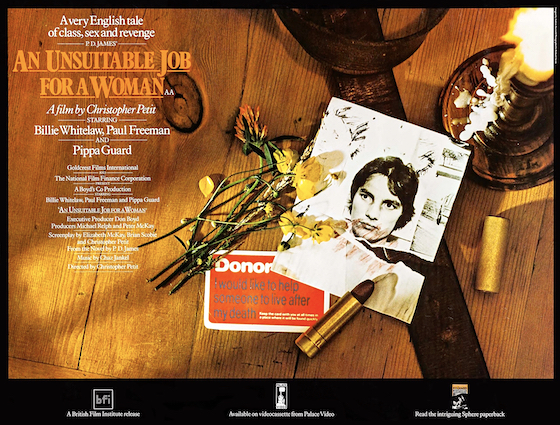
    I’ve never read the P.D. James novel on which this is based, but I’m assured it’s longer and more complex — the film rather lacks for plausible suspects, making the central murder mystery thoroughly guessable.

    That said, I’m not sure co-writer/director Christopher Petit is all that concerned with producing a true whodunnit. Put another way, I think he’s more interested in the characters, who happen to be involved in a mystery, than in the mystery itself. Which is fine, but I’m also not sure the film does as good a job as it could digging into those characters. I mean, the way the kinda-naïve young investigator becomes obsessed with the deceased subject of her inquiries — almost falling in love with him, it seems, like some kind of gender-flipped riff on Laura — is more nodded at than explored.

    In the end, I felt like I wanted to like the film more than it was actually giving me things I needed to really like it. It’s not bad, but perhaps it could have been great.

    3 out of 5


    The Pajama Game

    (1957)

    George Abbott & Stanley Donen | 101 mins | digital (SD) | 4:3 | USA / English | U

    The Pajama Game

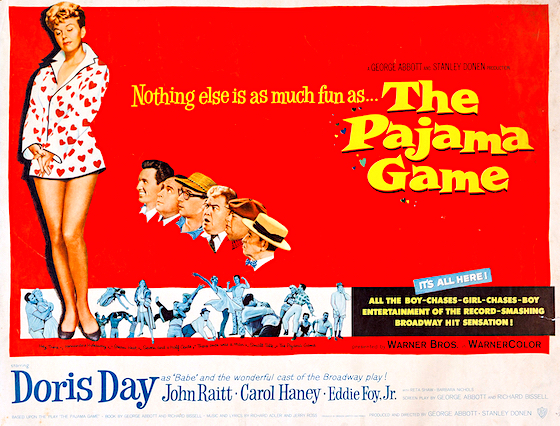
    This minor musical is primarily of note for two things: the original Broadway staging featured the choreography debut of one Bob Fosse; and it features the song Hernando’s Hideway — if you don’t recognise the title, I’m sure you’ll recognise the tune. I had no idea this is where it originated.

    The story is about a pay dispute in a pyjama factory (given the current strikes and arguments here in the UK, you might think I watched this deliberately. Nope, total coincidence). On one side there’s the leader of the union’s grievance committee (Doris Day, one of just a handful of replacements made to the original cast when they transferred the stage production to the screen). On the other, the new superintendent (John Raitt, clearly a success on Broadway but less so on film). Of course, they fall for each other, before the pay conflict tears them apart. Can their love overcome such trials? What do you think?

    I saw someone describe The Pajama Game as an overlooked classic, which is taking things a bit far. It’s mostly likeable and quite fun, but rarely transcends that level. The undoubted highlight is Fosse’s choreography, which gives even the lesser numbers a polished dynamism. There are a couple of decent songs, but nothing really stands out, bar the aforementioned. It gets a bit too farcical in places, with some of the storylines ultimately taking a turn into very broad territory that feels misjudged. One primarily for genre fans only.

    3 out of 5


    The Contender

    (2000)

    Rod Lurie | 126 mins | Blu-ray | 16:9 | USA, Germany & UK / English | 15 / R

    The Contender

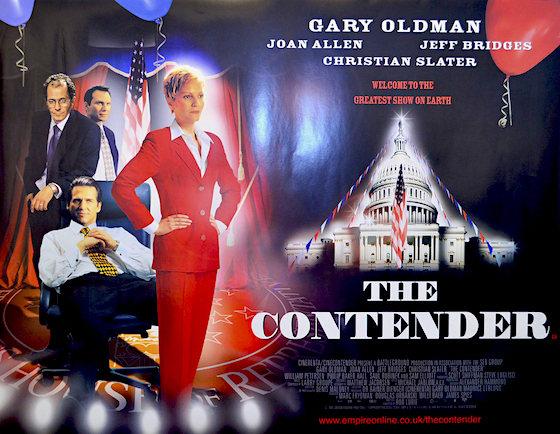
    I only picked this up on disc because it was part of a bundle of other titles I really wanted, but it also sounded like the kind of thing I’d like. Strange that I’d not heard of it before, then. I guess some films just get lost in movie history, especially when they’re a lesser member of a whole wave of movies. This is a political thriller of the kind they seemed to make quite a few of during the ’90s and into the early ’00s, but don’t really do anymore. I guess they exhausted the well, especially after 156 episodes of The West Wing.

    In this case, the story revolves around Laine Hanson (Joan Allen), the first woman nominated to be Vice President (it only took another two decades for that to happen in real life). There’s the familiar battle between the Democrats to get her confirmed, and the Republicans who’d like to do anything to thwart the Democrats. Amongst the scheming between the two sides, the big revelation is that Laine possibly engaged in a scandalous sex act while in college. She refuses to confirm or deny the rumour — it’s her personal business and shouldn’t affect her appointment. Except, of course, it does.

    Various other allegations come and go throughout the confirmation process, the two sides continuing to go back and forth in their attempts to win. It’s not necessarily the point the film is making, but it’s a reminder that politics is all a game to those involved, even as it can have serious effects on the lives of the rest of us. More overtly, the film tackles the different standards a woman is held to when trying to take public office. Fortunately, it’s not as overbearing with that as it could be. Indeed, all round the film is fairly understated. It’s a solid, unflashy, procedural-based kind of thriller.

    That is until the end, when it throws away the understatement for a grandstanding speech based around a fundamental belief in the greatness and goodness of the American political system. It would be heavy-handed in any circumstance, but the past few years (if not longer) of American politics have shown it for the total lie it always was. It doesn’t wholly undermine what’s gone before, but it does end the film on a sour note.

    4 out of 5


  • Bank Holiday (1938)

    aka 3 on a Week-End

    Carol Reed | 82 mins | digital (SD) | 4:3 | UK / English | U

    Bank Holiday

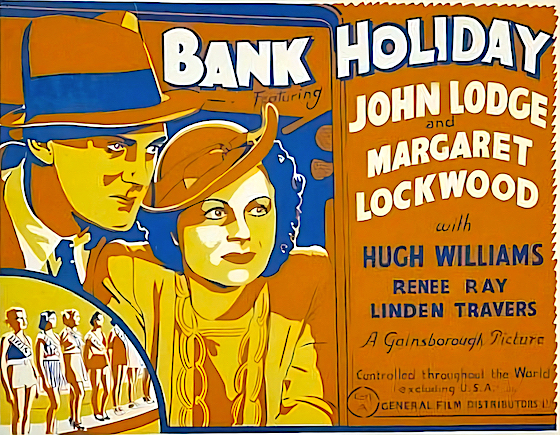
    You’ll be forgiven for not having heard of this one, even though it’s directed by Carol Reed (The Third Man, Oliver!, etc) and stars Margaret Lockwood (The Lady Vanishes, etc), because it seems to be pretty obscure. I only discovered it when browsing the online offering of UK digital channel Talking Pictures TV, and it mainly caught my attention because that was just before the weekend of the Queen’s Platinum Jubilee, when we had a double Bank Holiday. “What appropriate viewing,” I thought. Well, sometimes chance smiles on us, because this definitely doesn’t deserve to be so overlooked.

    As the title indicates, the film is set on a Bank Holiday weekend — the August one, to be precise — and, this being the interwar years (i.e. well before the ease of popping overseas for a quick holiday), city folk flock to the seaside en masse. In terms of the film, a variety of melodramatic and comic plot lines unfurl for an array of characters. The primary one follows a nurse (Lockwood) getting away for a rare holiday with her young fella (Hugh Williams); but he’s not planned it very well, and she’s distracted by thoughts of a man (John Lodge) who was suddenly made a widower on her last shift. That particular storyline gets a bit heavy (death in child birth; attempted suicide), but its balanced by comic antics in other plot lines. Overall, the mix of drama and humour gives a “something for everyone”, all-round entertainment feel that you tend not to get within a single work anymore.

    Two outta three ain't bad

    Nowadays, the film arguably has greatest value as a snapshot of 1930s British society. There’s a degree to which it feels ‘of its time’ as a work of cinema, but not in a terribly dated way. Indeed, while some things have changed a lot in the ensuing nine decades, but there are definitely behaviours, attitudes, and meteorological phenomena that’ll be familiar to any British viewer and their experience of a summer holiday weekend. And it remains entertaining in its own right. The comic bits still mostly work. Even when they’re not hilarious, at least they’re not embarrassing. The drama is similarly solid: the handling of romantic relationships remains relatable, rather than feeling terribly old fashioned (in fact, it had to be edited for release in the US due to its implication that an unmarried couple had a sexual relationship. And they think us Brits are the prudish ones…)

    To call Bank Holiday a “forgotten classic” or similar would be to overstate the point somewhat, but it does seem to be a largely forgotten film that merits being better known.

    4 out of 5