Kidnapped (1917)

2018 #159
Alan Crosland | 64 mins | DVD | 4:3 | USA / silent (English)
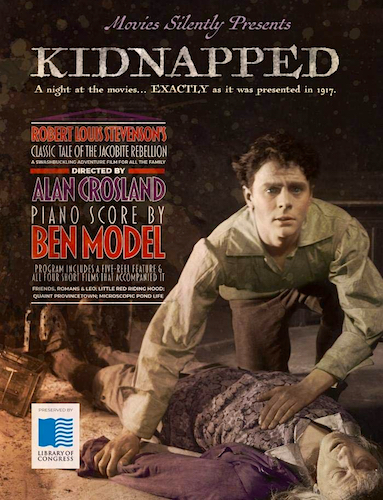
Kidnapped DVD

The first screen adaptation of Robert Louis Stevenson’s famous adventure yarn, the 1917 film of Kidnapped was believed by some to be lost. It was nothing of the sort, having been held in the Library of Congress’ collection since the ’40s. That’s not readily available to most of us, of course, but thankfully there are individuals like Movies Silently’s Fritzi Kramer who have the dedication to not only unearth these things, but to then spend the time and effort required to put together a DVD release. Such enterprises aren’t achieved through hard work alone, however, hence a Kickstarter campaign that was thankfully successful. And for those who missed out on that, the finished DVD is now available to purchase from Amazon.com. (For the benefit of UK readers, the cost of importing it currently comes to £26.12, though if you’re lucky it might slip through customs unnoticed and Amazon will one day reimburse you £4.35. Or you could wait for the exchange rate to improve, but, given Brexit, hahaha, good luck with that.)

Anyway, what of the film itself? Running just over an hour, it’s a brisk dash through Stevenson’s story. I’ll cop to not being familiar with the original tale, but apparently this version sacrifices no more than an average adaptation, despite that comparatively speedy running time. For the benefit of those as unacquainted with the text as I: it’s the story of David Balfour (Ray McKee), a young man who should inherit the Scottish castle inhabited by his uncle Ebenezer (Joseph Burke), but the latter has no intention of giving it up, instead arranging for David to be kidnapped (hence the title) and carted off to The Colonies.
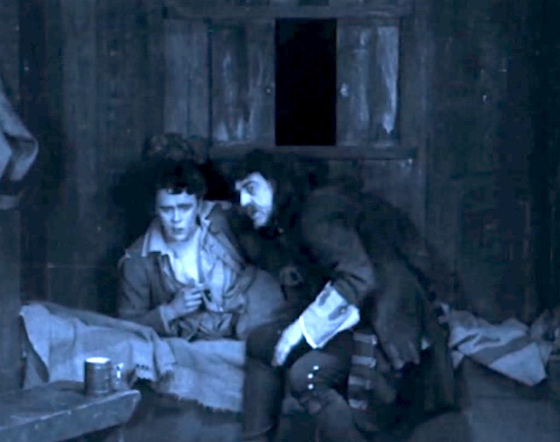
“Yep, kid — you've been napped!”

Chance sees David moved up from being cargo to serving as the ship’s cabin boy (what to do when the cabin boy brings you a dirty cup? Accidentally murder him, then in his place promote the young lord you’ve kidnapped to sell as a slave, of course), which allows him to run into adventurer Alan Breck (Robert Cain), who’s found his way aboard the same vessel (Breck’s introduction: “I’m vexed, sir. Ye’ve sunk my boat, and drowned my man. Be so kind as to land me at once!”) The ship’s dastardly crew plot to off Breck, but he and David team up, escape, and embark on a journey to reclaim the young Balfour’s inheritance. Along the way there’s swashing of buckles and encountering of real-life historical events, albeit bent slightly to suit the plot, and bent again to suit the moral mores of the film adaptation, which was advertised as being “for all the family” and “guaranteed censor proof!”

While some bits may look silly with today’s eyes (or maybe they did at the time too, I don’t know — did a sailor dying instantly from being shot in the arm ever play well?), there’s plenty of adventurous fun to be had, and the production values are good. Mostly. I mean, at one point our heroes are taken to meet a Highland chieftain who lives in a cave with a window and dresses like a lumberjack in a skirt, but what’re you gonna do? Caves-with-windows aside, most of the sets aren’t half bad, and the location work is really good — it must’ve been shot somewhere in the US, but with bare trees, snow, and a genuine castle, it looks Scottish enough. While the action sequences obviously aren’t going to challenge a modern blockbuster for their creative choreography, there’s some effective swashbuckling when David and Breck escape the ship, and a decent chase through the snow thereafter. Cain definitely looks the party of a dandyish adventurer, and acquits himself well where it counts too — by which I mean, he seems pretty handy with a sword.

Swashes being buckled

Kidnapped may not be an unheralded classic begging for rediscovery, but it’s a fun jaunt nonetheless. Proof, if it were needed, that there’s often worth to be discovered by digging into the more forgotten and esoteric corners of film history.

4 out of 5

Kidnapped was the feature presentation of Conquest Program No.9, which you can read more about here. It is now available on DVD from Amazon.com.

Christopher Robin (2018)

2018 #180
Marc Forster | 104 mins | cinema | 2.39:1 | USA / English | PG / PG

Christopher Robin

Disney appear to have found a rich seam to mine for box office gold when it comes to live-action remakes of their most popular animated properties. Some have been variations different enough to almost stand on their own two feet; others have been straight-up remakes, because why mess with success. Christopher Robin is, perhaps, the most original so far. There have been many Winnie the Pooh adaptations down the years, as well as original movies and TV series featuring the same characters, so rather than remake any of those, here Disney have set about telling another brand-new story (although it begins with an adaptation of one of A.A. Milne’s very best Pooh stories, which is nice). This new tale justifies its live-action form by moving beyond the confines of the Hundred Acre Wood; and it also, smartly, trades on our own childhood nostalgia for the silly old bear.

We all remember Christopher Robin as a small boy, but small boys grow up, and now Christopher (Ewan McGregor) is an adult in post-war London with a wife (Hayley Atwell) and young daughter, Madeline (Bronte Carmichael). He works for a luggage company that is facing the prospect of firing most of Christopher’s team, unless he can find 20% of cuts; so instead of going away with his family for a nice weekend in the country, he must stay and work — again. With both his personal and professional lives on the brink of collapse, Christopher is very stressed.

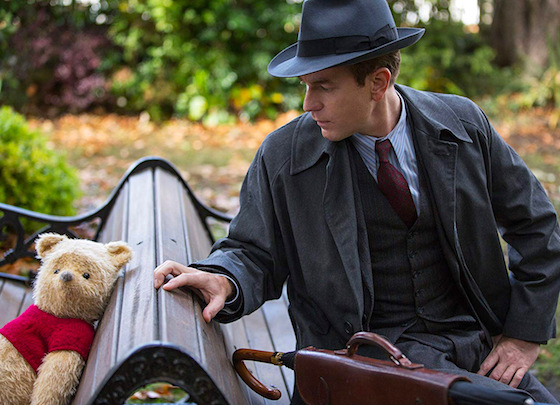
Pooh in the park

Meanwhile, in his childhood playground of the Hundred Acre Wood, Winnie the Pooh (a convincingly cuddly CGI creation, given voice by Pooh’s regular performer, Jim Cummings) awakens one morning to find all his friends are missing. Deeply concerned, he wanders through the door through which Christopher Robin used to appear, and finds himself in London, where who should he bump into but his old childhood friend — now all grown up and serious. But Pooh is still a childlike innocent, of course (don’t worry, they haven’t given him a Ted-style makeover), and maybe that attitude is just what Christopher needs.

Having said they haven’t made Pooh into Ted (thank goodness — I like Ted, but that really isn’t the spirit of this franchise), there’s more than a little whiff of Paddington here. It’s not the exact same plot, but the overall theme — of a naïve but good-hearted bear arriving to help humans overcome their problems with kindness — is certainly similar. Indeed, many beats of the story that unfolds are familiar — the climax is somewhat borrowed from Mary Poppins, for example; and you’ll know how every subplot will end as soon as it’s introduced. For some viewers, this will render the film pointless and clichéd. For others… well, it’s not really the point.

The joy of Christopher Robin is it takes those recycled elements and filters them through the prism of Pooh. If you too loved Pooh as a child, or an adult, then Christopher’s journey to rediscover that connection is relatable and supportable. And it’s simply a delight to spend time with the characters, as Pooh casually (and accidentally) dispenses heartfelt wisdom that both delights and, occasionally, may even cause you to think.

Tigger on the loose

The other denizens of the Hundred Acre Wood do pop up too: miserable old Eeyore (Brad Garrett) stole the show for the audience I watched with; Tigger (also Cummings, after test audiences objected to Chris O’Dowd’s English-accented take on the character!) is as exuberant as ever; and Piglet (Nick Mohammed) remains the voice of caution and cowardice, and as sweet as ever. As “the main ones”, those four get the most to do in the story, but there are also appearances from Rabbit (Peter Capaldi), Owl (Toby Jones), Kanga (Sophie Okonedo), and Roo (Sara Sheen) to complete the set; and with actors that good providing the voices, they make their mark.

But, really, this is all about Pooh. Well, Pooh and Christopher Robin — the title’s not inaccurate. For those who don’t feel a connection to the bear of very little brain, I guess the familiarity of the narrative he’s part of in this film will drag down enjoyment — this, I presume, is why the reviews have been somewhat mixed. But, in my opinion, a little Pooh goes a long way — as Christopher says, he may be a bear of very little brain, but he’s also a bear of very big heart. The combination makes for a film that is amusing, sweet, and thoroughly delightful.

4 out of 5

Christopher Robin is in UK cinemas now.

Zatoichi and the Doomed Man (1965)

aka Zatôichi sakate-giri

2018 #157
Kazuo Mori | 78 mins | Blu-ray | 2.35:1 | Japan / Japanese

Zatoichi and the Doomed Man

The eleventh film in the Zatoichi series is perhaps the first one that could legitimately be described as bad. It’s not outright terrible, but the plot doesn’t hold together very well, and there are only a couple of redeeming scenes.

The first of these is at the very start, when the film opens on the striking image of Ichi receiving lashes as punishment for an initially-unspecified crime. They seem almost a minor inconvenience to our hero, however, who is more concerned with questions he has for his punisher about this cellmate of the previous night. It turns out he was the eponymous “doomed man”: a fellow who’s been incarcerated on a murder charge, but claims he’s innocent, and urges Ichi to track down the gang bosses who can vouch for him. Uncharacteristically, Ichi resolves not to help, but fate has other plans…

That reliance on fate to marshal Ichi around led me to dub this Zatoichi and the Coincidental Coincidences of Coincidence. He’s constantly stumbling back onto the film’s plot even when he tries to avoid it, or bumping into the people he needs to find, or bumping into people who happen to be connected to other people he happens to know. It’s easily the most poorly-constructed story of the series so far. That’s not limited to its dependence on coincidence, either: half the stuff it sets up doesn’t even pay off or come together in a reasonable fashion. Although the initial “wrong man” setup is enticing, rather than do anything interesting or different with that, it just turns out to be the series’ usual: some bosses have betrayed the chap as part of a scheme to control the area. And to rub salt in the wound, we learn about this in a scene where one conspirator explains what they’ve already done to his co-conspirator. Oh dear.

Shenanigans

It’s a very slight story — not even enough to sustain the brief sub-80-minute running time, it would seem, as we’re ‘treated’ to an array of unrelated shenanigans. The primary one is a young man who starts following Ichi around, then later impersonates the famed blind masseur for financial gain — and, supposedly, for comic effect. He’s played by Kanbi Fujiyama, who (according to Chris D. in his notes accompanying Criterion’s release) “was a noted funnyman in mid-to-late-sixties Japan, appearing in sidekick roles in many of Toei studios’ ninkyo (chivalrous) yakuza films.” Reading other reviews, a lot of people seem to find his schtick hilarious, but I thought he was the most irritating comic relief character the series has yet foisted upon us — and he’s basically the co-lead of this instalment, so we get to see far too much of him. He eventually turns out to have a connection to the main plot too, which is emblematic of the whole movie: the connection is a complete coincidence, dumped on us via random exposition late in the game, and then not paid off in any way. It’s entirely pointless. At one point he disappears from the film entirely. Due to how it was handled, I began to wonder if we were meant to infer he’d died off screen. But then he turns up again in the epilogue, as it merely to confirm that wasn’t the case.

That stands in opposition to the film’s main plot — you know, the titular one about the “doomed man” — which is resolved offscreen while Ichi’s already going on his merry way. It’s just one aspect that feels rushed (despite the short running time and ‘comedy’ distractions), or as if scenes were deleted. This is particularly noticeable as it pertains to the female interest, Oyone (Eiko Taki). Ichi rescues her thanks to a little trick she pulls, but then she seems ungratefully indifferent to him… until she’s suddenly hanging around near the end, hoping (as the women in these films always do) that he won’t run off while her back’s turned. Which is exactly what he does, of course.

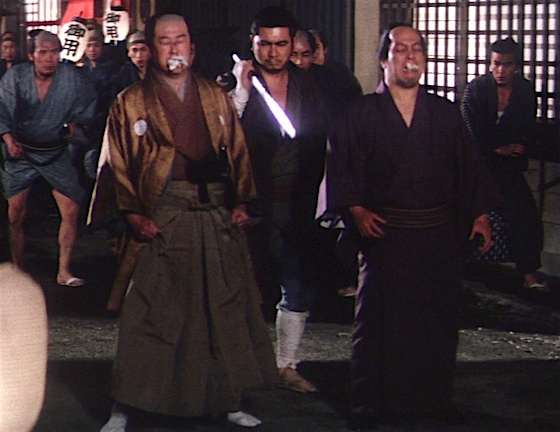
Zatoichi with the doomed man

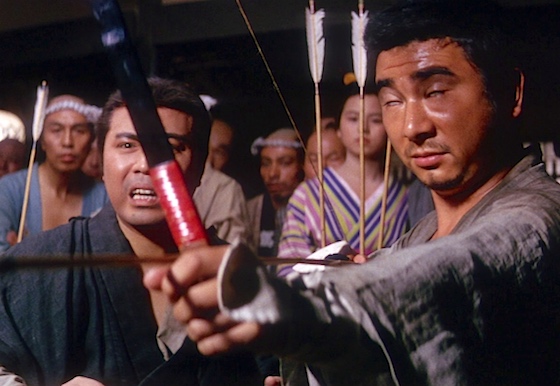
You may remember I said there were some good bits. One is the pre-titles, which I already partly discussed. They’re effective thanks to some strong photography from Hiroshi Imai and the way they flip around with our expectations to create mystery (even if the reason Ichi’s receiving those lashings is completely irrelevant to the rest of the film). The other is the finale. As usual, the movie climaxes with Ichi having to take on an army of goons single-handed, but this one adds some spice with a seaside location, strewn with fishing nets (which get brought into the action) and covered with an early morning sea mist. It’s also beautifully shot, and there’s nicely choreographed combat. It’s easily the highlight of the film.

Other reviewers are not so harsh on The Doomed Man, going so far as to call it a “fine entry” in the series, or “thoughtful [and] hilarious”. And yet, those reviews can’t seem to help spotting the flaws in spite of themselves. Walter Biggins’ review at Quiet Bubble is a series of questions about why the film is so poor, with the last query being the most baffling of all: “why, despite all this opacity all my questions, did I end up liking this movie so much?” I’ve no idea, mate. Several other reviews make comments along the lines of, “Ichi behaves uncharacteristically here, but there must be a good reason for that” — or it’s just crappy, inconsistent writing. At least Letterboxd users agree with me: it’s ranked 24th out of the main series’ 25 films (the only one lower is the 23rd film, Zatoichi at Large — which, incidentally, is by the same director).

“Here's the end of the plot — go give it to someone and get this over with!”

For me, The Doomed Man is by a clear margin the weakest Zatoichi film so far. As nowadays I very much look forward to my regular appointments with Ichi, being so underwhelmed left me feeling disappointed: it wasn’t worth the wait since the last film, nor was it really enough to tide me over until the next one. For those reasons I considered giving it a lowly two stars, but that felt a bit harsh: it certainly isn’t without merit (the climactic fight is a stunner), and it’s always nice to spend time in Ichi’s company, even if he is being inconsistently written. Nonetheless, it only earns that third star by the skin of its teeth. This is a “for completists only” instalment.

3 out of 5

When Harry Met Sally… (1989)

2018 #77
Rob Reiner | 95 mins | streaming (HD) | 1.85:1 | USA / English | 15 / R

When Harry Met Sally...

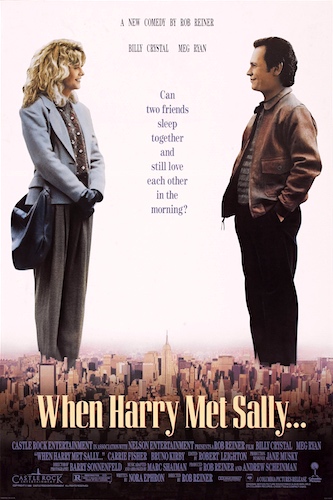
Written by the queen of the romcom, Nora Ephron, When Harry Met Sally is almost a deconstruction of the genre: its titular protagonists are just friends, but (the film asks) can a man and a woman ever be ‘just friends’? It perhaps feels like a dated question today, when almost 30 more years of gender equality have pushed heavily towards the answer being “yes, of course”, but that doesn’t matter for two very good reasons: first, the film still stands as an insight into the nature of relationships in the ’80s and ’90s; and second, it’s just a really good film.

It begins in 1977, when Harry (Billy Crystal) and Sally (Meg Ryan) are recent graduates who meet through a mutual friend. They soon go their separate ways, and then the film catches up with them in 1982, and again in 1987 — and that’s just act one. It’s an interesting opening gambit to chart the pair’s backstory. It dodges the usual romcom thing of people who’ve just met falling instantly in love, but also does more than introducing us to two friends and telling us “they’ve always been friends” — it shows that friendship. I don’t think I’ve read anyone else talk about this part of the film, I guess because it really ‘gets going’ in the ’87 segment, but I think it’s an interesting way of beginning things, and gives a different grounding to the relationship drama we then see unfold.

It’s an immaculately constructed film all round, both on a macro and a micro scale. For the latter, there’s a single-take four-way phone call between the two protagonists and their respective best friends that is a thing of beauty (and apparently took 60 takes to get right!) It also manages to make New Years and Auld Lang Syne feel relevant to the plot, rather than just an obvious big occasion on which to set the finale. That’s a neat trick to pull off. Even the seemingly-random interludes showing interviews with long-married couples have a pay-off at the end that, once again, reiterates my point about how put-together this is.

Just friends...?

On that macro scale, it again subverts the usual romcom structure simply by having the characters be hyper-aware of the possibility they could sleep together, and regularly discussing whether they should or will. They’re not just bungling through this relationship, happening to fall into all the usual clichés, like so many romcom characters before and since — instead, they’re actually thinking their way through it, aware of the pitfalls. And yet they fall into some anyway, and the film does sometimes follow predictable structure and does hit some of those clichés — but it always manages to make them ring true.

This truthfulness — about male-female friendships, mainly — is probably the film’s biggest asset. Is it still accurate about those dynamics almost three decades later? Despite what I said earlier, maybe it is. And even if it isn’t, I reckon it was bang on point for the ’80s and ’90s, and isn’t that enough? It tells you about the time it was made, even if it doesn’t tell you about today. It all adds up to mean that, when the inevitable happens at the end, it doesn’t feel like an obvious outcome, but something earned and emotional.

4 out of 5

Zatoichi’s Revenge (1965)

aka Zatôichi nidan-giri

2018 #135
Akira Inoue | 84 mins | Blu-ray | 2.35:1 | Japan / Japanese

Zatoichi's Revenge

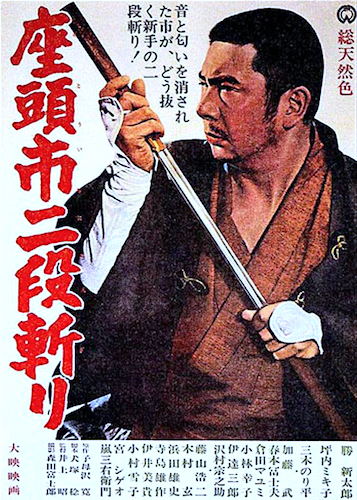
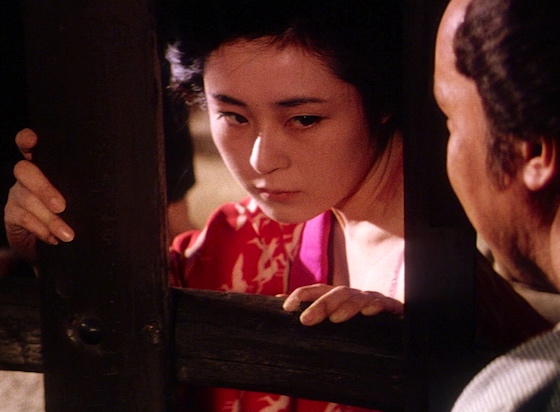
In the series’ tenth instalment, our favourite blind masseur-cum-master swordsman, Zatoichi, arrives back at the village where he was trained as a masseur, and decides to pop in to see his old sensei, Hikonoichi. Much to his dismay, Ichi discovers that Hikonoichi was slain by an unknown murderer some months ago, and his daughter has been sold into prostitution to repay his debts. She’s not the only one, though: the local gang boss has basically tricked everyone he can into giving their daughters to his brothel, mainly so the corrupt magistrate has a supply of virgins to deflower. It’ll come as a surprise to no one that they had a hand in Hikonoichi’s murder too. Naturally, Ichi is not impressed by any of this, and his revenge is twofold: for his old master they callously murdered, and for what they’ve tried to do to his daughter since.

Said revenge is more than the series’ usual slashathon, though that does come in the end. First, though, Ichi methodically and coldly humiliates the cowardly villains, which is no less than they deserve. When they manage to give Ichi the slip and put their army of goons in front of him, he kills as many as he must to get back to the bosses. Then, he escorts the villainous pair in front of their victims… before wordlessly cutting them down. Revenge indeed.

Caged girl

As all the above should make clear, it’s a very dark film thematically. There’s some of the usual comedy sprinkled in now and then, almost as a respite from the seriousness of the main plot. Ichi gets up to some of his other regular antics as well, such as exposing a cheating dice game. This one’s a bit different, however, as he’s already befriended the dice roller, Denroku “the Weasel”. It’s a nice twist on the usual format to have Ichi being chummy with the guy he’d usually expose, and Denroku has a bigger role to play than just that, almost becoming Ichi’s sidekick at times. He’s just one of a strong supporting cast, another standout of which is Denroku’s cheery young daughter, Otsuru, one of the few people who gets one over on Ichi (however briefly).

Director Akira Inoue makes his series debut (it’s the only one he did, though he later helmed six episodes of the TV series), and he makes a mark. It’s a classily directed instalment, but with some visual exuberance (overexposed-looking flashbacks; wild handheld camerawork when a good inspector searches the bad magistrate’s office), as well as some other scenes that are more simply but nicely staged (like when Ichi and Otsuru are suddenly attacked from behind and Ichi cuts down the assailant without even looking).

A dicey situation

Revenge isn’t perfect: there’s a “seen it all before” aspect to Ichi being surrounded by dozens of faceless goons who he proceeds to slaughter while trying to get to his real target, not to mention the series’ other repeated scenes and plot points. This aspect hasn’t gone unnoticed by other reviewers: J. Doyle Willis at DVD Talk accuses it of having “dips where the formula is a bit too tired and predictable”, though notes that “the obviousness of similarity/repetition strikes you more if, like me, you were watching the films back to back.” Paghat the Ratgirl puts it thus: “we have to decide if on the given day it all seems like the same Ichi film we’ve already seen time & again, or if every variation of the same story isn’t as satisfying as any other sort of ritual event.” Ritual event is quite a good way of describing it, I think. Remember, these films were made in an era before home video, so you couldn’t just watch the previous ones again on DVD. Therefore I would guess it’s probably quite deliberate that it repeats some of the same tropes and scenes — it’s a conscious “you know what you’re getting” device. Other series, like Bond, do the same thing. It’s part of the joy for fans to tick off the expected elements.

(Incidentally, for some reason this particular film seems to have inspired some particularly good writing about the series as a whole (perhaps because it’s the tenth movie). The pieces from Weird Wild Realm and Quiet Bubble are worth a read for their general view of the whole series as much as for their opinions on this particular instalment.)

A dish best served cold

Repetitious or not, there’s a lot of really great stuff in Zatoichi’s Revenge to mark it out as another superb entry in the series. I feel like I say something along those lines in almost every review, but the series is on a real winning streak at this point — by example: I’ve placed the last five films from #2 to #6 on my running ranking (with the first film seemingly unassailable as the series’ best). Long may it continue… though if Letterboxd users’ rankings are anything to go by, the next film is where the bubble bursts.

4 out of 5

Rocky III (1982)

2018 #138
Sylvester Stallone | 100 mins | Blu-ray | 1.85:1 | USA / English | PG / PG

Rocky III

It’s the
eye of the tiger, it’s the thrill of the fight
Risin’ up to the challenge of our rival
And the last known survivor stalks his prey in the night
And he’s watchin’ us all with the eeeeyyyyeeee…

of the tiger.

Sorry, got swept up in the moment there!

Yes, this is the Rocky movie where that song, so associated with the franchise, finally makes its appearance. It’s also where the sequels are believed to start going down hill (assuming you rate Rocky II, anyway), though Stallone himself was once asked to score the films and gave this 9 out of 10. I don’t know if I’d go that far, but I liked it.

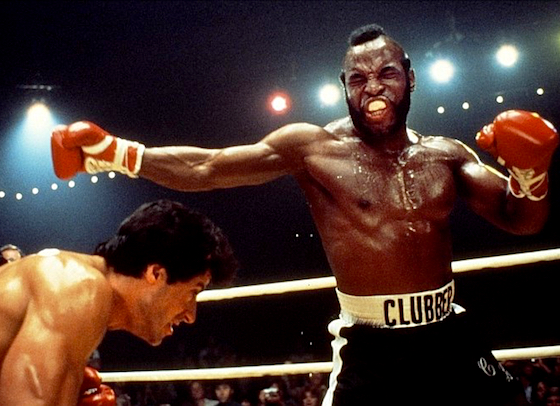
Picking up on Rocky II’s cue, this film also begins where the last one left off — in this case, that’s with Rocky just about beating Apollo Creed in their rematch. We’re then led through the next few years of Rocky’s life via an excellent five-minute montage, which shows his continued success and massive fame, and, simultaneously, the rise of Clubber Lang (played by Mr. T) through the boxing ranks, with one goal: beating Balboa. All of that’s conveyed with just images soundtracked to Eye of the Tiger. It’s a great bit of filmmaking — conveying story economically and clearly through pure imagery — a level of artistry and accomplishment you don’t expect to encounter in the third movie in a boxing franchise.

Rocky and Apollo training

So, after all that success, Rocky is set to retire, until Lang goads him into one more bout. What Rocky doesn’t know is that his trainer, Mickey (Burgess Meredith), has been protecting him, only arranging soft fights he thinks Rocky can win; but Lang is a real force, one Mickey doesn’t think Rocky is up to fighting. Determined to prove his worth in the ring, Rocky goes ahead anyway, but, with distractions from his personal life weighing down, he loses badly. A rematch seems off the cards, until an offer of help comes from an unlikely source: Rocky’s erstwhile nemesis, Apollo Creed (Carl Weathers).

Rocky III is much more action orientated than the first two films. Those were almost social dramas that happen to be about someone who boxes, while this is a sports movie through and through. Stallone once confessed he’d run out of ideas after the first two films, which is why this and Rocky IV focus so much on the fights and training. It’s odd he should say that, because there’s definitely something here about how fame has changed Rocky’s life. It’s more something that’s alluded to rather than being examined by the story — used as background and ‘dressing’ rather than being central to the narrative — but it suggests that, if Stallone had really wanted to add a different dimension to the film, there was a storyline staring him in the face.

It feels appropriate that this was the first Rocky released in the ’80s: our down-and-out coulda-been-a-contender hero is now rich, dressing smart, living in a big house with a nice lifestyle. The whole thing feels like it’s left behind gritty realism for slick aspirational success. But it’s not a completely empty experience, generating emotional attachment from Rocky’s relationships — not only with his wife and young son, but also Mickey and, to a somewhat lesser extent, Apollo Creed. Plus the action and montages are slick and exciting, making this perhaps the most adrenally satisfying of the series to date.

Taking a Clubbering

It’s also quite smart to reposition Rocky as an underdog, make him need his hunger again — there’s not much satisfaction in watching the story of how the best in the world beats someone who isn’t the best! Our hero needs to be challenged, and the film definitely gives him that. That’s the same as the preceding movies, but what’s different here is that it’s a purely sporting challenge, rather than a life one. There are developments in Rocky’s personal life that have a big effect on him, sure, but they’re intrinsically tied to the sporting aspect.

If the first two films are a mirror image of each other, this is something different. It lacks the grit or depth of those two, but still entertains, albeit in a somewhat more superficial way. Giving it a title-mirroring three stars feels a bit harsh, because I did rather enjoy it, but its straightforward focus on the action in the ring means it’s not on the same level as the first two. That said, I’d wager it’s the most effortlessly rewatchable Rocky so far.

3 out of 5

“Christmas in July” Review Roundup

Being someone who lives in the northern hemisphere, and up towards the top of it too, we celebrate Christmas at, y’know, Christmas. But for people who live in places where 25th December falls in summery weather, all the trappings of the festival don’t feel so appropriate. Hence at some point someone conceived of “Christmas in July”.* I don’t know when — a long time ago, probably — but I first encountered the concept a year or two back.

Anyway, I don’t think it’s celebrated on a specific date (it’s just a thing some people do some places), but it turns out there is a “Christmas in July” in London — a great big marketing event, self-described as “the ‘London Fashion Week’ of Christmas press launches.” Well, what could be more Christmassy than massive commercialisation? That’s occurring today and tomorrow, and seemed as good a point as any to post this selection of leftover reviews from the festive viewing I enjoyed seven months ago.

In today’s roundup:

  • Elf (2003)
  • Scrooged (1988)
  • It’s a Wonderful Life (1946)


    Elf
    (2003)

    2017 #173
    Jon Favreau | 93 mins | streaming (HD) | 16:9 | USA / English | PG / PG

    Elf

    Regarded by some as a modern Christmas classic (though it’s 15 years old now, so I’m not sure if “modern” still applies), Elf is about a human raised as one of Santa’s elves (Will Ferrell) who travels to New York to find his real dad (James Caan), in the process spreading Christmas joy with his charmingly innocent view of the holiday.

    An early starring role for Ferrell, the film is more concerned with letting him get up to funny antics than it is with, say, building fully rounded character arcs — Caan goes through his inevitable redemption in the space of one cut. It’s less character development, more character transplant. Heck, transplants take time to perform — it’s character transmogrification. By taking such short cuts it fails to earn the changes of heart for its characters, leaving it to feel kind of empty and unsatisfying on an emotional level. Nonetheless, the focus on comedy and an innocent’s eye-view of Christmas means it makes for a fairly entertaining, pleasantly festive time-killer.

    3 out of 5

    Scrooged
    (1988)

    2017 #174
    Richard Donner | 101 mins | streaming (HD) | 16:9 | USA / English | PG / PG-13

    Scrooged

    Director Richard Donner transplants the most famous of all Christmas stories (that doesn’t star a divine baby, anyhow), Charles Dickens’ A Christmas Carol, to the corporate ’80s in this fantasy comedy. (Most Christmas movies are “fantasy comedies”, aren’t they? Even the ones that aren’t (like, say, Home Alone) kind of are. But I digress.)

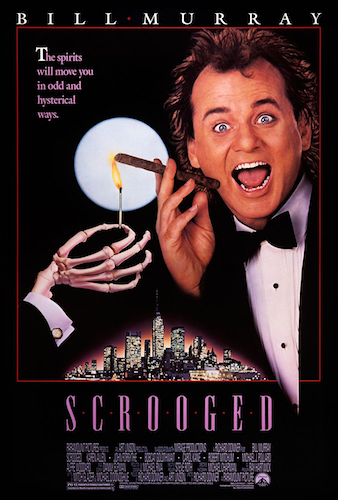
    Bill Murray stars in “his first comedy since Ghostbusters”, as the UK poster boasts (“Bill Murray is back among the ghosts. Only this time, there’s no one to call.”). He’s the Scrooge figure, Frank Cross, a miserly TV executive visited by three ghosts who expose his negative effect on the world, and in turn on himself. Obviously, therefore, the film retains the broad shape of Dickens’ original story, but it goes a little further than that, taking all the salient details and adapting them to its own variation. It’s a good modernisation: true to the original, but without being slavishly beholden to translating the story word for word.

    It does feel like it could’ve been tightened up a bit, though according to Murray they “shot a big, long sloppy movie, so there’s a great deal of material that didn’t even end up in the film,” which I guess means this is already the improved version. Nonetheless, this is a Christmas tale with just enough ’80s cynicism and gentle horror to stop it being too twee, while retaining an appropriately goodhearted festiveness.

    4 out of 5

    It’s a Wonderful Life
    (1946)

    2017 #171
    Frank Capra | 130 mins | streaming (HD) | 1.33:1 | USA / English | U / PG

    It's a Wonderful Life

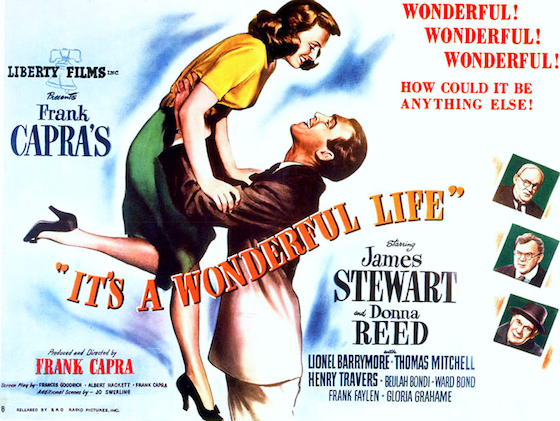
    I’m a little late to the party here: It’s a Wonderful Life is a Christmastime TV staple that most people have been enjoying for decades, many since childhood. Frankly, that’s the main reason I watched it — almost out of a sense of duty, owing to it being an iconic Christmas film, and also well rated on polls like the IMDb Top 250.

    So I set out merely to rectify my oversight, expecting to find it a bit saccharine and twee, and probably overrated. But no, it’s not that at all: it’s a beautiful, brilliantly made, genuinely moving film — I even got something in my eye during the conclusion, even if its heartwarmingness was objectively inevitable. Now, my only regret is I didn’t watch it sooner, so that I could’ve been re-experiencing it all my life.

    It’s not often you get a film with a reputation like this that manages to live up to it, but It’s a Wonderful Life is that rare exception. Indeed, it’s so good I’d even say it exceeded its reputation. Wonderful indeed.

    5 out of 5

    It’s a Wonderful Life placed 6th on my list of The 17 Best Films I Saw For the First Time in 2017, which can be read in full here.

    * If you happened to think this had something to do with the football — you know, like, “if England get through to the final it’ll be like Christmas in July for the fans” — then, um, no. Sorry. ^

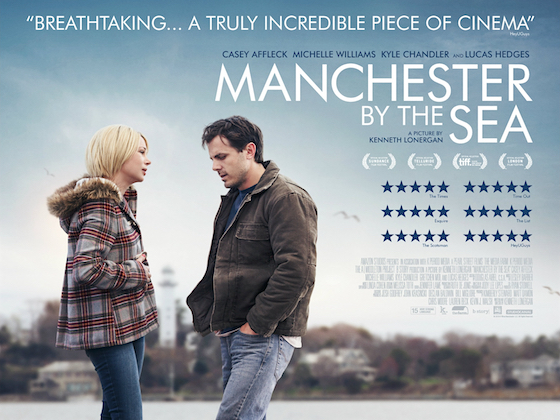
  • Manchester by the Sea (2016)

    2017 #134
    Kenneth Lonergan | 137 mins | streaming (HD) | 1.85:1 | USA / English | 15 / R

    Manchester by the Sea

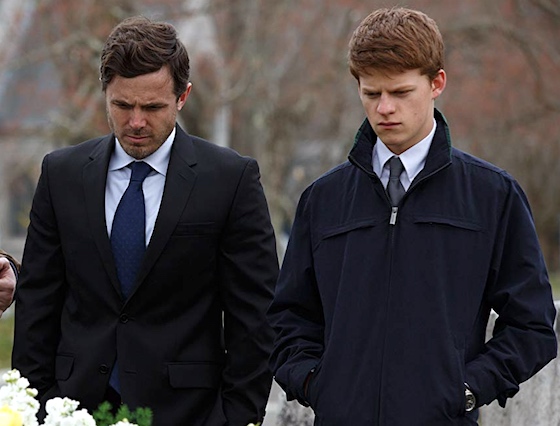
    One of the frontrunners of the 2016-17 awards season, Manchester by the Sea centres around Lee (Casey Affleck), a taciturn sort who’s called back to the eponymous hometown (which he’d left behind for reasons that are initially kept a mystery to us viewers) when his brother dies, naming Lee as the guardian of his teenage son (Lucas Hedges). As Lee attempts to figure out his new role, he’s plagued by the memories and emotions from why he left Manchester in the first place.

    Manchester by the Sea is not a plot-driven movie. Even the mystery I alluded to above doesn’t play by ‘the rules’, with the answers being revealed about halfway through rather than near the end. There’s still a story, obviously (see above), but it’s more of a character study about people coping with grief — not in the wailing, all-consuming way you might typically associate with grief being depicted on screen, but in a more subdued, naturalistic manner. In harmony with that, there’s an element to it which is, not irreverent, but certainly mundane — like making calls to funeral directors over breakfast, for instance — and scattered with darkly comic realities, like paramedics struggling to get a bed into an ambulance. Indeed, for a film about such grim subjects, it’s surprisingly funny. But, as I’ve said in many reviews before, that’s life: the world is still funny, and we often still laugh, even when tragedy is all around.

    Funereal

    Given all that, it’s not surprising it was Casey Affleck’s performance that attracted most attention and won most of the awards. That’s not undeserved — he’s the core of the film, and it’s a powerful but understated performance — but Lucas Hedges is also brilliant in a part that could’ve been given short shrift. In fairness, if we’re talking about awards, he got plenty of nominations too. So too Michelle Williams, playing Lee’s ex-wife. She’s not bad, but her awards recognition is all really for that one scene — you know, the one they always played as the film’s clip, and that’s alluded to on the poster. Indeed, it’s interesting how prominent she is in the marketing — her role is central to the state Lee’s in, but the actress herself isn’t on screen very much. Her absence is more felt than her presence, even.

    It’s understandable that one scene became such a focus — it’s a powerful moment of great importance to the characters (and, more cynically, is virtually the only major sequence with the two name lead actors). In some respects, however, I think the film’s most powerful moment comes at the other end of the film’s timeline: when we learn about what happened in the past, it ends with ‘the morning after’, when Lee faces what he has done and looks for the punishment he feels he deserves; instead he finds only understanding, so he attempts to punish himself. (This scene also got a fair bit of awards play, but lacked context. Or perhaps that was just me? I didn’t really get what was going on until i saw it in the film proper.) That’s a key part of what’s going on with his character, I think: he hasn’t just been trying to escape what happened, he’s also punishing himself. Other people aren’t always so understanding — some do judge him; one person quietly refuses to employ him, presumably because of what happened — but no one judges him as harshly as he judges himself.

    The Scene

    An aspect I don’t recall being remarked upon much was the cinematography, but I thought it was a surprisingly good-looking film. DP Jody Lee Lipes’ work here isn’t flashy, maintaining the understated and naturalistic tone of the entire movie, but it’s very crisp, befitting both the freezing cold weather and raw emotions. On the other hand, if I had one criticism to level it might be that the film’s too long. Its events and emotions unfold at a measured pace, which is fine, but some of what we see is less necessary than the film seems to think it is (for one example, the opening sequence, where we watch Lee as he does various day-to-day janitorial jobs, feels like it goes on for ages and contributes little).

    But I’m nitpicking at this point, really. Manchester by the Sea derives itself from such everyday moments, accumulating them into a subtle, realistic, quietly powerful character portrait.

    5 out of 5

    Call Me by Your Name (2017)

    2018 #80
    Luca Guadagnino | 132 mins | streaming (HD) | 1.85:1 | Italy, France, Brazil & USA / English, Italian, French, German & Hebrew | 15 / R

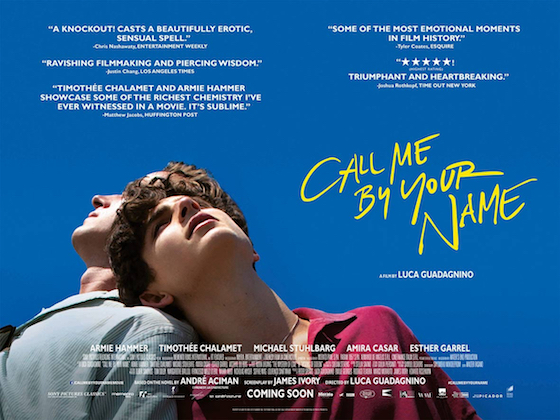
    Call Me by Your Name

    Call Me by Your Name was the lowest grossing film among 2017’s Oscar Best Picture nominees, but it felt like it was one of the most talked about films on the ballot — though, being part of a list that also includes Get Out and “the fish sex movie”, obviously there’s stiff competition.

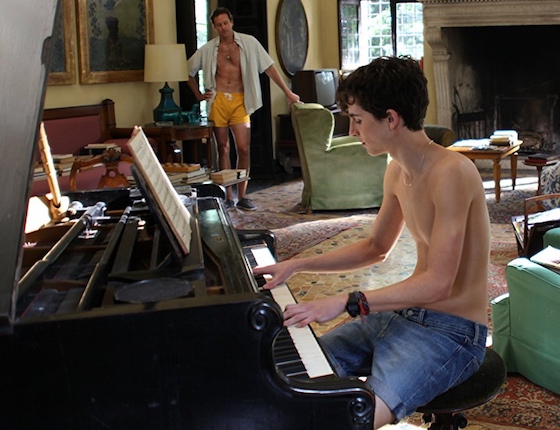
    Set in Italy during the summer of 1983, it centres around 17-year-old Elio (Timothée Chalamet), the son of a pair of well-to-do intellectuals (Michael Stuhlbarg and Amira Casar) who spends his days lazing around their countryside villa — reading books, noodling about on the piano, and flirting with the local girls — and his evenings chasing skirt. He’s smart and talented, but still young and developing. Into his life comes Oliver (Armie Hammer), an American grad student who’s to be his professor father’s annual research assistant. Initially Elio is standoffish around the free-spirited Oliver, and yet seems fascinated by him. As they begin to spend more time together, a mutual attraction tentatively develops into a passionate love affair, a new experience for them both.

    Sorry to rush you through the plot like that, but the gay romance between Elio and Oliver is what the film’s, y’know, about. It’s an effective and truthful depiction of young love — falteringly, unassured, but driven by powerful emotions and burning lust. Although Oliver initially seems hyper-confident, as he opens up to Elio it becomes clear that this is new for him too, and of course Elio’s only young, inexperienced even with girls at the film’s start, so of course love is a new thing to him. So, in some respects it doesn’t matter that the film’s about a gay relationship — the feeling it conjures of young love is universal. Of course, there are many reasons why it matters immensely that it’s about a gay relationship, but those concerns are largely external to the film itself. They intrude only in the sense that Elio and Oliver keep their affair a secret, though given Elio’s bohemian-ish family, he eventually finds more support than he might’ve expected.

    Flesh

    It’s not all sweetness and uncertainty, mind. I used the word “lust” for a reason: there’s some fairly sexually explicit stuff, so be warned if you’re of a sensitive disposition, or are particularly fond of peaches. Well, I say that — if you’re really fond of peaches, this will be your new favourite film. It’s not Stranger by the Lake graphic, despite what screenwriter James Ivory had in mind (i.e. there’s no explicit male nudity; Elio’s girlfriend gets her kit off though, which could spark a whole other debate about gender equality), but there’s still no doubting what the young couple get up to.

    Talking of which, there was apparently some controversy about Elio and Oliver’s ages in regards to their relationship — Elio, as I said, is 17, and Oliver is 24. Some Americans seem to have a monomaniacal obsession with the age of consent being 18, which they then apply universally. I mean, it’s not even close to universal in the US (it’s 16 in 31 states and 18 in only 11), never mind worldwide. So, some people apparently have a major problem with that age difference between Elio and Oliver, whereas others won’t even think about it. For what it’s worth, the age of consent in Italy is 14 — imagine the reaction if they’d made Elio that young! For another perspective, in the UK in 1983 the age of consent for heterosexual couples was 16, but for gay people it was 21 — so, what, if this was set in the UK and Elio was female it would be okay, but because he’s male we’d have to be appalled? I guess my point is: think this shit through, and stop being “outraged” that people under the legal age of consent have romantic and sexual feelings.

    Pining

    But I guess there are fans of the film who’d know all about that, considering pretty young Timothée Chalamet has apparently become a favourite of the Tumblr crowd (who I’m basically assuming are all kids, which I’m sure is unfair). He’s not just young and beautiful though, but an extraordinarily competent actor too, all unearned confidence undercut by youthful vulnerability. His Oscar nomination was deserved. Armie Hammer went overlooked, but he gives a more nuanced performance than you might expect. From the supporting cast, the reliably excellent Michael Stuhlbarg stands out. Initially just an amiable dad, the film gradually peels back the layers to reveal what a fantastic father he is, including one heart-to-heart scene that alone (and even more than Hammer) should’ve seen him scooping awards.

    The film was also overlooked in the cinematography category, which is a shame too. Shot on 35mm with a single lens by DP Sayombhu Mukdeeprom, it ably recreates the hazy feel of a long-ago summer. That sensation extends across Guadagnino’s direction, the gentle pacing reminiscent of a time when six weeks was forever, when the world was full of possibilities and there was time enough to explore them all and still have some left over.

    Call Me by Your Name manages to resolve a striking array of contrasts — it’s both universal and specific, nostalgic and timely, powerful and gentle. The sum is a beautiful film in most every respect.

    5 out of 5

    Call Me by Your Name is available on Sky Cinema from midnight tonight.

    It placed 18th on my list of The 26 Best Films I Saw For the First Time in 2018.

    Perfect Sense (2011)

    2017 #131
    David Mackenzie | 89 mins | streaming | 2.35:1 | UK, Sweden, Denmark & Ireland / English | 15 / R

    Perfect Sense

    It’s funny, sometimes, the journeys we take to watch a movie. I distinctly remember Ewan McGregor appearing on a chat show to promote this back in 2011. I thought it sounded like a good setup for a story, so the film’s existence lodged itself somewhere in the back of my memory. Clearly the film itself didn’t have much impact, and so, with no one talking about it, and no releases or TV screenings or whatever that were high-profile enough for me to notice, it went on the back burner. Until last year, when I noticed it was available to rent on Amazon Video.*

    Anyway, the aforementioned setup is a global epidemic that causes people to have an intense emotional outburst followed by losing one of their senses — for example, the first stage is an uncontrollable bout of crying followed by losing the ability to smell. Over a short period everyone experiences the same thing, then the world learns to adapt… until it happens again, losing another sense. While this is going on, we follow the relationship of Michael (McGregor), a chef, and Susan (Eva Green), a member of a team trying to find a cure for the disease. Obviously, this provides our human connection to events, with the grand world-changing stuff providing more of a backdrop.

    Life goes on...

    It’s ironic, then — or at least counterintuitive — that there’s more emotional power in the montages about senses and what was being lost — the ideas-y stuff — than there is in the character- and relationship-based bits. Those are actually surprisingly clunky at first, with even McGregor and Green — both actors I like a good deal — struggling to make them work. Things do smooth out in that regard, but the romance plot proceeds to conform to a pretty standard shape. Was the sci-fi crisis meant to reflect the relationship, or is the relationship a down-to-earth framework on which to hang a big sci-fi story? I suspect the latter, because it’s the end-of-the-world theatrics that prove more interesting.

    Those are kept grounded and plausible: despite the ever-worsening situation, people keep getting used to the new status quo and going on as normal — until the sensory deprivation goes too far to ignore, of course. There are lots of neatly observed and imagined little bits in how this unfolds, like how after taste is lost the rituals of going out to restaurants remains, with focus moved to the sounds and physical sensations of the environment and the food; and newspaper critics still review places for this, naturally. This “life goes on” thing feels very much like how we as a society genuinely react to big changes or threats.

    ...until it doesn't.

    So, it’s not a perfect film, but Jesus, the negative reviews I sampled (chosen at ‘random’, where “random” means “the top results on Google”) were shitty pieces of criticism. Their points include things like it’s preposterous (well, the plot is propelled by an unexplained virus — it’s less preposterous than, say, Spider-Man), or the characters fall in love while the world falls apart (because no one ever seeks comfort in others during times of stress or tragedy), or the screenwriter has kind of a funny name (seriously — a supposedly professional review dedicated some of its limited word count to basically going, “lol, foreigner’s got name that looks funny!”) It annoys me that some people get paid to write bollocks like that.

    As I said at the start, no one ever really talks about Perfect Sense, even after its director has gone on to bigger things (Starred Up attracted a lot of praise and Hell or High Water earnt Oscar nominations), but it’s worth a look for anyone interested in broadly-plausible end-of-the-world dramas.

    4 out of 5

    * Having rented it, I was surprised to see it begin with a BBC Films logo, because most BBC Films productions end up on BBC Two within a year or two. So I checked, and it turned out it had been on TV, just once, in November 2012. (You’d think they’d’ve shown it more than that in the five-and-a-half years since — I mean, they’ve shown The Ides of March six times in four years.) Worse than that, though, was when I checked my iPlayer downloads and found I had actually downloaded it, so paying for the rental was a waste of money. Well, at least it was only £1.99, and I paid with vouchers anyway. But the colour grading of the two was completely different, which was just odd. Anyway, back to the review: ^