
Jack Couffer | 88 mins | TV | U / G
 Living Free is, in many ways, a tale of obsession. I’m certain that wasn’t Joy Adamson’s intention in writing the book, and I don’t think it’s the filmmakers’ intention either, but the facts can still play that way. The Adamsons devote months of their time, give up a promising career, spend all their savings, drive themselves into debt, and are nearly killed several times, all in a frequently-extreme effort to save three delinquent lion cubs who would be put down were it not for their sentimental attachment.
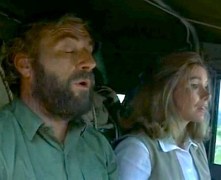
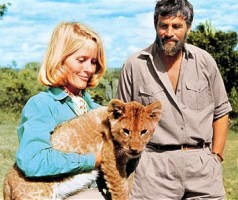
Picking up immediately where Born Free left off — with literally the same shot, in fact — Living Free proceeds to recap the first film, inserting new actors Susan Hampshire and Nigel Davenport into footage from the predecessor. Watched 24 hours after the original, this feels like so much padding, but viewed in isolation — or six years later, as this was first released — it’s probably a useful primer. It also allows a chance to recap some of Born Free’s finer wildlife moments, including the cubs wrecking the house and the marvellous head-butting warthog. I love the head-butting warthog.
 The rest of the story moves into What Happened Next territory: Elsa dies, the Adamsons’ obsession with finding and saving her cubs begins. The film skips the book Living Free, adapting threequel Forever Free instead, presumably for dramatic reasons — I imagine Elsa and cubs just living isn’t as much of a Story as her death and subsequent events.
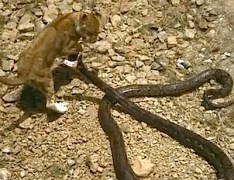
Much of the film again plays like a documentary, particularly the sequences where Joy imagines what the cubs may have been up to during the weeks they were missing. Even after decades of excellent work by the BBC Natural History Unit, producing hundreds of hours of exceptional documentaries, the wildlife photography here is still often stunning. Stand-outs include one of the cubs playing with, and then being attacked by, a snake, or a slow-motion chase sequence which shows the beauty of both the lion and… whatever it’s chasing… (look, I’m no expert.) It may not have the same charm as the first film’s playful antics, but it’s by no means devoid of spectacle.
 Living Free isn’t as endearing as Born Free. By the very nature of trying to keep the cubs wild, they’re less relatable than Elsa and consequently we become less attached to them. As you may’ve guessed, I found it more interesting to look on the film as a story of obsession, one that threatens to ruin the Adamsons’ lives, though ultimately it has an upbeat ending.
That said, nothing the film could have told (while sticking to the facts, that is) would rival the real-life tragedies that were to come: the Adamsons eventually grew apart, Joy was murdered by a former employee in 1980, and George was shot by bandits in 1989. It’s a sad end for a pair who, for all their faults, devoted their lives to doing good.

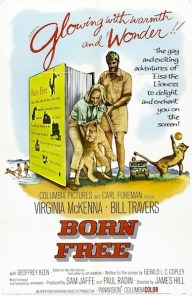 Born Free tells the true story of Joy and George Adamson, a Senior Game Warden in 1950s Kenya, who adopted three lion cubs after mistakenly killing their mother. Though they give two away to a zoo, Joy can’t bear to part with one, Elsa, and so they raise her — until circumstances force them to part with her. Despite Elsa’s age, Joy insists they try to release her into the wild rather than send her to a zoo.
 Then there are the other animals, including elephants (always wonderful) and the Adamsons’ adorable pet… rodent… (look, I’m no expert.) Best of all is a head-butting warthog, who has instantly become my favourite film animal. The entire film was worth that sequence.
 The interest of the piece for us normal, sensible folk, then, lies in what it exposes about this world: the ludicrous lengths they go to; the shockingly inflated sense of self importance. As with The September Issue, it presents no narration and a lot of long takes of documentary footage, leaving the viewer to draw their own conclusions. But there are conclusions to be drawn. Wintour is as much a closed book here as in the main film, but there are moments — glances, affectations, turns of phrase — that reveal a little bit more of the truth behind her icy demeanour.
 Is 1945-1998 actually a film? Or is it a piece of video Art? Or just another online video?
 attention didn’t already wander, that is). There are ultimately so many flashes and bleeps, and the effect is so lulling, that I had to force myself to remember these represented Big Nasty Bombs that were Not A Good Thing. Perhaps something more aurally grating would’ve been appropriate; the counter argument going that this would cause even more viewers to abandon the work.
 I don’t really care about fashion, which means I really don’t care about Fashion — i.e. the world inhabited by Vogue and its American edition’s infamous editor, Anna Wintour. But I did watch
  Wintour, one suspects, will always be unknowable, a figurehead more than a person; but Grace is relatable, as human as the rest of us.
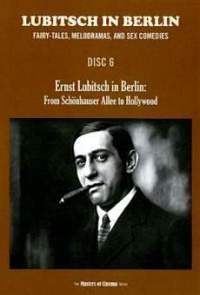 Part biography, part making-of, part analytical retrospective, Robert Fischer’s documentary does what it says on the tin: tells the story of the life and work of actor/director Ernst Lubitsch from his formative years, living on Schönhauser Allee in Berlin, to when he made the move to America in the early 1920s.
 Culloden tells the story of the 1746 battle — famously, the last fought on British soil — and the events that followed it, as if it were covered by a modern TV news report (albeit a feature-length one).
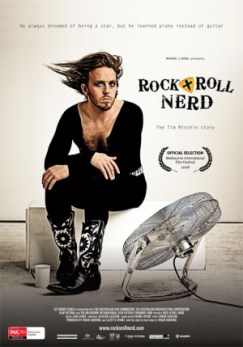 I don’t usually bother with plot summaries at the start of my reviews, working on the assumption most readers will know (or know of) the film and so don’t really need one. My assumption here is that most won’t have even heard of this film, though.
 TV appearances, offers from Hollywood and the West End, the best management in the business and a gig at Albert Hall.” Not what either Minchin or Skirving had expected, that’s for certain!
 aren’t boastful or immodest, the viewer privy to how his hopes were unrealistically raised in spite of himself.
 and it may be they wouldn’t engage with this film because of it. However, some stories are capable of transcending one’s feelings about the subject covered, and Rock n Roll Nerd may just be one of those: even if you don’t enjoy Minchin’s songs, or indeed comedy music in general, the tale of his success — and what it’s like for an ordinary person to live through such a thing — is a story whose unique interest extends beyond fans-only territory.
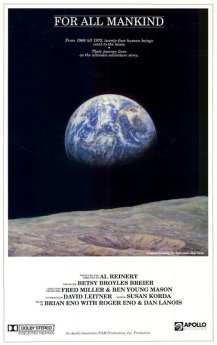 For All Mankind tells the story of NASA’s Apollo missions to the Moon using only NASA’s own footage of the real missions.
 100Films.co.uk