2015 #151
Carol Morley | 91 mins | streaming (HD) | 16:9 | UK & Ireland / English | 12A
 In 2006, the body of 38-year-old Joyce Vincent was found in her London bedsit, surrounded by Christmas presents and with the TV still on. Sad, but largely unremarkable, were it not for the fact that she’d been dead for three years.
Carol Morley’s documentary attempts to uncover the story of Joyce’s life, and how it reached a point where no one noticed she’d been gone for so long. It’s told mainly by her friends and colleagues (her remaining family, perhaps unsurprisingly, declined to take part), who paint a picture of an attractive, outgoing, personable woman; but also one who was a social chameleon, adapting to her current group of friends, and sometimes disappearing for months at a time. Later, her life seemed to follow a more tragic path, though details are scant for various reasons.
As it goes about encapsulating a life that ended so tragically, Dreams of a Life is surely one of the most heartbreaking films you’ll ever see. Consequently, I don’t quite understand the negative reaction you’ll find in some comments sections online, because I thought it was unmistakably powerful and affecting. I know this is a review of the film rather than other people’s reactions to it, but, well, as much as I found the film insightful and upsetting, some of those reactions angered me, so let’s have a go at them anyway.
 Some people seem to view this as little more than a detective mystery, and are frustrated that Morley ‘chose’ to leave out details. I guess such critics have no understanding of things like confidentiality (when it comes to why Joyce was in a women’s refuge and what she disclosed there), rights to privacy (if the family don’t want to be interviewed, you can’t force them), the realities of investigating a real-life case (maybe some people who knew her in those final years just don’t want to be found), or human decency (Joyce led a fragmented life that came to a terribly sad end, and all you can think about is why she didn’t leave a few more clues around for you to deduce what happened and why?!)
Some people outright refuse to believe the story. “It’s implausible no one noticed her bills hadn’t been paid for so long.” Well, that’s what happened, kiddo. Whether it seems plausible to you or not, it obviously occurred. I don’t wish to tar an entire nation with the same brush, but the people who find these parts incredulous often seem to be American, generally because certain things work differently in the UK to the US. There’s a certain type of person who seems to believe the entire world operates in the same way as the US (not just Americans — thanks to the overabundance of US films and TV, it’s been observed around the world that there are people who think their own country has the same laws/rights/etc as the US), but obviously that isn’t true, and this is a case in point.
 On the more considered side of the internet, there’s a reasonable debate to be found about the filmmakers’ right to tell the story at all. Joyce kept her life story secret even from some of her closest friends, and yet here it is being picked over in a movie for anyone to see. Is it moral to do such a thing? Should she not just be left in peace? Are the extraordinary circumstances of her death a good enough reason for this level of prying? Surely her death and how it came to occur needs to be understood, though, and surely the only way to do that fully is to examine her life. But is that not the business of inquests and the like, not films? But then, the filmmakers seem to have dug up information the inquest didn’t get close to unveiling. Perhaps the question is, when does society’s interest justifiably overtake the rights of the individual? Does it here? I’m not sure. Maybe.
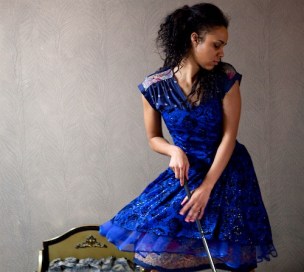
One criticism I will side with is that the film is sometimes frustratingly put together. The accounts of Joyce’s childhood and early 20s are jumbled up, flitting back and forth in time. The viewer has to piece together the chronology; a challenge for no particular reason. Dramatic recreations of her life are largely pointless, though arguably necessary in a visual medium. Actress Zawe Ashton portrays Joyce in her 20s and 30s, but any scene where she’s required to give a performance — to do more than just walk around in a dumbshow recreation of that life — feel too much like a needless dramatisation, not the fact-based reenactment you’d expect or want from a documentary.
 Nonetheless, these flaws can’t detract from the fundamental power of the story being told. If you come away from this thinking not about how sad it was for both Joyce and the people who knew her (especially Martin, especially in the film’s final moments), or what you should or could perhaps be doing better in your life, but instead being angry that it didn’t satiate your ghoulish need for full and frank revelations… well, I don’t know what to say about you, but it wouldn’t be very nice. Through this incident, Morley and her interviewees are really making bigger points about our society and our relationships. It’s no one’s fault, per se, that this happened to Joyce, but that it can happen is horrendous.
Dreams of a Life is on Film4 tonight at 1:30am.

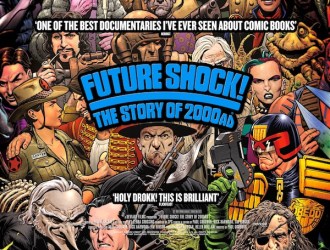 Talking heads documentary about the galaxy’s greatest comic, 2000 AD, birthplace of Judge Dredd, Rogue Trooper, Strontium Dog, et al. Created to be somewhat subversive in a marketplace stuffed with safe children’s comics, it’s become a rare survivor of the medium on British newsstands.
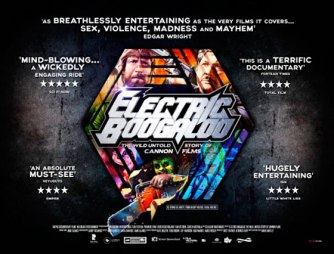 The director of
 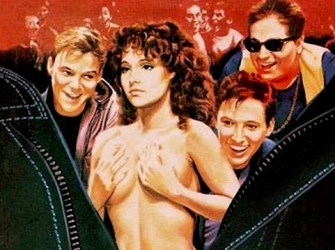 (unless you’re a Cannon aficionado, perhaps), but they were there, they lived it, and they have first-rate insights into the craziness. Craziness like the story of the competing Lambada movies, which ended up being released on the exact same day. I mean, you’d think one Lambada movie would be more than enough, but two, competing… If you wrote it in a fiction, the audience would laugh at the ridiculous contrivance of it, but it happened. Elsewhere, there’s a chunk where they just slag off Michael Winner for a bit (awesome), and director Franco Zeffirelli describes them as the best producers he ever worked with and the only ones he ever liked. Like I say, you couldn’t make it up.
 (and if it’s told effectively, rather than the issue of if its telling is effective) is all that really matters.
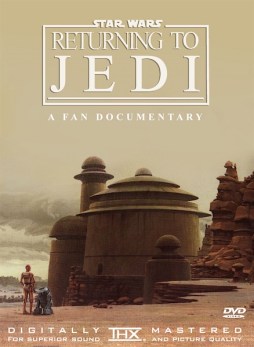 Returning to Jedi completes fan/editor Jamie Benning’s trilogy of documentaries about
  and Mark Hamill expected more darkness for Luke — but I guess they weren’t to be heard by an increasingly autocratic Lucas (reports of him essentially directing Jedi for Richard Marquand, or of his clash with the Directors’ Guild that prevented Steven Spielberg from directing the film, go unmentioned here).
 The first of Jamie Benning’s “filmumentaries” looks at the making of
  My personal highlight of the documentary comes in Cloud City, at the point Lando’s betrayal is revealed. Benning inserts a “deconstruction of an action scene” (Han shooting at Vader; Vader Force-stealing Han’s gun), using uncut footage and B-roll to quickly glimpse how such things are achieved — or were, before “with CGI” was the answer for everything. Here, Benning’s work transcends merely placing rare interviews or behind-the-scenes footage at the appropriate juncture, instead using that material to create something genuinely new and insightful.
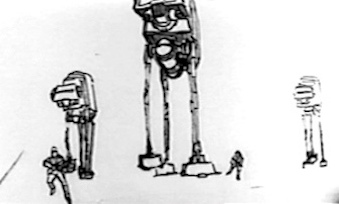 Niggles aside, I felt like I enjoyed Building Empire even more than its later predecessor (how very Lucas). I’m not saying it’s fundamentally better — just as with
 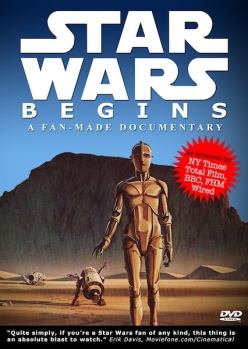 This year, I finally got round to watching the Star Wars Blu-rays I bought back whenever they came out, so I thought what better time to also finally watch Jamie Benning’s trilogy of “filmumentaries”. What’s a filmumentary, you ask? Well, here’s the opening text of the film itself:
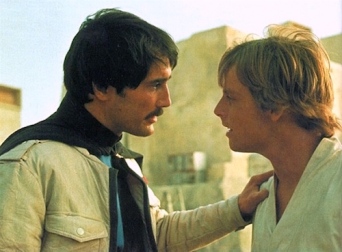 (i.e. before we even meet Luke in the finished film), the sequences were removed en masse due to execs’ fears they made the movie feel like “
 Star Wars Begins may not be the first port of call for anyone looking for an overview of the making of Star Wars, but it’s a goldmine of behind-the-scenes titbits and occasional candid revelations for anyone with a strong enough interest.
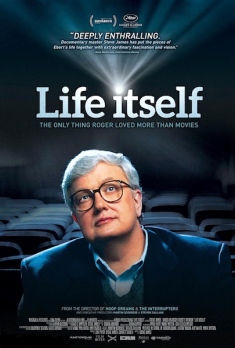 Roger Ebert was an influential, respected, beloved critic for decades, and one with an interesting life: he began in old-school newspaper journalism, defined TV movie criticism, and eventually spearheaded the profession’s move online. So it merits recounting in this documentary by the director of
  Astronauts head to a Saturnian moon to examine its water in this scientifically-accurate drama.
 This informative documentary uses interviews with all the key players to tell the story of how a small indie comic, created incidentally and published almost on a whim, became a true cultural phenomenon.
 As for this documentary, it nonetheless finds an almost emotional conclusion with Eastman and Laird today talking about the chain of chance and coincidence that brought them together three decades ago to accidentally create something that transformed their lives, and which continues to endure in all kinds of media (no one liked
 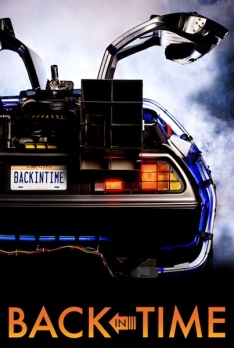 If you’re on social media (or even just frequent pop culture news sites), you can’t fail to have noticed that Wednesday just passed was “Back to the Future Day”, the exact date Marty McFly and Doc Brown (and Marty’s girlfriend) travel to in
 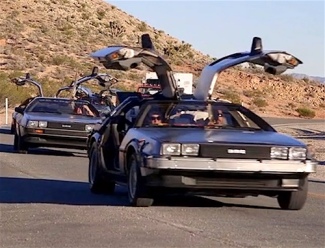 Then it moves on to the fans — what the film means to them, and what that’s led them to do. Those we meet include a couple who travel around the US in a DeLorean fundraising for Michael J. Fox’s charity; the team of aficionados who restored Universal Studios’ decrepit display DeLorean; the family of collectors who own the only film-used DeLorean that will ever be in private ownership; a guy who built a mini-golf course in his yard with a Back to the Future-themed hole that he’s used for charity events with some of the films’ cast; the people who have had some success developing a real-life hoverboard; and the guy who set up a fansite that was so good it became the official site, and is now regularly employed as an official consultant about the films, not least for the rafts of merchandise that comes out these days. We also get a look at the Secret Cinema event in London from a year or two ago that made headlines for all the wrong reasons. Naturally, none of that gets mentioned here (in fairness, because it has nothing to do with Back to the Future itself).
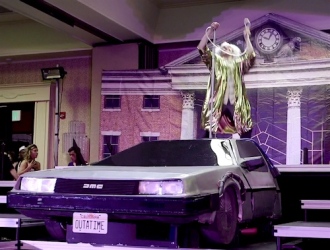 That glaring error aside, Back in Time is not a bad film, provided you know what to expect. It’s a shade too long and the storytelling is occasionally a little jumbled, but there are some nice interviews and stories — hearing Michael J. Fox recount the Royal Premiere where he was sat next to Princess Diana pretty much makes the whole exercise worthwhile.
 100Films.co.uk