The Hound of the Baskervilles (1939)

2008 #9
Sidney Lanfield | 77 mins | DVD | PG
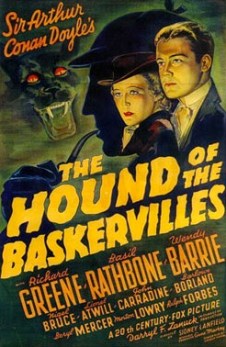
The Hound of the BaskervillesArguably the definitive screen interpretation of Sherlock Holmes and Dr Watson, played by Basil Rathbone and Nigel Bruce, appear for the very first time here, in what would become the first in a series of 14 pictures starring the pair. (Incidentally, this will be the first in an irregular set of reviews of that series. I have the rather lovely Optimum box set, you see, and so shall slowly work my way through it. Though as I’ve already owned it for several years and only just started watching it (as with so many DVDs), I have no idea how long it will be before I finish.)

I’ll start by laying my cards on the table: The Hound of the Baskervilles is a vastly overrated Holmes tale, and one that has been unduly adapted at least 15 other times (that from a quick search of IMDb). As far as I can tell its popularity is primarily due to the circumstances around its original publication (it was the first Holmes story in nearly a decade, following his death in The Final Problem). Holmes is absent for much of the story, which plods along fairly uneventfully (or, at least, inconsequentially) until a slightly dubious climax involving a centuries-old portrait. Naturally, all of these flaws carry over into any faithful adaptation, and this certainly is one.

One of the novel’s strong points is its occasional Gothic styling, and this is something the film version does very well. Dartmoor looks fantastic, like something Tim Burton would have created were he working in the ’30s. It’s clearly a set, but it’s dramatic and moody and completely effective. After the dull and poorly-designed interior scenes in London, it’s fantastic when the film finally moves down into Devon and things… well, don’t exactly get going, but at least there’s something to look at! As with the novel the plot meanders by, diverted by an escaped convict and an entirely pointless (in this version at least) seance, until that painting-based resolution. All is not lost, however, as a particularly vicious-seeming attack by the hound livens things up considerably.

Rathbone is underused as Holmes, which is a shame as he immediately makes the part his own. Bruce isn’t as bungling and comedic as he would later become, though the signs are already beginning to show. And the infamous final line — “Oh Watson, the needle!” — is actually a huge anticlimax if you haven’t seen it before, an entirely pointless, meaningless and misplaced addition.

I feel like I’ve come down a little harshly on Hound of the Baskervilles, mainly thanks to a general unfavourable opinion of the source material. There are many better Holmes stories, often ignored thanks to the fame of this particular one. The following 13 films may be even less faithful adaptations than this, but I’m looking forward to their fun and frivolity, which will hopefully top Baskervilles. The moor really is fantastic though.

3 out of 5

Mean Streets (1973)

2007 #126
Martin Scorsese | 107 mins | DVD | 18 / R

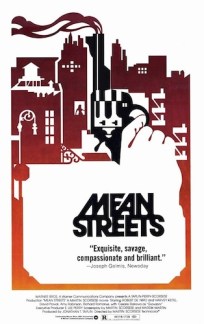
Mean StreetsSemi-autobiographical New York gangster movie, guaranteed a place in history as the first collaboration between Scorsese and De Niro — what a place to end my little season!
As with Goodfellas, it’s someone else who’s the main character; and, as with Goodfellas, De Niro’s supporting character is a disturbing presence even when off screen. The similarities don’t end there, but I’m not going to go into them in detail. Suffice to say, Mean Streets feels a bit like a less epic, oddly less focused, grittier, and perhaps more realistic, prototype for Goodfellas. But even then it’s only that in some ways — the two are notably different enough to make each worthwhile.

4 out of 5

Bullets Over Broadway (1994)

2007 #125
Woody Allen | 95 mins | DVD | 15 / R

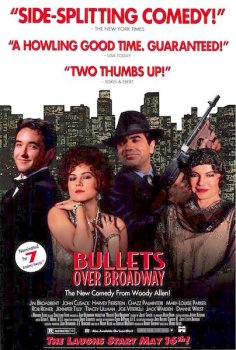
Bullets Over BroadwayThe final Woody Allen film of this little ‘season’ is that rare thing: one that doesn’t star him!
This is its biggest flaw, as John Cusack spends the entire film doing a blatant and middling impression of the writer/director. But he nonetheless does OK, and when the rest of the cast are note-perfect, the script pacy and funny, the photography gorgeous, and the long takes never more appropriate, it’s hard not to be impressed. Special mention for the final scene, a four-way shouted conversation between two high windows and the street — it’s beautifully written and executed.

Another underrated Allen film, and probably the most down-right entertaining of his I’ve seen so far.

4 out of 5

Goodfellas (1990)

2007 #123
Martin Scorsese | 139 mins | DVD | 18 / R

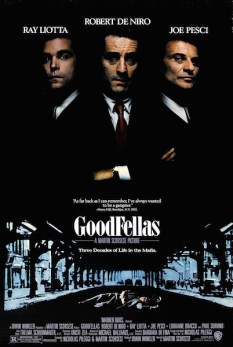
GoodfellasThese days perhaps even more praised than Taxi Driver, Goodfellas tells the true story of Henry Hill’s 25-year career as a gangster.

It’s certainly a notable achievement on virtually every level, which are too numerous to list here. The use of popular music struck me especially though, creating a sense of time (and never too obviously) while also complementing the visuals in its own right.

In the lead role, Ray Liotta seems to have been underrated, lost behind the top billing of De Niro and the award-winning craziness of Joe Pesci. He carries the film, with a performance that isn’t showy but is perfectly pitched.

I didn’t fall in love with the film as so many seem to have, but I also don’t think there’s really any denying its worthiness for full marks.

5 out of 5

A new, restored Blu-ray of Goodfellas is released in the UK today, 25th May 2015.

Taxi Driver (1976)

2007 #122
Martin Scorsese | 109 mins | DVD | 18 / R

Taxi DriverMuch praised, discussed and quoted, Taxi Driver needs little introduction. The weight of expectation also makes it hard to judge when first viewed.

Personally, I didn’t buy Travis’ slide into psychosis, which is unfortunate as it’s the core of the film and why it’s meant to be so great. In fact, I found Robert Pupkin’s broadly similar, self delusion-based character arc in The King of Comedy more believable. The ending was also dubious, although one theory does make it work better, so it perhaps depends on what you choose to believe.

Further viewings may help the film work better for me — as my rating shows, I still liked the film as a whole, but I wasn’t as impressed as I’d been led to believe I would be.

4 out of 5

The King of Comedy (1983)

2007 #121
Martin Scorsese | 104 mins | TV | PG / PG

The King of ComedyUnderrated black comedy from the prolific partnership of director Scorsese and star De Niro.
De Niro gives an excellent performance as an obsessive wannabe comedian, stalking the host of a popular talk show in his desperation for a guest spot. The depth of his delusion is both hilariously funny and deeply unsettling; subtly woven between the laughs is the impression that this sort of behaviour must be all-too-real among those over-obsessed with celebrity culture. Jerry Lewis and Sandra Bernhard are also worthy of note in their supporting roles.

Rarely mentioned when it comes to discussions of Scorsese’s work, I think it’s the best film I’ve seen from him. (This closing comment is subject to the fact that I’ve only seen The Departed, The Aviator, Gangs of New York and Bringing Out the Dead, a list clearly missing most of his highly-praised work.)

5 out of 5

Wild at Heart (1990)

2007 #116
David Lynch | 120 mins | DVD | 18 / R

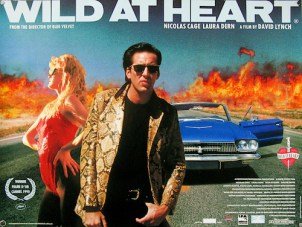
Wild at HeartMy experience of David Lynch’s work has so far been limited to Dune, the first short season of Twin Peaks, and Mulholland Drive. Admittedly, a list including the latter two isn’t that bad, but it fails to encompass any of the acclaimed films that made his name.

Wild at Heart doesn’t come much closer: a quick look at IMDb reveals that it only beats Dune and the Twin Peaks movie in user ratings. I think I can see why: it’s filled with mannered performances that can seem cheaper than those in daytime soaps (I presume this is deliberate, but some people just won’t get, or like, it); characters and plot threads that meander off and seem pointless, while others don’t come to anything; plus it lacks the opaqueness that many seem to hold as the key worthy feature of Lynch’s work.

In spite of its many faults I quite liked a lot of it, so my rating falls on the generous side. I still have no idea why there were so many Wizard of Oz references though.

4 out of 5

Fantômas: In the Shadow of the Guillotine (1913)

aka Fantômas: À l’ombre de la guillotine

2007 #111
Louis Feuillade | 54 mins | DVD | PG

FantomasThe first of the silent Fantômas films (I reviewed the second previously).
It’s interestingly structured: there’s no ‘origin story’ for Fantômas, he just is an infamous master criminal, who’s introduced in what would undoubtedly be a pre-titles sequence today, before the story switches to follow Inspector Juve and his quest to solve the disappearance of Lord Beltham… which of course leads back to Fantômas. Its pulp fiction roots shine through in the entertaining plot that’s just far-fetched enough.

As I said before, it’s not for everyone, but for those who enjoy this sort of thing it’s unmissable.

4 out of 5

The Naked City (1948)

2007 #112
Jules Dassin | 92 mins | DVD | PG

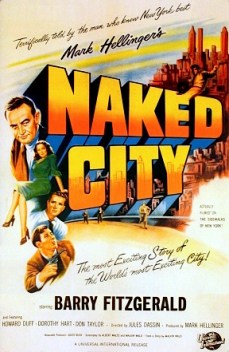
The Naked CityPolice procedural film noir, shot entirely on location in New York (unusual at the time).

The story is quite straightforward — girl is murdered, police investigate — but it exists mainly as a structure on which to hang perspectives of the city, its criminals and its law enforcement (though in an infinitely less pretentious way than that sounds). The odd, character-less voice-over narration is more puzzling than any mystery in the plot.

The acting is sometimes stilted and some of the direction is actually a little flat, but there are enough enjoyable elements to cover for it — particularly the chance to see so much footage of a real city at this time.

4 out of 5

Traffic in Souls (1913)

2007 #106
George Loane Tucker | 88 mins | VHS

Traffic in SoulsSilent movie (Universal’s first feature-length release) about white slavery in America. You don’t expect that from a 1913 film, eh?

Of course, the issue is handled in a suitable way for the period: why the women are kidnapped is never alluded to (in reality it was for prostitution) and all the Bad Men are brought to justice.

It’s not all bad: in a surprising move for the time, the main villain is an apparently-respectable society gentleman who publicly campaigns against white slavery; by a similar token, the kidnappers are made up of women as well as men.

The first half zips along an intricate multi-stranded narrative covering several groups of unrelated characters, but as they come together it begins to slow: what seems to be the climax takes half the film to play out its immediately-obvious events. It sadly ruins something that was initially rather promising.

2 out of 5