
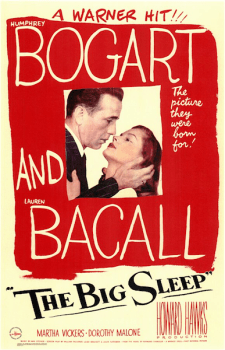
All-Time Rocker-Shocker!
(Yes, that is a real tagline.)

Country: USA
Language: English
Runtime: 114 minutes
BBFC: A (pre-release, 1945) | A (1946) | PG (1988)
Original Release: 31st August 1946 (USA)
UK Release: June 1946 (BBFC)
First Seen: DVD (maybe), c.2004 (possibly)
Stars
Humphrey Bogart (Casablanca, The Treasure of the Sierra Madre)
Lauren Bacall (To Have and Have Not, North West Frontier)
Martha Vickers (The Falcon in Mexico, The Big Bluff)
Dorothy Malone (The Fast and the Furious (not that one), Basic Instinct (yes, that one))
Director
Howard Hawks (His Girl Friday, Gentlemen Prefer Blondes)
Screenwriters
Leigh Brackett (Rio Bravo, The Empire Strikes Back)
Jules Furthman (The Outlaw, Nightmare Alley)
William Faulkner (To Have and Have Not, Land of the Pharaohs)
Based on
The Big Sleep, a novel by Raymond Chandler.
The Story
Private detective Philip Marlowe is hired by General Sternwood to settle the gambling debts his daughter, Carmen, owes to a man named Geiger. Sternwood’s other daughter, Vivian, suspects Marlowe has actually been hired to find Sean Reagan, the General’s friend who has disappeared. Arriving at Geiger’s home, Marlowe hears a shot, and inside finds Geiger dead, Carmen drugged, and a hidden camera with the film gone. So begins a complex web of blackmail and murder. Very complex. Very, very complex.
Our Hero
The archetypal downtrodden PI, Philip Marlowe makes up what he lacks in good fortune with a fast mouth and sharp mind. Has bad manners though, which he grieves over on long winter evenings.
Our Villain
It’s a mystery, let’s not give it away. The film certainly does its best not to.
Best Supporting Character
Lauren Bacall as headstrong Vivian Sternwood, a character who benefitted from the behind-the-scenes situation at the time: Bogie and Bacall’s chemistry in To Have and Have Not led the studio to want more of the same, and her agent was only too keen after the poor reviews of Confidential Agent threatened to sink her career before it had really begun. New sparky dialogue scenes took the place of exposition ones in the final cut, essentially creating the film’s reputation for confusion.
Memorable Quote
“She tried to sit in my lap while I was standing up.” — Philip Marlowe
Memorable Scene
Bogie and Bacall discuss horse racing.
— “I like to see them work out a little first… You like to get out in front, open up a lead, take a little breather in the back stretch, and then come home free.”
Just horse racing.
— “I don’t know how far you can go.” “A lot depends on who’s in the saddle.”
Just horse racing.
Making of
Another part in the Bacall situation described above was supposedly played by original author Raymond Chandler. He reportedly observed that Martha Vickers was so good as Carmen that she overshadowed Bacall, and consequently much of Vickers’ material was removed.
Previously on…
The Big Sleep is the fourth screen adaptation of a Philip Marlowe story, though only the second to star the detective: 1942’s Time to Kill adapted The High Window into the Michael Shayne series, and the same year Farewell My Lovely was filmed as The Falcon Takes Over. The same novel was adapted again in 1944 as Murder, My Sweet (though, famously, retained the novel’s title for its UK release), starring Dick Powell as Marlowe.
Next time…
Bogart never played Marlowe again, but multiple film, TV and radio adaptations of Chandler’s novels have followed, with the lead role being occupied by the likes of James Garner, Elliott Gould, Robert Mitchum, Powers Boothe, Danny Glover, James Caan, and Toby Stephens. A remake of The Big Sleep, relocated to ’70s London and directed by Michael “calm down dear” Winner, was Marlowe’s final big screen outing to date.
Awards
Not a sausage.
What the Critics Said
“one of those pictures in which so many cryptic things occur amid so much involved and devious plotting that the mind becomes utterly confused. And, to make it more aggravating, the brilliant detective in the case is continuously making shrewd deductions which he stubbornly keeps to himself. What with two interlocking mysteries and a great many characters involved, the complex of blackmail and murder soon becomes a web of utter bafflement. Unfortunately, the cunning script-writers have done little to clear it at the end.” — Bosley Crowther, The New York Times
 Score:
 96%
96%What the Public Say
“you don’t watch The Big Sleep just to find out who did what to whom, when and for what reason. This is truly one of those movies where the journey is far more important than the destination. As we follow Marlowe around a moody and threatening Los Angeles, we go on a tour of the seedy underbelly of the city. Even though the time is spent in the company of high rollers and the glamorous set, it’s all merely a glittering veneer for a world of pornography, drugs, deviance, betrayal and violence.” — Colin, Riding the High Country

Famed for having a plot so complicated even author Raymond Chandler doesn’t know who committed at least one of its murders, I’ve always found The Big Sleep very followable if you pay attention… just don’t expect me to be able to explain it after it’s finished. The film’s popularity in spite of its impenetrability confirmed director Howard Hawks’ theory that audiences didn’t care if a plot made sense as long as they had a good time, and he’s kinda right — the joys here are Bogie and Bacall’s verbal sparring, the exposure of LA’s seedy underbelly (albeit in a Production Code-friendly way), and the film’s whole noir-ish atmosphere.

The Big Sleep is finally released on US Blu-ray on Tuesday 23rd February.
#12 will be… a Marvellous vampire.
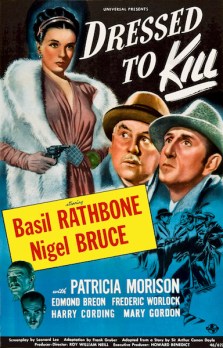 In the seven-and-a-bit years between 31st March 1939 and 7th June 1946, there were a total of 14 films released starring Basil Rathbone and Nigel Bruce as Sherlock Holmes and Dr Watson. By coincidence rather than design, I’ve spent nearly eight years viewing and reviewing them all for this blog — so yes, it’s taken me a little longer to watch them than it did to make them, which is ridiculous, but there you go.
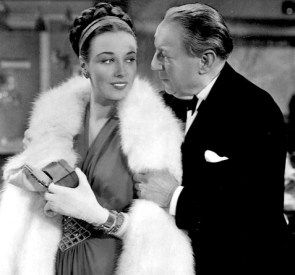 the story is explicitly referenced in the film, Watson having just had it published; then the film’s villainess turns up, played by Patricia Morison, functioning effectively as an Adler stand-in — and using some tricks she learnt from reading Watson’s story! The series hasn’t featured Adler before, so why not just name this character Irene Adler, have her devise those tricks from her own imagination, and be done with? Who knows.
 Yesterday I wrote about
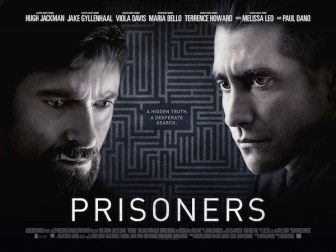
 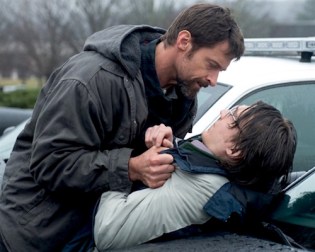 There’s a lot going on in Prisoners. While the basic format is straightforward, it’s realised in the form of a multi-stranded narrative full of well-drawn characters with complications of their own. Jackman and Gyllenhaal may be top billed and on the poster (well, an air-brushed waxwork vague approximation of Jackman was on
 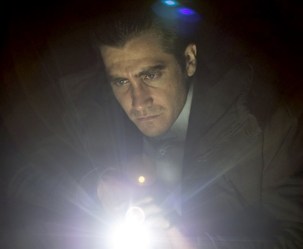 He’s not a bad detective, just not the usual genius-level investigator you normally find in thrillers, and at times you feel he’s muddling his way through the investigation as best he can. Aside from giving Loki the slightly-affected tic of blinking too much, Gyllenhaal offers a reasonably restrained performance. (I’d love to know what the blinking was in aid of, but the film is woefully understocked with special features.)
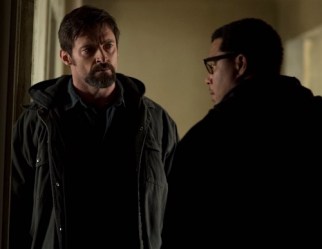 Denis Villeneuve’s direction gives the sense of a non-Hollywood background with the occasional arty shot choice or composition, though not to a distracting extent. He’s aided by serial Oscar loser Roger Deakins on DP duty, who once again demonstrates why he shouldn’t have a golden man already, he should have a cupboard full. The photography here doesn’t flaunt itself with hyper-grading or endless visual trickery, but is consistently rich and varied. Deakins may also be the best action cinematographer working — pair what he brought to
  As a thriller that is also a drama about people caught up in those events, and the lengths to which some of them may be prepared to go, Prisoners is a must-see for anyone with the stomach for some dark material (though don’t let me overemphasise that point — it’s not as bleak as, say,
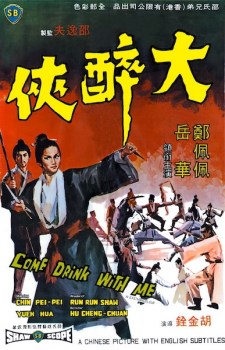 The first wuxia film directed by King Hu (King Chuan, that’s Hu! #MildlyRacistHomophoneJoke), the success of which allowed him to make his next even-more-significant movies in the genre, Come Drink with Me sees a gang kidnap the governor’s son to use him as leverage to release their leader. Instead, the governor sends his daughter, Golden Swallow (Cheng Pei-pei), to rescue her brother. She receives some help from local drunkard Fan Da-Pei (Yueh Hua), who may be more than he’s letting on…
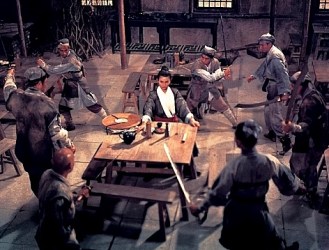 But this is a structural niggle, really. There’s so much else to enjoy — not just the action, but some amusing scenes, engaging characters, strikingly brutal villains (they not only kill a child (you wouldn’t get that in most movies) but they do it for no particular reason), and beautiful widescreen Technicolor cinematography — that it doesn’t grate too much.
 Screened in UK cinemas simultaneously with its TV premiere (and coming to the big screen in various other countries over the next week or so, too), the latest episode of the BBC’s modern-day Sherlock Holmes series is actually a standalone adventure set in the character’s original Victorian time period.
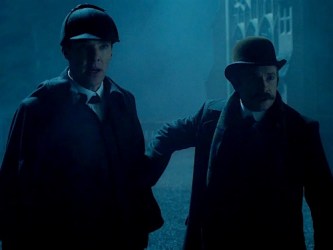 The case they find themselves embroiled in is a little more period than usual, however, with lashings of Gothic and some of the trappings of a Christmas ghost story. The episode is co-written by series creators Mark Gatiss and Steven Moffat, and anyone familiar with Gatiss’ wider work can clearly see his influence here. Moffat brings his trademark fast-paced intricately-tricksy plotting, for which individual viewers’ mileage varies greatly: some find it genius, some find it tedious. Is it clever, or does it just think it’s clever? Is it impossible to follow, or were you just not paying enough attention? As to the first question, I think it’s a bit of both; as to the second, I think the episode ultimately answers everything, but you might need to realise a few things for yourself.
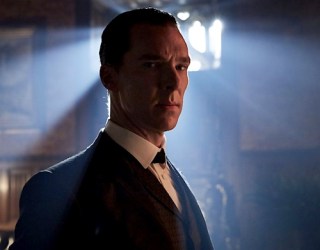 Until the last half-hour or so, anyway, when the modern version suddenly comes crashing in. At first it seems like a clever interlude; a little reminder of the true time period for this version of the characters, and a tease for season four. But it quickly transpires that, no, this episode isn’t actually a wholly standalone aside from the main series — Gatiss and Moffat have found a way to integrate it into continuity. For me, this is where the special begins to come apart at the seams; not because I inherently object to this integration, but because from that point on the episode begins to jump back and forth between the present, the imagined past, and various other dream-state asides. It’s almost entirely justified by the beautifully-shot Reichenbach Falls sequence, but a spot of cinematographic prettiness doesn’t really excuse the way the story goes a little haywire. The least successful part of all, for me, is that it calls into question the solution for the case we’ve just been presented with… but then doesn’t get round to offering another, meaning you kind of feel like the case hasn’t been solved, even though it presumably has been, with the first solution. I think.
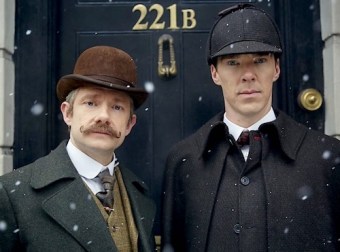 As someone who enjoys Sherlock Holmes in his proper era but is also a fan of this modern day version (I would say “a big fan”, but I’m not one of those people), I’d rather they’d played this a little more straightforward. Not a lot — it’s still under the umbrella of Sherlock after all, and the era-transposed stylistic flourishes in the first hour-ish worked very nicely in my opinion — but the mixed-up mishmash of the final act dilutes the effectiveness of the entire experience. There’s fun and thrills to be had along the way, but in another form it could perhaps have been a Sherlockian classic in its own right.
 John Singleton became the first African-American Best Director Oscar nominee, as well as the youngest, for this debut. 23 years on, his story of the lives and troubles of young black men in L.A. remains sadly pertinent.
 Matt Damon turns whistleblower (or does he?) in this amusing romp based on a true story of complicated corporate fraud.
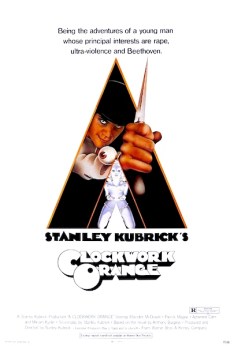 Yet more dystopian sci-fi! Who doesn’t love some dystopian sci-fi? Here we’re in the ’70s, though (makes a change from the ’80s), with writer-director Stanley Kubrick adapting Anthony Burgess’ novel into a film so controversially violent the director himself eventually banned it from release in the UK for decades. Almost 45 years on, it’s testament to the film’s power that it is still in parts shocking.
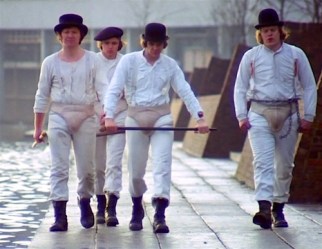 unfortunate byproduct of the film’s age. Other parts just go on a bit too long for my taste — there’s barely a sequence after Alex’s arrest that I didn’t feel would benefit from getting a wriggle on. I don’t think this is me bringing a youth-of-today “everything must be fast cut” perspective to the film, I just found it needlessly languorous at times. Maybe I was missing a point.
 Kubrick ends on a much more ambiguous note… so ambiguous, I’m not really sure what it’s saying… or even what all the ambiguities actually are…
 This neo-noir revenge drama with a twist has received such acclaim from critics and bloggers alike that it’s practically set up to fail.
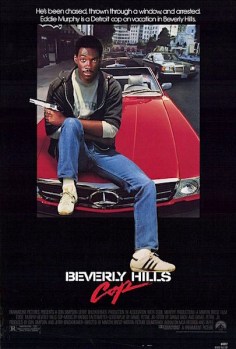 The last time I watched the first entry in a once-popular ’80s comedy cop movie series,
 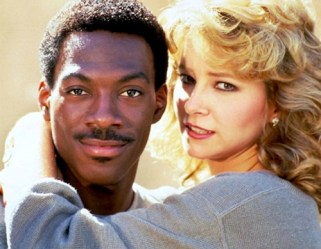 Murphy’s not the only good thing, though. Judge Reinhold and John Ashton make an excellent double act as the pair of cops assigned to keep an eye on Foley in Beverly Hills; Ronny Cox is their amenable boss; Steven Berkoff pretty much just has to turn up to be an excellent villain; Lisa Eilbacher is decent as the girl (presumably changed from being a love interest after they cast a black guy). Her part doesn’t exactly call for a great deal, but she’s fine enough in it; as good as anyone ever is in such a limited role.
 the mystery is non-existent (even if it wasn’t obvious Berkoff would be the villain, the henchman who did the deed is shown to be in his employ the first time we meet him); Brest’s direction is unremarkably static… you could probably go on. But thanks to Eddie Murphy and the rest of the cast, Beverly Hills Cop winds up a highly watchable, very likeable spot of entertainment.
 100Films.co.uk