
Sam Liu | 77 mins | Blu-ray | 1.78:1 | USA / English | 15 / R
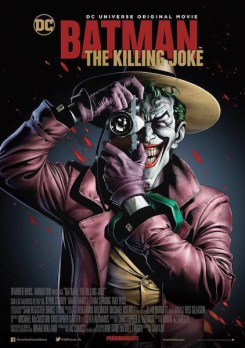 Alan Moore and Brian Bolland’s 1988 graphic novel The Killing Joke is one of the seminal works of superhero comic books’ move into seriousness in the ’80s, sitting just behind the likes of Watchmen, The Dark Knight Returns, and Batman: Year One in terms of significance. It’s also seen by many as the definitive story about Batman’s nemesis, the Joker, and has influenced the live-action interpretations of both Jack Nicholson & Tim Burton and Heath Ledger & Christopher Nolan. It is not without controversy, however, thanks in large part to its treatment of Barbara Gordon / Batgirl; and Moore has since semi-disowned it, saying it has no intrinsic value because it has nothing to say about real human beings, only commenting on the comic-book-y relationship between Batman and the Joker.
Now, it finally makes its way to our screens in animated form. What took so long? Well, it’s dark, and to do it justice the makers needed the potential to make it R-rated. Given permission to do so by Warner, they’ve done just that. So here we have a very faithful adaptation of the graphic novel… but it’s a bit short, so there’s a 28-minute prologue stuck on the front. Designed to ameliorate some of the issues people have with the original book, it’s actually only made things worse, containing brand-new controversial elements all of its own. Oh dear.
In this new segment, Batgirl (Tara Strong) and Batman (Kevin Conroy) find themselves on the trail of Paris Franz (say it aloud… or don’t), a young upstart who wants to take control of his uncle’s organised crime operation. Once that business is dealt with, 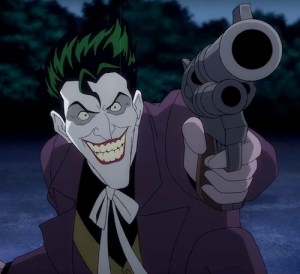 we get to the familiar meat of the story, where the Joker (Mark Hamill) decides to prove a point — in a violent and twisted fashion, naturally.
To really discuss where this adaptation of The Killing Joke goes awry, I’m going to have to stop being coy about spoiling a 28-year-old comic book that had lasting ramifications for Barbara Gordon’s place in the DC universe. Also, spoilers for this new film, too. You have been warned.
So, for those not in the know or who would like a recap, the Joker’s plan is to prove we’re all just one bad day away from going insane like him. The target of his experiment is Commissioner Gordon (Ray Wise), and he begins by shooting his daughter Barbara in the spine, paralysing her, then taking photos of her naked to torment the Commissioner with later. (The actual photo-taking isn’t depicted in the comic or this film, but the images are hinted at later on.) This is problematic for a number of reasons, not least Barbara’s lack of presence in the story as anything more than a pawn to torture her father.
The film’s solution is to begin with a standalone Batgirl adventure. Not an inherently bad idea — it could make her a more rounded character; someone we care about for herself, not just a minor victim in some other game. However, screenwriter Brian Azzarello (and, presumably, director Sam Liu and executive producer Bruce Timm) have tried to do this by making her horny for Batman, and have that infatuation actually consummated in an al fresco rooftop sex scene (not graphically shown, but the film is unequivocal about what happened). 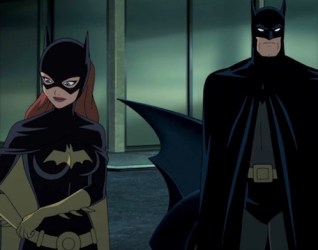 To say the least, this doesn’t seem like the best way to go about making her an independent, rounded human being — it comes off like fan service. No, worse: fan fiction. A scene earlier on where she explains her Bat-infatuation to her gay best friend is presumably meant to suggest a genuine motivation for the eventual sexy times, but it all comes across as a great big excuse.
To top it off, it in no way informs the adaptation of The Killing Joke that follows. It makes nods towards some of the thematic concerns of the main story, but, structurally, it’s not part of the same film at all — there’s a fade to black & fade back in that really signals the end of one production and the start of a new one; the end of an opening short film and the start of the feature presentation. Only the ‘feature’ is far too short (44 minutes before credits), so that ‘short’ is clearly there to bulk up the running time.
The titular adaptation that follows is arguably faithful to a fault. If you’re seeking to make it feature-length, would it not have been better to expand the story out and examine some of its points more fully, even if the points you illuminated were about plot logic rather than themes — the original comic is very short and arguably a little rushed in places, so I think there’s definite room for expansion. In fact, while it might make sense to expand the role of Barbara Gordon for reasons of taste and social mores that have (not wrongly) since been projected onto the comic, from a purely narrative point of view the character who needs expanding is Commissioner Gordon. In the comics he’s a regular cast member, so it can afford to take as read his status as an “ordinary man” — or perhaps even a paragon of virtue, 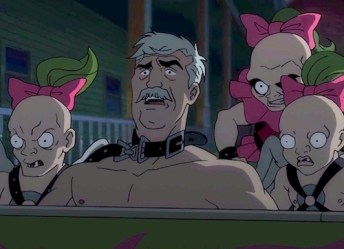 which brings its own problems to the story. But while he is a familiar figure in the Batman mythology, and so by extension to anyone who’s likely to watch this film, it’s also a standalone movie, not part of a series, and so it would be beneficial to establish his character somewhat before the Joker’s plan for him gets underway.
Heck, the film’s own special features even feature a psychologist talking about how it’s Jim Gordon’s story! While the Joker and Batman are the same characters at the beginning and the end, it’s Gordon who goes through a terrible ordeal and then has a choice to make. Yet in spite of that he’s treated as the fourth lead, at best, with the Joker and Batman taking precedence in the main adaptation and Barbara gaining masses of focus thanks to her half-hour preamble. It’s probably the twin desires to put the graphic novel on screen as-is and to in some way justify Barbara Gordon’s role in it that have led to this point. A less literal adaptation — one prepared to expand and elucidate the story, rather than just tack on an extra part at the start — could have found room to deepen both the Gordons.
Still, I suppose the literal faithfulness of the story adaptation will please purists. And reuniting the key voice acting cast from Batman: The Animated Series, arguably the all-time definitive screen interpretations of Batman and the Joker, is always fan-pleasing. Hamill, in particular, is fantastic, even when having to deliver Alan Moore’s typically verbose dialogue. However, one of the reasons the graphic novel is so beloved is Brian Bolland’s detailed, realistic, dynamic artwork. His draftsmanship transcends the actual narrative of Moore’s writing so that, however distasteful the tale being told, it looks incredible. Naturally, this animated adaptation loses that entirely, employing the standard “Saturday morning cartoon +” aesthetic of these DC direct-to-video movies. There are sound budgetary reasons for that, but it means the focus falls even more squarely on the narrative rather than the images.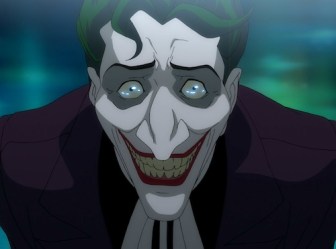 (It’s somewhat ironic, then, that (as ever) Alan Moore doesn’t receive an onscreen credit while Bolland does.) There are a handful of effective visuals here (the Joker’s gleeful face as he turns on the amusement park, its lights twinkling in his eyes), but they’re the exception to work which is adequate — good for what it is, even — but unremarkable.
For such a long-awaited adaptation, it’s difficult to conclude The Killing Joke is anything other than a disappointment. It didn’t have to be that way: I thought Warner made a good hash of adapting Year One, and an even better one of The Dark Knight Returns. While this adaptation does allow some of the book’s inherent quality to carry through, The Killing Joke was always going to be more problematic due to its content, and the filmmakers’ clumsy attempts to fix that have only made it worse. Shame.

Batman: The Killing Joke is out on DVD and Blu-ray in the UK today.
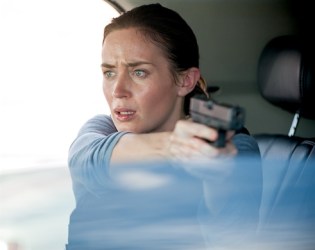
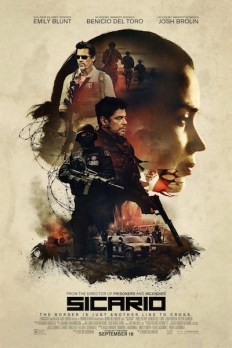 Fighting a losing war against Mexican drug cartels in Arizona, FBI agent Kate Macer (Emily Blunt) is keen to be enlisted to an interagency task force run by Department of Defense consultant Matt Graver (Josh Brolin). Taken along for the ride but kept in the dark, Macer becomes increasingly concerned that all is not as it seems — especially when it comes to Alejandro (Benicio Del Toro), a mysterious task force member whose motives seem to be a big secret…
 Arguably, the film loses its way a little when it does reach that point. Answers are forthcoming eventually, and the third act occasionally abandons the conflicted and complex world that came before it for more straightforward and satisfying turns of events. Fortunately, the film survives such wobbles thanks to the strengths it’s already established, and with an even deeper dive into moral greyness even while it seems to be offering a simplistically fulfilling climax.
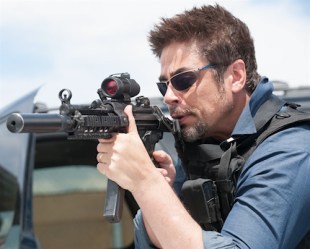 Brolin may be a headline lead alongside those two, but his character is given little to work with beyond being a son-of-a-bitch who keeps Macer onside with (deceitful) charm. He’s fine but unremarkable in that role. Perhaps
  Tension is definitely the name of the game when it comes Jóhann Jóhannsson’s score, which was also Oscar nominated. Dominated by elongated, heavy strings and pacey, heartbeat-emulating percussion, it makes the threats lurking in every corner feel tangible; makes the sense that everything is doomed and liable to go south at any moment palpable. It’s a major contributor to the film’s mood.
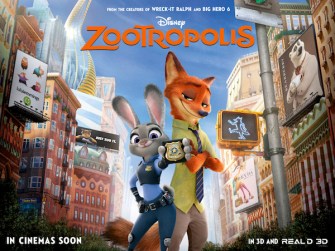 Disney’s 55th Animated Classic is their second highest-grossing ever, the 25th film to take over $1 billion at the worldwide box office, which makes it a hit of
  I think Zootropolis may be the first time they’ve attempted a neo-noir crime thriller, though. And I bet no one ever thought they’d see a Disney film with a sequence set at a nudist resort. Or in a drugs lab, for that matter. Or one with a substantial parody of
  However, that’s not to say kids can’t get enjoyment out of it: there are plenty of colourful characters and locations, relatable situations, cross generational humour, and a moral lesson young’uns will understand. There’s the DMV sequence, for instance, which is grounded in an adult experience but so funny it must cross over. Considering all the praise I’ve heard for that one scene, it’s also a feat it lives up to the hype. It’s gorgeously animated throughout, bolstered by a world that has been magnificently realised, with all the different themed districts of the city. (After all the Disney movies that have had contrived TV series spin-offs, this is a film that actually feels like it deserves one. The setup is obvious — a police procedural — and the world the film suggests is big enough to warrant it. Heck, it practically demands it — there’s so much more of this world, you want to see it explored.) Michael Giacchino’s score is different too: memorable and fun, in part thanks to using a cornucopia of unusual instruments to provide a ‘world music’ sound that’s in-keeping with the movie.
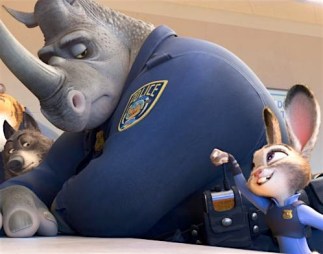 too, but that doesn’t mean the journey getting there is any less fun.

 Score:







 The problem with watching so many Shaw Brothers movies so close together, as I have this year, is they begin to blur into one. There’s definitely a house style to the stories, the photography, the sets — everything, really. Even the particularly good ones can fail to lodge in the memory as discrete units.
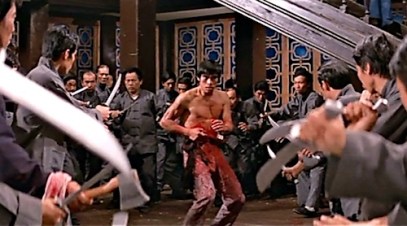 At the end of the day, tightly choreographed and expertly performed action sequences such as this are why we come to these movies; and, at the end of the day, The Boxer from Shantung doesn’t disappoint.
 Beverly Hills Cop III always seemed to be on TV when I was younger — on BBC1, quite late, but I guess not that late because I always seemed to stumble across it during the theme park climax. In reality it can probably have only been on a couple of times, but that’s how it seemed. And because it caught my attention, I somehow knew that one day I’d end up watching the entire movie, just to see. To see what, I’m not sure; but to see. Of course, that necessitated watching the
 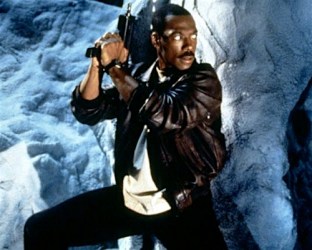 Eddie Murphy and [the film’s director] Martin Brest made it funny.” The script for the threequel also wasn’t any good (according to some versions of events, that’s why original co-stars John Ashton and Ronny Cox didn’t return), but Landis tried to put Murphy in funny situations and see what improvisation threw up. Murphy, keen to be taken seriously, worked around that.
 In
In 
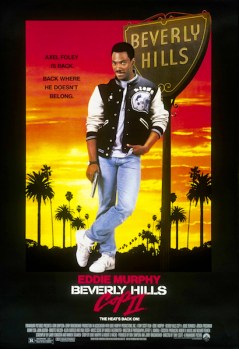 Wiseass Detroit cop Eddie Murphy heads back to the titular wealthy California city

 100Films.co.uk