2011 #47
Pete Michels | 85 mins | DVD | 15
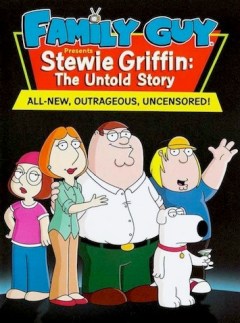 Following Family Guy’s cancellation after three seasons, it somehow found a new lease of life on DVD, posting surprising sales in what was, I suppose, the early years of the format’s mass take-off. This led to a rethink by Fox and a belated (as in, several years later) renewal for the animated sitcom. This story was originally intended to form a three-part opener to the first season back, but Fox wanted a direct-to-DVD movie too — presumably to capitalise financially on that previous success — and so those three episodes were retooled into a feature.
We know how this can turn out.
And it does feel like three Family Guy episodes stitched together. Much like that other stitched-together-from-three-animated-TV-episodes movie, Star Wars: The Clone Wars, the events of part one (or the first twenty-odd minutes) seem entirely separated from the two-parter that makes up the back hour. Fortunately the Family Guy team seem to have more common sense than their Lucasfilm counterparts, choosing to link back round to the start for their film’s climax, tying it all together after all. Nice work.
The plot is more or less suitably movieised — despite that first-part almost-disjoint, it’s a more-epic-than-usual tale of Stewie’s origins (sort of) — though it seems slightly held back by its genesis as three TV episodes and the need for it ultimately to be split back up (it was broadcast, censored, as a three-parter at the end of the comeback season). With subplots that begin and end within each half-hour(-ish) segment, it plays about as well as watching a three-parter back to back… which is more than can be said for that Star Wars film. Consequently, it also feels just like regular Family Guy — the same level of humour, basically — though it seemed to me like there were more scatological jokes than normal, some of them going on too long as well. If you’re not a regular viewer of the series, references to running jokes will pass you by; equally, the nature of its humour, often based in cultural references, means that some bits that are obviously jokes will elicit no more than bafflement from a non-versed viewer. Still, there’s plenty of more universal humour too. It relies on the usual style of numerous non sequitur flashbacks and asides. Which, again, is fine — that’s their style; it would be wrong to be anything else.
The need to turn three TV-aimed episodes into a movie — and, somewhat ironically, back again afterwards — does have a few effects on proceedings. Various bits had to be cut for the broadcast version, most for the silly technicalities of US TV rules — the fact the DVD is rated 15 over here, 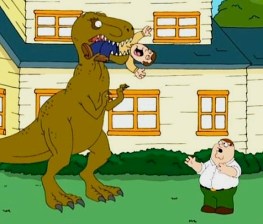 the same as the series normally is, shows how arbitrary US regulations are. It feels like there are a few more jokes that are slightly dirtier than normal and there are a few extra swear words, but they consciously didn’t go OTT with them and, thankfully, it shows. But actually, most of the stuff that’s cut (as detailed on the commentary or in full here) is for those daft US rules; so, stuff that just steps over a certain line; stuff that, to be honest, most Americans wouldn’t even notice.
Also, contractually the film had to make a certain length, so there’s some conscious padding in there — though, as they note on the commentary, they did their best to make the padding funny too. Take the intermission, for instance, which features just voices over a black “Intermission” screen: dirt cheap to animate (what with there being no animation) but it both adds a bit to the running time and smoothes the jump between parts two and three.
I don’t know how much I’ve reviewed the film and how much shared some behind-the-scenes tidbits here, but if you like Family Guy… well, you’ve probably already seen this (it’s been out, what, six years? I’m behind here), and if you don’t like it there’s nothing to change your mind.  And if you’ve always been curious but never given it a go, don’t start here — I don’t think it would be incomprehensible to first-time viewers, but I don’t think it’s the best introduction to the series either, and it probably makes more sense if you know the characters a bit.
This score reflects that lack of universal appeal; for regular viewers, I’d say it’s good quality and probably four stars.
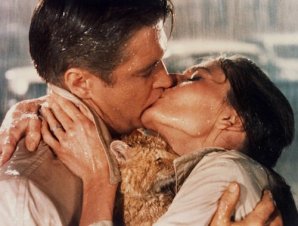
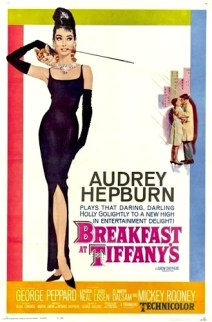 Breakfast at Tiffany’s is a stonkingly famous film — it’s the one most of the famous images in the cult of Audrey Hepburn come from — this despite the fact that, as one IMDb review puts it, the plot makes it sound like “a gritty, vulgar film”.
 but it works here, especially when sung plainly by Hepburn.

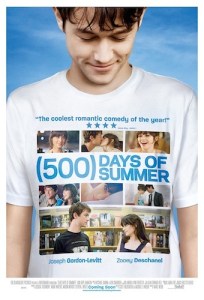 Directed by Marc Webb (
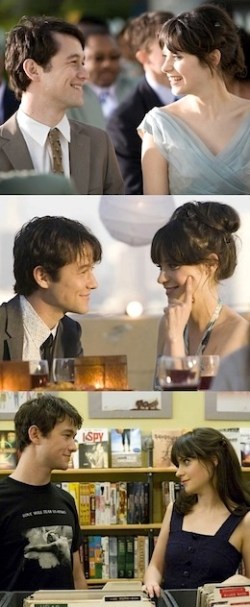 They all sit surprisingly well within the story though — yes, some (perhaps all) are showing off a bit, but in a way that, by and large, works. And I’m a little bit glad I can’t quite list them all, because half the fun of (500) Days of Summer is watching what looks like a borderline-mainstream indie rom-com that suddenly throws these curveballs at you.
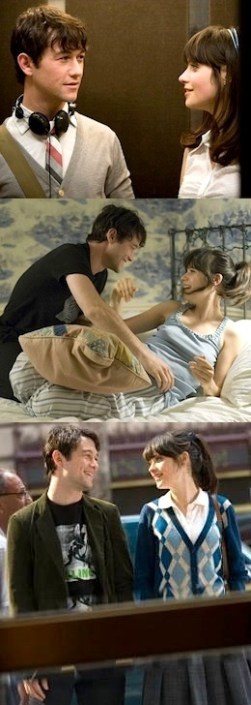 Not that those three roles are identical by any means, but you can see how one led to the other.
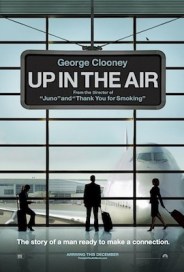 Sometimes, it’s best to just come clean: I don’t have much to say about Up in the Air.
 Cowriter-director Jason Reitman has created a surprisingly likeable film. It’s easy to see how Clooney’s character — very much the centre of the piece — could be irritating or vapid or any number of other negative adjectives, but instead he’s… well, he’s George Clooney, isn’t he? He’s all charm. If you were going to be fired, you’d probably want George Clooney to be doing it. For a character who is essentially an expansion of the
  Up in the Air got its Best Picture nom in the first year the Oscars went back to 10 nominations for the big prize. I’m not sure many would disagree that it’s one of The Other Ones — one of the ones that quite probably wouldn’t’ve been there if it hadn’t been for the category doubling in size. And if it was, it’d be The Other One — the token indie/comedy nomination that everyone knows isn’t going to win but was quite good all the same.
 The first sequel (I say that in the hope there’ll be more) to
  there’s a perhaps surprising undercurrent of genuine emotion and serious issues. This is one of the things that marks these two films out from the overcrowded kids’ film genre: they’re prepared to tackle things in an appropriate way, never allowing them to overwhelm and make an Issue Film but not sanitising them because It’s For Kids. The ending to a lovely picnic may well bring a tear to your eye.
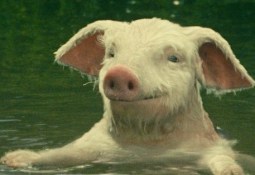 CGI is also used again to magical effect. And, even more than that, to very cute effect. It feels like a bunch of scampering CG piglets, or a cuddly CG baby elephant, should be a little disturbing and wrong, but they’re not — they’re all incredibly cute, in fact. Aww. And they get up to plenty of funny and entertaining things. As with most of the enjoyment in both Nanny McPhees, it may be aimed at children, but I think it’s done in a way that appropriately-hearted adults can enjoy too.
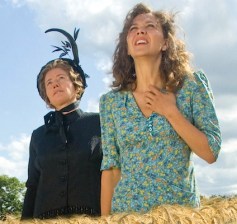 I loved the first Nanny McPhee, which always sets a sequel up for failure. However, Thompson (though she’s not in the director’s chair I think we can be certain she’s in charge of this series) doesn’t disappoint. She’s taken a brave route by setting the film in a completely different era with an all-new supporting cast (except for one lovely last-minute surprise for the attentive), but it’s paid off handsomely. This is at least as magical as the first, perhaps even more so.
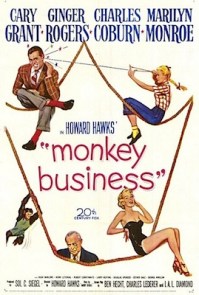 Monkey Business came
 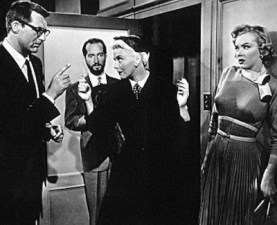 followed by “Cary Grant and Ginger Rogers behave like 6-year-olds”.
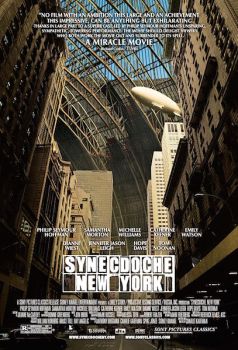 Despite its unpronounceable title, Synecdoche, New York starts out like a relatively normal comedy/drama… but then weird touches begin to creep in. A house that’s on fire when a character buys it and continues to be on fire for the next several decades, for instance. No one in the film bats an eyelid. Then the really weird bit arrives; the bit you all probably know; what the film’s about (except, of course, not what it’s About), as Philip Seymour Hoffman’s theatre director begins to construct a life-size New York within a warehouse.
 and I haven’t begun to care in the months since I watched it. It’s the kind of film where, as it gets on, you feel it’s a rich experience that you’ll have to ponder for a bit once it’s done, even if there’s something you quite fancy watching on the same channel immediately afterwards. But by the end it became the kind of film I was fed up with pondering, and I bloody well watched what was on the same channel immediately afterwards. Kaufman’s weirdness can wear you down to the point where characters who were interesting and ideas (both plausible and of Kaufman-logic) that had potential cease to be worth caring about; where you go from the point of “I’ll look up an explanation on the internet once it’s finished” to “…meh”.
 Bolt is the 48th film in Disney’s animated canon (whatever the official name for that is these days), from their CG-only era that filled most of the ’00s. It’s a period already remembered as When Disney Lost Its Way, after the second (or is it third? I forget) ‘golden era’ of the early ’90s; the time that produced flops like
 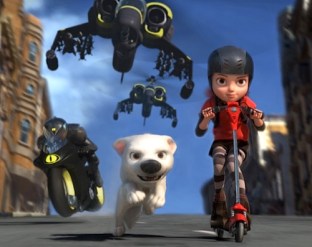 Also noteworthy are the action sequences. Far from being perfunctory attempts at liveliness, these are properly exciting, making full use of 3D CGI to create exciting and dynamic sequences. I’m not just talking about the couple we get from the TV-series-within-the-film either, but also the ‘real world’ ones as Bolt, Mittens and Rhino jump onto trains, out of moving vans, escape from a pound, etc. Of course, the TV-series-within-the-film is completely implausible — like you could film a TV show with massive action sequences in such a way that you only ever do a single take, never mind achieve all those effects on a TV budget. But then this is a film where a talking dog, cat and hamster work together to travel from New York to Hollywood entirely of their own volition — I think it’s safe to say no one’s aiming for documentary levels of realism.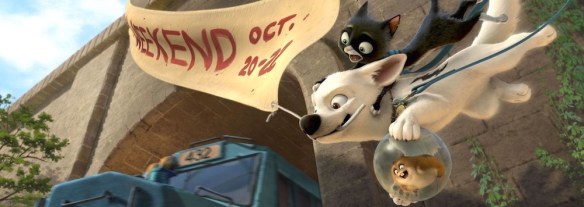
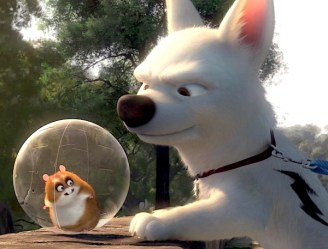 It would be easy to dismiss Bolt as part of Disney’s CG folly, especially as it stars Miley Cyrus and is immediately followed by their return to 2D animation, but I think that would be a mistake. It’s a fast-paced and fun adventure, with accurately-captured animals meaning it’s especially likely to appeal to dog lovers. Disney’s next golden era just might begin here.
 Roman Holiday is the kind of film where its list of achievements don’t quite precede it — Best Picture nominee (it lost to
 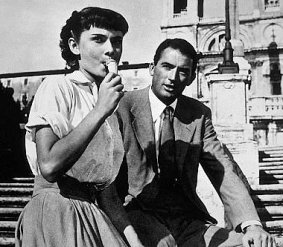 the Princess as they take her on a day messing about in Rome.
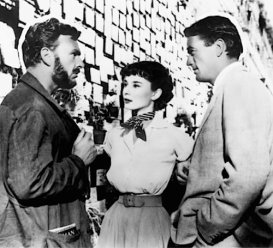 If, instead, you remember that he’s Fundamentally Kind, it might be less troubling that he has a secret plan most of the time.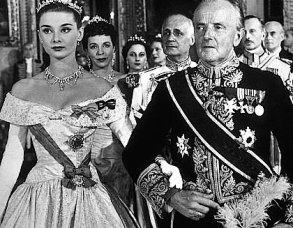
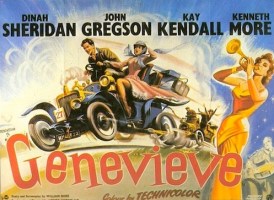 The further behind one gets on reviews, the easier it becomes to forget a film. Or not so much forget the film itself, but when one watched it. Or, to put it another way, I was a little surprised when I looked back over the 20 films I had left to review and saw Genevieve still there. At least I had a hundred or so words of notes for this one.
 heightened by an evening of irritations and revelations, tipping the second half’s journey-back into an out-and-out race. It’s the second half that contains the more overt comedy as the rivals compete to scupper each other’s chances. That’s not to do down the more gentle style of the opening half, which has its moments. That said, depending on one’s perspective, the realistic sparring of the married couple during the opening scenes might be seen to give the film a bit of an edge of reality, making it not just the staged, (relatively) high-concept comedy it could have been.
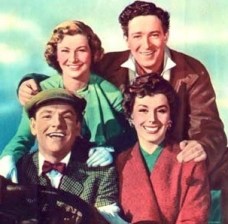 Director Henry Cornelius was vetoed on most of his first [casting] choices… and he was forced to make it at studios he didn’t want to work at. Cornelius’ displeasure was acutely felt by cast and crew as he didn’t hide how unhappy he was. He was also seemingly highly lecherous. Consequently both Dinah Sheridan and Kay Kendall carried whistles on them at all times… Olive Dodds, Rank’s head of contract artists, later testified that every leading cast member came to her at one point and said they wanted off the film.”
