2011 #19
Stephan Elliott | 93 mins | TV (HD) | PG / PG-13
 There doesn’t seem to be much love in the world for Easy Virtue, a witty adaptation of Noel Coward’s play (previously filmed in the ’20s by Alfred Hitchcock). A quick peek at some of my regular go-tos for such opinion-canvassing reveals a lamentable 6.6 on IMDb and an even worse 52% rating at Rotten Tomatoes. I don’t understand.
The plot concerns a young aristocratic Brit bringing his new American girlfriend — shockingly, a divorcee racing driver — back to his family’s stately home. The family are old money — the proper kind, where all the money’s gone. Cultural clashes and all sorts of other hijinks follow. Hilarity, with pleasant inevitability, ensues.
Obviously Easy Virtue is, primarily, a comedy. Fortunately, it’s frequently hilariously funny. You’d expect nothing less from a work taken from Coward, I suppose, and it doesn’t disappoint… well, didn’t disappoint me — as we’ve seen, others are a different matter. But hush, we’ll try to ignore them for the moment. There’s a decidedly wicked streak to the humour at times (a subplot about the fate of the family Chihuahua; lots of double entendres), which is welcome. The overall tone is light, largely, but not light in the head.
Director Stephan Elliott adds something extra to the wit with his choice of a wonderfully inventive soundtrack. (No disservice to those directly in charge of the music, but I’m certain I read somewhere —  possibly in the soundtrack CD’s liner notes — that the following was Elliott’s idea.) Standards from the era are present and correct, but Cole Porter-styled reinterpretations of modern songs like Car Wash and Sex Bomb raise a smile whenever they turn up unexpectedly. It’s fabulously cheeky.
My notes also add that it is “beautifully shot [and] magnificently directed”, but unfortunately I come up short for examples after so long.
It’s not all giggles, though: there’s some surprisingly deep drama and emotions tucked in here, like the truth about Jessica Biel’s character’s past, central to the climax of the film. Naturally it falls largely on the cast to make this work, and they certainly do. The performances are frequently exceptional, especially Colin Firth, who negotiates the humour and drama with ease — his recollections of World War One being one of the darker points, for instance. I’m not entirely sure why but I have a distinct dislike of Kristin Scott Thomas, but here she’s very good as the nasty, coldly cruel mother.
I also particularly want to highlight Phillip, the awkward brother of the neighbours, and as such a minor character, played by Christian Brassington. This is the kind of character who turns up in plenty of comedies; a role that usually stops at “bumbling fool who likes the lead female but has no chance in a sweet, humours kind of way” (succinct, I know). Here, however, the character is redeemed at the end, when he tells a nasty character how cruel she’s been and aids in the ‘rescue’ of said lead female when she’s embarrassingly stranded.  It’s still not a big part, nor a showy one, but those little closing tweaks left him standing out for me.
Describing Easy Virtue in a single word is easy: “underrated”. A shame that’s the word to reach for, but equally I’m not sure what other could appropriately encapsulate it. Witty, cheeky and irreverent, with surprisingly dramatic undertones — perhaps “jolly good fun” would suffice. Apart from that being three words.
Easy Virtue placed 8th on my list of The Ten Best Films I Saw For the First Time in 2011, which can be read in full here.

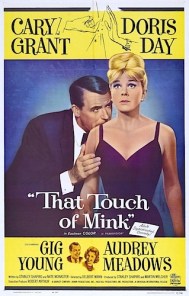 Starring Doris Day as a regular girl who wants to marry Cary Grant’s rich businessman for love, while he just wants to get her into bed, That Touch of Mink is a sex comedy… but being a film produced in ’60s America, no one comes close to using such language. But it’s unquestionably all about that.
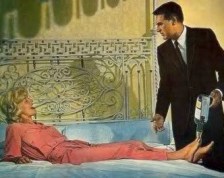 The subplot about his therapist pays such dividends it’s even used for the film’s final gag.
 I saw a trailer for How to Train Your Dragon at the cinema a few months before its release. Having never heard anything of it, I thought it looked to have basic animation and a too daft tone. I wrote it off, expecting the kind of animated movie that would be slagged off as a Pixar-wannabe… and probably still land an Oscar nomination because there never seem to be many contenders for the animated feature award. Imagine my surprise, then, when it garnered endless positive reviews and a huge box office. What?

 Holiday stars Cary Grant as an everyday chap who falls in love with a girl who, it turns out, is a wealthy heiress type… but who it also turns out may not share his views on the future. Her kooky sister, played by Katharine Hepburn, on the other hand…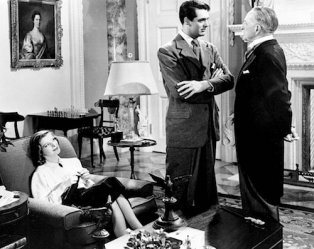

 David Mitchell and Robert Webb move from the small screen to the big one in this comedy from the writers of their sitcom
  while Webb is adept at dancing sillily and, increasingly, hosting / voice-overing quickly-made cheap rubbish for various channels. These are all skills in their own way, but they don’t necessarily demonstrate brilliant acting. But, hey, they’re fine here.
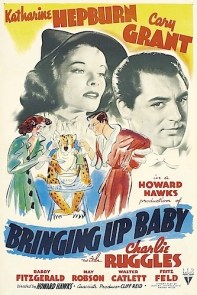 A box office flop on release (which directly led to Hawks being fired from his next film and co-star Katharine Hepburn being bought out of her contract & named “box office poison”), screwball comedy Bringing Up Baby has grown massively in stature since. And deservedly so, because — aside from a first act where Hepburn is no less than irritating, and an occasionally slow middle — it has some real comic high points and can be riotously funny.
 Also worth noting is that it is, perhaps, the first work of fiction to use the word “gay” to mean “homosexual”. Apparently the term originated in the homosexual community in the ’20s (possibly earlier) but would not become widely known until the late ’60s. Its use here was ad-libbed by Grant, though whether that makes it more or less likely to have meant “homosexual” I don’t know. I suppose no one was ever in a position to ask.
 Disney’s 50th animated feature is Rapunzel in all but name, for no particularly good reason. It seemed to be met with universal praise on its release last year, critics hailing it as a return to Disney’s previous quality after a run of lacklustre releases, in particular the underwhelming return to 2D in the year before’s
  a number I usually particularly enjoy. It has one, I suppose, but it’s one of the weakest examples I’ve ever heard.
 A faded action movie star (Burt Reynolds) thinks he’s been signed up to play King Lear with the RSC… but when he arrives in England, he finds it’s just a small village amateur dramatics group. Hilarity, and the odd heart-warming message, ensue.
 Imelda Staunton and Derek Jacobi, all ceaselessly watchable, plus a supporting cast of faces you’ll likely recognise from British telly.
 Probably the best bit is the series of films Reynolds’ character is known for: Ultimate Finality 4 plays as a nice, subtly-used background gag.
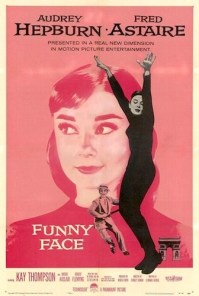 Like
Like 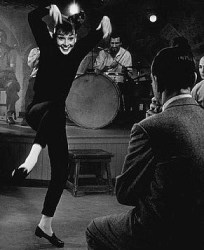 or dismissed the dullness of philosophy for the glamour of couture, but it takes fair jibes at both equally — it’s not mean-spirited or cynical or dismissive, just… quite true.
 Funny Face seems to have plenty of critics — mainly on the notion that Hepburn could be said to have a funny face. Pretty shallow reason to dismiss a whole film, if you ask me. While there are couple of bits that don’t wash with my appreciation — the age gap; I could take or leave the two scenes at the church — there’s far more to love about the film.
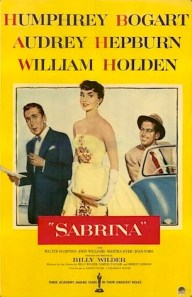 Audrey Hepburn’s next leading role after her star-making turn in
  But it actually feels very mean-spirited — Sabrina is likeable enough that we dislike his machinations. Which means that, for me anyway, there’s no truly supportable lead character. And then at the end he genuinely falls for her, which I found an equally implausible development — as well as seeming totally out of character, it did nothing to redeem what had come before. And he’s old enough to be her dad.
