Quentin Tarantino’s Swinging Sixties Movie Marathon Review Roundup

To promote his new movie, Once Upon a Time in Hollywood, writer-director Quentin Tarantino has curated a selection of movies from the Columbia vault (because Columbia is owned by Sony, and Sony are releasing OUaTiH) that are in various ways connected to said new movie. Some are influences on its style; some are the kinds of movies that the film’s characters would’ve appeared in; some speak to the societal concerns of the era. Along with film writer Kim Morgan, QT has hosted a “movie marathon” of his ten picks on TV, broadcast in the run-up to OUaTiH’s release in various territories (it’s on Sony-owned channels in 60 countries, and has been sold to other broadcasters in 20 more — “check local listings for details” and all that).

It’s been on this past week in the UK, airing nightly at 11:30pm on Sony Movie Channel, finishing with a double-bill tonight. If you’ve missed it, Movies4Men are repeating the lot next week from 6:30pm. I’m away from home this weekend so will have to catch some of those repeats, but I did watch the films on earlier in the week, and here are some thoughts on the first two…

  • Model Shop (1969)
  • Getting Straight (1970)
  • (If you watched this series elsewhere and are thinking “but those weren’t the first two films,” you’re right: for no apparent reason they’ve juggled the order in the UK.)


    Model Shop
    (1969)

    2019 #106
    Jacques Demy | 97 mins | TV | 16:9 | USA & France / English
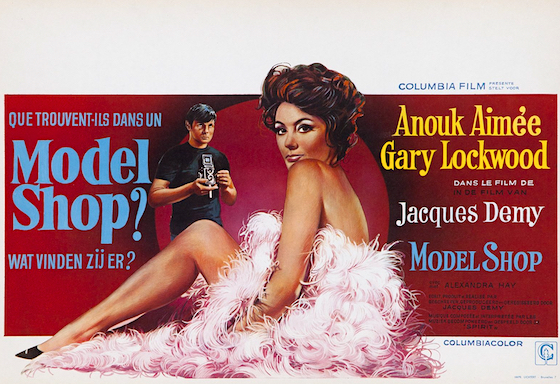
    Model Shop

    The English-language debut of French writer-director Jacques Demy, Model Shop shows us a day in the life of George (2001’s Gary Lockwood), a 26-year-old whose disillusionment is ruining his life. He’s quit his job at an architect’s because it was too low-level — he wants to design the big stuff, but isn’t interested in putting in the work to get to that tier. Consequently his girlfriend is getting fed up with him, he’s in debt, and his beloved car is about to be repossessed. George manages to talk the repo man into giving him until the end of the day to find the $100 he owes, and so he sets off on a drive around L.A. to find a friend to borrow it from. That’s when he spots a mysterious glamorous woman (Anouk Aimée) and begins to follow her.

    That perhaps makes the film sound more focused than it seems in viewing. There’s a definite European sensibility in play here — a laid-back, wandering feel, as George drifts around L.A. in his car, meeting up with different friends in different situations. The possibility of the draft hangs over their heads, informing their actions. As Morgan and Tarantino discuss in their introduction, some people might view the conversations and speeches in the film as being unnecessarily ‘heavy’, but it’s more than mere existentialism when there’s a genuine life-or-death experience just an unwanted call-up away.

    The atmosphere all that creates can make the film feel aimless, but, as Tarantino puts it, “the more you talk about Model Shop, the more you realise there is more to talk about.” Even while it feels like nothing is happening, stuff is happening. It’s the kind of film where we’re accumulating knowledge about the character and his world, and sometimes it’s only with hindsight we realise its signficance. At first it may not even seem like there’s much of a story — what could pass for the inciting incident (needing to acquire $100) is actually solved relatively quickly — but there is definitely a story, even if it’s a relatively small, somewhat undramatic one. This combination is I think why Tarantino describes the film as “deceptively simple and deceptively complicated.” I suppose it depends how much you want to see; how much you want to engage.
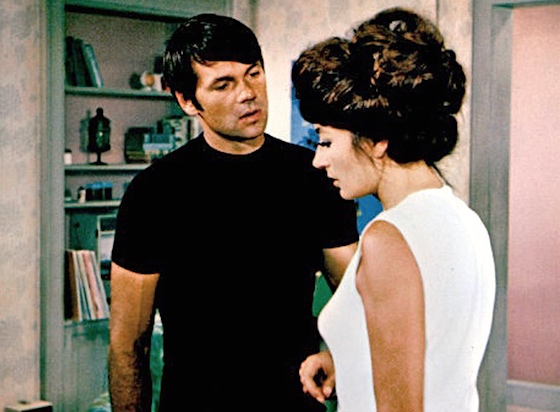
    “Open the pod bay doors, Lola.”

    Personally, I found George to be an immensely, almost painfully relatable character. The way he doesn’t quite know what he wants to do, just what he doesn’t; the way he doesn’t want to put in the long slog, just jump to the more interesting stuff at the end; the way he drifts and kills time rather than doing anything useful; and his big speech after he’s made to consider his own death “for the first time in [his] life”: he’s not a coward, but he doesn’t want to lose his life, because what’s better than life? Only, perhaps, art that reflects it. I’m not saying I am George, exactly, but boy, there were reflections.

    I was less engaged by Anouk Aimée’s character, Lola, who, once she’s properly introduced, takes over somewhat. Turns out she’s a character from Demy’s debut feature, Lola, making this a sort of sequel — only “sort of” because, while Model Shop does continue her story, she’s not at all the focus. Apparently a lot of Demy’s films feature crossover characters and connections in this way, which I guess was also an inspiration to Tarantino.

    I’d not heard of Model Shop before it cropped up in Tarantino’s selection, and it’s not been classified by the BBFC since its original release, so I presume it’s never had a video / DVD / etc release in the UK. While I would hardly say it’s some kind of ‘lost’ masterpiece, it does evoke a place and a time and the kind of lives that may’ve lived there — which is precisely why QT showed it to his Once Upon a Time crew, for the way it depicted L.A. in 1969 (he reckons it’s possibly the best movie ever for showing Los Angeles). Some of it is interesting, but at other times it retains that sense of aimlessness. It’s far from meritless, but I can also see why it’s the kind of film that’s been half forgotten.

    3 out of 5

    Getting Straight
    (1970)

    2019 #107
    Richard Rush | 120 mins | TV | 16:9 | USA / English | 15 / R
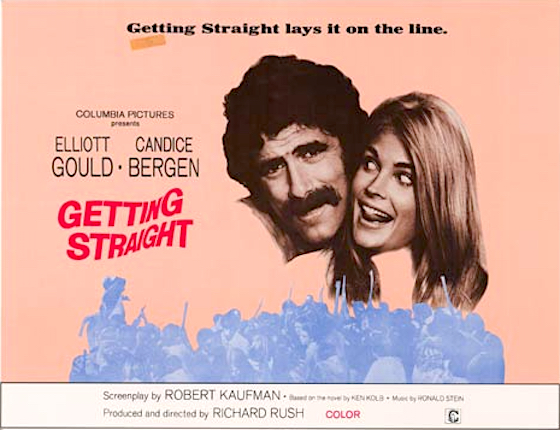
    Getting Straight

    According to Quentin Tarantino (I suppose I could try to independently verify this, but I haven’t), Getting Straight is one of four “campus radical” movies that were all released in 1970 (the other three are Zabriskie Point, R.P.M., and The Strawberry Statement). It stars Elliot Gould as Harry Bailey, a post-grad student at an unnamed Californian university, where he intends to qualify as a teacher, but where he’s also revered by the other students for his history of activism — even as he’s basically trying to join the establishment, they’re trying to lure him back to his old radical ways, beliefs he hasn’t left behind but doesn’t seem to wholly stand by anymore… or does he?

    So Harry is, on the surface, a potentially interesting main character: someone caught between the revolutionary youth and the establishment; who tells the youth why they’re dreaming and deluded, and tells the old men why they need to listen and buck up their ideas; but who is, therefore, conflicted about his own place in it all. But while putting someone in the middle might seem like a fair why to argue for both sides, it’s a bit obvious; allowing the film to have its cake and eat it, to an extent. And while it might seem objectively true that Harry is conflicted, evidenced by his flip-flopping from side to side, he seems pretty sure of himself for most of the film. There’s little done to explore his fence-sitting; to question his status as someone who proclaims to believe certain things yet seems to still find himself sat in the middle. Is he a hypocrite? If he is, I’m not sure the film bothers to interrogate that. So, if he isn’t, is that just because the film doesn’t want to show him as one? Perhaps we’re meant to buy that he’s the only sane person in a mad world, which seems a bit of a cliché.

    At the end Harry does ultimately pick one side, dramatically rejecting the establishment to go join rioting students. Why? He’s goaded into snapping by a professor’s smug, self-satisfied interpretation of The Great Gatsby, but if we’re meant to know why this bugs him so then I missed it. Does he reject the reading? Is it the tone of it, which is like being lectured down to? Maybe it’s just the straw that broke the camel’s back, but I didn’t really follow that as an arc. Earlier in the film Harry talks about finding a student riot sexy, a turn on, and then the movie ends with him and his girlfriend stripping off to shag literally in the middle of a riot, which does make you wonder if he was just thinking with his dick. I mean, he was for half of the rest of the film.
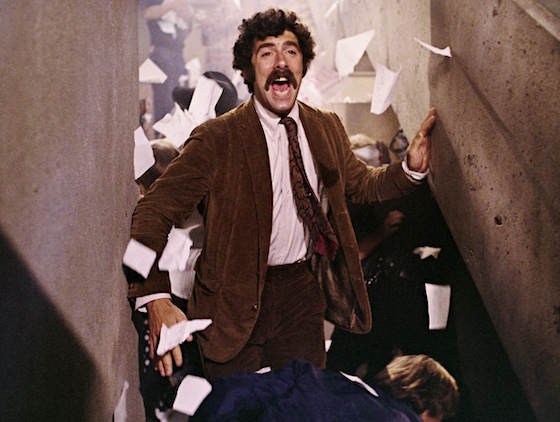
    Ranting and rioting

    With its focus on Harry, Getting Straight is something of a character study, and if this is anyone’s film it’s Gould’s. At times he gets a chance to expose different sides of this divided person, but he also certainly does a lot of shouting, lecturing, and ranting in the role. So maybe instead it’s about the times, with Harry basically a cipher to explore pertinent issues and different sides. It’s based on a 1967 novel, so was a relatively prompt adaptation, though to remain timely it would’ve had to be. Then again, Leonard Maltin’s movie guide apparently describes it as a “period piece”, and there’s a point there: the film is so much about that specific point in time that it couldn’t be set anytime else. Along with the slightly detached view of its main character, it doesn’t seem to be in or of the moment, like you might expect from a countercultural film made during the actual counterculture. It’s reflecting on it, like a period movie.

    Getting Straight is “one of [Quentin Tarantino’s] favourite movies ever,” or so he says, which unfortunately is a sentiment I can’t get on board with. I’m not even sure I can stretch to giving it a passing grade, because it was a bit too freewheeling and, by the end, in spite of the climactic ranting and rioting, kinda boring.

    2 out of 5

    Once Upon a Time in Hollywood is in UK cinemas from Wednesday, 14th August.
    Review Roundup

    Even though my film viewing has slowed to barely a trickle recently (more about that on Thursday), my review backlog is still humongnormous (so I big I had to invent that new world to describe it).

    So, here’s another exceptionally random selection of quick reviews to help clear out a tiny fraction of it. They’re connected merely by being films I watched over a year ago. Three of them score 3 stars, one of them scores 4, and I suspect you won’t guess which that is…

    In today’s roundup:

  • American Assassin (2017)
  • Captain Underpants: The First Epic Movie (2017)
  • Wild Strawberries (1957)
  • Yes Man (2008)


    American Assassin
    (2017)

    2018 #79
    Michael Cuesta | 112 mins | streaming (HD) | 2.35:1 | USA & Hong Kong / English, Arabic, Italian, Polish, Turkish & Persian | 18 / R

    American Assassin

    Based on the Mitch Rapp series of novels by Vince Flynn (and, since Flynn’s death, Kyle Mills), American Assassin is an action-thriller about a CIA operative that’ll feel very familiar to anyone who’s ever seen a film starring Jason Bourne, Jack Ryan, or anything else along those lines. Indeed, it particularly reminded me of the last-but-one Jack Ryan reboot, crossed with something altogether murderier — you’ll notice this has an uncommonly high 18 certificate. I guess that was for some torture that goes on; although it also features a very intense opening scene, depicting an attack by terrorist gunmen on tourists at a beach resort. Considering this is no more than a dumb action-thriller, one might consider it a bit much to include such a viscerally-real-feeling sequence, inspired by relatively recent real-life attack(s), just to kickstart the hero’s journey…

    The film was made for just $33 million, which is chump change in modern Hollywood, and they’ve not done badly off it. The shooting locations do seem a little limited (the main sequence in Istanbul looks more like it was shot in a London shopping precinct (which, as I found out when I checked after, it was), and the bit in Poland is moderately familiar as London too (it’s Somerset House, recognisable to UK cinephiles as where Film4 host their outdoor summer screenings); but I’ve seen worse CGI in bigger-budgeted films, and the fisticuffs are decently staged.

    Altogether, it makes for quite an entertaining action thriller, with some decent scenes, but the story is wholly familiar — Mitch Rapp: Sum of All Shadow Recruits, if you will. Fans of the genre will likely get a kick out of it, especially if they’ve not seen some of the other films it feels so similar to (though if you’re a fan of the genre I don’t see how you wouldn’t’ve), but others need not apply.

    3 out of 5

    Captain Underpants:
    The First Epic Movie

    (2017)

    2018 #91
    David Soren | 85 mins | streaming (HD) | 1.85:1 | USA, Canada, France, UK & India / English | U / PG

    Captain Underpants: The First Epic Movie

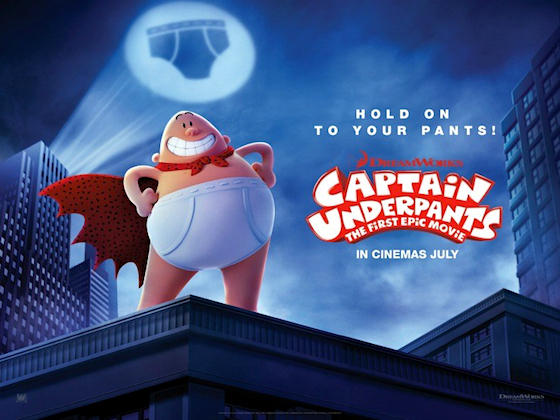
    Somehow I was vaguely aware of the existence of a series of books called Captain Underpants, but I’d paid them no heed because they’re for young kids, and also because they looked stupid. I thought the same thing of this movie adaptation, but then I started hearing good things about it and, well, here we are.

    It’s about two young boys who love nothing more than pranking teachers and creating superheroes. When their headteacher separates them because of the former, they manage to hypnotise him and convince him he’s the latter — the eponymous Captain Underpants. Initially that just makes their school life more fun, but then a supervillain turns up, so he’s handy for that too.

    Obviously it’s all thoroughly daft and primarily aimed at younger children — there are Messages without it being preachy, and it’s suitably irreverent and base at times. It’s the movie equivalent of mixing veg into, like, a burger, or something (I dunno, I’m not a parent. What food do you hide veg in?) But it also contains some good gags for the adults (satire!) and some clever bits of animation and stuff as well — it’s more inventive than you might expect in that regard.

    Indeed, I feel like it’s all-round better than you’d expect, given the title and overall style (the kiddie design and tone; the toilet humour)… but not so much better that it warrants 4 stars, so…

    3 out of 5

    Wild Strawberries
    (1957)

    aka Smultronstället

    2018 #90
    Ingmar Bergman | 87 mins | DVD | 4:3 | Sweden / Swedish | PG

    Wild Strawberries

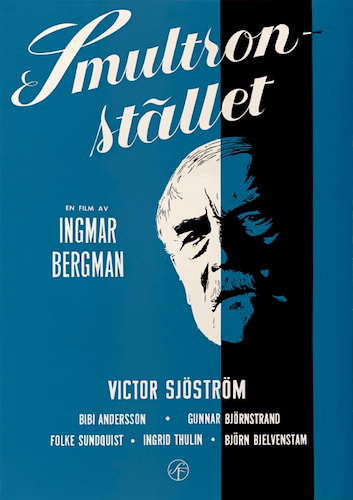
    “Wondrously warm, one of Bergman’s very finest achievements, and a landmark in the history of cinema,” says Geoff Andrew in the notes that accompany the UK DVD release of Wild Strawberries, one of Ingmar Bergman’s most acclaimed movies from a career filled with them. However, speaking for myself, I’m still struggle to get a handle on the director’s output.

    It’s about a grumpy old professor (Victor Sjöström) who sets out on a road trip to collect an honorary doctorate. Along the way he has various encounters with other travellers, which prompt daydreams and memories that cause him to reassess his life and its worth.

    Put like that, what it’s “about” seems obvious, though in my notes I wrote “I’m not sure I have any idea what it was about. Something to do with old age and looking back and maybe death,” so how effectively its themes come across on a first viewing is, perhaps, debatable. That said, I’m fully prepared to accept I was looking in all the wrong places, maybe focusing too much on the literal road-trip storyline and not the figurative exploration-of-self the trip was provoking.

    On the bright side, there’s some effective imagery in the dream sequences, and I found it less crushingly dull or obtuse than Persona, which is something. Maybe Bergman’s just not for me? Or not for me yet? Well, I didn’t dislike it, but at the same time I didn’t get much out of it. Maybe some day I will.

    3 out of 5

    Wild Strawberries was viewed as part of my Blindspot 2018 project.

    Yes Man
    (2008)

    2018 #86
    Peyton Reed | 100 mins | streaming (HD) | 16:9 | USA & UK / English & Korean | 12 / PG-13

    Yes Man

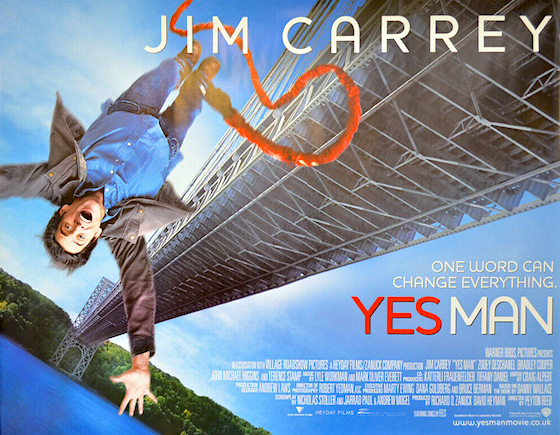
    Loosely based on Danny Wallace’s memoir of the same name, Yes Man stars Jim Carrey as a negative chap who attends a motivational seminar that encourages him to start saying “yes” to every opportunity that comes his way.

    On the first night, he says yes to a homeless guy who wants a lift across town, then yes to letting the guy use his phone, then yes to giving him all his cash. But it turns out the drive used all his fuel, the call used all his battery, so he can’t phone for help, and he has to trek miles in the dark to buy fuel… not that he has any cash. So much for saying “yes” to everything. But at the petrol station he meets Zooey Deschanel and they hit it off. So, yeah, point made with perhaps the most outsized karmic reward ever.

    I suppose everything about Yes Man is broadly familiar — the romcom story arc; the kooky supporting characters; Jim Carrey’s schtick (it feels very much in same vein as the high-concept ’90s comedies that made his name; although there’s no fantastic element this time, and the worst excesses of his ‘act’ are thankfully limited to one or two scenes) — but it carries it off with reasonable charm. I mean, if you have no time for Carrey’s comedies, and aren’t attracted to Deschanel being a MPDG again, then there’s nothing here that’s going to win you round. For fans of such shenanigans, however, this is a perfectly enjoyable experience. It’s a 3.5-out-of-5-er, but I had a nice time with it, so my score leans on the side of generosity.

    4 out of 5

  • Shaft (2019)

    2019 #98
    Tim Story | 111 mins | streaming (HD) | 2.39:1 | USA / English | 15 / R

    Shaft (2019)

    I wrote recently about Shaft 2000 (I’m gonna start calling it that, even if nobody else does), the turn-of-the-millennium attempt to reboot the ’70s blaxploitation classic. It didn’t really take off, for various reasons, but I think it’s a pretty solid thriller in its own right. Now, 19 years later, they’ve decided to try again, only this time they’ve thrown away the spirit of the original in favour of an intergenerational buddy comedy.

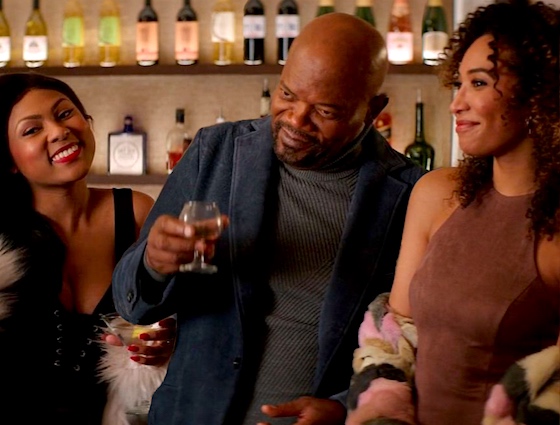
    John Shaft Jr (Jessie T. Usher) is a bookish FBI data analyst whose dad, John Shaft (Samuel L. Jackson), abandoned him when he was a baby so he could go off galavanting with other women and solving crime while looking cool. Down the years he’s sent Jr presents like condoms and a box of porn mags — he’s that kind of dad. (Is that a kind of dad, or is it just a caricature of one?) Anyway, after Jr’s former-junkie best friend dies of an apparent overdose, everyone else believes it was a relapse, but Jr isn’t convinced. Struggling to investigate on his own, he turns to his estranged father for help.

    Where Jackson’s Shaft was once a cool dude kicking ass and taking names (or whatever it is cool dude PIs did in the early ’00s), here they’ve turned him into a bit of a throwback dinosaur, spouting politically incorrect opinions with every other line of dialogue. This film does acknowledge the existence of the 2000 movie (an opening montage covering the last 30 years of the Shafts’ lives includes shots from that film to show Shaft Sr quitting the police), but it doesn’t feel like the same character we saw back then — he’s much more of a caricature of an outdated sex-obsessed oldie here. At times it’s like someone adapted one of those facile “millennials are to blame for everything” articles into a movie; or at least copy-pasted it into Shaft Sr’s dialogue.

    Still a sex machine to all the chicks

    This aspect has come in for much consternation among the film’s wider critical reception, but, eh, I dunno — the crap Shaft comes out with is definitely being played for laughs, with other characters eye-rolling (and similar) at most of what he says and does. At the same time, Jr’s character arc still comes down to “manning up” in the way his father wants him to. For instance: he hates guns, but when assassins attack at a restaurant, he borrows his date’s handbag-sized pistol and takes them out with expert marksmanship, before throwing the gun down in disgust. Put another way, the film is having its cake and eating it — it knows these old-fashioned ideals are, well, old-fashioned, but it’s gonna let them play out anyway. Even the plot pretends to be kinda modern by suggesting it might all have something to do with terrorism and radicalising Muslims — though as that’s been a plot driver for nigh on 20 years now, maybe it stretches the idea of “modern”. But it doesn’t matter anyway, because really that’s a red herring to cover up a standard drug smuggling affair.

    The film’s best bit comes at the end, when Richard Roundtree’s OG Shaft gets roped into things for no particularly good reason. But it doesn’t matter, because granddad Shaft’s antics, and the banter between all three generations, is the most entertaining part of the movie. It certainly helps cover for the TV-movie-esque quality of the action scenes. It’s a shame the film waited so long to get him involved.

    Shaft cubed

    So Shaft 2019 is antiquated in myriad different ways, be it the values espoused by its co-lead or the general tone and content of its story. It didn’t need to be like that — Shaft may’ve been born in the ’70s, but I don’t think the very nature of the character requires him to still embody ’70 values. Nonetheless, if you don’t let that stuff bother you too much, the result is a moderately entertaining watch — nothing special (the other two films with the same title are both better), but a passably humorous 110 minutes.

    3 out of 5

    Shaft is available on Netflix everywhere (except the US) now.

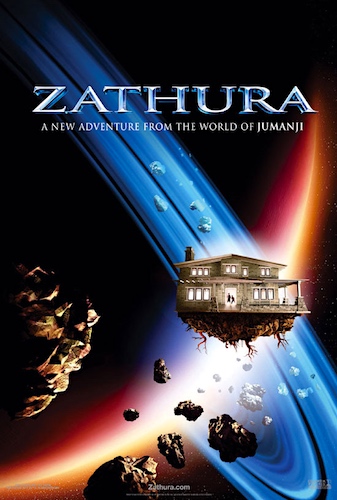
    Zathura: A Space Adventure (2005)

    2018 #67
    Jon Favreau | 97 mins | streaming (HD) | 1.85:1 | USA / English | PG / PG

    Zathura

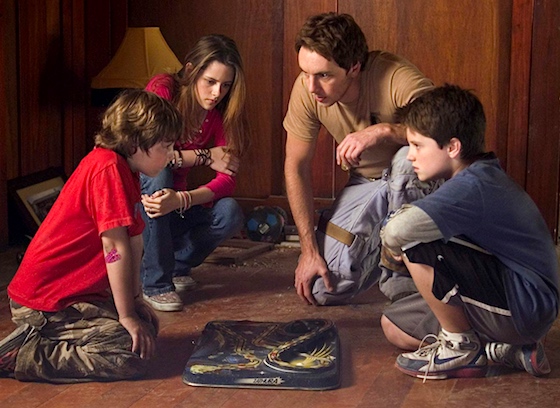
    Before Jumanji: Welcome to the Jungle there was Zathura, which is sort of a sequel to Jumanji… but more of a spin-off, I guess… well, really it’s a completely unrelated movie with the exact same plot. Inspired by another book by the same author, it sees two kids (Jonah Bobo and a very baby-faced Josh Hutcherson) discover an old board game that comes to life with terrifying consequences, and the only way to make it stop is to finish the game. But this game is about space, so it’s completely different, obviously.

    Unsurprisingly, it’s difficult to avoid assessing the film’s quality in comparison it to its predecessor. The thing that struck me most was it feels less consequential than Jumanji, somehow. In the previous film the stakes feel high — you worry they won’t beat the game or make it out alive. Perhaps that’s because of Robin Williams’ character getting trapped in the game at the start, which makes you believe things can go wrong. Whereas here, it just feels like crazy shit will keep happening until they finish. It may also be because you can infer ‘rules’ in Jumanji — we know monkeys are going to be mischievous, tigers might eat you, etc — whereas in Zathura, because it’s sci-fi, it’s all made up. And it feels made up as it goes along, too — because it’s not based on real life or an existing brand, we don’t know the characters, the monsters, etc.

    Similarly, the characters benefit from way too much luck. The kids keep not reacting fast enough to stop or save things, but then something fortunate happens so things go their way. Maybe you could sell this as a deliberate thing — like, the game wants to be finished — but that’s not how it plays out. They just keep getting lucky, in a not-great-screenwriting way. Perhaps I’m projecting problems where there are none in these observations, but it’s just another factor towards not feeling jeopardy like I did in Jumanji. Overall, Zathura was just more… pleasant.

    Play the game

    That said, I had some more specific niggles. For a film that should’ve been trying to avoid accusations of being a rip-off, they invite it further by (spoiler alert!) giving one character a backstory that’s a riff on Robin Williams’ from the first movie. Zathura comes at it from a different angle, at least, but that’s a mixed blessing: it doesn’t have the same emotional effect because we only learn about it belatedly, but at least that means it isn’t ripping off Jumanji’s entire narrative structure, and also allows for a neat twist later on. There’s some time travel stuff that doesn’t wholly hang together, but then does it ever?

    Equally, you can clearly tell they weren’t paying enough attention to every aspect of the screenplay: the older sister (played by a pre-fame Kristen Stewart, by-the-by) gets put in hibernation for five turns, but it takes eight turns before she wakes up. How no one noticed that is baffling — did they not think to just count it in the script? Even if they somehow missed it until post-production, all it would’ve taken is a dubbed line or two. “Five turns” sounds like a lot of gameplay to miss, so maybe they just thought “eight turns” would sound too ridiculous, but did they not think someone would spot it?!

    Plot logic aside, at least the film has some great effects and design work. Jumanji has aged badly in that respect (the CGI is pretty ropey), whereas Zathura still looks great, in part because there’s actually a lot of props and models involved. The performances are pretty decent, too. Director Jon Favreau clearly has a talent for working with kids — the pair here; Mowgli in his Jungle Book; Robert Downey Jr… But in all seriousness, he gets really good performances out of these children.

    Holy meteors!

    Also worth noting is that the UK version was originally cut to get a PG… and remains cut, because the uncut rating wouldn’t just be a 12, it’d be a 15! That’s because of “imitable techniques”, which in this case means using an aerosol as a blowtorch to set fire to a sofa. The main thing I find interesting about this is that presumably the original cut shows the Astronaut setting fire to the sofa, whereas in the UK version it just suddenly cuts to him stood beside a sofa on fire, which is so much funnier. Hurrah for censorship, I guess.

    And so we come to the score. Zathura is one of those films I find a little awkward to rate, because I did enjoy it — in some respects, more than I enjoyed Jumanji when I rewatched that recently — but it also doesn’t feel as polished and complete as its predecessor in terms of story and characters. Even as I had fun, I saw many things I felt could’ve been sharpened up. For that reason, I’ve erred towards a lower rating.

    3 out of 5

    The Happytime Murders (2018)

    2019 #9
    Brian Henson | 91 mins | streaming (HD) | 2.39:1 | USA & China / English | 15 / R

    The Happytime Murders

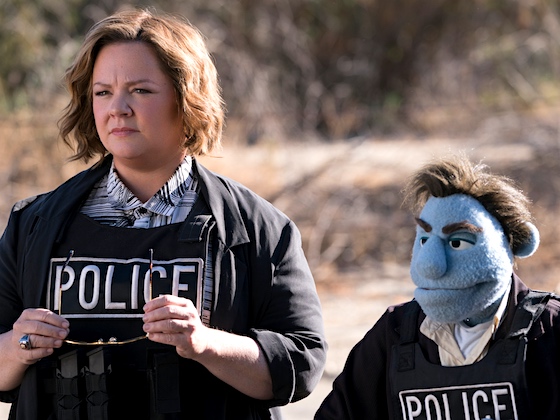
    The Muppets meets Who Framed Roger Rabbit meets an R rating in this black comedy murder mystery from director Brian “son of Jim” Henson. Set in a world where Muppet-esque (but not actual Muppets, because IP rights) puppets co-exist alongside humans, disgraced puppet cop turned private investigator Phil Phillips (performed by Bill Barretta, which, let’s be honest, is a better name for a comedy private eye than the one they’ve actually used) stumbles onto a spate of connected puppet murders, and must reluctantly team up with his former partner, human detective Connie Edwards (Melissa McCarthy), to crack the case.

    The mystery that drives the plot isn’t too bad, including a neat twist/reveal that’s perhaps guessable but not terribly so. It does hew closely to the tropes and clichés of the noir genre, which is a mixed blessing. On the one hand, as it’s not a straight crime movie I don’t think it’s a problem for it to recycle all those things when it has fresh comedy to hang off them, or if it’s somehow riffing off familiar elements but with the puppet stuff, but often it isn’t that clever.

    Women and puppets in blue

    Nonetheless, there are some legitimately funny bits along the way, often found among the riffs on the puppet thing (for example: one of the victims is drowned, and before bagging the body they ring him out). Unfortunately it isn’t funny as often as it should be, too often relying on worn or lacklustre humour. I mean, it tries to run with the old playground favourite “idiots say what?” as a running gag. It also leans on puppets being lewd and crude as the extent of the gag, which simply isn’t that funny in itself, partly because it isn’t as original as the film seems to think it is (cf. Team America, Avenue Q).

    While The Happytime Murders isn’t close to the echelons of quality where you’d find Roger Rabbit or the best of the Muppets, it’s also not a total washout. From behind-the-scenes stuff I’ve read it sounds like a lot of effort was expended on filming it, making sure the puppets could interact with the humans and so on, and those technical aspects are first rate. It’s just a shame the same level of innovation wasn’t poured into screenplay. I didn’t hate it, but it doesn’t live up to its potential either.

    3 out of 5

    The Happytime Murders is available on Netflix UK from today.

    Murder Mystery (2019)

    2019 #96
    Kyle Newacheck | 97 mins | streaming (UHD) | 2.00:1 | USA / English | 12 / PG-13

    Murder Mystery

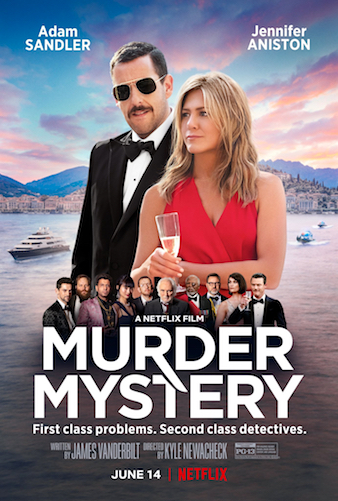
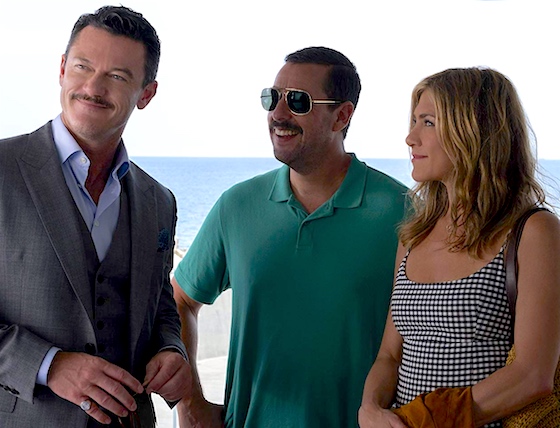
    Murder Mystery is a murder mystery in which there is a murder under mysterious circumstances, and it falls to vacationing NY cop Nick Spitz (Adam Sandler) and his murder-mystery-loving wife Audrey (Jennifer Aniston) to solve these mysterious murders.

    I’m no great fan of Sandler, and he’s probably the least funny person in this film, but I also didn’t find him outright objectionable. His character — an underachieving middle-aged beat cop who pretends to be a detective to his long-suffering wife — seems like the kind of guy who’d think he’s funnier than he is, so Sandler’s attempts at humour mostly come off as in-character. Put another way, it works in spite of itself. Of the two leads, Aniston is definitely the one doing the most work for the film, both in terms of actually being amusing and giving it some kind of emotional character arc.

    Detectives or suspects?

    The actual mystery plot is no great shakes — there are two glaring clues early on that give most of the game away, especially if you’re well-versed in watching murder mysteries and spotting such hints. That’s somewhat beside the point, though, because there’s enough fun to be had along the way to make up for it, and there are still some reasonable red herrings. The fact the cast is staffed by an array of experienced mostly-British thesps, many of whom have no doubt appeared in their share of ‘real’ murder mysteries — the likes of Luke Evans, Gemma Arterton, Adeel Akhtar, David Walliams, and Terence Stamp — definitely helps keep proceedings afloat.

    There are a few of action-y scenes — a shoot-out, some hijinks on a hotel ledge, a decent car chase for the finale — that keep the momentum up too. Plus it mostly looks suitably luxuriant and exotic (the odd bout of iffy green screen aside), matching its high-class backdrop and French Riviera setting. Altogether, it makes for a suitably easy-watching 90-minutes in front of Netflix.

    3 out of 5

    Murder Mystery is available on Netflix everywhere now.

    Finding Dory (2016)

    2018 #122
    Andrew Stanton | 97 mins | Blu-ray (3D) | 1.78:1 | USA / English | U / PG

    Finding Dory

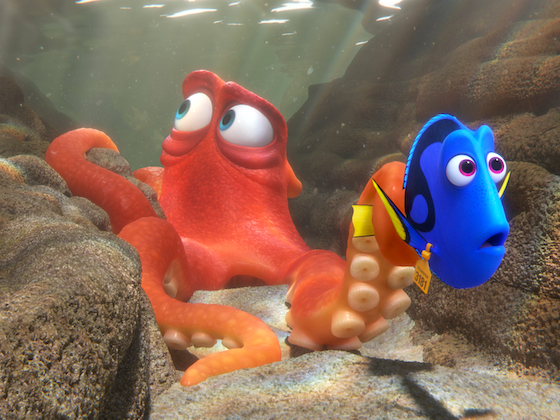
    I was never that big a fan of Finding Nemo. I mean, I like it well enough — it’s a very good movie — but I’ve never loved it. My rewatch last year confirmed that feeling. It was something of a surprise, then, that I mostly really enjoyed this sequel. It’s a weird thing where I wouldn’t necessarily say it’s better than the first film, but I think I like it more.

    Made 13 years later but set not too long after the events of the first movie (I don’t know what the lifespans of these fish are in real life, but I imagine considerably less than 13 years), the plot revolves around Nemo comedy sidekick Dory (Ellen DeGeneres) — in the first film her memory loss was a comedy bit, but here it’s front and centre, as Dory goes searching for the family she forgot she had. Accompanied by Nemo (Hayden Rolence) and his dad Marlin (Albert Brooks), she heads to California and the theme park-ish Marine Life Institute.

    Like so many Pixar movies, Nemo didn’t desperately need a sequel, so I was worried this would seem like little more than an excuse to return to these characters. In fact, the plot actually works very well. Far from being a desperate stretch, it actually feels like a worthwhile development and follow-up from the first movie. Alongside the worth of the narrative, it’s also just a lot of fun to watch, even if it gets a bit outlandish in the final act (fish driving cars…?)

    Something fishy going on...

    Another concern I had was that I remember thinking Dory was a bit irritating in the first film, so making her the central character could’ve scuppered it for me (other people seem to find her endearing, so I can see why Pixar went with this concept). But no, she makes for a likeable enough companion. The film does a really good job of handling her memory loss, too. It’s more than just a joke this time round, what with Dory being the central character. The easiest route to take for the filmmakers would’ve been to cop out of it somehow, either by flat-out fixing her memory, or at least not being wholly true to how short-lived it was before. Instead, they’ve put the problems and the scariness of having no memory at the forefront of the film. For example, at one point Dory needs to enter a network of pipes to get somewhere vital within the Institute, but she won’t go in because she knows she’ll forget the directions. A more constant fear is that she’ll forget about her family or friends, the people she loves, which I think is the kind of notion a viewer of any age could empathise with.

    As a Pixar movie, it goes without saying that it looks superb, but I’ll nonetheless take a moment to mention that I thought the 3D aspect was really great too. It seems to be pot luck with this stuff (I found Nemo’s rather underwhelming, and I wasn’t that impressed by Coco’s either, for example). I guess most people don’t care anymore, but there we go.

    Finding Dory was a pleasant surprise all-round. In fact, I’d go so far as to say this is Pixar’s best non-Toy Story sequel. Maybe that’s not saying much (half its competition is Cars movies), but I mean it positively nonetheless.

    4 out of 5

    Pixar’s latest sequel, Toy Story 4, is out in the UK and US next Friday.

    Review Roundup

    As foretold in my most recent progress report, June is off to a slow start here at 100 Films. Or a non-start, really, as I’ve yet to watch any films this month and this is my first post since the 1st. Hopefully it won’t stay that way all month (I’ve got my Blindspot and WDYMYHS tasks to get on with, if nothing else).

    For the time being, here a handful of reviews of things I watched over a year ago but have only just written up:

  • O Brother, Where Art Thou? (2000)
  • Allied (2016)
  • American Made (2017)


    O Brother, Where Art Thou?
    (2000)

    2018 #106
    Joel Coen | 103 mins | streaming (HD) | 2.39:1 | UK, France & USA / English | 12 / PG-13

    O Brother, Where Art Thou?

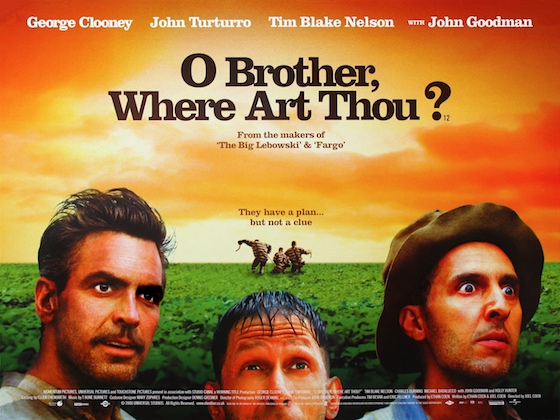
    The eighth movie from the Coen brothers (eighth, and yet they still weren’t being allowed a shared directing credit! No wonder that stupid DGA rule pisses people off) is one of their movies that I found less objectionable. Oh, sure, most of their stuff that I’ve reviewed I’ve given four stars (as well as a couple of threes), but that’s more out of admiration than affection — for whatever reason, their style, so popular with many cineastes, just doesn’t quite work for me; even when I like one of their films there’s often still something about it I find faintly irritating.

    Anyway, for this one they decided to adapt Homer’s Odyssey, but set in the American Deep South during the Great Depression. Apparently neither of the brothers had ever actually read The Odyssey, instead knowing it through cultural osmosis and film adaptations, which is perhaps why the film bears strikingly minimal resemblance to its supposed source text. Rather, this is a story about songs, hitchhiking, and casual animal cruelty, in which the KKK is defeated by the power of old-timey music. Hurrah!

    It’s mostly fairly amusing. If it was all meant to signify something, I don’t know what — it just seemed a pretty fun romp. I thought some of the music was okay. (Other people liked the latter more. Considerably more: the “soundtrack became an unlikely blockbuster, even surpassing the success of the film. By early 2001, it had sold five million copies, spawned a documentary film, three follow-up albums (O Sister and O Sister 2), two concert tours, and won Country Music Awards for Album of the Year and Single of the Year. It also won five Grammys, including Album of the Year, and hit #1 on the Billboard album charts the week of March 15 2002, 63 weeks after its release and over a year after the release of the film.” Jesus…)

    Anyway, that’s why it gets 4 stars. I liked it. Didn’t love it. Laughed a bit. Not a lot. Some of the music was alright. Not all of it. Naturally it’s well made (Roger Deakins!) without being exceptionally anything. Harsher critics might say that amounts to a 3, but I’m a nice guy.

    4 out of 5

    Allied
    (2016)

    2018 #116
    Robert Zemeckis | 119 mins | streaming (HD) | 2.39:1 | USA, UK & China / English & French | 15 / R

    Allied

    Brad Pitt and Marion Cotillard star as a pair of intelligence agents who fall in love in Mr. & Mrs. Smith: WW2 Edition. Settling down together in England, all is lovely for them… until one comes under suspicion of working for the enemy…

    Overall Allied is a very decent spy thriller, let down somewhat by a middle section that’s lacking in the requisite tension and a twee monologue coda. But the first 40 minutes, set in Morocco and depicting the mission where the lovers first meet, are pretty great; there’s plenty of neat little tradecraft touches scattered throughout; and there are some pretty visuals too. There are also some moments that are marred by more CGI than should be necessary for a WW2 drama, but hey-ho, it’s a Robert Zemeckis film.

    That said, Brad Pitt’s performance is a bit… off. He never really seems connected with the material. Perhaps he was trying to play old-fashioned stoic, but too often it comes across as bored. It also constantly looked like he’d been digitally de-aged, but maybe that’s because I was watching a 720p stream; or maybe he had been, though goodness knows why they’d bother.

    Anyway, these are niggles, so how much they bother you will affect your personal enjoyment. I still liked the film a lot nonetheless.

    4 out of 5

    American Made
    (2017)

    2018 #124
    Doug Liman | 109 mins | streaming (HD) | 1.85:1 | USA & Japan / English & Spanish | 15 / R

    American Made

    Described by director Doug Liman as “a fun lie based on a true story,” American Made is the obviously-not-that-truthful-then ‘true story’ of Barry Seal, a pilot who was recruited by the CIA to do some spying and ended up becoming a major cocaine smuggler in the ’80s.

    Starring ever-charismatic Tom Cruise as Seal, the film turns a potentially serious bit of history (as I understand it, the events underpinning this tale fed into the infamous Iran-Contra affair) into an entertaining romp. Indeed, the seriousness of the ending is a bit of a tonal jerk after all the lightness that came before, which I guess is the downside of having to stick to the facts.

    Still, it’s such a fun watch on the whole — a sliver long, perhaps, even though it’s comfortably under two hours, but it does have a lot of story to get through. Parts of that come via some spectacular montages, which convey chunks of story succinctly and are enjoyable in their own right. Liman doesn’t get a whole lot of attention nowadays, I think, but it seems he’s still got it where it counts.

    4 out of 5

  • The Hitman’s Bodyguard (2017)

    2018 #61
    Patrick Hughes | 118 mins | streaming (HD) | 2.39:1 | USA, Netherlands, China & Bulgaria / English, Russian & Spanish | 15 / R

    The Hitman's Bodyguard

    With a daft-ish title and promotional campaign that definitely amped up the comedy, you might be surprised to learn that The Hitman’s Bodyguard started life as a drama. Yep, apparently so. Then, a few weeks prior to filming, the script underwent a “frantic” two-week rewrite to be remixed into a comedy. The end result is kind of a mixed bag, which, all things considered, makes sense.

    The hitman of the title is Darius Kincaid (Samuel L. Jackson), who agrees to testify against a dictator (Gary Oldman, underused) in exchange for the release of his wife from prison. While being transported through (of all places) Coventry, Kincaid and his escort are ambushed. The one surviving agent calls in Michael Bryce (Ryan Reynolds) to help. Bryce is a private bodyguard — formerly to elite clients, until Kincaid assassinated one of them. Suffice to say, the two don’t get along. Cue banter as the mismatched pair face more tribulations on their way to The Hague.

    So, it’s a buddy action comedy, a well-worn genre, and The Hitman’s Bodyguard has nothing new to add to it. That said, while the antics may not be especially original, they’re not badly done. The film offers few big laughs, but there are one or two, and a couple of smiles. On the other hand, it’s a good 20 minutes too long (it needs to sacrifice some of the chatter, maybe some of the flashbacks, and definitely at least one action sequence) and some bits are inappropriately grim (random murder of parents? Photos of mass executions?) I guess those tonal inadequacies are the legacy of the last-minute rewrites, but, still, someone should’ve fixed that.

    Explosion!

    The action centrepiece is a rather good stunt-filled five-way chase between Jackson in a speedboat, Reynolds on a motorbike, Russian hit men, Interpol agents, and the Amsterdam police in cars. It’s not going to be challenging the John Wicks of this world for classic status, but it thrills enough. What seems like the climax is another pretty good one, as it intercuts a car chase with a hardware store fight that makes full use of the tools on hand. (I say “seems like” because it has another shoot-out after they finally make it to The Hague — like I said, it’s at least one action scene too long.)

    Apparently The Hitman’s Bodyguard only cost $30 million, which is $5 million less than The Hurricane Heist (which I watched on the same evening, hence the comparison). But this film looks considerably more expensive than the other, and it has several considerably bigger-name stars too. I guess some people just know how to spend money better than others. This comparison is also relevant for my final score, because it again calls into question my non-use of half-stars on this blog. On Letterboxd I rated The Hurricane Heist as 2.5 and The Hitman’s Bodyguard as 3.5, a whole star different, but here they both get rounded to the same score. Well, no one said life was fair.

    3 out of 5

    Ryan Reynold’s latest law enforcement-adjacent role is as the voice of the eponymous character in Detective Pikachu, in cinemas now.

    Holmes & Watson (2018)

    2019 #38
    Etan Cohen | 90 mins | download (HD) | 2.40:1 | USA / English | 12 / PG-13

    Holmes & Watson

    From the moment it was announced, I knew two things about Holmes & Watson: that it would not be up my street, and that I’d definitely see it. Basically, Will Ferrell is not to my taste — I thought Anchorman was OK at best; I didn’t like The Other Guys despite it having a premise I loved; I remember enjoying Wedding Crashers specifically apart from his one scene; and, cementing my opinion shortly before Holmes & Watson’s release, I finally saw Step Brothers, Ferrell and John C. Reilly’s previous major co-starring turn, and didn’t care for it. (I also haven’t got round to reviewing it, but when I do it won’t be positive.) Despite my personal antipathy, most of those films are highly regarded, at least in certain circles; so when Holmes & Watson finally debuted trailers that no one liked, then garnered reviews that damned it as one of the worst movies released for years, I abandoned all hope of enjoyment. But it’s still a Sherlock Holmes movie, and so I’ve still felt compelled to watch it.

    As you could no doubt infer from the title and aforementioned leads, the film sees Will Ferrell take up the mantle of the Great Detective, Sherlock Holmes, with John C. Reilly as his trusty sidekick and biographer, Dr John Watson. The plot, such as it is, sees the pair investigating a threat to assassinate Queen Victoria by Holmes’ nemesis, Professor Moriarty (Ralph Fiennes). Really, it’s just an excuse for Ferrell and Reilly to lark about in a series of Holmesian sketches. Full of truly terrible accents, reheated gags, and comedy bits that go on far too long, it would be tedious if presented as individual skits in a sketch show, but strung together as a movie… ugh.

    Incompetence on both sides of the camera

    The incompetence isn’t just present in front of the camera either. It’s hard to believe this was a professionally-produced, studio-released movie given the lack of technical skills on display, including atrocious dubbing, sloppy editing, and even shots that are out of focus. It’s so poor that Netflix, who seem to purchase any scraps the major studios decide to throw their way, turned down the chance to buy it (so they do have some standards!)

    Amazingly, it’s not completely terrible. In supporting roles, Fiennes, Rebecca Hall, and Kelly Macdonald improve it just by showing up. There’s one bit that riffs off the Guy Ritchie Sherlock Holmes movies, which might’ve felt original-ish if those weren’t already nine years old. There’s a bit of dialogue where it’s suggested America is forward-thinking about female equality, which isn’t the intended joke but is a laugh nonetheless. And as it’s the only laugh in the whole sorry 90 minutes, I guess we should take what we can get.

    If they’d deliberately set out to make a film that was ostensibly a comedy but contained no actual humour, I’m not sure they could’ve achieved it any more thoroughly than this. It’s so terrible that it’s almost a remarkable achievement of just how badly it’s possible to fail.

    1 out of 5

    Holmes & Watson is released on DVD and Blu-ray in the UK this week.

    It featured on my list of The Five Worst Films I Saw For the First Time in 2019.