Archive 5, Vol.11

I have a backlog of 515 unreviewed feature films from my 2018 to 2023 viewing. This is where I give those films their day, five at a time, selected by a random number generator.

Today, the main emergent theme is “films that weren’t so great” — although there are a couple of bright spots to be found, still.

This week’s Archive 5 are…

  • Dumb and Dumber (1994)
  • Bill & Ted Face the Music (2020)
  • Mangrove (2020)
  • Out of Africa (1985)
  • Rambo: Last Blood (2019)


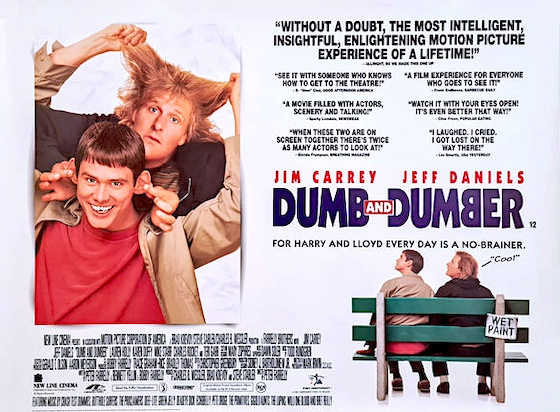
    Dumb and Dumber

    (1994)

    Peter Farrelly | 107 mins | digital HD | 16:9 | USA / English | 12 / PG-13
    Dumb and Dumber

    The nicest thing I can say about Dumb and Dumber is that it does at least live up to its title: it starts dumb and gets dumber.

    Despite the film’s later reputation in some circles as a modern comedy… if not “classic”, then certainly “success” — enough to eventually earn it both a prequel and sequel, at any rate — I’m clearly not alone in this view: apparently the original draft of the screenplay was so poor that it gained an enduringly negative reputation among investors; to the extent that, even once it had been rewritten, it had to be pitched under a fake title in order to get people to even read it. I feel like the final result only goes some way towards fixing that, with an oddly episodic structure and some bizarrely amateurish bits of filmmaking for a studio movie (the audio quality is relatively poor; there’s too much reliance on samey master shots).

    There are a few genuinely funny bits between all the gurning, guffawing, and scatology. It’s a shame they’re not in an overall-better film.

    2 out of 5

    Dumb and Dumber was #119 in my 100 Films in a Year Challenge 2021. It featured on my list of The Worst Films I Saw in 2021.


    Bill & Ted Face the Music

    (2020)

    Dean Parisot | 88 mins | digital HD | 2.39:1 | USA & Bahamas / English | PG / PG-13

    Bill & Ted Face the Music

    I wasn’t that big a fan of the original Bill & Ted films, so I didn’t have high hopes for this — after all, most decades-later revival/reunion movies are primarily about trying to please existing fans, not win round new ones; and it feels like a good number of them fail even in that regard. Face the Music is definitely full of the requisite nods and references, both explicit and subtle, major and minor; but they’re all in the right spirit and it kinda works (albeit a bit scrappily at times), bound together by a deceptively simple, pervasive niceness.

    Alex Winter is particularly great as Bill. Given all the stories we hear about how awesome Keanu Reeves is in real life, it’s no surprise that — despite being the much (much) bigger movie star — he’s generous enough to be a co-lead and let Winter shine. Brigette Lundy-Paine is absolutely bang on as Ted’s daughter, aping Reeves’ performance in all sorts of ways. As the younger Bill, Samara Weaving is clearly game, but doesn’t carry it quite as naturally (apparently she was cast after Reeves discovered she was the niece of Hugo Weaving, who he’d of course worked with on the Matrix trilogy, so that might explain that).

    “Be excellent to each other” is a message the world needs now more than ever, and that’s as true four years on as it was back in 2020. For me, that makes this third outing Bill and Ted’s most excellent adventure.

    4 out of 5

    Bill & Ted Face the Music was #136 in my 100 Films in a Year Challenge 2021.


    Mangrove

    (2020)

    aka Small Axe: Mangrove

    Steve McQueen | 127 mins | TV HD | 2.39:1 | UK / English | 15

    Small Axe: Mangrove

    The line between film and TV continues to blur with Mangrove: a 127-minute episode of an anthology TV series, Small Axe, conceived and directed by Oscar winner Steve McQueen, that premiered as the opening night film of the London Film Festival. It was made for television, but in form and pedigree it’s a movie. Just another example in a “does it really matter?” debate that continues to rage — and is only likely to intensify with the increasing jeopardy faced by theatrical exhibition. (I wrote this intro almost four years ago, and while theatrical is fortunately still hanging in there post-pandemic, I do think the line remains malleable.)

    I only ended up watching two episodes/films from Small Axe in the end. I did intend to go back and finish them, especially as they were heaped with critical praise, but the second (Lovers Rock) bored me to tears, which didn’t help. This first was better, but still not wholly to my taste. It tells an important true story about racially-motivated miscarriages of justice, but I found it overlong and with too much speechifying dialogue. That kind of thing works better in a courtroom setting, I find, so perhaps that’s why I felt the film was at its best once it (finally) got to the courtroom. When it’s good, it really is very good.

    4 out of 5

    Mangrove was #246 in my 100 Films in a Year Challenge 2020.


    Out of Africa

    (1985)

    Sydney Pollack | 161 mins | digital HD | 16:9 | USA & UK / English | PG / PG

    Out of Africa

    This is very much the kind of thing that was once considered a Great Movie, in an “Oscar winner” sense, but nowadays is sort of dated and attracts plenty of less favourable reviews. It’s long, historical, and white — not how we like our movies about Africa nowadays, for understandable reasons.

    Certainly, there are inherent problems with its attitude to colonialism, but to a degree that’s tied to how much tolerance you have for “things were different in the past” as an argument for understanding. In this case, just because these white Europeans shouldn’t have taken African land and divvied it up among themselves and treated the inhabitants as little better than cattle, that doesn’t mean the individuals involved weren’t devoid of feeling or humanity. People like Karen, the film’s heroine, were trying to do what they thought was right within the limited scope of what society at the time allowed them to think. With the benefit of a more enlightened modern perspective, we can see that was still wrong and that they didn’t go far enough, but (whether you like it or not) there is an element of “things were different then”.

    Morals aside, the story is a bit slow going, bordering on dull at times, but it’s mostly effective as a ‘prestige’ historical romance, which I think is what it primarily wants to be. It’s quite handsomely shot, although not as visually incredible as others make out, and John Barry’s score is nice — you can definitely hear it’s him: on several occasions it reminded me of the “love theme”-type pieces for his Bond work.

    3 out of 5

    Out of Africa was #212 in my 100 Films in a Year Challenge 2020.


    Rambo: Last Blood

    (2019)

    Adrian Grünberg | 89 mins | digital HD | 2.39:1 | USA, Hong Kong, France, Bulgaria, Spain & Sweden / English & Spanish | 18 / R
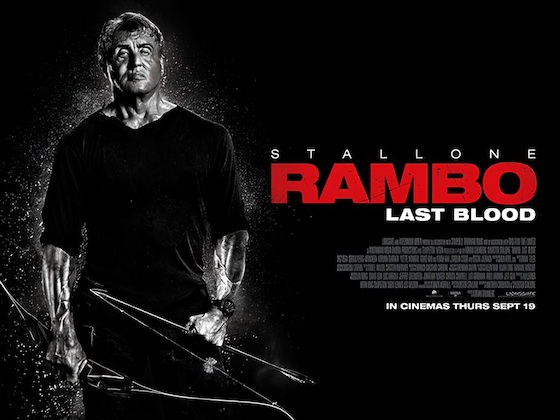
    Rambo: Last Blood

    Sylvester Stallone’s belated returns to the roles that made his name have worked out pretty well so far, I think, with Rocky Balboa and Rambo (i.e. Rambo 4) being among my favourites for both those franchises; not to mention Creed and its sequel. Unfortunately, here is where that streak runs out.

    Running a brisk 89 minutes (in the US/Canada/UK cut — a longer version was released in other territories), the film is almost admirably to-the-point. We all know where it’s going, and more or less what plot beats it will hit along the way, so it doesn’t belabour anything, it just gets on with it. However, you eventually realise why other films ‘indulge’ in the kind of scenes this one has done away with: movies are about more than just plot, they’re about character and emotion and why things happen. Last Blood is so desperate to get to the action that it strips those things back to their bare minimum, thus undermining our investment. And then, weirdly, it hurries through the action scenes too. The climax packs in as many gruesome deaths in as short a time span as possible, meaning none but the most stomach-churning have any impact; and even those disgusting ones are mercifully fleeting. More, it feels rushed and of little consequence. Far from a grand send-off to the Rambo saga (which a slapped-on voiceover-and-montage finale attempts to evoke), it feels like a short-story interlude.

    Did Rambo deserve better? Well, I wouldn’t necessarily go that far. But, on the evidence of this, it might be best if they don’t try again.

    2 out of 5

    Rambo: Last Blood was #74 in my 100 Films in a Year Challenge 2020.


  • 2022 | Weeks 27–28

    Hello! Yes, it’s me — I am still here. I’ve just been finding my time filled up with other stuff: working on the 2022 iterations of both WOFFF and FilmBath Festival (in addition to the ol’ day job); dogsitting for the in-laws; throwing up from eating bad garlic…

    Anyway, here are some reviews of films I watched all the way back in July. (Oh dear, I am behind. Well, let’s see if I can catch up…)

  • Johnny Gunman (1957)
  • A Better Tomorrow (1986), aka Ying hung boon sik
  • Mifune: The Last Samurai (2015)
  • The Lost Daughter (2021)


    Johnny Gunman

    (1957)

    Art Ford | 67 mins | digital (HD) | 4:3 | USA / English

    Johnny Gunman

    The history of cinema is littered with fascinating asides and dead ends, and this is one of them: an independent film from before independent films were really a thing; from the time when the studio system was beginning to falter, but the film school auteurs hadn’t yet arrived (Spielberg, Scorsese, Coppola, et al were still in their teens when this was made).

    As with the films that would later break similar new ground after the digital video revolution in the ’90s, there are cracks — it’s amateurish and undeniably low-budget in places — but also artistry — every once in a while it’ll whip out an exceptionally well-lit scene or interesting visual. Story-wise, it’s an odd mix: there’s the noir-ish gangster plot line, which is derivative and clichéd; but it takes over the film from what you feel like it almost wants to be, which is a Before Sunrise-style slice of life. Maybe, in a freer world, that’s what the filmmakers would’ve produced; but when you’re one of the first people trying to break in from the outside, hitting the familiar beats of a genre is no bad idea.

    Some of the highlights of the film come at the start, with documentary-like shots of New York street life when our heroine visits the Greenwich Festival. It’s a brief little window into the real 1950s NYC, before the rote gangster plot comes to dominate. Indeed, being shot on location, and with an inexperienced cast, lends the whole production a certain veracity that you don’t always get from soundstage-bound studio pictures of the era. On the other hand, that’s also what gives it the rough edges that will make it unpalatable to some viewers.

    However you cut it, this is hardly a forgotten gem, but it’s an interesting detour of movie history that I’m glad I stumbled across.

    3 out of 5

    Johnny Gunman is the 45th film in my 100 Films in a Year Challenge 2022.


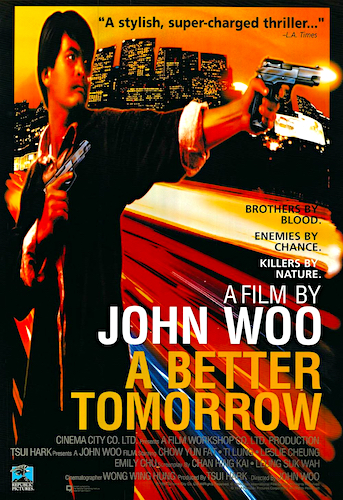
    A Better Tomorrow

    (1986)

    aka Ying hung boon sik

    John Woo | 96 mins | digital (HD) | 1.85:1 | Hong Kong / Cantonese, Mandarin & English | 18

    A Better Tomorrow

    A Better Tomorrow was the first in a run of modern-day gangster action movies that would make director John Woo’s name. Its original Chinese title translates as True Colours of a Hero, which is just as apt: it’s about a pair of mid-level crooks, one of whose brother is a cop, and the ways and whys in which they try and fail to escape the criminal life.

    Woo’s style was cutting edge back in the day, but that day is now pushing 40 years ago. Of course, his flamboyant style has never been to some people’s taste (witness the dismissive stance some still take towards M:i-2). Viewed now, this is cheesier and less stylistically polished than his later career-defining HK films like The Killer or Hard Boiled, but, on the couple of occasions it does explode into action, it’s suitably grandiose, and it has an engaging storyline and character dynamics.

    In regards to the latter, you can definitely see why Chow Yun-Fat was the breakout star. He’s actually got a supporting role, but his charisma shines off the screen, and there’s a plausibility to the way he handles the action. (Ironically, although it made Chow an action icon, he was cast because Woo didn’t think he looked like an action star.)

    Not Woo’s strongest film, then, but a definite sign of someone headed in the right direction — and, clearly, his later work paid off that promise.

    4 out of 5

    A Better Tomorrow is the 46th film in my 100 Films in a Year Challenge 2022. It was viewed as part of “What Do You Mean You Haven’t Seen…?” 2022.


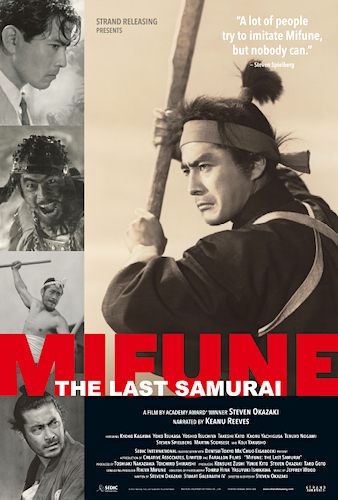
    Mifune: The Last Samurai

    (2015)

    Steven Okazaki | 77 mins | DVD | 16:9 | USA & Japan / English & Japanese | 12

    Mifune: The Last Samurai

    At just an hour and a quarter, this biography of the actor Toshiro Mifune feels more like a primer on his work and life (complete with newcomer-friendly contextual asides into the history of Japanese cinema, the career of Akira Kurosawa, etc) rather than the deep-dive exploration of the man and his legacy that some reviewers hoped for. I certainly learnt stuff, but such criticism has validity. For that reason, the less you know about Mifune (and Kurosawa), the more you’ll get out of the film. That said, it might pay to have already seen some of their films — it’s not that director Steven Okazaki doesn’t introduce and summarise them adequately; more that, if you’ve seen them, you know the full context.

    Nonetheless, a good range of interviewees ensure the documentary is not without insight, managing to explore both what made Mifune the man tick and what made him such a phenomenal screen presence. Plus, the fact that Okazaki is happy to explain contextual topics (like a history of chanbara films; or matters of social history, like what losing World War 2 was like for the Japanese people) is both education and useful, because I imagine most non-Japanese viewers don’t have much baseline knowledge about this stuff. The film is definitely a biography of Mifune (not, say, a history of 20th century Japan using the actor as a gateway), but there’s much to be gleaned here for the interested viewer.

    4 out of 5

    Mifune: The Last Samurai is the 47th film in my 100 Films in a Year Challenge 2022.


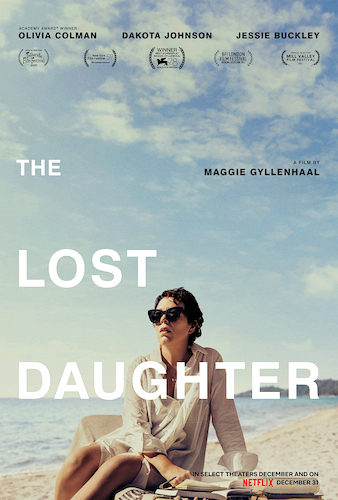
    The Lost Daughter

    (2021)

    Maggie Gyllenhaal | 122 mins | digital (HD) | 1.66:1 | USA, UK, Israel & Greece / English & Italian | 15 / R

    The Lost Daughter

    Maggie Gyllenhaal’s directorial debut, based on a novel by Elena Ferrante, stars Olivia Colman as Leda, a woman on holiday alone in Greece, where she encounters a young mother (Dakota Johnson) whose daughter briefly goes missing, reminding Leda of her own younger days, when she was played by Jessie Buckley and had a husband and two daughters herself.

    It’s perhaps initially difficult to pin down exactly what The Lost Daughter is driving at — I suspect it’s the kind of film in which some people would say nothing happens. But it’s really a kind of mystery, where the mystery is the lead character’s psychology: why is she like this? There’s also the more obvious mystery of what exactly happened in her past, but that isn’t solved so much as gradually doled out in flashbacks. Obviously that kind of story relies a lot on its performances, and Colman is as strong as ever. So much of the importance of the film, which lies in her character and emotion, is conveyed without dialogue. That’s not do down the able support from Buckley and Johnson, mind.

    Gyllenhaal’s direction is interesting and effective, using lots of fairly extreme close-ups to give a kind of tactile sensation to the film. On the other hand, I would say it feels a little longer than necessary (especially after the ‘reveal’ scene, where the final piece of the puzzle clicks), and I’m not convinced it knows how to end (or perhaps it’s my fault for not really ‘getting’ the finale).

    Overall, though, it’s an impressive debut from Gyllanhaal, and a great alternative perspective on motherhood.

    4 out of 5


  • 2022 | Week 26

    I’m taking you back over two months here, to the end of June / start of July, for another eclectic batch of films I happened to watch in close proximity to each other…

  • The Flying Deuces (1939)
  • Apollo 10½: A Space Age Childhood (2022)
  • My Name Is Julia Ross (1945)
  • Ambulance (2022)
  • Easy A (2010)


    The Flying Deuces

    (1939)

    A. Edward Sutherland | 68 mins | DVD | 4:3 | USA / English | U

    The Flying Deuces

    I feel like I’m aware of Laurel & Hardy in a way I would say “everyone” is, but I guess that’s probably not true anymore (the kind of stuff I picked up or learnt about by osmosis in my ’80s/’90s childhood is surely very different to what kids got growing up in the ’00s/’10s). But I don’t think I’ve ever actively seen any of their work; certainly none of their feature-length films. The Flying Deuces is “probably their most famous film”, at least according to the blurb on my copy. Certainly, it’s the one you see bandied about the most; but then it’s in the public domain (one of only two Laurel & Hardy films where that’s the case), so it’s inevitably subject to endless cheapo releases. Leaving the quality of the print aside (it was poor; but at least it wasn’t cut, which apparently many are), I can’t say I was too impressed by the quality of the content, either.

    Here’s the rub: it’s a comedy, but it barely made me laugh. The humour operates at a basic level, with gags that are either well-worn or repetitious. “How anyone could be so stupid as to stand there and continually bump their head is beyond me,” one of them says at one point. And yet the other does exactly that, because that’s the level most of the film’s humour operates at. Some might say this is the downside of the duo being popular and their work being old — i.e. it’s been imitated and copied for decades, and we’ve moved on. But I don’t find that to be the case with silent comedians —who were equally, if not even more, popular, and whose work is even older — nor with things like the Road to films — which are far from the height of sophisticated comedy, but tickle my fancy more often.

    Well, there’s your answer, I guess: it’s all a matter of taste. And it seems Laurel and Hardy aren’t to mine.

    2 out of 5

    The Flying Deuces is the 41st film in my 100 Films in a Year Challenge 2022.


    Apollo 10½:
    A Space Age Childhood

    (2022)

    Richard Linklater | 97 mins | digital (HD) | 16:9 | USA / English | 12 / PG-13

    Apollo 10½: A Space Age Childhood

    I guess one of the advantages of being a filmmaker with some degree of clout is you can take your regular-ass childhood and turn it into a movie as if it was somehow special. That’s what the Before trilogy and Boyhood mastermind Richard Linklater has done here, fictionalising his autobiography as the story of ten-year-old Stanley, who lives in Huston, Texas, in the era of the first moon landing. Except, in this version, Stanley is secretly recruited by NASA to secretly train to be a secret astronaut to secretly be the first person on the Moon, in secret. If that sounds like an unusual spin on a traditional nostalgia-driven biopic, don’t get excited: that subplot is moved away from as quickly as it’s introduced, and only pops back up two or three more times, each brief. The film is much more concerned with real memories than imagined ones, and is much less fun for it.

    Often, at Christmas or other such get-togethers, members of my family will end up reminiscing about various childhood recollections. I’m sure many other families do a similar thing. What’s shared on these occasions are the kind of mundane memories that mean the world to us but, if you stopped to think about it, you know no outsider would find of much value. Well, seems Richard Linklater hasn’t stopped to think about it. And I really do mean “mundane”: there’s a sequence about which sibling did which chores and how they made their school lunches. As a commenter on iCM put it, Linklater “name checks every TV show and movie he saw, every game he played, everything in his diary […] for long stretches, it just feels like an itemized list of childhood memories.”

    One part that’s actually rather good is Jack Black’s voiceover narration as the adult Stanley. There’s probably too much of it (again underlining the fact these are nostalgic anecdotes rather than a true narrative), but the actual quality he brings is very nice. It feels calm and understated, neither giving in to Black’s usual mania nor substituting it for the hardcore tweeness you might expect from such a rose-tinted autobiography.

    Maybe Apollo 10½ will be more interesting to young people or future generations, whose technology- and safety-obsessed childhood experiences will be so far removed from what we see here. To them, it’s an historical documentary. I can’t say my childhood was much like this one (especially as it occurred almost 30 years later), but I guess I’ve picked up enough of this kind of nostalgia from other American films and TV series down the years that what Linklater has to share doesn’t feel remarkable enough to be worth sharing.

    3 out of 5

    Apollo 10½: A Space Age Childhood is the 42nd film in my 100 Films in a Year Challenge 2022.


    My Name Is Julia Ross

    (1945)

    Joseph H. Lewis | 65 mins | Blu-ray | 1.37:1 | USA / English | PG

    My Name Is Julia Ross

    Here we have one of those films that commonly gets called a film noir, but isn’t really (or, at least, doesn’t fit well with the standard conception of what noir entails). The blurb for Arrow’s Blu-ray release describes it as a “Gothic-tinged Hitchcockian breakout hit” (apparently it was produced as a B-movie but became so popular they promoted it to “A-feature status”), which struck me as accurate — it’s less standard noir, more a Rebecca-influenced psychological thriller. While it’s clearly no Hitchcock, it’s a very entertaining substitute.

    Nina Foch stars as the eponymous Julia Ross, who takes a job as a live-in secretary for a wealthy widow. But the job is a front: Julia is kidnapped, waking up a prisoner in a Cornish mansion, where the widow (Dame May Whitty) and her son (George Macready) try to convince her she’s actually Marion Hughes, the son’s wife, and she’s having a bit of an episode.

    From the way Arrow described the film, I assumed it was going to play to some degree with the idea that maybe she is actually mad. It would be a neat twist, right? That she is Marion Hughes, and the stuff we saw at the start was part of her delusion. But no, the film doesn’t even vaguely gesture at that route: right after Julia meets her prospective employer, we see that she’s plotting something nefarious — and the film isn’t even seven minutes in. Then, even before we really know that something’s up, Julia’s fancy-man is looking into her disappearance. It’s like the film’s playing all the right notes but in the wrong order.

    But it doesn’t really matter, because the whole thing is suitably entertaining. Rather than relying on the mystery of what’s happening, it’s more about how Julia can get out of the situation. Will she be able to escape her confinement? Can she somehow get out a message for help? Or will the villains succeed in their scheme? Plus, at just 65 minutes, it moves at a whipcrack pace, so you can sit back and enjoy the absurd plot rather than worrying about, well, how absurd it is.

    4 out of 5

    My Name Is Julia Ross is the 43rd film in my 100 Films in a Year Challenge 2022.


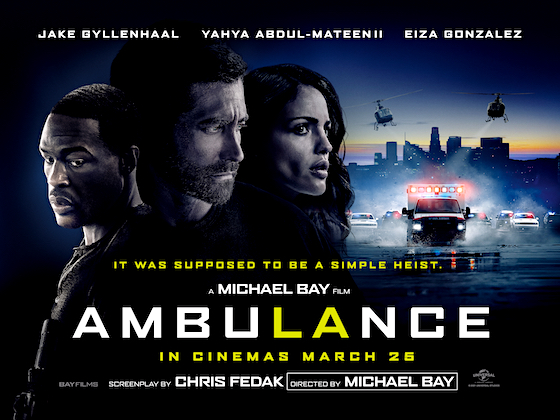
    Ambulance

    (2022)

    Michael Bay | 136 mins | Blu-ray (UHD) | 2.35:1 | USA & Japan / English | 15 / R

    Ambulance

    When their bank heist goes sideways, two brothers (Jake Gyllenhaal and Yahya Abdul-Mateen II) make their getaway in a stolen ambulance — with a policeman they shot and the paramedic working on him (Eiza González) in the back. With the cops immediately on their tail, thus begins an epic car ambulance chase around the streets of LA.

    The setup feels like it should signal the low-/mid-budget debut of a new director showcasing their talents with a 90-minute stripped-back thrill-ride that’s mostly contained to the eponymous setting. But it’s not directed by some newbie — it’s Michael frickin’ Bay, back on the form that gave us action classics like The Rock. And so the 90-minute character-focused thriller is in there (honest it is), but augmented with 40 minutes of big-budget Bayhem.

    Compared to Bay’s other work in the past 15 or so years, Ambulance feels restrained. Compared to almost any other filmmaker, it’s anything but. When I say “restrained”, part of what I mean is the editing. Not that it takes a leisurely approach by any means, but it doesn’t have that “impressionistic jumble of B-roll” style Bay has tended towards on and off ever since Armageddon, and that became his only mode during a couple of the Transformers sequels. Also, I didn’t notice this until I read it on IMDb, but the film contains a literal Chekhov’s gun — that is, a gun that is a “Chekhov’s gun”. That’s so Michael Bay.

    Giving this film 5 stars would be a bit silly… but it was really good. It’s the kind of movie you’d never rate higher than 4, but you love for what it is: magnificent Bayhem.

    4 out of 5

    Ambulance is the 44th film in my 100 Films in a Year Challenge 2022. It placed 9th on my list of The Best Films I Saw in 2022.


    Easy A

    (2010)

    Will Gluck | 92 mins | digital (HD) | 16:9 | USA / English | 15 / PG-13

    Easy A

    When an overheard white lie about losing her virginity makes barely-noticed Olive (Emma Stone) the centre of her high school rumour mill, she decides to manipulate her newfound notoriety for her own amusement.

    As “raunchy teen comedy” plots go, it hits a sweet spot of being neither too prudish nor too lecherous. The dialogue elevates it further in a sharp and witty script by Bert V. Royal (who, it seems, has since only worked on TV shows I’ve never heard of. Shame). In her first lead role, Emma Stone gives a perfectly-pitched, surprisingly nuanced performance. The story really allows her to show off her versatility, believable as both the ‘quiet girl’ and ‘confident slut’. Obviously there’s lots of comedy, but she sells the moments of sincerity too. It’s no wonder she quickly got snapped up for more awards-type work. Plus, there’s Stanley Tucci being what I imagine Stanley Tucci is actually like as a dad, which is perfection.

    The only major downside (and it’s a bit of a spoiler, but also so predictable that it barely counts as a spoiler) is that it would’ve been nice if the guy she eventually ends up with wasn’t so stereotypically hot. We’re meant to buy him as a kinda-goofy sports mascot rather than someone who’d actually be playing The Sport? Yeah right.

    I’m not always a fan of high school movies or teen comedies, but there are definite exceptions, and this is the latest addition to that rarefied list.

    4 out of 5


  • The Man Who Reviewed Some Films

    There are a lot of films about a man who did something — already on this blog I’ve written about men who invented Christmas, sued God, and, um, laughed. But I noticed I have many other reviews pending about such apparently-noteworthy fellas, so I’ve rounded most of them up into this one handy location.

    Some of these men knew stuff; some shot somebody; one just had a nap… but they’re all men who had a movie named after them. They are:

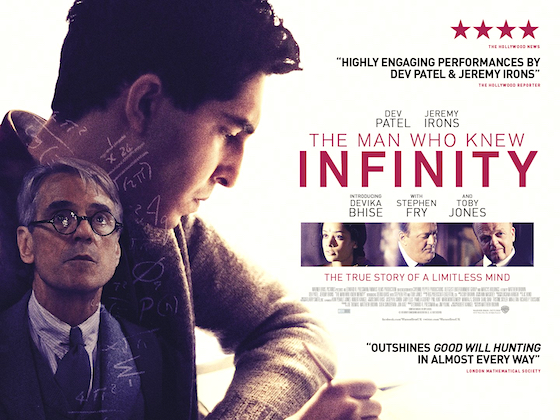
  • The Man Who Knew Infinity (2015)
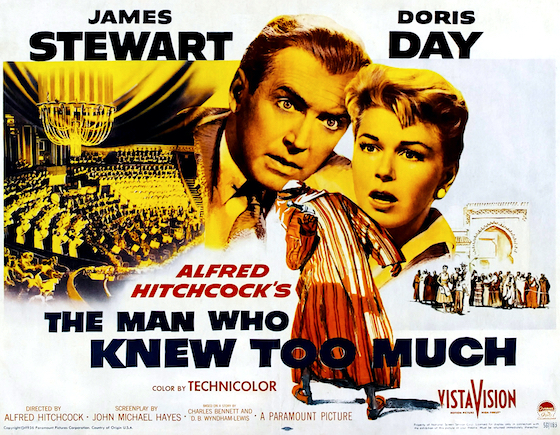
  • The Man Who Knew Too Much (1956)
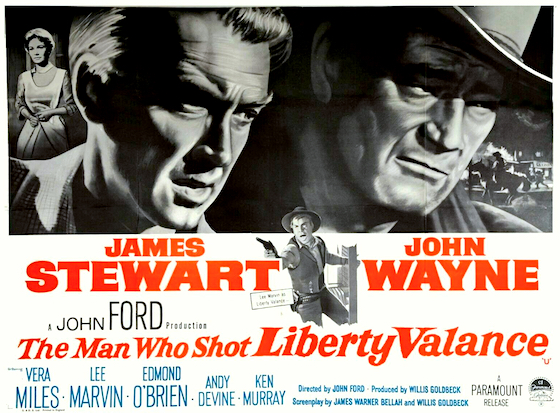
  • The Man Who Shot Liberty Valance (1962)
  • The Man Who Sleeps (1974)


    The Man Who Knew Infinity
    (2015)

    2019 #65
    Matthew Brown | 109 mins | digital (HD) | 2.39:1 | UK & USA / English | 12 / PG-13

    The Man Who Knew Infinity

    Srinivasa Ramanujan (Dev Patel) is a man of boundless intelligence that even the poverty of his home in India cannot crush. His skill for mathematics attracts the attention of noted British professor G.H. Hardy (Jeremy Irons), who invites him to develop his computations at Trinity College, Cambridge. Ramanujan finds that his largely-intuitive mathematical theories clash with stringent academic requirements, just as his cultural values are challenged by the prejudices of 1910s Britain. With Ramanujan’s health in decline, the two men join in a mutual struggle that would define him as one of India’s greatest scholars. — adapted from IMDb

    Writer-director Matthew Brown takes this interesting true story and turns it into an ironically by-the-numbers biopic. Even with reliable actors like Patel and Irons headlining, there are some surprisingly stuff performances, and the film struggles to truly convey the genius or importance of the maths involved. Instead, it’s just lots of characters saying “OMG look at this stuff he thought up” and other characters saying “nah mate, it’s wrong” (except in the vernacular of 1910s Cambridge, of course). Alongside that, it doesn’t have many places to go with the story or characters, so it comes to feel repetitive as it goes round and round over the same points. Even the start of World War I has no genuine impact on events, factoring into the film only because that’s when these events actually happened, so Brown seems to feel it must be mentioned. Indeed, a lot of the film feels beholden to fact in this way, though I’m sure it must be doing the usual biopic thing of bending the truth.

    3 out of 5

    The Man Who Knew Too Much
    (1956)

    2019 #84
    Alfred Hitchcock | 120 mins | Blu-ray | 1.85:1 | USA / English | PG / PG

    The Man Who Knew Too Much

    Dr. Ben McKenna (James Stewart), his wife Jo (Doris Day), and their eight-year-old son Hank are on vacation in Morocco when they witness the public murder of a mysterious man who, before he dies, manages to reveal to Ben details of an assassination about to take place in London. The plotters kidnap Hank to keep the McKennas silent, so Ben and Jo return to London to take matters into their own hands. — adapted from IMDb

    Famously, this is the time Hitchcock remade himself: he’d previously filmed The Man Who Knew Too Much in 1934 while he was still working in Britain. Later, he’d compare the two by calling the original “the work of a talented amateur” while the remake “was made by a professional”, although he reportedly preferred the earlier version precisely because it wasn’t so polished.

    Undoubtedly, the 1956 Man Who Knew Too Much is not top-tier Hitchcock, but that doesn’t mean it’s without joys. Jimmy Stewart and Doris Day are perfectly cast as an ‘everyman’ American couple who accidentally get embroiled in international espionage, and Hitch could make such thrills work with his eyes closed. He’s also on top form during a sequence in the Albert Hall, a stunning set piece that lasts 12 minutes without a single word of dialogue, in which Hitch has the balls to just keep going through an entire piece of music, allowing the tension to almost build itself as he cuts around the room; even when Stewart finally turns up, we still don’t need exposition — we know exactly what’s happening.

    Although a key part of the film’s conclusion, it’s not the actual finale, which is a shame because the following plan to rescue Hank is a bit daft. And, when you think about it, the villains’ plot doesn’t make a whole lot of sense either. It’s stuff like that which gets in the way of The Man Who Knew Too Much being among Hitch’s very best work, but it remains a fine suspense thriller.

    4 out of 5

    The Man Who Shot Liberty Valance
    (1962)

    2020 #66
    John Ford | 118 mins | digital (HD) | 16:9 | USA / English | U

    The Man Who Shot Liberty Valance

    When US Senator Ransom Stoddard (James Stewart) returns to the town of Shinbone to attend the funeral of his friend Tom Doniphon (John Wayne), a young reporter persuades him to tell the story of why he’s there. Flashback to a quarter-century-or-so earlier, when Ransom, a newly-qualified lawyer (still played, unconvincingly, by 53-year-old Stewart), arrived in Shinbone with a plan to bring law to the West. After Ransom receives a beating from local heavy Liberty Valance (Lee Marvin), he recuperates at the Ericsons’ restaurant, where he takes a job in their kitchen to repay their kindness. He develops an affection for their daughter, Hallie (Vera Miles), who’s also being wooed by young rancher Doniphon (still Wayne, also in his early 50s — it seems there was a good deal of movie star vanity in this casting). With local law enforcement refusing to do anything about Valance’s violent oppressive tactics, Ransom eventually takes it upon himself to face the villain down…

    Despite the violent promise of the title, Liberty Valance is very much a dramatic western rather than an action-packed one. Just shooting Valance isn’t the characters’ first recourse; indeed, the film on the whole is interested in the clash between the moral values of the old West and incoming modernity, and how the old ways can persist even as new ones come into force. That older Ransom is a senator is not incidental: a major part of the plot concerns Shinbone (or, rather, wherever it is) applying for statehood, and Ransom and Valance both standing to be a representative.

    All of which is fine, but unfortunately the dramatic focus seems to have resulted in the film being rather slow-going at times. The main plot is fine, but the telling could’ve been tighter — there’s a lot of stuff about Ransom washing dishes and teaching everyone to read and write. It establishes his place in town, sure, but it takes forever getting there. At the other end, Valance is actually shot a full 25 minutes before the end. There’s story to wrap up and twists to reveal, but it takes its sweet time doing it. None of which is distracting as the age-related issue I already referred to. I was genuinely puzzled why everyone kept talking about how young Ransom was, when Stewart patently isn’t, until I realised it was an example of good ol’ Hollywood vanity, where someone thought a star in his 50s could get away with playing a guy in his 20s.

    Despite that, however, Stewart and Wayne remain powerful screen presences, and the commentary on the changing face of the West — indeed, of the country as a whole — is indicative of a direction the genre continues to explore to this day (it’s what the whole of Deadwood is about, at its core).

    4 out of 5

    The Man Who Sleeps
    (1974)

    aka Un homme qui dort

    2020 #203
    Bernard Queysanne | 78 mins | digital (SD) | 4:3 | France & Tunisia / French

    The Man Who Sleeps

    When I watched this, it was ranked as one of the greatest films of all time by Letterboxd users. I did not feel the same — rather than Un homme qui dort, I found it more like Un homme qui t’endort. (That’s a joke I’m so pleased with, I’ve now used it four times.)

    At first it plays like a stereotype of French art house cinema: shot in black & white, it’s about a disaffected student, told with introspective voiceover narration, which philosophises at the level of a pretentious undergraduate, and nothing actually happens. But then I began to feel that, actually, it does a pretty good job of capturing how I’ve felt often in my life; especially back when I too was a pretentious undergraduate. But that feeling didn’t last much more than quarter-of-an-hour — and as the film is an hour and a quarter, that became a problem. As I slogged on through it, the interminable narration became repetitive; the musings less relatable. Just because warped minds exist doesn’t mean it’s worth our while to spend 78 minutes in their thoughts.

    The Man Who Sleeps is the kind of film that thinks it’s profound, but is actually pretentious. That may gel with the worldview of its undergrad subject, but, just as you wouldn’t want to listen to a real-life undergrad’s philosophising for over an hour, I don’t want to endure the same from a fictional one either. I guess it’s apt that a film titled “the man who sleeps” would be a good cure for insomnia.

    2 out of 5

    The Man Who Sleeps featured on my list of The Worst Films I Saw in 2020.
  • The 100-Week Roundup XXVI

    The 100-Week Roundup covers films I still haven’t reviewed 100 weeks after watching them. Sometimes these are short ‘proper’ reviews; sometimes they’re only quick thoughts, or even just the notes I made while viewing.

    This week’s selection, the final two films from March 2019, includes a pair of awards-worthy short animations — the first won an Oscar, the second was nominated for one. I was going to include more films in this week’s roundup (effectively bundle two weeks into one), but it felt like a disservice to this pair.

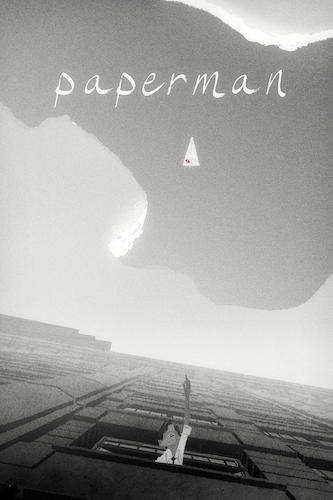
  • Paperman (2012)
  • Waltz with Bashir (2008)


    Paperman
    (2012)

    2019 #48a
    John Kahrs | 7 mins | Blu-ray (3D) | 1.85:1 | USA / silent | U / G

    Paperman

    This Disney short was originally released alongside Wreck-It Ralph (and can now be found on that film’s Blu-ray; as well as on Disney+, I presume) and, as I recall, attracted a lot of praise at the time, primarily for its visual style. That was an innovation in creating 2D-looking animation via a 3D system — so it seems a bit daft that I watched it in 3D. I have to wonder if the added visual dimension highlights the underlying 3D animation, because it’s quite obviously been created in 3D with a 2D style over the top.

    That said, it look gorgeous, however you cut it. There’s an inherent beauty in how it’s executed, while the chosen black-and-white style emphasises the apparent setting (’40s New York) and also gives it a timeless quality. The 2D/3D combination works well, giving it the fluidity and dynamism of CG animation, but with a certain roughness — a hand-made-ness — that comes from 2D cel animation. Of course, that’s artificial, injected via design choices (like scruffy outlines on the characters), but it feels authentic.

    As for the actual story, it’s a charming little romantic number involving paper aeroplanes… until those sheets of folded paper become sentient and omniscient, at which point it lost me with its silliness. But as an exercise in style: lovely.

    4 out of 5

    Waltz with Bashir
    (2008)

    aka Vals Im Bashir

    2019 #49
    Ari Folman | 87 mins | TV | 16:9 | Israel, France, Germany, USA, Finland, Switzerland, Belgium & Australia / Hebrew, Arabic, German & English | 18 / R

    Waltz with Bashir

    One night at a bar, an old friend tells director Ari Folman about a recurring nightmare in which he is chased by vicious dogs. They conclude that there’s a connection to their Israeli Army service in the first Lebanon War of 1982. Ari can’t remember that period of his life, so he meets and interviews old friends and veterans, hoping to discover the truth about that time and reconstruct his own memories of the conflict. — adapted from IMDb

    This search for the truth has led Waltz with Bashir to be labelled an “animated documentary”, which sounds like an odd idea, almost oxymoronic — you can tell a true story with animation, of course, but can you document something? Well, yes. Rather than talking heads, what animation allows is the visualisation of the narrators’ memories and dreams alike, and means we can flow between them, too. On a practical level, it allows the film to stage scenes that would be impossible in live-action without a huge budget, meaning it doesn’t have to compromise on the stories it tells. More thematically, having a shared style between ‘reality’ and ‘dream’, plus the distancing effect of it being drawn, not ‘real’ — of being unequivocally created, not just filmed — helps to underscore larger points about the reliability (or otherwise) of memory. The dreams are connected to the memories; are the memories a kind of dream?

    Given the time period being remembered, of course the film is about war and how that affects the mind of its participants, but it’s also memory in general, I think. You’d think such extreme, unique experiences would be unforgettable, and yet the workings of the mind and memory aren’t that straightforward. One strand I found particularly fascinating was the way people are haunted by the suffering of animals in the conflict, perhaps more so than by the human-related atrocities they saw. Is this just a coincidence of the people Folman spoken to? Is it a particular interest of Folman himself? Or is it a genuine phenomenon? I don’t know the answer, but (outside of, say, War Horse) I don’t remember it being such a clear thread in a war-related film or documentary before.

    I’ve seen people say they couldn’t connect with Waltz with Bashir because they didn’t know the history of the period well enough. Conversely, I felt that was part of why the film was so effective: not really knowing what was going on or what was being referred to, I was discovering it as the character did. Some parts along the way could perhaps have used further clarity or explanation for those of us entirely unfamiliar with the conflict, but there’s enough information disclosed to be going on with. I found the film’s ending to be powerful beyond words, and part of what makes it so shocking and impactful is not knowing about it, of learning about it for the first time with the characters.

    5 out of 5

  • The 100-Week Roundup XXII

    The 100-Week Roundup covers films I still haven’t reviewed 100 weeks after watching them. Sometimes these are short ‘proper’ reviews; sometimes they’re only quick thoughts, or even just the notes I made while viewing. This week’s collection includes three more feature films and one short from February 2019

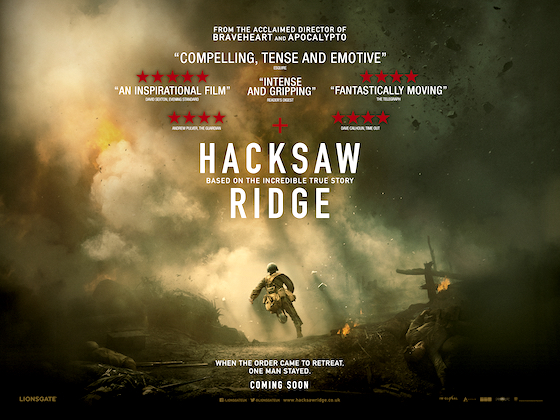
  • Hacksaw Ridge (2016)
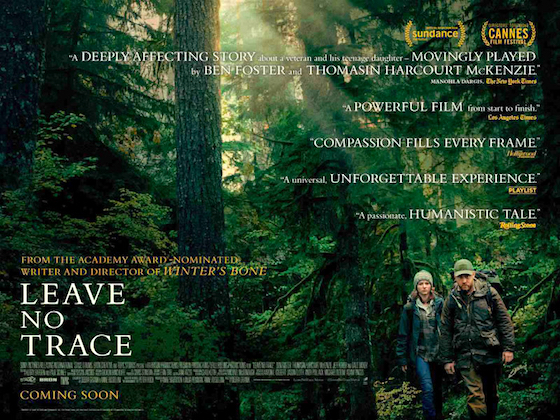
  • Leave No Trace (2018)
  • Inception: The Cobol Job (2010)
  • Fences (2016)


    Hacksaw Ridge
    (2016)

    2019 #17
    Mel Gibson | 139 mins | digital (HD) | 2.35:1 | Australia & USA / English | 15 / R

    Hacksaw Ridge

    Hacksaw Ridge tells the true story of Desmond T. Doss (Andrew Garfield), an American who believed that World War II was justified — so he joined the army to serve his country — but also that killing was wrong — so he refused to carry a weapon. Serving as a combat medic, Doss ended up at the bloody Battle of Okinawa, where he saved the lives of 75 men without firing a shot, and became the first conscientious objector to earn the Medal of Honor.

    It’s an extraordinary true story — the kind of thing that would seem ludicrous if someone made it up — so it earns its place on the screen. Unfortunately, I don’t think the best way to tell it was by letting Mel Gibson carve it from a block of cheese. When the film’s not wasting time on clichéd bootcamp stuff, it’s earnestly indulging in its subject matter to an eye-rolling degree. Indulgence is also the name of the game when it comes to the war, too: for a movie about a guy who wouldn’t kill, it certainly revels in its gory depictions of combat. Handled the right way, such grotesquery could have supported the point that Desmond is right, but Gibson seems to be enjoying the slaughter too much.

    And yet for all of Gibson’s amping it up, some of the real-life stories are even more incredible than what’s in the film — there are stories in IMDb’s Trivia section (here and here, for example) that stretch credulity so far it was decided to leave them out because audiences would never believe it. Considering how OTT the stuff left in is, it seems a shame to have left out something that could be backed up as a true account.

    3 out of 5

    Leave No Trace
    (2018)

    2019 #18
    Debra Granik | 109 mins | digital (HD) | 1.85:1 | USA & Canada / English | 12 / PG

    Leave No Trace

    Traumatised military veteran Will (Ben Foster) and his teenage daughter, Tom (Thomasin McKenzie), have lived in isolation for years in a public park outside Portland, Oregon, only occasionally venturing in to the city for food and supplies. But when they’re spotted by a jogger, they’re arrested and put into social services. Tom finally gets a sense of what it might be like to integrate with society, but Will clashes with his new surroundings, and soon they set off on a harrowing journey back to the wild. — adapted from IMDb

    I don’t like summarising too much of a film’s storyline at the start of a review, but Leave No Trace is one of those films where the character work is more important than the shifts of the plot. It’s a double portrait: that of a damaged man who can’t cope with society, and his loving daughter who he’s taken on the same path, for good or ill. Will’s lifestyle and parenting methods are entirely at odds with what’s seen as acceptable by society (hence the arrest and being placed in care), but does that make him wrong? The pair’s life in the woods is a “back to nature” approach, detached from technology and the hum of modernity, which many profess to strive for — he’s just actually gone and lived it. But Tom, as just a young teenager, has had this life thrust upon her — it’s what her dad wants, but she’s never known anything else to have the choice.

    So the film rests on the two lead performances. Ben Foster is reliably superb as a father doing his best for his daughter — and, actually, not doing a bad job — but struggling with his own issues and traumas. But the star is Thomasin McKenzie, in what’s proven (rightly) to be a breakout role (she quickly followed this with another leading role in Jojo Rabbit, and will next be seen in new movies from Edgar Wright, M. Night Shyamalan, and Jane Campion). She was just 17 when the film was shot, but is entirely convincing as a 13-year-old, and yet the character also seems old for her age. It’s a weird dichotomy, that. It never crossed my mind that the actress was any older than the character — it’s not just that she looks young, it’s a quality in the performance — and yet she also conveys that sense of being “wise beyond her years”. As if that wasn’t enough, the film’s emotional crux lies with her, delivered in a single emotional gut-punch of a line that’s liable to make you choke up just remembering it.

    4 out of 5

    Inception: The Cobol Job
    (2010)

    2019 #20a
    Ian Kirby | 15 mins | Blu-ray | 16:9 | USA / English | 12

    Inception: The Cobol Job

    Remember motion comics? They were a brief fad where comic books were adapted into movies/series by simply adding movement and sound to the original artwork. (I say “brief fad”, they may still make them for all I know, but there was a rash of them about ten years ago that seems to have abated.) That’s what this animated prequel to Christopher Nolan’s Inception is: a moving version of the one-shot comic (originally published online, but also included in print with some releases of the movie), written by Jordan Goldberg with art by Long Vo, Joe Ng, and Crystal Reid of Udon.

    As motion comics go, the animation here isn’t bad. It’s still clearly derived from a comic book rather than being born into animated form, but it’s got a decent amount of movement and dynamism. But its main fault is not having any voice actors. There’s music (taken from Hans Zimmer’s score for the feature) and sound effects, which complement the atmosphere and help connect it to the film proper, but having to read speech and thought bubbles really keeps it in “motion comic” rather than “animated short” territory. Were the producers at Warner really so cheap that they couldn’t’ve afforded a couple of voice actors for an afternoon’s work?

    As for the story, it’s a nice little prequel to Inception, more-or-less tonally in-keeping with Nolan’s work. It sets up the backstory behind the film’s opening heist and some of its subplots… though, kinda ironically, The Cobol Job also begins in media res, so you could do a prequel to the prequel to explain how they got there. Stories within stories within stories? How very Inception.

    3 out of 5

    Fences
    (2016)

    2019 #21
    Denzel Washington | 139 mins | digital (HD) | 2.39:1 | USA & Canada / English | 12 / PG-13

    Fences

    Troy Maxson (Denzel Washington) is a working-class African-American in 1950s Pittsburgh, doing his best to provide for his family: wife Rose (Viola Davis), teenage son Cory (Jovan Adepo), his son from a previous relationship (Russell Hornsby), and Troy’s mentally impaired brother, Gabe (Mykelti Williamson). But this seemingly-happy dynamic is tried when Troy’s secrets are forced to come to light, and his bitterness at the hand life dealt him threatens his family’s dreams. — adapted from IMDb

    Fences is adapted from a 1985 play by August Wilson, which was revived on Broadway in 2010, and many of the lead cast members from that award-winning production transfer to this film version, not least star (and now director, too) Denzel Washington. Perhaps that’s why the end result is so very stagey.

    It’s not just the limited locations or talky screenplay that give that away — there’s no reason you can’t make a film that’s set in limited locations or heavily based around dialogue, so it goes beyond that. The stage roots show through partly in that so much important stuff is kept offscreen and we’re only told about it through dialogue — I don’t think you’d tell this story this way if it originated for the screen, or indeed as a novel. Then there’s the way the actors move around, the way they come and go from the ‘stage’, the way scenes are blocked — it feels like it’s been lifted off a stage set, plonked on an equivalent real location, then filmed. Then there’s the style of the dialogue — it has a certain kind of familiar theatricality, which I can’t quite define but I always know when I hear it.

    All of which serves as a distraction from whatever Fences is meant to be about. And, frankly, it goes on a bit, with many scenes feeling in need of a massive tighten. It’s not that it’s bad, but it feels very worthy; very self consciously important. Perhaps for some people it is.

    3 out of 5

  • The 100-Week Roundup XXI

    I’m sure regular readers — who hungrily consume every word I publish with a near-religious commitment, right? — are well aware of the purpose of these 100-week roundups; but for the sake of newcomers discovering them for the first time, perhaps stumbling here wearily via an IMDb link, I feel it’s overdue that I come up with some kind of generic introduction to stick on each one. Maybe something like this:

    The 100-Week Roundup covers films I still haven’t reviewed 100 weeks after watching them. Sometimes these are short ‘proper’ reviews; sometimes they’re only quick thoughts, or even just the notes I made while viewing. This week’s collection includes the final film leftover from January 2019 and the first few to be rounded up from that February

  • The Player (1992)
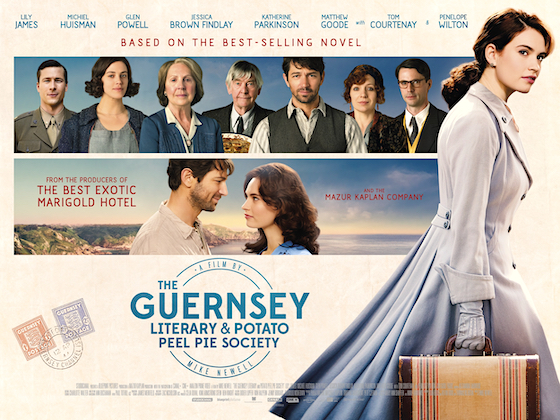
  • The Guernsey Literary and Potato Peel Pie Society (2018)
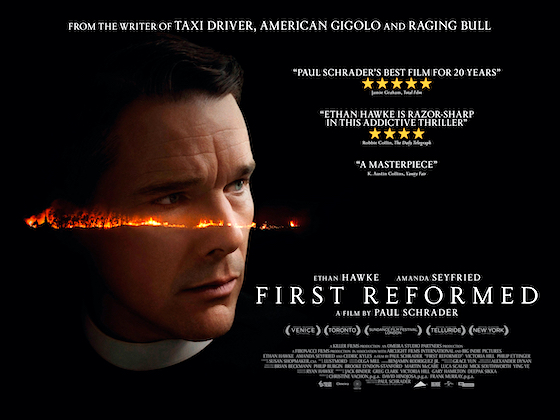
  • First Reformed (2017)
  • Gods and Monsters (1998)


    The Player
    (1992)

    2019 #8
    Robert Altman | 124 mins | Blu-ray | 1.85:1 | USA / English | 15 / R

    The Player

    Robert Altman’s satirical look at the world of Hollywood filmmaking stars Tim Robbins as a studio executive who rejects tens of thousands of prospective screenplays a year. When he begins to receive threatening postcards from an anonymous rejected writer, at the same time as his job seems under threat from a new employee, he’s led down a rabbit hole of suspicion and paranoia that may ruin more than just his career…

    You don’t get movies that are much more “insider Hollywood” than The Player, concerned as it is with the workings of the studio system, and packed to the rafters with cameos, both famous (big-name actors) and not (several of the guys who pitch in the film are real screenwriters). Such a focus would seemed primed to make a film inaccessible — witty and clever to those in the know, but leaving the rest of us shut out. That’s not the case here. While there’s no doubting the truthfulness (at least, in a satirical sense) of Altman’s depiction of Hollywood’s inner workings, he’s taking general aim at the entire world of it. Plus, there’s always the mystery/thriller storyline to keep us hooked.

    And in its insightfulness, the film is ahead of its time. As observed by Sam Wasson in his essay for the film’s Criterion release — written in 2016, but only more accurate five years further on — “today, when it’s the IP and not the script, or the director, or even the actor, that gets the movie made, when films are green-lit before they are written, and studios, I keep hearing, hire weaker directors because they’re easier to control, I think of that meeting, midway into The Player… when [Robbins] muses aloud to a roomful of colleagues, ‘I was just thinking what an interesting concept it is to eliminate the writer from the artistic process. If we can just get rid of these actors and directors, maybe we’ve got something here.’” I guess someone was taking notes…

    5 out of 5

    The Player was viewed as part of Blindspot 2019.

    The Guernsey Literary and
    Potato Peel Pie Society

    (2018)

    2019 #12
    Mike Newell | 123 mins | digital (HD) | 1.85:1 | UK, France & USA / English | 12

    The Guernsey Literary and Potato Peel Pie Society

    In the aftermath of World War II, a writer (Lily James) forms an unexpected bond with the residents of Guernsey when she decides to write about the book club they formed during the island’s Nazi occupation. — adapted from IMDb

    Here we have a film that seemed to come in for a fair bit of flack in critical circles, and I can’t help but wonder if it a large part of it is simply down to the title. As I wrote in the February 2019 Arbies, it’s self-consciously whimsical, but “I can kind of see what they were going for… but they took it too far and now it’s a more horrible mouthful than the pie itself.”

    In fairness to the film’s detractors, that wasn’t their only nitpick. Another is that, although she’s ostensibly the protagonist and therefore a proactive character, James’s role is basically to keep asking the other characters what happened in the past until they explain the plot to her. That’s not an entirely inaccurate assessment of how the story unfolds. Virtually the only dramatic tension comes from the fact the other characters, all of whom know what went on, won’t reveal it until they (or, rather, the plot) decide it’s time to. Then again, stuff like having an active protagonist is one of those rules of drama that I sometimes feel is a rule just because it’s a rule — if your story is engrossing and entertaining anyway, why not have the ‘hero’ be little more than a narrator to guide us through what went on? Anyway, I’m not sure Literary and Potato Peel Pie Society was built to support such technical debates.

    Naturally, there’s a romance storyline too. That’s all very twee, of course, but the flashbacks to life under occupation give the film more grit than some gave it credit for. This isn’t a hard-hitting war movie, but nor is it simply an airy-fairy romance in pretty locations with an overdose of the sugary quirkiness that the title implies. Taken as a whole, it’s a perfectly decent melodrama-ish movie, that delivers on both a “chick flick”-ish romantic level and as some kind of recognition for the efforts of ordinary people during the war.

    4 out of 5

    First Reformed
    (2017)

    2019 #13
    Paul Schrader | 113 mins | digital (HD) | 1.37:1 | USA, UK & Australia / English | 15 / R

    First Reformed

    The pastor (Ethan Hawke) of a small church in upstate New York is asked for help by a pregnant parishioner (Amanda Seyfried) whose husband is a radical environmentalist. When the situation takes a tragic turn, the pastor must cope with mounting despair brought on by tragedy, worldly concerns, and his tormented past. — adapted from IMDb

    My first note about First Reformed is: I’m glad I didn’t watch the trailer first — it gives away almost all the salient details of the climax. So there’s a warning to you, too. (Naturally, the above plot description is written to not give too much away.)

    Continuing in that non-spoiler-y vein, then, all I can share from my notes about the ending is that it definitely seems designed to provoke debate — about the rights and wrongs of what does and doesn’t happen; about the choices made; about the way it chooses to conclude. The problem (or, some might feel, advantage) of being vague about this is that there’s no meaningful way to engage with said debate. Oh well.

    Before we get to the contentious conclusion, First Reformed appears to be a quiet little drama about personal despair and grief. It sort of morphs into something very different — almost a polemic about climax change. I say “sort of” because it also retains its smaller character-specific focus by using such big world-affecting things as a metaphor or mirror for individual dejection and hope. The character in question is Ethan Hawke’s pastor, and it’s very much a character study of him (Amanda Seyfried, a big name given co-billing on posters, etc, doesn’t have a huge amount to do — even when her character is involved in several exceptionally emotional situations, she remains very calm). With the whole film on his shoulders, Hawke is excellent, navigating us through his character’s rather internal conflicts with an assured performance.

    It was a good enough turn to put him in the awards conversation, as I remember, but not to secure any major nominations. The film did get an Oscar nod for its screenplay, written by director Paul Schrader, but it lost to Green Book. The less said about that the better, maybe.

    4 out of 5

    Gods and Monsters
    (1998)

    2019 #16
    Bill Condon | 105 mins | digital (HD) | 16:9 | USA & UK / English | 15 / R

    Gods and Monsters

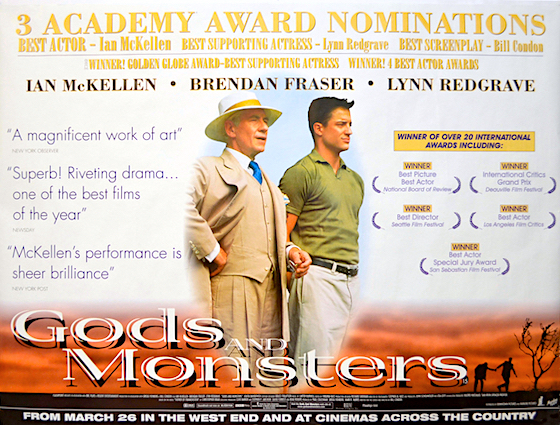
    James Whale (played here by Ian McKellen) was the director of such acclaimed classics of the 1930s as Frankenstein, The Invisible Man, and Show Boat. By 1957, he was long since retired, and when he suffers a stroke it causes him to reflect on his memories — of his earlier life in England; of his movie career; and of his time in the trenches during World War I. He recounts these experiences to his new gardener, Clay (Brendan Fraser), a strapping ex-Marine who Whale persuades to model for him. Their friendship grows, even as Clay is wary of Whale’s homosexuality, and Whale’s health deteriorates.

    Viewed now, there are definitely parallels between this and another film starring Ian McKellen and directed by Bill Condon, Mr. Holmes. Both concern a dying old man (McKellen), cared for by a characterful housekeeper (here, Lynn Redgrave), who connects with a younger male while reflecting on former glories. No offence meant to Condon, but if he were a more noted director then I guess more people would have discussed the similarities between the two works, for good or ill (are they mirrored explorations of a similar theme, or just self plagiarism?) Of the two, Gods and Monsters is probably the more effective, benefitting from being based on a real person and true events in its exploration of who this person was.

    4 out of 5

  • A Beautiful Day in the Neighborhood (2019)

    2020 #195
    Marielle Heller | 109 mins | digital (UHD) | 1.85:1 + 1.33:1 | USA & China / English | PG / PG

    A Beautiful Day in the Neighborhood

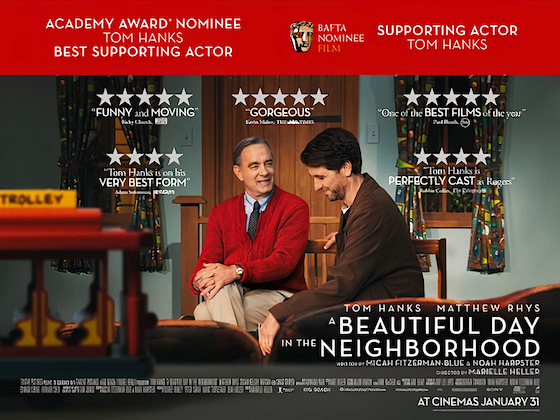
    Thanks to the ubiquity of their films and television programmes, American culture permeates the world. Even if something isn’t directly exported, there are enough references to it in other media that we all get to know it by osmosis. (If you think I’m exaggerating, here’s one example: there are many documented cases of people trying to “plead the fifth” when being interviewed by law enforcement in countries where the fifth amendment to their constitution has nothing to do with criminal procedure.) So, it’s all the more unusual that Mr Rogers is apparently an influential part of American childhoods, but he wasn’t (as far as I’m aware) widely known outside of the US until a couple of years ago. That was thanks to the acclaim garnered by documentary Won’t You Be My Neighbor? As these things often go, that was followed by a biopic — which is this.

    However, rather than try to tell Mr Rogers’ whole life story, A Beautiful Day in the Neighborhood (a reference to the fictional land in his TV series, which is presumably why the US spelling was retained even for the UK release (except on DVD covers, etc)) focuses on one man’s encounter with Rogers. That man is Lloyd Vogel (Matthew Rhys), a cynical journalist with familial problems aplenty. He’s assigned to write a puff piece on Rogers — a couple of hundred words for a magazine issue about “heroes”. The pair seem an ill fit, but that’s the point — it’s basically a punishment from his long-suffering, usually-indulgent editor. Lloyd is initially reluctant, then sceptical — surely the whole “Mr Rogers” thing is a persona; an act? But as he spends more time with the man, it begins to change his view on the world too.

    Okay, it probably takes a while for the film to get to that point, exactly, but I’m not spoiling anything — you know that’s where it’s going. “I met this guy whose world view was so much more positive and optimistic than mine… and it didn’t affect me at all, I’m still a grumpy bastard.” That’s not a story Hollywood’s going to tell, is it? Heck, that’s not even a story. So, yeah, of course Mr Rogers’ fundamentally decent and kindly nature is going to have an impact on Lloyd.

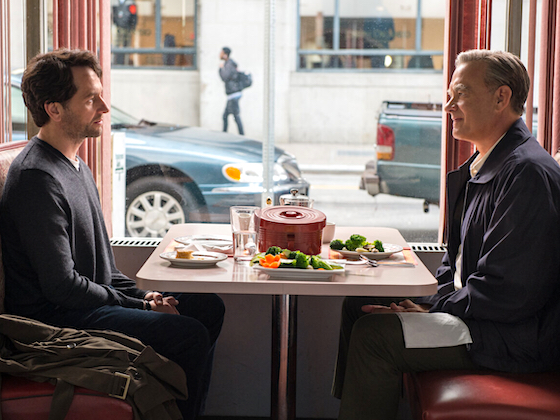
    A beautiful lunch in the neighbourhood

    Despite Mr Rogers being the focal point, then, the film is really more about Lloyd’s personal journey. But that journey is instigated and facilitated by Mr Rogers, so his “supporting character” part is vital. And who better to portray the very embodiment of decency than Tom Hanks? Rogers’ widow has said that Hanks was the perfect actor to play her husband; for his part, he’s said taking the role was “terrifying” due to the cultural significance. Hanks is as accomplished in the role as you’d expect, and it deservedly earnt his sixth acting Oscar nomination (his first in almost 20 years, and long overdue, I think).

    If it all sounds a bit predictable, director Marielle Heller dodges that with some indie-movie-esque flourishes. There’s a touch of Wes Anderson to how she uses Mr Rogers’ TV show, switching into Academy ratio to demarcate us entering a different ‘world’ — not just literally clips from the show, but bookend narration, dream sequences, location transitions, and so on. IMDb lists the 1.33:1 ratio as just being used for “TV scenes”, but I think that undersells its use and effectiveness, which is more comparable to (say) how Anderson used three different ratios in The Grand Budapest Hotel.

    Its those kind of inescapable but well-considered flourishes — plus the believable transition in Lloyd’s character, which is more grounded in reality than the “slightly unlikeable guy becomes super positive” cliché — that elevate A Beautiful Day in the Neighborhood out of the predictable or twee, and into being a genuinely heartwarming kinda film.

    4 out of 5

    A Beautiful Day in the Neighbourhood is available on Sky Cinema and Now TV from today.

    Le Mans ’66 (2019)

    aka Ford v Ferrari

    2020 #177
    James Mangold | 153 mins | Blu-ray (UHD) | 2.39:1 | USA / English & Italian |
    12 / PG-13

    Le Mans '66

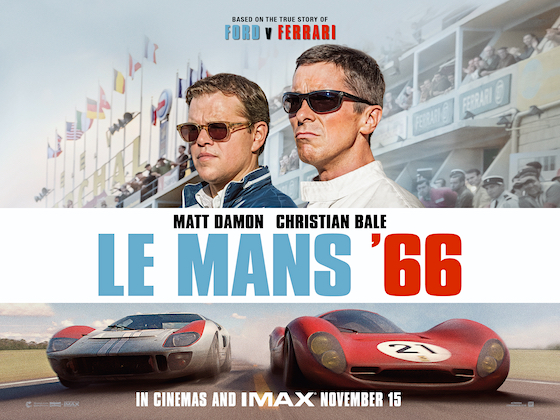
    Did you know that Ford tried to buy Ferrari in the ’60s? I didn’t. As per this film, Ford were desperate to appeal to a younger market and an association with motor racing seemed the way to do that. Ferrari were the regular winners of the Le Mans 24-hour race but were struggling financially, so Ford made an offer; but Ferrari played them, merely using Ford’s interest to get a better deal from Fiat. Pissed off, Ford set about making a racing car by themselves to beat Ferrari at their own game. Enter former Le Mans-winning driver turned race-car designer Carroll Shelby (Matt Damon), a smooth-talking American who’s as adept at charming higher-ups as he is at making fast cars; and his favoured mechanic and driver, Ken Miles (Christian Bale), a quick-tempered Brit who rubs the Ford execs up the wrong way. With Ford’s money behind them, but also management watching over them, can Shelby and Miles engineer a car good enough to beat Ferrari at Le Mans?

    That the film goes by one of two different titles depending where you live might seem like an incidental point of trivia — it’s not the first time this has happened (Avengers Assemble is probably the most famous recent example), and it wasn’t an artistic decision, nor even a marketing one, apparently, but instead legal necessity (according to director James Mangold, you can’t use brand names in a title in the UK and/or Europe) — but it’s also a lens through which we can consider the film’s focus. To wit, is it more about the rivalry between Ford and Ferrari (as in the original title) or winning the 1966 Le Mans race (as in the UK title)? The consensus seems to be that the original title sounds more dynamic, but I think the international one is more accurate. The head of Ford has it in for Ferrari, but our two heroes are more interested in winning the race, rivalry or not.

    Winner!

    To some extent the story has been streamlined in that direction. The original screenplay was an ensemble about the entire team building the Le Mans car — more historically accurate, I’m sure, but I’d wager less dramatic and personal. That’s what’s gained by focusing on Shelby and Miles, the two key figures. To the film’s credit, it still doesn’t pretend they did it alone. The role attributed to other mechanics may not be as large as it was in real life, but nor does the film try to pass it off as the achievement of just two men. What it primarily adds is relatable drama. This isn’t just a movie about building and/or racing a car, but about these two particular men — what motivates them; how their ego gets in the way, especially in Miles’s case.

    The film plays to the lead actors’ strengths in this respect, with Damon turning on the easy charm and Bale, who famously stays in character throughout a shoot, embodying someone who is superb at their job but can be belligerent. The standout from a quality supporting cast is Caitriona Balfe. She may just have the typical Wife role, but she’s made to be a bit more badass than that usually allows… before getting relegated it to the sidelines for the finale, naturally.

    Said finale is the eponymous Le Mans event, of course. It’s not the only race sequence in the film, but it’s by far the longest. Nonetheless, they’re all suitably thrilling in how they’re shot and edited. One of the film’s genres on IMDb is “Action”, and though it doesn’t really conform to my idea of what an Action movie is — not least in the fact that there are only three or four of these “action sequence” race scenes throughout the two-and-a-half-hour movie — I can see where they’re coming from.

    We are golden

    That runtime is quite long, but it doesn’t drag… once it gets going, anyway. The slowest part is early on, getting the story up and running, which I feel could have been streamlined. Ford’s attempt to buy Ferrari initially seems like an aside, but obviously it comes to frame the whole rivalry; but Miles’s woes with the IRS barely have anything to do with the rest of the movie, and, other than providing an extended introduction to the man, I don’t think you’d lose much by losing them. The film was clearly trimmed a fair bit, though, because there are loads of little bits you can spot in the making-of that aren’t in the finished film. Said making-of also highlights the choices behind the cinematography. The visuals are very golden — that kind of “wasn’t the past pretty” atmosphere — but the behind-the-scenes footage shows the shooting conditions to be much duller and greyer, revealing how much the orange/gold light comes from the camerawork and grading.

    Le Mans ’66 might look like a film for car nuts, and I’m sure they’ll get a lot out of it — alongside the likes of Rush, I guess this kind of thing would be their favourite movie (both those films currently sit in the IMDb Top 250). But the rest of us are by no means left out, thanks to involving characters and exciting race scenes, even if some plot beats border on clichéd. Le Mans ’66 may not reinvent the wheel, but it works hard at refining it.

    4 out of 5

    Le Mans ’66 is available on Sky Cinema and Now TV from midnight tonight.

    Hamilton (2020)

    2020 #157
    Thomas Kail | 160 mins | streaming (UHD) | 1.85:1 | USA / English | 12 / PG-13

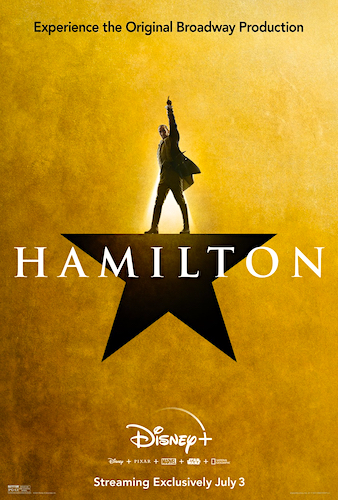
    Hamilton on Disney+

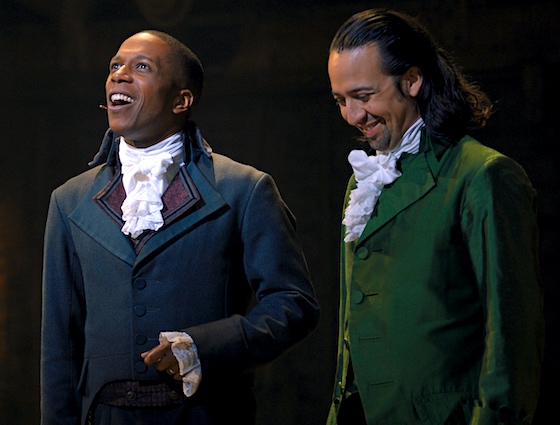
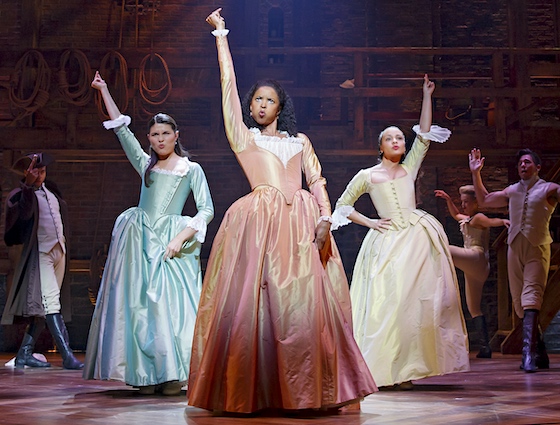
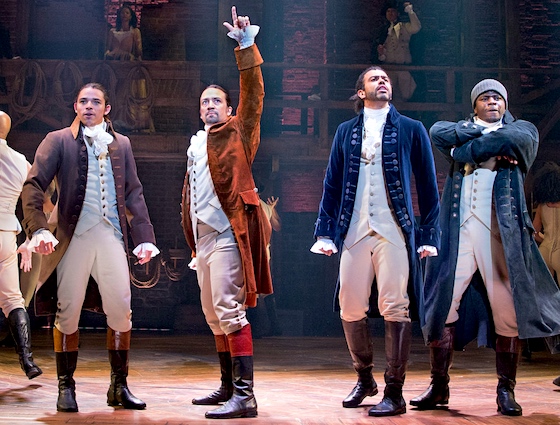
    Hamilton, the original musical, is one of the great works of art of the 21st century so far, and now we all get a chance to be in the room where it happened (provided you’re prepared to pony up some dough to Disney+) thanks to the makers having had the foresight to film a full production with the original Broadway cast back in 2016 (and then flogging that recording to Disney for $75 million).

    The show is a genuine phenomenon, but if you’ve let it pass you by, allow me to explain the basics. This is the life story of Alexander Hamilton, one of the Founding Fathers of the USA; an immigrant who fought in the War of Independence, became the first Secretary of the Treasury, and in between and around all that most assuredly lived a life — there’s friendship and rivalry; romance and infidelity; genuine triumph and heartbreaking tragedy. Here that story is told via music, written and composed by Lin-Manuel Miranda (who also portrays the title role), a fusion of hip-hop, R&B, and more traditional Broadway stylings, performed by a cast mostly made up of people of colour. It’s a tale of outsiders and immigrants and forward-thinkers who battled for the right to be recognised and respected — it’s a history lesson, but oh yeah, it’s timely.

    It premiered back in 2015, so over the past five years the praises of the original show and its successful soundtrack album (the primary medium through which most people have been able to experience the work, given the scarcity and cost of tickets) have been thoroughly sung. To briefly offer my perspective, I came to it ‘late’ — sure, I heard about it (initially thanks to references to its ticket prices), but I overlooked it as just another bit of mass-popular culture that likely didn’t have any weight or staying power. My mistake. Long story short, I finally listened to it in full in 2019 and was blown away.

    Aaron Burr, sir

    Adjectives to describe its quality are endless. It’s densely and intelligently written, packed with historical information at every turn, abundant with sly references to other media. Its structure is sublime, laced with callbacks and nods forward from the very opening number; musical motifs repeat, as do lines and ideas, some cropping up before their real significance has been reached, like flash-forwards; elements of plot and character are echoed and mirrored. Many of these are observable first time through; others only reveal themselves with repeat visits. The characters are sharply and smartly drawn, revealing layers and nuances and different perspectives as the piece goes on — it may ostensibly be about Alexander Hamilton, but multiple other characters are at least as richly painted, if not more so. It engrosses like a thriller and packs the serious emotional punch of a finely-wrought drama, but it’s also very funny at times, with numbers as toe-tappingly addictive as a great pop song. It’s hard to think of a more complete all-round experience.

    Well, complete but for visuals if (like me) you’d never seen it performed, only listened to the soundtrack. And, you know, the soundtrack’s not a bad way to experience it — it doesn’t feel notably incomplete. Normally when you listen to a musical’s album, you just get some nice songs from the production. With Hamilton, you get (very nearly almost) the entire soundtrack, and therefore the entire story — you can follow it and not feel like you’ve missed anything. (I do wonder if that’s part of why it’s been such a success.) The lyrics and music conjure up their own imagery in your mind — certainly for me, ever since I first listened to it I’ve pictured whole chunks of it as I’d realise them in a movie version. I’m sure they’ll do a ‘proper’ film of it someday (you really think they’re going to leave all that money on the table?), but I think it’s for the best that’s not the first way I’m seeing it, because I worry it won’t live up to what I’ve concocted in my version.

    As I mentioned at the start, this isn’t a film reimagining like a normal movie musical, but rather a filmed record of the original production. It was shot over three days back in June 2016 (shortly before the original cast moved on), during a mix of live performances and in an audience-less auditorium for the sake of closeups, crane shots, etc. That’s one of the things that elevates this particular film above other recorded-theatre productions I’ve been watching recently (like One Man Two Guvnors, Danny Boyle’s Frankenstein, or the RSC’s Macbeth): whereas they have clearly been filmed live during a single performance, with all the restrictions that implies (limited camera angles; making editing choices in real-time), Hamilton has some extra remove, which has allowed director Thomas Kail to be a bit more creative.

    Looking for a film at work, work

    The camerawork endeavours to add something no theatre performance could, allowing us to see details that would be missed from even the best seats in the house. Closeups let us appreciate the full spit-flecked contempt from Jonathan Groff’s George III in You’ll Be Back; the restrained emotional sacrifice injected into Angelica by Renée Elise Goldsberry during Satisfied; Eliza’s heartbroken defiance from Phillipa Soo in Burn; or the rare occasions Leslie Odom Jr. allows Aaron Burr’s true emotions to break through in the likes of Wait For It and The World Was Wide Enough. That’s not to mention the countless other moments and performers that benefit from us being able to see how much they’re giving their performances; all the subtleties they’re adding.

    At other times the camera angles show off the choreography, for example with punch-ins to highlight specific elements during stage-wide ensemble showpieces, like the rewind at the start of Satisfied, or a bird’s eye view as paper flutters in the air during The Reynolds Pamphlet. Still other scenes are reframed for our convenience, such as an exchange between Burr and Hamilton during Non-Stop that takes place upstage off to one side, but is now centred through medium shots and closeups. If all that sounds like it might serve to undermine the staging, it most certainly does not. When called for, Kail and editor Jonah Moran frequently fall back on wide angles to ensure we see the scope of what’s occurring. Only once or twice during the whole two-and-a-half hours do you feel maybe they chose a less-than-ideal angle or over-edited a sequence.

    Having said that listening to the soundtrack feels like a complete experience, watching it certainly shows what you were missing. There’s so much more to add, from little nuances of performance, to visual-only gags and callbacks, to impressive dance and staging — and if we’re already comparing this to the presumed ‘proper film’ version that will exist someday, I also presume some of that staging will be lost in the visual translation. But while there’s an undoubted “designed for the stage” aspect to the blocking or the way some things are realised, it still works on film.

    Not throwing away their shot

    You can’t ignore that this is a film of a Broadway production — even if you wanted to, an opening subtitle reminds us it’s June 2016 in the Richard Rodgers Theatre, and the audience is frequently to be heard clapping, cheering, and laughing (mixed onto the rear speakers if you’re watching in surround sound, as you’d expect, along with a few other moments and effects that add to the experience if you can benefit from such a setup). But it’s so well staged and filmed that you can buy this as the intended experience. With those other filmed-theatre productions I mentioned, you’re often aware that what you’re watching has primarily been staged for those in the room, and that you getting to observe it from a few fixed camera positions is a nice bonus if you couldn’t be there. With Hamilton, it feels like nothing is missed; not only that, but that this is the way the story was meant to be told, complete with elements of theatrical artifice, like the stripped-back staging and actors playing multiple roles (which roles are shared by the same actors is not without significance). Whenever and whatever they do for that theoretical ‘proper film’, I feel like it won’t negate this version, not just as a record of the original show, but as a film in its own right.

    That’s perhaps the most striking aspect of this particular version: it doesn’t feel like a mere stopgap until they film it ‘properly’, nor a “that’ll do” stand-in for a real theatrical performance, but instead like a legitimate experience in its own right. Hamilton is a masterpiece, and getting to see it performed by the original cast in its original staging via a film so carefully and lovingly crafted is an absolute thrill.

    5 out of 5

    Hamilton is available on Disney+ now. It placed 3rd on my list of The Best Films I Saw in 2020.