aka Le Crabe aux Pinces d’Or
2015 #1
Claude Misonne | 58 mins | download | 1.37:1 | Belgium / French
 By 1947, Hergé’s boy reporter/adventurer Tintin had already been around and increasingly popular for nearly two decades; had survived World War 2 and the controversy of being published in a Nazi-controlled newspaper; and the release of his adventures had recently been transferred to a dedicated magazine, Le Journal de Tintin. What better time to bring the character to the big screen?
Adapted from the ninth Tintin adventure, which is the one that introduces popular supporting character/co-lead Captain Haddock, the plot sees Tintin following clues left by a dead seaman to uncover an opium smuggling operation being run on Haddock’s boat without his knowledge. Animated via stop motion using doll-like puppets, the film was only ever screened twice before being seized when its producer declared bankruptcy and fled to Argentina. A print is stored at the Cinémathèque Royale in Belgium, where it seems it used to only be available to paying Tintin club members, but in 2008 it was released on DVD in France. English-friendly versions are available online, not least via YouTube. The picture quality is poor, but, having gone to the trouble of acquiring a higher-res copy, I can say it doesn’t get much better. It is in the wrong aspect ratio, though — approximately 1.69:1. It doesn’t look too distorted, but if you see a 4:3 version it suddenly looks right. (I presume the DVD was incorrect because I had to adjust the copy I downloaded.)
As for the film itself, it’s incredibly faithful to Hergé’s original tale — it may not be adapted frame-for-frame, but it’s incredibly close. A couple of action sequences have gone astray, presumably because that’s harder to achieve with puppets, but it also streamlines the story slightly. I can’t speak for the French dialogue, but the fan-made English subtitles are word-for-word with the book. Of course, that may be where they’re sourced from.
 In my review of the Spielberg film, I remarked I hadn’t read the albums it was adapted from so couldn’t vouch for its fidelity. Watching this, it’s clear that a sizeable chunk of the storyline was actually adapted from The Crab with the Golden Claws, to the point where I was starting to wonder if Moffat & co had taken the entire plot from Crab but subbed in the MacGuffins from Secret of the Unicorn. In the end, about half of this made its way into the 2011 film, including everything aboard the Karaboudjan, the lifeboat and plane sequences, and some of the desert material, too.
In this version, there’s quite a good bit where Tintin and Haddock escape from the Karaboudjan but we don’t see any of it, instead following the traitorous Mr Mate as he discovers all the crewmembers our heroes have tricked and tied up. As with everything else, this is book-faithful, but works even better on screen. Plus, Captain Haddock has a musical number, about his love for “the bottle and the sea”; and later he has another with Tintin, too. The main lyric is, “tra la la la lai doo”.
Technically, it’s not the most sophisticated stop motion you’ll see, but it’s not bad considering its age. The models are of their era too, but pretty good on the whole. The two exceptions are, firstly, the black characters — a weakness of Hergé’s book, they were replaced with white characters in later years, but this is faithful to the original version. The dolls aren’t any better than Hergé’s drawings. Secondly, the facial design of Tintin’s doll 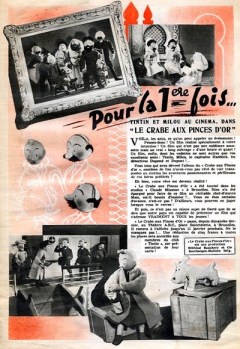 makes it look as if he’s permanently shocked by everything.
The Crab with the Golden Claws must be the most adapted Tintin adventure now (it was also animated in both the ’50s and ’90s series), which isn’t necessarily warranted: it was a tale compromised by the circumstances surrounding its publication, and apparently is largely a rehash of an earlier story. It’s not without merit, though — all of the good stuff was filched for the Spielberg film, funnily enough. This version isn’t bad, but is really no more than a funny little curio. One for the hardcore fan, be that of Tintin or the history of stop motion animation, or the insatiably curious.

 This year’s Best Animated Short Oscar winner is a charming little tale of a dog and his owner. I absolutely adored it, though there’s little doubt that it was helped to victory by being produced by Disney and released theatrically alongside Best Animated Film winner Big Hero 6. I haven’t seen any of the other shorts nominees, but you only have to look at clips of The Bigger Picture and learn a little about how it was made to see that it’s a monumental technical achievement, if nothing else. But I’ve not seen it, so perhaps a nomination was reward enough.
 but nonetheless packs an emotional punch. Viewers have been known to shed a little tear (though fear not, dear reader: it doesn’t come via a Marley & Me-type ending).
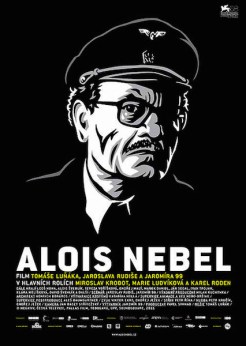 A Czech noir animation, set around Christmas 1989 to the backdrop of the country’s Velvet Revolution. Eponymous character Alois Nebel is a train station guard whose flashbacks to an event at the end of World War 2 see him sectioned, though possibly for other nefarious purposes. Having lost his job, he travels to head office in Prague to try to reclaim it, where he meets a ragtag gang of social misfits. Finally returning home, the mystery of what happened 44 years earlier may be resolved…
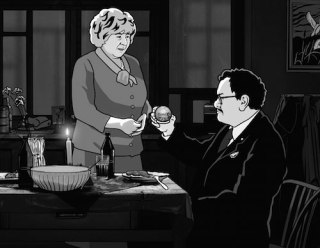 Perhaps the whole film is Deeply Thematic, then? It may be to do with the country moving on and making peace with its past, seen in a microcosm in the actions of Nebel (moving past the flashbacks, having new experiences, finding love, etc) and the people around him (finally getting revenge for something that happened nearly half a century ago). Maybe that’s all more clear if you know the Czech mindset, or the history of the Velvet Revolution. The second post in
 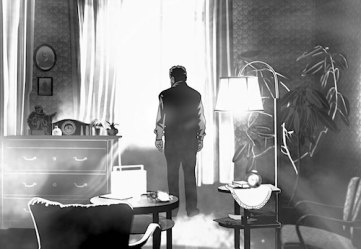 With some attractive black-and-white animation and a sporadically engaging mystery plot, Alois Nebel is far from meritless. However, its firm grounding in a wide spread of Czech history and attitudes suggests it may be best suited to those already well-versed in that country’s history and culture.
 Disney’s ’80s/’90s renaissance more-or-less came to an end with this adaptation of Edgar Rice Burrough’s jungle hero.
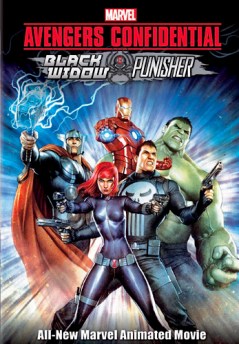 Anime take on Marvel properties. S.H.I.E.L.D. agent Black Widow teams up with vigilante Frank Castle, aka the Punisher, to investigate a threat to global security.
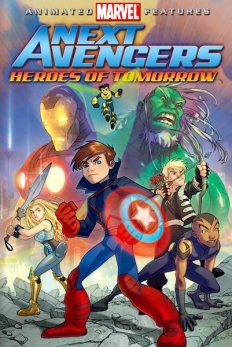 No, not the ’70s spy-fi series
  The rest of the new characters are largely fine, and while they’re clearly grounded in their parents’ personalities, they’re not just carbon copies — Cap’s son James is less worthy than his father, for instance; Black Panther’s son Azari is less elbows-out; and so on. Though Hawkeye Jr. is a little skeevy… Writer Christopher Yost has done a fair job of crafting realistic-enough kids, and in an era when superheroes seem to spend more time fighting amongst themselves than they do against villains, it’s nice that this team largely get on — though not in an overly-rosy “it’s all happy families” way, thankfully.
 Coupled with a good plot, which keeps moving and developing rather than setting up one threat and meandering along until a big fight, as well as a few cameos and maybe even surprises along the way, Next Avengers is the kind of movie you expect to be pretty awful kids-only dross, but turns out to actually be pretty darn good.
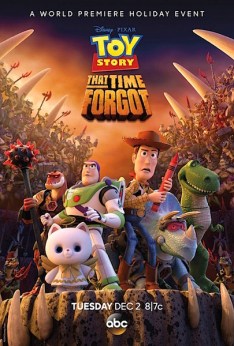 The second Toy Story TV special, and the fifth short adventure for the characters that perhaps should have had their last hurrah in
  The whole thing just feels undercooked. Apparently it took three years to make, with two of those dedicated to development. The Battlesaurs toy line was imagined in full, for example. There’s evidence of that on screen, but it’s just an impression that there’s a lot of background work we’re not getting to see. A TV special gives them limited time to explore the new world they’ve created, of course, but
 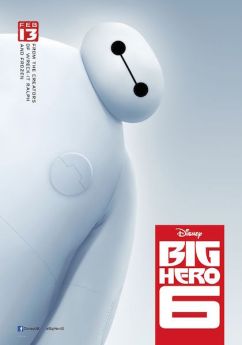 This year’s Best Animated Film Oscar winner is not this year’s best animated film. Not by a long stroke. What it is is one great character, one great emotional plot/subplot, and a lot of stuff that feels like every other big-budget action-orientated CGI animation of the past few years. Most succinctly, this is little more than (as
  The element that is an unequivocal success is Baymax. A soft robot — made of inflated vinyl so as to be genuinely huggable — he’s sweet, funny, and always entertaining. Memorable moments abound, in particular a sequence where his batteries run low, and his interpretation of a fist-bump (a recording booth improvisation by Adsit that was worked into the film). The movie truly comes alive whenever he’s on screen, but conversely loses some magic whenever he’s pushed into the background.
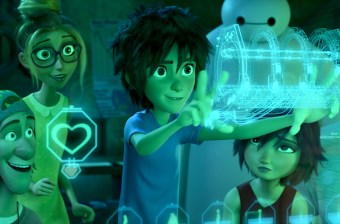 Big Hero 6 is by no means a bad film. It will certainly entertain its target age group, especially if they haven’t seen the other CG spectacles it nabs from. That aside, the entire thing is worth a look purely for Baymax and a few stand out moments — all of them involving the aforementioned vinyl robot, of course. Otherwise, it’s pretty by-the-book. The five-star-level praise it’s attracted in some quarters is completely unwarranted.
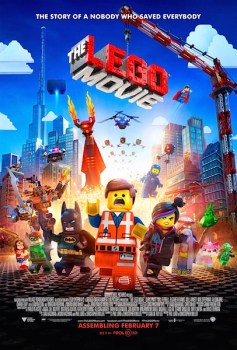 Despite looking like a 100-minute toy commercial with an irritating theme song, plus a moral message about nonconformity that seems like it’ll get bungled (but doesn’t), The Lego Movie is so much more — and better — than that.
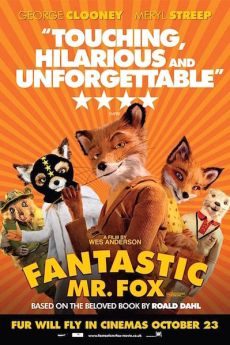 Quirky cult-y director Wes Anderson tries his hand at stop motion animation with this Roald Dahl adaptation, in which an all-star cast voice the tribulations of a gaggle of talking animals — led by the eponymous vulpine — who come into conflict with three vicious farmers.
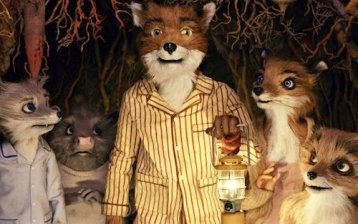 Compositionally, I thought I’d get sick of the squared-off 2D style, but Anderson’s cleverer than that. It might look flat and lacking in dimension at first, but that’s the starting point for variation, including some great bits of depth (farmer Bean trashing a caravan is a particular highlight of this), and when it breaks form (like a rabid dog chase) it’s all the more effective. There’s also a fantastic score by Alexandre Desplat. Not your usual plinky-plonky Quirky Kids’ Movie music (though there are instances of that), but something more raucous. Nice spaghetti Western riffs, too.
 Fantastic Mr. Fox is the kind of film I feel I may enjoy more on a re-watch. Indeed, some comments on film social networking sites (e.g.
  100Films.co.uk