Rampage (2018)

2019 #61
Brad Peyton | 107 mins | download (HD+3D) | 2.40:1 | USA / English | 12 / PG-13

Rampage

A big-budget live-action movie adaptation of a 32-year-old arcade game that I’m pretty sure only old and/or hardcore gamer geeks remember? Was that the wisest moviemaking decision? I mean, there’s nothing wrong with being old, but is a PG-13 CGI-fest like this really aimed at that age group? Well, I guess these days it is, so maybe it wasn’t such a poor commissioning decision after all — and it made over $428 million at the box office, so someone knew what they were doing. And, before this year, Rampage was tied for the honour of being the best-reviewed video game adaptation ever made… though as it achieved that with a Rotten Tomatoes score of just 52%, it’s certainly damning with faint praise.

Anyway, I don’t really care about all the video game-y stuff. I’m here because it’s a The Rock movie, and I tend to find his stuff pretty entertaining nowadays (as do many others — I bet he’s a bigger part of that $428 million than “based on a video game” is), and it’s about an ape, a wolf, and a crocodile who get mutated into giants and set about destroying Chicago. I mean, who doesn’t want to see that? (Yes, I know: well-adjusted adults who actually grew up.)

If you think I’m being facetious, nah, that’s the plot; or it’s the climax, anyway, and the rest of the film exists as a way to find a narrative reason for said climax to happen. Naturally, with such a batshit barmy climax as the end goal, the story that gets us there is thoroughly daft also. It involves corporate skullduggery and genetic experimentation and all kinds of stock plot-building stuff like that, but at least it’s all executed with a certain amount of humour. No one is taking this too seriously.

Monkeying around

So it’s a little odd, then, how gruesomely violent and gory it gets, and sometimes kinda unnecessarily cruel with it. But there are no nipples and only one use of “fuck”, so, sure, PG-13! I would describe the gore, but a lot of it is kinda spoilery so I’ll refrain; but the film’s opening shot features a drop of blood floating into a dead guy’s empty eye socket, and later we see people ripped in half, one character falls into the mouth of a monster in slow motion, we see another get beheaded and the head get eaten… Yeah, okay, it’s all ridiculous CG BS, but still.

The Rock is truly the closest thing we have to a genuine Movie Star right now, I think — a guy who can still lead a movie on the strength of his name and likeability alone (look how many original or near-as-dammit-original movies he’s done in the past few years that’ve made bank). He’s got just the right level of charm to keep us engaged and on side without it tipping over into smarminess. He also has a remarkable skill (or at least I think he does) whereby, without breaking character or immediately undermining what’s happening, he lets us know that the story and its antics shouldn’t be taken too seriously because, hey, it’s just an action movie. Or maybe that’s just something I inherently infer from his very presence, considering the kinds of movies he stars in and the fact he always plays more-or-less the same character. Anyway, in this one he convinced me that he had a tight brotherly bond with a giant CGI ape, and consequently made me care about the fate of said collection of pixels, so that’s an achievement in itself.

“Jeff, stop chewing the scenery — that's the CGI's job.”

This time, most of the rest of the lead cast are in on the gag too, with Jeffrey Dean Morgan chewing more scenery than the monsters as a cowboy-ish government agent, and Malin Akerman and Jake Lacy hamming it up as the corporate bitch villain and her halfwit brother. Naomi Harris pops up as The Rock’s love interest cum sidekick, who’s a clever scientist lady and can hold her own in a verbal slanging match with him, but, yeah, is still primarily there to be the love interest.

Rampage is not big and it’s not clever, but it is kinda fun. Although it is actually quite big — that’s kinda the point. But anyway, it’s mostly big dumb fun, and naturally a lot of that looks pretty awesome in 3D. I liked it as a thoroughly ludicrous, brain-off entertainment.

3 out of 5

Quentin Tarantino’s Swinging Sixties Movie Marathon Roundup: Spy-Fi

I introduced the concept behind QT’s movie marathon in my previous roundup of films from it, but to quickly recap, these are all movies with a connection to Tarantino’s latest flick, Once Upon a Time in Hollywood.

While many of Tarantino’s selections speak to the setting of OUaTiH (in terms of depicting its time and place on screen, or the social landscape of its era), others have a bearing on it in quite a different way. These are movies his characters might’ve seen, or might’ve appeared in, or (in the case of Sharon Tate) did actually star in. Three of those also fall under the banner of espionage fiction. Two hail from the James Bond-inspired spy-fi craze of the ’60s, while one is a ’50s war movie about a secret mission. (Yeah, that last one is stretching the definition — it’s not really a spy movie at all — but it doesn’t pair up with anything else in Tarantino’s selection, so here it is.)

In today’s roundup:

  • Hammerhead (1968)
  • The Wrecking Crew (1968)
  • Battle of the Coral Sea (1958)


    Hammerhead
    (1968)

    2019 #112
    David Miller | 95 mins | TV | 16:9 | UK / English

    Hammerhead

    The success of the James Bond movies led to a whole raft of imitators throughout the rest of the ’60s, a spy-fi craze that kickstarted other long-running franchises like Mission: Impossible and The Man from U.N.CL.E. Of course, as well as the memorable and enduring successes, there were piles of cheaply-made, entirely-forgettable knockoffs. Hammerhead is one of the latter. Like Bond, it’s based on a series of espionage novels, these ones by James Mayo (pen name of English novelist Stephen Coulter) and starring the character Charles Hood. Coulter had been friends with Ian Fleming, and apparently (according to Quentin Tarantino) his Hood novels were popular with secret agent fans because they were written in a similar style to Fleming. Hood didn’t have the staying power of Bond, though, the series running to just five novels which (as far as I can tell) haven’t been in print for decades. On film, he fared even less well: this is the only Charles Hood movie.

    The film’s biggest problem is its desire to be a Bond movie, but without the money or panache to carry it off. As Hood, Vince Edwards has none of the easy charm of Sean Connery, instead seeming like a stick-in-the-mud who’d rather be anywhere else (preferably back in the ’50s, I suspect). And the film itself so wants to be like Bond that there’s even a pop song named after the titular villain… though rather than playing over the opening credits, it pops up two or three times mid-film, incongruously played diegetically. As a Letterboxd reviewer put it, “apparently in the late ’60s if you were a pornography-obsessed master criminal you could also be the subject of a pop song.”

    Oh yes, that’s right: the villain collects porn. Not just any old rags, though, but Art — paintings and sculptures by renowned masters, that kind of thing, just ones that feature boobies. Something about that does feel ever so ’60s. The film itself is as pervy as its villain’s obsession. Well, okay, maybe not that pervy, but there are certainly gratuitous shots of women in their underwear, etc. Perhaps the most egregious is the closeup of female co-lead Judy Geeson’s bouncing behind as she rides on the back of a motorbike up some steps, complete with boinging sound effect. That’s about as explicit as it gets, though: it may be firmly set in the Swinging Sixties, with up-to-the-minute fashions and scenes set at experimental art happenings, but it’s stuck in the past enough to not feature any actual sex or nudity, just plenty of cleavage, gyrating dance moves, and the odd bit of innuendo (don’t expect any Bond-quality puns, mind — it’s not that clever).

    Trying to swing

    I haven’t mentioned the plot, but it’s a frequently nonsensical bit of nonsense involving a report so top-secret its author has to have a highly public cover story for what he’s supposed to be doing while he actually sneaking off to present to international delegates who’ve arrived in the country unannounced. If anyone ever said what this report was actually about, or why the conference had to be kept a secret (or how something like 23 different countries, and their associated delegates and security staff and so on, all managed to keep it hush-hush), I missed it. The villain wants to intercept the report — not steal it, not stop the conference, just learn what’s in it — which requires an elaborate plan with an impressionist and various decoys. Why not just honeytrap one of those 23 delegated? I guess that’d be too easy. What’s the villain’s motivation for wanting the report? No idea — he’s defined by being a reclusive pornography connoisseur, not by whatever he does to make money to afford his expensive porn habit.

    Well, it’s all part of the film wanting to be like Bond, but not seeming to really understanding what makes the Bond films tick. On the bright side, it doesn’t take itself very seriously, which means it’s kooky fun in places (there’s a nice bit of farce in a hearse, for example). Not without entertainment value, then, but only hardened ’60s spy-fi fans need apply.

    2 out of 5

    The Wrecking Crew
    (1968)

    2019 #115
    Phil Karlson | 101 mins | TV | 16:9 | USA / English | PG / PG

    The Wrecking Crew

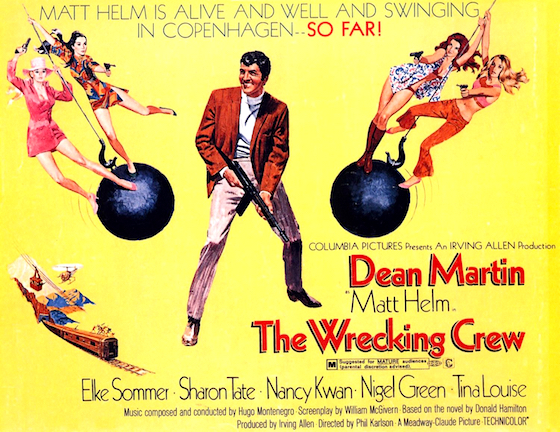
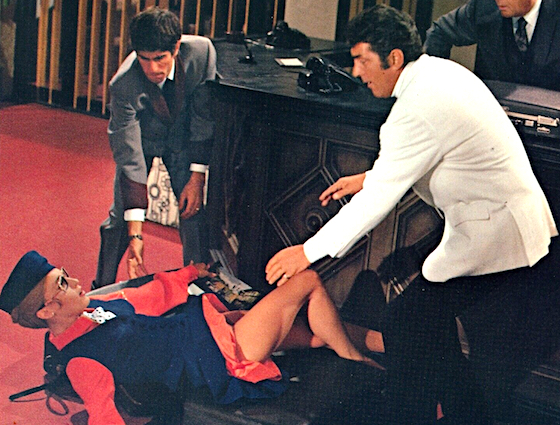
    Unlike Hammerhead, I’m not sure anyone should apply to watch The Wrecking Crew, the last in a series of four movies starring the Rat Pack’s Dean Martin as Donald Hamilton’s Matt Helm. The character was a mite more successful than Charles Hood, then, but on screen and in his original literary form: the book series ultimately ran to 27 novels, the last published in 1993, with a 28th written but left unpublished after Hamilton’s death in 2006. The film series would’ve continued too — I guess not for that long, but for at least one more film. Reports vary on why a fifth instalment never happened, but one highly plausible version ties it to the murder of Sharon Tate. Tate co-stars in The Wrecking Crew and is quite the best thing about it. Martin loved working with her, and the plan was for her to return as Helm’s sidekick in the next film. But then what happened happened, and the followup was abandoned. (The alternate version is that poor reviews and poor box office for The Wrecking Crew just led the studio to scrap the series.) There are several tragedies about the murder of Sharon Tate, but I don’t think depriving us of more Matt Helm movies is one of them.

    As for the lead character, Helm is a secret agent cum fashion photographer — and that’s not the only thing here that’ll remind you of Austin Powers. The Bond movies are often cited as the sole inspiration for Powers, but it was really drawn from across the ’60s spy-fi spectrum, and it’s clear Matt Helm was part of the mix. Unfortunately, The Wrecking Crew plays like a low-rent Austin Powers movie with any humour value sucked out. In his discussion around the film, Tarantino recalls seeing it in the cinema on its original release, and how audiences found it hilarious at the time. That wasn’t a quality I observed, personally. It’s clearly all tongue-in-cheek, but it rarely achieves levels of genuine amusement.

    Enter Sharon Tate

    More tangible is the sensation that the film thinks it’s super cool and hip, but really isn’t. That might just be because of its lead. Dean Martin feels a bit like Roger Moore in his later Bond films: still behaving like he’s a young playboy while looking far too old for it. But even Moore, with his ageless class, felt more ‘with it’ than this. It really shows that the “effortless cool” of Bond does require some effort. The past-its-date feel is underscore (literally) by frequent random snippets of old-fashioned-sounding songs — presumably Dean Martin numbers, placed awkwardly to convey some of the hero’s thoughts (sample lyric: “If your sweetheart puts a pistol in her bed, you’d do better sleeping with your uncle Fred”). So much for the Swinging Sixties… and this was nearly 1970, too!

    There’s no respite in the actual storyline, which is at least broadly followable (the villain has stolen $1 billion in gold, because who doesn’t want to be rich?), but then drowns itself in a flood of little logic problems and implausibilities, shortcomings of research or insight into foreign cultures, casual racism, lazy casting (why does someone called Count Massimo Contini sound like an English public schoolboy, other than because he’s the bad guy?), and no consideration for where surveillance cameras might actually be placed. You despair of constructively criticising the film for its mistakes — it’s beyond help.

    The Wrecking Crew is another movie no doubt inspired by the desire to emulate the success of James Bond, but this is the kind of mediocre imitation that gives you a new appreciation for even the worst Bond movies. Hammerhead clearly struggled to compete due to the constraints of a tight budget, which it at least made up for somewhat with a vein of authentic Swinging Sixties antics. The Wrecking Crew, on the other hand, seems to have all the money it could need (it was produced by a major studio and had star names attached, remember), but nothing like enough charm or skill. It can’t even find benefit in fight choreography by the great Bruce Lee, with stunt performers incapable of convincing combat.

    2 out of 5

    Battle of the Coral Sea
    (1958)

    2019 #116
    Paul Wendkos | 83 mins | TV | 16:9 | USA / English | PG

    Battle of the Coral Sea

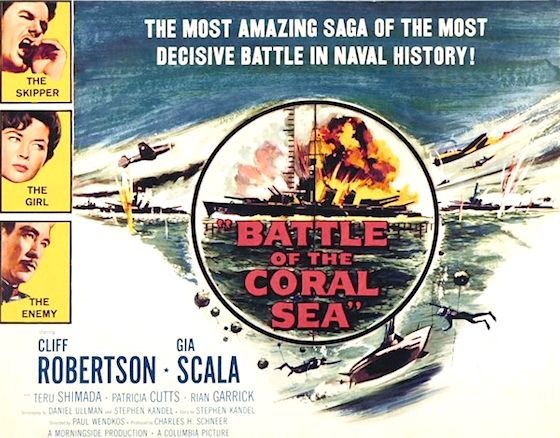
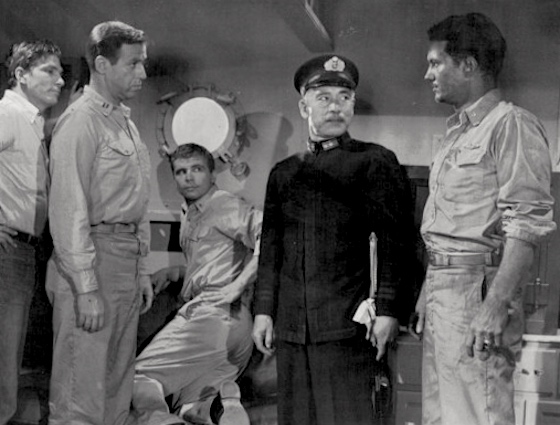
    May, 1942, the South Pacific: a US submarine on a top-secret reconnaissance mission is captured by the Japanese fleet. Its crew are taken to remote island interrogation camp, where they just have to keep silent for a couple of days until what they know will no longer be of use to the enemy.

    Yes, far from the combat movie the title implies, this middle-of-the-road World War 2 movie is one part submarine adventure (the first act) to two parts POW thriller (the rest). The latter also includes an action-packed escape for the climax, which is almost a moderately exciting action sequence, but is marred by a litany of minor daft decisions. For example: the escapees start by killing a couple of guards, but only pick up one of their guns; then they use that gun to mow down more guards, but still don’t bother to grab any more weapons. When some of them get killed a minute or two later, you can’t help but feel it was their own damn fault.

    It picks up some points for making the camp’s commander a reasonable man — a human being, rather than an alien, vicious, evil torturer, which is the stereotype of Japanese WW2 prison camps. That said, considering how infamously brutal said camps were/could be, the niceness of the prisoners’ treatment makes the film feel somewhat neutered. It’s not like the captured seamen get to laze around all day — they’re put to work — but you feel like these guys aren’t really suffering, not compared to what others went through. It contributes to the feeling of the film being a something-or-nothing tale; just another story of the war, rather than an exceptionally compelling narrative.

    Under the Coral Sea

    Apparently the eponymous battle was rather important, though: a voice over informs us that “it was the greatest naval engagement in history”… before adding that “the victory laid the groundwork for the even greater sea victory at Midway.” So it was the greatest… except the next one was greater? Who wrote this screenplay, Donald Trump? We do actually get to see the battle, eventually, when it turns up as an epilogue, conveyed via a speedy stock-footage-filled montage. I wonder how much of that was fed into the trailer…

    Battle of the Coral Sea is the kind of film I would’ve completely overlooked if Quentin Tarantino hadn’t included it in his Swinging Sixties Movie Marathon (it represents the kind of thing Once Upon a Time in Hollywood’s Rick Dalton would’ve appeared in early in his career, as one of the seamen with a couple of lines), and I don’t feel I’d’ve really missed anything. It’s not a poor film — anyone with a fondness for ’50s-style war movies will find something to enjoy in it — but it’s not a noteworthy one either.

    3 out of 5

    Once Upon a Time in Hollywood is in cinemas now.

  • Zatoichi Meets the One-Armed Swordsman (1971)

    aka Shin Zatôichi: Yabure! Tôjinken

    2019 #99
    Kimiyoshi Yasuda | 95 mins | Blu-ray | 2.35:1 | Japan & Hong Kong / Japanese & Mandarin | 15

    Zatoichi Meets the One-Armed Swordsman

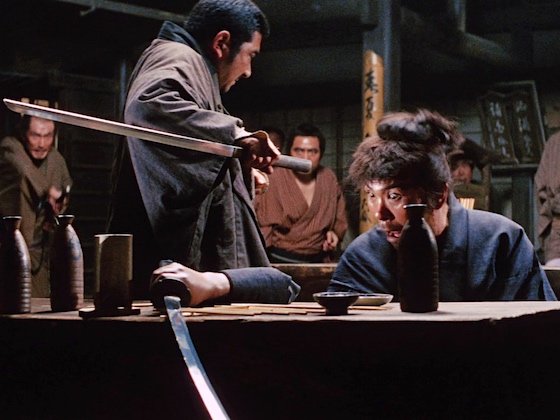
    Crossovers are an enduring device in comic books — what better way to boost sales (or, if we’re being less cynical, mix things up) than have a guest appearance by another popular character? And the past decade has seen Marvel Studios turn the same principle into a massive movie money-spinner. Of course, they’re far from the first to attempt an on-screen crossover — and what could sound more comic-book-y than a blind swordsman meeting a one-armed swordsman?

    This is the second such meet-up movie in the Zatoichi series. The first saw our hero face off against Akira Kurosawa’s Yojimbo… or someone with the same name played by the same actor, at any rate. That bait-and-switch was just one of many let-downs in what turned out to be the most disappointing film in the long-running series. With that in mind, perhaps it was foolhardy of me to look forward to this film. Certainly, it’s not the best-regarded Zatoichi adventure. But I really enjoyed the two original One-Armed Swordsman films (especially the first), so bringing that character into the beloved Zatoichi series had the potential to be a match made in martial arts heaven.

    After the prerequisite Bondian pre-titles scene that reminds us of Ichi’s skill with a sword, we’re introduced to Wang Kang (Jimmy Wang Yu), the eponymous one-armed swordsman from China, who’s travelling across Japan to meet an acquaintance at a monastery. Falling in with a family of Chinese performers, they come across a procession by a local lord, but the family’s young son gets in the way and is threatened with violence, so Wang Kang steps in to defend him. Offended, the samurai attack, killing all witnesses, including the boy’s parents. Wang Kang escapes and the slaughter is blamed on him, leading to a manhunt for the supposed fugitive. Ichi, wandering as always, encounters the boy and Wang Kang, and tries to help despite the language barrier.

    Creating a new one-armed swordsman

    An array of other characters come into the mix, as you’d expect from a Zatoichi film, including Oyone (Michie Terada) and her kindhearted parents, who take the fugitives in; Osen (Yūko Hama), a prostitute who falls for Ichi (don’t they all?); Kakuzen (Kōji Nanbara), Wang Kang’s friend at the monastery, who has plans of his own; and a trio of drunken gamblers who provide comic relief, including a risible fart gag. But that aside, the film has a dark, brooding tone. I mean, it starts with a massacre of innocents that’s blamed on the wrong man — hardly cheery — and that’s just the first of many tragic injustices visited upon these characters. And when the bad guys aren’t being menacing, Ichi is; like when he casually takes a guy’s ear off to get him to talk, or the moment when he closes in for the kill on the villainous boss, blowing the blindman’s whistle that said boss had earlier goaded him about… It’s triumphant, but also kinda chilling. Put yourself in the shoes of the men Ichi gets pitted against and you can see him as a kind of nigh-indestructible bogeyman.

    The tragedy extends as far as the ending, which is both frustrating and poignant. “If we’d understood each other’s words, we wouldn’t have had to fight,” says each of the men… except, er, they did have a way to understand each other, thanks to the bilingual boy. Have a sword fight first, ask questions later, I guess. But anyway, it’s frustrating because they didn’t need to fight (they were both good guys!), but it’s poignant because their basic natures, compounded by misunderstandings, meant they did fight — and because they fought, one of them had to die. It’s a damn good fight, mind; in fact, this is an excellent instalment for combat all round, thanks in part to there being another exceptional swordsman in town. The Chinese swordsman brings his own style, too, meaning there’s an array of stunts and tricks more familiar from Hong Kong action movies than Japanese ones. Indeed, Wang Kang is well served by the film all round. Sure, it’s still Zatoichi’s movie overall, but the guest star gets a couple of scenes to himself to show off, as well as his own honourable storyline.

    The real one-armed swordsman

    Nonetheless, rumours abound of an alternate cut, released in Chinese markets, that placed even more emphasis on Wang Kang. There doesn’t seem to be any firm evidence of its existence, but some people swear to have seen it, many years ago. Reports vary on just how different it is, ranging from merely the last 30 seconds being modified so that a different combatant wins the final duel, to there being additional Wang Kang fight sequences scattered throughout the movie. Considering this was a Japanese-Chinese co-production, it makes sense each market would prefer a version where their hero wins… although, of course, they could’ve come up with a storyline that saw the eponymous swordsman fight earlier, come to a draw, and then team up for the climax, seeing as they’re both heroes ‘n’ all. Ah well.

    The version we do get to see is as much a Zatoichi film as any other. It keeps in play many of the series’ familiar elements — not just exciting action scenes, but also emotional drama, a gambling scene with a difference, and humorous interludes that are actually moderately amusing — but adds some HK-style martial arts to the mix for a different flavour. The result may not be wholly perfect, but Zatoichi Meets the One-Armed Swordsman is a much better example of how to team-up two icons than the series’ previous attempt.

    4 out of 5

    FernGully: The Last Rainforest (1992)

    2018 #99
    Bill Kroyer | 73 mins | streaming (HD) | 1.85:1 | USA & Australia / English | U / G

    FernGully: The Last Rainforest

    I remember ignoring FernGully when it came out (probably when it hit rental video rather than at the cinema) because it looked a bit rubbish. I mean, it was an animated movie but it wasn’t made by Disney — “could such things even exist?”, wondered little me (probably). As the years went by, I kinda assumed everyone else had ignored or forgotten it, leaving it as some curio I vaguely remembered from video shop walls. But fastforward to 2009 and suddenly everyone was talking about it, because it had been remade as a big-budget 3D sci-fi epic by James Cameron. Okay, Avatar wasn’t actually a FernGully remake, but the disparaging comparison came up a lot. Fastforward another decade to now (a time when Cameron’s fourfilm remake of FernGully 2: The Magical Rescue (yes FernGully got a sequel) is still over two years away (provided they don’t push it back again)), and on a whim I finally watched FernGully to see this supposed likeness for myself.

    So, what’s FernGully actually about? Well, not blue creatures on an alien moon, although it’s equally as fantastical. It’s set in the Australian rainforest, where fairies live in isolation, believing humans to have gone extinct… that is until loggers turn up to destroy their home. Fairy Crysta (Samantha Mathis) shrinks human Zak (Jonathan Ward) down to her size to save him from a falling tree, at which point he learns about their way of life — oh, right, Avatar here we are. Anyway, many years ago an evil entity called Hexxus (Tim Curry) was trapped inside a tree, which the loggers cut down, and suddenly everyone’s at threat.

    If it’s not obvious already, FernGully is pretty heavy on the environmental messaging (it’s even dedicated to “our children and our children’s children”, and there’s a note at the end of the credits about donating proceeds to the Smithsonian for environmental work). I seem to remember this was all viewed as being kinda-loony eco stuff back when the film came out. Now, of course, acceptance of those views is much wider, and what the film has to say seems a little obvious. Though we’re still destroying the planet, so I guess we’ve not learned that much in the three decades since.

    Batty, indeed

    Even more of-its-time are the musical numbers. They’re very 1992, and not in a good way. That said, although it’s a terrible song, If I’m Gonna Eat Somebody (It Might As Well Be You) is one of the best titles ever.

    One of the people lumbered with an awful tune is Robin Williams, playing a mentally-deranged rapping bat. Nonetheless, he’s definitely one of the best things in the film — not as much as his Genie was in Aladdin, but he does occasionally bring a similar irreverence. It’s needed when the rest of the film is being a bit po-faced about the magic of nature. The other vocal standout is Tim Curry, who always gives good villain. He’s supported by nice design and animation, with Hexxus visualised as a dripping oil-creature, plus a couple of other forms as the film goes on, all of which look pretty effective. Like the rest of the movie, his characterisation and motivation are very underdeveloped, and Curry’s given little to do after his initial birth/song sequence, but the character looks good.

    All in, FernGully is a decent little animated adventure — a tad earnest perhaps, but not too bad — but it’s held back by weak music and a thin plot.

    3 out of 5

    Zatoichi Goes to the Fire Festival (1970)

    aka Zatôichi abare himatsuri

    2019 #80
    Kenji Misumi | 96 mins | Blu-ray | 2.35:1 | Japan / Japanese | 15

    Zatoichi Goes to the Fire Festival

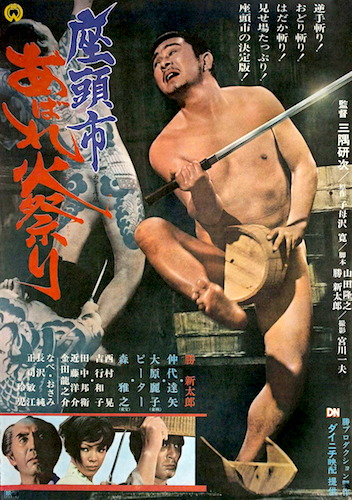
    No, this isn’t a film about a samurai at a ‘luxury’ music festival (and that’s the extent of Fyre references you’ll get here, because I’ve not watched either documentary and don’t really know much about it). Rather, this 21st entry in the long-running Zatoichi series (once released on UK DVD as Zatoichi at the Fire Festival, and also known by sundry other variations of those words) sees the eponymous blind masseur-cum-swordsman clash with evil underworld boss Yamikubo (Masayuki Mori). This boss is as blind as Ichi, which he initially uses to claim a kinship with the masseur, but then Yamikubo engages in a series of schemes to kill our hero. Meanwhile, a nameless ronin (Tatsuya Nakadai) stalks Ichi too, intending to kill him for an imagined slight.

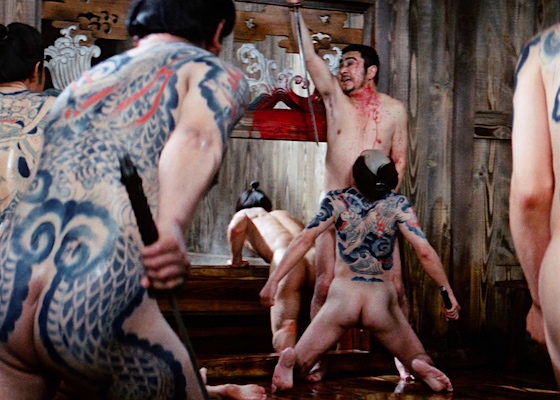
    More or less business as usual for a Zatoichi adventure, then. The blindness of the villain should really add an extra frisson of something — it’s a clear parallel with Ichi, after all — but I’m not sure it does, in actuality. More striking is that Fire Festival is pretty sex obsessed. Sex has been a factor of Zatoichi films before, but I’m not sure any other is as consumed by it as this one. It starts with a mistress auction and teases of nudity; the mystery ronin’s quest is to kill everyone who slept with his wife, which he thinks includes Ichi; the major set-piece is a fight in a bathhouse between Ichi and an army of assassins, all of whom are stark naked; Ichi spends an evening with five prostitutes; the villains decide the best way to kill our hero is with a honey trap (who winds up genuinely falling for Ichi, of course); there’s the roadhouse owners we randomly come across, who are casually perverse… and that’s all before the one-hour mark. Though if you’re expecting to see flashes of flesh, the nude scenes feature almost Austin Powers-level endeavours to make sure nothing explicit is shown.

    A sweet transvestite?

    There’s also an androgynous fellow called Umeji, who’s played be Peter, aka Pītā, aka Shinnosuke Ikehata — to quote his Wikipedia page, “one of Japan’s most famous gay entertainers, Peter’s androgynous appearance has enabled him to often play transvestite characters and he often appears on stage in women’s clothing.” He first gained attention the year before, as the lead in Funeral Parade of Roses, and later would have a supporting role in Akira Kurosawa’s Ran. Here he’s the pimp of those aforementioned five prostitutes, part of an attempt to prove he’s a “real man”. That doesn’t really work out, so his next attempt is to try seducing Ichi. It’s a startling, unexpected sequence in a genre film of this era, especially as he seems to get quite far — I mean, they end up under a bedsheet where we can’t see exactly what’s going on… until a knife slips out, anyway, with which Umeji was trying to kill Ichi. Naturally Ichi’s not impressed by that murder attempt, although he has nothing to say about the apparent homosexuality.

    Peter isn’t the only noteworthy face here. Easily missed by Western audiences are Utae and Reiji Shoji as that roadhouse couple I mentioned — apparently they came from family of famous comedians, which perhaps explains all the screen time they’re given. More recognisable is Nakadai, who would also later star in Ran, and also appeared in Yojimbo and The Human Condition trilogy, amongst many more. One of those others is another samurai movie, The Sword of Doom, in which he reportedly plays a very similar character to his role here — I’ve not seen it so can’t vouch for that myself, but many other reviews cite the comparison. Depending which of those you listen to, he’s either “comically bad” (DVD Talk) or “puts in a stellar performance” (Lard Biscuit Enterprises). His character is a bit of an odd one — his motivation is thin and decisions border on nonsensical — but Nakadai brings immense presence to the role nonetheless.

    Is that a katana or are you just happy to see me?

    Mind, most of the rest of the film’s plot is similarly confounding. It starts with a title sequence in which Ichi tries to run away from a little barking dog, ends with an out-of-nowhere scene where Ichi turns down a horse ride, and in between is almost as odd and randomly constructed as those two extremes. And yet it does tick most of the regular Zatoichi boxes, especially in terms of the action scenes. They’re as slickly choreographed and staged as ever, continuing to come up with fresh ideas even after all these movies. The nude bathhouse fight is the obvious standout, but there’s also a finale where Ichi faces down an army and a cunning foe with a hostage, but has a trick up his sleeve… literally! (Ho ho ho.)

    If you’re wondering where the titular festival has got to in all this, well, it never really turns up. The climax does begin with Ichi stranded in the middle of a lake that’s then set alight, but that’s not really a “fire festival”, is it? But it is a visually arresting sequence, just one of several throughout the film. This is the last contribution to the Zatoichi films from director Kenji Misumi, who directed the first and would end up tied for the title of the series’ most prolific director; and also for cinematographer Kazuo Miyagawa, who shot six of the films for various directors; and they both go out on a visual high with their work here. (I don’t like to over-clutter my reviews with pictures, so here are just a few additional memorable shots I grabbed. And this is really in a class of its own for images that evoke a sense of smell. Don’t say I didn’t warn you.)

    The film’s story, as I said, is less commendable. Altogether, it makes for a movie that I wouldn’t rank among the Zatoichi series’ finest achievements, but nonetheless has its share of entertainment value for fans.

    4 out of 5

    Zathura: A Space Adventure (2005)

    2018 #67
    Jon Favreau | 97 mins | streaming (HD) | 1.85:1 | USA / English | PG / PG

    Zathura

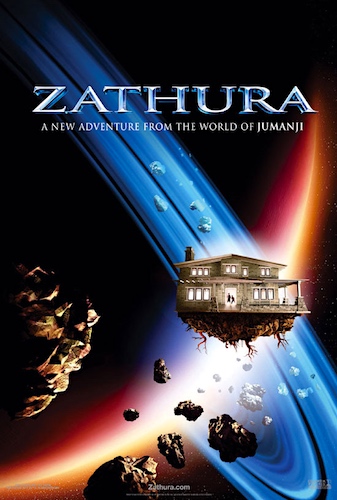
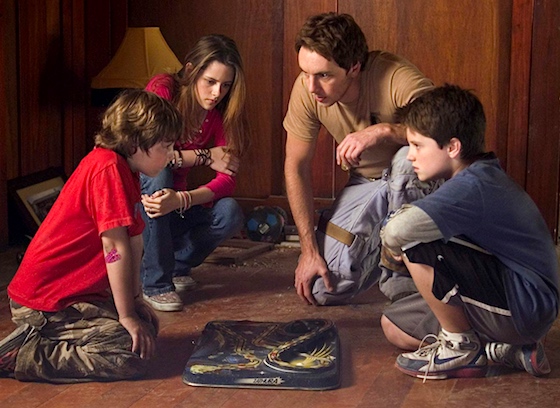
    Before Jumanji: Welcome to the Jungle there was Zathura, which is sort of a sequel to Jumanji… but more of a spin-off, I guess… well, really it’s a completely unrelated movie with the exact same plot. Inspired by another book by the same author, it sees two kids (Jonah Bobo and a very baby-faced Josh Hutcherson) discover an old board game that comes to life with terrifying consequences, and the only way to make it stop is to finish the game. But this game is about space, so it’s completely different, obviously.

    Unsurprisingly, it’s difficult to avoid assessing the film’s quality in comparison it to its predecessor. The thing that struck me most was it feels less consequential than Jumanji, somehow. In the previous film the stakes feel high — you worry they won’t beat the game or make it out alive. Perhaps that’s because of Robin Williams’ character getting trapped in the game at the start, which makes you believe things can go wrong. Whereas here, it just feels like crazy shit will keep happening until they finish. It may also be because you can infer ‘rules’ in Jumanji — we know monkeys are going to be mischievous, tigers might eat you, etc — whereas in Zathura, because it’s sci-fi, it’s all made up. And it feels made up as it goes along, too — because it’s not based on real life or an existing brand, we don’t know the characters, the monsters, etc.

    Similarly, the characters benefit from way too much luck. The kids keep not reacting fast enough to stop or save things, but then something fortunate happens so things go their way. Maybe you could sell this as a deliberate thing — like, the game wants to be finished — but that’s not how it plays out. They just keep getting lucky, in a not-great-screenwriting way. Perhaps I’m projecting problems where there are none in these observations, but it’s just another factor towards not feeling jeopardy like I did in Jumanji. Overall, Zathura was just more… pleasant.

    Play the game

    That said, I had some more specific niggles. For a film that should’ve been trying to avoid accusations of being a rip-off, they invite it further by (spoiler alert!) giving one character a backstory that’s a riff on Robin Williams’ from the first movie. Zathura comes at it from a different angle, at least, but that’s a mixed blessing: it doesn’t have the same emotional effect because we only learn about it belatedly, but at least that means it isn’t ripping off Jumanji’s entire narrative structure, and also allows for a neat twist later on. There’s some time travel stuff that doesn’t wholly hang together, but then does it ever?

    Equally, you can clearly tell they weren’t paying enough attention to every aspect of the screenplay: the older sister (played by a pre-fame Kristen Stewart, by-the-by) gets put in hibernation for five turns, but it takes eight turns before she wakes up. How no one noticed that is baffling — did they not think to just count it in the script? Even if they somehow missed it until post-production, all it would’ve taken is a dubbed line or two. “Five turns” sounds like a lot of gameplay to miss, so maybe they just thought “eight turns” would sound too ridiculous, but did they not think someone would spot it?!

    Plot logic aside, at least the film has some great effects and design work. Jumanji has aged badly in that respect (the CGI is pretty ropey), whereas Zathura still looks great, in part because there’s actually a lot of props and models involved. The performances are pretty decent, too. Director Jon Favreau clearly has a talent for working with kids — the pair here; Mowgli in his Jungle Book; Robert Downey Jr… But in all seriousness, he gets really good performances out of these children.

    Holy meteors!

    Also worth noting is that the UK version was originally cut to get a PG… and remains cut, because the uncut rating wouldn’t just be a 12, it’d be a 15! That’s because of “imitable techniques”, which in this case means using an aerosol as a blowtorch to set fire to a sofa. The main thing I find interesting about this is that presumably the original cut shows the Astronaut setting fire to the sofa, whereas in the UK version it just suddenly cuts to him stood beside a sofa on fire, which is so much funnier. Hurrah for censorship, I guess.

    And so we come to the score. Zathura is one of those films I find a little awkward to rate, because I did enjoy it — in some respects, more than I enjoyed Jumanji when I rewatched that recently — but it also doesn’t feel as polished and complete as its predecessor in terms of story and characters. Even as I had fun, I saw many things I felt could’ve been sharpened up. For that reason, I’ve erred towards a lower rating.

    3 out of 5

    Murder Mystery (2019)

    2019 #96
    Kyle Newacheck | 97 mins | streaming (UHD) | 2.00:1 | USA / English | 12 / PG-13

    Murder Mystery

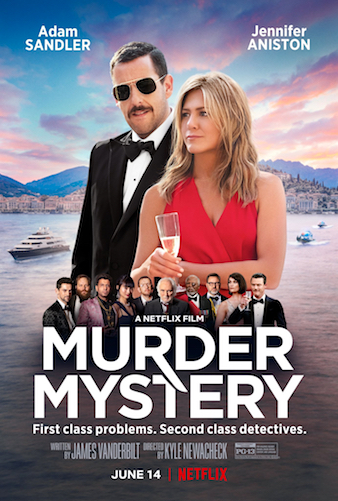
    Murder Mystery is a murder mystery in which there is a murder under mysterious circumstances, and it falls to vacationing NY cop Nick Spitz (Adam Sandler) and his murder-mystery-loving wife Audrey (Jennifer Aniston) to solve these mysterious murders.

    I’m no great fan of Sandler, and he’s probably the least funny person in this film, but I also didn’t find him outright objectionable. His character — an underachieving middle-aged beat cop who pretends to be a detective to his long-suffering wife — seems like the kind of guy who’d think he’s funnier than he is, so Sandler’s attempts at humour mostly come off as in-character. Put another way, it works in spite of itself. Of the two leads, Aniston is definitely the one doing the most work for the film, both in terms of actually being amusing and giving it some kind of emotional character arc.

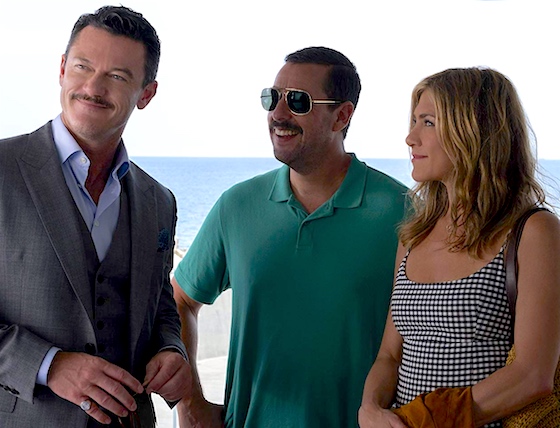
    Detectives or suspects?

    The actual mystery plot is no great shakes — there are two glaring clues early on that give most of the game away, especially if you’re well-versed in watching murder mysteries and spotting such hints. That’s somewhat beside the point, though, because there’s enough fun to be had along the way to make up for it, and there are still some reasonable red herrings. The fact the cast is staffed by an array of experienced mostly-British thesps, many of whom have no doubt appeared in their share of ‘real’ murder mysteries — the likes of Luke Evans, Gemma Arterton, Adeel Akhtar, David Walliams, and Terence Stamp — definitely helps keep proceedings afloat.

    There are a few of action-y scenes — a shoot-out, some hijinks on a hotel ledge, a decent car chase for the finale — that keep the momentum up too. Plus it mostly looks suitably luxuriant and exotic (the odd bout of iffy green screen aside), matching its high-class backdrop and French Riviera setting. Altogether, it makes for a suitably easy-watching 90-minutes in front of Netflix.

    3 out of 5

    Murder Mystery is available on Netflix everywhere now.
    Finding Dory (2016)

    2018 #122
    Andrew Stanton | 97 mins | Blu-ray (3D) | 1.78:1 | USA / English | U / PG

    Finding Dory

    I was never that big a fan of Finding Nemo. I mean, I like it well enough — it’s a very good movie — but I’ve never loved it. My rewatch last year confirmed that feeling. It was something of a surprise, then, that I mostly really enjoyed this sequel. It’s a weird thing where I wouldn’t necessarily say it’s better than the first film, but I think I like it more.

    Made 13 years later but set not too long after the events of the first movie (I don’t know what the lifespans of these fish are in real life, but I imagine considerably less than 13 years), the plot revolves around Nemo comedy sidekick Dory (Ellen DeGeneres) — in the first film her memory loss was a comedy bit, but here it’s front and centre, as Dory goes searching for the family she forgot she had. Accompanied by Nemo (Hayden Rolence) and his dad Marlin (Albert Brooks), she heads to California and the theme park-ish Marine Life Institute.

    Like so many Pixar movies, Nemo didn’t desperately need a sequel, so I was worried this would seem like little more than an excuse to return to these characters. In fact, the plot actually works very well. Far from being a desperate stretch, it actually feels like a worthwhile development and follow-up from the first movie. Alongside the worth of the narrative, it’s also just a lot of fun to watch, even if it gets a bit outlandish in the final act (fish driving cars…?)

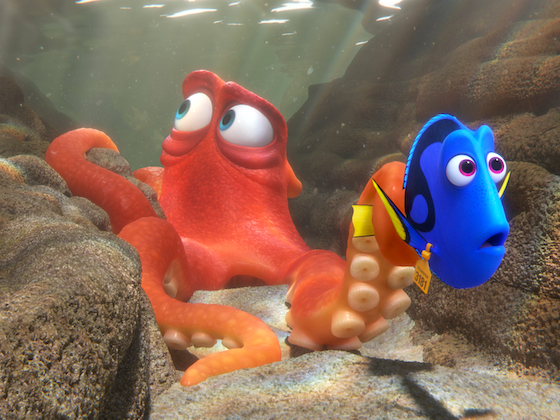
    Something fishy going on...

    Another concern I had was that I remember thinking Dory was a bit irritating in the first film, so making her the central character could’ve scuppered it for me (other people seem to find her endearing, so I can see why Pixar went with this concept). But no, she makes for a likeable enough companion. The film does a really good job of handling her memory loss, too. It’s more than just a joke this time round, what with Dory being the central character. The easiest route to take for the filmmakers would’ve been to cop out of it somehow, either by flat-out fixing her memory, or at least not being wholly true to how short-lived it was before. Instead, they’ve put the problems and the scariness of having no memory at the forefront of the film. For example, at one point Dory needs to enter a network of pipes to get somewhere vital within the Institute, but she won’t go in because she knows she’ll forget the directions. A more constant fear is that she’ll forget about her family or friends, the people she loves, which I think is the kind of notion a viewer of any age could empathise with.

    As a Pixar movie, it goes without saying that it looks superb, but I’ll nonetheless take a moment to mention that I thought the 3D aspect was really great too. It seems to be pot luck with this stuff (I found Nemo’s rather underwhelming, and I wasn’t that impressed by Coco’s either, for example). I guess most people don’t care anymore, but there we go.

    Finding Dory was a pleasant surprise all-round. In fact, I’d go so far as to say this is Pixar’s best non-Toy Story sequel. Maybe that’s not saying much (half its competition is Cars movies), but I mean it positively nonetheless.

    4 out of 5

    Pixar’s latest sequel, Toy Story 4, is out in the UK and US next Friday.

    Zatoichi Meets Yojimbo (1970)

    aka Zatôichi to Yôjinbô

    2019 #60
    Kihachi Okamoto | 116 mins | Blu-ray | 2.35:1 | Japan / Japanese | 12

    Zatoichi Meets Yojimbo

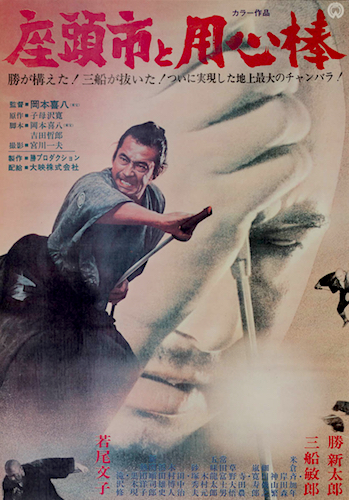
    Having released anything up to four films a year for seven years, the Zatoichi series took 1969 off (apparently producer/star Shintaro Katsu had some other projects to focus on). But when it returned in 1970 it was with a big gun: as the title indicates, the main guest star for this film is the lead character from Akira Kurosawa’s films Yojimbo and Sanjuro, played by the great Toshiro Mifune. I don’t know if that was a deliberate move to mark the series’ 20th movie or if they weren’t even conscious of the milestone, but it certainly feels like it was meant to be a special occasion. “Meant to be” being the operative part of that sentence, because the result is sadly one of the least enjoyable entries in the series so far.

    The film sees Ichi (Katsu) return to his hometown, which has rather gone to the dogs thanks to a local yakuza gang. Never one to just stand back or move along, Ichi ends up embroiled in the arguments between a powerful merchant (Osamu Takizawa) and his two wayward sons, one a yakuza boss (Masakane Yonekura), the other an employee of the government mint (Toshiyuki Hosokawa), who’s up to some kind of shenanigans with the gold that drives the plot… I think. Mifune’s character factors into all this as a ronin who’s been hired by the yakuza son to protect him, or kill his father, or something along those lines.

    As you may have gathered, the plot here is by turns confusing and dull — one of those that loses you so thoroughly you just want to give up on trying to work it out. It has something to do with the people who make gold coins making them less well, and a hidden bar of gold that has something to do with that somehow, and a bunch of spies and stuff who are all looking for the gold bar, and some kind of feud or rivalry or disagreement between the local yakuza and Takizawa’s businessman, which may or may not have nothing to do with all the gold stuff… I think. This wouldn’t be the first Zatoichi film with an underwhelming or unintelligible plot, but it tells it with so little verve, and with so few entertaining distractions (there’s not much action, and even less humour), that there’s nothing to make up for it.

    Katsu vs Mifune

    And to add insult to injury, the titular concept of the movie is a bait and switch: Mifune is not actually playing the character from Kurosawa’s films. “Yojimbo” means “bodyguard”, so it’s not like, say, casting Sean Connery in a film and calling it Meets James Bond only to have him play some unrelated character, but the promise of the title is clear and unfulfilled. It’s not like Mifune is playing an off-brand knock-off, either: he happens to be fulfilling the same job as bodyguard so that everyone can keep calling him yojimbo, but his actual name is Taisaku Sasa (not Sanjuro, as in Kurosawa’s films) and his character is nothing like his role in Kurosawa’s films (he doesn’t even look the same!) Seeing Zatoichi go head-to-head with the ‘real’ Yojimbo, with all his cunning scheming, could’ve been great. Instead, while Sasa is still a skilled swordsman, he’s a bit pathetic — lovelorn and, it would seem, not actually very good at his real job (which, as it turns out, is spying). Some of the scenes between Katsu and Mifune are good, at least. Not all of them, but some is better than none, I suppose. Ultimately, however, it’s one of the biggest disappointments in a film filled with them.

    There’s plenty to be filled, too, because this is by far the longest of the original Zatoichi films: the others average 87 minutes apiece, making Meets Yojimbo a full half-hour longer than normal, and almost 20 minutes longer than even the next longest. There’s quite an extensive supporting cast, bringing with them all the varied subplots that having so many characters entails. Whether that’s what produced the extended running time, or whether an extended running time was desired so they shoved all those extra people in, I don’t know. It’s a bit of a chicken-and-egg situation, because either way the result is a jumble that I don’t think was a good idea. Few of them have an opportunity to leave a mark — there’s too much going on, and we’re all here for Mifune and Katsu anyway.

    Something I could have learned...

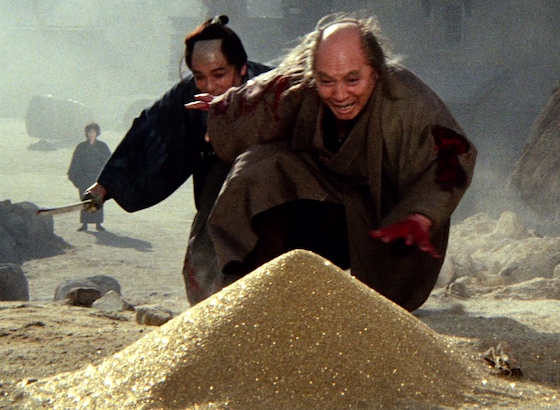
    Eventually the story comes down to a simple, familiar message: “greed is bad”. The much-desired gold bar turns out to be hidden as gold dust, which ends up blowing away in the wind. It’s almost fitting and symbolic… except it only happens once most of the cast are dead or past it anyway, so it doesn’t necessarily symbolise much. I mean, there’s hardly anyone left to notice it happen. And it’s followed by a final scene that, like most of the rest of the plot, left me slightly confused. The town blacksmith tells yojimbo that Ichi isn’t motivated by gold… then we see Ichi realise his pouch of gold dust has been cut and emptied, so he scrabbles around in the dirt searching for the rest (which has blown away), when Mifune joins him. “You too?” “Just like you,” they say. And then they go their separate ways. So… they are motivated by gold? Or… they’re not, because it’s gone and they… aren’t? I don’t know if I’m being dim, or if the film bungled its own message, or if it just doesn’t have anything to say. It could be no deeper than a straight-up samurai adventure movie, of course. It would be better if it were.

    This is the only Zatoichi film for director Kihachi Okamoto, who apparently was a prestige hire. I don’t think he did a particularly good job, to be honest. There’s the muddled plot, as discussed, which unfurls at a slow pace. The action scenes, often such a highlight, aren’t particularly well shot. It’s visually a very dark film, which kinda matches the grim tone, but is arguably taken too far. As Walter Biggins puts it at Quiet Bubble, “murk dominates. People wears blacks and browns. Eyes are cold, haunted, even in daytime[…] Even supposedly well-lit interiors look like homages to Rembrandt. This is a world half-glimpsed, that we squint at”. It was shot by cinematographer Kazuo Miyagawa, who worked on numerous Japanese classics and several other Zatoichi movies — I praised his work on Zatoichi and the Chest of Gold, for example. It’s not that what he’s done here is bad per se — there are certainly some nice individual shots, particularly around the climax — but, well, there were clearly some choices made about lighting and the colour palette.

    Windswept

    I knew going in that Zatoichi Meets Yojimbo isn’t a particularly well regarded film, but I held out hope it was one of those occasions where I’d find the consensus wrong. Unfortunately, it wasn’t. In fact, it’s arguably the worst film in the series. It’s not just that it’s a poor Zatoichi film (which it is), it’s that it should’ve been a great one, showcasing the meeting of two top samurai heroes and the charismatic actors who play them. There may be outright lesser films in the Zatoichi series than this, but none could equal the crushing disappointment it engenders.

    2 out of 5

    For what it’s worth, Katsu and Mifune co-starred in another samurai movie the same year, Machibuse, aka Incident at Blood Pass. I’ve heard it’s a lot better, so I’ll endeavour to review it at a later date.

    Review Roundup

    As foretold in my most recent progress report, June is off to a slow start here at 100 Films. Or a non-start, really, as I’ve yet to watch any films this month and this is my first post since the 1st. Hopefully it won’t stay that way all month (I’ve got my Blindspot and WDYMYHS tasks to get on with, if nothing else).

    For the time being, here a handful of reviews of things I watched over a year ago but have only just written up:

  • O Brother, Where Art Thou? (2000)
  • Allied (2016)
  • American Made (2017)


    O Brother, Where Art Thou?
    (2000)

    2018 #106
    Joel Coen | 103 mins | streaming (HD) | 2.39:1 | UK, France & USA / English | 12 / PG-13

    O Brother, Where Art Thou?

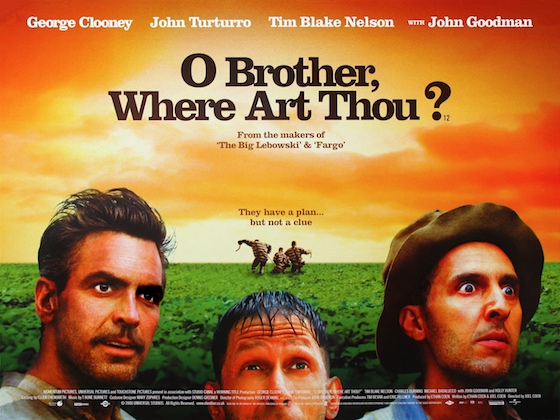
    The eighth movie from the Coen brothers (eighth, and yet they still weren’t being allowed a shared directing credit! No wonder that stupid DGA rule pisses people off) is one of their movies that I found less objectionable. Oh, sure, most of their stuff that I’ve reviewed I’ve given four stars (as well as a couple of threes), but that’s more out of admiration than affection — for whatever reason, their style, so popular with many cineastes, just doesn’t quite work for me; even when I like one of their films there’s often still something about it I find faintly irritating.

    Anyway, for this one they decided to adapt Homer’s Odyssey, but set in the American Deep South during the Great Depression. Apparently neither of the brothers had ever actually read The Odyssey, instead knowing it through cultural osmosis and film adaptations, which is perhaps why the film bears strikingly minimal resemblance to its supposed source text. Rather, this is a story about songs, hitchhiking, and casual animal cruelty, in which the KKK is defeated by the power of old-timey music. Hurrah!

    It’s mostly fairly amusing. If it was all meant to signify something, I don’t know what — it just seemed a pretty fun romp. I thought some of the music was okay. (Other people liked the latter more. Considerably more: the “soundtrack became an unlikely blockbuster, even surpassing the success of the film. By early 2001, it had sold five million copies, spawned a documentary film, three follow-up albums (O Sister and O Sister 2), two concert tours, and won Country Music Awards for Album of the Year and Single of the Year. It also won five Grammys, including Album of the Year, and hit #1 on the Billboard album charts the week of March 15 2002, 63 weeks after its release and over a year after the release of the film.” Jesus…)

    Anyway, that’s why it gets 4 stars. I liked it. Didn’t love it. Laughed a bit. Not a lot. Some of the music was alright. Not all of it. Naturally it’s well made (Roger Deakins!) without being exceptionally anything. Harsher critics might say that amounts to a 3, but I’m a nice guy.

    4 out of 5

    Allied
    (2016)

    2018 #116
    Robert Zemeckis | 119 mins | streaming (HD) | 2.39:1 | USA, UK & China / English & French | 15 / R

    Allied

    Brad Pitt and Marion Cotillard star as a pair of intelligence agents who fall in love in Mr. & Mrs. Smith: WW2 Edition. Settling down together in England, all is lovely for them… until one comes under suspicion of working for the enemy…

    Overall Allied is a very decent spy thriller, let down somewhat by a middle section that’s lacking in the requisite tension and a twee monologue coda. But the first 40 minutes, set in Morocco and depicting the mission where the lovers first meet, are pretty great; there’s plenty of neat little tradecraft touches scattered throughout; and there are some pretty visuals too. There are also some moments that are marred by more CGI than should be necessary for a WW2 drama, but hey-ho, it’s a Robert Zemeckis film.

    That said, Brad Pitt’s performance is a bit… off. He never really seems connected with the material. Perhaps he was trying to play old-fashioned stoic, but too often it comes across as bored. It also constantly looked like he’d been digitally de-aged, but maybe that’s because I was watching a 720p stream; or maybe he had been, though goodness knows why they’d bother.

    Anyway, these are niggles, so how much they bother you will affect your personal enjoyment. I still liked the film a lot nonetheless.

    4 out of 5

    American Made
    (2017)

    2018 #124
    Doug Liman | 109 mins | streaming (HD) | 1.85:1 | USA & Japan / English & Spanish | 15 / R

    American Made

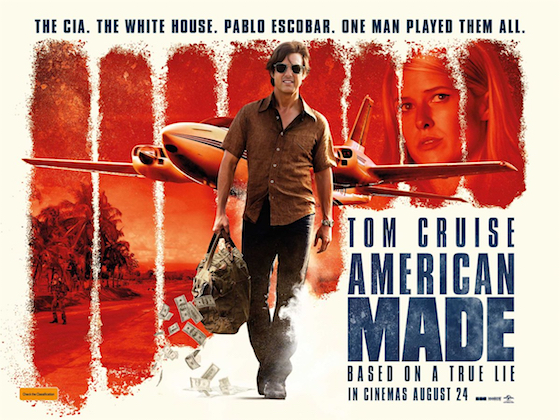
    Described by director Doug Liman as “a fun lie based on a true story,” American Made is the obviously-not-that-truthful-then ‘true story’ of Barry Seal, a pilot who was recruited by the CIA to do some spying and ended up becoming a major cocaine smuggler in the ’80s.

    Starring ever-charismatic Tom Cruise as Seal, the film turns a potentially serious bit of history (as I understand it, the events underpinning this tale fed into the infamous Iran-Contra affair) into an entertaining romp. Indeed, the seriousness of the ending is a bit of a tonal jerk after all the lightness that came before, which I guess is the downside of having to stick to the facts.

    Still, it’s such a fun watch on the whole — a sliver long, perhaps, even though it’s comfortably under two hours, but it does have a lot of story to get through. Parts of that come via some spectacular montages, which convey chunks of story succinctly and are enjoyable in their own right. Liman doesn’t get a whole lot of attention nowadays, I think, but it seems he’s still got it where it counts.

    4 out of 5