
Colin Trevorrow | 124 mins | Blu-ray | 2.00:1 | USA & China / English | 12 / PG-13
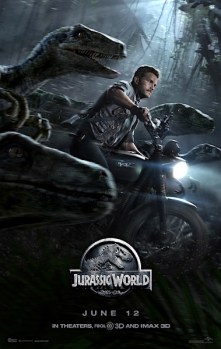 22 years ago, Jurassic Park was the first film I saw at the cinema. I was still of an age when all boys seem to find dinosaurs awesome, and of course everyone was talking about this spectacular film and its groundbreaking effects. Plus it was from Steven Spielberg — it feels daft I’d’ve known that at the time, but I was already a certified fan of the Indiana Joneses, so maybe. Either way, I was suitably awestruck, and have always been a little pleased my first big screen experience was such a good movie.
It seems now that I’m of a generation which has secretly held Jurassic Park in a level of esteem that earlier generations had for, I don’t know, Star Wars, maybe. Secret, that is, until Jurassic World came out this summer and, quite to everyone’s surprise, blew all predictions out of the water with the largest opening weekend gross of all time, both in the US ($208.8m) and internationally ($315.6m), totalling the first time a film grossed more than $500 million in one weekend. It ultimately passed The Avengers to be the third highest-grossing film of all time, taking in 40 days what the Marvel team-up needed 133 to achieve.* It was largely well-reviewed too, albeit with some dissenters, so it had a lot to live up to.
For me, it met that watermark. Okay, the plot is fundamentally a rehash of the first movie, but the devil is in the details, and in my book Jurassic World does enough new to shrug off any kind of “stealth remake” allegations. What it does definitely retain is a faithfulness to the Spielbergian tone of the first movie — a stated goal of director/co-writer Colin Trevorrow, and one I feel he’s absolutely pulled off. There’s adventure, humour, a sense of scale and wonder. Even the music’s right: in the same way his theme to Star Wars is the herald of a classical epic, and his theme to Indiana Jones is a call to adventure, John Williams’ equally-peerless theme to Jurassic Park is an ode to wonder, and composer Michael Giacchino deploys it wisely here, saving it for key moments when that sense of  awe is front and centre once again. Even some of the film’s ‘problems’ aren’t, in my eyes. Does it spend too long wandering around the park before the big action starts? Not for me… which I guess is a viewpoint that comes with all the caveats of my opening paragraph. I rather suspect this is a movie that was very literally made by fans, for fans.
In that respect, I saw Jurassic World as a movie that was eager to please its audience. It may not always fully conform to logic, and some of its plot developments may be a little far-fetched for some, but it’s been crafted in a way that’s designed to tickle the fancy or scratch an itch among a spectacle-and-fun-seeking blockbuster audience. Sure, the film was greenlit to make loadsa money — what sequel (heck, what film) isn’t — but that doesn’t mean the people who were actually writing, directing, filming, designing, CGI’ing, and everything-else-ing the movie didn’t have pure intentions. Goodness knows how Trevorrow — whose sum total previous directorial experience is an overrated indie rom-com with a vague, underdeveloped sci-fi element — landed this gig, but he does a bang-up job with it. No wonder they’ve given him the keys to a Star Wars saga movie. (That’s a helluvan escalation across just three films, though! Has any other director ever shot so high so fast?)
I realise this review is a bit of a vague gush of praise, so one element that particularly intrigued me was the decision to shoot the film in a 2:1 aspect ratio. There’s some detail on the reasoning here (as well as general information on shooting choices, like the types of film and digital photography used), but essentially it was a compromise between Trevorrow and DP John Schwartzman favouring the blockbuster-standard 2.4:1 (so as to not look like a TV programme) and producer Spielberg wanting 1.85:1 (to favour the dinos’ height). I can’t speak to how it worked in cinemas, but 2:1 is actually a really pleasurable ratio for home viewing. Some 1.85:1 movies do just feel like big-budget TV episodes nowadays (which says as much about how far TV has come, in terms of its visual style, as it does anything else),  but 2.35:1 can feel a little too wasteful of screen real estate (as a believer in presenting films in their original ratio (as we all should be) you tend not to question it, but looked at objectively, 2.35:1 on a 16:9 telly is kinda silly. (Not that I’m advocating those daft-looking 21:9 TVs they made a couple of years ago, mind.)) I’ve no idea if 2:1 is likely to catch on more widely (I bet Vittorio Storaro hopes so), but I would quite like if it did.
I kind of felt like Jurassic World plugged directly into whichever part of the brain is responsible for pleasure and just downloaded itself there. I know it’s flawed; even as I was watching it, there were bits that made me go, “really?” Consequently, this review was originally pegged with a four-star rating — no doubt in part influenced by all the other not-completely-praise-filled opinions out there. But, thinking back on it, I just enjoyed it. I think I’ve outlined the main reasons why that was the case, and why I’m able to put aside the niggles. Maybe I’m going soft? (See also: my reviews of poorly-received 2015 blockbusters Tomorrowland and Terminator Genisys.) On the bright side, I watched Jurassic World and had a really good time — that’s what blockbusters are fundamentally for, isn’t it?

Jurassic World placed 12th on my list of The 20 Best Films I Saw For the First Time in 2015, which can be read in full here.
This review is part of the 100 Films Advent Calendar 2015. Read more here.
* Obviously The Force Awakens has already obliterated most of these records (but not all of them). Nonetheless, Jurassic World’s still-phenomenal success remains part of an extraordinary year for Universal, who have also had two other films (Furious 7 and Minions) surpass $1 billion in 2015. They even broke the previous record for full-year studio gross (Fox’s $5.53 billion) in August. They’re not normally so successful (their best result in the ‘studio league table’ for the past decade was third, but they’re usually fifth or sixth), and I rather like Universal — possibly just because of their awesome logo and fanfare, possibly because of their cool theme parks, or possibly even because of their rich history of great movies — so this story has made me unduly happy as it’s developed since the summer. ^
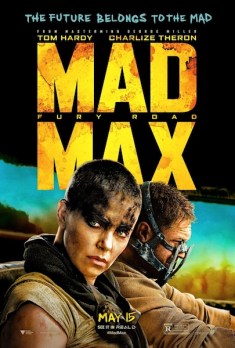 After a decades-long diversion into children’s movies like
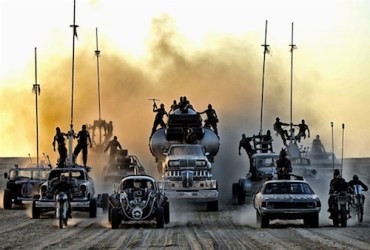
 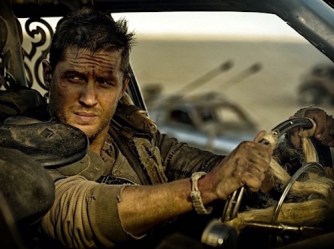 I say that, but the finished film is visually stunning on two levels: cinematography and editing. It was shot by John Seale, and Miller had him amp up the saturation. The point was to do the opposite of most post-apocalyptic blockbusters, which are normally desaturated to heck, and it indeed creates something strikingly different. Conversely, Miller has intimated the ideal version of the movie is in black and white with no dialogue, just the score — completely visually-focused storytelling. I have a feeling he’s right, or that it would at least work well. Some nuance would be lost, but all the major plot points and character arcs would be followable.
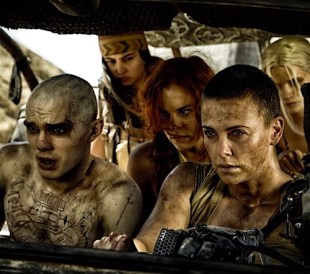 but all are deftly executed. That it doesn’t expound on these at length, or linger on their detail, means you have to pay attention to get the most out of that side of the film. I guess some would counter that with, “you have to look hard because you’re reading something that isn’t there,” but I refute that. That it doesn’t spell everything out at length, or hammer home its points and themes heavy-handedly, is a good thing.
 (Ooh, that turned a bit philosophical, didn’t it?)
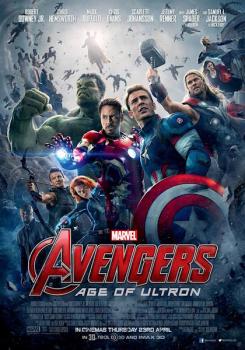 It feels kind of pointless reviewing Avengers: Age of Ultron, the written-and-directed-by Joss Whedon (and, infamously, reshaped-in-the-edit-by committee) follow-up to 2012’s “third most successful film of all time” mega-hit
 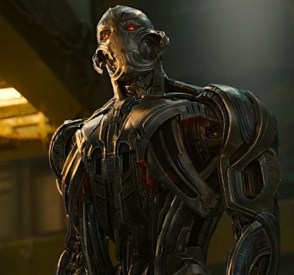 Even though the first half of that is still three years away, we’re still very much on the road to it. Heck, we have been practically since the MCU began, thanks to those frickin’ stones (if you don’t know already, don’t expect me to explain it to you), but now it’s overt as well as laid in fan-friendly easter eggs. The titular threat may rise and be put down within the confines of Age of Ultron’s near-two-and-a-half-hour running time, but no such kindness is afforded to the myriad subplots.
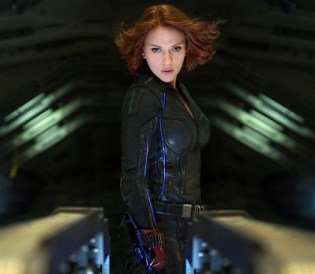 (not just obvious stuff like the Hulk, but digital set extensions, fake location work, even modifying Stark’s normal Audi on a normal road because it was a future model that wasn’t physically built when filming) that stuff they genuinely did for real looks computer generated too. All that time, all that effort, all that epic logistical nightmare stuff like shutting down a capital city’s major roads for several days… and everyone’s going to assume some tech guys did it in an office, because that’s what it looks like. If you’re going to go to so much trouble to do it for real, make sure it still looks real by the time you get to the final cut. I’ll give you one specific example: Black Widow weaving through traffic on a motorbike in Seoul. I thought it was one of the film’s less-polished effects shots. Nope — done for real, and at great difficulty because it’s tough to pull off a fast-moving bike speeding through fast-moving cars. What a waste of effort!
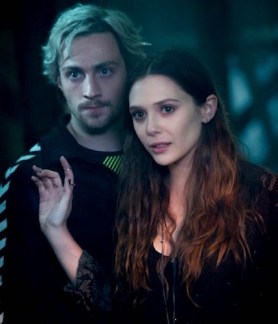 The really daft thing is, Whedon specifically added Scarlet Witch and Quicksilver… wait, are Marvel allowed to call them that? I forget. Anyway, Whedon added the Maximoff twins because, as he said himself, “their powers are very visually interesting. One of the problems I had on the first one was everybody basically had punchy powers.” I know Hawkeye’s power is more shoot-y than punchy, and we all know
  At the end of the day, what does it matter? Age of Ultron isn’t so remarkably good — nor did it go down so remarkably poorly — that it deserves a reevaluation someday. It just is what it is: an overstuffed superhero epic, which has too much to do to be able to compete with its comparatively-simple contributing films on quality grounds, but is entertaining enough as fast-food cinema. Blockbusterdom certainly has worse experiences to offer.
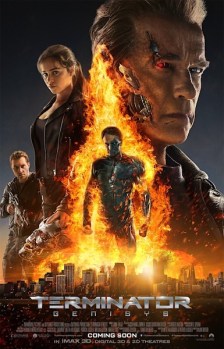 I liked
  Now, a good idea doesn’t guarantee a good execution, and here is where we begin to encounter Genisys’ problems. Time travel is a tricksy thing to engage with in fiction, and is highly prone to creating plot holes — something blockbusters regularly struggle with anyway. Genisys has at least one glaring one. Then there’s the general level of quality — the screenplay, acting, effects, and so on. In this regard, I suspect the reason so many people reacted so badly to it is that it follows, and riffs off of, two of the greatest sci-fi/action movies ever made. In and of itself, Genisys is no worse than any of the other half-dozen-or-so middle-of-the-road $150-million-plus-budgeted blockbusters we’re routinely served every year now. If you instead compare it to its iconic forebears, however, it comes up much shorter.
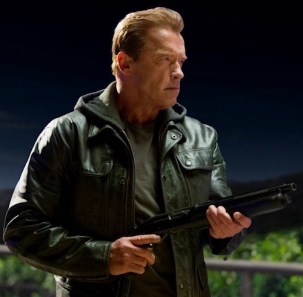 And yet the man who was responsible for those remarkable pictures, James Cameron, was impressed by it. He’s interviewed among the film’s special features, where he explains, “can I guarantee that you’ll enjoy it? No. I just know that I enjoyed the film, you know. But I strongly suspect that… you’re gonna love this movie.” Well, he was way wrong there! You almost feel a bit sorry for everyone in those special features, actually. They’re all so confident that Genisys is a great, well-made movie that everyone’s going to love, and they have big plans for a trilogy which they keep talking up. I would love to see their reactions after the reviews and box office figures came in…
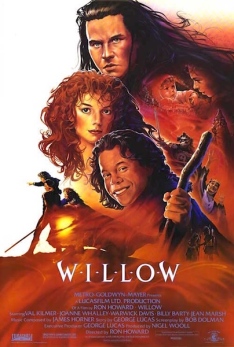 Warwick Davis is the farmer who must return an abandoned baby, unaware it’s heir to a throne evil queen Jean Marsh doesn’t wish to relinquish. Intermittently aided by Val Kilmer’s Han Solo-ish vagabond, they must elude the queen’s forces, led by her daughter, Joanne Whalley.
 After making his live-action directorial debut with the unlikely sidestep of
 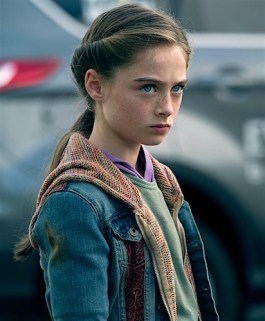 and there’s a moral lesson that’s arguably a little heavy-handed, but as it’s a moral lesson some people aren’t bloody listening to, I can’t say I blame Bird for that. The characters and performances are likeable, with Raffey Cassidy standing out as a marvellous young find, though Laurie is a little undersold. There are some suitably entertaining action scenes, some moments of visual splendour thanks to the future city, and one long take that is exquisite. I know I’m a sucker for a long take, but this is a really exceptional one, that deserves to be mentioned alongside the year’s more-praised unbroken shot, the opening of
 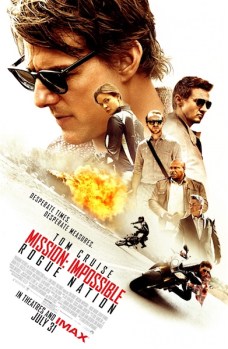 It’s an overcrowded year for spies on the big screen (as
 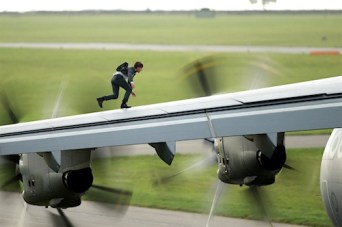 Obviously this uncertainty is also thanks to the story constructed by writer-director Christopher McQuarrie. Some automatically dismiss the plots of the Mission films, saying they’re just an excuse to link some death-defying stunts performed by Mr Cruise. Although there may be an element of truth to that, I don’t think this is a bad storyline by any means. As I said, it’s fairly straightforward (there’s no mole in IMF! Hurrah!), but the intricacies keep it engrossing and keep you guessing. And anyway, the action sequences it ties together are first-rate. You’ve pretty much seen the opening plane stunt in the trailer — heck, you’ve seen it on
  As alluded to above, this is probably the most globetrotting Mission film yet: it starts in Belarus, before taking in Washington D.C., Cuba, Paris, Vienna, Casablanca, and London. It’s things like this that lead me to describe it as a James Bond film. There’s also the balance of a serious plot line with plenty of humour, the use of outlandish just-ahead-of-reality gadgets, and the fact that the series can’t retain a female cast member for more than one film (though that last one isn’t a positive). For all the effort Spectre made to bring classical Bond elements back into the fold, Rogue Nation arguably feels more like a classically-styled Bond movie. It’s not a faultless like-for-like comparison — one of Rogue Nation’s best points as a Mission movie is that the whole team are necessary to complete the mission, a defining factor of the TV series that many felt went awry in the movies, with their focus on Cruise — but the almost-indefinable sensation of this experience is Bondian. It’s not stealing that style, though: considering Ghost Protocol had it too, and Craig-era Bond has abandoned it for a ‘classier’ action-thriller mode, it’s something the M:I series has come to own.
 So on the one hand the recent news that McQ (as current regular collaborator Cruise calls him) is returning to write and direct the sixth Mission is a shame, because it breaks a twenty-year rule; but on the other, I’m not sure it matters. Plus, by taking on the dual role of sole writer and director, you could argue McQ’s Missions are the most auteur-y of the lot, even in spite of the lack of a terribly unique visual style. Which is all a very long-winded way of saying that I was a little disappointed when it was announced there wouldn’t be a sixth director for the sixth film, because I always thought that was a neat idea; but as the idea hasn’t actually had much effect, who better to ask back than the man who wrote and directed arguably the best Mission: Impossible film of them all?
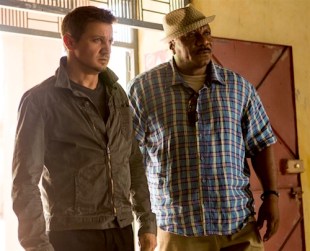
 The cast are liable to get lost among all the grandiose goings-on in a film like this, so its a testament to the skilled team that’s been assembled over the past few movies that they absolutely do not. Cruise is Cruise — surely by now you know whether you like him or not. I always feel like I should dislike him, especially given his crazy real-life religious views, but on screen I find him very entertaining. Rogue Nation is no different. Hunt is on the back foot for a lot of the film, and Cruise is at his best when he’s playing someone who’s almost the underdog. He’s also a more talented comic actor than he’s normally given credit for, and that glimpses through here too. Most of the time comedic duty is handled by Pegg, of course, who provides a good foil as Hunt’s sidekick for much of the film. More surprising, perhaps, is the amount of humour Jeremy Renner brings. It’s much less obvious, dryer and more sarcastic, so the contrasting tone is fun. He’s paired with Ving Rhames for a long stretch, who returns wholesale after sitting out Ghost Protocol but for a cameo. The pairing may come up just short of feeling inspired, but nonetheless makes for an entertaining change. Elsewhere, Baldwin offers a neat, not-too-clichéd turn as the CIA ‘villain’, while Tom Hollander pops in for a funny cameo-level turn as the British Prime Minister.
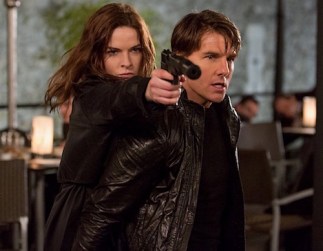 As the fifth film in a franchise that has always carried a slight “pretender to the throne” air, Rogue Nation should feel played out and tired. Instead it seems fresh and invigorated, with a spot-on tone, likeable and fun characters, a real sense of jeopardy and menace (missing in so many modern action films), and some of 2015’s very best action scenes — and in the year of Fury Road, that’s really saying something. McQuarrie has
 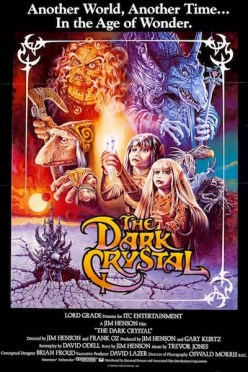 High-fantasy adventure about some elves trying to stop a crystal from destroying their planet.
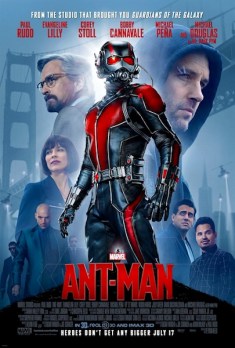 The final film in ‘Phase Two’ of the Marvel Cinematic Universe is perhaps the most fun Marvel movie since
 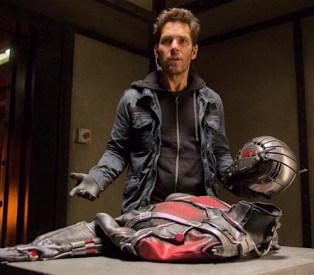 Nonetheless, some have criticised the film for not being especially original. I mean, originality’s good ‘n’ all, but c’mon, what do you expect when you sit down to a superhero movie from the primary purveyor of superhero movies? Ant-Man may blend elements from a few other genres into the superhero mix, but, yeah, it’s a superhero movie that, at times, plays like a superhero movie — just like everything else Marvel Studios has produced (with the possible exception of
  It remains tough to talk about Ant-Man without referencing The Edgar Wright Situation. I mean, you could ignore it, but then it becomes the elephant in the room. If you somehow missed it: writer-director Edgar Wright pitched Ant-Man to Marvel as a movie before Marvel Studios even existed, back in 2003, and had been developing it on and off ever since. The ideas he brought to the table — an action-adventure-comedy style, being a special effects extravaganza but with a lighthearted tone — influenced how the studio approached Iron Man and, consequently, the whole MCU. Nonetheless, Ant-Man wound up positioned as the 12th film in the studio’s slate, finally going into production after a decade of prep. Wright had a script almost finalised, he’d cast the film, a release date was set… and then he left due to “creative differences”. And the internet was on his side because Edgar Wright has made
 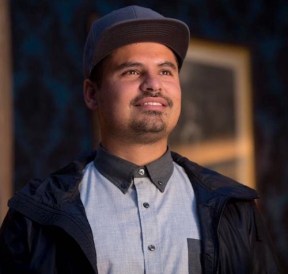 After Wright left, the screenplay was rewritten by a host of scribes (far more than the two extra writers ultimately credited). Other things they’re responsible for include bulking up the supporting characters, especially Hope, which works pretty well, and Lang’s friend Luis (Michael Peña), which we should all be thankful for: Peña’s Luis is one of the best things in the movie, an enthusiastic motormouth who’s consistently entertaining whenever he’s on screen. He’s the standout from an ensemble that is generally strong, with Rudd proving a likeable lead and Douglas committing to the material in a way you wouldn’t necessarily expect an older actor to with ‘just a comic book movie’.
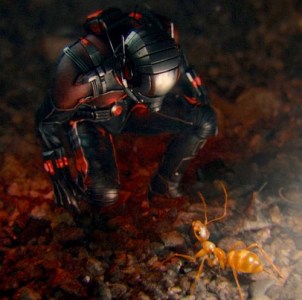 That doesn’t mean it’s a story that doesn’t have stakes, they’re just different stakes. It’s a refreshing change of pace at this point. It’s also pretty much standalone, with nice nods to the shared universe but without being dependent on other films (either before or to come) for its story. Guardians of the Galaxy did that too, but how many other recent Marvel movies is it true of? Even the highly-praised
 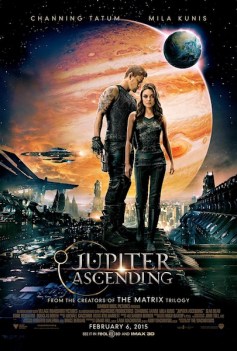 Ah, the Wachowskis. They made
  The plot… oh, do I have to explain the plot? It’s some rubbish about a cleaner (Mila Kunis) getting attacked by aliens and some alien crossbreed in magic flying shoes (Channing Tatum) coming to her rescue, and taking her to a half-bee man (Sean Bean — there has to be a “Sean Bee-n” joke here…), and then into space, because she’s… nope, not the Chosen One (makes a change, at least) but a reincarnation of someone important, and her surviving family members (Douglas Booth, Tuppence Middleton, Eddie Redmayne) have a vested interest in her — which may or not be that they want her dead (again).
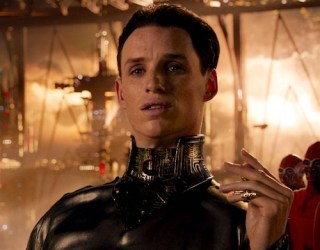 I guess it works for some people, but while it’s not bad, it also didn’t do much for me. And every time something almost works, something else undermines it, like Tatum’s make-up, or his flying boots, or Redmayne’s bizarre, affected performance. Though, to be honest, I think he’s so bad he’s good, a phrase you often hear bandied around but rarely see actually happen.
 100Films.co.uk