2018 #155
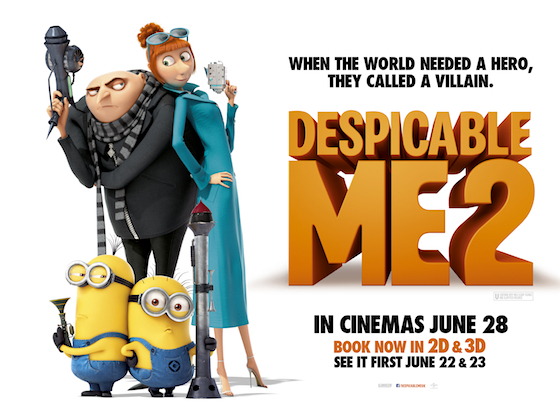
Pierre Coffin & Chris Renaud | 98 mins | download (HD+3D) | 1.85:1 | USA, France & Japan / English | U / PG
In this sequel to the popular animated comedy (which I wasn’t that fond of, personally), supervillain turned adoptive dad Gru (Steve Carell) is dragged back into his old world when the Anti-Villain League recruit him in order to track down the villain who stole a dangerous serum. Meanwhile, Gru’s daughters think he needs a girlfriend, and the AVL agent assigned as his partner, Lucy Wilde (Kristen Wiig), seems the perfect fit. Also, his yellow Minions are still around, getting up to all sorts of ker-azy antics.
That’s the concise version, anyhow. This is a film that rambles around a lot in the telling, presumably out of fear that it might ever become boring to hyperactive youngsters. Unfortunately, it almost had the opposite effect on me. The main plot just felt like a shape on which to hang the romantic and Minion subplots, but those subplots just felt like a constant distraction from the main plot. The end result is a film that’s narratively unsatisfying on all fronts.
Instead, entertainment value comes from individual scenes or moments. Personal preference will dictate just how entertaining those are, however. I didn’t feel there was much consistency, with the humour able to spin on a dime from being pretty amusing to falling flat. It doesn’t help that it feels way too long, overloaded with subplots that don’t go anywhere meaningful and the Minions’ sketch-like shenanigans. And there’s a lot of the Minions, clearly the breakout stars of the first movie (and hence why the series’ next film was entirely centred around them). While they amuse me on occasions, I mostly find them annoying, and am slightly baffled that anyone over the age of about six can find them significantly amusing.
But it looks pretty great in 3D, at least — turns out Gru’s long pointy nose was made for the format — and it’s quite funny and imaginative in places. Still, a good trim would’ve benefitted it enormously. Unless you do really enjoy the Minions, I guess.
The UK network TV premiere of spin-off Minions is on ITV today at 6:15pm.
2018 #135
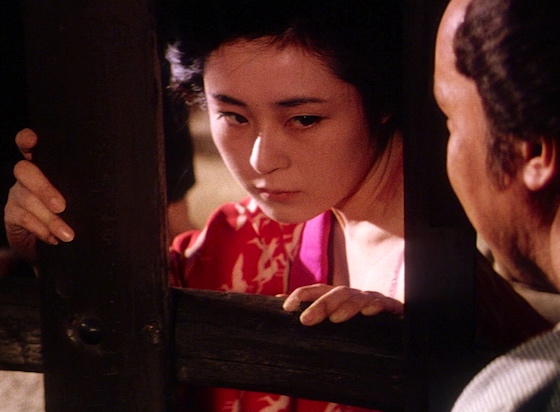
Akira Inoue | 84 mins | Blu-ray | 2.35:1 | Japan / Japanese
In the series’ tenth instalment, our favourite blind masseur-cum-master swordsman, Zatoichi, arrives back at the village where he was trained as a masseur, and decides to pop in to see his old sensei, Hikonoichi. Much to his dismay, Ichi discovers that Hikonoichi was slain by an unknown murderer some months ago, and his daughter has been sold into prostitution to repay his debts. She’s not the only one, though: the local gang boss has basically tricked everyone he can into giving their daughters to his brothel, mainly so the corrupt magistrate has a supply of virgins to deflower. It’ll come as a surprise to no one that they had a hand in Hikonoichi’s murder too. Naturally, Ichi is not impressed by any of this, and his revenge is twofold: for his old master they callously murdered, and for what they’ve tried to do to his daughter since.
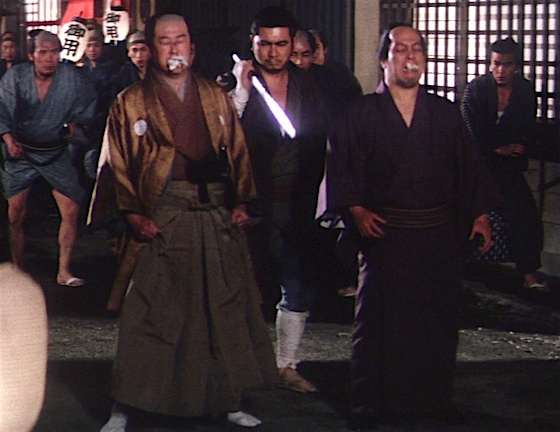
Said revenge is more than the series’ usual slashathon, though that does come in the end. First, though, Ichi methodically and coldly humiliates the cowardly villains, which is no less than they deserve. When they manage to give Ichi the slip and put their army of goons in front of him, he kills as many as he must to get back to the bosses. Then, he escorts the villainous pair in front of their victims… before wordlessly cutting them down. Revenge indeed.
As all the above should make clear, it’s a very dark film thematically. There’s some of the usual comedy sprinkled in now and then, almost as a respite from the seriousness of the main plot. Ichi gets up to some of his other regular antics as well, such as exposing a cheating dice game. This one’s a bit different, however, as he’s already befriended the dice roller, Denroku “the Weasel”. It’s a nice twist on the usual format to have Ichi being chummy with the guy he’d usually expose, and Denroku has a bigger role to play than just that, almost becoming Ichi’s sidekick at times. He’s just one of a strong supporting cast, another standout of which is Denroku’s cheery young daughter, Otsuru, one of the few people who gets one over on Ichi (however briefly).
Director Akira Inoue makes his series debut (it’s the only one he did, though he later helmed six episodes of the TV series), and he makes a mark. It’s a classily directed instalment, but with some visual exuberance (overexposed-looking flashbacks; wild handheld camerawork when a good inspector searches the bad magistrate’s office), as well as some other scenes that are more simply but nicely staged (like when Ichi and Otsuru are suddenly attacked from behind and Ichi cuts down the assailant without even looking).
Revenge isn’t perfect: there’s a “seen it all before” aspect to Ichi being surrounded by dozens of faceless goons who he proceeds to slaughter while trying to get to his real target, not to mention the series’ other repeated scenes and plot points. This aspect hasn’t gone unnoticed by other reviewers: J. Doyle Willis at DVD Talk accuses it of having “dips where the formula is a bit too tired and predictable”, though notes that “the obviousness of similarity/repetition strikes you more if, like me, you were watching the films back to back.” Paghat the Ratgirl puts it thus: “we have to decide if on the given day it all seems like the same Ichi film we’ve already seen time & again, or if every variation of the same story isn’t as satisfying as any other sort of ritual event.” Ritual event is quite a good way of describing it, I think. Remember, these films were made in an era before home video, so you couldn’t just watch the previous ones again on DVD. Therefore I would guess it’s probably quite deliberate that it repeats some of the same tropes and scenes — it’s a conscious “you know what you’re getting” device. Other series, like Bond, do the same thing. It’s part of the joy for fans to tick off the expected elements.
(Incidentally, for some reason this particular film seems to have inspired some particularly good writing about the series as a whole (perhaps because it’s the tenth movie). The pieces from Weird Wild Realm and Quiet Bubble are worth a read for their general view of the whole series as much as for their opinions on this particular instalment.)
Repetitious or not, there’s a lot of really great stuff in Zatoichi’s Revenge to mark it out as another superb entry in the series. I feel like I say something along those lines in almost every review, but the series is on a real winning streak at this point — by example: I’ve placed the last five films from #2 to #6 on my running ranking (with the first film seemingly unassailable as the series’ best). Long may it continue… though if Letterboxd users’ rankings are anything to go by, the next film is where the bubble bursts.
2018 #156
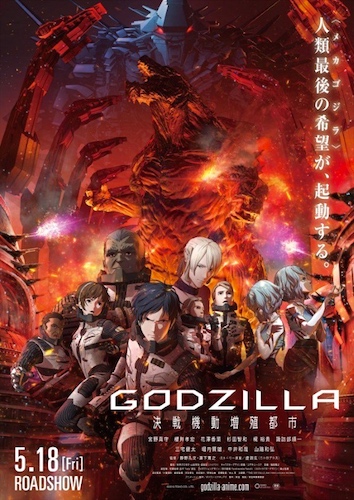
Hiroyuki Seshita & Kôbun Shizuno | 101 mins | streaming (HD) | 16:9 | Japan / English | PG
The 31st official Godzilla film from Japan’s Toho studio is the second part of their anime trilogy. Released theatrically in Japan, it’s a Netflix exclusive in the rest of the world — which is probably for the best, because it means we don’t have to pay money specifically for this shite.
Picking up where the previous film left off, City of the Edge of Battle is set on Earth 20,000 years in the future, where a 300-metre-tall Godzilla (the largest ever, fact fans) rules the planet. I could go into the rest of the backstory, but we’ll be here for a paragraph or two — you can either watch the first film or, better yet, save yourself a couple of hours and just don’t bother with any of it. But anyway: in this instalment, the party that have landed on Earth to defeat Godzilla discover a tribe of humans (or, possibly, just a human-like species) who have somehow survived Godzilla’s reign. They in turn lead them to the remains of Mechagodzilla, a failed project by alien chums to help defeat Godzilla. Left alone for 20 millennia, the mech’s “nanometal” has grown into an entire city, which they now hope to use to defeat Godzilla.
There are some neat sci-fi ideas in this trilogy — aside from the Battlestar Galactica-esque stuff I talked about last time, there’s some interesting notions about how the planet might’ve changed and evolved over 20,000 years without us, and a city that’s grown itself has potential — but promising concepts alone are not enough to overcome the clunky dialogue, dull visuals, unmemorable characters, turgid philosophising, and sauntering plot. And if you’re here for the eponymous big guy, once again he doesn’t even get involved until over an hour in, just in time for the final big action sequence. That’s so badly done, it requires constant narration from the human command centre to explain what’s supposed to be going on. It would make as much sense as an audio drama as it does as a film.
Another way this second film suffers is that many actions are built on motivations that were established and explained in the first film, but which aren’t restated here — and they were easy to miss in the first one anyway, because it was overloaded with exposition and jargon. It should be no surprise that this sequel is no better in that regard, justifying my decision to watch it in English this time. It did seem weird to switch language part way through a trilogy, but it’s not like any of the characters were memorable enough that I associated their voices with them, so why not? Well, I always feel I should watch anime in its original Japanese, for purism’s sake, but English is just easier — especially when the amount of made-up jargon flying around made the first film something of a chore to read.
I didn’t really enjoy the first film, but generously gave it 3 stars on the basis that it wasn’t completely terrible and had some ideas with potential. This sequel squanders most of that. I still like the mythology they’ve loaded into this universe — the conflicting ideologies of the different species on the spaceship; the situation on Earth when they return (the human-like tribe; the self-built city-with-a-brain) — but it’s all bungled in the execution, coming out as gloop that is, at best, barely intelligible, and, at worst, flat out boring. And if there wasn’t already more than enough backstory, mystery, and potential conflict to be going on with (which there was), City on the Edge of Battle throws a ton more into the mix. But hey, maybe the third film will actually generate some excitement if it has to rush to wrap all that up?
Godzilla: City on the Edge of Battle is available on Netflix now. The final film is scheduled for release in Japan in November, and worldwide in early 2019.
2018 #58
Paul King | 103 mins | streaming (UHD) | 2.35:1 | UK & France / English | PG / PG
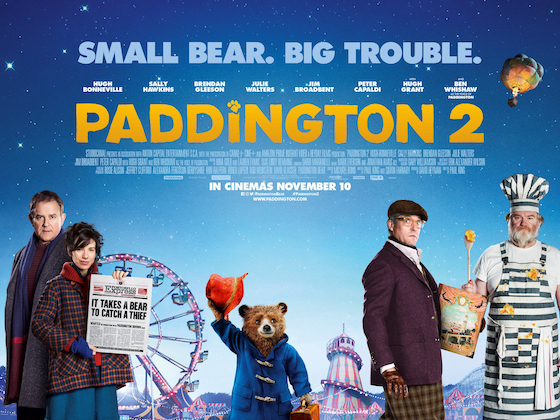
Famous for its untarnished 100% Rotten Tomatoes score after almost 200 reviews (the best critical record of any film ever), Paddington 2 consequently comes with an awful lot of hype attached — perhaps too much for a movie that is, at heart, just a kind-hearted bit of fun about a marmalade-loving bear. But then, in our current climate, such a film is less barely necessary (unlike many sequels) and more a bear necessity.
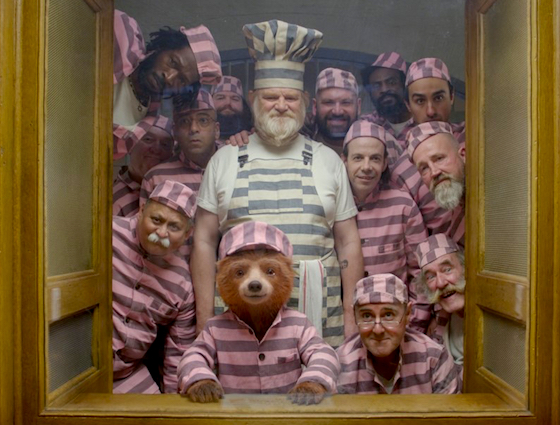
Said bear (voiced by Ben Whishaw) wants to buy a unique, and consequently expensive, pop-up book for his Aunt Lucy’s 100th birthday. When the book is stolen by failed actor Phoenix Buchanan (Hugh Grant), he manages to frame Paddington, who is consequently sent to prison. His adoptive family (Hugh Bonneville, Sally Hawkins, et al) set out to prove his innocence, while Paddington makes the most of his jail time by making friends and livening the place up.
The film’s joy lies less in the facts of the storyline and more in the emotions it inspires. The whole thing has clearly been crafted with a lot of love, inventiveness, generosity, and a good-hearted outlook on life, which comes across from all the characters and their actions, making for a resolutely charming and feel-good film that’s beautifully made. Of course, the first one had a lot of those elements too, but they’ve managed that rare thing of striking gold twice. One thing the first movie didn’t have is Hugh Grant, who proves he’s more than just a stuttering romcom lead with a superbly witty turn as the film’s villain. HIs BAFTA nomination wasn’t as silly as it perhaps sounded.
But while there’s nothing bad about Paddington 2, and an awful lot to like, I feel like my expectations for its absolute perfectness were set too high. I feel like I should be giving it 5 stars just because of how lovely everyone else said it was — and it was lovely, but 5 stars lovely? I’m not sure. I did like it a lot — it’s funny, clever, sweet, and good-natured — but I wasn’t bowled over in the way I’d been led to believe I would be. Maybe I would’ve been if I’d seen it before all the hype? That element of almost-disappointment means I can’t give it full marks, but it’s still a film I’d definitely recommend, especially if you’re after something thoroughly nice, or that’s both suitable for and entertaining to the entire family. I look forward to watching it again sometime and refining my opinion. Maybe in a double-bill with the first film, which I’m currently tempted to say was slightly better.
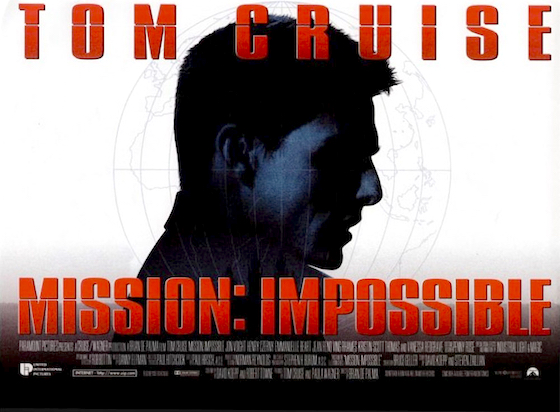
Based on Mission: Impossible, a TV series created by Bruce Geller.
The Story
When a covert mission goes sideways and the rest of his team are killed, agent Ethan Hunt is blamed for their murder. On the run from his CIA employers, he sets out to prove his innocence and bring the real culprit to justice.
Our Hero Mission: Impossible may be meant to be a team exercise, but as most of them get killed we’re focused on surviving member Ethan Hunt, an exemplary agent who must figure out what happened and track down who’s responsible.
Our Villain
The CIA man, Kittridge, who thinks Hunt is responsible for killing his team and is determined to bring him in. Of course, Hunt’s innocent — so is Kittridge really behind it all?
Best Supporting Character
Needing a new team, Hunt recruits a couple of disgraced IMF agents. One is Luther Stickell, a stylish computer expert and hacker. Despite his initial doubts, he’ll become one of Ethan’s loyalest team mates.
Memorable Quote
Kittridge: “I can understand you’re very upset.”
Ethan Hunt: “Kittridge, you’ve never seen me very upset.”
Memorable Scene
Ethan and his team need to retrieve a computer file from the only place it exists: a highly secure room in the centre of CIA headquarters. Access is controlled by voice print identification, a six-digit access code, a retinal scan, and a double electronic key card — none of which they have. In the vault itself, security measures include sensors for pressure (anything on the floor sets if off), noise (anything above a whisper sets it off), and temperature (a rise of a single degree sets it off). All of which leaves Ethan with only one option: to lower himself in from the ceiling, staying calm and cool enough not to raise the temperature, while not making any noise — all while hoping the guy who works in the room doesn’t come back. The resulting heist scene is a fabulous bit of suspense moviemaking.
Memorable Music
Danny Elfman provides a good score for the main body of the film, but the shining star remains Lalo Schifrin’s main theme, as iconic a piece of spy-fi music as the James Bond one. The new version featured here wasn’t produced by Elfman, however, but by the less famous half of U2, Adam Clayton and Larry Mullen. It was also released as a single and became a sizeable hit, reaching #7 in both the UK and US charts (where it received a gold certification) and even making it to #1 in some countries.
Technical Wizardry
The main title sequence is a modern do-over of elements from the TV series: a fast cut (even by today’s standards) montage of scenes from the film to come, plus a burning fuse, all scored by that updated version of the peerless theme music.
Making of
Jon Voigt, as pudgy “getting soft in his old age” Jim Phelps, was 57 years old when they made this film. For the new one, Tom Cruise learnt to fly a helicopter so he could do it all himself throughout a major stunt sequence, and actually performed hundreds of tricky HALO skydives for another major sequence, not to mention sundry other bits of running around and jumping off buildings — most of it while recovering from a serious leg injury. He is 55. How times change.
Previously on…
The original Mission: Impossible TV series was a popular and long-running part of the James Bond-provoked spy-fi craze of the ’60s. It was revived for two seasons in the ’80s. Although the film might look like a reboot, it kind of isn’t: there’s supporting material (such as the character bios on the film’s DVD and Blu-ray releases) that reconciles both TV series into the same continuity as the movie.
Next time…
Multiple never-less-than-entertaining sequels, starting with the standalone M:i-2, before becoming increasingly serialised through M:i:III, Ghost Protocol, and Rogue Nation. This summer’s sixth instalment, Fallout, promises to bring them all to some kind of head.
Awards
1 Saturn Award nomination (Action/Adventure/Thriller Film)
1 Kids’ Choice Award nominations (Favourite Movie Actor (Tom Cruise))
1 MTV Movie Award nomination (Action Sequence (for the train-helicopter chase) — it lost to Twister)
1 Razzie nomination (Worst Written Film Grossing Over $100 Million — it lost to Twister, again)
Verdict
Watching Mission: Impossible now, it’s funny that people used to regard it as unfollowably complex. I’m not saying the plot is straightforward, but if you pay attention then it’s all there. Obviously it can’t be that there were no complicated movies made before 1996, but I guess because at the time it was a summer blockbuster (not enough CGI or superpowers for that nowadays, of course) people didn’t expect to have to think about the story. Arguably it displays the kind of intricacy and complexity we specifically praise in spy thrillers, meaning the film has actually aged very well indeed. Well, it’s always been popular (it was the third highest grossing film of ’96), so I guess it just took a while for its reputation to catch on.
The world premiere of the new Mission: Impossible, Fallout, is in Paris today. It hits UK cinemas on 25th July and US theaters on July 27th. It’s not actually released in France until August 1st.
2018 #145
Maclain Nelson & Stephen Shimek | 113 mins | Blu-ray | 16:9 | USA / English | 12
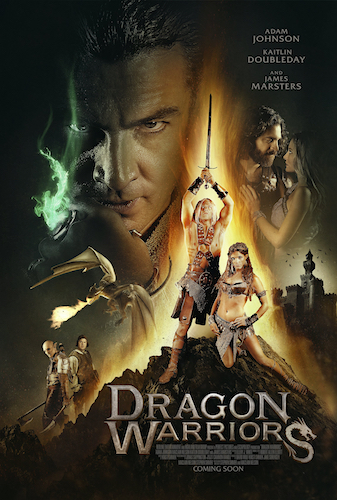
Back in 2014, when it felt like I was contributing to Kickstarters for film projects left, right and centre (including a variety of short films I still haven’t got round to watching and several projects which never amounted to anything, which is why I’ve largely stopped), I helped fund a fantasy comedy called Dragon Warriors. To cut to the quick, it was eventually released as Dudes & Dragons, the title changed presumably to better indicate its comedic tone, and apparently at the end of last week it popped up on Prime Video UK — so, naturally, that made me finally get round to watching my Blu-ray copy.
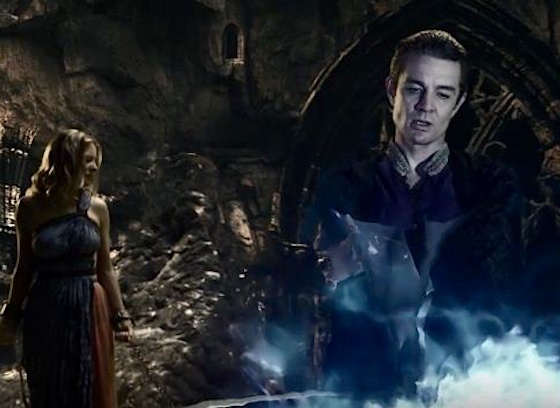
In a Dungeons & Dragons-y world, no one can show signs of love lest they be torched by the fearsome dragon Dolvarnög (the pronunciation of which is one of the film’s better recurring jokes). In fact, the dragon is commanded by evil sorcerer Lord Tensley (James Marsters, of Buffy and Angel fame), whose personal experiences with love have left him bitter. The dragon is just one threat to the relationship between human Camilan (Maclain Nelson) and elf Larec (Clare Niederpruem), and so he teams up with his mercenary brother Ramicus (Adam Johnson) — plus Camilan’s stable boy, Samton (Jake Van Wagoner), and Ramicus’ lodger, orc Shokdor (Erik Denton) — to save the world, etc.
As I said, and as the title surely implies, Dudes & Dragons is ostensibly a comedy — though not the kind of comedy the re-titling implies, I don’t think. I guess the lead characters are “dudes”, but they’re not, like, “dude” dudes… if you know what I mean. Setting that aside, potential hilarity is undercut by the film being overburdened with plot. My summary didn’t even mention the object of Tensley’s affections, his cousin Ennogard (Kaitlin Doubleday), who summons our heroes on their mission; or that Camilan’s parents forbid his marriage to Larec because of some stuff to do with laws of succession or something — this is meant to be a comedy, fellas! Who wrote it, Phantom Menace-era George Lucas? This necessitates rather too many scenes of exposition, especially early on, meaning it’s a while before the gags really begin to flow.
Well, “flow” is a generous descriptor — the gag rate is alarmingly low. The exposition scenes are balanced on a knife edge where you can’t tell if the actors are playing it tongue-in-cheek because it’s supposed to be humorous, or if it’s because they’re reaching for a florid style that they think is correct for a serious High Fantasy movie. (“High” fantasy is probably what you expect from a movie called Dudes & Dragons, actually, isn’t it?) Put another way: take those joke-less scenes out of context and you might think they were just am-dram Fantasy. James Marsters is probably best equipped to navigate this, giving a sterling go at being both villainous and comic, though the uneven tone means he’s never allowed to be properly menacing nor properly hilarious, a balance we know he can strike thanks to the aforementioned Whedon series. The rest of the cast actually aren’t bad — when the script gives them some decent material, there are laughs to be had. The weakest link is a cameo from Luke Perry, who’s worse than most of the non-famous cast.
Production-wise, this is a very low-budget effort and it shows, but if you give it the benefit of bearing those cheap-and-cheerful roots in mind, it doesn’t look half bad. Well, mostly. I mean, some of the costumes are a bit cosplay, but the creature prosthetics are pretty good; and the CGI monsters are alright considering the next-to-no-budget; and it’s decently shot, especially some sequences that spoof the oeuvre of Zack Snyder, though it’s sometimes distracting that it was all done on green screen — were there no real forests nearby they could’ve popped down to?
There’s some enjoyment to be had in Dudes & Dragons for the more forgiving viewer. It would’ve been helped immeasurably by a more streamlined plot, a higher preponderance of genuine gags, and probably by being a good 20 or 30 minutes shorter, too. As it is, most people after some fantasy-based laughs are going to want to look elsewhere.
2017 #139
Eric Brevig | 93 mins | download (HD) | 1.78:1 | USA / English | PG / PG
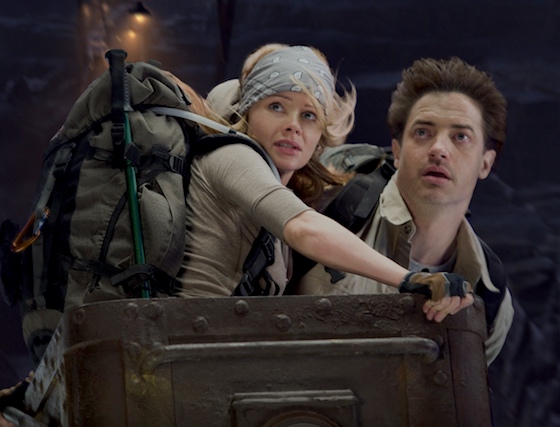
Journey to the Center of the Earth 3D (as it’s actually titled on screen, a rarity for 3D movies) is a very loose (very, very loose) adaptation of Jules Verne’s classic fantasy novel — indeed, you could say it’s more of a sequel, as the characters’ adventure is inspired by the belief that Verne’s novel is actually an account of real events. It turns out they’re right, of course, because otherwise this would just be a movie about a man and his nephew trekking up a mountain to find nothing — which sounds like a film someone would make, but not an effects-driven summer blockbuster.
I remember Journey 3D (as the title card indecisively morphs into before finally moving on) going down quite poorly on its release a decade ago, but, looking up sources to cite for that now, I’m not wholly correct: it has 61% on Rotten Tomatoes, which isn’t great but is still considered ‘fresh’, and grossed a respectable $242 million (off a budget of just $60 million). Nonetheless, I expected little of it (I watched it mainly because it’s on my 50 Unseen from 2008, a notoriously under-completed list) but wound up pleasantly surprised… in some respects, anyway.
The key to my enjoyment was watching it in 3D, in which it plays more like a theme park attraction than a movie: from the very beginning it has loads of those “sticking stuff out into the audience” hijinks that no one bothers with anymore (indeed, after watching a dozen other 3D movies on my TV, I don’t think I’ve seen anything poke out before). Gimmicky and in your face (literally) though it may be, the effect works, it’s uncomplicatedly fun, and it makes the movie better just because it’s trying. Relatedly, this was the first film released in 4DX, the South Korean-developed theatrical format which features “tilting seats to convey motion, wind, sprays of water and sharp air, probe lights to mimic lightning, fog, scents, and other theatrical special effects”. I imagine all that palaver suits the film really well — as I said, it’s more like a theme park attraction than a regular movie anyhow.
However, that’s just one of the reasons why I imagine it would be nearly unwatchable in 2D. All the stuff that’s kinda fun in 3D would seem pointless in 2D, and the at-the-camera things would be horrendously blatant (I mean, they are in 3D, of course, but at least their purpose is retained). And as for the rest of the movie, the direction feels very TV-ish; or, again, like a theme park attraction — it’s a bit basic, basically. Some moments push towards achieving wonder. I’m not sure they quite get there, but I’ve seen worse. (Director Eric Brevig is a visual effects guy by trade, with credits ranging from The Abyss and Total Recall up through Men in Black and The Day After Tomorrow to John Carter and The Maze Runner, and many more besides. His second film as director was the Yogi Bear movie (you know, the one with that poster), which is probably why he’s not directed anything since.)
Let’s not just reserve our criticism for the direction, though: the dialogue is terrible too, including what may be the single worst (or best — it’s so bad it’s good) exchange in the entire history of movies:
Trevor: Max was right. He was right! [shouting] Max! Was! Right! Ha ha! [to Sean] Your dad was right. He was right. Sean: Hannah, your dad was right too. Trevor: They both believed in something that everyone told them was impossible. He was right! [echoing:] He was right!
But hey, at least it makes an effort to do that screenwriting thing of eventually paying off every single thing we learnt about earlier… except for a yo-yo, the thing with the most “this is setup for later” introduction. Maybe the scene where they needed to do some hunting got cut… There’s added incidental amusement watching it a decade on thanks to the surprisingly old-fashioned technology on display: computer monitors are still CRTs; cool kids’ mobiles are still flip phones; being able to Google while on a plane is a wonder… It’s like the film is self consciously showing off how much technology has changed in the last decade — which it isn’t, obviously, because it couldn’t’ve known. And hey, if you don’t laugh at it you’ll cry because it’ll make you feel old.
Really, Journey 3D is cheesy, tacky, and kinda terrible… but I also enjoyed myself. Yes, a big part of that was the 3D. I’d never claim it was a good film, and I don’t think that I’d even recommend it, but I wouldn’t write off watching it again someday.
Hello, dear readers! I’ve been away for most of the past week, hence the shortage of posts, but I’m back now, so here’s a random ragtag roundup of reviews to kick things off again.
2017 #80
Jack Haley Jr. | 124 mins | TV | 1.33:1 + 1.78:1 + 2.35:1 + 2.55:1 | USA / English | U / G
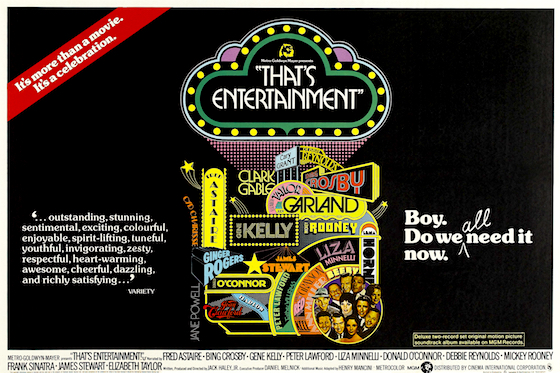
Greatest hits compilations always seem to be a popular product in the music biz, and that’s essentially what this is, but for movies. An array of famous faces appear on screen to help provide a scattershot history of the MGM musical, but really it’s an excuse to play some fantastic clips from old hits. This may be the kind of programming that TV has taken on and made its own in the decades since, but when the quality of the material is this high, it feels like more than just schedule filler.
Thanks to many eras being covered it has more aspect ratio changes than a Christopher Nolan movie, though that’s actually quite effective at demarcating the old-school spectacle from the linking chatter. There’s also some “you wouldn’t get that today” commentary, like Frank Sinatra talking about a line of chubby chorus girls (who don’t even look that large!), or various bits and pieces criticising the studio’s history, like how all the films had the same plot.
It was originally promoted with the tagline “boy, do we need it now”, a reaction to the gritty style of filmmaking that was popular in Hollywood at the time, as well as all the real-life problems of the era (it was released the same year as Nixon resigned because of Watergate). MGM needed it too: the studio was in decline, releasing just five films in 1974. The whole thing carries a somewhat bittersweet air, as ageing stars reflect on past glories from the decrepit environs of MGM’s rundown backlot.
Nonetheless, it creates a marvellous tribute to a golden era. And I guess it must’ve done alright, because it spawned two sequels, a spin-off, and MGM are still going (more or less) today.
’71 (2014)
2017 #95
Yann Demange | 99 mins | streaming (HD) | 2.35:1 | UK / English | 15 / R
Set in Belfast in (you guessed it) 1971, ’71 is a thriller that sees an Army recruit become separated from his unit during a riot at the height of the Troubles, leaving him trying to survive the night “behind enemy lines”.
The film’s best stuff is early on: a brewing riot as police perform a door-to-door search; a tense foot chase through the backstreets; a single-take bombing and its aftermath. The immediacy of all this is well-conveyed, suitably tense and exciting, but also plausible. Then the film decides it needs some sort of plot to bring itself to a close, and so it kicks off some IRA infighting and British Army skullduggery. The added complications don’t exactly bring it off the rails — it’s still a fine and tense thriller — but it lacks that extra oomph that the hair-raising sequences of the first half deliver.
Still, it’s a promising big screen debut for director Yann Demange, who was reportedly among the frontrunners to helm Bond 25 before that got diverted into Danny Boyle and John Hodge’s idea. His second feature, another period movie, this time a crime drama, White Boy Rick, is out later this year.
Guardians (2017)
aka Zashchitniki
2017 #122
Sarik Andreasyan | 89 mins | streaming (HD) | 2.35:1 | Russia / Russian | 12
You may remember this film from when its trailer went viral a couple of years ago: it’s the “Russian answer to The Avengers” that featured a machine-gun-wielding bear. Naturally, that kind of attention assured it got an international release eventually (I paid to rent it, then it later popped up on Prime Video. You never know how these things are going to go, do you?)
It’s about a bunch of old Soviet superheroes being reactivated to stop a villain. If that sounds vague, well, I can’t remember the details. Frankly, they don’t matter — Guardians is the kind of film a 6-year-old would write after a diet of Saturday morning cartoons, with the same attention to character development and plot structure you’d expect from such an endeavour. The story is semi-nonsensical: the villain’s plan is never clear (beyond “rule the world”); it flits about between subplots; characters appear and disappear from locations… There’s a litany of “things that don’t quite make sense” — too many to remember without making obsessive notes while rewatching, which I have no intention of doing.
But if you can ignore all that — or, even better, laugh at it — then it’s fairly watchable, in a brain-off entirely-undemanding so-bad-it’s-good kind of way. There’s some decent CGI (given its budget), some half-decent action, and it’s mercifully brief at under 90 minutes.
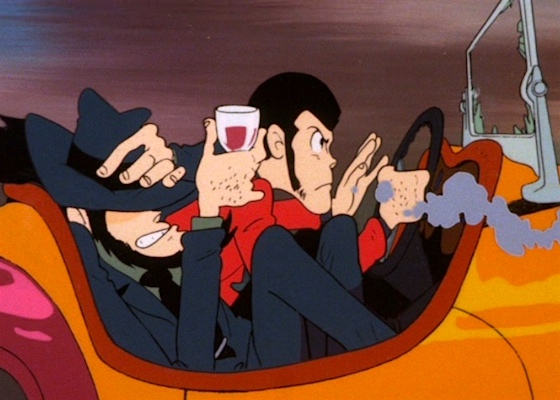
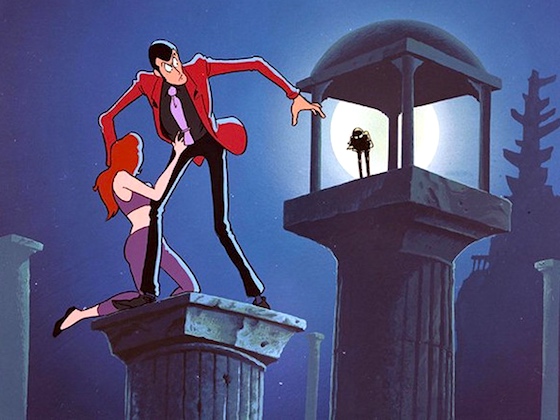
aka The Mystery of Mamo / Rupan Sansei / Rupan Sansei: Rupan tai Kurōn
2018 #112
Sôji Yoshikawa | 102 mins | DVD | 16:9 | Japan / English | 15 / PG-13
Best known to Western audiences thanks to Hayao Miyazaki’s feature debut The Castle of Cagliostro, Lupin the 3rd is more than just one film in the Studio Ghibli co-founder’s illustrious career — it’s a popular and long-running franchise in Japan, with almost innumerable iterations: starting life as a manga which has run on and off since 1967, it has so far been adapted into six TV series, seven animated films, 26 feature-length TV specials, two live-action movies, and sundry other bits and bobs. Despite all that, this is one of only three Lupin III productions that has been available in the UK since the DVD era (the others being the fourth TV series, titled The Woman Called Fujiko Mine, and Cagliostro, natch), though that increases by one today with the Blu-ray release of the latest complete TV series, Lupin the 3rd: Part IV.
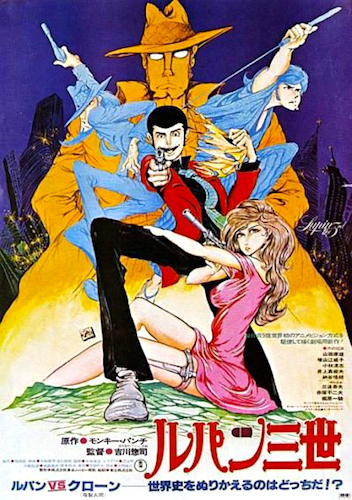
The Secret of Mamo (more commonly known in English as The Mystery of Mamo, or in Japan as Lupin vs. the Clone) was the first big-screen outing for Lupin III. It was produced while the second TV series was being broadcast, with the intention of making a film that was more similar to the original manga, something Japanese censorship standards prevented the TV series from being. So, the tone is kids’ comedic adventure, but there’s nudity, moderately graphic violence, and a scene of sexy torture. Well, it’s not that graphic really… though it depends on your position on these things, I guess. Anyway, I’m certainly surprised the Americans let it pass as a PG-13, just because of the nudity. She may be a cartoon, but it’s not subtle.
Anyhow, the plot sees master thief Lupin III, along with his regular sidekicks Jigen and Goemon, pilfering the Philosopher’s Stone (I guess Americans would need to call it the Sorcerers Stone) at the request of his on-off love interest Fujiko Mine, who actually wants it for the mysterious Mamo. His nefarious schemes draw Lupin and co into a web that sees them pursued not only by Mamo’s forces, but also the Americans, and Lupin’s regular nemesis, Interpol Inspector Zenigata.
One of the major inspirations behind Lupin the 3rd’s creation was James Bond, and so, appropriately enough, this is a globetrotting adventure that takes in Transylvania, Egypt, France, Spain, the Caribbean, and Colombia. Similarly, it also showcases some great action scenes, particularly an extended car chase through Paris and then the mountains. Unlike Bond, there’s a definite cartoonishness to many of the antics, and the third act takes a turn into outright science-fiction that gets a bit crazy. It’s also not entirely similar to The Castle of Cagliostro, therefore, showing how much Miyazaki brought his own tone and style to that film.
That said, I thought the lead characters’ relationships felt clearer from the start here than they did in Cagliostro, which very much felt like a sequel or spin-off where you were meant to know who everyone was (as I noted in my review). It could just be I’m a little more familiar with them all now, but perhaps the film was indeed made to be more newcomer-friendly — it was the first movie, after all; though it is spun off from a TV series… Well, it’s quite neatly done, nonetheless — this isn’t “Lupin III Begins” with them all meeting for the first time, nor is there a viewer-surrogate being introduced to them all, but it handles how and when each character arrives into the narrative in such a way that it’s kept fairly clear how they relate to one another. It’s subtly done, so, as I say, it could be serendipitous or my own improved awareness.
It’s also perhaps worthy of note that the film is available with four different English dubs. The 2013 US DVD from Discotek Media includes them all, so lucky you if you have that. Everywhere online will tell you that Manga UK’s 2008 DVD includes the dub Manga produced in 1996, which seems logical, but, being the inquisitive soul that I am, I read up on it myself, and I’m 99% certain it’s actually the 2003 Geneon dub. According to Wikipedia, the Geneon dub “took a liberal approach with translating the Japanese dialogue,” so I compared the dub to the subtitles included for the Japanese audio, and they were totally different. You can see why anime fans hate it when discs only include “dubtitles”. Maybe I should’ve watched it in its original language…
Anyway, the film itself is a very fun adventure, with an entertaining anarchism as well as exciting action and mostly amusing humour. Ever since I watched Cagliostro I’ve been meaning to watch some more Lupin the 3rd because I always hoped I’d enjoy it, and so far I’m being proven right. At least I’ve got the two Blu-ray-released TV series to tuck into next, but I’d like to see more of the extensive back catalogue make it to the UK. I guess that probably depends on how the Part IV release sells…
Lupin the 3rd: Part IV is released on Blu-ray in the UK today by All the Anime.
2017 #167
Barry Sonnenfeld | 106 mins | Blu-ray | 1.85:1 | USA / English | PG / PG-13
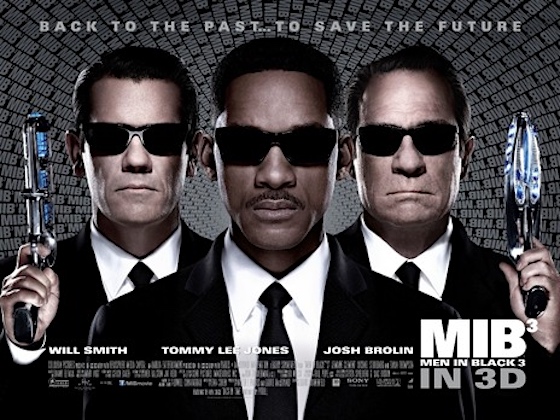
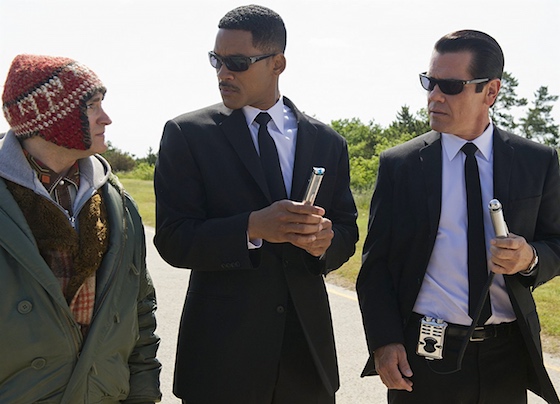
Maybe it’s something to do with my age, but when Men in Black II came out it felt like a bit of a belated sequel to the mega-hit Men in Black — it had been five years, after all, which is quite a long time for a comedy sequel. Well, Men in Black 3 was another ten years after that… As it turns out, MIB2 is a kind of typical first sequel: memorable-but-small characters get massively increased roles; things are referenced just for the sake of referencing them; jokes are repeated or amped up. MIB3 is more like the typical belated sequel: it stands somewhat divorced from the first two, with the minor stuff all gone, and some more significant changes necessitated by the passing of time.
What hasn’t changed are the leads, Agents J (Will Smith) and K (Tommy Lee Jones) — although the latter’s about to, because when an alien criminal he locked up in the ’60s escapes from prison and travels back in time, K is wiped from existence. As the only one who can remember K, it’s up to J to also travel back to the ’60s, rescue the younger K (Josh Brolin), and also save the Earth.
MIB3’s biggest problem is that it’s not funny enough. The first two were sci-fi comedies with the emphasis on the comedy, whereas this is more of a light sci-fi adventure. In some respects it tries to substitute emotional weight for the lack of laughs, aiming for a pay-off that’s designed to put a cap on the whole trilogy. It kind of works, I suppose, but it also feels like a bit of an ill fit. It’s nice that the film’s trying something different, I suppose, but I’d rather the tone was closer to the other movies — more humour, tighter pacing. Director Barry Sonnenfeld used to have an obsession with making his movies shorter (I remember he once said he’d be the only director where a “director’s cut” would actually mean a truncated version of the movie). I don’t know if he’d given up on that notion by 2012, but trimming ten minutes out of this likely wouldn’t hurt.
The best bit is definitely Brolin as Young K, doing a bang-on impression of Tommy Lee Jones while also adding enough to make the part his own. As for the rest of the new cast members, Emma Thompson’s role is fine if you consider her appearance no more than a cameo, but Alice Eve is underused as her younger self. Jemaine Clement chews the scenery double-time as the villain, while the always excellent Michael Stuhlbarg has a fun supporting role as a character who can see all possible futures.
MIB3 is not as weak as the much-maligned first sequel (which I don’t hate as much as some, but it isn’t great), but it can’t equal the freshness of the original, either. Little surprise it didn’t lead to a full-blown revival of the franchise… though, as it still did well at the box office and the series’ popularity endures, it’s also no surprise we’ll be getting a spin-off-ish fourth movie next summer.















 100Films.co.uk