Spider-Man: Far from Home (2019)

2020 #49
Jon Watts | 129 mins | Blu-ray (3D) | 2.39:1 | USA / English | 12 / PG-13
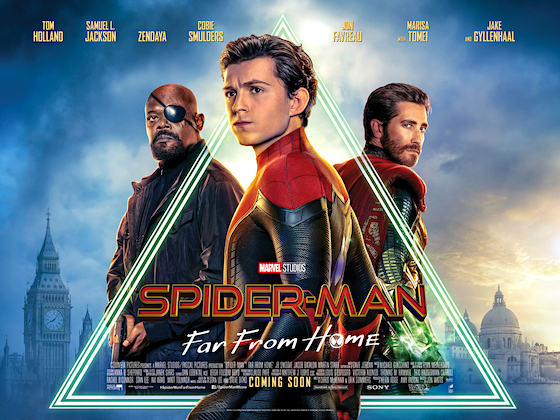
Spider-Man: Far from Home

For those not keeping track (who can blame you?), Far from Home is the third Spider-Man 2. It follows in the footsteps of Sam Raimi’s Spider-Man 2 from 2004, widely regarded as one of the topmost examples of the superhero genre, and Marc Webb’s The Amazing Spider-Man 2 from 2014, widely regarded as one of the poorest examples of the superhero genre. (As you can see, they’ve ditched the numbers. Probably wise at this point.) Personally, while I agree with the accepted view of Raimi’s film, I actually rather enjoyed Webb’s sequel. That’s important to know when I say that I think Far from Home is my least favourite Spider-Man 2 so far.

This one is the sequel to 2017’s Spider-Man: Homecoming… except Spidey’s in the MCU now, so it’s also a sequel to Avengers: Infinity War and Avengers: Endgame. And that’s not just a checklist of “other Spider-Man appearances”, either: the events of Endgame are absolutely vital to the storyline of this movie. It may be another Spider-Man 2, but more than that it’s Marvel Cinematic Universe: Episode XXIII.

Some people criticised Homecoming for having too much Iron Man and going too far in making Spider-Man into Iron Man Jr. I felt they got the balance about right, all things considered — it’s not very true to comic book canon, but, as the third big-screen iteration of Spidey in the modern era, it made a reasonable change. Far from Home is where it becomes overpowering. It has to lean heavily on the overall continuity of the MCU, which means all the business of The Blip (as what we call The Snap is called in-universe) and Iron Man’s death is front-loaded into the movie. The former is waived away as quickly as they can; the latter weighs heavy on the entire rest of the plot.
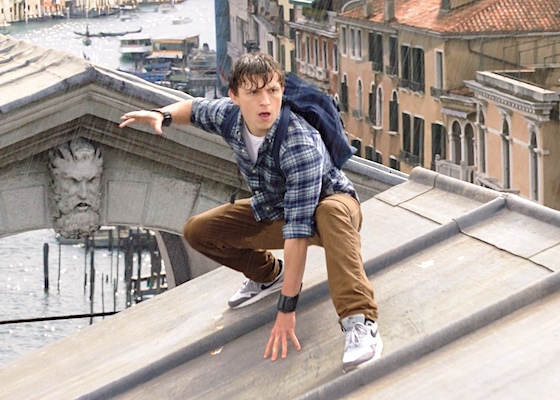
We'll always have Venice

Meanwhile, Nick Fury is trying to get in touch with Peter Parker, who isn’t interested in the big world-saving antics that implies. He’s more concerned with going on a school summer trip around Europe. How a poor kid from Queens is supposed to afford a weeks-long vacation around Europe isn’t even one of my issues with the film, but if you’re a Spidey devotee it might be. But go on this vacation he does, only to have it interrupted in Venice by a giant water man/monster thing, which is battled by a new hero Peter’s classmates reckon is a cross between Iron Man and Thor, and name Mysterio. Turns out he’s working with Fury, and Fury wants Mysterio and Spider-Man to team up to fight the possibly world-ending threat. But Peter doesn’t want to because he’s on holiday goddammit and he has a plan to woo MJ.

So far, so Spider-Man — the conflict between his personal and ‘professional’ life is a regular feature of the character. But it’s the way this story unspools that didn’t work for me, as it drags its heels through every storyline it’s got going at once, indulging in comedic asides from a whole range of characters. Having a comic relief character or double act is fine, but four or five of them? It just eats up screen time. The lack of focus robs the film of impetus or tension, as the characters and plot both meander around Europe and from set piece to set piece.

At least some of those set pieces are quite good. The Venice one is a nice change of pace, because Mysterio is off doing the main fighting bit, so Spidey’s left to tidy up around him. It’s something a bit different in a blockbuster action sequence. The real highlight, though, is an illusion trap Spidey endures, which is imaginative and creatively realised. Tom Holland gives the title role his all, but Jake Gyllenhaal is the standout as Mysterio, waltzing into the film and stealing it out from under everyone else’s noses. His real-life alter ego, Quentin Beck, has a really nice relationship with Peter, pitched as a kind of mentoring, older brother type role, admiring of the kid’s ability but not blind to his flaws. Even better, if you watch the gag reel you get the impression Gyllenhaal is kinda treating Holland like Beck treats Parker, which is… amusing.
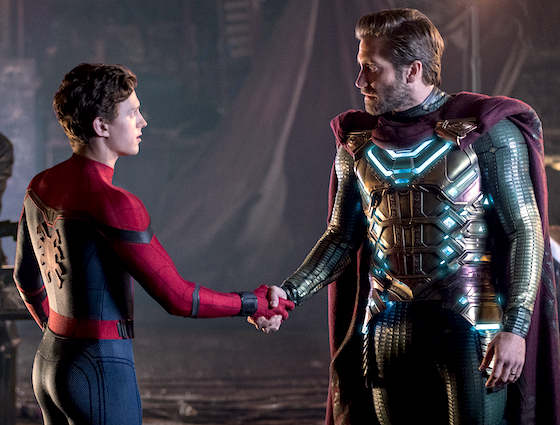
Super friends

Like every other MCU film, Far from Home is competently made with occasional flashes of inspiration, so manages to dodge being an outright disaster. But, speaking as someone who thinks Homecoming is pretty great and saw a lot of promise in this sequel’s trailers, I was disappointed by the end result. Future Spidey appearances in the MCU are assured (naturally there’s a post-credits tease for them), so I hope they can recapture more of that Homecoming spark next time.

3 out of 5

Spider-Man: Far from Home is available on Sky Cinema from this weekend.

As Far from Home is officially the final film of the Infinity Saga (I guess it works as an epilogue; or perhaps the saga’s very own feature-length post-credit tease), here are links to my reviews of every other MCU film so far… except for one, which this has reminded me I’ve forgotten to write.

  1. Iron Man
  2. The Incredible Hulk
  3. Iron Man 2
  4. Thor
  5. Captain America: The First Avenger
  6. Avengers Assemble
  7. Iron Man 3
  8. Thor: The Dark World
  9. Captain America: The Winter Soldier
  10. Guardians of the Galaxy
  11. Avengers: Age of Ultron
  12. Ant-Man
  13. Captain America: Civil War
  14. Doctor Strange
  15. Guardians of the Galaxy Vol. 2
  16. Spider-Man: Homecoming
  17. Thor: Ragnarok
  18. Black Panther
  19. Avengers: Infinity War
  20. Ant-Man and the Wasp
  21. Captain Marvel
  22. Avengers: Endgame
  23. this one!

I’ve also reviewed a bunch of the shorts and (sorta-)tie-in TV series, but I’ll let you track those down if you’re interested.

…and, in keeping with the style of the MCU, here’s a surprise post-‘credits’ mini-review!

Peter’s To-Do List
(2019)

2020 #49a
Jon Watts | 3 mins | Blu-ray | 2.39:1 | USA / English | 12

Peter's To-Do List

Sony chose to bill this as a short film on Far from Home‘s Blu-ray release, so I’m going to treat it like one and review it. Let’s begin with a dictionary definition (from, er, a very real dictionary, honest) of “short film”…

short film
noun

1. an original motion picture that has a running time of 40 minutes or less, including all credits. “The Silent Child won the Oscar for best short film.”

2. a deleted scene long enough that someone thought they could get away with pretending it was conceived and created as an original motion picture. “The Spider-Man: Far from Home Blu-ray includes a short film called Peter’s To-Do List.”

That pretty much sums up my reaction to this — it’s a glorified deleted scene. To be precise, it’s several deleted scenes, so really it’s a deleted sequence — Peter running various errands before his trip to Europe. If you watched any of Far from Home‘s trailers then you’ll have seen almost all of this already because it’s footage that was used extensively to advertise the movie. I believe they also did some kind of special re-release of Far from Home with this bit cut back into the feature (an option not available on the home release).

So, it’s not a short film, but it is a fun-enough deleted scene. It wouldn’t’ve been out of place left in the movie, but considering the first act is already too long and a trudge as it is, I see why they wanted to lose some stuff.

3 out of 5

Sean Connery as James Bond, Part 2

If everything had gone according to plan, this weekend Americans would’ve been flocking to cinemas to see Daniel Craig’s final performance as Bond, James Bond, secret agent 007, in No Time to Die (us Brits would’ve all been to see it last weekend, of course). As that’s not to be, here’s something both entirely similar and entirely different: my reviews of Sean Connery’s final performance in the role — both of them.

This concludes my coverage of Connery’s time as Bond, the previous instalment of which I posted in, er, 2013. (And you thought No Time to Die had a long delay.) That covered his first stint as James Bond — the five films he starred in from 1962 to 1967. Now, here are his two remaining performances:

Neither of these films is Connery’s finest hour as Bond — they’re his worst hours, in fact — but, I must say, they were both better than I had remembered.

Click through to learn more about…

That may be it for Connery, but — as always — James Bond will return… in Daniel Craig’s case, in November (fingers crossed!)

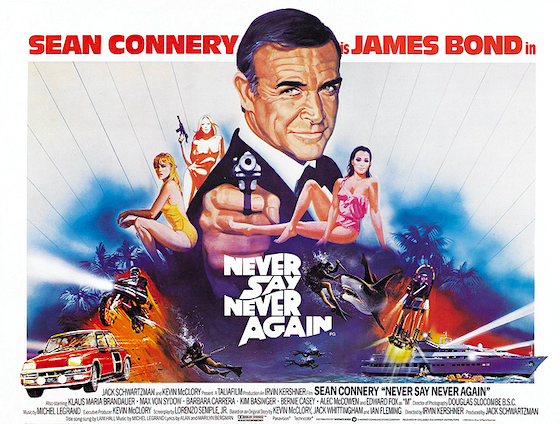
Never Say Never Again (1983)

The 100 Films Guide to…

Never Say Never Again

Sean Connery is James Bond 007

Country: UK, USA & West Germany
Language: English
Runtime: 134 minutes
BBFC: PG
MPAA: PG

Original Release: 7th October 1983 (USA)
UK Release: 15th December 1983
Budget: $36 million
Worldwide Gross: $138 million

Stars
Sean Connery (Thunderball, Highlander)
Klaus Maria Brandauer (Mephisto, Out of Africa)
Kim Basinger (Mother Lode, Batman)
Barbara Carrera (The Island of Dr. Moreau, Lone Wolf McQuade)
Max von Sydow (The Exorcist, Minority Report)

Director
Irvin Kershner (The Empire Strikes Back, RoboCop 2)

Screenwriter
Lorenzo Semple Jr. (Papillon, Flash Gordon)

Based on
An original James Bond story by Kevin McClory, Jack Whittingham and Ian Fleming, which Fleming later novelised as Thunderball.


The Story
Ageing secret agent James Bond is sent to a health spa to get back into shape, but therein stumbles upon part a plot to hijack nuclear warheads and hold the world to ransom. With the theft successful, it falls to Bond to retrieve the weapons before it’s too late.

Our Hero
Bond, James Bond, British secret agent 007. He’s played by Sean Connery — already the first and third actor to play James Bond on the big screen (in a serious movie), here he becomes the fifth too. Unlike the official Bond films, which carried on regardless as Roger Moore began to look more like an OAP than a capable secret agent, Never Say Never Again acknowledges that Bond is getting on a bit. That’s because Connery was 53 at the time, and this is from back in the days when 53 was old, especially for an action star — not like today.

Our Villains
Billionaire businessman Maximilian Largo is actually the highest-ranking agent of SPECTRE, a global criminal organisation masterminded by Ernst Stavro Blofeld. With Blofeld merely pulling the strings behind the scenes, it’s Largo and his lackeys that Bond must defeat to save the world.

Best Supporting Character
Rowan Atkinson’s cameo-sized role as inexperienced local bureaucrat Nigel Small-Fawcett is actually quite amusing, and therefore probably the best thing about the film.

Memorable Quote
Largo: “Do you lose as gracefully as you win?”
Bond: “I don’t know, I’ve never lost.”

Memorable Scene
At a charity event hosted by Largo, Bond comes face-to-face with his adversary for the first time, where he’s challenged to play Domination, a 3D computer game. It couldn’t be more ’80s if it tried.

Memorable Music
James Bond films have a very distinct musical style… but not when they’re unofficial productions they don’t. Without access to familiar themes, Never Say Never Again finds itself having to reach for something different… and fails: the title song is bland and the jazzy score is forgettable.

Letting the Side Down
Where to begin? Well, let’s pick on perhaps my least favourite bit of the whole endeavour: henchwoman Fatima Blush; and, more specifically, how the film ends up handling her. First, there’s a truly terrible sex scene between her and Bond, but it only gets worse later: the self-espoused feminist becomes monomaniacally concerned that Bond should think she’s the greatest shag he ever had, which distracts her to the point that he gets the opportunity to kill her… which he does with an explosive bullet that just leaves her smoking high heels behind. No, seriously. And for this performance Barbara Carrera received a Golden Globe nomination! If you told me she’d been nominated for an award and asked me to guess which, I’d’ve been certain it was a Razzie.

Making of
“So how did an unofficial James Bond film come about anyway?,” I hear you ask. Well, the story starts in the early ’60s, after the Bond novels had become popular but before the film series began. Creator Ian Fleming worked with independent producer Kevin McClory and screenwriter Jack Whittingham on a script for a potential Bond film titled Longitude 78 West, but this was abandoned due to costs. Fleming then adapted the screenplay into a Bond novel, Thunderball, but without credit for either McClory or Whittingham. McClory sued for breach of copyright, and the matter was settled by Fleming giving McClory all rights to the screenplay. By this time the official Bond film series was underway, and Eon Productions made a deal for McClory to coproduce their adaptation of Thunderball, an agreement which forbade him from making any further films of the novel for another decade. That lands us in the mid-’70s, when Bond was still very popular. As McClory began attempting to get a new adaptation off the ground, Eon put legal obstacles in his path, accusing his new script of breaking copyright restrictions by going beyond the confines of Thunderball. Eventually McClory and other producers managed to clear these hurdles and, after rewrites to make Connery happy (which were undertaken by British TV writers Dick Clement and Ian La Frenais, who went uncredited due to Writers Guild of America restrictions, despite much of the final script being their work), the remake finally went before the cameras — with a new title, suggested by Connery’s wife, referring to his vow that he would “never” play Bond again.

Previously on…
James Bond had starred in 13 official movies by the time this came along. It’s kind of ironic that Never Say Never Again’s unofficial status means it can’t acknowledge any of that, while also tacitly acknowledging it with Connery’s very presence in the lead role. Though if it had been able to acknowledge it, the fact this film is a straight-up remake of Thunderball might’ve led to some awkwardness.

Next time…
Early in 1984, producer Kevin McClory announced a sequel, S.P.E.C.T.R.E. It never happened. He spent most of the rest of his life trying to pursue further James Bond projects: he tried to remake the same story again in 1989 as Atomic Warfare starring Pierce Brosnan, and again in the early ’90s as Warhead 2000 AD starring Timothy Dalton. In 1997 he sold the rights to Sony, who already held the rights to Casino Royale and hoped to use that to launch its own Bond series. MGM sued and the matter was settled out of court, with Sony giving up all claims on Bond. (Perhaps this explains why Sony have been so keen on acquiring/retaining the series’ distribution rights in recent decades.) And so we’re left with just one James Bond series, which has mostly gone from strength to strength.

Awards
1 Golden Globes nomination (Supporting Actress (Barbara Carrera))
2 Saturn Award nominations (Fantasy Film, Special Effects)

Verdict

Between this and the state of the official Moore-starring films at the time, it must’ve sucked to be a Bond fan in the early- to mid-’80s. Maybe some thought Connery returning to the role he’d defined would be a boon, but it didn’t turn out that way: in just about every respect, Never Say Never Again plays like a weak imitation of a Bond film… which I suppose is exactly what it is, really.

As an unofficial production, it’s missing a bunch of the identifying features of the Bond films: the gun barrel, the title sequence, the musical stylings, and, most conspicuously, the famous theme. There’s more to Bond than these tropes, of course, and a really good Bond movie can survive without them, but their absence contributes to the feel of this being a low-rent wannabe, when it needs all the help it can get. The stuff it can include isn’t great either. The one-liners and innuendos are particularly bad. The action is rather dated (although the chase between a souped-up Q-bike and the henchwoman’s tacky little ‘80s car is more exciting than the notoriously underpowered car chase in Spectre, which says more about Spectre than Never Say Never Again). Then there’s the sex scene I mentioned above.

One critic retrospectively described the film as “successful only as a portrait of an over-the-hill superhero,” which is true… up to a point. I mean, most of the stuff about Bond being past his best seems designed to explain Connery’s grey hair and lined face — Bond is still irresistible to literally every woman he meets, and has no problem at all doing any of the action stuff. Connery’s performance isn’t bad either, although it didn’t quite feel like Bond to me. I’m not sure why. It’s not that he seems bored or like he’s only going through the motions (a sensation that definitely comes across in some of his original performances as the character), but he no longer seems to have quite the panache you expect from 007.

And yet, for all that, it’s not as irredeemably terrible as I’d remembered. For all the glaring faults, it actually ticks along with a decent level of entertainment value. So is it, in fact, unfairly maligned? It’s nowhere near the best of Bond, but it doesn’t descend into outright silliness like some of the official ones do (well, apart from those smoking shoes), and it even has a couple of pretty good bits. It would definitely be a lesser Bond — if it counted, which it doesn’t — but, as a couple of hours of off-brand Bondian fun, it could actually be a lot worse.

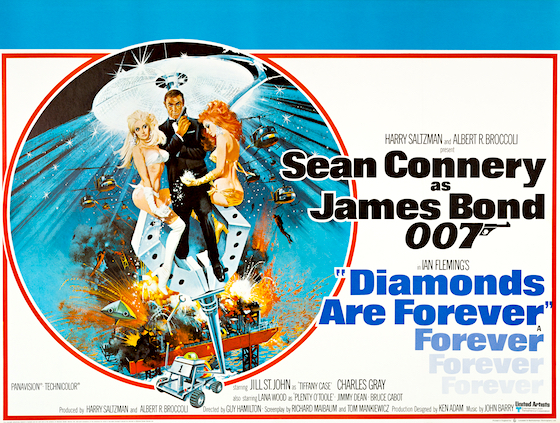
Diamonds Are Forever (1971)

The 100 Films Guide to…

Diamonds Are Forever

You’ve been waiting for him…
Asking for him…
Now he’s here.

Country: UK
Language: English
Runtime: 120 minutes
BBFC: A (cut, 1971) | PG (1987) | 12 (2012)
MPAA: PG

Original Release: 14th December 1971 (West Germany)
UK Release: 30th December 1971
Budget: $7.2 million
Worldwide Gross: $116 million

Stars
Sean Connery (Marnie, The Untouchables)
Jill St. John (The Lost World, Sitting Target)
Charles Gray (The Devil Rides Out, The Rocky Horror Picture Show)
Lana Wood (The Searchers, Grayeagle)

Director
Guy Hamilton (Battle of Britain, Evil Under the Sun)

Screenwriters
Richard Maibaum (Ransom!, Licence to Kill)
Tom Mankiewicz (The Sweet Ride, Ladyhawke)

Based on
Diamonds Are Forever, the fourth James Bond novel by Ian Fleming.


The Story
After finally assassinating his nemesis, Blofeld, Bond is assigned to investigate a diamond smuggling operation in Holland, but following the trail leads him to the glitz of Las Vegas — and a familiar foe.

Our Hero
Bond, James Bond, agent 007 of the British secret service. He may be looking a little older than when we last saw him, but he’s still capable of wooing all the ladies and scaling the outside of skyscrapers.

Our Villains
We so much focus on the Dr Nos and Auric Goldfingers of the early Bond films — plus the ever-changing roster of villains he’d face in later movies — that it’s easy to forget Blofeld has a presence in almost every Bond movie before Diamonds Are Forever (indeed, Dr. No (which only mentions SPECTRE) and Goldfinger (which has no ties whatsoever) are the only exceptions), so it’s no real surprise that he’s not just confined to the pre-titles here. It certainly wouldn’t have been to audiences in 1971, either: he’s prominent in the trailer, and Charles Gray is rather highly billed for someone who’s only in the opening minutes. That said, Lana Wood is fourth billed and she only has about three scenes, so… Until he’s properly revealed, however, we have overtly homosexual assassins Mr Wint and Mr Kidd to tide us over. Considering they’re shown as creepy and murderous, it’s hardly an enlightened portrayal of homosexuality; but then it is from 1971, so what do you expect?

Best Supporting Character
Tiffany Case is Bond’s way in to the diamond smuggling operation. She’s a self-assured and capable woman… for about the first half of the film, before she sharply descends into a stereotypical Bond Girl bimbo. Oh well, they tried.

Memorable Quote
“That’s quite a nice little nothing you’re almost wearing. I approve.” — James Bond

Memorable Scene
Bond travels to Amsterdam under the identity of a diamond smuggler they’ve captured, but when he escapes and to Amsterdam too, Bond must intercept the chap before his cover’s blown — which he does in a small lift, leading to a brutal close-quarters brawl that’s almost as good as the famous train carriage one in From Russia with Love.

Write the Theme Tune…
One of the most famous of the Bond title tracks, its music was written by the film’s — and, by this point, the series’ incumbent — composer, John Barry. It was his fifth Bond theme song (seventh if you include Mr. Kiss Kiss, Bang Bang and We Have All the Time in the World). The lyrics were by Don Black, returning for his second theme after Thunderball.

Sing the Theme Tune…
This is also the second Bond theme for singer Shirley Bassey, after (of course) Goldfinger. Apparently co-producer Harry Saltzman hated the song, objecting to the innuendo in the lyrics, and it was only saved by his fellow producer, Cubby Broccoli. That said, Saltzman may have had a point: in a later interview, Barry revealed that he instructed Bassey to imagine she was singing about… a penis. “They are all I need to please me / They can stimulate and tease me … Hold one up and then caress it / Touch it, stroke it and undress it…” Whew, crikey!

Making of
By this point in the Bond series (this is the seventh film, remember) a lot more original thought was going into which direction to take things than just “adapt a Fleming novel”. For one thing, they were worried Bond’s British style was becoming passé, so they decided to set the movie in glamorous Las Vegas — which, let’s be frank, has dated far, far more than the classier style of the earlier films. Anyway, they went even further than that: with Lazenby having deserted them, a new leading man was required, and so they cast… an American! *gasp* Unthinkable today. The man in question was John Gavin, best known for playing Sam Loomis in Psycho. He’d also played France’s answer to Bond, agent OSS 117, in a film just a couple of years earlier, which is either good training or a weird conflict, depending how you look at it. Not that it mattered anyway, because United Artists insisted they get Sean Connery back, and they did — albeit for a then-extraordinary $1.2 million salary. To Connery’s credit, he gave every cent of it to a Scottish education charity he’d established.

Previously on…
Connery played Bond in five movies between 1962 and 1967, eventually becoming bored of the role and quitting. They replaced him with an unknown Australian model, who promptly got too big for his boots and ran off after just one movie. It just so happens that the films’ storylines lend credence to the theory that James Bond is a codename that goes along with the 007 designation — normally I hate that theory, but the way it explains the events of OHMSS and Diamonds Are Forever is quite neat. (Basically: Connery-Bond retires and is replaced by Lazenby-Bond (hence the “this never happened to the other fella” line), but when Lazenby-Bond’s wife is killed he quits and Connery-Bond comes out of retirement to avenge her for him (hence him tracking down Blofeld at the start of DAF, but not seeming all that emotional about it).)

Next time…
Connery said he’d never play Bond again… which became the inspiration for the title the next time he did. But that really was his last hurrah in the role. As for the official Bond movies, they finally did the inevitable and cast Roger Moore. The rest is history.

Awards
1 Oscar nomination (Sound)

Verdict

Well throw me out a window and call me Plenty if Diamonds Are Forever isn’t actually a really enjoyable Bond movie. Okay, it’s probably still the worst (official) Connery movie, thanks to a few daft bits (the elephant playing the slot machine; Blofeld in drag; etc), and because it simply doesn’t have as many standout sequences or memorable lines as his other five. But, on its own merits, it’s good fun. The first 45 minutes or so are played admirably straight and serious; the car chase around Vegas is rather good; and while those bits of silliness do creep in, they’re only fleeting (albeit a precursor to where the whole series would go in the Moore years). I’d previously remembered Diamonds as a real nadir; a blight on the name of the series. Now, while I wouldn’t rank it among my most favourites, I found a lot to like.

(For the sake of comparison, I previously gave five stars to From Russia with Love, Goldfinger, You Only Live Twice, and On Her Majesty’s Secret Service, and four stars to Dr. No and Thunderball. This would be three-and-a-half, but I’ve never done half stars on this blog. If I did, perhaps one or two of those others would’ve been marked down by half-a-star too.)

Mission: Impossible – Fallout in 3D

Rewatchathon 2020 #14
Christopher McQuarrie | 147 mins | download | 2.39:1 + 1.90:1 | USA, China, France, Norway & UK / English & French | 12 / PG-13

Mission: Impossible - Fallout 3D

Despite Paramount’s best efforts to screw over 3D fans by not releasing it on Blu-ray anywhere in the world, there is a copy of Fallout in 3D out there if you know where to look (and you do have to hunt for it a bit, because it’s not on the best-known torrent sites).

Like so many modern blockbusters, Fallout was not shot in 3D but was converted during post-production, at the request of the filmmakers (including director Chris McQuarrie) to tap into the box office potential of that format in certain markets (I believe 3D remains very popular in Asia, primarily). Paramount agreed to that, but didn’t think there was enough market to bother releasing it on 3D Blu-ray (a view clearly not held by other studios, who continue to release 3D discs in some countries (although which countries varies by studio, strangely)). However, the 3D version was quietly released for streaming rentals in some places, which is the source of the copy I found.

Most streaming rental services don’t offer 3D, and those that do tend to be TV-based and stuck on older, lower quality standards. So the original source for this was probably 720p, which was then ripped, squashed (to what’s known as half side-by-side 3D), and recompressed. It’s wound up looking almost DVD-ish in resolution. But it’s better than literally nothing, which (given Paramount’s irritating refusal to release it on disc) is the only alternative. And it’s watchable, so long as your focus is on the 3D rather than the overall PQ. (The thing that really amazed me while watching this is that there are people who think such DVD-like levels of quality are perfectly acceptable on their 4K TVs, and they see no need to upgrade to Blu-ray / an HD Netflix subscription / etc. Those people really should’ve gone to Specsavers.)

It's even more vertiginous in three dimensions

As a 3D fan, it’s worth enduring the lower resolution, because the 3D itself is superb. It may be a post-conversion (and, at that, one the director not only didn’t supervise but has never even watched) but it’s really well done, in particular during the action sequences — which, in fairness, is most of the movie. The skydive; the Paris bike chase; the helicopter stuff; perhaps most of all the clifftop fight — they all gain something from the third dimension. In some it’s a sense of scale — Hunt and Walker suspended in space as they freefall; an almost similar sensation during their climactic fight on the cliff, which now feels so high up. Other times, it puts you right in the heart of the action — the low-angle shots and speeding camerawork during the car chases mean that surrounding traffic whooshes at and past you in 3D, like being on some sort of rollercoaster. There’s not much poking-out-of-the-screen action (though I rarely notice it in home 3D viewing even when others praise a film for it, so I won’t swear to there being none), but at appropriate times you can feel bullets or debris flying out of the screen at you. It’s a literally engrossing experience.

I’m thrilled I finally managed to find and watch it. Though that’s a mixed blessing, because while the 3D didn’t disappoint, the lack of disc release still does. If the 3D had been a bit rubbish, I could’ve written this viewing off to experience and been happy to never see the film in that format again. But as it’s great, I’m now even more disappointed by the lack of a 3D Blu-ray. I’m going to find it frustrating to go back to watching some of the action scenes in boring old 2D. Whenever I next watch Fallout it’ll be in 4K, and I’ll console myself with the fact that’s how it was actually shot, and I’m sure it’ll look great because it’s a very well-shot film… but the third dimension will be sorely missed.

5 out of 5

My full review of Mission: Impossible – Fallout is here.

1917 (2019)

2020 #6
Sam Mendes | 119 mins | cinema | 2.39:1 | UK & USA / English & French | 15 / R

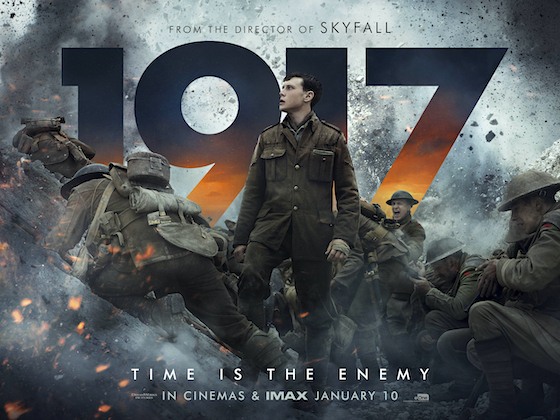
1917

BAFTABritish Academy Film Awards 2020
9 nominations

Nominated: Best Film; Outstanding British Film; Best Director; Best Cinematography; Original Music; Best Production Design; Best Make Up/Hair; Best Sound; Best Special Visual Effects.

I haven’t been following awards season too closely this year, but from the snippets I have picked up here and there it seems to be quite a variable race — every time a frontrunner emerges, something else wins some other award and suddenly the field is open again. 1917 was one of the early tips, and now has several wins under its belt to back that up. It may not be a lock at the Oscars, where the latest works by American auteurs like Martin Scorsese and Quentin Tarantino will give it a robust run for its money (plus the six other contenders, several in with a shot), but tonight it’s BAFTA’s turn. The British Academy may seem to be more focused on being counted among the major Oscar forerunners than anything else, but they do still have a penchant for rewarding British films — and 1917 isn’t just “a British film”, it’s a British film about a key event in British history with an all-star cast of cameos from great British actors. So, as it’s a season-wide contender anyhow, if 1917 doesn’t win the big prize this evening it’ll be a genuine surprise.

Does it deserve it? Take a sample of social media and you’ll get different answers. As with any big, much-discussed film nowadays the initial reception has been followed by waves of backlash — or maybe that’s too grand a term for it; maybe it’s just been different ‘sides’ expressing their opinion in turn. If it wins, there’ll be a vocal contingent about how it didn’t deserve it. As someone observed the other day, literally the only way to avoid such a negative reaction nowadays is to literally take the award out of the incorrectly-named winner’s hands. (If you think that’s facetious, think about it for a second: do you remember any significant backlash to Moonlight winning? I don’t. Every other winner in recent years? Yep. I’m not saying it should’ve had one — it’s a great film — but it is unique in avoiding it.)

Personally, having seen 60% of this year’s BAFTA Best Film nominees, 1917 would be my pick (the others I’ve seen are Once Upon a Time in Hollywood and The Irishman; the remainder are Joker and Parasite, which is only out in UK cinemas next week so probably doesn’t stand a chance). My view may very well change once I’ve ticked all the boxes (Parasite is supposedly the greatest film ever made, after all), but that doesn’t lessen 1917 as an achievement.

War, huh? What is it good for? Winning BAFTAs, probably.

Famously, the film is a single take… sort of. That caveat comes for two reasons. First, because it isn’t a single take, because there’s a fade-to-black in the middle. It’s an effective, well-timed event — basic filmmaking technique as narrative twist, because this is so famous as “a single-take film” and, by that point (it comes fairly late in), we’re so embedded in the technique that the sudden blackness comes as quite a surprise. Second, because it isn’t a pair of single takes, because there’s no way you could shoot a film of this scale and complexity in a genuine single shot. Rumours abound of how many hidden cuts are in the movie. One said there were as many as five. Editor Lee Smith refuses to confirm the exact number, but makes a very sensible point: the film was shot over 65 days — you can’t put together 65 days’ worth of footage with only five cuts. But that shows how well it was achieved: people thought that, gasp, there could be as many as five, when actually there are far more.

“Wait, this film had an editor? That must’ve been a quick job!” Yeah, there’s been a lot of that on social media. People have been quick to dismiss it — people who should know better, quite frankly. As with so many things in life, just because it looks easy doesn’t mean that it was. There’s more to editing than just “sticking shots together”, and planning a film as complicated as this involved Smith’s input throughout shooting, not just in post-production. Plus, they didn’t just do one take that worked for each setup and call it quits — the job still involves choosing which take has the best performances, the right lighting, making sure it matches exactly enough for the transition to the next shot, and so on. The least number of takes for any individual shot was “five or six”, the most 39, so there’s plenty for an editor to do with choosing. I’m getting this info from an interview with Smith by Catherine Springer at AwardsWatch, which is worth a read if you’re interested in getting some insight into why there is actually a lot of difficult, impressive editing work going on here. One further titbit: some of the cuts were ‘improvised’, in that there are some cuts where a cut hadn’t been planned. You can’t do that kind of thing without a skilled editor, surely.

Deakins!

And it makes it all the more impressive that the end result is so seamless — you can buy that you’re watching a single take (okay, two single takes) rather than dozens strung together in pretend. Well, I say it’s seamless — yeah, sure, any Tom, Dick, or Harry can spot places where there are surely cuts (they walk through a dark doorway; someone/thing passes in front of the camera, blocking the view for a split second; etc). But unlike other faked single cuts I’ve seen, where the action doesn’t flow perfectly across a hidden cut, it’s at least conceivable that some of 1917’s hidden-cut-opportunities don’t actually mask a cut at all. Plus, as that interview suggests, there are actually dozens of cuts in the movie, and there aren’t that many glaring opportunities (which is probably how whoever it was arrived at their total of five).

The fact I’ve spent most of this review so far talking about the film’s single-take-ness is some people’s problem with 1917 — that it’s a filmmaking stunt and nothing more; that it’s a technical achievement at the sacrifice of character or narrative or anything but “look what we can do”. I don’t agree with that assessment. I think the single take serves a purpose beyond showing off. At the most basic level, it puts us on this mission with the characters, attaching us to them and their fate in a very intimate way. The camera rarely strays far from their side, choosing to remain at eye level and near to them when it could float off to give us a godly overview. Some have taken to describing it as “like watching a video game” for that reason, but I bet those people also refer to CG effects as “graphics” and, basically, spend too much time watching/thinking about computer games and conflating them with films (I’ll move on before I get distracted into a wholly different argument…) There are plenty of other ways for filmmakers to attach you to characters, of course, but that doesn’t invalidate this method.

The other thing it brings is a tangible sense of time. Our heroes are on a time-sensitive mission, and we’re with them every step of the way — they don’t get to jump from one side of a field to the other with the magic of editing, we must walk across it with them. (The film is certainly not as boring as “watching characters walk across a field” makes it sound — there’s plenty of action and incident.) Again, you don’t need a single take to create real-time — 24 proved that over ten seasons and a movie (not that all of those seasons take their real-time conceit wholly seriously, in my opinion) — but it does emphasise and enhance it.

Walking (running) across a field (a battlefield)

Regular readers will know I love a bit of real-time, so that was right up my street. I have similar feelings about single takes (fake or not), so I loved that aspect too. Plus I’ve got a long-standing interest in World War One, which I don’t feel is represented well enough on film (at least, not as well as its sequel), so getting a big-budget high-profile movie about it is something else I welcome. And I love the work of cinematographer Roger Deakins, who is absolutely on fine form here (when isn’t he?) The long and the short of it is, 1917 was always a movie almost tailored to things that interest me. Fortunately, it lives up to them. Is it the very best picture of 2019? I dunno, I’ve not seen Parasite yet. Will it be a worthy winner nonetheless? I think so.

5 out of 5

1917 placed 6th on my list of The Best Films I Saw in 2020.

The British Academy Film Awards are on BBC One tonight at 9pm.

Star Wars: The Rise of Skywalker (2019)

aka Star Wars: Episode IX – The Rise of Skywalker

2019 #147
J.J. Abrams | 142 mins | cinema | 2.39:1 | USA / English | 12A / PG-13

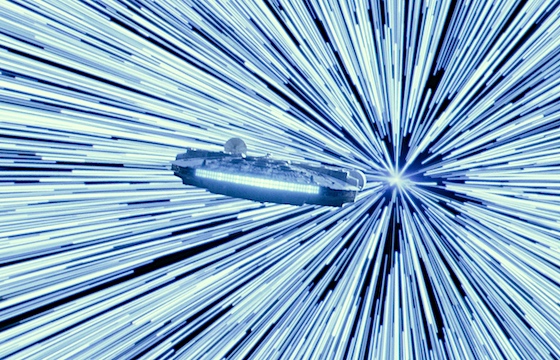
Star Wars: The Rise of Skywalker

Remember those people who tried to crowdfund a shitty fanwank-filled remake of The Last Jedi? Turns out J.J. Abrams let them make Episode IX under his name instead…

Before I expand on that, the ever-important note on spoilers. This review is mostly spoiler free. I say “mostly” because if you want to know absolutely nothing whatsoever, you should look away now (after saving this to read later, natch). I’m going to give my opinion on some things (obviously I am, this is a review), and so while I won’t give away the film’s revelations and surprises, what I say might sometimes indicate that there’s something there to be spoiled… if that makes sense. If you’re less fussy (e.g. if you’ve watched the trailers; if you’re only trying to avoid explicit details of things the film plays as a reveal) — or, of course, if you’ve already seen it — please read on.

I won’t bother to recap the plot, because it launches into what some would consider full-on spoilers right from the start of the opening crawl. Put another way: there’s stuff in the trailers that some thought was a spoiler that shouldn’t’ve been there; but, really, the promos are almost necessary background info, because stuff that was played as a reveal in trailers is simply stated as information in the film itself. So, suffice to say this is the continuing adventures of Rey, Finn, Poe, and their Resistance friends as they fight Kylo Ren and the First Order, and it wraps up the whole nine-film saga. Or it intends to, at any rate. I mean, the sequel trilogy starts with the premise of “what if those bad guys who were defeated… just came back?”, so who’s to say in a decade or two’s time they won’t pull the same trick again for Episode X?

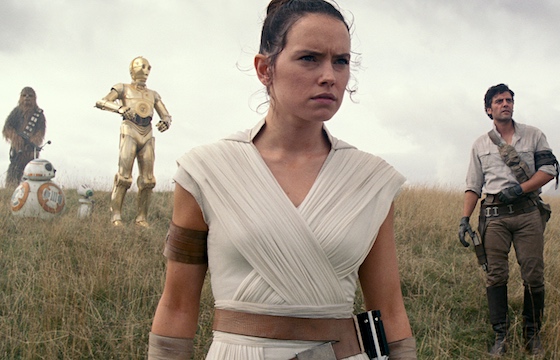
Rey and friends

But, okay, let’s take them at their word for now: this is the end of The Skywalker Saga (as it’s now definitely officially known — presumably so as they can keep producing lots more Star Wars stuff without the awkwardness of the nine-film saga being “real Star Wars” and everything else being “A Star Wars Story” or whatever). For my money, the saga here ends with so many bangs it amounts to a whimper. Abrams, serving as director and co-writer (with Chris Terrio, who seems to still be getting big-name work off the back of his Oscar win for Argo, despite the fact his only produced work since has been Batman v Superman and Justice League) seems to have no understanding of pace or nuance. It starts at a screaming gallop and doesn’t let up, often feeling like little more than a two-hour montage of fan service.

Well, it must have a lot to do, right? Wrong — it moves at that lick so it can cram in far more plot than it needed to. Most of the business here is not a story worth telling, it’s just one MacGuffin chase after another. If Abrams and Terrio had streamlined the story — had cut out all the unnecessary faffing about; the needlessly over-involved running around after various plot-furthering objects — then there would’ve been more room in the running time for light and shade; for such important and welcome things as character beats; even for something as simple as giving the audience a chance to breathe. The only time they step aside from the relentless plotting is to forcibly insert bits that seem to exist merely to look good in trailers. Maybe that’s unfair, but to me it did feel like there were bits where characters all but said, “hang on a minute guys, I’ve just got to go over here and play out something that’ll look super in a teaser.”

This shot doesn't mean what everyone thought it meant

Also awkwardly forced in is Carrie Fisher’s General Leia. We all know the backstory there, and it’s completely understandable they wanted her to have a presence and part in the film, rather than leaving her out or killing her off-screen. Sadly, what they’ve come up with is largely uncomfortable. Rather than recast her part (impossible!) or do a fully CGI recreation (which didn’t go down so well in Rogue One), they’ve taken the more respectful option of trying to cobble something together from offcuts from the last two films. The result unfortunately feels cobbled together from offcuts. Other characters’ dialogue jumps through hoops to set up replies from Leia that are only one or two words long and could just about be said to have some passing relevance to what she’s replying to. That said, there are plenty of other dialogue exchanges in the film that feel similarly forced — perhaps Terrio and Abrams were trying to make the Leia scenes seem more natural by making every dialogue scene as awkward… or perhaps the writing is just crap throughout.

Leia isn’t the only familiar face that’s revived here. This is both the third and final film in the Sequel Trilogy and the ninth and final film in the Trilogy of Trilogies, so of course there’s plenty of stuff from the past. The problem is how these elements are introduced and handled. Familiar faces and rivalries and lines and whatnot are dragged out for a last hurrah, but the film doesn’t really do anything with them beyond trotting them out to say “remember this?” And so they’re not hurrahs, it’s merely empty repetition. I suppose that will satisfy some — the kind of people who didn’t enjoy Last Jedi because they didn’t like how it chose to move things onwards. But if you were unhappy with, say, how little backstory Snoke received in Episode VIII — if you thought writer-director Rian Johnson basically dismissed the character as an irrelevance — then can you honestly claim to be happy with the manner in which Abrams brings back Emperor Palpatine here? Again, some will, because they hated Last Jedi so irrationally that they’re going to find excuses for why Abrams’ “greatest hits” approach is better. But it isn’t. It’s hollow.

Hollow

Abrams does seem to have taken certain parts of the Last Jedi criticism to heart. I agree with the view that it is in fact a vocal minority of hardcore fans who utterly despise that film (it did well at the box office and has good scores on websites that haven’t been subjected to a negativity campaign, after all), but that group are indeed very, very vocal in certain circles and maybe that’s persuaded someone in the Star Wars camp that they should be listened to. Or maybe Abrams’ own storytelling instincts align with what they were after. So while The Rise of Skywalker doesn’t ignore The Last Jedi in a literal sense (there are nods and references to stuff from it), really Abrams has made a sequel to The Force Awakens here. That’s not always a bad thing (it picks back up on Finn’s past as a Stormtrooper, for example; though, as I say, there’s no time spared to properly dig into character stuff like that), but at others he undoes some of the good ideas Rian Johnson brought. Of course, for those who viscerally hated Last Jedi that will be seen as a good thing. But, like the use of Snoke vs Palpatine, can you seriously say this film’s reveal about Rey’s parentage is better than what Johnson offered? I know some will just because it’s different to the thing they disliked, but… c’mon, is this really better? Is it more surprising or imaginative? I don’t think so.

When it occurred, after I was done groaning, I hoped there was going to be a further twist to come, but no, Abrams doesn’t have that much imagination. I felt the same about various other bits of business too: the film states or shows a thing, and if you’re like me you’ll think “surely that’s a bit obvious and there’s going to be a twist to it”, but no twist ever comes. I suppose that shouldn’t be a surprise: Abrams doesn’t do proper mysteries or twists, he does “mystery boxes” — i.e. we’re told there’s a mystery, but rather than clues for either the characters or audience to piece together for a reveal, all there is to be done is wait for someone to open the metaphorical box and reveal it to us. He tried to set such a game in motion in The Force Awakens. Johnson threw some of those away in The Last Jedi, which I felt he was right to do — simply disregarding those wannabe-mysteries was more surprising and interesting than any ‘reveal’ could’ve been. Here Abrams plays that game again by revisiting some of the stuff Johnson dealt with to give different answers, but I feel like his modified reveals prove my point: they’re not surprising, and they’re certainly not interesting. (This caveat should be obvious, but as it isn’t always: this is all just my opinion. Some will feel these new answers fix mistakes that Johnson made. I don’t. I think we’ll have to agree to disagree on that.)

Goodbye

For all of that, The Rise of Skywalker is not entirely a disaster — there were bits I felt worked. Sure, I thought several of the obvious ‘big moments’ were too corny, and some of the one-shot cameos too cheap, and Keri Russell is wasted, and Naomi Ackie’s character is good but there’s no time to develop her… sorry, this was meant to be positives. So, C-3PO kinda gets an emotional arc that’s quite effective. Tied to that is a new character, Babu Frik, who’s a lot of fun. New droid D-O is a brazen attempt to create toys, as are the red-hued Sith Stormtroopers… Oops, slipped into the negatives again. Adam Driver gives a pretty good performance, but he also gets a bit sidelined. Okay, almost everyone gets a bit sidelined — as I’ve said, there’s too much going on and not enough time to cover it. And yet the film still feels too long — I spent an awful lot of the climax wondering how much more of this could be left.

Following all that criticism, my middling score may look generous. But The Rise of Skywalker is not an entirely incompetent movie, just a deeply flawed and disappointing one. And, frankly, there’s part of me that simply doesn’t want to have to give it 2 stars. I’m not a dyed-in-the-wool Star Wars fanboy, but this saga has been with me throughout my film-viewing life — I don’t want to dislike its finale so much that I give it an outright bad score. Well, I guess I wouldn’t’ve given 2 stars to The Phantom Menace in 1999 either, but I did in 2007. Someday I’ll rewatch Episode IX, and maybe that’ll smooth out the cracks and cement this 3-star rating (I struggle to imagine it’ll go up); or maybe it’ll make the problems even more apparent and I’ll have to accept it’s really a 2 after all.

3 out of 5

Star Wars: The Rise of Skywalker is in cinemas virtually everywhere now.

It featured on my list of The Five Worst Films I Saw For the First Time in 2019.

Battle at Big Rock (2019)

2019 #127a
Colin Trevorrow | 9 mins | streaming (HD) | 2.00:1 | USA / English

Battle at Big Rock

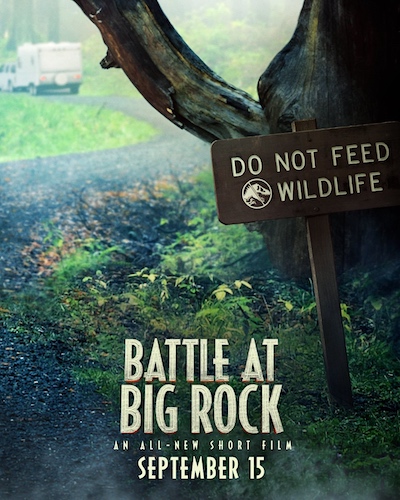
Surprised-announced by co-writer/director Colin Trevorrow on Twitter just a week ago (although, reading about it after the fact, it seems dedicated fans were already aware something was coming thanks to that regular modern blockbuster spoiler source: action figures), Battle at Big Rock is a short film entry in the Jurassic Park/World franchise, which premiered on the US FX channel on Sunday night (early Monday morning for us Brits) and is now on YouTube.

Set one year on from the cliffhanger-ish ending to the last film, Fallen Kingdom, this short presents a vignette in the Jurassic world that will help bridge the gap between the previous feature and 2021’s third/sixth instalment. But aside from that large franchise-minded goal, it’s also a chance to see some different characters have a different kind of encounter within the films’ universe.

Well, I say “different” — dinosaurs fight dinosaurs until humans are caught in the crosshairs, then a big toothy dinosaur goes after said humans. The real difference is that this happens to just an ordinary family out on an ordinary camping trip in California, not people who’ve chosen to go to a remote island filled with giant prehistoric lizards. Of course, they’ve decided to go camping in a region where it’s known a bunch of the aforementioned giant prehistoric lizards escaped a year ago and might be roaming about, but whatcha gonna do? When you gotta go camping you gotta go camping, I guess. Also, they’re not white, which is a notable characteristic in this franchise, unfortunately. (That lack of representation across five feature-length movies is hardly rectified by one short, but I’m certain it was part of the intention.)

A family-sized snack

What Battle at Big Rock lacks in originality it makes up for with brevity. This is a concise hit of dino action, cramming many of the franchise’s familiar thrills into a sub-nine-minute package. It also looks great for a short film. Yeah, sure, it still has the backing of Universal Studios — this isn’t exactly an indie production — but it’s not got the full weight of a theatrically-released blockbuster behind it, either. Nonetheless, it manages to include two species of dinosaur, one achieved via a mixture of CGI and a genuine animatronic, and adventure-movie set-piece-level action. It all looks mighty pretty too, although the nighttime fire-lit photography is no doubt partially about hiding the budgetary limitations.

Indeed, the film’s production is possibly its most impressive aspect. It was actually shot back in 2018, so they’ve kept it hush-hush for the best part of a year. And it can’t be easy to keep quiet a film shot on location, and outside of moviemaking’s usual stomping grounds, in Ireland, where apparently there’s a grove of trees that look exactly like a North Californian national park. Presumably the real deal was a no-go because they’d’ve been spotted even more easily there; but, equally, you’d think a big American production team rocking up in Ireland would attract attention — especially when they had a giant animatronic dinosaur in tow. Maybe the locals just presumed it was Game of Thrones

Anyway, the end result is a success, both as a little burst of dinosaur action for those of us who enjoy such hijinks, and as a tease for events we’ll see in the franchise’s next major instalment. Rumour has it the short’s budget spiralled beyond the limits Universal originally set, but, considering the ill-will generated by the underwhelming Fallen Kingdom, I’m sure they’ll consider the audience’s re-stoked interest (a sentiment I’ve seen expressed repeatedly across social media today) to have been a worthwhile investment.

4 out of 5

Battle at Big Rock is available on YouTube.

John Wick: Chapter 3 – Parabellum (2019)

2019 #127
Chad Stahelski | 131 mins | Blu-ray (UHD) | 2.39:1 | USA / English* | 15 / R

John Wick: Chapter 3 - Parabellum

The action-man with the second most quotable line about being back is, er, back — again — for the third chapter in the ongoing saga of what happens if you kill a man’s dog. Basically, lots of people die. Quite right too.

Chapter 3 begins exactly where Chapter 2 left off: John Wick (Keanu Reeves) has been made “excommunicado” from the organisation that controls the criminal underworld, the High Table, and he has just an hour’s grace before every assassin in the world will be out to claim his life. He’s just one man, with a $14 million bounty on his head, in a New York City where about 50% of the population seem to be highly trained killers — as Winston (Ian McShane) says, his odds are “about even”.

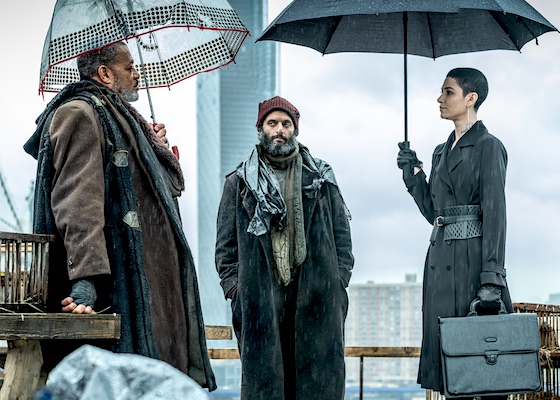
And so the first half-hour is basically nonstop action, first as Wick desperately tries to prepare for the all-out assault coming his way, and then as he faces it. The series’ reputation is built on its lengthy, stylish, inventive action sequences, and Chapter 3 does not disappoint, with some of its best material coming right out the gate. I feel like they could’ve expanded this first half-hour into an entire movie (i.e. John on the run, fighting endless assassins, until he finds some way out of his bind) and I’d’ve been happy with that — it would’ve mirrored the simplicity of the first one. But the previous film’s cliffhanger is not so simply resolved, because what John did to earn his excommunicado status cuts deep into the mythology of this world — oh so very deep — and the fallout of his actions, well, that’s the plot of the movie. And not just for John himself, because a High Table Adjudicator (Asia Kate Dillon) rocks up to decide the fate of any person or organisation who might’ve given John a helping hand when they really shouldn’t, including Winston, the Bowery King (Laurence Fishburne), and the Director (Anjelica Houston).

Adjudgement day

The first John Wick had a bit of fun introducing us to a rule-driven shadow-world of assassins. The first sequel put a lot of stock in extending that mythology. Now, the third chapter thrives on it. The first film’s plot was a straightforward revenge thriller with some extravagant flourishes; for the third, we’re (to borrow a phrase from Reeves’ other major action franchise) right down the rabbit hole. Just like the famed action sequences, if you’re onboard with it then there’s a ton of fun to be had; but if that kind of thing bores you, there’s little respite from it. Extravagant brutal action and gradually-unveiled ever-deepening mythology: these are John Wick’s twin raisons d’être.

Half the fun of how the films present their mythology lies in the way every character seems to be completely aware of all the rules. No one ever needs a symbolic coin or a judgement’s motivation explained to them; they inherently understand its significance or reasoning, the status and power that’s conferred. But we don’t know what any of it means, of course, because this is a fictional world that we’re being inducted into as and when parts of it become relevant to the narrative; and so we’re led along on a magical mystery tour of what these arcane rituals might mean and where they might lead us. As I said, it’s quite a particular kind of storytelling, and if it doesn’t engage you then that’s that, but if you do find it enjoyable then the John Wick films are spinning it into a fine art.

A hundred bad guys with swords? Who sent those goons to their lords? Why, John Wick!

Naturally, nowhere is the film’s sense of artistry more on display than in the fights. For all the mythology, director Chad Stahelski and the small team of screenwriters never forget what really made people love John Wick in the first place: the gonzo action. There’s a lot of competition in that arena (not just its own preceding instalments, but the past decade’s acclaimed imports like The Raid and its sequel, The Villainess, The Night Comes for Us, et al), but Chapter 3 is up to the challenge, boasting continual inventiveness among the slickly choreographed and expertly performed carnage. One innovation includes dogs getting involved in the action — appropriate for a series all about the love of pooches. The mutts in question are commanded by an old acquaintance of Wick’s, played by Halle Berry, who trained with the dogs so she could actually control them during takes. It’s that level of dedication that marks out the action here.

It all looks great as well, with the camerawork boasting precise movement and impressively long takes to celebrate the action and how well it’s been achieved. The actual phototography is fantastic too, the light looking gorgeous whether in the neon glow of New York or the sand-orange Moroccan desert (I watched it in UHD, where it’s a real showcase for why HDR is a bigger benefit than pure resolution; though that’s not to discredit the film’s crispness). It’s complemented further by the design work, in particular a glass-house set where several key scenes take place, which reportedly cost $4 million. On any technical merit you care to name, Chapter 3 is exceptional.

Unleash the dogs of bellum

That said, while there’s fun to be had throughout, by the end I felt like the story was the film’s real problem. Not the tone and style that I praised earlier (though it’s easily the most fantastical of the series so far, which might turn some off), but its significance: it ultimately feels like merely a dot-join between Chapter 2 and the already-announced Chapter 4. The film’s Latin subtitle, Parabellum, translates as “prepare for war”, and that’s apt: this film is a preparation for the next. But maybe I’m being unfair. Maybe, when this series is all said and done, we’ll see that Chapter 3’s contribution to the overarching narrative is equivalent to the other films. However, at first blush, it feels to me like this is either a kind of linking passage, or maybe Chapter 3 Part 1. I guess only time — specifically, the time until after we’ve seen the fourth chapter (currently slated for May 2021) — will tell.

In the meantime, let’s not get too distracted from storyline niggles in a film that’s really about style over substance, in a good way. Chapter 3 certainly knows what boxes it should tick, and it ticks every last one of them with considerable flair. (Can you tick a box with flair? I bet John Wick could. After all, we know how skilled he is with a pencil…)

4 out of 5

John Wick: Chapter 3 – Parabellum is released on DVD and Blu-ray in the UK today.

* The film’s primary language is undoubtedly English, but IMDb also lists seven more. Each only pops up briefly, in short lines or exchanges here and there, which is why I haven’t cluttered the top of this post by listing them. But for the record, they are: Mandarin, Latin, Russian, Japanese, Italian, Arabic, and Indonesian. ^

The Predator (2018)

2019 #28
Shane Black | 107 mins | download (UHD) | 2.39:1 | USA & Canada / English & Spanish | 15 / R

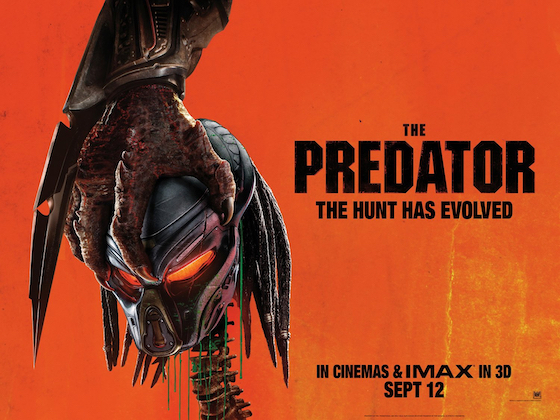
The Predator

Some films take me a while to review because I just don’t get round to them. Some take time because I need to coalesce my thoughts. Others, I barely have any thoughts in the first place. The trickiest are the ones where I feel like there are many thoughts, but I have little idea how to express them. The Predator is definitely in that final camp. Why? Well, I thought it was quite a poor film… but I also sort of enjoyed it. Not in a Gods of Egypt way (that was kinda “so bad it’s good”; or maybe “so strange it’s good”), nor in a “I can see what they were going for, they just couldn’t quite get there” way, but in a… well, there’s the rub. The film undoubtedly has its problems, but it also has bits I was okay with; liked, even. What it feels like is a decent, middle-of-the-road-ish sci-fi actioner… that they then, for some unfathomable reason, deliberately dicked around with to make it kinda bad.

The reason I put it that way is the film’s sense of narrative, which is really messy. It feels like someone decided the movie was too long and so got the running time down by just pulling out scenes at random. There’s an extensive IMDb Trivia entry here that broadly explains what was changed in the edit and via reshoots, and that suggests it feels like a lot of stuff was chopped out because, well, it was. Other movies have survived such tinkering, but here it feels cack-handed. The end result doesn’t flow. You can follow it, but it’s oddly disjointed.

Other aspects suggest perhaps there were compromises on things like the age certificate. For example, at one point a female character is spared by the Predator because she’s naked. A vital piece of information for later? Um, no, it doesn’t come up again. So it’s gratuitous nudity? Well, not really, because it’s carefully shot so we don’t see anything. The film ended up going for an R, but perhaps they thought they’d have to make it PG-13? Either way, why is that ultimately pointless scene still in the movie?

“I don't care if you point a gun at me, so long as you don't get your tits out again!”

It’s not just the story and logic that’s mangled, there’s a real mishmash of tones as well. Writer-director Shane Black did such excellent work shepherding mixed moods in the superb Kiss Kiss Bang Bang, the perfect Nice Guys, and the best Iron Man film, but here he seems to have lost his handle on how to deliver the required blend of action, horror, and humour. Personally, I quite liked the humour, but sometimes it does just barge in out of nowhere. People who like their alien hunter action movies to be po-faced will not be impressed.

So, it’s an odd case all round. It’s an impossible movie to recommend because it’s certainly not good, but I also didn’t hate it as much as I feel I should’ve. It’s kind of a disaster, but it’s also… fine. Put it this way: one day I expect I’ll rewatch the Predator movies, and while I’ll probably skip AvP Requiem, I’ll include this one. Faint praise, I know.

Nonetheless, I really hope they make another Predator movie… mainly so I can see what they come up with for a title. Okay, sure, it’ll probably just be Predator: Meaningless Subtitle, but I live in hope they’ll continue this trend of adding a little something (pluralisation; the definitive article) and it’ll be called, like, Predatoring or something. (Hire me, Hollywood!)

3 out of 5

The Predator is available on Sky Cinema from today.