
Paul W.S. Anderson | 98 mins* | TV (HD) | 15 / R
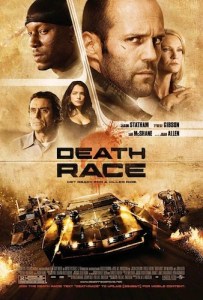 Sometimes, I wonder what I’m playing at. The list of films I haven’t seen but really should is quite extraordinary, from enduring classics like Lawrence of Arabia and Seven Samurai to recent praise-magnets like Scott Pilgrim and Black Swan (and those are just from some of the ones I actually own), yet I choose to spend my evening watching B-movie tosh like Death Race because it happens to be on telly.
There’s no denying that Death Race is B-movie tosh, I don’t think, but at least it’s an example of fairly entertaining B-movie tosh. The plot barely matters, but for what it’s worth it concerns a car race in a near-future prison where those who don’t die in the weapons-laden encounters stand a chance to earn their freedom. Jason Statham’s character is — of course — innocent, but once thrown into this world must escape by its rules. Yadda yadda yadda.
Basically, everything that happens is an excuse to get to some action sequences, in which cars race around a circuit and attempt to destroy each other in some moderately creative ways. It caters perfectly to its intended audience: there’s fast cars, sexy girls, lots of action, big explosions. It doesn’t always make sense — those sexy girls are really shoehorned in — but that doesn’t really matter. It’s Entertainment, for a certain type of person, and it surely hits all the points it should hit. 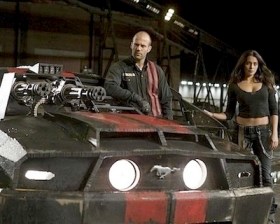 And I expect it says something about that intended audience that the end credits begin with a “do not attempt this at home” notice.
Ian McShane is the most watchable out of an adequate cast. Who would’ve guessed Lovejoy would end up as a consistently entertaining presence in various US productions? Only the villains really get short shrift, being so readily defeated that there’s no real jeopardy, no sense they might not get their comeuppance. Their simultaneous best and worst moment comes in a dreadful, meaningless line about shitting on the sidewalk. Who doesn’t love a good “wtf?” bit of dialogue?
You can tell writer-director Anderson likes his computer games — as if the numerous films he’s made based on them weren’t enough, he brings their influence here too. For instance, the weapons are only activated by driving over special hotspots, which are only a big floating icon away from being like computer game power-ups. I’m surprised Anderson didn’t go the whole hog and have them be projected holograms.
 Even if it’s all about the action, it could be worse: I’ve seen plenty of films featuring weaker dialogue, weaker acting and an even less relevant story. Death Race does everything it sets out to do competently, delivering a couple of decent action sequences and even a couple of laughs along the way. Not exceptional enough to be particularly memorable, but it is fun — if you like this kind of thing — while it lasts.

* I know it’s largely immaterial, but I’m not really sure how long the version I watched ran. It was definitely the theatrical version (as opposed to the extended version, which looks to contain several minutes of unnoticeable additions and tweaks), which IMDb say runs 98 minutes, but the BBFC place at 105. I’ve used IMDb’s answer purely because as I watched it on TV it would’ve been PAL, so this number is closer, whatever the truth.
 Bolt is the 48th film in Disney’s animated canon (whatever the official name for that is these days), from their CG-only era that filled most of the ’00s. It’s a period already remembered as When Disney Lost Its Way, after the second (or is it third? I forget) ‘golden era’ of the early ’90s; the time that produced flops like
 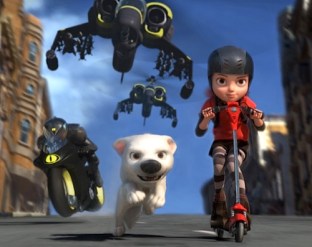 Also noteworthy are the action sequences. Far from being perfunctory attempts at liveliness, these are properly exciting, making full use of 3D CGI to create exciting and dynamic sequences. I’m not just talking about the couple we get from the TV-series-within-the-film either, but also the ‘real world’ ones as Bolt, Mittens and Rhino jump onto trains, out of moving vans, escape from a pound, etc. Of course, the TV-series-within-the-film is completely implausible — like you could film a TV show with massive action sequences in such a way that you only ever do a single take, never mind achieve all those effects on a TV budget. But then this is a film where a talking dog, cat and hamster work together to travel from New York to Hollywood entirely of their own volition — I think it’s safe to say no one’s aiming for documentary levels of realism.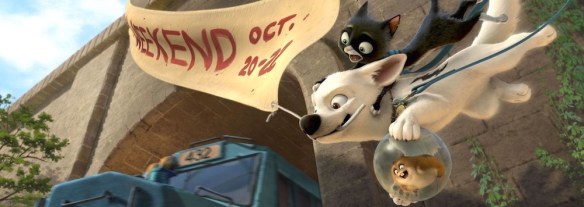
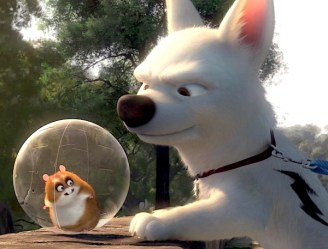 It would be easy to dismiss Bolt as part of Disney’s CG folly, especially as it stars Miley Cyrus and is immediately followed by their return to 2D animation, but I think that would be a mistake. It’s a fast-paced and fun adventure, with accurately-captured animals meaning it’s especially likely to appeal to dog lovers. Disney’s next golden era just might begin here.
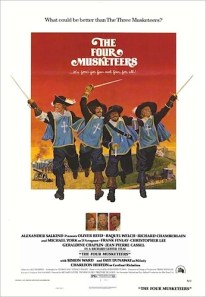 Richard Lester’s Four Musketeers was shot at the same time as the previous year’s
 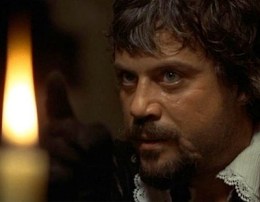 the murder of Constance; the cold-blooded execution of Milady; and ending up with Richelieu still in power too — none of it sits well with the jolly swashbuckling tone that still dominates. There are some good action sequences nonetheless — for instance, the ice-covered lake; breakfast/siege in the ruined fort; and the burning-building finale — which go some way to make up for the shortcomings.
 I like a good swashbuckler. I don’t know exactly what it is about sword fights, but they’re probably my most favourite kind of action sequence. The 1973 Three Musketeers, then, is a film I’m slightly amazed I’ve not seen before. Especially as I absolutely loved it.
 Thanks to this most of the fights aren’t strictly sword fights, I suppose. Indeed, Oliver Reed seems to dispense with his blade at the earliest opportunity and turn instead to sticks, wet towels, whatever else happens to be at hand. It lends a certain kind of organised chaos to proceedings; the kind that elevates a technically proficient duel into a funny, exciting, memorable segment of cinema. I would list standouts, but instead may I recommend you watch the film and, every time an action sequence starts, count it as one I mentioned. But particularly the one in the laundry and d’Artagnan and Rochefort’s lightbox-lit nighttime duel. And also— Now, this is why I said I wasn’t going to list any.
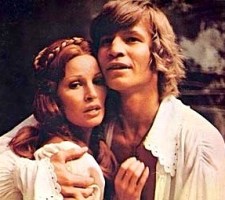 Constance and Faye Dunaway as the conniving Milady de Winter. York earns his place as the lead amongst such company, though, making a d’Artagnan who is by turns athletic, clumsy, hot-headed, loyal, and funny. As I said, everyone pitches the lightness just right, but York perhaps most of all — he doesn’t send up the youngest musketeer, doesn’t make him a pun-dispensing action hero, but finds all the humour in his actions and dialogue.
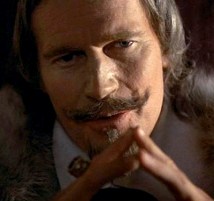 It also means the film ends with a sort of “Next Time” trailer, which feels very bizarre indeed, but is also a tantalising glimpse of what’s still to come.
 The near future: most of mankind now lives through ‘surrogates’ — robots that look like perfect versions of ourselves (generally), which we control from elaborate machines sat around in our homes. The anonymity of the online world brought into the real one, essentially.
 while almost every plot ‘twist’ is startlingly unsurprising (though it does manage one half decent one).
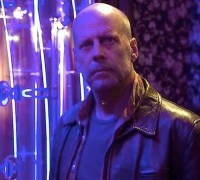 If you want to muse on what makes us human in a world of near-identical robotic replicas, watch
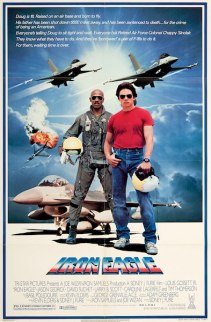 You know how sometimes you see a bit of a movie on TV and you end up watching just long enough to get caught up so much you’re in for the long haul, no matter what the quality? No? Maybe it’s just me (usually around
 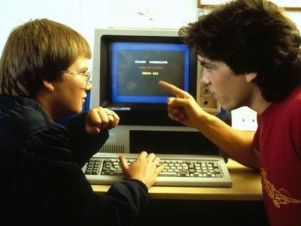 Like I said, daft and implausible. And that isn’t necessarily a problem, but as you watch Iron Eagle you can’t help but wonder if the filmmakers are trying to convince viewers it could be plausible. And it isn’t. Not in the slightest.
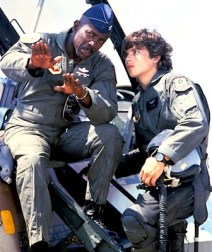 I’ve not seen that either, but I think we all know this is a serious step down. Poor man. His career went on to include
  If you’ve ever seen the miniseries
 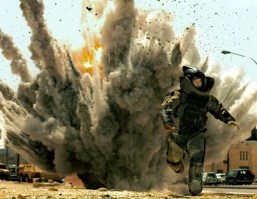 Bigelow & co construct each ‘action’ sequence with care and attention. They’re not action sequences in the truest sense — suggestions from some that she’d be a great director for, say, Bond 23 on the strength of this film are unwarranted (not that she wouldn’t be good, but this film’s action does nothing in particular to demonstrate appropriate skills). Instead of the fast-paced bullets-flying adrenaline-pumping sequences you get from An Action Movie, The Hurt Locker offers up more realistic (at least, realistic-feeling) sequences of tension as characters approach bombs, watch increasingly suspicious crowds, try to defuse the situation before the timer runs out… It could be clichéd — we’ve all seen plenty of bomb defusing scenes in movies before now — but, again, there’s a sense of “this is how it is”, rather than “this is how movies portray it for dramatic effect”. Is it how it is? I don’t know. But it certainly still packs dramatic effect.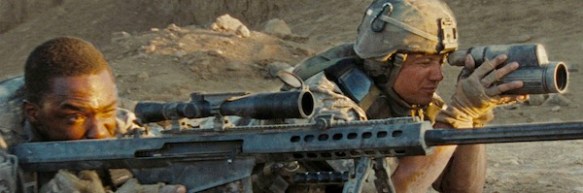
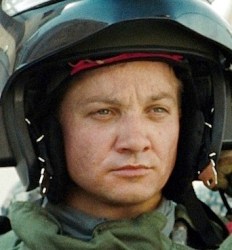 The opening quote and closing scenes make explicit the main theme — war is a drug, one James (Oscar nominee Jeremy Renner) is addicted to — but I’m not sure how present this is in the body of the story. Rather, the majority feels like an attempt to convey the experience of living as an explosives expert in a warzone, with James’ ‘addiction’ just a side effect of that. Perhaps, then, it’s making its point more subtly than by battering you round the head with cinematic cries of, “He’s addicted to war! It’s just a drug!”
 As I mentioned in my review of the
 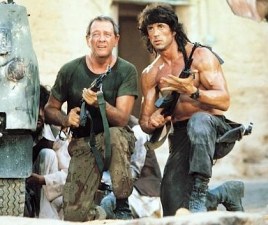 now occupy almost the same position the Russians did back then, for instance — but I’ll leave the specifics of such things to reviewers more versed in the last 25 years of Western intervention in the Middle East.
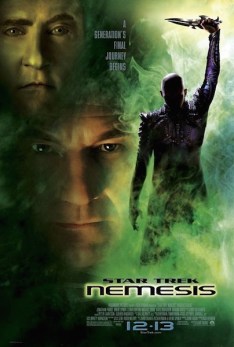 After the widespread disappointment with
  though the knowledge of better things to come means his presence somehow lifts his scenes a notch.
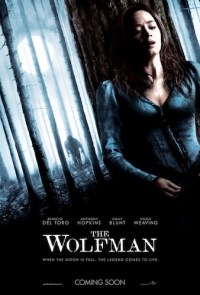 The “extended director’s cut” (as the Blu-ray blurb describes it) of The Wolfman begins with a new CG’d version of Universal’s classic ’30s/’40s logo, the one that I’m sure opened many/most/all of their beloved classic horror movies. As well as being a self consciously cool opening shot, it’s a succinct way for director Joe Johnston to signal his intentions: this is not your modern whizzbang horror movie, but something more classically inspired.
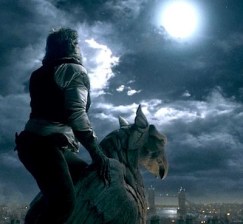 — perhaps even the totality — or plot developments and, particularly, twists are guessable far in advance. Trying to lose 16 minutes for the theatrical cut was probably a good idea, though some of my favourite moments lie amongst what was excised.
 feels like something I saw in some 12A blockbuster in the last half decade.
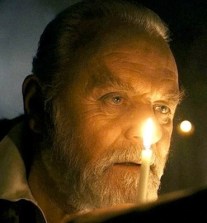 Max Von Sydow’s cameo-sized role (only found in the extended cut) is possibly the film’s best bit. Aside from the fact he’s usually good value, the relevance of the scene itself is unclear. That might sound like a problem, but I choose to see it as making the sequence — and the character — rather intriguing. The rest of the supporting cast are largely British faces recognisable from TV and similarly-sized film roles, playing the parts you’d expect them to and existing primarily as monster ready-meals. Equally, Danny Elfman’s score is disappointingly generic and clichéd, particularly so whenever the film is being the same.
 100Films.co.uk