
It’s been a busy old month in front of the TV here at 100 Films HQ, and I’m not even going to cover all of it (I find myself with nothing to say about the five episodes of Arrow and The Flash I watched this month). For some kind of semblance of order to what follows, it’s split into “new stuff” and “old stuff” (plus the usual “other stuff” and “missed stuff” at the end).

24: Legacy (Season 1 Episodes 1-4)
 Previously on Twenny-Four… There may be no Jack Bauer, the new font for the clock may be bizarrely wrong, and the on-screen text may have abandoned the familiar golden yellow for a soft blue, but everything else about Legacy is same old, same old. If you remember it from 24, it’s here: the suspicious bosses, the scheming associates, the moles, the people accused of doing something bad who are obviously going to be innocent, the heroes going rogue and having to sneak around under the noses of people who are probably good but can’t be trusted right now, the implausible use and abuse of real-time, the unrelated subplots that are obviously going to be related eventually… even CTU’s ringtone is the same. So too is how it’s directed: split screen is kind of baked into the format, but everything’s hand-held and shot as if people are being spied on. Once upon a time 24’s look was innovative, but that was over 15 years ago. It’s not quite dated looking yet, but it’s no longer slick and modern either. Much like the entire show, to be honest. It’s nothing new, and nor is it a return to form — it’s just more of the same, but without the old leading man. Personally I don’t miss Bauer all that much (for me the format was always the star), but I do lament the complete lack of any attempt at innovation.
Broadchurch (Series 3 Episodes 1-3)
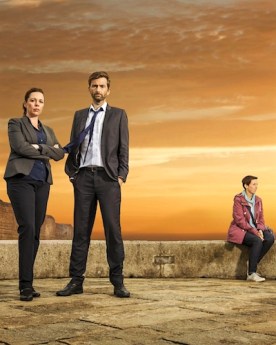 DI David Tennant and DS Olivia Colman (or whatever their characters are called) return after the much-criticised second series for a third run that represents a blazing return to form. Nearly every police drama on TV is always about murder, but here our committed coppers are faced with something that seems harder to prove, and all the more distressing and divisive for those involved: a sexual assault. The series was apparently put together with extensive advice from expert organisations, which means on occasion it almost tips a little too far into factual territory, like a “this is how it’s done in real life” dramatisation. Fortunately screenwriter Chris Chibnall is better than that, quickly focusing on how it affects the characters, and on building the mysteries that will fuel eight whole episodes. Suspicion abounds, but if Broadchurch’s first series proved anything it was that everyone can guess the culprit before the end without it undermining the effectiveness of the drama. I think we’re a ways from that point yet, though…
The 89th Academy Awards
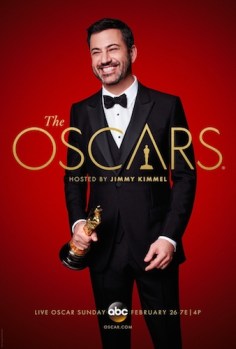 Best. Oscars. Ever! Oh, I bet it was horrendous actually being there having to deal with that ending, but my goodness, as a viewer it was fantastic. It couldn’t’ve been more dramatic if you’d scripted it. Imagine how terrible it could have been, though — if Moonlight had been forced to cede the win to La La Land, for instance (that would’ve sent #OscarSoWhite into overdrive), or if it had been in a category with a sole winner, who in the middle of their no-doubt-tearful acceptance speech was informed they hadn’t won after all and had to embarrassedly hand the statuette over to someone else… But no, it turned out OK. Well, not so for the La La Land guys, but for everyone else, yeah. And the rest of the ceremony wasn’t half bad either. Jimmy Kimmel was the most confident and capable host for bloody ages (and I say that as someone who enjoyed the likes of Neil Patrick Harris and Hugh Jackman) — if the show’s producers know what’s good for them, he’ll be the new regular host.
Luther (Series 4)
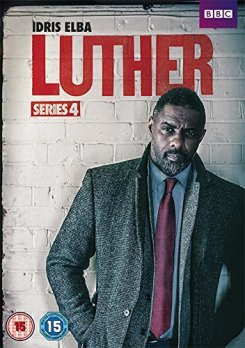 The recent news that Fox have scrapped plans for a US remake of Luther (because they couldn’t find a lead actor good enough to replace Idris Elba) reminded me that I never got round to watching the original version’s last series, this two-parter that aired back in December 2015. I can see why feeling unable to cast anyone as engaging as Elba would lead them to abandon their remake, because there’s not all that much special about Luther outside of its lead. Some people talk about it as if it’s among the forefront of the Quality TV era that we’re currently blessed with, but that’s just a bit daft — much like the programme itself. It doesn’t know it’s daft — it’s all very serious — but it is daft, really. Sure it’s dark, and sometimes kinda scary, and certainly grim, but its realism quotient is way low. It has much more in common with the overblown heightened world of, say, Sherlock than it does with, say, Elba’s previous great TV drama, The Wire. Anyway, the fourth series (if you can call two episodes a series) continues in much the same vein, as Luther’s dragged away from a leave of absence to help track a cannibal serial killer, while also trying to ascertain who committed the supposed murder of his super-villain girlfriend. Yeah, what a grounded and gritty show this is. Still, if you can stomach its gory pessimism, it’s largely entertaining.
Peaky Blinders (Series 1)
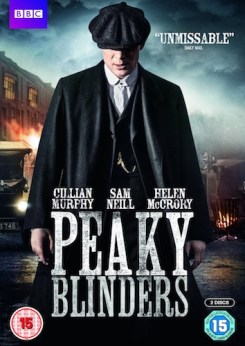 I’ve been meaning to get round to this since it first aired back in 2013, and for whatever reason now was the time (partly it was brought to mind by writer Steven Knight’s new dark period drama, Taboo). For thems that don’t know, it’s the saga of the eponymous gang, who ruled the streets of Birmingham in 1919, and their plans for expansion into other forms of business, both legitimate and otherwise. There’s a compelling lead performance from Cillian Murphy as the gang’s feared war veteran leader, but he’s surrounded by a strong ensemble, including the likes of Helen McCrory as his formidable aunt, who ran the business while all the lads were off in the trenches, and Sam Neill as the Northern Irish copper sent to Brum to retrieve some stolen munitions. It functions by turns as both a gripping underworld thriller and character study of violent men, on both sides of the law. I hear future series are of even higher quality, which is something to look forward to indeed.
Twin Peaks (Season 1)
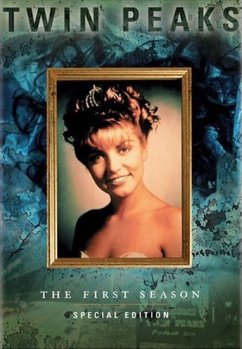 “She’s dead… wrapped in plastic!” With those immortal words (not the first lines, but never mind) a TV phenomenon was born, and a whole new era of television slowly began. Buffy the Vampire Slayer turned 20 this month and the Guardian ran a piece on how it (not, say, The Sopranos or The Wire) was the birth of TV-as-art. I love Buffy, but c’mon — even if we limit ourselves to ongoing US network drama series, Twin Peaks definitely got there first. Leaving aside its place in TV history, it’s a mighty fine drama, with co-creator David Lynch operating at his most accessible, yet still undoubtedly odd, in a story of an ordinary-looking small town with innumerable dark secrets lurking just out of sight. It’s at times hilariously funny, nightmarishly scary, unashamedly trashy, and absolutely gripping. At least so far — season two is notoriously less-good. Well, I’ve never watched it before, so I’ll find out for myself next month.
Things to Catch Up On
 This month, I have mostly been missing the penultimate season of The Americans, which is two episodes in Stateside (no idea if there’s still a UK broadcaster; at this point I’m not sure it matters). Long-time readers may recall I like to save up The Americans and watch it binge-ish-ly once the season ends, which is a very rewarding way to watch such an intricately-constructed programme. The downside is that means I’m still a couple of months away from getting to find out what happens this year in “the best drama on television”. I bet it’ll be good, though.
66 days until new Twin Peaks…
Next month… the final Defender: Iron Fist is released tomorrow. I’ll review it next month (obviously — I mean, this is the “next month” section.) Also! The first episode of the new series of Doctor Who.



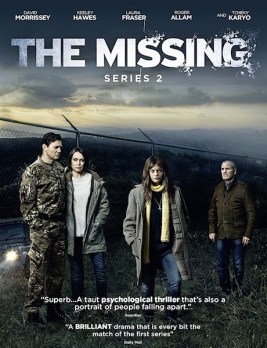 While everybody’s busy fawning over Happy Valley (never watched it) and Line of Duty (series one was quite good; I need to catch up), I reckon The Missing is one of the best dramas British TV has produced in a good long while. The second series (which aired towards the end of last year over here and, coincidentally, started last Sunday in the US) is every bit the equal of the first, and possibly even better — and considering how good the first was, that really is an achievement.
 aka the BAFTAs, obv. I have to say, I thought it was a pretty dull show this year. For starters, Cirque du Soleil — impressive, but what’s it got to do with the last year in film? Why did no one write Stephen Fry some good material for his opening monologue? Then there were the awards themselves. Short on surprises — the big prizes went where expected, the smaller ones erred British. None of the American winners are committed to giving a decent speech here because they’re saving it all for the Oscars. Well, apart from the
  It must be a slow time for TV — I don’t even feel like I’ve been missing all that much. Well, X-Men spin-off Legion recently started and I haven’t got round to that yet, and 24 spin-off / sequel / continuation 24: Legacy started in the UK last night, so I’ve barely had a chance to watch it (I’ll have something to say about that next month, then). So I really have no excuse for not watching Westworld yet. Oh, and I need to get on with starting my long-planned re-watch of Twin Peaks, because there are only…
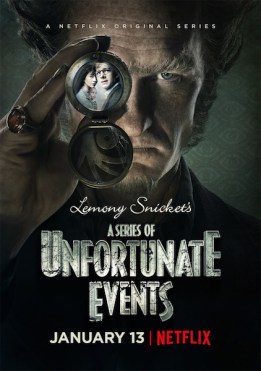 I’ve never read A Series of Unfortunate Events, the 13-book cycle of faux-gothic novels by Lemony Snicket that recount the terrible lives of the Baudelaire orphans as they are stalked by the scheming Count Olaf. I am, however, a verified fan / defender of the 2004 movie adaptation (I even
  As Olaf, Neil Patrick Harris has the difficult task of being both comically inept and genuinely menacing, as well as appearing in any number of disguises (well, four). Opinion seems divided on whether he manages this better than Jim Carrey in the film, but, well, that’s opinions for you. Personally, I thought he was very good. The extra screen time here (what was done in 108 minutes of film is granted 299 minutes of TV) means he has to work at a different level and pace to Carrey, and I think there are multiple moments where he nails it. Similarly, some may think the child actors are guilty of vigorously flat delivery of their lines, but I think this is just another aspect of the Wes Anderson-esque style — as the viewer (and, possibly, the cast) become more accustomed to the material, so the quality of the performances (and/or the perception thereof) improves.
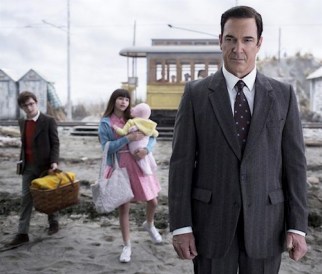 I think most would’ve thought A Series of Unfortunate Events was dead on screen after the film, but this series (and the reaction to it) suggests Netflix have been vindicated for deciding to revive the property. Let’s hope they have the common sense to do the right thing and commission the two more seasons needed to complete this sorry tale. In the meantime, I’m very favourably disposed to read all the books…
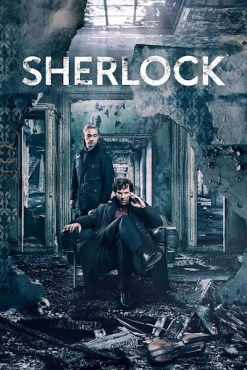 Sherlock comes to an end (for now) with another variable and divisive series. That’s actually the way it’s been received ever since the start (for all the people who think it only lost its way in the third run, there were plenty who slated various parts of it during the first and second series too), so I don’t think we should be so surprised. For my part, I enjoyed it on the whole.
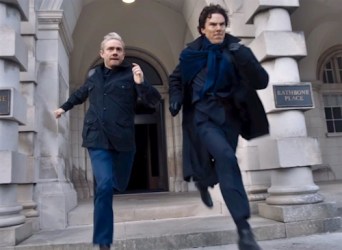 Sherlock’s commitment to being a fast-paced, audience-challenging adventure drama that strives to be constantly engaging and entertaining is definitely commendable, and a welcome contrast to much of the slow, dour TV drama we tend to produce over here — even if the end result is sometimes messy or unpopular. With events in-show leaving our heroes reset to a more familiar Holmesian situation, here’s hoping the big-name cast can be tempted back for a few more adventures in a couple of years.
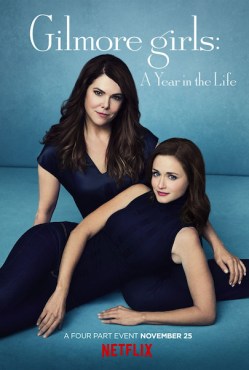 Nine years on and Gilmore Girls graduates from being considered a twee comedy-drama on disparaged network The WB to a major cultural event, thanks to it being produced for the arbiter of all modern televisual culture, Netflix. Instead of 22 42-minute episodes of network TV we get four feature-length instalments, though it’s still very much a series: the pros and cons are shared across the board.
 Bizarrest of all is the problematic ending. Thematically, A Year in the Life begins to look like it might be about moving on, new horizons, that kind of thing — indeed, I kind of expected it to end with Lorelei moving out of Stars Hollow. But the climax — the infamous final four words… well, you could see the development as a signal of a fresh start (very literally, new life), but it doesn’t play that way. Given Rory’s personal story (her career and relationships falling apart) and situation (single, living at home), it’s less a new path forward and more a depressingly regressive loop. If you’re interested in a fuller dissection of these issues, allow me to recommend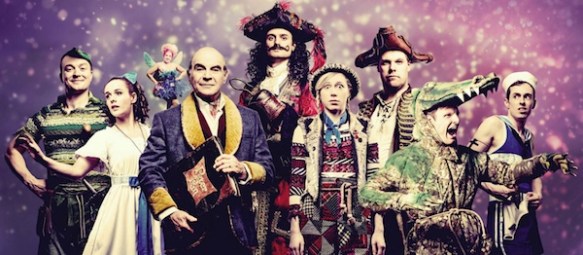
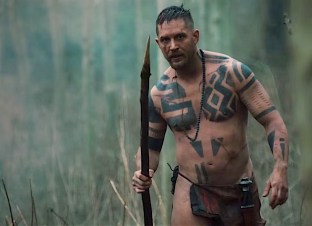 This month, I have mostly been missing Taboo, the BBC’s dark new period drama starring Tom Hardy and written by Steven Knight. I’m sure I’ll get round to it soon, but then I’ve been saying that about Peaky Blinders (you know, the BBC’s dark period drama written by Steven Knight and sometimes starring Tom Hardy) for years and still haven’t even started it. Its scheduling on BBC One on Saturday nights feels thoroughly at odds with how it looks (surely midweek BBC Two?), but putting a proper drama on our highest-profile channel on its highest-profile night seems to have been a popular move, so what do I know?
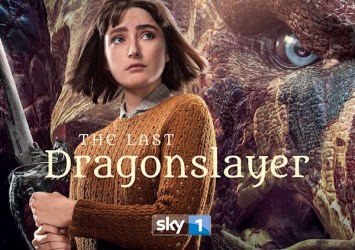 I’m not sure whether to commend or condemn Sky1 for having the balls to schedule a light family-friendly fantasy drama against
 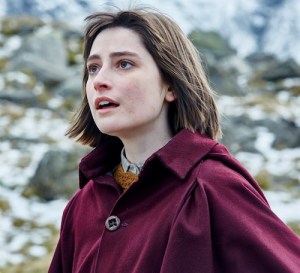 About now you’re probably thinking The Last Dragonslayer is completely derivative of every other major young-adult fantasy franchise of the last… well, forever. It’s hard to deny that the plot is, at least in its broadest thematic strokes, a pretty familiar affair. What makes the enterprise worthwhile is its humorous execution. This isn’t a spoof of the genre, more a satirical mash-up of familiar fantasy building blocks and modern life. So, for example, the king’s chief knight is also a pop star, followed around by a gaggle of adoring female fans; when Jennifer finds herself in need of money, her dragonslaying assistant signs a sponsorship deal with soft drink brand Fizzipop that requires her to film an advert, make at least two promotional appearances, and wear a branded T-shirt until the dragon is slain. It’s this whimsical slant on our world that is arguably Dragonslayer’s most successful aspect.
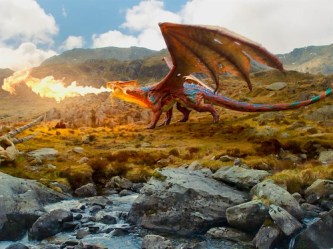 I guess The Last Dragonslayer’s irreverent, sometimes silly tone won’t be to all tastes, but I enjoyed it very much. Unsurprisingly (all things considered) the book is the first in a series, and so not everything is fully resolved by the film’s end. Let’s hope that, in spite of their scheduling, it’s done well enough for Sky that sequels are forthcoming.
 The controversial Steven Moffat era of nuWho is headed towards its end, but before his final full series next year there’s this penultimate Christmas special. There have been 12 of them now and they’re always divisive: some people think they’re too Christmassy, some that they’re not Christmassy enough; some like that they’re standalone adventures suited to a broader audience, but other times they’re not standalone enough… Each year presents a different mix of these elements, pleasing some and alienating others.
 “Proper Bake Off” came to an end with what felt a little like a joyous celebration of the series’ unique charms, as well as its highs and lows. Considering the two festive episodes were shot before the controversial move to Channel 4 took place, that’s almost impressive. It’s hard to imagine GBBO without the alchemical mix of Mel, Sue, Paul and Mary, and these episodes showed the format on fine form. And then the BBC went and snuck in that
  The problem with Christmas specials of on-going shows is you’re sometimes left with on-going plots that must be acknowledged, and Grantchester has a particularly major one with its hero’s life-long love leaving her husband while pregnant. If you don’t watch, it’s set in the ’50s, so this kind of behaviour is the greatest scandal known to man. The special leaps into this without even the by-your-leave of a “previously on”, so I pity any non-regular viewers made to sit down in front of it on Christmas Eve. But it’s an immensely popular show with big ratings, apparently, so who can blame ITV for wanting it in their always-underpowered Christmas schedule? I imagine it fared better than Maigret did the next night…
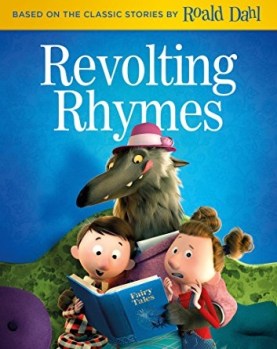 The team behind previous Christmas specials
  I thought And Then There Were None was one of the highlights of last year’s Christmas schedule, turning Agatha Christie’s most popular novel into a dark, slasher-movie-esque thriller, the first English-language adaptation to remain faithful to the original’s glum ending. I don’t know if this year’s Christie is faithful to her original short story, but it isn’t to the play adaptation (at least as I know it from
 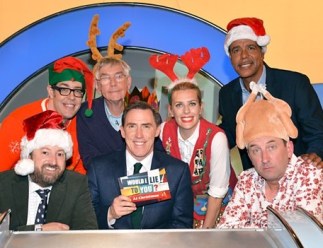 There’s always a lot of special episodes of comedy shows on over Christmas, with varying degrees of success. I thought this year’s Live at the Apollo was woeful, with Romesh Ranganathan the only truly bright spot in 45 minutes of flat observations and unfunny daftness. Conversely, Would I Lie To You? proved to be as good value as it always is, thanks to the quick wit of the regulars plus Tom Courtenay’s affected (I presume) dodderiness. Mock the Week’s clip show format was perhaps improved by the fact I didn’t watch the most recent series, while the imperfect Insert Name Here makes a nonetheless welcome return. In the comedy gameshow sub-genre, Alan Carr’s 12 Stars of Christmas was the kind of trash I’d never watch at any other time of year yet stuck with for all five hours and kind of enjoyed (helped by watching on catch-up and fast-forwarding the really repetitious bits), while the David Walliams-fronted Blankety Blank revival provided as much charm as the format ever has. And normally it wouldn’t count as comedy, but this year’s run of Celebrity Mastermind began with CBBC puppet Hacker T. Dog as a contestant. At least he didn’t win.
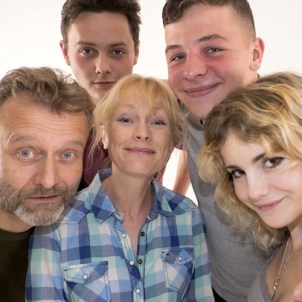 My list of Christmas TV to get round to remains pretty extensive. There are all those regular series that insert a seasonal episode — The Grand Tour (that’d be the episode with Richard Hammond’s ice cream comments that you might’ve heard about), Paul O’Grady: For the Love of Dogs, Yonderland (not that I’ve watched any of the latest series), QI, Inside No.9 (which I’ve never watched before, but the special sounds good)… And there are series coming back for one-offs too, like Outnumbered and Jonathan Creek (which I loved during its original run but have been surprisingly lax about watching in the last few years). I’ve also not yet caught a couple of this year’s animated adaptations, Michael Rosen’s We’re Going on a Bear Hunt and Raymond Briggs’ Ethel & Ernest (which I figure will count as a film). Documentaries like Lego’s Big Christmas and West Side Stories also sit on my list, likely to get forgotten. There’s Sky1’s big Christmas Day drama, The Last Dragonslayer (which I wager I’ll also count as a film); Eric Idle’s comedy musical science thing, The Entire Universe; and Charlie Brooker’s 2016 Wipe, which apparently manages to make 2016 funny (I’ll believe it when I see it). Finally, I always save Channel 4’s The Big Fat Quiz of the Year for either New Year’s Eve or New Year’s Day, because that just seems more appropriate.
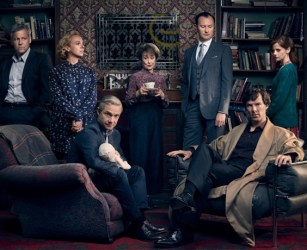 Things are beginning to wind down now… but as far as TV schedulers are concerned “Christmas” lasts until at least January 1st, so there are a couple of big hitters left. The biggest of all is a new, potentially final, run of Sherlock. No idea what the quality will be like, but expect lots of handwringing on social media and huge ratings either way. On New Year’s Eve there’s stage adaptation Peter Pan Goes Wrong, which I’ve heard such good stuff about it’s probably going to be a disappointment, and a Winnie-the-Pooh documentary that I’m going to watch even though it’s presented by Alan Titchmarsh. Next week (which you could argue is still part of Christmas if you have very forgiving holiday leave) sees lots of police shows kicking off, if that’s your thing: Death in Paradise, Endeavour, Midsomer Murders, No Offence, Silent Witness, Unforgotten… even Brooklyn Nine-Nine. And in the sphere of movies on TV, tonight you can choose between the network premiere of
 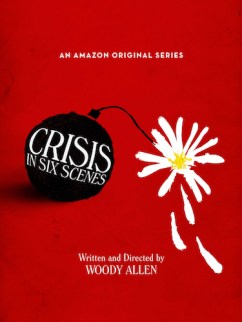 When Amazon started making a serious effort to challenge Netflix in the field of streaming original series, one of their early moves was the headline-grabbing signing of Woody Allen to create his first TV series. As has since become clear, Allen didn’t know what he was letting himself in for. To summarise his comments from various interviews (and read between the lines a little), it seems he had a view of TV that’s about 20 years out of date, and thought he’d be able to dash off something suitable between two of his annual movies. At some point he obviously realised how much more sophisticated TV has become, and coopted a movie idea he’d had on the back-burner to expand into a short TV season. Allen’s been vocal about how miserable he found this process, but I’m not sure if he’s aware that he made a rod for his own back: he essentially made three movies in two years instead of his usual two. It probably would’ve been wise to swap out one of the films for the TV series, but you get the sense that, despite having been shown TV’s burgeoned respectability, Allen’s still something of a film snob. Rather than the potential of TV coming as a revelation to him, he’s declared he won’t be making any more.
 But enough of the form — what of the content? This is not prime Allen, that’s for sure. At times it makes for uncomfortable viewing, when it’s hard to tell if it’s half improvised or if half the cast are just a bit doddery (and I suspect it’s the latter). Other bits do work, though, and while it isn’t massively rewarding it is amusing at times. Even less assured are some broadly political points that it seems like Allen is trying to tap into, or maybe it’s just incidental. He appears to be using the series’ 1960s setting as a mirror of the present: the plot concerns a twenty-something anti-government protestor, and there’s lots of talk about unnecessary wars, campus demonstrations, young people staging protests, rights for women and black people, etc, etc. At first blush these parallels are all well and good, but I’m not sure they develop into much more than wry observations. The best I can take from it is a result of the particularly farcical last episode, where it may be that he’s trying to say people in general should be more aware and active, like the young are — to walk the walk of political change rather than just talking the talk.
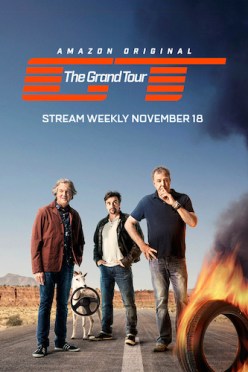 Another big gun in Amazon’s streaming mission, their £160 million “Not Top Gear, Honest” original series kicked off last month to widespread positive reviews and, apparently, big ratings (relatively speaking). I’m not really a ‘car person’, but like millions of others I wound up watching Top Gear during the height of the Clarkson / Hammond / May era for all the other hijinks. I thought it was going off the boil a bit even before their semi-enforced departure — I didn’t even get round to watching their last series. They come to Amazon after a short break (a long break for us, but it takes time to film these things, so, short break), and I think reinvigorated — possibly by the rest, possibly by the change of management, possibly by the huge budget.
 The Doctor Who spin-off that
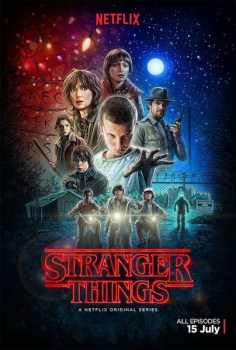 Hype — it’s a funny old business. It’s hard to have avoided hearing something about Stranger Things, Netflix’s summer hit that went down like gangbusters, its ’80s nostalgia perfectly calibrated to target the kind of people who run entertainment news websites these days — just to be cynical about it. Or truthful. Then there came the backlash, which attested there was nothing more to the show than those callbacks and tributes; a hollow experience of copying and “hey, remember this? That was good, wasn’t it?”
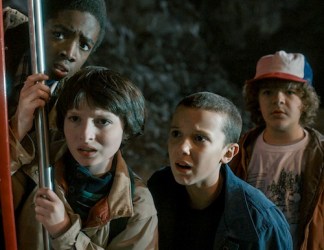 Without wanting to get into spoiler territory (despite what the media would have you believe, not everyone has Netflix all the time and not everyone watches every new zeitgeisty series immediately. Apologies if you write for an entertainment site and I’ve just given you palpitations), everything comes together nicely for a barnstorming pair of climactic episodes. For my money, the penultimate chapter is the best one: with a bunch of revelations out of the way (some of them easily guessed but finally confirmed), the series kicks off a run of long-awaited fan-pleasing events (as in many a drama, it takes this long for everyone to finally start talking to each other; also, the bit with the van!) The finale is less accomplished, with some characters wandering around for a bit in a way that feels designed to pad the running time. Still, it’s a satisfying conclusion… to season one, anyway.
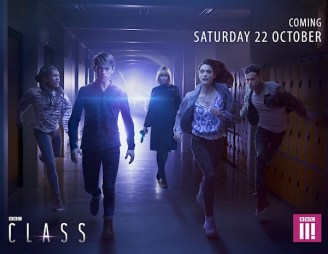 Ten years to the very day since the launch of the original dark, sexy BBC Three Doctor Who spin-off,
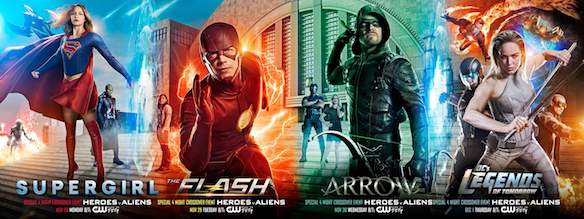
  The CW’s raft of superhero shows restarted on UK TV this month. I’ve given up on Legends of Tomorrow and am still not joining Supergirl (though I got hold of the opening episodes, co-starring Superman, to maybe make time for at some point); but, five seasons in, Arrow has me suckered for the long-haul, and The Flash tempted me back with the intrigue of adapting Flashpoint. I’ve never got on the bandwagon with Flash, which attracted a lot of praise during its first season that I simply didn’t agree with, leading it to outshine Arrow in ratings and people’s affections. Arrow has long been off the boil, and season five certainly hasn’t got it back up to temperature so far, but The Flash had plenty of issues of its own. It’s not problem free now, but I actually really liked the first couple of episodes of the new season. It’s still a long way from the top tier of TV superheroes (Netflix have that sewn up), but it’s likeable.
 This month, I have mostly been missing the most expensive TV show ever made*, Netflix’s much-discussed The Crown. I don’t know if they’ve been pushing it as much in the rest of the world as they did in the UK, but it certainly felt like it was everywhere… for about a week, as is usually the way with Netflix series. Also missed: the equally-discussed Netflix-exclusive new run of Black Mirror. Both of these are because I don’t keep up a permanent Netflix subscription, but between them, the forthcoming Gilmore Girls revival, and the Series of Unfortunate Events remake in January, I will be signing up again late in December (using the free month voucher they had in the Radio Times, hurrah!)
 When this TV movie kicks off with Ivy Levan sashaying her way around a cinema while she mimes to a pre-recorded and over-produced backing track of Science Fiction/Double Feature, full of licks and runs and finding four notes to hit where there used to be one, like a desperate X Factor wannabe who has no concept of the meaning of the lyrics she’s warbling but is ever so desperate to show she can saaang (that’s like singing but with added Cool), you get a pretty fair idea of the terrible experience about to be unleashed upon you by the not-so-catchily titled The Rocky Horror Picture Show: Let’s Do the Time Warp Again. That’s to say it’s been modernised, Americanised, and sanitised.
 The interpretation of the songs is appalling. The recordings are all overworked, full of needless warbles and added “oohs”. They’ve been modernised in such a way that, when current popular fads for over-singing things (“licks” or “runs” or whatever else they call them) have passed — as they surely will — these new versions will sound even more dated than the already-40-year-old originals, which have a certain timelessness. The lyrics are sung with the same amount of attention to what they mean as you get from a computer’s text-to-speech function, including or echoing parts of the original without understanding why they’re there or what function they perform; or if it does know the function, it doesn’t know how to replicate it.
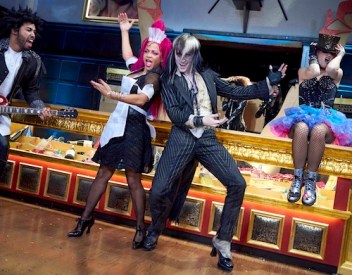 Everything is blunted further by Kenny Ortega’s ineffective direction. The camerawork is flat and uninteresting, the shot choices unimaginative. Some of the choreography looks interesting — it’s certainly more elaborate than in the original film — but the camerawork seems to be actively trying to obscure it. The editor must have struggled, unable to generate any additional excitement due to a shortage of options. At times it looks as if it was filmed live, under which circumstances its weaknesses might be understandable, if not excusable… but it wasn’t.
 I refer partly to her omnipresent cleavage, but also her acting. It’s not great by any means, but she’s suitably sweet and twee at the start, then manages to sell Janet’s near-instantaneous transformation from uptight goody-two-shoes to sex-mad strumpet using just a handful of expressions and line deliveries in the slight gap her character has between Over at the Frankenstein Place and Touch-a Touch-a Touch Me. The latter is one of the film’s rare highlights, for various reasons. One of those is actually Staz Nair as Rocky — undoubtedly the least challenging role in the piece, but at least he gets it right, and his musclebound chest counterbalances Justice’s for those of the other persuasion. The only downside are his tattoos: he was supposedly just grown in a tank, how does he have tattoos?!
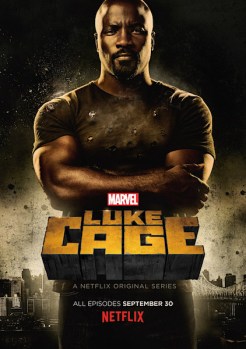 The third series in the Marvel/Netflix stable wins points for boldness, much as Jessica Jones did this time last year. Where Daredevil is a well-done but ‘standard’ superhero show, leading to it being somewhat demeaned by the Cool Kids of the critical world (but much higher-rated by us plebs on the likes of IMDb), Jessica pushed into dark psychological territory, and now Luke Cage brings black culture and life into the fold.
 It feels like only yesterday I was writing here about season four (it was, in fact,
  Well, it’s only taken me 3½ years to get round to this (seriously, where does time go?!) This bunch really represents the series’ highs and lows. On the one hand, Be Right Back — in which Hayley Atwell signs up for a company who create a virtual version of her deceased partner using his contributions to social media — is an exploration of broadly-plausible near-future-tech with a focus on its potential emotional effect. That’s what Black Mirror does best, I’d argue: look at stuff that may, perhaps, be in the pipeline, and how that would actually play out for us. On the other, there’s The Waldo Moment, which is also sickeningly plausible — as Charlie Brooker himself has said, it’s more or less come true, though with the likes of Boris Johnson and Donald Trump instead of a blue cartoon bear — but as an episode it doesn’t quite seem to know where to go with its concept or what it might ultimately signify. The episode just stops rather than ends, until a flash-forward coda that’s a bit silly in its extremity. Even Brooker, while doing press for the third season (released tomorrow), has said he’d go back and re-do that episode if he could. Still, full marks for effort.
 This latest series of Red Dwarf (which airs its fifth episode tonight, with the sixth available on demand from tomorrow) seems to have gone down rather well, with some reviews even hailing it as a “return to form” — that form being “the good old days” of Red Dwarf VI (or thereabouts), over 20 years ago. Personally, I didn’t dislike Red Dwarf VII or Back to Earth, and I even have a soft spot for Red Dwarf VIII, so what do I know? Nonetheless, I would concur that this Dwarf represents a fine vintage, hitting the series’ unique mix of accessible mainstream-ish comedy and proper science-fiction concepts. Red Dwarf XII is already in the can for 2017, and I wouldn’t be surprised to see Dave commission more episodes beyond that.
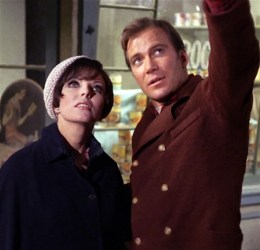 The entirety of TV Star Trek is available on Netflix, so I took the chance to watch the most acclaimed episodes of both The Original Series and The Animated Series — which happen to be connected, something I didn’t realise until afterwards. Er, I mean, which I totally planned. Both are pretty fine uses of science-fiction to explore relatable issues. Well, not many of us have to deal with disruptions to reality caused by time travel, or knowledge of the future creating dilemmas about what we do next, but they work the relatable stuff in around the surface plots. And they both still seem pretty bold for network TV episodes even today, almost half a century later, as (spoilers!) Kirk lets a good woman die to retain the correct timeline, and a kids’ cartoon deals with the subject of euthanasia.
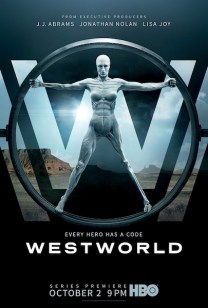 This month, I have mostly been missing loads of stuff. Probably the most talked about is HBO’s adaptation of Westworld, which has apparently pulled in even bigger ratings than Game of Thrones. Over here there’s the second series of The Missing, which if it’s half as good as the first will be a real must-see. Then there’s Woody Allen’s first (and last) TV series for Amazon, Crisis in Six Scenes. Reviews have been mixed to poor but I still intend to get round to it. And finally Hooten & the Lady, which may be the worst title for anything in the history of ever, but a globetrotting adventure series inspired by the likes of Indiana Jones and Romancing the Stone sounds right up my alley.
 100Films.co.uk