LAMBing Live

The Large Association of Movie Blogs — who have the eternally witty URL www.LargeAssMovieBlogs.com, but are more commonly known as the LAMB — kindly entered me into their ranks earlier this week.

I am LAMB #1635, meaning I now have around 1,634 other friendly film blogs to go and check out. With my can-do attitude and ceaseless devotion to getting things done, I’m sure that will happen forthwith. (Shh, don’t tell them the truth, regular readers!)

If you don’t know about the LAMB, they have a handy-dandy FAQ here. You can read my application/introduction/whatever here.

Right, I ought to go ingratiate myself in some other way(s). Or I could just sit in the corner coughing my throat raw while my nose significantly bolsters Kleenex’s yearly profits, like I have been all week. Yeah, it’s gonna be that one.

(Incidentally, for those not versed in the wonders of three-years-old British early-evening telly, the title of this post is a reference.)

June 2013 + 5 Franchise-Killing Sequels

It’s June! It’s the halfway point of the calendar year! What a good time to assess a year-long task, eh?

But first…


In the name of…

I can now unveil a major new undertaking (for me): the complete 100 Films review database, sorted by director.

Creating this page involved taking nearly 800 reviews from their title-sorted 28 categories on the existing list, looking up the director for each film, then re-sorting them into a new list that eventually came to include 537 categories (that being one per represented director, of course). It’s taken over four months of work (on and off), but it’s finally here — and is perfectly easy to update going forward, thank goodness.

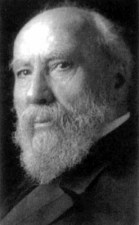
James Hill, film directorI have no idea if this is of use to anyone. Probably not. But it’s a slightly interesting, different way of looking at my review archive. For instance, compiling it threw up some odd things, such as James Hill. Who, you may ask? Indeed it’s no surprise I hadn’t noticed I’d watched two films directed by him. More interesting was what they were: lovely family animal movie Born Free, and Hammer-esque Sherlock Holmes vs Jack the Ripper thriller A Study in Terror! He also directed Lunch Hour, part of the BFI Flipside strand, so he may one day acquire a third entry. That’s more than some incredibly well-known directors have.

Anyway, if you want to have a peruse and somehow missed the links above and the one in the menu, it’s here.


What Do You Mean You Haven’t Seen…?

Statistically speaking, my selection for WDYMYHS threw up a few interesting ratios. For instance, exactly half the films hail from the 1950s; there are 9 in black & white vs. 3 in colour; and also 9 in English vs. 3 in foreign languages (French, Japanese, Swedish); and 5 on DVD vs. 7 on Blu-ray.

Having so far watched a third of the films, it’s got to the point where I can see what needs to be done to keep these numbers roughly in proportion. So, if I wanted to do such a thing, I came to the conclusion that I needed to watch a 1950s black & white English-language film on Blu-ray. That left two options: The Night of the Hunter or Touch of Evil. And this month I watched…

Orson Welles’ Touch of Evil.

No particular reason for choosing one over the other, although during the time I was pondering this the BFI announced their exciting Gothic season, the trailer for which included a clip from Night of the Hunter, which led to the thought that I might put it off until such a time as it coincides with whatever the BFI are up to. But we’ll see.

Those familiar with Evil’s multiple versions (there are five included on Masters of Cinema’s Blu-ray release) may like to know that I watched the Reconstructed Version in 1.37:1, as recommended here.


The Assassination of Jesse James by the Coward Robert FordJune’s films

#55 The Bourne Legacy (2012)
#56 The Assassination of Jesse James by the Coward Robert Ford (2007)
#57 The Hitch-Hiker (1953)
#58 Touch of Evil: Reconstructed Version (1958/1998)


Analysis

I talked last month about the shape of this year’s viewing emulating most previous years, and that continues in June, a month which has never seen my viewing reach double figures. Nonetheless, this year’s four is the poorest on record (behind last year’s five).

More interesting, however, is what it might tell us about the year as a whole. It’s exactly half way, after all, giving enough time to settle down from the exuberance of the year’s first three months and paint a picture of how I’m getting on this year. At 58, I’d call it “not bad”. Clearly I’m well over the halfway mark, and ahead of this point in 2008, 2009 and 2012 to boot… though as I failed to make 100 in two of those years, and only scraped it with a mad dash in the other, such facts aren’t that comforting.

What about June as an indicator of my final tally? It’s not that hot, to be honest, showing just how erratic my viewing can be across the year. It was closest (or I was most consistent) last year, when I reached 51 by June, giving a ‘prediction’ of 102, and I made it to 97. 2010 was similarly close: 64 in June gives 128, and I made 122. But in other years it’s ranged from 18 under (2009) to 34 over (2011), so it tells us nothing. More exciting that way, eh?

With only four films to consider there’s not much more to say (50% from the ’00s and 50% from the ’50s means nothing when it’s out of four, does it), so moving swiftly on:


5 Sequels That Killed Their Franchise

There have been innumerable bad sequels, especially in these franchise-driven days of modern Hollywood movies… but which have gone down so badly they’ve actually killed off their series? Not just been the final film, but actively led to the series’ demise. (This was inspired by The Bourne Legacy — although #5 is reportedly in development, if they don’t have a serious rethink then I expect Legacy will wind up a member of this club.)

  1. Batman & Robin
    Batman & RobinObvious, I know, but it really is the archetype. Burton delivered two Bat-films that were critical and commercial successes; Schumacher delivered one that didn’t go down so well but turned a healthy profit… and then this. A critical disaster, a box office flop, the series went down with it. It took others to revive the superhero genre, a seven-year gap, and a ground-up reboot to save the series.
  2. The X-Files: I Want to Believe
    The X-Files: I Want to BelieveSix years after the TV series ended (was that all?), ’90s favourites Mulder and Scully returned. Hopes for a third film dealing with the series’ cliffhanger-ish ending were dashed by this low-key supernatural fable, released in a glaringly inappropriate summer slot, with none of the aliens casual viewers expected and too many incidental ties to the series. Some still whisper about a third movie, but 2012 was the perfect time and that’s long gone.
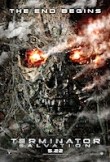
  3. Terminator Salvation
    Terminator SalvationThe first three Terminators all recycle the same plot to some degree, but with Salvation they finally pushed forward. Unfortunately bad word of mouth before release plus constant rumours about final-act twists did the film no favours. It was meant to launch a new trilogy, but instead killed the company who held the rights. A fifth film is in development now, but it sounds like it’ll go back to aping the first.
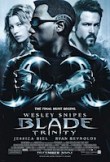
  4. Blade: Trinity
    Blade: TrinityThe first Blade was something of a breakout hit in the late ’90s, leading to a Guillermo del Toro-helmed sequel that helped put him on the mainstream map. This third entry was designed to launch a spin-off movie for its supporting stars, but behind the scenes woes resulted in a messy film that flopped both critically and with audiences. A TV series did follow, but that was reportedly awful too and didn’t last long.
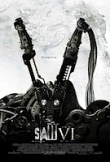
  5. Saw VI
    Saw VI“But there was a Saw VII,” you cry.
    “But there was meant to be at least a Saw VIII,” I reply.
    When Saw VI lost its opening weekend to Paranormal Activity, someone guessed a shift in horror-fan tastes and called time on this annual scare saga, leading to it wrapping up in film #7. The Final Chapter, as it was advertised, actually did better at the box office, but by then it was all done.

And one that actually revived a franchise… briefly…

    The Final Destination
    The Final DestinationThis fourth entry in the Death-defying horror franchise was due to be the series’ last — hence the definitive article title. In no small part due to being released in 3D in the immediate run-up to Avatar, the movie was a surprise box office hit, becoming the series’ highest-grossing entry, and New Line did an about-face and greenlit a fifth movie. Unfortunately for them, The Final Destination was utter shit, so the marginally-better Final Destination 5 became the series’ lowest earner. In the US, anyway — worldwide, it actually wound up just a few million dollars short of its predecessor. Nonetheless, instead of having a neatly-monikered send-off, the series seems to have limply disappeared.

There are many more sequels that have killed their franchise, so are there any I should have mentioned? And what about that even trickier question: films that have taken an ailing series and turned it around?


Next month on 100 Films in a Year…

With the halfway point passed (did I mentioned we’re halfway through the year?), it’s full steam ahead into the second half. 100 films don’t just watch themselves, y’know.

The Harry Potter Films of David Yates

Harry Potter and the Order of the Phoenix

Harry Potter and the
Order of the Phoenix

2013 #45a
Original review here.

Harry Potter and the Half-Blood Prince

.
Harry Potter and the
Half-Blood Prince

2013 #47a
Original review here.

Harry Potter and the Deathly Hallows Part 1

.
Harry Potter and the
Deathly Hallows: Part 1

2013 #48a
Original review here.

Harry Potter and the Deathly Hallows Part 1

.
Harry Potter and the
Deathly Hallows: Part 2

2013 #52a
Original review here.


2007-2011 | 568 mins | Blu-ray | 2.40:1 | UK & USA / English | 12 / PG-13

When David Yates joined the Harry Potter series halfway through, as the director of its fifth instalment, his main prior experience was in TV — quite a change from the series’ track record, which had included acclaimed or successful movie directors. But he seemed a wise choice nonetheless: one of his stand-out works on TV was State of Play, a complex conspiracy series that suggested he’d be the right man to handle Order of the Phoenix for two reasons. Firstly, the novel includes a significant ‘resistance thriller’ aspect, similar to the edgy underground-investigation style of State of Play. Secondly, the lengthy novel was to be condensed into a single reasonable-length film, necessitating an ability to tell a story clearly and concisely. State of Play may not have been concise (it’s a six-hour story, after all), but it was complicated and it was clear.

The resulting film is, arguably, one of the series’ strongest because it is so different to the others. If the much-discussed ‘darkening’ of the films really kicked in with Goblet of Fire and the death of Cedric Diggory, Phoenix only cements this tone. Our heroes are persecuted throughout — and not just the lead kids, but Dumbledore and the rest of the Hogwarts establishment too, as a Ministry of Magic in denial about the return of Voldemort seeks to crush the dissenting voices of Harry and his headmaster.

Evil witchTheir main weapon is Dolores Umbridge, perhaps the series’ most despicable villain, because she is so horrendously plausible. She seems to be all sweetness and light, but it masks a dangerous streak that sees her eliminate any fun from the school and, in one of the most sadistic sequences in either the novels or the films, she has Harry write lines with a magic quill that cuts each one into the skin of his left hand. The Potter series actually has its share of nuanced villains, but Umbridge is thoroughly unlikeable. Though she’s defeated and carted off at the end of Phoenix, she resurfaces in Deathly Hallows. I don’t recall if her final fate is expounded upon, on page or screen, but I’d quite like to see her ripped to shreds.

In one of the numerous special features on the Harry Potter Blu-rays, producer David Heyman notes that most directors finish a film of Potter’s scope and want a rest, or at least a change of pace. It’s why Alfonso Cuarón and Mike Newell only have one each to their name; it’s why the Bond films haven’t had two back-to-back entries from the same director since the ’80s; and so on. Not so Yates, however, who ended Phoenix hungry for more. Or hungry to establish a film career, take your pick. And so he also took on the next film, Half-Blood Prince.

It’s easy to accuse Half-Blood Prince of being all prelude to the climactic events of Deathly Hallows; it certainly feels that way first time through. There’s considerably more to it than that, even if the titular mystery is barely a subplot — especially in the film version where, once again, the sheer length of the novel necessitates massive cuts to the source text. But perhaps the most remarkable thing is how funny the film is. Between the return of Voldemort, the suspicion cast on Harry, and a devastating final battle, Phoenix is an incredibly gloomy film; as things roll towards the climax, packed with more deaths and villain victories, Deathly Hallows is too; and sandwiched in between, with one of the saga’s most gut-wrenching finales, you’d think Half-Blood Prince would be more of the same.

Comedy romanceBut not so. Yates approached his follow-up with a stated aim of introducing more comedy, believing the three leads to be talented in that area but not having had a chance to show it in his dour first film. So here we get a whole subplot given over to Ron’s attempts to join the Quidditch team, as well as much focus on the trio’s romantic entanglements — teenage love always being a good topic for humour. The film is not without its dark side, but peppered liberally throughout are those comedic subplots and scenes that are liable to see the viewer laugh perhaps more than in any other Potter film. It’s easy to miss this element — the main plot is, as always, getting darker and more serious — but once it’s been highlighted (as the makers do in the film’s special features) I think it becomes very noticeable.

Perhaps the other most notable aspect of Half-Blood Prince is the cinematography. Like most of cinema throughout the ’00s, the Harry Potter series shows a gradual shift from a very filmic look, to digital intermediates, to (in some cases) a wholly digital output. This is where it becomes most notable, I feel, with many sequences (especially those involving extensive CGI, like the Quidditch) graded and smoothed to the point where they look almost like a concept art painting rather than a real-life sequence. This is especially obvious if you watch any clip-laden series-spanning documentary, where Half-Blood Prince clips rub shoulders with any previous film and stand out like a sore thumb; but even in the movie itself, without that outside context, it’s sometimes highly noticeable.

The other thing it is is dark — not the story, but the visuals. This reaches its nadir in Deathly Hallows (both parts), which include some shots so dark it looks like some light-black shapes may, perhaps, if you squint and strain, be moving over some dark-black shapes. It’s ridiculous. I have no idea if it functioned OK in the cinema, but on a TV at home it most definitely does not. This seems to be a growing trend in films, though the Potter finale contains some of the worst examples I’ve yet seen. I don’t know the reason, but I presume it’s a tech thing — cameras that can function better in low light; In search of a light-switchgrading the film in perfectly-calibrated conditions so they can really push it to extremes, not considering how most end-users will view it; and, much like fast-cut action scenes, an over-familiarity with the material that means the director/editor/grader can see what’s going on because they’ve watched it dozens (or hundreds) of times, which doesn’t work for a first-time viewer in the middle of the film. As you may be able to guess, I’m not a fan.

By the time of these final two films, it seems Yates has moved from being a TV director skilled in complex plotting, to one very much at home with big effects-driven set pieces. The Battle of Hogwarts, which consumes around 90 minutes of the final film, is an epic and often jaw-dropping affair, though still laced through with the final plot developments and the completion of various character arcs. That said, it’s far from perfect, undermined by a pair of apparently opposing sets of decisions: on the one hand, to flesh out fan-favourite moments to give them too much emphasis (Mrs Weasley’s duel with Bellatrix is over-played; Harry and Voldemort’s final confrontation is amped up to the point it loses the book’s emotion); on the other, slavish faithfulness leaving some moments without enough emphasis.

The biggest crime of the latter is the very end: the battle over, Harry, Ron and Hermione stand outside Hogwarts, survey some of the damage, have a little chat… and then it abruptly cuts to a couple of decades later for the epilogue. For me, it doesn’t feel as if there’s enough space there, enough time to breathe, to consider the impact on the series’ supporting cast — many of them favourite characters, as vitally important to the viewer as they are to the lead trio. How will the Weasleys cope with their losses? What about those others who have lost almost everyone they hold dear? Where have the Malfoys gone? There are nods to this in a montage around the Great Hall / makeshift mortuary, but it feels underplayed; like we need a scene of life-goes-on normality set a few weeks or months later, Epiloguenot a sudden smash-cut to a few decades on where we see how some characters’ lives have developed. I know some people complain about Lord of the Rings’ multitudinous endings but, one, they’re wrong, and two, Potter only has one and an epilogue — sure, the first completes the drive of the storyline and the second is a neat coda, but in between I feel we need more of a character-based resolution.

But hey-ho, it is what it is.

In the end, the TV director hired for a very specific filmmaking skill wound up in charge of exactly half the Harry Potter series. If there was a half to have a single voice in charge of, it’s this one, with one long narrative permeating the films in a way it doesn’t the first four. And yet, for that, each has a distinctive style and voice — well, apart from the two parts of Deathly Hallows, which are really one long film split into halves. Was it the right move, for the series? It clearly produced popular movies, but, thanks to the storyline, it’s already easy to regard the Potter series as four or five stories rather than seven, the last three books merging into one epic tale in three acts — a trilogy, if you will — rather than discrete stories, like the first four. By putting the same man behind the camera for them all, the films just emphasise this point. But maybe that doesn’t matter.


The Complete CollectionIt’s hard to offer a final summary of the Harry Potter series. Some people see them as mediocre and overblown; for others, they are their life. Personally, I think they develop from sometimes-uncertain roots in the early films, to a flourishing series of epic fantasy movies. There are often niggles of one kind or another, be it acting (I forgot to discuss Emma Watson’s eyebrows!), or cartoonish designs, or too-faithful adaptation, or abbreviated adaptation, or what have you — but none of these are ever-present. More importantly, every film offers something to enjoy, and the growing maturity — of not only the cast, but also the filmmaking — means their impact only increases when viewed as an entire eight-film saga.

One for the ages? Movie and genre fans of a certain age might say, “don’t be so daft”; but I wouldn’t be so certain.

May 2013 + 5 Greatest Car Chases

It’s a bumper crop of things to discuss in this month’s update!

  • The return (as it were) of What Do You Mean You Haven’t Seen…?
  • New films in the double figures — but just how many?
  • (Over-)analysis of what this means! (Not much.)
  • The completion of my Harry Potter re-watch…
  • …and a look at the results of my Harry Potter poll!
  • A top five… but of what? (Oh, it’s in the title, isn’t it?)
  • And the usual pointless “next time” bit that I ought to do away with but keep including just because it’s there in the template!
  • It’s only the biggest*, bestest** 100 Films update ever!

    So, as Graham Norton might say, jump on it!

    No, er, I mean — let’s start the show post!

    [Imagine a 100 Films title sequence here. Or don’t, whatever.]


    What Do You Mean You Haven’t Seen…?

    The path to not-quite-making-it-to-100-films is paved with good intentions (as is the path to making-it-to-100-films-or-more, but the failure path has more paves), and my plan to watch two WDYMYHS films this month is now another slab in said path. So I bump that idea to next month, because, hey, I did watch one. And that one was…

    Ingmar Bergman’s The Seventh Seal, aka Det sjunde inseglet if you speak Swedish or want to be one of those people who always uses the original title regardless.

    Despite owning Tartan’s impressive Bergman Collection DVD set for a number of years, this is actually my first experience of Bergman. Once, I noted how many significant directors have been new to me in the course of 100 Films. I thought I’d done it on an individual year, but it was in my review of The Great Dictator. I don’t believe I’ve ever done the former, probably because it’s never actually been noteworthy. However, it’s felt like there have been a few this year, so that’s something I may add to the end-of-year stats.

    But that’s still seven months away. You want to know what I’ve been watching in the past 31 days, right? Right?


    May’s films

    Django Unchained#44 The Amazing Spider-Man (2012)
    #45 The Fast and the Furious: Tokyo Drift (2006)
    #45a Harry Potter and the Order of the Phoenix (2007)
    #46 Tintin and the Mystery of the Golden Fleece, aka Tintin et le mystère de la Toison d’Or (1961)
    #47 The Naked Gun: From the Files of Police Squad! (1988)
    #47a Harry Potter and the Half-Blood Prince (2009)
    #48 Django Unchained (2012)
    Ray Harryhausen: Special Effects Titan#48a Harry Potter and the Deathly Hallows: Part 1 (2010)
    #49 On Dangerous Ground (1952)
    #50 Les Misérables (2012)
    #51 And Now for Something Completely Different (1971)
    #52 Shane (1953)
    #52a Harry Potter and the Deathly Hallows: Part 2 (2011)
    #53 Ray Harryhausen: Special Effects Titan (2012)
    #54 The Seventh Seal, aka Det sjunde inseglet (1957)


    Analysis

    This month’s tally of new films rests at 11, more than double what I achieved last year and drawing equal with May of 2011.

    It’s also an anniversary, because May 2010 was my first of these regular monthly progress reports. Three years! My my, time flies. Back then I managed 16 new films, at the time my joint-second highest month ever. Show off month.

    Back in 2013, May is my joint second highest of the year — behind March (which is the current second highest month ever) and tied with February. That’s a pretty solid start to the year — more so than last year, and while 2011 and 2010 show a similar shape (double-figure Januarys, Februarys, Marchs and Mays with a relatively weak April), I’ve reached #54 this year, while in 2011 it was… oh, #58. Well, in 2010 it was… oh, #57.

    Hey, you can’t win ’em all.

    In terms of the films themselves, there’s an uncommonly high number from the ’50s this month — three, whereas my year-to-date only featured one other. There’s no particular reason for that, it’s just one of those coincidences. There’s also four films from 2012 alone, which is more to be expected as I continue to catch up on last year’s cinematic releases. There’ll definitely be more of that next month.


    Potter poll!

    For most of this month I’ve been running a poll on readers’ favourite Harry Potter films (you may have noticed it — it’s sat on the left of the front page). It’s been interesting to see how many votes I’d attract, especially with near-relentless badgering about it on Twitter at some points. As it turned out, better than I’d feared. That’s what bombarding Twitter can do.

    Well, I’m not closing the poll, but as it hasn’t received any new votes in weeks, let’s look at what my tiny sample thought.

    Everything Will ChangeThe clear victor is the Alfonso Cuarón-helmed franchise-revitalising third film, Prisoner of Azkaban, which scooped exactly 50% of the vote. Its supremacy in this poll was never in doubt, lingering around that percentage throughout. There’s a three-way tie for second, though, the result of low voter numbers. Mike Newell’s pivotal and well-liked Goblet of Fire is an unsurprising feature so high, but the incessant climax-readying info-dump of David Yates’ Half-Blood Prince is more uncommon; as is the series’ opener, Philosopher’s Stone, as the Chris Columbus films are often held in the lowest regard.

    That said, there’s also a three-way tie for last place, and the other Columbus film — sophomore entry Chamber of Secrets — finds itself among them. It’s not that bad, but it’s never been widely loved. More surprising are its two companions: both halves of Deathly Hallows. Considering the unrelenting acclaim that the latter half in particular received on its theatrical release, I was a little surprised to see these pick up 0 votes. That said, Part 2 is almost all climax, so perhaps they would fare better if taken as a single four-and-a-half-hour film?

    That just leaves Yates’ debut film, Order of the Phoenix, sitting almost slap-bang in the middle, on its lonesome in fifth place. Each to their own.

    So that’s that. As you can see from the links scattered above, I’ve already reviewed all eight films, but (as promised) I’ll have something to say about Yates’ four films when considered as a job lot, to be posted in the next week or two.


    And finally…

    5 Greatest Car Chases

    Inspired by watching Tokyo Drift, and the most recent Fast & Furious storming cinemas. And by “car chase” I really mean “action sequence involving a road vehicle”.

    1. Tomorrow Never Dies
      Tomorrow Never DiesYou can’t have a list of great car chases without including at least one Bond. Indeed, I could easily fill this top five with that series alone. TND wins because of two stand-out sequences: Bond driving a BMW saloon around a car park in Germany, which sounds dull as dishwater… except he does it via remote control and the car is stacked with gadgets; and a motorbike vs helicopter chase on the streets — and rooftops — of Saigon.
    2. Ronin
      RoninTo bring extra swish and excitement, the Fast & Furious films often use CGI in their car chases. Ronin, however, does it all for real — often with the actual actors in the cars. There are several chases in Ronin, but the extended climax through the tunnels of Paris is of course the best. The film used 300 stunt drivers and they wrecked 80 cars, but the exhilaration provided is entirely worth it.
    3. The Bourne Identity
      The Bourne IdentityMany times, a great sequence is born out of an idea to innovate or do something different (to go back to Tomorrow Never Dies, the bike chase was a deliberate counterpoint to GoldenEye’s tank chase), and the first Jason Bourne film is no exception: he’s in a Mini! Americans always find small cars striking (see also: Da Vinci Code’s Smart car), but at least it’s put to good use — he drives it down some stairs!
    4. The Matrix Reloaded
      The Matrix ReloadedFor sheer throw-everything-at-the-screen bombast, you can’t beat the car sequence in the first Matrix sequel — it was so big, they had to build their own stretch of freeway! Of course, it’s as much about the fighting going on in and around the cars as it is the chase, and there are bikes and lorries and stuff involved too — including a spectacular head-on collision — but it’s all road-based, so it counts.
    5. Quantum of Solace
      Quantum of SolaceI wanted to avoid having two Bond films, and I tried, but I couldn’t think of anything significantly better than the opening minutes of 2008’s widely maligned Bond adventure. Cut like lightning, almost intuitive and impressionistic rather than classically clear, and viscerally destructive throughout, it demands your attention — and indicates the kind of pace the rest of the film will move at. Then the reveal at the end makes it all the sweeter.

    And two I’ve never seen…

      Bullitt & The French Connection
      BullittRead most lists of the greatest car chases and one of these will be at the top, usually with the other in second place. They’re iconic for different reasons: there’s The French Connection’s frantic illicitly-filmed chase between Gene Hackman and Brooklyn’s elevated railway; and there’s Bullitt’s eleven-minute pursuit around the streets of San Francisco, with Steve McQueen and co gaining plenty of in-car air-time on those famous stepped hills. So iconic, I know this much without having seen either.

    Those are a few of my favourites, but what have I missed? And are there are any so bad I should’ve made room to decry them?


    Next month on 100 Films in a Year…

    It’s June! It’s halfway! But I’ve already passed 50!

    Will June’s total, doubled, indicate my final tally? Well, it hasn’t yet, so probably not. But a man can dream…


    * Probably. ^
    ** Subjectively. ^

    April 2013 + 5 Worst Superhero Movies

    Yes yes yes, it’s May, it’s the summer, it’s exciting. But before all that, let’s take a little peek at how 100 Films’ seventh year fared in April…


    What Do You Mean You Haven’t Seen…?

    It was bound to happen eventually: I didn’t see a WDYMYHS film this month. It just never panned out, especially over the last few days. The aim is to watch one in the early days of May to make up for it, and then of course another later.

    So moving on:


    April’s films

    Ted#38a Harry Potter and the Philosopher’s Stone: Extended Version (2001/2004)
    #39 The Last Boy Scout (1991)
    #40 Fantastic Four: Rise of the Silver Surfer, aka 4: Rise of the Silver Surfer (2007)
    #40a Harry Potter and the Chamber of Secrets: Extended Version (2002/2005)Harry Potter x4
    #41 The Dinosaur Project (2012)
    #42 Ted (2012)
    #42a Harry Potter and the Prisoner of Azkaban (2004)
    #43 Man on a Ledge (2012)
    #43a Harry Potter and the Goblet of Fire (2005)


    Analysis

    A slow month this one, as you can see, though with five brand-new films watched (alongside four already-seen Harry Potters), it’s far from my worst ever. And that’s with the first week given over to Game of Thrones season two, too. And it’s not even my worst April: 2010 only had three films. Plus, ending at 43, I’m marginally ahead of this time in 2010 and 2012, only a little behind 2007 and 2011, and at double (or more) where I was in 2008 and 2009. Also, as April is precisely one-third through the year, the target number is 33, and I’m well ahead of that.

    As you may have guessed, I’ve mounted a re-watch of the Harry Potter series, one every Sunday. This was started almost on a whim, but rather neatly I’ll be watching one on every Sunday in April and May (if it continues to plan). As I’ve never reviewed the first four, I’ll be covering them with full-ish reviews (the first two definitely count as extended cuts anyway, and those pieces are already up — see above); and for the sake of completeness, I’ll attempt some kind of overview on the final four too.


    5 Worst Superhero Movies

    Inspired by Fantastic Four 2… which then wasn’t that bad so didn’t make its own list. There are too many awful alternatives.

    I was going to go with “comic book movies”, but then you really have to broaden the remit. I imagine the results are more or less the same anyway. As ever, there’s the caveat that I haven’t seen loads of films, so these are the worst I’ve seen (so no Catwoman, The Spirit, never-released Fantastic Four, etc).

    1. Superhero Movie
      Superhero MovieYou might have expected Batman & Robin to top this list. It would be a fair choice. But, believe it or not, it actually has some redeeming features. Not many, but some. This woefully unimaginative spoof has none whatsoever. I’m not even sure it had any laughs. OK, it might not be a ‘real’ superhero movie… but then again, look at the title. It counts.
    2. Batman & Robin
      Batman and RobinThese days, it’s difficult to imagine Hollywood managing to kill off a franchise they didn’t want to. Even those which are consistently a bit rubbish. I imagine this is where they learnt their lesson, turning a reliable cash cow into a despised monstrosity. How the genre got back on its feet just a few years later (and grew stronger than ever) is a minor miracle.
    3. The League of Extraordinary Gentlemen
      The League of Extraordinary GentlemenI really wanted to like this — a great concept, based on a great comic, with great people involved in the film — and on its release, I convinced myself I did. But it’s a bit of a mess really, isn’t it; and the needs of being a PG-13 blockbuster wrecked a lot of the comic’s best ideas. Shame. (It has left me always abbreviating the comic’s title as LXG too, though.)
    4. The Punisher (1989)
      The PunisherI don’t actually know that much about the Punisher, but I don’t believe this is a very good rendition of the comic (where’s the skull emblem?!). And even if it is, it isn’t a very good film. I’ve largely wiped it from my memory, but I recall it being the twin sins of boring and amateurishly made. The two ’00s movies starring the character didn’t go down well, but I can’t imagine they’re worse.
    5. Elektra
      ElektraA lot of people didn’t like Daredevil. I did. It has flaws, certainly, but it got a lot right. Nonetheless, I had no particular hopes for this spin-off featuring a fan-favourite character who had been mediocrely rendered on screen first time out (and not recast). Low expectations were good, because it’s a mess that doesn’t deliver in any notable respect.

    And one I do like…

      Mystery Men
      Mystery MenThere are many great superhero movies, but this is an undervalued one. Coming in the genre’s quiet period, between the death of the Batman franchise and the rebirth afforded by X-Men, I think this all-star comedy would fare better today. That said, I’ve not seen it for years, and sometimes comedy dates badly, so maybe I should’ve re-watched before putting it here… But I definitely did love it.

    There are plenty more films that deserve a place on this list — what should I have made room for?


    Next month on 100 Films in a Year…

    Can I post more reviews?!

    Can I watch two WDYMYHS films?!

    Can I reach the month’s aim: #41?!

    …which I’ve already passed. Tension, deflated.

    Back Bill!

    I’ve backed a few Kickstarters now (if you want, you can see which here), but I’ve not felt compelled to blog about any before, especially as I generally try to keep this blog ‘on topic’. I’m going to (try to) give one a little push now though…

    Alex Cox is beloved to a certain generation and type of film lover for his Moviedrome introductions on BBC2 in the ’80s and ’90s (a bit before my time, sadly). He’s also contributed similar to DVDs and Blu-rays from the likes of Masters of Cinema and Argent Films. And of course he’s a filmmaker in his own right, directing movies such as Repo Man, Sid & Nancy and Repo Chick. His latest endeavour is an adaptation of Harry Harrison’s comic sci-fi novel Bill the Galactic Hero Bill, the Galactic Hero(described by no less than Terry Pratchett as “the funniest science fiction book ever written”), and he’s trying to fund it through Kickstarter.

    I won’t go over all the details of the project here, because you can just as well get them from the horse’s mouth on the film’s Kickstarter page (I was going to embed the video, but it doesn’t seem to work with WordPress). I think it sounds like a potentially entertaining, alternative kind of SF film, one I’d be very interested in seeing — which is why I’m trying (in my own limited-readership way) to raise awareness of it.

    There’s a nifty website called Kicktraq where you can monitor the progress and projected outcome of Kickstarter campaigns. It now shows that Cox’s campaign is projected to cross the line, but when I first wrote this it was suggesting things were touch-and-go; that Cox might fall short by as little as 3%. If Bill were to suffer a weak final few days I imagine that could still happen — it’s just a projection after all. For those unfamiliar with Kickstarter, it ends like Dragons’ Den: you have to get all the money you ask for (or more) or you don’t get any. At the time of posting, Cox’s campaign has precisely 5 days and a little under $9,000 left to go.

    If you’ve never used Kickstarter before, the concept is fairly simple: you pledge money to a project; if the project reaches its monetary goal before the time is up, you’re automatically charged for the amount you pledged; if the project fails to reach its minimum amount, no money is ever taken. In return for your cash, you get rewards. For the silly richWhat’s on offer varies from project to project, of course. In Bill the Galactic Hero’s case, you can get everything from a PDF of the screenplay for $10 (c.£6.50), to an Executive Producer credit, lunch with the director, and a bunch of other stuff for $10,000 (c.£6,530). At more reasonable levels, you can get a digital copy of the finished film (+ the screenplay) for $25 (c.£16), or a DVD or Blu-ray copy (+ the download and screenplay) for $50 (c.£37, including international shipping). There are various other levels with various other incentives.

    I promise not to use this blog to start shilling every Kickstarter that interests me, but this one’s relevant and needs a little help. If you think it might appeal, it costs nothing to have a look at its page, and if it and the rewards on offer look good, please consider backing it.

    March 2013 + 5 Favourite Fantasy Films

    This update arrives a little later than normal (though it’s not much, is it) because I was up ever so late last night night watching… well, read on and I’ll tell you.


    What Do You Mean You Haven’t Seen…?

    Most of this month’s viewing was given over to getting value for money out of my Sky Movies subscription, which meant I once again had to squeeze my WDYMYHS film in at the last minute. And so I chose…

    Once Upon a Time in America, Sergio Leone’s near-four-hour gangster epic.

    At such a length it was perhaps not the ideal thing to be squeezing in right at the end, but I planned to dedicate two nights over Easter to Leone’s masterwork… and ended up watching it in a single sitting. And it doesn’t feel as long as it is, which is always a good sign.


    March’s films in full

    #22 Big Trouble in Little China (1986)
    #23 Johnny English Reborn (2011)
    #24 Anonymous (2011)
    #25 Garfield (2004)
    #26 Battleship (2012)
    #27 The Hobbit: An Unexpected Journey (2012)
    #28 Haywire (2011)
    #29 Meet the Parents (2000)
    #30 The Raven (2012)
    #31 Conan the Barbarian (1982)
    #32 My Week with Marilyn (2011)
    #33 Dungeons & Dragons: The Book of Vile Darkness (2012)
    #34 The Italian Job (2003)
    #35 Broken Arrow (1996)
    #36 Flightplan (2005)
    #37 The Debt (2010)
    #38 Once Upon a Time in America (1984)


    Analysis

    Let’s cut to the chase: this is 100 Films’ most successful March ever. It’s the highest total I’ve ever reached by the end of this month, only equalled twice before: 2010 and 2011. But they were both bolstered by strong Januarys and Februarys — meaning that, in isolation, this is the most films I’ve ever watched in March. It’s also my second best month of all time, beaten only by December 2008, in which I raced through 19 films to make it to exactly 100 in my second year.

    The high tally is thanks largely to my obsession with getting value for money out of my Sky Movies subscription, which pushed almost all other concerns aside this month. In the end, only three of the 17 films I watched didn’t come courtesy of Sky: The Hobbit, because I got the US Blu-ray early and just had to see it; a last-minute squeezing-in of this month’s WDYMYHS film; and, of all things, Dungeons & Dragons 3, because it was on telly and I kinda fancied it.

    All told, I watched 18 films on Sky this year (four of them in the closing days of February). That’s two more than I managed last year, when I had the service for a week or two longer, so that’s good too. I’ve also recorded a couple more for future viewing, so even better.


    Inspired by three different films this month, plus the fact I’ve started listening to the highly entertaining Nerd Poker podcast, this week’s top five is…

    Five Favourite Fantasy Films

    How do you define Fantasy? Say it to most people and they picture a Lord of the Rings-type alternate-world sword-and-sorcery epic of monsters and other creatures. But it’s also used, not inaccurately, to cover the likes of Pirates of the Caribbean, Toy Story, Groundhog Day, and some things that might appear to be sci-fi — IMDb’s Top 50 Fantasy films includes three Star Warses and Avatar. Are any of these wrong? No. But none of those are eligible for what I mean here. So do I actually mean sword-and-sorcery films, then? Well, according to a bit of Googling, Lord of the Rings isn’t (I didn’t think it was).

    So, in this instance, by “Fantasy” I actually mean some indefinable concept that isn’t just swords-and-sorcery but isn’t the entirety of fantastical cinema; that has some arbitrary rules that I can’t even begin to define (if I think it counts, it counts; and vice versa). And so from that helpful explanation, my selections are…

    1. The Lord of the Rings: The Motion Picture Trilogy
      The Lord of the RingsOf course. Some would argue it’s cheating to include an entire trilogy as one film, but Jackson made it as one film and it’s really a single tale that has to be divided to make it possible in cinemas, both financially and for the sake of the audience’s posteriors. But I’ve watched it in a single sitting, something I’ve not managed with some much shorter works, so that makes it OK by me. And I’ve spent all my words here saying that because, really, do you need me to tell you why this tops the list? (Not that this is a ranked list. But if it were, this would top it.)
    2. Highlander
      HighlanderI did think my main rule for this list would be “set at least partly in an alternate world” (see things like Narnia and Stardust), but that would rule out Harry Potter (which is clearly Fantasy) and this. If we’re talking swords-and-sorcery, this definitely has swords and it probably has sorcery too. How else do you explain immortality? Except with some BS sci-fi claptrap in the sequels that no one, not even their makers, wants to remember. It may be campy and ever so ’80s, with the most hilarious array of mismatched accents ever committed to film, but goodness me do I love it.
    3. Stardust
      StardustA modern, British-tinged take on the tone of The Princess Bride — two elements that give this the edge, for me. It’s also less of a spoof, more of a straight take on a fantasy adventure with an awareness of the comical and a resolute lack of po-faced-ness. There’s a reason Neil Gaiman’s a beloved author, and there’s a reason Matthew Vaughn is a mainstream filmmaker we should all keep a very close eye on.
    4. Merlin
      MerlinThis is a bit of a cheat, because it’s actually a two-part miniseries… but in its entirety it’s shorter than Return of the King, and for some inexplicable reason is listed as a film on Wikipedia, so I’ll allow it. Starring Sam Neill as the titular wizard, it follows his life as it intersects with King Arthur and co, rather than focusing on the latter. It co-stars Miranda Richardson as a deliciously evil Queen Mab, and the rest of the cast is an all-star line-up including Helena Bonham Carter, Isabella Rossellini, John Gielgud, Rutger Hauer, James Earl Jones, Martin Short, and Lena Headey. The extensive special effects looked incredible at the time and still hold muster, but of course it’s the storytelling that really attracts.
    5. The 10th Kingdom
      The 10th KingdomIf Merlin was a bit of a cheat, this is a great big one, because The 10th Kingdom is actually a seven-hour miniseries. But tough, because I love it and it’s not well enough known. Here in the UK it aired on Sky back in the days before I had said channel, and so my first encounter was through the excellent, lengthy novelisation by Kathryn Wesley (actually Kristine Kathryn Rusch and Dean Wesley Smith). It took me six years (felt longer) and an import of a Scandinavian DVD (for extra special features) to finally see the series, and while an early-’00s US network TV show couldn’t entirely live up to the budget bestowed by my imagination, it did a pretty fair job. Also, it’s immeasurably better than the similarly-themed but (disappointingly) more-successful Once Upon a Time.

    And one I don’t like…

      Dungeons & Dragons
      Dungeons & DragonsQuite what inspired this turn-of-the-millennium wannabe-blockbuster I don’t know — it came out the year before the double-whammy genre kick-start of Lord of the Rings and Harry Potter… but it feels much more than a single year older. It’s not all bad — some of the scenic effects shots are quite good, and there’s a certain joy in Jeremy Irons’ ludicrously campy performance — but, mostly, it is. The CGI is dreadful, the acting isn’t any better, and the location work makes it look like Power Rangers. If it wasn’t bad enough in itself (which it was), the glossy quality of Rings and Potter just 12 months later revitalised the genre to the point that this was blissfully consigned to ignominious oblivion.

      For all that, I currently have a bizarre urge to watch it again…

    So, what are you favourite fantasy movies? Did I err by missing out a Harry Potter, or a Narnia, or a Disney, or The Hobbit? Should there have been more from the genre’s ’80s boom? Should Highlander and/or The 10th Kingdom be stricken from the list? Feel free to use your own arbitrary rules too.


    Next month on 100 Films in a Year…

    Now that I’ve sacrificed my Sky Movies subscription to the Great God of I Only Got It For The Oscars But Was Contractually Obliged To Keep It For A Month (And Golly Isn’t It Pricey!), it’s back to my DVD and Blu-ray collection, which is in serious need of some attention. Titles you may expect to see in next month’s list include Argo, The Amazing Spider-Man, Looper, This is Not a Film, Men in Black 3… Whether they will turn up is another matter…

    One you won’t see, however, is Game of Thrones season two. Because it’s a TV series, isn’t it. But that’s where I’m going to begin my post-Sky Movies viewing. Shh, no spoilers please.

    February 2013 + 5 Favourite Best Picture Winners

    With the most monthly of months (it’s exactly 28 days) over, it’s time to look back at my progress towards 100. Plus, read on for my five favourite Best Picture Oscar winners…


    What Do You Mean You Haven’t Seen…?

    But first, an update on my goal-within-a-goal. I very nearly didn’t make it, dear reader, what with a sudden realisation on Monday that February was nearly over, which was immediately followed by a busy week. But on the very last night (i.e. mere hours before posting this), I squeezed in a film from the WDYMYHS list (ooh, that’s an ungainly acronym). And that film was…

    Dr. Strangelove.

    Or, Dr. Strangelove or: How I Learned to Stop Worrying and Love the Bomb.

    Initial thoughts are, I didn’t see what all the fuss is about.


    February’s films
    The Artist
    #11 The Cabin in the Woods (2012)
    #12 The Artist (2011)
    #13 Black Death (2010)
    #14 Everything or Nothing (2012)
    #15 The Pearl of Death (1944)
    #16 Animalympics (1980)
    Black Death#17 Final Destination 5 (2011)
    #18 The Muppets (2011)
    #19 The Best Exotic Marigold Hotel (2012)
    #20 Safe House (2012)
    #21 Dr. Strangelove or: How I Learned to Stop Worrying and Love the Bomb (1964)


    Analysis

    It’s still the time of year that feels like ‘catch-up season’ to me — between a new year beginning and all the awards shows, it makes me think about and watch lots of recent films I’ve missed. This month, 73% of the films I watched hail from 2010, 2011 and 2012, and half of those from last year alone (though one might count Cabin in the Woods and Marigold Hotel as being 2011, but more on that when I get to their reviews).

    Compared to previous years, a low-20s total is in-keeping: last year it was 23; in 2010 and 2011 it was 25; and in 2007 it was 21. Obviously this is slightly off-pace from the last three years (even if you take into account their stronger Januarys), but in 2008 I was only in the low teens at this point and still made it to 100, so nothing to worry too much about. Plus, in terms of target pace, I’m five ahead.


    You may have noticed it was the Oscars last weekend, and earlier in the month I watched last year’s Best Picture winner, so my category for this week’s top five is…

    5 Favourite Best Picture Oscar Winners

    (Do note, I’ve only seen 41% of Best Picture winners, so this is in no way whatsoever comprehensive.)

    1. The Lord of the Rings: The Return of the King
      The Return of the KingThis honour was widely seen as recognising the whole trilogy, and really my inclusion is for the same reason — I love all the Lord of the Rings films, but if I had to pick a favourite it would be Fellowship. That The Hobbit didn’t get anywhere near the Best Picture nods this season gives it a faint ring of The Godfather Part III: belated and misguided. Though even Coppola’s threequel got a nomination.
    2. The Godfather
      The GodfatherSpeak of the devil… I really need to re-watch the Godfather trilogy, so I can’t offer much insightful comment, but I’m one of those people who sides with Part I being better than Part II. I found Michael’s descent into the family more engaging than… what, his consolidation of power? Is that what happened? (I really do need to re-watch them.) Plus, you can’t beat a bit of Brando.
    3. Gone with the Wind
      Gone with the WindI love an epic — indeed, the average length of my three choices so far is 2 hours 34 minutes — and in many respects Gone with the Wind is the ultimate epic, a tale that sprawls through time and across locations, but with the relationship between two individuals at its heart. And it beat The Wizard of Oz to the prize, which is a bonus.
    4. Unforgiven
      UnforgivenAs with The Godfather, I need to re-watch this. It was one of the first Westerns I saw and I think it would benefit from the improved understanding of the genre I now have. Equally, it was instrumental in transforming a type of film I’d previously ignored (not through any conscious effort) in to one I enjoy. (There’s a whole article to write on modern mass perception of Westerns, but that’s for another day.)
    5. Annie Hall
      Annie HallFor all the talk of the Academy always getting it wrong, there are numerous times they’ve got it right. Or, at least, near as dammit. Which made choosing just five hard, but I’ve chosen this to try and balance things out — I don’t only like epics that mostly feature some kind of war (this was very nearly Schindler’s List). Woody Allen on form is great fun, and this is that. I liked Manhattan more though.

    And one I don’t like…

      Million Dollar Baby
      Million Dollar BabyThere’s a lot of love for this movie in some circles — it’s ranked 15th in They Shoot Pictures, Don’t They?’s list The 21st Century’s Most Acclaimed Films — but I really didn’t buy into it. Partly that’s because it’s about boxing, a sport that does absolutely nothing for me, in real life or in films; but even beyond that, I just didn’t get much out of it.

    So those are my choices (for the moment). What were the times you felt Oscar got it most right — or most wrong?


    Next month on 100 Films in a Year…

    More dominance by recent films? Probably — I’ve got plenty to catch up.

    Quarter way by quarter way? Probably — that is to say, I expect I’ll have reached 25 films by the end of March.

    Find out in exactly one month? Definitely. [Insert cheesy grin & wink here.]

    Tom Conway as the Falcon, Part I

    Last September, I covered the birth of RKO’s B-movie detective series, the Falcon, which was born as a less-costly alternative to (or rip-off of) their successful Saint series.

    Having presumably made a success of the new property, RKO were faced with a problem: the series’ star, “Russian-born English film and television actor, singer-songwriter, music composer, and author” (and, later, voice of Shere Khan in Disney’s Jungle Book), George Sanders, wanted to leave to pursue bigger and better things. Who better to replace him than his very own brother, actor Tom Conway?

    Unlike The Saint, which changed actor in much the same way as James Bond later would (i.e. abruptly without anyone mentioning it), here the series transfers from one brother to the other in a handover instalment, the cunningly titled The Falcon’s Brother. That’s the first of today’s reviews.

    Conway would go on to star in a further nine Falcon films, the first two of which are also reviewed below.


    January 2013 + 5 Films That Deserve Sequels

    I’ve decided to give these monthly updates a mini overhaul for 2013, to make them more interesting and engaging for you, dear reader. That means a variety of regular sections beyond just the list of films I watched. I’ll introduce them as we go, so without further ado…


    What Do You Mean You Haven’t Seen…?

    I introduced this the other day, so look there for a full explanation. Naturally enough, I’ll be giving monthly updates on my progress.

    So, I know, the suspense must have been killing you since Monday — but I can now reveal that this month’s selection from the “12 for 2013” is… City Lights.

    I’m not intending to progress through the films in any particular order, but this is both the oldest (1931) and shortest (83 minutes on PAL DVD). Next in age is Bicycle Thieves, and in length is… Bicycle Thieves. So, there you go.


    January’s films

    The full list for January includes…

    It Happened One Night#1 Underworld: Awakening (2012)
    #2 It Happened One Night (1934)
    #2a A Trip to the Moon (1902)
    #3 The Extraordinary Voyage (2011)
    #4 Django (1966)
    #5 Underdog (2007)
    Dredd#6 Dredd (2012)
    #7 Batman: The Dark Knight Returns, Part II (2013)
    #7a You Only Live Twice (1967)
    #8 Armored Car Robbery (1950)
    #9 The Extraordinary Adventures of Adèle Blanc-Sec (2010)
    #10 City Lights (1931)


    Analysis

    Rather than just list the films, isn’t it more interesting to try to ascertain what — if anything — that means? I think so. So here’s putting that in perspective, as to how I normally get on and the such like.

    Sometimes statistics can be very revealing, displaying correlations you might not expect but are evidently there. Unfortunately, my January viewing is not one of those times. You might think how many films I watched, or even how quickly I watched my first film, would be an indicator of how high my final tally will be, but past years show this just isn’t the case. For example, on four years I’ve watched film #1 on New Year’s Day — 2007, 2008, 2009, and 2012. Their respective totals were 129, 100, 94 and 97. The two years I didn’t (2010 and 2011) were my most successful Januarys ever, both reaching 12 films. In 2010 my final total was 122; in 2011, it was 100.

    With a total of 10 for January, 2013 stands two ahead of target pace (the speed which would see me reach precisely 100 films in precisely 365 days), is double 2008 and 2009, and equal to last year. Should I keep up this pace, I’ll end the year having seen 120 new films. Then again, one of the few correlations you can see is that January’s total has never been an accurate indicator of my average viewing.

    But hey, there’s a first time for everything.


    Finally, each month I’m going to compile an informal little list on a topic inspired by a film (or films) in that month’s viewing. This month it’s…

    5 Films That Deserve Sequels

    1. Dredd
      DreddFans have waited decades for a decent cinematic translation of the iconic 2000 AD lawman, and they finally got it last year. The filmmakers mooted a trilogy; the pathetic US box office take seemed to put the brakes on that; but now it’s doing great business on DVD and Blu-ray. Who knows if we’ll get a sequel, then, but the exciting future world depicted in the first film deserves further exploration.
    2. The Extraordinary Adventures of Adèle Blanc-Sec
      The Extraordinary Adventures of Adele Blanc-SecAnother mooted trilogy that seems to be in limbo — when you look into the first film, no obvious quotes crop up denying a sequel, but the first was released in 2010 and there’s no sign of a follow-up being in the works. I don’t know how well it went down in its native France, but I thought it was a daft, exciting, funny entertainment and I’d love to see more.
    3. Eastern Promises
      Eastern PromisesA sequel has been on and off ever since David Cronenberg’s London-set Russian gangster thriller gained some popularity on its release back in 2007. Though the original resolves its main plot, it leaves many others tantalisingly dangling. I only quite liked the film, but I was left salivating at the potential for some kind of crime epic held by a continuation.
    4. The X Files: I Want to Believe
      The X Files I Want to BelieveI don’t really mean a sequel to the standalone(-ish) second X Files movie, but a third film in the series — more a direct sequel to the first movie and the end of the TV series. 2012 would’ve been the perfect year for it, but a poor critical and box office reception for the second film (coming up to five years ago now) seems to have killed any chance.
    5. Unbreakable
      UnbreakableM. Night Shyamalan’s leftfield take on the superhero genre is, for my money, the best of his films. Ever since it first came out he’s talked about how the entire movie was originally just act one of a longer piece, and that he might produce the rest as the next two films in a trilogy. Instead, he’s made numerous unrelated but increasingly bad films. Time to return to your last great one, M.?

    And one that doesn’t — well, shouldn’t get one:

      Toy Story 3
      Toy Story 3As Christopher Nolan said while describing his decision to make The Dark Knight Rises, “how many good sequels are there? …are there any great second sequels?” Whether he bottled lightning three times is widely open for debate, but there’s little doubt that Pixar managed it. Toy Story is a brilliant film; in my estimation, Toy Story 2 is even better; and Toy Story 3 is their equal, a beautiful capper to a generation-defining trilogy. So if managing to make a good sequel is rare, and managing to make a good second sequel is nigh impossible, why even consider trying it again? Nonetheless, there’s been rumours of a fourth Toy Story. I sincerely hope it never happens.

    Agree? Disagree? That’s what there’s a comments section for! Which films do you think should (or, indeed, shouldn’t) get the sequel treatment?


    Next month on 100 Films in a Year…

    The year’s shortest month is often one of my best for total viewing, usually finishing in the low to mid twenties. How will 2013 fare? It can’t be any worse than 2009, when I only reached seven.

    Plus, it’s the Oscars, which means I’ll sign up for Sky Movies for a bit at some point. Actually, that’s probably why February usually does so well…