100 Films’ 100 Favourites #27
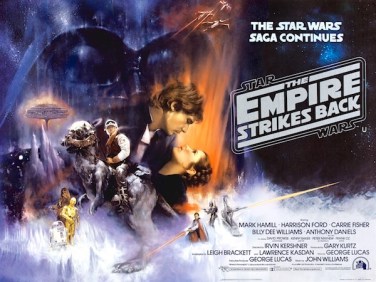
The Star Wars Saga Continues

Also Known As: Star Wars: Episode V – The Empire Strikes Back
(I may be a young whippersnapper, but I’m old enough that, when I was a kid, we still called it just The Empire Strikes Back. I thought that would be a nicer place for it among my 100 Favourites, therefore.)
Country: USA
Language: English
Runtime: 124 minutes | 127 minutes (special edition)
BBFC: U
MPAA: PG
Original Release: 21st May 1980 (UK)
US Release: 20th June 1980
First Seen: VHS, c.1990
Stars
Mark Hamill (Star Wars, The Big Red One)
Harrison Ford (Raiders of the Lost Ark, Air Force One)
Carrie Fisher (Star Wars, Hannah and Her Sisters)
Billy Dee Williams (Mahogany, Batman)
Frank Oz (The Muppet Movie, Monsters, Inc.)
Director
Irvin Kershner (Never Say Never Again, RoboCop 2)
Screenwriters
Leigh Brackett (The Big Sleep, The Long Goodbye)
Lawrence Kasdan (Raiders of the Lost Ark, Wyatt Earp)
Story by
George Lucas (Raiders of the Lost Ark, Willow)
The Story
After the evil Galactic Empire uncovers the Rebel Alliance base on Hoth, our heroes flee for the stars. Guided by a message from beyond the grave, Luke heads to meet an old Jedi master. Meanwhile, Han, Leia, Chewie, and the droids hide for a bit, then go to meet the only black man in the galaxy…
Our Heroes
Luke Skywalker: ace pilot; Jedi in training.
Han Solo: reformed criminal.
Princess Leia: wait, hold on, her planet was destroyed — surely now she’s either Queen Leia or, y’know, nothing?
Our Villain
Darth Vader: daddy issues personified.
Best Supporting Character
R2-D2 is the best supporting character in every Star Wars film, but in this one we are introduced to Yoda. Looks like a Muppet, as cheeky as a Muppet, much wiser than a Muppet. Probably. It’s hard to be certain.
Memorable Quote
“Try not. Do, or do not. There is no try.” — Yoda
Quote Most Likely To Be Used in Everyday Conversation
Leia: “I love you.”
Han: “I know.”
Memorable Scene
After a dramatic lightsaber duel, Darth Vader lops off Luke’s hand, his weapon disappearing with it. As Luke dangles over an endless fall to Certain Death, Vader decides this is the perfect moment to impart a big secret…
Memorable Music
The Star Wars Main Theme is all well and good, but here regular composer John Williams introduces us to arguably an even more iconic tune — it certainly gets played outside of the films more often, as a universal signifier of evil. That’s right, it’s the Imperial March! All together now: dum dum dum dum-duhdum dum-duhdum…
Truly Special Effect
To animate the tauntauns, Phil Tippett and ILM pioneered the use of go motion, a version of stop-motion animation that moves the puppet while the frame is being exposed so as to create motion blur, thereby making the effects more realistic. (It purposefully wasn’t used for the AT-AT walkers, to emphasise their mechanical movement by keeping it slightly jerky.) Go motion would go on to be used on films including Dragonslayer, E.T., RoboCop, and Willow. It was going to be used for the dinosaurs in Jurassic Park, but then someone had another idea…
Letting the Side Down
Lucas’ Special Edition fiddling isn’t as prevalent in Empire as in its original trilogy compatriots. If anything, the big windows in Cloud City are a nice touch.
Making of
The crew took crates of simulated snow from the Hoth set to the shoot in Norway, in case there wasn’t enough real snow on location. Somewhat ironic, then, that the location was hit by a snowstorm, coating the region so thoroughly that some of the scenes set in Hoth’s wilderness were filmed right outside the crew’s hotel.
Previously on…
The story begins, of course, in Star Wars. There’s tonnes of other material set before Empire, not least the infamous prequel trilogy.
Next time…
The Star Wars universe is immense, so don’t expect me to even attempt a summation of it. At the most essential, Return of the Jedi picks up the dangling threads of Empire and completes the trilogy, while last year’s The Force Awakens continues the narrative decades later, with more instalments to come in 2017 and 2019.
Awards
2 Oscars (Sound, Special Achievement in Visual Effects)
2 Oscar nominations (Score, Art Direction-Set Decoration)
1 BAFTA (Music)
2 BAFTA nominations (Production Design, Sound)
4 Saturn Awards (Science Fiction Film, Actor (Mark Hamill), Director, Special Effects)
4 Saturn nominations (Supporting Actor (Billy Dee Williams), Writing, Music, Costumes)
Won the Hugo for Best Dramatic Presentation
1 WGA Award nomination (Best Comedy Adapted from Another Medium — yes, really)
What the Critics Said
“It’s almost too much to expect that a sequel can ever top the success of the original, and I suspect that this will prove the case with The Empire Strikes Back […] While Empire doesn’t quite measure up to Star Wars in the freshness and originality of its script, and the plethora of space operas that has been jamming the screens ever since Star Wars has somewhat lessened the novelty of city-sized ships sailing the stratosphere, nevertheless this 20th Century-Fox release remains a rattling good entertainment, a worthy successor to the original — and far and away the best of its kind since Star Wars itself.” — Arthur Knight, The Hollywood Reporter (This original 1980 review also mixes up Yoda and Boba Fett. Fun.)
What the Public Say
“the movie suffers from as uneven a vibe as its forebear, with, especially, the midsection lacking in elements designed to wholeheartedly sustain one’s interest. This proves to be especially true of Luke Skywalker’s ongoing (and less-than-captivating) training at the hands of Frank Oz’s Yoda, as such interludes suffer from a lack of momentum that bring the proceedings to a dead stop at each and every turn. […] an erratically-paced yet consistently entertaining installment in a not-quite-great sci-fi series.” — David Nusair, Reel Film Reviews (This site gives Episodes III, IV, V and VI a rating of 3/4, but Force Awakens a full 4/4. Just so you know.)
Elsewhere on 100 Films…
I’ve written about the original Star Wars trilogy twice before, both times back in 2007. Of The Empire Strikes Back’s modified DVD version, I said that “the big change comes in dubbing both Boba Fett and the Emperor with appropriate actors from the prequel trilogy […] Other than shunning the poor original actors in such a way, Empire is much the same as ever.” Then, treating the film as the fifth part of the saga, I wrote that “a variety of elements […] have a very different impact in light of what we’ve experienced in the first trilogy. The most obvious is the revelation that Vader is Luke’s father: it’s no longer a twist, of course, but the emotional impact on Luke still makes it an important moment. Yoda […] seems to have gone a little loopy after several decades alone on Dagobah”.
Verdict
What more is there to say about The Empire Strikes Back, really? According to some polls, it’s the greatest movie of all time; even if you don’t go that far, it’s a masterpiece of blockbuster science-fantasy adventure. Every moment is tuned to tickle the thrill-glands; every special effect a labour of love that, with their inventiveness and genuine physicality, remains largely impressive today. And it’s so well paced that most people completely overlook that the storyline is chronologically challenged (Luke travels to Dagobah, meets Yoda, learns a bunch of tricky Jedi skills, and heads off to Cloud City, all while the rest of the characters hide in an asteroid field and are locked up for about five minutes). Plus it has the audacity to end on an almighty cliffhanger/revelation double-header! And in that spirit: it’s not even my favourite Star Wars movie. But I’ll tell you about that another time.
#28 will star… Travolta/Cage.

 Score:



 It’s certainly the summer of good-guy-on-good-guy dust-ups in the superhero subgenre this year, with Batman v Superman
 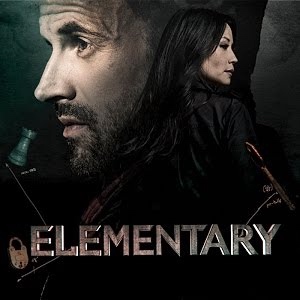 I’m a little surprised I’m still with this “Sherlock Holmes in modern day America with a female Dr Watson” series, because it was never a particularly good version of Sherlock Holmes and it still isn’t. What it has turned out to be is a decent show in its own right (for a US network procedural, anyway), with sometimes-interesting characters who happen to share the names and the odd characteristic of Sir Arthur Conan Doyle’s famed creations. It’s so much its own show that it’s never really bothered adapting the canon, so it was very odd when episode 16, Hounded, didn’t just use a few names from The Hound of the Baskervilles (as the series has in the past), but actually had a passable swing at modernising the entire plot. It doesn’t seem to have gone down too well with critics and viewers, though for my money it did a much better job than
 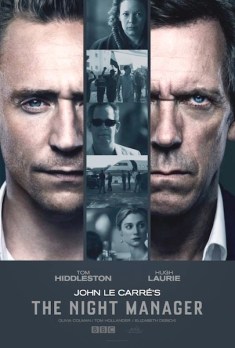 A lavish, all-star, ultra-hyped John le Carré adaptation that, thank goodness, lives up to its reputation. Although it wrapped up in the UK a couple of weeks ago, it only started in the US last night, and I recommend any America-based readers who enjoy a good thriller to get on board tout suite. The Night Manager doesn’t have a
 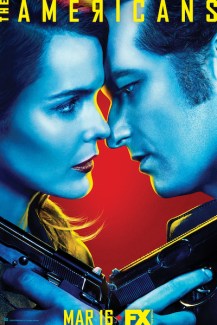 This month, I have mostly been missing season four of The Americans, aka the most underrated drama on television. Well, apart from with critics, that is, who’ve given this run










 #45 Chappie (2015)
 #53 Beverly Hills Cop II (1987)
 #60
#60 






















 Favourite Film of the Month

