The ⅔ Monthly Update for August 2016

2016 is 66.67% over — here’s how my film viewing went for the last 12.5% of that, i.e. the most recent 8.3% of the year.


#128 Batman v Superman: Dawn of Justice – Ultimate Edition (2016)
#129 Batman: The Killing Joke (2016)
#130 The Good Dinosaur (2015)
#131 Pride (2014)
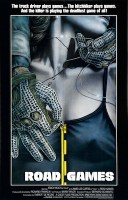
#132 Road Games (1981), aka Roadgames
#133 Armageddon (1998)
#134 The Adventures of Buckaroo Banzai Across the 8th Dimension (1984)
#135 Charlie Wilson’s War (2007)
#136 Enemy (2013)
#137 Me and Earl and the Dying Girl (2015)
#138 Deep Blue Sea (1999)
#139 Dallas Buyers Club (2013)
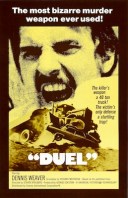
#140 Duel (1971)
#141 The Salvation (2014)
#142 The Maltese Falcon (1941)

.


  • With 15 new films watched, August is my best month since April. It’s also my 27th month in a row with 10+ films.
  • With two-thirds of the year still to go, 2016 is already my second highest year ever, having sailed passed 2014’s final tally of 136 in the middle of the month.
  • This month’s WDYMYHS viewing was the progenitor of much of what we know as film noir, the 1941 adaptation of The Maltese Falcon.


The 15th Monthly Arbitrary Awards

Favourite Film of the Month
There are a few quality films up there this month, in my opinion, both the expected (Duel, The Maltese Falcon) and the less-so (BvS Ultimate Edition, The Good Dinosaur), but probably my favourite of the lot was the Ozploitation flick you could call “Duel Down Under”, or “Rear Windscreen” — Road Games.

Least Favourite Film of the Month
For all the faults of Armageddon, the recently released Honest Trailer has just served to clarify/remind me of the disappointment of Batman: The Killing Joke.

Best Song I’d Never Heard Of Until I Saw It in a Trailer This Month
After I watched something or other on Amazon this month, one of the recommended films was Demolition starring Jake Gyllenhaal. (It wasn’t after Enemy, because I watched that on Now TV; it was probably Dallas Buyers Club. Anyway.) I knew nothing about the film but have seen it come up a few times, so I watched the trailer, and the best part of that was the music: Heart’s Crazy On You. This has been a real “how have I never heard this before?!” moment. It also made me really want to see the film, so, y’know, trailers work.

Best Bit of Audio Commentary Ever
I am going to review Armageddon eventually, but really, all you need to do is watch these 2 minutes of Ben Affleck’s commentary:

The Audience Award for Most-Viewed New Post of the Month
I tend to find reviews of alternate cuts do particularly well, hit-wise (I figure that’s why the first two Harry Potters are far and away my most-read posts ever, and still usually top the list for each day, while the other Harry Potters just see average-to-good figures). The post that topped this month’s tally doesn’t surprise me greatly, then. The winner, by a country mile (it’s already my second most-read new post of the entire year), is my review of Batman v Superman: Dawn of Justice – Ultimate Edition.


It’s a heady genre cornucopia this month, with nine movies spanning Action, Comedy, Drama, Musical, Romance, Sci-fi, Thriller, and Western — usually more than one at once.


The 8.3% of the year known as September.

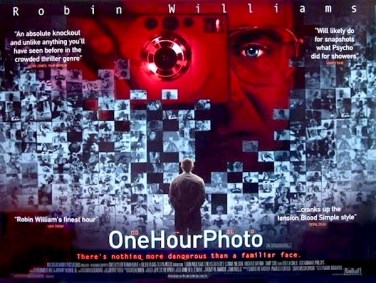
One Hour Photo (2002)

100 Films’ 100 Favourites #68

There’s nothing more dangerous
than a familiar face.

Country: USA
Language: English
Runtime: 96 minutes
BBFC: 15
MPAA: R

Original Release: 21st August 2002 (USA)
UK Release: 4th October 2002
First Seen: DVD, c.2003

Stars
Robin Williams (Mrs. Doubtfire, Jumanji)
Connie Nielsen (Gladiator, Basic)
Michael Vartan (Never Been Kissed, Colombiana)
Gary Cole (Office Space, Talladega Nights: The Ballad of Ricky Bobby)

Director
Mark Romanek (Never Let Me Go, a lot of music videos)

Screenwriter
Mark Romanek (Static, Inside Out IV)

The Story
Sy Parrish is the lead technician at SavMart’s one-hour photo developing clinic. A lonely guy, he invests all his energy in doing a great job for his customers. He’s particular fond of the Yorkins, a young family whose seemingly perfect life has become his obsession. When Sy loses his job at the same time as discovering a secret about one of the Yorkins, his quiet obsession threatens to become something darker…

Our Hero
Sy Parrish, the socially awkward but fundamentally nice department store photo technician.

Our Villain
Sy Parrish, when he snaps — though from his point of view, it’s the member of the Yorkin family that shatters his illusions of their perfect life.

Best Supporting Character
Although the film is very much focused on Robin Williams’ tour de force performance as Sy (more on that later), the cast is filled out by good turns in smaller roles. Ones that have always particularly stuck in my mind include Eriq La Salle as a detective who becomes involved as Sy goes off the rails, and Dylan Smith as the Yorkins’ sympathetic young son, who identifies Sy’s lonely sadness before anyone else. Not so hot on his Evangelion, though.

Memorable Quote
“Family photos depict smiling faces… births, weddings, holidays, children’s birthday parties. People take pictures of the happy moments in their lives. Someone looking through our photo album would conclude that we had led a joyous, leisurely existence free of tragedy. No one ever takes a photograph of something they want to forget.” — Sy Parrish

Memorable Scene
When the Yorkins are out, Sy wanders around their home, admiring the photos on the fridge, including one of himself, using the facilities, having a beer, hanging out with their dog watching TV. Then, suddenly, they come home… but it’s okay because he’s their friend. And this is all in Sy’s imagination.

Technical Wizardry
Writer-director Mark Romanek’s background is as a very successful music video director, and, as you might expect from someone with that history, his first proper feature is visually assured. In particular Sy’s workplace, SavMart, created by production designer Tom Foden as a consumerist heaven-cum-hell: a huge, white, slick place, but ultimately sterile, cold, and colourless, especially under glaring fluorescent light in the typically skilful cinematography of David Fincher’s frequent DP, Jeff Cronenweth.

Making of
In keeping with the film’s photographic theme, many of the characters are named after real-life photographers. These include: Sy’s assistant, Yoshi Araki (Nobuyoshi Araki); Sy’s boss, Bill Owens (Bill Owens); detectives Van Der Zee (James Van Der Zee) and Outerbridge (Paul Outerbridge); Officer Dan Lyon (Danny Lyon); Maya Burson (Nancy Burson); customers Mrs. von Unwerth (Ellen von Unwerth) and Mr. Siskind (Aaron Siskind); and the hotel at the end, the Edgerton (Harold Eugene Edgerton).

Awards
1 Saturn Award (Actor (Robin Williams))
4 Saturn nominations (Action/Adventure/Thriller Film, Supporting Actress (Connie Nielsen), Writing, Music)
1 Fangoria Chainsaw Award (Actor (Robin Williams) — it’s not that kind of film, is it?)

What the Critics Said
“It’s a credit to Romanek and Williams that Sy commands much sympathy; for most of the film he’s convincingly played and treated as being odd and quirky but not necessarily threatening. That Williams has come to develop a warm-‘n-fuzzy screen persona over the years works wonders for the character; not only does it make his loneliness palpable and relatable, it makes his inevitable eruption all the more shocking to behold. What makes the turn all the more disturbing, however, is no matter how unhinged he becomes, Sy never becomes nor comes off as a completely despicable character. His actions may veer off into a negative direction, but the motivation comes from a genuinely good place, though to a selfishly obsessive extreme.” — Michael Dequina, TheMovieReport.com

Score: 81%

What the Public Say
“It’s a film that over the years I’ve come to appreciate far more than my initial viewing due to the brilliant, unforgettable effort by Robin Williams who gives one of his most haunting performances. […] It’s a testament to Williams’ talent that you can be both repulsed and sympathetic to Sy. He unnerves you with his calculated obsession and creepy smile, yet it’s hard not to feel bad for a guy who simply just wants a friend or a family to call his own as he enters the twilight of his life.” — Jeffrey Lyles, Lyles Movie Files

Verdict

Part psychological thriller, part character study, One Hour Photo has some interesting things to say about how we record our memories — or how we used to, considering that digital photography and social media have since transformed that aspect of our lives. Whether or not that element of the film is past it, Robin Williams’ performance endures. It wasn’t the first time he’d played a non-comedic role, of course, but he’s so throughly subsumed in the role of the awkward, creepy Sy Parrish that it’s possible to forget it’s Williams at all. It may well be the finest acting performance from an extraordinary talent.

In #69 a ringing phone has to be answered.

Once Upon a Time in the West (1968)

100 Films’ 100 Favourites #67

There were three men in her life.
One to take her…
one to love her…
and one to kill her.

Original Title: C’era una volta il West

Country: Italy, USA, Spain & Mexico
Language: English and/or Italian
Runtime: 166 minutes (international) | 145 minutes (US theatrical) | 175 minutes (Italy)
BBFC: A (cut, 1969) | 15 (1989) | 12 (2011)
MPAA: PG (1969) | PG-13 (2003)

Original Release: 21st December 1968 (Italy)
UK Release: 14th August 1969
First Seen: DVD, c.2003

Stars
Claudia Cardinale (, Fitzcarraldo)
Henry Fonda (My Darling Clementine, 12 Angry Men)
Jason Robards (Hour of the Gun, Tora! Tora! Tora!)
Charles Bronson (The Magnificent Seven, Death Wish)

Director
Sergio Leone (A Fistful of Dollars, Once Upon a Time in America)

Screenwriters
Sergio Donati (Face to Face, A Fistful of Dynamite)
Sergio Leone (The Good, the Bad and the Ugly, A Fistful of Dynamite)

Story by
Dario Argento (Deep Red, Suspiria)
Bernardo Bertolucci (The Conformist, The Last Emperor)
Sergio Leone (The Last Days of Pompeii, For a Few Dollars More)

The Story
The mysterious Harmonica arrives in the town of Flagstone, out for revenge against Frank. Frank, working for a railroad baron, is busy murdering Brett McBain for his land and blaming the crime on the bandit Cheyenne. Cheyenne teams up with Harmonica to help McBain’s newly-arrived widow, and therefore owner of his land, Jill. Jill finds herself caught in the crossfire between the three men pursuing their own interests…

Our Heroes
Jill McBain, a former prostitute who’s still subject to the will and whims of men. Harmonica, a formidable gunslinger known only by the instrument he plays. Even Cheyenne, a bandit leader, is a good buy when they’re all arranged against…

Our Villain
Frank, the meanest sonuvabitch in the West. What did he do to Harmonica in the past? What will he do to Jill to get his way? Nothing good…

Best Supporting Character
Crippled railroad tycoon Morton only wants to intimidate the McBains to relinquish their land, which I guess makes him a nice guy when compared to his murderous handyman, Frank, who he clearly can’t control.

Memorable Quote
Harmonica: “Did you bring a horse for me?”
Snaky: “Well, looks like we’re… looks like we’re shy one horse.”
Harmonica: “You brought two too many.”

Memorable Scene
In one of the most iconic opening sequences in cinema history, three gunmen arrive at a train station and… wait for a train. For ten minutes. Ten real-time minutes, accompanied only by sounds like a squeaky windmill, a dripping water tower, and distant bird cries. Then the train arrives… and then the train leaves… and then a harmonica plays. And the action… threatens to start. Ah, Leone.

Memorable Music
It’s a Sergio Leone film, of course there’s an Ennio Morricone score — and it’s one of his best. It was composed before shooting began so Leone could play it on set, so it fits like a glove. The best bits include the striking leitmotifs: a haunting one for Jill, with wordless vocals by Edda Dell’Orso, and a dramatic one for Harmonica, threatening guitar combined with a melody played on a… well, you know.

Technical Wizardry
The entire picture looks fantastic thanks to the work of cinematographer Tonino Delli Colli. It displays all the framing and composition Leone is famous for, but also evokes an oppressive hot, sweaty feeling, and the light and texture of the image have pure cinematic quality. They don’t make ’em like this anymore.

Letting the Side Down
Leone’s original plan was for the three gunmen in the opening scene to be cameos for the stars of The Good, the Bad and the Ugly — Clint Eastwood, Lee Van Cleef and Eli Wallach — but Eastwood (who’d already turned down the role of Harmonica) was unavailable. Shame.

Next time…
Considered by some to be the first part of a thematic “Once Upon a Time” trilogy, which continues with A Fistful of Dynamite (released in some regions as Once Upon a Time… the Revolution) and Once Upon a Time in America.

What the Critics Said
“The world of a Leone Western is just as enchanted as it was in the films the director saw as a child, but the values have become confused. Heroes as well as villains are apt to be motivated by greed and revenge, and the environments in which they operate are desolate and godless, though very beautiful. The Leone Westerns are twice removed from reality, being based on myths that were originally conceived in Hollywood studios in the nineteen-thirties. […] Once Upon the Time in the West thus is a movie either for the undiscriminating patron or for the buff. If you fall somewhere in between those categories, you had better stay home” — Vincent Canby, The New York Times (Just so we’re clear, I think this is a terrible review.)

Score: 98%

What the Public Say
“The clue’s in the title: Once Upon a Time in the West is a fairy story, a mythologised version of the American West, peopled with immediately recognisable archetypes. It’s also a commentary on the Western genre itself, and a celebration in the form of a kind of “greatest hits”, full of references to other films and filmmakers: John Ford, George Stevens, Anthony Mann, Shane, The Searchers, High Noon, and so on. […] So the game isn’t originality, but Everything More Iconic Than Everyone Else. Westerns – even great Westerns – would follow, directed by the likes of Sam Peckinpah, Walter Hill, and Eastwood himself, but [this] still feels like the genre’s final word.” — Owen Williams

Verdict

America didn’t ‘get’ Once Upon a Time in the West when it first came out (hence the retrospectively laughable reviews, like the one above). The French did, though: it played for literally years in Paris cinemas, even inspiring fashion trends (the long duster coats). I confess, my initial reaction was a little more akin to the Americans’ — OUaTitW can be quite a slow film, and the plot is deceptively obscured until quite late on. But it certainly rewards repeat viewings, because it’s a film of rich content and, perhaps even more importantly, supreme style and technical achievement. The French were right (but don’t tell them that).

#68 will be… completed while you shop.

On Her Majesty’s Secret Service (1969)

100 Films’ 100 Favourites #66
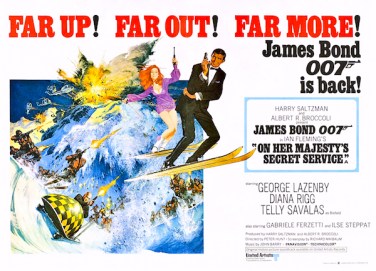
Far up! Far out! Far more!
James Bond 007 is back!

Country: UK & USA
Language: English, German & French
Runtime: 142 minutes
BBFC: A (cut, 1969) | PG (1987)
MPAA: M (1969) | PG (1994)

Original Release: 13th December 1969 (Japan)
UK Release: 18th December 1969
US Release: 18th December 1969
First Seen: TV, c.1995

Stars
George Lazenby (Who Saw Her Die?, Gettysburg)
Diana Rigg (The Assassination Bureau, Theatre of Blood)
Telly Savalas (The Dirty Dozen, Kelly’s Heroes)

Director
Peter Hunt (Shout at the Devil, Death Hunt)

Screenwriter
Richard Maibaum (From Russia with Love, The Spy Who Loved Me)

Additional dialogue by
Simon Raven (Unman, Wittering and Zigo, The Pallisers)

Based on
On Her Majesty’s Secret Service, the tenth James Bond novel by Ian Fleming.

The Story
After James Bond saves the life of Teresa DiVincenzo, her mob boss father offers him information on the location of Ernst Stavro Blofeld, who Bond has been unsuccessfully tracking for years. Operating against orders to drop his investigation, Bond goes undercover in Blofeld’s Swiss research facility to find out what nefarious scheme he’s plotting now…

Our Hero
Bond, James Bond, agent 007 of the British secret service. On this mission, he falls in love and gets married — that never happened to the other fella!

Our Villain
Bond’s second face-to-face confrontation with the head of S.P.E.C.T.R.E., evil mastermind and archetypal uber-villain Ernst Stavro Blofeld, now played by Telly Savalas. It’s a very good villainous performance, though possibly suffers by coming after Donald Pleasance’s iconic turn in You Only Live Twice.

Best Supporting Character
Contessa Teresa Draco DiVincenzo — aka Tracy, the only woman headstrong, intelligent, and bold enough to tie down international playboy James Bond.

Memorable Quote
“It’s all right. It’s quite all right, really. She’s having a rest. We’ll be going on soon. There’s no hurry, you see. We have all the time in the world.” — James Bond

Quote No One’s Going to Use in Everyday Conversation Anymore, That’s For Sure
Bond: “I find her fascinating, but she needs a psychiatrist, not me.”
Draco: “What [my daughter] needs is a man… to dominate her! To make love to her enough to make her love him! A man like you!”

Memorable Scene
As M, Q, and Moneypenny sit around wondering where the devil 007 is, a shadowy man drives an Aston Martin accompanied by the Bond theme. (As in we hear it — he’s not got it on the stereo.) To his surprise, he’s overtaken by a woman. A few miles down the road, he sees her car stopped by the beach, and she’s walking out to sea. He runs after her, scoops her up and carries her back to the shore. As she wakes up, we see his face for the first time — and it’s not Sean Connery! But he does say, “My name’s Bond. James Bond.” Then he has a punch-up. A tradition (keeping the new Bond’s face a ‘secret’ until some kind of reveal*) is instantly born.

* Not that this happens in Live and Let Die. Or Casino Royale, really. Oh well.

Write the Theme Tune…
Regular series composer John Barry aimed to help cover for the absence of Connery by making the score “Bondian beyond Bondian”, and this certainly applies to the main title theme: an instrumental number (of which there are only three in the entire series) which is surely second only to the main James Bond theme in its Bondianness. It’s a fantastic action number that sits just as well over the ski sequences as it does the opening titles. (There’s also a great cover version by the Propellerheads on David Arnold’s Shaken Not Stirred album, by-the-by.)

Sing the Theme Tune…
Nonetheless, the film does contain an original song, composed by Barry with lyrics by Hal David, and — most famously — sung by Louis Armstrong in his final recording: We Have All the Time in the World. Considering the 1967 Casino Royale also produced The Look of Love, it was clearly an unusually fertile time for Bond films to produce songs that transcended their origins.

Technical Wizardry
Various methods were used to capture the Alpine action scenes, including camera operators skiing alongside the stuntmen (backwards while holding a camera!), and using Swiss Olympic athletes for the bobsled chase (with the sequence rewritten to incorporate their accidents). Most remarkable, though, was the aerial photography achieved by cameraman Johnny Jordon. To get flexibility to shoot scenes on the move from any angle, he developed a system where he was dangled 18 feet below a helicopter in a parachute harness. Mad.

Looking good, Lazenby!Letting the Side Down
There’s little doubt that George Lazenby is the worst big-screen Bond (though all of those who came after have their detractors), but he’s not actually that bad — he certainly sells the film’s emotional ending in a way I can’t quite picture Connery managing. If he’d stuck around for a few more movies I imagine he’d be better regarded. What really lets him down is his costuming — that frilly-shirt-and-kilt outfit is half the reason people who dislike the film dislike it so much, I swear. (Here it is bigger, if you want a good look.)

Making of
Various stars of The Avengers (the classic British TV series, not the Marvel superheroes) have appeared in the Bond series — Honor Blackman in Goldfinger, Patrick Macnee in A View to a Kill (plus narrating loads of the DVD documentaries), and of course Diana Rigg here — all after they appeared on the TV show. The exception is Joanna Lumley, who appears in a small part here a few years before joining The New Avengers. Despite the diminutive size of her role, Lumley spent two months on the production, dubbing the voices of Blofeld’s whole cadre of women using German, Chinese, and Norwegian accents. She also taught the other actresses to crochet, so that was nice.

Previously on…
Five James Bond films starring Sean Connery.

Next time…
After Lazenby pulled out of his contract, Connery returned for Bond’s next adventure. There have been 17 Bond adventures on the silver screen since that, and the series continues indefinitely, with a 25th entry due in 2018 or so. On Her Majesty’s Secret Service was adapted for radio in 2014, the fourth of (to date) five Bond radio adaptations starring Toby Stephens as 007.

Awards
1 Golden Globe nomination (Most Promising Male Newcomer (George Lazenby))

How OHMSS Got a Bad Reputation
“I suspect the average filmgoer still believes Lazenby was fired because the movie flopped. Wrong on both counts. OHMSS was not a blockbuster on the scale as Connery’s previous two films, but it was a solid hit. Box-office returns were no reason to fire Lazenby, and he wasn’t fired. He quit. […] OHMSS would go over schedule and over budget and [director Peter Hunt] would continually clash with his producers as well as his star. When OHMSS didn’t prove to be a runaway success, the public would blame Lazenby, but Saltzman and Broccoli and United Artists privately blamed Hunt along with his insistence on creating a tense, serious action film faithful to Fleming. Perversely, the finest film in Broccoli and Saltzman’s series became the model of everything they wanted to avoid in the future. In their desire to run from all that OHMSS represented, they turned the next film, Diamond Are Forever, into the dumbest, sloppiest mess in the series’ history. But Connery had returned so it was another substantial box-office hit, and the producers felt vindicated in their artistically disastrous decisions. The success of Diamonds Are Forever dealt a hit to OHMSS’s reputation. Thankfully, quality cannot go ignored for long and as more people discovered Hunt’s neglected masterpiece, the more admired it has become.” — Jeffrey Westhoff, Culture Spy (that whole piece is excellent, by-the-by)

What the Critics Said
“it is nothing short of miraculous to see a movie which dares to go backward, a technological artefact which has nobly deteriorated into a human being. I speak of the new and obsolete James Bond, played by a man named George Lazenby, who seems more comfortable in a wet tuxedo than a dry martini, more at ease as a donnish genealogist than reading (or playing) Playboy, and who actually dares to think that one woman who is his equal is better than a thousand part-time playmates. […] The love between Bond and his Tracy begins as a payment and ends as a sacrament. After ostensibly getting rid of the bad guys, they are married. They drive off to a shocking, stunning ending. Their love, being too real, is killed by the conventions it defied. But they win the final victory by calling, unexpectedly, upon feeling. Some of the audience hissed, I was shattered.” — Molly Haskell, The Village Voice

Score: 82%

What the Public Say
“Not everybody is wrong about this film, of course. Steven Soderbergh and Christopher Nolan are both fond of this film. As am I. There are problems with this film, to be certain, and the problems do lie (mostly) with Lazenby. […] Having gone with the amateur Bond, they upped the ante for the girl. Diana Rigg was already a star from The Avengers and was perfectly suited to be a Bond girl. [She] is the answer, of course, as to why this film ranks as high as it does on the list of Bond films when Lazenby is so lackluster a Bond. Yes, there are good things in the film beside her – the ski scenes, the bobsled scene (you can tell the close-ups are rear projection but the longshots are real and exciting), the tragedy of the ending. But, for the first 40 years of the series she was the height of the Bond girls and she pulls this film higher than we had any right to originally expect.” — Erik, News from the Boston Becks

Verdict

The history of opinion on OHMSS is a fascinating one: written off as a failure, the series’ black sheep thanks to Lazenby and the less fantastical tone than the films that surround it; then gradually rehabilitated precisely because of that tone, to the point where it’s now almost “the Bond fan’s Bond film” (it certainly still has its detractors, who are either baffled by or in denial of its acclaim in other quarters). The ways it subverts the Bond formula are part of what makes it so memorable, but so are the ways it plays up to it, like Blofeld’s mountaintop base: considerably more plausible than the hollowed-out volcano (it’s a real place, for one thing), but no less incredible. Similarly, there’s an atypical plot, but also incredible action sequences — all done for real, too (well, aside from some iffy back projection). It does have faults that hold it back from being the best Bond movie in my estimation, but it’s up with the series’ best nonetheless.

#67 will be… a Western fairytale.

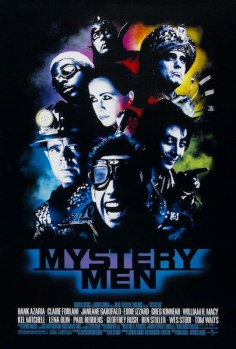
Mystery Men (1999)

100 Films’ 100 Favourites #65

They’re not your average superheroes.

Country: USA
Language: English
Runtime: 120 minutes
BBFC: PG (uncut, 1999) | PG (cut on video, 2000)
MPAA: PG-13

Original Release: 6th August 1999
UK Release: 26th December 1999
First Seen: DVD, c.2000

Stars
Ben Stiller (There’s Something About Mary, Night at the Museum)
Hank Azaria (Grosse Pointe Blank, Night at the Museum: Battle of the Smithsonian)
William H. Macy (Fargo, Magnolia)
Geoffrey Rush (Shine, Pirates of the Caribbean: The Curse of the Black Pearl)

Director
Kinka Usher

Screenwriter
Neil Cuthbert (Hocus Pocus, The Adventures of Pluto Nash)

Based on
The Mysterymen, a superhero team originally appearing in Flaming Carrot Comics, a comic book by Bob Burden.

The Story
When supervillain Casanova Frankenstein is released from prison, wannabe superhero Mr Furious overhears his plan to destroy reality. With the city’s genuine protector out of action, Mr Furious and his chums the Shoveler and the Blue Raja recruit a gang of other wannabes to defeat Frankenstein.

Our Heroes
They’re not your classic heroes, they’re the other guys: a ragtag gaggle of people with “powers”, like the Shoveler, who fights with a shovel, or Mr. Furious, who gets really angry, or the Blue Raja, who throws cutlery with great accuracy. These founding three are joined by Invisible Boy (Kel Mitchell), the Spleen (Paul Reubens), and the Bowler (Janeane Garofalo), and recruit the mysterious Sphinx (Wes Studi) to train them.

Our Villain
Criminally insane genius Casanova Frankenstein. Released from prison so that genuine superhero Captain Amazing had someone to fight, Frankenstein manages to capture his nemesis and plots to unleash the reality-bending Psycho-frakulator on the world — with only our inept heroes to stand in his way.

Best Supporting Character
Captain Amazing! Played by Greg Kinnear, the resident superhero of Champion City is too darn good at his job. With no crime left to fight, his corporate sponsors are pulling their funding — unless he can use his alter ego, influential billionaire Lance Hunt, to get one of his adversaries released…

Memorable Quote
The Shoveler: “If we had a billionaire like Lance Hunt as our benefactor…”
Mr. Furious: “That’s because Lance Hunt is Captain Amazing!”
The Shoveler: “Oh, here we go… Don’t start that again. Lance Hunt wears glasses, Captain Amazing doesn’t wear glasses.”
Mr. Furious: “He takes them off when he transforms.”
The Shoveler: “That doesn’t make any sense, he wouldn’t be able to see!”

Quote Most Likely To Be Used in Everyday Conversation
“We are number one. All others are number two, or lower.” — The Sphinx

Memorable Scene
Mr Furious, the Blue Raja, and the Shoveler gather at the latter’s house (despite his wife’s protestations) to audition potential team members. Cue a stream of daft and/or outrageous ideas for superheroes, including the Reverse Psychologist, Squeegeeman, and PMS Avenger.

Making of
For some reason a rumour has persistently done the rounds that Mystery Men was actually directed by Tim Burton, and Kinka Usher was just an alias. Goodness knows why. Usher is in fact a commercials director, and went back to that world after his miserable experience here.

Awards
1 Saturn nomination (Costumes)
1 Teen Choice Awards nomination (Choice Hissy Fit — it lost to Hanging Up. If you have any idea what Hanging Up is, your memory’s better than mine.)

What the Critics Said
“This slapstick and effects vehicle depends on poker-faced performances, production design that enhances the story partly because it doesn’t have to compensate for it, and a premise that provides seemingly inexhaustible opportunities for pratfalls and clever lines. The characters have been designed to make fun of themselves, disguising the craft of writer Neil Cuthbert and director Kinka Usher in getting us to laugh at them.” — Lisa Alspector, Chicago Reader

Score: 60%

What the Public Say
“this movie is incredibly underrated because it parodies other Superhero movies unbelievably well, and no one had the chance to see that 15 years ago. […] It does what any good parody does, by taking the expected and turning it on its head. How do other Superhero groups form? The government decides it’s a good idea to have a Supergroup. Or they all meet in some intergalactic prison. Or they form to protect the world from the Legion of Doom. None of them hold a barbecue. None of them have a female team member who kicks ass, speaks her mind, angers everyone, and wears real clothing. The movie takes every expected and turns it on its ass […] I believe if it came out this summer, or even in the fall, it would have a much bigger and better reaction. People would watch it and instinctively compare it to the other Superhero super groups they’re familiar with. It would resonate better now, and fans would have a chance to really laugh at the ridiculousness of Superheroes.” — Maria Spiridigliozzi

Verdict

Was Mystery Men ahead of its time? Coming out in 1999, it was a year ahead of the superhero revival that X-Men kickstarted. Or maybe it was behind its time? Visually, it’s on a par with other ’90s superhero efforts like Batman Forever (and I don’t mean that derogatorily). Either way, it’s an undervalued comedy. The ensemble cast are all perfect — I didn’t even have room above to mention Tom Waits as mad inventor Dr A. Heller, Eddie Izzard as henchman Tony P., or Claire Forlani as the love interest. The material they have to deliver is both witty and suitably silly, and it incorporates superhero tropes and references without relying on them. In the sub-subgenre of superhero comedies, all others are number two, or lower.

#66 never happened… to the other fella.

The Past Month on TV #7

Oh sure, some people can run and jump and swim and stuff really, really well — but can they sit on the sofa and watch TV as well as me, hm?

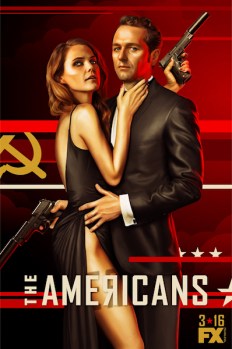
The Americans (Season 4)
The AmericansAs much as I love Game of Thrones, and think season six’s final two instalments were some of the best TV episodes of this or any other year, I think the people who say The Americans is currently the best drama on TV may well be right. Even the Emmys have got on board, giving it some long-overdue nods in big categories.
I’m not sure season four contains a single hour I can point at to say “here is where it beats Thrones”, but then that exemplifies The Americans: it’s all about how things build over time; the eventual consequences of long-term events, and the consequences of those consequences, and the consequences of… you get the idea. That was how I first got into the show: watching the first season, I thought it was good, an entertaining spy thriller, watchable enough. It was only after the finale that I realised how great it had all been and that I actually loved it. Season two is even more of a case of this: at times it feels like the show has lost its way, and then the finale comes along and shows you the endgame and suddenly the whole year makes sense. And seasons three and four have only upped the ante from there.

This season really nails all the things the show does best. The central espionage storyline about chemical weapons could be a painfully obvious metaphor for the whole premise of the show, but that element isn’t overplayed. Themes of home and family, and the ever-present issues of loyalty, are examined from every angle and in every storyline. There are huge (huge) twists and changes to the series’ status quo, which is a bold move in a fourth season when there are two still to go — to leave behind characters and storylines that have helped fuel the series for so long, when there’s an endgame in sight (and it’s not that close) is kinda bold. And the season finale is a real kicker, with powerful performances and drama, and an ending which is strikingly unresolved… though, at the same time, if the show had been cancelled it’d be pretty resolved (that’s a bizarre, Schrödinger-y thing unto itself).

With the end now in sight, I don’t have the foggiest how the creators are going to choose to wrap things up (in two years and 23 episodes’ time), which is exciting in itself — how many shows genuinely feel like they could go for any option from a number of different endings, assuming they even get to end on their own terms in the first place?

Speaking of which…

Person of Interest (Season 5 Episodes 5-13)
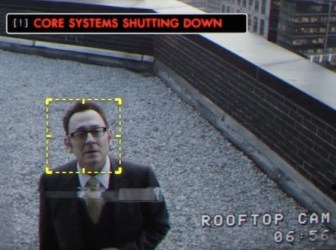
Person of InterestWatching this, it’s difficult to imagine anyone involved really believed they would get a sixth season — which is good, because (a) they stood very little chance, and (b) that means it wraps everything up to a nice, proper ending. My feelings on Jonah “brother of Christopher” Nolan’s cyber-thriller have oscillated over the years, and I’m a long way from agreeing with those who assert it’s actually one of the best sci-fi series ever; but for a show that started out as a fairly standard CBS procedural thriller, it did ultimately manage to play with and work around the network’s expectations to produce something superior. It’s a shame they clearly had to rush the final arc (marred further by having to hit a quota of ‘case of the week’ episodes, for some reason), but it still got to a good place. If you’ve not watched it but are interested, consider finding one of those “episodes you should definitely watch” guides (like this one) rather than committing to all 103 filler-riddled instalments.
Preacher (Season 1 Episodes 6-10)
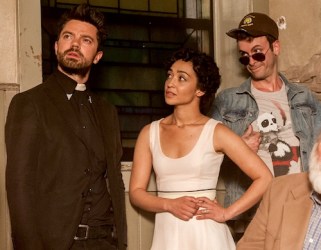
PreacherIn the end, this turned out to be less of a TV prequel to the comic book series than an expanded and rejigged adaptation of the comic’s opening four-issue story arc (with some stuff from later thrown in for added fuel). As Seth Rogen explained on the post-finale chat show Talking Preacher, the books throw an awful lot of quite comic-book-y ideas at you very quickly, and TV viewers maybe needed a little longer to digest all of that. Plus extra space to develop and examine the characters, of course. It’ll be interesting to see how future seasons handle the issue of adaptation. By the end of season one, the characters are in a place to launch into something closer to the rest of the comic; but, at the same time, budget issues have already forced some reimagining, so what else will it be forced to compromise or reinvent? I think the bold, fearless barminess of the TV series has earned it the right to our attention, whether it goes further off piste or hews closer still to its roots.
Also watched…
  • Cowboy Bebop Episodes 19-20 — slowly slowly reachy movie
  • Friday Night Dinner Series 4 Episodes 1-3 — an underrated gem of British comedy. Each episode is a perfectly-crafted little farce performed by a stellar cast.
  • Gilmore Girls Season 7 Episodes 21-22 — after a mostly lacklustre season, it wasn’t a bad finale all told. Still, November’s revival will hopefully be even better.
  • Miranda Series 1 Episode 1-Series 3 Episode 2 — starting (and almost finishing) a completeroni what I call re-watch. Such fun!
  • The Musketeers Series 2 Episodes 1-3 — if you like swashbuckling drama (and I do), this is a real gem. Shame on me for being so tardy about keeping up with it.

    Things to Catch Up On
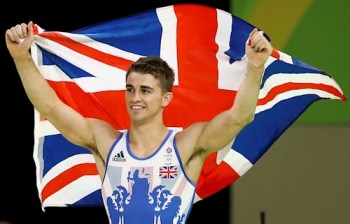
    Max WhitlockThis month, I have mostly been missing… not that much, really. With the Olympics dominating the good TV channels and much of US drama on its summer hols, there doesn’t seem to have been much on. I haven’t gone crazy for Rio 2016 like I did for London 2012 (much to my surprise at the time, that was), though we’ve caught bits and pieces, not least Max Whitlock’s double gold (along with 10.4 million other people) and Andy Murray’s gruelling final. The drama of the next few days, when we’ll see if Britain can become the first host country ever to increase its tally at the next summer games, is sure to hold my attention.
    Next month… with its spin-off on the horizon, I’m finally getting round to 24: Live Another Day. Also, Bake Off’s back! Who doesn’t love Bake Off?

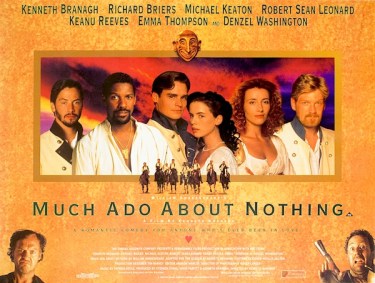
  • Much Ado About Nothing (1993)

    100 Films’ 100 Favourites #64

    A romantic comedy for anyone
    who’s ever been in love.

    Country: UK & USA
    Language: English
    Runtime: 111 minutes
    BBFC: PG
    MPAA: PG-13

    Original Release: 26th May 1993 (France)
    UK Release: 27th August 1993
    First Seen: VHS, c.1997

    Stars
    Kenneth Branagh (Henry V, Hamlet)
    Emma Thompson (Howards End, Sense and Sensibility)
    Kate Beckinsale (Underworld, Love & Friendship)
    Robert Sean Leonard (Dead Poets Society, House)
    Denzel Washington (Glory, Training Day)
    Keanu Reeves (Bill & Ted’s Excellent Adventure, The Matrix)
    Richard Briers (Watership Down, Hamlet)
    Michael Keaton (Beetlejuice, Birdman)

    Director
    Kenneth Branagh (Henry V, Thor)

    Screenwriter
    Kenneth Branagh (In the Bleak Midwinter, The Magic Flute)

    Based on
    Much Ado About Nothing, a play by William Shakespeare.

    The Story
    When Don Pedro and his chums visit his friend Leonato at his villa in Sicily, they wind up arranging a marriage between Leonato’s daughter, Hero, and one of Don Pedro’s men, Claudio. To bide time until the nuptials, the happy friends attempt to reconcile argumentative pair Beatrice and Benedick — but Don Pedro’s good-for-nothing half-brother, Don John, plots revenge by ruining Hero’s reputation…

    Our Heroes
    The plot hinges on the romance of Claudio and Hero, and the machinations of Don John to disrupt it, but the central characters are Beatrice and Benedick and the witty verbal sparring that characterises their love-hate relationship.

    Our Villains
    Don John, the bastard. Because he’s an illegitimate son. But also because he tries to ruin someone’s wedding by faking infidelity, which isn’t exactly the nicest way to behave.

    Best Supporting Character
    Don Pedro, a prince who has just quashed an uprising by his duplicitous half-brother (see above), seems to be an inveterate matchmaker, first arranging Claudio’s marriage to Hero, then plotting to see Beatrice and Benedick coupled — despite quietly professing his own feelings for Beatrice.

    Memorable Quote
    “He that hath a beard is more than a youth, and he that hath no beard is less than a man. And he that is more than a youth is not for me, and he that is less than a man, I am not for him.” — Beatrice

    Memorable Scene
    The plan to dupe Beatrice and Benedick into loving each other in action: in the villa’s gardens, Don Pedro, Leonato, and Claudio ensure Benedick is eavesdropping while they stage a conversation about how much Beatrice loves him, and Hero and her maid Ursula do the same to Beatrice.

    Letting the Side Down
    I’ve always thought the scenes featuring Michael Keaton and Ben Elton hamming it up are a bit… broad.

    Making of
    The CliffsNotes on the play also cover this film, and notes that “the [opening] scene is cut by more than half, and yet the omissions are seamless to any viewer who has not memorized the lines or is not following the script. Branagh has omitted or cut to the bone several subsequent scenes and their lines, sometimes inserting in their place a visual scene that conveys the incident more dramatically than the words. At other times, he has cut lines and thinned out long speeches to keep the story moving and to eliminate unnecessary details.” Other major cuts are listed at the link.

    Awards
    Nominated for the Palme d’Or
    1 BAFTA nomination (Costume Design)
    1 Razzie nomination (Worst Supporting Actor (Keanu Reeves))

    What the Critics Said
    “Shakespeare’s comedies were always meant for the people […] the subject matter was low: sexual politics, power games, nasty betrayals, romantic deceptions and other quintessentially human activities. […] Maybe these plays were classics of the future, but they were the Benny Hill of their time. With Much Ado About Nothing, Kenneth Branagh has, once again, blown away the forbidding academic dust and found a funny retro-essence for the ’90s.” — Desson Howe, The Washington Post

    Score: 91%

    What the Public Say
    “For those who don’t find Shakespeare’s comedies funny, this is the film to see, because it’s hilarious. It isn’t just the lines that create laughter, but the manner in which they’re set up and delivered. Expressions and actions often play a large part in the comedy, some of which is decidedly physical. These are the kinds of things that don’t appear on the written page. The film also contains its share of drama, and the pathos and poignancy come as easily and naturally as humor. […] I’m not sure if ‘feel good’ has ever been used to describe a picture based on the Bard’s work, but the expression fits.” — James Berardinelli, ReelViews

    Verdict

    There’s a lot of comedy in Shakespeare — not just in his Comedies, but scenes in his Tragedies too (even a pretty dark one like Macbeth sees the story put on pause to indulge in a comedic monologue). The problem is, to modern ears at least, it’s just not funny (that one in Macbeth is commonly cut). So it’s an even greater achievement that writer-director-star Kenneth Branagh here produced a film that was both accessible and genuinely funny. Combining intelligent cuts to the text with assured performances produces a film that, at its best, plays like a period screwball comedy. Consequently, it was that rare thing: a Shakespeare adaptation that became a box office success. That’s something worth making much ado about.

    #65 is… number one. All others are number two, or lower.

    Moulin Rouge! (2001)

    100 Films’ 100 Favourites #63

    Truth — Beauty — Freedom — Love

    Country: USA & Australia
    Language: English
    Runtime: 128 minutes
    BBFC: 12
    MPAA: PG-13

    Original Release: 16th May 2001 (L.A., USA)
    UK Release: 7th September 2001
    First Seen: DVD, 2002

    Stars
    Nicole Kidman (Eyes Wide Shut, The Hours)
    Ewan McGregor (Trainspotting, Star Wars – Episode III: Revenge of the Sith)
    John Leguizamo (Super Mario Bros., Land of the Dead)
    Jim Broadbent (Iris, Harry Potter and the Half-Blood Prince)
    Richard Roxburgh (Mission: Impossible II, Van Helsing)

    Director
    Baz Luhrmann (Romeo + Juliet, Australia)

    Screenwriters
    Baz Luhrmann (Strictly Ballroom, The Great Gatsby)
    Craig Pearce (Romeo + Juliet, The Death and Life of Charlie St. Cloud)

    Music by
    Craig Armstrong (Love Actually, The Great Gatsby)

    The Story
    Paris, 1899: while pitching a show to the owner of the Moulin Rouge nightclub, writer Christian falls for the venue’s leading lady, Satine. Despite her mutual attraction, Satine has been promised to the Duke of Monroth in exchange for his investment in the cabaret. As preparations for the show continue, Christian and Satine’s love blossoms nonetheless. Will true love conquer commerce?

    Our Heroes
    Christian is just a poor, miserable poet living among Bohemians in turn-of-the-century Paris, until he meets and falls in love with Satine, the Moulin Rouge’s star act and courtesan.

    Our Villain
    Unfortunately for Christian, Satine has been promised to the Duke of Monroth, a nasty piece of work who will have his way or have Christian killed.

    Best Supporting Character
    The Moulin Rouge’s exuberant owner, Harold Zidler, is prepared to essentially sell Satine for investment in his establishment. Which makes him sound like a horrible so-and-so, but actually he cares for her deeply.

    Memorable Quote
    “The greatest thing you’ll ever learn is just to love and be loved in return.” — Christian

    Memorable Scene
    Zidler convinces Satine that she must tell Christian she doesn’t love him, to save his life from the murderous intentions of the Duke. As she leaves the Moulin Rouge to break Christian’s heart, Zidler delivers an emotional rendition of Queen’s The Show Must Go On.

    Best Song
    The film is packed with interesting reinterpretations of modern pop hits. Personally, I love a reimagined cover version, so picking just one is bloody tough. There are a couple of mash-ups that work particularly well: the big number when Christian & friends first arrive at the eponymous establishment, which crashes Lady Marmalade against Smells Like Teen Spirit; and the Elephant Love Medley, which wittily re-appropriates lyrics from a gaggle of love songs (eight, to be precise) into one number. However, the best of all may be a reimagining of the Police’s Roxanne as a dramatic dance number, El Tango de Roxanne.

    Technical Wizardry
    One of the most controversial aspects of what is a love-it-or-hate-it film anyway is its editing style. Eschewing the familiar trappings of Hollywood musicals, Luhrmann has the entire film shot (by Donald M. McAlpine) and edited (by Jill Bilcock) as if it were a modern music video. In total, there are just shy of 3,600 shots in the film (according to this analysis), which gives it an Average Shot Length (ASL) of just 2 seconds. For comparison, the mean ASL for US films released the same year was around 5 seconds. Even now, over a decade later, the ASL for English-language films sits at about 2.5 seconds.

    Making of
    It’s now quite well known that musicals need to contain a brand-new song to be eligible for the Best Song Oscar. Obviously this is normally relevant to adaptations of stage musicals, but naturally it applies to Moulin Rouge, too. The film’s one new song is Come What May, but it was ruled ineligible for the Oscar because it was actually written for Luhrmann’s Romeo + Juliet, even though it wasn’t used in that film. The music arm of the Academy really are a tricky bunch.

    Previously on…
    Moulin Rouge is the third part of Baz Luhrmann’s thematically-linked Red Curtain Trilogy, following Strictly Ballroom and Romeo + Juliet.

    Awards
    Nominated for the Palme d’Or
    2 Oscars (Art Direction-Set Decoration, Costume Design)
    6 Oscar nominations (Picture, Actress (Nicole Kidman), Cinematography, Editing, Makeup, Sound)
    3 BAFTAs (Supporting Actor (Jim Broadbent), Music, Sound)
    9 BAFTA nominations (Film, Director, Original Screenplay, Cinematography, Production Design, Costume Design, Editing, Visual Effects, Make Up/Hair)
    5 Australian Film Institute (AFI) awards (Cinematography, Editing, Sound, Costume Design, Production Design)
    5 AFI nominations (Film, Director, Actor (Ewan McGregor), Actress (Nicole Kidman), Supporting Actor (Richard Roxburgh))
    3 World Soundtrack Awards (including Most Creative Use of Existing Material on a Soundtrack)
    2 World Soundtrack Awards nominations (including Best Original Score of the Year Not Released on an Album)

    What the Critics Said
    “The time, the effort and the sweat are all up there on the screen in this opulent, no-holds-barred and multilayered movie. [It] is wrapped up in such an audacious mix of traditional and contemporary song — including David Bowie, Elton John, Madonna and Nirvana — and staged with a near-insane visual ambition, you will either fall in love with every camp flourish, or find yourself exhausted after 20 minutes. It’s a singular achievement either way.” — Andrew Collins, Radio Times

    Score: 76%

    What the Public Say
    “one of the great movie spectacles of this generation, an undertaking of vast scope made all the more fascinating by how it transforms commonplace undercurrents into rich sensations […] There is a sense that these concepts are simplified for the sake of basic comprehension, but the picture doesn’t so much strip them of complexities as it penetrates to the core of their meaning. That creates a scenario where the story simply observes the indulgences that manifest in the rhythms, the music, the dance moves, the vocals, the dialogue, the facial expressions and the daydreams that inhabit the characters. It seeks no more profound a purpose. Some find the implication startlingly straightforward in an endeavor where the technical achievements are such a subversive triumph, but I applaud it; how frequently has any ambitious Hollywood production been willing to see past the varnish of a formula and deal directly with the ideals[?]” — David M. Keyes, Cinemaphile

    Verdict

    These days there are plenty of musicals appearing on the big screen, and they’re often contending for the top gongs come awards season. This wasn’t the case back in 2001 — Moulin Rouge, divisive as it is, changed all that (it was the first musical nominated for the Best Picture Oscar in a decade, and the previous one was a Disney animation). Baz Luhrmann’s injection of modern MTV style gave the genre a kick up the arse, which isn’t necessarily to the taste of classic musical fans but certainly brought the genre renewed mainstream attention. Mixing in his theatrical storytelling, melodramatic emotions, and vibrant and extravagant costumes and sets, Luhrmann created a heady film designed to give modern audiences a sense of how visiting the Moulin Rouge would’ve felt in 1899 (well, it’s certainly not the literal experience!) It’s clearly not a film that meets all tastes, but if you’re on its wavelength then it’s magnificent.

    The first half of Baz Luhrmann’s Netflix series, The Get Down, was released on Friday, which is a neat coincidence.

    #64 will be… a lot of fuss over very little.

    Quadruple Drabble: Mediocre films by directors who should do better

    I have a massive backlog of reviews, and I keep watching new stuff, so there literally aren’t enough days in the year to clear it. In aid of that, here’s three connected quickies — according to wordcounter.net, it should take you less than 90 seconds to read all of them.

    The theme, as the title suggests, is directors we have good reason to expect much of, but in this particular instance have let us down. They are Luc Besson, Michael Mann, and (to a lesser extent) Neill Blomkamp.

    Here is what they made:

    Lucy
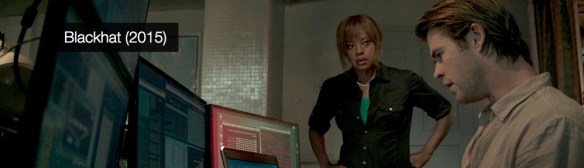
    Blackhat
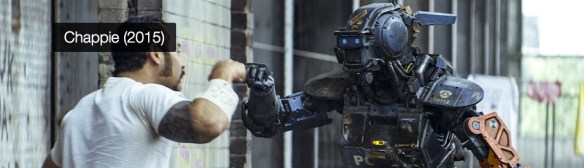
    Chappie

    (Why ‘quadruple’? This post has 100 words too!)

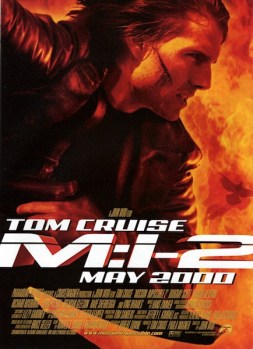
    Mission: Impossible II (2000)

    100 Films’ 100 Favourites #62

    M:I-2

    Also Known As: M:i-2

    Country: USA & Germany
    Language: English
    Runtime: 123 minutes
    BBFC: 15
    MPAA: PG-13

    Original Release: 24th May 2000 (USA)
    UK Release: 7th July 2000
    First Seen: cinema, July 2000

    Stars
    Tom Cruise (Top Gun, Jack Reacher)
    Dougray Scott (Ever After: A Cinderella Story, Enigma)
    Thandie Newton (Besieged, Crash)
    Ving Rhames (Pulp Fiction, Dawn of the Dead)

    Director
    John Woo (Hard Boiled, Face/Off)

    Screenwriter
    Robert Towne (yes, the author of The Most Perfect Screenplay Ever™, Chinatown)

    Story by
    Ronald D. Moore (Star Trek: First Contact, Battlestar Galactica)
    Brannon Braga (Star Trek: First Contact, Star Trek: Enterprise)

    Based on
    Mission: Impossible, a TV series created by Bruce Geller.

    The Story
    When rogue IMF agent Sean Ambrose steals every sample of Bellerophon, the only cure to deadly man-made virus Chimera, his former colleague Ethan Hunt is assigned to get it back. His team includes Nyah Nordoff-Hall, Ambrose’s former lover, who Hunt must send undercover in the villain’s operation. Ambrose plans to blackmail Biocyte, the company behind Chimera, and potentially unleash the virus on the world — unless Hunt & co can destroy it first.

    Our Heroes
    Daredevil IMF agent Ethan Hunt is back, this time with floppy hair! Basically a one-man team, the film nonetheless nods to Mission: Impossible’s original team-based format by having him recruit thief Nyah Nordoff-Hall and his computer expert chum from the first film, Luther Stickell. There’s also pilot Billy Baird, but I’d completely forgotten about him until I looked up a plot summary.

    Our Villain
    A former IMF agent gone bad, Sean Ambrose therefore has access to some of the same skills and tech as Hunt, like those (basically magic) masks. Not so fond of dangling from ventilation shafts, though.

    Best Supporting Character
    For some reason Richard Roxburgh has always stuck in my mind as Ambrose’s South African henchman, Stamp. It was the start of a very successful few years for Roxburgh, in which he had leading roles in high-profile movies like Moulin Rouge, The League of Extraordinary Gentlemen, and Van Helsing, playing Dracula in the latter, and was also Sherlock Holmes in a major BBC adaptation of The Hound of the Baskervilles. I guess the lack of critical success that greeted most of those is why he’s somewhat fallen off the radar since.

    Memorable Quote
    “Mr. Hunt, this isn’t mission difficult, it’s mission impossible. ‘Difficult’ should be a walk in the park for you.” — Swanbeck

    Memorable Scene
    At the sale of the cure, Ambrose’s henchman, Stamp, captures Hunt and drags him before his boss. As Ambrose gloats, Hunt can only mumble in protest because Stamp broke his jaw. With great glee, Ambrose unloads his gun into Hunt… and only then spots his little finger, which is missing its tip — just like Ambrose did to punish Stamp earlier. He approaches Hunt and pulls his face off to reveal the real Stamp, his mouth taped shut. Meanwhile, ‘Stamp’ is running off with the cure, and as the Mission: Impossible theme surges on to the soundtrack he whips his mask off to reveal (of course) Hunt. #owned.

    Memorable Music
    The rock version of the main theme, composed by Hans Zimmer and also turned into a song (a song! with lyrics!) by Limp Bizkit, was ever so cool at the time, at least to my teenage ears (I loved the entire soundtrack, actually). It all sounds terribly dated and turn-of-the-millennium now, but hey, that’s music and the ravages of time for you.

    Technical Wizardry
    For the much-trailed close-up shot where Ambrose nearly shoves a knife in Hunt’s eye, Tom Cruise — in a typical daredevil move — insisted a real knife be used and that it stopped just a quarter-inch from his eyeball. To achieve it with some degree of safety, that knife was attached to a cable that was carefully measured to ensure it wouldn’t, you know, half-blind a major movie star.

    Letting the Side Down
    “All of it!” Oh, hush, you.

    Making of
    John Woo’s final cut was 3½ hours long. The studio balked at this (understandably!) and ordered a final length of no more than 2 hours. According to IMDb’s trivia, “this could explain why there are so many plot holes and continuity errors in the theatrical cut.” I’ve never noticed those, personally, but now I’d be fascinated to see that longer version. Considering it’s 16 years later and the film isn’t well liked, I guess we’ll never get the chance.

    Previously on…
    Part of the James Bond-provoked spy-fi craze of the ’60s, the original Mission: Impossible TV series ran for seven seasons, was revived for two more at the end of the the ’80s, and then relaunched as a Tom Cruise film franchise in ’96. (That film narrowly missed out on a place here.)

    Next time…
    To date, three more sequels, with a sixth (at least) in development. The third also missed out on inclusion here, while the fourth and fifth are part of 100 Films.

    Awards
    2 Razzie nominations (Worst Supporting Actress (Thandie Newton), Worst Remake or Sequel)
    2 MTV Movie Awards (Male Performance (Tom Cruise), Action Sequence (the motorcycle chase))
    2 Teen Choice Awards nominations (including Wipeout Scene of the Summer)
    [Thandie Newton was also nominated for Female Newcomer at the Blockbuster Entertainment Awards, British Actress at the Empire Awards, and Supporting Actress at the Image Awards. Take that, Razzie!]

    What the Critics Said
    “The first Mission: Impossible (1996) had a plot no one understood. Mission: Impossible 2 has a plot you don’t need to understand. It’s been cobbled together by the expert Hollywood script doctor Robert Towne out of elements of other movies, notably Hitchcock’s Notorious (1946) from which he takes the idea that the hero first falls in love with the heroine, then heartlessly assigns her to resume an old affair with an ex-lover in order to spy on his devious plans. […] If the first movie was entertaining as sound, fury and movement, this one is more evolved, more confident, more sure-footed in the way it marries minimal character development to seamless action.” — Roger Ebert, Chicago Sun-Times

    Score: 57%

    What the Public Say
    “compared to the wildly complicated and almost infuriatingly labyrinthine plot of DePalma’s Mission: Impossible it seems like nothing is happening in M:I-2, but the plot here is actually pretty top-notch. […] what I once considered emotionally unsatisfying and intellectually sub-par now seems kind of fascinating. I still tend to not like plots that revolve around a man-made disease as a MacGuffin — I have no idea why, but they always seem lazy to me — but the Cruise/Newton/Scott love triangle holds some very honest beats […] Scott plays a very interesting, unique kind of villain, one I can’t entirely explain. But I think he succeeds in humanizing somebody who is written to be despicable. Scott’s tearful intensity when he learns of Thandie’s betrayal is almost sympathetic.” — Marcus Gorman, 10 Years Ago: Films in Retrospective

    How M:I-2 Makes More Sense If You Consider It In a Different Context
    “Fully asserting the series reboot mantra, M:I-2 eschews the original’s ethos in favour of […] traditional, near self-parodic Woo bombast (not enough for some fans, but there’s set pieces here that are among his very best). It’s often dopey, but then, to be fair, so are a lot of Hong Kong action films that don’t tend to get flak for that attribute, including Woo’s own action masterpieces made there. Fifteen years on and three more sequels later, it’s curious to observe how Woo’s film is even less like a traditional Hollywood action blockbuster than De Palma’s.” — Josh Slater-Williams, Vague Visages (the full piece has more analysis in this vein)

    Verdict

    M:i-2, as we used to call it, is pretty much everyone’s least-favourite Mission movie, a place only cemented by the two excellent instalments that have been released during this blog’s lifetime. To be honest, I’ve never really been sure why. It’s very much a John Woo movie, all overblown action and melodramatic stakes, and I’d be tempted to say that turns people off were it not for the love Face/Off receives. Personally I like his style, and I always thought it neat that the Mission series aimed to avoid having a “house style” by hiring distinctive directors for each instalment (a plan that went out the window almost as soon as it began thanks to tapping the bland J.J. Abrams for the third one, but hey-ho). For my money, M:I-2 has a strong storyline (as action-thrillers go), a threatening villain (particularly with his IMF-recruited ex-girlfriend undercover in his operation), and entertaining action sequences. For its genre, what more do you want?

    #63 will be about… truth, beauty, freedom, love.