
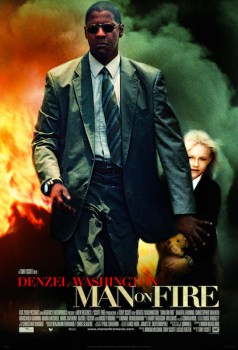
A vow to avenge.
Country: USA & UK
Language: English & Spanish
Runtime: 146 minutes
BBFC: 18
MPAA: R

Original Release: 23rd April 2004 (USA)
UK Release: 8th October 2004
First Seen: in-flight, c.2004
Stars
Denzel Washington (Philadelphia, Training Day)
Dakota Fanning (War of the Worlds, The Runaways)
Radha Mitchell (Pitch Black, Melinda and Melinda)
Christopher Walken (The Deer Hunter, Hairspray)
Marc Anthony (Bringing Out the Dead, El cant ante)
Director
Tony Scott (Top Gun, Enemy of the State)
Screenwriter
Brian Helgeland (L.A. Confidential, Legend)
Based on
Man on Fire, a novel by A.J. Quinnell.
The Story
As a wave of kidnappings from rich families sweeps Mexico City, burnt-out former soldier Creasy is hired as the bodyguard of little Pita Ramos. She begins to bring him out of his reclusive shell, so when he fails to prevent her abduction, he vows to make the people responsible pay — very, very violently.
Our Hero
Washed-up alcoholic former Marine and ex-CIA operative John Creasy is a broken man, only taking bodyguard work in Mexico City because he needs the cash. He still has a particular set of skills at hand when needed, though.
Our Villains
An array of ruthless kidnappers and corrupt cops, though some of the villains may be closer to home…
Best Supporting Character
Dakota Fanning has relatively limited screen time as little Pita, at least after the first act, but it’s enough for the viewer to warm to her as much as Creasy does, getting us on side for the violence to come.
Memorable Quote #1
“Creasy’s art is death. He’s about to paint his masterpiece.” — Rayburn
Memorable Quote #2
“Forgiveness is between them and God. It’s my job to arrange the meeting.” — Creasy
Memorable Scene
After corrupt detective Fuentes is kidnapped by Creasy, he wakes up tied to the bonnet of a car wearing just his boxers. Creasy demonstrates how he built a small bomb, before informing Fuentes where that bomb is currently located. To be blunt: it’s in Fuentes’ ass. That certainly gives the interrogation a different flavour.
Technical Wizardry
The film’s visual style — jumpy cutting, heavy saturation, etc — is apparently designed to reflect Creasy’s fractured mental state. The most memorable part, at least for me, were the subtitles, which use various fonts, placements, and reveals to make them feel part of the whole package, rather than a bunged-at-the-bottom last-minute addition.
Making of
The film was really shot in Mexico City, under the real threat of kidnapping and/or other violence. Radha Mitchell was escorted by three bodyguards after her driver was carjacked at gunpoint; Denzel Washington was also surrounded by bodyguards at all times; several crew members were robbed at gunpoint, and, according to the police, the crew were also targeted for kidnapping
Previously on…
A.J. Quinnell’s novel was previously adapted in 1987 starring Scott Glenn, Joe Pesci, and Jonathan Pryce.
Awards
2 Golden Trailer Awards nominations (Best Action (for trailer C), Best Drama (for trailer B))
3 nominations for Dakota Fanning as supporting or young actress (Broadcast Film Critics Association Awards, Golden Schmoes Awards, Young Artist Awards)
What the Critics Said
“On paper, we have a well-worn initial-mistrust-gives-over-to-mutual-affection arc, but Washington’s despair-tinged reserve and Fanning’s astonishing naturalness give the relationship warmth and resonance. Fanning exudes more than enough charm and decency to make Creasy’s renewal of faith completely believable. […] As the action goes increasingly over the top, so does Scott’s visual pyrotechnics. Probably setting a new world record for the number of different film stocks in one movie, Scott and hot-to-trot cinematographer Paul Cameron (Collateral) whip-pan and crash-zoom to new levels of excess, heightening both the teeming life of Mexico City and the anxiety around Pita’s kidnapping. Best of all are the subtitles: rather than simply translating dialogue, they assault the viewer, conveying drama and emotion through aggressive graphic design. You’ve never seen any done like this before.” — Ian Freer, Empire
 Score:
 39%
39%(I had no idea this was so critically reviled! I thought it was quite well liked, in fact.)
What the Public Say
“it is relentless in assaulting your senses and your sensibilities, and that can often be unpleasant, at best. While this is obviously the intended effect in many cases, [it] has the effect of making it unlikeable to watch, if not for the actions of its star character, then just for the fact that it seems intent on making the audience feel every ounce of anguish in the torturer and his victim. It’s definitely intended, but it doesn’t exactly result in me feeling empathy for either character, one way or another. It must be said, however, that Tony Scott is not afraid to have his character do horrible things to people. He’s not concerned about what the audience thinks about Creasy so much as they just consider why he is.” — CJ Stewart, The Viewer’s Commentary

On the one hand, Man on Fire represents the start of Tony Scott’s stylistic excess that would see him through the rest of his career — the jumpy editing, oddly saturated images, etc. (It’s also present to an extent in Spy Game, though.) It would get a bit much at times (Domino), but Man on Fire uses it effectively. On the other hand, the film works just as well as a character-driven revenge drama. Rather than rush to the shooting-and-killing, Scott and screenwriter Brian Helgeland take their time to build the relationship between Creasy and Pita, so that when we do reach the vengeance portion of the story, you’re as invested as the characters are. Of course, from there it is (as a film from the year before would put it) a roaring rampage of revenge.

#58 will be… practically perfect in every way.
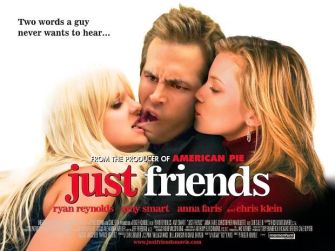 I was aware of the existence of Just Friends in the way you’re aware of any movie with name actors that came out during the period in which you were cognisant of films that were being released — that is to say, I knew it was a film and it was a comedy, and I had paid it no heed beyond that. Until a couple of months back, when
  For all kinds of reasons, Just Friends spends a long time feeling like a morally bankrupt movie. It’s unclear if it’s praising or condemning Chris’ frivolous lifestyle, if he needs saving by coming home, or if he deserves revenge on the people who mistreated him. We know what the standard Hollywood perspective on these things is, so kudos to some degree for dodging it (at least for a while), but it doesn’t commit to the other direction either. What the story really amounts to is wish fulfilment on an epic scale. Its message is essentially: you can go back to your past and make it better. Maybe I’m just a cynic, but that’s not something I believe.
 One lesson I took from watching Just Friends (as if I didn’t know this already) was that just because a bunch of people defend something they like in a comments thread on the internet, it doesn’t mean you’ll like that thing too, even if that comments thread is on the A.V. Club. Nonetheless, while Just Friends is not any kind of “must see” film, as a 90-minute diversion — with, at this temporal distance, a splash of mid-’00s nostalgia — it’s passably entertaining.
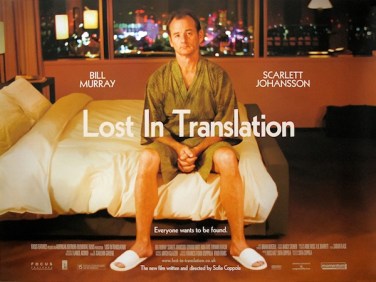



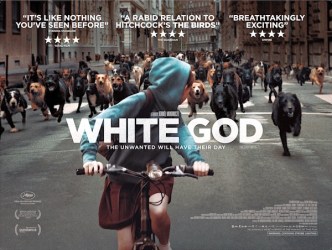 Thirteen-year-old Lili (Zsófia Psotta) and her dog Hagen are forced to temporarily live with her father, Dániel (Sándor Zsótér), because her mother is going on holiday with her new partner. Dániel doesn’t like Hagen anyway, but when the dog’s behaviour causes problems for him, he sets Hagen loose on the streets. Already angry with her father and his attitude, a devastated Lili sets out to find her beloved dog, who is busy discovering the darker side of mankind and our treatment of animals.
 For all the toughness of the journey, where it leads is triumphant; not entirely so, I must add, but enough. The film’s third act can pithily be described as Rise of the Planet of the Dogs: having seen the abuses of humans, an impounded Hagen leads a canine uprising that seeks to… well, they don’t speak (they’re dogs, remember, and this isn’t Disney), so who knows what their precise aims are? “Revenge” would be too cruel, but they definitely seeking some retribution. The film’s sadness doesn’t disappear (hence why not entirely triumphant), but some wrongs are righted.
 Some will find the middle of the film a slog, I suspect, both emotionally and with its occasionally lagging pace. However, the bookends seek to justify it. There’s catharsis in the finale, as described, but even better is the film’s opening. It has to be seen to be properly understood, but it’s operatically scored, shot, and edited, and involves hundreds (literally) of trained dogs en masse. It’s spectacular, unforgettable moviemaking; perhaps even one of the best openings to a film ever. And I don’t say that just as a “dog person”.



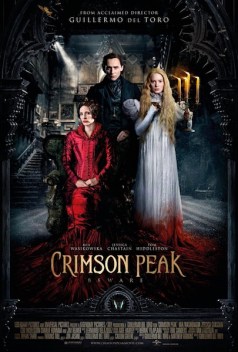 Mia Wasikowska stars opposite a British thesp best known for playing a comic book villain and a red-headed repeat-Oscar-nominee, in a Gothic drama-thriller from an acclaimed non-Anglo director? That’s a description of
 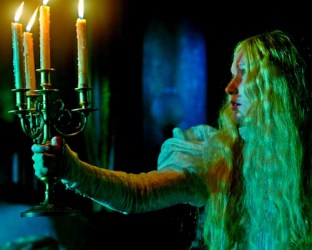 The story actually concerns Edith Cushing (Wasikowska), a well-to-do businessman’s daughter in upstate New York who is occasionally haunted by ghosts. She falls for visiting English gent Sir Thomas Sharpe (Hiddleston) and, long story short, moves with him and his haughty sister Lucille (Chastain) back to their crumbling — literally — pile in the English countryside. The house hides many secrets, and ghosts, too. Having said it’s not a horror movie, it would be unfair to class Crimson Peak as simply a tame drama — as you’d expect from writer-director Guillermo del Toro, those ghosts can be bleedin’ scary, and there are certainly a smattering of good old fashioned jumps to boot.
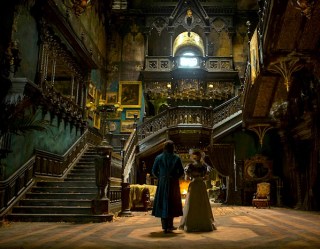 Whatever one’s thoughts on the story and tone of the film, it can’t be denied that its technical merits are extraordinary. Every inch of the design work is gloriously imagined, and the cinematography — the lighting in particular — is spectacular. And that gigantic house set…! And the climactic ‘limbo’ set, too — incredible work. (That’s not a spoiler, incidentally: it was the set’s nickname, not its literal location.) The ghost effects are excellent too — original, creepy, and executed in a way that blurs the lines between make-up, animatronics, and CGI. It’s a shame the film as a whole wasn’t better received, because I imagine that’s all that held it back from numerous awards-season nods.
 The same summer that Christopher Nolan revitalised the Dark Knight with the critically acclaimed and commercially successful
 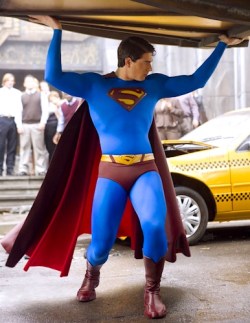 All of that was ten years ago now, since when plans for a sequel have been abandoned, the character has had
  often for good reason, but (a) sometimes a new telling is the right way to go, and (b) if you’re going to pick up a character mid-life, you still need to treat it as a new and standalone story if its immediate predecessor was released decades ago.
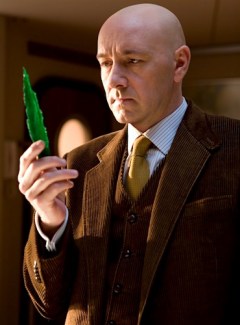
 that actually takes up the first half-hour-or-so. I can imagine an edit of the movie that begins on that plane: just a bunch of journalists observing the press demonstration of the new shuttle technology, when suddenly, inexplicably, it fails — they’re all going to die — then Superman turns up completely out of nowhere and saves them. Then you have the credits, which are immediately followed by Lex’s whole journey to the Fortress of Solitude, and only then do you get in to the stuff with Superman only having just returned, wondering what his places is now, and so on. Maybe lose the scene of him basically stalking Lois’ new family, though.
 The final thing this all makes me think of is the forthcoming Marvel Spidey movie,

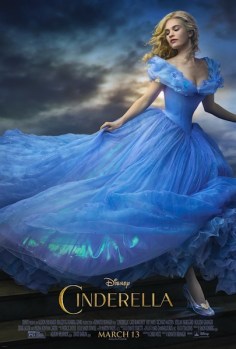 Disney’s animated classic is re-imagined in live-action, losing the songs but expanding the story. The latter serves to find a little more realism in the setup (how Cinders became a servant to her stepmother, etc), as well as in the characters’ motivations and actions.
