Finding Dory (2016)

2018 #122
Andrew Stanton | 97 mins | Blu-ray (3D) | 1.78:1 | USA / English | U / PG

Finding Dory

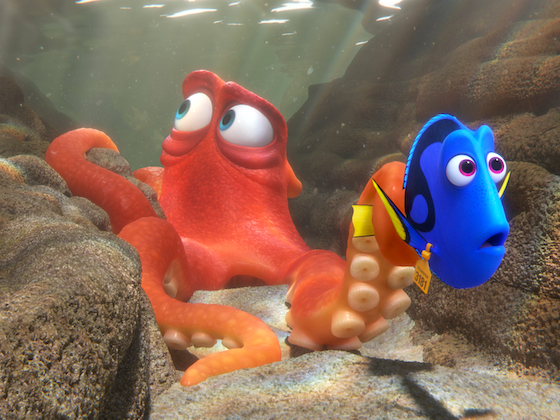
I was never that big a fan of Finding Nemo. I mean, I like it well enough — it’s a very good movie — but I’ve never loved it. My rewatch last year confirmed that feeling. It was something of a surprise, then, that I mostly really enjoyed this sequel. It’s a weird thing where I wouldn’t necessarily say it’s better than the first film, but I think I like it more.

Made 13 years later but set not too long after the events of the first movie (I don’t know what the lifespans of these fish are in real life, but I imagine considerably less than 13 years), the plot revolves around Nemo comedy sidekick Dory (Ellen DeGeneres) — in the first film her memory loss was a comedy bit, but here it’s front and centre, as Dory goes searching for the family she forgot she had. Accompanied by Nemo (Hayden Rolence) and his dad Marlin (Albert Brooks), she heads to California and the theme park-ish Marine Life Institute.

Like so many Pixar movies, Nemo didn’t desperately need a sequel, so I was worried this would seem like little more than an excuse to return to these characters. In fact, the plot actually works very well. Far from being a desperate stretch, it actually feels like a worthwhile development and follow-up from the first movie. Alongside the worth of the narrative, it’s also just a lot of fun to watch, even if it gets a bit outlandish in the final act (fish driving cars…?)

Something fishy going on...

Another concern I had was that I remember thinking Dory was a bit irritating in the first film, so making her the central character could’ve scuppered it for me (other people seem to find her endearing, so I can see why Pixar went with this concept). But no, she makes for a likeable enough companion. The film does a really good job of handling her memory loss, too. It’s more than just a joke this time round, what with Dory being the central character. The easiest route to take for the filmmakers would’ve been to cop out of it somehow, either by flat-out fixing her memory, or at least not being wholly true to how short-lived it was before. Instead, they’ve put the problems and the scariness of having no memory at the forefront of the film. For example, at one point Dory needs to enter a network of pipes to get somewhere vital within the Institute, but she won’t go in because she knows she’ll forget the directions. A more constant fear is that she’ll forget about her family or friends, the people she loves, which I think is the kind of notion a viewer of any age could empathise with.

As a Pixar movie, it goes without saying that it looks superb, but I’ll nonetheless take a moment to mention that I thought the 3D aspect was really great too. It seems to be pot luck with this stuff (I found Nemo’s rather underwhelming, and I wasn’t that impressed by Coco’s either, for example). I guess most people don’t care anymore, but there we go.

Finding Dory was a pleasant surprise all-round. In fact, I’d go so far as to say this is Pixar’s best non-Toy Story sequel. Maybe that’s not saying much (half its competition is Cars movies), but I mean it positively nonetheless.

4 out of 5

Pixar’s latest sequel, Toy Story 4, is out in the UK and US next Friday.

Zatoichi Meets Yojimbo (1970)

aka Zatôichi to Yôjinbô

2019 #60
Kihachi Okamoto | 116 mins | Blu-ray | 2.35:1 | Japan / Japanese | 12

Zatoichi Meets Yojimbo

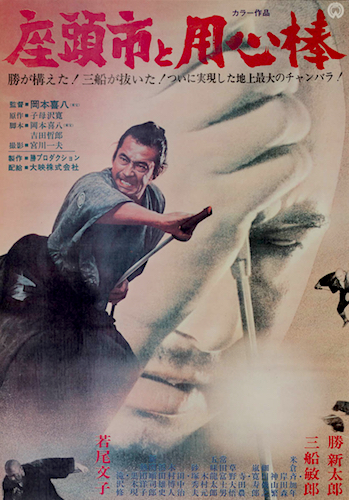
Having released anything up to four films a year for seven years, the Zatoichi series took 1969 off (apparently producer/star Shintaro Katsu had some other projects to focus on). But when it returned in 1970 it was with a big gun: as the title indicates, the main guest star for this film is the lead character from Akira Kurosawa’s films Yojimbo and Sanjuro, played by the great Toshiro Mifune. I don’t know if that was a deliberate move to mark the series’ 20th movie or if they weren’t even conscious of the milestone, but it certainly feels like it was meant to be a special occasion. “Meant to be” being the operative part of that sentence, because the result is sadly one of the least enjoyable entries in the series so far.

The film sees Ichi (Katsu) return to his hometown, which has rather gone to the dogs thanks to a local yakuza gang. Never one to just stand back or move along, Ichi ends up embroiled in the arguments between a powerful merchant (Osamu Takizawa) and his two wayward sons, one a yakuza boss (Masakane Yonekura), the other an employee of the government mint (Toshiyuki Hosokawa), who’s up to some kind of shenanigans with the gold that drives the plot… I think. Mifune’s character factors into all this as a ronin who’s been hired by the yakuza son to protect him, or kill his father, or something along those lines.

As you may have gathered, the plot here is by turns confusing and dull — one of those that loses you so thoroughly you just want to give up on trying to work it out. It has something to do with the people who make gold coins making them less well, and a hidden bar of gold that has something to do with that somehow, and a bunch of spies and stuff who are all looking for the gold bar, and some kind of feud or rivalry or disagreement between the local yakuza and Takizawa’s businessman, which may or may not have nothing to do with all the gold stuff… I think. This wouldn’t be the first Zatoichi film with an underwhelming or unintelligible plot, but it tells it with so little verve, and with so few entertaining distractions (there’s not much action, and even less humour), that there’s nothing to make up for it.

Katsu vs Mifune

And to add insult to injury, the titular concept of the movie is a bait and switch: Mifune is not actually playing the character from Kurosawa’s films. “Yojimbo” means “bodyguard”, so it’s not like, say, casting Sean Connery in a film and calling it Meets James Bond only to have him play some unrelated character, but the promise of the title is clear and unfulfilled. It’s not like Mifune is playing an off-brand knock-off, either: he happens to be fulfilling the same job as bodyguard so that everyone can keep calling him yojimbo, but his actual name is Taisaku Sasa (not Sanjuro, as in Kurosawa’s films) and his character is nothing like his role in Kurosawa’s films (he doesn’t even look the same!) Seeing Zatoichi go head-to-head with the ‘real’ Yojimbo, with all his cunning scheming, could’ve been great. Instead, while Sasa is still a skilled swordsman, he’s a bit pathetic — lovelorn and, it would seem, not actually very good at his real job (which, as it turns out, is spying). Some of the scenes between Katsu and Mifune are good, at least. Not all of them, but some is better than none, I suppose. Ultimately, however, it’s one of the biggest disappointments in a film filled with them.

There’s plenty to be filled, too, because this is by far the longest of the original Zatoichi films: the others average 87 minutes apiece, making Meets Yojimbo a full half-hour longer than normal, and almost 20 minutes longer than even the next longest. There’s quite an extensive supporting cast, bringing with them all the varied subplots that having so many characters entails. Whether that’s what produced the extended running time, or whether an extended running time was desired so they shoved all those extra people in, I don’t know. It’s a bit of a chicken-and-egg situation, because either way the result is a jumble that I don’t think was a good idea. Few of them have an opportunity to leave a mark — there’s too much going on, and we’re all here for Mifune and Katsu anyway.

Something I could have learned...

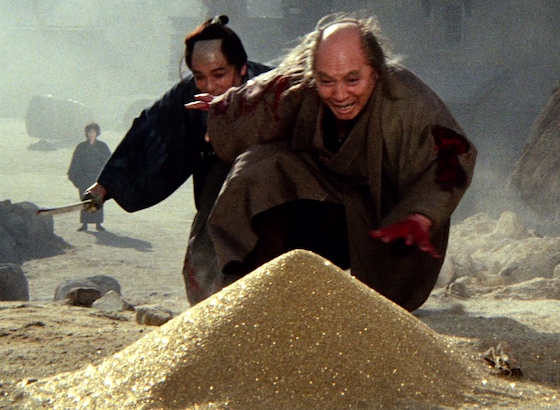
Eventually the story comes down to a simple, familiar message: “greed is bad”. The much-desired gold bar turns out to be hidden as gold dust, which ends up blowing away in the wind. It’s almost fitting and symbolic… except it only happens once most of the cast are dead or past it anyway, so it doesn’t necessarily symbolise much. I mean, there’s hardly anyone left to notice it happen. And it’s followed by a final scene that, like most of the rest of the plot, left me slightly confused. The town blacksmith tells yojimbo that Ichi isn’t motivated by gold… then we see Ichi realise his pouch of gold dust has been cut and emptied, so he scrabbles around in the dirt searching for the rest (which has blown away), when Mifune joins him. “You too?” “Just like you,” they say. And then they go their separate ways. So… they are motivated by gold? Or… they’re not, because it’s gone and they… aren’t? I don’t know if I’m being dim, or if the film bungled its own message, or if it just doesn’t have anything to say. It could be no deeper than a straight-up samurai adventure movie, of course. It would be better if it were.

This is the only Zatoichi film for director Kihachi Okamoto, who apparently was a prestige hire. I don’t think he did a particularly good job, to be honest. There’s the muddled plot, as discussed, which unfurls at a slow pace. The action scenes, often such a highlight, aren’t particularly well shot. It’s visually a very dark film, which kinda matches the grim tone, but is arguably taken too far. As Walter Biggins puts it at Quiet Bubble, “murk dominates. People wears blacks and browns. Eyes are cold, haunted, even in daytime[…] Even supposedly well-lit interiors look like homages to Rembrandt. This is a world half-glimpsed, that we squint at”. It was shot by cinematographer Kazuo Miyagawa, who worked on numerous Japanese classics and several other Zatoichi movies — I praised his work on Zatoichi and the Chest of Gold, for example. It’s not that what he’s done here is bad per se — there are certainly some nice individual shots, particularly around the climax — but, well, there were clearly some choices made about lighting and the colour palette.

Windswept

I knew going in that Zatoichi Meets Yojimbo isn’t a particularly well regarded film, but I held out hope it was one of those occasions where I’d find the consensus wrong. Unfortunately, it wasn’t. In fact, it’s arguably the worst film in the series. It’s not just that it’s a poor Zatoichi film (which it is), it’s that it should’ve been a great one, showcasing the meeting of two top samurai heroes and the charismatic actors who play them. There may be outright lesser films in the Zatoichi series than this, but none could equal the crushing disappointment it engenders.

2 out of 5

For what it’s worth, Katsu and Mifune co-starred in another samurai movie the same year, Machibuse, aka Incident at Blood Pass. I’ve heard it’s a lot better, so I’ll endeavour to review it at a later date.

Review Roundup

As foretold in my most recent progress report, June is off to a slow start here at 100 Films. Or a non-start, really, as I’ve yet to watch any films this month and this is my first post since the 1st. Hopefully it won’t stay that way all month (I’ve got my Blindspot and WDYMYHS tasks to get on with, if nothing else).

For the time being, here a handful of reviews of things I watched over a year ago but have only just written up:

  • O Brother, Where Art Thou? (2000)
  • Allied (2016)
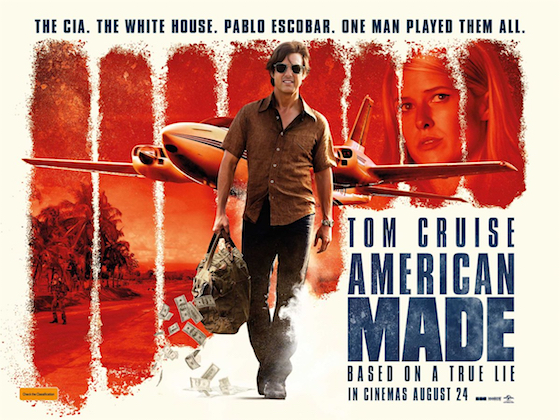
  • American Made (2017)


    O Brother, Where Art Thou?
    (2000)

    2018 #106
    Joel Coen | 103 mins | streaming (HD) | 2.39:1 | UK, France & USA / English | 12 / PG-13

    O Brother, Where Art Thou?

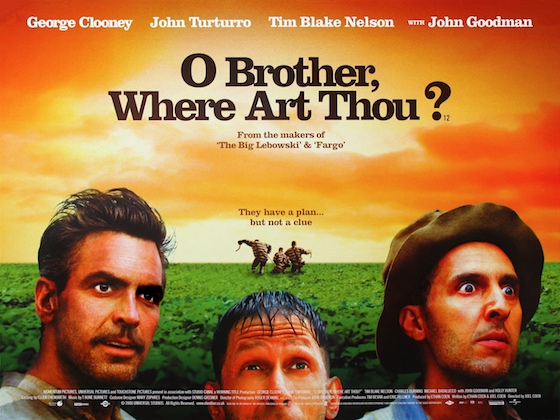
    The eighth movie from the Coen brothers (eighth, and yet they still weren’t being allowed a shared directing credit! No wonder that stupid DGA rule pisses people off) is one of their movies that I found less objectionable. Oh, sure, most of their stuff that I’ve reviewed I’ve given four stars (as well as a couple of threes), but that’s more out of admiration than affection — for whatever reason, their style, so popular with many cineastes, just doesn’t quite work for me; even when I like one of their films there’s often still something about it I find faintly irritating.

    Anyway, for this one they decided to adapt Homer’s Odyssey, but set in the American Deep South during the Great Depression. Apparently neither of the brothers had ever actually read The Odyssey, instead knowing it through cultural osmosis and film adaptations, which is perhaps why the film bears strikingly minimal resemblance to its supposed source text. Rather, this is a story about songs, hitchhiking, and casual animal cruelty, in which the KKK is defeated by the power of old-timey music. Hurrah!

    It’s mostly fairly amusing. If it was all meant to signify something, I don’t know what — it just seemed a pretty fun romp. I thought some of the music was okay. (Other people liked the latter more. Considerably more: the “soundtrack became an unlikely blockbuster, even surpassing the success of the film. By early 2001, it had sold five million copies, spawned a documentary film, three follow-up albums (O Sister and O Sister 2), two concert tours, and won Country Music Awards for Album of the Year and Single of the Year. It also won five Grammys, including Album of the Year, and hit #1 on the Billboard album charts the week of March 15 2002, 63 weeks after its release and over a year after the release of the film.” Jesus…)

    Anyway, that’s why it gets 4 stars. I liked it. Didn’t love it. Laughed a bit. Not a lot. Some of the music was alright. Not all of it. Naturally it’s well made (Roger Deakins!) without being exceptionally anything. Harsher critics might say that amounts to a 3, but I’m a nice guy.

    4 out of 5

    Allied
    (2016)

    2018 #116
    Robert Zemeckis | 119 mins | streaming (HD) | 2.39:1 | USA, UK & China / English & French | 15 / R

    Allied

    Brad Pitt and Marion Cotillard star as a pair of intelligence agents who fall in love in Mr. & Mrs. Smith: WW2 Edition. Settling down together in England, all is lovely for them… until one comes under suspicion of working for the enemy…

    Overall Allied is a very decent spy thriller, let down somewhat by a middle section that’s lacking in the requisite tension and a twee monologue coda. But the first 40 minutes, set in Morocco and depicting the mission where the lovers first meet, are pretty great; there’s plenty of neat little tradecraft touches scattered throughout; and there are some pretty visuals too. There are also some moments that are marred by more CGI than should be necessary for a WW2 drama, but hey-ho, it’s a Robert Zemeckis film.

    That said, Brad Pitt’s performance is a bit… off. He never really seems connected with the material. Perhaps he was trying to play old-fashioned stoic, but too often it comes across as bored. It also constantly looked like he’d been digitally de-aged, but maybe that’s because I was watching a 720p stream; or maybe he had been, though goodness knows why they’d bother.

    Anyway, these are niggles, so how much they bother you will affect your personal enjoyment. I still liked the film a lot nonetheless.

    4 out of 5

    American Made
    (2017)

    2018 #124
    Doug Liman | 109 mins | streaming (HD) | 1.85:1 | USA & Japan / English & Spanish | 15 / R

    American Made

    Described by director Doug Liman as “a fun lie based on a true story,” American Made is the obviously-not-that-truthful-then ‘true story’ of Barry Seal, a pilot who was recruited by the CIA to do some spying and ended up becoming a major cocaine smuggler in the ’80s.

    Starring ever-charismatic Tom Cruise as Seal, the film turns a potentially serious bit of history (as I understand it, the events underpinning this tale fed into the infamous Iran-Contra affair) into an entertaining romp. Indeed, the seriousness of the ending is a bit of a tonal jerk after all the lightness that came before, which I guess is the downside of having to stick to the facts.

    Still, it’s such a fun watch on the whole — a sliver long, perhaps, even though it’s comfortably under two hours, but it does have a lot of story to get through. Parts of that come via some spectacular montages, which convey chunks of story succinctly and are enjoyable in their own right. Liman doesn’t get a whole lot of attention nowadays, I think, but it seems he’s still got it where it counts.

    4 out of 5

  • Upgrade (2018)

    2019 #44
    Leigh Whannell | 100 mins | streaming (HD) | 2.35:1 | Australia / English | 15 / R

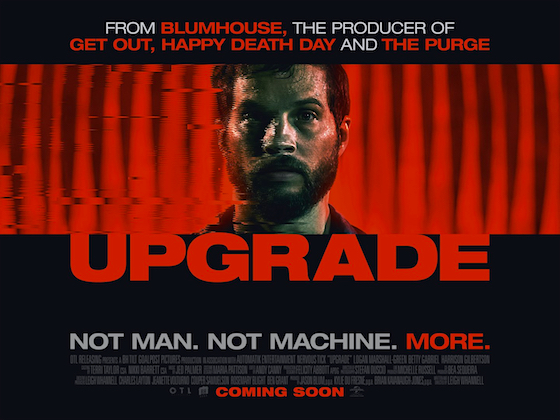
    Upgrade

    Leigh Whannell is best known for co-creating the Saw and Insidious franchises, so he steps outside of his horror stomping ground to write and direct this cyberpunk action-thriller. It’s set in the kind of near future where we have self-driving cars (and similar tech), but there are still people who prefer the old ways, like mechanic Grey (Logan Marshall-Green), who makes his living restoring classic cars for people like tech genius and entrepreneur Eron Keen (Harrison Gilbertson). After an incident leaves Grey paralysed, Eron offers to help by implanting him with a cutting-edge top-secret chip he’s developed called STEM. It works even better than expected, and Grey begins to use his newfound abilities to hunt for the men who did this to him.

    On one level, Upgrade is a straightforward sci-fi action-thriller, following Grey’s investigation as it leads him to some shady figures who have near-future tech of their own, and then they fight. While that may seem simplistic, it’s full of neat little touches, particular in the action’s choreography — it almost begs a rewatch just to see everything that’s going on in the frantic fight scenes. I don’t mean “frantic” in the over-cut, can’t-see-shit sense of so many action sequences in the last couple of decades — in fact, Whannell often uses wide shots and long-ish takes — but there’s so much going on, with the characters making decisions at such speed (boosted by that body-modifying tech), that parts do become a bit of a blur.

    Change can be painful

    On another level, the film has something to say about the technology that drives its storyline. Okay, maybe it doesn’t have a lot to say, and if you’re well-versed in sci-fi they’re not necessarily original comments either, but it poses questions and makes you think about what could be just around the corner, and what value it might have, or what danger it might pose. Plus it pushes the story into some interesting places; places a low-budget Australian-produced movie can go that other mainstream-minded sci-fi/action flicks wouldn’t dare. If you’ve ever seen a Saw film then you can guess that Whannell likes twists, especially of the “sting in the tail” variety, and Upgrade has more than its fair share of last-minute switcheroos. How many you see coming is up to you — one seemed glaringly obvious to me, but anticipating that ‘reveal’ blinded me to some more that came after.

    Combining those two levels renders Upgrade a strong mix of straight-up action thrills and thought-provoking near-future sci-fi. A definite must-see for genre fans.

    4 out of 5

    Upgrade is available on Sky Cinema from today.

    BlacKkKlansman (2018)

    2019 #86
    Spike Lee | 135 mins | download (UHD) | 2.39:1 | USA / English | 15 / R

    BlacKkKlansman

    Oscar statue2019 Academy Awards
    6 nominations — 1 win

    Won: Best Adapted Screenplay.
    Nominated: Best Picture, Best Director, Best Supporting Actor (Adam Driver), Best Editing, Best Original Score.

    “A black man infiltrates the KKK.” Sounds like the setup for a joke, doesn’t it? Or possibly some outrageous blaxploitation movie. But it’s something that actually happened, and here co-writer/director Spike Lee tells the story of the guy who did it.

    Ron Stallworth (John David Washington) is the first black officer in the Colorado Springs police department. After seeing a small advert in the local paper for information on the Ku Klux Klan, Ron phones the number and pretends to be an angry white racist. The ruse works and he’s invited to meet them, which obviously he can’t, so the department agrees to send intelligence officer Flip Zimmerman (Adam Driver) in his place. So begins an undercover operation where Zimmerman pretends to be Ron in person, and Ron pretends to be white on the phone.

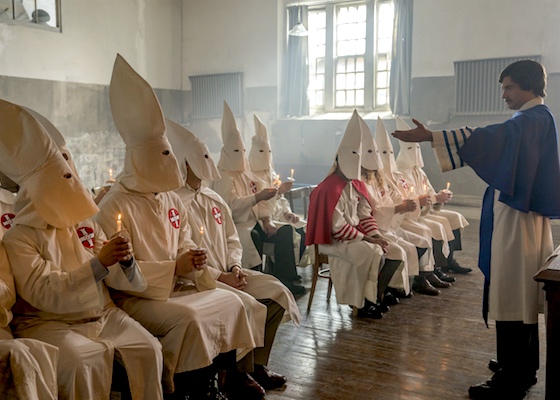
    Although the premise sounds comical, the fact it’s a true story concerning an organisation as inhumane and pernicious as the KKK made me worried the film would be serious, grim, and heavy-going. In actuality, it’s lively, funny, and fast-paced. Humour is woven throughout the story in a way that is neither incongruous nor forced, and it doesn’t undermine the stakes when things get serious. And there remain parts that remind you of the true horrors of racism in America, in particular a sequence that intercuts a Klan initiation with an old black man remembering the stomach-churning details of a lynching he witnessed in his youth. It’s horrific; it’s sad; it’s enraging.

    Spot the black man

    The same could be said of the film’s final few minutes, which powerfully connect these events from decades ago to what’s going on in the US right now. The effect is hair-raising. Some have accused this finale of being exploitative or disconnected to the rest of the movie, but I don’t hold with that. On a literal level, a certain real-life figure turns up in the news footage to provide a very concrete link to the film’s main narrative. Even without that, the whole content of the film is incredibly timely, which is depressing and terrifying, really. It doesn’t have to bash you round the head with echoes of the present state of things in the US, because those parallels are unavoidably there.

    If I have a criticism, it’d be that there’s inadequate follow-up on the internal conflict of Driver’s character. Lee made him Jewish to raise the stakes (the real-life guy wasn’t Jewish; and, if you didn’t know, the Klan hates Jews too), and so we get a beginning and middle for his personal narrative: at first he’s just doing his job, and he doesn’t care about his heritage because it wasn’t part of his upbringing; but then, in one of the film’s most memorable lines, he says he never used to think about being Jewish but now he thinks about it all the time. It feels like some kind of reconciliation of that internal conflict is needed later on, but it doesn’t come. A counter argument is that that’s the point — that he’s been subsumed as just a “White American”, but he is a Jew, and having to handle that dichotomy is something he’s never grappled with before. Still, if that’s the point where his character arc was intended to end, maybe reaching it halfway through the film wasn’t the best idea.

    Black power

    I’d still say it’s a relatively minor concern in a film that does so much else right as to render it more or less trivial. The film’s real triumph lies in how it tackles a very serious, concerning, and timely issue: luring you in with a “too good to be true” premise, engaging you with the entertaining way it’s told, thrilling you with some tense undercover-cop sequences, and finally delivering some gut punches of truth. You’ll have a good time, but also leave incensed at the state of the world — or, perhaps, of one particular country. Not many filmmakers could naturally pull off both of those opposing emotional states within the same movie, but Lee’s cracked it.

    5 out of 5

    BlacKkKlansman is available on Sky Cinema from today.

    It placed 8th on my list of The 15 Best Films I Saw For the First Time in 2019.

    The Matrix Revolutions (2003)

    The 100 Films Guide to…

    The Matrix Revolutions

    Everything that has a beginning
    has an end.

    Country: USA
    Language: English
    Runtime: 129 minutes
    BBFC: 15
    MPAA: R

    Original Release: 5th November 2003 (60 countries, including the UK and USA)
    Budget: $150 million
    Worldwide Gross: $427.3 million

    Stars
    Keanu Reeves (Bill & Ted’s Excellent Adventure, 47 Ronin)
    Laurence Fishburne (Boyz n the Hood, Mystic River)
    Carrie-Anne Moss (Chocolat, Disturbia)
    Hugo Weaving (Captain America: The First Avenger, Mortal Engines)

    Directors
    The Wachowskis (Bound, Jupiter Ascending)

    Screenwriters
    The Wachowskis (The Matrix, Speed Racer)


    The Story
    With Neo having rejected the destiny prescribed for him, but discovering his power is greater than previously thought possible, he sets out on a long-shot mission to save humanity, even as the machines prepare to destroy mankind’s last city.

    Our Heroes
    The trilogy centres on the actions of Neo, Trinity, and Morpheus, but in many respects they’re just part of an ensemble in this finale, with many other characters getting to be in command of screen time, including the likes of ace pilot Niobe, Neo-idoliser the Kid, and a whole bunch of citizens of Zion during the big battle.

    Our Villains
    The machines threaten the surviving humans, while in the Matrix the increasingly dominant Agent Smith threatens Neo’s chances to save them all.

    Best Supporting Character
    Amongst the many humans fighting to save Zion, perhaps the most noteworthy is the captain of the Armoured Personal Unit corps, Mifune, who’s as much of a badass as the guy he’s obviously named after.

    Memorable Quote
    “Everything that has a beginning has an end. I see the end coming, I see the darkness spreading. I see death.” — The Oracle

    Memorable Scene
    Before Reloaded there was much hype about the “Burly Brawl”, in which Neo fights dozens of Agent Smiths. Unfortunately the final result was marred by some iffy CGI and overshadowed by the freeway chase. Here, we get the sequel: the so-called “Super Burly Brawl”, in which Neo fights just one super-powered Agent Smith in what remains of the Matrix, and it’s a much more exciting, visually extraordinary climax.

    Memorable Music
    Don Davis’ score for the trilogy has always used a mix of electronic-y rock and more traditional orchestral music, but the epic final battle adds choral voices to the mix in a very effective way. Thankfully rejecting the idea that they sing just “oohs and aahs” or, even worse, “this is the one, see what he can do” in plain English, Davis instead had the choir sing the Pavamana Mantra, so it’s not just nice texture in the soundtrack but meaningful too.

    Truly Special Effect
    There’s nothing as obviously groundbreaking or original as in the other two films, but a lot of the effects still hold up exceptionally well 15 years down the line. It’s difficult to imagine how the battle of Zion (created through a mixture of live-action, miniatures, and CGI) could be achieved any better today.

    Letting the Side Down
    The untimely death of actress Gloria Foster, who played the Oracle in the first two films, necessitated her recasting for this final instalment. Unfortunately, her replacement just isn’t as good, seeming to struggle with her portentous dialogue.

    Making of
    Christopher Nolan gets a lot of credit for bringing regular films into the IMAX market (or vice versa, depending how you look at it) with actually shooting on the format for The Dark Knight (a notion copied since, obviously), but Revolutions was actually the first live-action feature film to be released in IMAX at the same time as its regular theatrical release.

    Previously on…
    The story began in The Matrix and continued in The Matrix Reloaded, while spin-off anime shorts The Animatrix and video game Enter the Matrix filled in some of the blanks.

    Next time…
    The story continued in MMORPG The Matrix Online, which ran from 2004 to 2009. Rumours of some kind of reboot or continuation flare up now and then.

    Awards
    1 Razzie nomination (Worst Director)
    3 Saturn Award nominations (Science Fiction Film, Costumes, Special Effects)

    Verdict

    I used to think Revolutions was better than Reloaded, mainly because at least it brought everything to an end and didn’t have that confusing stuff with the Architect. But reflecting on the sequels now, I have to agree with the consensus that this isn’t as good — there’s nothing that matches the highway sequence for entertainment value, and, actually, the lack of overt philosophising is almost to its detriment. It does have its moments (see: Memorable Scene), and I do think it ultimately comes to powerful resolutions, but the journey to them doesn’t have the same spark.

    The Matrix Reloaded (2003)

    The 100 Films Guide to…

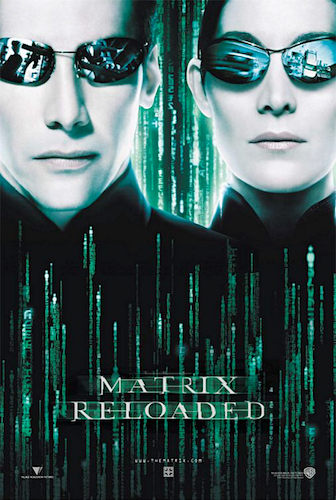
    The Matrix Reloaded

    Free Your Mind.

    Country: USA
    Language: English
    Runtime: 138 minutes
    BBFC: 15
    MPAA: R

    Original Release: 15th May 2003 (US & others)
    UK Release: 21st May 2003
    Budget: $150 million
    Worldwide Gross: $742.1 million

    Stars
    Keanu Reeves (Point Break, Man of Tai Chi)
    Laurence Fishburne (What’s Love Got to Do With It, Contagion)
    Carrie-Anne Moss (Red Planet, Unthinkable)
    Hugo Weaving (Babe, Transformers)

    Directors
    The Wachowskis (The Matrix, Cloud Atlas)

    Screenwriters
    The Wachowskis (Assassins, Sense8)


    The Story
    With just 72 hours until the machines arrive to destroy mankind’s last city, all ships are ordered to return home for its defence. But Morpheus still believes the answer to their salvation lies in the Matrix itself and what Neo is meant to do there.

    Our Heroes
    Neo is just a man, but within the Matrix has abilities and power beyond any other. As he journeys deeper in the fake-world’s workings, can he free mankind? Will his love for fellow freedom fighter Trinity get in his way? Is their captain, Morpheus, misguided in his belief that Neo is The One?

    Our Villains
    As hordes of machines drill down to the human city of Zion, a more pressing threat is Agent Smith, who has found a way to multiply himself and is on the warpath within the Matrix, with his sights set on Neo.

    Best Supporting Character
    The Merovingian is a snobby Frenchman (is there any other kind, ho ho) who holds prisoner a key program our heroes need access to. First, they’ll have to endure his philosophising; after, they’ll have to fend off the men he sends to kill them.

    Memorable Quote
    “Now consider the alternative. What if I am right? What if the prophecy is true? What if tomorrow the war could be over? Isn’t that worth fighting for? Isn’t that worth dying for?” — Morpheus

    Memorable Scene
    The freeway chase. It’s so long it almost doesn’t count as just one scene, but it’s spectacular quarter-of-an-hour long action sequence packed to bursting with impressive stunts and effects.

    Technical Wizardry
    See above. The logistics of filming the sequence are mind-boggling. Now they’d just throw it all together in a computer with a bit of green screen for the actors, but back in the early ’00s they built a massive stretch of freeway and filmed most of the practical stunts for real — and it’s all the better for it, of course.

    Truly Special Effect
    Some of the CGI is a little ropey 15 years on (though the digital body doubles looked just as bad at the time as they do now, to be honest), but all of the real-world stuff with Zion and its ships still looks fantastic.

    Letting the Side Down
    Depending on your point of view, the climax is either philosophically engaging or impenetrably incomprehensible. I feel like repeat viewings and time have made it more understandable, but it’s still suffused with more big ideas than people expect to find in their blockbuster movies.

    Making of
    The Matrix Reloaded” is a funny title when you think about it. I mean, it’s very much “from our perspective” — in the film’s world the Matrix has never stopped running, so it’s not being reloaded; it’s an allusion to computer-y stuff and the fact this is a sequel, nothing to do with the actual content of the film. Though I guess it’s not really any weirder than just sticking “2” on the end or whatever, so…

    Previously on…
    In 1999, sci-fi actioner The Matrix blew everyone’s minds. In the run-up to this sequel there was also The Animatrix, a series of anime short films that explained some of the backstory to the films’ world and detailed certain events that occurred between the first film and its sequels.

    Next time…
    The video game Enter the Matrix occurs alongside Reloaded, featuring characters and situations from the film in a parallel storyline. It included around 45 minutes of live-action scenes shot by the Wachowskis, which has since been made available on the film’s DVD/Blu-ray/etc releases. Later the same year, The Matrix Revolutions concluded the trilogy, while MMORPG The Matrix Online continued the story. There have also been other video games and some comic books, but for a modern media franchise it’s been quite tightly controlled beyond that.

    Awards
    1 Razzie nomination (Worst Director)
    1 World Stunt Award (Best Overall Stunt by a Stunt Woman (for motorcycle work in the freeway chase))
    3 World Stunt Awards nominations (Best Fight (for the chateau hallway), Best Stunt Coordination Feature Film, Best Overall Stunt by a Woman (for a car stunt in the freeway chase))

    Verdict

    The Matrix sequels are generally viewed as a big disappointment, which isn’t wholly accurate or fair (for one thing, this first sequel actually has pretty solid ratings online, from both critics and viewers). It was always a big ask to follow-up a movie as original, groundbreaking, and straight-up entertaining as the first Matrix, and that the Wachowskis chose to do so by doubling down on the mythology and underpinning ideas obviously wasn’t successful with too many people. So perhaps making the plot 50% a straightforward quest-against-time narrative and 50% impenetrable philosophy lectures wasn’t the best idea, but the action sequences are still absolutely stunning. And, actually, if you bother to engage with the film on its own level, there’s some interesting stuff here.

    Bumblebee (2018)

    2019 #83
    Travis Knight | 114 mins | Blu-ray (UHD) | 16:9 | USA & China / English | PG / PG-13

    Bumblebee

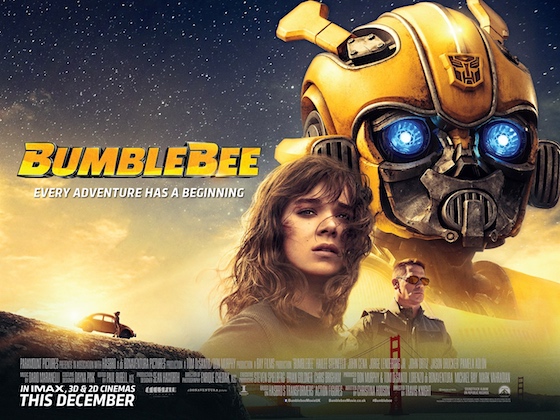
    The live-action Transformers movies, eh? Seemingly hated by everyone, critics and fans alike, and yet combined the first five grossed almost $4.4 billion at the global box office. Nonetheless, with the fifth one being the lowest grossing so far, and Michael Bay finally making good on his oft-repeated desire to leave the series’ director’s chair, someone clearly felt it was time for a change. That brings us to Bumblebee, a spin-off (it’s focused around the de facto second-in-command Transformer) cum prequel (it’s set in the ’80s, explaining some events that occurred before the 2007 movie) cum soft reboot (with redesigned characters and nothing that explicitly ties it to the Bay films, this could be the start of a whole new continuity). Did fans finally get what they want? Well, maybe, but it obviously didn’t work for the wider audience: the film took $468 million worldwide, which is good in itself but still represents almost a $140 million drop from the previous film. And it didn’t work for me, either: Bumblebee isn’t necessarily any better than the best of the Bay-era films, it’s just middling in different ways.

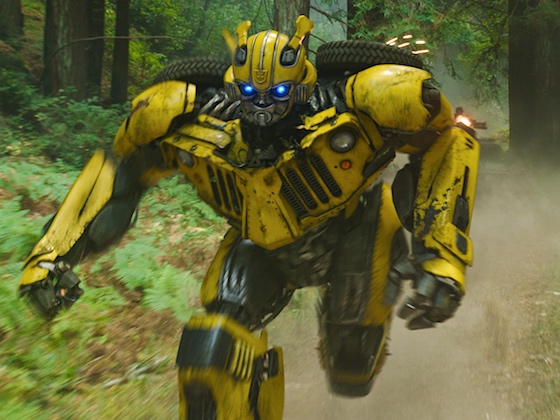
    The film begins much like Man of Steel: launching us into a conflict between aliens on a distant planet. I criticised that film for throwing us into the deep end with a bunch of hard-sci-fi mumbo-jumbo, and I find similar fault here. I guess the point is to get an Epic Action Sequence up front (unlike Man of Steel, where it’s political arguing, here it’s a full-blown battle) and to show off the new-look old-style Transformers, which have been modelled more on their appearance in the ’80s cartoon series. But it does nothing to dispel the notion that this is nothing like the Bay films — it’s just another frenzy of metal-on-metal and garbled mythology. Then Bumblebee, who’s mainly identifiable as “the yellow Transformer”, gets sent off to Earth, where he accidentally winds up in a scrap with some military types. More action, but with a slight change of pace.

    Bayhem never dies

    Only after all this has gone down do we finally get to the supposed point of the movie. We’re introduced to Charlie (Hailee Steinfeld), a teenager in 1980s California who likes listening to 1980s music and wearing 1980s clothes and doing other 1980s things because this is set in the 1980s. She’s down on her luck for various reasons, but what she really wants is a car. She finds one in a boat scrapyard (totally logical), but that turns out to be Bumblebee in disguise, and suddenly she has a giant robot for a best friend. But Captain Military Man (John Cena — I have no idea what his character name was. I could look it up, but this was more amusing), who Bumblebee fought with in that second action sequence, is on the hunt for our big yellow friend, and so are some Decepticons (the bad robots).

    The “a girl and her robot” angle is what the film was sold on, combined with the ’80s setting to suggest a throwback to movies of that era, like E.T. and so on. I quite like it as a concept — it’s certainly a change of pace from the increasingly overblown city-destroying world-saving antics of the earlier films — but it’s the execution that disappointed me. It takes too long to get it up and running. Even after the palaver I’ve already described, it spins its wheels on Charlie getting Bumblebee started, on comedic interludes with her family, on establishing a wannabe-love-interest for her (a guy who both works opposite her at a fairground and is her next door neighbour, yet apparently she’s never even noticed. Incidentally, I can’t remember his name either). There’s altogether too much time spent on the military and Decepticons hunting ‘Bee, too, especially considering it amounts to little that’s meaningful. I mean, specifically two Decepticons turn up on Earth, and they’re therefore the film’s primary villains, but I can’t remember their names either. Their personalities amount to “the one who plans” and “the one who just wants to shoot everything”.

    A girl and her robot... which is disguised as a car

    But after nearly an hour of this faff, the film gets good, with Charlie and Neighbour Boy getting up to some enjoyable ’80s kids’ movie-style antics with their friendly giant robot. But oh, then it’s time for the climax, so it’s back to explosions and indistinguishable chunks of metal hitting each other.

    This is why it’s frustrating to me, because for a brief bit of time in the middle you see what I think this movie really wanted to be, and what I really wanted it to be, before it descends back into Bayhem-with-calmer-editing. Incoming director Travis Knight (whose only previous credit is the exceptional Kubo and the Two Strings) handles individual sequences well, suggesting he was a canny hire, but the film’s problem is bigger than that. The wonky pace and structure devotes time in the wrong places, leading to underdeveloped character beats (the big payoff for Charlie’s emotional subplot actually made me laugh out loud, which was not the intended effect) and taking too long to get to where it wants to be — just as it’s getting good, it has to dart off into a finale that doesn’t have enough impact, because we’re not really invested in the villains either.

    Talking of what the movie “should’ve been”, a word on the certification. Bumblebee was originally given a 12A by the BBFC, just like every other modern blockbuster, but there was some kerfuffle in Australia that led to it being cut down under, and it seems that version was tamer enough to get a PG in the UK, so that’s the one that was released here (and, I think, everywhere outside the US). It loses about six seconds of injury and violence, apparently. There was a time earlier this century when anything below PG-13 was a bad thing, because they thought teens/adults would write the film off as being kids’ fare. Maybe that’s changed. Maybe it just doesn’t apply in the UK. Maybe they thought being a PG wouldn’t put grownups off (as an adult, who looks at the certificate, especially for the sixth movie in a well-established franchise?) but would allow more kids in. Who knows. It is what it is. I’m not sure it’s worth caring about.

    This cute dog is also in it a bit

    Also, another thing about differing releases: I wish they’d put it out on 3D Blu-ray somewhere, so that I could’ve bought that version. As noted at the start, I watched the 4K UHD disc, and the (upscaled) picture was fine but not spectacular (aside from one or two bits, and the usual benefits of HDR), but there were whole chunks I feel would’ve benefited from 3D. The Bay movies certainly did. I know those of us who enjoy the format are more in the minority than ever, but it seems that interest remains in some markets (looking at other titles that didn’t get a 3D release in the US and UK but did elsewhere, countries like Germany, Italy, Japan, and India seem to be among the lucky ones), so I don’t know why this hasn’t turned up in any of them.

    Anyway. If Bumblebee managed its structure and pace better it’d be a lot more fun. I feel like, even with just the material that made it to the final cut, you could do a radical re-edit and turn it into a much better movie — ditch the Cybertron crap, cut way back on the baddies hunting for ‘Bee, get the relationship between Charlie and ‘Bee up and running faster, then focus on their teenage hijinks. Instead, someone thought it would be neat to bookend the film’s heart with a bunch of Bay-esque whooshbangery, and it gets in the way.

    3 out of 5

    Bumblebee is released on DVD and Blu-ray (regular and 4K UHD flavours) in the UK today.

    The Meg (2018)

    2019 #77
    Jon Turteltaub | 113 mins | download (HD+3D) | 2.39:1 | USA & China / English & Mandarin | 12 / PG-13

    The Meg

    Jason Statham vs. a giant prehistoric shark — what more do you need to know?

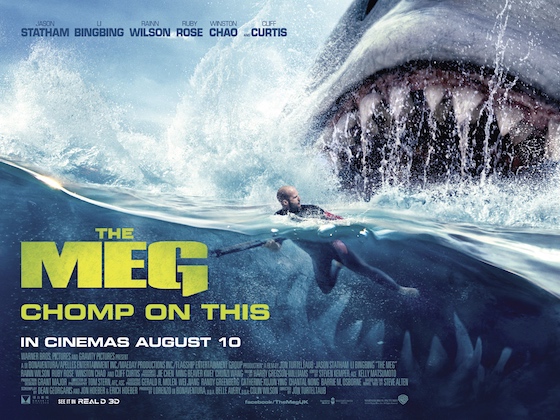
    Okay, well, despite the obvious pulp-blockbuster nature of this premise, it’s actually based on a novel, which was originally published in 1997 and so I guess arrived in a wave of post-Jurassic Park interest in man vs. prehistoric creatures thrillers. Well, Jurassic Park and the other obvious comparison, Jaws, were also both adapted from novels, so perhaps it’s not so weird after all. I’d never heard of the book before, but apparently it has a dedicated fanbase (there are multiple sequels), who were disappointed with this film because it makes some radical changes to the source material. Clearly, I’m not the right person to make that comparison.

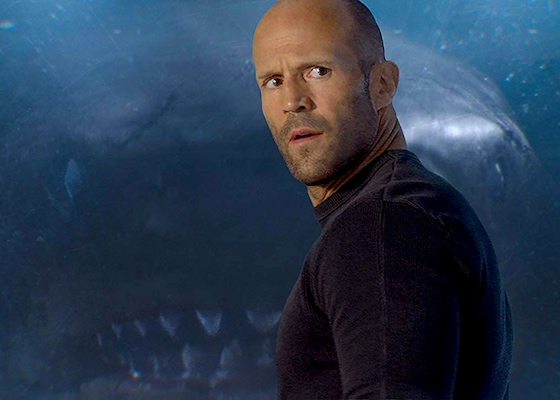
    Judged as a film in its own right, then, I thought it was a ton of fun. You know what you’re getting into with that pitch, and doubly so if you’ve watched the trailer. This isn’t some thought-provoking docu-drama about “what if we really discovered a prehistoric creature still lived?” This isn’t even Jaws, a relatively grounded adventure movie about normal people defeating a larger-than-average killer shark. This is a movie about a super-high-tech underwater research facility that accidentally unleashes a prehistoric monster and then all the scientists and submariners and whatnot on board have to track it down and stop it. This is a move about Jason Statham fighting a giant shark.

    Stath vs shark

    All of that said, some people have criticised the movie for not being quite as daft or out there as they wanted from a B-movie-inspired effects spectacular. I guess that’s a real “your mileage will vary” situation. Personally, I had a lot of fun with it. It keeps things more grounded than the utter batshit craziness of, say, Sharknado, but it’s clearly still allowing itself to have fun with the situations and concepts. It also doesn’t feel too samey, which considering there are only so many ways to interact with a giant shark is some kind of achievement.

    Other criticisms I’ve read include that it’s too slow to get going, focusing on undersea rescues rather than getting straight to Stath-on-shark action. Again, this was something I actually liked about the film — that it allowed at least some time to build the Meg up as a mysterious unseen force (and, in the grand scheme of things, not that much time — this isn’t Jaws). It also gave the film a certain scope and scale. It’s not like this shark rocks up and they defeat it in an afternoon — the plot spread out over a couple of days, at least. I don’t know, there’s just something I like about that pacing.

    Also, the film is a Chinese co-production, and so features many major and minor Chinese characters, and the climax is set in the vicinity of a Chinese beach. I’ve seen people criticise this aspect of the film because… um… Yeah, not liking that aspect smacks of racism, let’s be honest. I’m not saying everyone who dislikes The Meg is a racist — that would be stupid — but some reviews I’ve seen come with this slightly weird sense that part of the reason they dislike it is because it’s 50% (if that) a Chinese blockbuster.

    Who fancies Chinese for dinner?

    At the end of the day, I come back to what I said at the start: it’s a movie about a giant prehistoric shark being unleashed and attacking humans, and Jason Statham has to fight it. That’s all. It delivered on that in spades for me and I had a great time with it. And I guess tied to that pulpiness, if you have the option and enjoy the effect, I thought it looked fantastic in 3D.

    4 out of 5

    The Meg is available on Sky Cinema from today.

    Holmes & Watson (2018)

    2019 #38
    Etan Cohen | 90 mins | download (HD) | 2.40:1 | USA / English | 12 / PG-13

    Holmes & Watson

    From the moment it was announced, I knew two things about Holmes & Watson: that it would not be up my street, and that I’d definitely see it. Basically, Will Ferrell is not to my taste — I thought Anchorman was OK at best; I didn’t like The Other Guys despite it having a premise I loved; I remember enjoying Wedding Crashers specifically apart from his one scene; and, cementing my opinion shortly before Holmes & Watson’s release, I finally saw Step Brothers, Ferrell and John C. Reilly’s previous major co-starring turn, and didn’t care for it. (I also haven’t got round to reviewing it, but when I do it won’t be positive.) Despite my personal antipathy, most of those films are highly regarded, at least in certain circles; so when Holmes & Watson finally debuted trailers that no one liked, then garnered reviews that damned it as one of the worst movies released for years, I abandoned all hope of enjoyment. But it’s still a Sherlock Holmes movie, and so I’ve still felt compelled to watch it.

    As you could no doubt infer from the title and aforementioned leads, the film sees Will Ferrell take up the mantle of the Great Detective, Sherlock Holmes, with John C. Reilly as his trusty sidekick and biographer, Dr John Watson. The plot, such as it is, sees the pair investigating a threat to assassinate Queen Victoria by Holmes’ nemesis, Professor Moriarty (Ralph Fiennes). Really, it’s just an excuse for Ferrell and Reilly to lark about in a series of Holmesian sketches. Full of truly terrible accents, reheated gags, and comedy bits that go on far too long, it would be tedious if presented as individual skits in a sketch show, but strung together as a movie… ugh.

    Incompetence on both sides of the camera

    The incompetence isn’t just present in front of the camera either. It’s hard to believe this was a professionally-produced, studio-released movie given the lack of technical skills on display, including atrocious dubbing, sloppy editing, and even shots that are out of focus. It’s so poor that Netflix, who seem to purchase any scraps the major studios decide to throw their way, turned down the chance to buy it (so they do have some standards!)

    Amazingly, it’s not completely terrible. In supporting roles, Fiennes, Rebecca Hall, and Kelly Macdonald improve it just by showing up. There’s one bit that riffs off the Guy Ritchie Sherlock Holmes movies, which might’ve felt original-ish if those weren’t already nine years old. There’s a bit of dialogue where it’s suggested America is forward-thinking about female equality, which isn’t the intended joke but is a laugh nonetheless. And as it’s the only laugh in the whole sorry 90 minutes, I guess we should take what we can get.

    If they’d deliberately set out to make a film that was ostensibly a comedy but contained no actual humour, I’m not sure they could’ve achieved it any more thoroughly than this. It’s so terrible that it’s almost a remarkable achievement of just how badly it’s possible to fail.

    1 out of 5

    Holmes & Watson is released on DVD and Blu-ray in the UK this week.

    It featured on my list of The Five Worst Films I Saw For the First Time in 2019.