
Rian Johnson | 119 mins | Blu-ray | 2.35:1 | USA & China / English | 15 / R
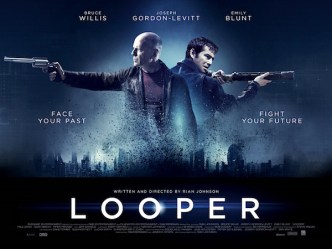 Writer-director Rian Johnson re-teams with the star of his first movie for this near-future sci-fi thriller, hailed by critics as one of the best genre movies of 2012, though it seems to have been a little more divisive among audiences.
In the year 2044, Joe (Joseph Gordon-Levitt) is employed by the mob as a very special kind of assassin. 30 years in the future, time travel will have been invented and outlawed, leading organised crime to use it for murders: the victim is sent back in time and immediately killed by a so-called ‘looper’, leaving the future police with no body to investigate. Loopers know that, one day, they’ll have to kill their future self, in order to cover their tracks by “closing the loop”. So — and you’d know where this was going even if it wasn’t part of the film’s very premise — it’s not long before we meet Joe’s future self (Bruce Willis), who escapes, intent on changing the future so he can live. It’s up to younger Joe to stop him before the angry mob kills them both.
There’s quite a bit more to Looper than that — major characters aren’t introduced until a significant way through the running time, for instance. I’m sure some screenwriting gurus would have something to say about such a structure, but it helps make for a less predictable, more organic, more entertaining movie. One that, on occasion, plays about with its chronological structure. How apt. It does make it difficult to discuss in full without spoiling anything, mind, but as I’m posting this review in order to recommend the film just before it makes its TV debut, I shall endeavour to keep things newcomer friendly.
 Firstly, the less you know the better. I pretty much knew the above before I went in, and that meant the film had surprises from the get-go. For instance, the near-future world most of the action takes place in has been well-realised by Johnson and his design and effects teams, and time travel is not the only SF concept or imagery employed here, which I wasn’t aware of. Their vision is Blade Runner-esque in its decrepitude — this is a future where the global financial crisis has rolled on, so flying motorbikes exist but most people drive present-day cars retrofitted with solar panels, for example — but it doesn’t slavishly rip off Blade Runner’s style and imagery, as have so many other movies (both good and poor). The future concepts are also used economically when it comes to storytelling. Nothing is introduced merely for the sake of showing “it’s the Future, innit” — everything pays off in some way, but without the heavy-handedness normally associated with everything existing solely for a narrative purpose.
Once the genre-rooted concepts are established, the film morphs almost into a character-driven thriller. It’s one still absolutely grounded in ideas of future technology and its possible implications, but it’s what these particular people do in that particular situation that matters. A good deal of the second half is spent on a remote farm, for instance, where the extent of sci-fi tech is a self-piloting drone for watering crops. Some people didn’t like that; I thought it was fine. So too the action sequences, which are effectively put together and serve the story, rather than making this An Action Movie.
 Heading up the cast, Gordon-Levitt does a good Bruce Willis impersonation — believable, but not a slavish impression. That was probably quite necessary, because I don’t imagine Willis has the thespian chops to emulate an older Gordon-Levitt. Notoriously, the younger actor does the whole thing under prosthetics designed to make it more plausible he’d age into Willis. They’re a bit weird: not badly done — far from it, in fact — but you’re always kind of aware they’re there. A highly able supporting cast flesh out the rest of the characters, though most memorable is young Pierce Gagnon as an imperilled child you wouldn’t necessarily mind getting killed. And I mean that in a nice way; about the film and his performance, if not the character.
Time travel fiction is notoriously hard to get right because of the limitless potential for paradoxes, inconsistencies, and so on. Some reckon Looper has more holes than a golf course; Johnson has asserted it was incredibly carefully constructed and all of the criticisms are answerable. I’ve not listened to either of his commentary tracks (one on the disc, another made available for download while the film was still in cinemas) so I can’t really back one side or the other. Does it feel like there are issues? Maybe. But time travel is impossible, and probably always will be, so we can’t know how it would function. A fiction has to establish its own rules for what is and isn’t possible; what does and doesn’t happen. Looper doesn’t explain the nitty-gritty of everything it portrays — there’s even a hand-wave when talking about Old Joe’s memories of Young Joe’s current actions — but I believe there is at least some thought to how it all hangs together, just maybe not in the way some viewers would approve of. Well, you go write your own time travel story, then.
 Even if there are some logic issues, it doesn’t fatally undermine the movie. Looper comes with the joys of a well-imagined future, a captivating storyline, engaging characters, and enough twists and turns along the way to keep you guessing at the outcome. The best genre movie of 2012? That was a year of stiff competition among SF/F pictures, but Looper may have the edge.

The UK TV premiere of Looper is on BBC Two tonight at 9:05pm.
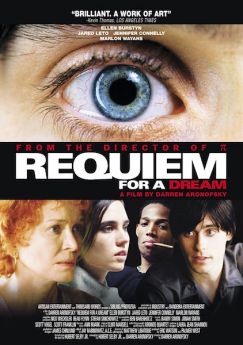 On Coney Island, the faded and decrepit one-time pleasure place of New York City, four people — Harry (Jared Leto), his girlfriend Marion (Jennifer Connelly), his best friend Tyrone (Marlon Wayans), and his mother Sara (Oscar-nominated Ellen Burstyn) — find themselves accidentally drawn into a whirlwind of drug addiction. Not to put too fine a point on it.
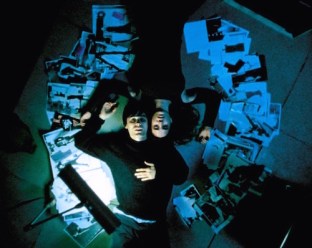 Harry and Tyrone by getting rich through selling drugs — and it all goes horrible awry.
 Requiem for a Dream may have a bit of a reputation at this point; one that might put you off viewing it, or possibly only deigning to attempt it in a certain frame of mind. While there is an element of truth to that, it is a brilliant film — not “enjoyable” in the easily-digested blockbuster sense, but as a mind-boggling and awe-inspiring feat of filmmaking, yes. Incredible.
 Jack Palance is an actor wanting out of his studio contract in this stagey film noir.
 Partially driven by a seeming twist that’s obvious from the outset (which, in fairness, the film reveals only 40 minutes in), the story never quite comes alive. Palance and Corey make parts worth watching, but at other times it’s a bit of a slog, not helped by an awful score that chimes in now and then, loudly. Expansive cinematography (so much headroom — was it shot to be cropped for widescreen? Perhaps it was) combats any feeling of claustrophobia the single location and oppressive moral situation might have leant it.
 Alex Cox was once the director of noticed movies like
  The way he’s gone about filming it is as, essentially, a giant student film. Cox currently teaches film at the University of Colorado at Boulder, and it was along with his students (plus some professional colleagues from previous films) that this movie was produced — that’s partly why there’s the lengthy list of directors (Cox actually directed “most of the first act and all the third”, as discussed in
  but there’s no transition from it into the black-and-white live-action main film, just an abrupt cut (a good place to have put the title credits, at the very least!) Worst of all, no effort whatsoever is made to establish that the cartoon guy we saw being enlisted at the start is now a live-action guy with a teddybear strapped to his spacesuit. It took me a minute to get it, and I’ve read the book.
 After a hurried start, the film does settle down to slightly longer scenes with more of a point, like Bill’s encounter with the Laundry Officer-cum-Chaplain, and some of these work pretty well. Sadly, too much of the time it’s a race through the novel’s story, feeling like a filmed recap for those who’ve read the book. Goodness knows what someone who hasn’t would make of it all. Goodness knows if they’d even be able to follow it at all, to be frank.
 Bill the Galactic Hero might be best described as a noble failure. It’s been created with the best of intentions, both in terms of adapting a quality novel that Hollywood had no interest in, and in training up a new generation of filmmakers in an independent and proactive way. It’s a shame the end result isn’t wholly as enjoyable as it might’ve been.
 At the start of their audio commentary on The Desolation of Smaug, co-screenwriters Peter Jackson and Philippa Boyens note that, when the decision was made to extend the already-shot Hobbit duology to a trilogy, it wasn’t a third movie that need to be created but a second. That is to say, it was the middle instalment that required the most extra material, including a new prologue and climax. The
  The extended cut amps him up even more, with an extra part in Mirkwood and a moment where he stands up for Thorin in Laketown. In fairness, he doesn’t have as much character development in this film as the first, while Thorin is on a definite arc and Gandalf is off on his own side-plot, but he’s undoubtedly a key character. I really don’t understand that complaint.
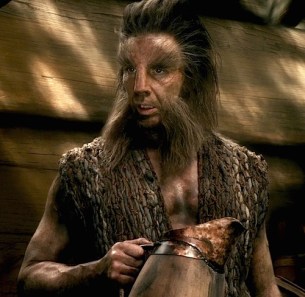 Even if some of the additions are worthless, on balance this is a better version of the film: more Beorn, more of the atmospheric Mirkwood, an additional character whose appearance will hopefully pay off in the extended
 Adapted from one of Agatha Christie’s best-regarded novels (now commonly known by its US title, And Then There Were None), Ten Little Indians sees a group of ten people invited to a remote location (in the book, an island; here, an alpine hotel) by a mysterious host, who doesn’t appear but does accuse them all of murder via a recorded message. Then, stranded, they begin to die one by one.
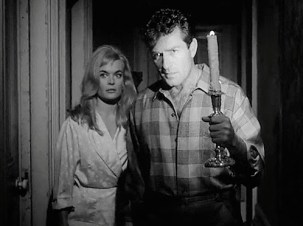 voiceover informs us this is our chance to have a guess. Ah, the ’60s.
 The
The  Your enjoyment of the film will hinge on your tolerance for this level of filmmaking. War Zone isn’t a Marvel-derived adaptation to sit alongside their big-budget in-house productions, but one to rival other hard-R violence-focused flicks. It may be kind of nasty in places, but no more so than other movies of its ilk; and really, if you look at it from outside the confines of sometimes-simplistic comic book morality, the Punisher is quite a nasty character.
 When it comes to hitman movies, I’d’ve said there’s
 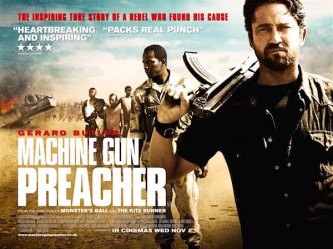 Between the mega-hits of
  The problem with the last point is that, in real life, Sam is still over there, still doing the same thing, while conflicts rage on. But this is a film — you need to find some kind of conclusion. The makers have tried, but its an incredibly half-arsed climax; less a resolution to the entire story and more Sam having learnt one lesson from something that went wrong a little earlier.
 mashed together with a polemical charity documentary about Africa, and then with some
 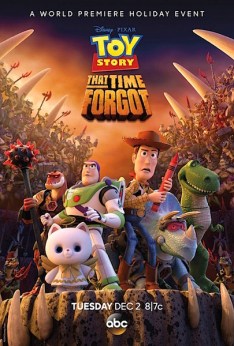 The second Toy Story TV special, and the fifth short adventure for the characters that perhaps should have had their last hurrah in
  The whole thing just feels undercooked. Apparently it took three years to make, with two of those dedicated to development. The Battlesaurs toy line was imagined in full, for example. There’s evidence of that on screen, but it’s just an impression that there’s a lot of background work we’re not getting to see. A TV special gives them limited time to explore the new world they’ve created, of course, but
  100Films.co.uk