The 100 Films Guide to Scream

I don’t always do anything to mark Halloween on this blog… but when I do, this is the kind of thing I do: complete coverage of the Scream movies (so far).

That means all-new “100 Films Guide To”s for the original film, its two sequels, and the 2011 legacy sequel, plus my brand-new review of this year’s, er, new legacy sequel. You know, the film that should’ve been called 5cream, but wasn’t.


Scream (2022)

Matt Bettinelli-Olpin & Tyler Gillett | 114 mins | Blu-ray (UHD) | 2.39:1 | USA / English | 18 / R

Scream (2022)

Nowadays, reviving horror franchises with reboots or continuations that just use the same title as the original film are all the rage — witness The Thing, Halloween, and Candyman; you might also include Evil Dead, Blair Witch, The Predator, and Texas Chainsaw Massacre. (And it’s not just limited to horror movies: Shaft is a sequel to Shaft, which was a sequel to Shaft.) And where there’s a trend in horror movies, the Scream series must follow, to both emulate and roast the genre’s new status quo. Fortunately, there’s more than merely “we could call a new Scream film ‘Scream’” to the movie’s satirical targets.

Set about ten years after the last film, the fifth Scream (I get that the recycled title is a meta-gag too, but I still think it’s a shame they missed the chance to go with 5cream, or Screams / Scream5) introduces us to a new cast of characters. That’s what every Scream film has had to do (that’s the thing with slashers — most of your cast gets killed off each time), but here we’re in ‘requel’ mode. For those who don’t know, ‘requel’ is a portmanteau of “reboot” and “sequel”, i.e. a film that’s both a reboot (in the sense it’s a new story you can jump onboard with) and a sequel (in that it’s still in continuity with the previous films). “Legacy sequel” is a similar thing — a belated sequel, in continuity, with the original cast, now older — but Scream already targeted that kind of follow-up last time out. What being a ‘requel’ means for this film is we meet all the new characters before the legacy ones are gradually introduced the plot.

A plot summary is barely necessary: someone in a Ghostface mask is murdering people. Who is it? What’s their motive? That’s the plot of all the Scream films — of course it is, that’s how horror franchises work. The devil is in the details, but that can make the details spoilers. There are some neat reveals, and twists on the franchise’s formula, that I’m not going to spoil here because that would ruin the fun. If you’re a fan of the series, the less you know going in, the better. For example, there’s one reveal — which doesn’t come until we’re already in the final act — that was, apparently, blown in the trailer, even after the filmmakers worked hard to keep it secret until the right moment in the film itself. (That’s according to the audio commentary — I haven’t watched the trailer to see if it blatantly blew it or if fans just worked it out from the footage shown.)

Ghostface Mk.V

Scream being Scream, it gets to both have its cake and eat it by pointing out the laughable clichés and ridiculous tropes of other horror films, then doing them anyway. Some people dislike this approach — “pointing out that what you’re doing is a cliché doesn’t stop it from being a cliché” — but, personally, I think it’s part of the charm of these films. They don’t do the thing and then have someone go “that was so cliché!”, they tell you “wouldn’t it be clichéd if this happened?” and then it does. Too subtle a difference for some, I guess, but it works for me. One thing the previous films have a habit of doing — and it continues in this one — is laying out the entire plot for you, even telling you who the villain is, but you don’t notice because you’re busy playing whodunnit and stringing the mystery together. Of course, they also lay out red herrings, so it’s always easier to spot the “they gave it all away” moments with hindsight.

Whether or not you’re on board with that “point out what it’s going to do then do it” approach will probably dictate how much enjoyment you can get out of a film like Scream. The best bits are the ones that are self-aware, either because characters are expressly discussing the plot or because the filmmakers are playing with our expectations. In the case of the latter, this film has a really neat sequence in which you know for certain the killer is going to jump out at some point, but the character on screen is, as ever, oblivious to this fact, so merrily goes around opening doors, thus blocking our lines of sight, or wandering past open doorways, which are then held in shot for just a moment too long… It’s a gag that builds in hilarity the longer it goes on, and directors Bettinelli-Olpin & Gillett milk it magnificently.

As for the former, this film has an especially neat exchange about “fan fiction”. Without Wes Craven in the director’s chair and/or Kevin Williamson at the typewriter, this film could definitely be dismissed as just “fan fiction” — that’s the gag, really. But, in terms of quality, there’s “fan fiction” and there’s “fans who have become professionals picking up the baton and continuing a franchise perfectly”. If this film is either, I’d argue it’s the latter. Which is a slightly convoluted way of saying Scream (5) nails the tone, style, and — perhaps most importantly — meta humour that makes a Scream film a Scream film.

4 out of 5

Scream is the 69th film in my 100 Films in a Year Challenge 2022.

2022 | Weeks 27–28

Hello! Yes, it’s me — I am still here. I’ve just been finding my time filled up with other stuff: working on the 2022 iterations of both WOFFF and FilmBath Festival (in addition to the ol’ day job); dogsitting for the in-laws; throwing up from eating bad garlic…

Anyway, here are some reviews of films I watched all the way back in July. (Oh dear, I am behind. Well, let’s see if I can catch up…)

  • Johnny Gunman (1957)
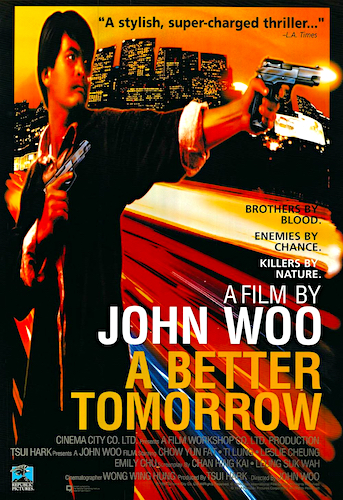
  • A Better Tomorrow (1986), aka Ying hung boon sik
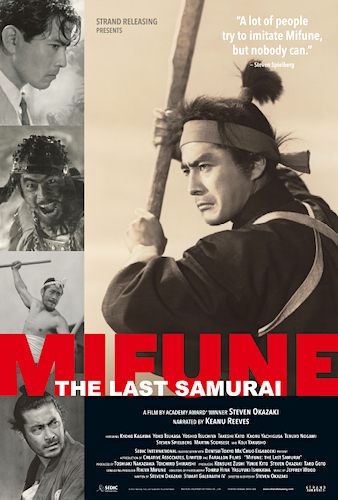
  • Mifune: The Last Samurai (2015)
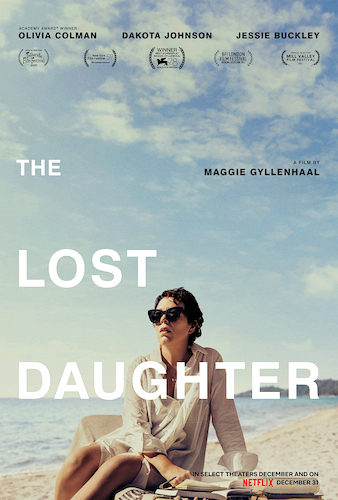
  • The Lost Daughter (2021)


    Johnny Gunman

    (1957)

    Art Ford | 67 mins | digital (HD) | 4:3 | USA / English

    Johnny Gunman

    The history of cinema is littered with fascinating asides and dead ends, and this is one of them: an independent film from before independent films were really a thing; from the time when the studio system was beginning to falter, but the film school auteurs hadn’t yet arrived (Spielberg, Scorsese, Coppola, et al were still in their teens when this was made).

    As with the films that would later break similar new ground after the digital video revolution in the ’90s, there are cracks — it’s amateurish and undeniably low-budget in places — but also artistry — every once in a while it’ll whip out an exceptionally well-lit scene or interesting visual. Story-wise, it’s an odd mix: there’s the noir-ish gangster plot line, which is derivative and clichéd; but it takes over the film from what you feel like it almost wants to be, which is a Before Sunrise-style slice of life. Maybe, in a freer world, that’s what the filmmakers would’ve produced; but when you’re one of the first people trying to break in from the outside, hitting the familiar beats of a genre is no bad idea.

    Some of the highlights of the film come at the start, with documentary-like shots of New York street life when our heroine visits the Greenwich Festival. It’s a brief little window into the real 1950s NYC, before the rote gangster plot comes to dominate. Indeed, being shot on location, and with an inexperienced cast, lends the whole production a certain veracity that you don’t always get from soundstage-bound studio pictures of the era. On the other hand, that’s also what gives it the rough edges that will make it unpalatable to some viewers.

    However you cut it, this is hardly a forgotten gem, but it’s an interesting detour of movie history that I’m glad I stumbled across.

    3 out of 5

    Johnny Gunman is the 45th film in my 100 Films in a Year Challenge 2022.


    A Better Tomorrow

    (1986)

    aka Ying hung boon sik

    John Woo | 96 mins | digital (HD) | 1.85:1 | Hong Kong / Cantonese, Mandarin & English | 18

    A Better Tomorrow

    A Better Tomorrow was the first in a run of modern-day gangster action movies that would make director John Woo’s name. Its original Chinese title translates as True Colours of a Hero, which is just as apt: it’s about a pair of mid-level crooks, one of whose brother is a cop, and the ways and whys in which they try and fail to escape the criminal life.

    Woo’s style was cutting edge back in the day, but that day is now pushing 40 years ago. Of course, his flamboyant style has never been to some people’s taste (witness the dismissive stance some still take towards M:i-2). Viewed now, this is cheesier and less stylistically polished than his later career-defining HK films like The Killer or Hard Boiled, but, on the couple of occasions it does explode into action, it’s suitably grandiose, and it has an engaging storyline and character dynamics.

    In regards to the latter, you can definitely see why Chow Yun-Fat was the breakout star. He’s actually got a supporting role, but his charisma shines off the screen, and there’s a plausibility to the way he handles the action. (Ironically, although it made Chow an action icon, he was cast because Woo didn’t think he looked like an action star.)

    Not Woo’s strongest film, then, but a definite sign of someone headed in the right direction — and, clearly, his later work paid off that promise.

    4 out of 5

    A Better Tomorrow is the 46th film in my 100 Films in a Year Challenge 2022. It was viewed as part of “What Do You Mean You Haven’t Seen…?” 2022.


    Mifune: The Last Samurai

    (2015)

    Steven Okazaki | 77 mins | DVD | 16:9 | USA & Japan / English & Japanese | 12

    Mifune: The Last Samurai

    At just an hour and a quarter, this biography of the actor Toshiro Mifune feels more like a primer on his work and life (complete with newcomer-friendly contextual asides into the history of Japanese cinema, the career of Akira Kurosawa, etc) rather than the deep-dive exploration of the man and his legacy that some reviewers hoped for. I certainly learnt stuff, but such criticism has validity. For that reason, the less you know about Mifune (and Kurosawa), the more you’ll get out of the film. That said, it might pay to have already seen some of their films — it’s not that director Steven Okazaki doesn’t introduce and summarise them adequately; more that, if you’ve seen them, you know the full context.

    Nonetheless, a good range of interviewees ensure the documentary is not without insight, managing to explore both what made Mifune the man tick and what made him such a phenomenal screen presence. Plus, the fact that Okazaki is happy to explain contextual topics (like a history of chanbara films; or matters of social history, like what losing World War 2 was like for the Japanese people) is both education and useful, because I imagine most non-Japanese viewers don’t have much baseline knowledge about this stuff. The film is definitely a biography of Mifune (not, say, a history of 20th century Japan using the actor as a gateway), but there’s much to be gleaned here for the interested viewer.

    4 out of 5

    Mifune: The Last Samurai is the 47th film in my 100 Films in a Year Challenge 2022.


    The Lost Daughter

    (2021)

    Maggie Gyllenhaal | 122 mins | digital (HD) | 1.66:1 | USA, UK, Israel & Greece / English & Italian | 15 / R

    The Lost Daughter

    Maggie Gyllenhaal’s directorial debut, based on a novel by Elena Ferrante, stars Olivia Colman as Leda, a woman on holiday alone in Greece, where she encounters a young mother (Dakota Johnson) whose daughter briefly goes missing, reminding Leda of her own younger days, when she was played by Jessie Buckley and had a husband and two daughters herself.

    It’s perhaps initially difficult to pin down exactly what The Lost Daughter is driving at — I suspect it’s the kind of film in which some people would say nothing happens. But it’s really a kind of mystery, where the mystery is the lead character’s psychology: why is she like this? There’s also the more obvious mystery of what exactly happened in her past, but that isn’t solved so much as gradually doled out in flashbacks. Obviously that kind of story relies a lot on its performances, and Colman is as strong as ever. So much of the importance of the film, which lies in her character and emotion, is conveyed without dialogue. That’s not do down the able support from Buckley and Johnson, mind.

    Gyllenhaal’s direction is interesting and effective, using lots of fairly extreme close-ups to give a kind of tactile sensation to the film. On the other hand, I would say it feels a little longer than necessary (especially after the ‘reveal’ scene, where the final piece of the puzzle clicks), and I’m not convinced it knows how to end (or perhaps it’s my fault for not really ‘getting’ the finale).

    Overall, though, it’s an impressive debut from Gyllanhaal, and a great alternative perspective on motherhood.

    4 out of 5


  • 2022 | Week 26

    I’m taking you back over two months here, to the end of June / start of July, for another eclectic batch of films I happened to watch in close proximity to each other…

  • The Flying Deuces (1939)
  • Apollo 10½: A Space Age Childhood (2022)
  • My Name Is Julia Ross (1945)
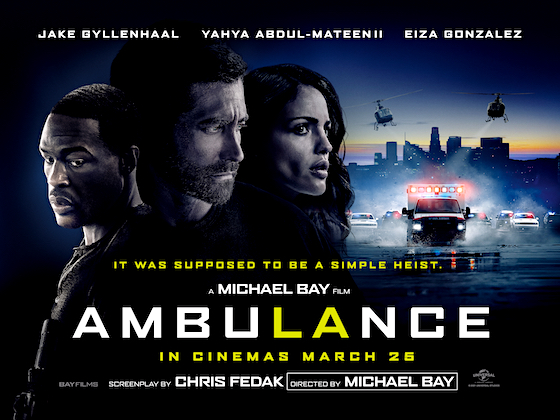
  • Ambulance (2022)
  • Easy A (2010)


    The Flying Deuces

    (1939)

    A. Edward Sutherland | 68 mins | DVD | 4:3 | USA / English | U

    The Flying Deuces

    I feel like I’m aware of Laurel & Hardy in a way I would say “everyone” is, but I guess that’s probably not true anymore (the kind of stuff I picked up or learnt about by osmosis in my ’80s/’90s childhood is surely very different to what kids got growing up in the ’00s/’10s). But I don’t think I’ve ever actively seen any of their work; certainly none of their feature-length films. The Flying Deuces is “probably their most famous film”, at least according to the blurb on my copy. Certainly, it’s the one you see bandied about the most; but then it’s in the public domain (one of only two Laurel & Hardy films where that’s the case), so it’s inevitably subject to endless cheapo releases. Leaving the quality of the print aside (it was poor; but at least it wasn’t cut, which apparently many are), I can’t say I was too impressed by the quality of the content, either.

    Here’s the rub: it’s a comedy, but it barely made me laugh. The humour operates at a basic level, with gags that are either well-worn or repetitious. “How anyone could be so stupid as to stand there and continually bump their head is beyond me,” one of them says at one point. And yet the other does exactly that, because that’s the level most of the film’s humour operates at. Some might say this is the downside of the duo being popular and their work being old — i.e. it’s been imitated and copied for decades, and we’ve moved on. But I don’t find that to be the case with silent comedians —who were equally, if not even more, popular, and whose work is even older — nor with things like the Road to films — which are far from the height of sophisticated comedy, but tickle my fancy more often.

    Well, there’s your answer, I guess: it’s all a matter of taste. And it seems Laurel and Hardy aren’t to mine.

    2 out of 5

    The Flying Deuces is the 41st film in my 100 Films in a Year Challenge 2022.


    Apollo 10½:
    A Space Age Childhood

    (2022)

    Richard Linklater | 97 mins | digital (HD) | 16:9 | USA / English | 12 / PG-13

    Apollo 10½: A Space Age Childhood

    I guess one of the advantages of being a filmmaker with some degree of clout is you can take your regular-ass childhood and turn it into a movie as if it was somehow special. That’s what the Before trilogy and Boyhood mastermind Richard Linklater has done here, fictionalising his autobiography as the story of ten-year-old Stanley, who lives in Huston, Texas, in the era of the first moon landing. Except, in this version, Stanley is secretly recruited by NASA to secretly train to be a secret astronaut to secretly be the first person on the Moon, in secret. If that sounds like an unusual spin on a traditional nostalgia-driven biopic, don’t get excited: that subplot is moved away from as quickly as it’s introduced, and only pops back up two or three more times, each brief. The film is much more concerned with real memories than imagined ones, and is much less fun for it.

    Often, at Christmas or other such get-togethers, members of my family will end up reminiscing about various childhood recollections. I’m sure many other families do a similar thing. What’s shared on these occasions are the kind of mundane memories that mean the world to us but, if you stopped to think about it, you know no outsider would find of much value. Well, seems Richard Linklater hasn’t stopped to think about it. And I really do mean “mundane”: there’s a sequence about which sibling did which chores and how they made their school lunches. As a commenter on iCM put it, Linklater “name checks every TV show and movie he saw, every game he played, everything in his diary […] for long stretches, it just feels like an itemized list of childhood memories.”

    One part that’s actually rather good is Jack Black’s voiceover narration as the adult Stanley. There’s probably too much of it (again underlining the fact these are nostalgic anecdotes rather than a true narrative), but the actual quality he brings is very nice. It feels calm and understated, neither giving in to Black’s usual mania nor substituting it for the hardcore tweeness you might expect from such a rose-tinted autobiography.

    Maybe Apollo 10½ will be more interesting to young people or future generations, whose technology- and safety-obsessed childhood experiences will be so far removed from what we see here. To them, it’s an historical documentary. I can’t say my childhood was much like this one (especially as it occurred almost 30 years later), but I guess I’ve picked up enough of this kind of nostalgia from other American films and TV series down the years that what Linklater has to share doesn’t feel remarkable enough to be worth sharing.

    3 out of 5

    Apollo 10½: A Space Age Childhood is the 42nd film in my 100 Films in a Year Challenge 2022.


    My Name Is Julia Ross

    (1945)

    Joseph H. Lewis | 65 mins | Blu-ray | 1.37:1 | USA / English | PG

    My Name Is Julia Ross

    Here we have one of those films that commonly gets called a film noir, but isn’t really (or, at least, doesn’t fit well with the standard conception of what noir entails). The blurb for Arrow’s Blu-ray release describes it as a “Gothic-tinged Hitchcockian breakout hit” (apparently it was produced as a B-movie but became so popular they promoted it to “A-feature status”), which struck me as accurate — it’s less standard noir, more a Rebecca-influenced psychological thriller. While it’s clearly no Hitchcock, it’s a very entertaining substitute.

    Nina Foch stars as the eponymous Julia Ross, who takes a job as a live-in secretary for a wealthy widow. But the job is a front: Julia is kidnapped, waking up a prisoner in a Cornish mansion, where the widow (Dame May Whitty) and her son (George Macready) try to convince her she’s actually Marion Hughes, the son’s wife, and she’s having a bit of an episode.

    From the way Arrow described the film, I assumed it was going to play to some degree with the idea that maybe she is actually mad. It would be a neat twist, right? That she is Marion Hughes, and the stuff we saw at the start was part of her delusion. But no, the film doesn’t even vaguely gesture at that route: right after Julia meets her prospective employer, we see that she’s plotting something nefarious — and the film isn’t even seven minutes in. Then, even before we really know that something’s up, Julia’s fancy-man is looking into her disappearance. It’s like the film’s playing all the right notes but in the wrong order.

    But it doesn’t really matter, because the whole thing is suitably entertaining. Rather than relying on the mystery of what’s happening, it’s more about how Julia can get out of the situation. Will she be able to escape her confinement? Can she somehow get out a message for help? Or will the villains succeed in their scheme? Plus, at just 65 minutes, it moves at a whipcrack pace, so you can sit back and enjoy the absurd plot rather than worrying about, well, how absurd it is.

    4 out of 5

    My Name Is Julia Ross is the 43rd film in my 100 Films in a Year Challenge 2022.


    Ambulance

    (2022)

    Michael Bay | 136 mins | Blu-ray (UHD) | 2.35:1 | USA & Japan / English | 15 / R

    Ambulance

    When their bank heist goes sideways, two brothers (Jake Gyllenhaal and Yahya Abdul-Mateen II) make their getaway in a stolen ambulance — with a policeman they shot and the paramedic working on him (Eiza González) in the back. With the cops immediately on their tail, thus begins an epic car ambulance chase around the streets of LA.

    The setup feels like it should signal the low-/mid-budget debut of a new director showcasing their talents with a 90-minute stripped-back thrill-ride that’s mostly contained to the eponymous setting. But it’s not directed by some newbie — it’s Michael frickin’ Bay, back on the form that gave us action classics like The Rock. And so the 90-minute character-focused thriller is in there (honest it is), but augmented with 40 minutes of big-budget Bayhem.

    Compared to Bay’s other work in the past 15 or so years, Ambulance feels restrained. Compared to almost any other filmmaker, it’s anything but. When I say “restrained”, part of what I mean is the editing. Not that it takes a leisurely approach by any means, but it doesn’t have that “impressionistic jumble of B-roll” style Bay has tended towards on and off ever since Armageddon, and that became his only mode during a couple of the Transformers sequels. Also, I didn’t notice this until I read it on IMDb, but the film contains a literal Chekhov’s gun — that is, a gun that is a “Chekhov’s gun”. That’s so Michael Bay.

    Giving this film 5 stars would be a bit silly… but it was really good. It’s the kind of movie you’d never rate higher than 4, but you love for what it is: magnificent Bayhem.

    4 out of 5

    Ambulance is the 44th film in my 100 Films in a Year Challenge 2022. It placed 9th on my list of The Best Films I Saw in 2022.


    Easy A

    (2010)

    Will Gluck | 92 mins | digital (HD) | 16:9 | USA / English | 15 / PG-13

    Easy A

    When an overheard white lie about losing her virginity makes barely-noticed Olive (Emma Stone) the centre of her high school rumour mill, she decides to manipulate her newfound notoriety for her own amusement.

    As “raunchy teen comedy” plots go, it hits a sweet spot of being neither too prudish nor too lecherous. The dialogue elevates it further in a sharp and witty script by Bert V. Royal (who, it seems, has since only worked on TV shows I’ve never heard of. Shame). In her first lead role, Emma Stone gives a perfectly-pitched, surprisingly nuanced performance. The story really allows her to show off her versatility, believable as both the ‘quiet girl’ and ‘confident slut’. Obviously there’s lots of comedy, but she sells the moments of sincerity too. It’s no wonder she quickly got snapped up for more awards-type work. Plus, there’s Stanley Tucci being what I imagine Stanley Tucci is actually like as a dad, which is perfection.

    The only major downside (and it’s a bit of a spoiler, but also so predictable that it barely counts as a spoiler) is that it would’ve been nice if the guy she eventually ends up with wasn’t so stereotypically hot. We’re meant to buy him as a kinda-goofy sports mascot rather than someone who’d actually be playing The Sport? Yeah right.

    I’m not always a fan of high school movies or teen comedies, but there are definite exceptions, and this is the latest addition to that rarefied list.


    4 out of 5


  • 2022 | Weeks 24–25

    Similar to Week 21 last time, Week 23 only included rewatches, so gets skipped in the title. As for the other two, that brings us fundamentally to the end of June (the 26th, to be precise), and so almost to the halfway point of the year. But I’ll leave such discussion to my monthly reviews.

    Instead, here are the remaining four reviews of films I watched that fortnight…

  • The Ghost Writer (2010)
  • Escape in the Fog (1945)
  • Pretty in Pink (1986)
  • House of Gucci (2021)


    The Ghost Writer

    (2010)

    aka The Ghost

    Roman Polanski | 128 mins | digital (HD) | 2.35:1 | France, Germany & UK / English | 15 / PG-13

    The Ghost

    Originally released as The Ghost in the UK (the same title as the Robert Harris novel on which it’s based), but now on Netflix under its US title, The Ghost Writer, whatever you call this film, it’s an effective thriller about a subject that might not sound thrilling: writing an autobiography. The key is that the person being biographied is a former British Prime Minister (Pierce Brosnan) who was involved in some shady business during his time in office, which is beginning to resurface in the news; plus the fact that his first ghost writer was recently found dead, washed up on a beach on the island the ex-PM is currently calling home. It’s into this maelstrom that our hero, the new ghost writer (Ewan McGregor), is dropped, and soon finds himself more involved than he’d like.

    So, despite the unique setup, it’s a fairly straight-up thriller plot of political intrigue and buried secrets. That’s not a criticism — this is very much my kind of thing. What elevates it is the film’s style and atmosphere. There’s something odd about it all, which makes the viewer feel as unsettled and out-of-place as McGregor’s character quickly becomes. Some contributing factors to this sensation are likely unintentional — the result of things like half the cast having to labour under different accents, or the excessive green screen used to fill in the views of Cape Cod (the film wasn’t shot in the US, but in Germany and Denmark, for “the director’s a criminal wanted in the US” reasons) — but neither of these elements felt glaringly bad to me, just… off.

    As I say, I think such an atmosphere is actually very fitting for a political thriller full of questions about who can be trusted, life-or-death mysteries, and a couple of solid twists. Yes, very much my kind of thing.

    4 out of 5

    The Ghost Writer placed 8th on my list of The Best Films I Saw in 2022.


    Escape in the Fog

    (1945)

    Oscar Boetticher Jr. | 63 mins | Blu-ray | 1.37:1 | USA / English | PG

    Escape in the Fog

    With the fifth (and, it would seem, final) of Indicator’s Columbia Noir box sets then-imminent, and a new series of Universal Noir soon to begin, I thought it was about time I actually started watching them. So here’s the first, both for me and the series (i.e. it’s the oldest film in box set #1). It’s a quickie from director Budd Boetticher (before he started being credited under that name) about a San Fransisco nurse who has an ultra-specific dream about a murder, then meets the victim-to-be in real life. It turns out he’s a spy about to be sent on a top-secret mission, but his only hope of making it alive is her using the details from her dream to prevent his death.

    It’s unfortunate that this 30-film ‘series’ (they’re only connected by the studio that made them and Indicator happening to bundle them together, of course) begins with such a travesty of a film. For starters, it’s barely even a noir, more a melodramatic mildly-fantastical spy thriller. Well, I can enjoy that kind of thing too — goodness knows the number of spy movies I’ve given high scores to, and there’s something to be said for a spot of ridiculous hokum — and Escape in the Fog might have been another such fun example, except it’s been made with a total absence of passion. It’s about as thrilling as a lukewarm cup of milky tea at a cafe that only has outside seating on a drizzly winter afternoon. It’s only redeeming quality is that it’s so daft (though only in places, because it ends up forgetting its own ridiculous conceits) that you can’t help but have a bit of a laugh at it.

    Filler in every sense of the word.

    2 out of 5

    Escape in the Fog is the 38th film in my 100 Films in a Year Challenge 2022.


    Pretty in Pink

    (1986)

    Howard Deutch | 97 mins | digital (HD) | 16:9 | USA / English | 15 / PG-13

    Pretty in Pink

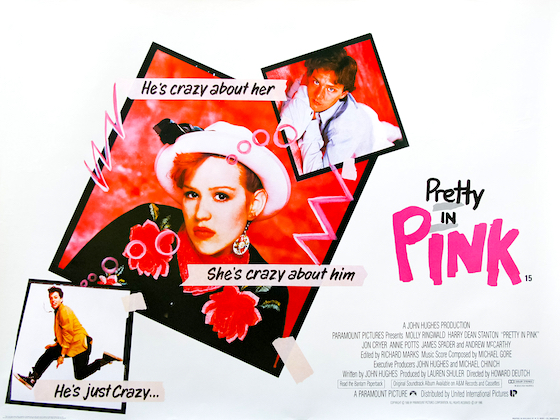
    Another John Hughes-penned ’80s teen movie that had passed me by (it’s only in the past few years that I’ve watched The Breakfast Club and Ferris Bueller’s Day Off, and I’ve still not seen Sixteen Candles or Weird Science). This one stars Molly Ringwald as Andie, a non-popular high school girl caught between the affections of her childhood friend (Jon Cryer) and a rich kid who’s suddenly showing an interest in her (Andrew McCarthy).

    No bones about it, plot-wise it’s a pretty standard love triangle romcom; but the devil is in the details, and Pretty in Pink has a lot of likeable ones. For starters, it’s so ’80s. Like, aggressively. Like, if you made a movie set in the ’80s, you wouldn’t make it this much ’80s because people would criticise you for overdoing it. Then there’s the supporting performances. Harry Dean Stanton makes a great ‘movie dad’ — you know, the kind of comforting, supportive father figure you kinda wish were your own. I don’t think I’ve ever seen him in a role like this before. The relationship between him and Ringwald comes across as really sweet and effective without tipping over into saccharine or implausible. Then there’s Annie Potts as Andie’s older best friend, proving she should be known for more than just being screechy and kooky in Ghostbusters. Plus, James Spader makes for a superb villain. It’s only a small role in the grand scheme of the film, but he does smarmy glibness so well.

    Poor Molly Ringwald — she’s fine in the lead, but everyone else is so good they kinda overshadow her in her own movie. Or maybe that’s unfair: Andie is a pretty likeable lead, with a commendable amount of independence and self-worth. Okay, she lets that slip a bit for A Boy, but what teenager hasn’t let such heady new emotions get the better of them? She comes out for the best in the end.

    The only major downside is the rushed third act, which makes the ending feel unearned — a feat that’s almost impressive when the ending is so predictable. It’s actually due to a post-test-screening rewrite and reshoot: in the original version (spoilers!) Andie ends up with Duckie, not Blane. Personally, I don’t think either is right: she should’ve chosen neither of them. As I see it, the film doesn’t really set up her getting back with Blane (presumably because it was a last-minute change), so I don’t buy that; but nor does it do enough to suggest she’d suddenly find Duckie a romantic proposition. They should have settled for being BFFs, and Blane should’ve fucked off. But I guess a romcom where the girl ends up single wasn’t done back then. You’d probably still find it a hard sell today, to be honest.

    4 out of 5

    Pretty in Pink is the 39th film in my 100 Films in a Year Challenge 2022. It was viewed as part of “What Do You Mean You Haven’t Seen…?” 2022.


    House of Gucci

    (2021)

    Ridley Scott | 158 mins | digital (HD) | 2.39:1 | USA & Canada / English, Italian & Arabic | 15 / R

    House of Gucci

    Director Ridley Scott tells the true (ish) story of the behind-the-scenes dramas at Italian fashion house Gucci in the mid 20th century. If you think that sounds like some kind of dull boardroom drama, oh boy, is it not. With the amount of scheming and backstabbing that goes on, it’s more like a variation on The Godfather than a staid piece about people arguing in suits in offices. Oh, those crazy Italians, eh?

    Of course, none of the main cast are Italian. But they are all doing Italian accents. Or what passes for Italian accents in the mind of us anglophones — they sound about as authentic as a Dolmio advert. Or a Mario game. “It’s a-me, Lady Gaga!” Although, once you get over the humour value of that, Gaga is genuinely very good in her Lady Macbeth-esque role as a woman who marries into the family and goads her husband into dominating the business. And then there’s Jared Leto, buried under prosthetics as well as the dodgy accent. Does he know he’s getting laughs with almost every line, or does he think he’s giving a serious dramatic performance? Who knows. Who cares. No one in the rest of the cast is as memorable — even when we’re talking about actors of the calibre of Adam Driver, Salma Hayek, Jeremy Irons, and Al Pacino — but then, I’m not sure there’d be room for that many Big performances. Scott brings his usual pizzazz too, with the well-shot gorgeous locales looking beautiful and elegant. Parts of Italy are just fundamentally beautiful, and you think it would probably be hard to mess up filming them.

    There are plenty of criticisms of the film to be found in pro reviews and viewer comments across the usual sources. Reading them, I don’t necessarily disagree on any particular point. For one thing, it’s definitely too long, and still leaves a load of information to be dumped in the inevitable “what happens next” text at the end. It could also be clearer about what’s going on at times, especially legal stuff, like when they’re suddenly being investigated for financial crimes. That said, it has an energy that often keeps it barrelling along. It’s probably an advantage to not know the real-life events, because it allows the story to unfold without preconceptions about where it’s going, so you’re not waiting for it to get to the bits you know.

    Flaws and all, I had a ball watching it. It may really be a 3-star film in some senses, but I got a 4-star level of enjoyment out of it.

    4 out of 5


  • Prey (2022)

    Dan Trachtenberg | 99 mins | digital (UHD) | 2.39:1 | USA / English | NR* / R

    Prey

    In the seemingly-endless cycle of “trying to reboot popular ’70s/’80s sci-fi franchises”, it is once again the turn of Predator, following in the wake of 2018’s disappointingly messy The Predator and 2010’s apparently-disliked Predators (I enjoyed it, but everyone seems to write it off nowadays). Where both of those tried to go bigger — either with more or larger versions of the eponymous aliens — Prey strips things back to basics, as per the one entry in the series everyone can agree is good, the first.

    Set around 300 years ago, when indigenous people still lived freely on the plains of North America, the film introduces us to a member of the Comanche tribe, Naru (Amber Midthunder, who genre fans might recognise from X-Men-adjacent TV series Legion), a young woman who wants to prove herself as a hunter like the tribe’s menfolk, including her exalted brother (Dakota Beavers). Long story short, she’s about to get her chance when an alien Predator rocks up.

    Plot-wise, Prey is pretty straightforward. And therein lies a big part of its success, because what more do we want from a Predator movie than “a hero has to fight a technologically-superior Predator”? If you do want more than that, I think you’ve come to the wrong franchise. Of course, simply rehashing what’s gone before is just another path to failure, and so what Prey does is take those basic bones and dress them up with fresh settings, ideas, and perspectives. In this case, that’s the period setting and Native American heroes. How do you defeat a Predator using weapons no more technologically advanced than bows and arrows? With intelligence, of course, and the film does a nice job of showing Naru gather information and formulate plans without ever needing to spell them out for us.

    The prey becomes the predator

    That it can pull that off is also to the credit of star Amber Midthunder, who conveys so much of Naru’s thought processes through only looks and expressions. All round she makes for an appealing heroine: she’s capable and brave, but not foolishly so, sometimes hanging back to assess the situation, or even running away when the odds aren’t in her favour, rather than diving in mindlessly. As action heroes go, I think that counts as nuance. I saw one critic tweet that she’s so good she needs to be given a Marvel superhero role ASAP, which is more a depressing indication of the state of cinema (appealing action lead? The highest honour would be a Marvel role!) than an indication of Midthunder’s ability (please, Hollywood, don’t just waste her on Marvel filler).

    This may be a straight-up humans vs aliens action movie, but it still treats its audience with a degree of respect. It knows we’re capable of joining dots ourselves, especially when we can see characters doing the same. Naturally, Prey has some developments and moments derived from previous Predator movies — it wouldn’t really be part of the same franchise if it wiped the slate wholly clean — but they feel recontextualised or come into play naturally, rather than the filmmakers over-eagerly forcing them on us as a plea to nostalgia.

    Quite aside from the plot and action, this is a beautifully made film. The first half-hour almost evokes the work of Terence Malick, with its relatively slow pace and photography that showcases nature and gorgeous scenery. This would’ve been a stunner on the big screen. Most big-budget theatrically-released films don’t look this much like A Movie nowadays, never mind streaming churn. I say it only “almost evokes Malick” because it’s not actually Malick-speed slow, but what it’s doing is quite deliberate: establishing the characters, the environment they live in, the things they know and the tools they have access to, and so on — as well as building up the looming threat of the alien hunter — so that we understand the world and the stakes when things kick off later.

    They're going on a bear hunt (no, really, at this point they think it's a bear)

    One thing I sort of want to pull the filmmakers up on is the language(s) used for dialogue. During promotion, they’ve talked about how some of the film is actually in the Comanche language, a selling point because of diversity and inclusion. Well, not much of the dialogue is Comanche — the primary language is unquestionably English — and it’s not subtitled, which means the vast majority of viewers can’t understand it, so they could be saying anything. I don’t think a film is ‘in’ a language if you can’t understand it (it’s why I’ve not listed Comanche as a language at the top of this review, nor the European languages spoken by the settlers who come into the plot, which also aren’t subtitled). That said, there is the option to watch the entire film dubbed in Comanche — a first, apparently. That would be more historically authentic, but it’s also a dub, i.e. not how the film was ‘intended’. Nonetheless, I’ve already seen some argue it’s a better version, so it may well be worth a look.

    That minor point aside (it’s not something I’m holding against the film, just the filmmakers’ boastfulness), Prey is a resounding success at what it sets out to be: an action movie in which humans and Predators have a fight. It’s the Predator film fans have long been waiting for. And it hopefully indicates to the studio bigwigs what the future of this franchise should be: pick a different era, with different technology and/or attitudes to combat, drop a Predator into it, and see how the humans get on against it. Honestly, with the right creatives, you could milk that simple premise for another half-dozen or more enjoyable movies, I reckon.

    4 out of 5

    Prey was the 49th film in my 100 Films in a Year Challenge 2022. It placed 10th on my list of The Best Films I Saw in 2022.

    * There was no certificate listed on the BBFC website at time of review; Disney+ continuing to take advantage of the fact there’s no legal requirement for streaming content to be certified. Some press ads listed the film as 18+, but they’ve gone with 16+ on the service itself. So, it’s either a 15 or an 18. I guess we’ll never know (unless it gets a disc release). ^

    The Halfway Monthly Review of June 2022

    Another month gone, and suddenly we’re halfway through 2022. Whaaaat?!

    To mark the occasion, the Viewing Notes section is a little longer than usual, taking a look at how the rest of the year might shape up — or might need to shape up, considering my new 100 Films Challenge is currently running behind schedule…


    This month’s viewing towards my yearly challenge

    #36 Top Gun 3D (1986) — Rewatch #6
    #37 Scream (1996) — Wildcard #2
    #38 Escape in the Fog (1945) — Genre #1
    #39 Pretty in Pink (1986) — WDYMYHS #5
    #40 Paris, Texas (1984) — Blindspot #6
    #41 The Flying Deuces (1939) — DVD #3
    #42 Apollo 10½: A Space Age Childhood (2022) — New Film #6
    #43 My Name Is Julia Ross (1945) — Genre #2


    • I watched 12 feature films I’d never seen before in June.
    • Six of them counted towards my 100 Films in a Year Challenge, along with two rewatches.
    • Wait, two rewatches? Yep, because I’ve deployed my second wildcard of the year to count Scream as a second rewatch for June. That means I can’t count two rewatches in a single month again this year; but, as it marks the beginning of a rewatch of the Scream series, it does open up the rest of those films to counting under Series Progression. Nifty.
    • Genre was the only category I hadn’t started when June began. Escape in the Fog changed that, meaning all 11 categories are officially underway — and all still ‘in play’, with none completed — as I reach the halfway point.
    • This month’s Blindspot film was Wim Wenders’ Paris, Texas, starring Harry Dean Stanton as a dad trying to bond with his kid.
    • This month’s WDYMYHS film was the John Hughes-penned Pretty in Pink, co-starring Harry Dean Stanton as a dad who’s really good with his kid. I remain one behind here, but there’s still plenty of time to catch that up.
    • From last month’s “failures” I only watched The Contender.
    • I also watched a short film this month — my first this year! I often feel like I should watch more shorts, especially as I own hundreds on disc (a handful of dedicated collections, and then loads included as special features here and there). Maybe I should make it some sort of official goal. 100 Short Films in a Year? Sounds doable — but in addition to what I already aim for? Maybe not.

    As I was saying, now that we’re halfway through the year, here’s how things are shaping up overall…

    • I should be at #49 now (not #50, thanks to the first six months of the year being slightly shorter than the second six). Although I’m short of that, at least I’m not a whole month’s worth short (the target for the end of May is #41), so that’s something. Nonetheless, I need to push a bit harder for the rest of the year: the monthly average to reach 100 in 12 months exactly is 8.3 films per month, but for the rest of the year I need it to be 9.5.
    • As a point of comparison, so far this year I’ve averaged 7.2 Challenge films per month, so it’s a bit of a step up.
    • But I’ve averaged 10.5 films per month overall, so if I just make more of them Challenge-compliant going forward then I should be fine.
    • Were I still doing my old-style 100 Films Challenge (just watching any new-to-me 100 films in a year), I’d currently be at #63 — which would be my poorest performance at this point since 2014.
    • All of which sounds fine and dandy, until you remember this: I typically watch fewer films in the back half of the year.
    • That’s not just a casual observation: I have numbers on this. For example, I can tell you that, out of 15 years of running this blog, I did actually watch more films in the back half of the year five times. And on a further three occasions, the second half was within 10% of the first half’s tally. So, it’s not as if the two halves are often wildly different. Which is funny, when you think about it, considering my overall annual tallies can be so very different — historically, anywhere from 94 to 264 films in a year.
    • Anyway, what do the stats foretell for this year? Based on my all-time average first-half-to-second-half ratio, I would watch 122 films this year. Narrowing that to just the last five years, I would make it to 108. And if we look at just years where I’d made comparable progress by the end of June — which happen to be 2010 to 2014, when I’d reached between #55 to #64 by this point — they too reckon I’d make it to 122.
    • Which is all well and good for my old target, but what about the New 100 Films Challenge? Well, so far my ratio of new films to films that count is roughly 1.47:1. If that holds, then watching 122 new films would mean I watch only 83 that count towards my Challenge. So, as I said earlier, I need to up the number of compliant films. Or, of course, just watch more films.
    • As to that final point, the last time I watched more films in the second half of the year than the first was in 2015, driven by pushing myself to make it to #200. But such a goal isn’t always necessary: in 2014, I did an even greater percentage of my viewing in the back half, but only to make it to #136. And goals aren’t a guarantee of anything: in 2016, I watched more in the first half of the year than I had in 2015, but so much less in the second half that I only made it to #195.

    All of which goes to prove one thing: when it comes to my film watching, statistics may be fun, but they’re useless at predicting the future.


    The 85th Monthly Arbitrary Awards

    Favourite Film of the Month
    Quite a few more-than-solid films this month, but the one that comes closest to jumping out at me is also one I’ve been meaning to see ever since it came out, 12 years ago now. That would be political thriller The Ghost Writer (originally released as The Ghost here in the UK, but now under its international title on Netflix). Why does it sometimes take me so damn long to get round to things I was actually quite keen to watch? Goodness only knows. And it’s things like this — where, as I expected, I enjoy them a lot — that prove I shouldn’t let such delays happen.

    Least Favourite Film of the Month
    Apologies to any Laurel and Hardy fans reading this, but my first real experience of their work didn’t really make me laugh, and a comedy that doesn’t make you laugh isn’t much of a success, so The Flying Deuces takes this (dis)honour.

    Most Timely Viewing of the Month
    Here in the UK, we got a bonus Bank Holiday if June, to celebrate Queenie’s Platinum Jubilee… and, on the first of them, I watched the fairly-obscure (I’d certainly never heard of it before) 1938 film Bank Holiday. The film and modern real-life event aren’t really connected in any way (no Jubilee going on in the film), but hey-ho.

    Best Accent of the Month
    Accents in films are a funny business. Sometimes, people don’t even bother: witness My Name Is Julia Ross, a Hollywood production set entirely in London and Cornwall, where half the cast don’t even bother to attempt English accents. Sometimes, you wonder if people needed to: take The Ghost Writer, where it feels like everyone’s doing one accent or another, be it Scots and Americans doing English, or Brits doing American. And then there’s films that are a wonder unto themselves, like House of Gucci, where the entirely-English-speaking cast are doing ‘Italian’ as if they’re in a Dolmio advert. “I cooka da pasta” indeed.

    The Audience Award for Most-Viewed New Post of the Month
    For the second month in a row, my monthly failures roundup — namely, May’s Failures — has topped the chart. I say “topped”: it was the highest new post, but 29th overall. I guess my new reviews just haven’t been that interesting. (My ‘mistake’ has been stopping TV reviews: 24 of the 28 posts above May’s Failures were old TV columns.)


    Every review posted this month, including new titles and the Archive 5


    Y’know, I still haven’t been to the cinema yet this year. I keep meaning to see Top Gun: Maverick, but things keep getting in the way. But, as of today, my local cinema have put it back on to their biggest screen for the weekend, so maybe I’ll finally pull my finger out and get there in the next couple of days.

    As for the rest of the month… oh, who knows!

    2022 | Weeks 18–20

    These three weeks take us most of the way through May. When I first started writing this batch of reviews, I thought that would bring me almost up-to-date… but then I realised we were already over halfway through June, and, as I finish it, June is almost over. Time flies!

    It’s partly because I haven’t been watching as many films over the past couple of months (so it doesn’t feel like I watched these as long ago as I actually did), instead spending a lot of my leisure time on finally watching Apple TV+ series For All Mankind (I’ve just finished season one, which was really good, and I hear only gets better) and replaying all the Monkey Island games (I’m on the fifth and, to date, final one now).

    But I digress. Because I already posted Shang-Chi and Frances Ha separately, the remaining reviews from this period are…

  • The Monolith Monsters (1957)
  • Hannah and Her Sisters (1986)
  • Chip ’n Dale: Rescue Rangers (2022)


    The Monolith Monsters

    (1957)

    John Sherwood | 77 mins | Blu-ray | 2:1 | USA / English | PG

    The Monolith Monsters

    I watched this film in Eureka’s box set of ’50s B-movies, Three Monster Tales of Sci-Fi Terror. As you can tell from its inclusion there — and, indeed, its title — this is one of a wave of “monster movies” from that era. Except it isn’t, really. In fact, it’s a sci-fi disaster movie jerry-rigged into what I guess was the prevailing B-movie trend of the day: the eponymous ‘Monolith Monsters’ aren’t monsters at all, but an alien rock that expands relentlessly.

    Whatever you want to call it, the film offers a mix of B-movie daftness and real-sounding science that’s quite appealing. For example: our heroes discover this crazy, hitherto unknown multiplying rock; then realise they have maybe two days to stop it before it destroys their town; and rather than, say, alert the government, or call in expert help, they decide to… figure it out for themselves. But it does make you wonder: is this poor B-movie logic, or just 1950s Americanness? I love the thought that some crazy extraterrestrial incident may have occurred in some backwater town in the middle of nowhere, and no one ever knew about it because the locals just dealt with it themselves. “Oh yeah, aliens invaded back in ’57, but we didn’t see the need to bother nobody else with it, just shut ’em down ourselves.”

    Yet for all that silliness, there’s some scientific logic in play too. Whether it’s real science or “close enough”, I don’t know (let’s be honest, it’s probably the latter), but they manage to make it sound convincing. It helps contribute to an exciting climax, in which a plan to stop the monoliths can only be executed at the last moment before the town is overrun. Rocks don’t normally move fast enough to create race-against-time tension, but hey, these are alien rocks.

    The more I reflect on The Monolith Monsters, the more I like it. For a pulpy B-movie, it has an appealing seriousness. Sure, there’s some schlockiness that I wager is inevitable thanks to its era and budget range, but it feels like it’s trying to be more than trashy entertainment, aiming instead to be a more grounded, almost realistic sci-fi thriller. In reaching for that end it becomes a little slow going at times, but overall it’s quite fun.

    3 out of 5

    The Monolith Monsters is the 31st film in my 100 Films in a Year Challenge 2022.


    Hannah and Her Sisters

    (1986)

    Woody Allen | 107 mins | digital (HD) | 1.85:1 | USA / English | 15 / PG-13

    Hannah and Her Sisters

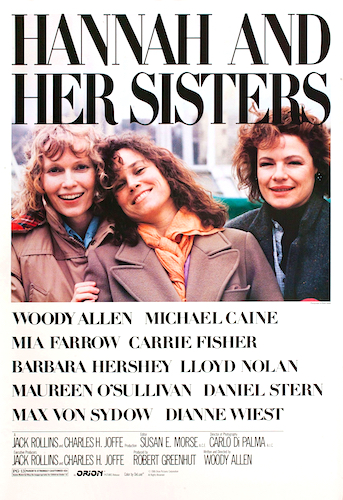
    Hannah and Her Sisters is one of writer-director Woody Allen’s more popular and successful films. For example, it was nominated for seven Oscars, winning three; and nowadays, it’s his third highest-rated film on Letterboxd, above the likes of Manhattan and later-career highlight Midnight in Paris. All of which I mention because, personally, it’s the kind of film I’d describe as “something and nothing”, because I liked it well enough, but also didn’t really get what it was going for overall.

    It’s the story of… well, Hannah (Mia Farrow) and her sisters. They’re three middle-aged women who all live in New York City (of course) and, over the course of a couple of years, we follow their lives and relationships, with a focus on the latter. Actually, if anything, I might argue the biggest focus is on Elliot, played to Oscar-winning effect by Michael Caine, who is married to Hannah but finds himself pining for her sister, Lee (Barbara Hershey).

    I say “might argue” because Hannah and Her Sisters is one of those films that feels like a collection of subplots. All of the storylines play out, then they stop, with happy endings almost across the board, and that’s your film. I expect it’s based around a theme of some kind, but all I really got it from it was the old “the grass is always greener” adage. Apparently Allen particularly wanted to make something about the relationship between sisters, because he thought that was more complex than between brothers. Fair enough, but I’m not sure it really comes across in the finished film. There are only about two or three scenes in which the sisters actually interact. They’re mostly off on their own subplots; and while those subplots do effect each other, I don’t think they truly speak to the sisters’ relationships; not in any revelatory depth, anyway.

    I’ve enjoyed quite a few of Allen’s films that I’ve seen, but Hannah and Her Sisters won’t be cracking my personal favourites of his work. It was fine to watch — not exceptionally funny or dramatic or insightful or original, but fine — and then it ends, and we go on with our lives. It’s not bad, but it also wasn’t anything much. Not to me, anyway.

    3 out of 5

    Hannah and Her Sisters is the 32nd film in my 100 Films in a Year Challenge 2022. It was viewed as part of “What Do You Mean You Haven’t Seen…?” 2022.


    Chip ’n Dale: Rescue Rangers

    (2022)

    Akiva Schaffer | 97 mins | digital (UHD) | 2.39:1 | USA / English | NR* / PG

    Chip ’n Dale: Rescue Rangers

    On the surface, there’s nothing here for me — a live-action remake/reboot of a late-’80s/early-’90s cartoon that I don’t remember ever watching — but something persuaded me to watch the trailer, and that convinced me to watch the film the moment I could. If you’ve missed said trailer, or any of the attendant hype or reviews, what sold me is that this isn’t just an update of a children’s cartoon with modern tech, but a Who Framed Roger Rabbit-style riff on cartoon celebrity.

    Like Roger Rabbit, it’s set in a version of our world where cartoons are ‘real’ and living alongside us, and they act in the TV shows and movies we know them from. Decades on from the Rescue Rangers TV show, Chip (voiced by John Mulaney) and Dale (Andy Samberg) no longer get along, but when an old friend goes missing, they’re thrust into investigating his disappearance together.

    Frankly, the plot and character arcs feel like stuff you’ve seen before — probably because we have. Although Roger Rabbit is the obvious reference, the film’s storyline feels very similar to the Melissa McCarthy-starring Muppet version of the concept from a couple of years ago, The Happytime Murders. It works better here, though, because it’s not leaning on crudeness as a comedic crutch. If you didn’t see that film, it might be to Chip ’n Dale’s advantage in terms of feeling fresh.

    Instead, the best bit of the film is that it’s full to bursting with fun nods and references to pretty much every facet of (Western) animation. These are often tucked away in the background or on the periphery for the eagle-eyed to enjoy, with the film rarely (if ever) stopping to show them off. To its credit, that means the abundant Easter eggs aren’t allowed to overshadow the story, and so the film avoids using them in the same way Happytime Murders used its vulgarity. It’s just a shame that said story is a little well-worn.

    Ultimately, Chip ’n Dale gave me the same kind of entertainment as its trailer, but for 95 minutes. Which, in a way, is fair enough — no one can accuse the trailer of being misrepresentative. On the other hand, it would be nice if there’d been something more to substantive to discover. It’s no contender for Roger Rabbit’s throne, but nor is it another Happytime mess. My score rounds up, because I did have fun.

    4 out of 5

    Chip ’n Dale: Rescue Rangers is the 33rd film in my 100 Films in a Year Challenge 2022.

    * There was no certificate listed on the BBFC website at time of review. As you may or may not know, there’s actually no legal requirement for streamers to have their content certified, and so it seems Disney haven’t bothered. For what it’s worth, Disney+ lists the film as “9+”, which I guess equates to PG. ^


  • Shang-Chi and the Legend of the Ten Rings (2021)

    Destin Daniel Cretton | 132 mins | digital (HD+3D) | 2.39:1 | USA / English & Mandarin | 12 / PG-13

    Shang-Chi and the Legend of the Ten Rings

    Unless you’re a dyed-in-the-wool fan, keeping up with the MCU is beginning to feel more like a chore than entertainment. There’s just so much of it! No wonder it can feel like its fans never watch anything else, because getting through the myriad TV series and movies could conceivably fill most of your free time. That said, it’s obviously not doing the movies any harm (yet) based on the spectacular box office performances of No Way Home ($1.89 billion, the 6th highest grossing film of all time) and Doctor Strange 2 ($935.3 million and counting). And getting round to everything does have its benefits, because occasionally you find a diamond, and it’s not always one the critics or other viewers have flagged up. I mean, most of what I heard about the first Doctor Strange was that it was just the standard superhero origin story over again, but it’s one of my favourite films from the studio’s output, primarily thanks to the stunning visuals and a few other clever developments. Being another iteration of something isn’t always bad, especially if you’ve iterated closer to perfection.

    Shang-Chi is the latest Marvel movie to fall into that camp for me. It is, again, a superhero origin story; but, again, one that’s been refined to a place where the hints of familiarity don’t really matter. It’s about Shaun (Simu Liu), an ordinary guy working as a valet in San Francisco… who it turns out isn’t such an ordinary guy, but is really Shang-Chi, the son of the magically-powered leader of a global crime syndicate known as the Ten Rings. Of course, events conspire to bring Shang back into contact with his estranged family, where he must choose whether to stand against his father’s evil plans.

    The MCU publicity claim that any given film is “not just a superhero movie, it’s a [1970s conspiracy thriller / John Hughes comedy / whatever]” has, rightly, become a bit of a laughing stock. But I think Shang-Chi might be the first time it’s actually true. Yeah, it’s undeniably set in the MCU and, as such, plays by some of those rules (there are Blip references from early on, with the requisite cameos and mid-credit teaser scenes to follow), but the bulk of the movie itself is not really a superhero film as we normally think of them. Rather, it’s a martial arts fantasy-actioner. Now, maybe those are in the same ballpark — people with impossible abilities fighting each other — but I’d argue the style of it in Shang-Chi feels closer to something like Detective Dee or 47 Ronin (except good) than Iron Man or Captain America, or even the other fantasy/magic-based MCU sub-series like Thor or Doctor Strange.

    A sticky situation

    And for that, I loved it. Unfortunately, where it’s most like the MCU is in an ‘epic’ battle finale that, a few show-off moments aside, is mostly realised through CGI that looks like swirling mud. If it weren’t for that disappointment (and, to be clear, it’s not a disaster, just a bit of a let down), I might have given the film an even higher score.

    I was also glad I bothered to track down the 3D version (only released on disc in Japan, I believe. I also believe Japanese imports are expensive. I wouldn’t know from experience, I’ve never bought one). I’m aware that 3D is an ever-dwindling format and that’s why major labels aren’t bothering with disc releases anymore (though it must be worth it at theatrical level, because they’re still shelling out for these post-conversions that cost millions of dollars a pop), but it’s a shame for those of us who enjoy it and still have the kit, because it’s as enjoyable as it ever was when done well. Shang-Chi may not be the height of the format, but lots of it looked nice with the extra dimension. Sadly, unlike many previous Marvel 3D releases, it didn’t have the bonus benefit of a shifting IMAX ratio. There is an “IMAX Enhanced” version of the film (it’s on Disney+), but, like the last two Avengers movies, it presents the entire film in IMAX’s 1.9:1 ratio, so no luck for us 3D fans there (or anyone bar Disney+ viewers, because it’s not included on the film’s 2K or 4K Blu-ray releases either).

    4 out of 5

    2022 | Weeks 16–17

    Ooh, it was gonna be a classy one this week, with two recent Oscar winners — of Best Picture and Best Animated Feature, no less — and a highly-acclaimed Kurosawa classic — the 12th greatest film ever made, according to Letterboxd users. But then two of those reviews got so long I thought they better belonged in their own posts, and so we’re just left with two very different coming-of-age movies…

  • CODA (2021)
  • Cruella (2021)


    CODA

    (2021)

    Siân Heder | 112 mins | digital (UHD) | 1.85:1 | USA, France & Canada / English & American Sign Language | 12 / PG-13

    CODA

    When CODA became the Best Picture victor at this year’s Oscars, it wasn’t exactly unforeseen, but it certainly wasn’t what anyone had expected early on in the awards race. Indeed, the very reason it had became some people’s prediction hinged on the way the Best Picture votes are counted: a preferential ballot, which means that having a lot of second- and third-place votes is arguably even more important than first-place ones. The idea behind the system is to create a consensus around the winner, rather than the award going to the film with the largest minority of voters backing it. Certainly, pretty much everyone can agree that CODA is a nice film — but probably too “nice” to have won Best Picture, unfortunately.

    It’s not the kind of movie many will come away from feeling wowed. It’s a solid drama about a teenager coping with fairly typical teenage stuff, with the added twist that the rest of her family are deaf but she isn’t. Chalk up a mark in the ‘positives’ column for representation, then, in this case of the deaf community. It’s not one token character, either, but several major characters, who the film treats as real human beings who happen to be deaf, rather than as The Deaf Character. One reason it succeeds at this is because they’re not all perfect people just because they have a disability. Another is that the film doesn’t pretend their deafness isn’t a barrier — there are multiple obstacles it creates when engaging with the rest of their community. But CODA is a nice movie, remember, so everything turns out alright in the end; and it does so with enough effectively-managed (some might say “manipulated”) emotion that you may find yourself with a tear in your eye; or perhaps even bawling with tears flowing down your cheeks, depending on your susceptibility to such things.

    So, the best film of 2021? Almost certainly not. The one everyone is likely to agree they all liked? Most probably.

    4 out of 5


    Cruella

    (2021)

    Craig Gillespie | 134 mins | digital (UHD) | 1.85:1 | USA / English | 12 / PG-13

    CODA

    Disney’s wave of live-action remakes seem to fall into one of two camps: straightforward remakes of the original Animated Classics, sometimes to the level of feeling like shot-for-shot do-overs; or extensions and reimaginings that seek to fill in around the edges of the original work. Perhaps because they already did a live-action version of 101 Dalmatians back in 1996, Cruella takes the latter approach. It’s a prequel, naturally, showing how an ordinary(-ish) little girl grows up to be a wanton dog murderer.

    Except (non-specific pseudo-spoilers incoming!) not really, because the film ends in such a way it’s very hard to imagine this Cruella becoming the deranged villain of the original text. Indeed, I’ve seen some commenters refer to this as a reboot rather than a true prequel, which seems like a fair enough angle. I mean, this is a Cruella de Vil who has a dog for a best mate. Even with the “dalmatians killed my mother” backstory (which I think the film knows is a gag. Considering that such a plot point came up as a joke on social media as soon as the project was announced, you’d hope the filmmakers were aware how daft the audience would find it), it’s hard to imagine how this version of the character could go from how we see her here to being prepared to roundup and kill hundreds of animals.

    Setting aside the need for connectivity and looking to the film in its own right, I would describe it as delightfully stylised. It’s got a particular tone and style that will turn off some viewers (and, certainly, some critics), but — even if you don’t personally enjoy it — I think it’s something we should celebrate. We sometimes talk about big-budget movies being homogenised; focus-grouped to the point of blandness and similarity. Cruella isn’t that, instead hitting notes that are suitably camp and gloriously unhinged. It certainly isn’t the most radical variation in tone ever — it merits comparison with early Tim Burton, without ever being as genuinely out-there as his best work — but it’s more so than the average. It’s so much madder than it needed to be, and that’s why it’s fun and not the usual Disney live-action cookie-cutter money-spinner.

    To my mind, its only sins are an over-reliance on obvious needle drops and cheap green screen. The latter has been brought up online as a damning example of how poorly crafted big-budget movies are these days. They’re not wrong about the examples used: two key scenes that take place at a cliffside have clearly been shot day-for-night in a studio and lit very flatly. The nighttime (i.e. ultra-dark) colour grade helps to hide some of the sin by covering it in darkness, but whack up the brightness and it’s all too apparent how awful it looks. But I would counter that these are fairly isolated examples. Cruella is hardly a go-to example of the wonders of cinematography (and there are other weak shots, too), but most of the film looks pretty good.

    4 out of 5