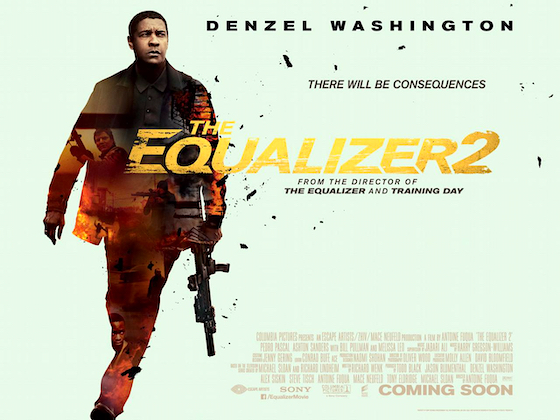
The Equalizer 2 (2018)

2020 #25
Antoine Fuqua | 116 mins | digital (HD) | 2.39:1 | USA / English, Turkish & French | 15 / R

The Equalizer 2

Now we’re equalised, bitch.

Sadly, that is not a line Denzel actually says in this movie. The film would be about 50% better if he did. Instead, what we get is an action-thriller where both the action and thrills are, literally, few and far between.

For those who skipped the first film, Denzel is playing Robert McCall, a former Marine and intelligence agent who retired to a life of inconspicuous normality, but has been tempted back into righting some of the wrongs of the world — or “equalizing” them, I guess. This time, an array of subplots eventually gives way to a story in which McCall sets out to avenge the murder of a friend.

I mention the subplots there because they’re the film’s biggest problem. As a result of them, it’s… so… slow… To start with, the subplots are a couple of small ‘cases’ introduced in the first half-hour, presumably to try to liven the film up because the main storyline is crawling along. Neither works. I’m not here for a pleasant drama about a Lyft driver who does kindly things for others — I want to see Denzel Washington kicking the asses of nasty buggers. The first film was noteworthy for investing more time in its supporting characters than is typical for the action-thriller genre, but this one takes that notion to extremes.

Even when the main plot does get moving, it takes over an hour to get to a ‘twist’ that’s obvious just from reading the cast list. At least it doesn’t try to save it for the end, I guess. That reveal leads to a wannabe-Taken-phone-speech declaration from Denzel, which should’ve come a lot earlier. It’s not as memorable as the Taken one (though the final line lands), but at least it’s a moment of drama and the film perks up after it — but by then we’re well over an hour in to a less-than-two-hours movie.

A rare moment of almost-action

From there it’s a short hop, skip and jump to a climax set amidst a horrendous storm in an abandoned seaside town. It’s a nice concept and it’s solidly executed, but it’s an at-most 20-minute sequence and it’s not exceptional, just a lot more engaging than the film’s other 100 minutes, so it doesn’t really justify sitting through the rest of the movie. However, I did not realise that flour could be explosive, but turns out it can, so in that sense at least this was educational for me.

(FYI, the film was cut in the UK to get a 15 certificate, removing some of the more extreme gore (insides hanging out, a spine being severed, etc). The 4K Blu-ray release is uncut and rated 18 (presumably so they could just port the disc rather than having to faff with edits/a new transfer). On Netflix it has an 18 icon, so I guess it’s also the uncut version, should that concern you either way.)

The Equalizer 2 isn’t a terrible film, but it is quite a boring one. Not just slow paced — genuinely boring. A raft of subplots don’t really go anywhere or serve any purpose, the main story is incredibly thin, and the limited action sequences do little to balance the books.

2 out of 5

The Equalizer 2 is available on Netflix in the UK from today.

It Chapter Two (2019)

2020 #71
Andy Muschietti | 169 mins | streaming (HD) | 2.39:1 | USA & Canada / English | 15 / R

It Chapter Two

As you may remember from the first half of It, ancient evil Pennywise the clown had been popping up to terrorise the town of Derry every 27 years, until he was defeated by a gang of kids known as the Losers Club in 1989. Fast-forward to 2016, and the bugger’s back. Maybe “defeated” wasn’t the right word. Despite their vow at the end of the first movie — to return to fight if It came back — the grownup Losers have all moved away and forgotten the events of their childhood. All except one, that is, who stayed in Derry and consequently can’t forget. Now it’s up to him to call on the gang to honour their vows, and hope that together they can defeat Pennywise once and for all.

It’s kind of ironic that the plot of Chapter Two sounds like something cooked up by a movie producer who had a surprise hit and was desperate for a sequel. “Ironic” because that’s how many sequel ideas have been cooked up down the years, but in this case both ‘chapters’ are adapted from Stephen King’s original novel, which interweaves the two time periods of the Losers as kids and adults. And it’s not as if they decided to only adapt the kid part and then went “ah, may as well do the adults too”, because the first film ends with a double-barrelled tease for the sequel: Bev has a vision of them as adults fighting Pennywise so they make the aforementioned vow, and the closing title card reveals the film’s full title to be It Chapter One.

Now, I’ve never read It, but it seems to be a fairly widely-held view that the novel’s adult portions are less interesting than the childhood ones. That’s probably why many people seemed to take the first film at face value as an adaptation that had chosen to only tackle half the novel — if they’re the best bits, maybe you don’t need the adult storyline at all. And Chapter Two has probably proven that’s still the case. It doesn’t feel like a missing half; a necessary section of the story mandated by the first being incomplete. What it actually feels like is what I described in the last paragraph: someone realising “our standalone film has been a surprise hit, let’s come up with a story for a sequel”. I don’t know if that’s more a criticism of King’s novel or the way the filmmakers have gone about adapting it. Either way, if you look at both films’ critical and audience reception (both online scores and box office numbers), the drop between chapters One and Two suggests I’m not the only one to have felt this way.

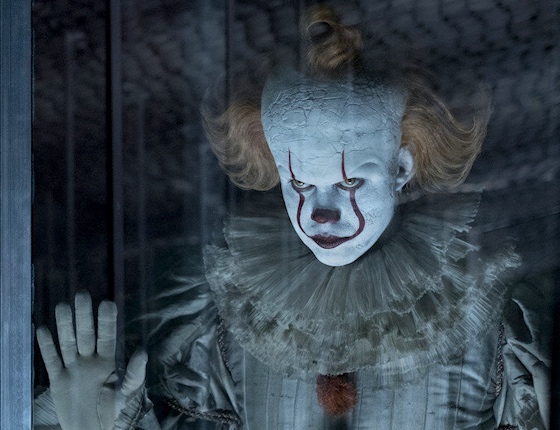
Pennywise wasn't impressed by the film's box office takings

Despite the sense of unnecessariness, I by no means hated Chapter Two. You’ll see this review ends with a three-star rating, but that’s primarily to make clear that it’s a lesser film than Chapter One, which I gave four stars. That said, most of my notes are about the things it got wrong. Like, there are too many lead characters — in fairness, a problem that also blighted parts of the first movie. There are six surviving members of the Losers Club, and when they each have to go off on individual quests, that results in six separate storylines that have to be got through. That’s a lot of screen time — no wonder the film is almost three hours long. I wasn’t actually that bothered by the length — I didn’t think it was slow, just overfull.

There’s been talk of “director’s cut” versions of both films, but some of the stuff left in the theatrical cut already feels like it’s from an extended version. You know, scenes that aren’t strictly necessary but are good or interesting in their own right; the kind of thing you drop from the mass-audience cut but reinsert because they’ll play well in a longer version aimed at fans. That includes some of the flashbacks to the kids, which seem like they’ve been shoehorned in after the younger cast proved popular. (The fact the sequel was filmed a couple of years late also necessitates a spot of CGI de-ageing, which edges perilously close to the uncanny valley.) Maybe releasing a shorter, more focused cut into cinemas and saving that stuff for a later longer release would’ve benefited the online scores and box office receipts.

Not cutting the flab also means it can be a mite repetitive. There are oh so many jump scares and gross things. It gets a bit tiring. But it’s also considerably less scary than the first film. There are some chilling bits (the odd old lady in Bev’s former flat, as seen in the trailer, is a key one), but they feel few and spread out — another side effect of the bloated running time. I’d also argue the film’s true focus is elsewhere: rather than being scary, it’s more interested in a mix of flashbacks to the popular cast of the first film and attempting to dig into the psychology of their adult counterparts.

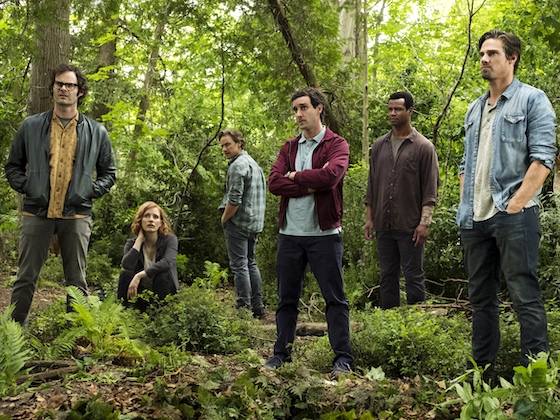
Grown Losers

I don’t think it’s actually seeking to be a horror movie; or, at least, not a straight-up one. It does want to be scary (some of the potential cuts I mentioned include scary sequences that I guess they left in so it would still primarily be a horror movie), but narratively and tonally it’s less concerned with that than it is with being some kind of middlebrow drama about repressed childhood memories and, simultaneously, a good-vs-ancient-evil fantasy epic (the whole saga is over five hours long, remember). But it doesn’t always land the dramatic beats, either. Take the finale (spoilers follow). Victory comes via the bullied bullying their bullier into submission, as the Losers taunt Pennywise to death. It does feel apt, but it’s also not exactly healthy. Maybe they should’ve killed It with compassion…

Ultimately, I think I liked the film it wanted to be (using the horror genre as an analogy/examination of growing up and moving on, or not, and how the past differs from our memories even as it defines us) more than the film it actually is (kind of that, but not in enough depth, and with a bunch of unnecessary business thrown in).

3 out of 5

It Chapter Two is available on Sky Cinema and Now TV from today.

The 100-Week Roundup VIII

As I mentioned last time, these films are technically from the same week as that last bunch, but seven films seemed a lot for one post. Plus, although they were all watched in the same week, they were watched in different months: the last four were my final films from July 2018, whereas these three are some of my first from August 2018.

In this roundup…

  • Beneath the Planet of the Apes (1970)
  • Pride and Prejudice and Zombies (2016)
  • The Quiet Earth (1985)


    Beneath the Planet of the Apes
    (1970)

    2018 #174
    Ted Post | 95 mins | Blu-ray | 2.35:1 | USA / English | 15 / G

    Beneath the Planet of the Apes

    Beneath the Planet of the Apes is the sequel no one wanted to make, including the studio — quite a different attitude to today, eh? But Fox were in financial troubles. For his part, Heston managed to negotiate a reduced role and suggested an ending that would kill off the potential for any more sequels. Well, that worked

    Picking up where the first film left off, it sees Heston’s character, Taylor, disappear mysteriously. After a second Earth spaceship crashes on the planet, its only survivor teams up with Taylor’s girl, Nova, to find him, which leads them to encounter a society hiding (you guessed it) beneath the planet of the apes.

    Overall, this feels like trashier sci-fi/adventure than the first one, with a certain B-movie aesthetic to the underground mutants, and a first half that’s just a bunch of running around. Yet, despite that, there are some powerful ideas and solid social commentary here, mainly about blind faith and the terror of military leadership. Plus, the mutants’ use of telepathy as a weapon is quite clever, and their unmasked designs are suitably eerie rather than just ugly. It also has one of the most brutal and bleakest endings ever seen in a Hollywood blockbuster — or probably outside of one, come to that.

    The violence in the final act was originally cut in the UK, and when it was finally released uncut on video some 17 years later, it earnt a 15, a rating its retained ever since. In the US, it’s always been rated G. Those Americans and their insouciant attitude to violence…

    Obviously I watched this two years ago, and at the time I assigned this three-star rating. But I will say that I remember it more fondly than that. As noted above, it takes a while to get going, and it doesn’t have the same classy aspirations as the first film, but its unrepentant fatalism is almost admirable.

    3 out of 5

    Pride and Prejudice and Zombies
    (2016)

    2018 #175
    Burr Steers | 103 mins | TV (HD) | 2.35:1 | UK & USA / English | 15 / PG-13

    Pride and Prejudice and Zombies

    Here’s another one I found more enjoyable than I feel I should have.

    For starters, it’s wild this ever actually got made. I mean, the title is an amusing idea — it’s basically a five-word gag, isn’t it? — but ponder for a moment how that’s going to play out as a full narrative. To live up to its title, it has to make an effort to follow the plot of the novel, and there lies the rub: no one wanting a zombie movie really wants to sit through a Regency romance, and no one wanting a Regency romance really wants it sullied by zombie-based action and gore. Well, inevitably someone will fall into that Venn diagram, but, as someone who’ll quite happily watch either of those genres in isolation, even I struggled to find the idea of such a mash-up too appealing. It needs a clever hand on the tiller to negotiate those treacherous waters, and I’m not sure the director of 17 Again and Charlie St. Cloud was that person.

    But, as I said at the start, I did find it surprisingly watchable. It does have a certain amount of wit and fun with the concept, like turning arguments about accomplishment into ones about fighting style. Sometimes the zombies and fights are tacked on to the existing story, but sometimes the narrative is neatly remixed to include the zombie threat. And like any true action movie, scenes of high emotion are settled not with words but with a good dust-up. There’s a solid cast too, including Lily James (always a bonus) and reliable stalwarts like Charles Dance, although, as Darcy, Sam Riley sounds like he’s battling a nasty throat infection. But Sally Phillips is basically a perfect Mrs Bennet for this or any other version, and the same could be said of Douglas Booth as Bingley, or Matt Smith, on fine comedic form as Mr Collins.

    Pride and Prejudice and Zombies and Knickers

    It does drop the ball sometimes. The climax doesn’t put enough effort into eliciting tension (it’s like they ran out of money or time or effort: “can the heroes make to the bridge in ti— oh, they just did”); at least one apparent subplot doesn’t go anywhere at all; and a mid-credits scene suggesting the story isn’t over feels lame. It definitely pulls some punches in aid of landing a PG-13 rating in the US, which is unfortunate — it’s a mad concept; it needs to do it properly, go all out and get an R. (I’d still say it’s perhaps a bit too gruesome for PG-13, which is why it landed a 15 over here.)

    I still think the director is the problem. A surer hand would’ve made more of the verbal sparring during the physical sparring; would’ve sold the tension of the action. Apparently David O. Russell was original set to direct, which is mad — can you imagine choosing to follow awards-winners like The Fighter, Silver Linings Playbook, and American Hustle with this? Apparently other directors “considered” included Matt Reeves, Neil Marshall, and Lord & Miller. Presumably they turned it down rather than any producer thinking Burr Steers was a better pick — Lord & Miller, in particular, probably would’ve nailed the tone. But, all things considered, what we got could’ve been a lot worse.

    3 out of 5

    The Quiet Earth
    (1985)

    2018 #178
    Geoffrey Murphy | 91 mins | Blu-ray | 1.85:1 | New Zealand / English | 15 / R

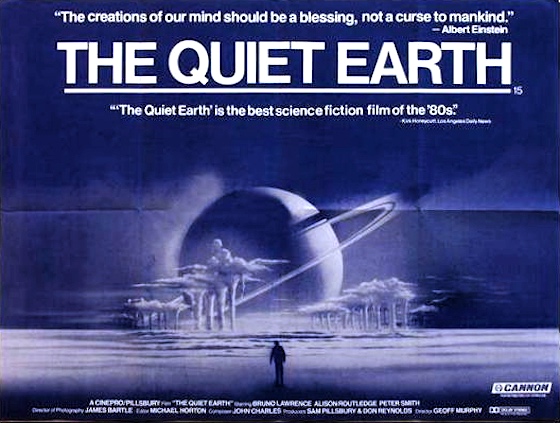
    The Quiet Earth

    Here we reach the first real hurdle in these two-year-old roundups, because it turns out I made no notes whatsoever after viewing The Quiet Earth. I did note down some quotes from the booklet essay accompanying Arrow’s Blu-ray release, but it seems a bit rich just to list those excerpts.

    What I can tell you is that The Quiet Earth is a science-fiction film about a scientist who wakes up one morning to find everyone else has disappeared — not fled, not died, just gone. What unfolds from there is a mix of mystery (what happened?) and a kind of existential character examination, both of this man and of ourselves — what would you do if you were the only person on Earth? Only, it doesn’t play quite as heavily as that makes it sound. There are more plot developments, but to say too much would spoil the discovery. And it is a film worth discovering. As Amy Simmons puts it in the aforementioned essay, it’s a “deeply relevant work which reflects darkly upon our age of estrangement and isolation. […] Shifting in tone from horror to comedy to pathos and back again, the film’s great strength is in the themes it explores and satirises — namely nuclear fears, technophobia, and cultural and geographical isolation — which are even more urgent now than when the film premiered in 1985.”

    I’m doing it a disservice with this pathetic little ‘review’, but hopefully someday I’ll revisit it and come up with something more insightful.

    4 out of 5

  • The 100-Week Roundup VII

    If I were being slavishly accurate about weeks, there should be seven films in this roundup. But that seemed a bit much, so — as the next one of these wasn’t due until the end of the month — I’ve split it in two.

    In this roundup, the final films I watched in July 2018.…

  • The Garden of Words (2013)
  • The Secret in Their Eyes (2009)
  • Paul (2011)
  • The Way of the Gun (2000)


    The Garden of Words
    (2013)

    aka Koto no ha no niwa

    2018 #170
    Makoto Shinkai | 46 mins | streaming (HD) | 16:9 | Japan / Japanese | 12

    The Garden of Words

    If the only anime director’s name you know is Hayao Miyazaki, you could do worse than familiarise yourself with Makoto Shinkai, director of recent popular hits Your Name and Weathering with You. He’d already been gaining attention with the films he made before those, which include short feature The Garden of Words.

    It revolves around two individuals: a 15-year-old schoolboy who aspires to be a shoemaker, and a 27-year-old woman. They meet one day in a park during a rainstorm and develop a connection. According to Shinkai, the film is a love story between two people “who feel lonely or incomplete in their social relations, but who don’t feel that they need to fix this loneliness.” That’s an interesting perspective, because while there’s undoubtedly a significant element of loneliness in the film, it’s accompanied by an element of depression; that these two characters seem unfilled. Without wanting to spoil anything, it seems to be the connection between the two that ‘saves’ them and elevates their lives — i.e. they did need to fix their loneliness. Perhaps it’s a disconnect between intention and execution that led me note that “where it ends up going isn’t as good as where it begins”. Nonetheless, the characters are engaging, and their emotional turmoil and connection are affecting. It also leaves room for personal interpretation with an open ending — it does reach a conclusion of sorts, but there’s clearly space the viewer to imagine what comes next.

    The animation is simply stunning — both beautiful in itself, and in its technical accomplishment. For that reason, if given the choice, it might be tempting to opt for an English dub, but I’d advise to stick with the original Japanese. I’ve written before about how I’m regularly conflicted when watching anime about whether to go for the original Japanese or an English dub, and I do often I go for the latter — I must admit I’m swayed by the recognisable voice casts on Ghibli films, for example; and, generally speaking, it allows you to appreciate the visuals more when you’re not having to read a lot of subtitles. Nonetheless, this time I chose the Japanese audio, and I’m glad I did: it’s subtle and calm, like the film itself, and the quietness and gentle pace mean there’s not an overabundance of distracting reading (unlike in Your Name, for example). I popped on a bit of the American dub afterwards and it felt all wrong by comparison — somehow brash and decidedly inauthentic. On the bright side, either track sounds luscious in 5.1, with the rain falling all around you, which serves to really immerse the viewer in the situation alongside the characters.

    4 out of 5

    The Secret in Their Eyes
    (2009)

    aka El secreto de sus ojos

    2018 #171
    Juan José Campanella | 129 mins | download (HD) | 2.35:1 | Argentina & Spain / Spanish | 18 / R

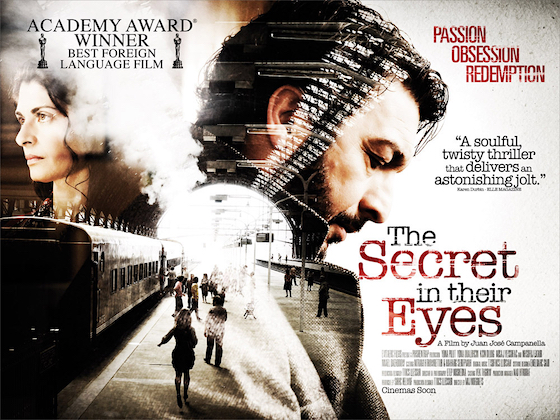
    The Secret in Their Eyes

    A surprise winner of the Best Foreign Language Oscar in 2010 (it beat A Prophet and Michael Haneke’s The White Ribbon), Argentina’s The Secret in Their Eyes is a murder mystery, two very different love stories, and a musing on the nature of justice, especially within a corrupt system.

    Primarily, it’s a procedural thriller about a decades-old unsolved case that one of the original investigators is revisiting in the hopes of finding closure. As that, I thought the film was probably a bit too long — despite some solid thematic weight, the unnecessarily slow pace at times make it feel a smidge self-important for what is fundamentally a crime thriller. That said, those other facets that have been added to supplement the storyline — the romance side; the passage of time (how do people deal with such life-changing events over the ensuing decades?) — do bring something to the film, elevating it beyond standard police procedural fare.

    Even as ‘just’ that, it pulls off some spectacular feats: the famous single-take at the football match really is an all-timer, and the final twist is unexpected and a perfect capper. I was this close to giving it full marks, and maybe when I revisit it someday I will.

    4 out of 5

    Paul
    Extended Edition
    (2011)

    2018 #172
    Greg Mottle | 109 mins | Blu-ray | 2.35:1 | UK & USA / English & Klingon | 15

    Paul

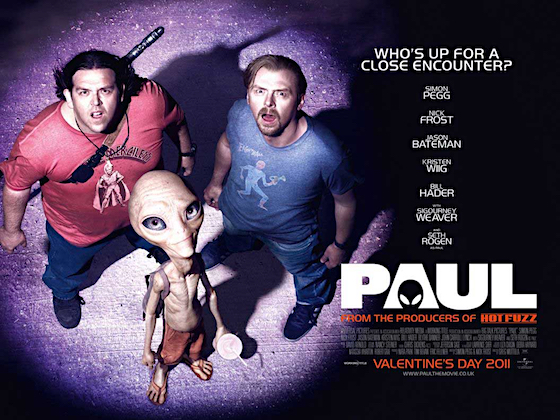
    On a post-ComicCon road trip around the US’s UFO heartland, a pair of British geeks (Simon Pegg and Nick Frost) bump into an actual alien, the eponymous Paul (Seth Rogen), who’s on the run from a government facility. Cue a kind of “E.T. for grownups” as the trio — and a widening assortment of supporting characters — endeavour to evade the authorities and get Paul home.

    Mistaken by some for the third part of the Three Flavours Cornetto trilogy (thanks to it starring Pegg and Frost, but it’s missing the vital ingredient of director Edgar Wright, who was committed to Scott Pilgrim), Paul lacks the sharpness of that trilogy at its best. However, it’s full of likeability — in the characters, and of course the humour — to the point where it actually manages to get a bit emotional at the end. It’s also chock full of references and quotes for fellow geeks to spot, some of which are incredibly well-timed to have fantastic impact.

    As for the extended cut, there’s a comparison here. As usual, the theatrical cut was R-rated in the US but the extended one is unrated there, but (also as usually) I don’t think there’s anything that wouldn’t pass at R. The running time difference is about five-and-a-half minutes, but there are 41 differences crammed into that time. It seems like some fairly memorable jokes were cut and others added back — nothing earth shattering, but enough to call the extended cut the preferable one.

    4 out of 5

    The Way of the Gun
    (2000)

    2018 #173
    Christopher McQuarrie | 120 mins | Blu-ray | 16:9 | USA / English | 18 / R

    The Way of the Gun

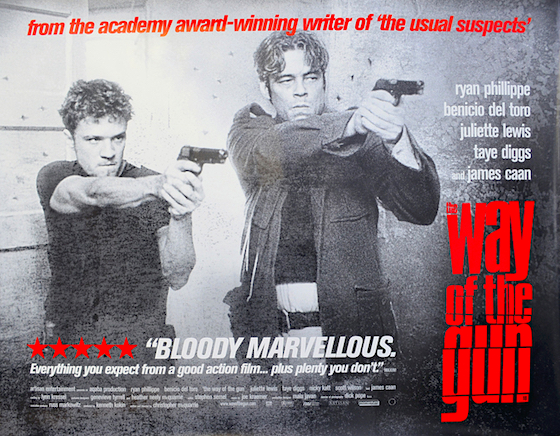
    The debut directorial feature from screenwriter Christopher McQuarrie (who made his name penning the likes of The Usual Suspects and more recently has found success as the regular writer-director of the Mission: Impossible movies), is one of those ’90s crime comedy-dramas — you know, the kind of thing we describe as “Tarantino-esque”, for good reason. It has its fans, but McQuarrie tends to refer to it disparagingly on social media, no doubt in part because it landed him in “director jail” for over a decade. Personally, I agree with McQuarrie (I usually do): it’s not a failure, but it’s not much of a success either.

    My main problem with it is that it’s over-long and over-complicated. Both of those are thanks to too many characters with too many motivations. It’s possible to get your head round it all in the end, but there’s a stretch in the middle where it feels like work. But rather than slow things down and spell it out, it might be better if it moved through them all quicker — at least then it would be pacy. It’s also rather dully shot by Dick Pope, who was later Oscar-nominated for the likes of The Illusionist and Mr. Turner, but has plied most of his trade in the grounded world of Mike Leigh movies, which perhaps explains that. There are still two or three good shots, plus a neat oner that indicates the direction McQ’s style would head.

    There are flashes of McQuarrie’s brilliance elsewhere too, including some nice bits of dialogue and a couple of good sequences. The action scenes, in particular, demonstrate he had a strong skill there from the start. They feel very grounded and real — just the way the characters move; that they’re constantly reloading; how it ends when everyone’s out of bullets. McQuarrie’s brother, a Navy SEAL, was the technical advisor for these scenes, which explains their accuracy. The final shoot-out, with all of that going on, is the best bit of the movie. Well, at least it ends on a high.

    3 out of 5

  • The 100-Week Roundup VI

    Here’s another quartet of reviews from my July 2018 viewing, with an all-star cast both behind the camera (Stanley Kubrick, Ridley Scott) and in front of it (Keanu Reeves, Leonardo DiCaprio, Russell Crowe, etc).

    In this week’s roundup…

  • The Day the Earth Stood Still (2008)
  • Full Metal Jacket (1987)
  • Wind River (2017)
  • Body of Lies (2008)


    The Day the Earth Stood Still
    (2008)

    2018 #163
    Scott Derrickson | 104 mins | Blu-ray | 2.35:1 | USA & Canada / English & Mandarin | 12 / PG-13

    The Day the Earth Stood Still

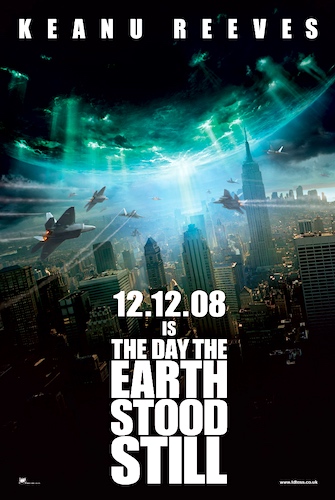
    Blockbuster remake of the 1951 sci-fi classic, starring Keanu Reeves as an alien who has come to “save the Earth”.

    The original might be best remembered for its message about mankind. The do-over doesn’t so much attempt serious “humanity are the problem” moralising as just nod in that general direction. Instead, it conforms to the Hollywood-remake stereotype of simplification, using the plot as an excuse for a CGI destructathon. Even as that it’s a bit of a damp squib, with no genuinely impressive sequences; some of the CGI is pretty crap, even, like the first appearance of the giant robot GORT.

    I know we all love him now because he seems like a genuinely wonderful guy in real life and the John Wick movies are cool, but, still, the role of an emotionally cold alien pretending to be human but struggling to understand what truly makes us ‘us’ is a perfect fit for Keanu Reeves and his usual acting style. Jaden Smith is equally perfect casting as an irritating brat of a kid. Jennifer Connelly struggles gamely to be the heart of the film, and there are small or cameo roles for the likes of Kathy Bates, Jon Hamm, and John Cleese, none of whom can really elevate the basic material they’re given.

    All in all, it’s inoffensively bland, with some light sci-fi ideas, a bit of loose moralising, and a bunch of pixels whooshing about. Perhaps with a better creative team — or without the demands of a studio blockbuster budget — it could’ve been more; something genuinely thought-provoking about the value (or otherwise) of humanity. But it isn’t.

    3 out of 5

    Full Metal Jacket
    (1987)

    2018 #165
    Stanley Kubrick | 117 mins | Blu-ray | 16:9 | UK & USA / English | 15 / R

    Full Metal Jacket

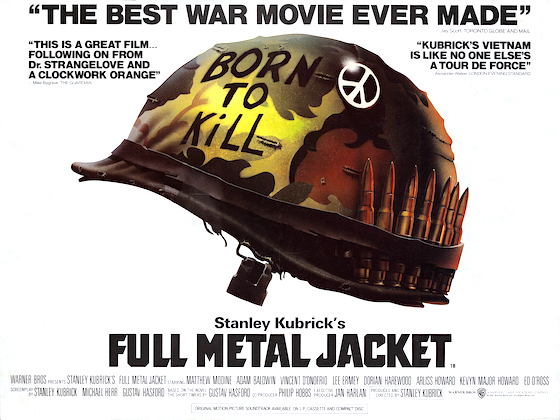
    Kubrick’s anti-war war movie, about the dehumanisation of abusive army training, the virtue and success of kindness, and how combat can erode and destroy the soul. It’s “a Vietnam movie”, but Kubrick wasn’t interested in Nam per se, rather “the phenomenon of war” and what happens to young men when you turn them into killing machines.

    It’s a film of two halves: first, the training; then, the war. The first half is the better known one, and some people will tell you it goes downhill when they leave training. That first part is indeed horrid but effective and meaningful, but I thought the second half lived up to its impact too.

    A film about war’s effect on people requires strong performances, and fortunately it has those. Most famous is R. Lee Ermey’s nasty drill instructor — an unquestionably accurate portrayal of the real thing, because Ermey used to be one. He was originally hired as a consultant, but decided he wanted the role and convinced Kubrick to cast him, then rewrote his dialogue — the obscenity-strewn insults are all Ermey’s own. But for my money the best performance in the movie comes from Vincent D’Onofrio. Apparently he got the part just because he was a friend of Matthew Modine — it was his first film role — but he’s fantastic. And nowadays best known as a gun-happy right-wing nut-job on Twitter, Adam Baldwin is very convincing as, er, a gun-happy right-wing nut-job.

    Naturally, Kubrick’s work is as on-point as ever. A climactic action scene pits the entire troop against just one sniper, which is both thrilling and horrifyingly brutal. The film’s final death is excruciatingly drawn out, to really convey its emotional toll. Douglas Milsome’s photography frequently looks stunning as well. The fire-lit final act is as visually gorgeous as it is suspenseful and gruelling.

    To paraphrase a commentator in the Between Good and Evil documentary, Kubrick “takes the sympathetic characters and breaks them down so that, by the end, there’s no one left to root for, and the sympathy you feel is not for the character, but for what they’d lost.” And another notes how much you can see Iraq in the film, as if Kubrick was predicting the future of urban warfare too. Or, another way of looking at it: how little changes; how few lessons we learn.

    5 out of 5

    Full Metal Jacket was viewed as part of What Do You Mean You Haven’t Seen…? 2018.

    It placed 8th on my list of The Best Films I Saw in 2018.

    Wind River
    (2017)

    2018 #166
    Taylor Sheridan | 107 mins | streaming (HD) | 2.35:1 | USA, UK & Canada / English | 15 / R

    Wind River

    A veteran hunter helps an FBI agent investigate the murder of a young woman on a Wyoming Native American reservation.IMDb

    What follows is a neo-Western crime thriller, written and directed by Taylor Sheridan. As a genre piece, it’s most noteworthy for how well it handles the reveal of whodunnit. Just as you think the film’s getting to the point where they find who did it, but it’s only a suspicion and they’re going to have to go off and prove it, the film takes a hard left in a different direction that’s perfectly handled. To quote from a comment on iCheckMovies, the way it goes about this “seemed truly unique to this genre. The closest comparison I can think of is from Se7en, when [Se7en spoilers!] Kevin Spacey just turns up and hands himself in, completely out of the blue. It unexpectedly shattered the cat and mouse formula that people expected it to follow.” By dispensing with narrative oneupmanship (i.e. trying really, really hard to pull a twist out of thin air, as most mystery/thrillers do), it lets “the story unfold into more of a tragedy than the standard mystery or thriller you might expect it to be.”

    Talking of other reviews, some people are heavily critical of the film having a white male lead when it’s supposed to be about the plight of Native Americans, and especially Native American women. Well, yes, to an extent that’s true, but this is where fantasy rubs up against reality: do you really think a movie with a Native American lead would find it easy to get funding, distribution, and gain attention? Sometimes these things are a necessary ‘evil’ if your goal is to reach a wider audience and thereby spread the message. Besides, the film makes a point of treating the white characters as outsiders, in various ways. It’s not pretending this is how it should be, nor that they’re welcomed like, “hooray, the white people are here to save us!” If anything it’s used to emphasise the point: the Native American cops can’t solve the case themselves because they’re underfunded and understaffed; they have no choice but to rely on white people being prepared to help. That’s an indictment in itself.

    Altogether, this is a powerful movie — arguably Taylor Sheridan’s best, most mature screenplay (which is saying something for the man who wrote Sicario and Hell or High Water), and features a superb performance from Jeremy Renner, reminding you why he was Oscar-nominated for The Hurt Locker before his attempts to be a blockbuster action star.

    4 out of 5

    Body of Lies
    (2008)

    2018 #168
    Ridley Scott | 128 mins | download (HD) | 2.40:1 | USA & UK / English & Arabic | 15 / R

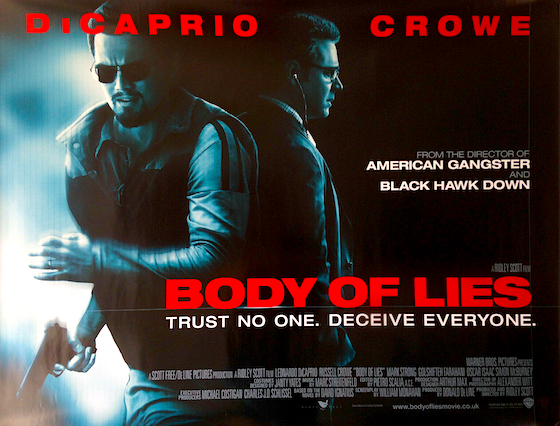
    Body of Lies

    A CIA agent on the ground in Jordan hunts down a powerful terrorist leader while being caught between the unclear intentions of his American supervisors and Jordan Intelligence.IMDb

    That’s the simple version, anyhow, because I thought the film itself got a bit long-winded and complicated; but if you enjoy spy movies, it’s smattered with some good bits of tradecraft stuff. That said, I’m not sure I buy Leonardo DiCaprio as the CIA’s man in the Middle East — he stands out like a sore thumb there; not good for a spy.

    Meanwhile, Russell Crowe commands complex world-changing missions over the phone while taking his kids to school or watching a football match — a nice touch, I thought, contrasting mundanity with these high-stakes actions. (Quite why he “had” to gain 50lbs for the role is beyond me, though. Sounds like he just fancied being lazy about his diet and exercise regime.) Still, the standout from the cast is the ever-excellent Mark Strong as the head of Jordanian intelligence, a man who is urbane and always immaculately dressed, but does not suffer those who disrespect him, exhibiting a kind of calm fury-cum-disappointment when they offend him.

    For all the confusion I felt about the plot, what I presume is the intended theme (that America can’t win because it refuses to respect or understand the culture of both its enemies and allies in the Middle East; and that the supposed good guys aren’t any better than the bad guys) comes across quite effectively. It’s also about the ineffectiveness of advanced technology. The CIA, so focused on their shiny new bells and whistles, lose out in the end to old fashioned personal interaction and patient preparation.

    Body of Lies seems somewhat torn between making these points and being an entertaining action-thriller. Ultimately it straddles the two stools, not quite satisfying as either — it has its moments, for sure, but it’s less than the sum of its parts. Maybe Ridley should’ve left the spy thrillers to his brother…

    3 out of 5

  • Tomb Raider (2018)

    2020 #143
    Roar Uthaug | 118 mins | download (HD+3D) | 2.39:1 | UK & USA / English & Cantonese | 12 / PG-13

    Tomb Raider

    In this gritty(-ish) reboot of the videogame-turned-movie franchise (inspired by a similar reboot they did in the games), Lara Croft loses her most famous twin assets — her dual pistols (also, her giant boobs) — instead replacing them with a bow & arrow (and muscles, respectively) for an adventure that sees her travelling to a secret island where her father disappeared seven years earlier while in search of an ancient curse surrounding a long-lost tomb. Well, natch — clue’s in the title.

    “Movie based on a game” used to be synonymous with “shit”, and to an extent that reputation persists — it takes time to turn such widespread prejudices around — but there have been a few in recent years to buck the trend, like trashy-but-fun Rampage and (apparently) Angry Birds 2. For my money, Tomb Raider is part of that movement. For one thing, it manages to actually feel like the games (or, at least, what I presume the games are like — I’ve never really played any of them), which is a noteworthy point for a genre that sometimes spectacularly failed to understand its source material. Tomb Raider successfully recreates the running, jumping, shooting, puzzle-solving action of its inspiration without too overtly abandoning real-life logic for video game logic. Well, I say “real-life logic” — it’s actually “action/adventure movie logic”, but I think that’s allowed in an action/adventure movie.

    As an entry in that genre, it’s fun enough. It’s not going to compete for greatest-of-all-time status with its urtext, the Indiana Jones films, nor does it quite challenge the heights of more-overt homages like The Mummy, but it’s not a bad couple of hours’ entertainment in their mould. On the downside, the amount of preamble the plot goes through before taking us to the island is a tad unnecessary, mainly because there are a couple of early set pieces that feel forced to make sure there’s some action in the first act. I can understand having one or two (as much as anything, it establishes that Lara isn’t completely unskilled in combat and physical endurance), but it feels like padding. Besides, we’ve come for an Indiana Jones-esque affair — a bicycle race around grey London isn’t quite the right tone.

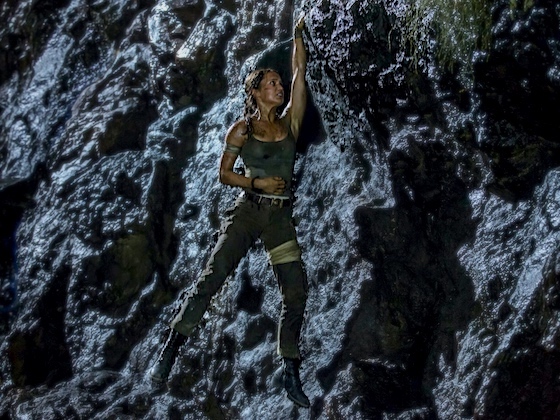
    Hanging around

    Alicia Vikander is more than capable in the lead role, both as an actress and a physical performer — she’s clearly developed the physique for the part, and apparently did her own stunts. Unfortunately, her accent is a little all over the place, a blend of English and Swedish (rather similar to Rebecca Ferguson’s) with occasional flecks of Irish. It’s kind of charming in itself, and I guess it just passes as “English” to Americans, but it’s too distractingly ‘off’ to truly pass as the upper-crust English girl Lara is meant to be. She’s surrounded by a supporting cast of reliable performers — Walton Goggins (surprisingly understated as the villain), Dominic West, Kristin Scott Thomas, Derek Jacobi, Nick Frost (just a cameo) — but none leave a particularly large mark.

    A quick word on the 3D, which is fairly enjoyable. I’d heard bad things, but it’s not awful, just unexceptionally adequate — a bit like the film itself, I guess. It adds somewhat to the “hanging over a chasm” shots (of which there are more than a handful), if nothing else.

    The film ends with a massive sequel tease, which I thought was fairly well handled. I’ve often criticised movies that exist purely to setup sequels/trilogies/franchises, and there are clearly parts of Tomb Raider that have been designed to do that, but it’s managed well enough to not really intrude until the final scenes. That said, it’s an odd kind of tease, suggesting more “corporate espionage” than “tomb raiding”. Unlike so many sequel teases nowadays, this one will actually be acted upon: after some umming and ahhing (the film wasn’t a huge box office hit, but did respectably outside the US, particularly in lucrative markets like China and the UK), it’s going ahead… with Ben Wheatley directing! Colour me surprised. (It was scheduled for release in March 2021, but the shoot was meant to begin in April 2020 and, surprise surprise, got cancelled, so who knows.)

    Tomb raiding

    A lot of this review has wound up couched in disclaimers but, fundamentally, I enjoyed Tomb Raider. It may not have a surfeit of original ideas, but once it gets going it offers up solid levels of excitement — highlights include a protracted boat crash in a storm, Lara negotiating a plane teetering on a cliff edge, and the titular raiding of a tomb, which occupies the third act. If Wheatley can supplement that with a dash of his trademark oddness, the sequel might well be worth looking forward to.

    4 out of 5

    The UK TV premiere of Tomb Raider is on ITV tonight at 7:50pm.

    Gemini Man (2019)

    2020 #141
    Ang Lee | 117 mins | Blu-ray (UHD) | 1.85:1 | USA & China / English | 12 / PG-13

    Gemini Man

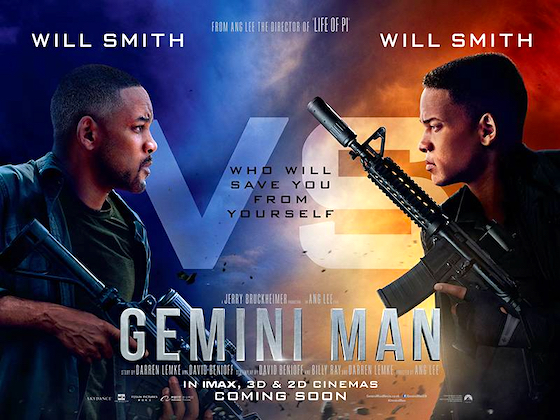
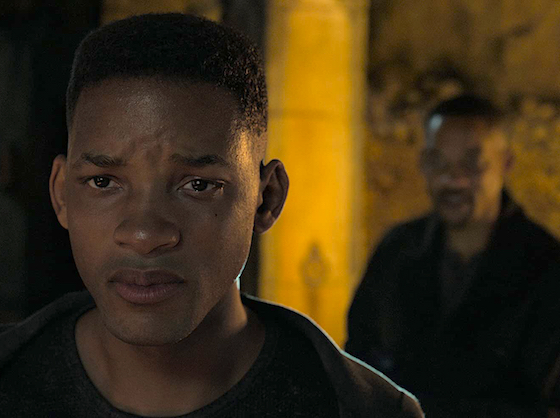
    Gemini Man is a film that, at every point I can remember it being talked about, was discussed more for its various technical feats than anything else. Partly that’s because there are a couple of angles. Firstly, the most obvious: it stars Will Smith as an ageing assassin who must fight… a 25-years-younger Will Smith, achieved with motion capture and CGI. Secondly, director Ang Lee shot it in 3D 4K HFR — that’s High Frame Rate, if you don’t know, with the picture running at 120 frames per second rather than the 24fps we’ve been used to for the past 90-odd years (excepting The Hobbit trilogy, though only if you saw one of the relatively-limited HFR theatrical screenings). Maybe it shouldn’t be a surprise, then, that Gemini Man often feels more like a tech demo with a plot grafted onto it than it does a fully functioning movie in its own right.

    Consequently, I’m going to spend more of this review writing about the film’s presentation than its content. To some degree, that speaks for itself as criticism. But if you are interested in the film and don’t give a toss about how exactly you’re seeing it (or don’t have a choice), feel free to whizz down to the last two paragraphs (just after the picture of Young Will Smith) where I finally offer some thoughts on the film itself.

    Back to the tech, then. There’s currently only one way to see Gemini Man in its intended format: at the cinema. I say “currently” — obviously such opportunities expired when its theatrical run ended, and I don’t imagine it’s likely to get a re-release. Every other option is a compromise. Want to see it in 3D? Not only will you need the appropriate home cinema setup, but you’ll have to import the disc from Germany, the only country where it was granted a 3D Blu-ray release. Want to see it in HFR? That’s easier, because the 4K disc is widely available, though obviously you still need the appropriate kit. (I presume the digital 4K versions are HFR too, but I don’t actually know that.) Mind you, even that’s something of a compromise, because tech limitations mean the home release is 60fps rather than the full 120 (to be fair, so were most HFR cinema screenings).

    Action Man

    I watched it in 4K 60fps, and, oh, it’s weird. So so weird. Distracts-you-for-the-entire-film weird. Virtually-the-only-thing-I’m-going-to-talk-about-in-this-review weird. The disc even begins with a notice/warning that it’s at 60fps rather than 24fps, so presumably they know how weird it feels. The most obvious effect of more frames per second is that motion is smoother, with reduced motion blur, but that applies on a micro level to lend an unnatural clarity to everything. The effect on motion is often called “the soap opera effect”, because such cheap drama has traditionally been shot at TV’s higher default frame rate. Of course, so is much other television, or even behind-the-scenes footage on films; so while it’s not a wholly inaccurate nickname, the effect reminded me more of TV documentaries. The film begins with a train journey in a lusciously green-looking Belgium, before travelling around the globe to other sunny locations with glamorous establishing shots. It looks less like a Hollywood action movie, more like Will Smith is the new host of Cruising with Jane McDonald.

    When it’s not playing travelogue, it looks like a tech demo. I don’t think that’s just the added smoothness, but everything about how it’s shot: it’s very bright and saturated, the kind of look you get in marketing promos, not feature films. Even paused it looks a little odd. Partly that’s the boost given to the colour palette by HDR, but at this point I’ve watched plenty of other films with HDR to be familiar with its effects, and I think this was beyond normal. The other thing the visual quality reminded me of was low-budget films by very new/amateur filmmakers, and that’s definitely to do with Ang Lee’s shot choices — lots of stuff at eye level, gentle pans and tilts, in locations so dull they might have been found around someone’s hometown. It doesn’t help any that all the fonts they’ve used for captions look like the editing software’s bland default. And further, it’s also the effect of shooting on high-resolution digital video — it’s ultra-clear, with none of the grain of real film, but, again, that’s a look more familiar from low-budget productions. Would HFR work better if it was shot on real film? You’d get back some of that tactile grit, rather than telltale digital smoothness.

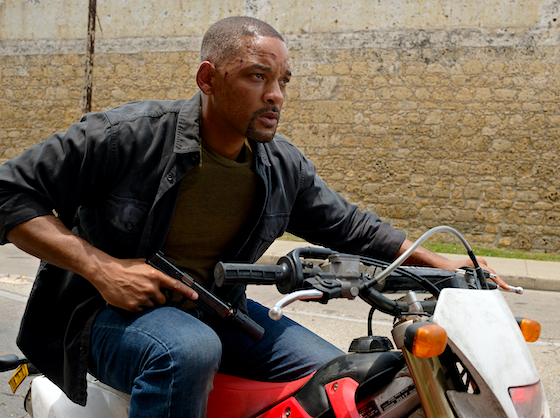
    Biker Man

    What about when the film gets to its big action sequences — the kind of thing that obviously a no-budget newbie couldn’t afford. Would the change of milieu fix the mental associations? Yes and no, in that it just adds other ones: the first big sequence, the bike chase you probably saw in trailers or clips, looks like a computer game. Again, it’s a mix of elements: the digital sheen, the smooth frame rate, the shot choices (lots of POV or close following, like a game’s third-person camera), and an unnatural-seeming speed — it looks like some of the CGI has been animated too fast, though that could be HFR’s fluidity making normal motion look odd because we’re not used to it.

    The advantage of wondering all this while watching the film at home was that, afterwards, I could pop in the regular Blu-ray and compare a few scenes in 24fps 1080p SDR. Immediately, it looks a lot more like a regular movie. Is that indeed the loss of HFR’s smoothness, or is it the drop in resolution, or the loss of HDR enhancement? Without being able to view different permutations it’s hard to say which one causes the jarring effect, or if it‘s the incremental change made by each that adds up to a radically different picture when combined. That said, obviously I’ve watched 4K HDR films before, and it’s never struck me as odd-looking as much as this film (I’ve seen some strange applications of HDR, but that tends to be in individual shots/scenes, not an entire movie). The bike chase also looks more normal on the whole, though some of the bits I alluded to before still looked dodgy, so I can only conclude it’s a mix of the animation (because I’m sure it’s not a real stunt) and the HFR.

    If all that wasn’t distracting enough, there’s the fact that one of the film’s main stars is a de-aged Will Smith. We’ve seen plenty of de-ageing in films now, whether it be Marvel’s flashbacks or Scorsese’s varied eras in The Irishman. This feels more extensive, though — they’ve not just airbrushed Smith’s age-related blemishes, but recreated his youthful visage with full motion-captured CGI. The end result is both incredibly realistic animation and also not quite there. Maybe that’s just because I know it’s not real — I wonder if someone unfamiliar with the film’s setup wouldn’t register it. It looks more convincing than I remember Peter Cushing being in Rogue One, and I remember stories of kids who didn’t realise he was CGI. I guess the best praise is that, as the film went on, I realised I’d just accepted Young Will as his own character, not a second Old Will in disguise. There are scenes where he’s called on to do Proper Acting and it works. Unfortunately, it’s almost ruined by one scene at the end where the effect suddenly looks like a ten-year-old computer game. Was this a last-minute re-edit, I wonder, leaving them without enough time to do the CGI properly? It’s a shame to have dropped the ball at the last hurdle.

    Young Man

    And if you can get past all the technical distractions (which I guess most people will, as “the tech” is not why most people watch films, and on any format less than 4K the visual oddness evaporates anyway), what about the film itself? Well, it’s a passable action-thriller with a sci-fi tweak. For the level of the latter, think something like Face/Off rather than, say, Blade Runner. I’ve seen quite a few people compare it to a ’90s action movie and that’s pretty fair — subtract the fancy cameras and CGI and that’s what’s left. It’s not necessarily a bad thing, unless you’re so young that ’90s action movies are Old and consequently Bad. There are a couple of very impressive and exciting action sequences — the bike chase, primarily (which I bet looks fab in 3D). That said, the Blu-ray’s visual effects featurette reveals they faked a bunch of stunts that Tom Cruise and Chris McQuarrie would’ve done for real as a third-tier action sequence, which takes the shine off a little. (On the other hand, it also reveals that there’s some fucking incredible CGI in this movie — stuff you’d never imagine was an effect but is, including a full-on close-up of Old Will.)

    So, the reason the tech presentation remains the film’s strongest talking point is that the film underneath is decent but nothing particularly special. That said, I do think it’s been given a hard rap by critics and viewers alike — whether or not you’re interested in the experimental visuals, it’s a fine sci-fi-tinged action blockbuster, with all the attendant qualities and demerits that implies.

    3 out of 5

    Gemini Man is available on Sky Cinema and Now TV from today.

    The 100-Week Roundup V

    Like last time, these five films are connected not only by when I watched them (July 2018), but also by a shared star rating.

    Incidentally, it’s about to be a busy time for these 100-week roundups — there should be one every week for the next few weeks to keep up with my backlog. (As time goes on, such frequency may become commonplace.)

    In this week’s roundup…

  • Muppet Treasure Island (1996)
  • Blade of the Immortal (2017)
  • Cash on Demand (1961)
  • Free Enterprise (1998)
  • Iron Monkey (1993)


    Muppet Treasure Island
    (1996)

    2018 #147
    Brian Henson | 96 mins | TV | 1.85:1 | USA / English | U / G

    Muppet Treasure Island

    Following the success of The Muppet Christmas Carol, the little felt fellas turned their attention to another classic of Victorian English literature, Robert Louis Stevenson’s piratical adventure Treasure Island. For my money, the result is even better — it’s so good that it made me want to finally read the novel, or at least watch a ‘proper’ adaptation. (Two years later, I’ve done neither. Typical.)

    Why Muppet Treasure Island doesn’t attract the same level of love that’s reserved for their Christmas Carol is beyond me, because it’s really a lot of fun. I’m predisposed to enjoy piratical movies, for whatever reason, so perhaps it appeals to me more than average; but even allowing for such bias, I think this is one of the more enjoyable Muppet movies — if I were to rank them, it would be a toss up between this and the 2011 reboot for first place.

    The best bit is definitely the songs, which are properly good. It helps when you’ve got the likes of Tim Curry to sing them, of course. They’re not all the kind of outright comedy numbers you’d expect, either: the opener, Shiver Me Timbers, is quite dark, in fact. They’re supported by a score by Hans Zimmer, which with hindsight sounds like a dry run for Pirates of the Caribbean. There are seven songs in all, and only one that I didn’t really like, which I’d regard as a good hit rate for a musical.

    To top it off, the film ends with a Muppet sword fight. Really, what more could you want?

    4 out of 5

    Muppet Treasure Island placed 17th on my list of The Best Films I Saw in 2018.

    Blade of the Immortal
    (2017)

    aka Mugen no jûnin

    2018 #148
    Takashi Miike | 142 mins | Blu-ray | 2.35:1 | Japan, UK & South Korea / Japanese | 18 / R

    Blade of the Immortal

    Billed as the 100th film directed by Takashi Miike (which it isn’t, but hey), Blade of the Immortal is actually the first one I’ve seen by the (in)famous director. Based on a manga series, it’s about a samurai who’s rendered immortal to serve penance for his crimes, and the young woman who engages him as a bodyguard to avenge her murdered family.

    It’s a bit episodic at first, as our (anti)hero battles through the villains’ top swordsmen one by one, but that means there’s a regular feed of action sequences between the two bookends that are highlighted in the promotion: how he fights 100 men at the beginning, and 300 men for the climax. That last half-hour is an epic flurry of violence, by the end of which rivers of blood flow — literally.

    Aside from the combat, dramatically and thematically a lot of it is about the difference between good and bad, hero and villain; how, really, there’s not so much difference after all — sometimes it’s just a matter of perspective. It could’ve gone for a more streamlined, straightforward revenge narrative, but it throws many characters into the mix with attendant thematic points, which do lend more texture. Or, if you don’t fancy thinking about that stuff, there’s just a lot of really good fight scenes.

    4 out of 5

    Cash on Demand
    (1961)

    2018 #154
    Quentin Lawrence | 77 mins | TV | 4:3 | UK / English | PG

    Cash on Demand

    This Brit-noir came to my attention thanks to the ghost of 82’s review after Indicator included it in one of their Hammer sets (though I caught it on TV). It’s basically a real-time single location thriller (so right up my street) starring Peter Cushing as a bank manager faced with a clever robber — far from a showy heist, this is a calm, almost sedentary robbery… which ultimately gives way to a furious bevy of twists and counter-twists in the film’s closing minutes.

    It’s led by an excellent performance from Cushing, who convinces entirely as an uptight jobsworth brought low by the stress he must endure, which reveals his true character. The film’s focus is on the ringer he goes through thanks to the heist, rather than on clever details of the heist itself — certain plot points are never explained, but it doesn’t matter because this isn’t about the robbery, it’s about how the robbery affects Cushing. To that end, he’s also nicely contrasted with André Morell as the affable thief, particularly as the pair spend much of the film in extended two-handers. Quentin Lawrence’s direction is unflashy but effective, allowing their performances to shine. It’s almost televisual, though with more setups than anything studio-bound of that era would’ve allowed. No surprise, then, that he only directed a handful of films, mostly plying his trade in ’60s and ’70s TV series.

    I do wonder if we could have spent more time with the rest of the bank’s staff, who remain unaware a robbery is taking place. As it stands, they’re all established at the beginning, but then mostly pushed aside until near the end, when they conduct their own investigation for all of two scenes. What if that was expanded into a proper B-plot through the movie? I think it could make the film even better by adding the potential for even more tension. Perhaps it could withstand an expanded remake…

    4 out of 5

    Free Enterprise
    (1998)

    2018 #158
    Robert Meyer Burnett | 109 mins | streaming | 4:3 | USA / English | 15 / R

    Free Enterprise

    Relationship/sex comedy meets geek reference-athon in this ’90s indie that plays like Swingers meets Clerks (he says never having seen Clerks, so that’s just an assumption of what it’s like).

    It slots into what seems like a very ’90s subgenre: the “young film-loving people trying to break into Hollywood” thing. I’m sure there are lots of societal and industrial reasons why there were so many movies in that vein produced in the ’90s. It also comes with the era’s schtick of dialogue loaded to the nines with pop culture references. It’s perhaps an overfamiliar style now, but here it’s at least quite witty and well performed.

    Indeed, this is so a ’90s indie all-round — you know, like the early Tarantinos, and everyone who copied his dialogue’s voice, that kind of thing. If that’s not your bag, you’ll hate Free Enterprise. But if you enjoy that style of film, and if you love geek culture too, well, this was made for you. Literally, I should think. It certainly felt made for me, and I’m not even a Trekkie. To laypeople, it might just look like “Swingers with geek references”, or conversely (to use that old stereotype of geeks), “my life but with sex”.

    So, to give it a 4-star rating feels like a very personal reaction — I think you’ve got to hit the right confluence of interests to get the maximum enjoyment out of this movie. But if you do, it’s really rather good.

    4 out of 5

    Iron Monkey
    (1993)

    aka Siu nin Wong Fei Hung chi: Tit ma lau

    2018 #160
    Yuen Woo-ping | 90 mins | Blu-ray | 1.85:1 | Hong Kong / Cantonese | 12 / PG-13

    Iron Monkey

    Back around the time I was first getting interested in Asian action cinema — when the Hong Kong Legends DVD label was doing sterling work bringing so many titles to the UK market in extras-packed editions — Iron Monkey was fêted as an absolute modern classic. I think it was one of the first to get a two-disc special edition from HKL too, as if to emphasise its importance. But I never got round to watching it, and so now it perhaps came overburdened with expectation. I found it to be a mix of impressively choreographed action, goofy humour, and a rather slight plot.

    The fights are definitely the star; without those, it’s no great shakes. But then, what do you come to this kind of movie for? It’s definitely one I need to revisit and reassess. (And as it’s been two years now, maybe it’s about time I did…)

    4 out of 5

  • The 100-Week Roundup IV

    When I started my 100-Week Roundup project, I thought I’d be posting a lot of unedited notes and/or summary paragraphs skirting across multiple films (like I did in my FilmBath shorts roundup, for example). Instead, I’ve mostly still been writing full, albeit short, reviews. Well, that continues here, although these reviews often stop dead rather than being fully-formed pieces.

    Today’s roundup contains the remainder of my unreviewed films from June 2018, with one exception: A Thousand and One Nights, the first film in the Animerama trilogy, which I intend to review along with its two brethren. I watched the second of those in 2019 and the third just this month, so that’ll come up in due course.

    As for what’s still here, if these weren’t linked by the theme of when I watched them, maybe I’d’ve bundled them together for having the same star rating. They are…

  • Doubt (2008)
  • Gaslight (1944)
  • The Florida Project (2017)
  • Swingers (1996)
  • Amadeus: Director’s Cut (1984/2002)
  • Becoming Bond (2017)


    Doubt
    (2008)

    2018 #133
    John Patrick Shanley | 104 mins | download (HD) | 1.85:1 | USA / English | 15 / PG-13

    Doubt

    It’s funny how time can change perspective. For instance: Doubt is a drama starring three widely acclaimed powerhouse actors, Meryl Streep, Philip Seymour Hoffman, and Amy Adams… except Adams doesn’t get above-the-title billing, which, yeah, is a bit of an inside technicality for people who are aware of these kind of things, but does remind you that this came out just a year after Enchanted helped propel her to mainstream awareness. But at least she makes the poster, unlike Viola Davis.

    All four stars earnt Oscar nominations (Adams and Davis went up against each other for Supporting Actress, which was instead won by Penélope Cruz for Vicky Cristina Barcelona), which only seems fair. The film may set itself up as a mystery (did this priest abuse a child?), but the film’s real qualities lie not in the investigation, but in the people involved — the confrontations, the act-offs, between these great players, all of whom give powerful, nuanced performances,

    This is a film that leans on ambiguity in almost every regard. I mean, we know what it’s about, and yet no one ever even outright says what they suspect the priest of, they just intimate it. It’s also there in the morality, which moves in shades of grey, something such emotive subject matter could easily lose in lesser hands. Writer-director John Patrick Shanley earnt the film’s fifth and final Oscar nomination for the screenplay he wrote based on his own play (losing to the ubiquitous Slumdog Millionaire), and that also seems well deserved.

    4 out of 5

    Gaslight
    (1944)

    2018 #134
    George Cukor | 109 mins | TV | 4:3 | USA / English | PG

    Gaslight

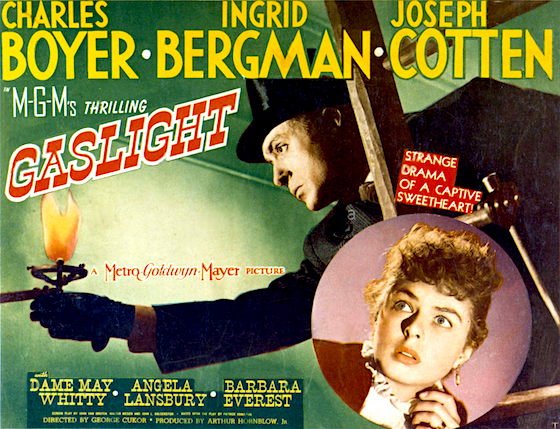
    In modern parlance, “gaslighting” is when you manipulate someone into disbelieving something they (correctly) believed was true, which has come up an awful lot in the past few years thanks to the actions of politicians in particular. It’s a bit of a random term, but that’s because it stems back to the plot of this film (and/or the 1938 play it’s adapted from, or the 1940 British film that inspired MGM to buy the remake rights to produce this version, which was originally titled The Murder in Thornton Square in the UK to avoid confusion). The connection comes because it stars Ingrid Bergman in an an Oscar-winning turn as Paula, whose new husband messes with her sanity to cover up his criminal activities.

    Leaving aside its cultural importance, as a tale in its own right this version of Gaslight is well performed and directed, but Evil Husband’s scheming is so damned obvious from very early on (at least to modern eyes_ that it becomes a bit of a finger-tapping exercise in waiting for someone, anyone, to do anything about it. I guess part of the point is that it’s a long, slow game of convincing her she’s mad, but it still felt like it needed to get a wriggle on to me. We know what he’s doing and how he’s doing it — how it will be undone and saved is what we’re left waiting (and waiting) for.

    At least it’s worth the wait, with a helluva climactic scene where Paula turns all her husband’s lies back against him. What it lacks in suspense it makes up for with a fantastically committed performance from Bergman, which evolves gradually and believably over the course of the film, and gets some excellent showcase moments too, not least the aforementioned confrontation. As her husband, Charles Boyer makes for a suitably sneering villain — too suitable, in a way, in that it’s almost hard to believe Paula would ever fall for him.

    4 out of 5

    The Florida Project
    (2017)

    2018 #136
    Sean Baker | 112 mins | streaming (HD) | 2.35:1 | USA / English | 15 / R

    The Florida Project

    A story of life on the poverty line in modern America, about a young single mother and her six-year-old daughter struggling to make ends meet in Kissimmee, Florida. You’d be forgiven for not having heard of the city, unless you’ve visited its neighbouring tourist magnet: Walt Disney World.

    It’s a slice-of-life kind of film — relatively light on plot, more about showing the difficulties of the characters’ lives. Some viewers will (indeed, have) lose patience with it for that, and at times it does feel a little long in the tooth. It’s worth sticking with, but paring it back by 10 or even 20 minutes would help.

    It’s mostly shown from the kid’s point of view, but there’s enough there that, as adults, we can see the struggles and choices the adults are dealing with. That these kids’ hand-to-mouth make-your-own-fun lives exists in the shadow of expensive, hyper-consumerised Disney World would seem like a contrivance were it not a truth, and the film acknowledges the juxtaposition (it’s hard not to — Disney is everywhere over there) without leaning into it too heavily (although the film’s title is a reference to how Disney referred to the park while it was in development).

    It’s a portrait that’s sympathetic to these people and their lives. How objective is it? It doesn’t blame them for the situation, but also shows it isn’t right, especially in their (limited) interactions with the authorities — maybe if there was different, better help offered earlier, the actions they eventually have to take wouldn’t be necessary.

    The film’s final sequence sits weirdly with the rest of the movie, which provokes some to write if off. The contrast is clearly a deliberate choice, but I’m not sure how I feel about it — it smacks of not knowing how to end the movie, or wanting to put a more upbeat capstone on something that’s become too depressing. It’s certainly striking, at least.

    4 out of 5

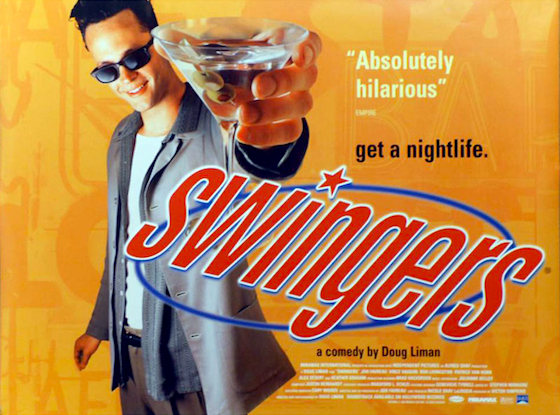
    Swingers
    (1996)

    2018 #141
    Doug Liman | 96 mins | streaming (HD) | 1.85:1 | USA / English | 15 / R

    Swingers

    To be honest, this is one I watched more out of box-ticking (of Doug Liman films) and vague curiosity (it’s sometimes (though decreasingly, I feel) mentioned as a key work of ’90s indie cinema), but I wound up genuinely enjoying it. It’s not what I expected from the posters and blurb — I thought it’d be all about slick operators and The Scene, but really it’s about some jobbing twentysomething mates just living and trying to have fun during the swing revival in ’90s Hollywood. In other words, it’s a lot less obnoxious than I’d feared. In fact, it has a kind of sweet positivity. That even extends to Vince Vaughn, who’s playing kind of a dick as usual, but he’s kinda likeable anyway. That said, if you cringe and squirm at people making fools of themselves in social situations (as I do), oh boy, this film has some examples that are more uncomfortable than any horror movie.

    It feels typically ’90s in so many ways, but then as it’s about the ’90s lifestyle, that’s wholly apt. One aspect of this is its cinematic literacy. For example, the characters debate whether Tarantino is copying or homaging Scorsese, and then later the film both homages (or copies) Reservoir Dogs and Goodfellas. And like Tarantino, the film came to be an influence on the ’90s itself, through catchphrases like “you’re so money” and “Vegas, baby!”, and popularising the term “wingman”. There’s probably a whole book to be written on the self-referential-ness of ’90s culture as an expression of angst at the forthcoming millennium, or something like that.

    4 out of 5

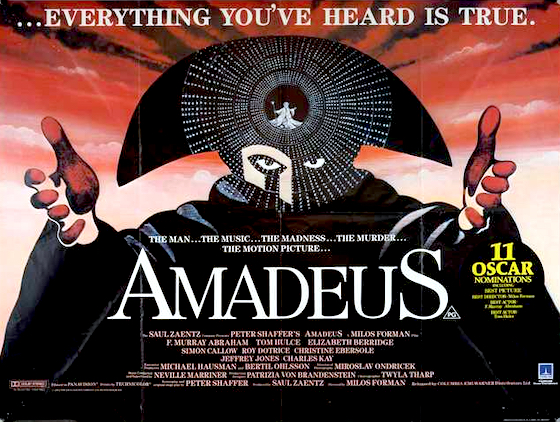
    Amadeus:
    Director’s Cut

    (1984/2002)

    2018 #142
    Miloš Forman | 180 mins | download | 2.40:1 | USA, France & Czechoslovakia / English | PG / R

    Amadeus

    The story of the one-sided rivalry between court composer Salieri (F. Murray Abraham) and wunderkind Mozart, aka Wolfgang, aka Wolfy (to his wife) — who also had the middle name Amadeus, of course, which for some reason lends itself as the title. (As per IMDb Trivia, “an important theme of movie is the change of Salieri’s belief in God. That might have been the reason for the title Amadeus, which means ‘love of God’.”)

    Amadeus‘s reputation places it as a 10-out-of-10 absolute-classic kind of Great Movie, including ranking in the top 100 of IMDb’s Top 250, the top 200 of Letterboxd’s equivalent, and placing on various other lists, like the 1,000 Greatest Films. I wouldn’t go that far, personally, although I did think it was good. There are very strong performances (amusingly, Tom Hulce studied the temperamental behaviour of John McEnroe to help inform his interpretation of Mozart). There are great depictions of music and its creation. The production values are strikingly high, including sumptuous sets, locations, and costumes; nice camerawork (apparently the entire film was shot with natural light, which makes the cinematography even more impressive); and some spots of excellent editing.

    The version released theatrically in 1984 was cut down to 160 minutes because, according to Forman, it was the era of MTV: a long movie about classical music was already a risk, so it was decided to limit the running time. 2 hours 40 minutes is hardly shot, though, is it? Anyway, come 2002 and the DVD release, Forman felt they may as well recreate the film as written, leading to the longer cut, which has since become the standard version (it’s even the one shown on TV, which is by no means guaranteed with director’s cuts, I find). Forman says the shorter version was created by ditching every scene not directly related to the plot, though I’m not sure how much I buy that. Having read what was added back, I’m sure an awful lot more could’ve gone without impacting the story a great deal, if that was indeed their goal. One thing the longer cut did achieve was up its US certification from a PG to an R, thanks to a brief appearance by boobies. Oh, you prudish Americans!

    The film also inspired the song Rock Me Amadeus. Now that’s something I might give five stars.

    4 out of 5

    Amadeus was viewed as part of What Do You Mean You Haven’t Seen…? 2018.

    Becoming Bond
    (2017)

    2018 #144
    Josh Greenbaum | 96 mins | streaming (HD) | 2.35:1 | USA / English | 15

    Becoming Bond

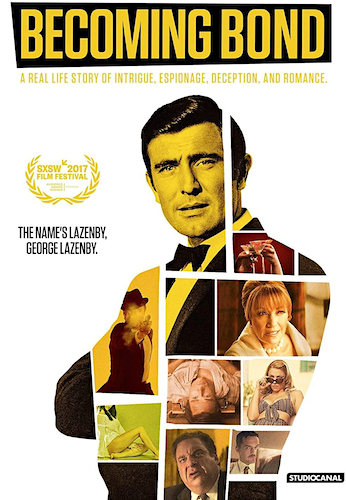
    A documentary about the life of George Lazenby, most famous — or, rather, only famous — for replacing Sean Connery as James Bond for the sum total of one film. The blurb tries to spin it as “a unique documentary/narrative hybrid”, but it’s just a docudrama — i.e. a documentary with some scenes dramatised by actors. In fact, it’s basically just an interview with Lazenby that’s been dressed up with reenactments.

    Lazenby comes across as likeable and it’s a helluva story, and it doesn’t hurt that they’ve had a lot of tongue-in-cheek fun with how the recreations are done (swearing, sex, nudity, hanging boots off erections…) It’s mostly a “mad, true story” kinda thing, but it pulls out some surprisingly heartfelt, emotional stuff later on, including regret of opportunities missed (and not just Bond ones). The only significant downside comes from being a British viewer, because the dramatisations were all clearly shot in the US with American actors: most of the British and Australian accents are terrible; their idea of the exterior of a British pub is questionable; frankly, I’m amazed they even bothered to use right-hand drive cars (err, most of the time).

    (Bit of an aside, but just think: there’s an alternate universe somewhere in which Lazenby didn’t behave like an idiot and instead starred in Diamonds Are Forever, and therefore probably carried on into Live and Let Die and The Man with the Golden Gun, and maybe The Spy Who Loved Me and Moonraker too… And I guess in that universe Roger Moore never played Bond (because surely they wouldn’t’ve cast him for the first time when he was over 50, would they?) Funny to think about, isn’t it?)

    There’s an interview clip included where David Frost asks Lazenby if he carries on the James Bond thing in real life, and Lazenby says no, it’s just a movie, no one could carry on like that in real life — which is funny because we’ve just been hearing all about how Lazenby basically did lead Bond’s life (minus, you know, the spying and killing). Whether that’s actually a desirable way to lead an entire life… you be the judge.

    4 out of 5

  • Fast & Furious: Hobbs & Shaw (2019)

    aka Fast & Furious Presents: Hobbs & Shaw*

    2020 #40
    David Leitch | 137 mins | streaming (UHD) | 2.39:1 | USA / English, Samoan & Russian | 12 / PG-13

    Fast & Furious: Hobbs & Shaw

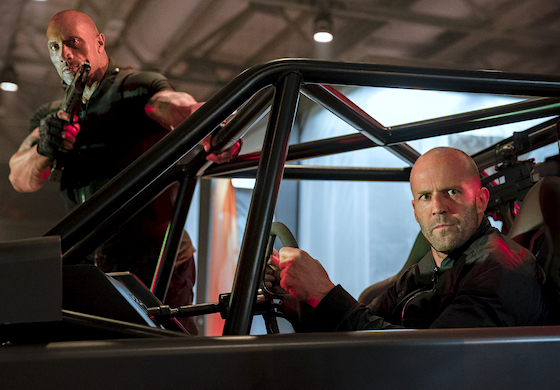
    In my review of Fast & Furious 8, I singled out the odd-couple double-act of lawman Hobbs (Dwayne Johnson) and semi-reformed criminal Deckard (Jason Statham) for particular praise. Well, clearly I wasn’t alone in that view, because the pair have become the subject of the first Fast & Furious spinoff. (It’s kind of ridiculous that this is devalued as a spinoff while Tokyo Drift gets to sit there as part of the main series, but that’s a whole other debate.)
    Here, despite their mutual antipathy, Hobbs and Shaw are forced to team-up when technologically-augmented super-soldier Brixton Lore (Idris Elba) manages to frame Deckard’s MI6 agent sister Hattie (Vanessa Kirby) for the theft of a programmable super-virus. Yep, the series that started out as a based-on-a-newspaper-article story of illegal street racers continues to play in more of a James Bond sandpit, albeit with a continued focus on vehicular activity for the action sequences.

    If you’ve seen any of the recent Fast & Furious movies (since Fast Five performed that soft reboot into the spy caper genre), you should pretty much know what to expect here: physically-implausible OTT action, with a knowing wink to the audience so we can all share in the ridiculousness. It certainly shares some of the main series’ preoccupations — crazy stunts with cars; the importance of family — but it’s a bit less self-serious whenever the latter is mentioned. Obviously on one level it’s a spinoff because the main characters (Vin Diesel and co) aren’t here, but they’ve used that “not part of the main saga” thing to allow it to cut a little loose with the tone; to have a bit of fun. The FF films aren’t at all averse to ludicrous hijinks, but even they don’t indulge as consistently as Hobbs & Shaw does.

    The car's (not) the star

    In fact, while not ‘officially’ labelled a Comedy, Hobbs & Shaw borders on being one. Johnson and Statham are both outwardly old-school action stars who’ve demonstrated a surprisingly good acuity for comedy in previous roles, so pairing them up in a buddy-comedy actioner allows them to spark off each other nicely. It’s directed by David Leitch, who demonstrated a fine handling of the balance between action and comedy in Deadpool 2, and brings a similar touch here. The plot is regularly paused to indulge in what are effectively comedy routines, to the extent of bringing in some cameos to basically do a couple of sketches. (No spoilers as to the identity of the cameos, other than to say they have connections to other work by members of the cast and/or crew, which makes them fun little meta-nods.) If you’re looking for a streamlined story or nonstop action, you’re out of luck, and I imagine the funny bits (which sometimes are allowed to run just a little too long) will get on your nerves. It may push the comedy a little further than regular FF films — tonally, it’s almost Deadpool level at times — but I’m all for it being self-consciously funny, rather than trying to remain po-faced while taking the action to cartoonish extremes.

    Like its saga brethren, Hobbs & Shaw aims squarely at being a couple of hours of pure entertainment for people who enjoy imaginative, physics-defying action scenes and a bit of a laugh on the side. It’s possibly my favourite Fast & Furious film since Fast Five — and I thought F7 and F8 were a lot of ridiculous fun, so that’s not damning with faint praise. There are some teases that it might spark a sequel, or even series, of its own, and I’m definitely up for that.

    4 out of 5

    Fast & Furious: Hobbs & Shaw is available on Sky Cinema and Now TV from today.

    * I would love to know why Universal continue to insist on slightly retitling these movies for their UK and European releases. At least with, say, The Fate of the Furious I can see they wanted to get the brand name in there properly by officially calling it Fast & Furious 8, but removing Presents from this one? It looks neater, because “Presents” serves no purpose other than to try to suggest this isn’t a ‘real’ Fast & Furious film (and who the fuck cares? Except Vin Diesel, I expect), but, still, why bother to change it? ^