
Kenny Ortega | 88 mins | download (HD) | 16:9 | USA / English
 When this TV movie kicks off with Ivy Levan sashaying her way around a cinema while she mimes to a pre-recorded and over-produced backing track of Science Fiction/Double Feature, full of licks and runs and finding four notes to hit where there used to be one, like a desperate X Factor wannabe who has no concept of the meaning of the lyrics she’s warbling but is ever so desperate to show she can saaang (that’s like singing but with added Cool), you get a pretty fair idea of the terrible experience about to be unleashed upon you by the not-so-catchily titled The Rocky Horror Picture Show: Let’s Do the Time Warp Again. That’s to say it’s been modernised, Americanised, and sanitised.
If you know the original then you know the plot, and if you don’t know the original then you have no business watching this so-called tribute version, which premiered on Fox in the US last week and makes its way to the UK on Sky Cinema from today. “Tribute” is the latest word someone has co-opted to avoid saying “remake”, a marketing strategy that was presumably settled upon after they realised they’d produced a witless, regressive clone of material that, though over 40 years old, is still more subversive and boundary-pushing than this plastic Disneyfied tosh.
 The interpretation of the songs is appalling. The recordings are all overworked, full of needless warbles and added “oohs”. They’ve been modernised in such a way that, when current popular fads for over-singing things (“licks” or “runs” or whatever else they call them) have passed — as they surely will — these new versions will sound even more dated than the already-40-year-old originals, which have a certain timelessness. The lyrics are sung with the same amount of attention to what they mean as you get from a computer’s text-to-speech function, including or echoing parts of the original without understanding why they’re there or what function they perform; or if it does know the function, it doesn’t know how to replicate it.
To say its performances are like a bad am-dram production would be an insult to am-drammers everywhere. Almost everyone is miscast. It was, perhaps, a nice touch to include Tim Curry, but his limited scenes are uncomfortable to watch because it’s painfully obvious that the poor man is still labouring under the aftereffects of his stroke. As Brad, Ryan McCartan overacts as if he thinks that’s the whole point. Reeve Carney makes Riff Raff a leering creep, and his needless affected British accent is awful. As Magenta, Christina Miian’s is worse. As Frank, Laverne Cox’s imitative mid-Atlantic twang is even worse again. Why did they do it?! Presumably because, as I said, it’s all a thoughtless copy of the original.
The casting of a transgender woman as a transvestite is its own kettle of worms — either she’s a woman doing radical things like fancying men and being jealous of another woman stealing her guy, or you’re saying she’s not actually a woman but still a man and… well, like I say, it’s a mess. A commenter on the A.V. Club’s review summed up the cumulative effect quite succinctly: “Fox was actually able to pull off a pretty conservative casting choice while appearing uber progressive… By casting Cox, who identifies as female, in the role of Frank-N-Furter the seduction scenes actually became far less risqué”.
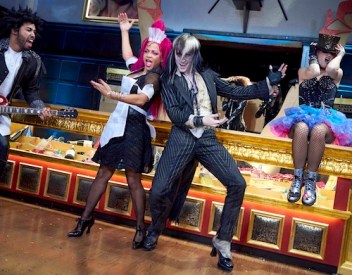 Everything is blunted further by Kenny Ortega’s ineffective direction. The camerawork is flat and uninteresting, the shot choices unimaginative. Some of the choreography looks interesting — it’s certainly more elaborate than in the original film — but the camerawork seems to be actively trying to obscure it. The editor must have struggled, unable to generate any additional excitement due to a shortage of options. At times it looks as if it was filmed live, under which circumstances its weaknesses might be understandable, if not excusable… but it wasn’t.
Occasionally there are cutaways to a cinema audience — not a real one, but a gaggle of extras, sat in a theatre watching what we’re watching. These moments are pathetic and pointless. I get that it’s meant to be a nod to the interactive midnight showings that have made Rocky Horror the phenomenon it is, but they demonstrate none of the wit or verve that make those screenings so popular. Plus the original film is good entertainment even without such intrusions; this isn’t. You might think that makes the asides necessary to liven it up, but there are so few of them, and they’re so lacking in imagination, or any discernible content whatsoever, that they just feel like they’re dragging the experience out even further.
Believe it or not, it’s not all bad. There’s one new gag in the dinner scene that’s actually pretty funny. It’s delivered by Faye Marsay lookalike Annaleigh Ashford, who makes a good fist of Columbia. Rounding out the leads, Victoria Justice has all the necessary charms to make a pretty fair Janet.  I refer partly to her omnipresent cleavage, but also her acting. It’s not great by any means, but she’s suitably sweet and twee at the start, then manages to sell Janet’s near-instantaneous transformation from uptight goody-two-shoes to sex-mad strumpet using just a handful of expressions and line deliveries in the slight gap her character has between Over at the Frankenstein Place and Touch-a Touch-a Touch Me. The latter is one of the film’s rare highlights, for various reasons. One of those is actually Staz Nair as Rocky — undoubtedly the least challenging role in the piece, but at least he gets it right, and his musclebound chest counterbalances Justice’s for those of the other persuasion. The only downside are his tattoos: he was supposedly just grown in a tank, how does he have tattoos?!
More than the ’75 film, Let’s Do the Time Warp Again brings to mind the 2010 episode of Glee that essayed the same musical. If you suffered through The Rocky Horror Glee Show, as I did, you’ll know it was a travesty. Is this even worse? Well, that’s a bit like someone forcing you to eat a dog shit and a cat shit before asking you which tasted nicer. That’s a little unfair: the Glee version was meritless; this one has a couple of minor plus points — so maybe it’s like someone making you eat a very small shit while occasionally showing you a picture of a sexy half-naked person. But unless someone forces you to choose between only this and Glee, there’s no earthly reason to do this particular Time Warp again.

The Rocky Horror Picture Show: Let’s Do the Time Warp Again is available on Sky Cinema from today, screening on Premiere at 12:25pm and 8pm.
It featured on my list of The Five Worst Films I Saw in 2016, which can be read in full here.
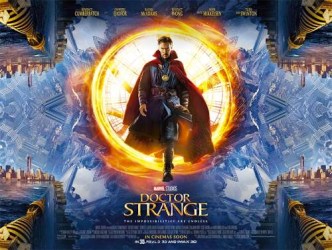 The latest from Marvel (or Marvel Studios, as they’re now branded, presumably in a bid to differentiate themselves from the properties owned by other studios that have been only too keen to use the Marvel logo and blur the line for the casual moviegoer) opens the door on a new facet of their shared cinematic universe, though does so in a movie whose plot follows the familiar “superhero origin story” rulebook. On the bright side, Doctor Strange has several other qualities to recommend it.
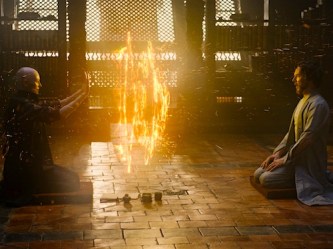 where the incredible effects are half the point — seemed dead in an era where every movie has CGI and every blockbuster has its share of once-impossible visuals. Strange demonstrates the form can be alive and well. The way the effects are created — with green screen and pixels — is the same as any other movie, but the designs and the visual imagination are exciting.
 Then there’s the cast. Obviously keen to avoid being typecast after playing an arrogant British genius in both
 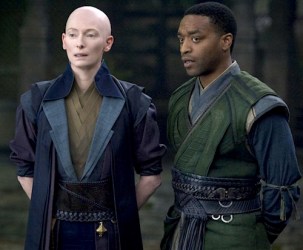 Besides, one of the film’s best characters is of Asian ethnicity, so it kinda balances out. That’s Benedict Wong as the sorcerers’ librarian, who’s likely to emerge as the film’s most popular character. It helps that viewers aren’t likely to expect much of him. Conversely, Chiwetel Ejiofor and Rachel McAdams are seriously underserved, perhaps hoping for more meat in the no-doubt-intended sequel(s).
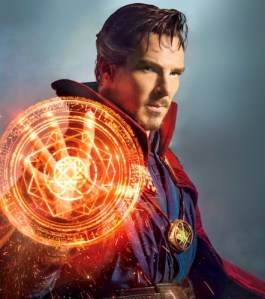 a teaser for another Marvel film, the other relates to the plot of the movie we’ve just seen. The former is first (and about 10% of my screening walked out before it came on) and the latter is, obviously, second (by which time about 90% had left). Those percentages ‘matter’ because, a) how do people not know Marvel’s rep for these scenes by this point?, and b) I think the scene related to the film you’ve just watched is the one that should be more attached to it, with the ‘teaser trailer’ being a fun bonus for those dedicated to stick around to the bitter end. But maybe that’s just me.
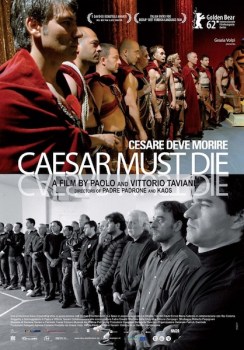 On the surface, this is a documentary about the inmates of Rome’s high-security Rebibbia prison — many of them with mafia connections — putting on a performance of Shakespeare’s Julius Caesar. However, it becomes clear fairly quickly that it’s all been staged, which is only more apparent when you learn some behind-the-scenes details (at least one prisoner had been released years earlier and returned to participate in this project).
 The directorial debut of uber-hearththrob movie star Ryan Gosling is not what you might expect someone of that particular adulation to produce. It’s not just that it has a dark heart, but that it’s slow, opaque, perverted, and not easily summarisable.
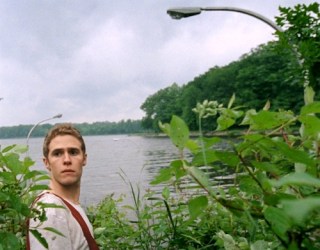 It comes to a very cathartic ending, on multiple levels. I almost didn’t realise I needed that catharsis at the end — I knew I wanted certain characters to get their comeuppance, but the load that seems to lift at the end, with all the different climaxes combined, including parts that might not seem ‘good’… well, it’s almost like Rat is right about Bones’ actions lifting a bad spell.
 The director of minor horror
 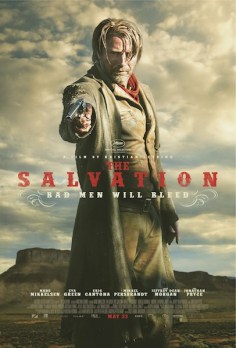 The spirit of the Spaghetti Western is kept alive in this Euro-minded South Africa-shot revenge Western.
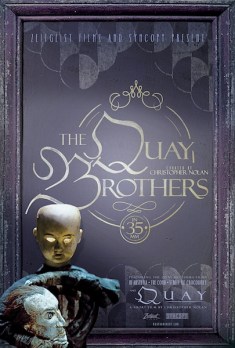 Christopher Nolan made a few headlines last year when his first post-
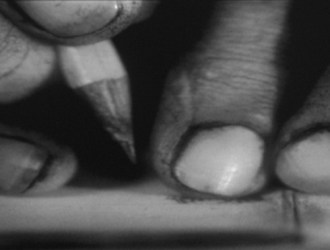 For all that In Absentia initially feels like flailing in deep water without armbands, accompanied with “what have I got myself into?!” thoughts, in retrospect I found it to be the most accessible of the three animations. It’s abstract and confusing for most of its running time, but by the end you can decipher some meaning; you can understand the relevance of the feelings it aims to generate — and if you haven’t got there yourself, or if you’re unsure, there’s a dedication to point you in the right direction. I didn’t get that with the next two; not so easily, anyway, which is why I say they’re less accessible rather than less good per se.
 Michael Brooke notes that it is “setting out to wrong-foot the viewer at every turn, and the result wilfully defies verbal analysis.” What can be easily discerned is that it’s about a dream, and it probably shouldn’t be a surprise that there’s some dream-logic involved. As to what else is to be gleaned, your guess is as good as mine.
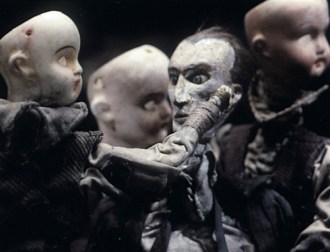 sometimes informative about the world the rest of us live in (In Absentia), sometimes a twisted analogy for it (Street of Crocodiles), and sometimes just fascinatingly unknowable (The Comb). All the films are teasingly oblique, and by all rights that should make them frustrating to the point of irritation, even abandonment… yet they’re kind of compelling nonetheless.
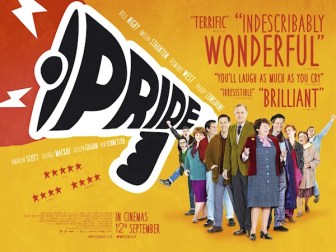 I don’t know if the true story behind Pride was big news back when it all actually happened in 1984, but I hadn’t heard of it until the film came along. For those who’ve still missed it, it’s about a group of gay activists deciding to form a group, LGSM, to support the striking Welsh miners — two groups who were poorly treated in one way or another by ’80s Britain.
 whose dancing display has to be seen to be believed. Bill Nighy and Paddy Considine are understated as quiet, hesitant characters who have inner steel, and Jessica Gunning makes a similar impact as a housewife who is completely emboldened by the activism.
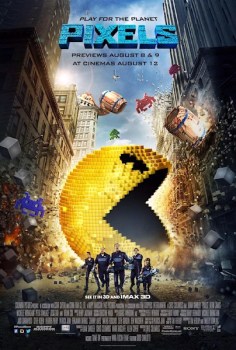 Adam Sandler, eh? He has his fans, though apparently not among people who can write because you rarely see a good word penned about him. The one exception is
 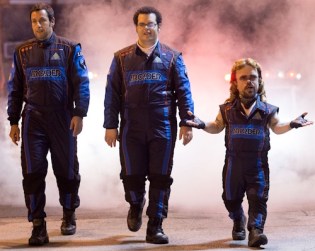 Pixels is the virtual definition of brain-off entertainment. The story has the plausibility of a kids’ daydream, the humour is frequently unimaginative, and the action sequences mostly coast on their basic concept rather than trying to elevate them. And Peter Dinklage is going to get a reputation for having terrible taste. I mean, I liked
 There are two stars in Mike Leigh’s biopic of famed British artist J.M.W. Turner: Timothy Spall, grunting his way through the title role with a deceptively layered realisation of an apparently simple but deeply complex man; and Dick Pope’s cinematography, which makes almost every frame look like a rich landscape painting, so that you feel you can almost see the brushstrokes.
 sometimes lack clear relevance (recognisable-off-the-telly actors turn up silently for what we’d call cameos if they were more famous). It creates a measured pace that is surely not to every taste, especially over the long running time, though personally I only found it sluggish towards the very end.
 100Films.co.uk