Review Roundup

In today’s round-up:

  • Snoopy and Charlie Brown: The Peanuts Movie (2015)
  • 13 Hours: The Secret Soldiers of Benghazi (2016)
  • Young Frankenstein (1974)


    Snoopy and Charlie Brown:
    The Peanuts Movie

    (2015)

    aka The Peanuts Movie

    2017 #25
    Steve Martino | 84 mins | streaming (HD) | 1.85:1 | USA / English | U / G
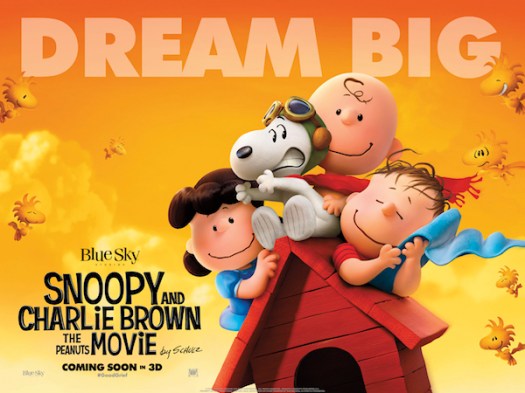
    Snoopy and Charlie Brown: The Peanuts Movie

    Charles M. Schulz’s popular comic strip hits the big screen in this likeable but hardly Pixar-level movie. Much of it plays like a series of shorts or sketches with a connected theme rather than a feature-length narrative — kind of like binge-watching a cartoon series — but they’re pleasant enough. There are some good gags (“Leo’s Toy Store by Warren Piece”), though the saccharine ending is a bit much and the pop songs are terrible. One review described Snoopy as “Peanuts’ Tyler Durden”, which is a thought that entertained me even more than the film.

    The most notable aspect is the animation style. Schulz’s strips have a distinct 2D style, but the movie is animated in 3D, presumably because you’re not allowed to make a Western kids’ movie with 2D animation anymore. Nonetheless, most of The Peanuts Movie is composed to emulate Schulz’s original strips, i.e. quite flatly — like, you know, 2D. And yet, somehow… Well, The Telegraph’s Robbie Collin summarised it well in his review: “Written down, [the animation style] just sounds chaotic, like a four-way mash-up of South Park, The Clangers, Wallace & Gromit and a flip book. But in motion, it’s a thing of serious, faux-artisanal beauty”. That might be going a bit far, but I did end up kinda liking the visuals. It’s quite a clever style for 3D, mixing in many 2D-ish touches. It should probably be a mess, but it weirdly works.

    3 out of 5

    13 Hours:
    The Secret Soldiers of Benghazi

    (2016)

    2017 #40
    Michael Bay | 139 mins | streaming (HD) | 2.35:1 | USA / English | 15 / R

    13 Hours: The Secret Soldiers of Benghazi

    The not-at-all-controversial events in the Libyan town of Benghazi on 11th September 2012 are here dramatised by that master of subtlety and understated reality, director Michael Bay, so you know you’re going to get a considered and truthful account of events.

    Yeah, most of that opening paragraph is completely facetious. Bay takes a real-life gunfight, in which a secret mercenary security team went against orders (possibly) to defend an American diplomatic compound that was under assault, and turns it into a blazing action movie that may as well be scored with the theme from Team America: World Police. If it was Bay’s goal to convey the sheer confusion on the ground in the midst of the situation, I guess he’s done a bang-up job. The problem is, that confusion extends to bits where the characters seem to have some idea what’s going on, but we’re left half in the dark.

    Having Bay be reined in after the excess of his Transformers movies is no bad thing, but being completely constrained by reality is not his strong suit either — the heightened reality of something like The Rock is where he excels.

    If you’re interested in a longer read on the film’s adherence (or otherwise) to reality, this article at Vox is interesting.

    3 out of 5

    Young Frankenstein
    (1974)

    2017 #46
    Mel Brooks | 106 mins | streaming (HD) | 16:9 | USA / English | PG* / PG

    Young Frankenstein

    I have mixed feelings about the work of Mel Brooks. I reviewed his Hitchcock spoof, High Anxiety, back in 2009 and found it wanting. I reviewed his Robin Hood spoof, Men in Tights, earlier this year and found it uncomplicated but enjoyable. When I was a kid I liked his Star Wars spoof, Spaceballs, but on a slightly-more-adult rewatch I enjoyed it less. And as for Blazing Saddles, regarded by some as one of the pinnacles of screen comedy… no, I didn’t like it. At all. I so didn’t like it that I really must rewatch it to see if I can see what I didn’t see.

    Young Frankenstein was released the same year as Blazing Saddles, and is placed on a similar pedestal by many — slightly higher, on the whole (Frankenstein edges it by a few points on IMDb, Rotten Tomatoes, and Metacritic). It’s quite remarkable that Brooks managed to produce two such esteemed movies within the same year. At least I liked one of them.

    Young Frankenstein has many funny lines and moments, including a lot of familiar Brooksisms (“walk this way”) and, in the Puttin’ on the Ritz number, perhaps one of the funniest sequences ever committed to film. The films being spoofed (Universal’s classic monster movies) are evoked well, in particular with the potent black and white cinematography, but Brooks also lets things spiral off in their own direction when warranted. On the downside, I’d say it’s a little too long.

    Don’t take that criticism too seriously, though. I enjoyed it very much.

    4 out of 5

    * Hilariously, in 1987 the BBFC thought it should be rated 15. It wasn’t downgraded to the much more sensible PG until 2000. ^

  • 10 Cloverfield Lane (2016)

    2016 #180
    Dan Trachtenberg | 104 mins | Blu-ray | 2.40:1 | USA / English | 12 / PG-13

    10 Cloverfield Lane

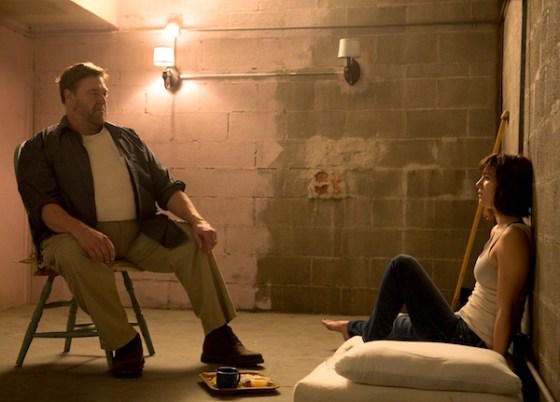
    After Michelle (Mary Elizabeth Winstead) is in a car crash, she awakens in a basement chained to a wall. Her captor, Howard (John Goodman), tells her he’s saved her life: a massive attack has taken place and they, along with an acquaintance of Howard’s called Emmett (John Gallagher, Jr.), are in Howard’s self-built bunker to hide from the deadly fallout. But Michelle only has Howard’s word as evidence these attacks happened at all, or that their aftermath is lethal, and can he be trusted?

    For most of its running time, 10 Cloverfield Lane is a good psychological puzzle. Michelle has little choice but to trust her captor(s) / quarantine-mates and little chance to investigate the truth for herself, try as she might. I must say I never felt a particularly palpable sense of tension, despite the varied and regularly renewed attempts to make Goodman a threat, but it nonetheless works as a characterful mystery-driven single-location thriller. And then…

    We’ve all read reviews where a critic (or blogger!) will write something like, “it would benefit from being 10 minutes shorter”. That sounds very precise and therefore clever, but it’s really a number plucked from thin air. No one who’s written a sentence like that has actually sat down with a film, noted all the bits they’d cut, added them up, and then presented that total in their review. It is, at best, intuition (at worst, it’s random and thoughtless). However, with 10 Cloverfield Lane I can say exactly how much needs to be cut: 9 minutes and 10 seconds. To be exact, those’d be the 9 minutes and 10 seconds between a (spoilery) revelation and the credits rolling.

    Roomies

    There’s no need to go into detail here — if you’ve not seen the film it’s a massive spoiler; if you have, you surely know what I’m talking about. This climax feels wholly unnecessary and like it belongs in a totally different movie. Tonally, and in terms of the main plot points that drive the story, it has absolutely nothing to do with the movie we’ve just watched. If you cut that bit out, it wouldn’t make the rest of the film any less satisfying. And because it’s so unnecessary, I found it intensely irritating.

    The bulk of 10 Cloverfield Lane is a very solid contained psychological thriller, undoubtedly deserving a strong 4-star rating. Then the final ten minutes happens. It’s so misjudged, in my opinion, that it overshadows what’s come before, to the point that I’ve taken a whole star off my rating.

    3 out of 5

    Our Kind of Traitor (2016)

    2016 #191
    Susanna White | 108 mins | streaming (HD) | 2.35:1 | UK & France / English, Russian & French | 15 / R

    Our Kind of Traitor

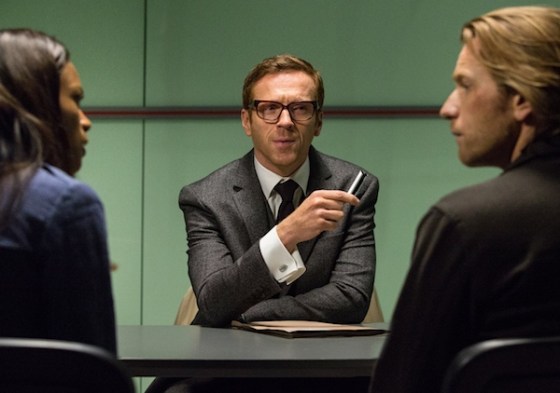
    Based on a John le Carré novel, Our Kind of Traitor sees a couple of holidaying Brits, Perry and Gail MacKendrick (Ewan McGregor and Naomie Harris), befriending a Russian chap called Dima (Stellan Skarsgård), who it turns out has links to the Mafia and wants our hapless heroes to deliver an information-filled USB stick to British intelligence. As MI6 (primarily represented by Damian Lewis) seek to act on the information, the MacKendricks get drawn into the espionage game thanks to their relationship with Dima.

    Some of Traitor’s detractors have a problem with it right from the off, finding the premise to be inherently ridiculous. I disagree. In fact, I think it’s quite a good plan on Dima’s part: to use an unsuspected casual acquaintance to smuggle important documents to the authorities. The way the MacKendricks continue to be involved does wind up stretching credibility, but that’s narrative structure for you — it’d be a real trick to construct a satisfying relay of perspective characters.

    If anyone could pull that off it’s probably Le Carré, but this is not his most complicated plot — there are even less twists or double-crosses than you’re probably expecting — but as a tense thriller it satisfies often enough. However, Le Carré as author, plus screenwriter Hossein Amini and director Susanna White, seem to be more interested in the story’s real-world resonances. They’re using a thriller plot to bring up the kind of probably-genuine corruption we get in government today. On the one hand it feels a little obvious, especially to those of certain political leanings, but on the other it’s worth highlighting. An impassioned speech by Damian Lewis to some of his superiors sums it up, probably rather too neatly for some discerning critics.

    British intelligence

    Lewis is always good value, both in scenes like that and in his tentative partnership with McGregor. Although the MacKendricks are our point-of-view characters, the innocent normal people we should relate to, McGregor’s Perry is ultimately a little flat and Harris is underused. The real star is Skarsgård as the gregarious and foul-mouthed Russian banker, who is by turns unsettlingly dangerous and engagingly likeable. Or perhaps it’s the beautiful cinematography by DP Anthony Dod Mantle — the varied international locations are particularly effective at adding scale to a story that’s really about the personal interactions of four or five people.

    Our Kind of Traitor is not the very best Le Carré adaptation, especially given the increasing number we’re being treated to these days, but it’s still a reasonably engrossing thriller with something to say about contemporary geopolitics.

    4 out of 5

    Moonlight (2016)

    2017 #83
    Barry Jenkins | 111 mins | Blu-ray | 2.39:1 | USA / English | 15 / R

    Moonlight

    Oscar statue2017 Academy Awards

    8 nominations — 3 wins

    Won: Best Picture, Best Supporting Actor, Best Adapted Screenplay.
    Nominated: Best Supporting Actress, Best Director, Best Cinematography, Best Editing, Best Score.

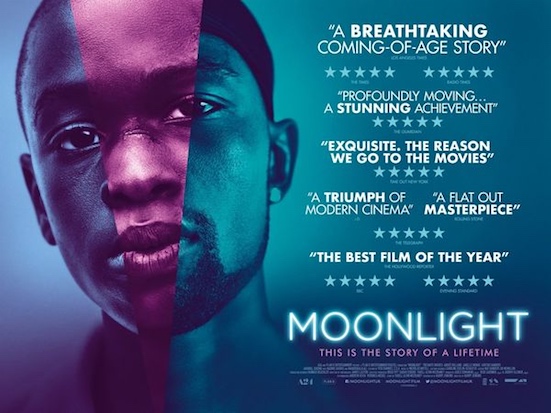
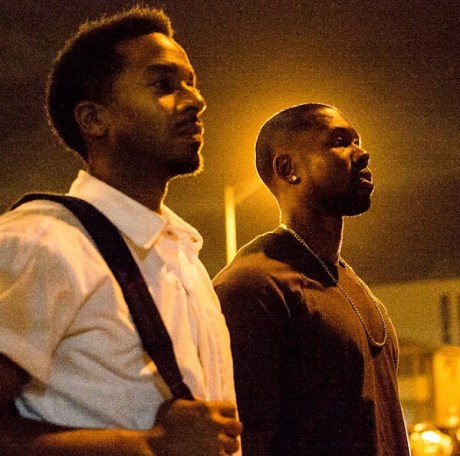
    Last year’s (eventual) Best Picture winner could pithily be described as “Boyhood with a black kid”, and I’m sure it has been plenty of times, but that does a disservice to Moonlight’s own unique qualities.

    That said, it’s not difficult to draw obvious comparisons between the two. Both follow the lives of an American boy as he grows up across a decade-and-a-bit. Whereas Boyhood was shot in real-time with the same actor, Moonlight drops in on its central character, Chiron, at ages 11 (played by Alex Hibbert), 17 (Ashton Sanders), and 25 (Trevante Rhodes). Both films see the lead trying to figure out his place in the world, while also dealing with an absent father, surrogate father figures, and a mother often preoccupied with her own problems. But whereas Boyhood frequently felt like a ramshackle collection of vignettes that together created a loose portrait of a childhood, Moonlight is a bit more focused: Chiron is both bullied and gay, and how he deals with these things gives a shape to the narrative that Boyhood seemed to lack.

    Much of the credit for creating that smooth storyline belongs… well, with writer-director Barry Jenkins, of course (and at this juncture I must shoehorn in a mention of his charming Criterion closet video — if you didn’t love the guy before, I’m sure you will after watching that). But it also belongs with the three actors playing Chiron, who not only chart his development over time, but also make him a highly relatable protagonist in a very subtle way. The connection the viewer builds with him comes from the understated power of their acting — at all ages, Chiron expresses a lot without saying much, which only serves to draw us closer to him as we feel like we understand him nonetheless.

    Boyhood

    The quality of the performances from Hibbert, Sanders, and Rhodes is only emphasised when you learn that the three actors never met, never rehearsed together, never even watched each other’s work. That makes it all the more remarkable that they share something — in their eyes, or the way they hold themselves, or the hesitancy with which they connect to other people. It’s especially apparent in Rhodes: at first his version of Chiron seems completely different to the earlier two, but then we realise that’s just a front, and the real Chiron he’s buried comes to the fore when he reconnects with an old friend. From that point, he’s so like Hibbert and Sanders that it’s almost uncanny.

    Another thing the film handles with admirable subtly is the time jumps. Numerous subplots continue across all three sections, but rather than bluntly spell out what’s changed between each, Jenkins lets us infer it; and because we’re only getting a snapshot each time, some of these arcs (in particular that of Chiron’s mother, played by Naomie Harris) are contained as much in the gaps of what we’re shown as they are in what’s actually presented on screen. That we can pick up on what’s happened off screen is as much a tribute to Jenkins and his cast as is the quality of what we do see. And although the characters may change and develop off screen, what we witness each time is almost like the inciting incident that leads (in)directly to the next part of the story — the effects of actions are magnified over time, and the jumps mean you go directly from where something begins to where it ends up.

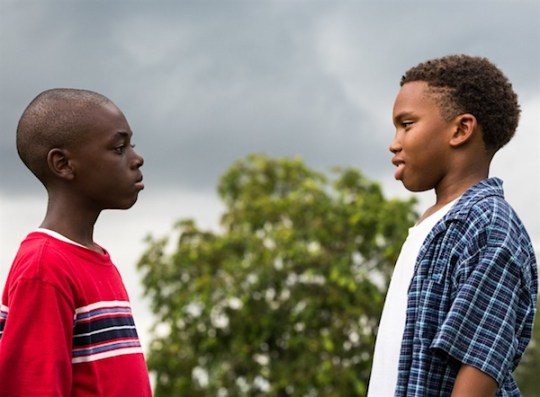
    Boys to men

    In telling the story of a young gay black man, Moonlight is exposing a world and lifestyle that’s not seen much, or at all, in (mainstream) cinema — that is, being black and gay. Or just being gay, really. Or black, to an extent. There’s an inherent positivity in getting such untold stories out into the open. Nonetheless, there’s a certain universality to Chiron’s experience. Lest one thinks that’s just a straight white guy trying to make everything relate to him (and I’ve seen others be accused of such appropriation), Jenkins observes it too in the film’s Blu-ray extras. A film doesn’t need that element of recognisability — there’s nothing wrong with illuminating a lesser-seen facet of the world; depicting a unique life experience — but Moonlight’s shy love story speaks across boundaries of race, gender, and sexual orientation.

    5 out of 5

    Moonlight is released on DVD and Blu-ray in the UK today.

    Raiders!: The Story of the Greatest Fan Film Ever Made (2016)

    2016 #162
    Tim Skousen & Jeremy Coon | 93 mins | streaming (HD) | 16:9 | USA / English

    Raiders!: The Story of the Greatest Fan Film Ever Made

    You may have heard about this: in 1982, a group of teenagers decided to remake Raiders of the Lost Ark shot for shot, starring themselves. It was a project that ended up filling their whole adolescence, filming scenes here and there every summer for years. Decades later, their amateur recreation (known nowadays as Raiders of the Lost Ark: The Adaptation) was uncovered by director Eli Roth, who passed it to Harry Knowles to screen at a film festival he organises, and it began to gain cult notoriety. Eventually, that new appreciation led to the guys reuniting in an attempt to crowdfund production of the one scene they were never able to shoot originally. This documentary tells the stories of both the original production and the attempt to complete it.

    It’s a great tale, but unfortunately it’s told in a really sloppily made documentary. The narrative is a complete jumble — it jumps in and out of stories all over the place, getting distracted by something else before looping back around. Exposition and setup are bungled, leaving the viewer constantly playing catch-up and trying to piece things together. It throws in general observations mid-film that really belong in an introduction or conclusion. It goes back and forth in time at will — presumably someone thought they’d structured it to tell the parallel stories of the original project and the 2014 shoot, but the editing isn’t clear enough to support that structure. Interviews are cut to shreds, leaving soundbite-sized snippets that often fade out while the person’s still talking, just moving away without letting them finish.

    Some people never grow up...

    As a viewer, you endure all of this because the underlying story is so good, but there’s a better film to be made here — one that tells the story more clearly, that better draws out the characters of the people involved, the psychology of what they’re doing, and any latent thematic points too. I mean, what these guys did is extraordinary in its dedication, but it’s also completely bizarre. Why did they start it? What does it say about them, or their lives, or maybe even the human condition? And it does say something, I’d wager — you can almost glimpse it around the edges and in the corners of the documentary, but it rarely comes close to actually exploring it. There is a section on the kids’ shitty home lives — that’s something they all seemed to share — and how the Raiders project was a refuge. At this point the editing calms down and it’s briefly very good. If the whole film had displayed that same clarity, it would merit a higher rating.

    As it stands, Raiders! has a brilliant story to tell, meaning it’s worth watching to learn about that, but I yearned for it to be told better.

    3 out of 5

    Split (2016)

    2017 #62
    M. Night Shyamalan | 117 mins | download (HD) | 2.35:1 | USA & Japan / English | 15 / PG-13

    Split

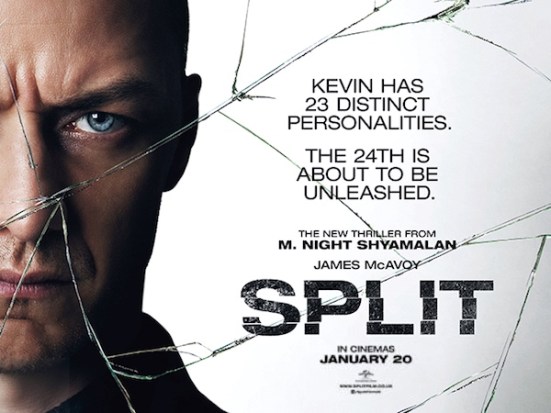
    Once-fêted writer-director M. Night Shyamalan surprised a lot of people in 2015 by finally beginning his long-awaited comeback (a day I think it’s safe to say many thought would never come) with low-budget high-concept horror The Visit. Then earlier this year he surprised people again by delivering another long-promised return. Well, he surprised people who didn’t find it out on the internet the day after the darn thing came out, anyway. For that reason (plus the newsworthy announcements that have followed in its wake), this review presumes you know Split’s last-minute twist.

    And, like many a twist before it, once you know what’s coming it can’t help but colour the entire film. What’s unique about Split’s reveal is that, really, it shouldn’t — it’s a bonus extra-textual connection, not a traditional twist that forces you to reassess the narrative you’ve just seen. The problem, I suppose, is that it’s a distraction; or it was for me. I spent the entire movie with a background awareness that this was in the same universe as Unbreakable, which meant that (a) I was hyper-attentive for anything that suggested a link before the closing cameo (I didn’t see anything significant; I think the similar posters are probably the cheekiest thing), and (b) any tension about whether or not James McAvoy’s character will turn out to have (semi-)supernatural powers dissipates, because of course he will — that’s the world we’re in.

    Oh, you!

    This is why having twists spoiled is bad. I guess journalists felt that as it wasn’t a twist inherent to the film’s narrative — not like, say, The Sixth Sense or Fight Club — it was OK to shout about it online with uncommon speed. In fairness, the later news that the trilogy-completing Glass is in development means that, even if they had kept schtum, anyone waiting on Split’s digital/DVD/streaming/etc release was likely to have the connection blown anyway. But I didn’t want to be having a conversation about the point at which discussing spoilers is permissible. That’s a distraction from the film itself, which does it a disservice. But then, so’s knowing the ending before you start.

    I guess this is a long-winded way of saying I don’t think I’ve fairly judged Split yet. I was too busy thinking “OMG, Unbreakable sequel, yay!” Still, it’s easy to spot several plus points. The Witch’s Anya Taylor-Joy makes for an engaging heroine, her character quiet but assured, more capable than the bolshy but kinda useless classmates she’s imprisoned with. Even as a twist-spoiled viewer is waiting for the inevitable reveal that, yep, McAvoy has powers that are going to manifest, there’s tension in when and how and who’ll make it out alive.

    Making it out alive?

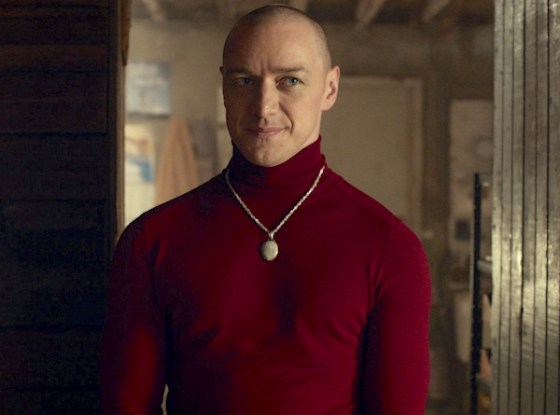
    However, the really exceptional part of the movie is McAvoy’s performance. I don’t know how accurately or sympathetically the film handles the science of his character’s condition, but his embodiment of the role — of all the roles — is superb. The multiple distinct personalities aren’t created just by putting on a silly voice or funny costume; McAvoy changes the way he holds himself, the way he stands and moves, the way his face expresses. It’s the kind of performance that in a different kind of film would’ve been all over awards season.

    I feel bad for not entirely assessing Split on its own merits, but equally I can’t help it — the thing that most excites me is where it promises to go next; the full-blown sequel to Unbreakable that many people (myself included) have been hoping would come for the best part of two decades. Maybe once that’s been and gone I’ll be able to revisit this and take it as a standalone piece.

    4 out of 5

    Split is released on DVD and Blu-ray in the UK today.

    Review Roundup

    In today’s round-up:

  • Partners in Crime… (2012)
  • Charlie Bartlett (2007)
  • Florence Foster Jenkins (2016)


    Partners in Crime…
    (2012)

    aka Associés contre le crime… “L’œuf d’Ambroise”

    2016 #189
    Pascal Thomas | 105 mins | streaming (HD) | 1.85:1 | France / French & Italian | 12

    Partners in Crime…

    André Dussollier and Catherine Frot star as Agatha Christie’s married investigators Tommy and Tuppence (here renamed Bélisaire and Prudence) in this third in a series of French adaptations of Christie stories (best I can tell, the first two aren’t readily available in English-friendly versions).

    Based on the short story The Case of the Missing Lady, it sees Tommy and Tuppence Bélisaire and Prudence investigating the disappearance of a Russian heiress at a suspicious health farm, while also quarrelling about their relationship. It’s very gentle comedy-drama, even by the standard of Christie adaptations, with a thin mystery, thin humour, and thin character drama, which all feels a little stretched over its not-that-long-but-too-long running time. I shan’t be seeking out its two antecedents.

    2 out of 5

    Charlie Bartlett
    (2007)

    2017 #9
    Jon Poll | 97 mins | streaming (HD) | 1.85:1 | USA / English | 15 / R

    Charlie Bartlett

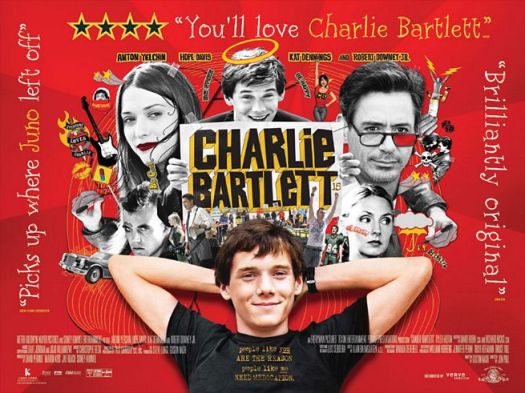
    Anton Yelchin is the eponymous rich kid trying to fit in at a regular high school, which he does by becoming an amateur psychiatrist to his classmates, in a comedy-drama that plays as the ’00s answer to Ferris Bueller. It starts out feeling rather formulaic and predictable, running on familiar high school movie characters and tropes, but later develops into something quite emotional. It’s powered by excellent performances from Yelchin and Robert Downey Jr, as the school’s unpopular and unprepared principal.

    4 out of 5

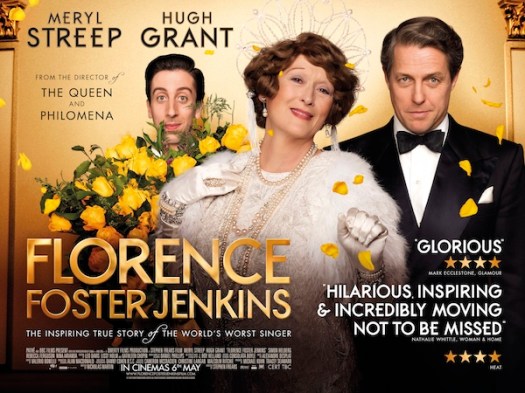
    Florence Foster Jenkins
    (2016)

    2017 #34
    Stephen Frears | 106 mins | streaming (HD) | 2.35:1 | UK / English | PG / PG-13

    Florence Foster Jenkins

    Try to ignore the fact Meryl Streep nabbed an Oscar nomination away from someone more deserving (for example, Amy Adams. Well, no, definitely Amy Adams), and she gives a good turn as the titular society lady who couldn’t sing for toffee but thought she was fantastic, and used her wealth and influence to launch a concert career. She’s only enabled by her doting… assistant? Lover? Husband? You know, the film blurs that line (deliberately, I think) and I’ve forgotten what he was. Anyway, he’s played by Hugh Grant, who is also good.

    It’s a gently funny comedy, as you’d expect from the subject matter, but one that reveals a surprising amount of heart and depth through Florence’s attitude to life, as well as how her men (who also include The Big Bang Theory’s Simon Helberg as the third lead; also good) attempt to care for her needs.

    4 out of 5

  • Underworld: Blood Wars (2016)

    2017 #72
    Anna Foerster | 91 mins | Blu-ray (3D) | 2.40:1 | USA / English | 15 / R

    Underworld: Blood Wars

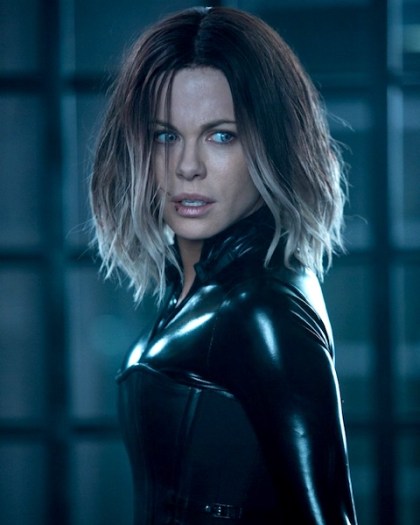
    Kate Beckinsale is back in skintight leather for……

    I’m sorry, my mind wandered off then. As I was saying: Kate Beckinsale is back in… skintight leather……

    Sorry, happened again. As I was saying: Kate Beckinsale is back in… her role as a werewolf-killing vampire for the fifth entry in the Underworld series, which seems to be as undying as its star creatures.

    Picking up a little while after the last one left off, the war between vampires and Lycans (aka werewolves) is now back in full swing, and both sides are hunting Selene (Beckinsale). Her own kind want her for previous crimes (see: the first two films), while the Lycans are after her daughter (see: the last film) to give them an advantage in the war. Fearing for their safety, the vampires invite Selene back into the fold to train a new generation of combatants, but there are sneakier plans afoot…

    Kate Beckinsale in leather. Nuff said.

    The first Underworld marked out somewhat-new territory when it hit screens in 2003 by taking fantasy/horror elements like vampire covens and werewolves and placing them in a modern urban environment, fighting more with guns than swords and teeth. It certainly wasn’t wholly original — Blade had already done a similar concept and visually it owed a lot to The Matrix — but it was fresh enough. Since then the series has increasingly strayed away from that: the second film brought more traditional-style Eastern European countryside, the third was a medieval prequel, and the fourth was… kind of nothing-y, really.

    Now, they seem to have made something of an effort to get back to the ‘world’ of the first film, with extravagant vampire covens and underground Lycan forces, while also growing the series’ mythology by introducing us to new areas of vampiredom, primarily a Nordic coven. This move also brings with it a degree of politicking among the vampires, which is kind of what I imagine a millennia-old secret society would be like. I mean, don’t expect House of Cards — it’s done at the level of the action B-movie this series is — but it’s kinda fun. To achieve this it’s had to ignore an awful lot of the last film — not entirely, by any means, as it’s quite heavily based in some leftover plot points — but other parts have been completely glossed over. This lax attitude to continuity could be irritating, but a counterargument might go that isn’t it better to ditch stuff that isn’t really working in favour of stuff that’s more entertaining?

    Vampire politics

    Part of the entertainment comes from characters talking rather than just fighting, and we’re treated to some magnificently cheesy, overworked dialogue. Some of these scenes are edited within an inch of their life, lines almost tripping over each other as they’re rushed on to the screen. By rights that should be a problem, yet in something as fabulously trashy as Underworld it feels more expedient — they’re getting on with it, rather than being ponderous about the mythology, like much fantasy is wont to do. I kinda like it for that. Alternatively, there’s one bit where the main characters seem to express themselves in a quick-cut series of heavy breaths and grunts. It’s either terrible or genius, or possibly both.

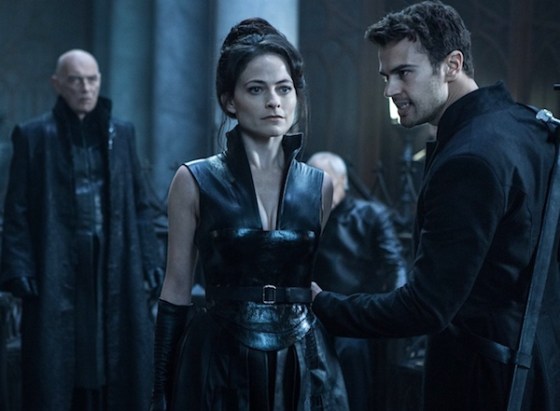
    This tone is supported by some superbly hammy acting from a cast filled with faces from British TV. Sherlock’s Irene Adler, Lara Pulver, seems to be having a whale of a time as the scheming head of a vampire coven, while giving Miss Beckinsale a run for her money in the kinky outfit department. She’s accompanied by Merlin’s Arthur, Bradley James, pouting around as her frequently-insulted boy toy. Tobias Menzies (take your pick of what you consider him best-known for) does his best as the Lycan’s cunning new leader, who’s most threatening in his CGI-powered transformed state. And Charles Dance is back, exuding pure class as always, completely convincing you that he believes in all the high-fantasy drivel he has to spout.

    Irene and Arthur

    Similarly, we all know Kate Beckinsale is better than this — and if you’d forgotten, Love & Friendship should’ve reasserted it. Even here she’s called on to be more than just a shapely pair of buttocks, getting to inject Selene with some rare emotion on several occasions. She also once again kicks ass left, right, and centre. The film’s action on the whole is fairly entertaining. There’s little impressive choreography or particularly original combat concepts, but it passes muster. Even Charles Dance gets to do some swashbuckling (as he terms it in the making-of), which is only brief but also as awesome as it sounds. Another part amusingly sees two bulletproof adversaries walk slowly towards one another while emptying their guns into each other. It’s, again, simultaneously close to being both terrible and genius.

    Despite being renowned as a visually gloomy series, I thought it looked pretty nice in 3D — better than Awakening did, at any rate. Awakening was genuinely shot in 3D, whereas (based on what I could see in behind-the-scenes footage from the special features) Blood Wars appears to have been post-converted. It shows how far that technology has come that even a modestly budgeted movie like this (just $35 million) can afford post-conversion that often looks very good indeed.

    The only major disappointment I had with the film was that, thanks to it being in a rush every time it had some plot to get through, parts of it don’t quite make sense. The ending, in particular, where a voiceover monologue mentions a load of stuff we haven’t just seen happen and doesn’t quite flow. Surely they could’ve afforded an extra two minutes to connect the dots? Apparently the ending was designed to both brings things full circle and, perhaps, leave it open for a sixth instalment. Well, I would say it shortchanges the wrapping-up bit — this could be a place to conclude the series, but by not giving that sufficient weight (i.e. by rushing it), it implies a kind of “tune in next time”-ness.

    Kate Beckinsale. Leather. Nuff. Said.

    That aside, I actually massively enjoyed Blood Wars; much more than the negative reception led me to expect. Of course, the Underworld films are a fan-only experience at this point — not because of diminishing quality, as most reviews would cite, but because of how much the story is based in events from three of the previous four films. If you’ve watched any of those previous movies and not enjoyed them, it’s not worth catching up for this — it’s fundamentally “more of the same”, just done better than it’s been since the first movie.

    These days franchises can revive themselves for new viewers later in their runs — Fast Five being the best Fast & Furious movie is a case in point — but Blood Wars isn’t a Fast Five. However, as someone who would, at this point, I guess, count myself as a fan of the series, Blood Wars delivered.

    4 out of 5

    Underworld: Blood Wars is released on DVD and Blu-ray (in regular, 3D, and UHD flavours) in the UK today.

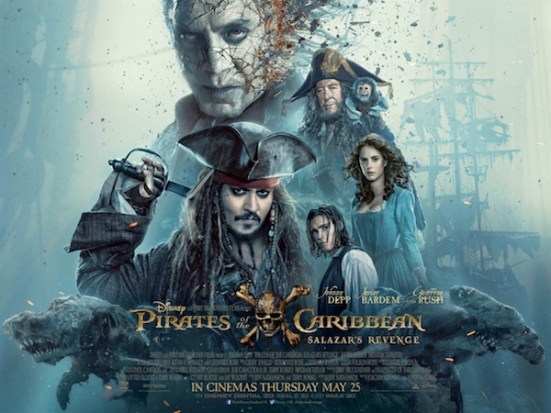
    Pirates of the Caribbean: Salazar’s Revenge (2017)

    aka Pirates of the Caribbean: Dead Men Tell No Tales

    2017 #71
    Joachim Rønning & Espen Sandberg | 129 mins | cinema | 2.35:1 | USA / English | 12A / PG-13

    Pirates of the Caribbean: Salazar's Revenge

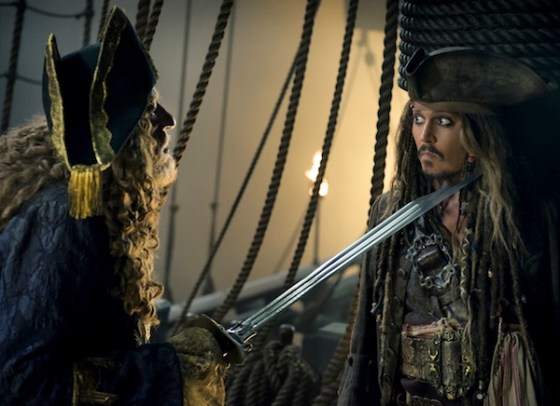
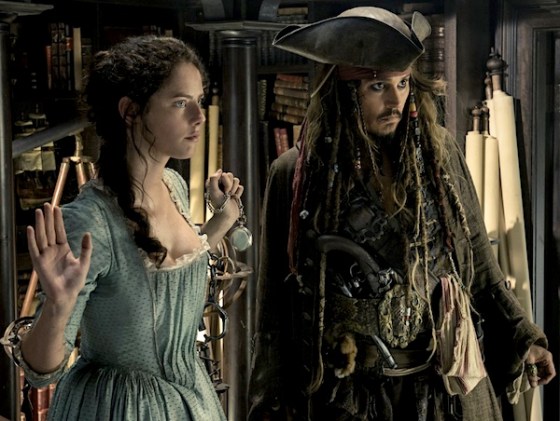
    Dead men may tell no tales, but lucrative franchises never die, so Disney’s Pirates of the Caribbean has taken to the high seas once again. Johnny Depp is back in the role that once netted him an Oscar nomination (remember that?), the drunken pirate Captain Jack Sparrow, this time teaming up with the child of some old friends (Brenton Thwaites) and a bright young astronomer (Kaya Scodelario) for another MacGuffin hunt adventure, while again being pursued by some cursed seafarer (Javier Bardem) and a member of the British Navy (David Wenham).

    Yes, despite the unusually-long six-year gap since the previous film, and all the promotional talk of this being a fresh start for the series that tonally harks back to the standalone fun of the first movie, Salazar’s Revenge (or, if you prefer, Dead Men Tell No Tales) seems doomed to repeat bits and bobs from the series’ other instalments. It’s not a complete wash-out, however, because it at least executes some of those bits quite well. Sadly, other bits are beginning to look a little tired. Perhaps the best single adjective to describe the film’s attitude would be “muddled”. Beware, me hearties: spoilers follow.

    It seems likely that Disney do want this to be a soft reboot of the franchise — a reboot to combat the increasingly poor critical receptions that greeted the previous sequels, but a soft one so that Depp’s popular turn can continue being a part of things. This revivalist plan presumably included looking back in time, beyond the last movie (the least popular one) to the series’ heyday. However, rather than just try to replicate the tone of the earlier movies, storyliners Jeff Nathanson and franchise veteran Terry Rossio have revived some of the old plots too. So we have a film that attempts to move forward with new young leads and a new villain, all hunting for a new MacGuffin, but with motivations bedded in plots that were ostensibly wrapped up a decade ago. They can’t even bring themselves to ignore the previous movie, despite its lack of popularity, continuing narrative threads from there as well. So much for “reboot”.

    Cutthroat, without the island

    And yet, despite that, its consistency with previous films is sometimes poor. For example, Salazar is freed because Jack gives away his magic compass — but didn’t he do that in film two and/or three, with no such ill effects? Also, why does the compass now suddenly have the power to make you face things you dread? And how does that even work, considering other characters have had it and given it away and never had such issues? Maybe they were just hoping viewers wouldn’t remember the ins-and-outs of the plots of previous movies… though, if that’s the case, why is the story based on them?

    Unfortunately, its internal consistency isn’t much better. Like, why do ghost pirates own zombie sharks? How come Salazar can suddenly possess someone when it becomes necessary for the plot? That ability is never mentioned, it just turns up. When Carina’s navigating them to the map-island, how do they end up at a completely different place (before later just setting off again)? Maybe I missed something…

    This abundance of niggles stems from the film being overstuffed with ideas that it doesn’t invest in fully — just like the last film, which it was supposed to have learnt lessons from! One of the things that made the original Pirates movie work was its relative simplicity, which kept the story focused and driving forward. The sequels all throw in too much random stuff — see my previous paragraph, which isn’t even the half of it: I haven’t mentioned the witch, or the ruby-powered star map, or the nonsensical post-credits scene.

    Salazar, out for revenge

    It probably doesn’t help, then, that Salazar’s Revenge is the shortest Pirates film (though it doesn’t feel like it). The dearth of screen time may be why both Bardem and Wenham are ultimately wasted as the villains — they’re not working together, so the time typically afforded to the antagonist ends up split between them. Geoffrey Rush’s Captain Barbossa is back too, as much a series regular as Captain Jack now. He gets an emotional storyline that surfaces out of the blue just before the last act. It’s a nice idea, but appears too late in the game to have time to develop properly.

    And how about the flashback showing Jack defeating Salazar, which seems to stop the film dead halfway through. Why not put that sequence at the start? Then cut straight to the existing opening scene of the naval ship accidentally sailing into the Devil’s Triangle. It’d work — the viewer thinking, “oh, the navy ship is going to sink, just like Salazar did all those years ago,” but then it doesn’t and Salazar attacks. (Hey, Hollywood — employ me!) Okay, fair enough, that structure would make it awkward to place Orlando Bloom’s opening cameo, but—

    Oh, wait, that’s another thing! So, we know why Orlando Bloom only appears in bookend scenes and why Keira Knightley is reduced to a dialogue-less cameo — because Disney want this to be a fresh start with new stars — but it feels like, to do this particular story properly (trying to break the curse that’s imprisoning Bloom), they both should’ve been in it more. I mean, why isn’t the formerly strong and capable Elizabeth working with her son to free the love of her life? At least explain that, film, don’t just ignore it! Heck, tossing in even one line from Henry (“my mum’s given up hope, but I haven’t”) would’ve solved it.

    A clever woman? What is the world coming to

    As for the rest of the cast, Johnny Depp feels like he’s forgotten how to play Sparrow — it’s a pretty good imitation rather than the real thing. Kaya Scodelario plays Carina with an earnest intelligence, a trait which is exhibited dependably throughout the screenplay. That shouldn’t need to be worthy of note, but, for a female character, it is. Thwaites, on the other hand, is perfectly bland as Henry Turner, rarely even managing the enthusiasm or charming naivety suggested by that good line from the trailers (“I think I saw her ankles!”)

    On the action-adventure front, there are some good set pieces, mainly early on — the bank robbery and the halted executions, particularly the spinning guillotine, are inventively handled. Sadly, later efforts are obscured by gloomy lighting and too much whizzing around of CGI — and, once again, the overabundance of out-of-nowhere ideas (why does the ship’s figurehead suddenly come to life?!) Geoff Zanelli’s score primarily recycles Hans Zimmer’s familiar themes, which I don’t mind too much because I like them. At least it does so in a less slapdash fashion than On Stranger Tides, where the music felt plonked on at random.

    That's the second biggest pirate ship I've ever seen

    So, I’ve moaned throughout this review, and here’s the main reason for that: there’s a decent action-adventure movie hidden in Salazar’s Revenge — probably not something that would equal the first Pirates, but a good effort — but all the times when plot necessities seem to have been filled with “invent something new!” rather than “make what we’ve got work”, plus all the little inconsistencies (both internally and with previous films), really get in the way. Maybe, now that all of the leftover business from previous films is well and truly resolved, and if this makes a lot of money, we’ll get a sixth film that finally does return to the joys of the first.

    Hey, Disney: you own Lucasfilm now — how about Pirates of the Caribbean: The Secret of Monkey Island?

    3 out of 5

    Pirates of the Caribbean: Salazar’s Revenge is in some cinemas now. Pirates of the Caribbean: Dead Men Tell No Tales is in the others.

    Twin Peaks: The Missing Pieces (2014)

    2017 #68
    David Lynch | 91 mins | Blu-ray | 1.85:1 | USA & France / English | 15

    Twin Peaks: The Missing Pieces

    When Twin Peaks: Fire Walk with Me was released in 1992, one of the things that disappointed fans was the absence of many of Twin Peaks’ beloved characters. A few of those absentees were due to scheduling conflicts or behind-the-scenes disagreements, but others were shot and left on the cutting room floor. Rumours circulated for years (still do at times) that David Lynch actually shot five hours of material, only two-and-a-quarter of which made it into the final cut. However, as early as ’92 itself, co-writer Robert Engels stated that the first cut ran 3 hours 40 minutes, adding that they hoped to put that extended version out on LaserDisc. Such a release never happened, and fans were left wanting. Campaigns were launched to get the deleted material on DVD, but there were issues with who held the rights, and then Lynch was only prepared to release them if they had been properly mastered and finished to theatrical standard.

    Finally, after over two decades of waiting and hoping, the stars aligned and the series’ Blu-ray release was accompanied by those long-awaited scenes. Dubbed “The Missing Pieces”, there were 90 minutes of them — which, you’ll note, when added to the 135-minute film more-or-less equals the 3 hours 40 minutes Engels promised back in ’92. It’s also basically another movie’s worth of material; and, indeed, there were limited theatrical screenings as part of the promotion for the Blu-ray — hence why this counts as a film (look, it’s on IMDb and everything).

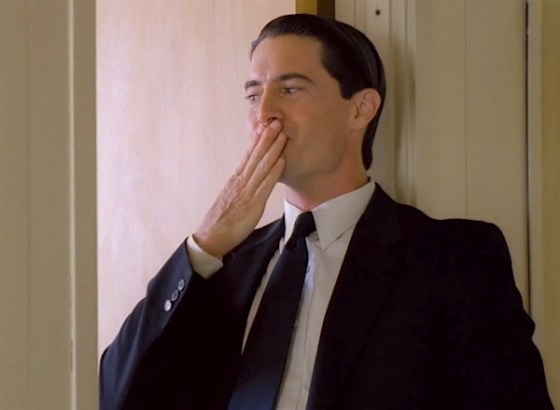
    Diane, it's 9:27am and I am stood in your doorway blowing you a kiss...

    Still, The Missing Pieces may just sound like an uncommonly long selection of discarded bits, same as most DVD deleted scene sections, but there’s more to it than that. There’s quality material here — even, some people say, some of the best scenes in the entire Twin Peaks canon. In fact, some people even reckon it stands confidently as a second Twin Peaks movie, albeit one that depicts events that occur concurrently to the existing film. Well, I don’t think I’d go quite that far, but there’s definitely more to this than a couple of missing lines or amusing asides.

    The fact it isn’t a standalone work is evident from the off, which begins like a traditional deleted scenes package: a collection of context-free bits-and-pieces of FBI Agents Chet Desmond and Sam Stanley in the town of Deer Meadow. These go on for about ten minutes, including a bout of fisticuffs between Desmond and the uncooperative local sheriff that was a very wise removal from the final cut. These early scenes make it instantly clear that The Missing Pieces is a companion to Fire Walk with Me and needs to be watched alongside it, not a unique entity that’s capable of holding its own. These are “Missing Pieces” indeed, not “Meanwhile Pieces”.

    That said, the interest level of the material increases quite quickly. There’s a scene between Stanley and Agent Cooper that doesn’t add a great deal to the story but does again reference the mysterious blue rose — was Lynch intending to go somewhere with that, or not, hence why the scene was deleted? It has a prominent place on the Blu-ray packaging, too… There’s also more David Bowie, though it doesn’t make his part a whole lot clearer. On the bright side, it includes a Buenos Aires hotel bellhop delivering the immortal line: “Oh, Mr. Jeffries! Oh, the shit, it come out of my ass.”

    Oh, the shit, it come out of my ass.

    As things move on to the Twin Peaks-set portion of the tale, we get what the fans really wanted: not mere odds and ends that were removed to expedite the plot, but bits featuring fan favourite characters. Whether the scenes are important or not is another matter, but it must’ve been great to see new material featuring some beloved characters. (I’m glad I’m only watching this now, when this is all available and there’s a new series with new answers on the horizon, rather than having had to endure the wait.)

    That said, in the scope of the story Fire Walk with Me was telling, all of the townsfolk deletions make sense. There are a couple of scenes of Big Ed and Norma’s romance that help set up where they were at the start of the series, but it has little or no relation to Laura. Even less relevant is a scene at the sawmill showing Josie and Pete arguing with a customer over the size of a 2×4. It’s utterly pointless, the only possible reason for its existence to be to shoehorn those characters into the movie, and therefore it was an eminently sensible deletion. The same goes for scenes at the sheriff’s station, which felt like they had greater relation to the actual story of Fire Walk with Me but I still couldn’t quite make head nor tail of.

    It’s not all townsfolk asides, however: there are more scenes with Laura, too. One at Donna’s house shows Dr Hayward being kind towards Laura, seemingly the only man in the entire town who treated her appropriately. That might’ve made a nice counterpoint if left in the movie. Similarly, there’s a scene of domestic bliss in the Palmer household, where Leland, Sarah and Laura practise speaking Norwegian round the dinner table and end up in hysterics. That would’ve made a nice mirror to the later dinner table scene where Leland goes all creepy.

    How's Annie?

    As you’d expect from a deleted scenes section, but in opposition to what some people claim about it, The Missing Pieces is a collection of just that — pieces; fragments divorced from their whole. It’s definitely an experience aimed squarely at fans, then, but that doesn’t mean it’s not one worth taking for the initiated.

    It all ends with an epilogue — a couple of scenes that, for the first time, move beyond the end of the series’ finale. Again, how utterly thrilling it must’ve been to finally get such a continuation over twenty years later. In the first, we catch up with Annie in the hospital, where she repeats the statement her bloody possibly-corpse (though, as we can see, not a corpse) made in Laura’s bed. It also turns out she has the ring… until a nurse pilfers it. Then we cut to the Great Northern, where Coop’s just smashed his head into the mirror. He stages it as an accident when Harry and Doc Hayward rush in to help him, and they insist he returns to bed to rest.

    And that’s it.

    3 out of 5

    Or that was it, because tonight it’s 25 years later and that gum you like is going to come back in style.

    It is happening again.