Jumanji: Welcome to the Jungle (2017)

2018 #89
Jake Kasdan | 119 mins | Blu-ray (3D) | 2.39:1 | USA / English | 12 / PG-13

Jumanji: Welcome to the Jungle

As Avengers: Infinity War breaks almost all opening weekend records, a surprise box office champ from last year makes it to UK DVD and Blu-ray. Well, it’s not all that surprising that Jumanji: Welcome to the Jungle did well at the box office — it’s the belated sequel to a successful film that has become a childhood favourite for many, and it stars one of the few current actors who’s more-or-less guaranteed to get a film good gross on his appearance alone, The Rock — but how well it did shocked many who commentate on such things. In the US, although it only opened at #2 (behind The Last Jedi in its second weekend), it climbed to #1 for its third weekend, then stayed there for four of the next five weeks. Eventually it overtook every Spider-Man movie to become Sony’s highest-grossing film ever domestically. Worldwide, it’s taken just shy of $957 million to be Sony’s second highest-grossing film of all time (behind Skyfall). That’s more than just some vague nostalgia for an old Robin Williams movie.

Set 20 years later, a group of mismatched high school kids wind up in detention and are assigned to clear out an old classroom. There they find an old games console with a single game: Jumanji. They boot it up, select their characters… and are sucked into the console, finding themselves inhabiting their avatars inside the game’s jungle world. In order to escape they must complete the game, by battling against a gang of mercenaries to return a jewel to its rightful home.

Search for the high school kid inside yourself

It’s a very different setup to the original movie, which is refreshing — it could’ve just been a rehash with modern effects (while the Williams movie still has a lot going for it, the mid-’90s CGI is definitely not one of them). That said, it’s not as innovative or inventive as the first movie. The way that brought the board game’s environment to life in the real world was a unique concept, whereas this sequel merely offers an Indiana Jones-esque jungle adventure, albeit with self-aware characters. It doesn’t even use the fact it’s supposedly a video game that much, aside from a few jokes (our heroes have ridiculous only-in-a-game abilities and weaknesses; non-player characters sometimes have looping dialogue).

Where it does work is the characters and the performances. The headline cast are excellent, playing at once their in-game characters and evoking the real world counterparts who’ve inhabited them. Much of the film’s fun comes from the juxtapositions: the most obvious is Jack Black as a self-obsessed teenage girl in the body of an overweight middle-aged man, but there’s also Dwayne Johnson as a scaredy nerd in the body of, well, The Rock; Kevin Hart as a bulky jock reduced to being a short-ass backpack carrier; and Karen Gillan as an under-confident academic girl now in the body of a sexy Lara Croft type. Well, frankly, I’m not sure how much Hart brings to the table, but Johnson and Gillan are really good (and — minor spoiler! — share what is perhaps one of the best kisses in screen history), and Black is clearly having a whale of a time. The quality of the characters quietly builds to a point where the epilogue back in the real world is surprisingly emotional.

MVPs not NPCs

Unfortunately, not everything works that well. The main thing that suffers is the villain. I suppose there has to be one, if only to provide an obstacle at the climax, but that’s also the only reason he’s there — an antagonist for the sake of it. He either needs more time investment, to make him a proper character, or, actually, less — make him even more of an uninteresting obstacle than he already is. Heck, they could’ve got some gags out of the weak plots of old video games. It’s a similar situation with world building. For example, the city they visit looks fantastic in the establishing shot, but there’s no time invested in it — it’s just a place for an action scene, clearly meant to provide visual variety from the other settings of jungle, jungle, and jungle. Maybe that’s ok, but you feel like there could be more to this world.

These issues with plot construction extend to individual gags, some of which feel like setups in need of pay-offs. For example, Hart’s character has a weakness for cake. We learn that, then he accidentally eats some cake and loses a life, but… that’s it? The scene is mildly amusing thanks to the OTT way it causes him to die, but it feels like that’s a reminder — “weaknesses matter, and cake is his” — before a proper pay-off later. But there isn’t one. I mean, how about this: not only does cake kill him, but he can’t resist it (it’s like, you know, a weakness). So in the rhino scene, instead of just dropping him, they drop a trail of cake to lure him along; then, rather than the rhinos just being distracted by him running away, he eats the cake and explodes, which takes out the rhinos. (Hire me, Hollywood!)

There is running. There is also jumping. Yep, definitely a video game.

In some respects these are all nitpicks. They don’t detract from the main fun of the film, which is the mismatch between real-world kids and their in-game avatars, and putting those characters through an action-adventure. The result is amusing and exciting, and ultimately a lot of fun, even if a bit of polish could’ve made it better. Nonetheless, I probably enjoyed it more than the original.

4 out of 5

Jumanji: Welcome to the Jungle is released on DVD and Blu-ray in the UK today.
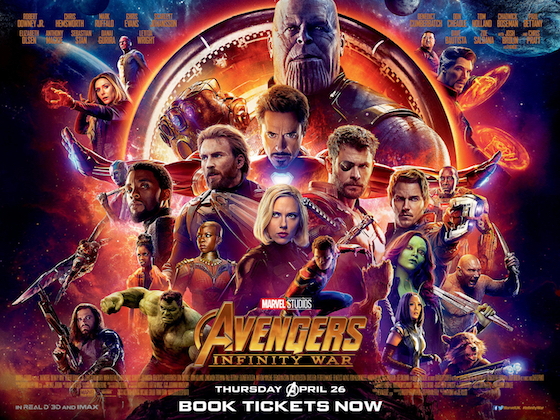
Avengers: Infinity War (2018)

2018 #87
Anthony & Joe Russo | 149 mins | cinema | 2.39:1 | USA / English | 12A / PG-13

Avengers: Infinity War

People are incredibly wary of Infinity Wars spoilers right now — understandably — so here’s the deal: this review starts off completely spoiler-free, until a clearly-marked move into spoiler territory. Then the last paragraph (after the picture of Thanos and right above my star rating) is everyone-friendly again. Get it? Got it? Good.

Ironically, it’s actually quite easy to give a fair summary of the plot without spoiling anything that’s not already been teased in previous films: alien warlord Thanos (mocapped and voiced by Josh Brolin) is out to collect the six Infinity Stones, crystals from the birth of the universe with unique powers, which when amassed together will grant him ultimate power. Out to stop him is pretty much every hero introduced in the previous 18 MCU films.

I confess, I was all prepared for Infinity War to fail to live up to the hype and hyperbole of the reviews that have swarmed over the internet in the past few days, just like happened for me with Avengers Assemble six years ago. In this case, there’s so much going on, the experience is such a huge rush, that it’s almost hard to get your head around what to think of it. I don’t believe there’s ever been another movie quite like it — so many disparate primary heroes, all needing time, and facing a single huge villain, who also gets plenty of focus… Setting aside any of the usual quantifiable elements, reviewing the film comes down (as it really always should) to one simple question: did I enjoy it? Yes, I did.

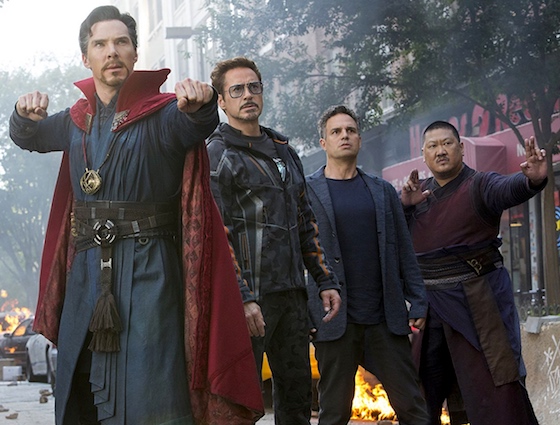
Avengers (partially) assembled

Like the first Avengers, it’s certainly a great event of a movie — but more so, natch. It trades off that event status too: the stakes are huge, the pace and size relentless. It could’ve been like a Transformers movie — “a beginning, then AHHHHH! for another two hours or so”, as someone once described them — but thankfully it’s not so one note: as well as big action, there’s room for humour (plenty of that, it being a Marvel movie, but never ill-placed) and emotion (some affecting dramatic scenes, most of them too spoilersome to mention here).

It’s impressive to join together so many different sub-franchises and manage to create a consistent tone. In some respects it does feel like they’ve chopped up bits from the characters’ individual movies and spliced them together. The most striking for this is the entrance of the Guardians of the Galaxy, when the Russos cut so abruptly into those films’ style that it initially feels misjudged… though I guess a lot of people won’t mind because, hey, everyone loves the Guardians (my audience practically cheered with recognition — not at seeing the characters on screen, but at the very obvious stylistic shift just before they appear). But, across the movie as a whole, it gels well. I suppose some would counter this with “all Marvel films have the same formula and tone so obviously it works”, but that’s not wholly fair — The Winter Soldier and Thor: Ragnarok are hardly the same, are they?

Science meets magic

Whatever the cause, the big plus is that none of the characters ever feel inconsistent — you’ve not got funny people suddenly being serious, or serious people suddenly cracking one-liners, just to make it all fit together. On one level that’s just good character writing, but it’s also good story structure: which characters get teamed up together, because each group has a good mix to butt against each other in the right ways. That doesn’t mean every set has one Funny One, one Serious One, etc, because sometimes the film needs to be able to cut from The Serious Group to The Funny Group. Several reviews I’ve read talked about the film’s “surprising team-ups”. Well, maybe… if you haven’t watched any trailers or seen any posters. Whatever, they mostly work very well. Some characters are better served than others, which is inevitable in a film of this scope, but pretty much everyone gets at least a line or a moment. Who your personal favourites are might dictate whether you think the screen time was fairly allocated or not.

(Spoilers follow.)

Talking of other reviews, I read one that said that, while the film may be entertaining, it’s ultimately hollow because it has no major thematic throughline to explore. I disagree. It leans quite heavily into the question of “at what cost?” What is everyone prepared to sacrifice to achieve their end goal? Both the heroes and Thanos are presented with this question, again and again. Heck, it’s not only a major test for Thanos, it’s part of his origin story too! Now, you can argue about how well the film expounds on this theme, as you can with any work of art (In this case: several of our heroes make that ultimate sacrifice, only for it to be undone by plot necessity), but to say the theme isn’t there feels disingenuous.

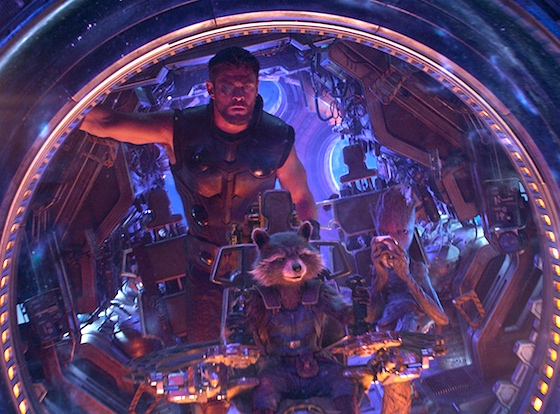
Thor and Rabbit, off on a whirlwind adventure

With all of that accounted for, I don’t know what more could be asked of the movie, in some respects. That said, two fairly specific things bothered me. The bigger one was that we only witness Thanos collecting five of the six stones. Why not show us the lot? How he acquires his second stone makes for an effective opening scene — immediately killing off two well-liked characters, as well as defeating two of the MCU’s main heroes, quickly establishes Thanos’ power — but then how he got the first stone is just revealed in some exposition dialogue later on? C’mon, you can do better than that! The other was the random reappearance of the Red Skull, not seen since Phase One. I guess they felt in need of some kind of reveal at that point, but I’m not sure why. Does him being there even make sense? I don’t see how, but then I’ve not watched The First Avenger in the last six years so maybe I’ve just forgotten. They even had to get a sound-alike to do the voice, so clearly they felt it was vitally important!

Something I’ve previously written about being bothered by in movie franchises are two-part films. As a rule I prefer that, even when a pair of films are connected, they should function as finite units — think Back to the Future Part II and Part III, for example, or the link between The Empire Strikes Back and Return of the Jedi. Avengers 3 and 4 have an interesting history in this regard: originally announced as Parts 1 and 2, this was later changed to them having individual titles, to indicate they were two separate stories… but still connected, because the two films were shot back to back, and Avengers 4’s final title hasn’t been announced presumably because it’s an Infinity War spoiler. Nonetheless, some people seemed to interpret all this as meaning the two films would be completely standalone from each other, and are now annoyed at Marvel because, surprise surprise, there’s a cliffhanger.

Spider-Man, Spider-Man, does whatever a high-tech Iron Man-esque suit can

(I know I already gave a spoiler warning, but just in case you read on regardless: the paragraphs between now and the next photo give away, like, everything.)

So, here’s my take: obviously Infinity War is not entirely isolated from Avengers 4, but I don’t think this is a Kill Bill one-film-split-in-two situation either. Fans who now think the original Part 1 and 2 titles would’ve been apt are maybe taking too simplistic a view of story structure. I mean, look at it this way: it’s only half a movie to us because we know the Avengers are going to come back and win somehow; but if you’re Thanos — the film’s real protagonist, remember — then the story’s over: he did what he set out to do, the end. Maybe this is an academic distinction, but I do think it’s fair enough to have ditched the subtitles that implied it was one movie in two halves. This film tells a whole story (of Thanos trying to wipe out half the universe) and the next film will tell a new story set after it (presumably, how the Avengers try to undo that).

Either way, the film ends on a cliffhanger — a bloody huge one! But I have to wonder: is it actually too much? By that I mean: it has to be undone. Yes, obviously we know the heroes will win in the end, but none of those final deaths can stick. Even if you took Benedict Cumberbatch at his word that Doctor Strange 2 isn’t confirmed, and James Gunn at his that Guardians Vol.3 might feature a changed line-up, we know they need Peter back for Homecoming 2, T’Challa back for Black Panther 2, and so on. So if it has to be undone — if there have to be resurrections — well, why not also resurrect Loki, and Heimdall, and Gamora, and Vision, and anyone else who genuinely died earlier in the story? In fairness, in this I may be getting too far ahead — how the resurrections occur is absolutely a question for next time, after all. But it’ll have to be a very specific solution — one that undoes Thanos’ final act, but doesn’t undo all the ones that led up to it — to not just seem like a stereotypical death-doesn’t-matter superhero cop-out.

A final point on these deaths. I’m not sure I can actually remember everyone who lived and died during the wipe-out-half-the-universe finale (there were so many!), but I’m fairly certain they were mostly Phase Two and Three characters. I remember that Iron Man, Thor, Hulk, and Cap all definitely made it, anyway. My point is this: things are now set for Avengers 4 to really cap off the first 11 years and 22 films of the MCU by placing at its core the heroes who started it all. That’s quite neat, isn’t it? You’ve got to assume that’s deliberate.

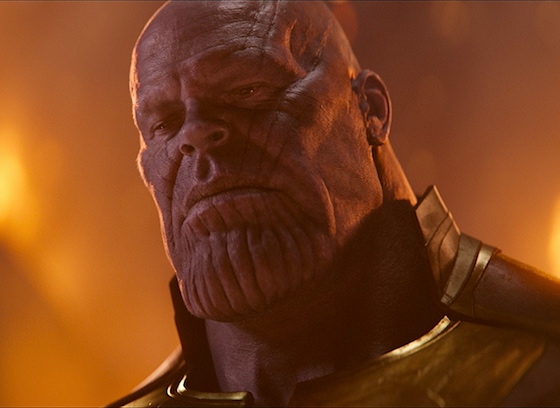
Thanos

Avengers: Infinity War is like a massive comic book crossover rendered in live-action. You might think “of course it is”, but it’s not that long ago that this wouldn’t even have been possible (the CGI required is phenomenal), and even less time since it would’ve been considered profitable (remember when all superhero movies had to be “grounded”?) As much as it’s a familiar epic sci-fi action blockbuster, it’s also a new kind of thing to the big screen. There are pros and cons to turning that kind of narrative into a movie, but Infinity War is heavy on the former and relatively light on the latter. When it comes down to it, it’s just marvellous entertainment.

5 out of 5

Avengers: Infinity War is in cinemas everywhere (except Russia and China) now.
The fourth Avengers movie will be released this time next year.

Avengers: Infinity War placed 6th on my list of The 26 Best Films I Saw For the First Time in 2018.

Geostorm (2017)

2018 #70
Dean Devlin | 109 mins | download (HD+3D) | 2.40:1 | USA / English, Cantonese, Russian, Hindi & Spanish | 12 / PG-13

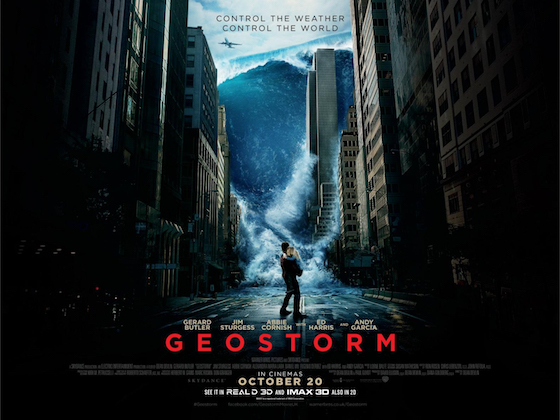
Geostorm

Geostorm met with widespread derision when it hit the big screen last year, but, despite the many negative reviews (it has just 12% on Rotten Tomatoes), I heard someone say it was actually an entertaining popcorn blockbuster. I forget who that was, sadly, because they were wrong. Very wrong.

Set in the near-ish future, it’s about a giant weather-control system installed in orbit around the Earth that begins to malfunction and cause disastrous freak weather events, which have the potential to build into a so-called “geostorm” — a devastating planet-wide weather fuck-up, basically. And there’s only one man who can stop it… despite the fact he’s not been involved with the system for about three years and during that time it’s been successfully run by a massive team of no-doubt-highly-skilled people.

A lot of films of this type start out okay and get dumber as they go on. Geostorm hits the ground running with shit dialogue and nonsensical plot developments — I’d list some, but God, there are far too many for me to bother. That said, here’s my favourite: when someone advises the US President that they’ll need to send a whole team with various skills and abilities to fix the malfunctioning global satellite weather control system (because, you know, that must be a pretty complicated set of interrelated systems, and no one knows whether it’s software or hardware or whatever else), the President decides they’re only allowed to send… one person. And it isn’t even a specific person who he thinks is a whizz — his next instruction is “find me that person.” And everyone else in the room seems to think this is a reasonable course of action. I mean, there are no words for that kind of stupidity. Well, maybe “Trumpian”, but the film isn’t presenting it as satire. And, as I said before, there’s already a massive staff up there running operations — why would the President not assume the one person with the specific skill-set needed to diagnose and fix the problem is already up there? How do people get paid to write crap this stupid? How could any self-respecting writer generate this?!

From their expressions, I presume they're reading the screenplay

Well, quite frankly, I’m not sure Geostorm was even written by a writer. Exhibit A: About 56 minutes into the movie, one character says “it’s bigger than you and me”, and a supporting character corrects him: “you and I”. But “you and me” is grammatically correct in that situation. Any writer worth whatever you get paid for writing a $120 million movie should know that, ergo there can’t’ve been any writers involved. Or, yeah, the writers who were involved were really, really, really shit. They should be ashamed of themselves.

The film is littered with faults, minor and major, that draw attention to themselves like this. Apparently the original cut received poor reactions from test audiences, leading to extensive reshoots, which I imagine explains some of the inconsistent crap that goes down during the film’s finale. (Spoilers follow, should you care.) One of the significant establishing traits of the film’s primary hero, Jake (Gerard Butler’s character), is he has a daughter who he loves very much — there’s an emotional scene when he leaves her to go off to the weather satellite, and so on. But later, when he has just minutes to live, he seems to have no pressing desire to want to talk to her. He just tells his brother to stay in her life — which the brother wanted to do anyway, but earlier Jake had been stopping him. Written like this that almost plays like character development — how he’s accepted his brother again — but that’s not how it plays out.

Gerard Butler, thwarted by another door

Oh, but it gets worse. (More spoilers!) So, the station’s commander departed ages ago with the rest of the crew, leaving Jake alone to fix the problem and then die when the station blows up anyway (don’t worry about the logistics of that, the film doesn’t). But then Jake gets stuck when he has to… open a door. And suddenly the commander’s there, and she knows what to do to… yes, open a door. So that means she’s been hiding out somewhere on the station, making sure Jake doesn’t see she’s still there, until that precise moment when he needs help… to open a door. Oh, and then, by total chance and plot implausibility, they actually survive the destruction of the station, and get in a satellite and use it to return to Earth. Not an escape pod, a satellite. Why does a satellite have enough empty space to carry two people? There’s no way you could answer this stuff.

Some people, even including some filmmakers, seem to think critics and “pretentious” filmgoers slag off movies like Geostorm based solely on the genre or concept or some other fundamental characteristic. And, yeah, there must be some people who won’t give certain genres a fair shot; but that’s not widely the case, as the praise attracted by better blockbusters proves time and again. No, films like this get slagged off when they’re shittily made. Geostorm is shittily made.

1 out of 5

Geostorm featured on my list of The Five Worst Films I Saw For the First Time in 2018.

The Dark Tower (2017)

2018 #25
Nikolaj Arcel | 95 mins | streaming (HD) | 2.39:1 | USA / English | 12 / PG-13

The Dark Tower

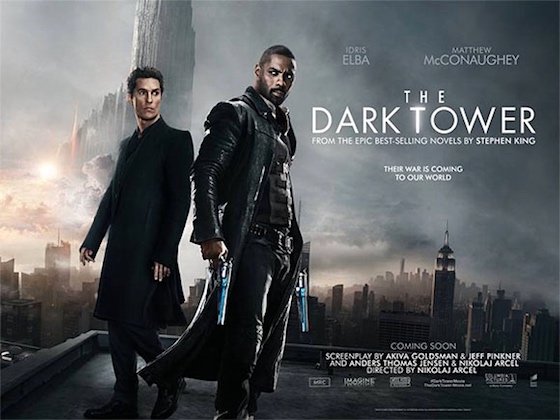
The Dark Tower started life as a literary work that is, according to its author, Stephen King’s magnum opus: a series of eight novels, written over 30 years and spanning some 4,250 pages, that not only tell their own genre-mash-up story, but also reference or connect up many of King’s more widely-known works. Since 2007 there have been various efforts to try to wrangle such an epic work onto the screen, with perhaps the most high-profile being Ron Howard’s ambitious plan to spread it across both film and TV, alternating a trilogy of big-budget movies with seasons of TV on HBO in order to adapt the whole saga. This clearly proved to be too formidable a goal, but eventually paved the way for what was released: a single 90-minute film. From one extreme to the other, eh…

It’s easy to imagine why fans of the books have found this film disappointing, then — I mean, there’s no way they’ve managed to accurately condense seven novels (and some of them very long novels at that) into an hour and a half. But, despite the series-encompassing title, it’s my understanding that it’s primarily an adaptation of the first novel, so surely fans would know they could expect the rest of the narrative if sequels were produced? The perceived problems must go deeper, therefore, and be more general: leaving aside fan reaction, the film has a Rotten Tomatoes score of just 16%.

Strut

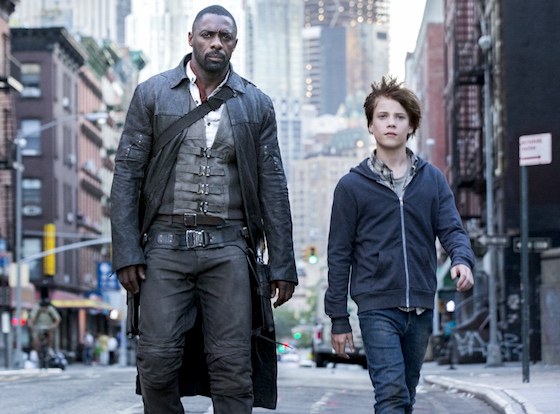
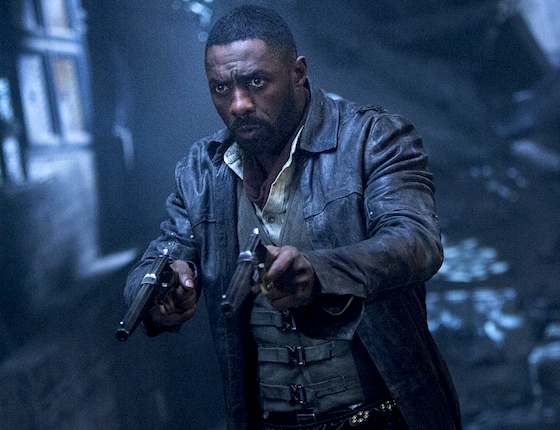
Well, I don’t know what people were hating, because I thought it really wasn’t that bad. I can’t comment on its faithfulness or thoroughness as an adaptation, but as an action-fantasy movie in its own right I thought it held together pretty well. It only cost $60 million (a bargain for a blockbuster nowadays), but they got good value for money: it doesn’t look cheap, and it has a respectable lead cast as well. Idris Elba’s presence may’ve pissed off some people (his character has consistently been depicted as white in illustrations accompanying the books), but he seemed to fit the role. Matthew McConaughey makes for a decently unsetting bad guy. Our identification figure is a kid played by Doctor Foster’s Tom Taylor, who’s fine here but got to show more chops in that series.

The relatively stringent budget probably explains why it’s a little light on things like epic action sequences, with those that are included feeling like the makers were probably doing their best on a limited expenditure — the action isn’t bad, but those scenes aren’t as awesome as the film thinks they are. Less readily excused is the plot, which is a bit slim — the story is very straightforward, despite the intricate fantasy gubbins dressing it up, moving directly from A to B to C with minimal complication. Similarly, familiar character arcs are efficiently executed. But if a film’s biggest crime is unoriginality, it’s no worse than the majority of Hollywood’s output for the past 20 or 30 (or more) years, is it?

Slinging guns

Well, according to script editor (and fan of the books) Andrew Ellard in his discussion of the movie, that’s precisely the problem. He argues the film represents “the exact same competent mediocrity we’ve seen before from — say — I, Robot or I Am Legend. Not a bad film especially. Just kinda nothing. Or like Inkheart or Assassin’s Creed, fantasy you won’t remember tomorrow. But the books are fascinating. Full of ideas & imagery that haunt you. To pick the blandest, most generic stuff? Dumb.” This, I do suppose, is what fans were primarily upset about. If you don’t know the books then the film we’ve been given is fine as just a reasonable time-passer, but if you feel that it could — should — have been something truly special, how frustrating that must be.

The Dark Tower grossed $113 million, which, at less than double its budget, probably isn’t enough to secure the mooted sequel (especially when it’s put in comparison to 2017’s other Stephen King adaptation, It, which surpassed $700 million). I guess someday it’ll get re-adapted, probably as a TV series, maybe by Netflix, or Amazon, especially if they still haven’t found the Game of Thrones-beater they’re currently looking for. Until then, this version stands as a reasonably enjoyable quickie — not as bad as you may’ve heard, but apparently not all it could’ve been either.

3 out of 5

The Dark Tower is available on Sky Cinema from today.

Review Roundup: Comedy Documentaries About Music

In today’s does-what-it-says-on-the-tin roundup:

  • Anvil: The Story of Anvil (2008)
  • Popstar: Never Stop Never Stopping (2016)


    Anvil:
    The Story of Anvil

    (2008)

    2017 #117
    Sacha Gervasi | 77 mins | streaming (HD) | 16:9 | Canada / English | 15

    Anvil: The Story of Anvil

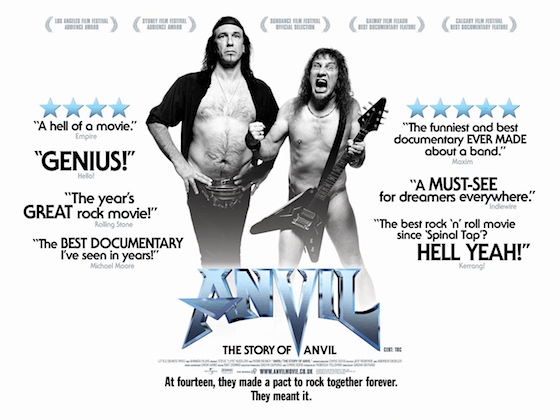
    This is the real Spinal Tap: a rockumentary about heavy metal group Anvil, who once headlined alongside Whitesnake and Bon Jovi, and are cited as an influence on groups like Megadeth and Metallica, but who haven’t enjoyed the same success as any of them. The film follows the group as they attempt to relaunch with a tour and new album.

    Truth is stranger than fiction, as they say, and, thanks to This is Spinal Tap, Anvil at first feels like fiction, with broad characters and a humorous tone. But it isn’t a blatant rip-off of Rob Reiner’s influential mockumentary, it’s a true story.

    That knowledge gives the whole thing a different air. It’s not so much tinged with sadness as endlessly sad — hopes and dreams that have come to nothing, even though they’re still pursued; how those continued pursuits falter and fail. And, perhaps worst of all, is the esteem other bands hold them in — the influence they admit to have taken from Anvil — and yet Anvil themselves languish in crummy jobs with no wide recognition, while the people who ripped them off (as one of them even admits) are famous and successful.

    A lot of comedy would actually be quite sad if it wasn’t fiction. Anvil proves that.

    4 out of 5

    Popstar:
    Never Stop Never Stopping

    (2016)

    2018 #41
    Akiva Schaffer & Jorma Taccone | 83 mins | streaming (HD) | 2.35:1 | USA / English | 15 / R

    Popstar: Never Stop Never Stopping

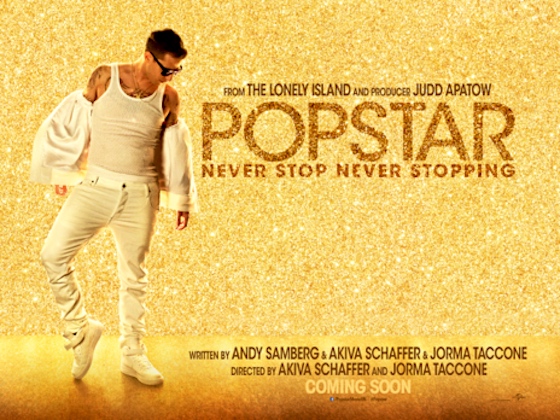
    This is Spinal Rap: comedy trio The Lonely Island star as the Style Boyz, a popular pop-rap boy band who disbanded after their frontman, Conner4Real (Brooklyn Nine-Nine’s Andy Samberg), decided to go solo. The mockumentary follows Conner as he goes on tour to launch his second album.

    Popstar is every inch a modern do-over of This is Spinal Tap. That’s not to say it’s a straight-up remake, but it’s certainly a spiritual sequel, with many similar building blocks: not very bright musicians; unsuccessful musical endeavours; and lots of fully-realised spoof songs. Where Spinal Tap satirised the metal scene of the ’80s, Popstar turns its sights on the world of present-day mainstream music. In both cases, the base funniness is enough that you don’t need much familiarity with reality to get the gags.

    It only bears so much comparison to its forebear (there’s nothing as iconic as “it goes up to 11” to be found here), but as a modern take on the same genre, it has merit. And, most importantly, I thought it was consistently very amusing.

    4 out of 5

  • The Director and the Jedi (2018)

    2018 #59
    Anthony Wonke | 95 mins | Blu-ray | 2.39:1 | USA / English | 12

    The Director and the Jedi title card

    So, The Last Jedi, eh?

    No, okay, let’s not get into that again. Instead, how about this: the film’s Blu-ray making-of documentary. But oh, how that undersells it. More indicative, perhaps, is the fact it was screened as part of the South by Southwest festival last month. The Director and the Jedi isn’t some cobbled-together EPK featurette, where talking heads tell you how wonderful everyone is and how great the working environment was, while tech guys show you how to build a puppet or paint out greenscreen or, you know, whatever. No, for this one Last Jedi’s writer-director Rian Johnson and his producer Ram Bergman contacted documentary-maker Anthony Wonke to follow them around throughout the film’s production and provide a more truthful account of the film’s creation.

    If that sounds like it would just turn out a video diary (another familiar special feature of the DVD era), the key would seem to be Wonke, who brings considerably more artistry than that. Most making-ofs are, for want of a better word, educational — “this is how they did it”. There’s some of that here, naturally, but it’s not about that. It’s more often about the psychology and emotion of being the people making a new Star Wars movie. But not heavy-handedly (Wonke isn’t constantly making people say how they feel or something), and that’s why it’s so artfully done. It’s even beautifully filmed and edited. It doesn’t look like crummy behind-the-scenes B-roll — there are some legitimately gorgeous shots in here.

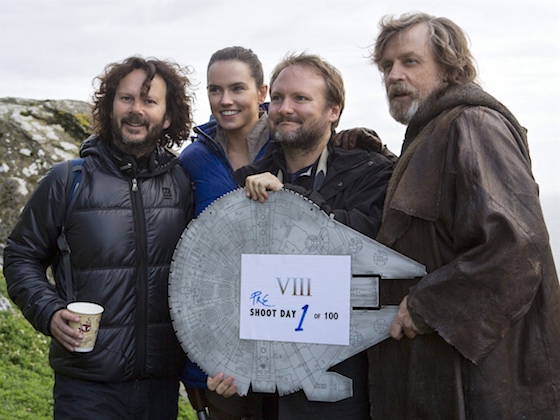
    The producer, the apprentice, the director, and the Jedi

    If that makes it sound faked, no, it’s definitely not been staged. Far from it, in fact: this is a warts-and-all making-of. Exceedingly rarely for a documentary about a new release, Wonke has been allowed to include comments critical of the process or filmmakers. Chief among them: Mark Hamill’s much-discussed reservations about Johnson’s treatment of Luke Skywalker. As the title might imply, this is the doc’s strongest throughline, and would be its most affecting were it not for another part (more on that later). I say that because the feeling you eventually get from Hamill and Johnson is one of immense mutual respect, even as their beliefs about what should happen in the film clash. Except they don’t clash because Hamill, the dutiful actor, informs Johnson of his misgivings before committing to realise Johnson’s vision as best he can. It causes Johnson to doubt whether he’s doing the right thing — and, again, such elements of doubt are not something we normally witness in documentaries like this, even as they are surely always a part of the creative process.

    Indeed, the creative process of filmmaking is another major point, especially in how it clashes with reality. The Last Jedi may’ve had a phenomenal budget and a massive production machine to back it up, but it also had just a 100-day shoot to squeeze in the construction of and filming on 120 sets, not to mention travelling around the world for location shooting. What Johnson and co want to achieve constantly clashes with what’s possible with the time and budget available. (The amount of effort that went into making the thala-siren milking scene happen just makes it all the funnier how much some people hated it.) As one producer puts it, eventually you have to fit everything in a box — “this box is big, but it has limits”.

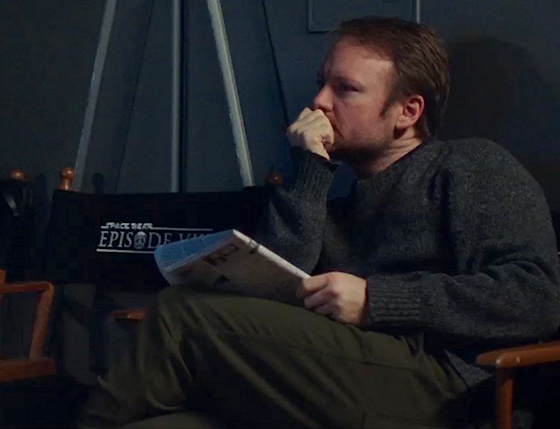
    It ain't easy at the top

    Consequently, there’s a lot of stuff with department heads butting against Johnson’s vision a little bit, either because of time, or money, or “that? In Star Wars?” feelings. But, like Hamill, they all get on with their jobs to serve his vision, because that’s filmmaking. And this is why we, as film fans/theorists, still discuss the notion of the director as auteur, even though filmmaking is undeniably a massively collaborative exercise. The Director and the Jedi is as good a demonstration as any of why the seemingly-conflicting notions of “filmmaking is entirely collaborative” and “auteur theory is relevant” are both true.

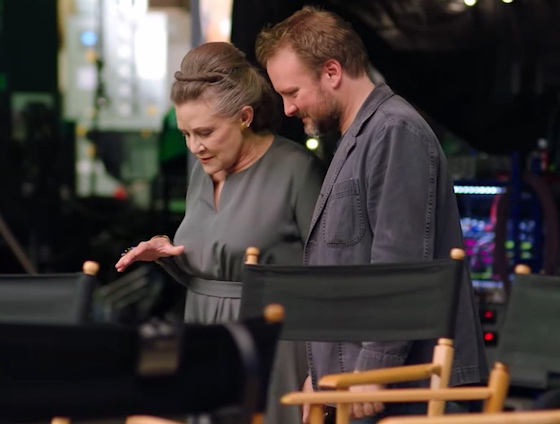
    The other most memorable part of the film is how it handles Carrie Fisher’s presence and, well, eventual lack thereof. The bulk of the documentary is dedicated to the actual filming of The Last Jedi (Wonke wasn’t privy to either the writing or post-production, which is a shame because they’re certainly key parts of the creative process), but Fisher’s death is an unavoidable topic, and clearly they conducted at least a short interview with Johnson after it happened. Aside from those few comments, Wonke builds a tribute to her through her work and the regard others hold her in. He chooses to end the documentary, not with the last day of shooting, but with Fisher and Hamill finally reunited on set and on screen, the crew watching in hushed awe as they film that beautiful scene in the Crait hangar. It forms a fitting, respectful tribute.

    The princess and the director

    “Beautiful” is a word I keep coming back to with this documentary — how it’s shot and constructed; how it handles its subjects; how the relationships between people come across. I guess those who hated Last Jedi and Johnson’s contribution will still rile against it to some degree, but even for them I think it’s worth a watch, if only to try to appreciate that no one was deliberately trying to “ruin their childhoods” or whatever. Quite the opposite. And even for non-fans, there’s insight here into humanity when it’s applied to a joint creative endeavour. If that sounds a bit grand for a blockbuster’s making-of, well, The Director and the Jedi is much more than your bog-standard making-of.

    5 out of 5

    The Director and the Jedi is included on the Blu-ray of Star Wars: The Last Jedi, which is released in the UK today.

    The Hurricane Heist (2018)

    2018 #60
    Rob Cohen | 99 mins | streaming (HD) | 2.39:1 | USA / English | 12A / PG-13

    The Hurricane Heist

    Billed as a “Sky Cinema Original Movie” here in the UK (which, I presume, is like half of Netflix’s “original” movies — i.e. they paid for exclusive rights to something already completed), The Hurricane Heist… does what it says on the tin, really: as a hurricane strikes Alabama, a gang of crooks plan to use it as cover to rob a Treasury facility and its $600 million of waiting-to-be-shredded old notes. What they didn’t count on was crack ATF agent Casey Corbyn (Maggie Grace), who attempts to stop them with the help of meteorologist Will Rutledge (Toby Kebbell) — who drives a tank-like hurricane-proof car — and his ex-military mechanic brother Breeze (Ryan Kwanten).

    Yes, a film called The Hurricane Heist has a main character called “Breeze”.

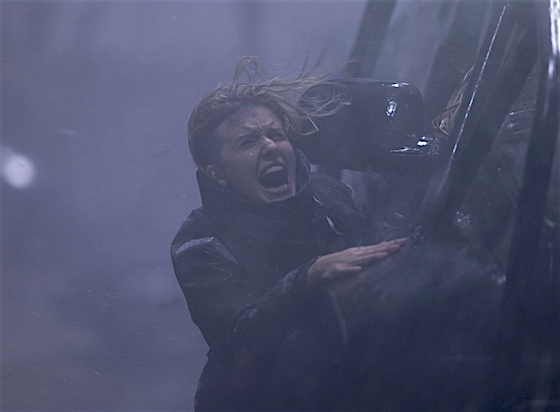
    I suppose that’s indicative of the tone the film’s shooting for, really. It’s not Sharknado, but you have to hope the filmmakers knew it was cheap and cheesy as hell and wanted to play up to that. It’s only sporadically successful — much of the dialogue is just bad rather than so-bad-it’s-good, for example — but it has its moments. About halfway through there’s a sequence where Will throws scrap hubcaps into the wind so that they fly at the bad guys like spinning discs of death, at which point the film looks like it might tip from “so mediocre it’s mediocre” into “utter genius”. Sadly, it doesn’t keep that inventiveness up for more than about ten seconds, but at least it means there’s something memorable here. And while it may generally look and feel kinda cheap, there’s a massive amount of practical wind and rain being thrown around to create the storm, which is pretty effective.

    The wet and the windiest

    Another success comes in a couple of amusing villain deaths during the climax, but to say more would spoil things. The chief villain is played by Ralph Ineson, whose basic skill as a performer at least elevates that role somewhat. Toby Kebbell is probably better than this too, though considering some of his other choices in the past couple of years (Ben-Hur, Warcraft, Fantastic Four) maybe he’s lucky to get this now. Certainly, this is more entertaining than the ones I’ve seen of those.

    If The Hurricane Heist had been made 20 years ago it probably would’ve been a major blockbuster. It certainly looks like the CGI was produced back then. Now… well, it’s gone direct to Sky Cinema, hasn’t it? Maybe it’ll find a cult following, but I’m not sure it’s quite barmy enough to achieve that so-bad-it’s-good love. It is pretty stupid and definitely cheesy, but… well, it’s not so much boring as… not exciting. Like, it’s middling. It’s okay. It’s kinda fun. You won’t remember much of it the day after, but for a bit of daft brain-off action on a lazy evening, it’s alright.

    3 out of 5

    The Hurricane Heist is allegedly in some UK cinemas now. It’s definitely available on Sky Cinema, and will be (presumably exclusively) until at least 5th April 2028.

    The Boss Baby (2017)

    2018 #12
    Tom McGrath | 97 mins | download (HD+3D) | 2.39:1 | USA / English | U / PG

    The Boss Baby

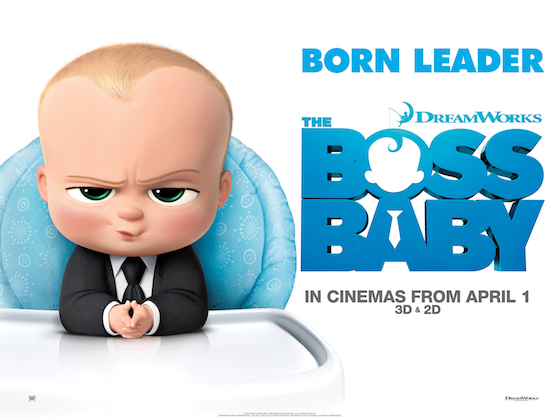
    The Boss Baby was one of the top 20 highest grossing films of 2017, which earnt it a place on my ’50 Unseen’ list, thereby ensuring it would remain in my consciousness for as long as I referred to said list (i.e. for the rest of time). Then it went and got nominated for an Oscar too, displacing the likes of The LEGO Batman Movie and Ghibli heir Mary and the Witch’s Flower in the process. With those factors combined, I felt I had to witness it for myself. I chose to do so in 3D, to hopefully ameliorate at least some of the anticipated discomfort of watching the film itself. I needn’t have worried: despite what many people will tell you, I thought The Boss Baby was actually pretty good. Well, most of it.

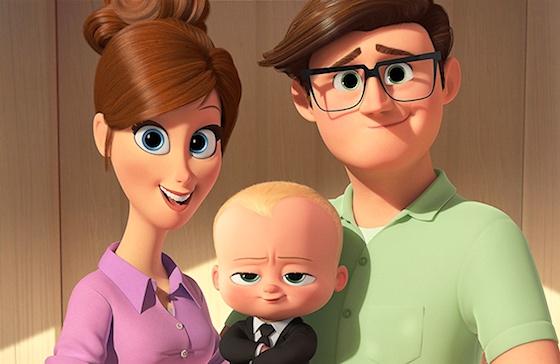
    It’s the story of Tim (voiced by Miles Bakshi and in narration by Tobey Maguire), a seven-year-old only child with a hyperactive imagination and two doting parents. But then a new baby arrives… As Tim’s parents’ affection shifts to their attention-demanding bundle of joy, he’s the only one who can see the truth: that the baby wears a suit, carries a briefcase, and is clearly a businessmanbaby on some kind of undercover mission. Obviously no one will listen to Tim, so he sets about exposing the truth.

    Sibling rivalry

    For all its daft humour, the reason The Boss Baby is so successful (for an adult viewer) is that it’s actually a really neat way of tackling the whole “sibling displaced by new baby” thing, from the kid’s point of view. That’s the thematic and subtextual meat that makes it more than just “wouldn’t it be funny if a baby was a businessman!” As part of this, it has a nice line in juxtaposing how an imaginative seven-year-old sees the world versus how it really is — showing us both Tim’s fantasies and the actual events they’ve launched off from. It allows the film to have exciting and kooky stuff (like talking business-babies and elaborate action scenes) while also remaining grounded. Watching in 3D heightens this further, incidentally: as with most computer-animated films, the 3D effect is generally pretty nice, but it really comes alive during the fantasy and action sequences.

    If that all sounds oddly serious, it isn’t. Arguably best known nowadays for his Trump impersonations, Alec Baldwin is an obvious choice to voice an infantile businessman. This one’s actually competent, though, so Baldwin plays it straight and thus is dryly witty. There are also plenty of amusing visual gags, one-liners, and so on to fulfil the expected comedy remit. Okay, some don’t land or are a bit juvenile, but it is a kids’ movie after all.

    Parents are so gullible

    Unfortunately, what works in the early sections begins to go awry later on. By the third act it’s lost the connection to plausible reality that made Tim’s imagined versions such fun — it’s impossible to translate the OTT action we’re witnessing into what might be really happening. I know it sounds daft to talk about plausibility in a film about a baby who’s a businessman, but it’s the relationship between Tim’s fantasies (i.e. the business-baby stuff) and real-life (i.e. really he’s just a new baby) that makes the earlier parts work.

    Arguably worst of all is the epilogue, which takes a very serious emotional issue (the loss of a baby) and tosses it aside to expedite the resolution the filmmakers want to reach. Maybe it’s a bit much to expect a kids’ movie to attempt to tackle the realities of losing a child, especially when it only introduces that element in its closing minutes, but then surely the solution is to not even go there; to find a better way to wrap up the story?

    It’s this increasing lack of attentiveness that ultimately led me to give the film a 3 instead of a 4. If it had kept up the early quality through to the end, I likely would have looked more generously on it. Nonetheless, thanks to the bits that worked really well, I generally found the film to be a pleasant surprise.

    3 out of 5

    Spin-off TV series The Boss Baby: Back in Business is available on Netflix from today.

    Benji (2018)

    2018 #53
    Brandon Camp | 87 mins | streaming (HD) | 2.40:1 | USA / English | PG

    Benji

    Aww, look at the cute lickle doggie! And all the cute tricks and stuff he can do!

    “5

    Okay, more seriously…

    One of Netflix’s latest original movies (they’re releasing 700 this year, so there’ve probably been another 154 since this came out a couple of weeks ago), Benji is a reboot of the ’70s/’80s dog movie franchise, arguably best remembered because its 1987 instalment, Benji the Hunted, earnt a “thumbs up” rating from Roger Ebert the same week he gave Full Metal Jacket a “thumbs down”. I don’t know if I’m going to be giving any classic movies a poor rating this week, but I’m definitely giving the new Benji a big thumbs up.

    The film begins as it means to go on: with misery. (Seriously, this is quite a gloomy, peril-filled film alongside all the cute canine antics.) On a dark and stormy night, a dog warden snatches a mother and her three young pups, accidentally leaving one behind. He tries to give chase, but can only look on forlornly as his whole family is carted away. Aww! He sets off along the road, growing up on his travels, and eventually finds himself in New Orleans. There he stumbles into the lives and hearts of two kids, Carter (Gabriel Bateman) and Frankie (Darby Camp), who decide to name him Benji. They live with their mom (Kiele Sanchez), who’s struggling to make ends meet and keep her kids happy since the death of their father (see, more misery). Anyway, the kids get kidnapped and Benji’s the only witness to where they’ve gone, but the silly humans can’t follow his hints properly, so Benji sets off to rescue his newfound family by himself.

    Benji's on the case

    Benji isn’t half bad for a kids’ movie. And while it is undoubtedly a kids’ movie, it can get quite dark and serious at times — well, quite a lot of the time (it’s a PG for a reason) — but there’s a good storyline and some strong themes. It’s not super realistic (I mean, you read my plot description, right?), but it mixes in just enough real-life hardship to sell itself. There are decent performances too, including from the two kids, who I’ve seen other reviews criticise. I mean, they’re not going to be troubling next year’s Oscars, but they’re not bad. Certainly, I’ve seen poorer turns from child actors in proper adult movies, and definitely ones that have been more irritatingly objectionable. The choice to set the film in New Orleans is a nice one as well, offering a different and distinctive flavour to the usual stomping grounds of New York or L.A.

    But that’s all gravy to the real reason we’re here: the dogs. My introductory joke was, actually, kinda serious: Benji himself is a clear 5-out-of-5, both super cute and super smart. Yes, I know the film’s edited to make him preternaturally clever (there’s an awesomely daft sequence where he thinks back over everything he’s seen and comes up with a plan), but the tricks he performs without the aid of editing show that he’s a damn well trained doggy. Variety’s review writes about the Kuleshov effect, which is “the basic principle of film editing, established by Soviet filmmaker Lev Kuleshov nearly a century ago, that audiences attribute emotion to a blank face according to the shot immediately before or after”, and how Benji uses that to make the dog give a ‘performance’. Director Brandon Camp applies that technique more than once, I’m sure, but Benji’s got enough tricks at his disposal that such artifice isn’t always necessary to build character. Also, blimey can that dog run!

    Run, Benji, run!

    Okay, if dogs don’t tickle your fancy in any way then there’s nothing for you here; but as a lover of dogs — and particularly little scruffy ones like Benji — this film was a near-constant delight. It’s pretty great entertainment for kids too, though don’t stick it on unless you’re prepared for them to want a Benji of their own afterwards.

    4 out of 5

    Benji is available on Netflix now and forever.

    Coincidentally, Full Metal Jacket will be reviewed later this year as one of my “What Do You Mean You Haven’t Seen” films.

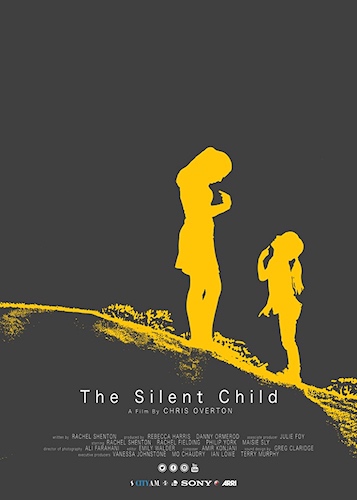
    The Silent Child (2017)

    2018 #57a
    Chris Overton | 20 mins | TV (HD) | 2.35:1 | UK / English & British Sign Language

    The Silent Child

    Oscar statue2018 Academy Awards
    1 nomination — 1 win

    Won: Best Live Action Short Film.


    It’s not often you see short films screened in prime time slots on the nation’s biggest TV network — and by “not often” I mean “never” — but then it’s not often two former soap stars make a timely and affecting drama that wins an Oscar, either.

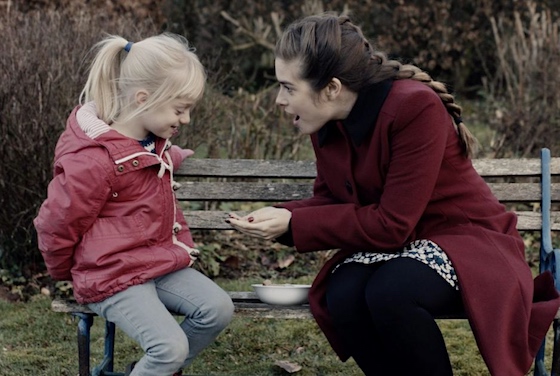
    Such is the case with The Silent Child, which stars former Hollyoaks actress Rachel Shenton (who also wrote the screenplay) as social worker Joanne, who’s called in to help young deaf girl Libby (Maisie Sly) prepare to start school. Libby’s upper-middle-class parents (Rachel Fielding and Philip York) have clearly done nothing to help the child, too concerned with making her ‘normal’, and that’s left her obviously miserable. As Joanne begins to teach Libby sign language, she comes out of her skin and brightens up. But her mother remains unconvinced this is the right direction for her child, beginning to see Joanne as more of a threat than a help.

    There’s a clear social-conscience motivation behind the creation of this film, highlighted by a downbeat ending that’s well calibrated to anger you into wanting change. It’s depressing that this isn’t set 50 years ago, but is the situation today. It seems hard to believe any parents would be so horrid and low-key abusive as Libby’s, but then I bet they voted Tory, so, y’know. Even then, the cold hard stats presented at the end are sobering. The cumulative effect is powerful and worthwhile.

    Libby and Joanne

    As a film, it’s well made. Director Chris Overton (Shenton’s partner, who also once appeared in Hollyoaks) and his DP Ali Farahani clearly have a good eye: despite the low budget, it’s often attractively shot, with a misty, cold beauty to its countryside locations. Overton has also managed to coax a charming, subtle, and surprisingly nuanced performance from young Maisie Sly. Shenton is also likeable as her well-meaning but hand-tied friend. Some of the supporting performances are a little ropier, but hey, when you’re making a short film for just £10,000, you get what you can. I’ve seen worse.

    There are lots of little touches that suggest Shenton and Overton probably want to develop this into a feature film — hints at subplots, that kind of thing — and there’s definitely room for it to grow, too: while it does work as a piece in its own right, this doesn’t feel like the whole story. I’d be surprised if, after the Oscar success and chatter that’s followed (the film was among the top trends on Twitter for the entire night after its BBC One airing), that doesn’t happen. Certainly, it’d be nice to see things turn out a little more hopefully for little Libby.

    4 out of 5

    The Silent Child is available on BBC iPlayer until 29th April 2018.